


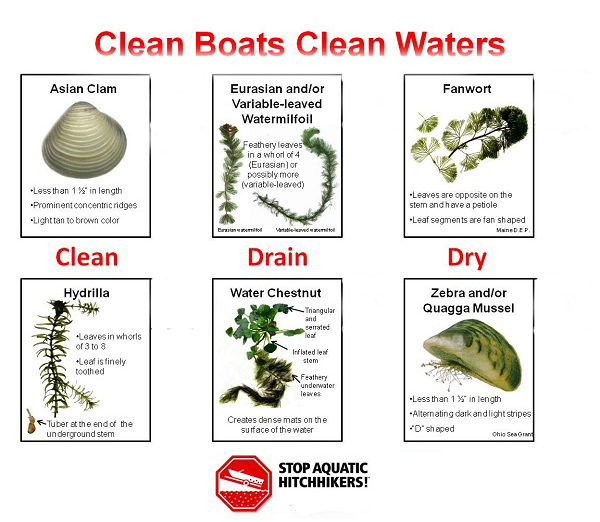
 Green crabs, zebra mussels, hydrilla, and Northern Snakehead – each of these species is cropping up in and around waterways outside of their native habitat, and their presence has the ability to disrupt and negatively impact the ecosystems where they make their new homes – and the ability to disrupt PWC racing, recreation and the PWC lifestyle in general.
Definitely not the beginning of one of the more exciting and fun articles WCJ will publish this spring and summer, but one that bears mentioning, especially in light of a recent note from IJSBA lead man Scott Frazier.
For the past several years, there has been a fairly steady stream of news briefs regarding regulations, practices, policies and check-station procedures for Watercraft Inspection and Decontamination Programs. While significantly noted in the western portions of the country, we are now beginning to see smatterings of similar concerns in a more widespread region, and lately, it is rare that a day goes by that there are not a dozen or more alerts that come across my desk regarding new, increased or altered regulations put in place to try and address the growing problem of aquatic invasive species, and the efforts being put in place to prevent these species from hitchhiking from one body of water to another on your PWC, trailer and gear.


According to the U.S Fish and Wildlife Service, “Aquatic invasive species cause tremendous harm to our environment, our economy, and our health. They can drive out and eat native plants and wildlife, spread diseases, and damage infrastructure. Aquatic invasive species damage wildlife and communities by permanently altering habitats, reducing production of fisheries, decreasing water availability to residential and commercial users, blocking transportation routes, choking irrigation canals, fouling industrial and public water supply pipelines, degrading water quality, and decreasing property values.
Preventing introductions of potentially harmful species is the most efficient way to reduce the threat of invasive species. Once introduced, an invasive species can spread uncontrollably, harming vital ecosystems and native wildlife and plants and impacting recreation, human, animal, and plant health, the economy, and infrastructure.
In a post on the IJSBA website earlier this month, Frazier acknowledged the issue, its growing prominence in guiding and amending state and federal regulations, and addressed this direct impact this may have on the PWC racing industry.

“Noting that several reservoirs are being closed with mandatory vessel quarantine a prerequisite to using the waterway when they open, IJSBA is being proactive in creating a best practices plan for personal watercraft competitions. When an IJSBA sanctioned event is held, it is usually in a location that requires most participants to travel from out of the area. If quarantine methods are in place, participants could face difficulty launching and using the waterway where an event is held. IJSBA expects the issue of quarantine and prevention to increase beyond the Western United States where such concerns are currently ramping up. IJSBA has already reached out to water regulatory bodies in California and Oregon to begin creating a best practices program where event permit holders may be required to prevent the introduction of invasive species into the permitted area. If you have expertise in this field and would like to participate, please contact [email protected].”
For the most comprehensive guide for “Clean and Clear” operations and to help with the ongoing battle against this invasive species concern, visit the National Oceanic and Atmospheric Administration guide .
For a state-by-state list of active invasive species, visit the National Environmental Education Foundation website.
This quick video from the Royal yachting Association gives a rundown of a standard Clean and Clear, or “Check, Cleand, Dry” post-ride process.