


 Tow season is officially here, and if your ski, wakeboard or tube has been sitting in the garage since last fall, Sea-Doo just dropped a timely reminder of what it takes to do this right.
The basics apply whether you’re pulling a nervous first-timer on a tube or an experienced wakeboarder looking for speed: the right equipment, a clear plan and a basic understanding of the rules where you’re riding.
On the equipment side, one detail worth knowing if you’re new to it — the tow point actually matters. Sea-Doo is specific here: the tow eyelet at the back of the seat is for tubing only. The ski pylon is reserved for skiers and wakeboarders and should never be used to pull a tube. It’s the kind of thing that gets overlooked, and it matters for both safety and the integrity of your equipment.
Rope length is another variable most riders don’t think about until they’re already on the water. For tubing, you want at least 50 feet. Wakeboard ropes typically run 45 to 70 feet, and waterski ropes generally fall in the 60 to 70-foot range. For beginners in either discipline, shorter is better — it keeps the pull more manageable and gives the driver better situational awareness.
 Speed follows the same logic. Sea-Doo recommends starting around 15 to 20 mph for beginners and adjusting up only at the direction of the person being towed. For riders on models equipped with Ski Mode, the five acceleration Ramp settings do the heavy lifting here — Ramp 1 offers a slow, gentle pull suited for kids or new riders, while Ramp 5 is full-send for experienced boarders and skiers. It’s a genuinely useful feature for anyone who’s ever tried to manage smooth throttle with one eye on the mirror.
Speaking of mirrors — depending on where you ride, one may be required by law. Many areas also mandate a dedicated spotter onboard in addition to the driver. Check local regulations before you launch. And on that note: Sea-Doo’s guidance is clear that you need enough seating for three — driver, spotter and the person being towed. That means one person in the water at a time.
Before you head out, run through the hand signals with everyone involved. It’s hard to communicate once the engine and the wake noise take over, and a quick five-minute review of the basics — speed up, slow down, stop, problem — prevents a lot of confusion once the rope goes taut.
It’s not a complicated checklist. But it’s easy to skip when you’re in a hurry to get on the water. Sea-Doo’s full guide is worth a read before the season gets rolling.
If you want to go deeper, we covered the hands-on side of this back in 2021 with a Club Marine TV video that walks through the whole setup from dock to water. Still holds up. Video: All The Right Steps for Towing with a Sea-Doo
Read the full post below:
Tow sports are an awesome way to level up the Sea-Doo life. Whether it’s waterskiing, tubing, wakeboarding, or wakeskating, it’s hard to beat the excitement and adrenaline of that perfect day with your Sea-Doo, towing friends in your wake. These tips will help you get the most out of those epic shred sessions.
Towing safety
It’s no surprise that safety should be the number one priority when using your Sea-Doo to tow people behind your watercraft. When done correctly, just about anyone can enjoy a fun trip around the water in the wake.
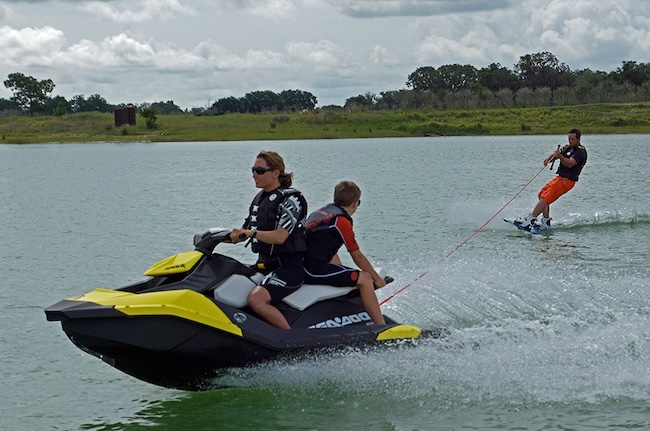
Your first step is to understand the rules and regulations of the body of water you’ll be on. Different areas have their own specific rules. For example, some areas require tow watercraft to be equipped with a mirror. Others require a spotter or observer on board. It’s always recommended to have a spotter facing the rear of the watercraft to ensure the safety of the person being towed. Just be sure to double check the rules before you launch your Sea-Doo.
PRO TIP: If you’ve never towed with a Sea-Doo before, try spending a few hours as a spotter first, so you get the feel of how the watercraft operates while towing a person.
A properly fitted PFD is paramount when it comes to towing safety requirements for all participants. A U.S. Coast Guard-approved Type I, II or III is mandatory for the driver, spotter (or observer) and the person being towed.
Watercraft capacity is another important Sea-Doo towing factor. There must be enough seats on board the watercraft for three people – driver, spotter and the person being towed. That means only one person should be towed behind your Sea-Doo.
Sea-Doo towing equipment
Most Sea-Doo models will come equipped with a tow eyelet at the back of the seat or a ski pylon attached to the rear deck. This is where you’ll attach the tow rope to your Sea-Doo. It’s important to note the tow eyelet should be used for tubing. The ski pylon is only meant for skiers and wakeboarders. Never use the ski pylon to tow a tube.
PRO TIP: Never carry cargo accessories on the rear deck when practicing tow sports as they can interfere with the tow rope.
Select Sea-Doo models are equipped with a Ski Mode to provide five pre-set acceleration profiles called, “Ramps,” that give you the perfect launch for your desired tow preferences. Ramp 1 is the slowest setting with gentle acceleration – great for beginners or young riders. Each ramp increases the acceleration and top speed, with Ramp 5 being the quickest and fastest tow setting for more experienced riders. This unique feature allows the driver to deliver the exact acceleration and speed for the given activity while maintaining their focus on steering rather than throttle lever modulation.
No matter what watersport you’re taking part in, you’ll want to make sure your equipment is in good condition. That includes skis, boards, tubes and ropes. Check the rope for any damage or fraying before you set out on the water.
Proper tow rope length is also important for your given activity and experience level. For tubing, the rope should be at least 50 feet long. Wakeboard ropes typically range from 45-70 feet, and waterski ropes generally range between 60-70 feet. In both cases, shorter rope lengths usually work best for less experienced skiers and boarders.
It’s the responsibility of both driver and spotter to be aware of the location of the rope. Always make sure the tow rope is clear of obstructions and not wrapped around anyone’s feet or hands. Keep the tow rope clear of the jet pump intake, as it can become tangled and cause damage to the watercraft.
Proper Sea-Doo towing speed
Like the length of your tow rope, proper towing speed depends on the activity and the experience level of the person being towed. You should never tow at speeds that exceed the comfort level of the person in your wake. A good starting point for beginners is around 15-20 mph. As you gain experience, you can increase tow speed at the direction of the person you’re towing.Communication is key when it comes to Sea-Doo towing as well. It’s difficult to hear over the noise of the waves and the engine, so understanding commonly used hand signals is the best way to communicate on the water. Practicing the signals in the chart below is a great way to start:
Now that you’ve got the knowledge needed to tow safely on the water, it’s time to get out there and enjoy the Sea-Doo life in the wake with your crew!