



 Every rider has experienced it. Five machines leave the launch ramp together, but by lunchtime one rider is running on fumes, another disappeared two miles back, nobody can agree where to stop for food, and the group’s fastest rider is already halfway to the next county.
Group rides can create some of the best memories in personal watercraft riding. They can also turn into a logistical headache surprisingly quickly. The difference usually isn’t horsepower, experience, or even the destination. It’s planning.
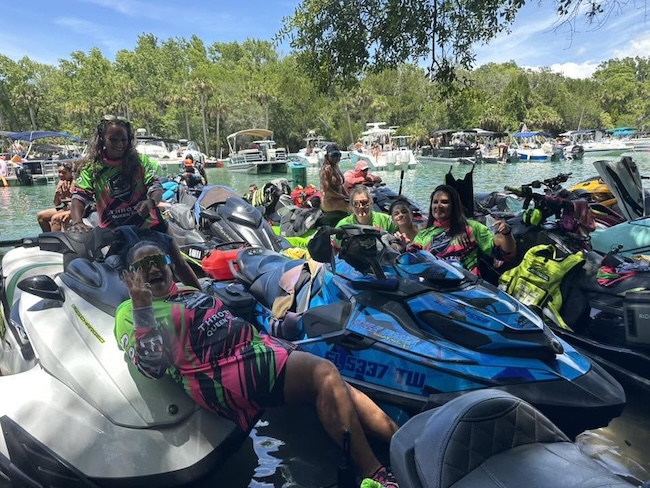
Earlier this month, Florida-based women’s riding group the Throttle Queen Riders proved the draw of group rides when they held their first-ever group ride out of Ed Stone Boat Ramp, destination Silver Glenn Springs
By all accounts – it went off without a hitch. “It was a huge success,” group admin Yvette Aponte Reyes wrote afterward. “So many came out to ride and participate with us. Lots of food and laughter. It was great to meet so many new faces and groups.”
For a first-time event with new riders, unfamiliar faces, and the usual chaos of a launch ramp morning, that outcome doesn’t happen by accident. On the other end of the spectrum, experienced groups running serious open-water routes — think circumnavigation runs requiring insurance verification, tow service, and a 6:30 AM departure — operate with an entirely different planning tier, but the same underlying principles. Whether you’re running a casual cruise to a spring or a full-day ocean passage, the framework that keeps a group together is largely the same.
Here’s how to build it.
 Designate a Ride Leader and a Sweep Rider
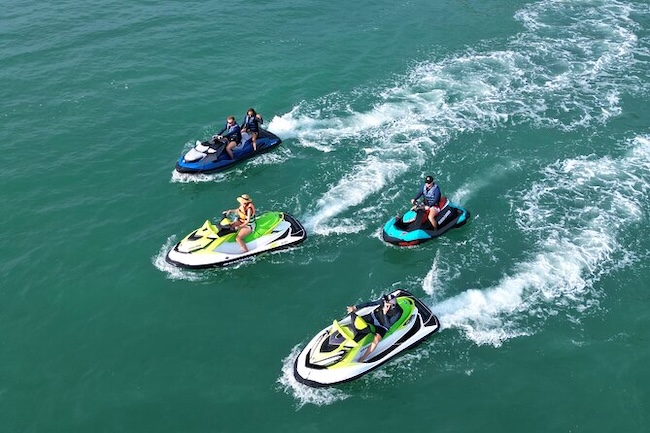
Nobody likes being “in charge” until the group gets separated and someone has to make a call. Before anyone hits the water, identify one person as the ride leader — they set the pace, make route decisions, and are the point of contact if something changes. Equally important is the sweep rider, who takes the last position and is responsible for making sure nobody gets left behind. The sweep should be an experienced rider who’s comfortable running slower than they’d like and communicates clearly with the leader. If you don’t have both roles filled before you launch, you don’t have a plan.
Build the Route Around Your Least Experienced Rider
The pace of any group ride should be set by the newest rider, not the fastest one. This isn’t charity — it’s how you keep the group intact. A ride that splinters within the first hour because half the group rode away from the other half isn’t a group ride, it’s just a coincidental departure. If the skill gap in your group is genuinely wide, the honest solution is to split into two groups with separate leaders rather than forcing everyone into an uncomfortable compromise. But if you’re riding together, you’re riding together. The fastest rider’s job on a group ride is to be a good group rider.
Share the Route Before Anyone Launches
Maps, screenshots, GPS waypoints, notable landmarks — get all of it out before the engines start. Every rider should know the full route, not just the first stop. Include fuel points, meeting checkpoints, and any sections where conditions might require closer attention. If someone’s phone dies or they get separated, they should still be able to piece together where the group is headed. A quick group text the night before with a screenshot of the route takes five minutes and eliminates an enormous amount of confusion on the water.
Know Your Fuel Range and Plan Around It
The one-third rule is a simple mental framework worth sharing with your group: use one-third of your fuel getting out, keep one-third for the return, and hold one-third in reserve. Not every machine has the same range, and not every rider pays close attention to their gauge. Before you launch, have a brief conversation about fuel capacity across the group. Identify the shortest-range ski, and plan your fuel stops around it — not around the machines with the biggest tanks. One rider running dry mid-ride doesn’t just strand that rider. It stops everyone.
Establish Communication Before You Leave the Dock
Waterproof phone cases, VHF radios, pre-agreed hand signals, designated meeting points — whatever your group uses, make sure everyone understands it before the ride begins. Decide in advance what the protocol is if someone falls behind: does the group hold position, does the sweep stay back, is there a checkpoint where everyone waits? Pick two or three landmarks along the route as rally points so that if communication breaks down, everyone knows where to regroup. “We’ll figure it out on the water” is not a communication plan.
 Keep the Group Size Manageable
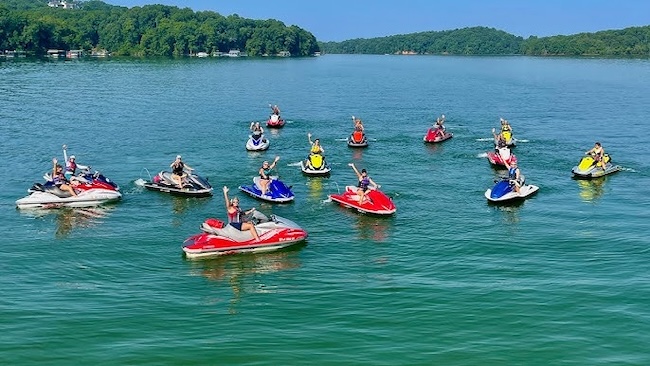
There’s no hard rule on group size, but experienced ride organizers will tell you that somewhere around six to eight machines is a natural ceiling before coordination starts to break down. There is a reason seasoned riders refer to larger group rides in terms of “herding cats.” Ten skis on the water together require active management. More than that and you’re essentially running an event, which means you need more structure, not less — multiple sub-groups with their own leaders, staggered departures, checkpoint accountability. If you’re organizing a large-scale ride, lean into that structure rather than hoping the group stays together on goodwill.
Run a Pre-Ride Safety Check Together
Before the first engine starts, take five minutes as a group. Kill switch lanyards on. Life jackets fitted and fastened. Fuel levels confirmed. Anyone with a mechanical concern speaks up now, not two miles out. It sounds basic, but it’s the kind of basic that gets skipped when everyone’s excited to get on the water. The sweep rider is a good person to own this checklist — it reinforces their role and catches the things individuals miss when they’re rushing.
Establish an Accountability Protocol
The sweep rider counts heads at every checkpoint before the group moves on. Full stop. If the count is short, the group holds position until the missing rider is located or contacted. This doesn’t need to be formal or heavy-handed, but it needs to be understood before you leave the dock. The most common version of a rider getting truly lost in a group situation isn’t a dramatic emergency — it’s a series of small moments where everyone assumed someone else was keeping track.
Set the Etiquette Expectations Early
No surprise racing. No wake jumping around riders you don’t know. No cutting inside another rider without a clear signal. Good group riding has a positive side too: maintain reasonable following distance, communicate before passing, stay in the leader’s wake when conditions require it. A quick two-minute conversation about on-water behavior before launch sets the tone and gives you something to point back to if someone starts riding outside the spirit of the group.
Have a Backup Plan for Everything
Weather changes. Skis break down. Someone decides halfway through that they’ve had enough and wants to head back. Build your plan with the assumption that at least one thing will go differently than expected. Know the nearest boat ramp to every major point on your route. Identify who in the group has a tow rope and basic mechanical knowledge. Make sure at least one rider has a number for on-water towing service saved in their phone. The backup plan isn’t pessimism — it’s what lets everyone else relax and enjoy the ride.
Think Bigger: Charity Rides and Community Events
Group riding doesn’t stop at your friend circle. At this time of year, charity rides are happening in most local riding communities — organized events that raise money for causes while putting dozens or hundreds of skis on the water together. If there isn’t one in your area, that’s an opportunity. The Throttle Queen Riders built something from nothing — a group, a route, a first ride — and came back from it with new friends and a community that didn’t exist before. That’s what a well-run group ride can become.
The water is more fun with people in it. The planning just makes sure they all end up at the same place.