 From built-in compartments to adventure-ready cargo systems, here’s what riders should consider when comparing storage capacity on today’s top touring personal watercraft.
Horsepower, acceleration and top speed often dominate the conversation when riders begin shopping for a new personal watercraft. But ask someone who’s spent countless weekends exploring waterways, cruising to waterfront restaurants or making all-day rides, and they’ll likely tell you another feature quickly climbs the priority list: storage.
The ability to bring along towels, dry clothes, safety equipment, snacks, drinks, dock lines and other essentials can make the difference between cutting a ride short and comfortably staying on the water for hours. It’s one reason the team at Broward Motorsports recently compared the storage capacity and touring features of three of today’s most popular large-displacement personal watercraft: Yamaha’s FX series, Kawasaki’s Ultra lineup and the Sea-Doo Explorer Pro.
While published storage figures provide a useful starting point, the comparison also highlights an important point for buyers: choosing the best storage setup isn’t always about finding the biggest number on the spec sheet.
What Do Nearly 170 Liters of Storage Really Mean?
Storage capacity is typically listed in liters or gallons, but those numbers don’t always paint a clear picture.
A storage capacity of around 168 liters is enough to accommodate the gear many riders pack for a full day on the water. That might include a pair of beach towels, a soft-sided cooler, a dry bag with extra clothing, dock lines, a first-aid kit, sunscreen, sunglasses and other personal items, while still leaving room for smaller necessities.
As rides get longer, storage becomes less about convenience and more about flexibility. Instead of carefully choosing what gets left behind, riders have room to pack for changing weather, additional passengers or spontaneous stops along the way.
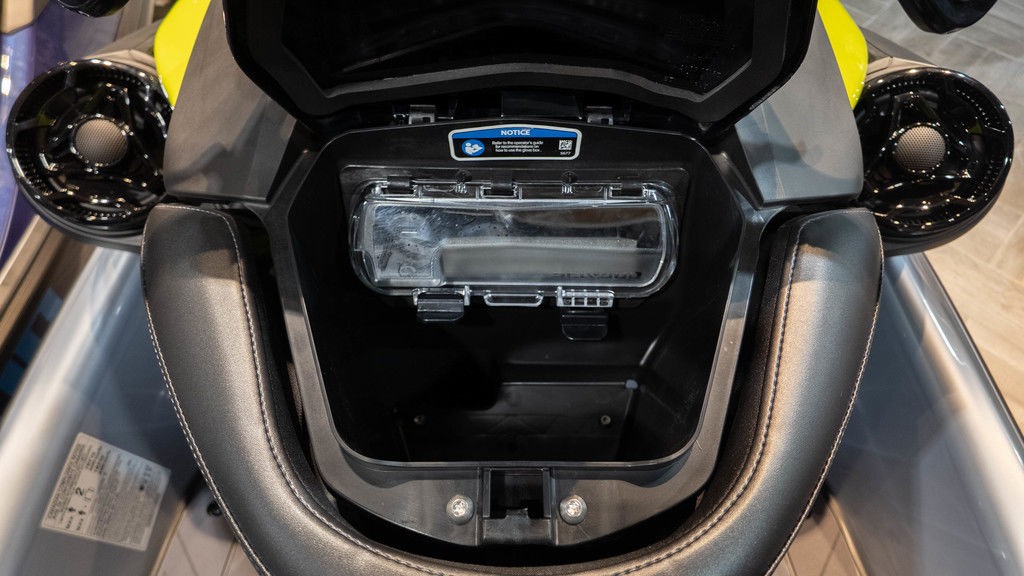
Just as important as capacity, however, is how that storage is organized. Multiple compartments can make frequently used items easier to access, while larger cargo areas are often better suited for bulky gear. The most practical storage system is one that keeps equipment organized and readily available without requiring riders to unpack half the craft to find a dock line or waterproof jacket.
Three Different Approaches to Touring Storage
Although each of the three featured models targets riders looking for comfort and long-distance capability, each approaches storage a little differently.
The Yamaha FX Cruiser HO and FX HO offer a claimed 168.3 liters (44.5 gallons) of built-in storage along with a 70-liter (18.5-gallon) fuel tank. For riders who prioritize integrated storage and premium touring comfort, the FX platform has earned a reputation as one of the segment’s most well-rounded options. Its expansive built-in compartments make it easy to carry everything needed for a full day on the water without relying on additional accessories.
The Kawasaki Ultra 160 LX and Ultra 310 models offer nearly identical cargo capacity at 168.5 liters (44.5 gallons), but pair it with one of the largest fuel tanks in the category at 79.9 liters (21.1 gallons). That additional fuel capacity can be especially appealing for riders planning extended excursions or covering longer distances between fuel stops. Combined with the Ultra’s reputation for stability in rougher water, the platform is well suited for riders who regularly spend entire days exploring.
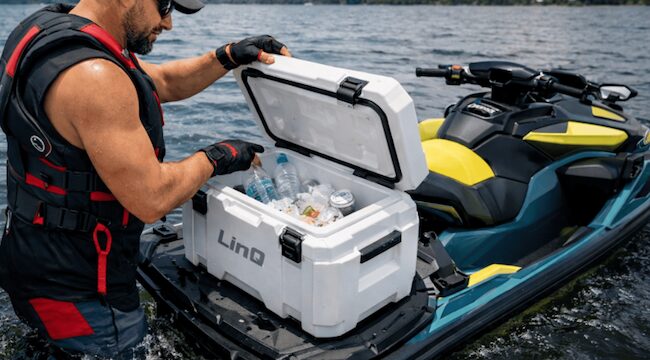
The Sea-Doo Explorer Pro takes a different approach. Sea-Doo lists the model with 198.9 liters (52.3 gallons) of total storage capacity, a figure that includes its removable 100-liter LinQ Explorer Bag. Rather than focusing solely on integrated compartments, the Explorer Pro embraces a modular cargo system designed for adventure touring. Riders planning fishing trips, photography outings or longer expeditions may appreciate the flexibility of carrying additional waterproof gear using the LinQ system.
 Storage Is About More Than Capacity
Comparing published storage figures is helpful, but experienced riders know there’s more to consider than total volume.
The location of compartments, how easily they’re accessed while floating, and whether gear can be separated into smaller organized spaces all contribute to the ownership experience. Keeping a phone, wallet and keys in an easily accessible compartment is often more convenient than storing everything together in one large bin.
Likewise, modular cargo systems offer a different kind of versatility. Riders who frequently pack extra gear may appreciate being able to expand storage for longer adventures while keeping the watercraft streamlined for shorter rides.
Ultimately, the “best” storage setup depends on how the watercraft will be used.
Matching Storage to Your Riding Style
For riders who primarily enjoy afternoon cruises or visits to local sandbars, nearly any of today’s premium touring platforms provide enough room for the essentials.
Those who regularly spend entire days on the water may benefit from larger integrated storage compartments and generous fuel capacity, allowing them to pack more gear while extending time between fuel stops.
Adventure-minded riders who fish, camp, photograph wildlife or simply enjoy exploring unfamiliar waterways may find additional value in expandable cargo systems that accommodate waterproof bags and specialized equipment.
Passenger use is another consideration. Two-up riding naturally means twice the gear, making storage capacity even more important for keeping towels, clothing, drinks and personal items organized throughout the day.
 Practical Features Often Matter Most
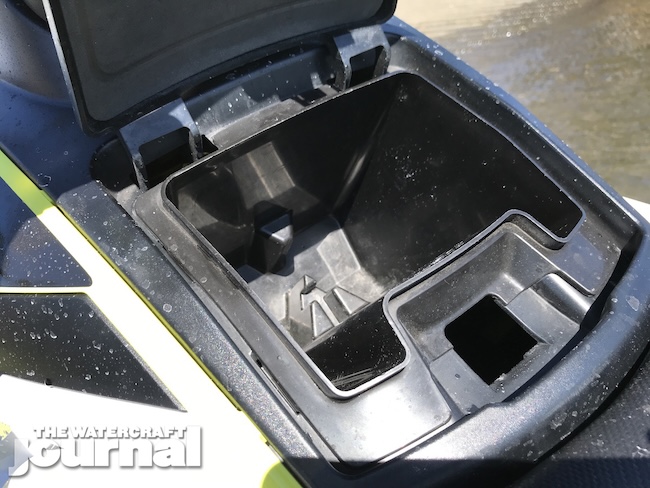
As personal watercraft have evolved into capable touring machines, buyers have begun paying closer attention to the features that improve day-to-day ownership rather than focusing solely on performance figures.
Storage, comfort, fuel range and convenience are the kinds of features riders appreciate long after the excitement of a new purchase wears off. While horsepower may attract attention on the showroom floor, it’s often the practical touches that make every ride more enjoyable.
Broward Motorsports’ comparison serves as a reminder that choosing the right personal watercraft isn’t always about finding the biggest engine or the highest top speed. For riders who enjoy spending full days on the water, storage capacity, fuel range and overall practicality can have just as much impact on the ownership experience. Taking the time to compare not only how much each model carries, but also how that storage is organized, can help ensure your next PWC is ready for everything from an afternoon cruise to an all-day adventure.