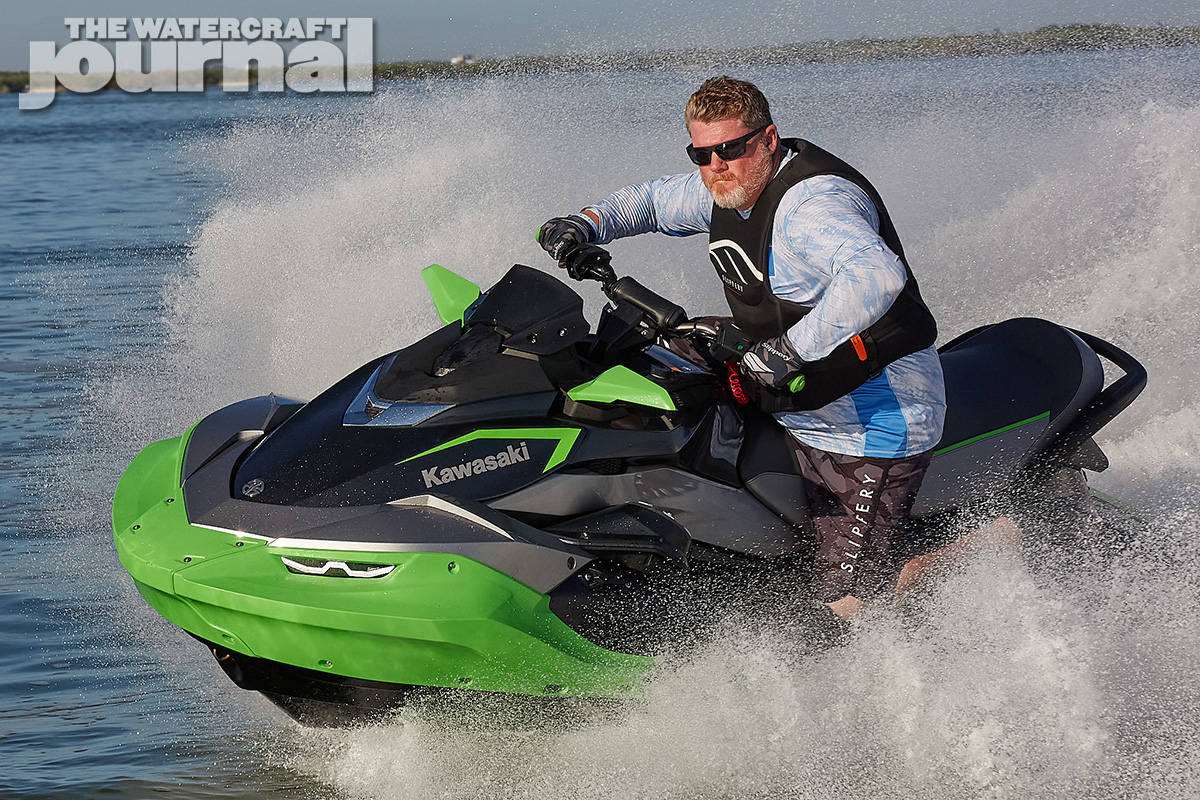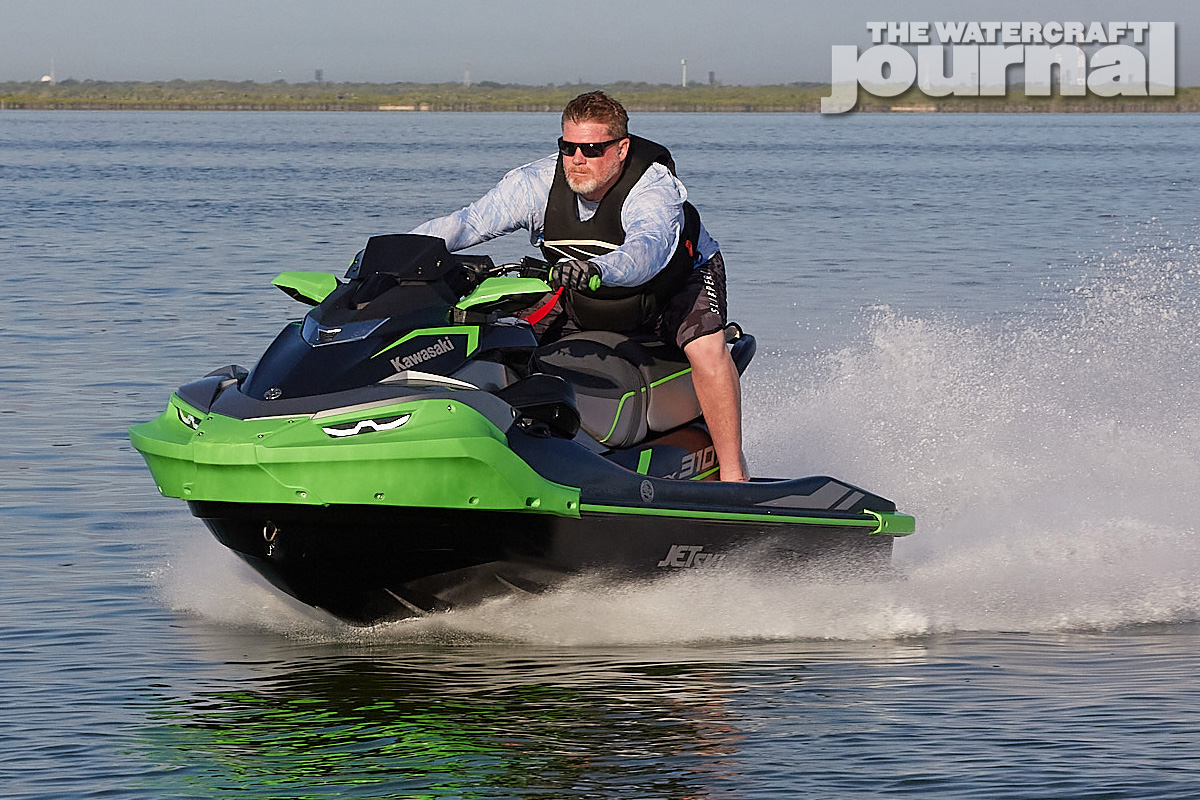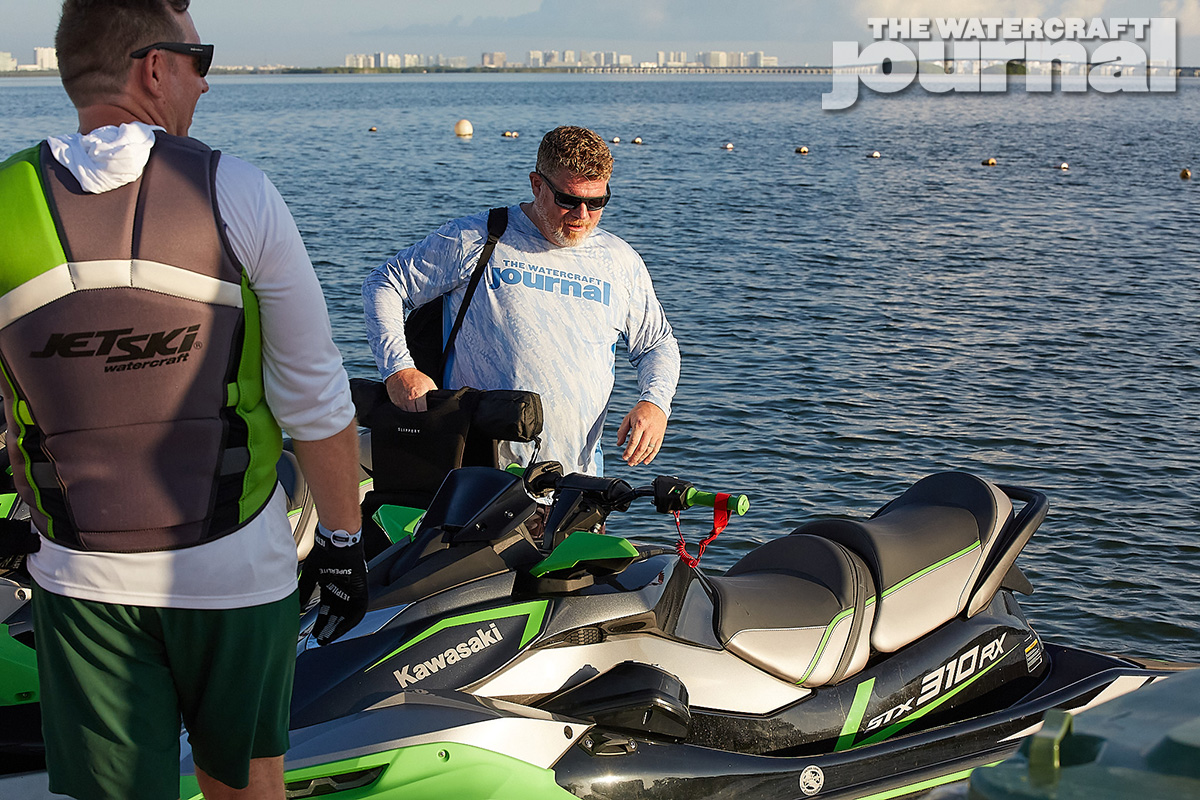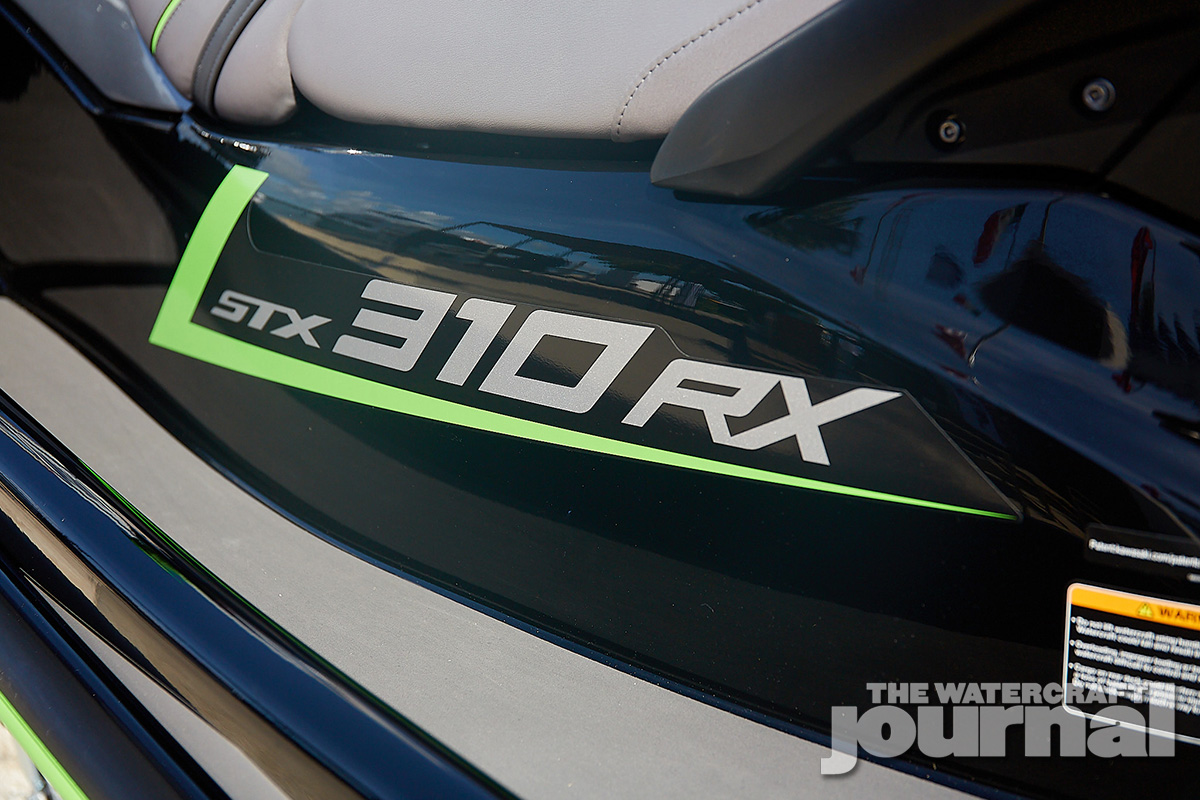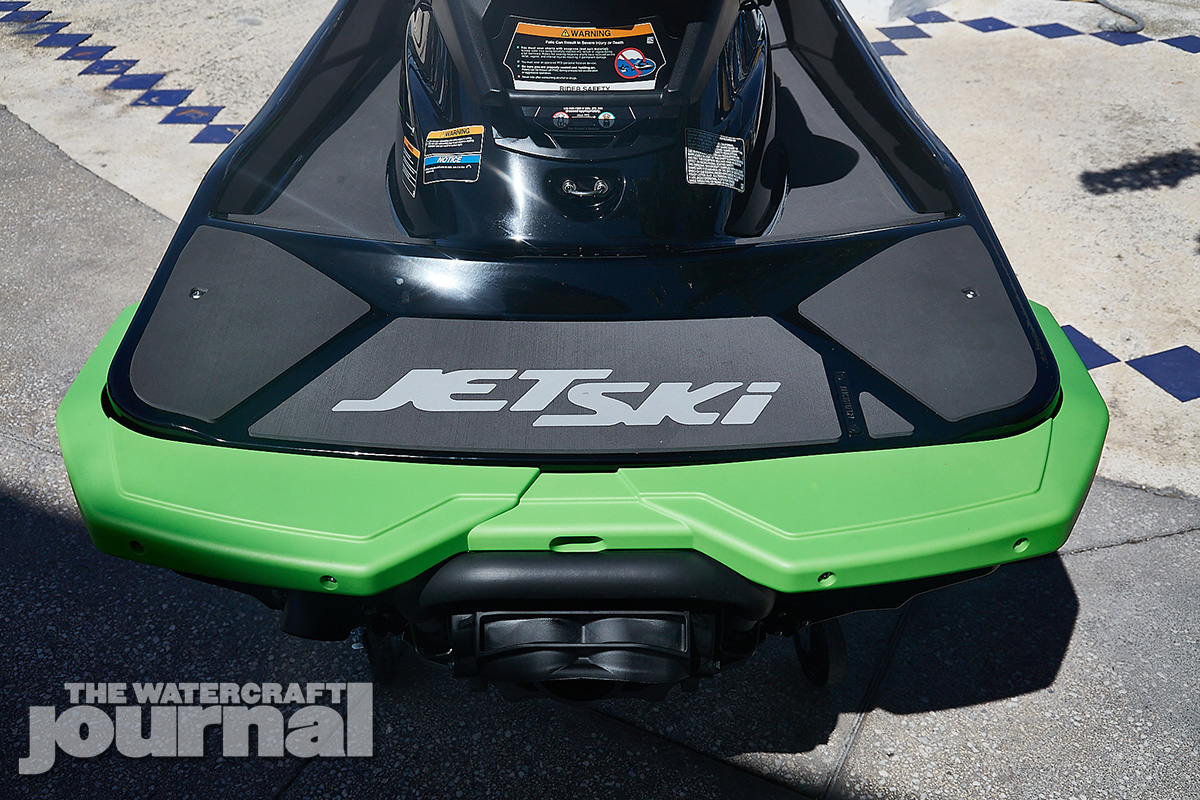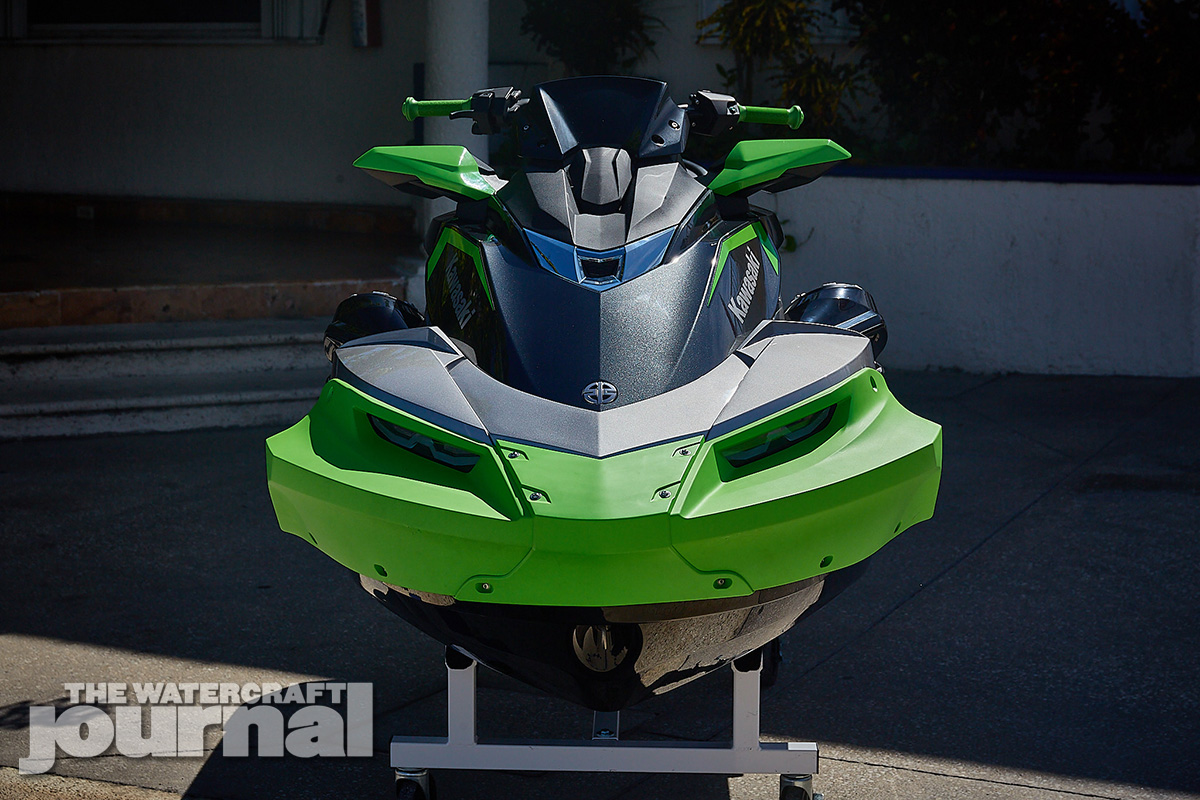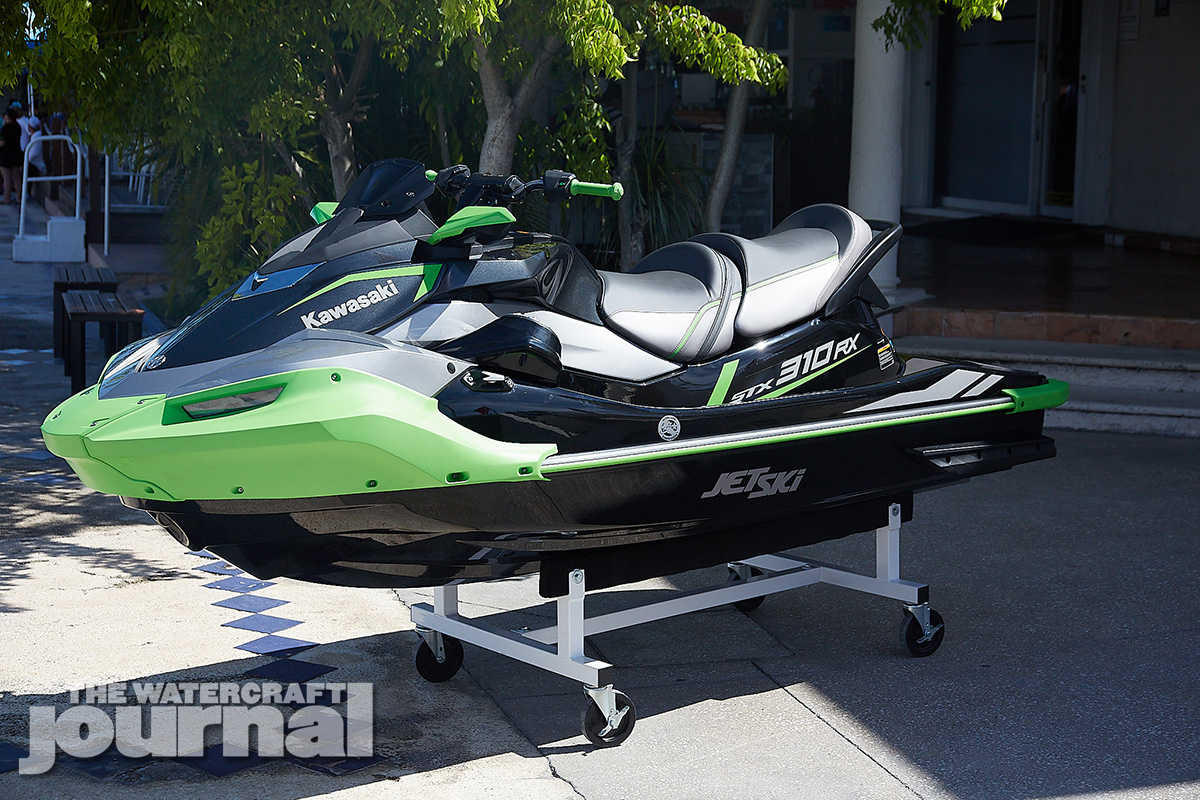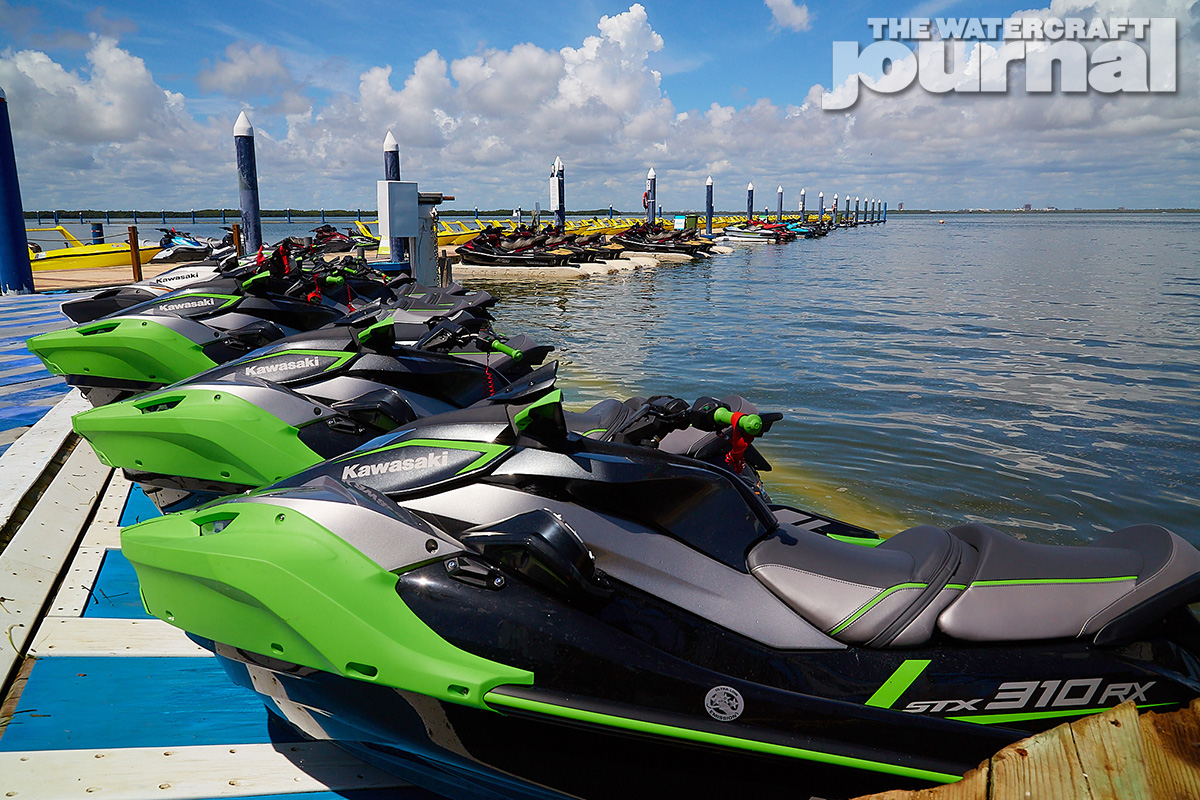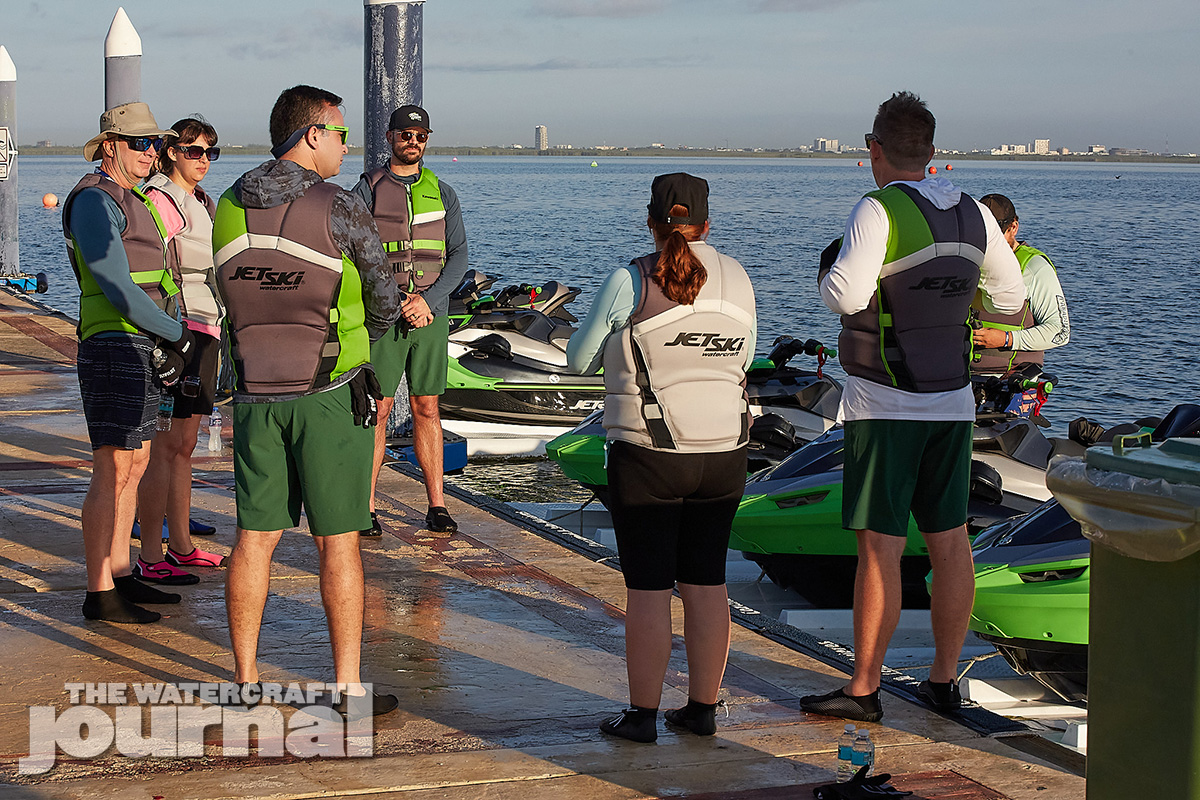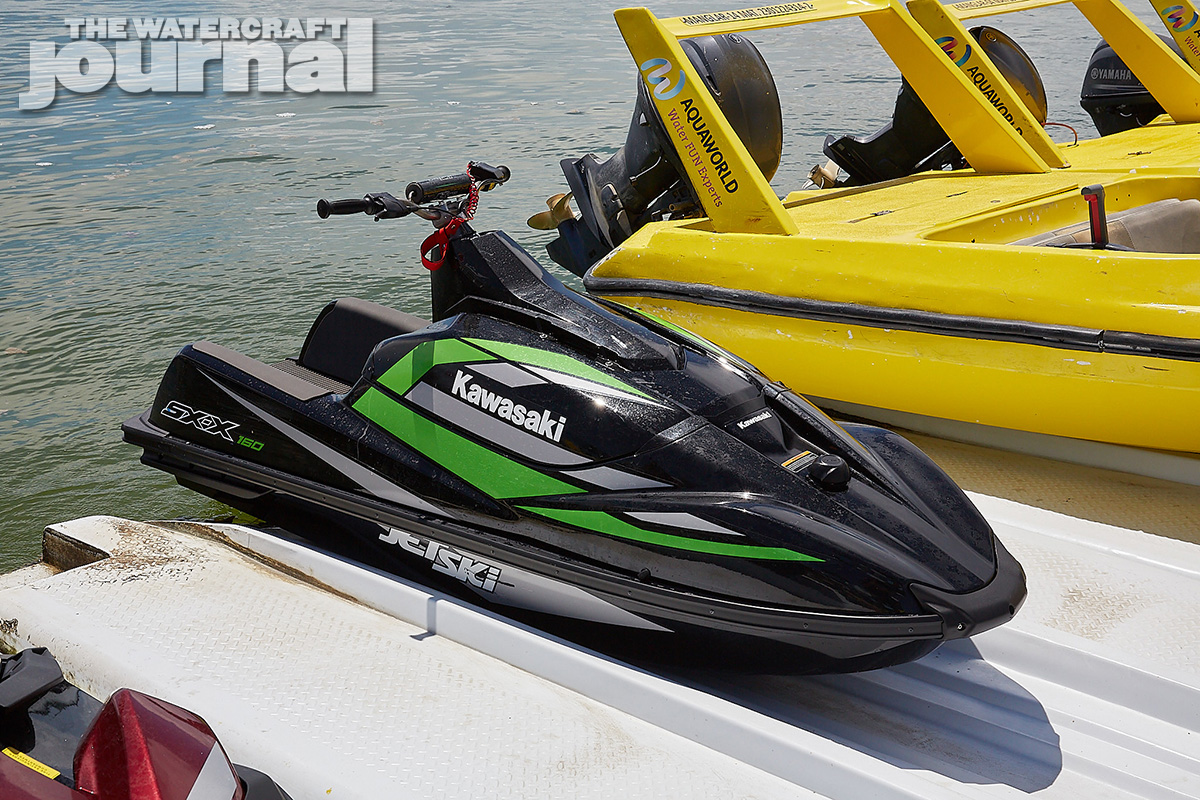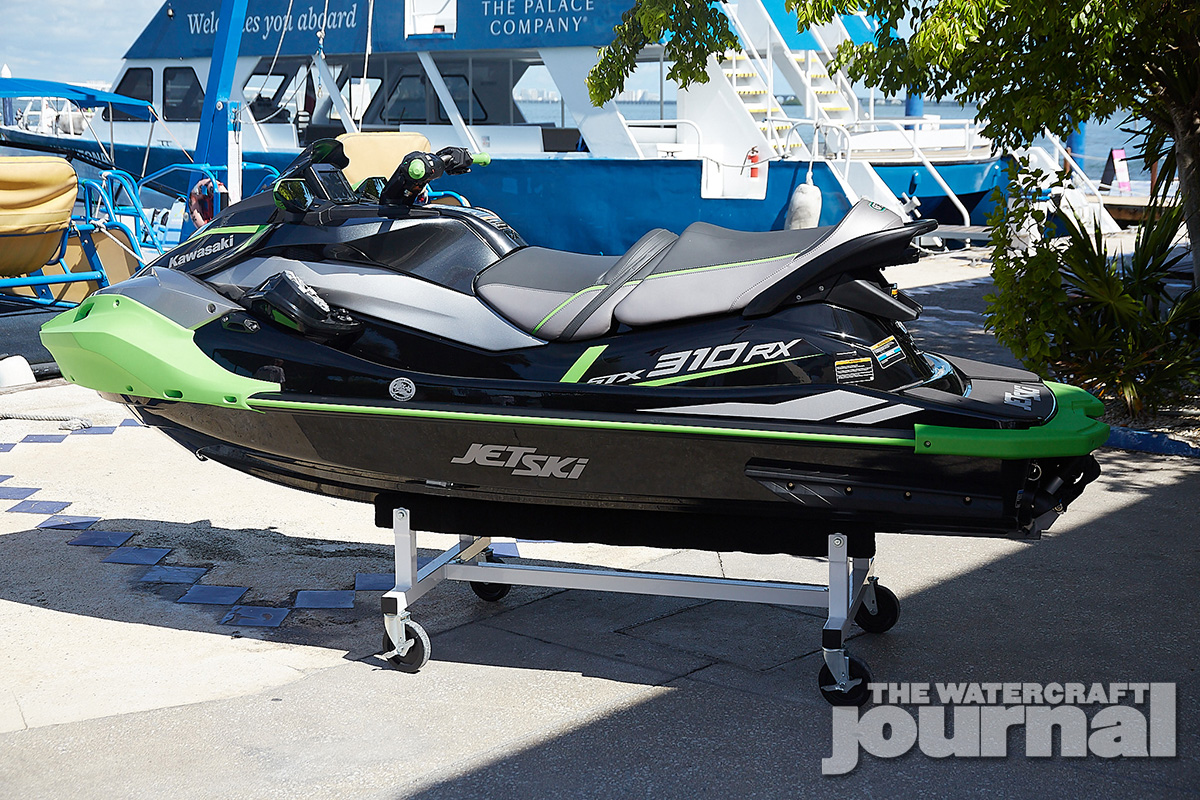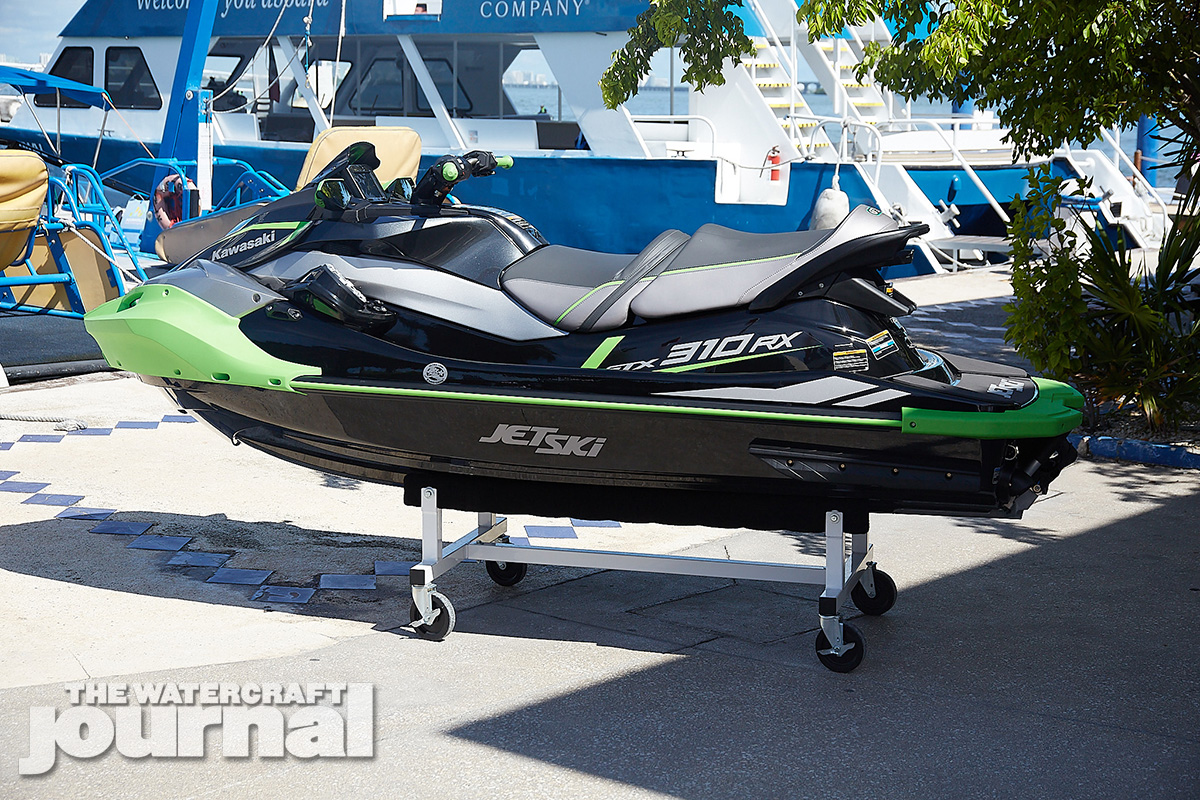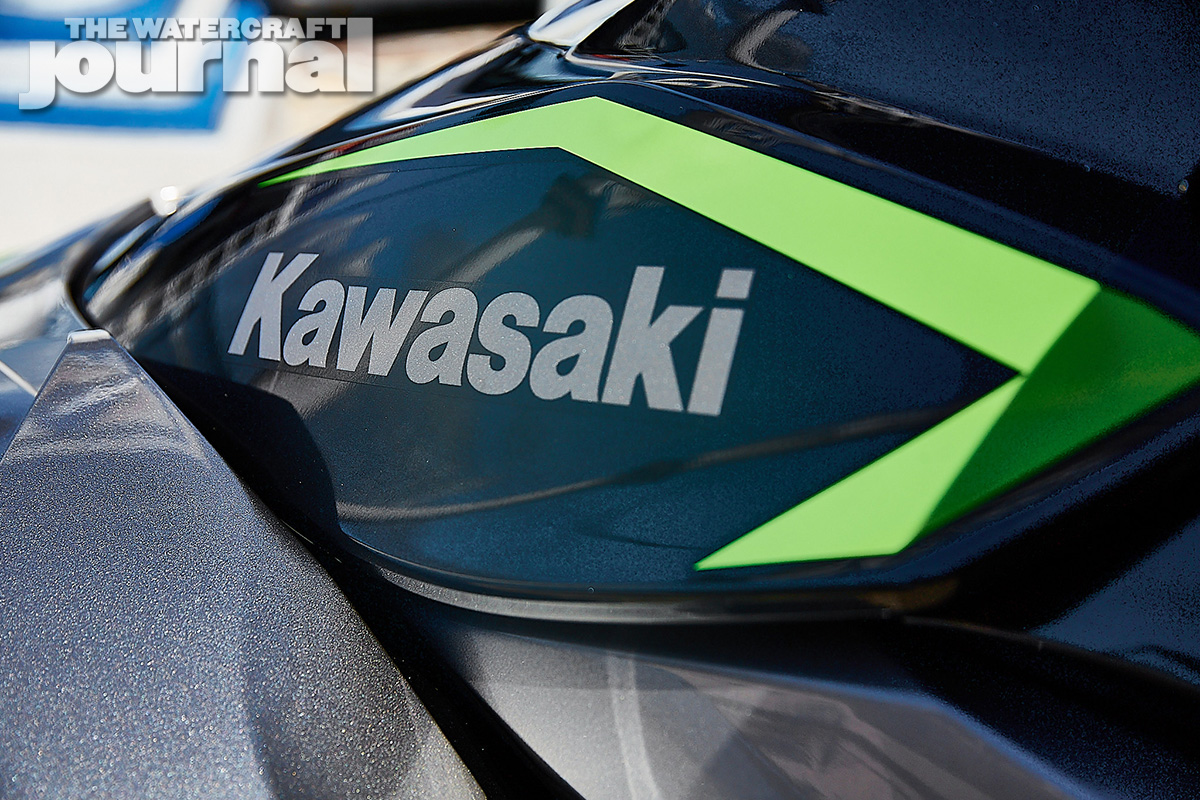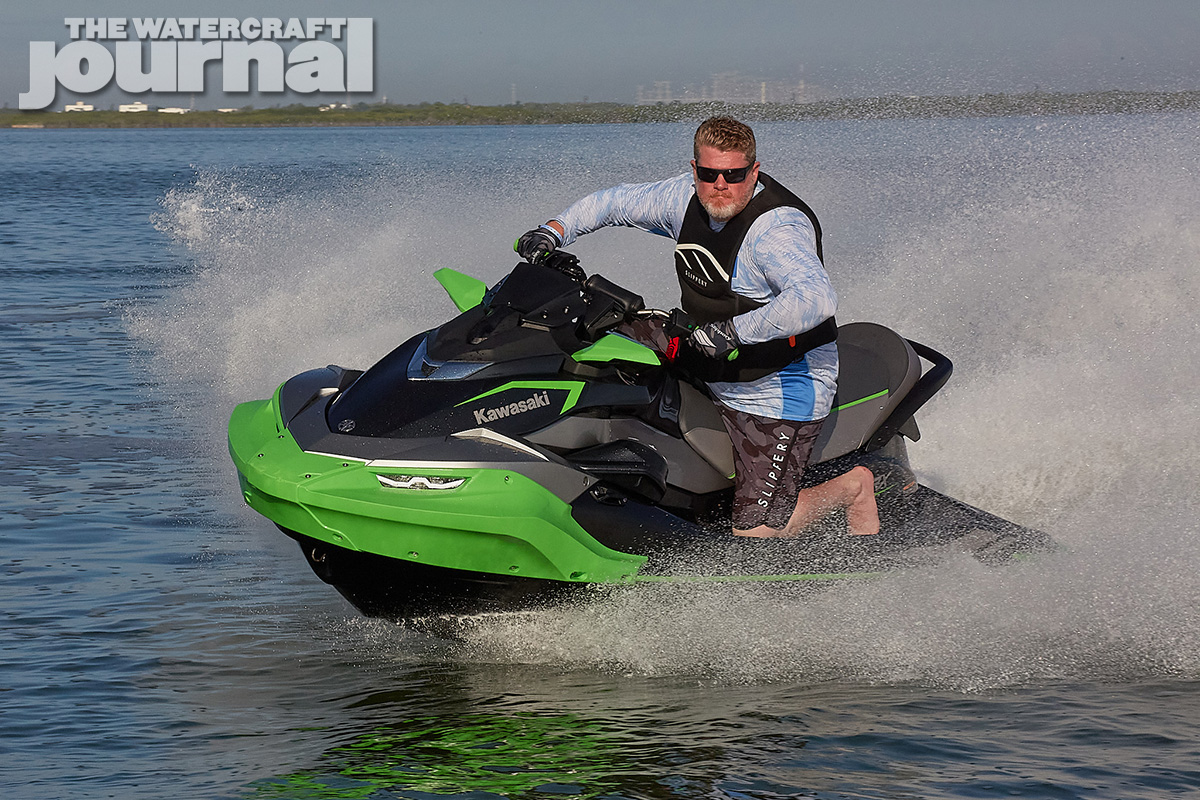



With only a couple of short hours before hordes of dealership owners and representatives came pouring out of tour buses, Kawasaki Motor Corp. USA permitted me and a small handful of media goofs to take a crack at the long overdue supercharged STX 310RX JetSki – as well as a few minutes with the SX-X 160 (or “X cross” as they liked us to call their new fixed-steer standup).
We had all flown down to the annual international dealer meeting in Cancun, Mexico the day before; and had stayed up late into the night discussing and ruminating over the presentation given that evening. The message was clear: Kawasaki was back and in a big way for 2027. With a total of 17 units available, it was the biggest lineup of unique JetSki models in 30 years.
Add to that a whole mess of innovations and new technologies like the industry’s biggest full-color touchscreen on all 310-horsepower Ultras with a “man overboard” detection system; newly minted units dedicated to wakesports and long distance touring; and the anticipated return of the STX-R nameplate but in three stages of trim, and you have yourself a pretty full plate.
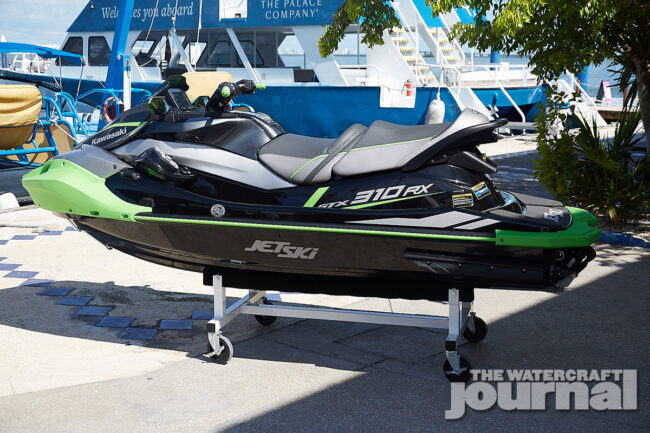
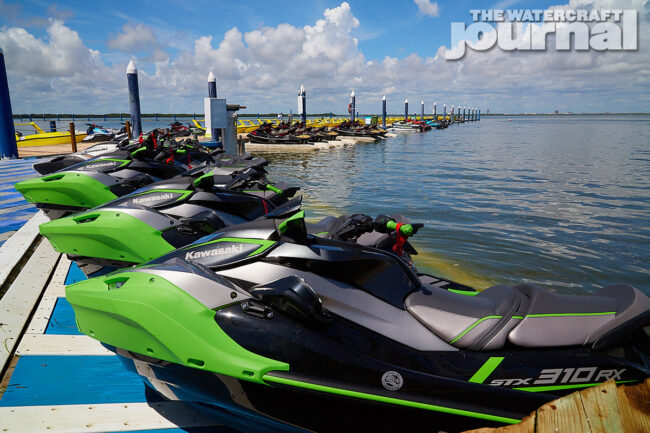
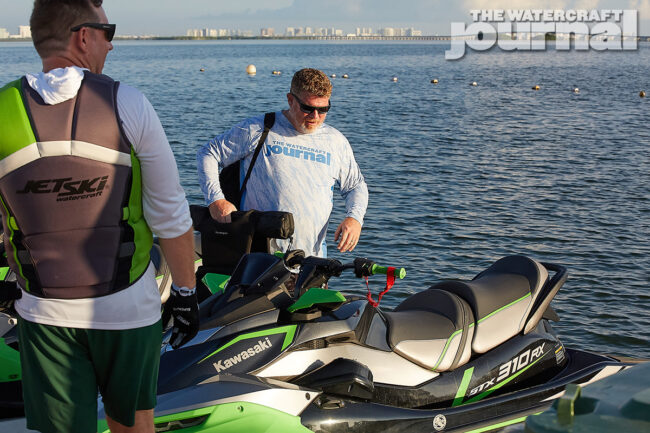
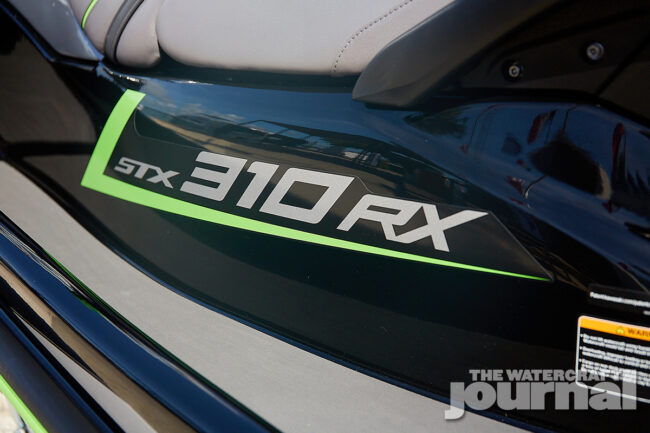
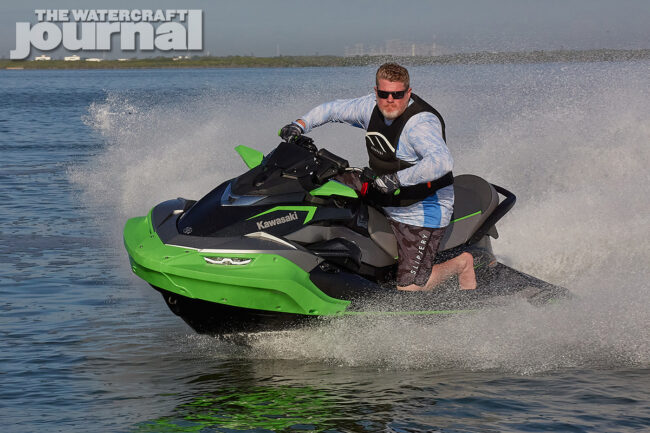
Yes, three. Kawasaki rolled out the naturally-aspirated STX 160R internationally last year – delaying its debut here in the States until 2027. With it came two supercharged siblings, the STX 310R and the higher-trimmed STX 310RX – the unit that Kawasaki wanted us to take for a rip this morning.
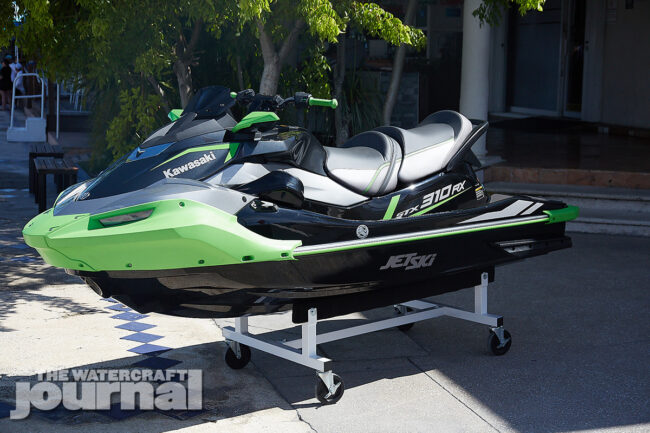
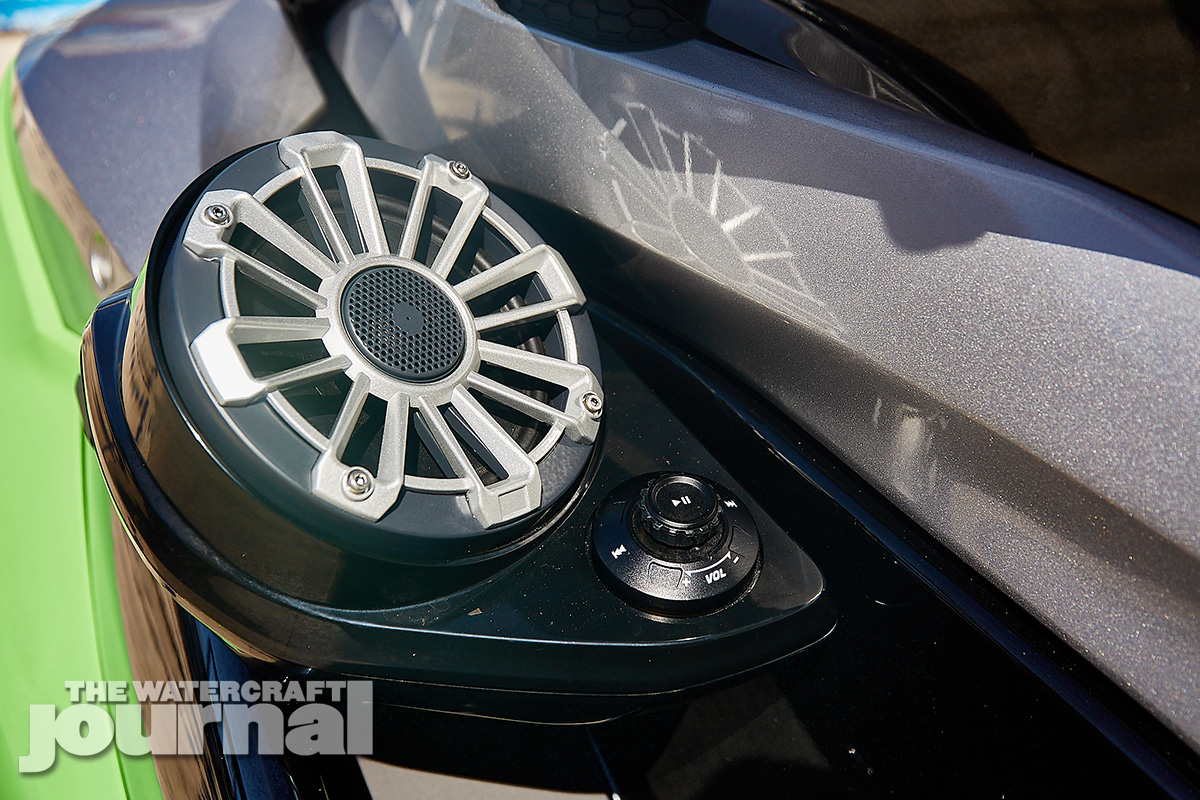
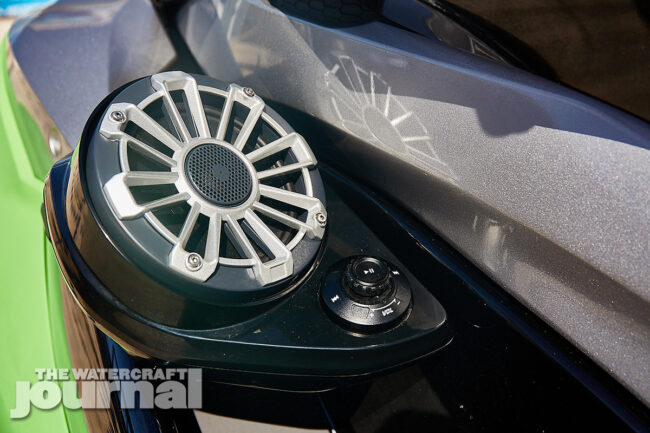
The RX differs from the R in a few key ways: first is sound. The RX comes with Kawi’s Jetsound system standard. Second, the RX has a slightly longer back seat with a taller grab rail for a second or third passenger. The regular 310R has a more abbreviated backseat good for a single passenger.
The RX also has some shiny chrome trim, a lot more silver in its colorway and that’s…about it.
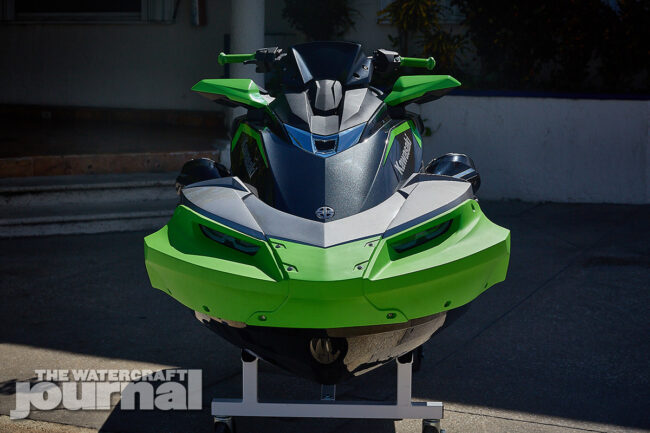
Both the R and RX have the LED high visibility lights and rearward facing camera, which frankly, I think the 310R should be offered without. No weekend hot dogger or racer wants these and would prefer to go without them. Plus, making them unique to the RX makes the unit all the more exclusive.
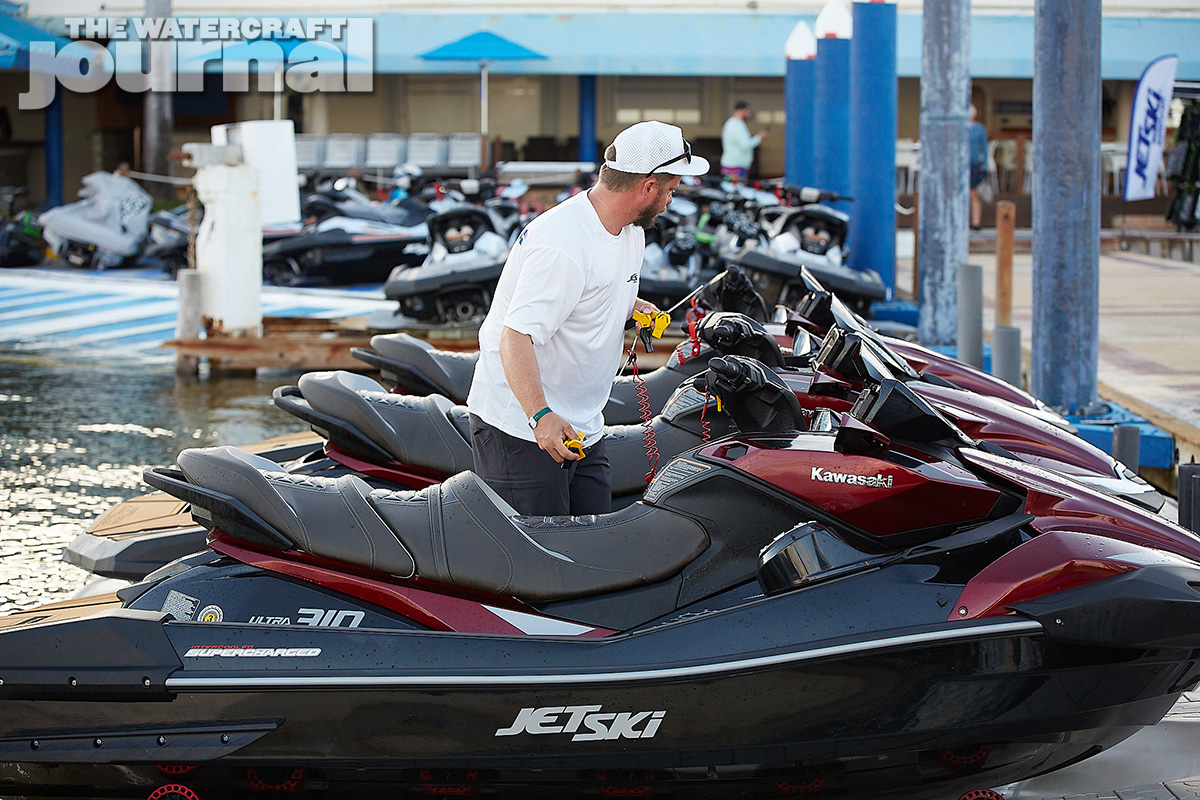
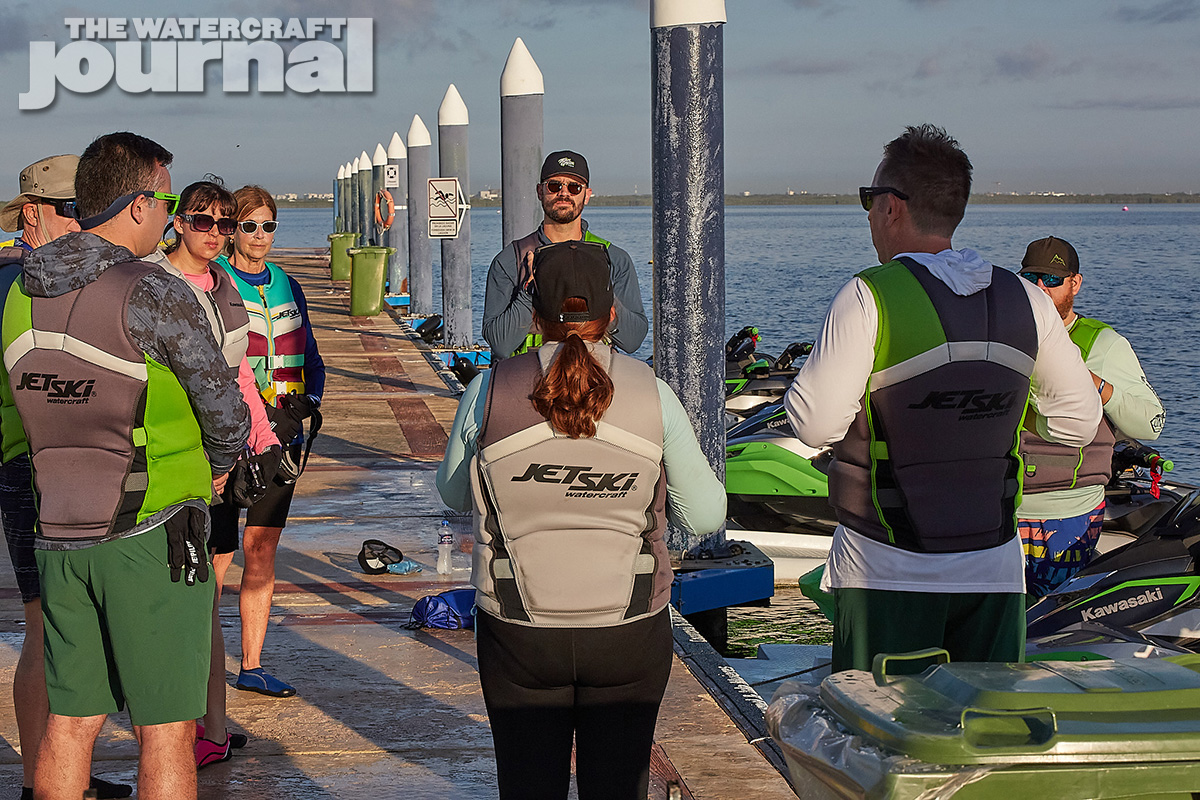
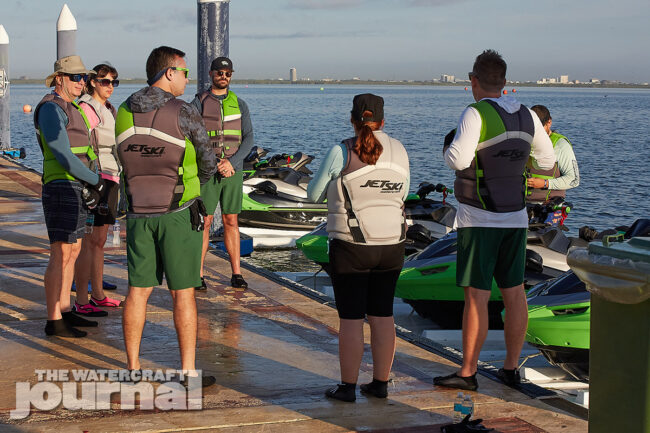
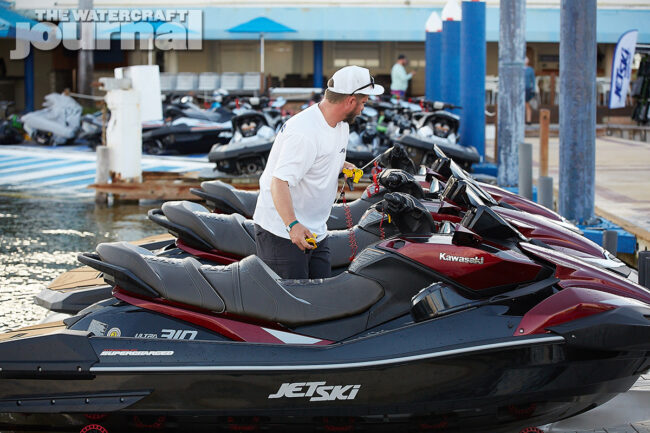
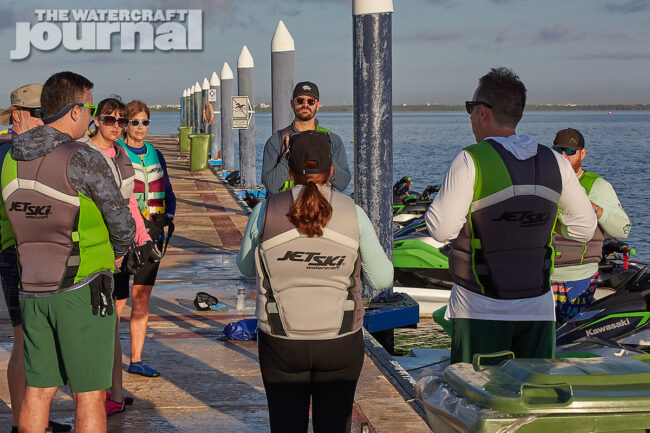
Anyways, we had only a little more than an hour before the entirety of the dealer conference would come to the marina to test ride the STX 310RX as well as the Ultra 310LX, so we had to be quick. Let by former racer and now full-time Product Manager Bobby Kerns on a dark red Ultra 310LX, we idled past the No Wake buoys and sped off towards the harbor’s exit.
Out of the gate, hammering the throttle results in a LOT of cavitation. Just pinging the needle off of the redline. Rolling into the throttle eliminated the “spinning your wheels” feeling but sacrificed precious seconds of acceleration. Kawasaki had advertised this as their fastest accelerating JetSki ever, but I wasn’t feeling it.
“Try the ‘Launch Control’,” was Bobby’s suggestion. Over the two dozen attempts to pull out of the hole, I purposely didn’t once use it. Rather, I wanted to see how it did without the nanny programs. I just couldn’t get it to launch from a start without boiling the water in the pump. If I ever wanted a decent 0-to-60 time in the future, I would have to use the Launch Control. End of discussion.
The MX bars come from the factory set low, so the two pairs of billet washers will need to be stacked for anyone looking to raise them 15mm. Sitting down, the factory setting is perfectly fine; but for those like me who like to stand, you’ll want to grab your wrench set and bring ’em up a hair.
The question most will ask is “How fast is it” and the answer is, “as fast as the rest of them.” Kawasaki obeys that unwritten law of 67 miles per hour stricter than anybody else. And that’s primarily because of California’s crushing oversight infrastructure. The state can’t build a railroad or keep people from pooping on the sidewalks, but it knows how to pry a dollar out of a dead man’s hand.
So yeah, 67 miles per hour. I saw the speedometer blip 68 for a split second or two but my GPS never saw above 67.
…but that’s not to say that the STX 310R doesn’t have it in it to hit mid-to-high 70’s. Kspeed’s prototype STX-R was hitting 80 miles per hour on the regular with pump gas. To think that this new STX-R couldn’t do the same with an unlocked ECU and maybe a re-pitched impeller or shaved ride plate is hard to believe.
How does it handle? Many won’t know that the current STX hull is ever-so-slightly tweaked version of the 2000 STX hull, which later became the original STX-R hull which made legends out of Chris MacClugage, Dustin Motzouris and Dustin Farthing on the closed course.
Sure the sponson placements have moved around and the inner structure has been changed to accommodate the bigger 4-stroke engines, 20-plus-gallon fuel cell and the rest, but the running surface is nearly identical, meaning this son-of-a-biscuit likes to cut corners in a hurry.
initially, the STX feels like its surging through the apex. Almost as if the boost is coming in and out. I tried modulating the throttle through the S-turns but somehow, the feeling remained the same. A sort of inconsistent surging of thrust.
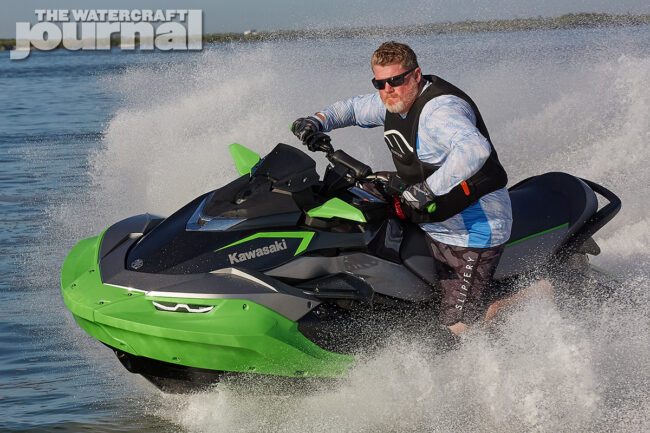
A few more longer sweeping turns later and I got a better feel for it, but I just wasn’t sure I had figured it out. By the time Bobby signaled for us to head back, and he and I got into a little bit of a dash past the mangroves, I knew what the STX was doing. Chine-walking.
Unless I was hanging it all out there over the bond rail, but laying hard into the throttle, the Kawasaki would push itself so hard it would start to side-skip, almost like a race car accelerating forward although the front wheels were turned.
Now this only happened in the wider sweeps. In a 90-degree or hairpin, with my knee pressed into the turf of the footwell and bodyweight hanging out over the bond rail, the STX-R snapped a turn like those light cycles on “Tron.” It was only in a long sweep or snaking through a chicane that I could throttle it hard enough to push itself off of its own line.
The fix to this is a set of deep-set sponsons, their blades digging in and providing added traction. Even in stock trim and limited to a paltry 67mph, the STX-R could outrun its own sponsons. Now that’s saying somethin’. And with that, we had to return back to dock. We could see droves of eager test riders waiting for their shot with the STX-R.
But few if any wanted to take the X-cross out. Kawasaki had only brought out a single unit and it sat there on the floating dock waiting to be ridden. Steven from TK Powersports goaded me to be first, which I had no issue with.
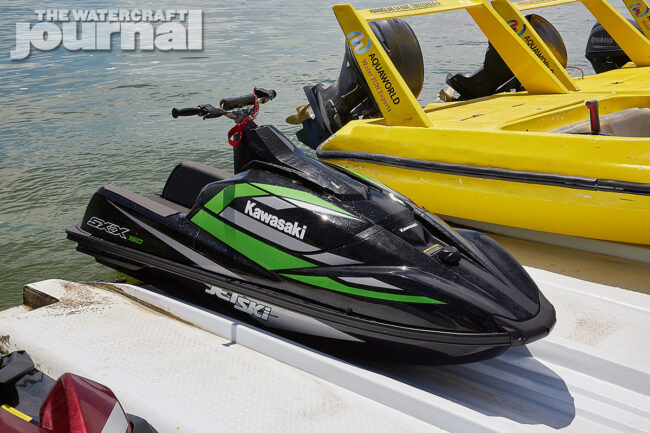
I pushed it off of its rollers and dared to stand in the tray while trying to start it. Nope. Off I went. Deep water reboarding wasn’t terrible but required wearing the lanyard around your wrist or a far longer than stock tether than what comes with it.
With the engine running, all it took was a little throttle to pull one knee into the tray, a bit more gas and BAM! you’re up and running.
And throttle is the name of the game. Despite the seemingly tall neck, the fixed steering is set far too low to stand erect or even give your back a break. Trying to straighten up radically alters the X-cross’ center of gravity and you quickly become a metronome, that is, unless you’re on the gas.
Riding the X-cross correctly means standing in a deep squat. Even Minoru Kanamori in all of the press pictures is squatting super low and he’s around 5’8″ or so. I’m 6’2″ and about 250-pounds with a really cranky left knee. Every time I dared to squat down like Kanamori my knee would begin to protest.
So instead, I found myself doubled over at the waist, looking almost straight down at the gas cap – not a nominal way to ride. But when I did find a squatting position low enough to not irritate my knee, it felt almost identical to riding the SX-R 160. Give is gas and she does most of the work. Back off of the gas and it noses up and starts to wobble.
I wasn’t comfortable enough to really send it and put the X-cross on its side, but frankly, the last standup I was comfortable enough to ride that aggressively was the SX-R 800 and that was a while ago. I’ve always found the current SX-R and even the X-cross to be just too dang big and unruly, like trying to ride a torpedo.
With that, I rode it uneventfully back to the dock and even up the rollers. It’s fine and could be quickly mastered by even a novice rider, but the question that I couldn’t shake was “who was this built for?” There’s just no vocal demand for such a machine that I’ve seen. I hope it finds an audience. I just don’t know who it would be.
And that’s pretty much it, my first impressions of two of the most polarizing new releases from Kawasaki for 2027. These are certainly not to be confused as full fledged reviews. Those will come later when I get more time with both. But seeing that I was specifically flown down to ride these, they deserved to be talked about in this format.