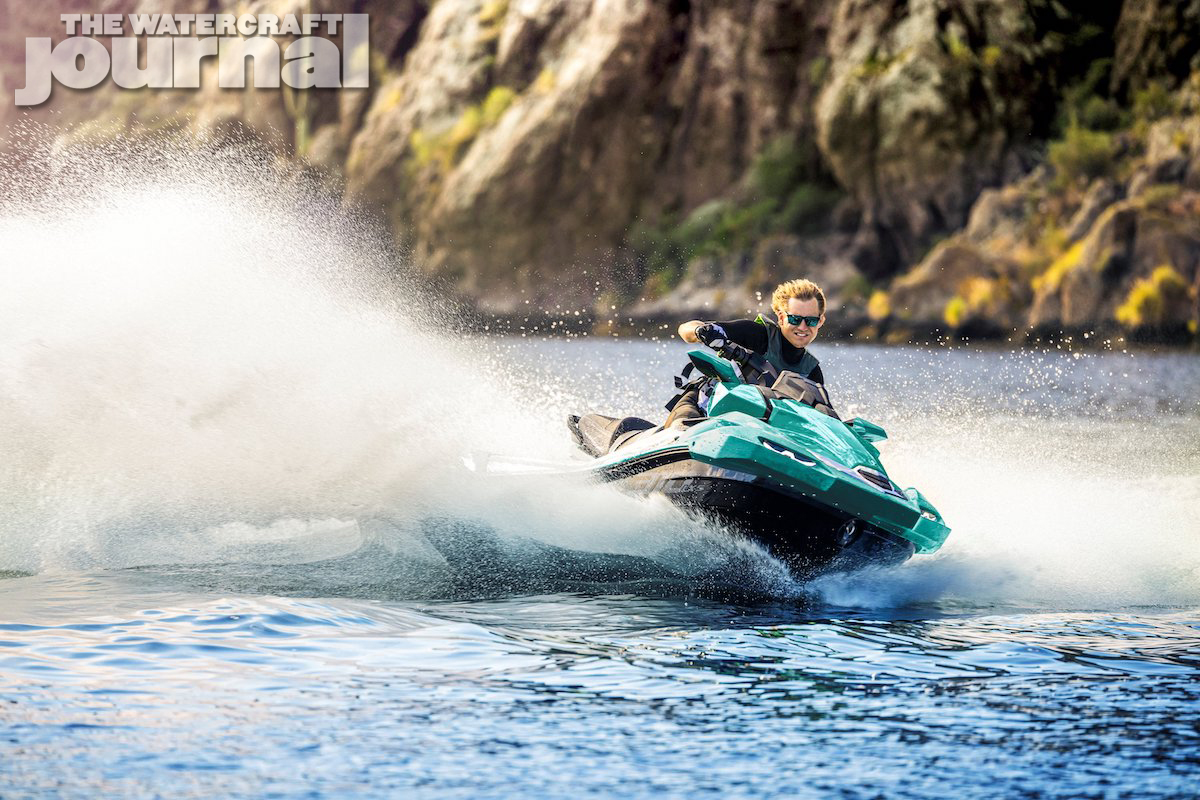
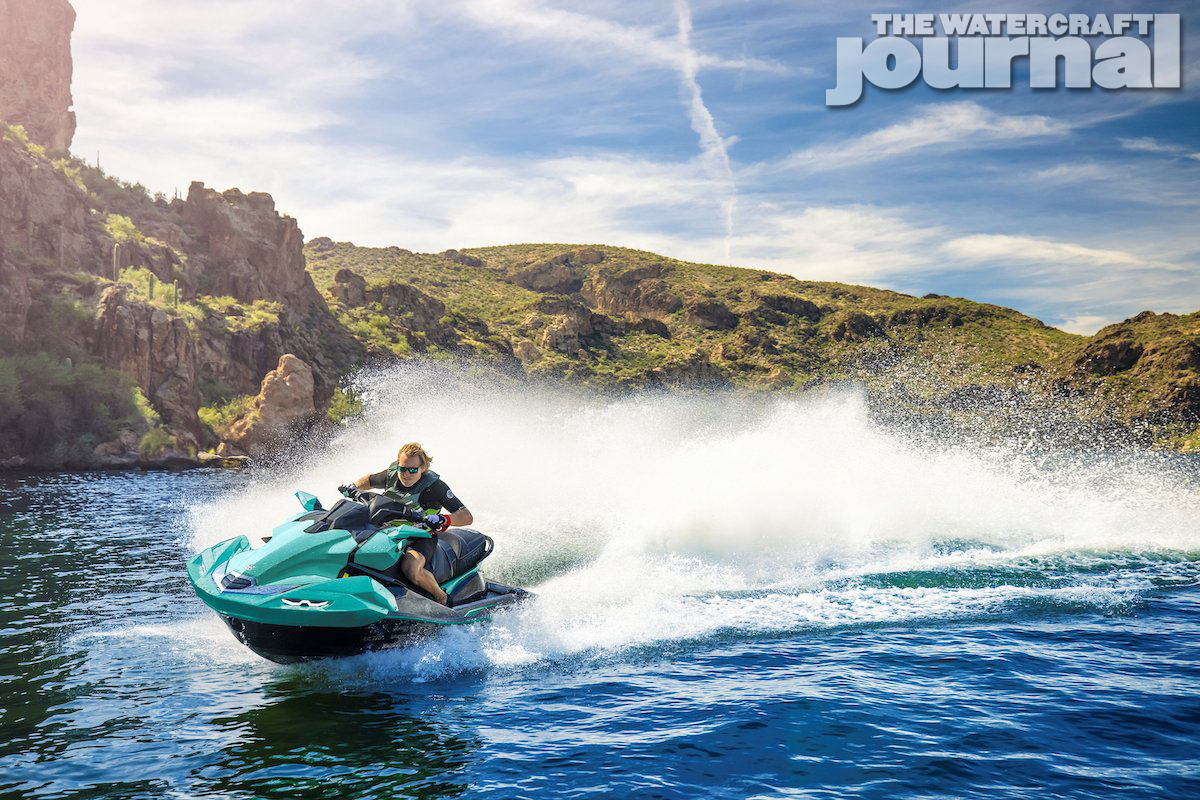
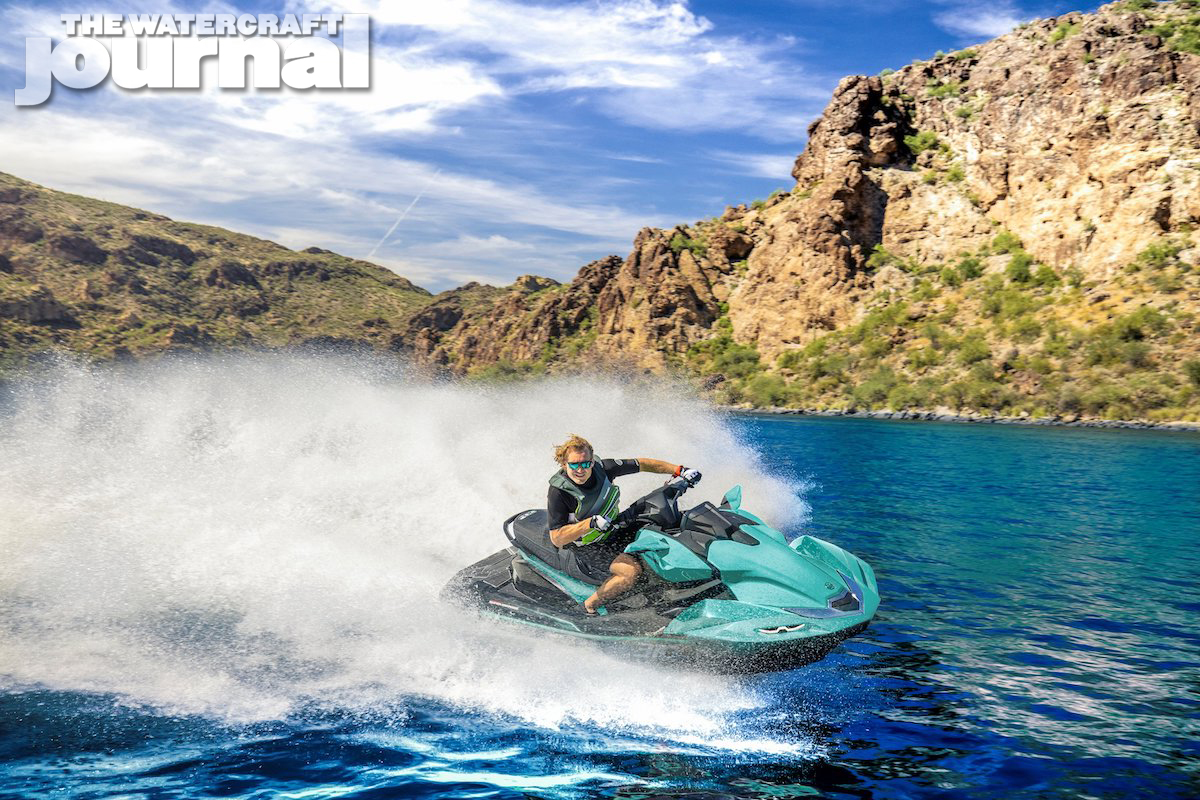
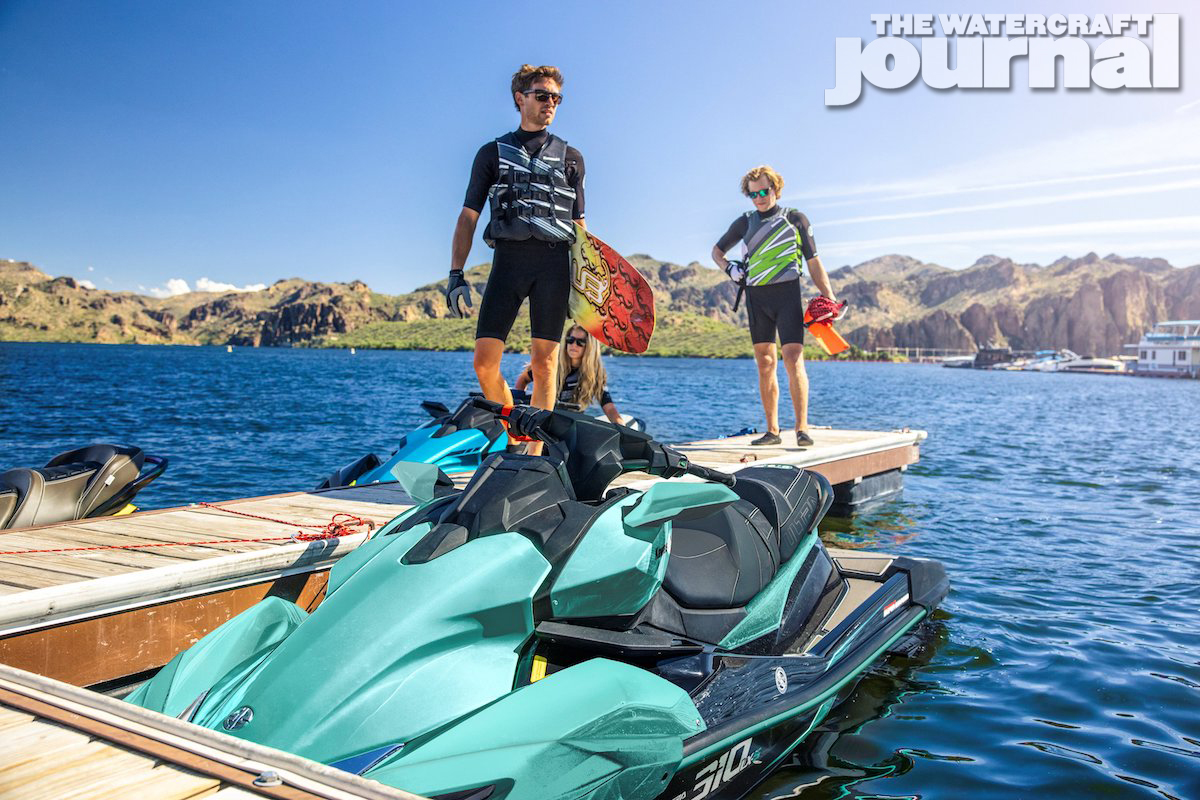
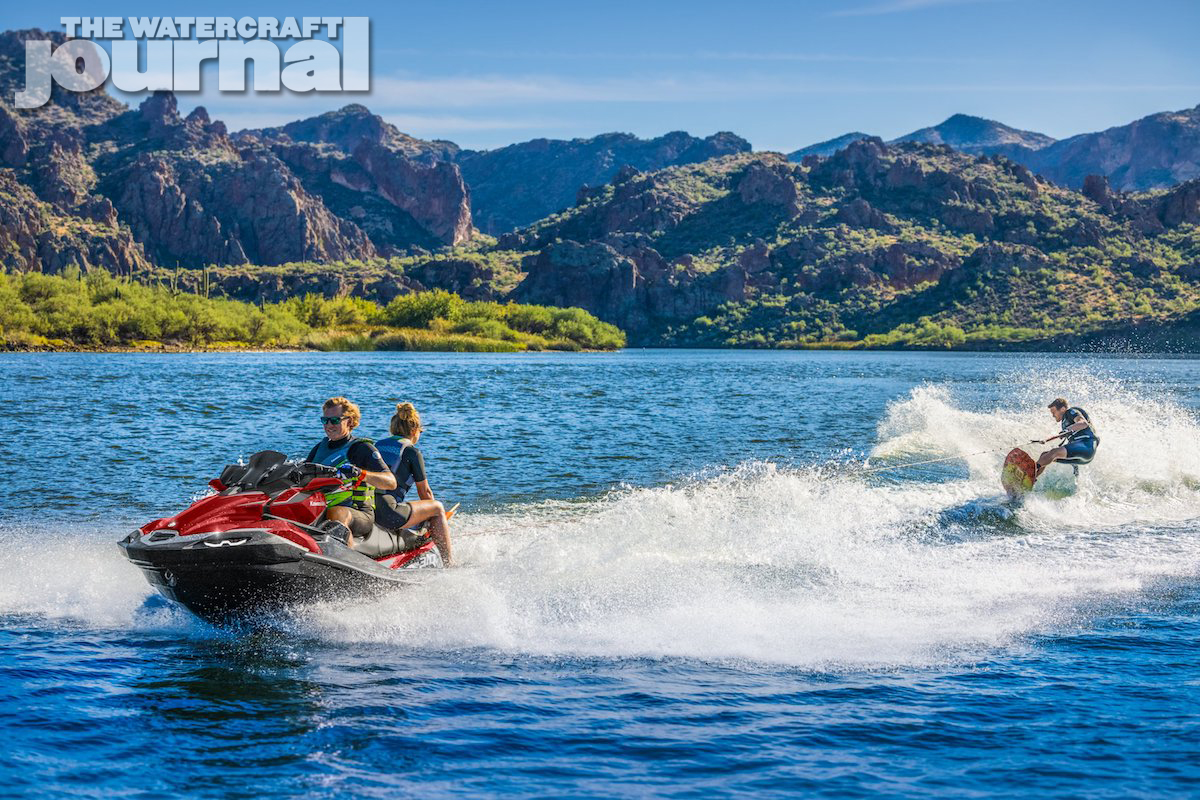
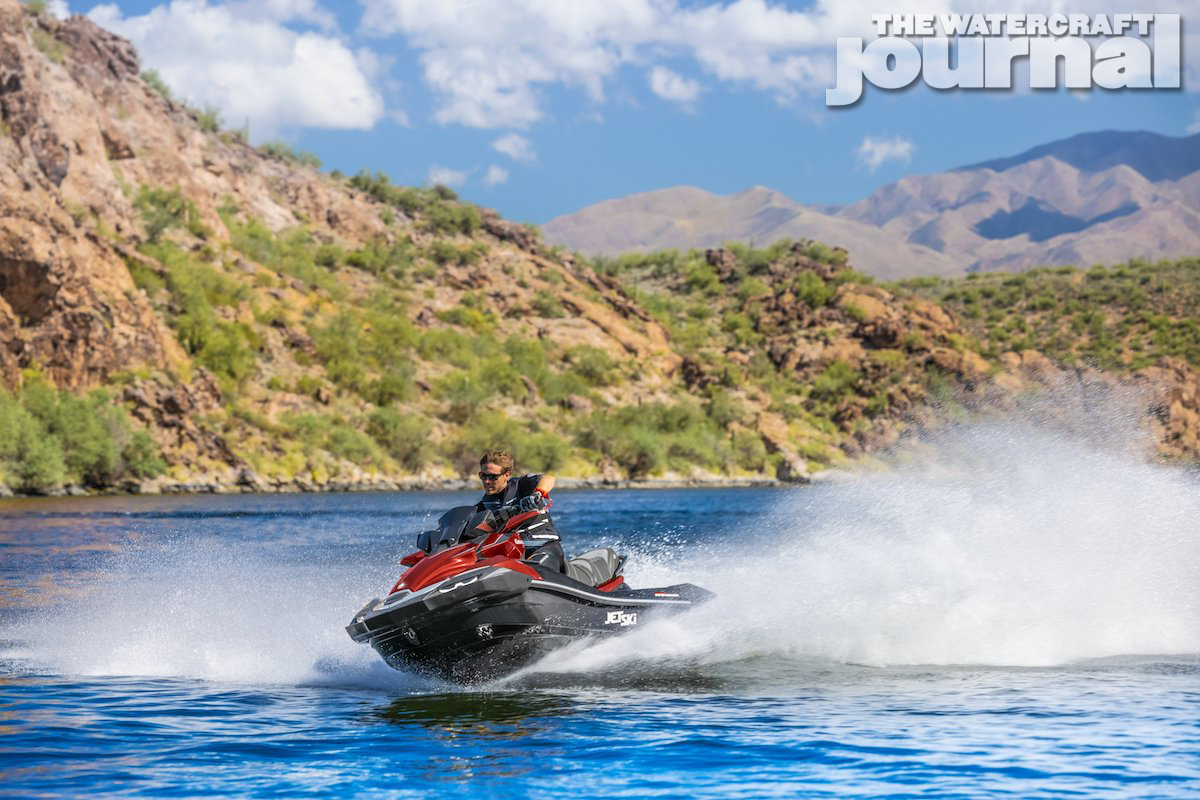
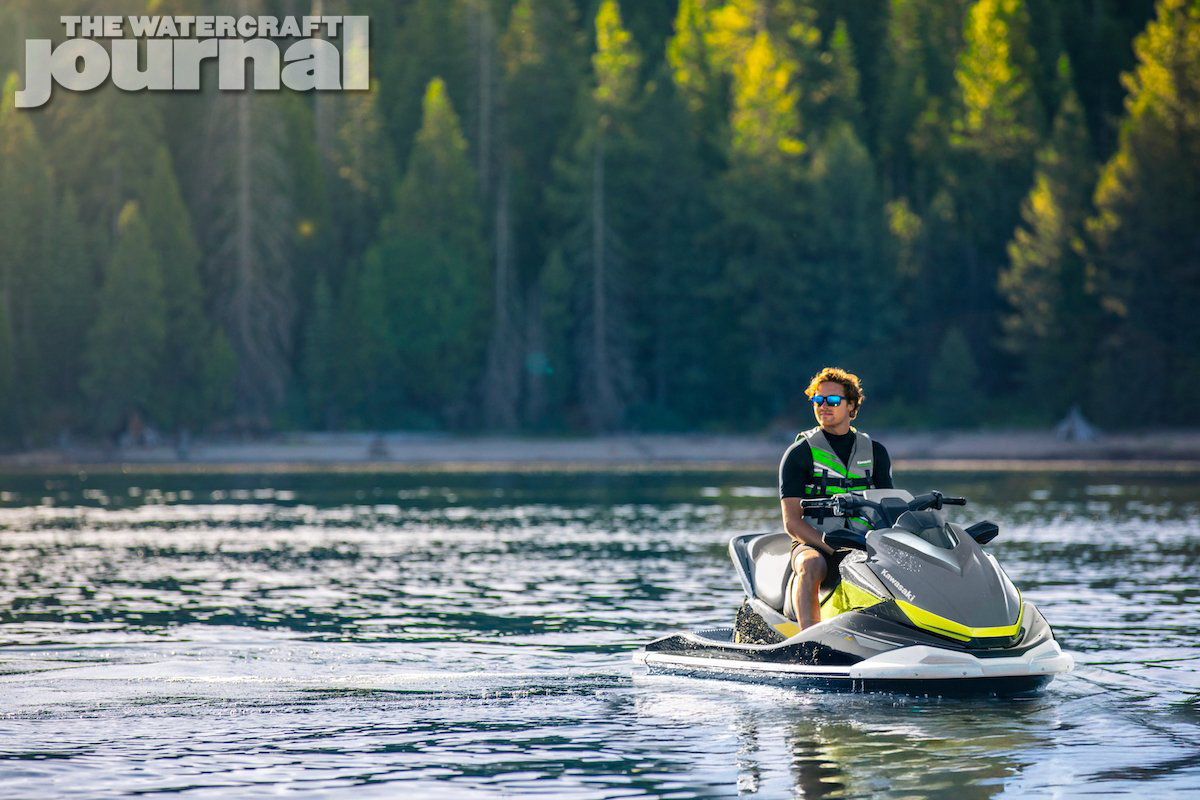
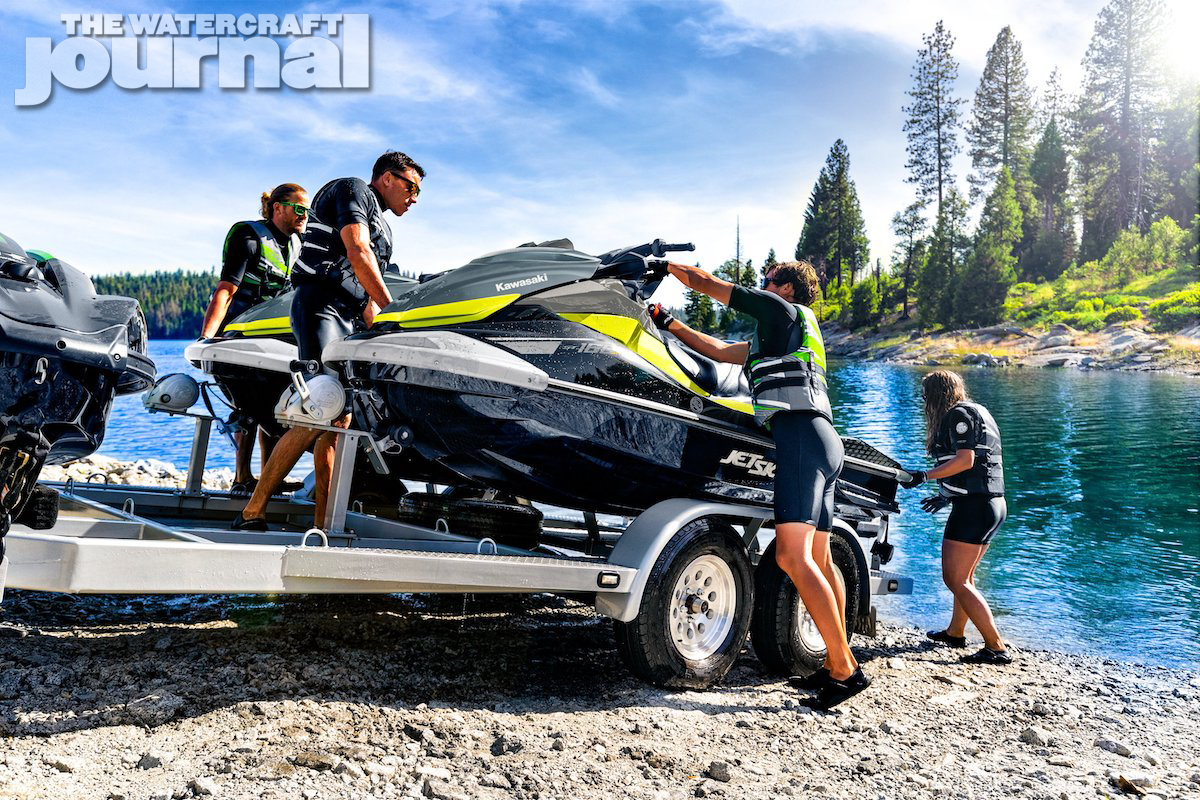
This past weekend in Olbia, Sardinia wrapped up the European leg of the UIM-ABP Aquabike World Championship with a blur of whitewater, horsepower, and high drama. The first stop in Porto Rotondo brought out a deep international field, with new faces and first-time winners taking the spotlight across multiple classes — a reminder that the sport’s next generation is charging hard.
But when the tour moved north to Olbia for the Regione Sardegna Grand Prix of Italy, the veterans made sure everyone remembered their names. Norway’s Benedicte Drange scored her first-ever Ski Ladies GP1 Grand Prix win after holding off Estelle Poret, while France’s François Medori took command in Runabout GP1 — controlling every lap and extending his World Championship lead heading into Qatar.
The Poret family name loomed large again as Mickael Poret clinched Ski GP1 Grand Prix honors, fending off a hard-charging field that included his brother Jéremy and Austrian standout Kevin Reiterer. Still, the day’s biggest fireworks came from Belgium’s Quinten Bossche, who rocketed from the back of the pack to win the final moto in one of the most impressive comeback rides of the season.
With just one round left, the pressure now shifts to Qatar, where every point will matter. Medori’s margin in Runabout GP1 remains slim, the Ski GP1 leaderboard is a knife fight between the Porets, Reiterer, and Bossche, and the women’s championship may well come down to who keeps their ski running clean in Doha.
From the newcomers who broke through in Porto Rotondo to the powerhouses who answered back in Olbia, Sardinia served up the perfect setup for a high-stakes finale — and by the time the tour hits Qatar, there’s no doubt every title contender will be ready to let it all fly.
But when the tour moved north to Olbia for the Regione Sardegna Grand Prix of Italy, the veterans made sure everyone remembered their names. Norway’s Benedicte Drange scored her first-ever Ski Ladies GP1 Grand Prix win after holding off Estelle Poret, while France’s François Medori took command in Runabout GP1 — controlling every lap and extending his World Championship lead heading into Qatar.
The Poret family name loomed large again as Mickael Poret clinched Ski GP1 Grand Prix honors, fending off a hard-charging field that included his brother Jéremy and Austrian standout Kevin Reiterer. Still, the day’s biggest fireworks came from Belgium’s Quinten Bossche, who rocketed from the back of the pack to win the final moto in one of the most impressive comeback rides of the season.
With just one round left, the pressure now shifts to Qatar, where every point will matter. Medori’s margin in Runabout GP1 remains slim, the Ski GP1 leaderboard is a knife fight between the Porets, Reiterer, and Bossche, and the women’s championship may well come down to who keeps their ski running clean in Doha.
From the newcomers who broke through in Porto Rotondo to the powerhouses who answered back in Olbia, Sardinia served up the perfect setup for a high-stakes finale — and by the time the tour hits Qatar, there’s no doubt every title contender will be ready to put it all on the line.
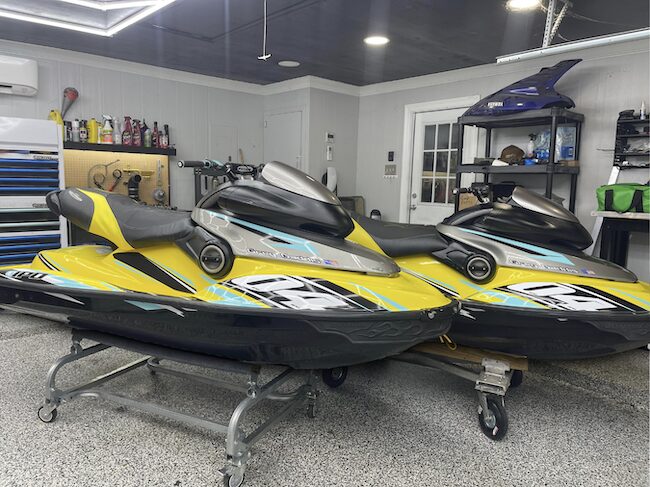
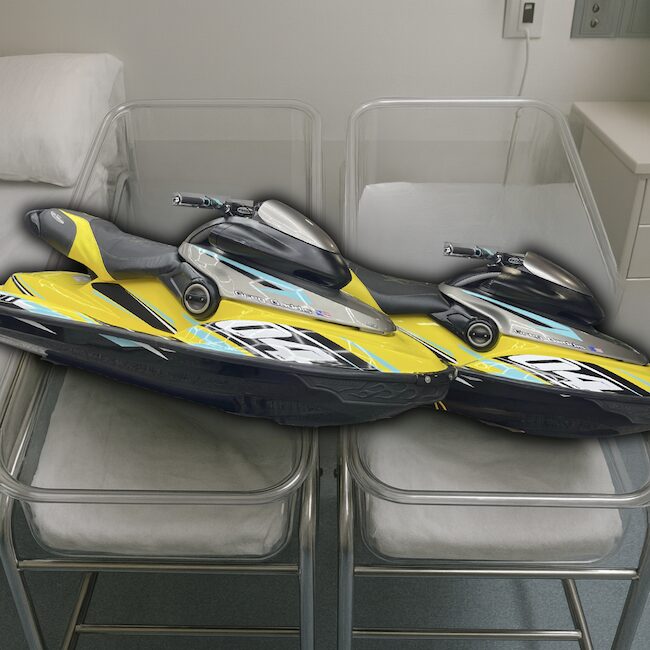
There’s nothing quite like watching a vintage PWC be reborn, and if you follow Green Hulk PWC’s Facebook page, you’ve likely seen your fair share of epic revivals over the years. Recently, the folks over at the Green Hulk Garage — Green Hulk’s personal space for working on, toying with, and improving the PWCs at their disposal — uploaded a tongue-in-cheek post about their newest accomplishment, which they’ve named “The Two-Stroke Twins.”
The watercraft in question are a matching pair of 1999 Sea-Doo XP Limiteds that have been fully brought back to life and modernized by Green Hulk’s Greg Gaddis. Both skis started as relics of an older era in Sea-Doo’s history, but through meticulous restoration and an eye for performance, Gaddis has transformed them into identical high-performance time capsules. The result is two mirror-image builds that perfectly balance nostalgia with innovation.
Each XP Limited comes loaded with upgrades from bow to stern: RIVA 32-inch handlebars paired with ODI grips offer ideal control and feel, while RIVA billet throttle levers bring precision to every pull. Jettrim seat covers and SC Wake traction mats complete the rider’s cockpit, delivering both style and functionality that match the skis’ legendary agility. Every piece, from the smallest fastener to the final finish, was hand-selected for performance, reliability, and aesthetic punch — and every last bit of it can be found through their online store.
It’s hard to believe that 1999 is already a quarter of a century ago, but laying an eye on these fully rebuilt, modded, and upgraded Sea-Doos takes you back in an instant. While Green Hulk has promised to try them out soon (with a little race involved), we’re just excited to see those old-school two-stroke engines back in action.
Be sure to check out the Green Hulk Garage Facebook page to stay up to date with their latest projects — and visit their shop whenever you’re ready to upgrade your own ride!
Whether you’re poking around the shallows or running miles offshore, every PWC outing carries inherent risk. The difference between a rewarding day on the water and a dangerous situation often comes down to preparation and mindset. In offshore jet ski fishing, you’re further from rescue, facing changing conditions, and dependent on your gear to protect you. That makes safety not just a checklist — it’s a lifeline.
Offshore fishing from a PWC isn’t the same as a lake ride. Some of the special challenges include distance from help — no nearby docks or passersby; you may be hours from rescue; changing weather and seas — conditions can shift rapidly, especially in open water; drift, current, and swell — without hull depth or mass, a PWC is more susceptible to drift; limited repair capacity — you can’t stow a full tool chest, and failure of a small part can strand you; communication gaps — cell phones often lose signal, so you need dedicated marine or satellite tools; and visibility and signaling challenges — in wide water, you must stand out for rescue.
Thus, your gear choices must be rugged, redundant, and optimized for offshore conditions. Boating Magazine recently published “Top 10 Safety Essentials for Offshore Jet Ski Fishing,” underscoring that these aren’t just nice-to-have items — they’re practically mandatory when you push beyond sight of land.
Boating Magazine kicks off their list with perhaps the most obvious but crucial piece of gear — a personal flotation device. They recommend the Mustang Survival Topwater PFD, a foam vest with built-in storage, lash tabs, and an ergonomic cut designed for comfort on long rides. We agree that a proper PFD is the cornerstone of offshore safety, and one that offers utility pockets and tool attachment points is even better. Both RIVA Racing and Broward Motorsports carry high-quality vests that fit the bill; Broward’s selection of Yamaha-branded life vests, for example, combines U.S. Coast Guard approval with all-day comfort and durability.
Their next essential is the ACR Personal Locator Beacon, specifically the ResQLink View RLS model, which transmits your GPS position to search and rescue satellites — and even lets you know when your signal’s been received. For anglers venturing far beyond cell coverage, this is a must-have. Always wear it on your PFD, not stashed in the storage bin. Check your battery life and registration each season, and consider carrying a second unit for redundancy if you frequently ride solo.
Boating Magazine also highlights the ACR LED Flare, which replaces traditional pyrotechnic flares with a bright, waterproof, and reusable light visible up to eight nautical miles. It’s a smart modern choice — safer, reusable, and much easier to pack. We’d pair it with a strobe light or signal laser to cover both night and day scenarios.
Jet Tech Intake Recovery Tool
Another clever addition to their list is the Jet Tech Intake Recovery Tool — a compact, ceramic-reinforced nylon tool designed to clear rope or seaweed from your pump intake. Anyone who’s ever had to dive under their ski to pull out a wad of weeds mid-trip knows how valuable this can be. Keep it leashed somewhere accessible; you won’t want to dig through storage to find it when your ski’s dead in the water.
For communication, Boating recommends the Icom IC-M94D handheld VHF radio. It’s fully waterproof, floats, and includes DSC and GPS. That combination makes it indispensable offshore. The DSC (Digital Selective Calling) feature allows you to send a distress signal with your exact location — a literal lifesaver. Practice using it before you go out; knowing which buttons to hit under stress can make all the difference.
Their list continues with the ACR RAW Pro 2 Headlamp, a waterproof, hands-free light that’s ideal for predawn launches or nighttime returns. It’s a small piece of gear that pays off big in visibility and safety. Always carry extra batteries or a backup light, and consider adding glow sticks or reflective tape to your gear for additional visibility.
Anchoring offshore requires something compact and reliable, and the Jet Tech Offshore Anchor Kit fits the bill. It’s designed to hold your PWC steady if you lose power or need to fish over a specific reef. A floating anchor line helps prevent tangles and makes recovery easier. For anglers who spend time in deeper or rougher water, adding a small sea anchor or drift sock can help maintain position without overloading the craft.
To keep your tackle safe, Boating also recommends the Jet Tech Rod Holder Leash — a simple but essential safeguard. Even a small wave can send rods flying. Secure every rod, gaff, and net before heading offshore. Broward Motorsports carries several heavy-duty tethers and cargo tie-down systems, including Yamaha’s marine-grade bungee cords and ratchet straps, all designed to handle harsh saltwater use.
Fire safety can’t be overlooked either, which is why Boating’s list includes the Kidde Mariner PWC Fire Extinguisher. Compact and U.S. Coast Guard–approved, it’s a must-have for any powered watercraft. Store it in a quick-release bracket in an accessible location — seconds count when something goes wrong in a confined hull space.
Finally, the list rounds out with the Jet Tech PWC Recovery Tow Line, a 33-foot floating tow rope rated for over 1,000 pounds. If you’ve ever had a ski conk out miles from launch, you already know how vital this is. We recommend carrying a slightly longer line as well, with a quick-release shackle or carabiner for fast deployment in rough conditions. Both RIVA Racing and Broward Motorsports carry quality tow lines and recovery gear that can handle the abuse of open-water use.
Bonus Safety Measures and Gear to Consider
To build on that solid list, WCJ recommends a few additional measures for offshore riders. A compact, marine-grade power bank or battery pack can keep radios, lights, or phones charged in emergencies. An emergency repair kit with spare spark plugs, fuel line, hose clamps, duct tape, silicone sealant, and tools tailored to your PWC model can save a stranded day. Redundancy is critical, so a handheld GPS or magnetic compass and chart should accompany electronic devices.
Other helpful items include a small radar reflector or Class B AIS beacon to make your ski more visible to larger vessels, lightweight thermal protection or a dry top to prevent hypothermia, and plenty of drinking water plus emergency rations. Signaling mirrors or heliographs are useful in daylight, while a pre-filed route plan and check-in schedule with someone on shore ensures someone knows your location. If your PWC allows, a float-free EPIRB can provide automatic distress signaling even if your craft capsizes. And finally, practice drills — from man-overboard to radio distress — are just as important as any piece of gear.
Offshore PWC fishing is exhilarating — but you’re playing with bigger margins. The 10 essentials from Boating Magazine provide an excellent foundation. When you add smart redundancy, planning, and hands-on practice, safety gear becomes a confidence builder, not just a checklist. For anglers seeking top-tier gear, Broward Motorsports and RIVA Racing offer PFDs, marine radios, recovery lines, and other accessories that align with this list. Explore their catalogs to find equipment that meets both your safety needs and performance expectations.
Here at The Watercraft Journal, we dedicate a good bit of time to exploring the wide variety of PWC available on the market—from major manufacturers to smaller specialty craft. That’s because we know every watercraft rider has a different set of needs, and there’s a craft out there designed to meet each one. Whether you’re looking for a PWC built for pulling off fun tricks, one that offers precision turning, or even a model that can eke out the highest possible mph, we always love seeing how each machine meets those demands in its own way.
Along those lines, one of the most interesting parts of our job is checking out comparisons between various PWC models. And while we love making those comparisons ourselves in person, YouTube videos can often be a great substitute.
In a recent video on the We Try Motorsports channel, the team gets their hands on two top-tier PWC models—the 2023 Sea-Doo Spark Trixx and the 2025 Yamaha JetBlaster Pro—to put them to the test in a head-to-head comparison.
The comparison unfolds over a two-part series, where they evaluate speed, trim systems, steering, and even each PWC’s ability to pull off a few tricks. While both skis have their pros and cons, the guys ultimately come away with a clear favorite.
If you want to see how these two popular models stack up, it’s definitely worth checking out the full video over on the We Try Motorsports YouTube channel!
If there’s one name that stands tall in the world of personal watercraft—whether you’re talking high-performance upgrades, precision tuning, or world-class customer service—it’s RIVA Motorsports. And right now, the legendary Deerfield Beach Superstore is turning heads again with a Manager’s Special that’s tough to beat: $2,000 off brand-new Yamaha EX WaveRunners.
The Yamaha EX Series has earned a reputation as one of the most dependable and fun-to-ride entries in the PWC world. Designed to deliver Yamaha’s proven performance and reliability at an unbeatable price point, the EX is ideal for first-time buyers, families, and weekend adventurers who want all the excitement without breaking the bank. Lightweight, agile, and easy to handle, it’s a machine that combines real-world affordability with the same engineering DNA that powers Yamaha’s high-end WaveRunners.
And when you buy from RIVA Motorsports, you’re getting far more than just a great deal—you’re buying into decades of excellence. As the retail face of the world-renowned RIVA Racing, the Deerfield Beach Superstore brings the same passion for performance that’s driven countless race wins and record-setting builds. From their expert sales team to their factory-trained service technicians, RIVA has built a reputation on doing things the right way—whether it’s dialing in a 400-horsepower turbo build or making sure your family’s ski is ready for the weekend.
The Yamaha EX Deluxe, part of the lineup included in this limited-time sale, hits the sweet spot between fun and function. With its TR-1 HO marine engine, RiDE dual-throttle braking and reverse system, and sleek, modern styling, it’s every bit a Yamaha—only lighter, simpler, and friendlier on the wallet. You’ll find plenty of storage, a comfortable seat for up to three riders, and the same bulletproof reliability Yamaha is famous for.
Whether you’re a new rider looking for your first ski or a longtime enthusiast looking to add a dependable runabout to your dock, there’s no better time to make your move. RIVA Motorsports’ Deerfield Beach location has a limited number of these units available, and with $2,000 off, they won’t last long.
In the relentless pursuit of performance fine-tuning, KSpeed has introduced a drop nozzle kit for the Kawasaki Ultra 300/310 platform that offers racers and serious riders a new level of control over handling and thrust vectoring. Recently made available via Brisbane Kawasaki, the kit is already drawing attention for its versatility and engineering.
What the Kit Offers
At its heart, the KSpeed drop nozzle system is a fully adjustable nozzle assembly designed to replace the stock exit nozzle on Kawasaki’s 300/310 jet pump setup. The core features and specifications as listed by Brisbane Kawasaki include:
A range of drop angle adjustment from 0° (level) to 10° of downward drop
A kit of 10 interchangeable exit rings (the 82 mm ring ships preinstalled) to allow precise tuning of the nozzle aperture and flow characteristics
Support for both left- or right-side steering linkage, with twin cable drop-in holes for steering response tuning
Compatibility with manual- or cable-trim systems, including support for either short direct cable or long cable with wheel + bracket (all hardware included)
CNC-machined construction from billet 6061 aluminum with a clear hard-anodized finish, plus stainless steel hardware for durability
Given those specs, the KSpeed drop nozzle does more than simply alter exit geometry—it gives the rider (or tuner) a palette of aerodynamic and hydrodynamic tuning options previously reserved for high-end race craft.
Why a Drop Nozzle Matters
In simple terms, the nozzle controls the direction and velocity of the jet of water leaving the pump. Altering its angle subtly changes how the thrust vector interacts with the hull. Traditional stock nozzles are fixed, leaving riders to rely on trim tabs, ride plates, hull design, or pump wedges to influence bow attitude and stability.
By contrast, a drop nozzle enables active manipulation of that thrust vector—effectively allowing “steering by thrust” in addition to the hull’s response. Combined with steering linkage tuning and trim control, the drop nozzle becomes a powerful tool for dialing in balance, turn-in, and exit behavior under acceleration.
From field experience and prior KSpeed tuning strategy, the benefits are most evident in rough water, aggressive cornering, and mid-range acceleration, where the ability to adjust “how hard” and “where” the thrust is applied has real-world consequences.
KSpeed’s own development philosophy reinforces this approach. In their Stage 1 kit for the Ultra 310 (which uses a pump wedge, intake modifications, and ECU remap), they emphasize nose lift and more consistent flow into the pump as keys to gaining speed and handling improvements. The drop nozzle is an evolution of that same principle—but with far more flexibility.
Fitment, Compatibility & Considerations
Because the KSpeed nozzle is intended for Kawasaki’s 300/310 pump geometry, it bolts up directly to the standard exit without requiring radical alterations. However, some caveats and considerations apply:
Although engineered for the 160 mm pump on the 300/310, KSpeed’s other drop nozzle designs (for STX / 148 mm systems) use spacer adapters to adapt between pump sizes.
The trim compatibility is flexible, but riders must decide whether to use a short direct-cable trim line or the longer cable + wheel/bracket setup included.
Steering geometry and linkage setup become more critical; because the nozzle adjustment also affects where the thrust “pulls,” proper steering alignment is essential to avoid unpredictable behavior.
Because a drop nozzle makes it possible to push the bow downward (at negative drop) or lift upward (at positive drop), a rider must be cautious in extreme settings, especially at high speed or in chop.
Interchangeable rings allow tuning for differing water conditions or rider weight—yet ring choice must be harmonized with pump trim, hull setup, and intake geometry.
In short: the drop nozzle offers choice, not cure-alls. Skill and integration with other modifications (intake, ECU, pump wedge, ride plate) remain critical.
What It Can Deliver, and What to Watch For
While direct test data on this specific KSpeed drop nozzle kit is still emerging, its conceptual benefits are supported by broader community experience and KSpeed’s own tuning track record.
For the Ultra 310 platform, KSpeed’s Stage 1 kit (without a drop nozzle) has proven capable of adding about 5 mph over stock top speed in test conditions, while improving midrange acceleration and responsiveness. It stands to reason that integrating an adjustable nozzle would enable further refinements—especially in handling and responsiveness in variable-sea conditions.
Some expected outcomes one might optimize toward:
Sharper turn-in due to thrust redirection at pivot points
Better hull balance in chop or cross seas
Improved throttle transitions as you adjust drop angle under acceleration
Fine-tuning adjustments to mitigate porpoising or bow bounce at high speed
But potential pitfalls must be respected:
Incorrect drop settings (too aggressive) could negatively affect directional stability
Mismatched nozzle ring sizes or trim settings may cause turbulence or cavitation
Overly aggressive settings at low speed or in tight turns could induce unwanted pull or yaw
Therefore, methodical testing—starting from neutral or minimal drop, then progressing incrementally—is the safest path.
KSpeed’s 300/310 drop nozzle kit is an ambitious piece of performance hardware. It brings a level of adjustability once reserved for elite race craft into the hands of serious enthusiasts. For riders looking to squeeze every bit of controllability from their Ultra platform, the ability to tune thrust angle dynamically is a powerful lever.
However, it’s not a plug-in magic bullet. Success with this kit depends on integration with steering, trim, intake, and hull setup—and patience in dialing each setting. For those willing to experiment, it offers a pathway toward a more precise, responsive, and controllable ride.
Frankly, we’re starting to wonder who is in control over at Kawasaki USA when it comes to these new product roll-outs. Traditionally, Kawasaki waited well beyond that of Sea-Doo and Yamaha Motor Corp. to draw the curtain back on its latest models, typically “dropping” around the first weekend of October (oftentimes overlapping with the first days of the IJSBA World Finals). There’s no written rule saying as much, but it’s been the tradition.
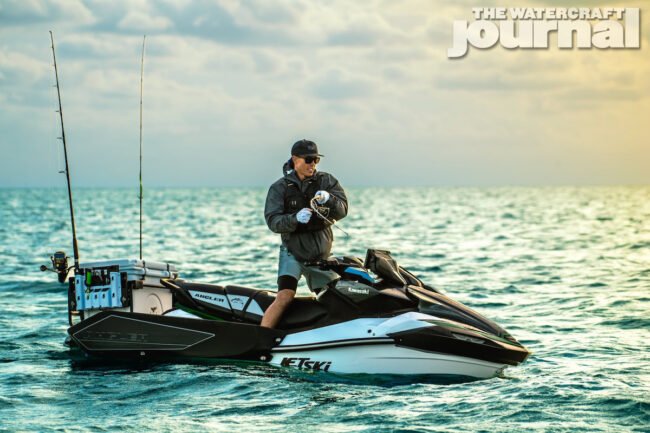
Well that is, until recently. As of late, Kawasaki has “shaken things up” by releasing press images and information on units for next year as early as late-January of the current model year. It was January of 2024 when Kawasaki revealed to The Watercraft Journal it’s fishing-equipped Ultra 160LX-S Angler in all of its glory. Unfortunately, the early reveal confused would-be buyers, and several wandered into dealerships only to be told, “Oh, I’m sorry. That’s next year’s model.”
Above: Kawasaki revealed the Ultra 160LX-S Angler so prematurely and without ANY media support that when it did arrive in dealers, nobody actually knew or cared.
Then as 2025 came around, the shine on the new Angler seemed to have faded. There was zero press introduction to the unit. No test days for the media to try it out. Nothing from Kawasaki corporate. Suddenly, customers wandered in to find the Angler (MSRP $18,899) sitting on the show floor to their surprise. Equipped with zero outside information, buyers weren’t too keen on the Angler and consequently, sales have reflected the ill-conceived strategy.
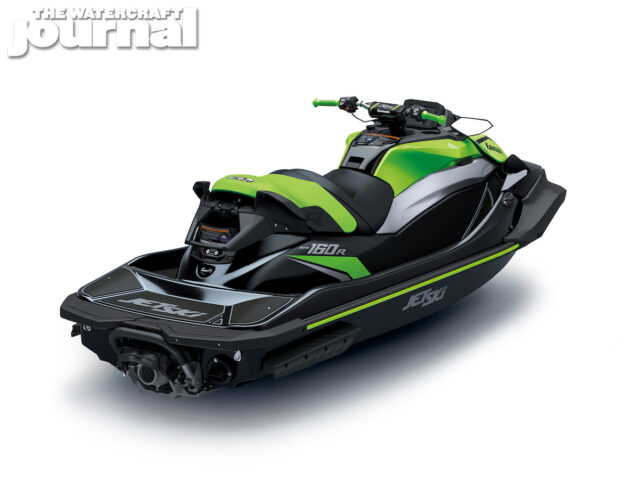
Enter the entirely mishandled 2026 rollout. In early December of 2024, press releases for a fixed-steering standup – the SX-X 160 – were sent out. We dutifully published it and awaited the reveal. Meanwhile, spy photos from Thailand showed a display of completely redesigned lineup of STX units, including a STX-R 160! What about these? The response from Kawasaki USA was “Oh those? Yeah, those are next year’s new STX models. Please focus on the SX-X.”
Above left: The STX 160R revealed officially by Kawasaki in December 2024 now removed from the 2026 lineup. Above right: The STX 160LX-S also expected to be revealed for 2026 but now shelved for an undisclosed amount of time.
Well guess what? Today, we received the press packet for the 2026 lineup and it’s all about the redesigned STX models. And what’s missing? The SX-X 160; the STX-R 160 (actually, it was officially the “STX 160R”) and STX 160LX-S that were also on display last December too. The unofficial, off-of-the-record reason is a slower than normal sales year(s) meant Kawasaki needed to reduce how many units it should roll out at once.
It’s understandable but a bit of a bummer. Oh yeah, and don’t go looking for a 2026 SX-R 160 or Ultra 310X. With so many unsold units languishing on dealer lots, Kawasaki’s not producing any new models of those units either. Thankfully, motivated dealers are already discounting these units (and many others) with generous rebates and sales incentives. It’ll just take you shopping around to find the best deal.
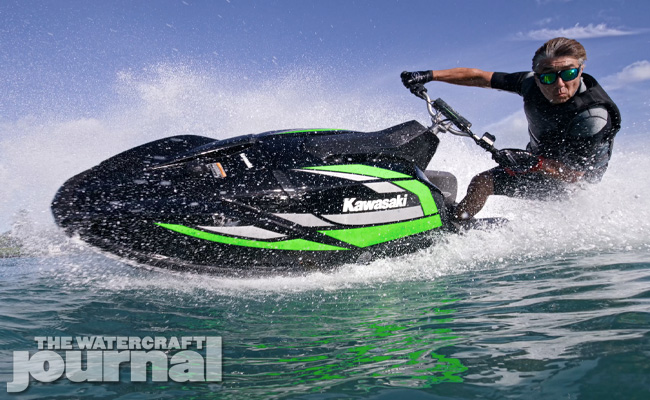
Above: The yet-to-be-officially-revealed 2026 Kawasaki SX-X 160 fixed-steer standup. Where did it go? We’ve heard a few things, the least being, “Hold on a little while longer.”
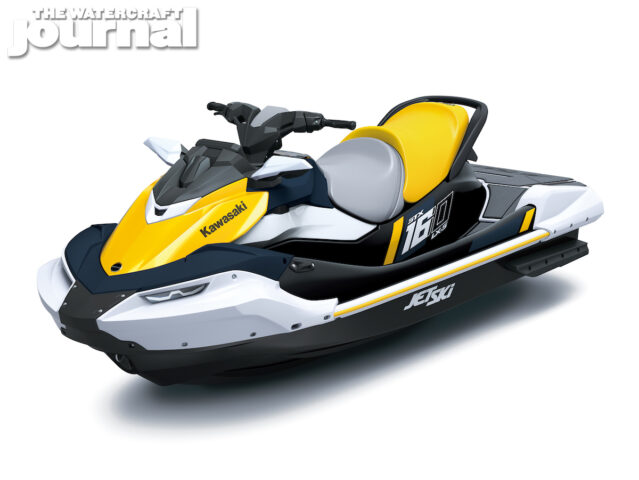
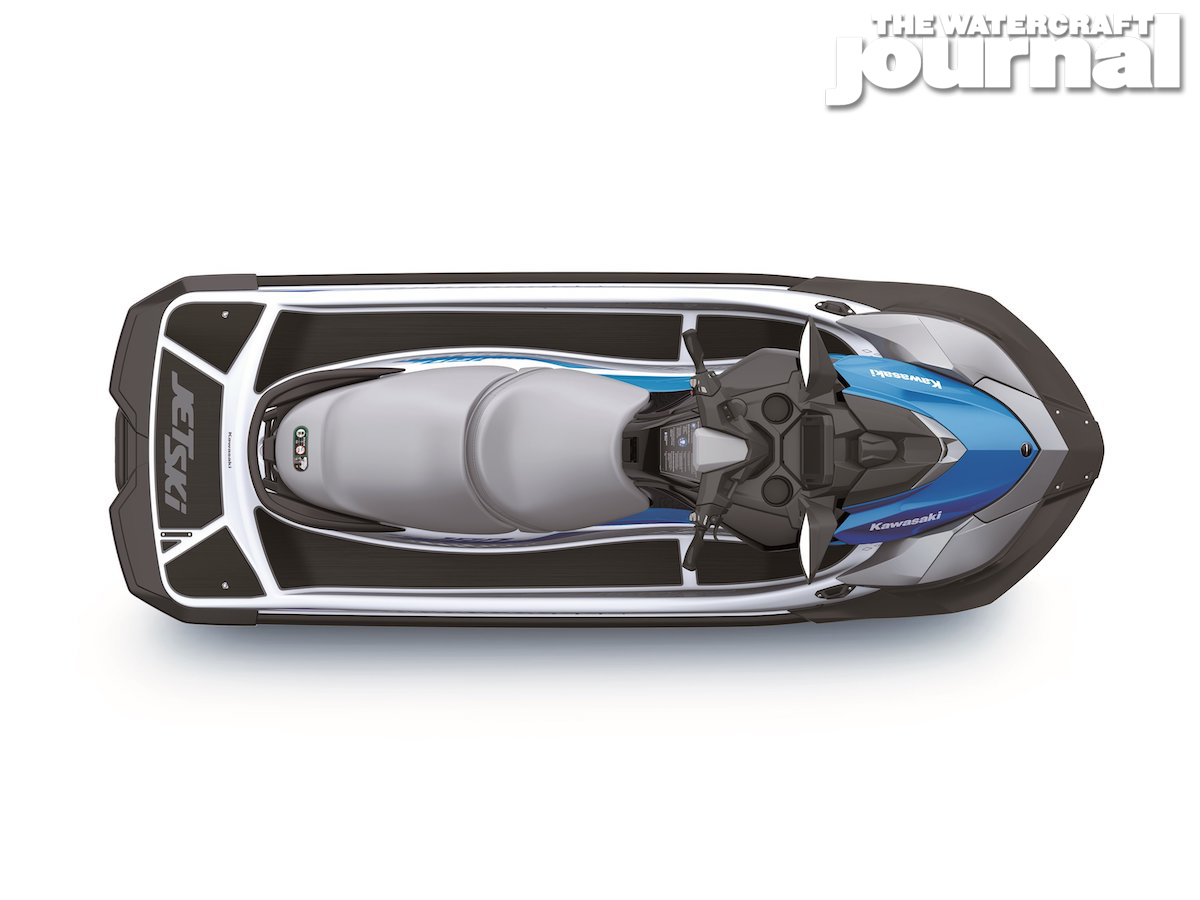
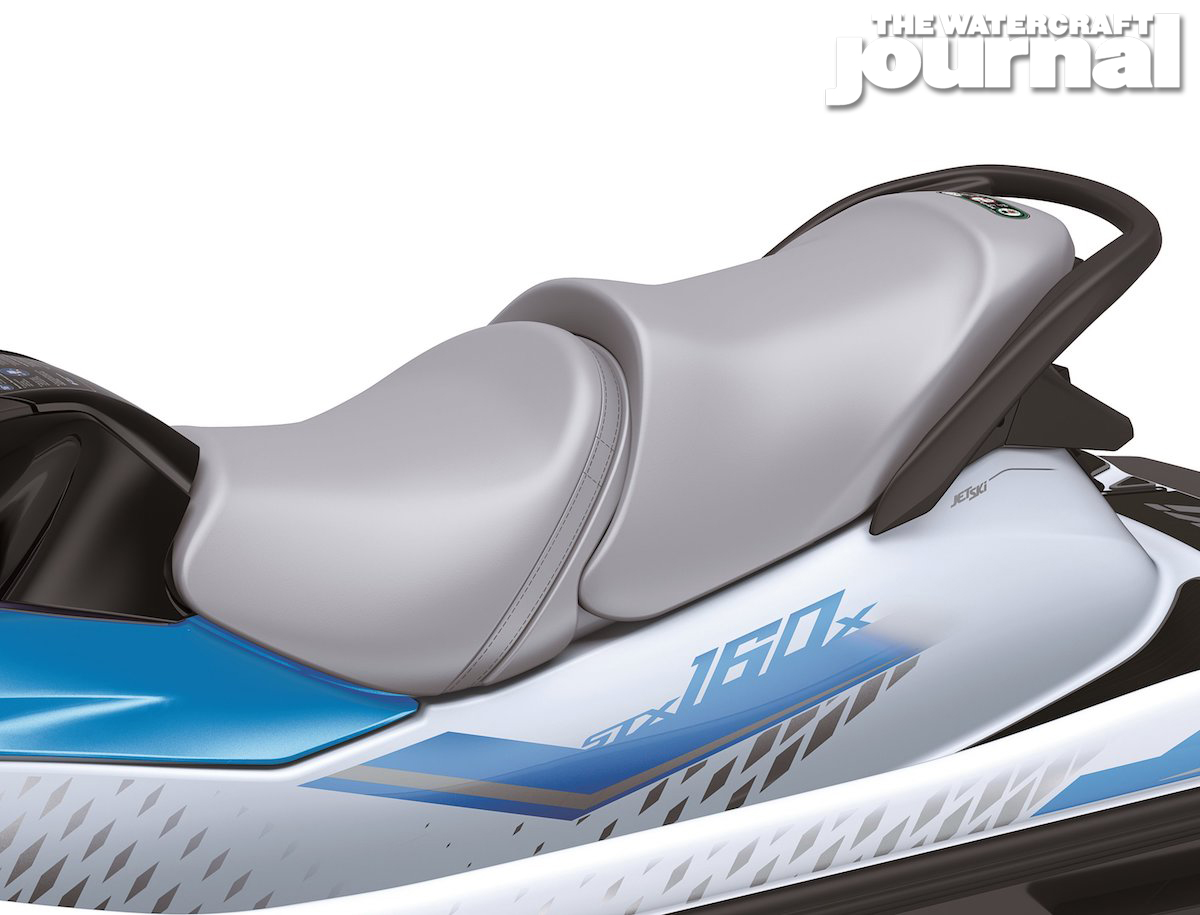
According to the updated website, the Kawasaki SX-R 160 standup (Ebony/Ice Gray) retails for $11,999 as the holdover Ultra 310X (Ebony/Neon Red) fetches $19,199 MSRP. Amazingly, at the exact same price as the standup is the newly rebranding 2026 ST 160X ($11,999 MSRP). This runabout is last year’s STX 160X in Metallic Bluish Gray/Pearl Neon Yellow. It retains it’s old school manual reverse lever and electronic cruise control.
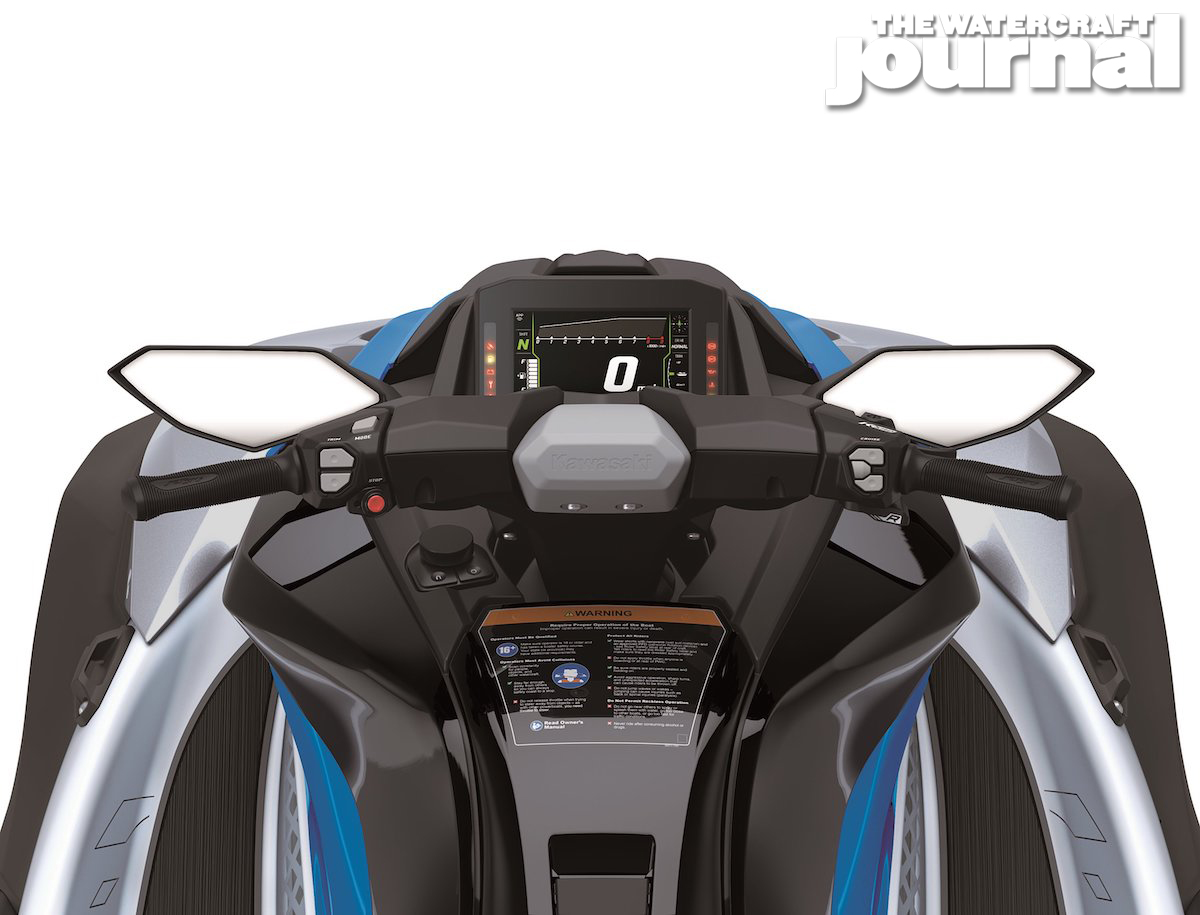
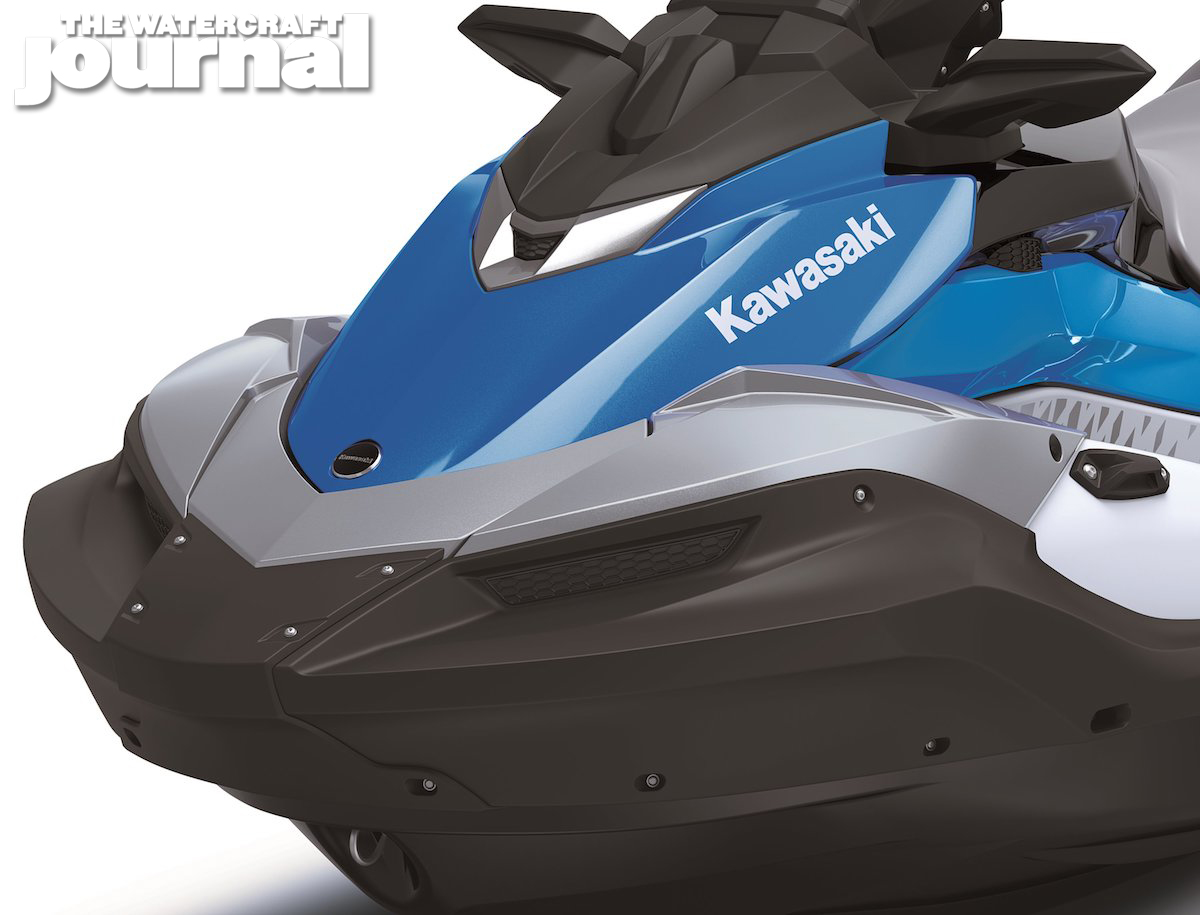
The ST shares the identical 1,498cc inline 4-cylinder DOHC four-stroke plant as all other naturally-aspirated JetSkis listed here (of which, there are several). Above the ST are the STX models. Sharing the same hull as each other and the ST, the STX models – specifically, the STX 160X and 160LX – borrow heavily from the larger Ultra siblings and incorporate most all of their technological amenities, controls and accessories.
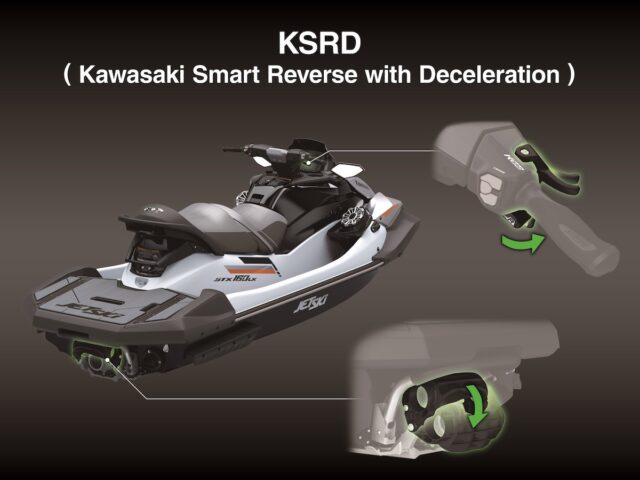
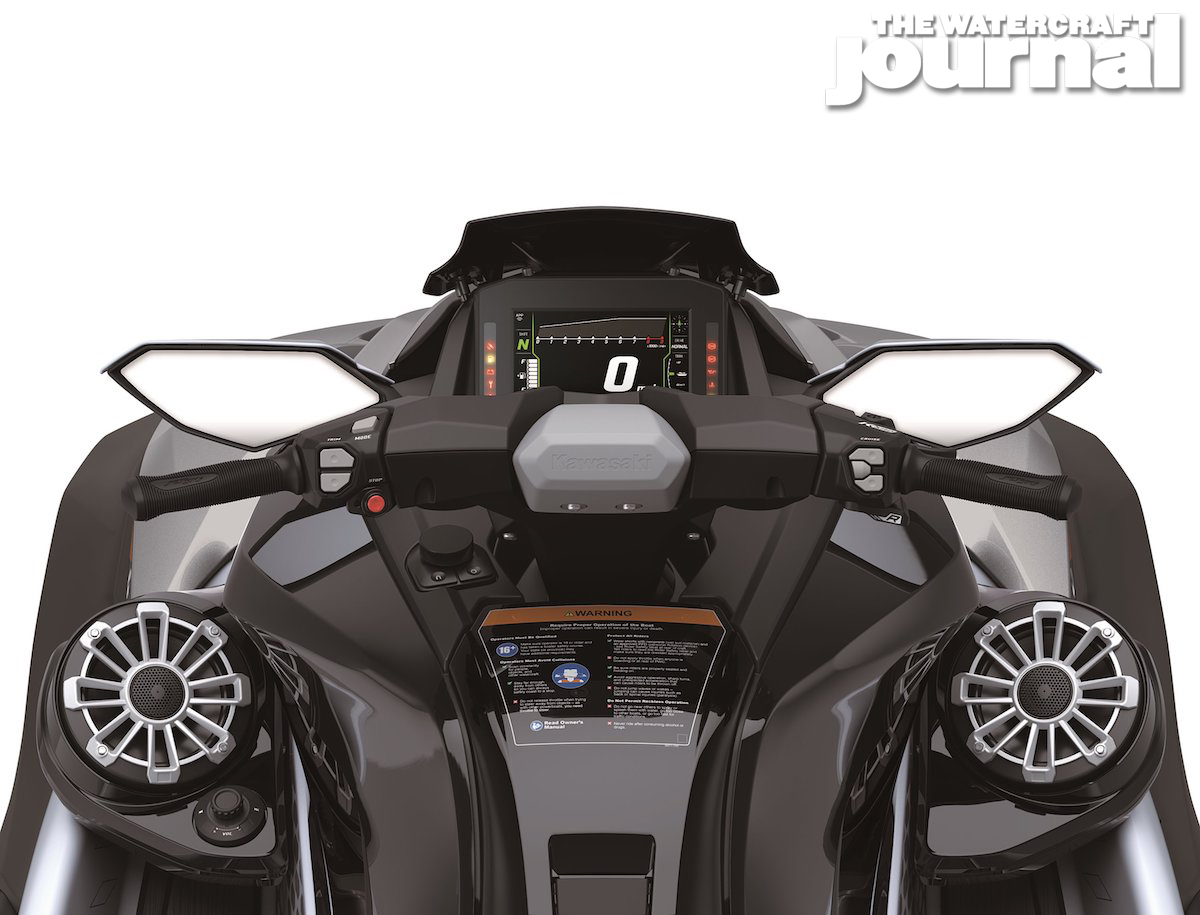
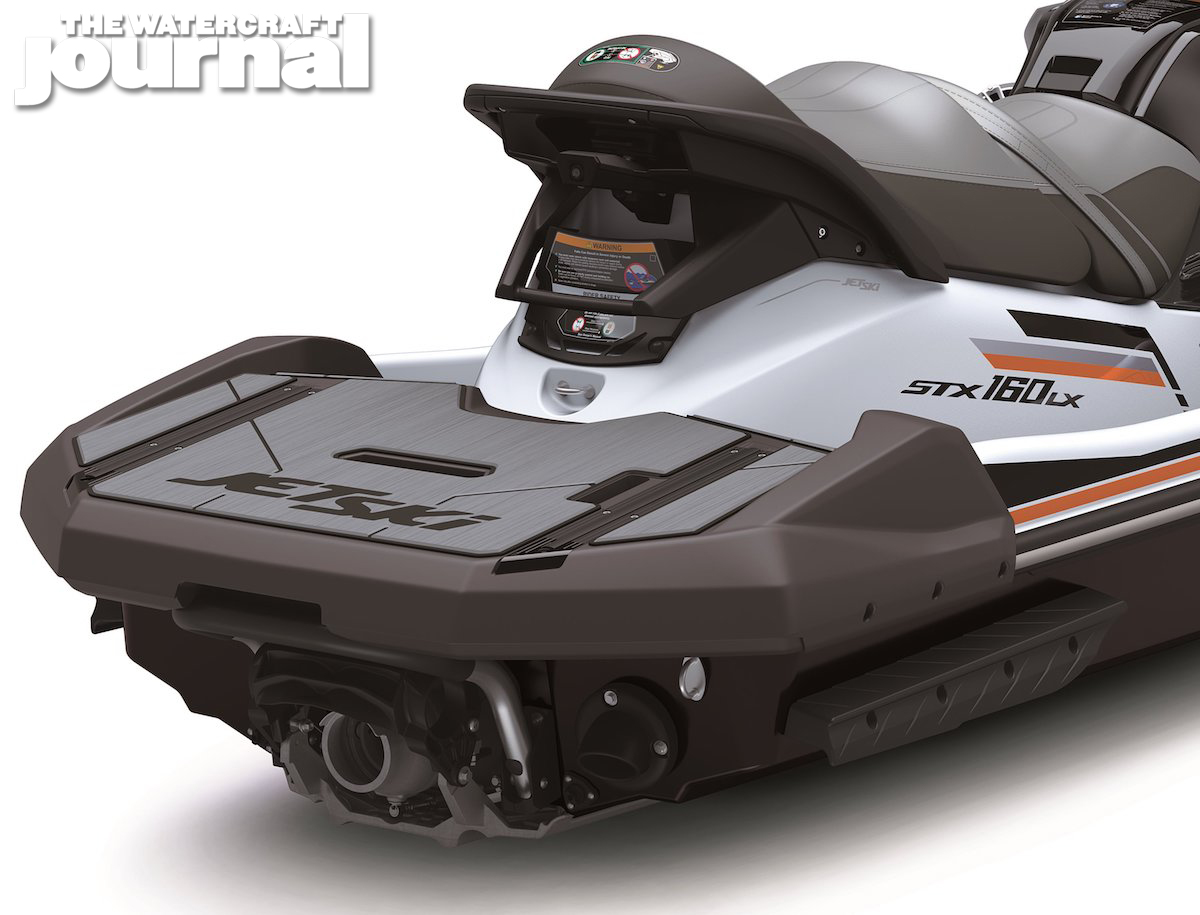
And what might those be? Let’s start with KSRD (Kawasaki Smart Reverse and Deceleration) and electric trim control. Next, you’ve got these massive splash deflectors with built-in cleats, larger central storage, cruise control, and one-touch 5mph mode. For the LX model, toss in the JetSound audio system, LED accent lights and rear view camera, the extended rear deck with multi-mount system, LXury seat and meter visor.
The STX 160X (Metallic Surf Blue/Crystal White) carries an MSRP of $13,899 as the STX 160LX (Crystal White/Metallic Phantom Silver) retails for $15,999. Again, it’s worth noting that the yellow STX 160LX-S shown in Thailand won’t be made available yet. All ST and STX JetSki models include the same 148mm axial flow jet pump, 35-gallons of storage and 20.6-gallon fuel cell. Curb weight depends on each model and trim level.
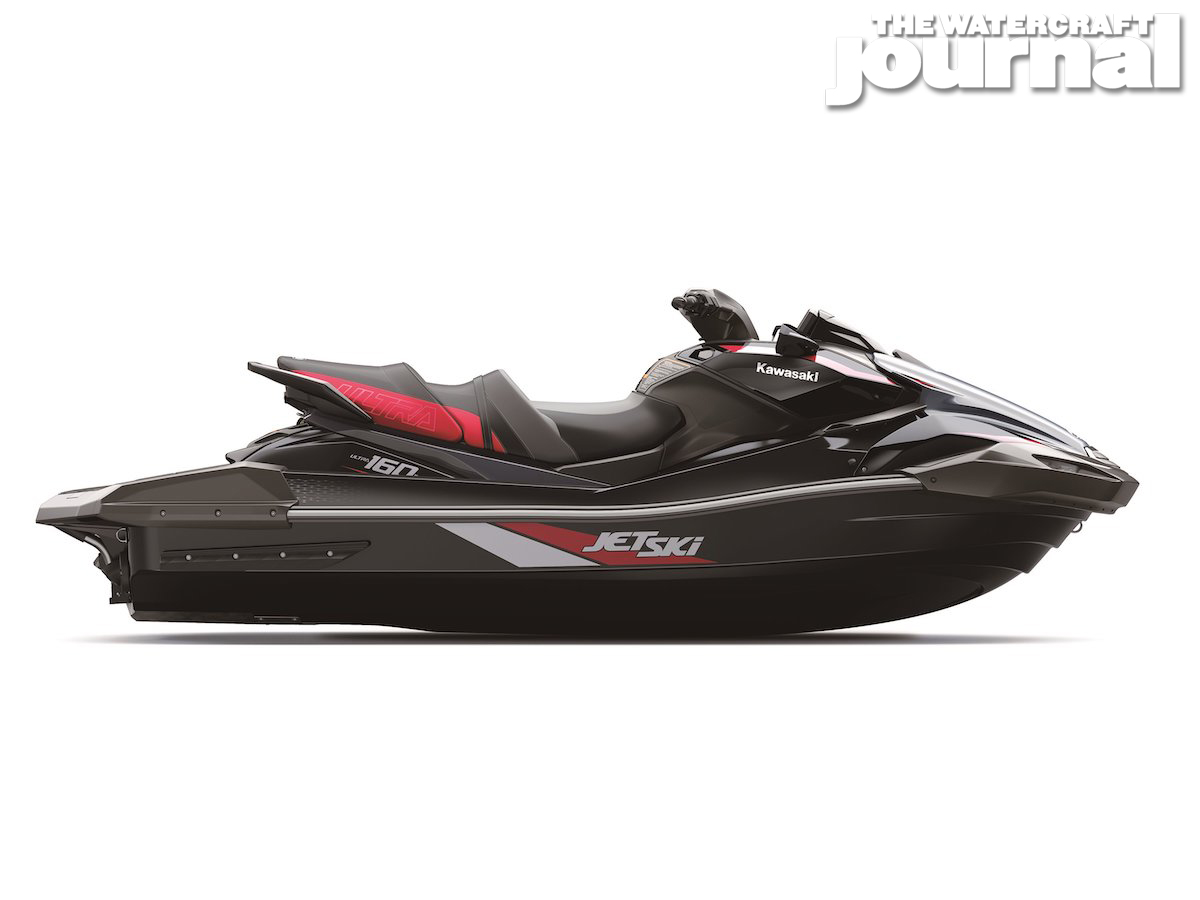
The naturally-aspirated Ultra 160 JetSki models seem to get the lion’s share of creative colorings. First of all, there remains no naturally-aspirated Ultra 160X, which is an absolute shame. The tow-sports ready 2026 Ultra 160LX-S (MSRP $17,799) stays in Metallic Bluish Gray and remains unchanged from 2025. The Ultra 160LX also receives no modifications for 2026 apart from its gorgeous Metallic Stardust White/Ebony coloring and $18,799 price tag.
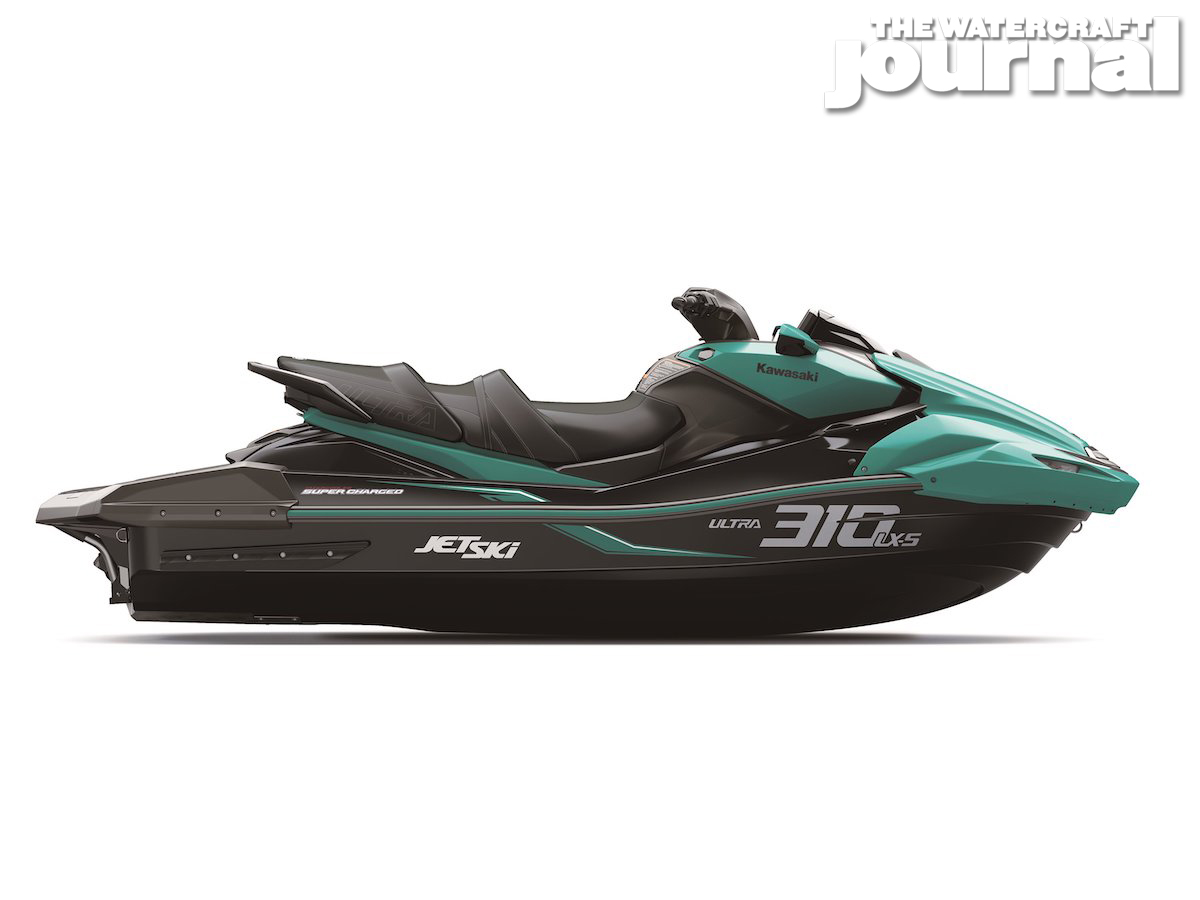
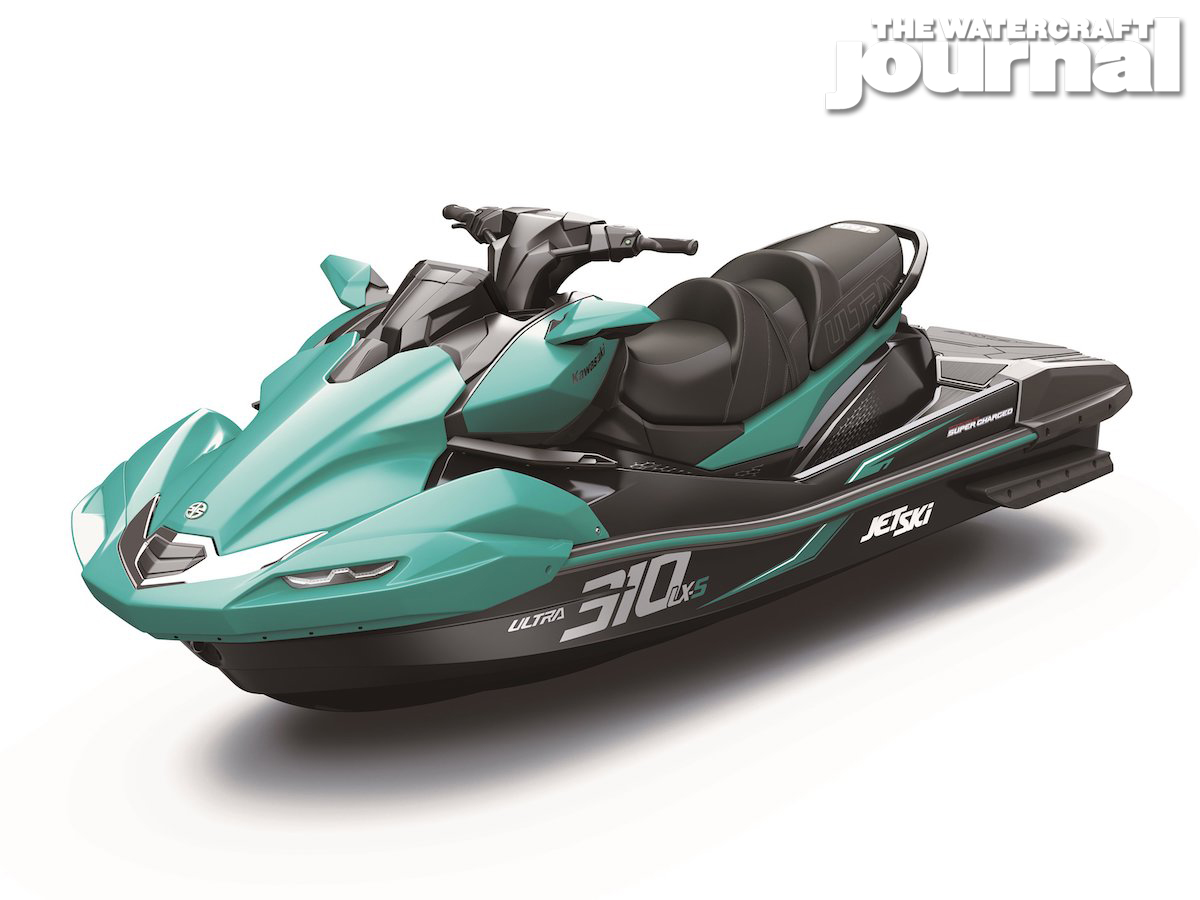
As previously stated, the supercharged Ultra lineup receives few updates save for some new colorways and pricing. The Ultra 310X ($19,199) continues unchanged in its Ronald McDonald-esque red-and-yellow livery, almost intentionally deterring would-be buyers from purchasing the lowest priced entry. The 310LX-S is slathered in Riptide Turquoise/Ebony (MSRP $20,799) giving the JetSki a Tron-like pixelated appearance, and something altogether unique.
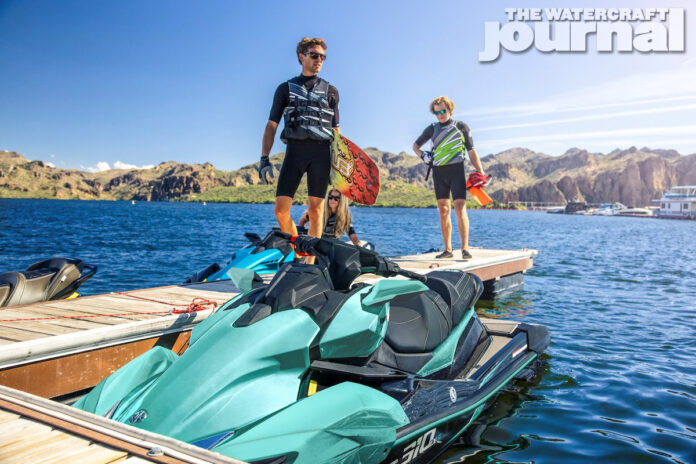
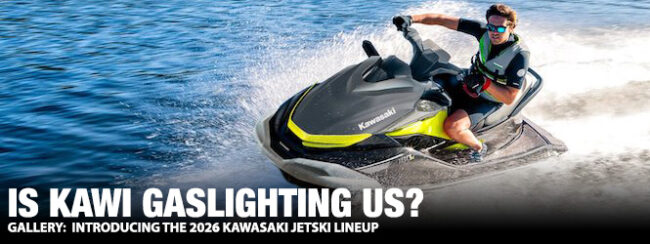
Above: Waitaminute! Every single one of these “lifestyle” images are recolored versions of last year’s models (and earlier). These are entirely fake photos! There’s two recolored versions of the same image in the photo gallery attached below!
The top-of-the-heap Ultra 310LX JetSki is $21,799 and is, from our initial observation, surprisingly competitive with Yamaha’s two highest FX SVHO offerings and Sea-Doo’s GTX Limited 325 (in Pearl White) particularly when comparing features, capabilities, amenities and most importantly, durability. Additionally, the Ultra comes in Metallic Deep Red/Ebony and already equipped with the Ultra deck extension with its Multi-Mount track system.
As noted, 2025 was a very slow year for new PWC sales (as was 2024) and there’s not much momentum going into 2026, according to early powersports industry reporting. This cooled market will likely strain dealers, so reducing the total amount of new units was likely wise on Kawasaki’s behalf. We’ll see how these new changes to the ST and STX models grab potential buyers as rebates and discounts on existing models lures others in.
When you walk into RideNow Chandler, it doesn’t take long to figure out the crew really loves what they do. And now, Sea-Doo has made it official — naming the Arizona dealership Sea-Doo’s 2025 U.S. National Dealer of the Year for personal watercraft and pontoons.
The announcement came during BRP’s Club BRP dealer event in Boston, where top retailers from across the country gathered to celebrate a year of record-setting sales and service. For RideNow Chandler, though, this one meant a little more.
“This one really feels good because it shows the effort our whole crew puts in,” said General Manager Jon Lester. “We’ve got a team here that shows up every day ready to take care of people — whether that’s helping them pick out their first Sea-Doo or making sure their gear and service are spot-on.”
Over on Instagram, the Chandler team summed it up simply: “We are pleased to announce that we were named the BRP National Sea-Doo Dealer of the Year! We’re truly honored by this …” And for good reason — this isn’t just another plaque for the wall. It’s recognition of excellence across the board: sales performance, service training, aftermarket growth, and customer experience.
If you were roaming the pits or soaking up the vibes at last year’s IJSBA World Finals, there’s a good chance RideNow Chandler caught your eye — not just as a manufacturer dealer, but as a community hub. In December 2024, RideNow Chandler hosted the very first Personal Watercraft Owners Convention, organized by the IJSBA.
Originally, the Owners Convention had been slated to take place alongside the 2024 World Finals at Lake Havasu, but when the Arizona heat got the best of that plan, IJSBA moved it to RideNow’s indoor facility in Chandler — about 200 miles east of Havasu.
The event itself was a smaller, more intimate gathering of riders, racers, and industry pros. Held inside RideNow’s spacious showroom, it was designed explicitly as a planning session for the 2025 Owners Convention — a brainstorming space for the competitive and recreational sides of the sport to come together, trade ideas, and help shape what future PWC community events should look like.
IJSBA described the day as a “bridge” between racers and everyday riders, with local clubs, vendors, and brand reps joining in. RideNow kept things relaxed with refreshments and swag, while sponsors like Hot Products kicked in prizes. Attendance was modest, sure — but for a first-time event pulled together at the tail end of the season, it set the tone for something that’s now taking root at this year’s World Finals in Havasu.
Fast forward to today, and the 2025 IJSBA World Finals are officially underway. Many of the ideas first floated at that Chandler convention — like improved owner amenities, hospitality areas, and organized recreational activities — are showing up in this week’s programming. In that sense, RideNow Chandler didn’t just host a meeting; they helped chart the next chapter of how the PWC community connects.
And really, it’s that same spirit of involvement and community focus that likely helped earn RideNow Chandler its newest distinction as Sea-Doo’s 2025 U.S. National Dealer of the Year — proof that when a dealership invests in its people and its riders, the results ripple far beyond the showroom floor.
For dealerships, being crowned Sea-Doo’s “Dealer of the Year” isn’t just bragging rights — it’s a calling card. Customers see that logo on the door and know they’re walking into a shop that does things right. It builds trust, helps new buyers feel confident, and gives longtime owners another reason to keep coming back.
It also opens a few behind-the-scenes perks. Often, award-winning dealers can see increased manufacturer support, marketing collaboration, and access to promotional opportunities. Beyond that, the honor tends to provide a morale boost across the team.
RideNow Chandler now joins an elite lineup of previous Sea-Doo Dealer of the Year winners like HK Powersports in New Hampshire, who earned the title last year. HK made waves around the Lakes Region by building its reputation on customer relationships, reliability, and community involvement — proof that this award isn’t just about selling units, but about doing right by riders.
And that’s really the takeaway here: when Sea-Doo recognizes a dealership, it’s rewarding more than just numbers. It’s about consistency, attitude, and a culture that puts customers first.
For RideNow Chandler, this recognition is the latest milestone in a long run of success. As part of the larger RideNow network, they’ve already built a name for themselves in the Phoenix-area boating community. The award just puts a spotlight on what regulars already know — that this team is the real deal.
And while RideNow Chandler was honored as Sea-Doo’s U.S. National Dealer of the Year during the Club BRP dealer event in Boston, north of the border, Banner Recreation and Marine in Kelowna, British Columbia, received the same prestigious accolade for Canada. This recognition underscores Sea-Doo’s commitment to excellence across North America and celebrates dealerships that exemplify the brand’s values and dedication to the PWC community.
Banner Recreation and Marine’s achievement is particularly noteworthy given the challenges posed by the Canadian market’s seasonal nature. Operating in a region with a shorter riding season, Banner has excelled in providing exceptional service, fostering community engagement, and maintaining strong sales performance throughout the year. Their success story mirrors that of RideNow Chandler, demonstrating that regardless of geography, a focus on customer satisfaction and community involvement can lead to outstanding results.
Both dealerships’ recognitions highlight Sea-Doo’s overarching strategy to support and celebrate its dealer network, ensuring that top-performing dealerships are acknowledged and empowered to continue their excellence. These accolades not only honor the dealerships but also reinforce Sea-Doo’s commitment to fostering a vibrant and engaged PWC community across North America.
So if you’re in the area and thinking about a new ski or gearing up for next season, chances are the Sea-Doo National Dealer of the Year has exactly what you need.
If you’ve ever been to Kachemak Bay, you know it’s one of those places that feels almost too wild to touch — steep green cliffs, glassy water, otters bobbing in the kelp, and a whole lot of Alaskan quiet. For more than twenty years, though, there’s been one sound you wouldn’t hear echoing across the bay: the braaaap of a jet ski.
That changed in a big way this fall, when the Alaska Supreme Court struck down a lower court ruling that had kept personal watercraft (PWCs) out of the bay’s critical habitat areas. In plain English: the state’s highest court just said, “Yes, jet skis are allowed in Kachemak Bay.”
The backstory goes way back to 2001, when Alaska’s Department of Fish and Game (ADF&G) banned PWCs in Kachemak Bay and the nearby Fox River Flats, citing concerns for wildlife and sensitive habitat. Fast forward twenty years, and the machines themselves had changed dramatically — cleaner, quieter, less intrusive. Under Governor Mike Dunleavy’s administration, ADF&G revisited the ban in 2021 and decided it no longer made sense to keep it.
That’s when the legal tug-of-war began. Environmental groups sued, claiming the state didn’t have the authority to lift the ban and that doing so would violate the laws protecting those habitat areas. As covered by WCJ, a lower court agreed with them in 2023, putting the brakes on again. But in September 2025, the Alaska Supreme Court reversed that decision — and did it unanimously.
The justices said the department not only had the power to create the ban, but also to change or repeal it as conditions evolved. They even pointed out that technology and science had come a long way since the early 2000s, and it’s perfectly reasonable for an agency to adjust its rules to reflect that. In other words, state rules aren’t meant to be frozen in amber throughout the decades.
To riders across Alaska, this felt like a long-overdue win — not just for access, but for common sense. To conservationists, it was a worrying signal that long-standing protections could be undone too easily. And to everyone watching, it was a reminder that jet skis have always had a complicated relationship with environmental policy.
Not The First Battle Over PWCs — And Definitely Not The Last
This isn’t the first time PWC access has been fought out in courtrooms or council meetings. Similar debates have popped up all over the map. California’s Monterey Bay National Marine Sanctuary still keeps PWCs out, citing wildlife and noise concerns. Up in Washington State, San Juan County’s long-standing ban has held since the late ’90s. On the flip side, lakes and recreation areas elsewhere have eased restrictions as cleaner four-stroke engines replaced the smoky, noisy two-strokes that gave jet skis their bad reputation decades ago.
Some places, like Lake Mead or Lake Mohave, only ban older engines. Others, like Lake Austin in Texas, limit jet ski use on major holiday weekends when boat traffic is chaotic anyway. The pattern isn’t “ban or bust” anymore — it’s more nuanced.
That shift says a lot about where things are heading. Instead of blanket bans, we’re seeing rules that adjust to reality: engine type, waterway use, wildlife behavior, and public tolerance. And frankly, that’s not a bad thing.
Fewer Bans, More Balance
Five or ten years ago, it seemed like every conversation about PWCs and the environment started with restrictions. Today, the tone has mellowed. While there are still a handful of local or seasonal bans being discussed, there’s no major wave of new prohibitions sweeping the country. In fact, cases like Kachemak Bay suggest a slow but steady shift toward moderation.
There are a few reasons for that. For one, modern personal watercraft are simply better neighbors. They’re cleaner, quieter, and far more fuel-efficient than the rowdy two-strokes of old. That means the data that once justified outright bans doesn’t always hold up anymore.
Public attitudes have also evolved. Instead of a “keep out” mentality, many communities are trying to strike a balance between recreation and conservation. Parks departments and wildlife agencies are increasingly looking for ways to manage access responsibly — with distance buffers, speed limits, or no-wake zones — rather than forbidding PWCs altogether.
And even as interest shifts back toward stand-ups — with riders restoring classic two-stroke skis or falling in love again with that light, nimble style of riding — the burden’s on the community to make sure that passion doesn’t undo the progress that has been made. Jet skiers themselves can play a big role here: by self-regulating, being considerate on the water, and staying mindful of environmental impacts, the PWC community can show that responsible riding and habitat protection can coexist. Working with local authorities and environmental groups, rather than against them, helps keep the conversation open and the water accessible.
Finally, there’s a broader political movement pushing for less regulation in general, especially in outdoor recreation. The Alaska decision echoed that sentiment, emphasizing that agencies should have flexibility to update their rules as technology and society change.
Why This Ruling Matters Beyond Alaska
Even if you never plan to ride in Alaska, this decision could ripple far beyond the Last Frontier. The court’s reasoning — that agencies must have the authority to revisit old rules as conditions change — might influence how similar cases play out elsewhere.
For riders, that means bans set decades ago might not be permanent if modern evidence supports lifting them. For regulators, it’s a reminder that any rule change, whether tightening or loosening restrictions, needs a solid, science-backed record to stand up in court.
And for conservationists, it’s a wake-up call: environmental protection laws can’t just rely on inertia. They’ll need to evolve alongside technology and recreation trends if they’re going to hold up in the long term.
The Takeaway
It’s not a free-for-all, and it’s not the end of environmental oversight. But the trend is clear: we’re moving toward smarter, more flexible regulation — not blanket bans.
Expect to see more lakes and coastal regions adopt middle-ground policies: specific zones for PWCs, seasonal restrictions during nesting or migration, and continued phasing out of older, polluting engines. The goal now is to keep waterways open, clean, and safe for everyone — otters and riders alike.
And if the Kachemak Bay decision proves anything, it’s that the conversation around PWCs is still evolving. The machines have changed. The science has changed and the rules may be starting to catch up.
Reputation Rehab
This kind of ruling — restoring access, recognizing changing tech, respecting both nature and recreation — can help shift public perception of jet skis from being part of the problem to being part of the solution. But — and this is a big but — that shift only sticks if riders avoid the kinds of headlines that feed the worst stereotypes: reckless riding, ignoring safety zones, harassing other users (or wildlife), hit-and-runs, etc.
Recent news shows that it’s now always forward momentum on that front:
In Mission Bay, San Diego, a 12-year-old girl, Savannah Peterson, was killed when she was struck by a jet ski going far above the speed limit in an area meant for slow or no-wake travel. Her family’s lawsuit highlights how signage, enforcement, and separation between swimmers/paddleboarders and faster watercraft might have prevented the tragedy.NBC 7 San Diego+1
In Lake Grapevine, Texas, an 18-year-old kayaker, Ava Moore, was struck and killed by a PWC over Memorial Day weekend in what’s being investigated as a hit-and-run. The operator fled the scene with another person; there’s anger, grief, and outrage — and it’s exactly the sort of case that reinforces fears that jet ski operators can act irresponsibly.Midland Reporter-Telegram
There have been numerous local complaints (for example in Lake Clarke Shores, Florida) of jet ski operators ignoring speed limits, making excessive noise, getting too close to swimmers or docks, and harassing other boaters. These kinds of reports may not always result in fatalities or legal cases, but they shape the narrative.Lake Clarke Shores, FL
If the PWC community can clean up the worst behaviors — stay out of swim zones, respect speeds, avoid harassment, don’t flee after collisions, watch for wildlife — then rulings like the one from Alaska might do more than just change laws: they might begin to change hearts and public trust.
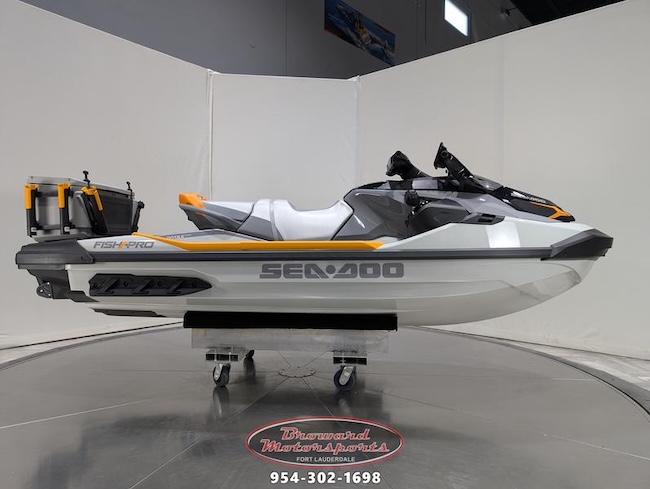
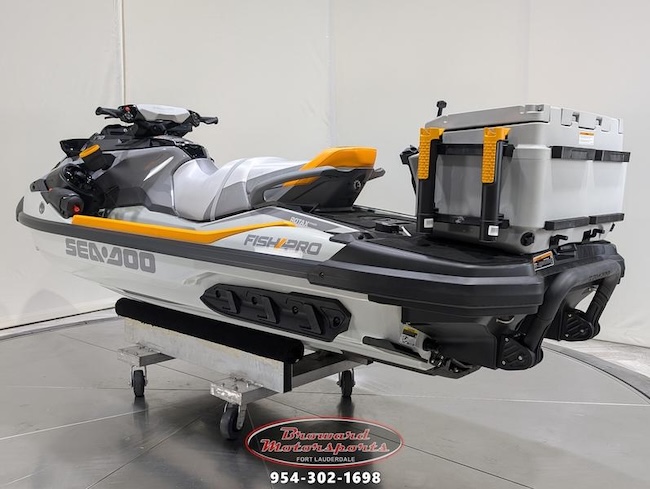
Broward Motorsports, with multiple locations across the region and a reputation for excellence that stretches from Miami to Palm Beach, has built themselves into a true powerhouse in the personal watercraft world. Their Ft. Lauderdale store in particular has long been a hub for riders who want the best machines at the best prices, and right now, they’ve got something special lined up for the fishing crowd: a brand new 2025 Sea-Doo FishPro Trophy 170.
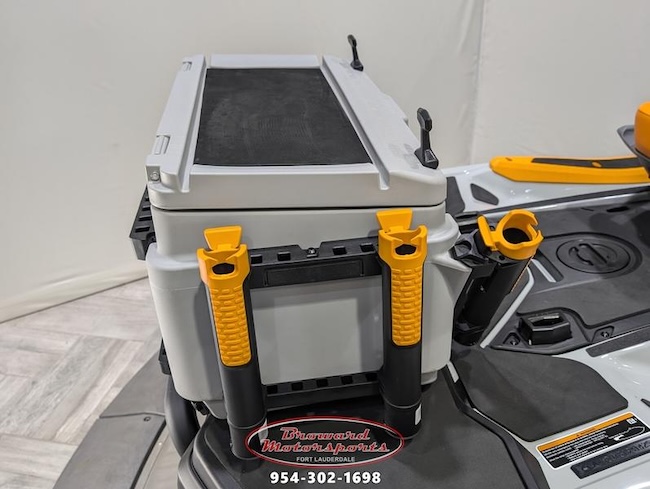
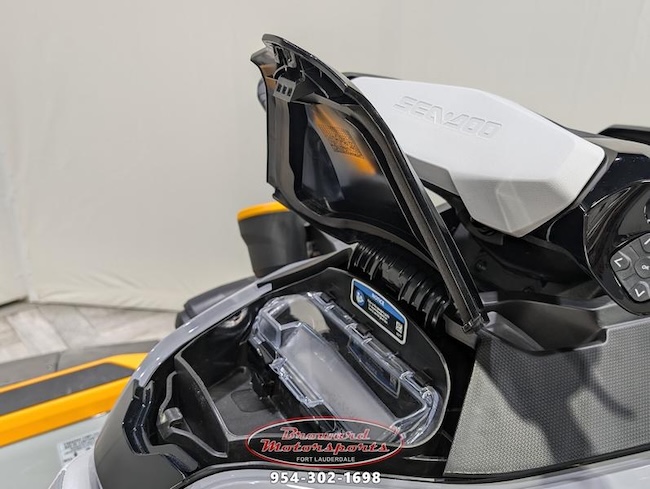
Sea-Doo’s FishPro line has carved out its own little subculture in the PWC world, and the Trophy 170 sits at the top of that pyramid. Powered by the proven 170-horse Rotax 1630 ACE, it’s got all the muscle you need to run offshore or cruise the inlets without breaking a sweat. But what makes it truly shine for jet ski anglers are the little details: a tricked-out fishing cooler that converts into a livewell, a modular swivel seat so you can get comfortable while you wait for that bite, and a factory-rigged Garmin 7-inch touchscreen with GPS and fish finder built right in. It’s the kind of setup that makes chasing snapper, grouper, or even mahi off the reefs less of a guessing game and more of a guaranteed adventure.
And here’s the kicker: Broward Motorsports of Ft. Lauderdale has this 2025 FishPro Trophy 170 priced at just $17,715—that’s a savings of nearly three grand off retail. For anyone who’s been eyeing the FishPro but waiting for the right deal to strike, this is it. While here at The Watercraft Journal we’re more often leaning into the smaller, sportier machines that bring back that old-school, responsive energy, we can’t deny the advantages of a ski like this for serious anglers. For the fishing faithful, it’s purpose-built perfection.
Beyond the sales floor, Broward backs up every ski they sell with strong after-sales support. From factory-certified service and repairs to parts, gear, and accessories, they make sure your investment stays on the water and out of the shop. Financing options and trade-in opportunities also make it easier than ever to get yourself into the right machine, whether you’re upgrading from your current ski or starting fresh.
Of course, the Trophy isn’t the only deal Broward has on deck. Their Ft. Lauderdale showroom is stocked with a wide spread of new and pre-owned skis, and their other locations—Hollywood, West Palm Beach, Miami, and Tequesta—each carry their own inventory and special offers. So whether you’re chasing fish offshore, craving high-speed thrills, or looking for a solid second-hand ski to get into the sport, Broward Motorsports has you covered.


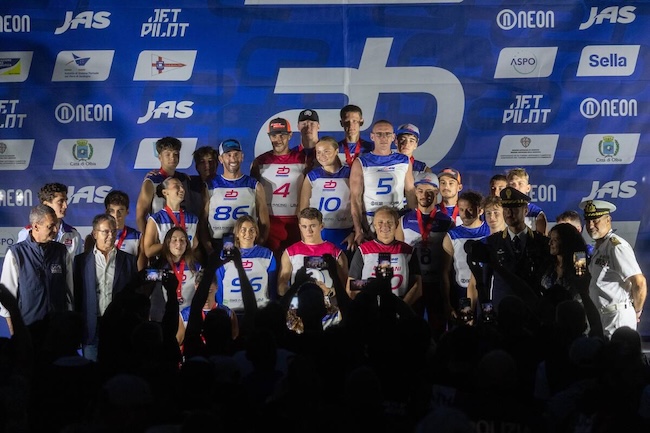 This past weekend in Olbia, Sardinia wrapped up the European leg of the UIM-ABP Aquabike World Championship with a blur of whitewater, horsepower, and high drama. The first stop in Porto Rotondo brought out a deep international field, with new faces and first-time winners taking the spotlight across multiple classes — a reminder that the sport’s next generation is charging hard.
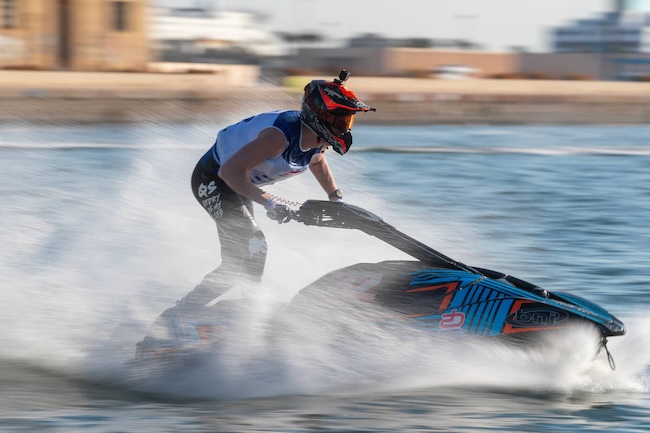 But when the tour moved north to Olbia for the Regione Sardegna Grand Prix of Italy, the veterans made sure everyone remembered their names. Norway’s Benedicte Drange scored her first-ever Ski Ladies GP1 Grand Prix win after holding off Estelle Poret, while France’s François Medori took command in Runabout GP1 — controlling every lap and extending his World Championship lead heading into Qatar.
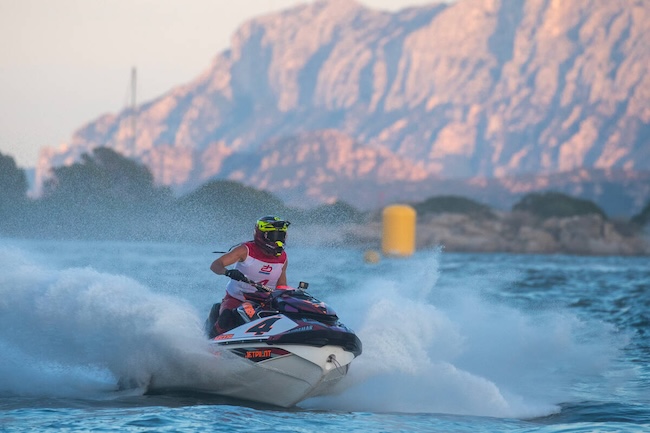 But when the tour moved north to Olbia for the Regione Sardegna Grand Prix of Italy, the veterans made sure everyone remembered their names. Norway’s Benedicte Drange scored her first-ever Ski Ladies GP1 Grand Prix win after holding off Estelle Poret, while France’s François Medori took command in Runabout GP1 — controlling every lap and extending his World Championship lead heading into Qatar.