
Home Blog Page 38

VIDEO: Jet Ski Jim Breaks Down Fuel Pump Removal & Pump Shoe Gauging in SXR Tutorial

0

Jet Ski Jim is back with another entertaining and informative video to show you the ins and outs of PWC repairs!

In his latest upload, “SXR Fuel Pump Replacement,” Jim guides viewers through the inner workings of an SXR jet ski using a detailed cutaway model to show the otherwise hidden parts of this Kawasaki model. Whether you’re looking to repair a jet ski or just curious about how these machines work, Jim’s unique blend of humor and technical expertise makes this video a must-watch.

In classic Jet Ski Jim style, he balances his expert knowledge with hilarious skits, ensuring that even complex mechanical topics stay engaging and fun. This time, Jim dives into the nitty-gritty of removing a fuel pump and gauging the pump shoe location. His step-by-step explanations are easy to follow, even for those new to jet ski repairs. Along the way, Jim shares handy tips for ensuring everything is done correctly, keeping things casual and relatable for his audience.

And while Jim receives many requests for personal jet ski repair advice, he encourages fans to ask detailed questions in the comments section, allowing him to give specific, helpful answers to whatever issues may arise.

If you’ve been wanting to learn more about jet ski mechanics—or if you just need a good laugh while picking up some valuable tips—this video is for you! Head over to Jet Ski Jim’s channel and catch his latest adventure in jet ski maintenance.

Impros SXR 1500 Comp Pump: Performance Boost for Serious Riders

0

The all-new Impros SXR 1500 Competition Pump is a high-performance upgrade designed for serious jet ski enthusiasts looking to maximize their watercraft’s efficiency and power. Custom-made by Impros, this advanced pump features a 14-vane setback setup for 148/75 and 148/83 configurations, specifically built to enhance water flow and thrust. One of its standout features is the dual cooling system, which provides optimal temperature regulation, making it ideal for high-speed racing or extended use in challenging conditions.

This pump package comes complete with all the essential components for a smooth installation and performance upgrade, including bearings, seals, a bushing, pump shaft, and tailcone. However, it does not include the impeller, which is available separately.

For those looking for the ultimate performance combination, Impros offers an optional Hooker impeller and extended driveshaft, ensuring you get a full performance boost and push your ski to the max out on to the water.

The Impros SXR 1500 pump is built for riders who demand reliability, durability, and maximum power on the water. It’s engineered for seamless integration with your jet ski and is a perfect addition to competitive racing setups or anyone looking to optimize their ride.

If you’re ready to get the latest in PWC performance technology and take your SXR 1500 to the next level, consider ordering one of these epic Impros Competition Pumps now!

Interview: First Day of School, Sea-Doo Style!

0

Oftentimes, our most impactful childhood memories shape our lives in ways we could never have imagined. A kid who loved the smell of his grandmother’s biscuits may end up starting a bakery, a girl who falls in love with a single novel may pursue a career in writing, or a chance encounter with a sport may turn into a lifelong hobby. Here at The Watercraft Journal, we embrace any opportunity to see kids enjoying their family’s watercraft activities. So, when we came across a recent video from Adam Szyfman on Facebook, we seized the chance to interview him for a story.

The video, which has been shared in several watercraft Facebook groups, shows Adam taking his son, Max, to his first day of school on their Sea-Doo. Max is starting third grade, and based on footage from their Facebook post, along with their other videos on YouTube and Facebook, it’s clear he’s developing a love for jet skis through his bond with his dad.

We reached out to Adam and Max for an exclusive interview to learn more about their unique experience.

WCJ: What inspired you to take your son to school on a jet ski for his first day? How did the idea come about?
Adam: We have been taking the Sea-Doo to school the first week of school and last week of school for 6 years now. We are fortunate to live on the water and when realizing his Elementary School at the time was across the street from the lagoon we came up with the idea. I asked Max if he would go to school by jet ski and without hesitation he loved the idea.

WCJ: How did your son react when you first told him you’d be dropping him off at school on your Sea-Doo?
Adam: Max was absolutely stoked. What kid wouldn’t want to attend school by Sea-Doo? Any opportunity to go out on the skis Max is totally excited about so going to school was just another opportunity to ride and a cherry on top.

WCJ: Can you walk us through the logistics? How did you manage to bring your son all the way to school on the water? Also, what safety measures do you take while making such an unconventional trip?
Adam: While attending Avalon Elementary School in Pre-K3 and Pre K4 it was less than a mile trip and was all in a no wake zone. We were grateful for the owner of one of the houses across the street granting us permission to park there.

Now that Max is in Stone Harbor Elementary school (grades Kindergarten-4th grade the trip is approximately 5 miles. The time to get there is tide dependent. Mid to high tide it’s a 15 minute ride and in low tide can be a 30 minute ride. We park at the Reed’s which is a boutique hotel and restaurant in downtown stone harbor then walk about a block to Wawa (for breakfast sandwiches of course). Then right across the street is his school.

The real logistics are making sure that Max does not get wet. This would be immediate grounds for divorce lol. We try and choose a day where the tides are mid to high and usually in the early morning the water is glass if not pretty flat. The Sea-Doo rides to school are very weather dependent. On the trips to school we do not go crazy on the turns as the object is to stay relatively dry. We keep the crazy wet and wild turns for our other adventures not involving school trips.

Of course we are wearing life jackets as required by coast guard law. We also make sure the Max’s backpack is in the storage compartment nice and dry in the front of the ski. We always have safety devices on board like fire extinguishers, ropes, etc.

WCJ: What was the best part of the experience for you?
Adam: We are so fortunate to live on the water and have all of our toys in our backyard. We are uniquely blessed to live in an area of not only New Jersey but the world with all sorts of marsh trails and wetlands that interconnect and are always finding new windy ways to get to new destinations and old. Plotting and planning GPS routes and finding new marsh trails is something I can now pass on to my son Max as he has found so much interest in this which is not only a great GPS skill but a ton of fun. If high tide is early we got the surfing Pig in Wildwood which by Sea-Doo we always take the long way. If it’s high tide in the afternoon we can make our way to H&H Seafood in cape May or head over to the Deauville in Strathmere. Mid to high tide allows us to take the long windy trails back by the Parkway and explore.

WCJ: Do you think this will become a regular thing, or was it just for a special occasion?
Adam: Max and I have set a goal to do this the first and last week of school and so far has been 6 years going on strong.

WCJ: How do you hope this experience impacted your relationship with your son and his view of adventure or fun?
Adam: Max is always looking forward to our wave runner adventures. He will never say no to a trip and loves exploring new marsh trails, terrain and destinations. As he got older it is pretty cool being able to go on longer and longer rides and seeing his reaction to some of the new to him trails is so enjoyable. It makes me never take these opportunities and time together for granted. On our longer trips Max always has a great story for mom or our neighbors of something that happened. For example when we lead groups that are not familiar with the trails Max keeps tally of who crashed into the sea grass off the trail and we had to rescue with a rope. Or there are the times where we have got stuck at lower high tides and had to push out of the mud. We have sure made a lot of memories on the Sea-Doo together and plan on making a lot more.

We have lived here year round in Avalon, NJ for over 10 years now and have been studying the march trails since 2004 when I first started coming down here just weekends in the summer. Our friends and neighbors here are only summer residents and mostly weekends so when it’s high tide during the day on a weekend we get lots of requests to go on group rides. As Max and I know all the trails (which are easy to get lost on) I think Max loves being the line leader and really enjoys showing everyone what our unique landscape has to offer. Sometimes we are leading groups of 6-10 skis in marsh trails that are maybe 1-2 feet wider than the ski. He is always up for adventure as well.

WCJ: Now we wanted to ask a few questions for Max. What did people at your school think when they heard that your dad brought you to school on a jet ski? Did any of your friends or teachers ask you about it?
Max: They were all very surprised when they heard about it. They have never heard of anyone going to school on a jet ski before.

WCJ: I’ve seen that you have gone on quite a few cool jet ski adventures with your dad, like your 90-mile trip to pick up a watermelon! Do you have any favorite memories out on the water?
Max: The 90 mile trip was probably my favorite. We did all the trails from Ocean City to Cape May in about 6-7 hours. Our last stop was our favorite seafood place on the water, H&H Seafood in Cape May, NJ. We always try to bring some sort of large fruit or vegetable home for Mommy and this time we were able to bring the giant watermelon.

WCJ: What was the best part of this experience for you?
Max: I like going on jet ski adventures so going to school is another cool ride we get to go on but this time to school.

WCJ: Is there anything else you’d like to share with us about your jet ski adventure?
Max: It is a great time hanging out with my dad.

Checkout the first day of school video and watermelon videos from Adam and Max here, as well as their other videos on their YouTube channel!

Yamaha Celebrates Sweep of Podium at Kissimmee AquaX Pro Enduro (Video)

0

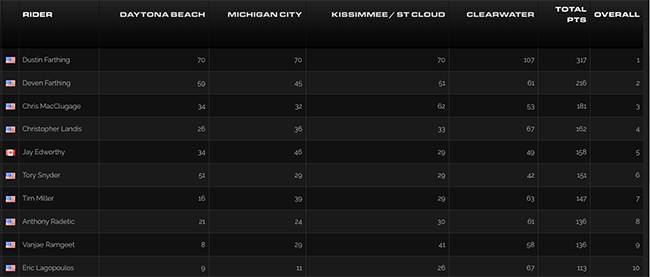
It was a heck of a shuffle this past weekend at the Kissimmee, Florida stop of the P1 AquaX tour as spectators witnessed two of the sport’s most seasoned – and winningest – racers of all time battle it out in the Pro Enduro. Dustin Farthing, who not only retains his leadership position on the points board, but also captains the Factory Yamaha WaveRunners race team, held back Chris MacClugage long enough to maintain his lead but first place on the podium. MacClugage slipped in at a solid second place, with Farthing’s son, Deven securing third.

All three piloted SVHO-powered WaveRunners (both GP and FX models) and proved whether conditions were ideal or blown out with 25mph winds, that Yamaha has what it takes to bring home the checkered flag. The final two motos really shook out the men from the boys as weather proved just as much of a factor as the other racers on the field. In addition to including the press release from Yamaha Motor Corp. USA below, we’ve also inserted the latest video of the race’s exploits from Farthing Racing’s YouTube channel to enjoy below too:

Here’s the original press release:
Kissimmee, Florida, played host to another dominant weekend for Yamaha WaveRunner racing at the P1 AquaX Pro Enduro, where Yamaha riders swept the podium, showcasing the unparalleled performance of the Yamaha GP SVHO® WaveRunner. Leading the charge was Monster Energy®/Farthing Racing’s Dustin Farthing, the reigning P1 AquaX Pro Enduro World and National points leader. Farthing clinched two out of three moto wins with a strong 1-1-2 result, securing 1st overall for the weekend. This latest victory not only cemented his weekend dominance but also extended his lead in the championship point standings with just two rounds remaining. With the title now firmly in his sights, Farthing is poised to clinch the championship.

Farthing wasn’t the only one in top form. His son, Deven Farthing, also put on a solid performance, landing 3rd overall with a 2-3-5 finish. Meanwhile, Yamaha veteran Chris MacCluggage rounded out the podium with a 2nd-place overall finish, marking yet another impressive outing for Yamaha’s GP SVHO and FX SVHO® WaveRunners, which continue to assert their supremacy in the series. The competition kicked off in ideal conditions for Moto 1, but riders were soon forced to battle 25 mph winds in the final two motos. Yet, Yamaha’s team proved more than up to the challenge, with all of their athletes pushing through the harsh conditions to secure a sweep of the top five finishes overall. “We couldn’t be more proud of the team’s performance this weekend in Kissimmee,” said Yamaha WaveRunner Racing Manager Bryce Parker.

“Dustin, Deven, and Tory [Snyder] all showed the world why Yamaha WaveRunners continue to lead the sport. The Yamaha GP SVHO is unmatched in power, handling, and reliability, and this weekend’s podium sweep is a testament to that.” As the season winds down, Yamaha WaveRunner racing holds a commanding lead in the P1 AquaX Pro Enduro series and shows no signs of letting up. All eyes will be on the final two rounds as Dustin Farthing looks to bring home the championship.

Unlimited PWC Launches New Cotton Spandex T-Shirts

0

Unlimited PWC just recently unveiled its latest additions to their apparel collection:  several versatile and stylish unisex T-shirts designed for both casual wear and outdoor activities. These new shirts, available in sleek white and bold neon green, come with two eye-catching logo options: their iconic “UNLTD” logo or the statement-making “Born to Ride.”

Crafted with Unlimited’s original hybrid fabric, the shirts are made of 100% cotton, offering a perfect blend of durability and comfort. The fabric’s firm texture ensures it will hold up well during all kinds of outdoor activities, and the smooth, soft feel makes it ideal for everyday use. Whether you’re heading out for some intense watersports, a gym session, or simply spending the day on the dock with some friends, these shirts are designed to keep up with your active lifestyle.

The versatility of these shirts extends beyond function. With their unisex design, they’re a great addition to any wardrobe and can be styled for a variety of occasions. Whether you’re a PWC enthusiast or just someone who appreciates high-quality apparel, these shirts deliver both style and comfort.

This new release from Unlimited PWC showcases their commitment to producing quality gear that performs both on and off the water. As they say on their website, “Whether you are looking for performance products for your ski, or gear for yourself, you’ll ‘look fast and go fast’ when you partner up with Unlimited PWC for a top-of-the-line shopping experience”

Grab your new Unlimited PWC t-shirt today to stay stylish and comfortable, whether you’re riding the waves or just hanging out.

Gallery: 2025 Sea-Doo Fish Pro Apex 300 (Video)

0

Sea-Doo first jumped into the fishing scene in 2019 with what was then just the Sea-Doo Fish Pro. Since expanding the Fish Pro family into three models – the GTI-based Scout, the mid-range Fish Pro Sport and the top tier Fish Pro Trophy, brand has experienced incredible growth in this global market.

Interestingly, Sea-Doo noted that since its introduction, the top-of-the-line Trophy has constituted an incredible 70 percent of all Fish Pro sales, dwarfing the entry and mid-range offerings 2-to-1. This alone gave Sea-Doo the green light to push the Fish Pro even further, by marrying two of the brand’s most over-the-top machines into one, namely the Explorer Pro and the Fish Pro Trophy – making the all-new Sea-Doo Fish Pro Apex 300.

Yes, they’re bringing the Apex moniker back but this time not on an RXP-X like before, but on the new Fish Pro 300 Apex. The new Apex of course, starts off with the now 7-year-old full-sized ST3 platform. Interestingly, when we asked Sea-Doo about the idea behind the Apex, they replied they simply were responding to all the various demands that they were getting from the lakeside and river fishermen.

The demand it seems was for a “everything but the kitchen sink” approach to a premier level fishing watercraft. From the Explorer Pro the Apex receives the element-deflecting windscreen. This rides on a unique perch that sits on a shock absorber. This allows the windscreen some “give” if the rider accidentally falls forward of the handlebars. It can also be folded forward on a hinge, snapping in and out of place with just a little force. The windscreen also includes a small flap vent to allow the slightest bit of breeze through.

Like our critique of the Explorer Pro, from which the Apex gets this item, the windscreen tends to distort one’s visibility particularly when wearing polarized sunglasses, making reading the water’s surface doubly difficult. Equally, the Apex receives the powder-coated bow rail ideal for tying up to the dock or tethering to a nearby fixture to stay in place.

Next, the Apex receives everything that made the Trophy unique: This means you’re getting the high-bolstered seat; you’re getting the angled footrests sitting at the top of the gunwales, you’re getting the extended deck – what Sea-Doo calls its Fish platform – and you’re getting the 13-and-a-half-gallon cooler. And of course, you’re getting a Garmin GPS. Yet, unlike the Trophy before it, the Apex is the only Sea-Doo to get the massive 9-inch Garmin Fish Finder with a full-color, touch screen monitor.

With the introduction of the Trophy model back in 2021, customers were entreated with a new swivel seat that mounted into the back platform. This same swivel seat is also found on the new Apex, including a dedicated backrest. There’s a little feature that a lot of people don’t know about it, and that is that you can’t go fast with this seat installed. In fact, there’s a little electronic trigger that deactivates the ECU and lets it know, “Hey listen, we got someone up on the swivel seat!” And so, you can only go in trolling mode. It’s a really smart safety feature that shows a little bit of ingenuity on behalf of Sea-Doo.

The swivel seat, of course, is unique to the Trophy and Apex models, as it does have these attachment points for the backrest that sits in the center storage bin and has a nice rigid base and of course, has the modified base that will accept the swivel. Equally, the 2021 Trophy introduced us to a live well tank pump system that also acted as a deck washer. This quick-release hose feature is also found on the Apex and has its own dedicated toggle switch found below the throttle trigger. The toggle can be set for “ON” to continuously run, “Timer” which activates the pump to circulate on a delay, and “OFF”.

Additionally, they stepped it up with the new angle mounted rod holders for the front and also included on the trophy a new gunwale-mounted anchor. The anchor of course, is tethered off of its own dedicated cleat and has a mesh bag so that the rope can air-dry while stowed. And it is a nice high quality, fully collapsible anchor too.

And since you can’t have enough rod holders, the Apex gives you seven of these. Obviously, we’ve got a whole bunch mounted all the way around the tank, but you can also attach these pretty easily right up here in front. Additionally, the Apex includes this cup holder. I will caution that the cup holder does not float. We learned this the hard way this morning. This is our second one today.

And just when we think we’re done listing all of the features, we remember a few more: The Apex does include Sea-Doo’s first drop-in cleats here in the back. You can see how easy they are to reach and use. They’re spring-loaded so that they’ll retract on their own.

Sea-Doo threw everything they got at the new steering system. Not only do you get the fully- adjustable steering neck that allows for three-and-a-half inches of adjustment – it’s really nice especially if you’re sitting back on the seat; you can actually reach the handlebars without leaning forward – but Sea-Doo also included the new aluminum neck and hydraulically-damped steering knuckle.

The hydraulic damped steering soaks up a lot of the wanderings that the ST3 hull likes to do, particularly in rough water. This gives a very insulated, very padded feeling to your steering and steering input. It does get a bit more responsive the tighter you adjust it. Again, there’s three levels or settings to the damper, allowing you to set it loose or very, very tight.

Now, even at its lowest setting it’s not necessarily stock or what you’d call “undamped”, but the looser setting does have a little bit more of a playfulness to it, and you can adjust it all the way to really tight, almost like you’re fighting it. Some people do like it that tight; I’m somewhere in the middle personally, but again, you’re going to find what adjustment you like best for you.

But of course, I’m leaving out the best part, and this is that the Apex is Sea-Doo’s first supercharged Fish Pro. Now, while 300 horsepower and 68 miles per hour is a lot of fun, it does tend to be a little thirsty. We found that our average speed was drinking about 4 to 4-and-a-quarter gallons per hour. That may obviously vary depending upon your altitude, how heavy you are and of course, how fast you choose to go at your cruising speed that will affect how long your 18-and-a-half-gallon fuel tank will last throughout the day. So again, your trigger finger is going to be the most important factor when it comes to your fuel usage.

But let’s be honest; if you’re gonna fork over the dough for a 300-horsepower, supercharged powerplant, fuel consumption is not exactly your highest priority – right? (And if it is, you bought the wrong machine, bucko.) Now the Fish Pro Apex does mark a lot of “firsts” for Sea-Doo, and that’s a good thing…well, except for one:

And that is the price tag. The Sea-Doo Fish Pro Apex 300 comes in at $24,500, making it the most expensive Sea-Doo to date. Of course, you’re getting a lot for your money, especially if you were to try to equip a Fish Pro Trophy, a Fish pro Sport or even a GTX 300 with all of the gear that Sea-Doo gives you standard on the Apex.

Another “first” comes in the way of total weight. Sea-Doo lists all of its vehicles’ weight as “dry weight” – meaning without a battery, oil, coolant and especially gasoline. Officially, the Apex comes in at 978 pounds, but when factoring for the aforementioned battery and chemicals, the Apex is pushing well over 1,100 pounds – certainly a first for Sea-Doo. The Apex is rated up to 600-pounds of cargo capacity. That could be you and a passenger and all of the equipment that you brought with you… or it could just be YOU and all the equipment you choose to bring.

Again, LinQ allows you to bring a whole lot of equipment. And as far as LinQ attachments go, it has the extended Fish Pro deck and we also have a second set of LinQ attachments here in back so you can bring extra gas or a smaller cooler if you want to bring your food or if you want to bring a big cargo bag for a change of clothes, some warmer clothes, a towel… whatever you might need.

And because it is an Apex that means that it’s a one year only model. It’s very likely that we’ll see equipment shown here available on the Trophy in 2026. Maybe not a 300-horsepower model though. Again, they were hinting that this unit will be very unique for this model year only. So, if it does hit all the marks for you, this might be the year to jump on. Because if you snooze you very well may lose in 2026.

Gratefully, Sea-Doo allowed us to have the Apex for the day up here in Minnesota and we’ve been playing around in a lot of the shallows and even in deeper water with what all the things that the Apex offers. That being said, the Garmin Fish Finder and that big 9-inch screen has got to be the takeaway winner for this model.

The big 9-inch screen allows you to see the sea floor, see some of the fish activity below you, and is giving you live data and GPS tracking so that you can set your waymarks. Get out to your favorite spot, and then make your way home. It’s a little bit of a labyrinth out here in the land of 10,000 lakes, and we’re very grateful that we have the navigation to find our way home.

Another thing that we really appreciate personally is the addition of the new steering neck. We’re able to stand up and ride very comfortably. You do have five points of articulation, and with the added height that comes from the adjustable steering, we’re able to stand up very comfortably and ride home and stretch our legs and straight out our back.

It does feel rather nice, so we do like the addition of the new steering neck. The damper, of course, is really appreciated on the ST3 platform, more so than even on the RXPX because again, the behavior of the big watercraft in a variety of rougher water when the wind kicks up, we really do like the dampen steering.

Navigating the tech package screen is done very easily, using the diamond-shaped toggle pads on the handlebar pods. They do have a nice tactile response. You do get a nice audible click when you do engage them. And even though you’re on the water, you do get to feel that response every time you do touch the pad. In our assessment there just really isn’t anything more than we would add to this watercraft.

Looking at the Apex with a 30,000-foot view, it’s pretty clear to see Sea-Doo’s strategy here: they’re less interested in luring existing enthusiasts into the sport of jet ski fishing, but rather, get fishermen to start going jet skiing. Most people coming to The Watercraft Journal are already diehard enthusiasts looking for the latest greatest new model. It’s only by happenstance that total newcomers are finding this publication as a means of research.

That being said, what’s our take on the new Fish Pro Apex 300? Frankly put, we cannot think of another necessary thing that is lacking besides maybe a trolling motor and a wild metal flake paint job. (But maybe Sea-Doo is holding back for the ultimate bass-fishing edition of the Fish Pro? That would be pretty cool!) Instead, the Apex comes in some pretty muted greens. The deep forest green and that really nice purple silver does really pop in the sun. As you can see.

All in all, we’re very happy with the final result of Apex. I think it’s a really good package. It just appeals to a group of people who might not be the core jet ski audience. Don’t let the $24,500 asking price shock you all that much – trying to replicate such an equipped personal watercraft will set you back closer to $30,000 dollars. Instead, Sea-Doo has done all of the hard work for you. All that’s left now is picking the perfect spot to cast a line and choosing which bait to use.

Racers From Six Countries Battled For Championship Points on Lake Toho; MACC Racing Provides Race Recap

0
Photo Credit: RonnyMac.com

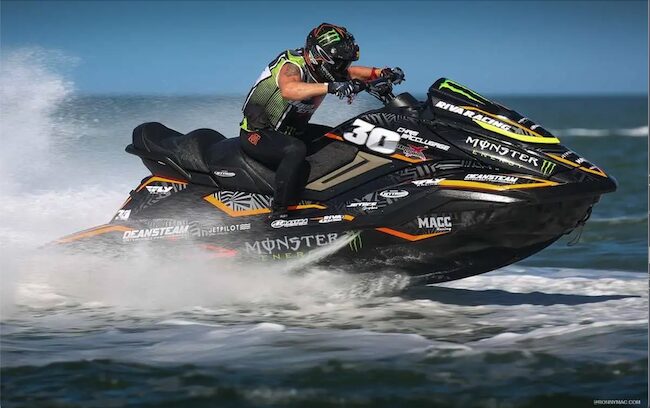
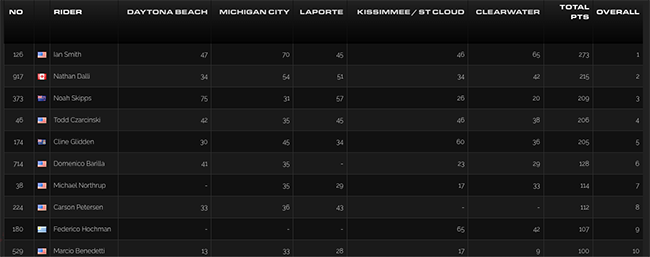
More than fifty riders traveled to Central Florida for the SBT P1 AquaX Kissimmee/St. Cloud Grand Prix last weekend (September 21-22), where riders from six countries lined up to battle in both the Pro and Am Enduro classes, all seeking to add points in the race for the AquaX National Championship.

Short Block Technologies (SBT), the largest personal watercraft aftermarket parts company in the world, is the title sponsor of the series, which kicked off in Daytona Beach in April. The championship receives television coverage on the Bally Sports Regional Networks.

Last weekend’s race was the 11th time East Lake Tohopekaliga has served as a AquaX host, and P1 USA Director of Operations Michelle Petro said, “We always look forward to returning because we receive such a warm welcome from both presenting sponsor Experience Kissimmee and the City of St. Cloud. We regard this event as our hometown race with it being so close to our Orlando race headquarters and the very first venue we visited in Florida in 2013.”

Photo Credit: RonnyMac.com

While full official results have not yet been released, The Watercraft Journal got a race recap and update from Monster Energy MACC Racing, with Chris MacClugage securing his first race win of the season and taking 2nd overall on Lake Toho. You can read the full recap below. 

The final two race events of the SBT P1 AquaX season, scheduled for October and November, will take the riders to Florida’s Gulf Coast, with St. Petersburg and Clearwater being the host venues.

MacClugage Secures First Race Win of the Season and P2 Overall at P1 AquaX – Kissimmee/St Cloud

East Lake Toho, St Cloud, FL – September 22, 2024 – Monster Energy MACC Racing delivered an exhilarating performance at the P1 AquaX event in Kissimmee St Cloud, as Chris MacClugage clinched his first race win of the season and achieved second place overall. The action-packed weekend unfolded at East Lake Tohopekaliga, where riders from six countries competed fiercely in Round 3 of the Pro and Round 4 of the Am AquaX US National Championship. 

Race 1 Pro Enduro Highlights 

The weekend began with favorable conditions on Saturday, as the flatter waters of Lake Toho provided a stark contrast to the challenging surf races on the ocean and Lake Michigan. Monster Energy MACC Racing team riders Chris MacClugage and Tim Miller opted for the faster Yamaha GP Jet Ski rather than the larger more stable Yamaha FX to maximize their performance in the flatter conditions. 

Photo Credit: RonnyMac.com

MacClugage got off to a strong start, trailing closely behind Dustin Farthing as they approached the first turn. MacClugage caught the wrong side of a wave coming out of the holeshot allowing Anthony Radetic to overtake him on the inside. MacClugage settled in behind Radetic on the Seadoo for most of the race. In a dramatic turn of events, Radetic’s late-race mistake enabled MacClugage to seize the opportunity and finish in second place. 

Tim Miller also had a promising start, emerging from the holeshot in fourth place. He maintained this position for the majority of the race until he had to navigate around a crash in front of him during the final laps. Unfortunately this allowed Tory Snyder and Chris Landis to pass, resulting in a sixth-place finish for Miller in Race 1.

Challenging Conditions on Sunday 

Sunday morning brought a shift in weather, with increased wind creating choppy white caps on East Lake Toho. After securing a third-place finish in Race 2, MacClugage and the Monster Energy MACC Racing team made crucial adjustments to his jet ski setup to better handle the rougher conditions. The team’s hard work and MacClugage’s improved level of fitness paid off, as he led from the start in Race 3, ultimately claiming his first race win of the season and securing second place overall for the weekend. Photo Credit: RonnyMac.com Tim Miller contributed valuable points to the team with another consistent performance, finishing the weekend in seventh place overall. 

Photo Credit: RonnyMac.com

Cooper Caldwell Dominates AM 200 Class

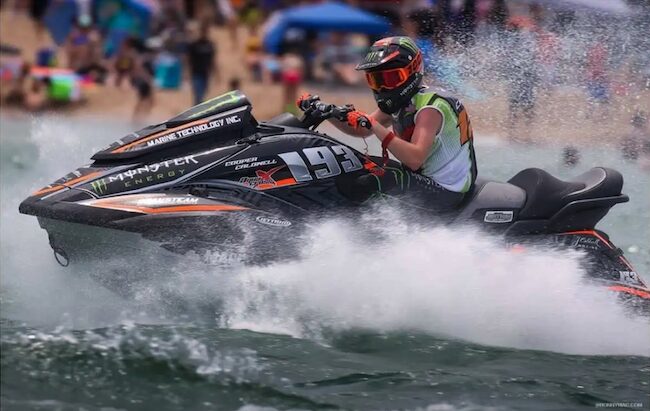
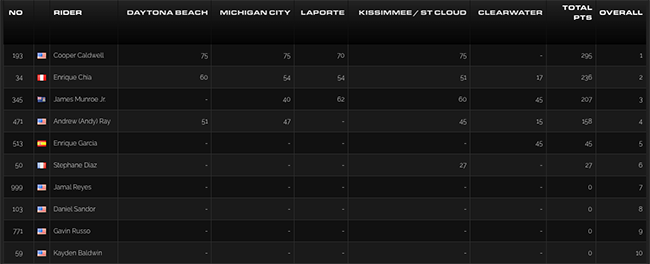
In the AM 200 Class, Cooper Caldwell delivered an outstanding performance, achieving a clean sweep. Caldwell won Race 1 and engaged in some tough battles in Race 2 before emerging victorious in Race 3, securing an overall first-place finish for the weekend. His impressive performance has already secured him the 2024 AM 200 Class championship title, with one race remaining in the season. 

Monster Energy MACC Racing extends a massive shoutout to all our incredible sponsors and dedicated pit crew. Your unwavering support is what makes weekends like these possible! Join us next time as the team competes in Round 4 of the P1 AquaX National Championships in St. Petersburg, FL, from October 18-20. For more information and updates, visit Maccracing.com and follow us on social media.

Combat Rust and Corrosion, Safeguarding your Engine with Yamalube

0

The concept is bottom-level basic – maintenance is mandatory, not recommended.

This especially holds true for changing the oil on your PWC.

Yamaha recommends changing oil every 50 hours, saying that changing your engine oil regularly helps preserve engine health. Old oil contains contaminants that can harm your engine, while fresh oil ensures smooth operation. And Yamaha takes smooth operation seriously.

“At Yamaha, there is no single department in charge of oil,” said Mike Ricciardi, Yamaha WaterCraft Product Development Manager. “Rather, oil development is carried out by engineers in charge of developing and building our engines. We have taken extraordinary steps in the development of Yamalube lubricants. We have our own oil certification committee. This group brings together both our own chemical engineers and the very same team who designs our engines having access to proprietary specifications about our engines. This group has an unmatched pool of knowledge from which to draw in creating oil formulas that far exceed all other competitive brands.”

Visually, oil for personal watercraft and boats and oil for cars doesn’t look very different, but there are significant differences in how they are used, Ricciardi stresses.

As marine engines are for use on the water, rust prevention is one obvious concern, but the biggest is the load these engines are subjected to being that its common practice to run marine engines at full throttle for hours on end.

“Our Yamalube oil for Yamaha WaveRunner and Boat engines is blended specifically to deliver enhanced protection and durability as well as peace of mind on the water,” said Ricciardi. “As our boats and PWC evolve, Yamalube is the only line of care products that can keep up.”

Specifically crafted for Yamaha boats and personal watercraft, Yamalube undergoes rigorous testing to guarantee a smoother, more confident ride every time you hit the water. Specially formulated to combat rust and corrosion, safeguarding your engine from marine elements, Yamalube offers top-tier protection, engineered to excel under extreme conditions and extends engine life by minimizing wear.

Yamalube and oil change kits are available directly from Yamaha, and are available at many of WCJ’s partnering retailers.

Following are some oil change tips and tutorials straight from Yamaha:

Checking your oil level.
The oil level check procedure for your Yamaha four-stroke WaveRunner is a bit different than the procedure for your car. It’s easy to get an accurate reading if you follow the procedure outlined in your owner’s manual. A few things to keep in mind:
Always check your engine oil level with the engine up to full operating temperature.
It is OK if the oil level is anywhere within the hash marks of the oil level dipstick.
If you do need to top off your engine oil, be sure to use Yamalube® 4W 10W-40 Oil

What oil should I use?
The engine in your Yamaha WaveRunner is vastly different from your automotive engine; so avoid regular automotive engine oils. Use a motor oil specifically formulated for the rigors of the marine environment, like Yamalube 4W for four-stroke WaveRunners, and Yamalube 2W for two-stroke WaveRunners.

Let’s look at a few reasons why:
Engine load. The typical loads placed on your WaveRunner are much heavier than on your automobile, having to overcome a much greater amount of drag to create performance. This means your WaveRunner is working much harder than your automobile’s engine. Yamalube 4W and 2W marine engine oils contain specific anti-wear additives to account for this.

Engine speed. Your WaveRunner operates at a much higher RPM than your automobile’s engine. It must rev higher to create higher speeds, rather than just changing gears like your car. That means your WaveRunner may run all day long at 4500-6000 RPM, rather than the 2500 RPM your car reaches at highway speeds. That’s tough on your oil and can literally shear (or split) the molecules in ordinary automotive oil, reducing lubricity. Yamalube 4W and 2W have special shear-stable polymers to combat this and provide superior lubrication at all times.

Operating temperature. WaveRunners are cooled using raw water, which is often cool to very cold. On the other hand, saltwater will begin to crystalize if its temperature is raised above 170°, potentially causing blockage in the cooling passages and leading to engine overheat and possible damage. Because of these two factors, your WaveRunner operates full-time at a temperature much lower than your automobile and requires very different qualities in its lubricating oil. Yamalube marine oils have detergents, dispersants and viscosity index improvers to meet these marine-specific challenges head-on.

Operating Environment. Your WaveRunner is constantly near water, sucking in very humid air directly off the water’s surface in order to operate. This humid air also gets inside combustion chambers through open valves when the engine is not running. And in a saltwater environment, that air is even more corrosive. It’s one of the harshest environments imaginable for an engine. Yamalube 4W and 2W are purposely formulated with special anti-corrosion agents to help combat and prevent the corrosive effects of this environment.

Yamalube® WaveRunner engine oils provide specific protection other oils don’t, using a proprietary blend of marine-specific anti-wear additives, shear-stable polymers, corrosion inhibitors, detergents, dispersants and viscosity index improvers. In short, they’re far superior to automotive engine oils in their strength of protection, durability and corrosion resistance.

Aren’t all oil filters pretty much the same?
Outwardly, perhaps. But it’s what’s on the inside that counts most. Yamaha oil filters are manufactured specifically to protect Yamaha engines, using only the finest components and construction methods available. This includes a special filter media and metal filter media bases (instead of cardboard), to help them achieve a level of durability and filtration far superior than most “off-the-shelf” oil filters. From the quality of the materials used to their high-quality construction, they simply outperform and out-protect most aftermarket alternatives.
What Yamalube oils are right for my WaveRunner?

Yamalube 4W: Reformulated to better protect your investment from the harsh effects of cold starts, hours of trolling and high-load, high-speed operation, its special anti-corrosive additives are particularly suited for the harsh marine environment.

Yamalube 2W: This Yamaha-formulated oil provides outstanding protection for two-stroke, water-cooled engines, with its special blend of additives that help combat ring stick, corrosion, varnish and wear. It’s a standard by which other two-stroke oils are judged.

Can I change my own oil?
Absolutely, but you don’t have to. If you’d rather leave it to your Yamaha WaveRunner dealer, they will be happy to take care of it for you in their specially trained and properly equipped service department. That also means you won’t have to dispose of the used oil yourself. But if you prefer to do it yourself, your Yamaha dealer can set you up with a Genuine Yamalube Oil Change Kit, specific to your Yamaha WaveRunner. It includes the right type and amount of Yamalube oil, and a Genuine Yamaha oil filter. 

Plan Ahead for the Off Season With JetX Service

0

Few of us like to think about it, at least Not Yet! – but the 2024 riding season will be coming to a close quicker than you’d like, especially for those in the Great-White-North-And-Adjacent regions.

And while it’s tempting to just tuck the ski and trailer in a corner, hoping the less attention we pay to the fact that we’re not riding, the quicker Spring will spin back around – that is a good way to make sure you spend the first month of next year’s riding season making up for your lack of proper season-end care.

The Watercraft Journal, in the paragraphs below, will outline a checklist to go through when winterizing your ski – along with some tips, tricks and advice for each step.

However, if you’re fortunate enough to live within reasonable (or unreasonable, if you’re up for a road trip) distance of Woodbridge, Ontario, Canada, we’ll let the spoiler slip now – you can skip a good deal of the following checklist and just bring your ski in to JetX and let the pros take care of the winterization process for you.

The crew at JetX boasts more than 25 years of experience, combined with the knowledge and skills gained from hands-on work and extensive training, to take care of your machine, regardless of which brand logo is stamped on the side – Sea-Doo, Yamaha, Kawasaki or Polaris – JetX can get the job done.

While many in the PWC industry equate Jet X with speed and performance – thanks in great part to the name company head man Ryan Dalli carries in the race family, along with the power of the current JetX race team of Jay Edworthy, Dave Davidson, Nathan Dalli and Noah Dalli – more “mundane” tasks such as maintenance and seasonal tasks form the solid base that all powersports equipment require, and JetX has you covered.

So keep an eye on the JetX website and social media pages to be the first to take advantage of the deals when they bring out their end-of-season specials to take care of the down-time necessities, and next season, you can swing back by JetX, located off the 427 just west of Martin Grove Rd in Woodbridge, and have them tune you up with their “go-fast” tune packages.

Checklist:

Jet Pump: Spray Jet pump intake and outlet with water to remove any lingering debris. Perform a visual inspection of the intake and outlet to make sure there are no cracks or other visible signs of excess wear. Remove the impeller cover to verify no water has collected. Reassemble. Using a lubricant specifically designed for marine applications and labeled as “anti-corrosive,” apply a coat to visible areas of intake and outtake to prevent rust and corrosion during storage.

Fuel: Add manufacturer-approved fuel stabilizer to prevent fuel breakdown that will result in the build-up of deposits. Follow directions for specific stabilizers. Use this time to check for fuel system leaks, being alert for visual signs of leaks or the smell of fuel.

Oil: Change engine oil and filter per manufacturer instructions.

Exhaust System: Flush contaminants from exhaust system – again, be sure to follow manufacturer directions to flush a ski out of water – being very sure not to run the engine without flowing water for longer than recommended.

Following a flush, especially in colder climates, it is important to dry out the system using compressed air pushed into the flushing connector hose.

Internal engine lubrication (fogging): Specific steps vary significantly among brands and models, so be sure to follow the recommended process for your specific brand and model PWC.

Battery: Remove battery from PWC to guarantee that no draw is being made on the battery during non-use. Use of a battery charger/maintainer is recommended but not mandatory.

Hull: Don’t forget the exterior of your PWC – wash the hull to remove grime and stains, inspecting hull for any damages as you work.

Store for the winter. Use an opaque, breathable cover or tarp if stored outdoors. Do not wrap in plastic or other non-breathable material.

You can also check out this winterization tutorial WCJ featured in Sept. 2021.


Relax in Style with Inflatable Water Mats

0

While there’s always plenty of excitement to be had chasing adrenaline across the water on a PWC, sometimes the best part of a day out on the lake is the time spent relaxing with friends and family. Traditional docks and lakeside beaches can be great, but for those without easy access to them, carving out your own space at a public area can be a challenge. That’s where inflatable water mats come in, offering the perfect place to entertain and relax without ever being more than a few inches from the water.

Boating Magazine recently highlighted some of the top models on the market, showing just how versatile these devices have become. Some, like Bote’s 100-square-foot inflatable dock, are designed to offer traction and stability, mimicking traditional deck conditions. Others, like the Mission Outdoor Reef 85 Inflatable Water Mat, are more playful and ideal for kids. There are even inflatable pools and “water hammocks” that provide an enclosed, laid-back experience, allowing you to enjoy the water without needing to swim the whole time.

One key consideration, especially for those anchoring these mats off a PWC, is their weight. Models vary widely in this regard. Some are as light as 23 pounds, making them easy to haul even on smaller watercraft, while larger options like the 72-pound Bote dock might be too much for a smaller engine to handle. One route to consider is purchasing an inflatable dock made specifically for PWC use, such as the Paradise Pad Jet Ski Dock or T Pad Dock, both from LightAsAir Boats.

For anyone looking to add a fun new accessory to their water adventures, check out Boating Magazine’s guide for a breakdown of which models are worth the investment!