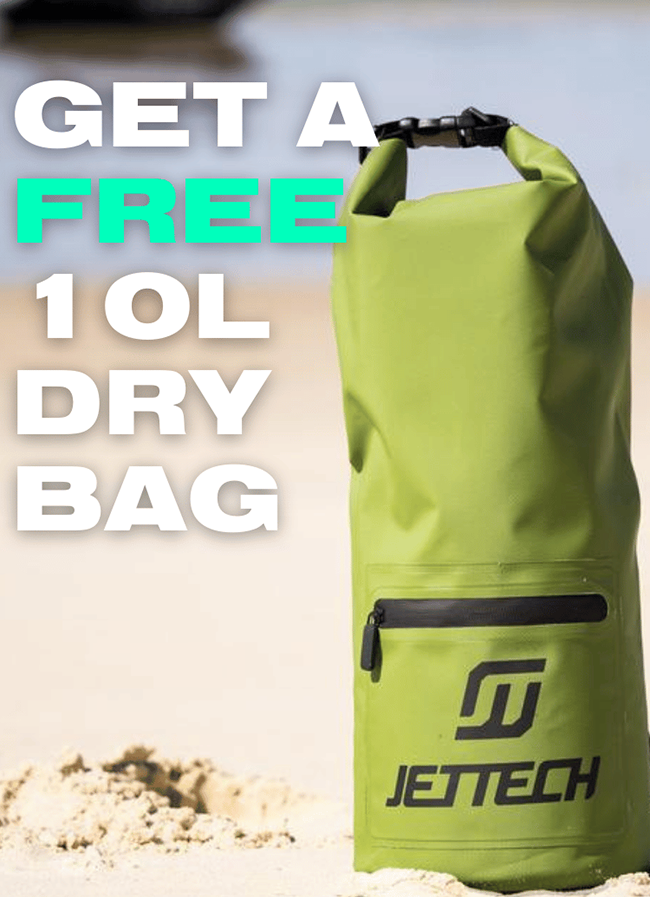
It’s pretty hard to beat a price tag of $0 – especially when that $0 tag is on a 10L Dry Bag from Jet Tech – not only does it keep all your important things safe and dry, it looks snazzy while doing it!
When you’re on an ocean mission, you’ve got to carry all the gear you need safely, securely and comfortably, and the Jet Tech Ski Series dry bags are purpose-designed to do exactly that with 100% contents reassurance. Confidently pack your phone, towel, speaker, GPS and other water-sensitive supplies, knowing they’ll stay safe and dry the entire time. The 10L backpack features a padded, adjustable shoulder strap to carry the load while the smaller size fits easily in the front hatch leaving loads of room to spare.
Make the most of your day on the water with all the essentials safely at your fingertips – and for the next 48 hours, you’ll get all this convenience, security and style for free, with any purchase of $100 or more from Jet Tech’s extensive listing of great PWC-related products.
Just use the code FREEDRYBAG at checkout and you can claim your free 10L Dry Bag for free with every $100 purchase for the next 48 hours.
And to give just a sample of the great selection of supplies, swag and PWC essentials you can choose from to earn that free dry bag, Jet Tech has top selling items like the Jet Tech Inshore Anchor Kit for only $99. Best used for anchoring your PWC in up to 16.5 feet in depth, around bays, rivers and lakes. The JET TECH Safeguard inshore anchor has been specifically designed for safe and easy use on all PWCs and was developed in Australian coastal conditions to offer supreme anchoring reliability in bays’ lakes and estuaries. The galvanised metal anchor is hot dipped in commercial-grade vinyl rubber to prevent chips and scratches to your jet ski, boat and boards. The water and abrasion proof chain sock also provides more protection covering the entire length of the proper marine gal chain, which is required to provide the correct weight and approach angle for anchor setting. Jet Tech even provides a tips video on how best to use the anchor.
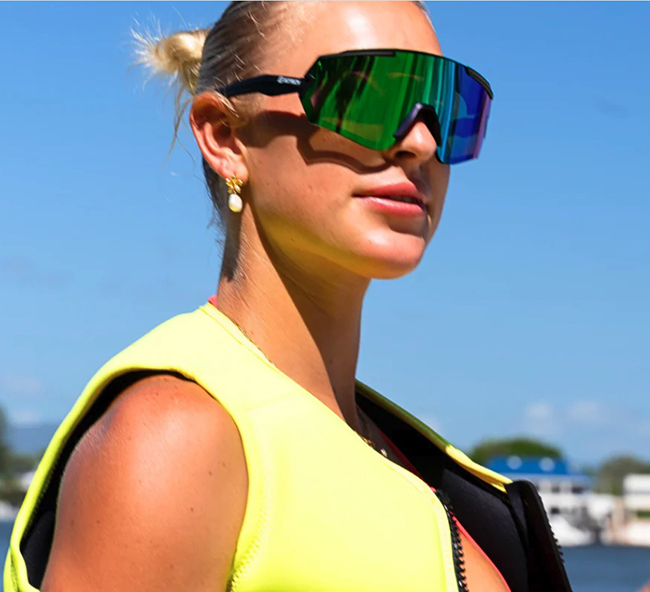
Another top-selling product that comes in right at $100 and will earn you your free 10L Dry Bag is Jet Tech’s Hyrbrid Sunglasses and Goggles that WCJ featured back in May. This innovative kit by Jet Tech incorporates an industry first modular design that allows the sunglasses to be easily converted into goggles whilst on the move, giving the rider modular options to suit their particular needs for on water action. The prescription glasses inserts also allow for spectacles to be inserted for those who require assisted vision.
The option are endless, from fishing and touring supplies to surfing accessories to wash kits and more, you can mix and match and put together the perfect $100 shopping cart of great products – and get the free Dry Bag to boot!
Every activity, it seems, whether it is a sport, a hobby or something in between, has its share of odd terms. Baseball has frozen ropes and there’s some nutmegging going on in soccer, and how could we not mention running’s infamous “fartlek.”
PWC is no exception, and today, we’re gonna take a look at your squish … no, seriously.
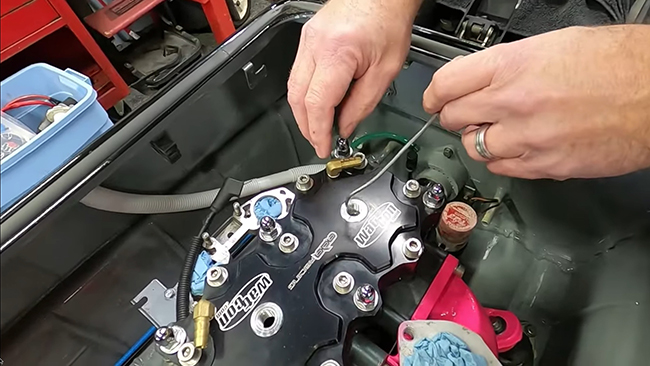
To paraphrase half a dozen reputable resources, the “squish” on a 2-stroke engine is the measured space between the highest part, or crown, of the engine’s piston and the perimeter of the combustion chamber, or head deck, when the piston is at Top Dead Center, or TDC ( and yes, the term top-dead-center will always be said in Mona Lisa Vito’s voice in my head).
This is also known as squish clearance, or “quench.”
There are a multitude of reasons that setting this gap correctly is crucial, and equally as many schools of thought on how to properly adjust the “squish” for optimal performance – with the ultimate goal being more chamber turbulence, better atomization of fuel, more complete combustion, more power, better fuel economy and better resistance to pre-ignition detonation (knocking).
However, that discussion is beyond the scope of this article. Here, we will simply look at the process of measuring that squish to give you the information you need to proceed into those more advanced considerations. Most shops will also ask for this measurement when you send your heads in for work.
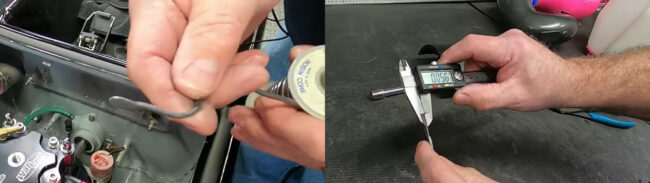
The term Squish is also appropriate for this measurement process, which is accomplished, in simplistic terms, by inserting a piece of solderwire through the spark plug hole and squishing said solderwire between the piston head and the chamber perimeter by rotating the crankshaft. The squished section of the solderwire is then measured to provide the “squish” clearance.
There are a number of key aspects to this process that were noted in each of the numerous tutorials on this process that we noticed:
Do not use acid core solderwire
Solderwire should have a diameter of more than 1.5 mm, with 1.8 mm being the most-often referenced diameter for a stock 85 or 125, and 2.5 or 3 mm thickness on a stock 250 or 300.
Always position the solderwire parallel to the piston rod, (or left to right, not front to back) in line with the wrist pin, to minimize the impact of piston rocking on the measurement.
Always insert the solderwire all the way to the edge of the bore.
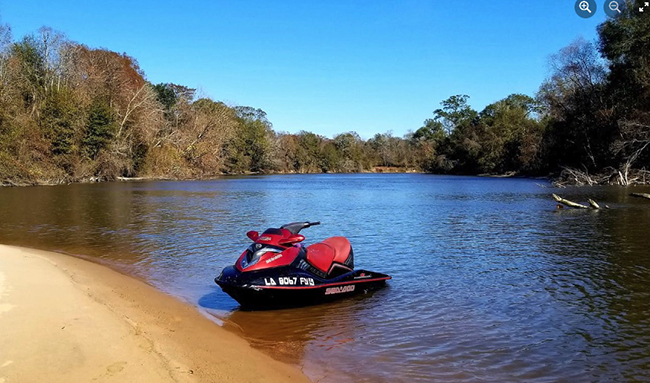
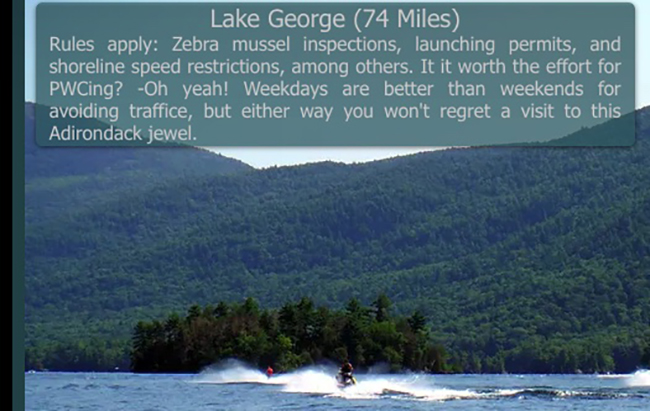
Whether your idea of “adventure” is a week-long foray into an unknown river system with nothing but your PWC, some camping gear, and a good compass, a party-island float-about on jet skis with dozens of your best friends, some blue waters, good music and plenty of sunshine, or even an unsullied sunrise painting the waters around your ski as you set your fishing pole… there is little doubt that recreational PWC riding offers a multitude of pursuits for just about any personality, any skill level, and any type ski.
Sometimes, the biggest question is, “where do we go now?” Followed closely by, “how the heck do we get there.”
Planning, prepping, outfitting and pulling off the perfect weekend or vacation PWC adventure can be a daunting task. Sure, you can get some great ideas and tips from fellow PWC riders, or cruise through some of the online PWC Rec Ride groups looking for group rides or solo adventure ideas; but that still usually leaves you needing details and logistics support that isn’t readily available without investing several days in Google land.
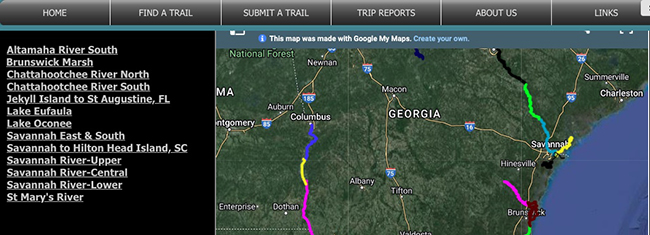
But that’s where PWC Trial Finder steps in. Already utilized by many Watercraft Journal’s readers, and hosted by longtime WCJ supporter and contributor Billy Crews,PWC Trail Finder is an extensive and detailed resource for not only destination inspiration, but offers a wealth of information that will simplify the Planning, Preparing and Logistic aspects of any adventure.
According to the PWC Trail Finder website, which is, by the way, fairly intuitive when it comes to navigation, and finding your way through the website, focusing on your priorities for the type of trip, adventure or destination you are looking for, is nicely organized and accessible. According to a post from PWC Trail Finder organizers, Much like yourself, we love to ride. But after a while, even a favorite body of water to splash-n-dash can get a little boring. And, with that in mind, the search for more water began. Over the last few years, PWC Trail Finder has grown to become an “electronic library” of over 20,000 miles of trails. Sure, some of these trails are our own, but most are from contributing enthusiasts.
Whether you are looking to expand your current PWC riding area or perhaps take a PWC vacation, PWC Trail Finder has what you’re looking for. Our website is dedicated to aiding travel strictly by personal watercraft.
Each trail contains a downloadable turn-by-turn GPS track, plus all the important waypoints and POI’s. Additionally, you can learn more about any particular ride by clicking the Report or Video button.
Be sure to also check on the “Trip Reports” and “Links” pages for additional ride support and other things PWC related.
And importantly, PWC Trail Finders is a community-involvement website, with contributions of suggested trails, destinations and trips welcomed and encouraged, to help grow the resource.
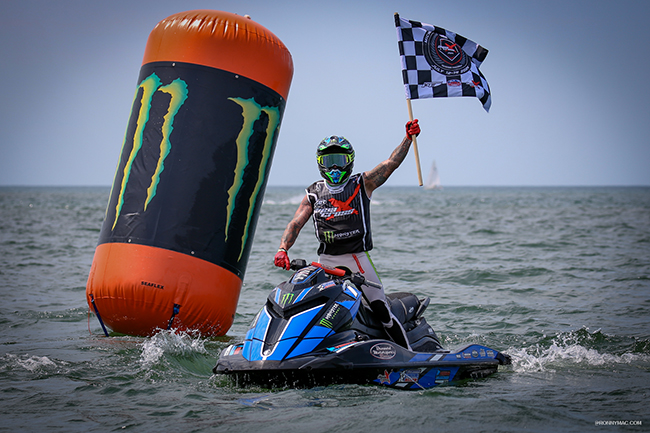
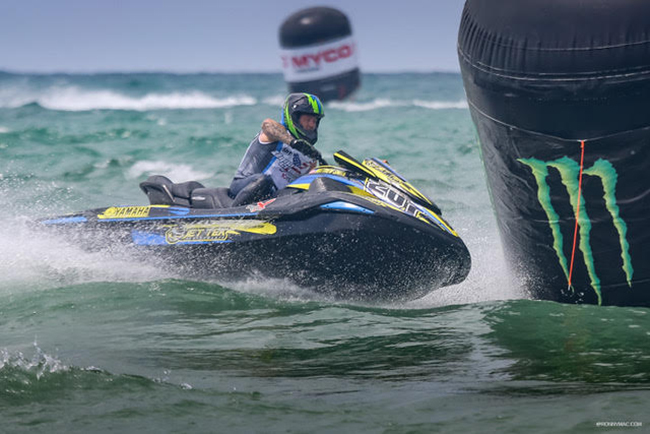
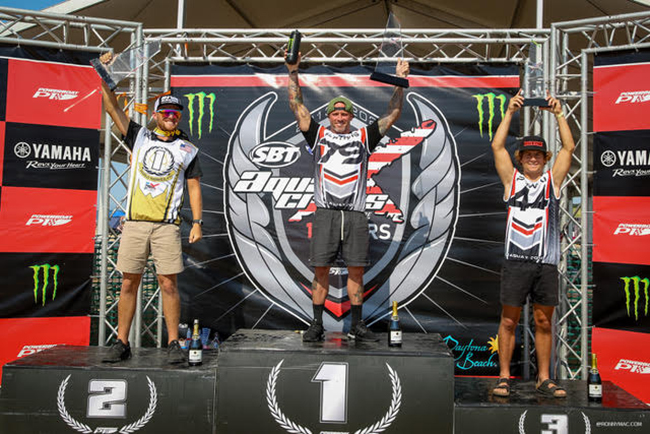
Dustin Farthing celebrates overall Pro victory at Michigan City – July 2024. Photo RonnyMac
Farthing Racing and JetX Racing both put in big-results weekends as Dustin Farthing extends his AquaX championship lead and Deven Farthing takes 3rd in the PRO, while JetX’s Jay Edworthy takes 2nd in Pro and Nathan Dalli takes 2nd in AM 300.
P1 AquaX rolled into Michigan City this past weekend for Round 2 of the SBT P1 AquaX 2024 Series, and racers in all three divisions were definitely aiming to best their Daytona Beach Round 1 performance and boost their points standing.
Racing kicked off Saturday at Washington Park under sunny skies, with the calm waters of Lake Michigan promising fast laps as the AM 300 Class hit the line. Heat 1 saw Valentina Lezcano (Sea-Doo RXPX 300) come out swinging, with an impressive win over Ian Smith (Sea-Doo RXPX 300) and Canadian rider Nathan Dalli (Sea-Doo 325). Cayman Island racer Cline Glidden (Sea-Doo RXPX 300) put in a solid performance to take 4th place.
Next up was AM Enduro 200, where an action-packed Heat ended with Cooper Caldwell (Yamaha FX SVHO) claiming the win, followed by Kayden Baldwin (Yamaha GP1900HO) and Enrique Chia (Yamaha GP1900HO).
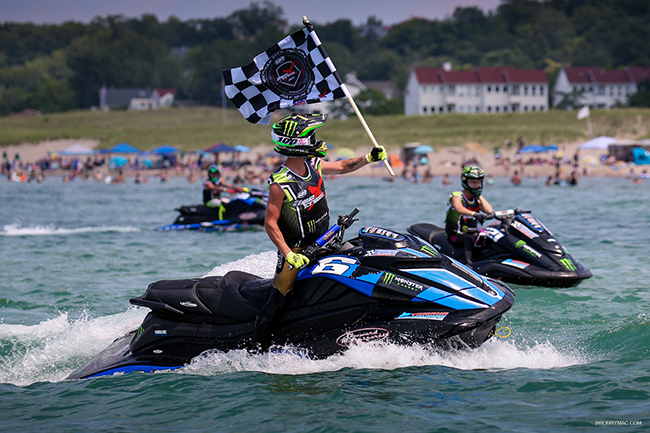
Deven Farthing wins opening Pro heat at Michigan City 2024. Photo RonnyMac
With the PRO Enduro Heat 1 race up next, Farthing Racing again placed father and son behind the line, with Dustin (Yamaha FX SVHO) and Deven (Yamaha FX SVHO) lining up against competition from 19 other racers, including names like Macclugage (Yamaha FX SVHO), Baldwin (Yamaha GP1800) and Snyder (Yamaha FX SVHO). After wire-to-wire battles, it would be a Monster Energy sweep, with Deven Farthing taking the checkered flag ahead of his father, Dustin, and Chris Macclugage taking 3rd – all three repping Monster Energy.
Following the PRO Heat, The AM classes headed into Heat 2, with AM 300’s Lezcano pouring on the speed and headed to a second win of the weekend, but an old injury came back to haunt her, causing her to dislocate her shoulder. Despite fighting the new injury, Lezcano kept her head in the game and her hand on the throttle and finished Heat 2 with a 3rd place finish, behind Ian Smith in 1st and Nathan Dalli in 2nd.
Closing out the day Saturday, the AM200 class saw a repeat in the first two spots, with Cooper Caldwell taking the win, followed by Kayden Baldwin in 2nd and Cayman Island XINSURANCE rider James Monroe Jr. (Yamaha HO) finishing in 3rd.
Kayden told WCJ that Round 2 was both fun and challenging, saying, “The race this weekend was great the course was challenging, but very manageable, and very fun at the same time. I had some great battles, and rode my 200 ski class way up into the 300 class. I look forward to LaPorte, my RIVA Racing GP1900 has been flawless this season and I cant wait to get it back on the track again.”
Saturday’s mild weather morphed into storms Sunday morning that delayed the start of racing, but when the weather cleared, the PRO Enduro class hit the line to battle it out for their race 2 of the weekend. Flipping race 1’s results, Dustin Farthing edged out Deven to take the victory, with Jay Edworthy (Sea-Doo RXPX 300) claiming 3rd.
With points on the line, the AM classes headed into the final race of the weekend, and in AM 300 Enduro, Ian Smith (2,1,1) again claimed 1st, together with an overall win for the weekend after a disqualification for a technical infraction bumped Valentina Lezcano (1, 3, DQ) to 4th place overall. Nathan Dalli (3, 2, 3) took the second place overall and Cline Glidden took the third podium spot with a 4, 4, 4 weekend.
Ian Smith – Overall AM 300 winner at Michigan City 2024 Photo RonnyMac
It was definitely a young guns weekend in the AM 200 Enduro, with Cooper Caldwell (1, 1, 1) nailing a hat trick with another win in Heat 3 and claiming the top podium spot overall. Kayden Baldwin (2, 2, 2) was on his heels the whole weekend and claimed the 2nd podium spot. James Monroe Jr. (DNF, 3, 3), flying the flag for the Cayman Islands, locked down 3rd place in Heat 2 and Heat 3, but a DNF in the Heat 1 tally let Peruvian racer Enrique Chia (3, 4, 4) edge him out for 3rd overall.
With the final Heat saved for the PROs, it was an all-out battle, with Deven and Dustin again right in the mix at the front of the pack, until an impressive dismount finished the race early for Deven (1, 2, DNF), and Dustin (2, 1, 1) took his second win of the weekend to nail down the top overall podium spot. Camden Powell (DNR, 9, 2) claimed the Heat 3 second place and RIVA rider Chris Landis (14, 5, 3) took 3rd, but Jay Edworthy’s 4, 3, 5 weekend gave him enough of an edge to grab the 2nd overall spot, and even with a DNF in Heat 3, Deven secured 3rd overall.
P1 AquaX officials thanked The City of Michigan City and Visit Michigan City La Porte for the warm welcome and event support, and reminds riders and fans that the next AM Enduro race will be in LaPorte, Indiana on July 27-28 and the next PRO round will be in Kissimmee, Florida, over the weekend of September 20-22.
Be sure to check out all the Round 2 results here, and the US points standing here.
Team Points as of Round 2
Farthing Racing – 425
Jet-X – 369
MACC Racing Monster Energy – 274
Champion Powersports – 214
Snyder Built RIVA Racing – 142
Team 71 – 132
Seaside Marine/Allira Construction – 124
Last Minute Racing – 109
RIVA Racing – 103
Miami Jet Ski Shop – 64
Speed Racing – 47
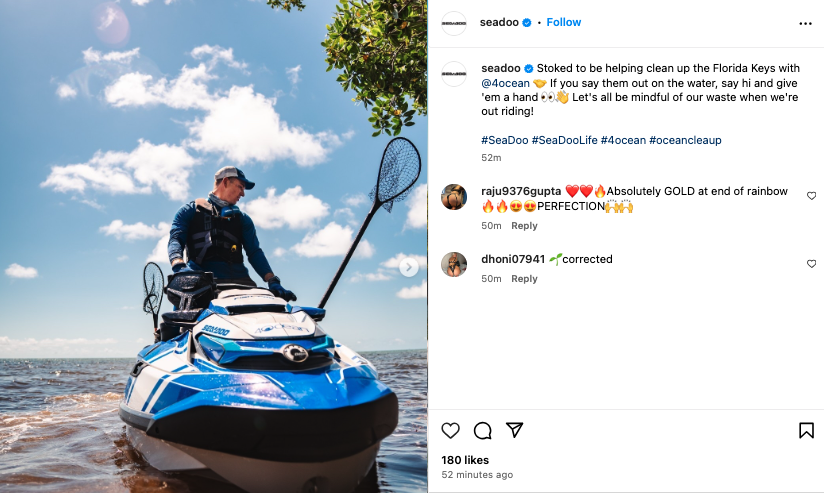
In yesterday’s Instagram Post, Sea-Doo highlighted nonprofit organization 4Ocean, which was out on a cleanup mission in the Florida Keys. Sea-Doo urged all PWC riders to join in the groups efforts, and to be mindful of waste when out riding.
On the 4Ocean Instagram feed, the organization offered the story of its creation by Alex Schulze and Andrew Cooper, and its guiding mission:
OUR STORY: We’re on a mission to end the ocean plastic crisis.
Alex Schulze and Andrew Cooper were inspired to create 4ocean after taking a surf trip to Bali, Indonesia, in 2015. While they had grown up in Florida and made their living from the ocean, Bali is where they truly began to understand the severity of the ocean plastic crisis and its impact not just on marine life, but on the coastal communities that, like them, relied on the health of the ocean to survive.
After speaking with local fishermen whose livelihoods were negatively impacted by plastic pollution, Alex and Andrew decided to build a company that would hire boat captains and fishermen in communities heavily impacted by plastic pollution as full-time, professional cleanup crew members to recover plastic and other harmful debris from the ocean, rivers, and coastlines seven days a week.
Since the very beginning, our co-founders envisioned a business model where the materials 4ocean crews recovered from the ocean would be used to develop new and innovative products that raise awareness about the ocean plastic crisis, fund a global ocean cleanup operation, and empower individuals around the world to end their reliance on single-use plastic.
Be sure to stay up with all the news from Sea-Doo, and keep track of the efforts by 4Ocean to de-plastic our oceans.
With summer now in full swing, the nearest body of water is THE place to be when the weekend hits, and trip through Cycle Springs’ current Special Deals provides a multitude of ways to save when it comes to getting on the water (and some great deals for 2- and 4-wheeled fun, too!)
Starting off with PFDs, ‘cause we all know, safety comes first!, Cycle Springs is offering buy-one-get-one-free – buy one regular-priced PFD, get a second of equal or lesser value for zip, nada, zilch!
With safety covered, Cycle Springs looks to make sure you’re good to go on good sounds, too, with Cycle Springs Audio Kits, normally $319, now available in store for $129.99 while supplies last. You can also get 25% off on all cb/hand-held radio devices.
Next up on the roster of specials is $50 off maintenance packages for PWC and boat service, and you can score a free diagnostic with approved repair.
You can also save on summer fun with in-stock specials, with 20% off in-stock Sea-Doo accessories and 25% off in-stock grills and grill mounts.
And celebrating Florida’s 2024 Freedom month, you can enjoy freedom from sales tax, through July 31, on a wide variety of items, including camping lanterns, safety flares, water bottles, flashlights, coolers, sunglasses, towable floats, kneeboards and wakeboards, and more.
When you think of boosting your PWC’s performance, especially when you’re fueling the “need for speed,” there are a number of upgrades that automatically come to mind:
Reprogrammed ECUs pave the way for ramped-up power; upgrading impellers yields responsive acceleration and improved handling, ride plate upgrades and adjustments can be a game-changer for speed and cornering, and of course, an upgrade to the air intake will give your engine the air it needs for improved speed and performance.
And while upgrading your PWC’s exhaust system may not not make it to the top of many quick “boost your mph” tip lists… those in the know will tell you without hesitation that significant potential performance gains lie hidden in the often-ignored exhaust system.
Increased engine performance, improved airflow, added torque and horsepower, better fuel economy – upgrading your exhaust system can do it all by providing better airflow, and thus increasing engine output.
And let’s be honest – on top of the ramped-up performance – many PWCers who opt for an exhaust upgrade, are also chasing a tone, as exhaust upgrades often come with a throaty roar that stock systems just can’t match.
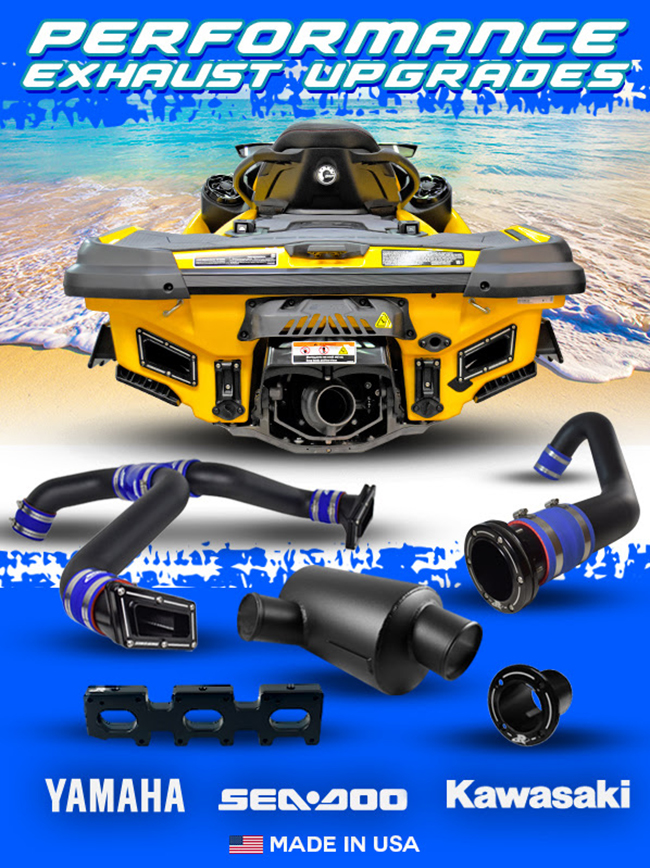
Once you make the decision to take advantage of the performance boost of an upgraded exhaust system for your PWC, there are few in the industry that can provide the range and quality of options as RIVA Racing.
With a wide selection of made-in-the-USA performance exhaust upgrades for Yamaha, Sea-Doo and Kawasaki. Divvied up between 2stroke and 4-stroke exhaust offerings, RIVA has this back side of PWC performance covered.
Screenshot
On the 4-stroke side of things, RIVA caries a number of exhaust product sectors, including exhaust system upgrades, waterboxes, exhaust couplers and outlets, and O2 sensors, and a range of free-flow exhaust kits and rear exhaust kits that deliver performance as well as cutting-edge style.
For example, this RIVA Yamaha 2019+ FX Rear Exhaust Kit allows for removal of the restrictive sound suppression system located between waterbox and hull exit, improving engine performance by reducing back pressure and restriction. The kit Includes a mandrel bent aluminum exhaust tube that is powder coated to prevent corrosion, large billet through-hull exhaust outlet, billet OEM exhaust outlet block-off and high-temp silicone couplers along with all necessary mounting hardware & installation instructions – and its available in either black, blue or red anodize options – all for $439.95.
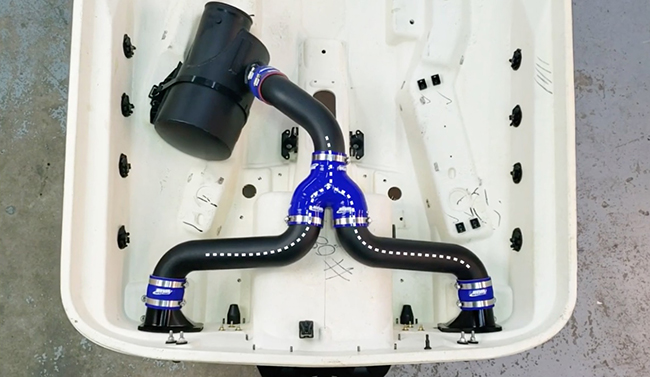
This Sea-Doo 2020 RXP and 2020+ RXT/GTX/GTR/GTI Free Flow Exhaust Kit also replaces the restrictive sound suppression system located between the waterbox and hull exit on your watercraft and improves engine performance by reducing back pressure and harmful detonation. Includes mandrel bent aluminum tubing that is powder coated to prevent corrosion, high-temp silicone replacement coupler and installation instructions – all for $214.95.
There are also the dual exhaust kits for Sea-Doo, as detailed in a information-packed video, compatible with the PWC’s factory waterbox, or the RIVA Pro Series waterbox.
Jumping over to the 2-stroke side, RIVA caries waterboxes, exhaust outlets, flow control valves, exhaust couplers and outlets and exhaust systems in addition to free flow exhaust kits.
For example, this RIVA Yamaha GP1300R Free Flow Exhaust Kit with easy installation that requires no cutting of hoses is available for $161.95, and this RIVA Yamaha GP1200R/800R Free Flow Exhaust Kit for a mere $64.95 replaces the restrictive sound suppression system and provides reduced back-pressure that improves engines performance and reduces harmful detonation. Features easy installation, provides noticeable results, and is IJSBA Superstock legal.
Plus you get free shipping on all orders of more than $150 in the Continental US.
Be sure to check out the RIVA webpage for more Exhaust upgrades, kits, systems and parts.
One of the most respected outfits in the PWC World, whether you’re talking racing or retail, Broward Motorsports undoubtedly has what it takes to put riders on the water – either by way of a new (or used) ski, top-of-the-line technology, high-quality service, or all the parts, accessories and apparel you need. And they have seven ways to get it to you – namely,Fort Lauderdale,Hollywood,West Palm Beach,Jupiter/Tequesta, Treasure Coast/Hobe Sound,Miami, and theWorld Wide Web.
While the renowned BMS reputation for quality and customer service links all the company’s operations, each site has their own focus and identity, and their own specials and sales, and it’s time, once again, for The Watercraft Journal to do the legwork for you, and run a speed round through each store and highlight their specials, sales, promotions and events.
Starting out our quick lap around the BMS stores with the Flagship Fort Lauderdale Store, where you can find rebates up to $2,000 and 2 years of coverage on select 2023 Sea-Doo personal watercraft models through July 31, and a retired factory 2021 Yamaha GP1800®R SVHO® race ski in their featured inventory. All retired race skis come equipped with ECU Reflash, custom graphics, Jet Trim seat covers, Worx steering system, handlebars, grips, footwell lifters, retainers, Solas prop, Worx ride plate, intake grate, cooling kit and air intake, as well as intake ribbon modification.
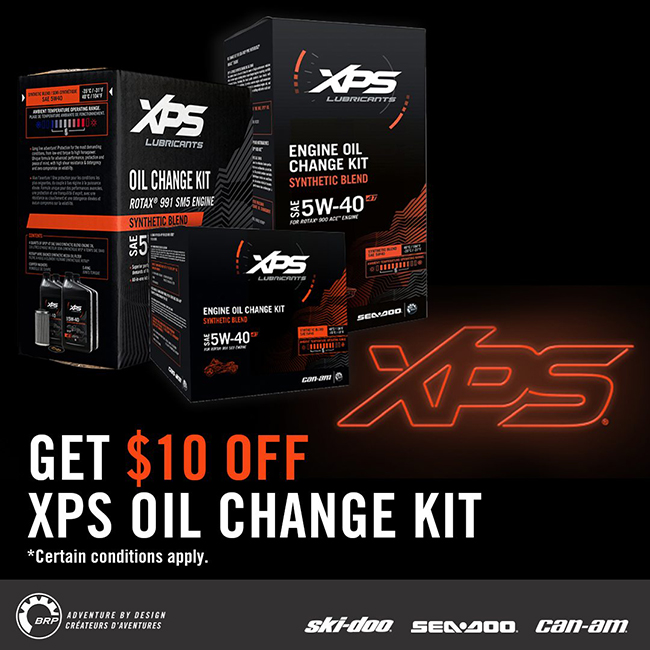
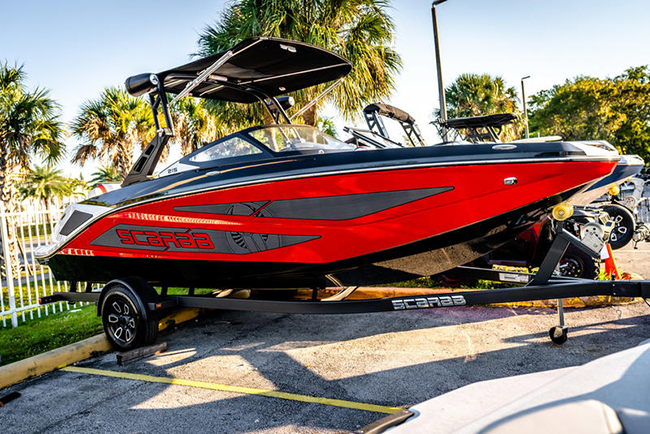
Next up is the Hollywood store, where they have a nearly $30,000 savings on a 2023 Scarab 215 ID. And you can now get $10 off oil change kits.
Screenshot
In West Palm Beach, take advantage of the BMS consignment plan and let BMS sell your old PWC for top dollar, paid off or not; or use their trade-in tool to find out what your existing PWC (or motorcycle, ATV or side-by-side) is worth. And you can join their Text Club by texting ‘Broward’ to 844-913-3612 to get $25 off any $125 parts or accessories purchase.
Next is the Jupiter/Tequesta store, where they have a 2023 Sea-Doo FishPro™ Scout 130 on manager’s special for $12,688 and a 2023 Sea-Doo Spark® Trixx™ 2-up Rotax® 900 H.O. ACE™ iBR on featured special for more than $1,000 off. You can also take advantage of their service specials that include $299.99 watercraft service, regularly $439.99, and free local ramp pickup with regular-priced watercraft service, as well as free dockside/marina service with paid 50/100 hour maintenance & battery service.
And for those who can’t make it to the Florida stores, be sure to browse the websites for each of the stores to find great prices on parts, service, new and used inventory, and more.
With the 2024 PWX Race Season fully underway and the SBT P1 AquaX National Championship heading into the second weekend of racing, the AquaX standings are already seeing some familiar matchups as well as some newer names to pay attention to.
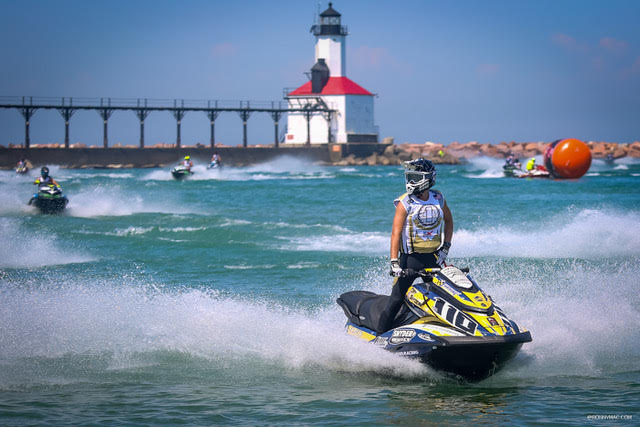
This weekend, July 13-14, the SBT P1 AquaX National Championship is heading to Michigan City, about 50 miles east of Chicago. It will be the AquaX’s fifth time on Lake Michigan’s southern shore, just off Washington Park, where both Pro and Amateur classes will gather for two days of free-to-watch, high-speed action with up to 60 riders competing.
This season’s P1 AquaX series sees the Farthing name in triplicate in the Pro Enduro class, with reigning champion Dustin joined by sons Deven and Talan. It was a one-two weekend in the opening round in Daytona Beach in April, with Dustin taking the top podium spot with a 1, 1, 2 weekend and racking up 70 tour points, and Deven in second place with a 2, 5, 1 weekend and walking away from Daytona with 59 points.
Tory Snyder claimed the third podium spot with 5, 2, and 3 finishes on the weekend and a weekend tally of 51 points, with Brian Baldwin keeping the pressure on with a 4, 5, 9 weekend to take the 4th overall spot and 39 points on the ranking board.
The Watercraft Journal checked in with Daytona’s top four finishers yesterday to see what the outlook is for this weekend’s battles. While Farthing Racing has been busy on the international scene since the Daytona P1 Season Opener, Dustin and Deven back in the US and set for this weekend’s race, and are presenting a united Farthing Racing front.
Dustin left little doubt that he is ready for Lake Michigan to be a repeat of Round 1, telling WCJ, “We have been busy racing closed course the past month in Japan, Italy and France, but now we are back in America and dialed in for P1. We have been busy over the past week getting the skis ready for the weekend and the semi heads out Thursday. We are hoping for big waves and good luck.”
Deven also is looking forward to solidifying Farthing Racings early domination in the Championship, saying, “Round 1 was a perfect start for the Farthing Racing Monster Energy Yamaha Team and we are feeling good going into the next round with 1st and 2nd in the points.
Tory Snyder may have something to say about that, and is also heading into this coming weekend’s races with his eye on the top spot, telling WCJ, “I’m fired up and ready to go for Michigan city. Started off slow and ended strong in Daytona. I’m ready to dethrone the King.”
And definitely don’t discount Baldwin, who is set for this weekends rematch against the Farthings and Snyder, as well as the nearly 30-deep lineup in the Pro Enduro Class, telling WCJ “Daytona was a good warmup and the results were decent, I’m looking to up my game and bring home a win, Super Pumped to have my sidekick Kayden Baldwin like the shark he has become racing in the Am200 class and he smells blood in the water we are ready to win or swim!!”
Kayden will have his own rematch to focus on, as he came out of Daytona a mere 5 points behind first place Cooper Caldwell in the AM200 class. Caldwell finished Round 1 with a 1, 1, 2 weekend and 70 points, with Baldwin securing a 2, 2, 1 round 1 and 65 points. Enrique Chia took the third podium spot in the class with a 3, 3, 3 weekend and 51 points.
In the AM300 class, Daytona ended with a Noah Skipps 1, 1, 1 hat trick for a point total of 75, followed by Khalil Seddini in second with a 5, 2, 3 weekend and 51 points, followed closely by Ian Smith who secured 2, 7, 4 finishes and 47 points.
You can read the full P1 AquaX press release about the July race schedule for the Championship series below:
Following the season-opener in Daytona Beach in April, the SBT P1 AquaX National Championship is heading north to Indiana this month for race events in Michigan City (July 13-14) and LaPorte (July 27-28). The six-venue series will then return to the Sunshine State for events in Central Florida and on the Gulf Coast through to its climax in early November.
This weekend will see AquaX visit Michigan City, about 50 miles east of Chicago, for the fifth time and the event on Lake Michigan’s southern shore will feature both Pro and Amateur classes, with up to 60 riders competing. With SBT continuing as the title sponsor of the national series, the location for two days of free-to-watch, high-speed action will be just off Washington Park, which attracts more than 500 events annually and some 2 million visitors.
At the end of this month, AquaX will be part of the LaPorte Lake Fest, a weeklong series of events celebrating living the lake life, and around 25 Amateur Enduro races are expected to compete. P1 will also host the 2024 IJSBA National Championship for closed course racing, which will attract riders nationwide. Together with the AquaX national championship, more than 100 racers are expected to compete on inland Stone Lake. It will be a weekend of high-speed racing, music, fireworks and family fun.
Jack L. Arnett, CEO of LaPorte County Convention & Visitors Bureau, said: “We are very excited to be able to bring back two of our signature events again this year. Working with P1, we have been able to grow both events and we are looking forward to another great year. The Michigan City AquaX Grand Prix will be joined by several local events this year, making for a very festive atmosphere in Washington Park. Our LaPorte Lakefest event is one of the highlights of the season for the City of LaPorte. Our community loves the race teams and recognizes the economic impact they bring to our city.”
P1 USA Director of Operations, Michelle Petro, explained, “Outstanding locations, host venues and partners contribute enormously to our event offering and we are delighted to be returning to Northern Indiana this month. Our focus is on raising the profile of the venues, attracting visitors, encouraging local involvement and boosting the local economy. It’s hard to believe that you are looking at a lake and not an ocean, and the variability of the winds can quickly produce unpredictable big water conditions that pose a real challenge to the personal watercraft riders.”
This season’s P1 AquaX series sees the Farthing name in triplicate in the Pro Enduro class, with reigning champion Dustin joined by sons Deven and Talan. It was a one-two weekend in the opening round in Daytona Beach, with Dustin taking the top podium spot and Deven in second place. Tory Snyder and Brian Baldwin finished third and fourth, and they will be looking to strengthen their challenge for the national title this weekend.
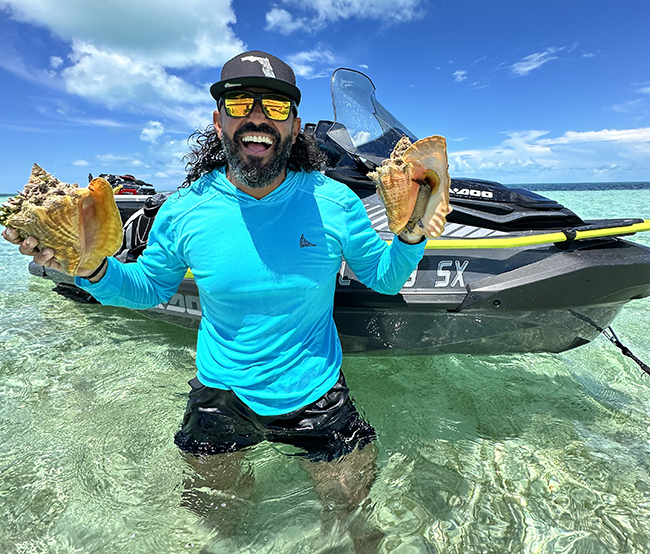
Many of The Watercraft Journal readers – especially those that lean toward the Rec Ride side of PWC, as opposed to the race side – may already be familiar with Daniel do Nascimento. More well known as “AquaDan,” Nascimento has been a strong promoter of the recreational aspects of PWC ridership for years; some of his video shorts have garnered “trending” level popularity on social media and YouTube, and the images and video of his PWC adventures paint an enviable picture – with gorgeous azure skies, crystal clear turquoise water and lush greenery. Whether you are more drawn to off-the-beaten-path destinations, or you were looking for the best floating PWC party on the water, AquaDan could guide you there.
In recognition of his following, his experience, and his store of rec-riding knowledge, Sea-Doo snagged the chance to bring AquaDan into the Sea-Doo family, with the announcement of AquaDan as an official Sea-Doo Ambasador.
Following is Sea-Doo’s full press release on Aqua-Dan’s appointment to the Ambassador Team.
Sharing the excitement of riding a Sea-Doo is as much fun as the riding itself, which is why we are so excited to welcome Daniel “AquaDan” do Nascimento to our ambassador team!
For years, AquaDan has been a major fixture in the personal watercraft community, sharing his exquisite
riding content and uniting users from all walks of life. His contagious enthusiasm for life on the water has inspired countless new riders to get out and live their best lives, making him a natural fit for sharing the Sea-Doo Life.
We are thrilled to welcome AquaDan to the Sea-Doo family and can’t wait for his next big ride. Learn more about AquaDan by following his adventures on Facebook or Instagram.
You can also check out his YouTube Channel for great shorts like this


 It’s pretty hard to beat a price tag of $0 – especially when that $0 tag is on a 10L Dry Bag from Jet Tech – not only does it keep all your important things safe and dry, it looks snazzy while doing it!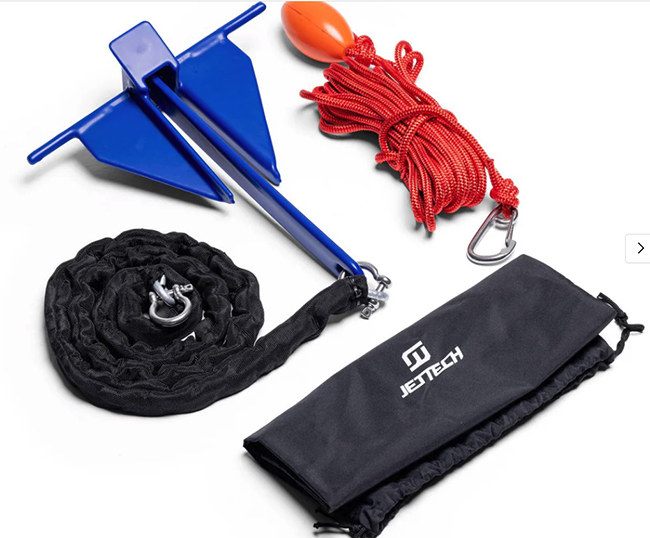



 Starting out our quick lap around the BMS stores with the Flagship
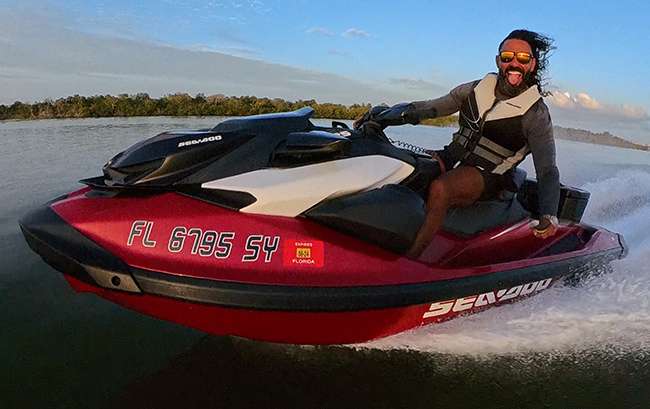 Sharing the excitement of riding a Sea-Doo is as much fun as the riding itself, which is why we are so excited to welcome Daniel “AquaDan” do Nascimento to our ambassador team!