



 If you’ve ever shopped for a used PWC, you’ve probably fixated on one number above all else: engine hours.
It’s the first question buyers ask, the first stat sellers highlight, and for a lot of riders, it’s treated like a deal-breaker.
But according to the team at Broward Motorsports Port Richey, that number doesn’t always tell the story people think it does — especially depending on where and how a ski has been ridden.
And in places like Florida’s Gulf Coast, that difference matters.
Not All Hours Are Created Equal
Riding conditions can change everything.
Around Port Richey, local watercraft see a mix of saltwater and shallow, sandy river bottoms — a combination that can be a lot harder on a machine than a calm freshwater lake. That means two skis with identical hours on the meter could have lived very different lives.
In other words, 100 hours isn’t automatically “high hours.”
In fact, for modern four-stroke machines — like those from Sea-Doo, Yamaha and Kawasaki — that number often just means the engine is broken in and regularly used.
A well-maintained 150-hour ski can be a far better buy than a neglected 50-hour one.
 What Actually Matters More Than Hours
Instead of focusing strictly on the number, experienced techs tend to look at a few key factors first.
Maintenance history is at the top of the list.
Was the ski flushed after saltwater rides? Was it fogged for storage? Were oil changes done on schedule?
Then there’s engine health, which is where a compression test comes in. It’s one of the simplest and most reliable ways to understand what kind of shape the engine is really in — regardless of hours.
And finally, there’s pump condition. In sandy environments, components like the wear ring can take a beating. A sluggish holeshot doesn’t always mean engine trouble — sometimes it’s just a worn wear ring that needs replacing.
2-Stroke vs 4-Stroke Expectations
Engine type also plays a big role in how hours should be interpreted.
Modern 4-strokes, built more like automotive engines, can often run well into the 300–500 hour range with proper maintenance.
Older 2-strokes — especially stand-ups and vintage models — typically require more frequent top-end work, often somewhere in the 200–300 hour range.
But again, those are guidelines — not guarantees.
The Saltwater Reality Check
If there’s one takeaway from the Port Richey crew, it’s this: environment matters as much as usage.
Saltwater introduces corrosion risks, especially in the cooling system if the ski isn’t flushed properly. Over time, salt buildup can lead to overheating issues even if the engine itself is mechanically sound.
Meanwhile, shallow riding areas increase the chances of sucking up sand and shell debris, which accelerates wear on pump components.
That’s why a “low-hour” ski from a harsh environment can sometimes be in worse condition than a higher-hour machine that’s been carefully maintained.
So… How Many Hours Is Too Many?
There’s no hard cutoff.
Some buyers start looking more closely once a 4-stroke passes the 200-hour mark, or a 2-stroke passes 150 — but those numbers should trigger inspection, not panic.
Because at the end of the day, how a ski was used and cared for matters far more than how long it was used.
A Look at What’s Out There
That range of condition is exactly why dealerships put so much emphasis on inspection when selling pre-owned machines.
At Broward Motorsports Port Richey, used PWCs go through a full check process before hitting the showroom floor — including compression testing, pump inspection and ECU scans to catch hidden issues.
And if you’re browsing their current inventory, it’s a mix that shows just how wide the used market can be.
On the high-performance side, there’s machines like the Sea-Doo RXP-X 325 — a 325-horsepower, supercharged platform built for riders who want aggressive acceleration and race-style handling.
Looking for something more family-friendly? Models like the Yamaha VX Cruiser bring comfort, storage and all-day usability into the mix, with features like integrated audio and Yamaha’s TR-1 engine.
And for riders who decide used isn’t the right path, newer options like the Sea-Doo FishPro Trophy 170 show how specialized today’s PWCs have become — especially for anglers looking to blend fishing capability with serious on-water performance.
The Bottom Line
Because sometimes the best way to judge a used jet ski isn’t by staring at the hour meter — it’s by understanding the life that machine has lived, and the hands that have maintained it along the way.
And that’s where insights like these — straight from the technicians and riders working with these machines every day — start to matter a whole lot more.
Find more good-as-gold tips, buying advice and real-world insights on the blog from Broward Motorsports Port Richey — or take a spin through the blog sections across other Broward Motorsports locations, where new content continues to roll out regularly.
And if you’re already poking around blogs looking for advice on how to choose the right used jet ski, it might be worth taking a look at a few of the current pre-owned deals from Broward Motorsports — you might just find something that checks all the boxes.
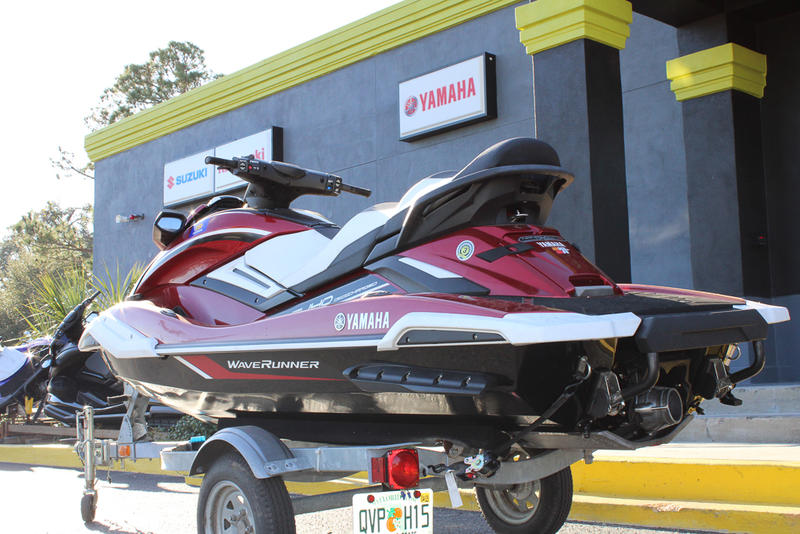 2019 Yamaha FX Limited SVHO – Retail Price: $14,999 / Broward Motorsports Price $11,698 / Savings $3,301
2014 Yamaha VX Cruiser – $3,999