


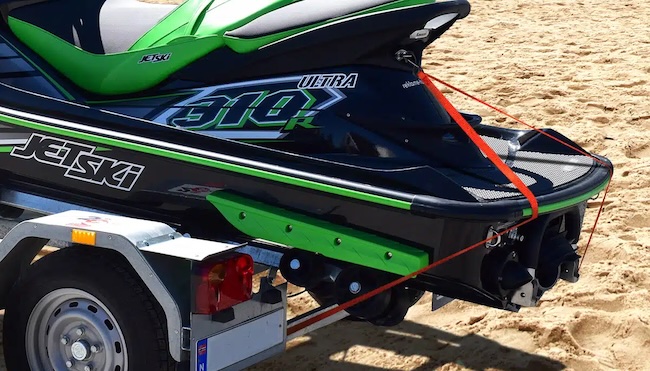
 Spend enough time at a busy boat ramp and you’ll see it.
The clack-clack of ratchets tightening down. Loose strap tails flapping in the breeze. Someone re-threading webbing that’s somehow tied itself into a knot the size of a football. Another rider stuffing excess strap under a bungee cord, promising to “organize it later.”
For a community that obsesses over horsepower, hull design and impeller pitch, it’s surprising how often thousands of dollars’ worth of machines are secured with whatever straps happen to be rolling around in the truck bed.
Lately, though, a different name keeps popping up in comments and launch photos: Strapinno. And the conversation isn’t about flashy graphics or gimmicks. It’s about something far more practical — speed, simplicity and peace of mind.
The Problem With Traditional Straps
Standard ratchet straps work. They’ve worked for decades.
But they also:
-
Tangle with themselves in storage
-
Leave long, loose tails to manage
-
Require re-threading through the buckle
-
Demand a firm pull on the release lever under tension
None of that is catastrophic. It’s just friction. Small annoyances that add up every time you load or unload.
For riders who are in and out of the water weekly — or race teams that strap down multiple skis repeatedly — those minutes and minor frustrations start to matter.
The Retractable Difference
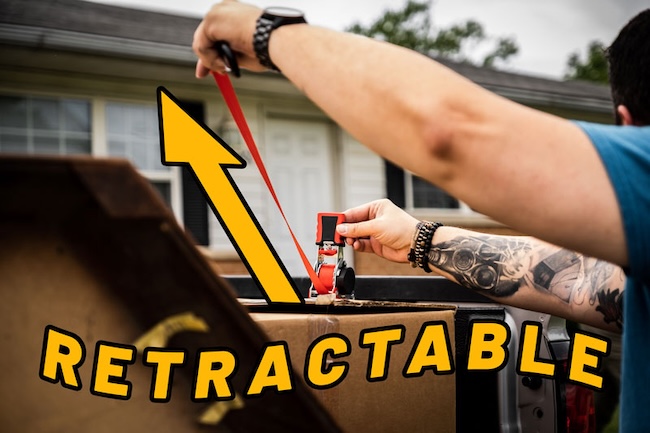
Strapinno’s approach centers around a built-in retractable mechanism — think seatbelt-style rewind. Pull the webbing out to length, ratchet it tight, and when it’s time to unload, release and let it retract cleanly back into the housing.
No loose tails.
No webbing spaghetti.
No stuffing excess strap under a fender.
It’s a small shift in design, but one that changes the rhythm of loading and unloading a trailer.
A Release That Doesn’t Fight Back
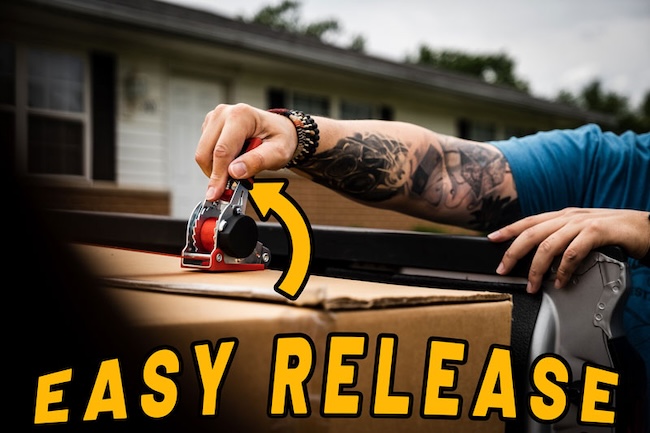
One of the more understated features is the 90-degree release design.
Traditional ratchets often require pulling hard on the lever while the strap is still under tension. Strapinno’s system allows users to lift to a 90-degree angle for release, creating a more controlled and user-friendly disengagement.
At slick, steep ramps — where balance and footing already demand attention — that added control matters.
Built With Marine and Powersports in Mind
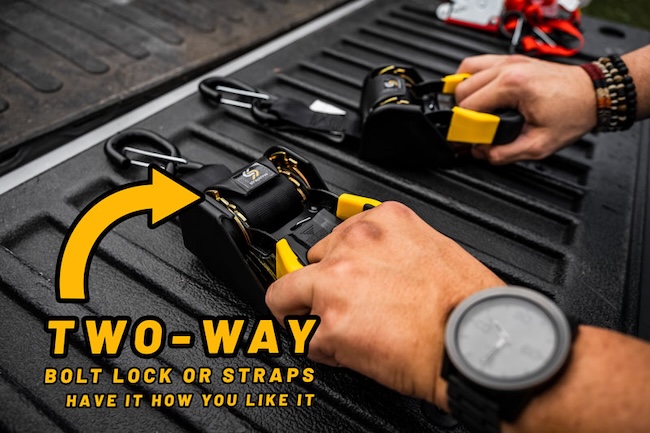
Several Strapinno configurations target heavier-duty use, including Two-Way and Bolt-On retractable models.
Two-Way Retractable
-
Working Load Limit: 1,000 lbs
-
Breaking Strength: 3,000 lbs
Easy Retractable
-
Working Load Limit: 500 lbs
-
Breaking Strength: 1,500 lbs
For marine applications, especially PWC and small-boat transport, understanding the difference between Working Load Limit (WLL) and Breaking Strength is critical. WLL represents the safe, everyday load capacity. Breaking Strength indicates the point at which failure could occur under extreme force.
That clarity alone sets a more serious tone than many generic straps hanging on a hardware store rack.
Add in safety latch S-hooks — included in select bundles — and the system shifts from “good enough” to purpose-built. The latch clip helps prevent accidental unhooking during transport, an added layer of security when the road gets unpredictable.
Permanent Mount Options
The Bolt-On and Two-Way setups can be mounted directly to a trailer frame. That eliminates digging through a truck bed or storage bin for straps at every launch.
For riders who value a clean trailer setup, that permanent installation changes more than convenience — it changes presentation. Everything has its place. Everything stays tidy.
 More Than Just Hardware
Beyond specs, one thing stands out: the customer response.
Scroll through social media and the comments are consistent — faster launches, cleaner storage, strong customer service and repeat buyers proudly calling themselves part of the “team.”
In a market saturated with commodity tie-downs, that kind of brand loyalty is notable.
Strapinno leans heavily into the idea that what’s being secured isn’t just equipment. It’s livelihood tools. It’s race machines. It’s weekend memories. Their messaging centers around trust under load — a fitting theme for a community that spends long miles towing to the next body of water.
Why This Matters for PWC Owners
Personal watercraft owners load and unload frequently. They tow long distances. They deal with salt spray, corrosion and unpredictable weather.
Anything that:
-
Speeds up ramp time
-
Reduces clutter
-
Minimizes strap wear
-
Improves release safety
-
Keeps hardware secured
is more than a convenience upgrade. It’s a workflow improvement.
And in a world where performance upgrades usually mean more horsepower or sharper handling, it’s interesting to see attention shifting toward trailer systems — the unsung part of the ownership experience.
The Bigger Picture
The road is unpredictable. One sharp turn. One sudden stop. One unexpected bump.
For many riders, confidence doesn’t stop at the handlebars — it extends to what holds everything in place between destinations.
Retractable ratchet systems aren’t reinventing towing. They’re refining it. And as more riders look for ways to streamline their launch routine and protect their investment, it’s easy to see why solutions like Strapinno are gaining traction.
Sometimes the upgrade isn’t about going faster on the water.
It’s about getting there — and back — with less hassle.