



 Closed course racing, endurance racing, touring, fishing, adventure rides – The Watercraft Journal covers all aspects of the PWC industry and lifestyle. One minor niche cubbyhole of the PWC world that we tend to stay away from is any industrial, military or government use of PWCs in law enforcement or military operations.
However, a recent LinkedIn post that made it across my desk via Goggle alerts added in enough graphic-novel, Dark Knight looking illustrations and a name familiar enough to grab my attention despite the clear non-recreational bent to the announcement.
In the April 16 post — which also caught the attention of industry publication Powersports Business, but seems to have flown under the radar in terms of widespread social media notice — Canadian venture capitalist Charles Bombardier talked about the shortcoming of any existing vehicle in terms of adaptability to the requirements of persistent, low-profile patrols. He proposed a solution – a set of solutions, actually, that would not only increase patrol capabilities, but do so “without putting personnel in harm’s way.”

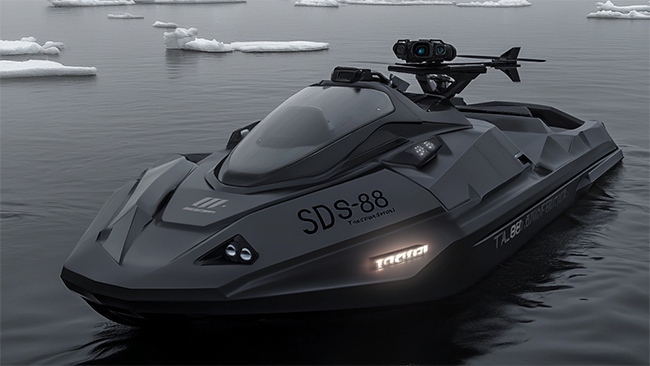
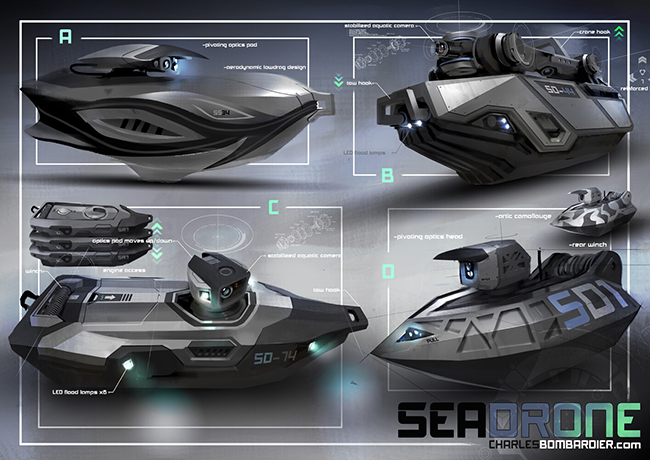
Bombardier, who is the grandson of Bombardier Inc. founder and snowmobile inventor Joseph-Armand Bombardier, and a well-known innovator, engineer and angel investor in his own right, said that his concept craft – the Sea-Drone 88 – is an “autonomous, electric-powered personal watercraft designed to patrol sensitive rivers, coastal zones, and Arctic waters.”
He described the design as “compact, modular, and remotely deployable” and said the unmanned Sea-Drone 88 could “transform how nations protect their territory.”
Bombardier highlighted the fact that “manned patrols are costly, risky, and logistically difficult — especially at night or in extreme environments … or limited by terrain, weather, or deliberate evasion tactics.” He said that these challenges, especially when faced with an increased need to monitor waterways brought on by “illegal crossings at the Rio Grande, to drug routes through the Florida Straits, and foreign ships inching into the Northwest Passage,” call for a stealth personal watercraft that would patrol where others can’t.
The Sea-Drone 88 is the latest in a series of more than over 325 design concepts introduced since 2019 by Bombardier, including prototypes for recreational products, cars, boats, and aircraft. As with each of his concepts, Bombardier leverages collaboration with industrial designers from around the world to convert his vision into 3D models and graphic images.
Bombardier also sets himself apart from a large sector of “design concepts” that can be found for any number of futuristic products by utilizing his connections, experience and training – which includes a master’s degree in Innovation Management from the École de technologie supérieure (ÉTS) and a Ph.D. in Mechanical Engineering from the University of Sherbrooke – to take his concepts past the initial stages and delves fully into design details and functionality breakdowns.
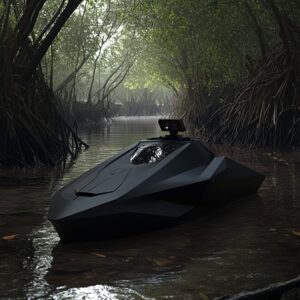
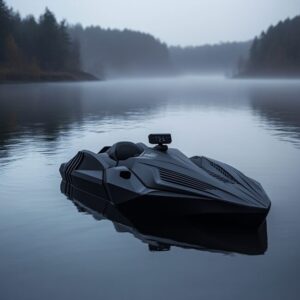
According to the announcement, the Sea-Drone 88, “would be based on a high-performance PWC platform powered by a 300hp+ marine engine, stripped of seats and handlebars, and reengineered for autonomy. The craft would rely on Electric or hybrid propulsion for silent operation.”
Envisioned in three separate models – the SD-88 Tactical for border patrol and night surveillance, the cold-adapted SD-44 Arctic with ice-resilient hull and long-range comms, and the SD-COMMS mobile comms relay or surveillance node – the SD-88 would feature stabilized HD and thermal imaging cameras mounted on a gimbal, satellite or LTE communication relays. a reinforced, impact-resistant Kevlar hull and towing gear and optional modular payload bay.
According to Bombadier’s release, the SD-88 units “could be deployed from mobile trailers, ships, or shore stations and navigate pre-mapped patrol routes using onboard AI. They would send real-time feeds to command centers and operate day or night, adjusting behavior based on activity.”
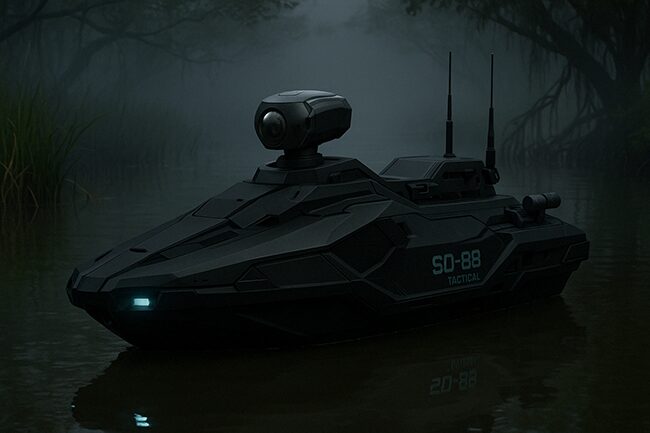 Bombardier included additional details of the concept SD-88 units, which can be read in the full release, below, but drew numerous comments of support and agreement on his LinkedIn post with a conclusion statement that “Sea-Drone 88 could help reduce the need for human patrols in dangerous or logistically complex environments. It would operate quietly and continuously, making it ideal for border monitoring at the Rio Grande or southern Mexico, wildlife protection in marine reserves, surveillance missions in the Arctic and Great Lakes, and day/night patrols in coastal security zones. By offering a cost-effective, low-risk, and adaptable platform, Sea-Drone 88 would complement aerial and terrestrial surveillance assets while enabling new types of missions.”
Other design concepts introduced by Bombardier include:
Skreemr and Antipode supersonic aircraft
The Skreemr and Antipode concepts depict two types of hypersonic passenger airliner concepts able to fly from New York to London in less than 11 minutes. Reusable rocket boosters would initially accelerate and propel the aircraft to Mach 5, after which, scramjets engines would take over and continue accelerating them up to Mach 24. An opening in the Antipode’s nose would expel counter-flowing jets of air to cool the aircraft surface and reduce its sonic booms. This technology, dubbed long penetration mode (LPM), was inspired by a NASA study. Both concepts were featured in publications including Popular Mechanics, Architectural Digest, CNN and Forbes.
Seataci
The Seataci is a yacht concept that uses a biomimetic propulsion system resembling the movement of whale’s tail. Its main hull would be lowered underwater, providing passengers with an excellent underwater view of the coral reefs and marine life. It features a dozen villas and two landing pads specially designed for personal flying drones.
The Solar Express
The Solar Express is a space train that would be designed and used to ferry humans, supplies and minerals between celestial bodies and space stations in the Solar System. It would run non-stop, so smaller vessels would need to catch the train when it passed by. It provides an artist’s rendering of a Mars cycler spacecraft.
Full release:
Sea-Drone 88 – Redefining Marine Patrol & Border Defense.
Charles Bombardier
Board Director | Innovation Architect | Seed-Stage Investor
April 16, 2025
➔ The Sea-Drone 88 is a personal concept project by the author, unrelated to any existing OEM or manufacturer.
Could a personal watercraft shaped drone redefine border surveillance?
What if coastal security could be handled without putting personnel in harm’s way — and without making a sound? The Sea-Drone 88 is a concept for an autonomous, electric-powered personal watercraft designed to patrol sensitive rivers, coastal zones, and Arctic waters. Compact, modular, and remotely deployable, this unmanned platform could transform how nations protect their territory. With Canada’s renewed focus on Arctic sovereignty and increased defense investment, revisiting the Sea-Drone concept feels both timely and strategically aligned.
Silent waters, unseen threats
From illegal crossings at the Rio Grande, to drug routes through the Florida Straits, and foreign ships inching into the Northwest Passage, many critical waterways remain under-monitored. Manned patrols are costly, risky, and logistically difficult — especially at night or in extreme environments. Even when combined, fixed and mobile sensor networks may be limited by terrain, weather, or deliberate evasion tactics. There is growing political will to better secure national borders and protected zones, but many of today’s tools are ill-suited for persistent, low-profile patrols. The Sea-Drone 88 was conceived to fill this gap.
The Sea-Drone 88 would be based on a high-performance PWC platform powered by a 300hp+ marine engine, stripped of seats and handlebars, and reengineered for autonomy. It would rely on:
- Electric or hybrid propulsion for silent operation
- Stabilized HD and thermal imaging cameras mounted on a gimbal
- Satellite or LTE communication relays
- A reinforced, impact-resistant Kevlar hull
- Towing gear and optional modular payload bay
Three modular variants could be envisioned:
- SD-88 Tactical: for border patrol and night surveillance
- SD-44 Arctic: cold-adapted with ice-resilient hull and long-range comms
- SD-COMMS: acting as a mobile comms relay or surveillance node
These units could be deployed from mobile trailers, ships, or shore stations and navigate pre-mapped patrol routes using onboard AI. They would send real-time feeds to command centers and operate day or night, adjusting behavior based on activity.
Autonomous, but always accountable
Operators could oversee Sea-Drone 88 units through secure dashboards, receiving alerts and telemetry in real time. The interface would allow remote control if needed, but most missions could run autonomously. Safety protocols would include collision avoidance, encrypted communications, and geofencing. Thanks to its compact size, the drone could be launched and retrieved by two people with minimal equipment. Its electric propulsion system would enable near-silent patrolling in both civilian and tactical scenarios.
Mission-specific configurations when needed
In addition to its core surveillance roles, Sea-Drone 88 could be outfitted with optional mission-specific modules for higher-risk deployments. These configurations would remain compliant with defense regulations and adaptable to the rules of engagement in each operating region. Examples could include:
- Non-lethal deterrents such as flare or smoke launchers
- Electronic warfare tools for localized jamming or interference
- Remote-operated micro turrets, offering light payloads in the 5.56–7.62 mm range
- Laser target designators for coordination with aerial or ground assets
These options would be tightly integrated within the platform’s modular payload bay and would only be activated under authorized use cases, reinforcing the drone’s adaptability without compromising safety or oversight.
Trilateral collaboration in a shifting world
In an era of rising geopolitical tension and renewed focus on national sovereignty, platforms like Sea-Drone 88 could support new modes of collaboration between allied nations. Canada, the United States, and Mexico have all recently expressed political will to invest in modern defense technologies, particularly in securing coastlines and border rivers.
By leveraging complementary expertise — such as the Royal Canadian Navy, the U.S. Coast Guard and Border Patrol, the Secretaría de Marina (SEMAR), and the Mexican National Guard — Sea-Drone 88 could become a flexible tool within shared security frameworks. Its deployment along waterways like the Rio Grande, Chiapas rivers, the St. Lawrence, and even the Bering Strait, could support both sovereignty enforcement and humanitarian missions. Arctic patrols, conservation monitoring, and cross-border coordination could all benefit from a common autonomous platform.
These developments echo recent policy shifts. Canada’s Our North, Strong and Free strategy emphasizes enhanced Arctic presence, stating: “Canada will assert its sovereignty in the Arctic through enhanced presence and capabilities adapted to the North’s unique operating environment.” Meanwhile, Mexico’s federal leadership continues to expand the role of the Secretaría de Marina (SEMAR) in national defense and infrastructure — reinforcing the need for mobile, autonomous solutions capable of operating in sensitive zones.
Flexible. Scalable. Low-risk.
Sea-Drone 88 could help reduce the need for human patrols in dangerous or logistically complex environments. It would operate quietly and continuously, making it ideal for:
- Border monitoring at the Rio Grande or southern Mexico
- Wildlife protection in marine reserves
- Surveillance missions in the Arctic and Great Lakes
- Day/night patrols in coastal security zones
By offering a cost-effective, low-risk, and adaptable platform, Sea-Drone 88 would complement aerial and terrestrial surveillance assets while enabling new types of missions.
This conceptual idea was originally released with the help of industrial designer Matt Betteker and first published in The Globe and Mail on October 22, 2014.