



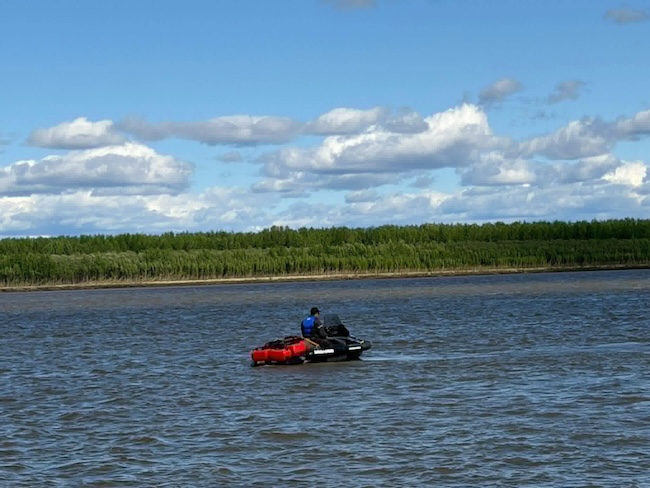
When Charles Peterson launched his Sea-Doo from the banks of the Nenana River on June 13, his wife Jana was already at her phone, tracking his dot on the map and preparing to coordinate fuel stops across some of the most remote stretches of Alaska’s interior. A glacial waterway flowing north out of the Alaska Range and forming the eastern boundary of Denali National Park, the Nenana meets the Yukon just miles from its namesake town — and it was there, at that confluence, that Peterson pointed west and didn’t look back. He had been planning the trip for a year. By 12:10 p.m., he was gone.
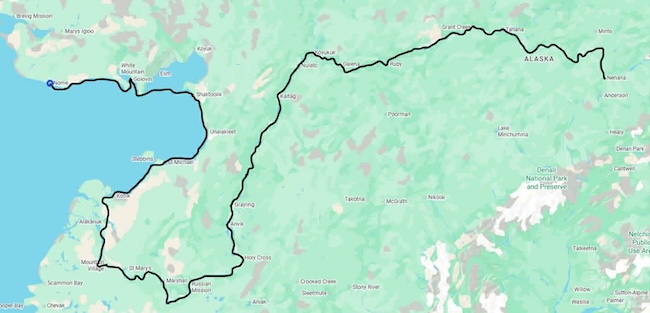
The goal: ride approximately 1,200 miles down the Yukon River and up the Norton Sound coastline to Nome — solo, on a personal watercraft, through terrain that most people only experience from the window of a bush plane.
Peterson, a Nome resident who spent years living in Kiana before returning home, had originally planned the journey by boat. Then he stumbled across YouTube videos from PWC adventurer Adam Swords and reconsidered. The Explorer Pro 170, he decided, was the right machine for the job. He purchased his ski fully outfitted through TeamCC of Wasilla, Alaska, adding a Waterman Unlimited inflatable collar — a buoyancy ring that wraps the hull for added stability in open water — and four 5.3-gallon fuel cans for range. The rear seat came off to make room for an additional dry bag. Into the main cargo hold went tools, a coast guard-approved safety kit, a spare battery, and a Starlink Mini.
“I had my clothes, tent, sleeping pad, food, Jetboil (portable stove system), a Grayl water filter bottle, and first aid kit in my dry bag strapped behind me just in case something went wrong and I had to abandon the ski,” he told The Watercraft Journal.
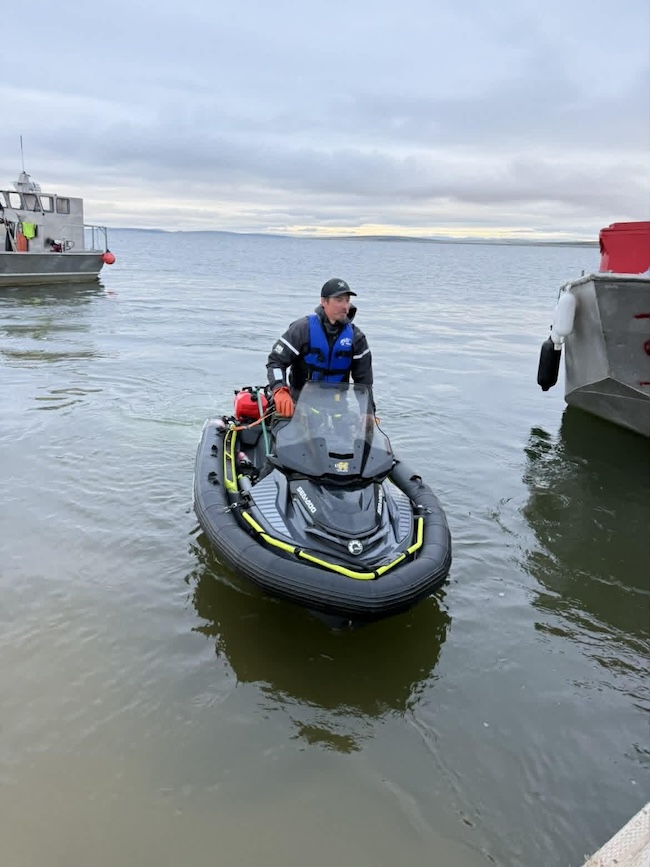
He also toted along a spare impeller, wear ring and oil change kit, and his InReach – a satellite communicator that lets riders signal for help far beyond cell range – stayed clipped to his life jacket for the duration of the trip.
The Yukon consumed the first four days. Peterson called the river’s current “very strong and powerful” and said certain stretches were genuinely dangerous — but navigable for someone who knew how to read water. He did. His father, Walt Peterson, had taught him how to camp and survive in the Alaska bush. His father-in-law, Lorry Schuerch, had taught him how to read a river. Both men’s lessons showed up repeatedly on the water.
Mother nature cooperated – for the most part – with his plans.
“The weather was pretty decent, in my opinion, except the wind that blew against the current, which caused some waves, which slowed me down,” he said. “I went through a few rain storms and witnessed some amazing lightning.”
Debris was the constant adversary. Horizontal logs were manageable; the vertical ones, lurking just below the surface, were another matter. A stick found its way into the jet intake between St. Michael and Unalakleet and nearly stopped the trip. Peterson used the Sea-Doo’s iDF — the Intelligent Debris Free system, which reverses the impeller to blow debris back out through the intake without the rider ever leaving the seat — to clear it, though that particular instance required a few tense moments before it worked. “I thought I was going to have to go swimming there for a minute,” he said.
What he didn’t fight was the people. From the moment he left Nenana, Alaska showed up for him at every stop. Cynthia Erickson welcomed him in Tanana. In Ruby, Willy Dozette was waiting. The list grew daily in towns and villages with names that herald the history and heritage of the land — Andrew Dementieff in Holy Cross, Charles Heckman in Pilot Station. In Mountain Village it was Hillary Gregory and Stan George, and whole crews turned out in Kotlik and Saint Michael. In Kaltag, Colby Esmailka and his grandfather Edgar invited Peterson in, fed him a home-cooked spaghetti dinner, helped him sort fuel, and sent him off with full tanks and a full stomach. In Unalakleet, Tony Haugen handed over a fresh pair of insulated gloves to make sure he was ready for the coast. And in Golovin, the friendly but unknown faces were replaced by the familiar when niece Stephanie and her family were among the locals waiting to greet him.
“No matter where I stopped, there was some kind of connection,” Charles said. “I was treated so well.”
Jana coordinated all of it from Nome, posting daily updates to Facebook and fielding messages from strangers willing to drive to a riverbank with gas cans.
“I was nervous at first – they do call it ‘the Mighty Yukon,’” she admitted in a short interview with WCJ. “But after day one, I felt better! He had amazing people down that river and up the coast who were more than willing to help and that put me at ease.”
She tracked his InReach dot, running mileage calculations by hand and posting updates that drew hundreds of followers into the journey. By day three and a half, he had covered 650 river miles. By the time he reached Golovin on June 19, she calculated he had logged roughly 1,100 miles at an average of 220 miles per day. One push remained.
Friend and crabber Tommy Stasenko had advised him to watch the weather and make for Nome by Friday. Peterson launched from Golovin, hugged the coastline north, and pulled into Belmont Point around 2:15 p.m. on June 19.
Jana’s post was simple: “My husband Charles Peterson made it into Nome.”
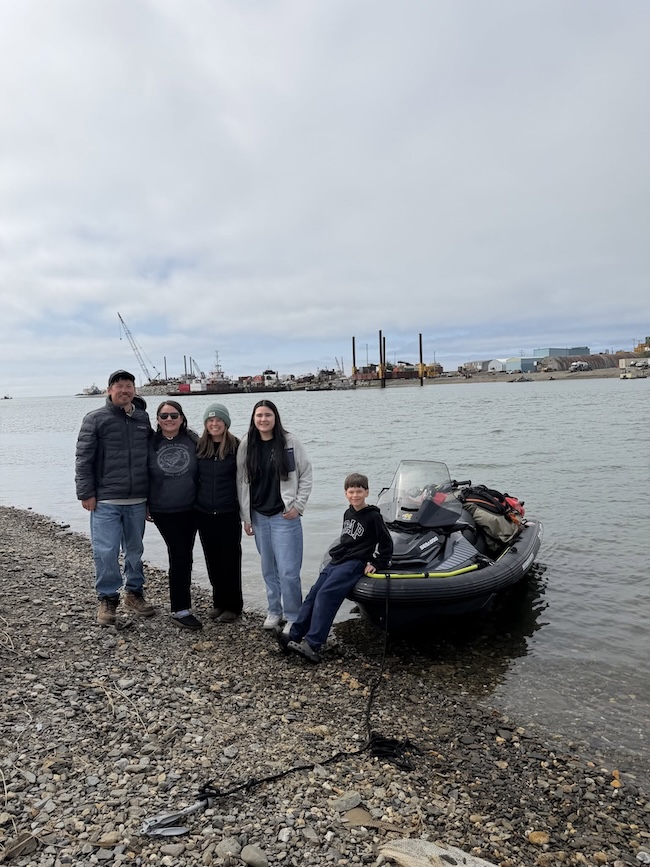
He was home in time for the Midnight Sun parade the next morning — with plans to tow the Sea-Doo out to Salmon Lake afterward for one more ride. Back on shore, he thanked his family — Jana, Kaya, Paige, Lane, and Ty — for always believing in him.
Peterson said turning back never seriously crossed his mind. “I really enjoyed it. Not saying it was never dangerous — I was just taught by some of the best on how to not only survive but enjoy it while in the moment,” he said with a nod to the lessons learned from his father and father-in-law.
He does, however, wish he’d remembered to buy SD cards before he left Nenana. He’d planned to film the whole thing.
“Next time,” he said.
Peterson is already talking about doing the run again, this time with a few friends and a couple of nephews along. After that, maybe Kotzebue, then up the Kobuk River. Jana is angling for a family version — slower, village by village, taking their time. Charles is also considering starting a YouTube channel.
And, Adam Swords – when you read this, he said to tell you ‘thanks.’