


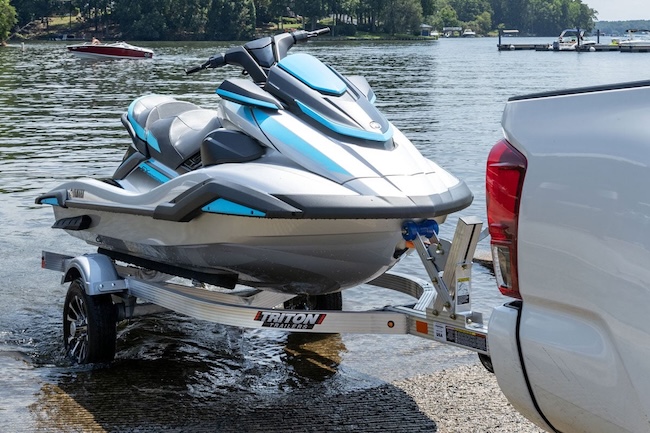
 You unload the ski, make a few passes, and immediately know something’s off. The RPM isn’t there. Acceleration feels softer. The setup hasn’t changed — the parts haven’t changed — but the ski doesn’t feel like it did last time out. For many riders, that moment triggers a familiar spiral: What broke? What’s wrong? What do I need to fix?
This is where elevation and ambient conditions quietly enter the conversation — often without being recognized at all.
Where Elevation Actually Starts to Matter
Not every change in elevation deserves a wrench and a calculator. In many cases, small elevation differences simply get lost in the noise of real-world riding — fuel load, water conditions, rider weight, and even day-to-day weather swings often have a bigger impact. If you’re riding or racing within a few hundred feet of your normal elevation, performance differences are usually subtle enough that most riders will never feel them.
That’s why many racers and recreational riders alike get away with treating nearby venues as “close enough.” Within roughly 300 feet of elevation change, horsepower loss is minimal, and any RPM variation is often inconsistent or temporary. In those situations, chasing pitch changes can create more problems than it solves.
 The Gray Area Most Riders Live In
Things start to get more noticeable once elevation differences creep into the several-hundred-foot range. Between roughly 300 and 800 feet, riders may begin to see a consistent RPM drop, slightly softer acceleration, or a ski that just doesn’t feel quite as sharp as it does at home. This is often the point where frustration sets in — not because something is wrong, but because expectations don’t match conditions.
This is also where many riders blame the wrong parts. An impeller that worked perfectly a few weekends ago hasn’t suddenly become incorrect; the environment has changed. In this range, awareness matters more than action. Monitoring RPM and recognizing patterns is often enough to avoid unnecessary adjustments or purchases.
When Elevation Stops Being Optional
Once elevation changes approach four figures, the effects become difficult to ignore. Moving 800 to 1,500 feet higher than your normal riding elevation can mean a noticeable horsepower loss, and with it, a meaningful drop in RPM. At that point, skis often feel heavier, slower to accelerate, and harder to get on top of the powerband.
For racers, this is where setup decisions start to carry consequences. Ignoring elevation here doesn’t just cost a little speed — it can mean giving up the holeshot, losing consistency, or spending an entire weekend chasing a problem that isn’t mechanical at all. For recreational riders, it’s often the moment where a vacation ride or destination lake feels underwhelming compared to expectations.
 When Adjustment Becomes Necessary
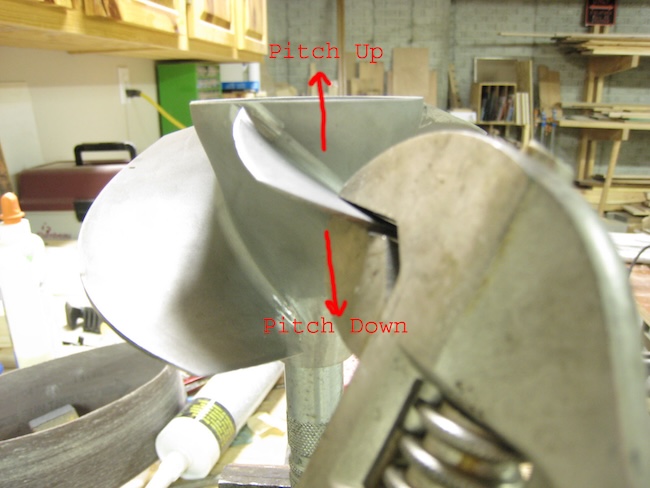
At elevations above roughly 1,500 feet, performance losses are no longer theoretical. The reduction in available horsepower is significant enough that running the same setup without changes almost guarantees lower RPM and reduced efficiency. In these conditions, small adjustments — such as slightly depitching an impeller — aren’t about chasing peak numbers, but about restoring balance and reducing unnecessary engine load.
This is where understanding elevation stops being a tuning hobby and becomes basic setup literacy. Riders don’t need to obsess over perfection, but pretending elevation doesn’t matter at this point usually leads to frustration, not simplicity.
Elevation Sets the Baseline — Climate Sets the Mood
Elevation isn’t the only factor at play, but it is the foundation. Ambient temperature and humidity can either soften or exaggerate its effects. Hot, humid air compounds horsepower loss, while cooler, denser air can partially offset it. The key takeaway isn’t to calculate every variable, but to understand that elevation establishes the starting point, and climate determines how forgiving — or punishing — the conditions feel.
Once elevation crosses from background noise into a measurable performance hit, the question stops being if something should change and becomes what’s worth changing. Time, tools, and logistics all matter — especially during race season, when practice and competition rarely happen at the same location, and adjustments have to be weighed against real constraints.
That same decision-making applies to recreational riders, even if the stakes are different. The goal isn’t race-day perfection, but understanding why a ski behaves differently from one location to the next, and knowing when a performance change is expected rather than a sign that something is wrong and needs to be repaired.
This is where a more flexible approach to setup becomes valuable. Instead of treating an impeller as either “right” or “wrong,” some shops treat pitch as a response to conditions. GreenHulk PWC Performance recently outlined that approach, breaking down how elevation and ambient conditions affect horsepower, RPM, and why small adjustments can restore performance rather than chase it. (See GreenHulk’s full post below)
That uneasy feeling — the one where something doesn’t feel right but nothing is obviously wrong — is often the hardest part of riding in new conditions. Elevation and climate don’t announce themselves. They just change the way a ski responds, quietly and consistently.
For racers, understanding that shift can be the difference between chasing a phantom problem and making a smart, targeted adjustment. For recreational riders, it can be as simple as recognizing that a softer ride on a destination lake isn’t a failure of parts or preparation — it’s a normal response to a different environment.
The real value isn’t knowing how to change everything. It’s knowing when you don’t have to.