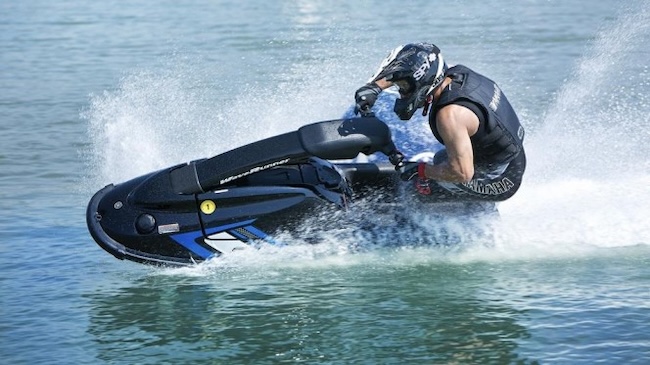
When it comes to competitive racing, whether on wheels or on water, the top performers are those who manage to bring their ride’s performance up in every aspect available to them. While for many this may be limited to changing the hull’s aerodynamics, installing an aftermarket impeller, or any number of other important upgrades, there’s no denying that all of these are secondary to a PWC’s beating heart: its engine. While some engines are certainly better than others, FuelTech puts aside those comparisons and addresses a different question: “How can this engine be better?”
We’ve covered before how their high-tech products allow racers to get the most out of their engine’s potential, but if you still haven’t been convinced to take the plunge into big gains in your watercraft’s performance, they’re taking the opportunity to sweeten the deal this August. Their current sale allows buyers to receive a free Nano with the purchase of their ECU systems, which amounts to savings of up to $339… with major payoff!
The offer is available in three “packs,” each of which offers slightly different benefits, so you can find the performance that’s right for you. For example, the FT600 ECU includes a free NanoPRO Wideband O2 Sensor Controller, their three-in-one interface that acts as a secondary dash, an O2 conditioner, and a switch panel, all while measuring less than three inches. By bundling it with the FT600, you’re guaranteed FuelTech’s most advanced engine control/monitor system, with a user-friendly interface and an impressive list of features.
On the other hand, for those who want a slightly more affordable option without sacrificing the NanoPRO deal, the FT550 ECU also includes the bundle offer, still providing electronic fuel injection, an integrated dashboard, data acquisition, and power management. Finally, the FT450 ECU comes with a free WB-O2 Nano, a less “advanced” but super useful O2 conditioner, which promises a cost-effective way to really boost your engine’s performance.
All three of the ECUs included in the promotion are compatible with Sea-Doo, Kawasaki, and Yamaha watercraft, making this deal a perfect fit for PWC racers looking to take their ride up a notch. Even still, it’s important to keep in mind that a “plug and play adapter harness” is needed to fully integrate the engine management system with your PWC.
On top of this, FuelTech’s sale includes their typical “Fast & Free” shipping, sweetening the deal just a bit more. The offer is only valid in August, so if you’re looking for high-performance tuning for competitive PWC racing, be sure to check out the details of this offer over on their website now.
It’s easy to get in a rut when talking about the great deals and top-quality selection of performance parts and equipment at RIVA Racing – after all, what’s not to brag about when you’re partnering with one of the most respected one-stop shop for high-performance watercraft parts, accessories, and services for Yamaha, Sea-Doo, and Kawasaki PWCs.
When you’re talking about a global leader in personal watercraft (PWC) performance and aftermarket parts, it’s easy to get wrapped up in highlighting their focus on enhancing the speed, acceleration, and handling of PWCs through their high-quality performance parts and ECU tuning software.
But every once in a while, we have to step back and toss in a reminder about RIVA’s less technical – but equally high quality soft lines. From PWC covers to boarding steps, from wrist lanyards and rescue sleds to ice chests, sea scooters and stunning graphics kits — the range of products outside the more well-known performance lines RIVA built their reputation is extensive.
And to top it all off, RIVA just recently announced the drop of their new summer riding gear, making it easy to look the part while ripping around the track or cruising around the lake.
The release includes a number of cool new t-shirts, branded with the RIVA Racing logo in a variety of designs, so that you can help rep the brand.
As well as T-Shirts, RIVA’s got hats, like this RIVA Racing Hydro ‘Champion’ Hat, as well as rash guards, water shoes, windbreakers, race jerseys, and more, in men’s, women’s and youth styles and sizes.
Visit the RIVA website to explore the full line of new riding gear and the plethora of accessories and apparel available.
In March of 2003, the PWC industry got superpowers — or at least one superpower — when Sea-Doo introduced the 2003 Sea-Doo GTX Supercharged model, featuring a 1494cc Rotax 4-TEC engine offering 185 horsepower – a significant increase compared to naturally aspirated models available at the time.
Following up the next year, Sea-Doo’s 2004 RXP 215 supercharged ski was the first personal watercraft to break the 200-horsepower barrier, boasting 215 horsepower thanks to its supercharged engine.
In 2006, Kawasaki introduced the 2007 model year Jet Ski Ultra 250X, featuring a marinized, 1,498cc, 4-cylinder, supercharged and intercooled engine, derived from the Ninja ZX-14. This model marked Kawasaki’s entry into the supercharged PWC market.
Yamaha’s first supercharged WaveRunner, the FZR SHO, built on the FZ platform, was introduced in the 2009 model year. This two-seater, factory racer featured a supercharged 1812cc engine, producing 210 horsepower.
As the years slipped by — or, in this case, raced by like a freightliner on a 9% downgrade with no brakes — the knowledge, design-work and technology integrated into supercharged skis has improved, even to the point of boasts of “maintenance free” superchargers.
However, as pointed out by WCJ’s Kevin Shaw in previous articles, maintenance is still a wise bet, as “a quick scroll through Google Images will show that it isn’t pretty when the clutch washers fail, as they’ll send metal debris scattering into the engine, galling bearings and destroying the entire supercharger.” He also noted, in May of 2023, that the “300 ACE engines have a much longer service life than the older superchargers, they can and will fail.”
So, just because (again, quoting wiser WJC minds — this time JD Brussels) “there’s nothing like screaming across the water on a lightning fast supercharged personal watercraft. The power, speed and agility of these muscle machines is unrivaled by their naturally aspirated counterparts. Purchasing a supercharged ski opens up a new world of possibilities…” that doesn’t mean that supercharges have magical powers — they still require care.
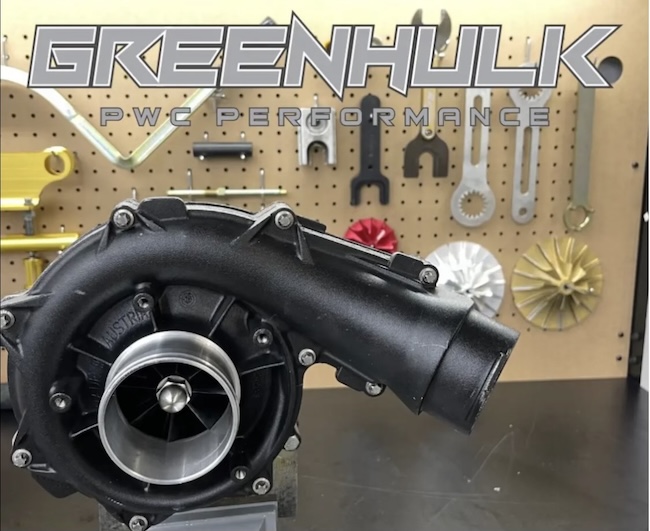
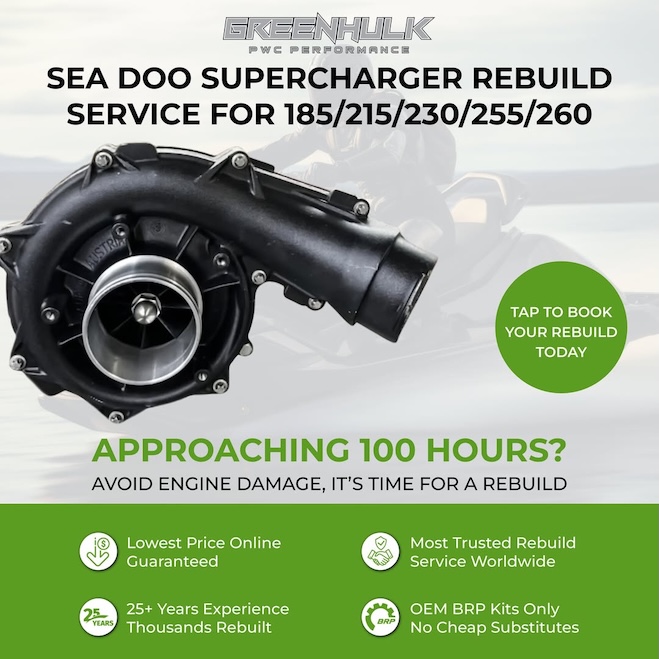
“If your Sea-Doo supercharger is approaching 100 hours or hasn’t been rebuilt in the last 2 years, it’s time for a professional rebuild and no one does it better, faster, or more affordably than The GreenHulk PWC Performance Store. Period! We ensure your supercharger is rebuilt correctly, safely, and to factory specifications, every time,” GreenHulk states in a recent social media post touting the lowest prices and one-day turnaround
Prices include complete disassembly, inspection, rebuild, and precision torquing of all components. Read the full press release below for more information.
Professional Sea-Doo Supercharger Rebuild Service for 185/215/230/255/260 HP Model skis.
Are you looking to restore peak performance and reliability on your Supercharged Sea-Doo? The GreenHulk Sea-Doo Supercharger Rebuild Service is the most trusted and experienced option available for 185, 215, 230, 255, and 260 HP models. With over two decades of hands on experience, 4-Tec Performance has rebuilt thousands of superchargers for riders across the world. If your Sea-Doo supercharger is approaching 100 hours or hasn’t been rebuilt in the last 2 years, it’s time for a professional rebuild and no one does it better, faster, or more affordably than The GreenHulk PWC Performance Store. Period! We ensure your supercharger is rebuilt correctly, safely, and to factory specifications, every time.
THE CHEAPEST PROVIDER ONLINE
We beat all competitors on price without sacrificing quality. No markup, no gimmicks, just honest, professional service using the right parts.
We only use genuine Sea-Doo OEM Rebuild Kits.
We won’t cut corners with cheap parts. Every rebuild includes a brand new OEM Sea-Doo Supercharger Rebuild Kit, the same high-quality components found in brand new machines.
We offer a one day turnaround time, and don’t charge extra for this expedited service.
Each rebuild is performed in house by our experienced technicians. The price includes complete disassembly, inspection, rebuild, and precision torquing of all components.
Need new mounting hardware? No problem! Use the dropdown menu on the product page to add three (3) OEM Torx flange screws (Part #420641258, M6 x 35mm), which are used to secure the supercharger to the engine. These are often overlooked but critical for proper installation.
Why Choose The GreenHulk PWC Performance Store? 25+ Years of Experience Thousands of Superchargers Rebuilt. We are the most experienced.
GENUINE BRP OEM Kits ONLY, ABSOLUTELY NO Substitutes
Fast Turnaround that we do not charge you more for!
Trusted by Racers, Riders, and Dealers Nationwide
Give your Sea-Doo the performance and reliability it deserves. Whether you’re a casual weekend rider or pushing top speeds on race day, we’re the shop riders, racers, and dealers trust. Don’t overpay elsewhere. Get it done right—the first time—and for the best price online. Order today and experience The GreenHulk PWC Performance Store difference.
The Watercraft Journal is on the hunt – maybe for you!
In the coming days and weeks, you might notice a series of course corrections at The Watercraft Journal to realign us with the founding spirit that sparked a whole industry back in 1973: namely, the youthful attitude and explosive energy – both as a competitive sport and as an athletic recreational activity – that marked the true jet ski lifestyle from the very beginning.
Founder and Editor-in-Chief Kevin Shaw has stated many times in the past, and emphatically re-stated recently, that the soul of jet skiing was about pushing boundaries and defying the norms of what could be done on the water – both for the individual as much as the machine.
As WCJ strives to tap back into that original spirit, we are looking for a couple of new freelance writers to bring in that same youthful energy. Those interested must be insanely passionate about the type of machines that fit this agenda.
Do you know somebody reviving old school 2-strokes? Sure! Building a turbocharged Spark? Great! Some insane Frankenstein that somebody’s putting together in their garage? Tell us more about it!
We’re wanting to focus on people in our sport showing some real “old school” stoke. No, we’re not trying to live in the past but we are trying to fix the future by looking at what made this hobby cool in the first place (and it sure as hell wasn’t cup holders and phone chargers).
So if this is all making sense to you, we think you’re exactly who we want to start writing articles for us.
Articles will range from highly technical information, to reviews of products, and will include tutorials, event recaps, and more. Those interested should drop an email to [email protected].
There is a hesitation anytime we at WCJ set out to write an article with the words “electric” and “watercraft” in the same sentence.
Whether it is PWCs, or just about any other motorsport, there is an automatic, almost knee-jerk negative reaction to the idea of an electric version of the traditional gas-powered jet ski/motorcycle/car etc, and it runs not only though the race circles, but includes the recreational “speed & power” riders out there.
The reasons behind that resistance are many – from the historically notorious limited range of electric models, a charging time that is inconvenient at best, and reliability concerns.
There is also the very real, if less tangible, discomfort at the lack of traditional engine characteristics such as the sounds and vibrations of a gasoline engine that are missing in the electric versions Some riders associate the roar, rumble, and vibrations of a gasoline engine with the “feel” and experience of riding, which are absent in the quieter and smoother electric counterparts.
Add to those drawbacks, an innate feeling held by many that electric models of machines built for power and speed are just not going to rise to the expectations and benchmarks set by their gas-powered older siblings.
And historically, that is mostly a correct conclusion – older, and especially lower-end electric PWCs had power and speed limitations.
However, that isn’t exactly the case anymore. At least not according to the data available.
Looking just at the PWC sector of electric powersport models, the Bouvet Supermarine MM01 Hyperjet is said to have an electric motor that generates 220 kW (or 300 hp) to give it a top end of 75 mph; the Narke GT95 only boasts a top speed of 47 mph, but has a range of 31 miles on a single charge, and the characteristically high torque offered by electric motors translate to quick acceleration.
While not leveling up to the claimed 75 mph of the Hyperjet (or the $900,000 price tag), the Taiga Orca, one of the more well-known brand models, boasts 160 horsepower and a top speed of 60 mph. (In comparison, a Sea-Doo Spark top-end is about 50 mph.)
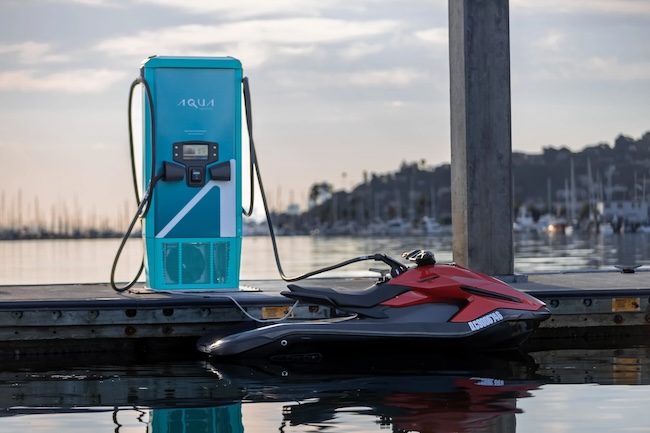
While the Taiga brand faced significant financial struggles and filed for creditor protection under Canada’s Companies’ Creditors Arrangement Act (CCAA) in July 2024, in October 2024, the company was acquired by UK entrepreneur Stewart Wilkinson. Wilkinson’s group controls other marine electrification brands like Vita, and Evoy; and earlier this month, Taiga Motors announced that they were partnering with Aqua superPower – a global marine fast-charging network – to accelerate the shift to electronic models in both PWC and snowmobile models.
“The partnership creates economies of scale by aligning Taiga’s growing demand for vehicle charging with Aqua superPower’s infrastructure and charging software offering—lowering deployment costs and accelerating network expansion for both recreational and fleet applications.
“By combining demand and deployment, the companies overcome the two-sided market challenge inherent in electrification,” said Karen Gill, COO of Aqua superPower. “Infrastructure must often lead the way—but by joining forces, Taiga and Aqua are accelerating both sides of the equation.”
Read the full press release below:
Montreal, QC – July 24, 2025- Taiga Motors Inc. (Taiga), a leader in high-performance electric powersports vehicles, and Aqua superPower, the first global marine fast-charging network, are excited to announce a strategic partnership between the two companies.
This landmark partnership brings the two companies together to deliver on their shared mission: to accelerate electrification— enabling more people to move, work, and adventure sustainably beyond the road.
Taiga clients will benefit from expanded charging solutions for home, onboard yachts, or onsite fleet operations. With a broad technology portfolio ranging from Level 2 destination charger to high-power DC fast charging up to 250kw, solutions can be tailored to fit each location, use case, and vehicle mix. Aqua superPower’s expanding network of chargers, already spanning 59 sites across North America and Europe, will seamlessly integrate with Taiga vehicles and those of other manufacturers for fast, plug-and-play charging.
“Scalable infrastructure is key to unlocking the full potential of electrification,” said Sam Bruneau, CEO of Taiga Motors. “With Aqua superPower’s expertise, we’re making it easy for individuals and fleets to go electric—especially in high-volume use cases where the sustainability impact is multiplied.”
The partnership creates economies of scale by aligning Taiga’s growing demand for vehicle charging with Aqua superPower’s infrastructure and charging software offering—lowering deployment costs and accelerating network expansion for both recreational and fleet applications.
“By combining demand and deployment, the companies overcome the two-sided market challenge inherent in electrification,” said Karen Gill, COO of Aqua superPower. “Infrastructure must often lead the way—but by joining forces, Taiga and Aqua are accelerating both sides of the equation.”
Listed Benefits: Plug and play charging with expanding global network of 59 charging sites across popular marinas and trails, enabling fast charging in as little as 20 minutes for Taiga vehicles.
Simplified turnkey charging infrastructure and software solutions for commercial fleets, removing significant barriers to electrification.
Economies of scale in unified charging platform rollout—lowering costs and accelerating access for all users.
About Taiga Taiga is a Canadian company leading electrification beyond the road with revolutionary electric powertrain technology, powersports vehicles and watercraft. Through a vertically integrated approach, Taiga has pushed the frontiers of electric technology to achieve extreme performance at compelling price points to enable a transition from combustion powersports vehicles. The product lineup currently includes electric snowmobiles and personal watercrafts to deliver on a rapidly growing demand from recreational and commercial customers who are seeking better ways to explore the great outdoors without compromise. For more information, visit taigamotors.com.
About Aqua superPower Aqua superPower is the first fully marinized dockside global network of fast charging stations for electric vessels. Powered by its proprietary cloud-based platform, Aqua ensures reliable network operation and maintenance and is backed by expert service teams and 24/7 customer care to deliver a seamless electric marine charging solution to operators and customers.
The product range includes AC and DC charging solutions, allowing DC compatible powerboats and jet skis to rapidly recharge and extend their autonomy. Aqua superPower has developed the first supercharger specifically engineered and rated for use in marine environments, built to IP65 standards and enabling marinas, ports and harbours, commercial operators, boat builders, and powertrain manufacturers to accelerate the transition to clean propulsion in the marine sector. For more information, visit www.aqua-superpower.com.
We spend a lot of time here at The Watercraft Journal trying to highlight some of the best ways to improve your PWC’s performance, with everything from impellers and pumps to aftermarket steering systems. And we spend a lot of time showing off some of the top ways to improve your style while out on the water—whether that’s a stylish new racing jacket or a sick new set of decals for your hull. So, when we saw that the latest launch from RIVA Racing promises not only top-tier performance but also a slick upgrade to your PWC’s overall aesthetics, we had to check it out.
We’ve covered some of RIVA’s top-of-the-line Rear Exhaust Kits before, so we know just how big of a difference they can make to your PWC. The good news is that they’ve just released kits for Yamaha FX and GP models, which are specifically designed to improve engine performance by removing restrictive rubber and plastic components—many of which are liable to wear down and break over time—and replacing them with aluminum tubing.
At the same time, this upgrade to your PWC promises to improve aesthetics, not just through a slick new rear exhaust port (available in black, blue, or red), but also by removing that restrictive sound suppression system and letting your engine really roar as you rip across the water.
There’s this thing called The Loop – or more specifically, “America’s Great Loop;” the Loop is somewhat of a pinnacle in boating circles – similar, in spirit, to hiking’s Appalachian, Pacific Crest or Continental Trails, the Great American Loop is a roughly 6,000-mile boating “trail” circumnavigating the eastern portion of the United States and part of Canada.
A continuous waterway, the Loop includes portions in the Atlantic, the Gulf Intercoastal Waterways and the Great Lakes, not to mention numerous rivers and canals. “Loopers,” as those who complete the full route are known, typically spend between six and 12 months navigating the route, according to notes provided by Discover Boating.
While thousands of people complete portions of the Great Loop each year, only about 150 boaters complete the entire trip annually according to Boatmart. And, as with the “2,000-milers” that complete the Appalachian Trail, or those who conquer the 2,700 back-country Great Divide Mountain Bike Route – many of the legends do it solo.
And that’s where we encounter Kasey Jo – more commonly known simply by her social media handle, #Solo Ventures, which is also the name of her PWC.
While many of us are trudging through 2025 in typical fashion, Kasey took a bit of a different approach to this year. Back in May, she announced her plans to tackle America’s Great Loop solo, aboard her 2024 Sea-Doo Explorer Pro 170 (which, she explains, was chosen for its optimal gas mileage – getting about 100 miles out of the 18.5 capacity tank – a capacity she extended by 20 gallons with jerry cans for the longer stretches of the Loop).
She highlighted, during the introduction video, some of the features of the Explorer Pro that will play important roles in her adventure, like the built-in GPS, as well as equipment and supplies she has added, including a power relay that allows her to charge devices while riding.
With plans to launch on her journey on May 29, with a 200-mile first-day haul, that May video also highlighted the fact that her 2025 journey also had a purpose – raising funds for the Brothers in Arms Foundation.
The Brothers In Arms Foundation is a charity and veterans service organization that offers a variety of programs, services, and events for wounded veterans.
After setting out at the end of May, and reaching as far as Lake Erie by June 16, Kasey’s adventure brought her to Kentucky and Tennessee in July, just in time to deal with some of the severe storms that passed through the region, as well as the sweltering heat, and WCJ first heard about Kasey’s journey through a social media post a few days back when Tennessee River Locks & Navigation page mentioned her passing through Pickwick Lock and I noticed the “Solo Ventures” sign on the back of her ski and did a Google dive to find out more.
Although I was able to contact Kasey through social media messages, her route had already taken her outside of my travel range from my home in NW Georgia, and we attempted to schedule an online interview, but have been unable to connect for more than a few messages due to my work schedule and her preparation for facing one of the toughest stretches of the Loop – the 150-mile Gulf crossing – which, after a day’s delay for weather, she completed yesterday.
Stay tuned in the coming weeks as we feature more about Solo Venture and her journey. Meanwhile, you can keep up with her progress on her Livetracker, as well as her Facebook and Instagram accounts, where you can also find out more about her work with Brothers in Arms.
(Editor’s note: TRLN also posted about the Tennessee River 600 passing through on their yearly journey on July 25, and WCJ has contacted them and will be adding an article about the trip in an upcoming edition of WCJ)
Having a well-stocked toolkit on your Personal Watercraft (PWC) can be crucial for safely enjoying time on the water. If you experience a minor mechanical issue while out on the water, a basic toolkit can help you troubleshoot and potentially fix the problem, preventing the need for costly towing or a stranded situation.
Finding room for a small kit, stocked with commonly-needed tools and supplies, is possible regardless of your style ski – from stand-up to sport to runabout, there is always room to tuck away a kit where it will be at hand in a bad situation, and knowing you have the ability to handle minor problems can increase your confidence and peace of mind on longer rides or offshore excursions.
While the specific tools you carry may vary depending on your PWC model and the type of riding you do, some essential items to consider include:
Multi-tool:A versatile tool with pliers, screwdrivers, a knife, and other useful features.
Screwdrivers:A set with Phillips and flathead tips in various sizes.
Socket and wrench set:Include a range of sizes, including adjustable wrenches, for various bolts and nuts.
Pliers:Needle-nose pliers are useful for small tasks, and slip-joint pliers can handle a variety of jobs.
Knife:A rigging knife, box-cutter or a multi-tool with a blade is helpful for cutting ropes or other materials.
Electrical tape:For securing wires or making temporary repairs.
Zip ties:For securing loose items or making quick repairs.
Hose clamps:For securing hoses and fittings.
Duct tape:A versatile repair material.
Waterproof flashlight (Preferably LED and rechargable):For visibility in low-light conditions.
Mini-can of PB Blaster/WD-40 or other penetrating oil
Shop towel
Cable ties:Useful for organizing and securing wires or hoses.
Optional but useful:
Telescoping mirror and magnet:For inspecting hard-to-reach areas.
There has been a definite trend over the last dozen or so years in the PWC industry to “go big or go home” – literally.
Like some of their human counterparts,, it seems PWC models have been struggling each year to stay trim, slim and svelte, and have instead settled into comfortably expanding each year.
Now, in some ways, this is not a negative … these larger models often include features like extended swim platforms, enhanced storage, and more powerful engines, making them appealing for families and those seeking a more luxurious experience. And despite the drawbacks, and the negative impact this trend imposes on the overall health of the PWC industry, there is little denying that the larger, more stable PWCS are a draw for the changing demographic of buyers, and the heavier emphasis both leisure and utility PWCS, such as those geared and outfitted for fishing.
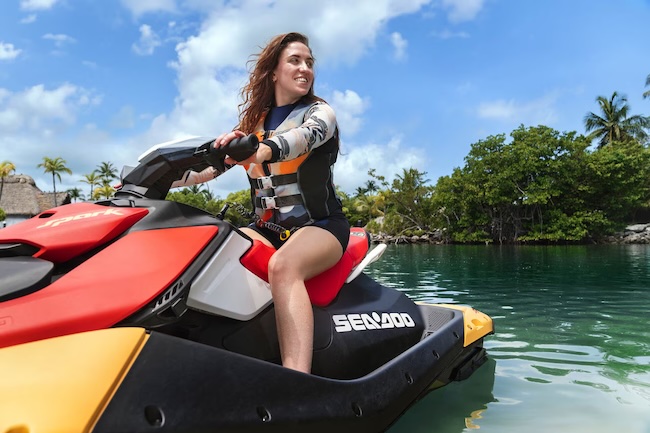
Right smack dab in the middle of that “growing” trend Sea-Doo, without slowing down their push toward “bigger”, released the Sea-Doo Spark. As stated by WCJ head honcho Kevin Shaw in the Spark introductory article in November of 2013, “Sea-Doo’s introduction of the Spark is not a marketing gimmick or short-term ploy. It’s a tectonic shift in how the personal watercraft industry should operate.”
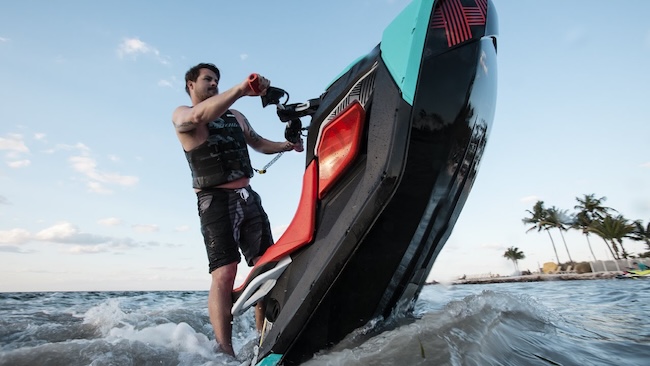
While this article makes no attempt to define and detail the impact of the Spark on the PWC industry, as well as the PWC culture, there is little doubt that the impact was significant. Likewise, in 2017, when Sea-Doo introduced the Spark Trixx, another ripple of something akin to excitement eddied through the PWC world. Shaw once again commented: “New for 2017, the Trixx is possibly the most unique runabout built in the last decade. Designed for flatwater freestyle fun, the Trixx comes with a redesigned vertically-adjustable aluminum steering next and handlebar setup permitting for 6-inches of rise; heavy-duty padded foot wedges, and an electronically-adjusted, re-calibrated VTS trim system with an additional 20-degrees of range.”
As lauded as the new Trixx was, it still was an unlikely decision for many Spark owners to abandon their somewhat-recently purchased Spark to buy a new Trixx.
And, now, thanks to GreenHulk – there’s a way to have your cake and eat it, too.
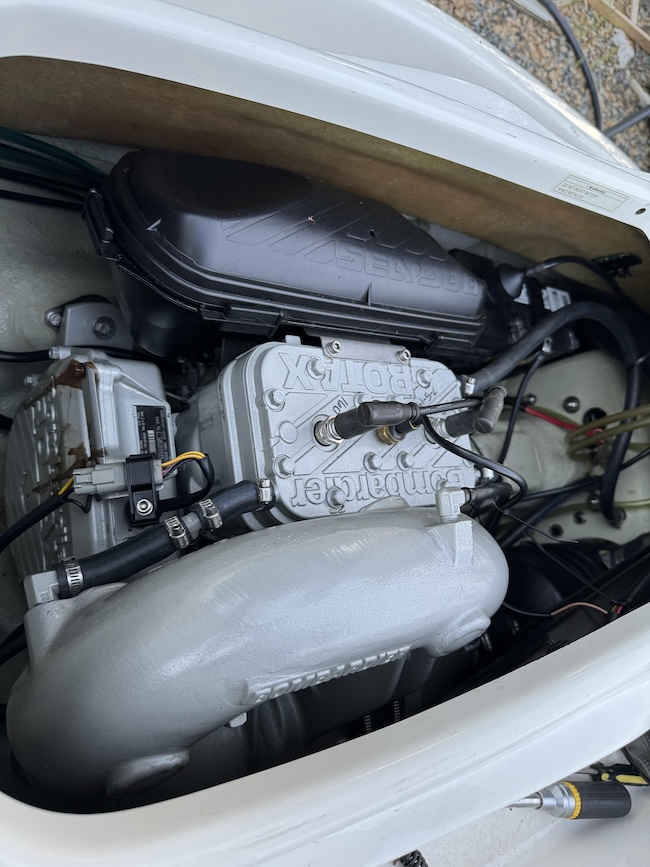
A recent post on the GreenHulk Facebook page ran down a detailed list of what is needed to turn a Spark into a Spark Trixx – a six-product project that will add control, style and the ability to perform stunt-riding tricks on your everyday Spark.
Products offered by GreenHulk to make the transformation include:
Read the full press release below for more details:
Tricks. Control. Style.
Everything You Need to Upgrade Your Ride.
The one-of-a-kind Spark Trixx™ is built for fun—and now, so is yours. Whether you’re throwing tail stands or just looking to level up your control, we’ve got the parts to transform your Spark into a full-on trick machine.
Here’s What You’ll Need:
✅ Extended Range Variable Trim System https://www.4-tecperformance.com/index.php…
Double the trim range. Control nose angle on the fly for more pop and better landings.
If you glance back through The Watercraft Journal archives, there are a couple things that can be said about the slew of articles featuring FuelTech:
1) typically, they stuffed full of detailed, tech-heavy information, and 2) they almost invariably close out having helped make your ski quicker, more powerful, more responsive, and, in general, just better all around.
That’s what FuelTech is all about, and they are renowned for their mastery of the high-tech side of the PWC industry. But FuelTech can come in handy for some less high-level PWC needs, also.
While visiting the FuelTech website can result in a rabbit-hole trip through the specs and potential of fuel systems, ECUs, wiring, ignition systems and relays. tucked in amongst the performance accessories is a page of products that you just may not expect from Fuel Tech – we’re talkin’ T-shirts and hoodies, ball caps and kids-wear, footwear, stickers and even FuelTech’s own Yerba Mate.
And if you want your gear and goodies to match the premium quality of the Fuel Tech performance products you put in your PWC, then be sure to check out FuelTech’s Anderson Dick Collection — a tribute to the legacy and passion of Anderson Dick, a pioneer in the automotive industry and the founder and CEO of FuelTech.
Leading off the collection are the FuelTech AFD Sunglasses. Designed for motorsport enthusiasts, this accessory perfectly combines elegance, comfort, and durability, with key features like UV400 Protection provided by high-quality lenses with full UVA and UVB protection, polarized lenses to reduce glare and enhance visual clarity, and durable, lightweight polycarbonate frames.
Also part of the collection is a premium version of the Fuel Tech Yerba Mate, the AFD Yerba Mate w/ edible gold flakes (Erva-Mate com flocos de ouro) merges the tradition of native yerba mate consumption with a visual representation of “victory,” using 24k edible gold.
“Hold My Chimarrão,” a phrase coined by Anderson Dick during the breaking of the world power record in the United States, is a mantra, a symbol of achievement and perseverance. Like champions’ trophies, gold represents celebration; in a unique yerba mate blend, it’s a tribute to the relentless pursuit of new challenges and the unwavering drive to claim the top spot on the podium, both on and off the track.
Next up is the Back to FuelTech T-Shirt, crafted from 100% premium cotton, this t-shirt features all-day comfort with its short sleeves and classic crew neck design, a silkscreen print on the chest and back, screen-printed inner label on the yoke for added comfort, and a sleek black taffeta clip label stitched on the right hem, highlighting attention to detail.
A second T-Shirt in the collection is the 100% cotton short-sleeve Calibra Turbo T-Shirt, entirely based on the Turbo Calibra details. On the front print is the brand logo and signature of Anderson Dick collection and on the back, a visualization of the car design.


 When it comes to competitive racing, whether on wheels or on water, the top performers are those who manage to bring their ride’s performance up in every aspect available to them. While for many this may be limited to changing the hull’s aerodynamics, installing an aftermarket impeller, or any number of other important upgrades, there’s no denying that all of these are secondary to a PWC’s beating heart: its engine. While some engines are certainly better than others, FuelTech puts aside those comparisons and addresses a different question: “How can this engine be better?”
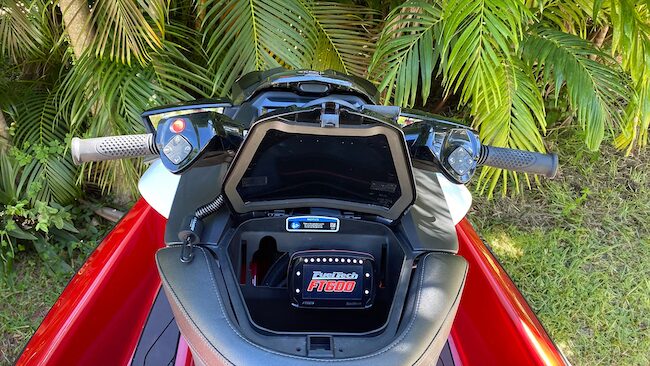 The offer is available in three “packs,” each of which offers slightly different benefits, so you can find the performance that’s right for you. For example, the FT600 ECU includes a free NanoPRO Wideband O2 Sensor Controller, their three-in-one interface that acts as a secondary dash, an O2 conditioner, and a switch panel, all while measuring less than three inches. By bundling it with the FT600, you’re guaranteed FuelTech’s most advanced engine control/monitor system, with a user-friendly interface and an impressive list of features.