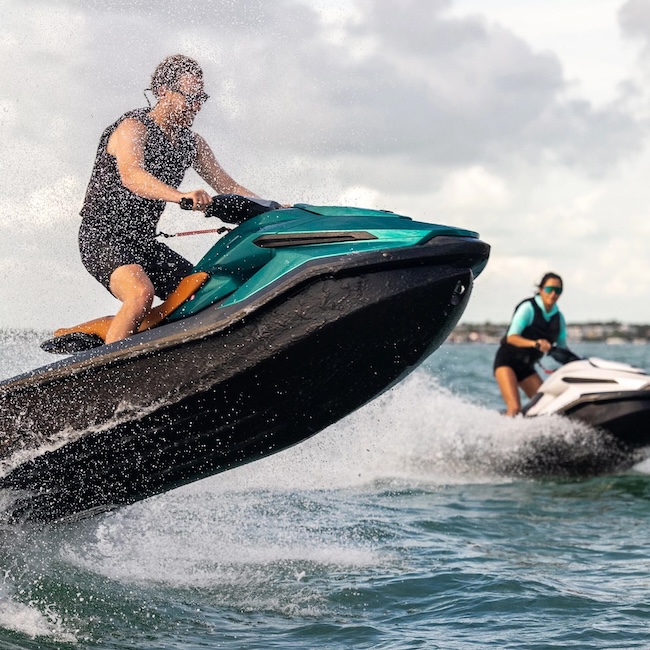
It’s hard to believe but we’re just a week away from BRP’s big official rollout of it’s 2026 lineup. That’s right! This coming Sunday evening, August 17th, BRP will unveil to its international dealer network the entirety of its 2026 offerings published to its various social media and YouTube channels. (So if you’re rarin’ to know what’s new, you’ll want to tune in then.)
Yet, if you’re a little more patient, you can tune into The Watercraft Journal IRL podcast (see video linked below) that next evening, Monday, August 18th at 8pm EST, and watch as this author and special guests Greg Gaddis and Billy Duplessis go over the previous night’s announcements, and break down what’s new, what’s left over, and share our thoughts on the reveal.
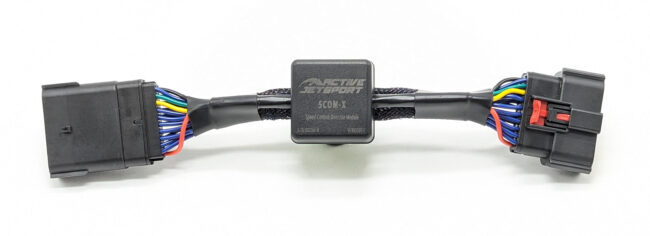
It can’t be that easy, right? Well, sorta. We don’t want to read a novel or some sob story. No ma’am. We want to laugh! Give us your funniest reason why you deserve to win this Speed Control Override Module from Active Jet Sport. We’ll be reading your letter on the podcast, so keep it PG-13 or cleaner. That’s it! Make us laugh and you can win!
Some of our favorite content lately has come from riders taking on long-form, open-water PWC journeys. In part, this is because these trips tend to come loaded with beautiful scenery, epic wildlife encounters, and fresh perspectives on some of the world’s top destinations. At the same time, we love these trips even more because they show off just how great of a tool the PWC can be for people around the world, enabling some of the coolest adventures imaginable. But there’s no denying that this kind of open-water travel comes with its own risks and difficulties—and the biggest of these is obvious: fuel.
Whether you’re traveling around the islands of Fiji, visiting the Bahamas from Miami, or just looking for some good open-water fishing, having access to extra fuel for your journey isn’t just important—it can be the difference between life and death. On top of that, refueling on open water brings its own set of challenges: balancing on a moving PWC, contending with waves and wind, and avoiding spills that could harm the environment or even leave you without fuel. The key is to choose the right combination of storage, transfer, and securing methods so your adventures stay safe and uninterrupted.
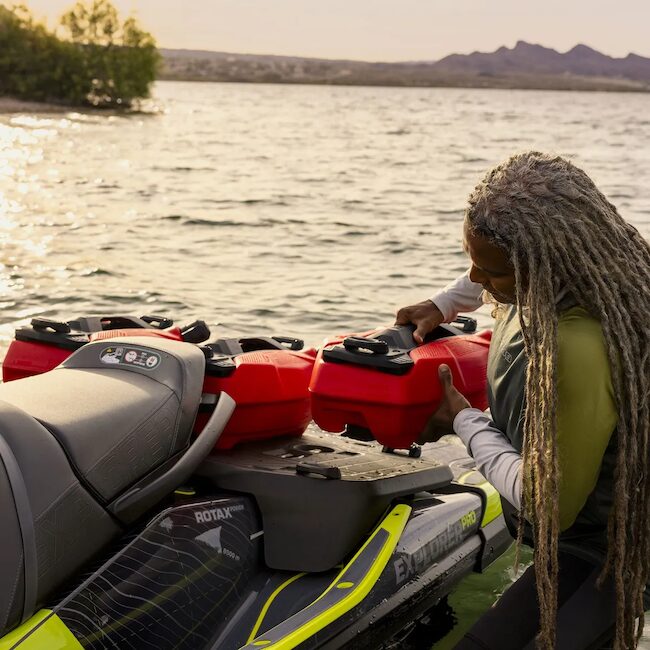
Perhaps the most important consideration here is fuel storage. While basic gas cans can work in a pinch, we highly recommend opting for an option better suited for water refuels. We’ve covered options like the SureCan gas tanks before, and they remain one of the best solutions on the market for ensuring a safe and spill-free refuel on the water. There’s also the Sea-Doo LinQ caddy, available in 3.8– and 5-gallon sizes, featuring a spill-free spout and easy installation with their secure LinQ system.
If you’re going to be using one of the standalone gas cans, knowing how to keep it connected to your PWC is a key issue. DIY racks made from straps, baskets, or PVC are inexpensive, but they can be unstable in rough conditions and may impact your warranty or performance. Purpose-built PWC racks are designed to keep fuel stable, resist corrosion, and make it easier to handle cans in less-than-ideal weather. Many also double as gear carriers, giving you more storage space for safety equipment or a portable pump.
For those looking for a more involved setup for consistent long journeys, an auxiliary fuel tank can be a worthwhile investment. These connect directly into the PWC’s original tank, allowing for extended capacity without needing to manually refill from an external container.
One of the great things about the PWC lifestyle is that there is a corner of the PWC world for just about anyone, regardless of where your interests lie.
Have the ‘need for speed?’ PWC racing has some of the most adrenaline-boosting wire-to-wire competitions in the powersport world. More into lazy cruising some calm-water rivers and shorelines? There’s a PWC for you! Backflips and stunt riding? Zipping around fast-current rivers? Dodging waves or towing wakeboarders over them? Fishing? Adventuring? Safety Patrols and rescue work? Whatever your goal, there’s probably a PWC for it.
Which makes it a huge added bonus when there’s a supplier that also excels at “just a bit of everything.”
What’s even nicer is when you can get a nice hefty discount at said one-stop-shopping” location.
Well, the good news is, when it comes to that part, accessory, equipment or gear, Jet Tech has you covered with a website full of deals for just about every branch of the PWC family, and when it comes to that nice discount, WCJ and Jet Tech have you covered with a WCJ-only discount of 15% on everything on the Jet Tech website. Just enter “watercraft15” in the coupon code slot when you check out, and your discount will automatically be applied to your purchase.
Just a sampling of the deals you can snag as Watercraft Journal supporters:
From the Jet Tech Surfing and Watersports department The Jet Tech tow sport rope, specifically designed for use on a PWC, with sectional lengths, floating core and anti suck up features make this rope the ultimate solution for water sport behind your PWC. Normally $109; you save more than $16 with the watercraft15 code.
Or you can grab a set of Jet Tech universal board racks for almost $70 off the regular price. These simply clamp onto any make & model jet ski with a uniquely designed patented clamping system from Jet Tech, with no modifications required, providing a quick, easy solution for transporting all types of boards while freeing up valuable space on the ski.
From the Fishing and Touring department, this 15% off even applies to the Jet Tech adventure fish box recently promoted on the Jet Tech Facebook page. This ultimate jet ski fishing set up fits almost every make & model and attaches in seconds, providing a strong, secure and modular storage system customizable to your style and needs.
Built around a large removable 55L Jet Tech insulated cooler box, the systems includes 4 rod holders, 4 rod leashes a tackle box and tackle box cargo net, 1 powder coated, marine grade aluminum crate, 2 stainless steel tie down ratchet straps and all the hardware. In addition, You also have the option to carry up to 25L of extra fuel with up to (5) 5L jerry cans around the entire box. These simply attach to any of the cam lock points with provided hardware. And as a WCJ reader, you can slash more than $100 off the purchase price.
Also in the Fishing and Touring department, after a successful fishing outing, you can keep that prized catch nice and fresh whilst trekking home on your ski with the insulated Jet Tech Fish Bag featuring securing points & profiled to fit a jet ski – all for less than $110 with your discount code.
And speaking of bags, your exclusive-to-WCJ readers discount code will earn you 15% off Jet Tech’s 10- or 15-pound drybag or their 35 Liter Backpack Dry Bag, which is reinforced with extra strong points to carry heavier equipment like cameras, drones and more cargo in general. The integrated shoulder, waist and chest straps also ease the load by dispersing weight while keeping the bag nice and tight when riding your ski – and save $11.25 on the deal, all just for being a part of the WCJ family.
Shop now on the Jet Tech website for your discounted prices with the watercraft15 code, and follow their social media accounts for new product announcements and more.
When we talk about Sea-Doo, it’s usually because we’re exploring their variety of PWC models and innovations throughout the years—but that doesn’t mean their offerings are limited to watercraft themselves. A few months back, we highlighted the utility of their YouTube channel’s “Product Series” videos, as they provide visually aided deep dives into some of the various products and accessories that can enhance the experience for any kind of PWC enthusiast.
In fact, while that article covered their set of watersports accessories for fans of tubing, wakeboarding, and waterskiing, other videos are dedicated to those who are more interested in PWC fishing, long-haul trips, and plenty of other ways to get the most out of your time on the water.
Along this line, one video particularly caught our eye as highlighting a less-frequently-covered product that might be useful to some of our readers. While most of the time we think about being on the water on our PWC, we imagine warm summer days. But there are plenty of reasons to be out on the water in colder climates. Whether you just happen to live near colder waters, are out for a race or a fishing trip, or just run into a few cold days, being able to stay warm on your PWC can be the difference between a day cut short and a lifelong memory.
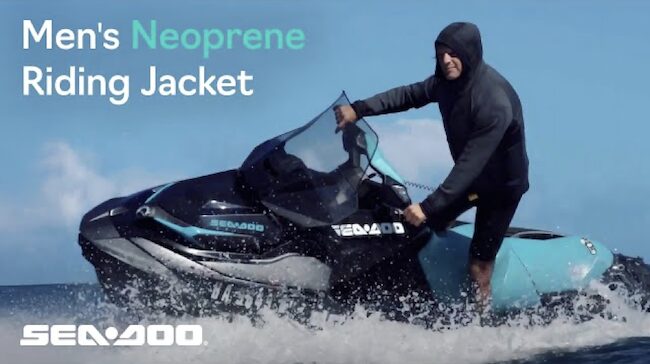
That’s where Sea-Doo’s Neoprene Riding Jacket comes in. In the video, they highlight just how well this jacket is built to handle the elements—designed specifically to keep riders warm, dry, and protected in cooler weather or when facing wind and water spray. Made from 2mm thick neoprene with 90% neoprene stretch fabric and 10% nylon for added flexibility and comfort, this jacket offers insulation without sacrificing movement. Built-in UV protection, an adjustable hood, and adjustable cuffs ensure it fits securely and shields you from the sun and splash alike. Ideal for both casual riders and racers, this men’s neoprene jacket is a solid addition to any PWC rider’s gear for extending your season and staying comfortable no matter the forecast.
Be sure to check out this jacket as we move towards the end of summer, and don’t forget to follow along on Sea-Doo’s YouTube channel for more engaging deep dives!
When it comes to competitive racing, whether on wheels or on water, the top performers are those who manage to bring their ride’s performance up in every aspect available to them. While for many this may be limited to changing the hull’s aerodynamics, installing an aftermarket impeller, or any number of other important upgrades, there’s no denying that all of these are secondary to a PWC’s beating heart: its engine. While some engines are certainly better than others, FuelTech puts aside those comparisons and addresses a different question: “How can this engine be better?”
We’ve covered before how their high-tech products allow racers to get the most out of their engine’s potential, but if you still haven’t been convinced to take the plunge into big gains in your watercraft’s performance, they’re taking the opportunity to sweeten the deal this August. Their current sale allows buyers to receive a free Nano with the purchase of their ECU systems, which amounts to savings of up to $339… with major payoff!
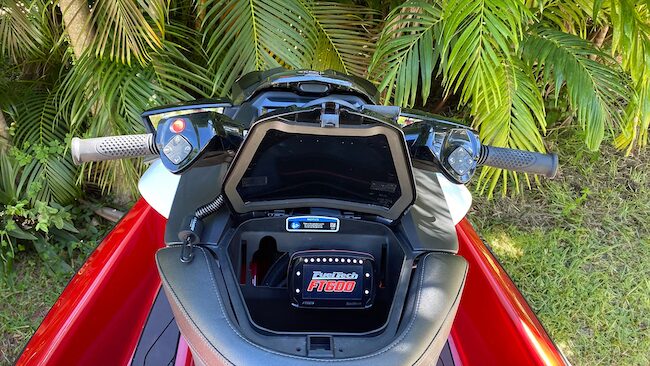
The offer is available in three “packs,” each of which offers slightly different benefits, so you can find the performance that’s right for you. For example, the FT600 ECU includes a free NanoPRO Wideband O2 Sensor Controller, their three-in-one interface that acts as a secondary dash, an O2 conditioner, and a switch panel, all while measuring less than three inches. By bundling it with the FT600, you’re guaranteed FuelTech’s most advanced engine control/monitor system, with a user-friendly interface and an impressive list of features.
On the other hand, for those who want a slightly more affordable option without sacrificing the NanoPRO deal, the FT550 ECU also includes the bundle offer, still providing electronic fuel injection, an integrated dashboard, data acquisition, and power management. Finally, the FT450 ECU comes with a free WB-O2 Nano, a less “advanced” but super useful O2 conditioner, which promises a cost-effective way to really boost your engine’s performance.
All three of the ECUs included in the promotion are compatible with Sea-Doo, Kawasaki, and Yamaha watercraft, making this deal a perfect fit for PWC racers looking to take their ride up a notch. Even still, it’s important to keep in mind that a “plug and play adapter harness” is needed to fully integrate the engine management system with your PWC.
On top of this, FuelTech’s sale includes their typical “Fast & Free” shipping, sweetening the deal just a bit more. The offer is only valid in August, so if you’re looking for high-performance tuning for competitive PWC racing, be sure to check out the details of this offer over on their website now.
It’s easy to get in a rut when talking about the great deals and top-quality selection of performance parts and equipment at RIVA Racing – after all, what’s not to brag about when you’re partnering with one of the most respected one-stop shop for high-performance watercraft parts, accessories, and services for Yamaha, Sea-Doo, and Kawasaki PWCs.
When you’re talking about a global leader in personal watercraft (PWC) performance and aftermarket parts, it’s easy to get wrapped up in highlighting their focus on enhancing the speed, acceleration, and handling of PWCs through their high-quality performance parts and ECU tuning software.
But every once in a while, we have to step back and toss in a reminder about RIVA’s less technical – but equally high quality soft lines. From PWC covers to boarding steps, from wrist lanyards and rescue sleds to ice chests, sea scooters and stunning graphics kits — the range of products outside the more well-known performance lines RIVA built their reputation is extensive.
And to top it all off, RIVA just recently announced the drop of their new summer riding gear, making it easy to look the part while ripping around the track or cruising around the lake.
The release includes a number of cool new t-shirts, branded with the RIVA Racing logo in a variety of designs, so that you can help rep the brand.
As well as T-Shirts, RIVA’s got hats, like this RIVA Racing Hydro ‘Champion’ Hat, as well as rash guards, water shoes, windbreakers, race jerseys, and more, in men’s, women’s and youth styles and sizes.
Visit the RIVA website to explore the full line of new riding gear and the plethora of accessories and apparel available.
In March of 2003, the PWC industry got superpowers — or at least one superpower — when Sea-Doo introduced the 2003 Sea-Doo GTX Supercharged model, featuring a 1494cc Rotax 4-TEC engine offering 185 horsepower – a significant increase compared to naturally aspirated models available at the time.
Following up the next year, Sea-Doo’s 2004 RXP 215 supercharged ski was the first personal watercraft to break the 200-horsepower barrier, boasting 215 horsepower thanks to its supercharged engine.
In 2006, Kawasaki introduced the 2007 model year Jet Ski Ultra 250X, featuring a marinized, 1,498cc, 4-cylinder, supercharged and intercooled engine, derived from the Ninja ZX-14. This model marked Kawasaki’s entry into the supercharged PWC market.
Yamaha’s first supercharged WaveRunner, the FZR SHO, built on the FZ platform, was introduced in the 2009 model year. This two-seater, factory racer featured a supercharged 1812cc engine, producing 210 horsepower.
As the years slipped by — or, in this case, raced by like a freightliner on a 9% downgrade with no brakes — the knowledge, design-work and technology integrated into supercharged skis has improved, even to the point of boasts of “maintenance free” superchargers.
However, as pointed out by WCJ’s Kevin Shaw in previous articles, maintenance is still a wise bet, as “a quick scroll through Google Images will show that it isn’t pretty when the clutch washers fail, as they’ll send metal debris scattering into the engine, galling bearings and destroying the entire supercharger.” He also noted, in May of 2023, that the “300 ACE engines have a much longer service life than the older superchargers, they can and will fail.”
So, just because (again, quoting wiser WJC minds — this time JD Brussels) “there’s nothing like screaming across the water on a lightning fast supercharged personal watercraft. The power, speed and agility of these muscle machines is unrivaled by their naturally aspirated counterparts. Purchasing a supercharged ski opens up a new world of possibilities…” that doesn’t mean that supercharges have magical powers — they still require care.
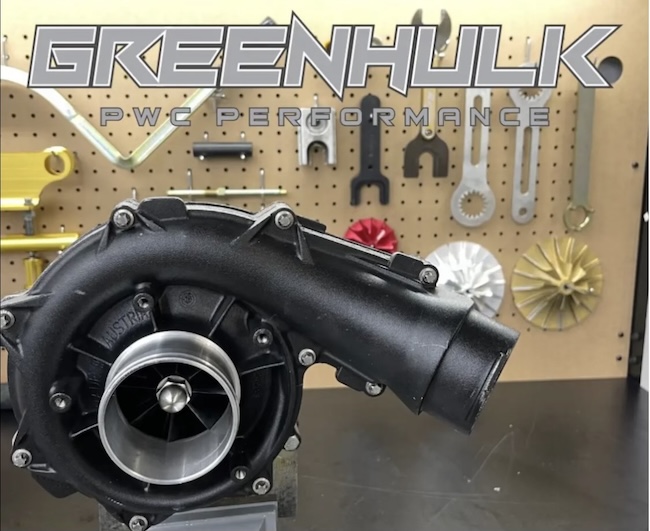
“If your Sea-Doo supercharger is approaching 100 hours or hasn’t been rebuilt in the last 2 years, it’s time for a professional rebuild and no one does it better, faster, or more affordably than The GreenHulk PWC Performance Store. Period! We ensure your supercharger is rebuilt correctly, safely, and to factory specifications, every time,” GreenHulk states in a recent social media post touting the lowest prices and one-day turnaround
Prices include complete disassembly, inspection, rebuild, and precision torquing of all components. Read the full press release below for more information.
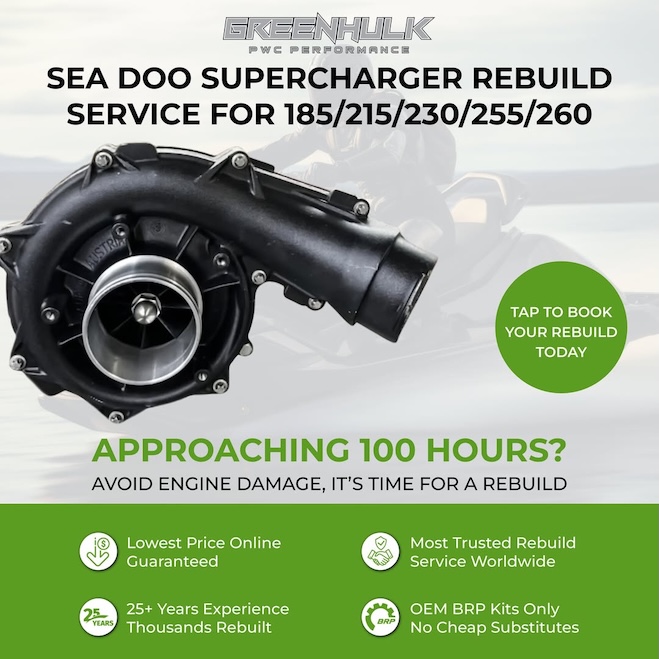
Professional Sea-Doo Supercharger Rebuild Service for 185/215/230/255/260 HP Model skis.
Are you looking to restore peak performance and reliability on your Supercharged Sea-Doo? The GreenHulk Sea-Doo Supercharger Rebuild Service is the most trusted and experienced option available for 185, 215, 230, 255, and 260 HP models. With over two decades of hands on experience, 4-Tec Performance has rebuilt thousands of superchargers for riders across the world. If your Sea-Doo supercharger is approaching 100 hours or hasn’t been rebuilt in the last 2 years, it’s time for a professional rebuild and no one does it better, faster, or more affordably than The GreenHulk PWC Performance Store. Period! We ensure your supercharger is rebuilt correctly, safely, and to factory specifications, every time.
THE CHEAPEST PROVIDER ONLINE
We beat all competitors on price without sacrificing quality. No markup, no gimmicks, just honest, professional service using the right parts.
We only use genuine Sea-Doo OEM Rebuild Kits.
We won’t cut corners with cheap parts. Every rebuild includes a brand new OEM Sea-Doo Supercharger Rebuild Kit, the same high-quality components found in brand new machines.
We offer a one day turnaround time, and don’t charge extra for this expedited service.
Each rebuild is performed in house by our experienced technicians. The price includes complete disassembly, inspection, rebuild, and precision torquing of all components.
Need new mounting hardware? No problem! Use the dropdown menu on the product page to add three (3) OEM Torx flange screws (Part #420641258, M6 x 35mm), which are used to secure the supercharger to the engine. These are often overlooked but critical for proper installation.
Why Choose The GreenHulk PWC Performance Store? 25+ Years of Experience Thousands of Superchargers Rebuilt. We are the most experienced.
GENUINE BRP OEM Kits ONLY, ABSOLUTELY NO Substitutes
Fast Turnaround that we do not charge you more for!
Trusted by Racers, Riders, and Dealers Nationwide
Give your Sea-Doo the performance and reliability it deserves. Whether you’re a casual weekend rider or pushing top speeds on race day, we’re the shop riders, racers, and dealers trust. Don’t overpay elsewhere. Get it done right—the first time—and for the best price online. Order today and experience The GreenHulk PWC Performance Store difference.
The Watercraft Journal is on the hunt – maybe for you!
In the coming days and weeks, you might notice a series of course corrections at The Watercraft Journal to realign us with the founding spirit that sparked a whole industry back in 1973: namely, the youthful attitude and explosive energy – both as a competitive sport and as an athletic recreational activity – that marked the true jet ski lifestyle from the very beginning.
Founder and Editor-in-Chief Kevin Shaw has stated many times in the past, and emphatically re-stated recently, that the soul of jet skiing was about pushing boundaries and defying the norms of what could be done on the water – both for the individual as much as the machine.
As WCJ strives to tap back into that original spirit, we are looking for a couple of new freelance writers to bring in that same youthful energy. Those interested must be insanely passionate about the type of machines that fit this agenda.
Do you know somebody reviving old school 2-strokes? Sure! Building a turbocharged Spark? Great! Some insane Frankenstein that somebody’s putting together in their garage? Tell us more about it!
We’re wanting to focus on people in our sport showing some real “old school” stoke. No, we’re not trying to live in the past but we are trying to fix the future by looking at what made this hobby cool in the first place (and it sure as hell wasn’t cup holders and phone chargers).
So if this is all making sense to you, we think you’re exactly who we want to start writing articles for us.
Articles will range from highly technical information, to reviews of products, and will include tutorials, event recaps, and more. Those interested should drop an email to [email protected].
There is a hesitation anytime we at WCJ set out to write an article with the words “electric” and “watercraft” in the same sentence.
Whether it is PWCs, or just about any other motorsport, there is an automatic, almost knee-jerk negative reaction to the idea of an electric version of the traditional gas-powered jet ski/motorcycle/car etc, and it runs not only though the race circles, but includes the recreational “speed & power” riders out there.
The reasons behind that resistance are many – from the historically notorious limited range of electric models, a charging time that is inconvenient at best, and reliability concerns.
There is also the very real, if less tangible, discomfort at the lack of traditional engine characteristics such as the sounds and vibrations of a gasoline engine that are missing in the electric versions Some riders associate the roar, rumble, and vibrations of a gasoline engine with the “feel” and experience of riding, which are absent in the quieter and smoother electric counterparts.
Add to those drawbacks, an innate feeling held by many that electric models of machines built for power and speed are just not going to rise to the expectations and benchmarks set by their gas-powered older siblings.
And historically, that is mostly a correct conclusion – older, and especially lower-end electric PWCs had power and speed limitations.
However, that isn’t exactly the case anymore. At least not according to the data available.
Looking just at the PWC sector of electric powersport models, the Bouvet Supermarine MM01 Hyperjet is said to have an electric motor that generates 220 kW (or 300 hp) to give it a top end of 75 mph; the Narke GT95 only boasts a top speed of 47 mph, but has a range of 31 miles on a single charge, and the characteristically high torque offered by electric motors translate to quick acceleration.
While not leveling up to the claimed 75 mph of the Hyperjet (or the $900,000 price tag), the Taiga Orca, one of the more well-known brand models, boasts 160 horsepower and a top speed of 60 mph. (In comparison, a Sea-Doo Spark top-end is about 50 mph.)
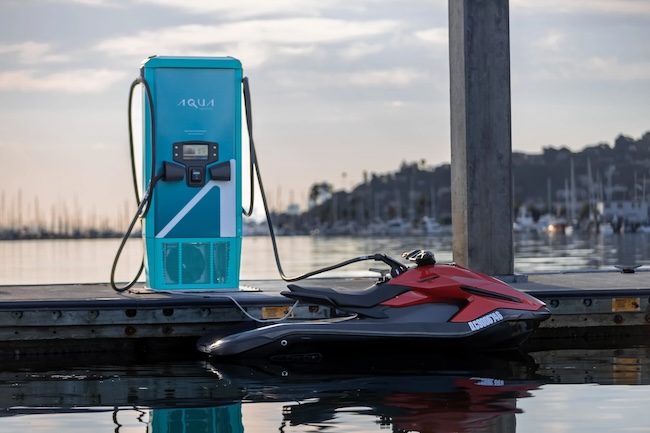
While the Taiga brand faced significant financial struggles and filed for creditor protection under Canada’s Companies’ Creditors Arrangement Act (CCAA) in July 2024, in October 2024, the company was acquired by UK entrepreneur Stewart Wilkinson. Wilkinson’s group controls other marine electrification brands like Vita, and Evoy; and earlier this month, Taiga Motors announced that they were partnering with Aqua superPower – a global marine fast-charging network – to accelerate the shift to electronic models in both PWC and snowmobile models.
“The partnership creates economies of scale by aligning Taiga’s growing demand for vehicle charging with Aqua superPower’s infrastructure and charging software offering—lowering deployment costs and accelerating network expansion for both recreational and fleet applications.
“By combining demand and deployment, the companies overcome the two-sided market challenge inherent in electrification,” said Karen Gill, COO of Aqua superPower. “Infrastructure must often lead the way—but by joining forces, Taiga and Aqua are accelerating both sides of the equation.”
Read the full press release below:
Montreal, QC – July 24, 2025- Taiga Motors Inc. (Taiga), a leader in high-performance electric powersports vehicles, and Aqua superPower, the first global marine fast-charging network, are excited to announce a strategic partnership between the two companies.
This landmark partnership brings the two companies together to deliver on their shared mission: to accelerate electrification— enabling more people to move, work, and adventure sustainably beyond the road.
Taiga clients will benefit from expanded charging solutions for home, onboard yachts, or onsite fleet operations. With a broad technology portfolio ranging from Level 2 destination charger to high-power DC fast charging up to 250kw, solutions can be tailored to fit each location, use case, and vehicle mix. Aqua superPower’s expanding network of chargers, already spanning 59 sites across North America and Europe, will seamlessly integrate with Taiga vehicles and those of other manufacturers for fast, plug-and-play charging.
“Scalable infrastructure is key to unlocking the full potential of electrification,” said Sam Bruneau, CEO of Taiga Motors. “With Aqua superPower’s expertise, we’re making it easy for individuals and fleets to go electric—especially in high-volume use cases where the sustainability impact is multiplied.”
The partnership creates economies of scale by aligning Taiga’s growing demand for vehicle charging with Aqua superPower’s infrastructure and charging software offering—lowering deployment costs and accelerating network expansion for both recreational and fleet applications.
“By combining demand and deployment, the companies overcome the two-sided market challenge inherent in electrification,” said Karen Gill, COO of Aqua superPower. “Infrastructure must often lead the way—but by joining forces, Taiga and Aqua are accelerating both sides of the equation.”
Listed Benefits: Plug and play charging with expanding global network of 59 charging sites across popular marinas and trails, enabling fast charging in as little as 20 minutes for Taiga vehicles.
Simplified turnkey charging infrastructure and software solutions for commercial fleets, removing significant barriers to electrification.
Economies of scale in unified charging platform rollout—lowering costs and accelerating access for all users.
About Taiga Taiga is a Canadian company leading electrification beyond the road with revolutionary electric powertrain technology, powersports vehicles and watercraft. Through a vertically integrated approach, Taiga has pushed the frontiers of electric technology to achieve extreme performance at compelling price points to enable a transition from combustion powersports vehicles. The product lineup currently includes electric snowmobiles and personal watercrafts to deliver on a rapidly growing demand from recreational and commercial customers who are seeking better ways to explore the great outdoors without compromise. For more information, visit taigamotors.com.
About Aqua superPower Aqua superPower is the first fully marinized dockside global network of fast charging stations for electric vessels. Powered by its proprietary cloud-based platform, Aqua ensures reliable network operation and maintenance and is backed by expert service teams and 24/7 customer care to deliver a seamless electric marine charging solution to operators and customers.
The product range includes AC and DC charging solutions, allowing DC compatible powerboats and jet skis to rapidly recharge and extend their autonomy. Aqua superPower has developed the first supercharger specifically engineered and rated for use in marine environments, built to IP65 standards and enabling marinas, ports and harbours, commercial operators, boat builders, and powertrain manufacturers to accelerate the transition to clean propulsion in the marine sector. For more information, visit www.aqua-superpower.com.
We spend a lot of time here at The Watercraft Journal trying to highlight some of the best ways to improve your PWC’s performance, with everything from impellers and pumps to aftermarket steering systems. And we spend a lot of time showing off some of the top ways to improve your style while out on the water—whether that’s a stylish new racing jacket or a sick new set of decals for your hull. So, when we saw that the latest launch from RIVA Racing promises not only top-tier performance but also a slick upgrade to your PWC’s overall aesthetics, we had to check it out.
We’ve covered some of RIVA’s top-of-the-line Rear Exhaust Kits before, so we know just how big of a difference they can make to your PWC. The good news is that they’ve just released kits for Yamaha FX and GP models, which are specifically designed to improve engine performance by removing restrictive rubber and plastic components—many of which are liable to wear down and break over time—and replacing them with aluminum tubing.
At the same time, this upgrade to your PWC promises to improve aesthetics, not just through a slick new rear exhaust port (available in black, blue, or red), but also by removing that restrictive sound suppression system and letting your engine really roar as you rip across the water.