
Home Blog Page 232

Gallery: RIVA Racing’s Stage III-Equipped 2018 Sea-Doo RXT-X 300

1

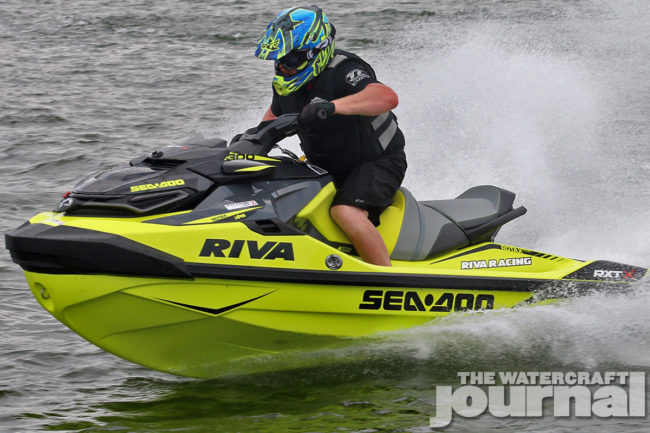
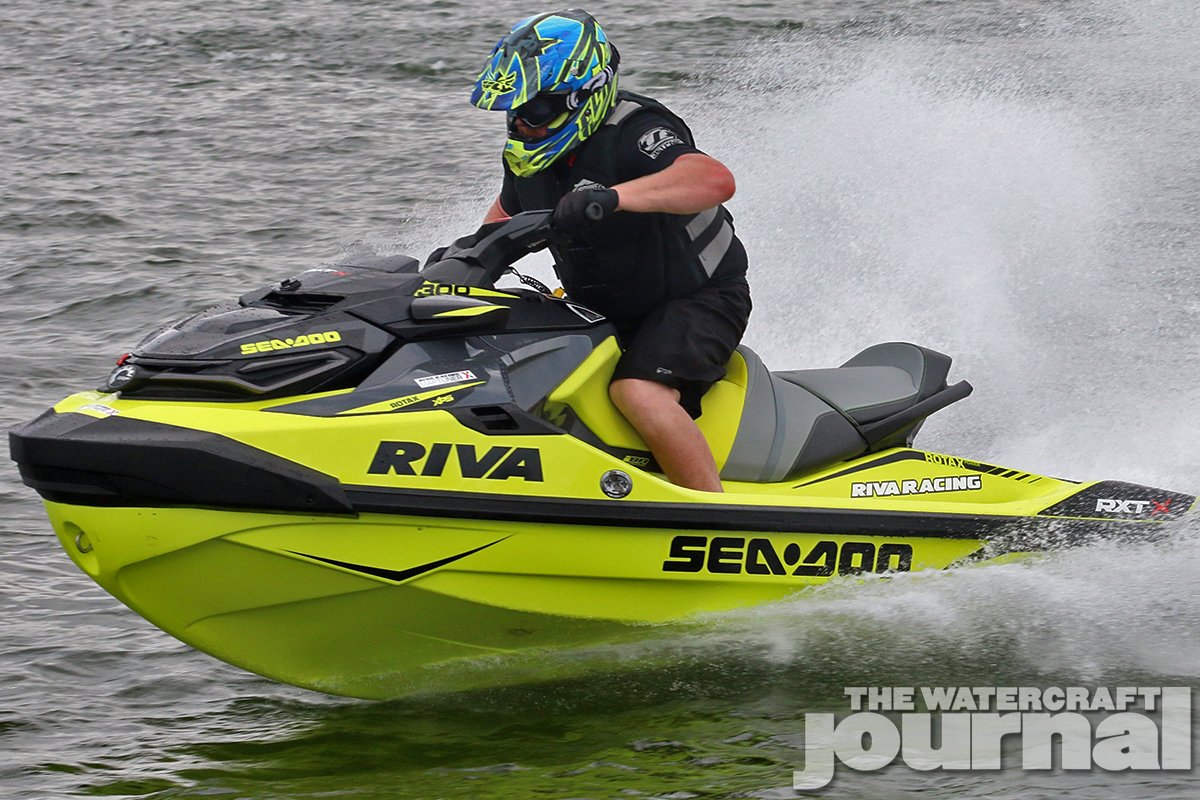
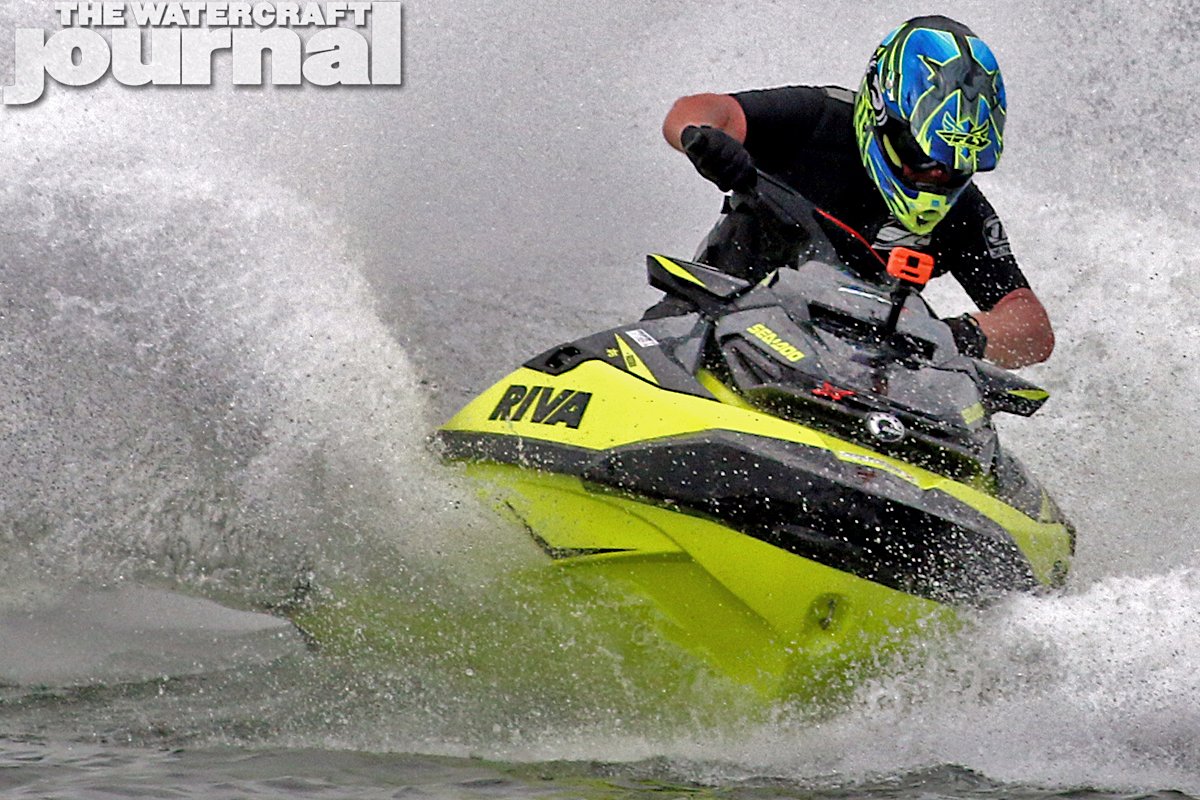
My impatience had turned into visual frustration as the azure blue sky above Pompano Beach, Florida, faded into silver clouds, eventually darkening into an impending storm. Thankfully, I had arrived at RIVA Racing‘s secret testing lake nearly an hour earlier than I had been asked to, and was quickly preparing both my safety gear and video cameras. Time was not on my side, and I wanted as much seat time as possible on RIVA’s newly-minted Stage III kit-equipped 2018 Sea-Doo RXT-X 300. RIVA’s Marcos Smith had promised speeds of 83-miles per hour from this machine, and having driven over 14 hours to southern Florida just to try it, I wasn’t going to be robbed of the opportunity.

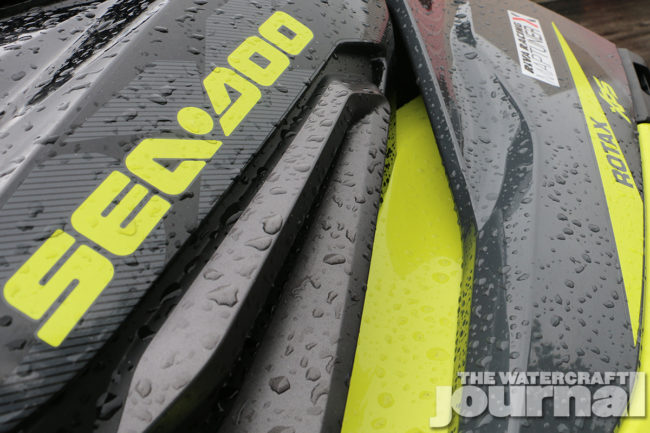
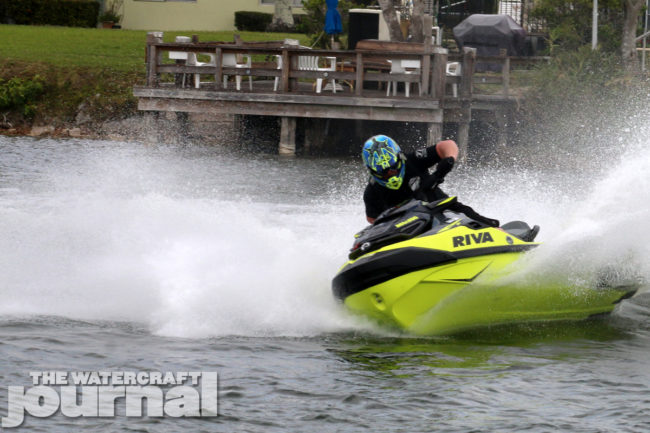
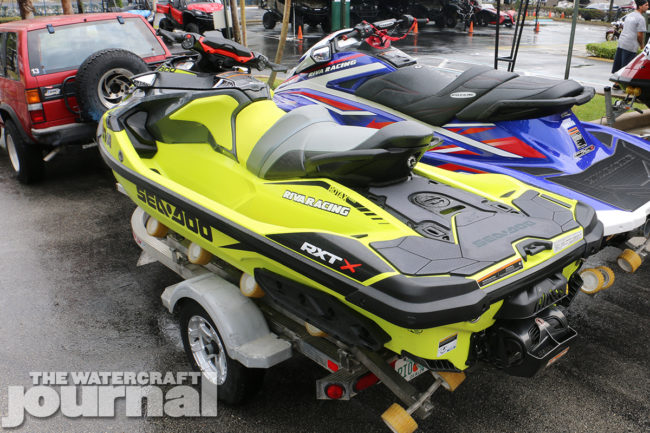
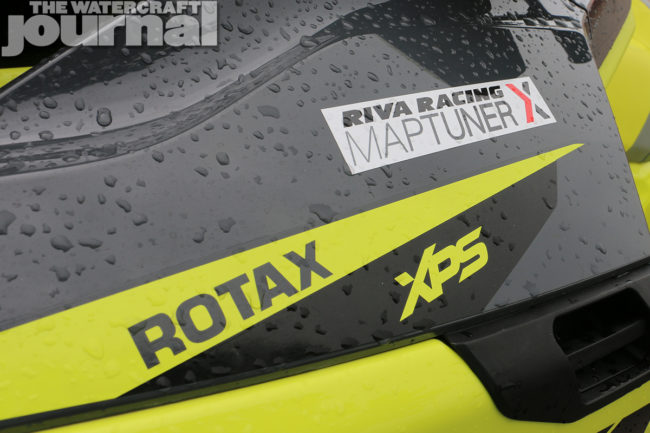
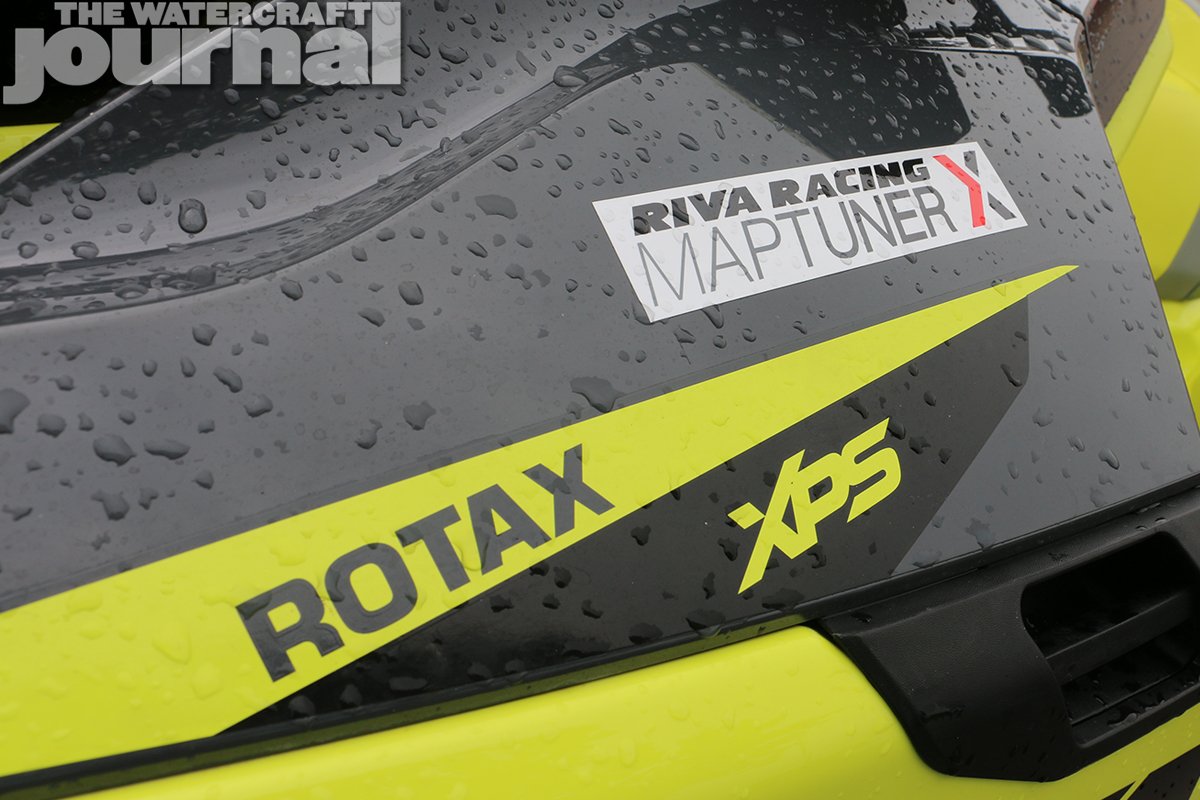
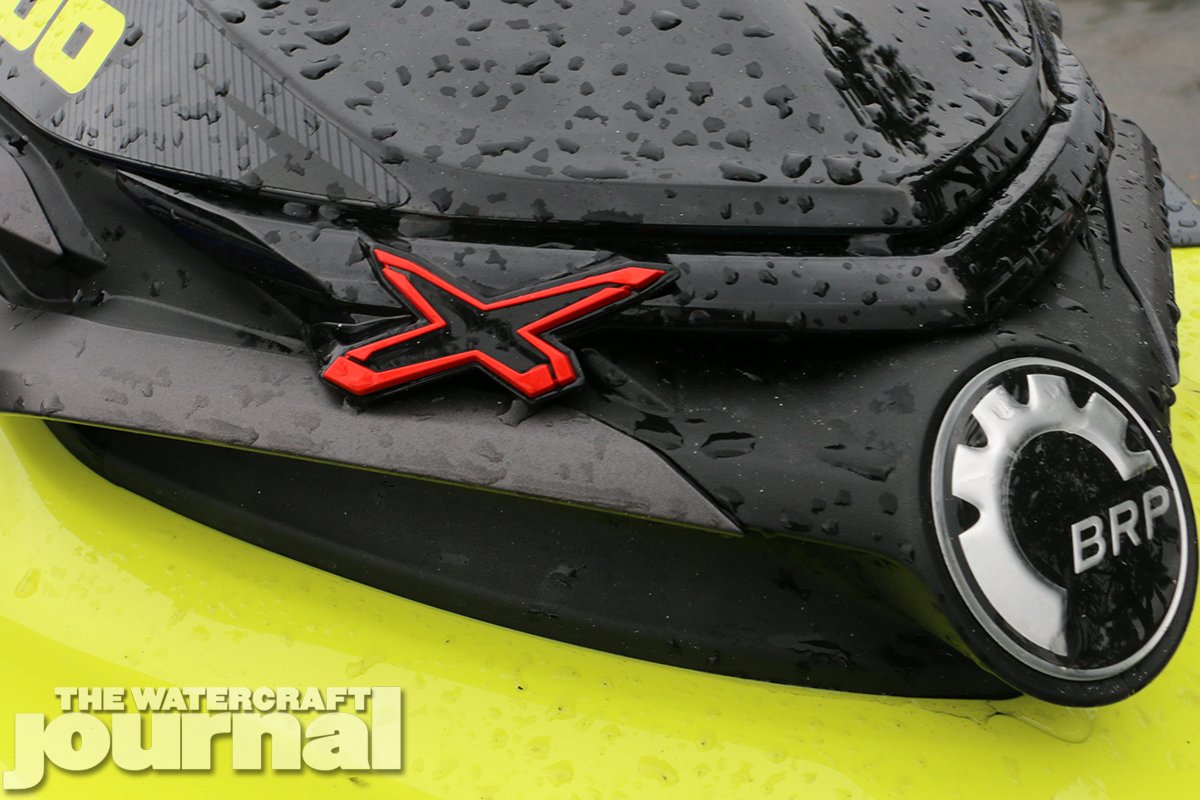
The RXT-X 300 in question was not the same that RIVA Racing had on display at last year’s IJSBA World Finals (the same which was showcased in a special episode of our bi-monthly YouTube show, “Long Haul”). No, that was a “halo vehicle” designed to demonstrate what RIVA was capable of offering the so-inclined Sea-Doo performance enthusiast. The parts list on that special 350-horsepower ski was far more extensive than the Stage III kit I was test riding today. In fact, apart from some sporadic decal placement, the Neon Yellow and Lava Grey unit was thinly veiled as a completely stock ’18 Sea-Doo; no handling upgrades – sponsons, intake grate, hull extensions, etc. – no custom colors, seat cover or Hydro-Turf mat.
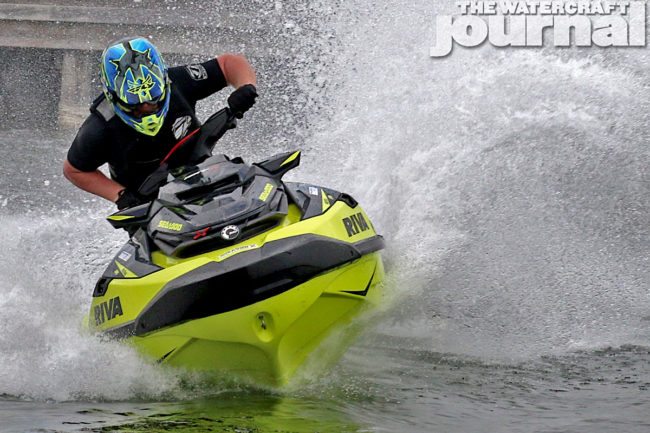
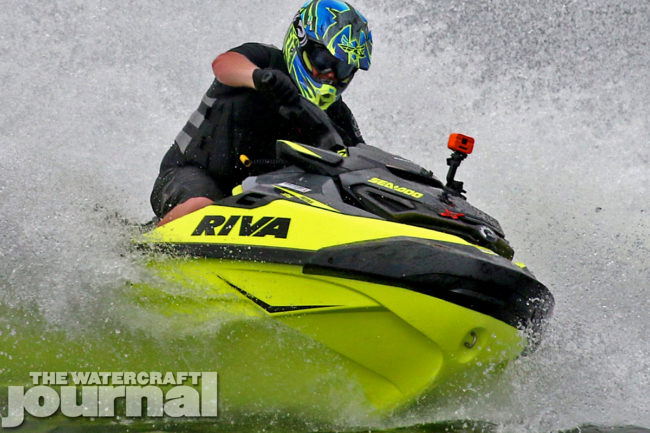
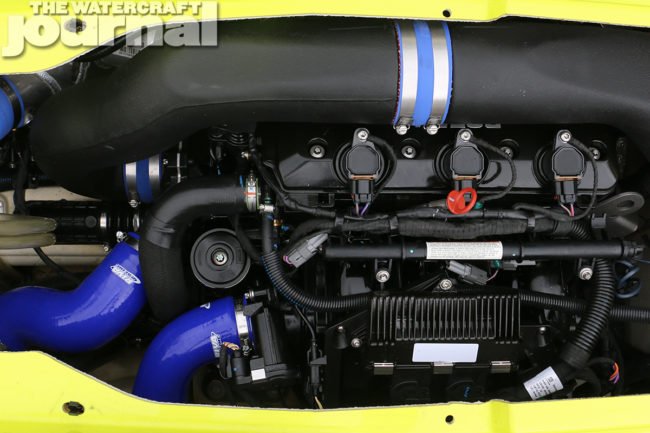
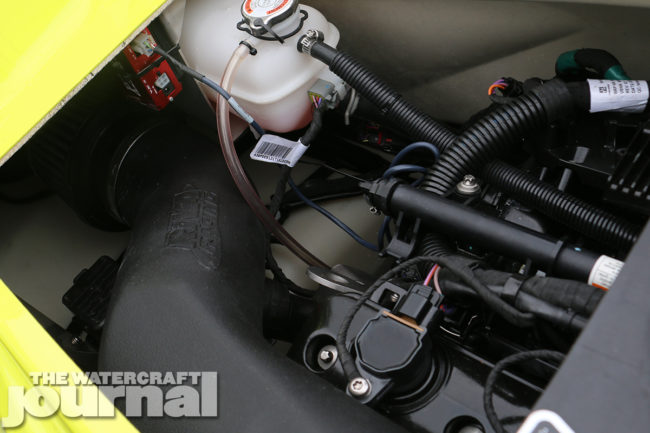
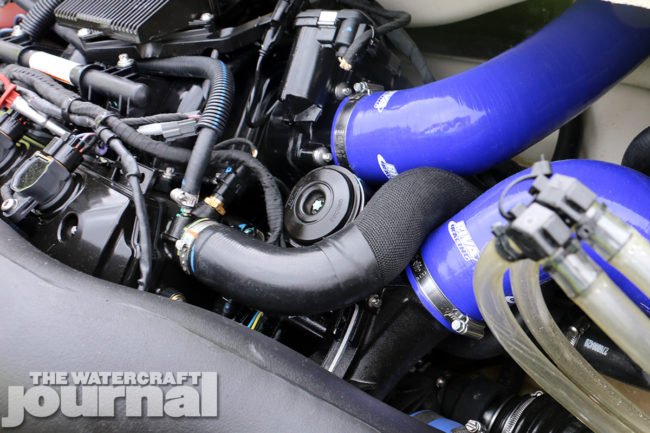
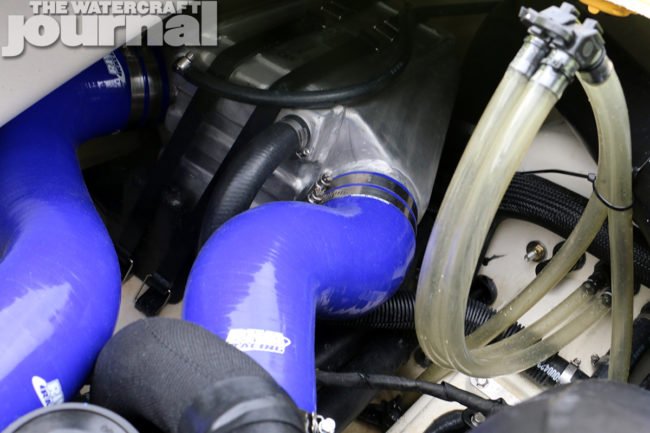
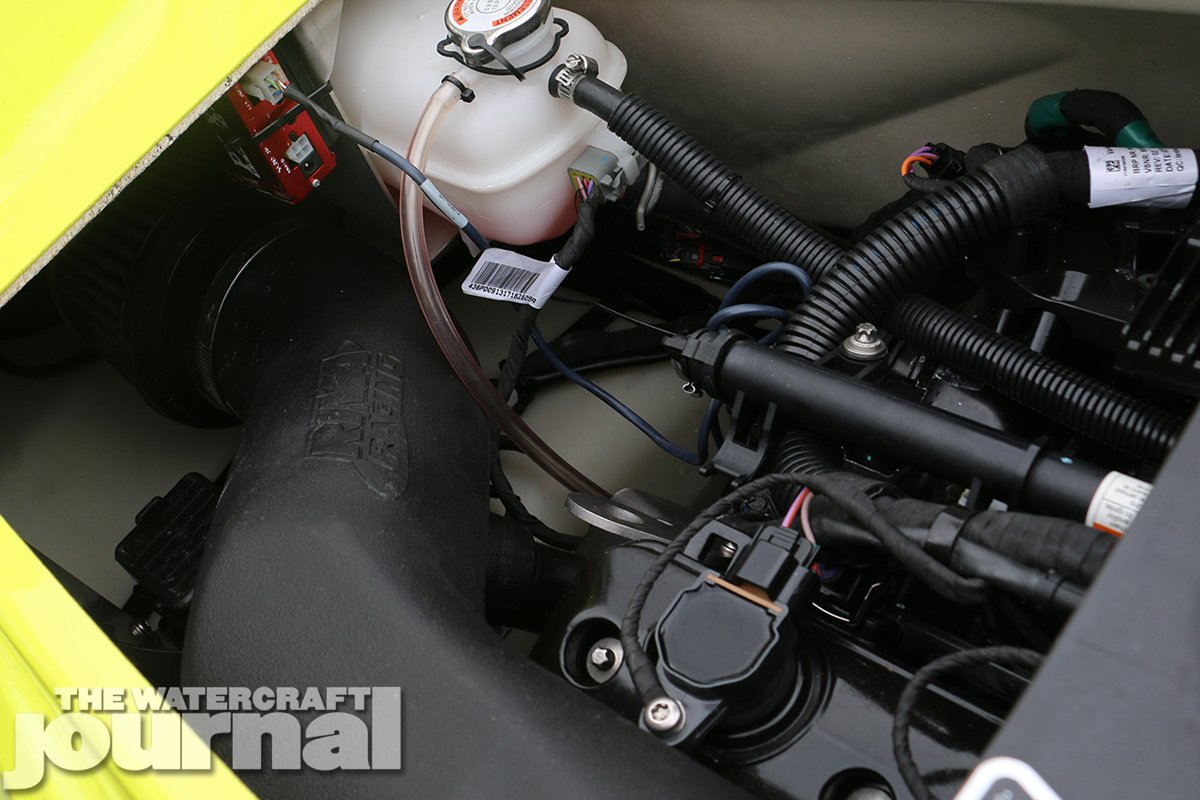
Rather, everything that made this RXT-X unique was tucked underneath the seat. RIVA’s Stage III kit focused mainly on increasing both air and fuel to the 1630cc ACE 300 engine, consisting of a Bosch VT1100 Fuel Injector Kit, a RIVA Sea-Doo 2018 RXT/GTX 300 Power Filter, a RIVA Sea-Doo 2018 RXT/GTX Catch Can/Engine Breather Kit, a RIVA Sea-Doo 230/300 Intake Manifold Upgrade Kit, a RIVA Sea-Doo 300 XX Charger, a RIVA Sea-Doo 2018+ RXT/GTX 300 Free Flow Exhaust Kit, a RIVA MaptunerX BRP (All except SPARK), a RIVA Seadoo 4-Tec Stock Valve Retainer Upgrade Kit and a Solas Sea-Doo Concord 13/18 Impeller (at the time of the test ride and video, plans for a Skat-Trak prop were still in place).

It was early March at this time, and the new machines were just now proliferating the showrooms. Initial sales in Australia were encouraging, and Sea-Doo brand loyalists here in the Northern Hemisphere were eager to get their hands on the new ST³ runabouts, therefore it was imperative that RIVA Racing get the parts developed and finalized before the season kicked off. Having racked up a considerable amount of ride time on the new ST³ platform, and being already impressed with Sea-Doo’s latest submission, I was eager to take to the water. RIVA’s Maptuner X ECU program had it so that the Sport mode was already engaged upon ignition, a welcome boon to those who hate toggling through the prompts. Although exiting through the factory outlet, the “uncorked” exhaust let off a healthy burble as I idled away from the dock.
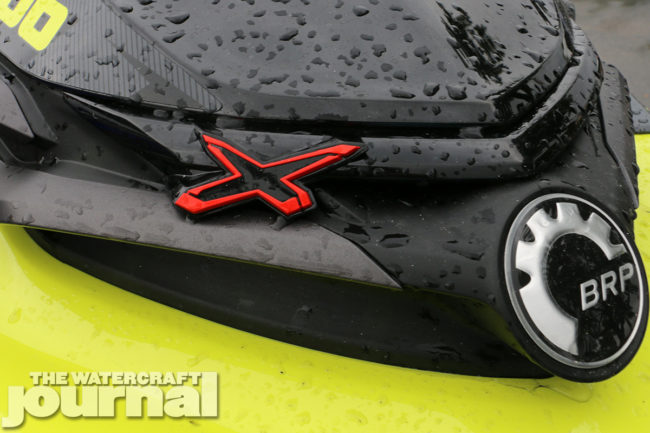
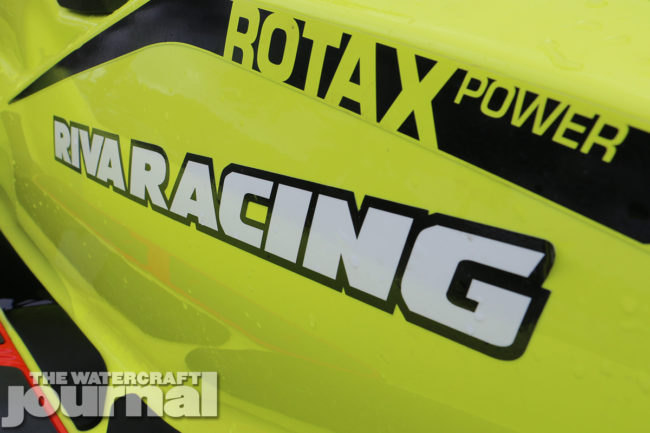
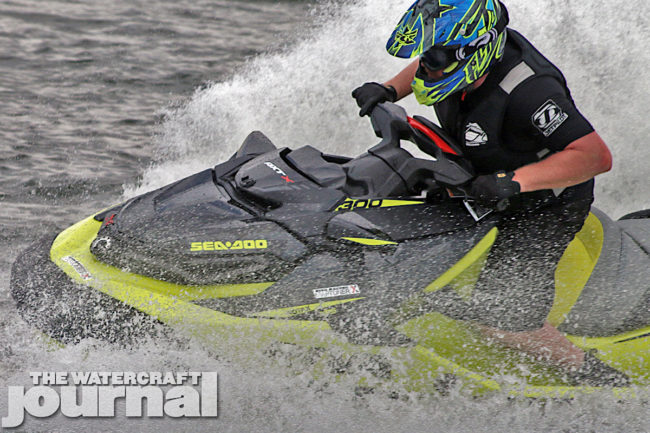
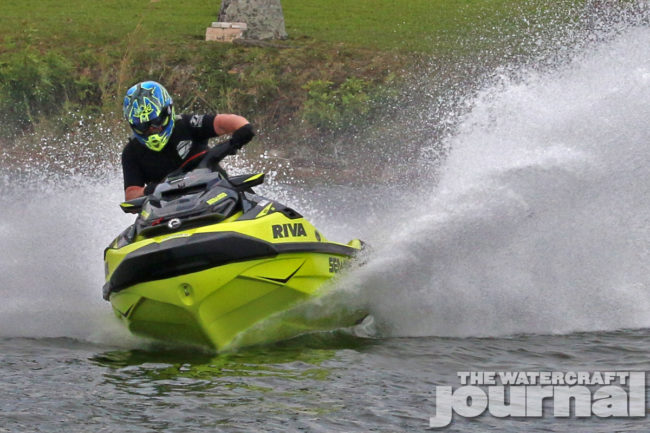
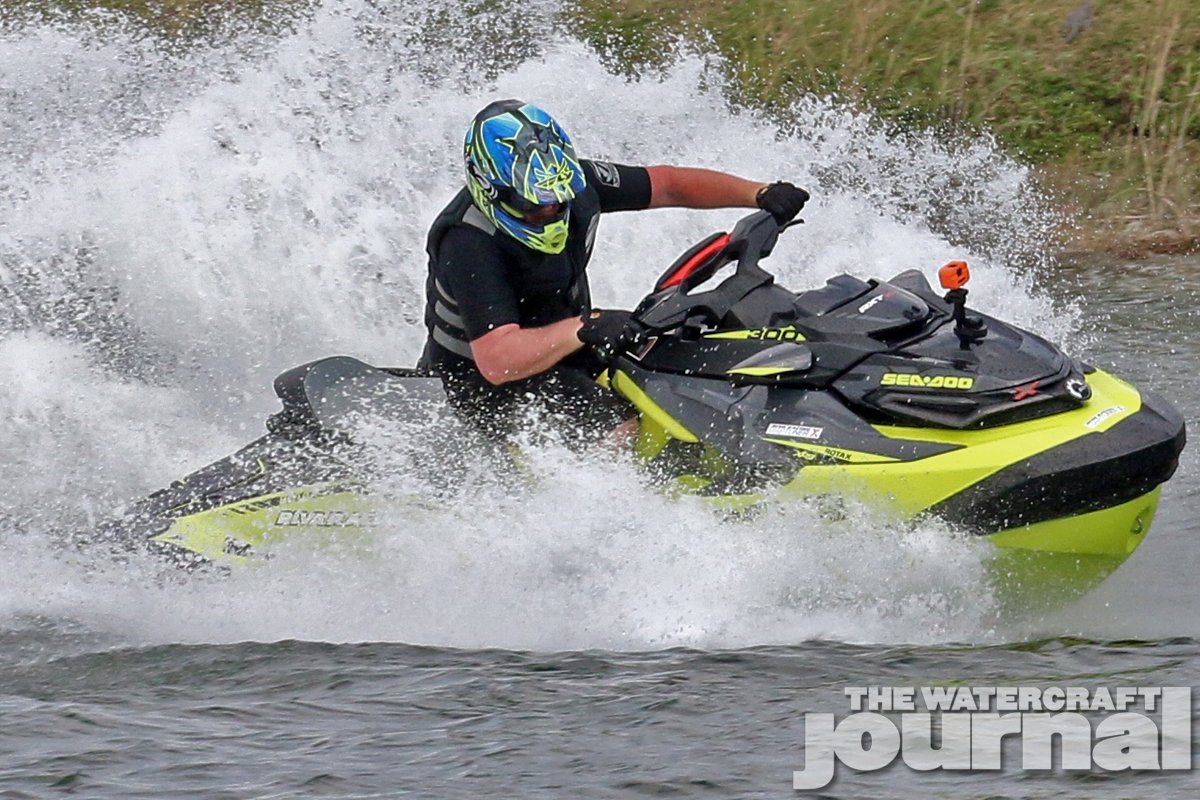
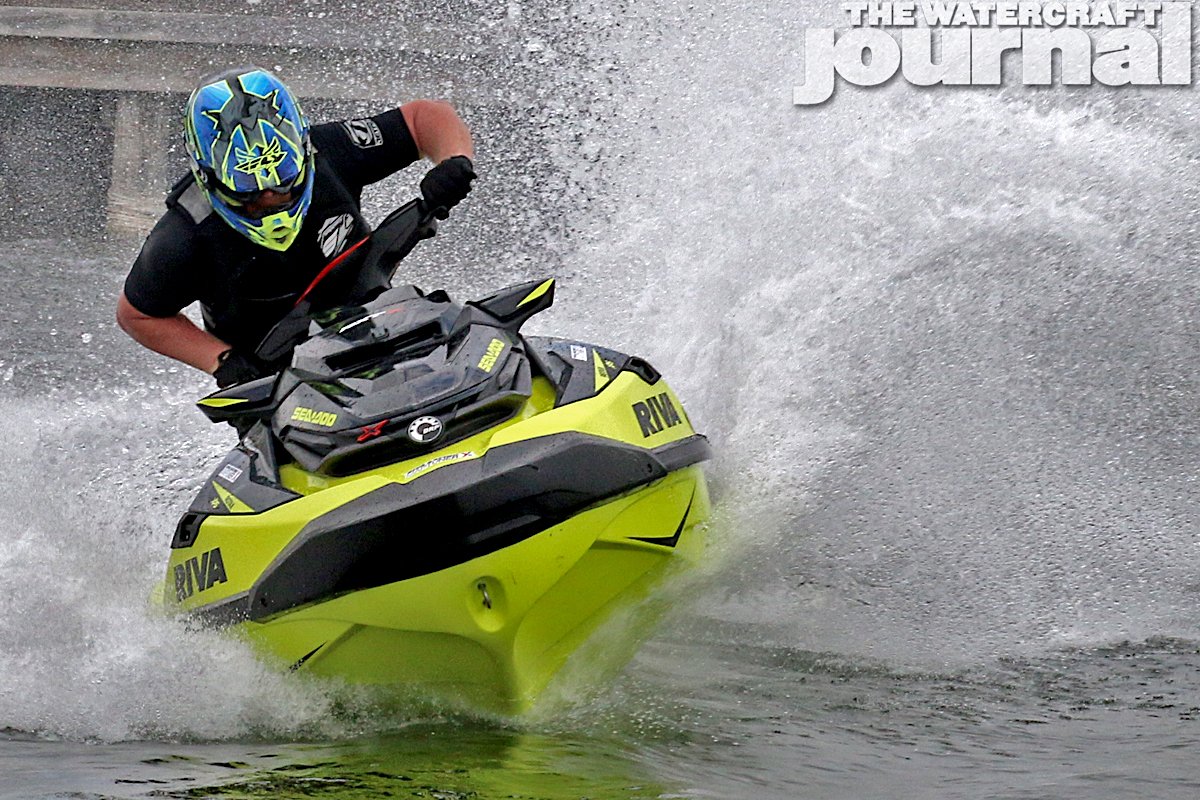
With my knees tucked in tight around the faux tank and my shoulders up over the handlebars, I mashed the throttle against the grip. The bite of the repitched prop and the added boost, supplying an extra 2-pounds linearly across the torque curve, pushed the 828-pound runabout – according to onlookers – completely out of the water. I backed off, settled back into position and engaged the factory Launch Control feature on the VTS. Rather than porpoising out of the water (as I had done), the Launch Control automatically articulates the VTS nozzle so that the craft maintains a flat plane from a dead stop to full speed by toggling the VTS nozzle all the way down and gradually and automatically adjusting back to the previous pre-launch position, whatever that might be. Again, I readied and pinned the gas to full stop. This time, the Stage III-equipped Sea-Doo roared maniacally as it shot forward with devilish glee. By 8,580 rpm I was at 83mph.

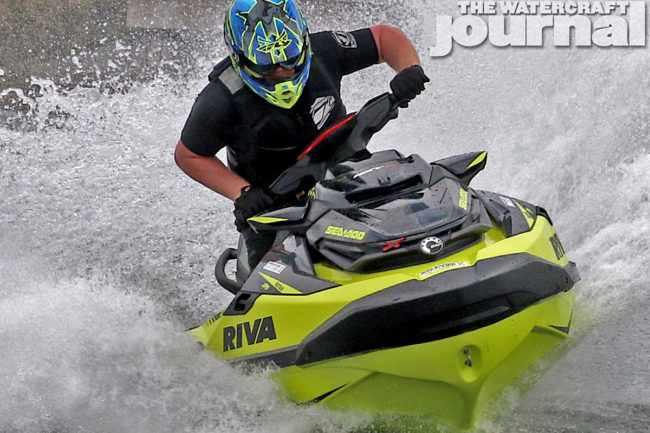
With a snap of the handlebars, I was quickly reminded that this RXT-X had no handling upgrades. The increased, almost volcanic thrust and neck-snapping throttle response suddenly pushed the new hull beyond the limits of its fixed-position sponsons and top-loader intake grate. The prop was chewing up the lake furiously, but keeping the tail planted, while positioning the new ST³’s nose down became a balancing act. The ST³ wants its nose down, it begs for it. But with the stock sponsons and intake grate trying to keep traction while the added power pushed the ski further required bringing the nose up one or two notches up on the VTS trim. Yet, as I churned RIVA’s lake into a broiling tub of white caps, the elevated nose allowed the tall keel to sluice through chop with relative ease. “OK, that’ll work,” I smirked.
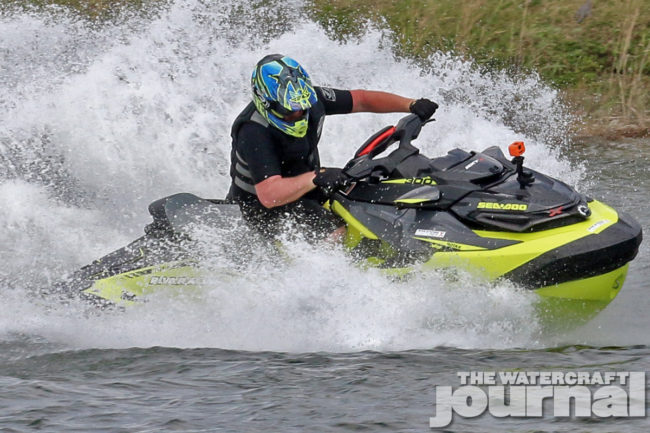
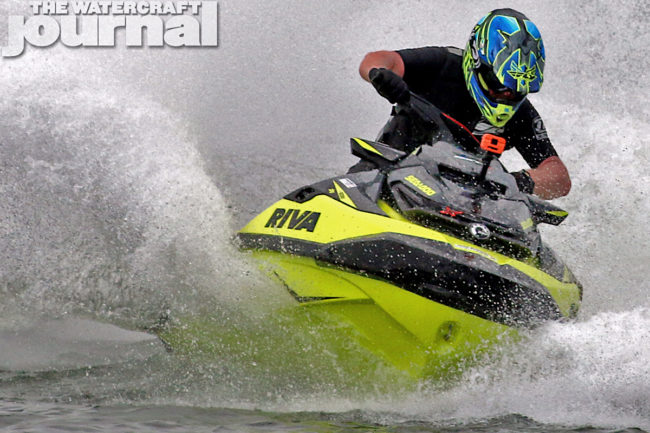
Gratefully, the low-centered, body-hugging cockpit of the new Sea-Doo’s Ergolock cabin was enough to keep me from sliding back along the bench – despite the centrifugal force the Stage III’s 330-horsepower was pressing upon my body. Pulling in to the dock, Marcos teased, “Did you like that?” Wheezing an exasperated yes, as I pried off my helmet the rain began to fall. He continued, “Good. I thought you’d like it.” For now, as the muscles in my forearms began to pulse, I’m thinking 330-horsepower is plenty dang impressive. RIVA Racing has untethered the ACE 300, and so too has it revealed the potential within the new ST³ hull. After two bouts with the RIVA-tuned RXT-X that morning, I chided, “This could effectively replace the RXP-X as well.” To which, several onshore nodded in accord. No, it won’t happen but the RXT-X definitely can perform when properly equipped.

In all, priced at $3,600.66, RIVA Racing’s Stage III kit is all one needs to have a reliable, hard-hitting 83mph Sea-Doo RXT-X (that still runs on pump gas). Throttle response is immediate but rightly progressive throughout the torque curve, there’s no flat spots or lulls. It just keeps pulling harder and harder. Thrust is – as I learned the hard way – enough to eject the ski almost entirely out of the water from a dead stop, but can push you out of an apex faster than you ever thought possible. With all this being said, it is absolutely remarkable how easily RIVA makes 80mph obtained. What was once the benchmark of absolute, bleeding edge performance is now readily attainable through ECU remapping, and a short list of intake, exhaust and cooling additions, and all for less than $4,000. I’m absolutely floored.
Gallery: Blue Dog Chemical Pro Watercross Tour; Rd. 2, Pensacola, FL.

0

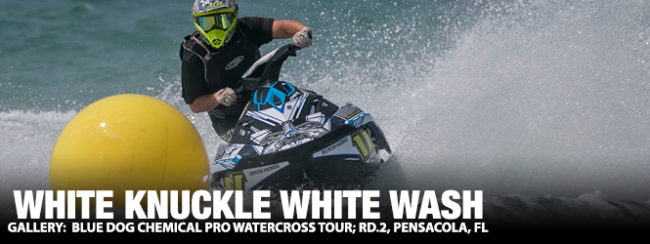
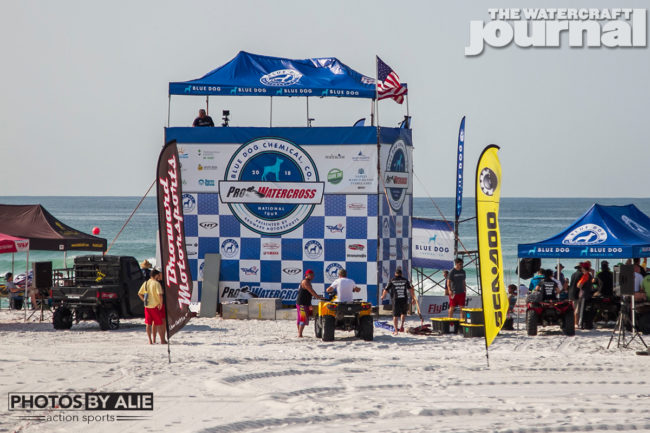
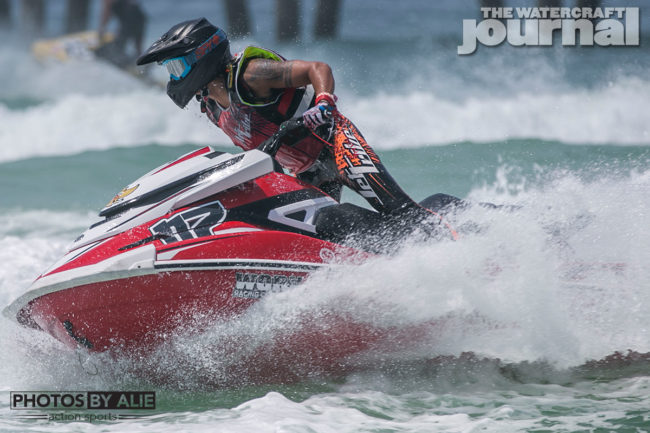
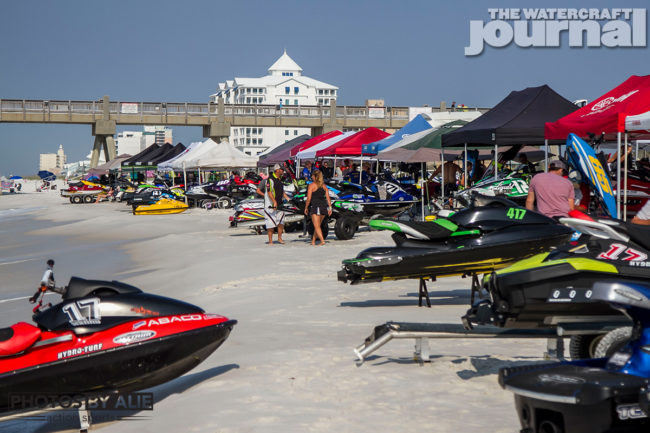
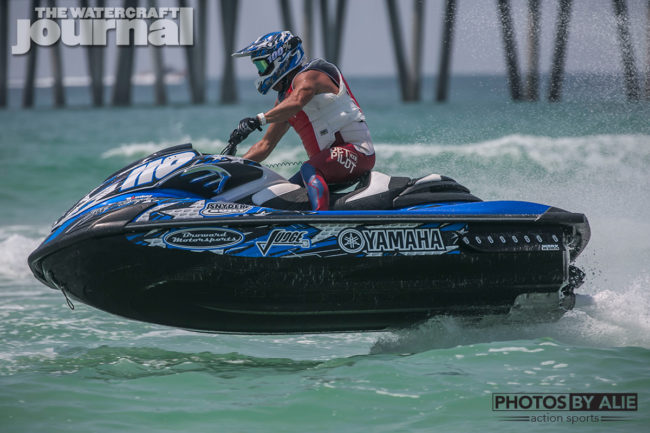
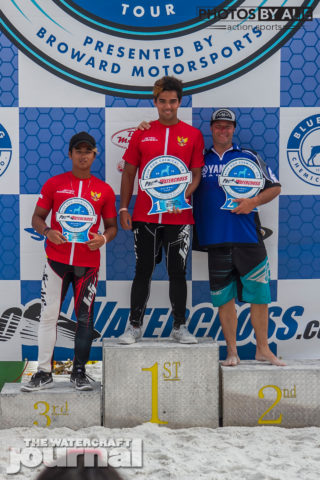
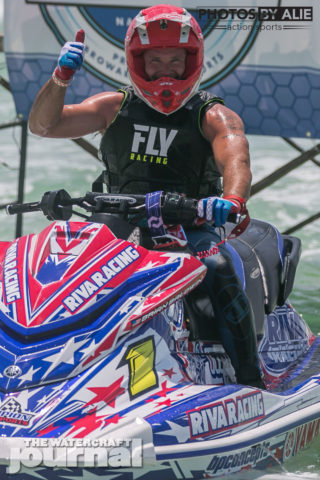
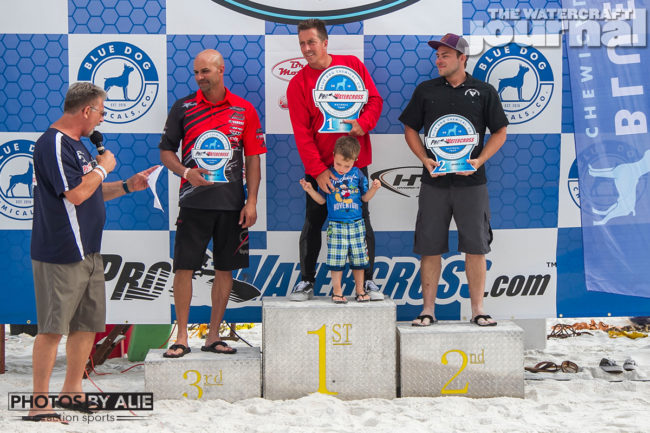
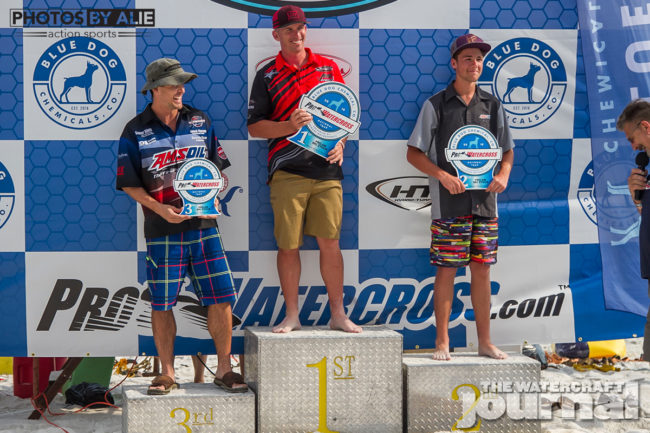
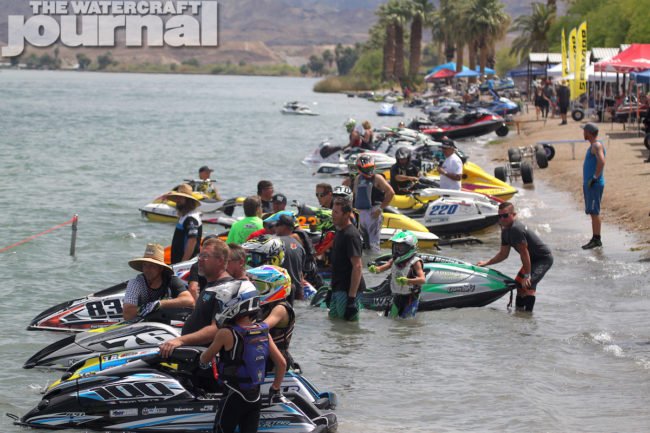
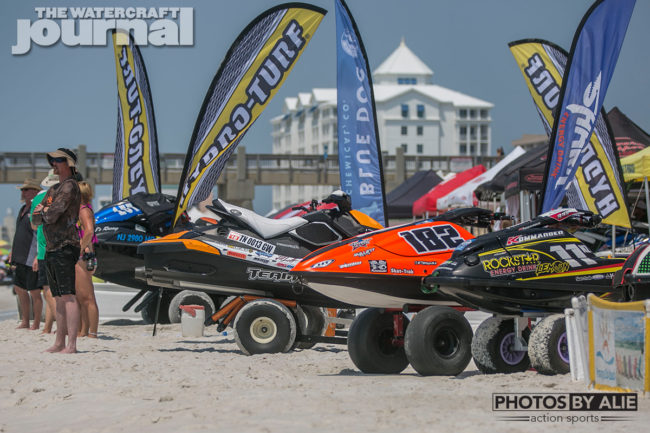
The Blue Dog Chemical Company Pro Watercross Tour, presented by Broward Motorsports returned to the white sand beaches of Pensacola, FL again this year. During the drive down, we checked the surf report, which showed “flat” or 0-to-1 foot waves. This was slightly disappointing because one of the nicer things about racing and freestyle on the ocean is the potential for decent sized surf waves. Luckily, this surf report was wrong!

Ocean waves can really help or hinder a rider, based on their specialty, but as a spectator. Oh boy, it’s fun to watch! We remember watching Jeb Zarzour putting on one of his best ocean races in Amateur Ski Stock, but on the final lap, and final buoy, he went ‘over the falls’ on a wave and did a front flip off his Yamaha Super Jet, catapulting him 20 feet away from his ski. By the time he could be reunited with his ski, the race was over and he went from 3rd to last just like that.

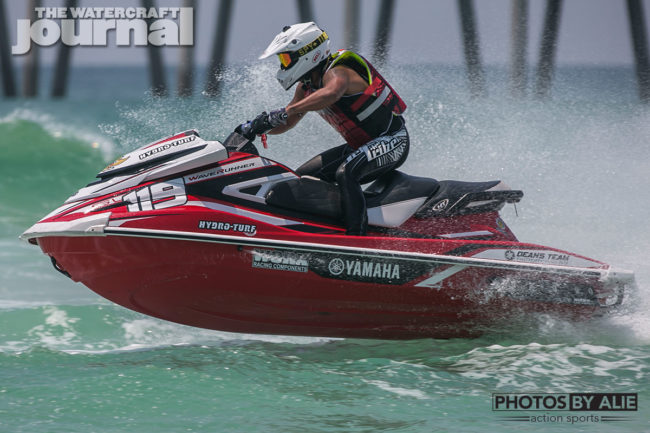
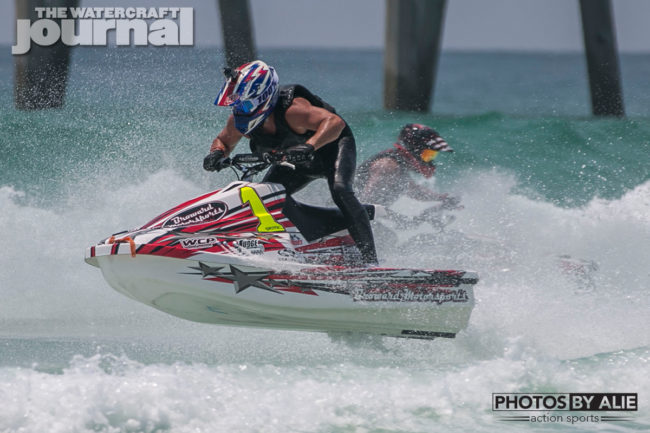
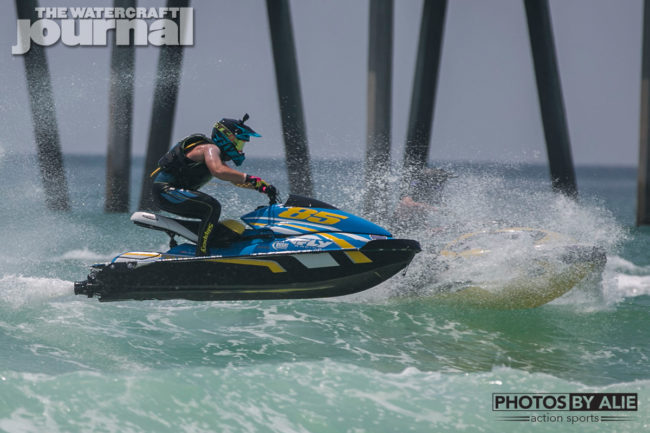
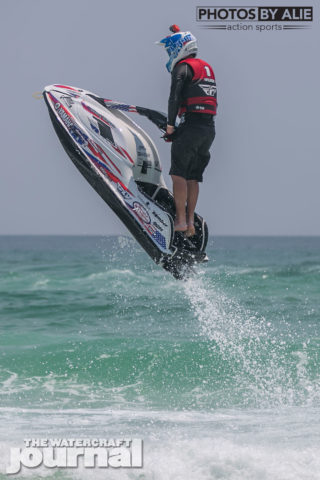
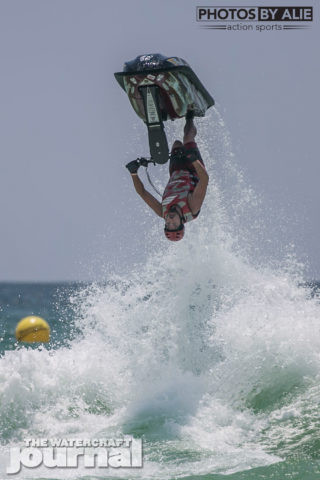
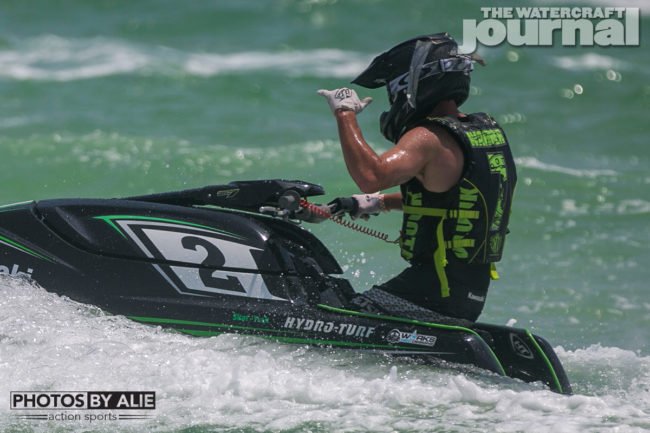
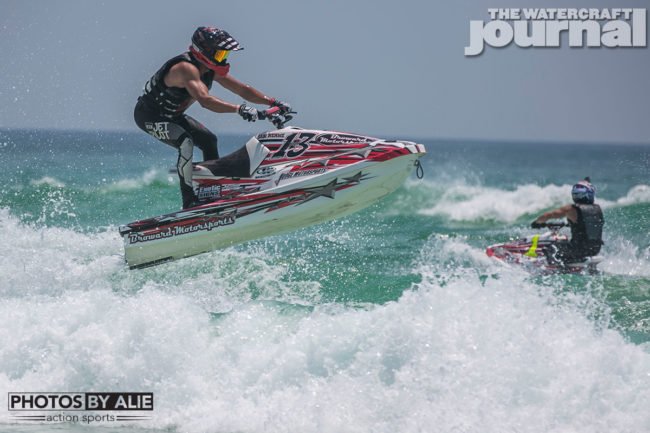
Freestyle was a blast on the waves, especially Sunday when the surf picked up, giving some waist to chest-high surf waves. Jeff Lutker and Ryan Doberstein put on a show for the crowd aboard their freestyle skis with plenty of opportunities for aerial maneuvers.

Last week when we interviewed Jimmy Wilson, he brought up how great it was for Pro Watercross to let the Juniors race with the adults, which is a brand new things for Pro Watercross to do. They were given a shot to prove they could ride fast and safe enough to earn the opportunity to race the entire tour with the older (potentially faster) riders. Something a lot of people don’t understand is that these kids had to race Junior classes plus their adult classes, so they put in a ton of laps through the course of a weekend.

“This was a really cool thing of Pro Watercross to try out to help build the sport and help the kids prepare for the world finals,” Wilson told us. We had a chance to interview Chris Skellett and his son, Haden Skellett about their thought of juniors hopping onto the racecourse with the adults. Here’s what they had to say:

Watercraft Journal: How many kids do you have and what do they race?

Chris Skellett: Three kids; Taylor, age 12; Haden, age 13; and Thomas, age 27. They race Junior Stock 10-12, Junior Stock 13-15, Spec, Novice Spec, and Amateur Ski Stock

WCJ: Last weekend, on the first round of the Pro Watercross tour in Panama City Beach, FL, there was something completely new that happened for the juniors. They got to race with the adults in Amateur Ski Stock. Tell us about this:

CS: We’ve been asking for about a year for the kids to move up to get a little more competition, since the kids race together all the time. There’s only 3 or 4 of them that travel and we all live near each other, so they finally gave them a chance. I think all the juniors performed really well, held their lines, and put on a great show! My son [Haden] ended up winning all three motos and my daughter [Taylor] had a couple holeshots and did really well.

WCJ: What kind of ski are you riding this year, Haden?

Haden Skellett: Two skis; a Yamaha ‘Blaster, and a Yamaha SuperJet

WCJ: What classes are you racing?

HS: Amateur Ski Stock and Novice Sport Spec, and all Junior classes.

WCJ: What did you enjoy most out of the weekend?

HS: I really enjoyed racing in Amateur. We had great battles; it was fun!

WCJ: What do you think about getting to race with the “older kids,” since you’re only 13 years old?

HS: I love the opportunity to race with full lines, no matter what age. I just hope that every class I race in, I could race with a lot of people on the gate to get a chance to show off my skill level.

WCJ: Are they on the same skis as the rest of the Amateur Ski Stock class, or do they have a few more modifications?

CS: They are on stock boats; the same ones they run in Junior Stock. Haden runs his Yamaha SuperJet, and we switched Taylor over to a Yamaha SuperJet this year, so she runs one of Haden’s back up boats. She’s been doing great on it over the SX-R’s of last year.

WCJ: Anything else you’d like to say?

CS: We’re looking forward to moving up into some even higher classes. For regular sport stock, we’d like to get into the actual Spec instead of the Novice Spec for Haden and keep Taylor in Novice Spec. Our oldest son runs in the Sport Spec class, so my younger son and my older son would like to do some battle and see what they can do. And of course, we’d like to move Haden up to Pro-Am Ski Stock. We’d like to have a shot at Jimmy Wilson and the older guys.

WCJ: Will we see you on the rest of the Pro Watercross tour? What about Lake Havasu for the IJSBA World Finals?

CS: Yes, we run the whole Pro Watercross tour usually every year and we will definitely be at Havasu this year.

Round 3 on the Pro Watercross National Tour is in Racine, Wisconsin on July 28-29th. There will also be a special event in Sparks, Nevada on July 1st. For a full list of race results, you can check out www.ProWatercross.com/results

Gallery: TXH2O Racing’s Texas Hospitality

0

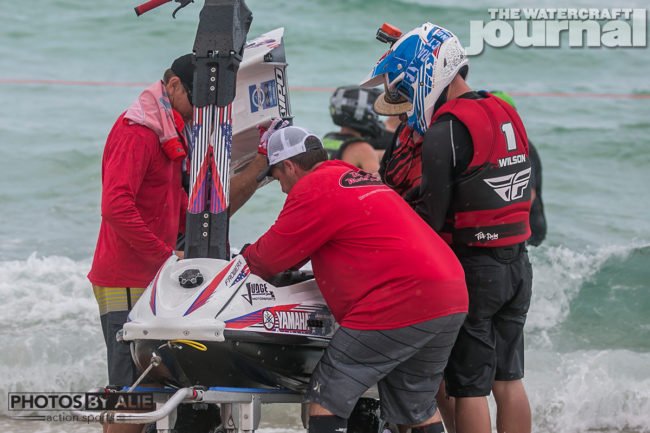
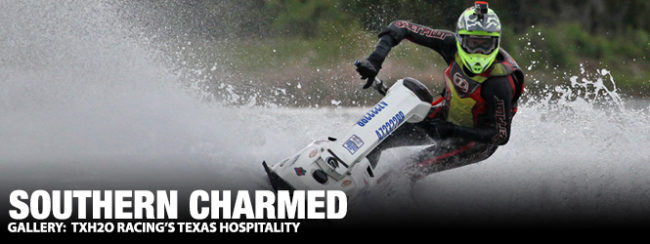
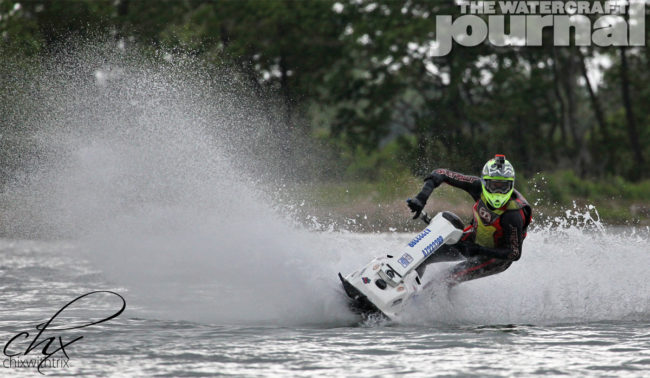
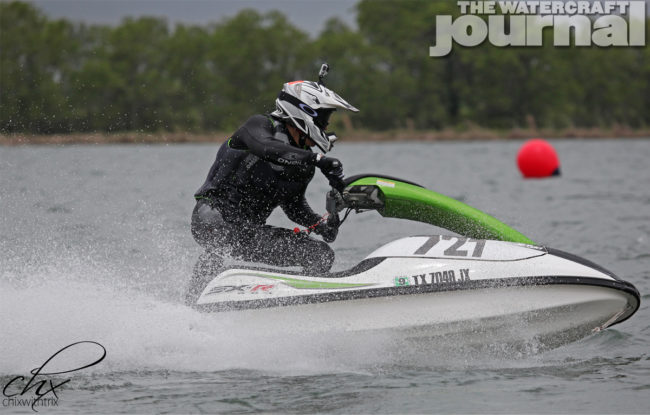
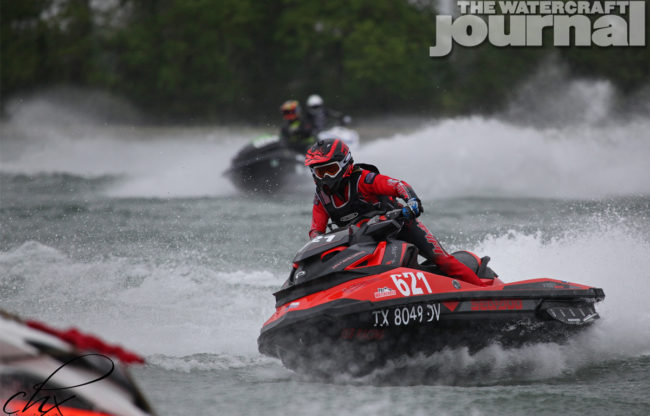
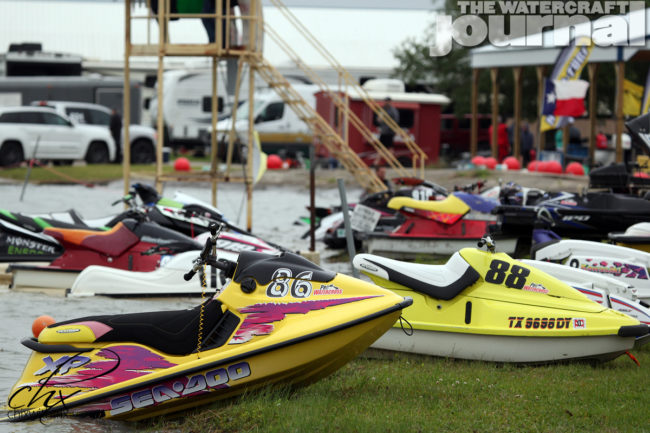
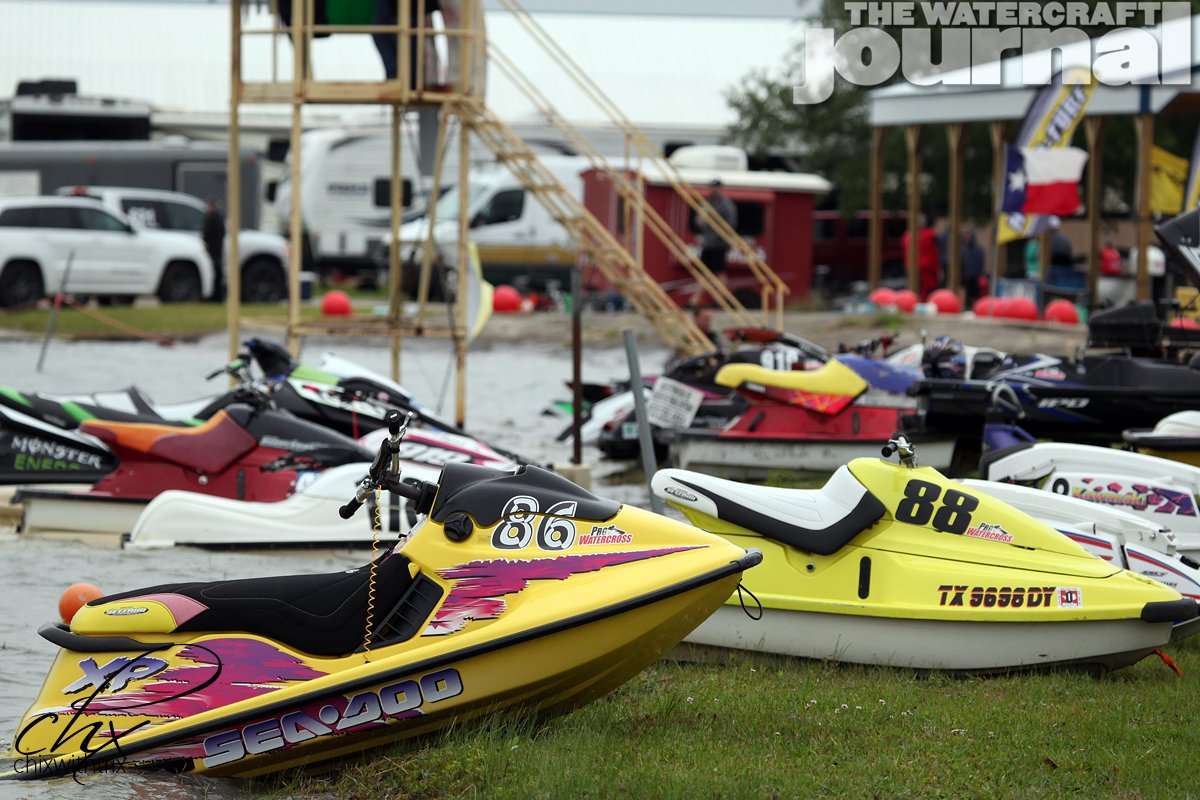
Jet skis and Texas Hospitality go hand in hand. TXH2O Racing’s first event of 2018 April 21-22 proved this race series exists for the whole family to get together with friends, battle on the buoy course, and maybe even win a little cash!

With unseasonably cold, rainy weather kicked off at Gene’s Polaris in Baytown, Texas. Fortunately the wind and the rain did not dampen attendee’s spirits and the pits were alive with the sound of good-natured banter and angry engines. Even Chris Hagest and the Pro Watercraft Racing crew drove in from Arizona to join local Texas racers on the buoy course, and offer riders stellar products for those wanting to take their handling to the next level.

Above: Chris Hagest drove all the way from Lake Havasu City, Arizona to join the Texas racers on his “nuclear fast” Kawasaki JS550.

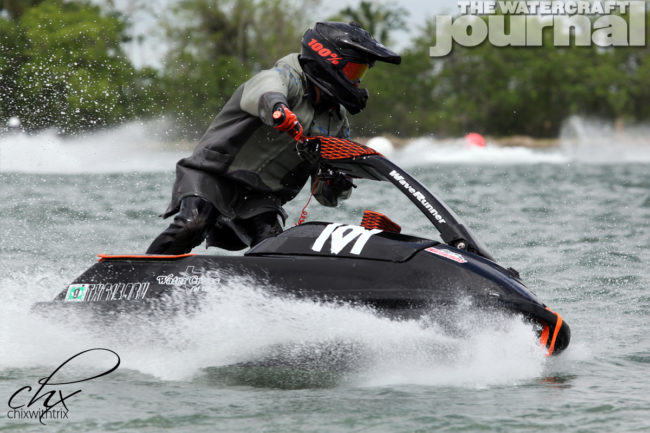
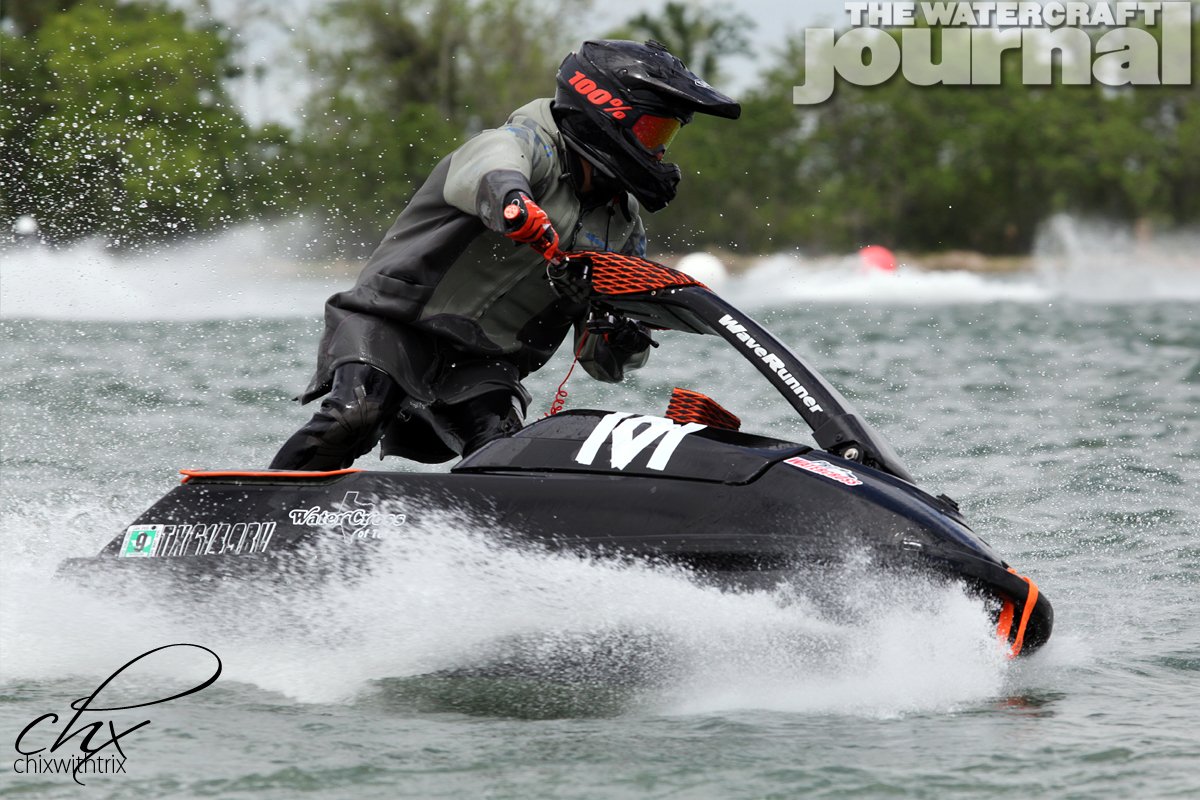
Above left: Junior racers are the future of our sport! Seasoned junior rider Autum Humason was no stranger to the buoy course on her Kawasaki SXR in the ski class, and Yamaha WaveBlaster in Junior Sport class. Above right: Ski GP Open was one of the most exciting classes to watch all weekend with the blazing fast Kawasaki SXR 1500s and built aftermarket hulls. Ty Kotara piloted his ProForce to a 3rd overall finish for the weekend.

New management and sanctioning under Pro Watercross brought about fresh changes to TXH2O Racing that were well received by racers and spectators alike. Right out of the gate at the first rider meeting of the year, the Joker Buoy was introduced as a new strategy to get around the competition. Similar to the “make-up” buoy far off the main race course that a racer has to catch the following lap after a missed buoy – the Joker Buoy has to be used once by each racer during any part of the race.

So for example, if both the inside and outside lanes of the split buoys had multiple riders churning up the water, a racer could avoid that traffic by taking the Joker Buoy early in the race. That would save energy to get around the competition later in the race when the other riders would have to take their longer Joker Buoy lap. That is just one of many scenarios where the Joker Buoy added exciting strategy to the race.

Above left: Seasoned ski riders like Quentin Nguyen on his Kawasaki SXR, experienced a whole new set of challenges racing for the first time. One of the great dynamics about riding jet skis is the fact that you can enjoy rec riding, then come out and race to learn a whole new set of skills. Above right: Even endurance runabout riders like Joey Burkhalter expressed admiration at the long length of races. With sanctioning under Pro Watercross – race length has gone from 5-6 laps in previous years to 8 minutes plus two laps. Far better training for those hoping to compete in the Finals later in the year.

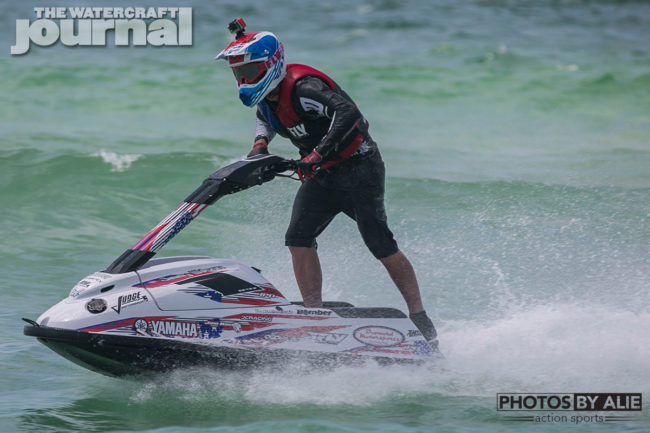
Each day was run on a two moto format, each race being eight minutes long plus two laps for adult classes, and six minutes plus two laps for juniors. Classes ranged from stock stand up ski, sport, and runabout to heavily modified GP classes with built engines and radical aftermarket hulls. Vintage ski ended up being one of the most popular races to ride in as well as watch. There’s something about 30 year old skis with screaming little two stroke engines slowly fighting for rank through the buoy course.

Saturday held a special treat for everyone after both motos ended – the head-to-head slalom! In this event two racers were timed through a tight, identical, side-by-side buoy course. Winner for ski, sport, and runabout received a cash purse, and more importantly – bragging rights. By the end of the day racers worked up quite an appetite after two motos and the slalom, good thing TXH2O provided a hearty Texas meal from championship winning Monster Meat BBQ!

Above left: Victory Lake located behind Gene’s Polaris in Baytown, Texas has supported jet ski racing for decades. The clean shores and cement starting line made it an obvious choice for TXH2O Racing’s first event of the year. Above right: Unseasonably cold weather for Texas in April descended on the race site most of the weekend. Clouds, threat of rain, and wind didn’t help temperatures rise until halfway through Sunday. Riders like Clayton Lobue adorned wetsuits and tour coats to comfortably battle the cold and fellow racers on track.

Sunday morning welcomed the racers with brief sunshine and sore muscles, but spirits remained high as everyone prepped for two more long motos. Spectators and family members cheered on their racers as riders jockeyed for place around the course. By the end of Sunday afternoon and motos concluded, warmer temperatures graced the awards ceremony where first through third place riders basked in the glory of podium!

There was a feeling of contentedness after the first event of the year came to a close. Racers left with tired and sore bodies, but energized minds from the camaraderie of competition and immersion in everything watercraft for a weekend. If you are interested in joining TXH2O Racing for a future event, please visit www.txh2oracing.com for more information.


Real Review: RIVA Racing Offshore Rash Guard

0

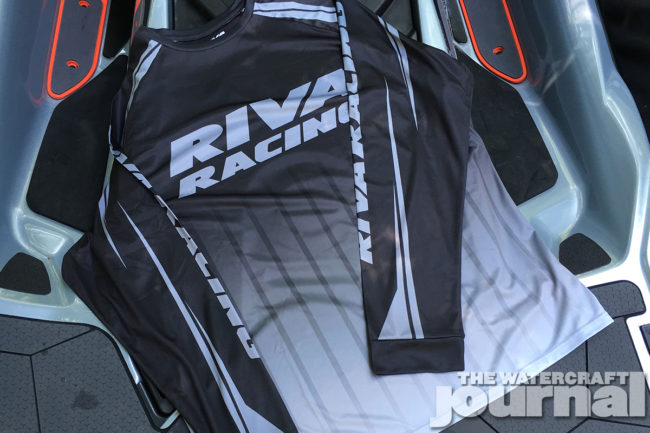
It’s been a while since we’ve gotten our hands on any new riding apparel that we’ve actually liked wearing. While more hardcore riders don’t find product reviews such as these terribly titillating, the majority of folks looking for the right gear, equipment and accessories to increase their enjoyment out on the water love these kinds of reports. And why shouldn’t they? Some of our best, most popular content has been reviews of useful and brilliantly-engineered products that make a day on the water even more fun. Sure, you might not think a shirt can make that much of a difference, but you’d be wrong.

A regular ol’ cotton T-shirt is certainly comfortable to wear while riding, as it is both light and breathable. Yet, the minute it gets wet, either by splashing, falling off or just wading a little too deep into the water, and BAM! you’ve got a heavy rag clinging to your skin that can rapidly drop your body temperature in a matter of minutes. Add to that little to no protection from UV rays, and the fact that cotton stretches horribly when wet, and you’ve just got yourself a shirt you won’t be wearing again anytime soon. That’s why RIVA Racing, the industry’s biggest name in performance and lifestyle products for the PWC enthusiast, is offering its race-inspired Offshore Rash Guard.

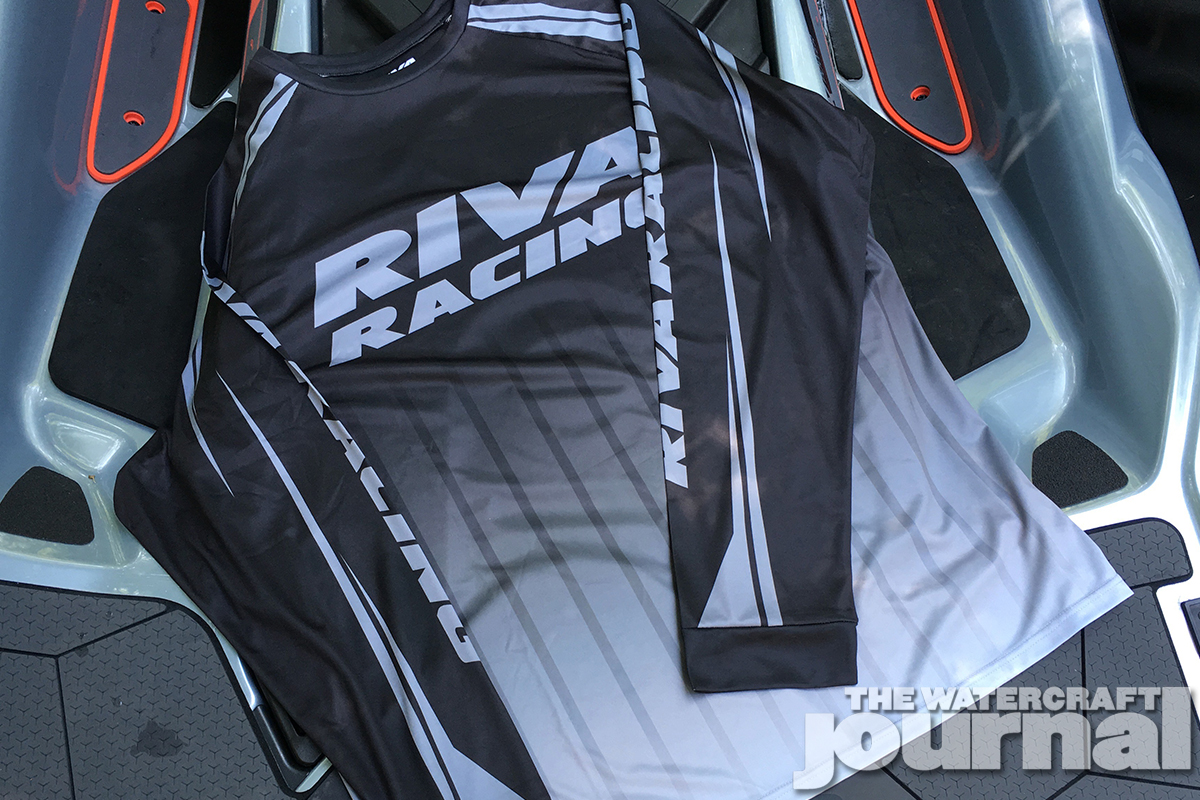
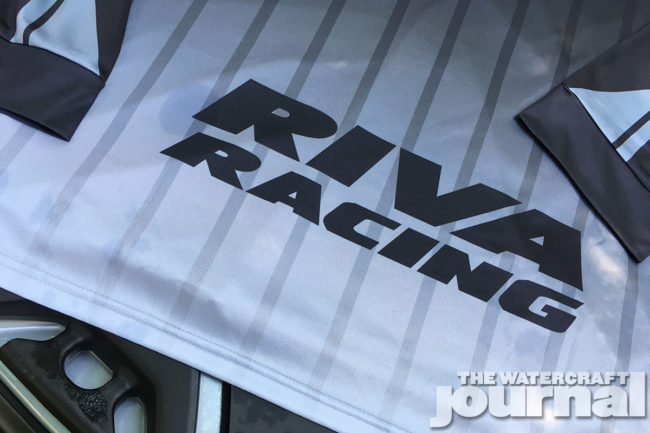
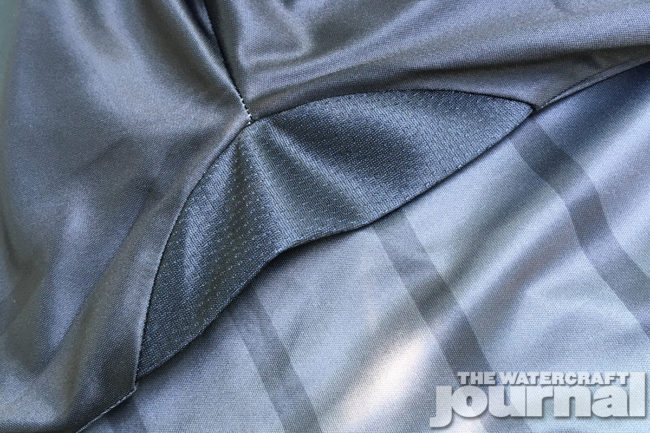
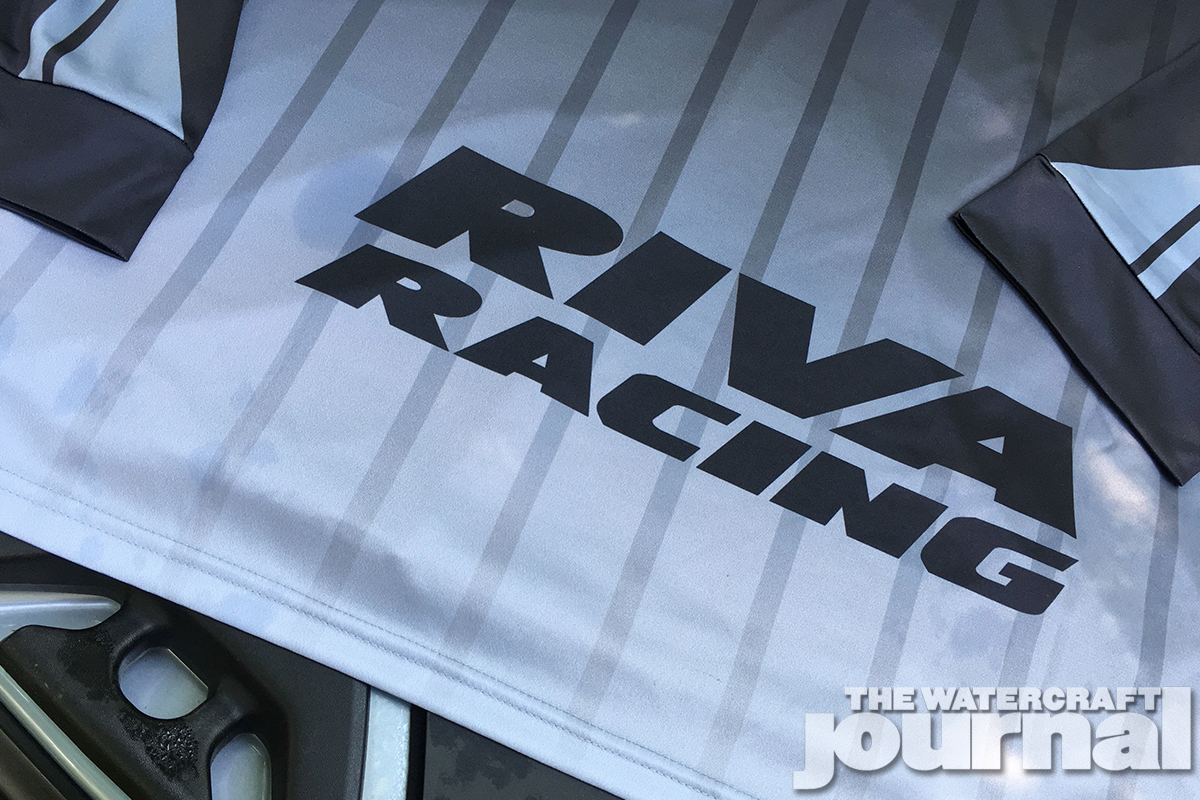
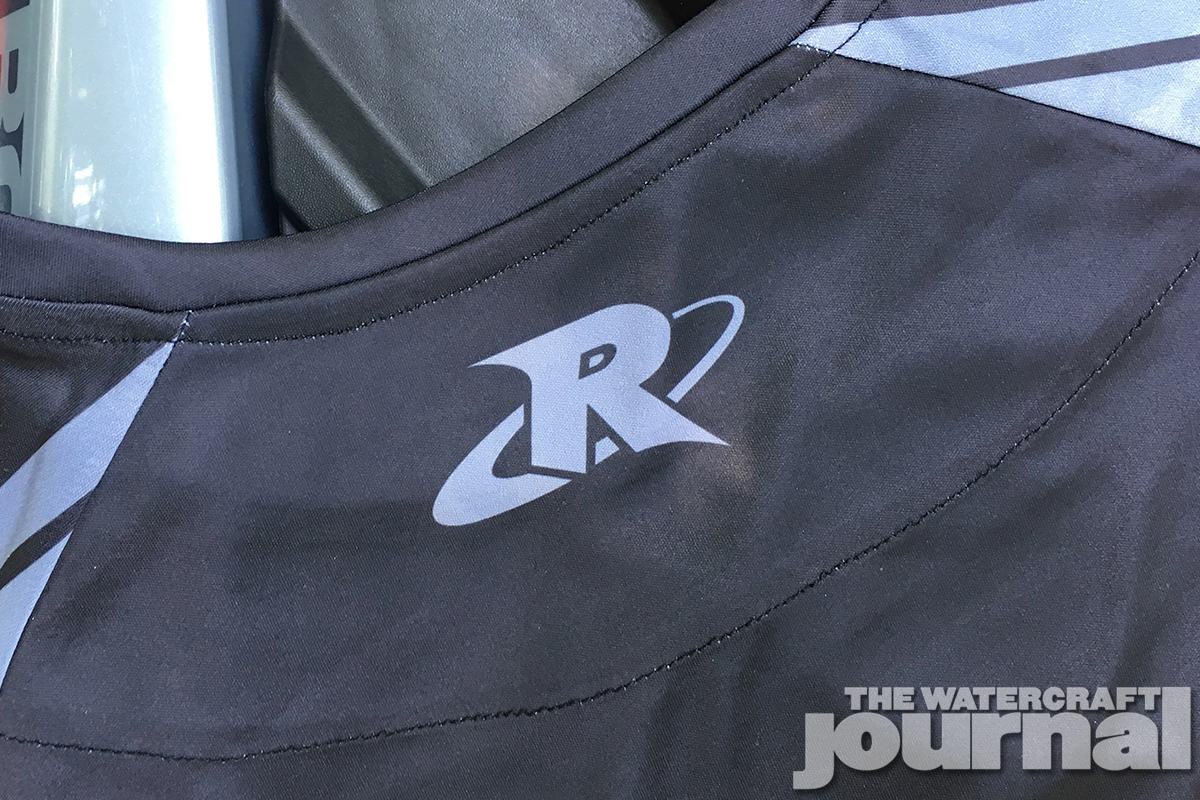
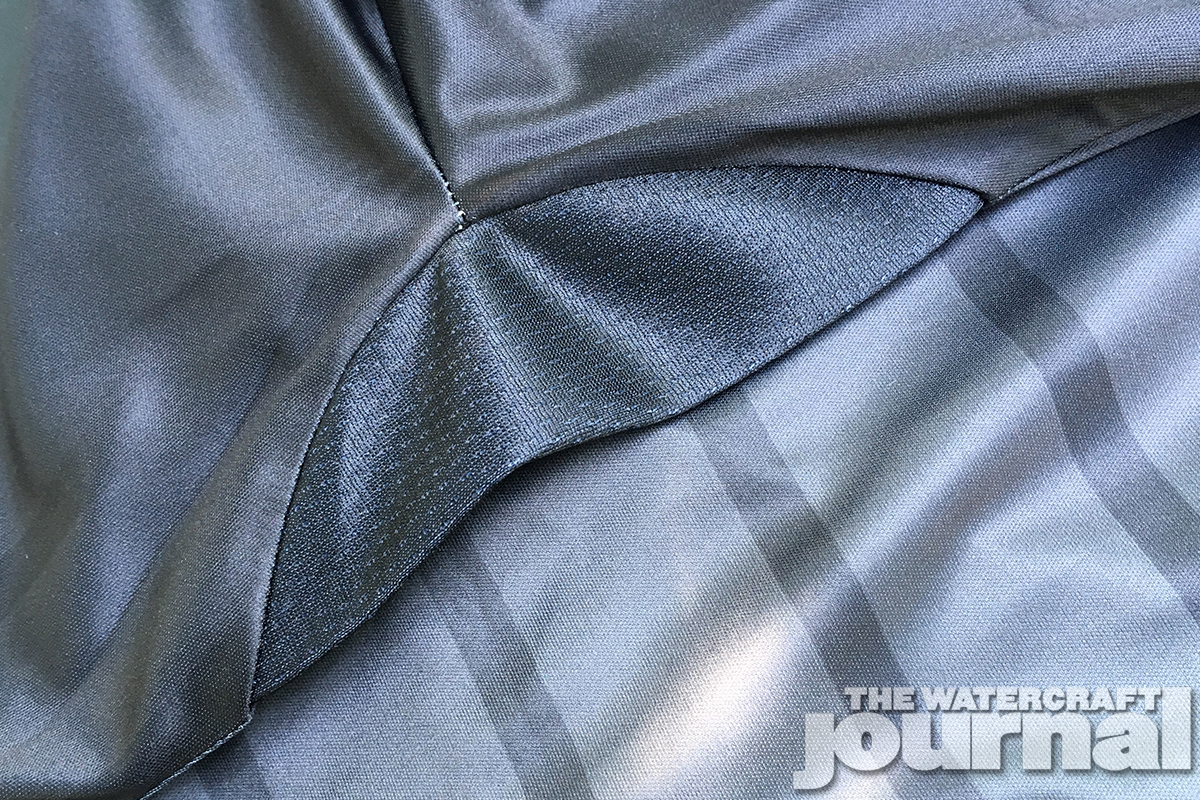
While we opted for the stealthy black-and-charcoal combo, the RIVA Racing Offshore Rash Guard comes in yellow/green, red/white/blue, and blue/white. Every shirt comes with long sleeves and cut in a classic regular fit (although RIVA notes that sizes may run slightly smaller than average). Moreover, each shirt is made from 100-percent polyester with soft, durable flatlock seams (that means no uncomfortable scratchiness). Being polyester, the material is super soft, doesn’t cling uncomfortably when wet and dries insanely quick – whether standing in the sun or at speed on your ski. A major addition that we found to be super useful was RIVA’s inclusion of special super-breathable mesh for the under arms ensuring that sweat and perspiration will dry quickly and won’t discolor lighter colors. Of course, the big feature is the rash guard’s UPF 35 sun protection ensuring that a day on the water won’t end in an evening slathering oneself in aloe vera.

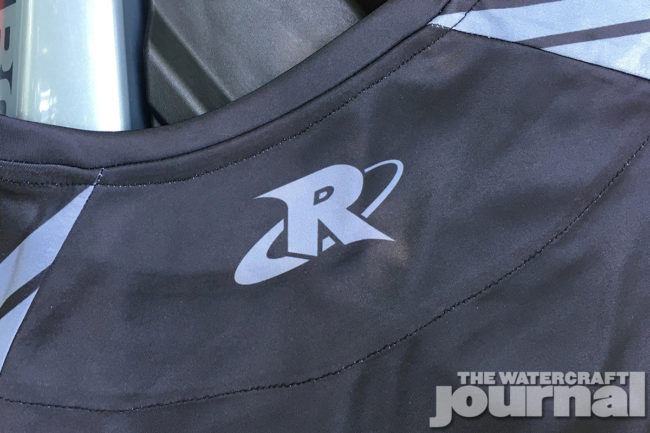
In previous testing, we’ve also found some rash guards to be cluttered with heavy screen printed lettering, which can bunch and distort the shirt after several uses. Not so with the RIVA rash guard. Being a stickler on collar fitment, we were glad the RIVA Racing Offshore Rash Guard didn’t hold too tightly or lay down too flat around the neck; rather, it fit naturally like a new T-shirt. Priced at $35.95 it’s definitely not a budget-priced item but rightly so, as it is easily observed as being both made of superior material and a better cut. Thankfully, RIVA Racing is discounting much of its apparel and accessories up to 40-percent before Memorial Day, so act quickly! Lastly, as is with almost all water shirts and rash guards, the polyester material can be less than flattering for many average-sized folks. Yet, for those on the trimmer side of things, you’ll find it to be very complimentary to your frame that exercise and proper diet has awarded you.

Gallery: Jettribe Best of The West Series Kicks off in Parker, AZ

0

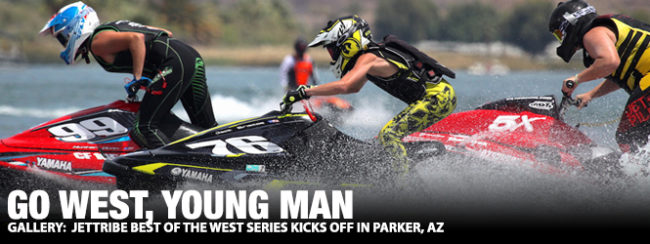
West Coast Championship closed course PWC racing returned to The Blue Water Resort & Casino on May 5th and 6th. One hundred and twenty entries in 26 classes of IJSBA-sanctioned closed course racing plus freestyle competition kicked off the start of the 2018 Jettribe Best of the West Series, The Gary Hart Memorial Race presented by Jettrim, Hot Products, Hydro-Turf, Jet Renu, Bomber Eyewear, Kawasaki, Skat-Trak, ProWatercraft, Oakley, Works H20 Designs, JCRacing, 3D Design Concepts and IPD Graphics.

The Parker race is always a highly anticipated event and typically draws the most competition of the season. It’s a fun event to attend because it is in a beautiful location and it is the perfect time of year to go racing. It’s traditionally been held on or around Cinco de Mayo and during the Las Vegas Supercross finals which makes for some great parties on Saturday night. If you weren’t able to make it, we encourage you to check it out and make plans for next year.

Ski Pro-Am GP was stacked this year with 13 of West Coast’s fastest racers all wanting to be on top. Tyron Motzouris launched his Kommander GP1 turbo out front and led the first moto start to finish. Behind Tyron was Preston Matzdorf and Mike “Klipper” Klippenstein. Kole Cramer was making some moves toward the front until he went down entering the outside split and ended up spraining his knee. The second moto started out like a repeat from the first with Tyron jumping out to an early and impressive lead.

Tyron was well on his way to going 1-1 for Saturday until he hit a buoy wide open which sent him swimming. Tyron ended up 8th in moto 2 for 4th overall. Klipper went on to win the second moto and the overall for the day, followed by Preston Matzdorf in second and Blake Wicklund in third. On Sunday, Preston Matzdorf dominated the day going 1-1 for first overall. Kole Cramer showed he was tough enough to bounce back for second overall going 3-2, and Klipper rounded out the top 3 going 2-3 on Sunday.

Most 16 year old girls want a car for their birthday, but River Varner from Riverside, California wanted to go Jet Ski racing. This 16 year old newcomer came out to try her hand racing her new SXR1500. River started riding last summer and has been determined to develop her skillset and be competitive in the 2018 season. She impressed us all as she cleaned house in the Ski Women’s Limited class on Sunday. River is proof that anyone can start from knowing nothing about our sport and dive in head first to win her first race! I have a feeling we will be hearing a lot about this new women’s racer.

Runabout Pro-Am GP was exciting to watch as 2-time world champion Brandon Warner took his ’96 XP with a Mel Miller built 1050 engine and annihilated the competition. When asked how he had such an advantage on these new turbo runabouts, he said, “The power to weight ratio is way off on the new machines for a track like this. They are 300+ horsepower and several hundred pounds heavier than the old XP, which is producing around 220+ horsepower. On tight tracks, this boat really shines.” Brandon’s XP was indeed fast. After winning the first moto on Sunday, he jumped it out of the water, and when he landed, the driveshaft sheered in half at the splines showing the torque of his engine. Luckily Brandon was able to borrow his friend Troy Leseney’s XP for the second moto to secure his sweep for the weekend with a first place overall on both Saturday and Sunday.

Some other notable mentions from the weekend, Julien “JuJu” Beaumer was ridiculously fast on his new Bullet V3 in the new Ski Am Mod Lites class and won every moto. Logan Gasperone and Revin Harris battled in the Blaster Spec class, welcome to the racing scene Logan! And Revin raced 4 classes both days including winning Am Ski Lites. He lapped me, thank you Revin, I was pretty tired come lap 7.

The band start has long been a tradition in PWC racing and still is. However, due to some malfunctions of the band that was experienced on Saturday, many racers requested that Sunday be horn starts. At the riders meeting on Sunday, a poll was taken and it was clear that the majority wanted the horn over the band. It ended up being a class preference if they wanted the horn or the band.

Many racers were heard saying, “The horn is a lot of fun because there is no way to really jump the start,” and nothing to malfunction. The band is great, if it doesn’t malfunction. The band can be dangerous as we saw from the few of us, (including myself), who saw it move and went, only to get close-lined by the malfunctioned band. It also snapped in the starter’s face leaving quite the mark. I think most can agree that between now and round 3 in Lake Elsinore, there needs to be some perfecting of the band.

Special thanks to the whole RPM Racing Enterprises crew who once again put on an amazing event. Thank you to the series sponsors and to all the racers, team members and spectators who attended the event. Come try your hand at West Coast racing as the series moves to Lake Elsinore, California on July 14 & 15, then on to Lake Perris, California on August 11 & 12.

22 Countries to Compete For MotoSurf World Championship

0

Competitors from 22 countries will vie for the top spot in motosurf on Brno Dam/Brněnské přehradě. Brno is the first of the five event world series.

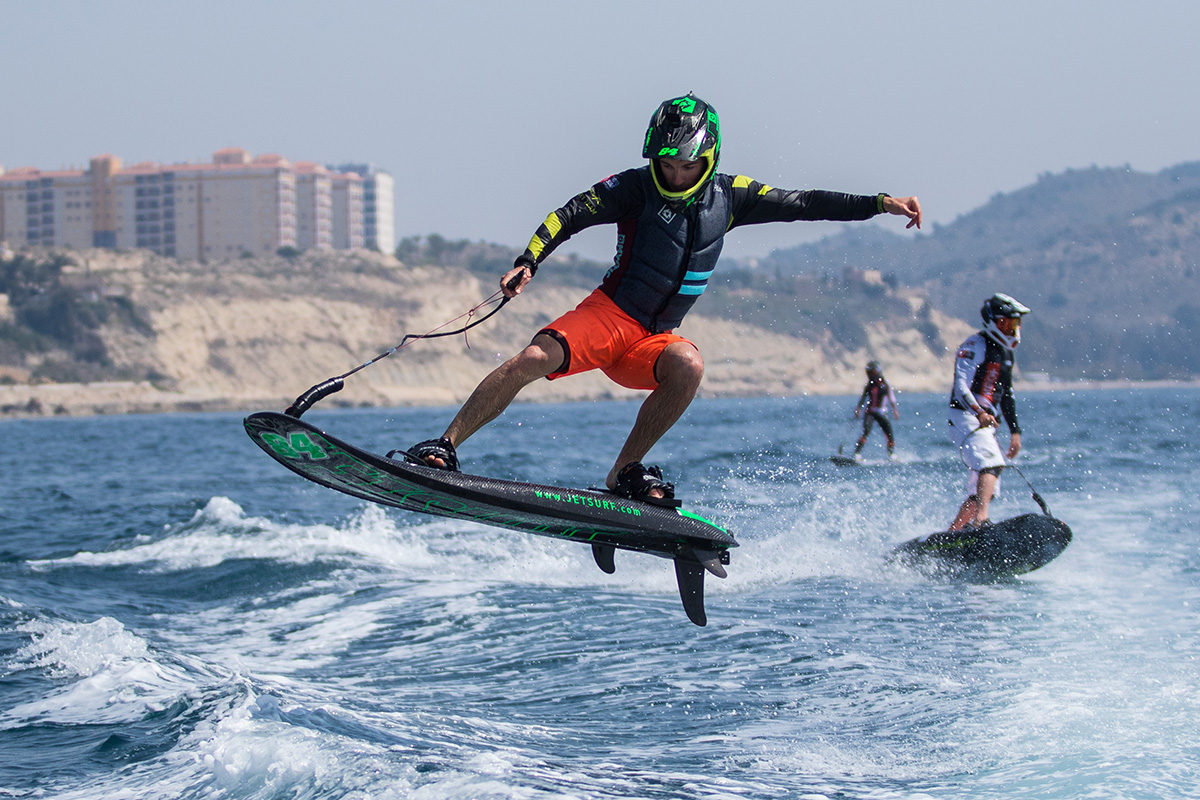
Motosurfing recently became a competitive sport and is rooted in the Czech Republic. It’s fitting that the Czech Republic hold the first round of the 2018 MotoSurf WorldCup because this is where it all began. It’s also the home of Jetsurf, the world’s leading manufacturer of motorized surfboards.

Riders will fight for World Cup points in both men’s and women’s categories. Forty-eight men make up the men’s side and the women hold twenty one slots. A couple of famous guys are competing in the men’s event. First is Jakub Kornfeil the current motosurfing champion and also a Moto 3 competitor. Second, former hockey player, Petr Prucha will be on the hunt for points.

The women’s side of things is very impressive with 7 time world champion jet skier Anya Colley in the mix. Current world champion, Martina Bravencova is also on the roster. She won’t easily be taken down. Watch for Aneta Sacherova on a comeback run!

The racing begins Thursday June 7 and ends on June 9 when the awards ceremony takes place. Some other cool stuff is happening that weekend. A timed race for a $10,000 CZK award will take place Saturday. In keeping with Jetsurf’s green theme, the E-ON Challenge Cup will also run. It’s a race held on surfboards with electric engines.
The Brno MotoSurf WorldCup series is a part of the Starobrno Ignis Brunensis Festival and world super-bikes championship. It’s a surf and turf event complete with a fireworks show at the end.

Vicious Rumors And Vile Gossip: The Watercraft Journal’s Predictions for 2019

0

Normally, this article springs up somewhere closer to the beginning of the calendar year, primarily because the manufacturers are prone to let slip a few tasty morsels of information that almost completely reveals what they’ve got coming down the pike. Such was the case with Sea-Doo while attending this past 2018 new product introduction back in early October 2017, which we promptly spilled back in December (and will re-iterate here below). Others, such as Yamaha, have been impressively quiet about what they’re cooking up, and what we’re going to share in today’s article may be coming further in the future than just a few months away. Nevertheless, we’re letting it all hang out.

Now, as a bit of a backgrounder, we have to pat ourselves on the back for rightly predicting Sea-Doo making major changes to its entire GTI lineup, more specifically, converting all decks to CM-Tech and furthering the use of Polytech as a suitable hull material. Certainly there are some traditional FMC hulls still available, but not for long (wink, wink). Moreover, we also called Sea-Doo’s use of Polytech for the larger-output 155-horsepower Rotax-powered GTI’s – it just so happens to be the Wake 155 to get it first. This may sound like small potatoes, but as is with changes like these, a harbinger of things to come. With the new ST³ units being entirely CM-Tech, be warned that Sea-Doo’s abandonment of traditional FMC is as sure a thing as the sun rising in the east.

Lastly, it’s worth admitting that some of today’s predictions are closer to speculation than others. Most of you will clearly recognize the differences. Others will not. That’s OK by us because it makes for good chatter among the forums and social media circles, and people talking about the industry is always a good thing. So with the foreplay out of the way, let’s get to the good stuff:

Kawasaki
As of right now, all of Kawasaki’s proverbial eggs are still in the SX-R’s basket. It was voiced to The Watercraft Journal back in late 2016 that Kawasaki hoped to sell close to 2,500 units in the standup’s first year. According to our sources, nearly half of that number moved across dealer floors in 2017. With recent rule changes to so many different ski classes making the SX-R almost mandatory equipment, sales have remained steady – and have rightly buoyed Kawasaki’s market share as of late. Equally, a burgeoning aftermarket has aptly adopted the SX-R 1500, offering a variety handling and performance components. Add to it continual non-racer interest, and the new stand-up has been a solid addition to the brand’s lineup.

Thus far, any motion towards Kawasaki offering a Rec Lite-segment (Spark, EX) runabout remains clandestine. Back in April 2017, The Watercraft Journal questioned Kawasaki’s Off-Road and Watercraft Product Manager Dave Oventhal, “Trust me, we’re not ignoring them.” Oventhal then began to question – quite thoroughly – our feelings towards Sea-Doo and Yamaha’s on board brake-and-reverse systems, respectively. Yes, corporate interest is there, but to this date, we have still heard or seen nothing to make us believe that little more than BNG (Bold New Graphics) are on the way for the Kawasaki JetSki offerings in 2019. If we are wrong, and the Big K comes out of the gate with something new, we’ll be the first to share our surprise.

Someone at Central Florida Powersports was having a bit of fun with Photoshop, this is NOT a real image of the new all-digital display, but is pretty close to what we expect to see in a couple of years.

Sea-Doo
People are pretty friggin’ excited about the new ST³ machines (RXT 230, RXT-X 300, GTX 155, GTX Limited 230 and 300). The markedly smoother ride, increased stability, and lower, more centralized rider position have all elevated the new full-sized Sea-Doos to new heights. Yet, Sea-Doo’s decisive focus on touring and “adventuring” on the new skis has only highlighted a major failing that Sea-Doo enthusiasts have been bemoaning for years: a larger fuel tank. The 15.8-gallon fuel cell is simply insufficient for the big, thirsty ACE 300 models, even despite the new ST³’s lighter weight and ECO mode. Thankfully, below the ST³’s Direct Access Front Storage bin is a surprising amount of room remaining – and where we believe a large capacity tank will reside. We’ve heard upwards to 20-gallons of fuel. Other sources say closer to 18.5.

Next, we know that Sea-Doo will be rolling out an all-new, full-color digital instrument panel either this year or the following. And it already exists. While Sea-Doo was drawing back the curtain on the new 2018 lineup, BRP was revealing its new Spyder lineup with the full-color, all-digital dash. To quote a previous article of ours, “Both the Spyder and Sea-Doo ST³ machines also received BRP’s new Premium Audio systems both featuring Bluetooth connectivity for enabled mobile devices. Riders can access a navigation application, play content, and listen to music directly. The ST³ and Spyder both [already] share the same Bluetooth connectivity for the Premium Audio System via mobile devices, and even the standardized protective phone case on all of the new watercraft all speaks to the inevitability of the new dashboard.”

For the Spyder, a thumb-operated joystick on the left handgrip navigates a pair of large 4.3-inch screens (the dual screens provide optimal viewing from all angles), offering up live data like fuel level and speed perpetually on the left, and display-compatible apps on the right, like: Genius Maps: advanced GPS navigation platform that requires no internet connection; Music: sort easily through personal music libraries for the perfect playlist; and AccuWeather: be prepared for the elements and pack accordingly with real-time weather information. We suspect most of this technology will find its way on to the GTX Limiteds first and as an option on lesser-equipped models. Oh yeah, and all of the GTIs will soon be riding on Polytech hulls. It’s happening. Just accept it. (The GTR and GTR-X will get CM-Tech hulls – the RXP-X will get a full redesign in a few years.)

Yamaha
This one was the toughest nut to crack. Tracking Yamaha’s behavior led us to realize that 2019 will bring us a completely redesigned FX platform. How so? Because the FX is 9-years-old, and that means it’s time to be rotated out. We made the same call for the FZ platform a few months before the reveal of the GP1800 and we weren’t wrong then, either. The decision is not an emotional one either. The current FX is an absolutely successful platform; stable, comfortable, smooth, and when properly equipped, and a force to be reckoned with in the rough stuff. Expectations for the new FX will include a redesigned bench seat that is more tapered at the knees, a far more ergonomically-friendly cockpit, and increased storage. But what else?

We have strong reason to believe that Yamaha could be introducing infotainment to its WaveRunner lineup as well. For 2018, Yamaha rocked fans of its top-of-the-line ski boats and Star motorcycle line (particularly the all-new Star Venture) with intuitive display systems. Albeit slightly different in their respective applications (Yamaha boats have a 12-inch touchscreen, button array and joystick – dubbed Yamaha Connext – that replaces all analog instrumentation, while the Star Venture employs both a 7-inch full-color LCD display flanked by analog gauges and is controlled either by a handlebar-mounted joystick, touchscreen or voice command), the functionality is almost identical, giving the rider access to live vehicle data, a range of audio sources and wireless Bluetooth usage.

Clearly, the inclusion of Yamaha’s industry-leading infotainment system directly implies the addition of an on board sound system. This of course, would bring Yamaha back into contention with Kawasaki and Sea-Doo, who both offer factory-installed audio systems with their top tier watercraft. For both aforementioned control systems, riders are able to play from their own smartphone’s song list either via a USB port or Bluetooth, or access music through SiriusXM’s 150-plus channels, as well as to SiriusXM Travel Link for satellite weather. Carrying over functions like way-point navigation, a GPS speedometer and a depth sounder could contribute handily to the new Yamaha WaveRunners FX series’ class leadership.

AJSBA Announces Committee Changes

0

Race season is coming along in Australia and as the AJSBA gears up for the 2018 Australian Nationals, the main sanctioning body for watercraft racing in Australia has just recently announced some changes to its committee.

Mark Glew on behalf of the AJSBA committee has sent out the letter below to its members regarding these changes.

Dear Members,

AJSBA COMMITTEE CHANGES

On 9 April 2018 the AJSBA Committee appointed the following members to the committee:
• Susan Lamprecht, Secretary
• Mark Glew, General Committee
• Dean Jeffries, General Committee

On 10 April 2018, the President, Justin Windsor submitted his resignation due to personal reason (unrelated to the change in committee members). The committee thanked Justin for his contribution over the past 10 months.

Following this the committee unanimously elected Mark Glew to fill the Vacancy as President. Mark is a former PWC racer who has been involved in racing for the past 22 years. In addition to attending various national and international events, Mark has also organised several PWC events in Australia, including the National Capital Cup (Canberra) and more recently the Lake Macquarie Big Weekend Race Series.

The AJSBA committee is as follows:
• President, Mark Glew
• Vice President, Rob White
• Treasurer, Paul Leven
• Secretary, Susan Lamprecht
• Committee Member, Dean Jeffries

The committee is now completely focussed on the delivery of the ‘2018 Australian National PWC Titles’ to be held at Warners Bay, Lake Macquarie NSW on 8-10 June 2018. Further announcements in relation to this event will be made in the coming days.

In the meantime, if you have any specific question in relation to these changes please contact Mark Glew on [email protected] .

Regards,
Mark Glew on behalf of the AJSBA Committee

Video: Aqua Moto Racing On Xbox One

0

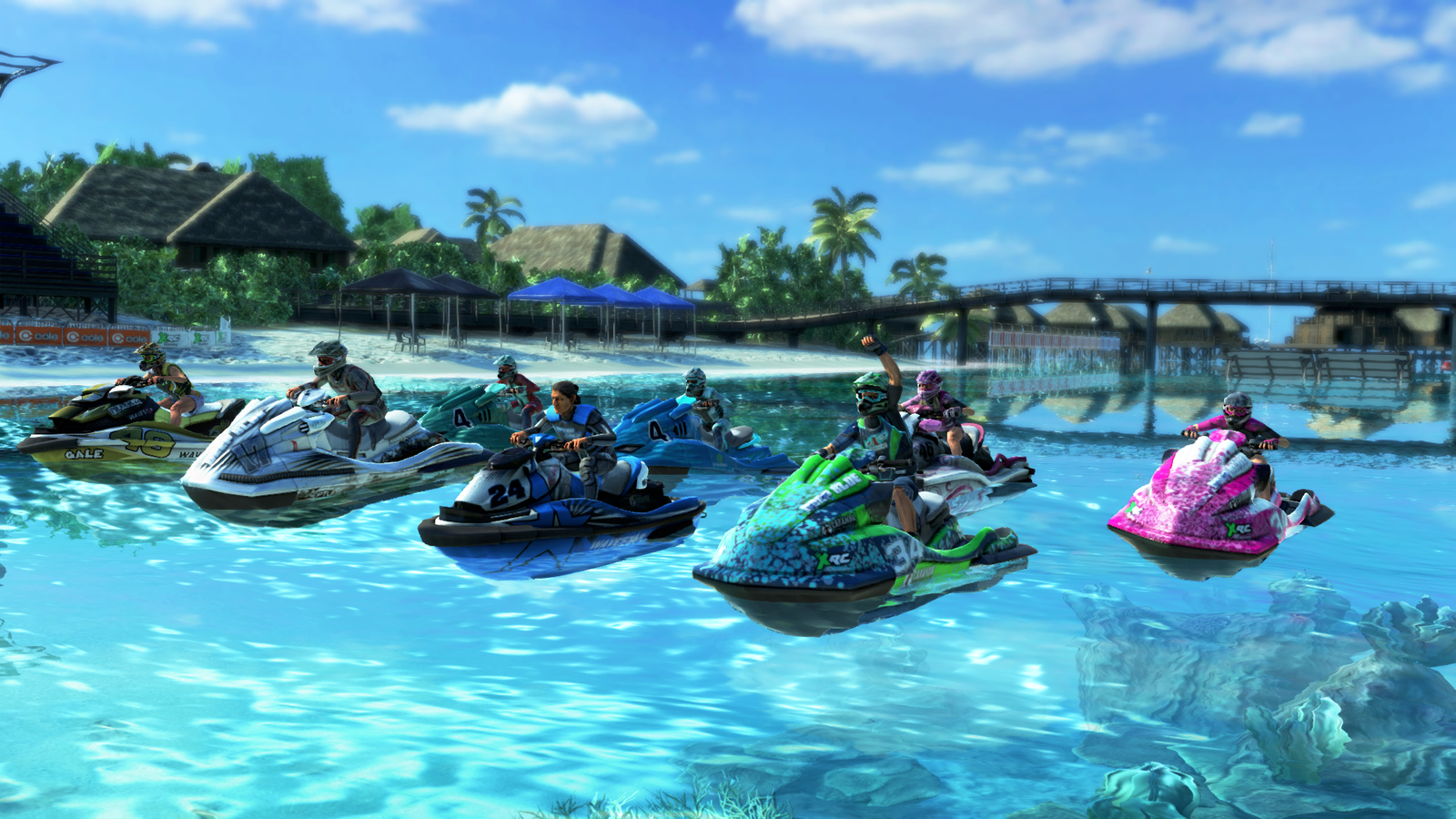
So what do all you racers and recreation riders do during the off season? Well perhaps now you can check out the new Aqua Moto Racing Utopia game for Xbox One.

The watercraft racing game is now released for Xbox One and is currently on sale for 50% off. You can now pick it up at the Microsoft Xbox store for only $9.99

Check out the video trailer to see what this game is all about and for more information see the remaining press release below.

Aqua Moto Racing Utopia is made by racing game developer Zordix and is the latest entry in their widely popular racing series Moto Racing™. Since its inception in 2009 the series has sold over three million units. Aqua Moto Racing Utopia is critically recognized to be the gaming Jet Ski experience closest to the real thing ever! No other Jet Ski game in recent history has been made with the same dedication and precision.

Utopia has beautiful modern graphics and the largest number of vehicles and challenges yet in a watercraft game. Players can participate in racing championships, acrobatic stunt competitions, go online or challenge friends and family in up to 4-player split screen multiplayer races and party games.

The perfect blend of high speed races, unique environments, and extreme stunts makes Aqua Moto Racing Utopia the ultimate watercraft racing experience!

The game is also available on PS4, Switch, Wii U, and PC Steam.

https://www.youtube.com/watch?v=yUW4zyUcEQ0&feature=youtu.be

Carbs In Harm’s Way: Identifying Aluminum Oxidation in Carburetors

0

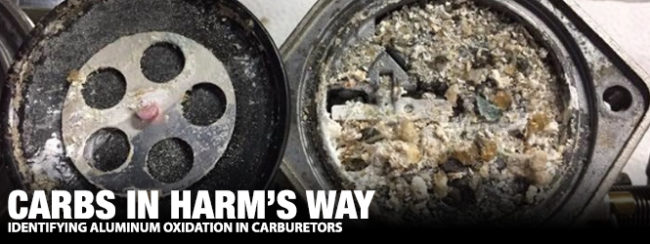
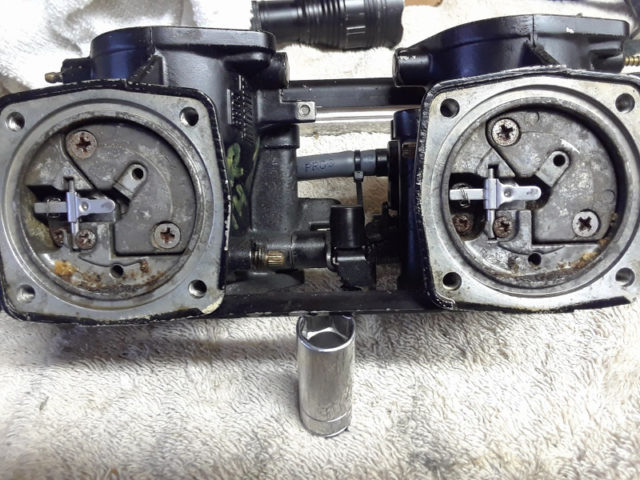
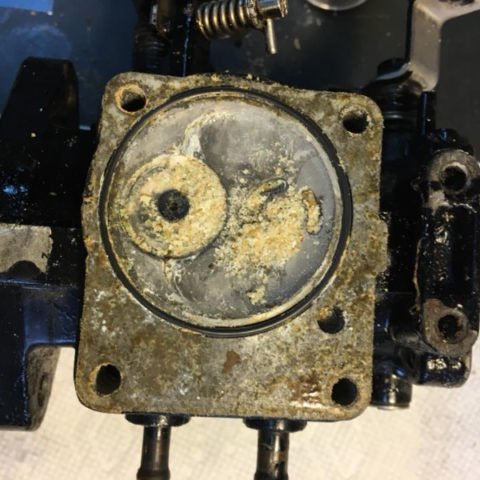
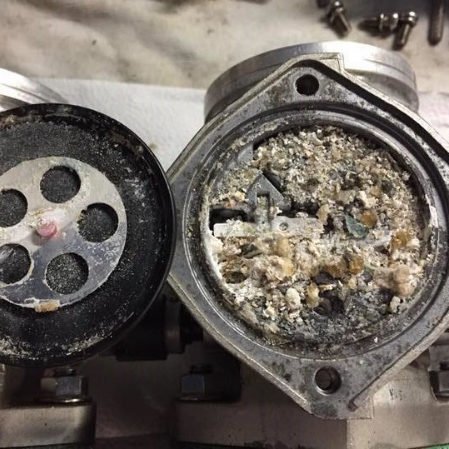
It’s been a while since you’ve last ridden your two-stroke ski – be it a few weeks or several years – you’ve got the better part of the day off and you’re thinking it’s a good time to hit the water. With a gas can topped off with a fresh batch of premix you’re ready to hit the lake. But something just isn’t right. Sure, it fires up but man, your ski is running rough. No matter how much throttle you give it, that engine is running like crap. So, you pull the hood and the air filters and give the carburetors a look-see – and there it is: white stuff. A fine white film invading all of the tight crevices and edges inside and out of your carb. “What the heck is this?” you question. Thankfully, there’s a pretty simple answer: aluminum oxide.

Just as steel will corrode when exposed to moisture and the elements, so does aluminum also corrode – just in a very unique way. Conventional rust is formed by the reaction of iron and oxygen in the presence of water (or air moisture). Given enough time, oxygen and water will eventually convert any iron (or steel) entirely to rust and disintegrate. Unlike steel, which produces a flaky, fibrous layer commonly known as “surface rust,” aluminum naturally produces aluminum oxide, which for this example, is often found as a very fine powdery film gathering in corners, fissures and porous surfaces where moisture collects. Interestingly, aluminum oxide is produced by aluminum as a natural defense against further corrosion, acting as a protective layer against further exposure.

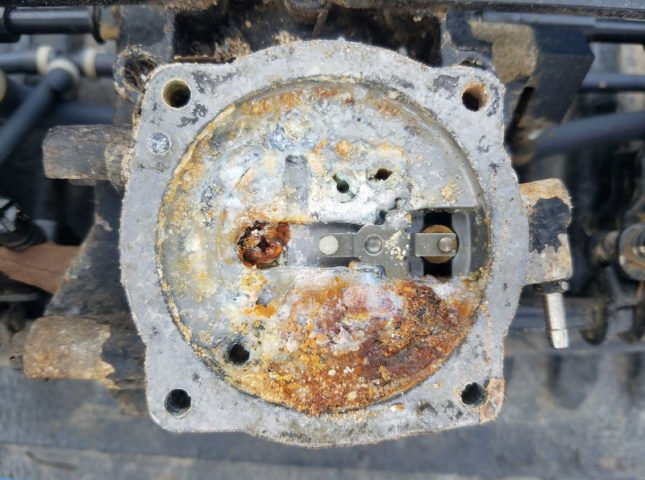
[As a side note, it is possible for components inside the carburetor to truly rust; this is because these items are made from inferior metals (ie. pot metal, untreated or raw metals, etc.), such as screws, plates and fittings that hold the carburetor’s internal components together. When rust (iron oxide) comes into contact with aluminum oxide, it can produce a “dingy, yellowish” color. –Ed.]

The aluminum oxide layer in the carburetor is formed as aluminum is exposed to water and oxygen, yes, but is also exacerbated when heat is applied. While organic and formic acids can also radically stimulate the formation of aluminum oxide, it’s also of great interest to note that alcohols can similarly corrode – particularly ethanol. In an article written by David Fuller, he writes, “ethanol is hygroscopic, which means it absorbs water. Ethanol-blended fuel will naturally hold 0.5 percent water in suspension, but once the water content exceeds this percentage, the water/ethanol mix becomes heavier than the gasoline portion of the fuel. This leads to what experts call ‘phase separation,’ which is the point at which the water/ethanol mix drops out of suspension and sinks to the bottom of the fuel tank.”
In the same article, he quotes Scott Diehl at Driven Racing Oil, who explains, “Ethanol in a modern fuel-injected [engine] is typically not a problem. The components used in these engines are more compatible, but carburetors are typically made from alloys that are more susceptible to corrosion–zinc, aluminum, and brass.” So what happens inside of your jet ski’s engine as the heat temperatures begin to rise? At first the water-heavy fuel will start to evaporate, leaving corrosive moisture-rich oxygen behind. Almost immediately, the aluminum begins to produce microscopic crystals, which when gathered in a moisture-rich environment – say inside the fuel delivery metering circuitry and fuel pump – looks almost like a white paste. As heat continues to cook the chemical reaction and evaporate the liquids in the carburetors, the white paste-like substance starts to dry into a fine, thin powder.
While trying to keep your carburetor from naturally producing aluminum oxide is all but impossible, there are ways to inhibit its growth: The first being the most simple; don’t let your watercraft sit for a period of time with water inside of the carburetors. Second, avoid using ethanol-rich blended fuels if possible. If “pure fuel” isn’t available to you, use a fuel stabilizer or fuel conditioner to prevent rust and corrosion associated with the use of ethanol fuels. It’s also heavily recommended to apply some fogging oil to the engine between lapses in use to coat surfaces prone to corrosion. And there’s something to be said for giving your engine a good spray down of a water-resistant mineral oil (ie. WD-40) between uses. Lastly, we recommend storing your ski indoors, in a dry, stable environment.

So there it is, some basic understanding of why you might be seeing some white, chalky or fine powdery film inside and around your carburetor. No, you didn’t suck up a bunch of white sand into your engine – and if caught early, isn’t a death sentence for your engine either. It’s just naturally-forming aluminum oxide and can be cleaned up pretty quickly. Sure, it ain’t pretty but it’s not catastrophic. Just take a little better care of your stuff and you won’t see it much in the future. These are hard, indisputable metallurgical facts, and any loud-mouthed, hairy-knuckled gorilla who tells you otherwise has no place near a set of tools.