Wait, a what? That’s right, a magalog. Part magazine, part catalog. When the last two major print magazines shuttered their doors – Watercraft World and Personal Watercraft Illustrated – there was a vacuum for family-friendly, consumer-focused magazine content that even the crew at Watercraft Superstore could feel.
The solution came about in an unusual way: why not make our catalog also a magazine? True to their word, each year Watercraft Superstore crams half a dozen full length, feature magazine-quality articles in to their annual catalog. There’s legitimate tech, top notch photoshoots, and some really spot-on PWC reviews in every issue.
Simply go HERE, and you can freely and easily access the whole magalog chocked full of awesome stories, a full recap from the annual Skyway Ski Show, which The Watercraft Journal has attended personally for the past four years, and of course, peruse their seemingly endless variety of watercraft toys, accessories, performance parts and useful tools, all to help magnify your enjoyment from your PWC. Check it out today!
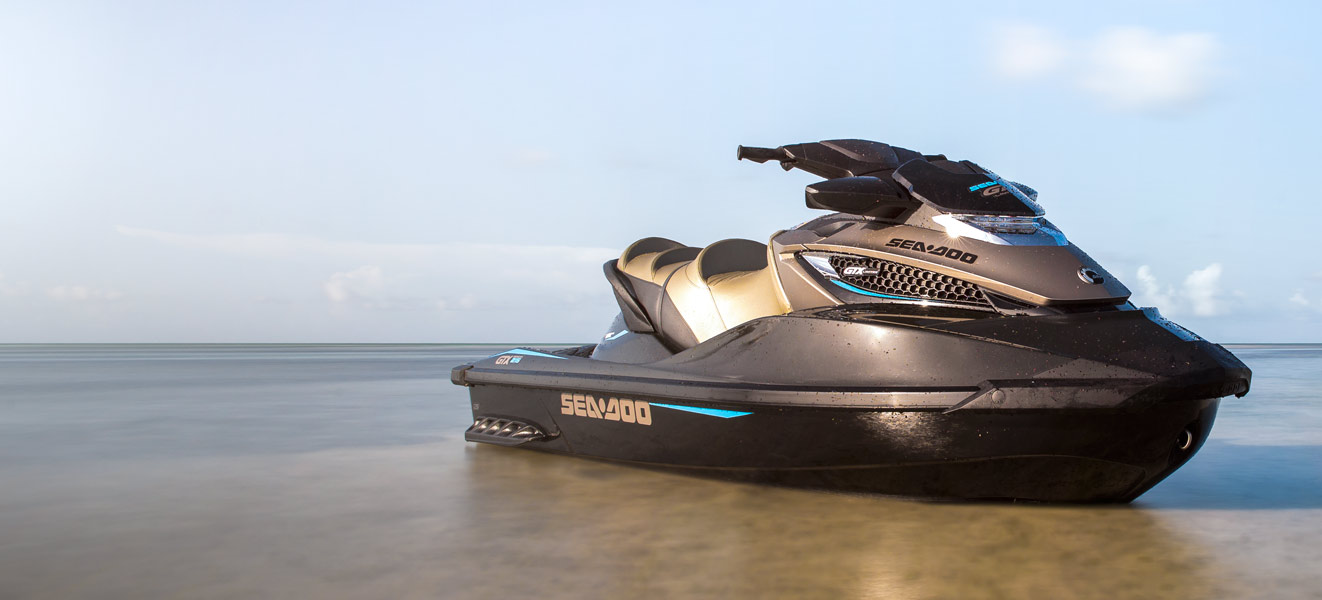
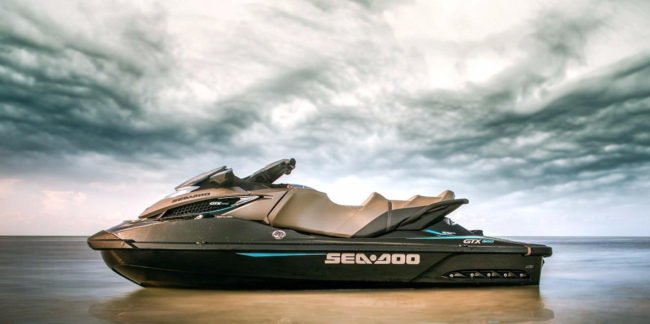
Nowadays, horsepower controls the conversation when a new watercraft arrives on the market. While there are many speed demons out there, many people want to go out and ride in comfort. Sea-Doo has built a machine for those who want a stylish and comfortable machine without sacrificing performance. The 2017 GTX offers five different models that are crafted for you.
What is the secret to a powerful craft with comfort? The answer is providing the market with horsepower ranges from 155hp to 300hp along with the industry’s only suspension seat. Sea-Doo wanted to create a watercraft that could be ridden all day and not have the rider in the pain the next day.
Sea-Doo has spent large amounts of money to research and develop Ergolock, a seat that is both comfortable for most all rider sizes, and a cockpit that is intuitive and uncluttered. Along with that, all models of the 2017 GTX are equipped with the second version iBR. This is the industry’s only on-water brake system, and has been awarded by the United States Coast Guard. With this braking system it will stop up to 160 feet sooner that a watercraft of the same size without a braking system. To top it all off, Sea-Doo has added new handle-grips with a place to rest your palms to prevent cramping when using the throttle.
Not everybody goes out to ride for top run speeds, there is a larger population that enjoys the nice evening cruise which will be even better now with Sea-Doo’s iTC Intelligent Throttle Control that includes ECO, Touring, Sport Modes along with Cruise Control and Slow Mode. With all these intelligent features it only seemed possible with a redesigned S3 hull (Stepped, Stable, and Strong). The technology that was put into this hull has proven to be one of the best all-around full-sized hulls providing an optimal ride without sacrificing performance.
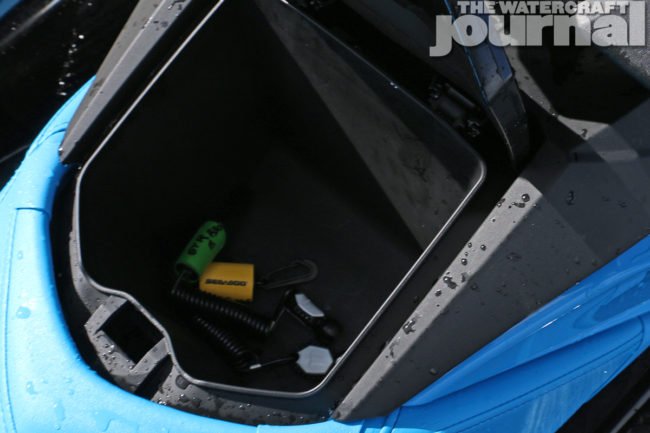
If you opt out and choose to order a non-suspension GTX you will have a much larger glove box, Sea-Doo watertight bins to have a total of 42.8 gallons of storage.
2017 Sea-Doo GTX 230hp and 300hp
This is the craft for the speed enthusiast with an eye for comfort and luxury. Boasting 230hp or 300hp via either the Rotax 1500 HO ACE or 1630 ACE engine (respectively) that has proven to be the best power-to-weight ratio available. Along with buying this top of the line luxurious craft, it comes with all accessories and will bring a smile to your face every time.
2017 Sea-Doo GTX Limited S 260hp
With this Limited GTX S, it comes equipped with 5.5-inches of suspension travel that can absorb the harshest chop. This is something that you really need to ride to fully experience the comfort. This is a great touring watercraft as it comes with everything imaginable to make your experience on the water that much better. This is the perfect watercraft for all you endurance-adventure seeking enthusiasts!
2017 Sea-Doo GTX 155hp and GTX S 155hp
This is the perfect entry watercraft that provides enough power to keep up with others while providing unbelievable comfort. This is the perfect craft because it is great on fuel consumption and is equipped with iBR, iTC and VTS.
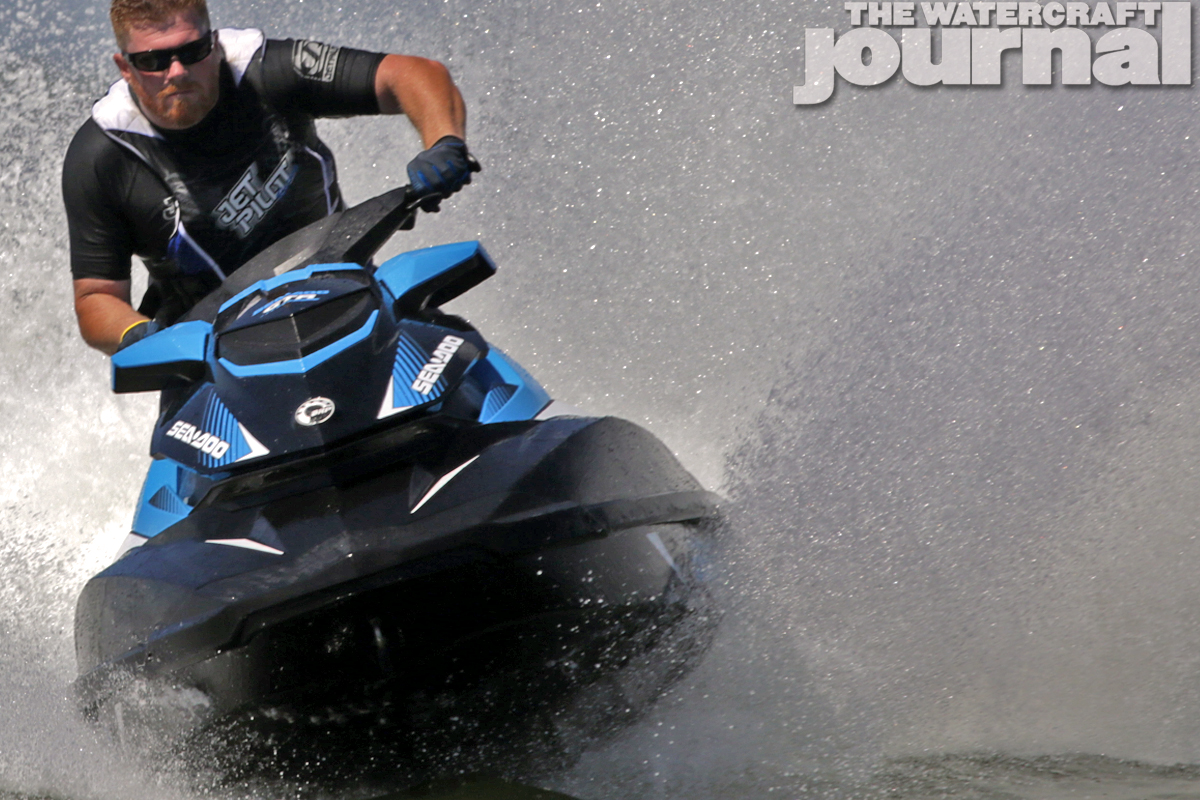
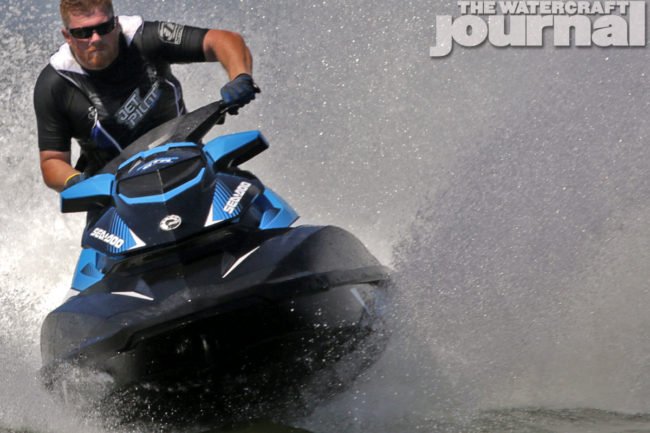
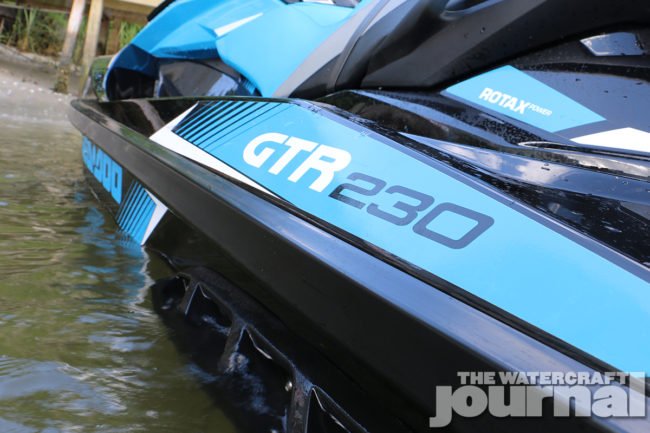
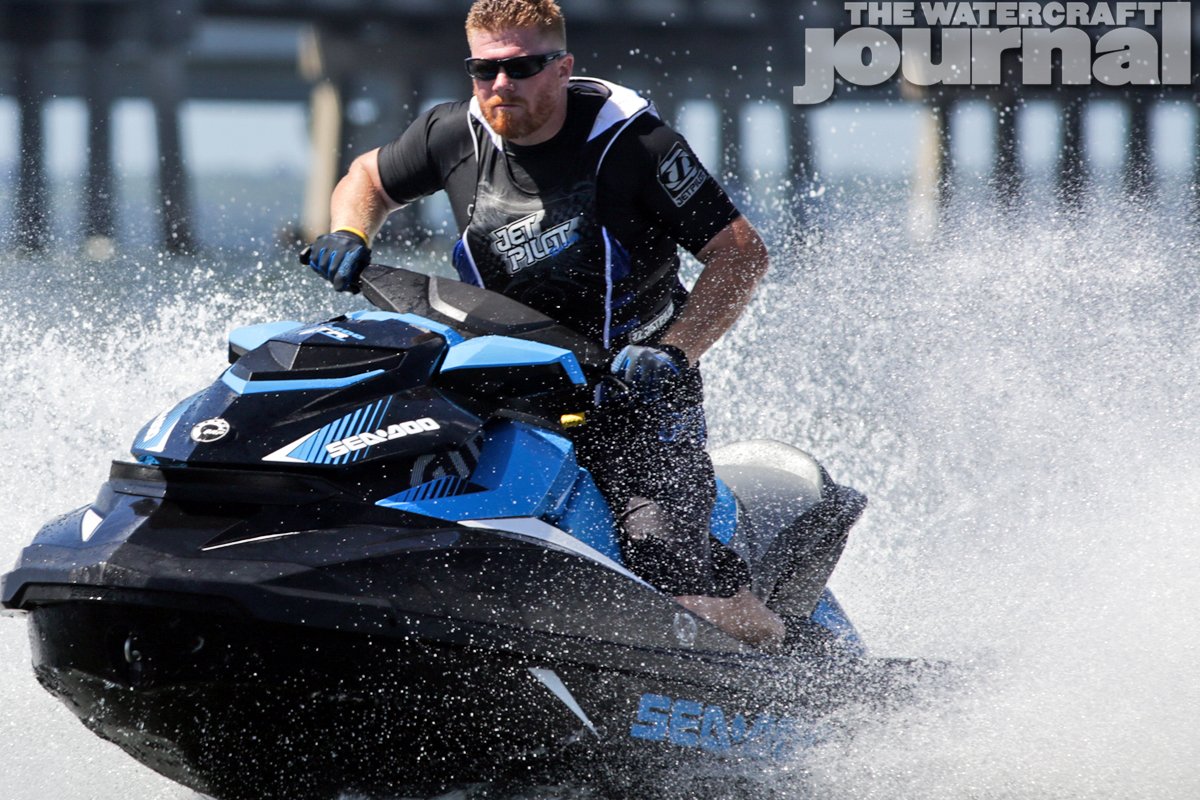
To those regular readers of The Watercraft Journal, you’ll know that we fail pretty regularly to hide our personal bias towards the Sea-Doo GTR. Upon its initial introduction five years ago, the application of Sea-Doo’s supercharged-and-intercooled Rotax 1503 producing a wind-blown-smile-inducing 215-horsepower to the then-newly redesigned GTI platform was a match made in watercraft heaven. Whether you’re a fan of the GTR’s stellar power-to-weight ratio; its jack-of-all-trades hull that can either be loosey-goosey playful or track as straight as an arrow; or its awesomely aggressive angular aesthetic, the GTR has maintained itself as an overall favorite.
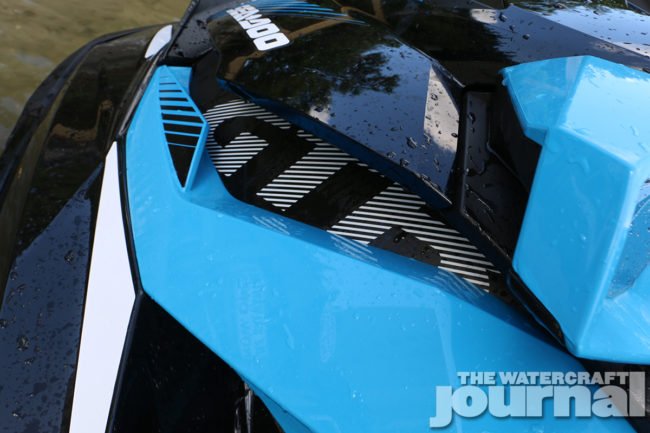
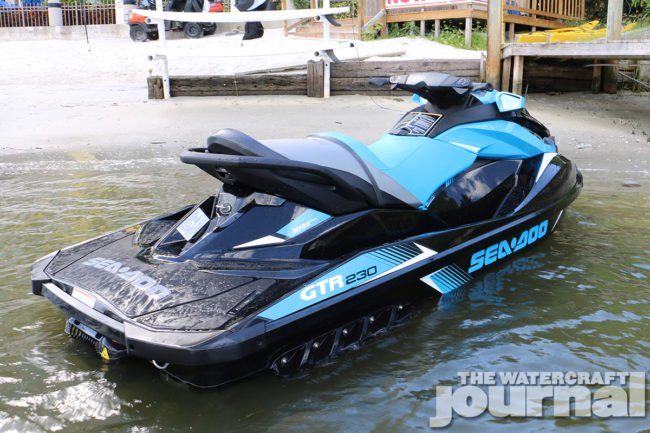
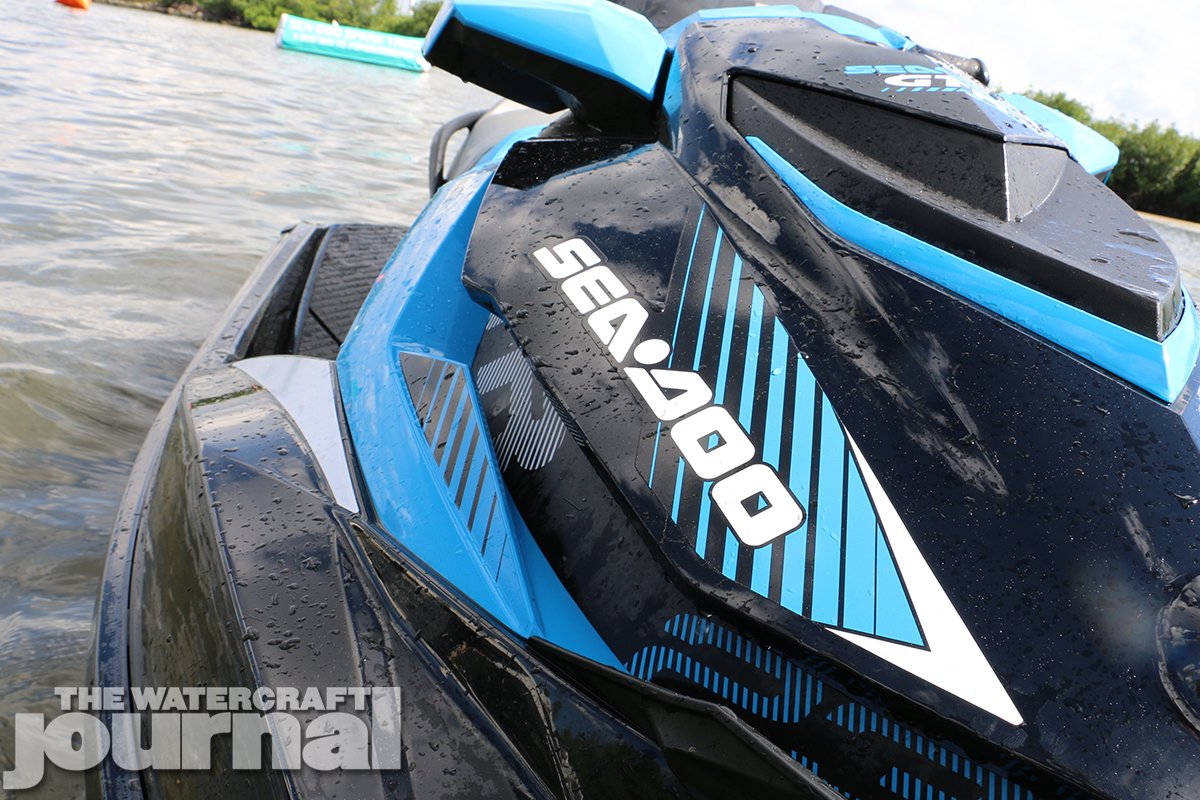
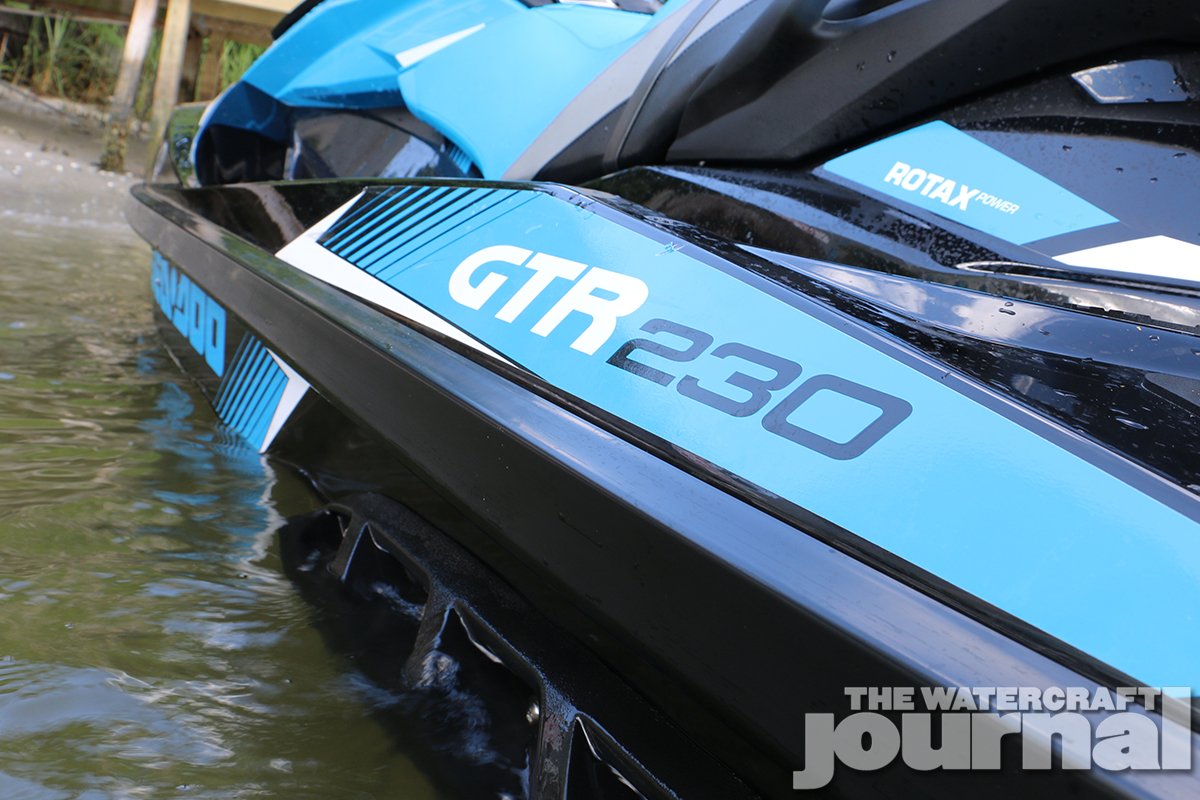
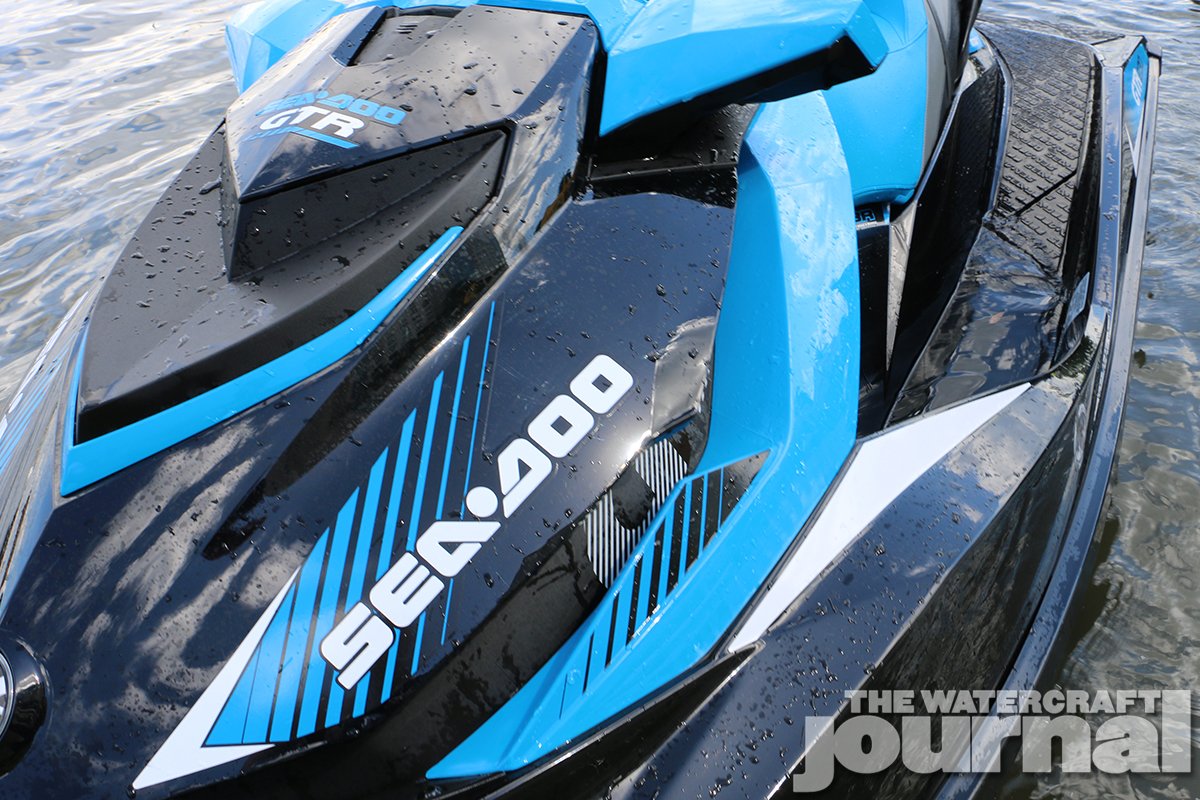
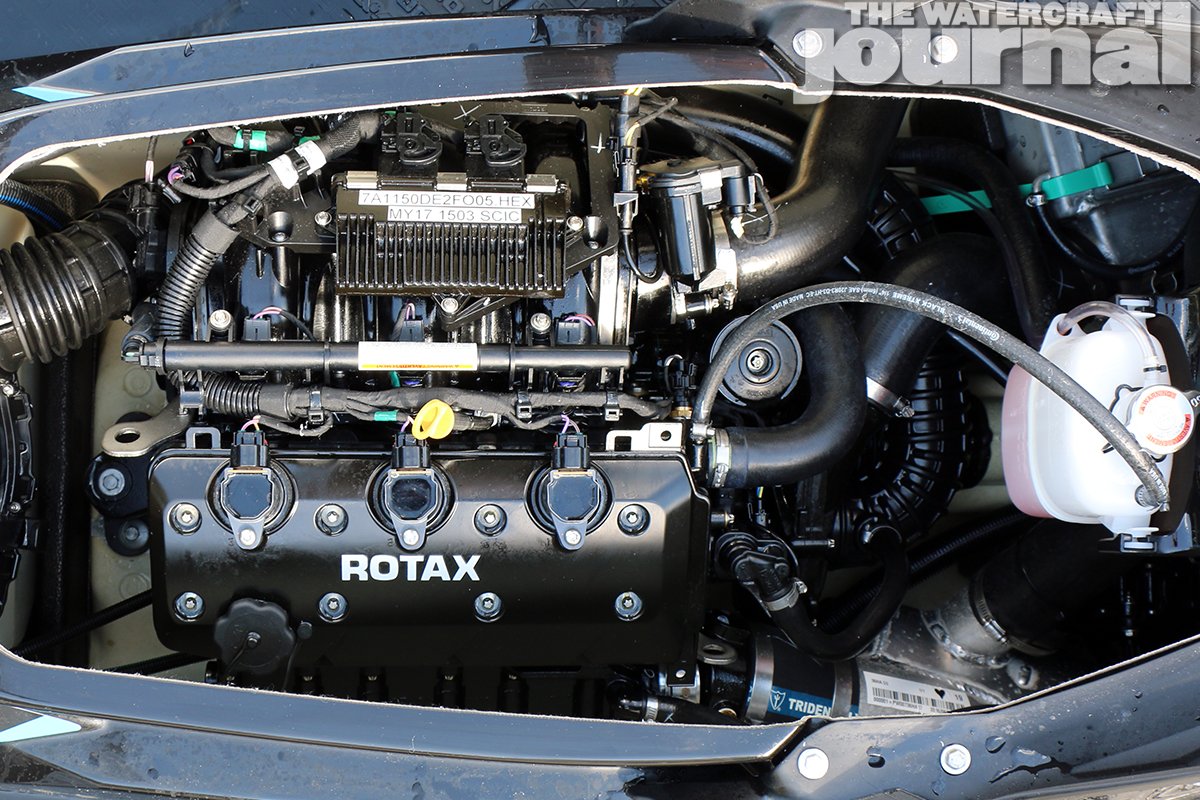
For 2017, the Sea-Doo GTR gets a little more than just a new suit of clothes (although the Black & Octane Blue livery is very fetching), but a whole new engine as well. As part of the brand’s eventual phasing out of the previous generation 1503 Rotax 4-tec, replacing it with Rotax’s weight-saving and efficiency-increasing ACE (Advanced Combustion Efficiency) technology, the new 2017 Sea-Doo GTR gets a bump from 215 to 230-horsepower. The increase is much more than just a turning up of the wick, but the by-product of streamlining the engine’s overall effectiveness, resulting in a smoother-operating engine.
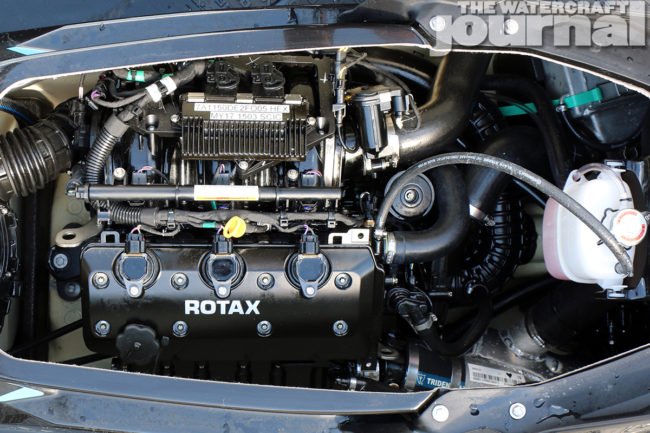
The in-line three cylinder plant – christened the 1500 HO ACE – replaces the 1503 215-horsepower Rotax 4-tec, yet maintains the same 1,494cc displacement. In fact, the castings of the crankcase and cylinder case are identical as the outgoing engine as well. The devil, as it were, is in the details, as the 1500 HO shines from its use of a redesigned cylinder head featuring four valves-per-cylinder, an all-new combustion chamber (accounting for the ACE head’s superior quench and distribution), and improved intake and exhaust ports.
Likewise, the new 1500 HO ACE employs Sea-Doo’s new plasma coating (applied to the aluminum casing’s cylinder walls via a proprietary thermal spraying process exclusively developed by Rotax’s team in Gunskirchen, Austria), to replace the heavy steel pressed-in sleeves. This new sleeveless cylinder design not only shaves overall engine weight (totaling 194-pounds), but minimizes friction, improving surface durability and heat transference.
Finally, the new 1500 HO comes equipped with Sea-Doo’s newly redesigned “maintenance-free” supercharger and external intercooler. The re-engineered supercharger uses a revised drive shaft that rides on two composite bearing packs at either end of a machined shaft, similar to its bigger 300-horsepower siblings. And, thanks to BRP’s iControl engine management, the 1500 HO is optimized for either regular or premium fuel, although performance is directly reflected in what you feed it.
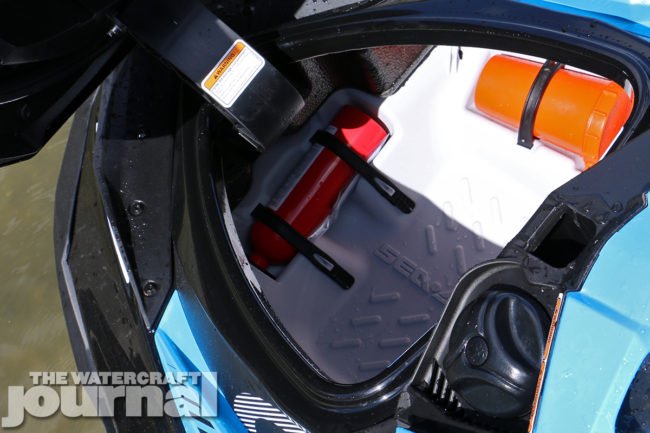
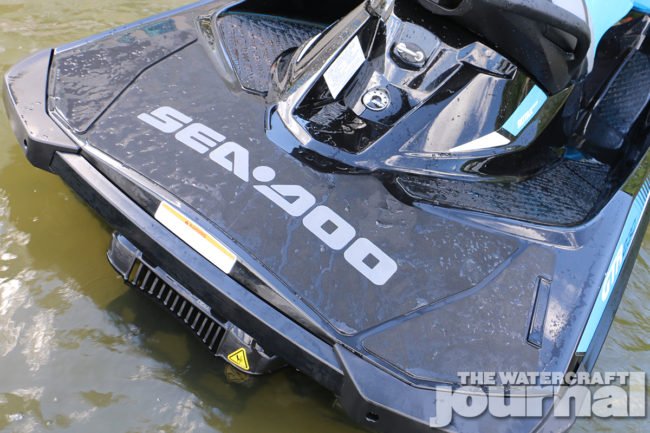
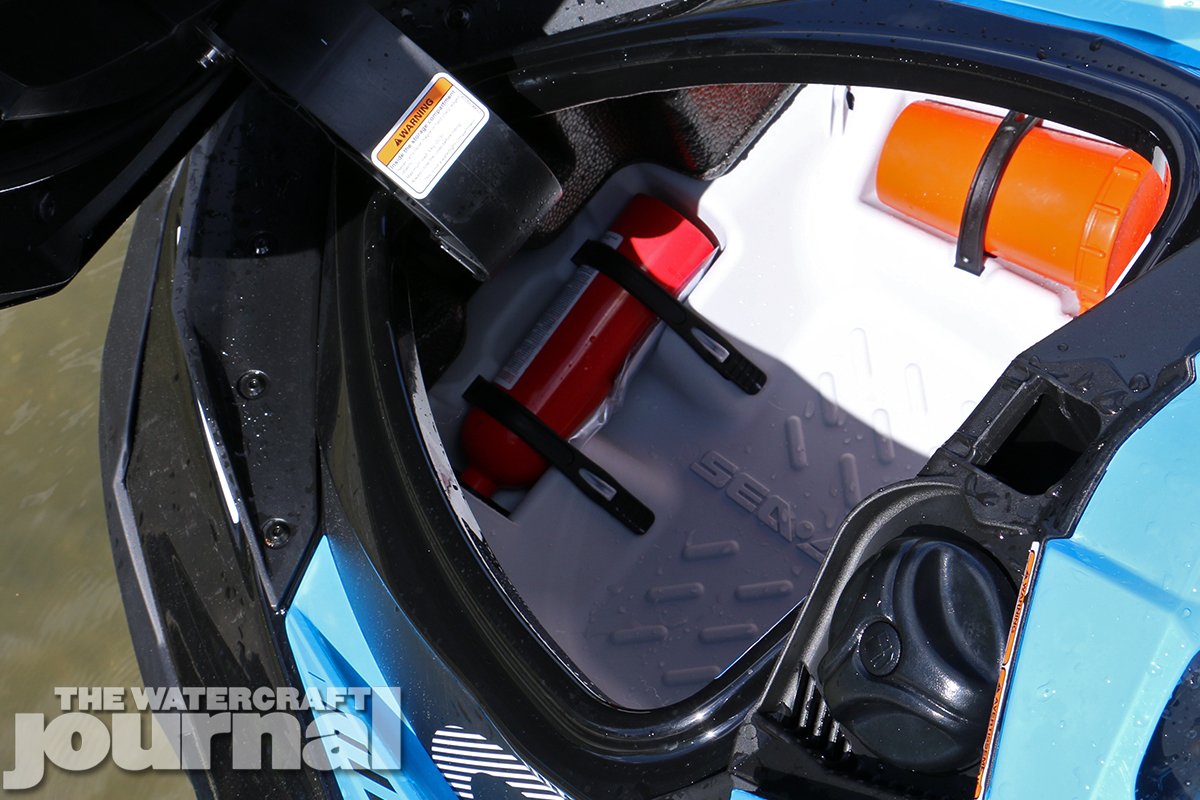
And equal all 230 and 260 models, the GTR uses the same 159mm pump to process all of that power into water-spouting thrust. Sharing the pump tunnel is Sea-Doo’s USCG-awarded second generation iBR, which is not only more compact and lighter (weighing approximately 16.4-poounds, including the electronic module and all of the mechanical components) but also allows you to stop nearly 160-feet sooner than a PWC without an on-water braking system (*cough* Kawasaki *cough*). Fuel capacity remains identical at 15.9 gallons, and storage is utilitarian 30.8 gallons.
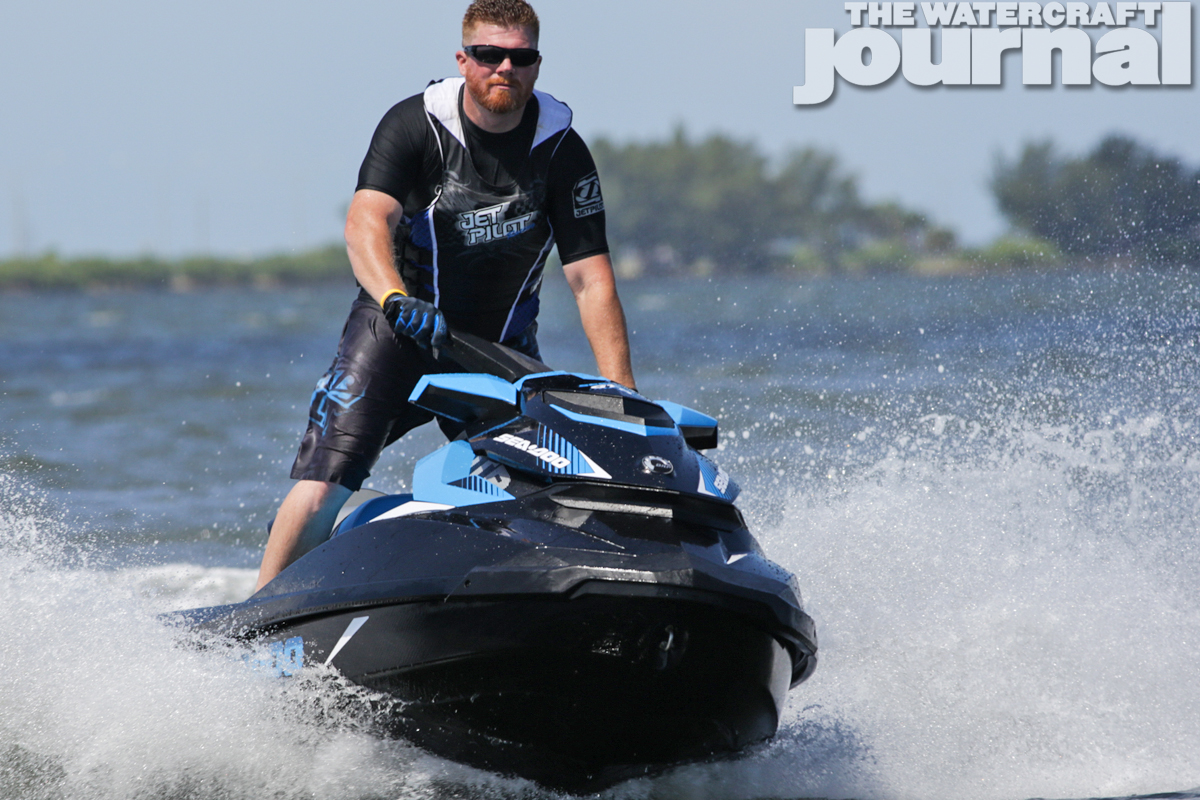
As noted earlier, the GTR 230 rides atop the same 130.6-inch long hull as the GTI SE 130 and 155, as well as the GTI 155 Limited and GTR-X 230. The mild strakes and low-V hull manages a duality of both stable and true when gliding across glass, or playful and loose when pushed without feeling schizophrenic. Unlike the often too-aggressive RXP-X hull, the GTR 230 can comfortably cruise or sweep a wide turn when called on. Obviously, there is a point in the apex where the 230-ponies will overpower the shallow-V hull, but discovering that is part of the fun. It is meant to be playful after all.
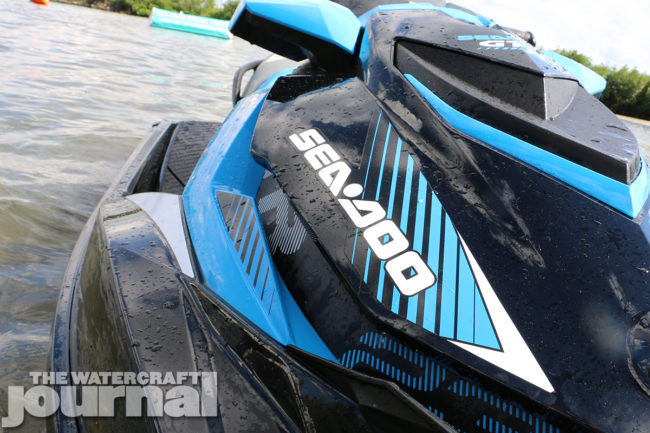
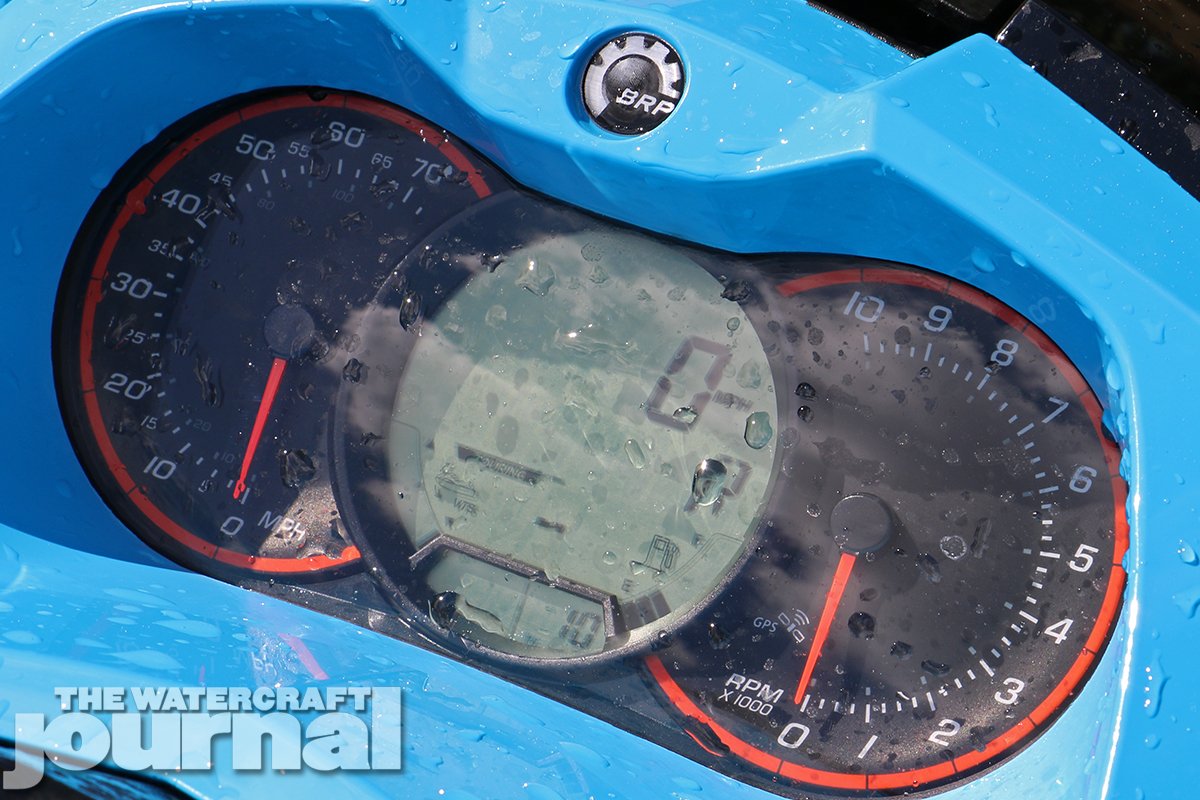
Externally, the GTR 230 retains much more of its DNA with the GTI family than its wild new GTR-X 230 sibling, sharing the same fairings, hood and fixed steering system. Yet, being part of Sea-Doo’s Performance segment affords the machine its VTS (Variable Trim System) handlebar-mounted toggles, the easy-to-navigate LCD and twin dial analog gauge system and info center, and iTC (Intelligent Throttle Control) allowing for quick cycling through Touring, Sport and Eco tunes. The grips are Sea-Doo’s new palm rest variety that can be off-putting at first, but surprisingly effective especially over longer rides.
Priced at $11,999, the 2017 Sea-Doo GTR 230 is noticeably trimmed of fat. No retracting swim step, or X-package digital options (including time/distance to empty, top/average speed/RPM, lap timer and engine temperature in-dash features) come with the Performance segment’s lowest rung – but are available options, as well as a bevy of other items. Now, if you’ve read our reviews on two other of Sea-Doo’s GTI-based machines, the 2017 GTI SE ACE HO 900 and the 2017 GTR-X 230, you’ll know that there are some big changes on the horizon. We’re extrapolating here, but we’re thinking this might be the only year of an all traditional SMC fiberglass GTR before receiving either a new CM-Tech deck or *gasp* a Polytec hull (although we foresee the latter as being a little far fetched for now).
Weighing in at 807-pounds, the GTR 230 actually bests the stylish GTR-X’s power-to-weight ratio .29:1 versus .28:1. It’s not much, but a difference of 14-pounds between the two might make all the difference between a showdown among friends. Throwing objectiveness to the wind, we’ve always expressed a bit of favoritism towards the GTR, and now with a smoother running and more powerful engine, there’s even more reason to praise this little machine. Again, it’ll happily serve double duty as a hot toy or a family craft thanks to its standard Eco mode, so there’s no reason why mom or dad can’t enjoy it.
When PWC manufacturers produce new watercraft, they always come with a weight restriction warning label. Typically like most things, the weight restriction is the very maximum weight you can put on it. Sometimes, it can be a bit forgiving if you happen to exceed it by a few pounds. However, when you go waaaaay over that limit, the result usually isn’t good. Sometimes, the result can just be downright hilarious.
In the video you’ll see below, we comically start off with four full grown men riding a single two-man jet ski. Within a few seconds, a fifth man comes into the picture on a jet ski and quickly jumps off of his and joins the four men, now resulting in five men together on one jet ski! With the five men on it, the jet ski is surprisingly handling it pretty well even though it’s hunched down in the water pretty good.
Shortly after, a sixth man joins the party in the same way as the fifth! With the extra weight of the sixth man, you can definitely tell the ski is working hard pulling all of that weight thru the water. While many would be happy with the accomplishment of having six men on one jet ski, this group isn’t. They wave to a seventh man to join them. We’ll let you take a watch to see how that ended up!
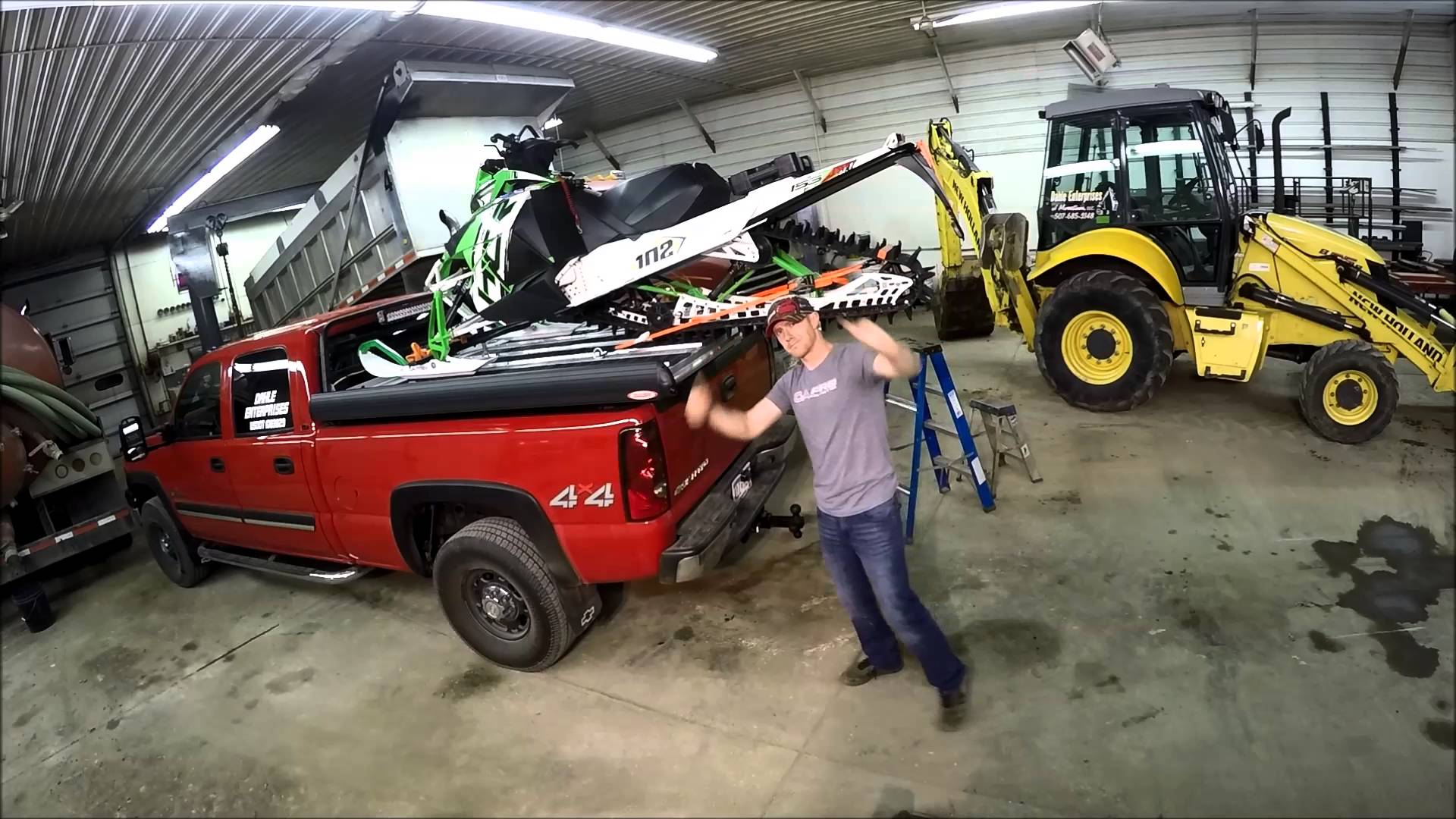
As the mercury in the thermometer begins to drop, so does most people’s interest in suiting up in a full body neoprene wetsuit and dipping into the lake for a brisk wintery ride. (Of course, that’s not to say that many of us won’t, but c’mon, there can’t be that many people as crazy as we are.) So what happens when people hang up their lifevests and winterize their watercraft for the next few months? Well, they keep playing of course! And to keep you active powersports lovers up and able, Truckboss – the leader in heavy duty-yet-lightweight truck decks – is offering not one, not two or even three special offers, but FOUR unique packages to meet your needs and riding styles.
The first being their “UTV Savings Bundle,” providing you with everything you need to haul your UTV. This packages promises to save you up to $698 USD, and comes with the Truckboss Base Deck, and the Base Deck Ramp Package (two 10-foot skinny ramps), a winch kit, six tie down rings, and under deck lights. The choice of a 7-foot or 8-foot deck has been reduced to $3599 USD (Regular $4279) for the 7-foot, and $3999 USD (Regular $4697) for the 8-foot, respectively. If you’d like to add on a Flip Extension, it’ll cost you only $399 over the regular $467 price.
The second is their second “ATV Savings Bundle” which is perfect for hunting season, allowing you to haul your ATV’s with style. With a savings up to $881 USD, this package begins with the Truckboss Expandable Deck with an optional upgrade to skinny ramps, six tie down rings and under deck lighting, with three deck length options. At 6-feet you’ll pay $3799 USD (Regular $4486), 7-feet is only $3999 USD (Regular $4719), and 8-feet is $4399 USD (Regular $5280), with an optional winch package for only $499 (Save $96).
Next is Truckboss’ “Snow Base Package” including everything you need to get you there, providing a savings up to $720 USD. It begins with a Truckboss Expandable Deck, a carbide kit, six tie down rings, and three super clamp D-rings. It too has the option of three different deck lengths, 6-feet for $3999 USD (Regular $4595), 7-feet for $4199 USD (Regular $4828), and 8-feet for $4599 USD (Regular $5389). There’s also an option to add a flip extension for only $529 (Reg $606).
Lastly, there’s the “Snow Deluxe Package,” easily the best setup for hauling sleds offering a savings of up to $899 USD. It starts with Truckboss’ Expandable Deck, a winch kit, six tie down rings, and three super clamp D-rings, two Superclamps, a carbide kit and 20″ LED light with under deck lighting. It then offers three deck lengths; 6-feet $5199 USD (Regular $6004), 7-feet $5399 USD (Regular $6237) or 8-feet at $5899 USD (Regular $6798), with the option for either a flip extension for only $529 (Reg $606), or Truckboss’ awesome Flexxloader Snow (cradle, Push Back, and buggy) for only $1099, offering a savings of $507.
So if you’re a powersports enthusiast of all kinds and makes, and for every season, then Truckboss has got the truck deck system for you. But you better act quick because this promotion ends October 31st, 2016.
It’s funny how things come about. Greg Pickren first launched SBT, Inc (Short Block Technologies, incorporated) in 1997, building the company in to the largest supplier of aftermarket jet ski parts in the world. To facilitate a large base of product, accessories and customer’s needs, Pickren launched Watercraft Superstore (WCSS) to accompany SBT in providing everything a PWC enthusiast could need to keep their ski and themselves on the water as much as possible. Shortly after the launch of WCSS, it became apparent that they would need to create their own brand of high quality traction mats and seat covers, birthing Blacktip Jetsports. These proceedings all helped to rise the tide and elevate the other companies, but something was still left on the table.
Blacktip Jetsports began reaching further into the realm of top-of-the-line quality CNC-cut mats, researching superior materials and processes to develop their traction mats. Soon, the brand found itself exploring into various applications and uses of their Elite Series of mats. Pickren and John Salvatore, the then General Manager for Watercraft Superstore came upon a larger idea: What if we offered traction mat kits for larger, recreational boats? The idea had merit, as BlackTip Jetsports’ unique soft, closed cell EVA decking provided a logical replacement to most brands’ carpeted decking. Salvatore explained to The Watercraft Journal, “We saw the opportunity and need in the marine market for another decking supplier.” Yet, it wouldn’t be until the idea was hatched for a proprietary snap-in traction mat kits.
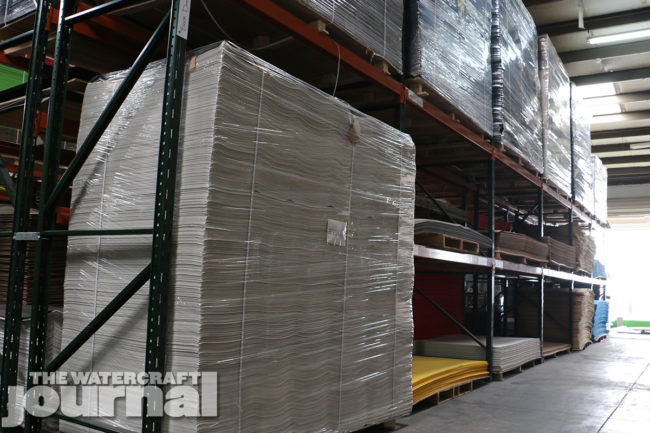
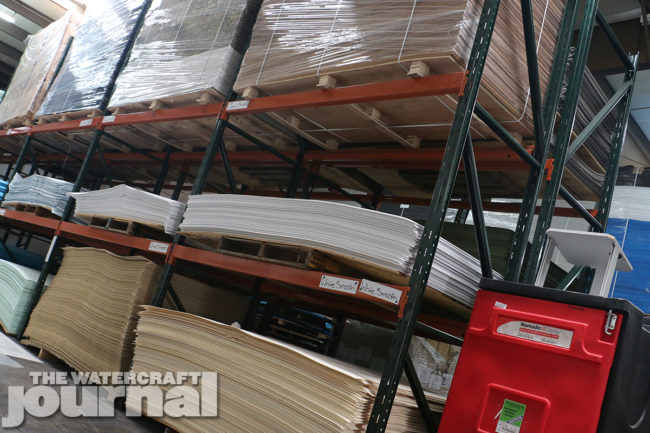
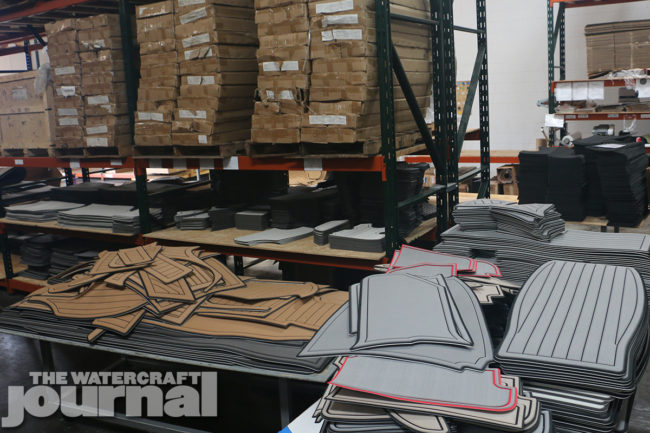
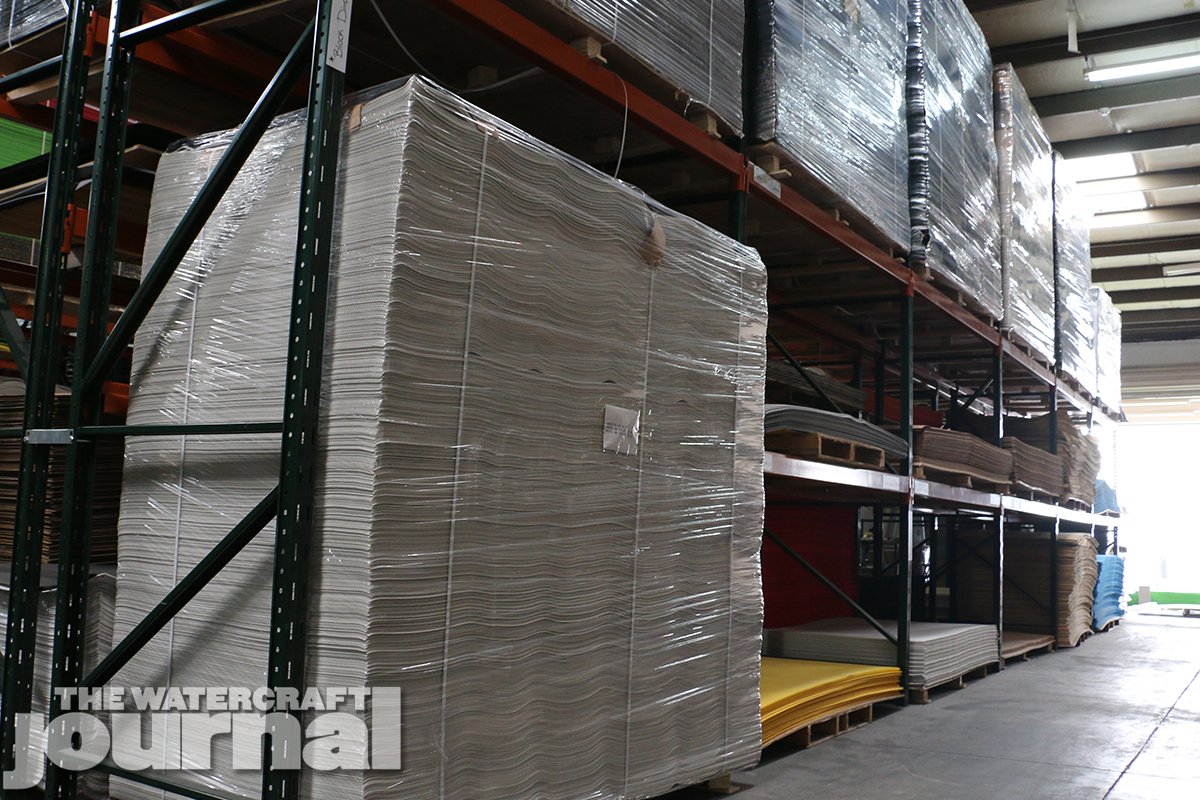
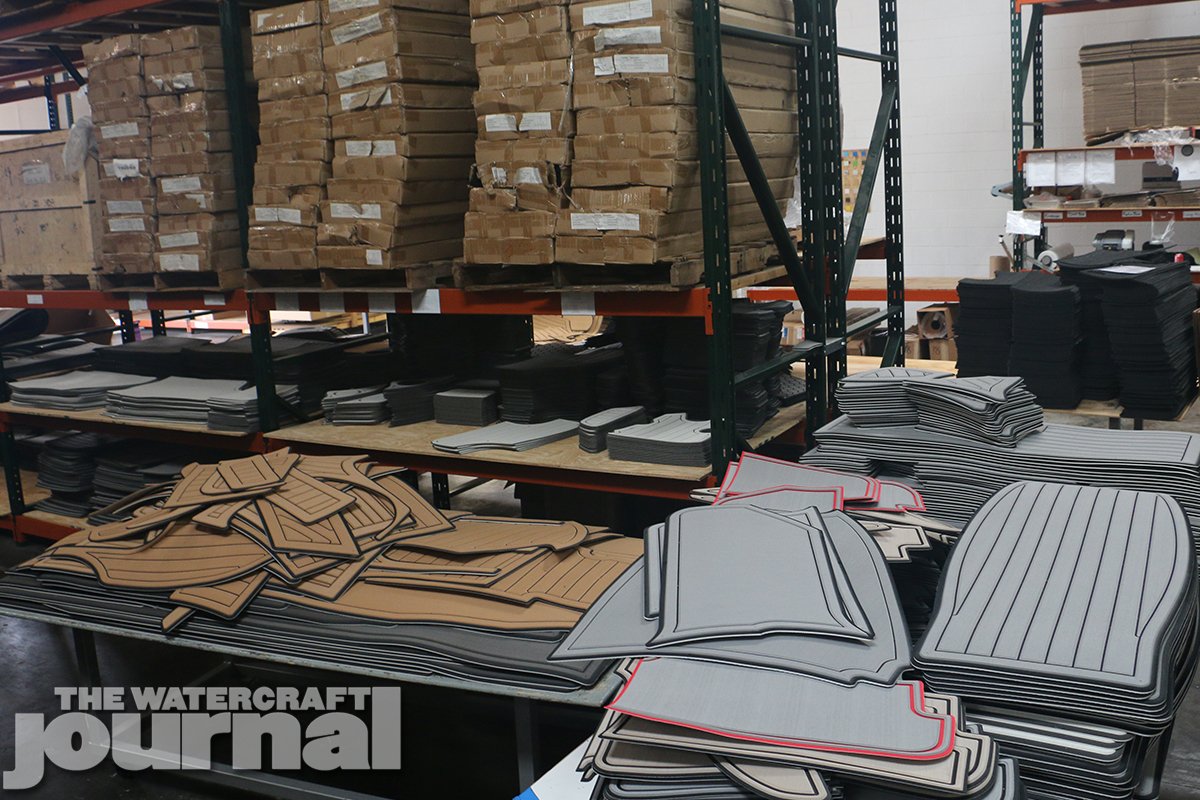
Above: Between two ends of manufacturing is the warehouse stocked with both bare, unlaminated sheets of EVA foam, and finished and ready-to-ship decking kits.
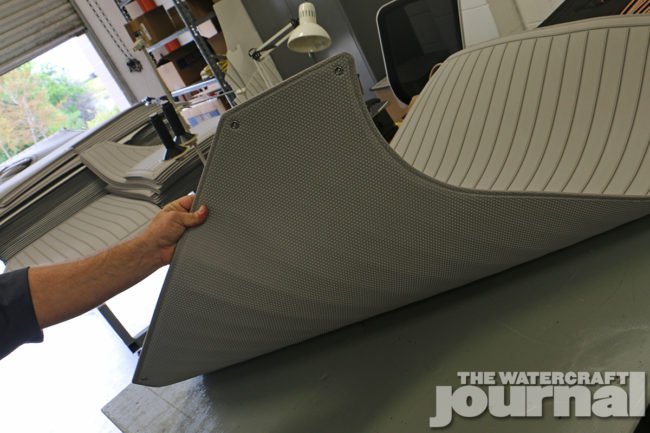
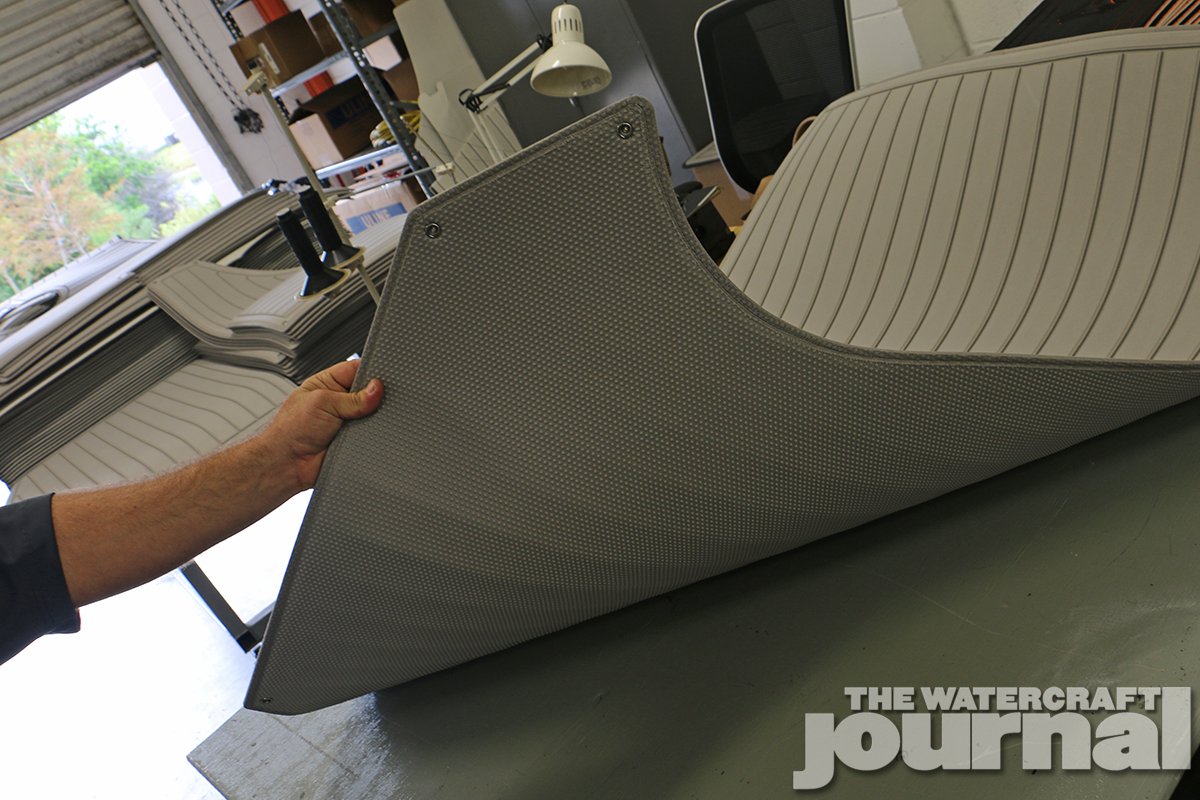
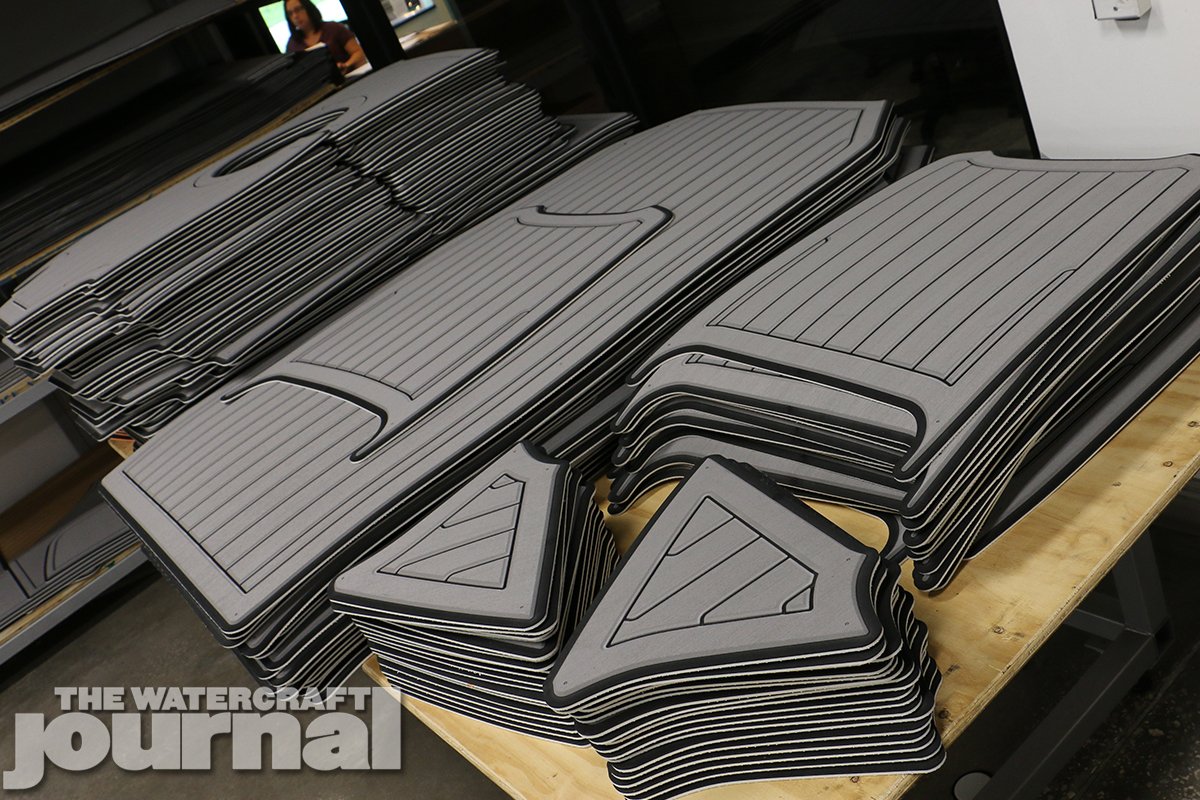
Above: Although its Snap It Series mats are what put Marine Mat on the map, they also offer traditional adhesive-backed kits for swim platforms.
Immediately, a new company was formed, Marine Mat, and went to work creating a whole new product for the boating and marine industry. “We’ll be two-years-old in January,” Salvatore continued. Within that short time frame, the newly launched company secured contracts with several manufacturers’ products (including Yamaha jet boats, Orion coolers, Cobalt Boats, Crownline Boats, Hurricane deck boats, Rinker, Scarab, Wellcraft, Fourwinns, Glastron, Seafox, SeaPro, Statement Marine, Midnight Express and quite a few more. “I think we’re over 30 OEMs in total,” he laughed. Currently, Marine Mat is working closely with brands’ art directors and designers to craft stellar, and artfully designed patterns for their latest products. So while your new jet boat might not say “Marine Mat” on it, if its wearing snap-in traction mats you’ll know where they came from.
What makes Marine Mat a superior choice for OEMs is hinged on two key components. As Salvatore explains, its pretty simple: “MarineMat has built our business by introducing our patent-pending Snap It Series removable mats – along with traditional stick down mats. In addition, we have prided ourselves on having the absolutely best customer service and shortest lead times of anyone in our industry.” Turnaround and wait times are nearly non-existent with Marine Mat’s new state-of-the-art facility dedicated specifically to the brand’s development, manufacture and distribution of their Snap It Series mats. Housed within a modest 20,000 square foot building, Marine Mat is staffed by an ever-increasing team that has more than quadrupled in size in its 2 years, from 5 to over 40 and growing.
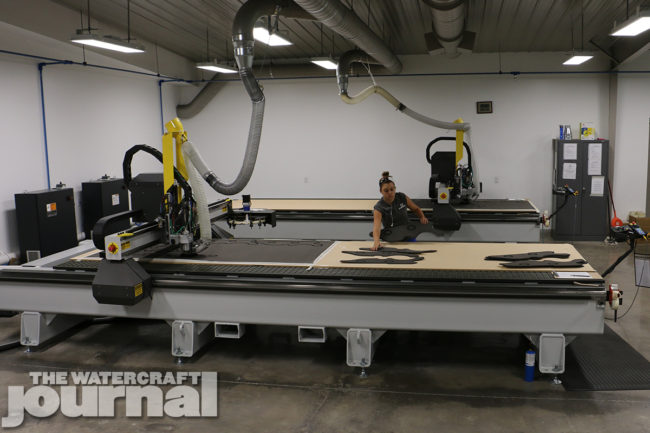
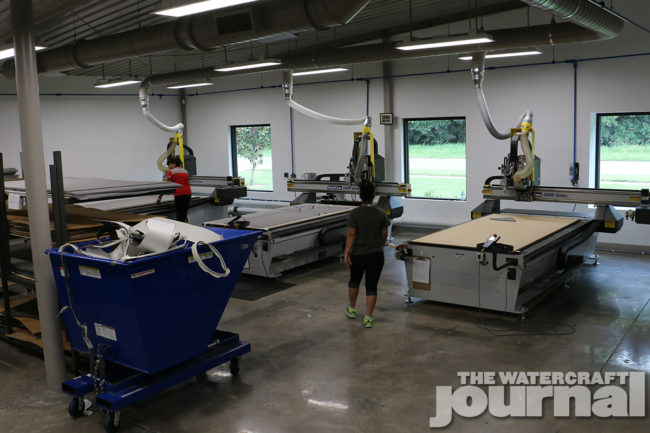
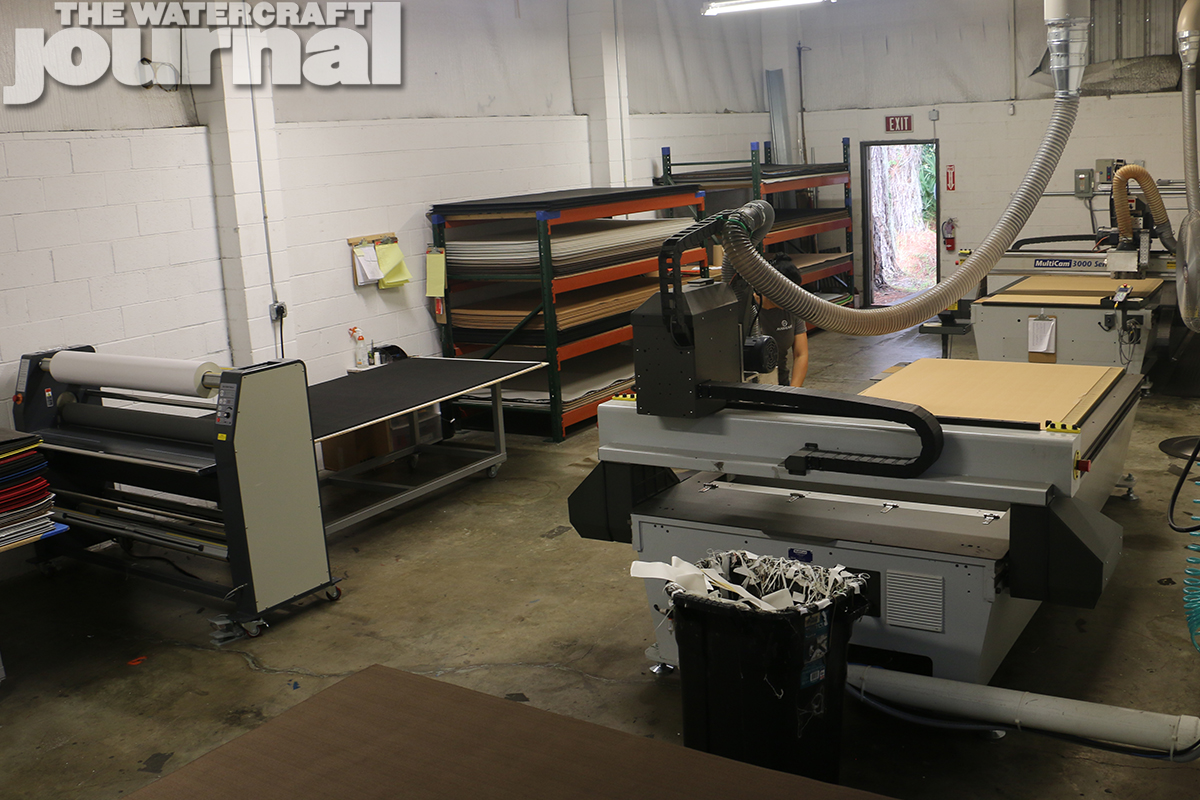
Above left: Two of the five CNC machines are known as “long deck” machines which can “pendulum” between processes; allowing a worker to set up material on one end while the computer cuts a pattern at the other. Above right: Three other traditional CNCs work non-stop from 7am-to-11pm between two swing shifts of workers 5 days a week.
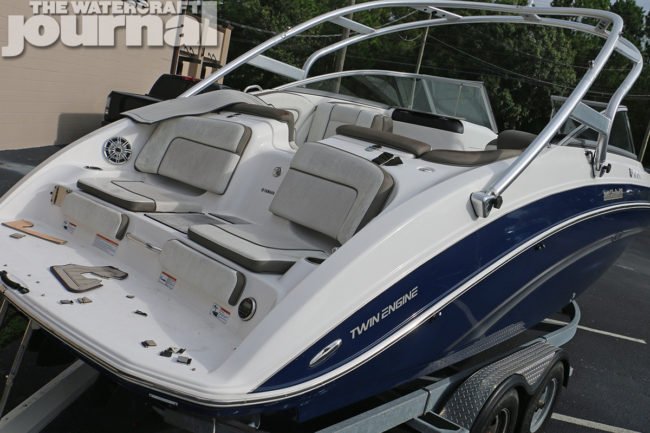
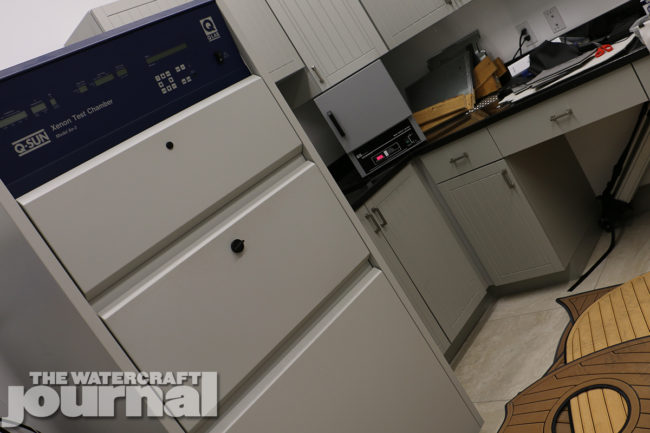
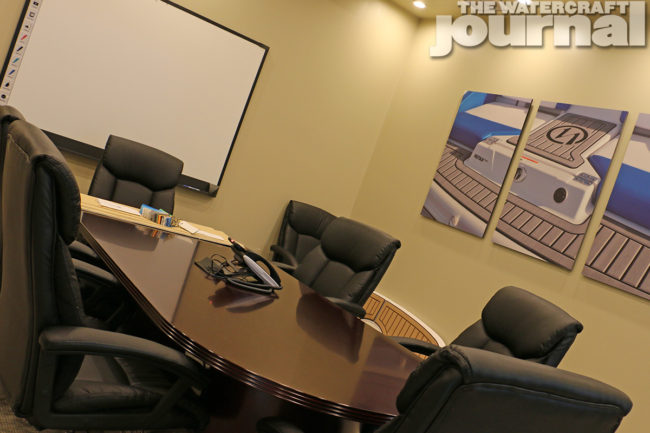
Above left: “We’re essentially killing this boat on purpose,” John Salvatore joked. “We leave it outside, uncovered all the time just to see what kind of beating our kits can take.” Above center: Other more scientific methods are also being used to stress test Marine Mat’s materials, such as this Xenon Test Chamber, which can recreate a myriad of conditions, from extreme to zero humidity, extreme heat to bitter cold, and anywhere in between. Above right: Marine Mat’s conference center.
“We maintain production two shifts (running from 7am-to-11pm) 5 days a week. This keeps our seven CNC machines in constant operation,” Salvatore explained. “Two of the five CNC machines in the front of the building are double the size – what we call ‘long deck’ machines – that work in ‘pendulum processing’, meaning a worker can set up material to be cut at one end of the table, while the other side is cutting. This means no down time.”
What struck us during our tour was how many Marine Mat employees (and the rest of the SBT, Inc. companies, for that matter) are married, related, or longtime personal friends to each other. When asked regarding this unusual business tactic, Salvatore beamed, stating, “We encourage our employees to refer friends and family. We have many long term employees that have even had their kids and even grandkids come to work for our group of companies. Even though Marine Mat is a new company, we handpicked our core management team from a group of proven long term employees from the Pickren family of companies.”
This familiarity among employees mirrors the family of companies, as they’re all strongly tied one to another, a policy that only adds to the company’s trajectory. “We plan to continue to introduce our innovative products to the marine market both at an OEM level as well as aftermarket,” Salvatore concluded. A plan which we no doubt believe is already in action.
Encompassing the new lower entry-level pricing this season is a 3-year coverage plan on select new 2017 Sea-Doo units; and the same folks that bring enthusiasts the most competitive watercraft models are offering these incentives on a local level.
In an effort to help folks like us take full advantage of their promotion this season, Sea-Doo has partnered with dealers across the nation to provide purchasing (and warranty) assistance on a broader, more local level. Popular units like the 2017 Sea-Doo Spark, a Rec Lite PWC, are currently available under this promotion – boasting an affordable price-point of only $5,299 (and including the aforementioned 3-year warranty).
However, if price-point isn’t a concern, and you’re more inclined to venture into the high-performance models like the Tow Sports, Luxury, and Performance units – you’ll be happy to know Sea-Doo includes these 2017 models under its promotion as well. And the best part is, enthusiasts can either purchase or pre-order 2017 units under this promotion between now and March 31st, 2017 when it ends – giving you tons of time to save those pennies for the model you want.
With huge promotions, tons of financing options, and a 3-year coverage plan on select all-new 2017 models, it’s easy to see why the folks at Sea-Doo offer the most versatility for PWC owners. Hit up your local Sea-Doo dealer today for a quote on your next hull. Until then, we’ll see you on the waves.
We often get asked to review products that have very little application to our industry, so much so that we often reply, “Why do you think we’d be a good fit for your product?” To which, most reply, “We don’t know. You’re name just came up. We’re just the marketing company.” In the instance of the Go Loop phone strap, we were a little perplexed as we’re a personal watercraft enthusiast magazine, not a tech toy blog. But their reply made perfect sense: “The Loop is meant for people ‘on the go’ who take their phones with them everywhere.” And if there’s anything we’ve learned in the last few years, it’s that people take their phones out on the water more than phone manufacturers would really like them to.
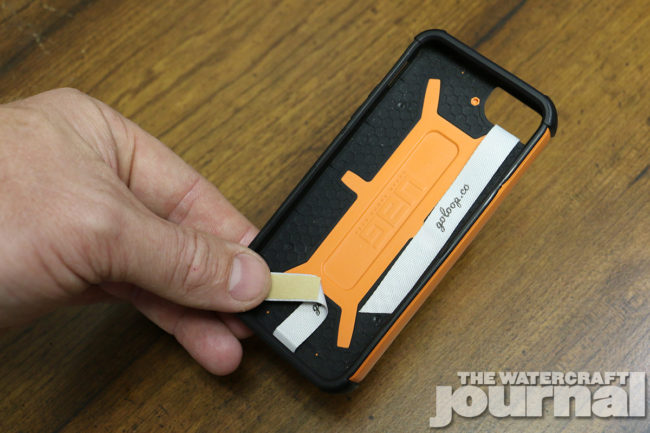
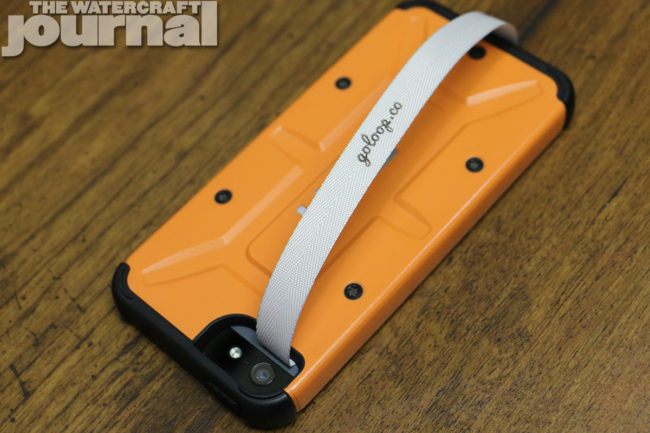
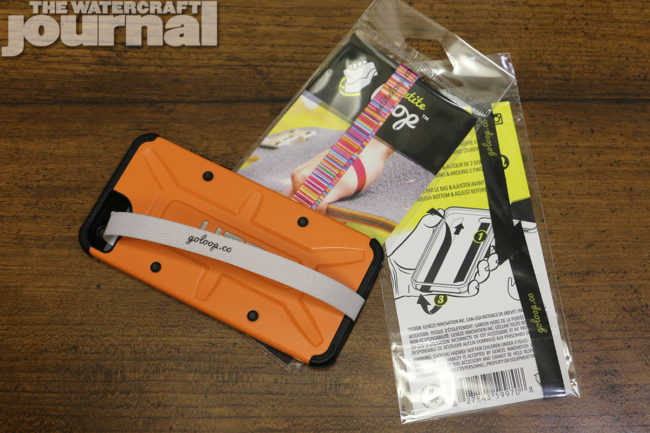
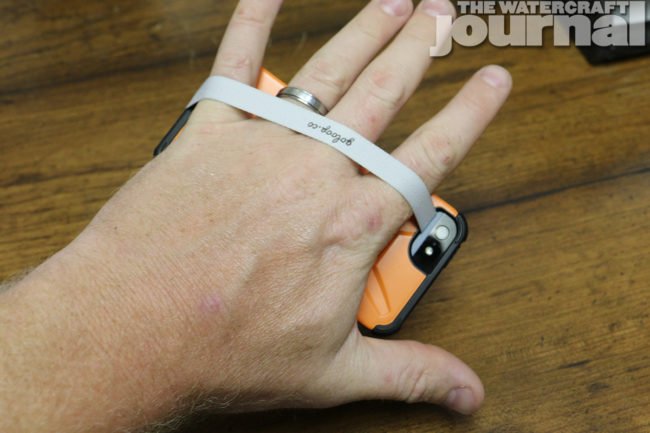
The Go Loop (or simply “Loop”) works with most cell phone cases, except for heavy duty cases like those from OtterBox or LifeProof, which are either dust or waterproof, and thereby completely sealed. The Loop, on the other hand, works with “open cases” that provide some impact resistance or shock absorption. The Go Loop provides a secure grip for your phone to “avoid unfortunate and expensive drops.” Attached by two adhesive-backed ends, the Loop makes a relaxed-but-firm strap to slide your hand through allowing for easy one-handed use (for filming or snapping selfies while out riding). The thin, woven nylon strap won’t bunch up when your phone is in your pocket, and your phone will lay flat on a table so you can watch videos.
Installation is pretty simple: Just remove your phone’s case, attach both ends to the inside of the case, looping through the camera port and either the speaker port or charging port on the other end, and that’s it. The Go Loop also has creases already folded into the strap marking where each end should bend, giving you the right amount of slack in the strap. (Don’t make it too tight or you won’t be able to slide your hand in and out easily.) The Loop is available in a myriad of colors (as well as offering custom patterns for those needing to express their individuality via a cell phone strap) and patterns as well as two styles: Petite and Ninja. For our testing, we went with a silver Ninja Loop.
While we saw this as a nice little feature, the $4.99 asking price seemed a bit much given that the strap had zero elasticity (ie. give) and looked almost no different from a strand of ribbon in our wife’s sowing kit. Additionally, given the nature of the high-speed environments PWC enthusiasts play in, we found the adhesive to be a tad weak and requiring re-gluing after one use on the water. If you’re looking to keep your phone from slipping out of your kids’ greasy hands this is a nice item to pick up, but if you’re hoping to take live streaming video of yourself while scooting across the lake at 50mph without fear of your phone slipping out of your fingers, the Go Loop isn’t going to be your silver bullet.
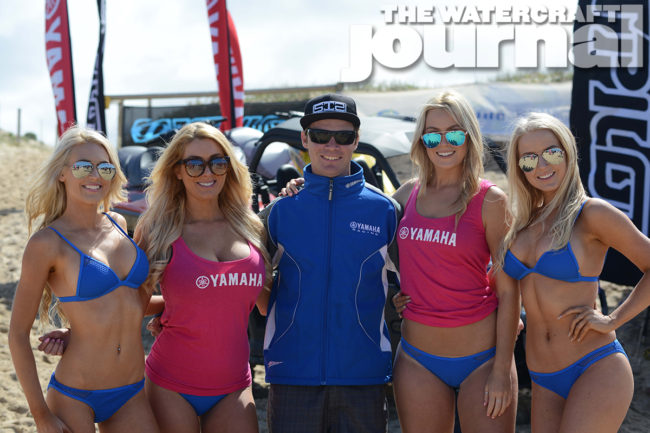
If you’re a regular reader of our content, then you’ll know we’ve covered the Rip‘n Ride event over the years. But what you may not know, is that Yamaha Motor Australia, along with Marina Bayside, Yamaha Motor Finance, and Yamaha Insurance, have once again teamed up with the folks at Rip ‘N Ride as the premier sponsor for this year’s event.
As part of their ninth consecutive year in partnership, this year’s event is expected to bring the biggest turnout yet – with some of the world’s best performing freeriders for around the world attending. Since the event was announced earlier in June of this year, more than one hundred entries were sold in mere minutes. If that’s not enough to get you excited to travel to Cronulla, NSW, this October 21-22, then get ready to be even more hyped.
“Yamaha has been involved with the Rip’n Ride since it’s conception nearly a decade ago,” said Grant Binskin, National Marketing Manager for Yamaha Marine Products in its press release. “It has proven to be the perfect platform for riders to come together and showcase their unique talents in a fun, safe and controlled environment. It’s also a great way for Yamaha to promote our unique Superjet model, a watercraft that has been the backbone of stand-up and freestyle sport-riding for over 20 years.”
Just like previous years, the event will conclude with its famous after-party, where you’ll have the chance to witness the award ceremony for the event’s winners – including a sponsored prize for each entry, and a Yamaha SuperJet valued at more than $11,3300 as the grand prize. Hyped enough yet? Then checkout Rip ‘N Ride’s Facebook page here for more information. You’ll be glad you did.
Whether you’re a watercraft enthusiast, a motorcycle enthusiast, or both – the Kawasaki Good Times World located in Kobe, Japan, is a real treat to visit in your lifetime. In short, it’s a spectacular display which boasts more than one hundred years of engineering marvel throughout Kawasaki’s history in the making; and in this century, we are fortunate to say it’s been reopened in honor of its craftsmanship.
Beginning this month, enthusiasts can once again revisit this iconic maritime museum in Japan, to experience some of the most exciting machinery that Kawasaki has to offer. Alongside displaying some of the company’s greatest motorcycle offerings reveals the ‘Heritage Zone’, a spectacular treat for enthusiasts looking to receive a broad and in-depth history lesson on how Kawasaki started.
Speaking of history, Kawasaki has added an all-new exhibit on display at the Good Times World museum. In celebration of the 120th anniversary of Kawasaki, a special event will take place where enthusiasts will have the visual pleasure of examining an authentic Hien Type 3 fighter place on display (which was recently restored at the Kawasaki Gifu Works). While the main focus of the exhibit is on the fighter plane and its restoration, its secondary purpose is to introduce enthusiasts to the evolution of supercharger technology.
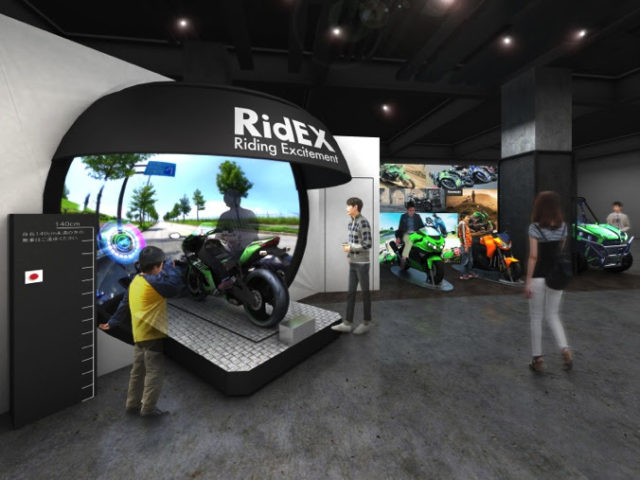
For those of you looking for more of a ‘hands-on’ experience, check out the museum’s RideEX riding simulator – where you can take two laps around a circuit on a Ninja ZX-10R sportbike. For more information on the reopening of the Good Times World, including ticket and parking information, head over to Kawasaki’s website, and checkout the dates for availability.