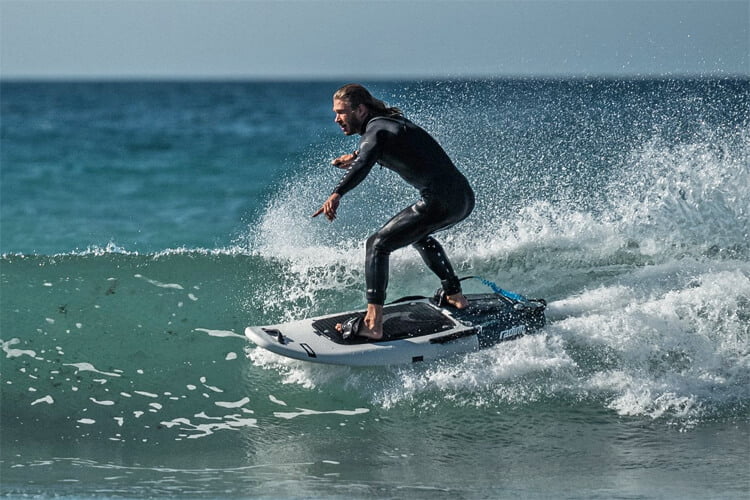
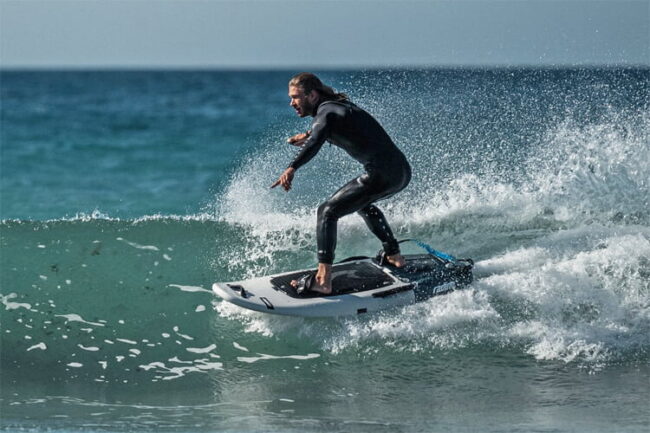
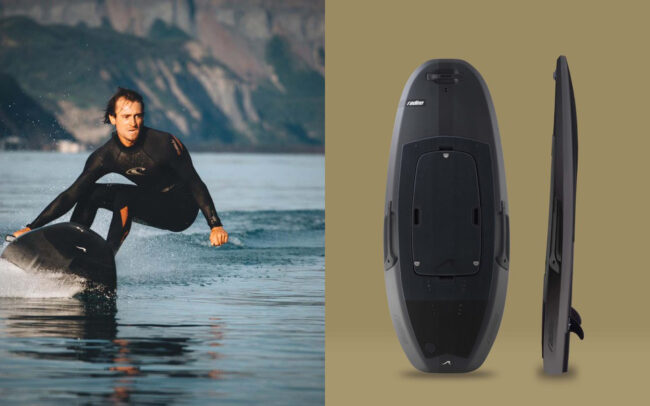
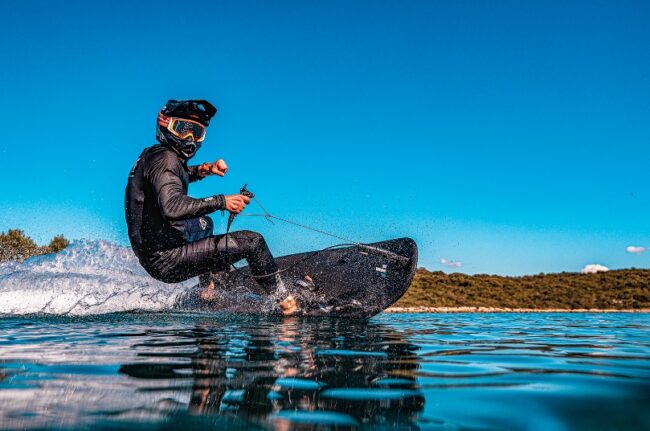
The Carve is Radinn’s high-performance model and it brings out the surfer in you when you ride it. The Carve is made for advanced riders who are ready to get after it and try new tricks to go even bigger on the water. The board was designed for making tight turns and riding on rail like on surfboard. It is super responsive and on point when it comes to pulling huge cutbacks and getting big airs. Add a pair of bindings and you can really go off!
You can see it in action here in this killer clip of the Radinn Carve Phantom with a rider locked in and going off! The slick black board looks great under the rider’s feet as he smoothly transitions from rail to rail on some glassy ocean swell. The bindings make all the difference when the rider takes to the air or pulls off deep turns on the wave face. A pair of FCS twin fins keep it loose when you want to shred and bite when you want to keep it on rail.
Watching the Carve in action is sure to get you stoked and ready to make waves with Radinn. You can head over to the Radinn website to get all the details on the Carve and their complete line up of boards and other hard goods.
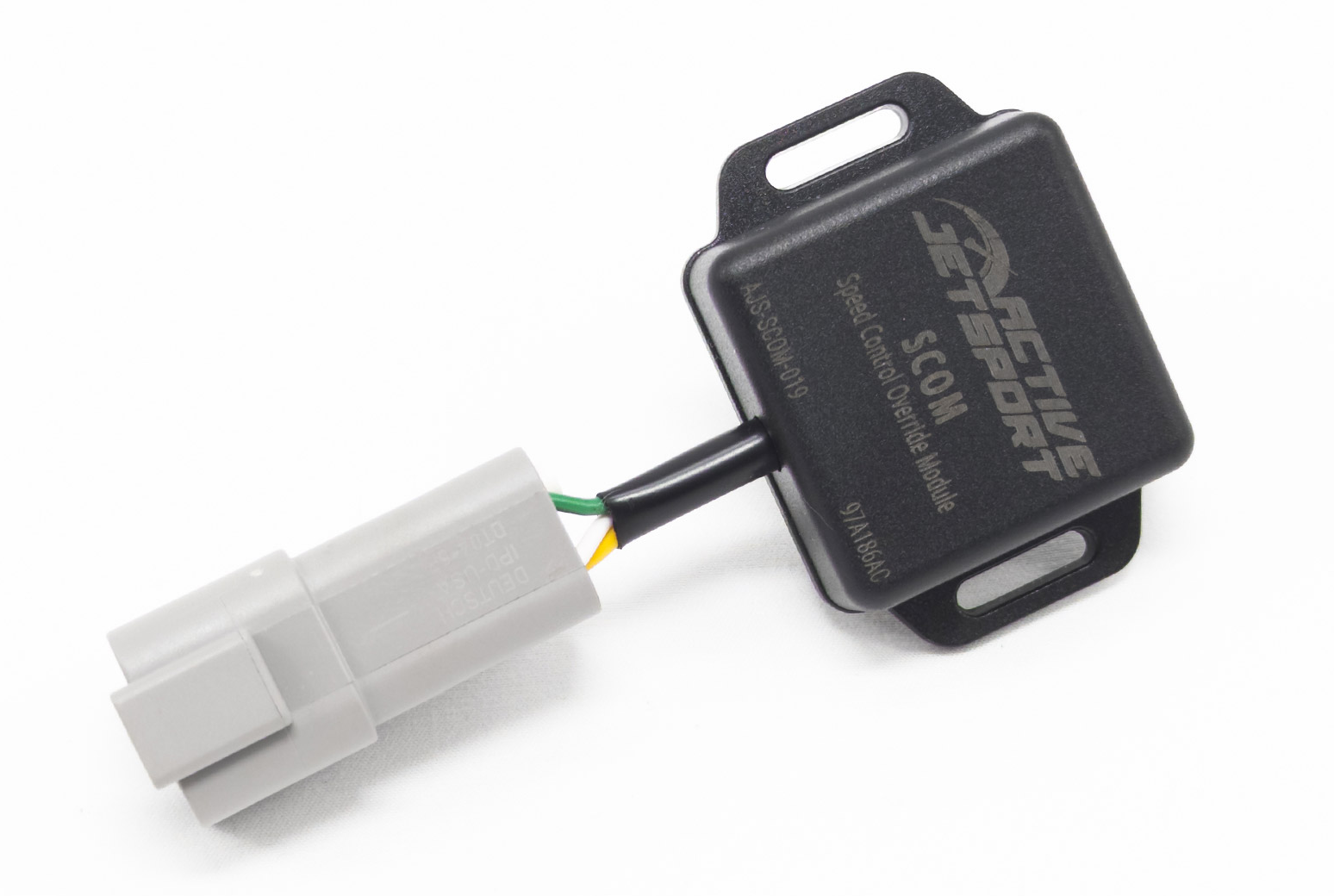
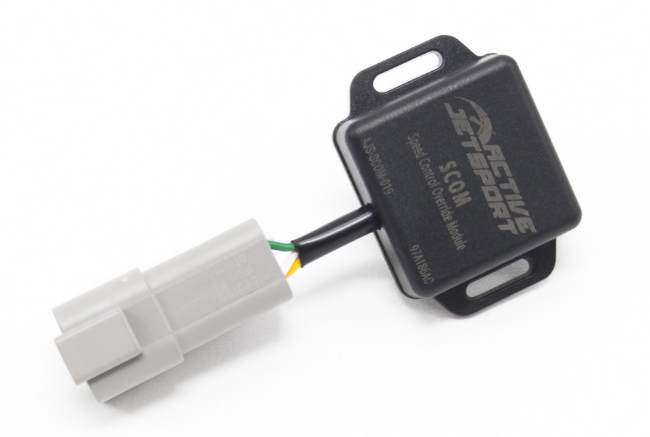
Hey, quick question: Do you have a stock 2019-or-newer Sea-Doo 300? And are you tired of tapping out around 68-69 miles per hour but don’t want to make any permanent modifications? OK, one more question: Do you want to go faster without having to pay for it? Well, Active Jet Sport has good news for you!
Once installed (which takes literally 30-45 seconds), the SCOM allows the engine to continue running at full throttle, permitting your Sea-Doo to run reliably at speeds as high as 75-76 miles per hour (depending on rider weight, fuel level, altitude and weather conditions). It’s easily the best bang-for-the-buck modification you can make.
And like we teased, Active Jet Sport is giving one away to one lucky winner this coming December 9th. You’ve only got a little over a week or so to enter to win, so you better enter now here!
With 2 months behind me as Editor of The Watercraft Journal, I am almost starting to feel like I’m getting into the swing of things, but there is a long way to go, in my mind, before I am feeling comfortable at the helm of the publication that WCJ Editor-in-Chief Kevin Shaw put so much time and energy into launching and growing.
One of the keys to keeping the content as fresh and relevant as our readers deserve, is staying fully in touch with all aspects of the PWC world.. From new product launches, tech reviews, races and rec rides, to beginner tips, racer reviews, and spotlights on some of the amazing people involved in PWC – whether it’s racers, weekend riders, or adventure junkies.
To accomplish that, I scour, on a daily basis, social media, news releases, blog posts, Google alerts, podcasts and company websites, as well as stalking the pages of every race promoter and rec-ride organization I can think of, and I think I now officially am a member of more than two dozen Jet Rider Nation groups.
But it’s going to take more than that! Not only is my time limited, with a new house, a full time job with the radio station, and plans to open a restaurant and bar this spring on top of my editor duties here, but the good news, the REALLY good news, the timely news.. Isn’t always in print… and that’s where y’all come in.
I need YOUR help. Know of a great secret place to take a weekend jet ski trip to? Have tips on how to best winterize your ski or a step-by-step guide for newbies on how to get back on their ski when they (inevitably) fall off? Want to talk about your last win (or tough loss) at a race, or announce the schedule of your group’s next group ride? Is your company releasing a new product, or updating your website?
In the infamous words of Sandy Olsson, “Tell me about it, stud (or studette).”
Individuals, promoters, racers, ride captains, company promotions managers, weekend riders … I want to hear from you, because the things that are interesting to you, are likely things many of our readers would also be interested in. You can email me at [email protected], or reach me on Facebook at facebook.com/SouthernShutterbug.
In the meantime, stay tuned to The Watercraft Journal website and Facebook/Instagram accounts for daily news … in the coming weeks before the new year, we’re featuring a late-season rec-ride right here in my neck of the woods in Northeast Georgia, checking in with the results from the UIM-ABP Aquabike Endurance World Championship and Aquabike World Championship GP of Lake Tobi, learning about a doctor that does house calls – on a jet ski, delving into a new all-carbon supercharged stand-up monster of a ski, announcements about upcoming The Watercraft Journal IRL Podcasts, plus much more.
In addition, as I go back in time to begin pursuing all of Kevin’s old posts to learn as much as I can about the full extent of the PWC audience and community (my involvement for the last 10 years has been limited to the race side of things), I will be posting on a (somewhat) regular basis, time-machine posts to WCJ Facebook and Instagram accounts, revisiting articles, interviews, product releases and exciting news worth remembering. Starting with a repost, later today, of The Watercraft Journal’s very first article, and Kevin’s words about the mission, purpose and promise of the publication when it started – and which I, as the new editor, hope to uphold!
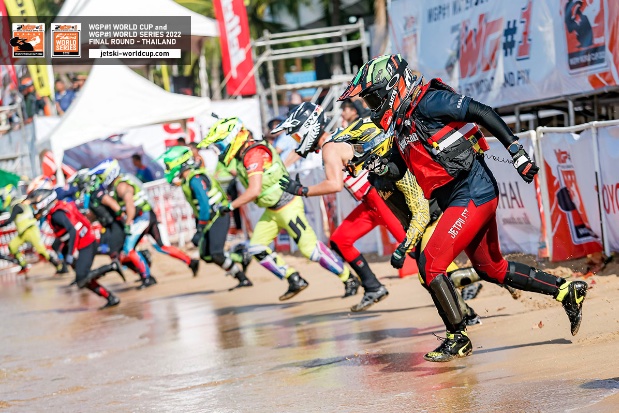
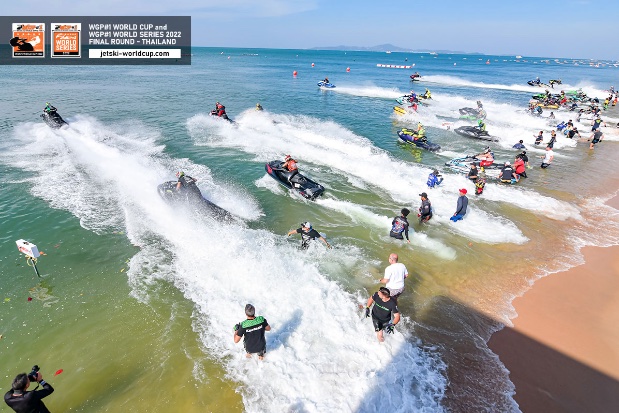
On Wednesday, Nov. 22, WPG#1 Waterjet World Series officials issued a priority message for racers looking to compete at the Dec. 13-17 World Cup at Jomtien Beach, Pattaya, Thailand.
According to the notice, riders who did not attach their photo to the entry form will NOT be allowed to race. The notice did say racers who did not attach a photo to the entry form could email the photo, but the deadline for emailing photos was listed as the same day as the notice was published. No response to inquiries on this matter have been received as of press time.
According to the notice, “Following the regulations of the tournament, the complete entry form must have the applicant’s photo attached, as we announced on the race notice. However, some riders have not attached their photo with the entry form, so we will consider this entry form ‘not complete’. For those who did not attach the photo, please send us your photo by 22 November 2023 via [email protected]. Otherwise, your name will not be allowed to be on the list for competition.”
According to the official riders list published by WPG#1 Waterjet World Series officials on Nov. 15 and updated on Nov. 18, there are entries for all 25 classes, including eight USA competitors
In the Pro/ProAm classes, here’s how the numbers add up:
There are four American entries in the Pro Ski Grand Prix class out of the 16 racers registered, including Sebastien Girello (USA/GoFast US), Jonathan Phan (USA/Kawasaki-Hotproducts), Deven Farthing (USA/Farthing Racing), and James Wilson (USA/Team Kawasaki).
Other top names in the sport lining up for this class include Kevin Reiterer (Austria/Flamingo Racing), Quinten Bossche (Belgium/QB1 Racing), Jeremy Poret (France/Jeremy Poret) and Mickael Poret (France/77 Racing).
In Pro Sport GP, UK racers James Bushell (UK/158 Racing) and Simon Belcher (UK/Handy Motorsport) will face off against 7 Thailand racers.
In Pro Runabout 1100 Open, Saly Ou Moeut (Cambodia/Flamingo Jet Ski Team) will line up with one Philippines racer, a racer from China, and eight Thailand racers.
The US flag makes an appearance in the lineup for the Pro Runabout GP class, with Dustin Farthing (USA/Farthing Racing) on the line of nearly 20 riders, including Francois Medori (France/Easy Rider), György Kasza (Hungary/Kasza Racing), Rashed Aldawas (Kuwait), Mohammad Burbayea (Kuwait/Kuwait Jet Ski Team), Permphon Teerapatpanich (Thailand/Pusan Seadoo Jet Ski Team) and James Bushell.
In Pro Freestyle, coming off of a spectacular performance in Havasu, Demi Morgan (USA/High Speed Industries) will take on a field of eight; four from Japan and four Russian competitors.
In the packed Pro-Am Endurance Open class, a single US flag next to Anthony Radetic’s name (USA/SEA-DOO) stands among a field of more than 30 racers, 12 of which are Thailand competitors. Among the entries are Guy Greenland (Australia/GeeRacing), Saly Ou Moeut, Kylie Ellmers (New Zealand/Flamingo), and Oraphan Teerapatpanich (Thailand/Pusan Seadoo Jet Ski Team)
In the ProAm Womens Ski Grand Prix, River Varner (USA/GOFAST U.S.) will hit the start line with Maria Besschastnaia (Russia/Russia Rocket), Emma Nellie Ortendahl (Sweden/SAS Racing), and Kamonwan Noenhong (Thailand/Jet Ski For Rent By Jompol).
ProAm Ski Stock is a large class, with 15 riders, but no US competitors. Among those racing are Emma Nellie Ortendahl and Tanawin and Tanawid Molee (Thailand).
No other classes feature US riders as of the latest report on Nov. 18.
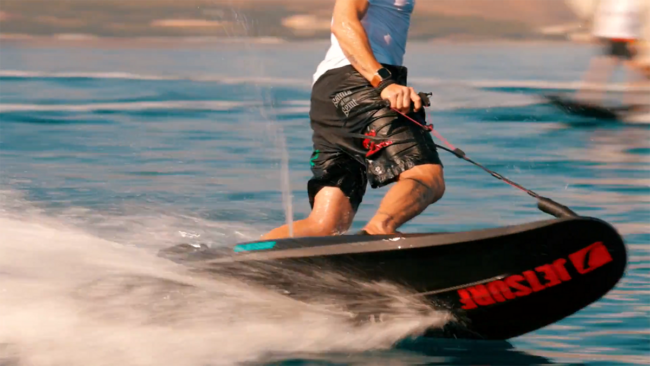
JETSURF has come out with a new motorized surfboard and it is cool. The Race DFI Ski is the lightest on the market, weighing in at under 60 pounds. This means almost anyone can carry it. Two versions hit the market, with the Race DFI designed for the beginner and the Titanium DFI made for the extreme rider.
The Race DFI is easy to handle, and just powerful enough to give you a thrilling ride, making it perfect for the novice rider. The Race DFI is so small and light, it can be stashed in a car with no truck or trailer necessary to take it to the water. The Titanium DFI is a high-performance ski designed for the experienced rider. It has more torque and is for riders who can handle a more powerful ski and looking for an adrenaline rush.
The Race DFI is so small and light, it can be stashed in a car with no truck or trailer necessary to take it to the water. The fresh design now comes with a deck covered with a soft traction pad and the hull is a lightweight carbon fiber to aid in performance. The Race DFI is a versatile ski, meaning you can ride it like a surfboard or a standup jet ski.
The handlebar pole and handle rope are fully adjustable so you can ride it your way. It also comes with a set of FCS fins to help you set your rail when making huge turns. The Race DFI also has an alternator to keep its 2-stroke engine and battery cranking so you can ride longer. It even has low emissions so you won’t stink up the waterway.
Watch Anthony Squire from JETSURF take us through the JETSURF Race DFI’s key features in this detailed video.
RIVA Racing may be jumping the band a bit, but they’re putting customers in the lead with early Black Friday savings that started today and run through midnight on Sunday, November 26.
With a lineup of sale items boasting 15% to 20% slashed from the retail price, and free shipping on qualified orders, racers, rec riders and everyone in between could see up to 40% clipped off their final purchase price.
And price cuts run across the board, from performance products, riding gear and wetsuits to covers, towables and even maintenance products.
Featured products include the RIVA Maptuner NANO, which The Watercraft Journalintroduced earlier this month. Normally listed at $299.95, RIVA’s Black Friday deal brings you plug-in horsepower for only $254.96.
Also, a full gamut of steering systems are headed straight to your shopping cart with Black Friday prices, including the RIVA Kawasaki 2022+ Ultra 310 Pro-Series Steering System, cut from $1,199.95 to $1,019.96; the RIVA Yamaha 2022+ FX Pro-Series Steering System dropping from $729.95 to $620.46; and the RIVA Sea-Doo 2021+ RXP Pro-Series Steering System cut from $730.95 to $621.31.
RIVA’s time- and effort-saving performance kits for Sea-Doo, Yamaha and Kawasaki are all 15% off, and slashing the price on another instant favorite introduced on The Watercraft Journal earlier this month, you can grab RIVA’s new iDF Delete Kit for almost $225 off the listed price.
The sale doesn’t end where the racetrack stops, though, and up to 15% price drops run throughout RIVA’s departments, including Hydro-Turf mat kits, seat covers, maintenance products, graphic kits and beach stands.
And to keep you looking sharp and riding safe, the Riding Gear department is chopping up to 20% off vests, wetsuits, tour coats, gloves and more. Even the new Jetpilot Vintage Class Nylon vests are reduced for Black Friday, dropping from $74.95 to $50.
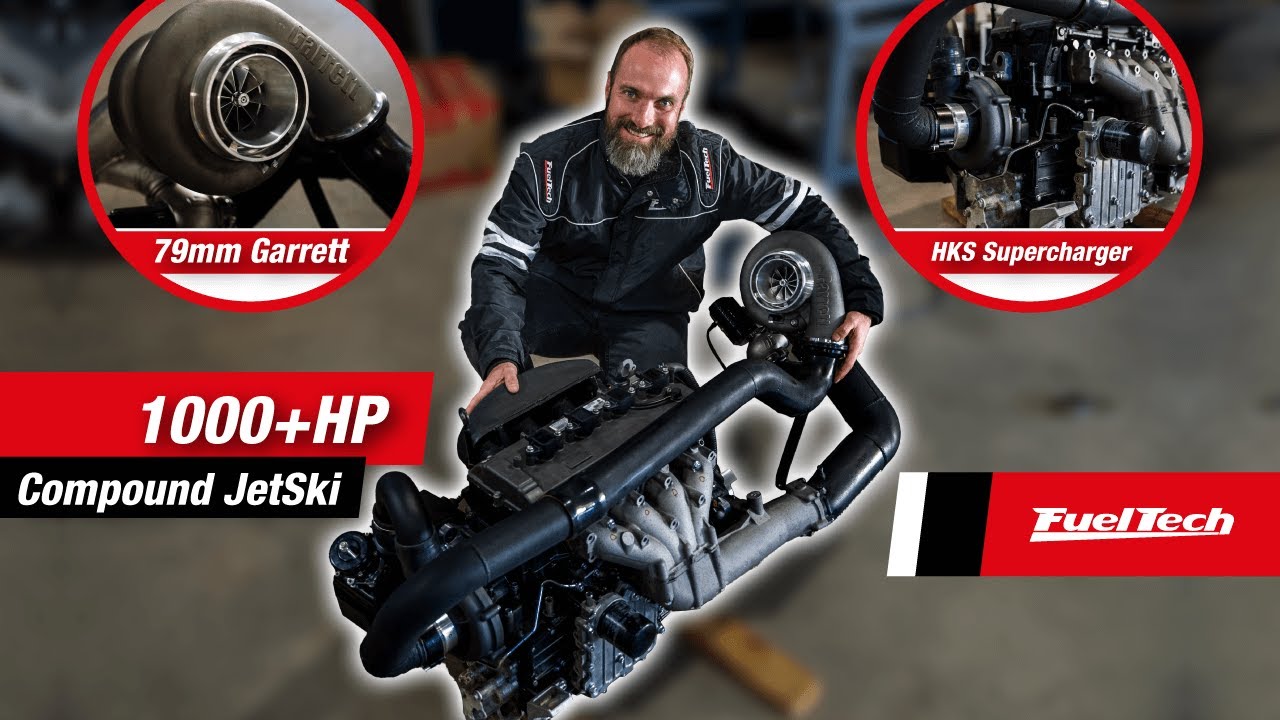
Anderson’s penchant for devising simple solutions for seemingly complicated performance issues has resulted in massive breakthroughs in the top speed/racing arena. One such hurdle has been how to best maximize the boost (increased intake atmosphere) of a supercharged engine.
In the video below, Anderson details that the entirety of the current pool of HydroDrag participants are seeking these extraordinary horsepower numbers all wrong. Rather than radically re-engineering the engine for maximum power output (he uses a SVHO in this instance), he suggests leaving it be.
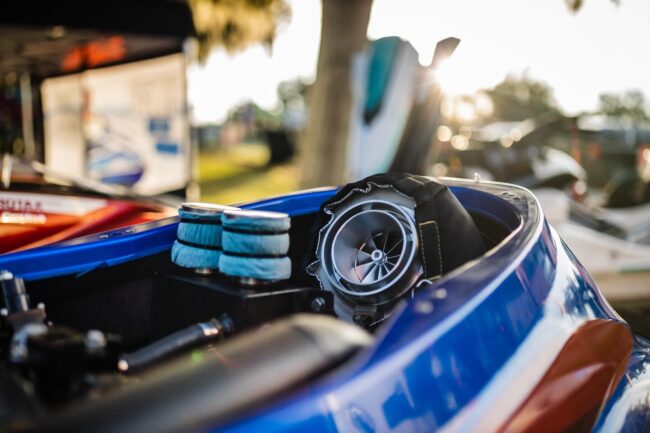
Rather, he details how building the engine for maximum longevity (superior oiling, fueling and durability) and force-feeding the supercharger through a compound turbo system allows the supercharger to operate within its “safe” parameters requiring no extra effort to generate added boost.
Instead, Anderson illustrates how the SVHO’s supercharger is a 2-to-1 multiplier; and when fed 10psi of boost, the supercharger compresses that intake charge to 20psi. Therefore, when fed 30psi from a Garrett turbo, the supercharger presses out an incredible 60-plus-psi, with minimal back pressure.
When paired with a FuelTech FT550 ECU and an electric blow-off valve, the combination can literally command boost on a whim. To quote Gaddis, “This is the future of performance PWC.” The video below is an incredibly detailed tutorial that will have many rethinking their current combinations.
When you’re not operating a traditional brick-and-mortar store, getting the word out to the wide, wide world can be a little tough. Thankfully, social media can be harnessed to make the globe your sales counter if done right. With Thanksgiving only a few short days away, and consequently the single-most gluttonous sales day of the Gregorian calendar – Black Friday – Impros Impellers is ginning up a new way to save big on your PWC.
In a recent Facebook post, Impros offered a unique way to drum up some social interaction by encouraging would-be savers into commenting and sharing this post (click the hyperlink, dude). In commenting and sharing, Impros will automatically enter you into a raffle to win even more savings in addition to the discount you’re already getting through their November 24th-through-26th sale. It’s really that easy.
Here’s the original post, but to enter to win more savings, you’ll want to go to Facebook, comment the word “SALE” and share the original post to your profile’s wall. “Did we say we weren’t gonna run sales any more? We changed our minds Friday, Nov 24 thru Sunday, Nov 26 – BIG BIG BIG Black Friday SALE y’all! COMMENT SALE and SHARE this post for a chance to win an extra savings on top of the already planned sale ENTER TO WIN NOW “
Impros is the world’s leading name in customized performance aftermarket impellers and jet pumps for personal watercraft. With over 35 years of experience, Southern California-based Impros promises stellar customer service, one-on-one communication and quick response times. Don’t get stuck with knock-off Chinese junk. Buy it once and from the best, Impros.
Not everyone can live in Florida. And as strange as it may seem to some, not everyone wants to live in Florida. (Gasp!)
But for personal watercraft aficionados – whether you’re into speed and podiums, family fun days, or somewhere in between – there is one thing that cannot be denied: winter months in the northern climes are not suited for on-the-water fun. Even in the southern US regions, the upcoming months are not for the faint-of-heart when it comes to climbing onto a fast-moving vessel moving over frigid-temperature waters, especially when you toss in some wind-chill factors.
But all is not lost.
While grabbing the nearest and cleanest t-shirt, and pair of comfy shorts and barefooting it as you kick up a few lake wakes with your jet ski of choice is off the list of options (at least the majority of non-Florida people!) for the next few months, that doesn’t mean that there is no option but to winterize and lock away your onboard fun until spring sunshine comes back around.
The Watercraft Journal took a cruise through the RIVA Racing webstore to see what we could find to help extend the riding season.
Starting from the ground up, and from inside out, staying warm requires toasty-feeling toes, and the proper socks and riding boots can go a long way toward making cool-weather riding enjoyable instead of agonizing.
For socks, RIVA carries a classic crew knit sock, but it’s the water socks created specifically for watersports and to be worn with riding boots will give you the best stay-warm bang for your buck. RIVA carries both the Works H20 Design water socks ($12.95) and the Jet Pilot Neo Ride socks ($19.99).
For boots, RIVA carries several options, including the H2o Design Alpha-1 boots for adults and youth ($109.95-$129.00), the JetTribe Dual Ride Boots ($98.99), the JetPilot X2 Phantom Flex-lite boot ($79.95) and the Sea-Doo riding boots for $92.89.
For the other always-feels-cold extremities, Riva carries a wide range of gloves from a number of brands, ranging from $24.99 to $46.89 for the SeaDoo Neoprene gloves, providing warmth, padding and grip.
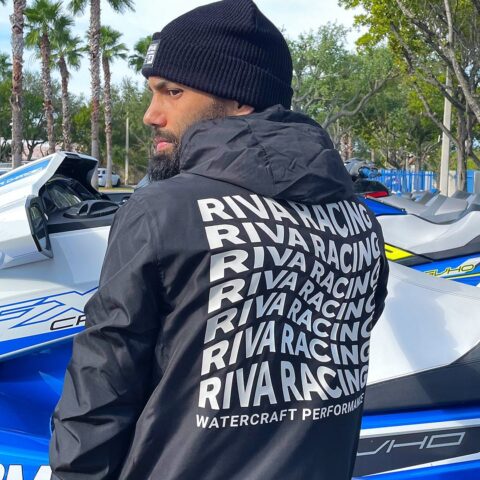
While hats aren’t practical while riding, keeping heat from escaping out of the top of your head is important and RIVA’s hooded sweatshirts, tour coats and shirts can help.
It’s easy to forget just how dire the personal watercraft industry was looking a decade ago. Sales had plummeted nearly by half from only four years previous, with manufacturers producing heavy, oversized full-trim 3-seaters that rivaled the costs of most motorcycles and even a few entry-level cars. Moreover, the average age of the typical new unit buyer had crept closer to retirement age than ever before. Coupled with a decimated economy, PWC sales were going down the tubes.
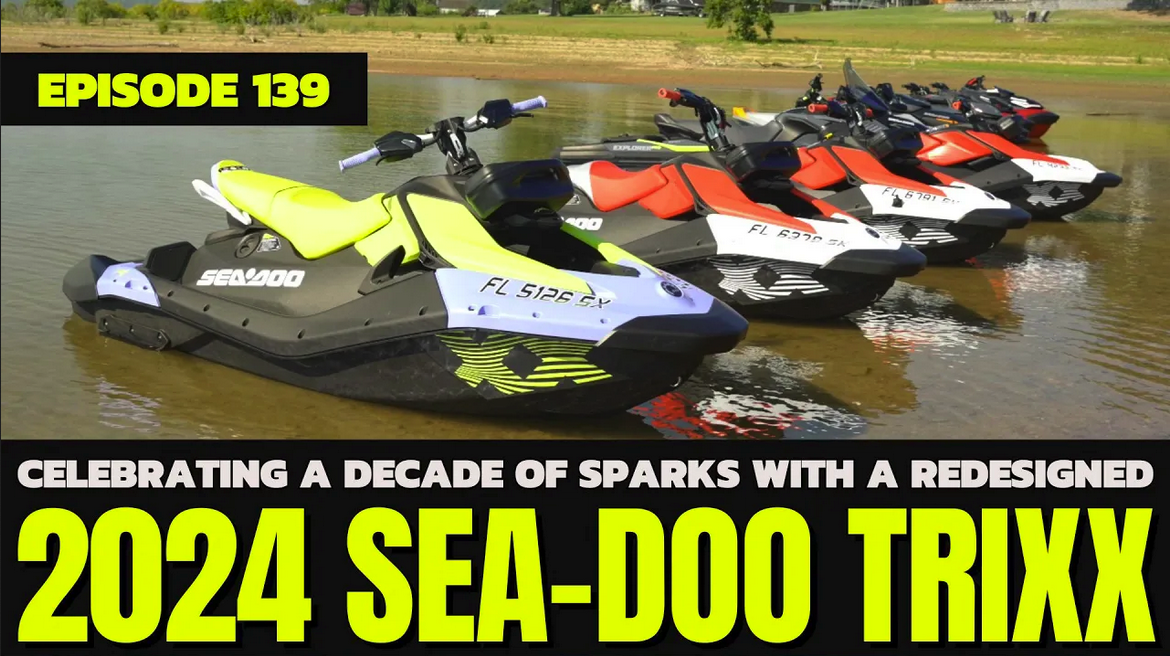
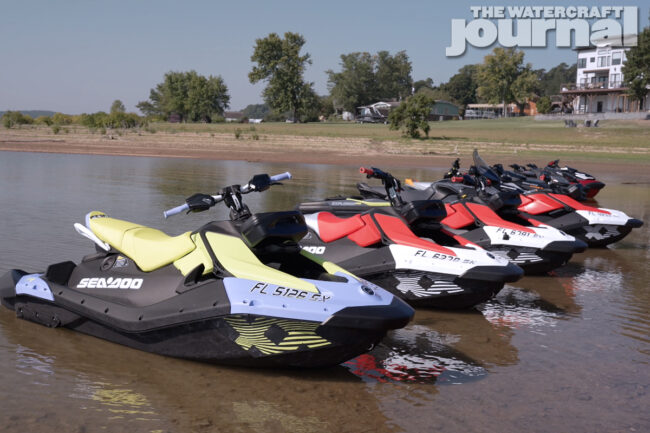
That is until Sea-Doo wholly bucked the trend and introduced the world to the Spark. Built from a two-piece polypropylene hull and deck, and powered by a repurposed snowmobile engine, the Sea-Doo Spark was a fraction of the weight and size of even then-entry level watercraft. Developed under the charge of “two on a trailer for $10,000,” appealed to much more than the originally targeted audience of youthful 20-somethings.
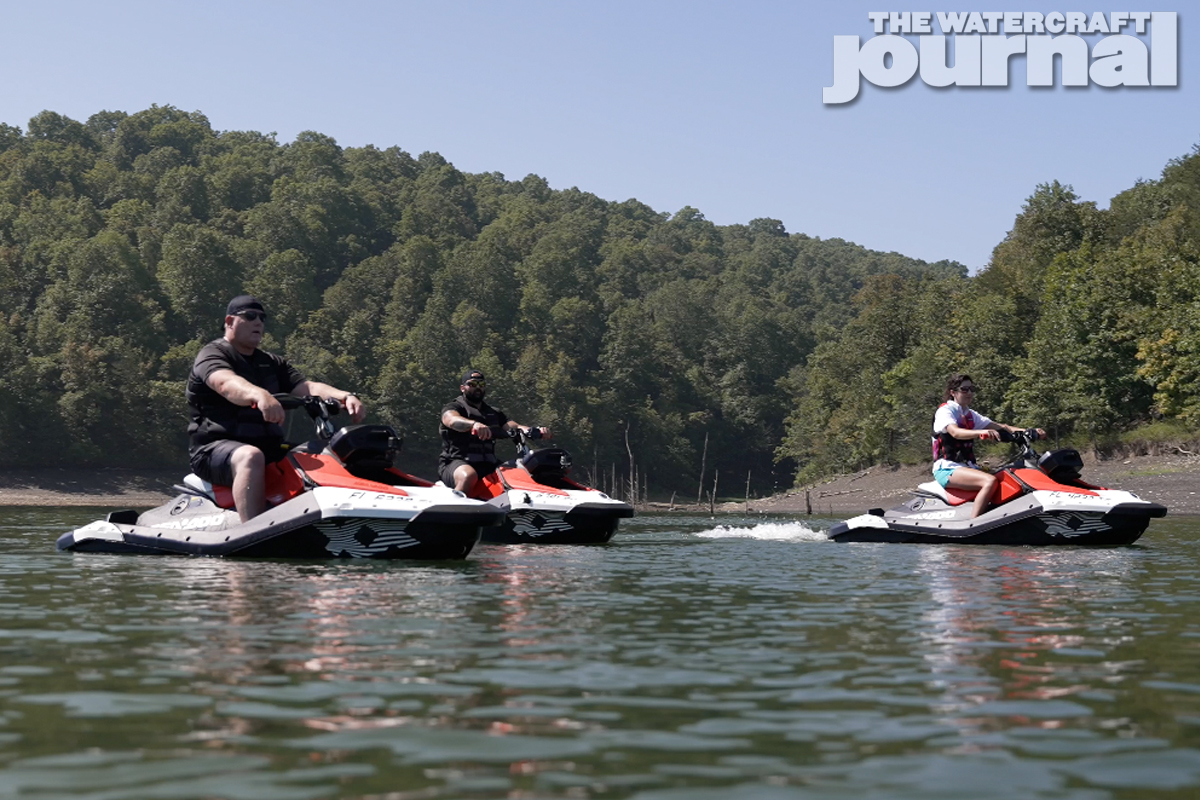
Sea-Doo’s Spark – and the eventual Trixx model – reignited an interest in stripped-down, frills-free playful watercraft; machines that reveled in being loose, slippery and just a little rowdy. Sold standard as a two-seater (with an optional 3-seater seat and deck extension), the Spark was ideal for the single rider looking to execute powerslides, hoping white caps and spinning wildly on demand. It was, by most accounts, a flawless throwback to the runabouts of the mid-1990’s.
Equally, Sparks became the primary candidates for lake house docks and toys for the grandkids to use while visiting grandma’s cabin. In addition to luring in a new crop of PWC enthusiasts year after year, Sparks also made for perfect “gateways” into larger, more capable watercraft. By all metrics, the Sea-Doo Spark was critical in reinvigorating new unit sales, even if the customer left with another model. Spark was bringing people back to the showroom.
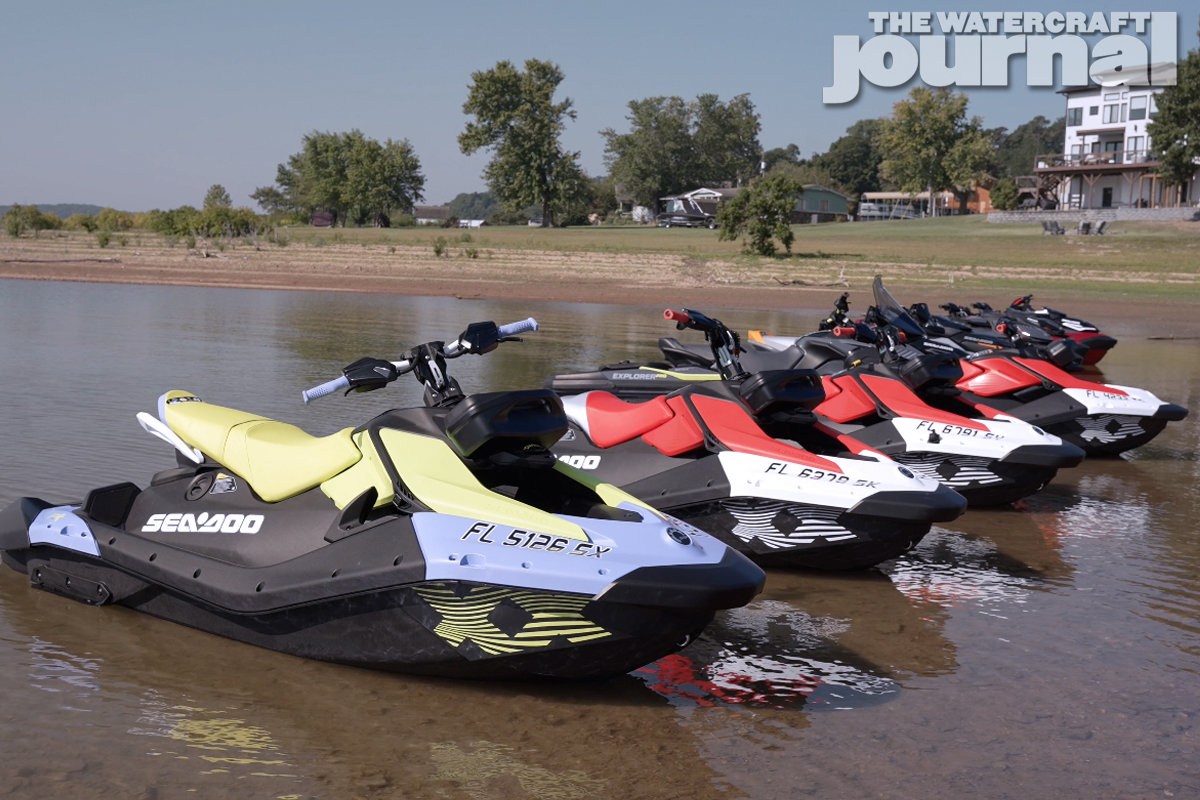
So for its 10th anniversary, it made sense that Sea-Doo would equally retain much of what made the Spark so significant as it did redesign it. Starting from what has been carried over from before, the list is extensive: the hull, which borrows heavily from the mid-1990’s HX, is identical. So to is the ACE 900, the perky-little 899cc 3-cylinder producing 90-horsepower standard for the Trixx (base level Sparks come with either 60 or 90-ponies).
Equally, the Spark retains the same closed-loop cooling system (the heat extractor runs along the hull, not the ride plate as with other Sea-Doos), 7.9-gallon fuel cell and 425-pound dry weight. But that’s about where the similarities end. A new top deck is equally reimagined as it is improved. Gone are the harsh corners and edges that could bruise riders; replaced with smooth, flowing lines making the Spark stand out among its larger siblings.
While retaining its open wishbone front structure, the redesigned deck includes standardized drop-in/pop-up LinQ cleats; a smoother bond rail with a quartet of drop-in portals for LinQ Lite camera mounts and even one on the deck’s nose. Beneath that panel is a standardized mount for the LinQ Floating Boombox stereo. Beneath the seat is a tray for the fire extinguisher – but this time is removable exposing a large engine access portal. (The removable side panel carries over as well.)
The meager glovebox has been somewhat expanded to include a watertight phone cubby. A more aggressive tread pattern has been molded into the bare footwells, which can begin to ache after riding standing up barefoot for too long. Ergonomics include a wider, thickly padded seat that narrows at the knees. For Trixx, the changes go even further, as the standard Trixx comes as a solitary single-seater with a racy lower bolster behind the driver, and the manually-adjusted handlebar riser.
The handlebars now share the same full-sized control pods as the RXP-X and GTR-X with similar exposed handlebars. Button response is palpable and easy to navigate while at speed. Below the handlebar riser is a new 4.5-inch digital display, the same shared with the Recreation segment GTI models. This larger dash is uncluttered and easy to read while underway. New for 2024 is the signature “Trixx Mode” and redesigned iBR reverse bucket.
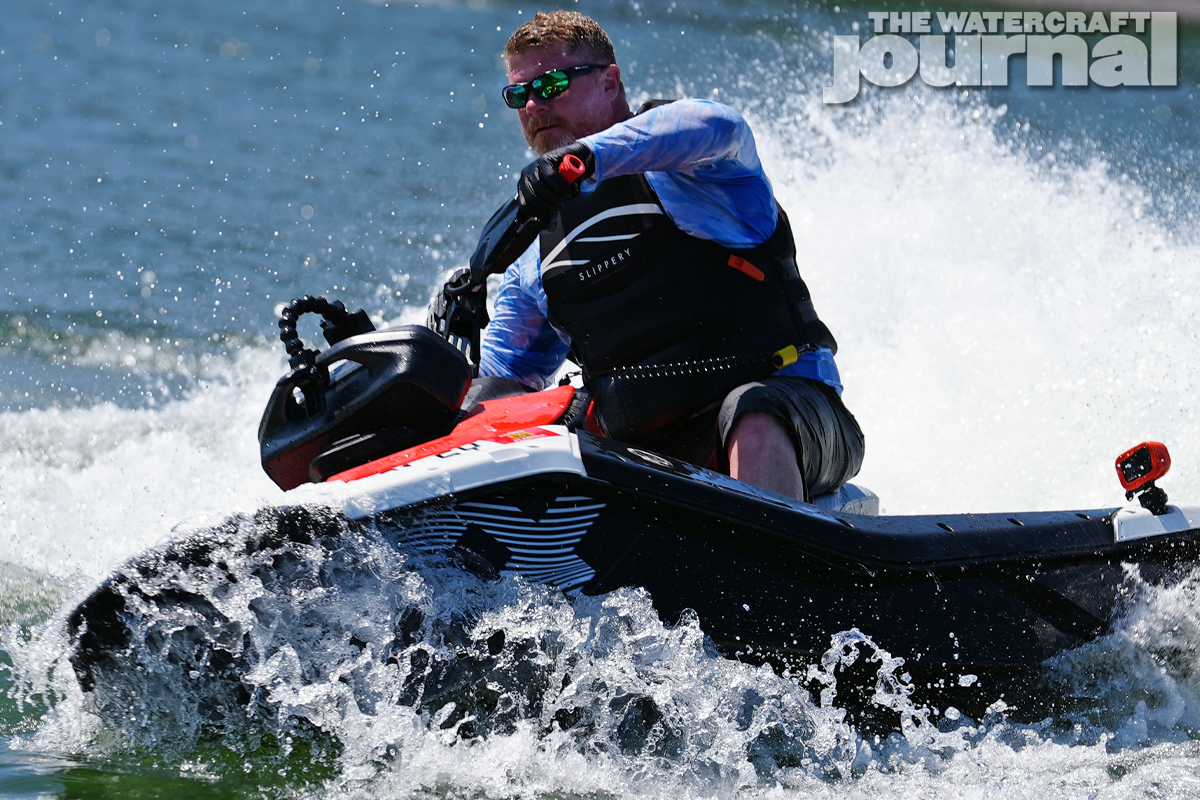
True its name, Trixx Mode is a setting exclusive to the Trixx 1-up and 3-up (oh yeah, did we forget to mention there’s no 2-up model? Yeah, we thought that was weird too.). Accessible by toggling through the different modes on the left keypad (Sport, Touring, Eco), Trixx Mode provides sharper initial acceleration to help ramp the Spark up and out of the water, and also permits full throttle reversing for backwards donuts and other tricks.
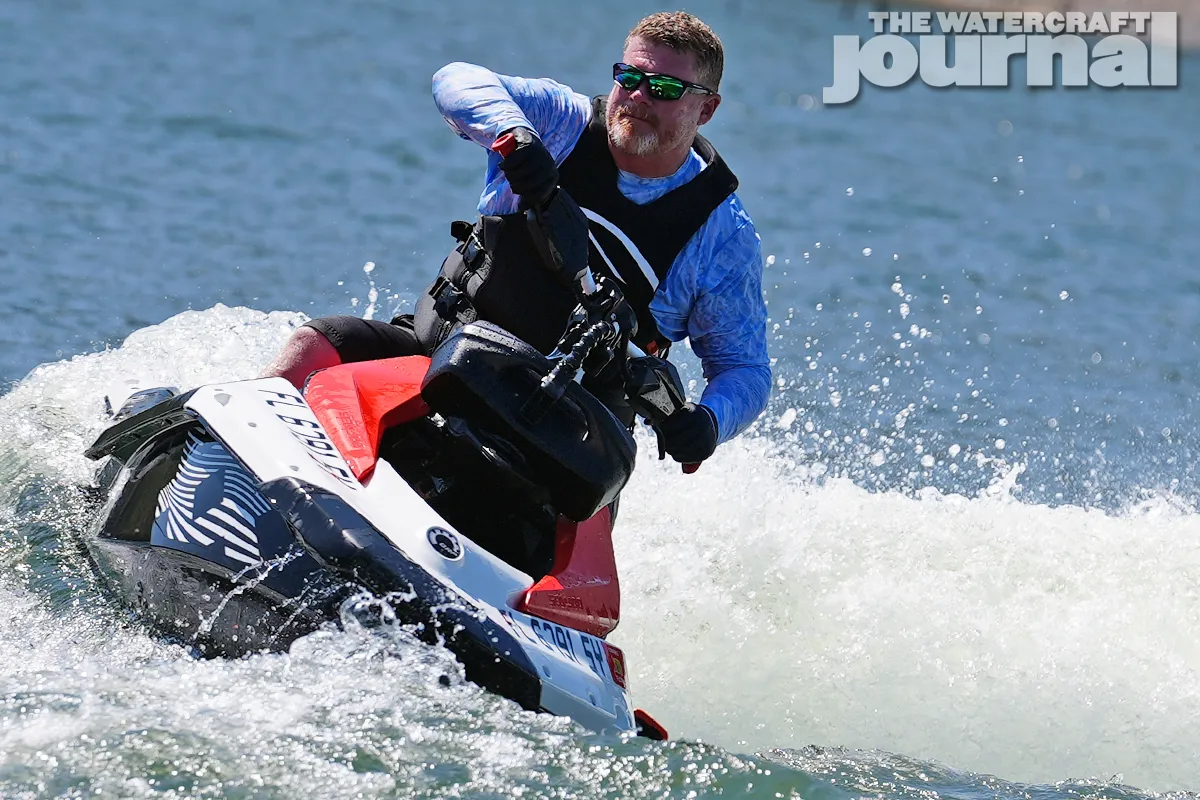
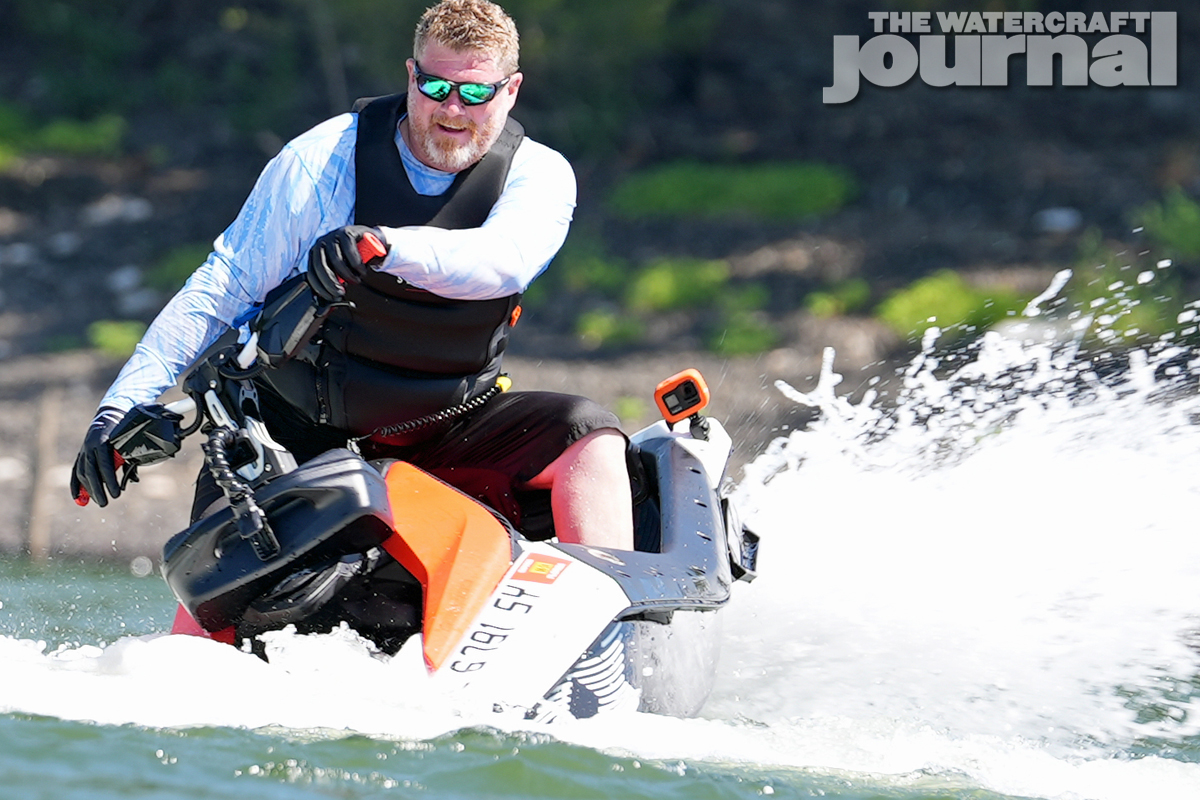
To better achieve these tricks, the Trixx has a special-designed iBR reverse bucket for the intent of executing better tail stands and reverse 360’s (and much, much more). Thickly padded footrests help keep the driver’s balance while performing such stands; we ourselves maintained a tail stand for well over a minute and a half. We found Sport mode still optimal to perform the best powerslides, and were able to reach a top speed of 55mph at 7,700rpm.
Priced with an MSRP of $9,099, the 2024 Spark Trixx continues the tradition of the best selling make of the best selling model in the last decade. Sea-Doo reported that by 2021, 70-percent of all Spark sales were Trixx’s, and with this latest version offering all of the same fun with more standard features and an improved design, there’s no doubt that like-minded buyers gravitate to this raw, exhilarating throwback to how jet skiing used to be – and really ought to remain.



 In the Pro/ProAm classes, here’s how the numbers add up: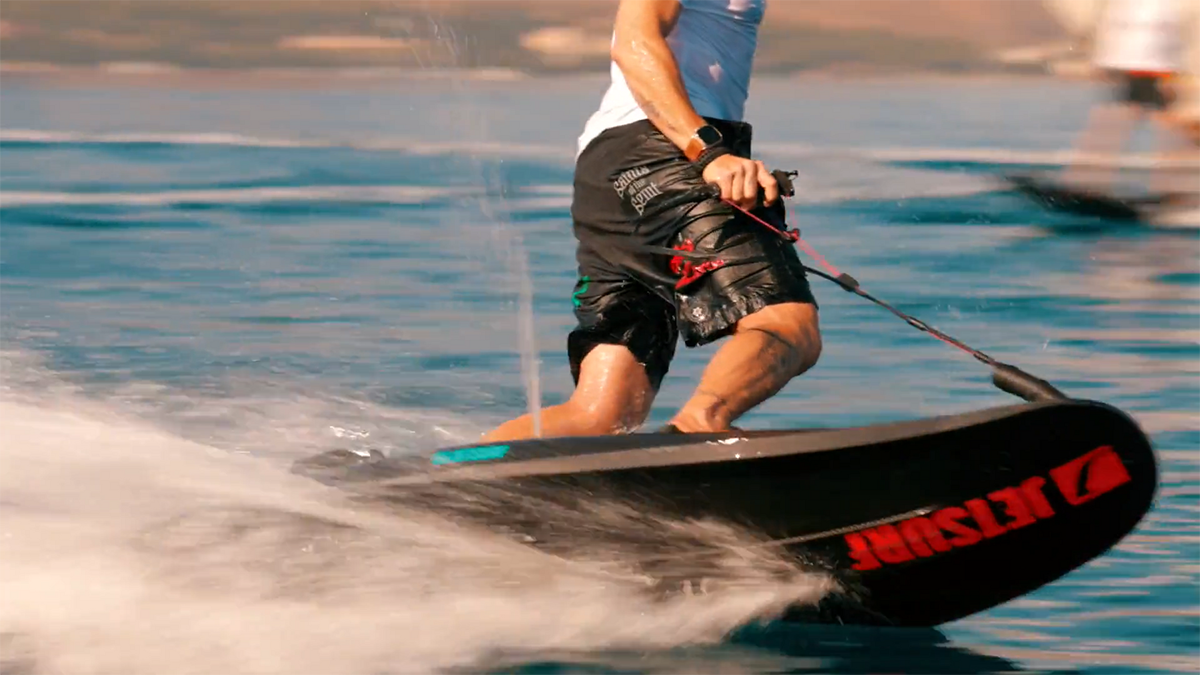








 “
“
 For
For