


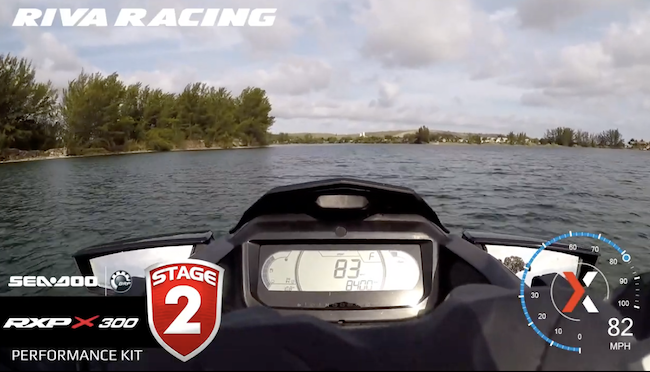
 Halloween may be over, but there’s still time to scare up a little extra horsepower for your personal watercraft. RIVA Racing’s lineup of Performance Kits offers Yamaha, Sea-Doo and Kawasaki owners a variety of ways to wake up their rides, whether they’re looking for a little more punch off the line or a much more substantial performance upgrade.
And the best part? You don’t have to go completely wild to see a difference.
With performance packages available in multiple stages depending on the model, RIVA gives riders the opportunity to choose upgrades that suit their goals, rather than taking an all-or-nothing approach to modifying their machines.
The concept is straightforward: Take the guesswork out of performance upgrades by assembling combinations of components that have already been tested together. According to RIVA, its development team has spent hundreds of hours evaluating parts combinations on its in-house dynamometer and on the water, working to maximize both performance and reliability.
Rather than purchasing individual aftermarket parts and hoping they work well together, riders can select a package designed around a specific watercraft and performance target.
A Little Extra Punch
For riders who aren’t necessarily chasing triple-digit speeds, a Stage 1 kit can offer a substantial improvement without requiring an extensive engine rebuild.
Take RIVA’s Stage 1 kit for the 2025-and-newer Yamaha JetBlaster Freeride, for example.
According to RIVA’s published figures, the package increases top speed from 51 mph at 7,500 RPM in stock configuration to 57 mph at 8,400 RPM. That’s a 6 mph improvement from a combination of engine tuning, an upgraded air intake, a Solas Concord impeller and a performance ride plate.
Additional exhaust upgrades are available, but the Stage 1 package itself illustrates how several complementary modifications can work together to produce measurable gains.
The kit is currently advertised at $1,704.89, reduced from $1,794.62.
For this particular JetBlaster application, Stage 1 is the only performance-kit stage listed, a reminder that available packages vary considerably by model and year.
Turning Up the Heat
At the other end of the spectrum, RIVA’s packages for the 2021–2023 Sea-Doo RXP-X 300 demonstrate just how far the staged approach can go.
RIVA lists five performance levels for the model, beginning with Stage 1 and progressing through Stage 2, Stage 3, Stage 3 Plus and Stage 4.
The company’s published figures put the stock U.S. model at 68 mph, while the Stage 1 package raises the advertised top speed to 75 mph. Priced at $989.75, that package uses electronic and air-intake modifications without requiring internal engine work.
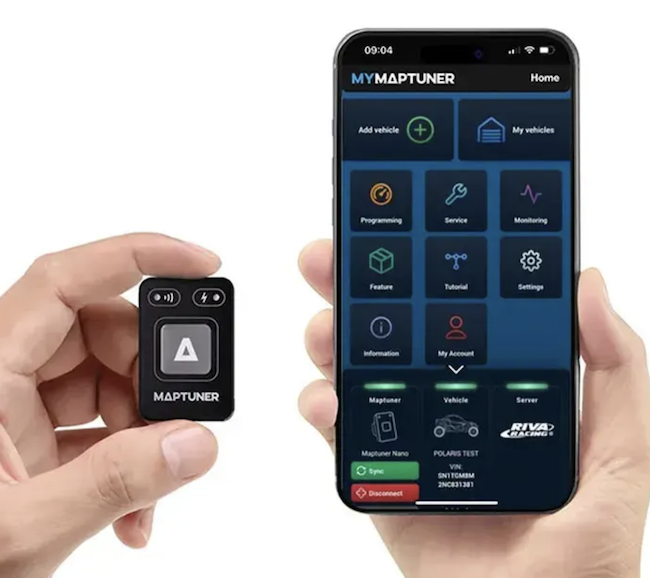
Among its components is RIVA’s Maptuner Nano, which removes the factory GPS-controlled speed restriction. That’s an important distinction: Some of the increased top speed comes from allowing the watercraft to exceed its factory-imposed limit, rather than simply increasing engine output.
From there, the numbers climb quickly. Stage 2 is advertised at 81 mph, Stage 3 at 83 mph and Stage 3 Plus at 86 mph. The Stage 4 package tops the lineup with a claimed 88 mph at 9,000 RPM — a full 20 mph above the U.S. stock figure.
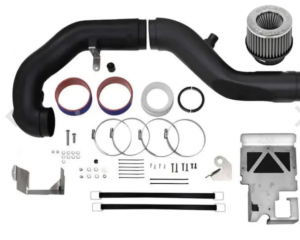
The modifications become progressively more extensive as well. While the earlier stages concentrate on tuning, airflow and pump performance, the higher stages incorporate upgrades such as fuel injectors, superchargers, valve-train components and racing camshafts.
Prices range from $989.75 for Stage 1 to $6,250.05 for Stage 4.
It’s a good illustration of why the highest stage isn’t necessarily the right choice for every rider. The more aggressive packages represent a considerably greater investment and level of modification, while the lower stages may already deliver the improvement an owner is looking for.
Kawasaki Gets in on the Action
Kawasaki owners aren’t left out of the fun, either.
For example, RIVA offers three performance stages for the 2022-and-newer Ultra 310, with published top-speed figures increasing from 67 mph in stock configuration to 76 mph with Stage 1, 78 mph with Stage 2 and 80 mph with Stage 3.
That’s an advertised 13 mph improvement at the highest stage, with kit prices ranging from $1,398.76 to $2,307.08.
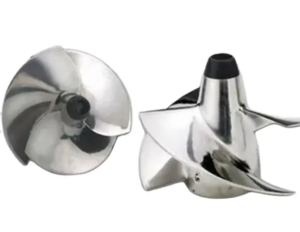
Interestingly, RIVA describes the Ultra 310 Stage 3 package as a collection of bolt-on modifications. Components include its Maptuner Nano ECU tuning system, a wastegate block-off kit, a supercharger pulley upgrade, a Solas Concord impeller and a performance ride plate.
The Maptuner Nano also offers functionality beyond simply increasing performance. Depending on the application and tuning license, owners can use their smartphones to reflash the ECU, monitor and log engine data, read and clear fault codes, and switch between available tunes.
The Kawasaki package also illustrates why riders should pay attention to the requirements accompanying each kit. RIVA specifies premium fuel, notes that impeller adjustments may be necessary to achieve target performance and designates the package for competition use only.
In fact, stage designations shouldn’t be treated as universal measures of installation difficulty or performance. A Stage 3 package for one model may involve a very different combination of modifications than a Stage 3 package for another.
More Than Numbers on a Speedometer
Of course, getting more performance out of a watercraft is one thing. Knowing exactly how much you’ve gained is another.
RIVA offers some useful technical guidance for riders interested in measuring the results of their upgrades, beginning with a warning not to rely exclusively on factory speedometers and tachometers for precise performance comparisons.
Instead, the company recommends GPS-based measurements of sustained average top speed, rather than relying on occasional peak readings that may be inaccurate.
Consistency is equally important. Everything from air and water temperatures to fuel levels, rider positioning and water conditions can affect the results. RIVA recommends making consecutive speed runs in opposite directions and duplicating baseline testing conditions as closely as possible.
For example, RIVA’s published RXP-X 300 performance figures specify testing at 75 degrees Fahrenheit, with one-third of a tank of fuel, neutral trim, sea-level elevation and smooth freshwater.
Actual results can vary, and riders should remember that top speed is only one part of the performance equation. Acceleration, throttle response and handling characteristics can be just as important to the overall riding experience.
Longtime Watercraft Journal readers may remember some of Editor-in-Chief Kevin Shaw’s previous hands-on reviews of RIVA’s performance packages.
In his review of RIVA’s Stage 1 kit for the 2017 Yamaha EX WaveRunner, Shaw praised the improvements in throttle response and speed, describing the upgraded machine as delivering “pure, unrefined joy.”
He also explored the performance improvements RIVA achieved with its 2017 Yamaha GP1800 IJSBA Stock Class Kit, demonstrating how aftermarket upgrades could build on an already impressive factory platform.
 A Little Something Off the Price, Too
And while the real attraction is what these packages can do on the water, there’s a little extra incentive to explore the options right now.
Several RIVA Performance Kits are currently advertised at reduced prices, with savings ranging from about $50 to more than $300 among the packages we reviewed. Discounts vary by model and stage, and prices are subject to change.
Whether you’re looking for a relatively straightforward upgrade to sharpen your recreational ride or a more ambitious package designed to push performance considerably further, RIVA’s staged approach offers plenty of options.
Just be sure to check model compatibility, fuel requirements, installation considerations and any competition-use restrictions before ordering.
After all, there’s no need to go completely wild when a little extra punch might be exactly what you’re looking for.
Explore the available packages and current pricing at RIVA Racing.