



 For a lot of riders, impeller tuning starts with good advice from a friend—or a recommendation from a forum. Take a little pitch out. Add a degree to the trailing edge. Drop your RPM a couple hundred.
The problem is, if you don’t know what you’re starting with, making the right adjustment becomes little more than educated guesswork.
That’s exactly where Watcon’s John Zigler steps in.
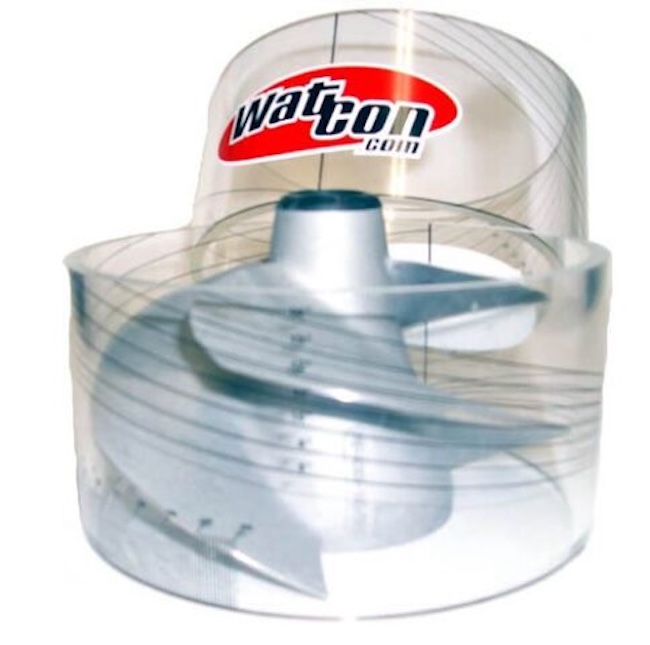
 In this classic episode of Watercraft Talk, Zigler walks through one of the simplest—but often overlooked—tools in a tuner’s toolbox: the impeller pitch gauge. Rather than relying solely on the numbers stamped into an impeller, he demonstrates how to accurately measure both the leading and trailing edges so you know exactly what you’re working with before making changes.
Using an Impros Hooker 9/15 impeller as an example, Zigler explains why the first inch of both the leading and trailing edges is what really matters. Because most performance impellers use progressive pitch, the blade angle changes as it moves across the impeller. Measuring those initial sections provides a consistent reference point for tuning.
He also points out an important detail many riders overlook: not every manufacturer’s pitch numbers are measured the same way. Watcon’s gauges tend to align closely with Impros and Skat-Trak impellers, while Solas and many OEM impellers may produce different readings. That’s not necessarily a problem—the important part is establishing a repeatable baseline so you can accurately track the effects of future changes.
Once you understand what you’re measuring, tuning decisions become much easier.
 Reducing pitch generally allows the engine to gain RPM more easily, while adding pitch typically lowers engine speed. Adjustments to the leading edge primarily affect acceleration, hookup and low-end performance, while changes to the trailing edge have a greater influence on top-end speed, pump pressure and high-speed thrust. Of course, every hull, engine and pump combination responds a little differently, making careful measurements and incremental adjustments the key to finding the sweet spot.
As always, Zigler keeps the explanation straightforward and easy to follow, making what can seem like a complicated subject approachable for anyone interested in getting more from their personal watercraft.
Watch the video below to see John Zigler demonstrate how to measure impeller pitch—and why knowing your baseline is the first step toward smarter tuning