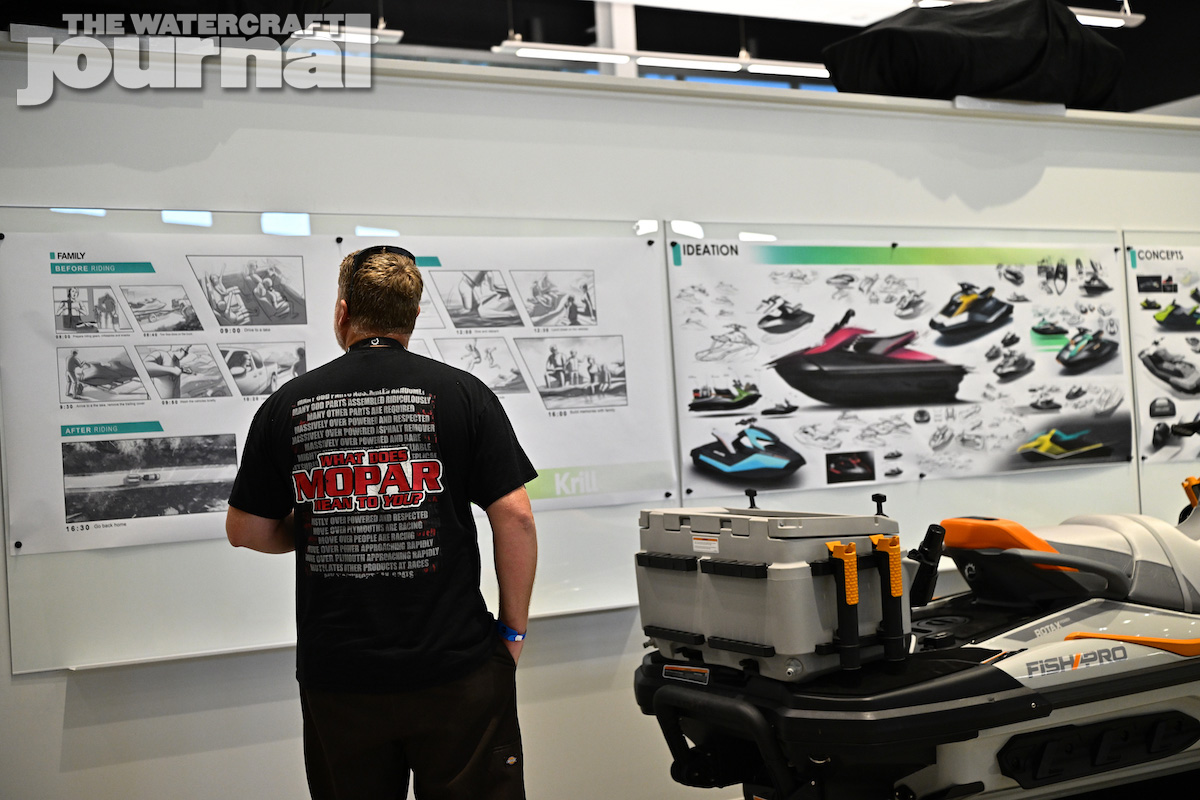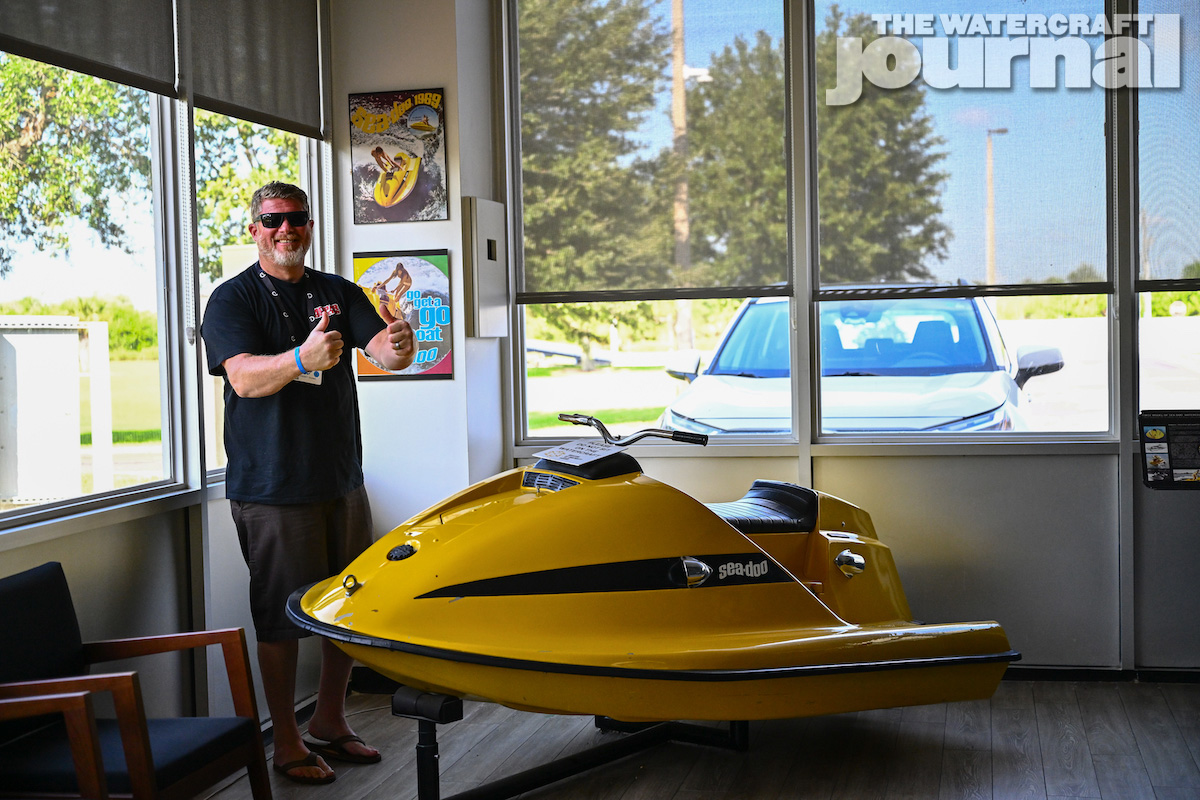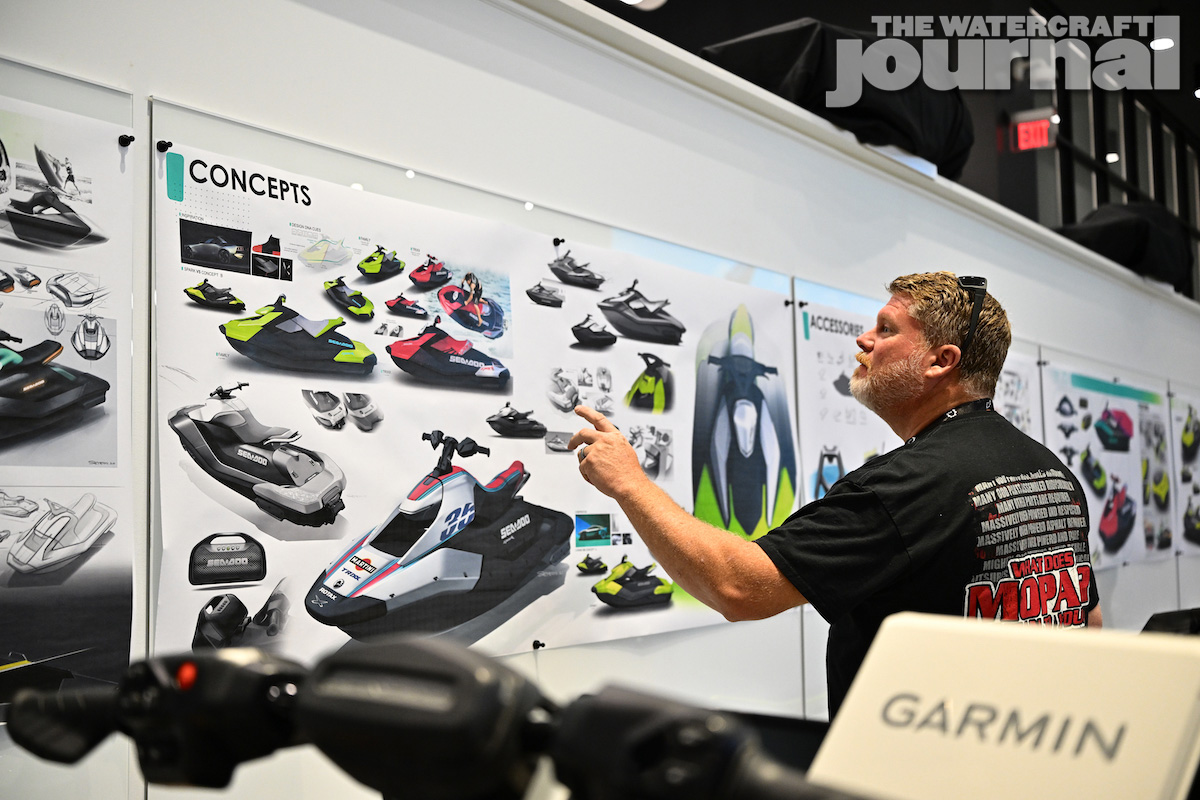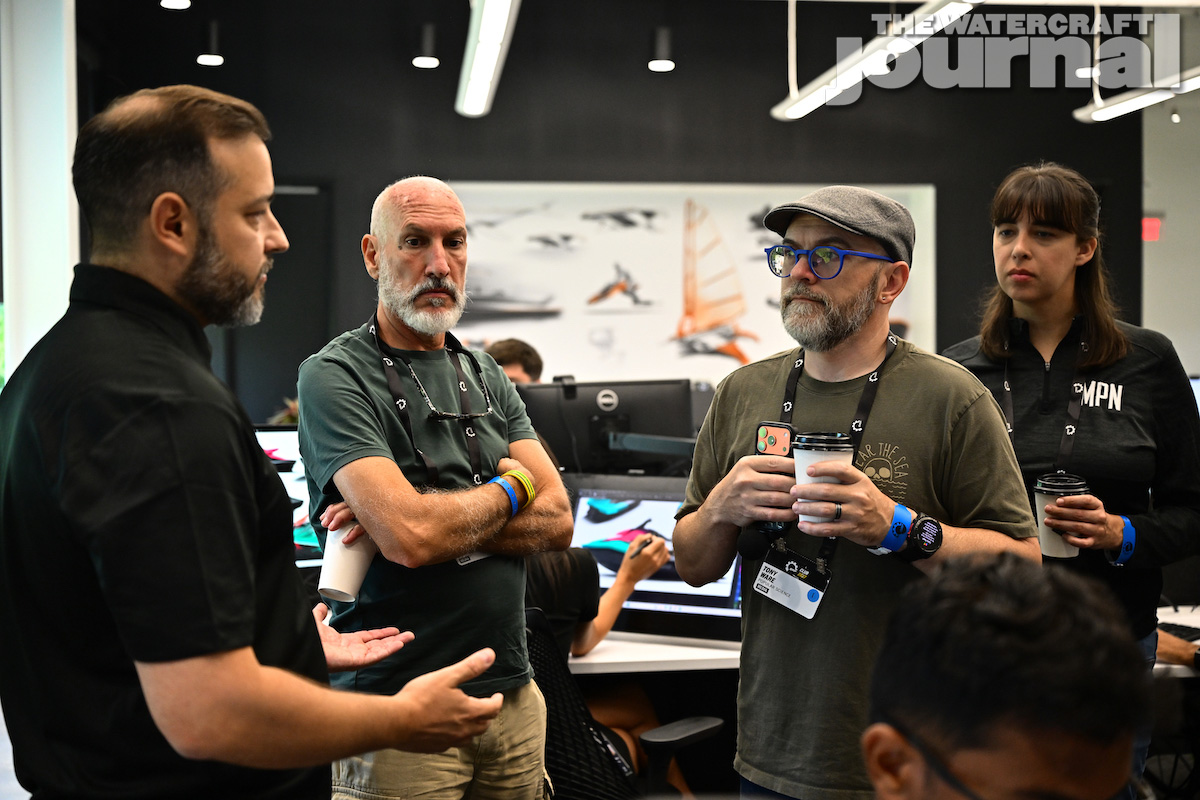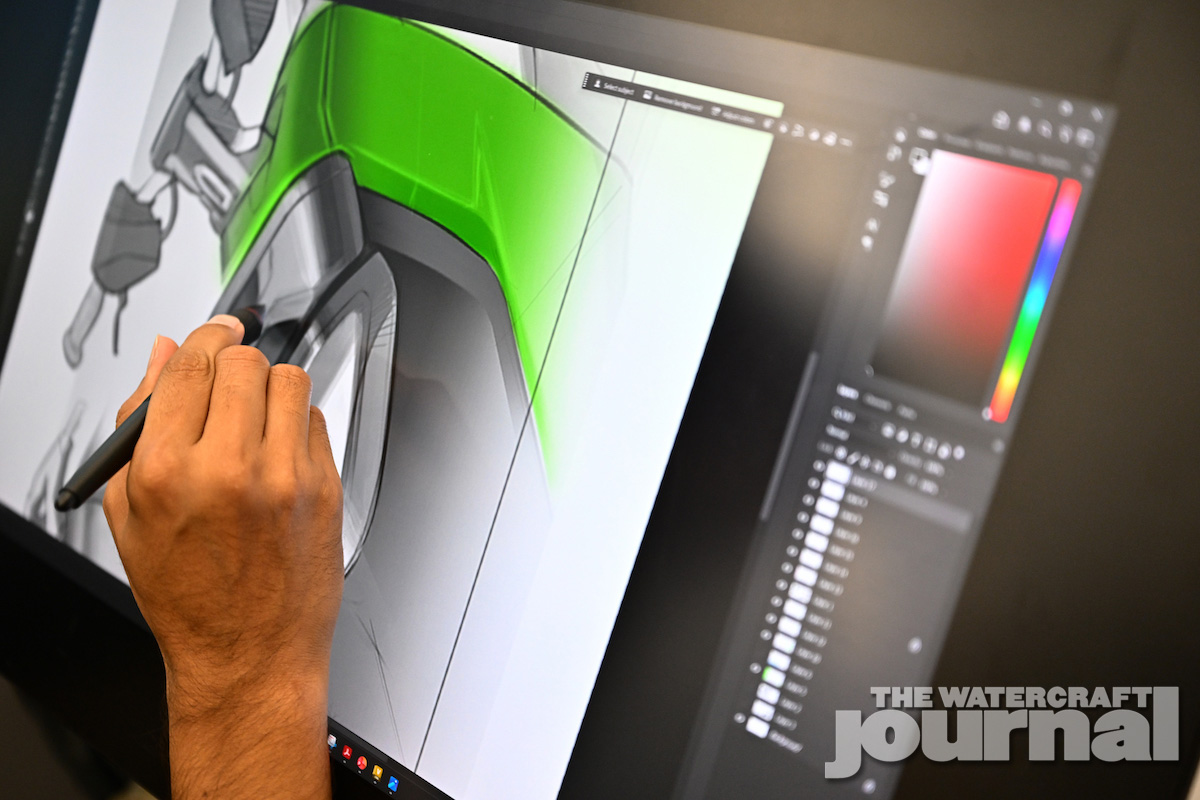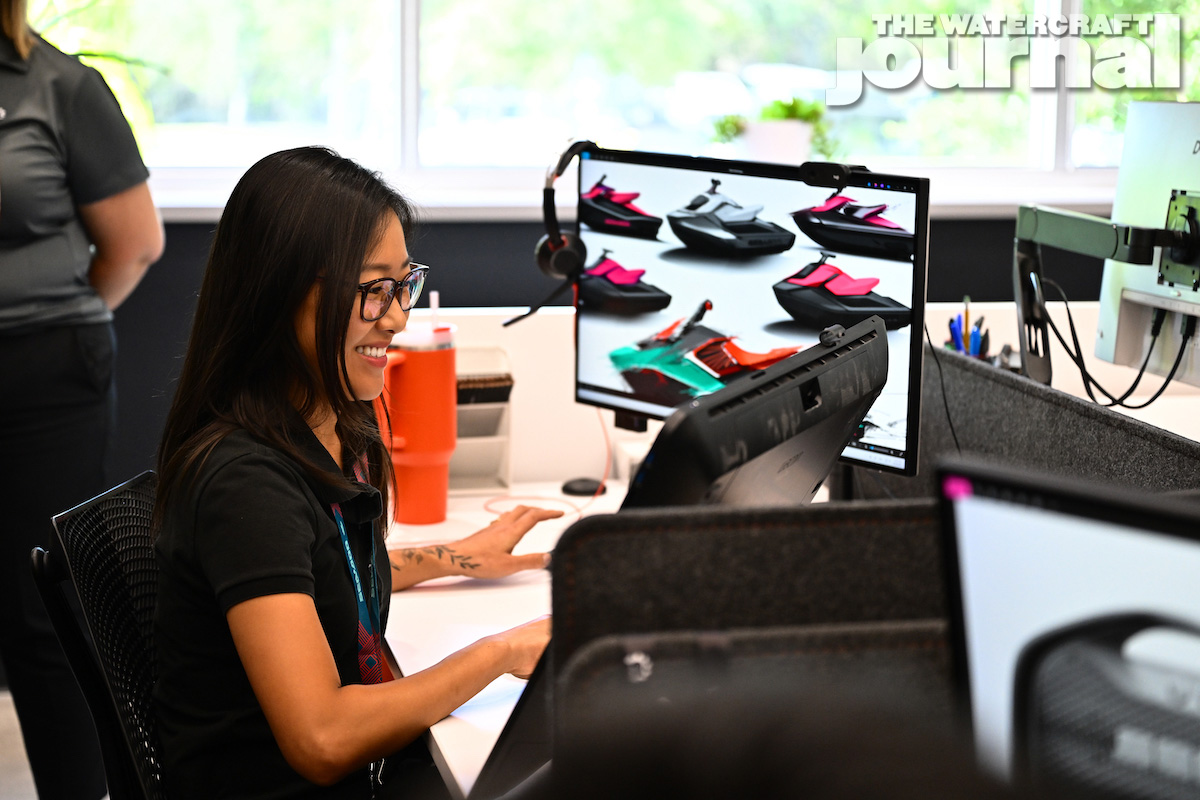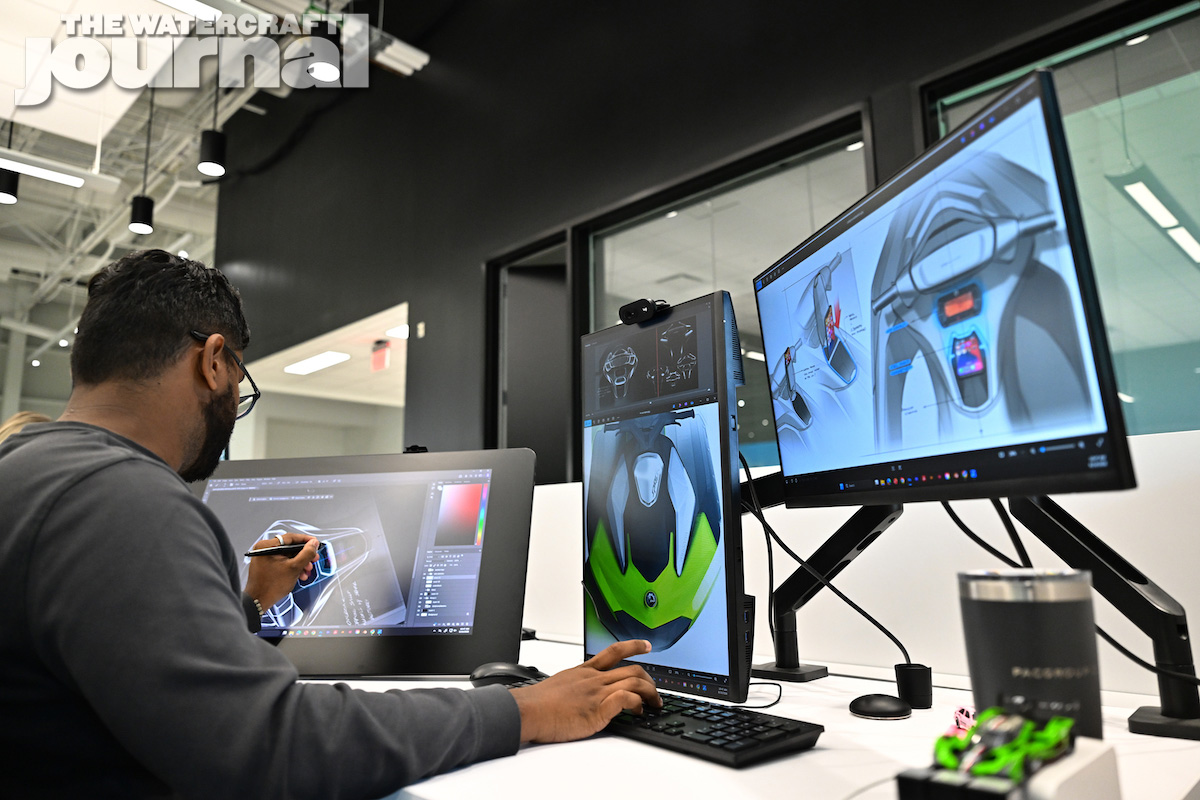



There’s a certain amount of irony involved when a company invites a bunch of journalists into one of its most secretive facilities and then immediately tells them, “You can’t take pictures of that. …or that. …and definitely not that.”
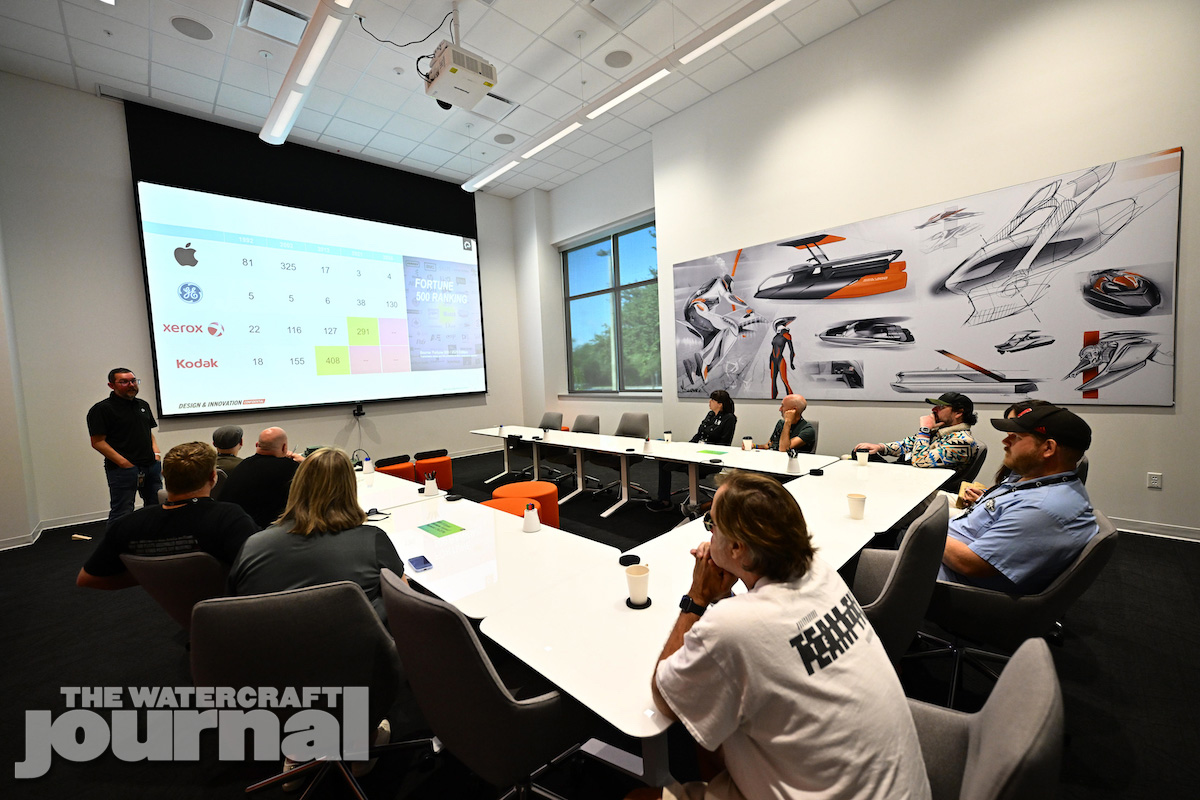
Such was sorta the case following BRP’s recent 2027 Sea-Doo product launch in Orlando, Florida, when The Watercraft Journal was among a very small group of media invited to tour BRP’s Design & Innovation Center in Palm Bay. And while Sea-Doo was surprisingly accommodating with what we were permitted to see, there remained plenty hidden beneath black fabric covers – quite literally.
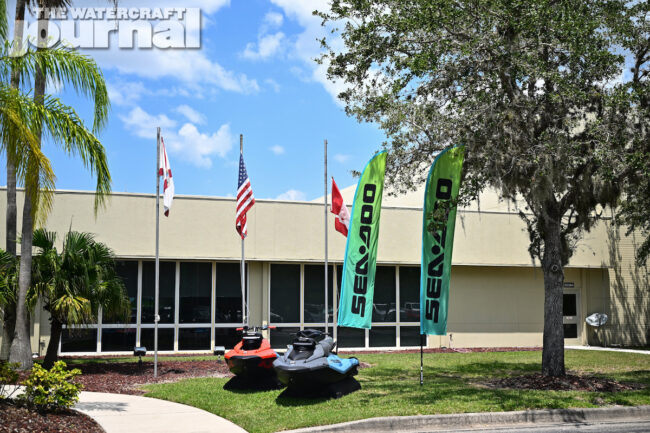
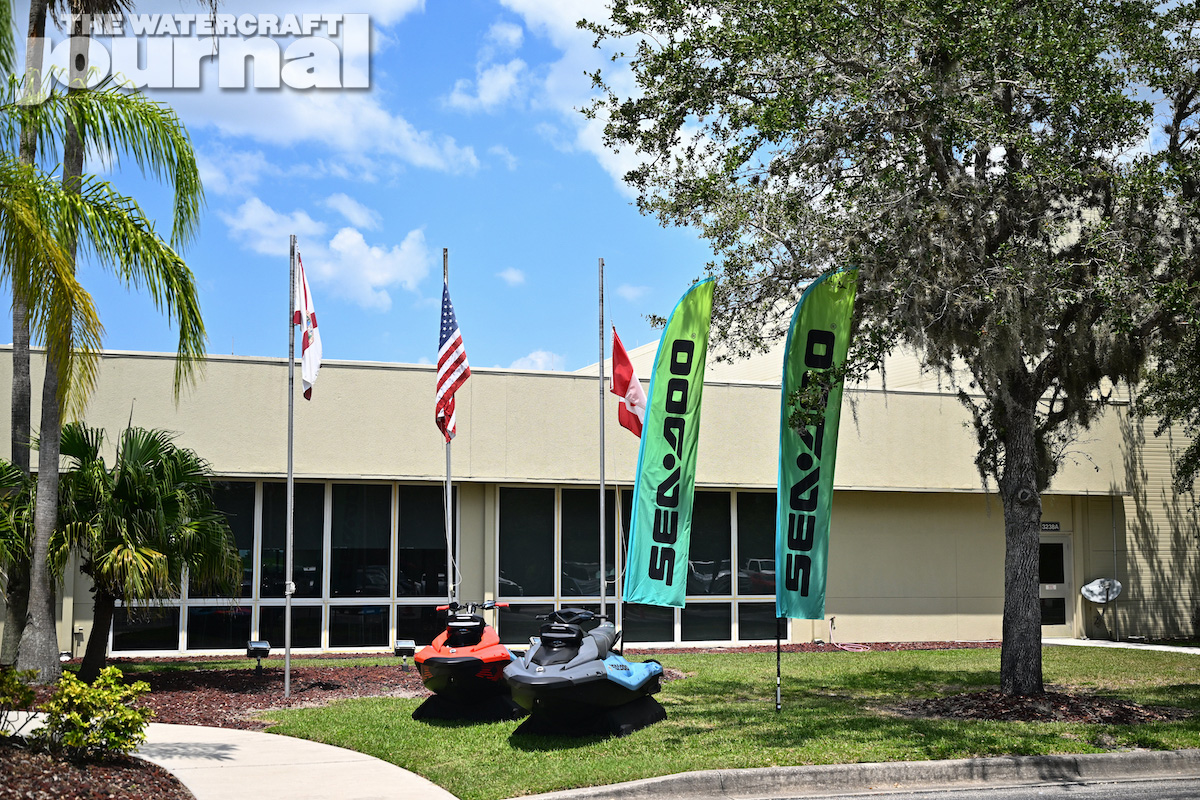
From the outside, there’s remarkably little suggesting what happens inside. Yet, tucked behind the otherwise nondescript building is effectively the birthplace of tomorrow’s Sea-Doo.
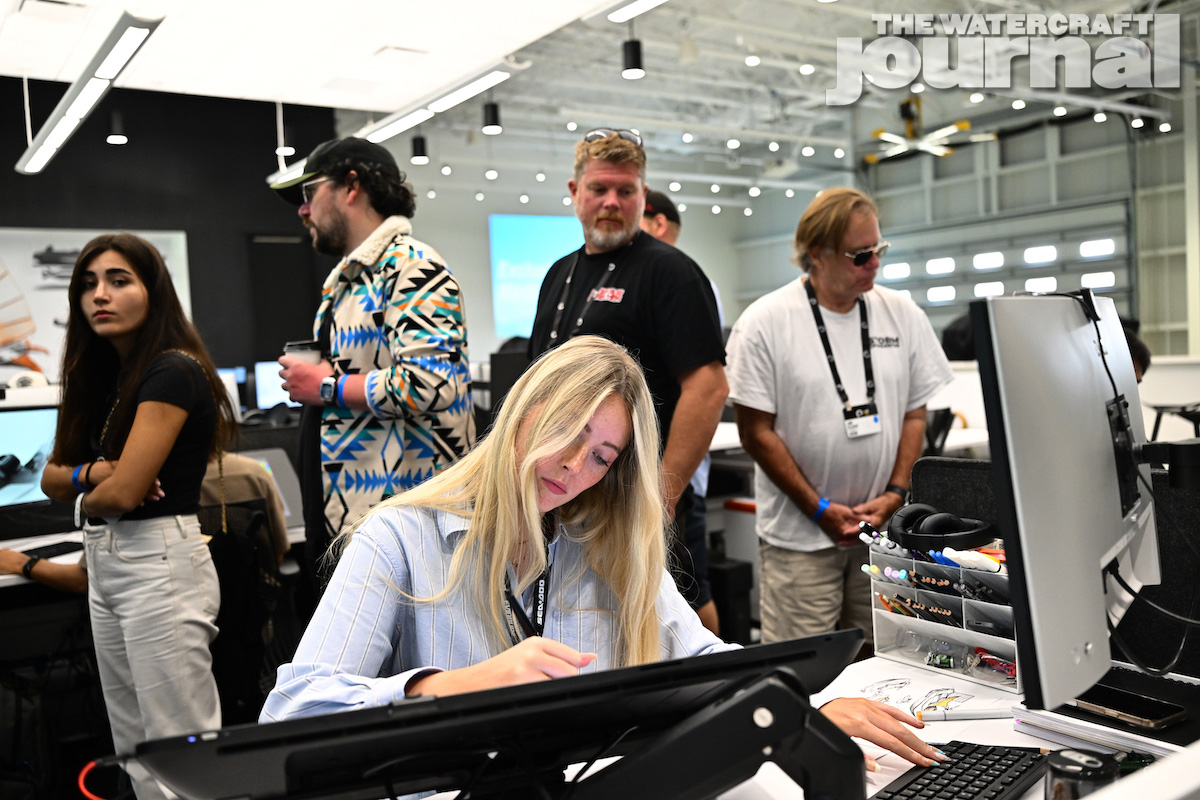
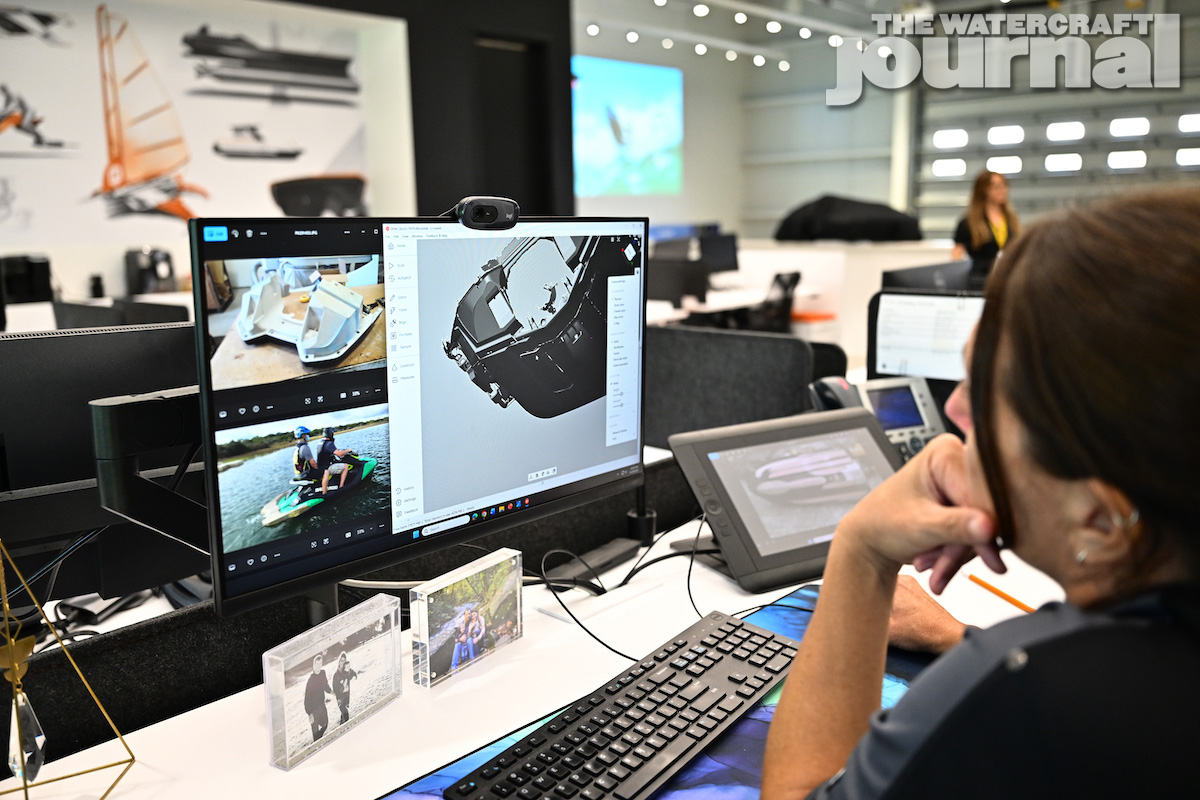
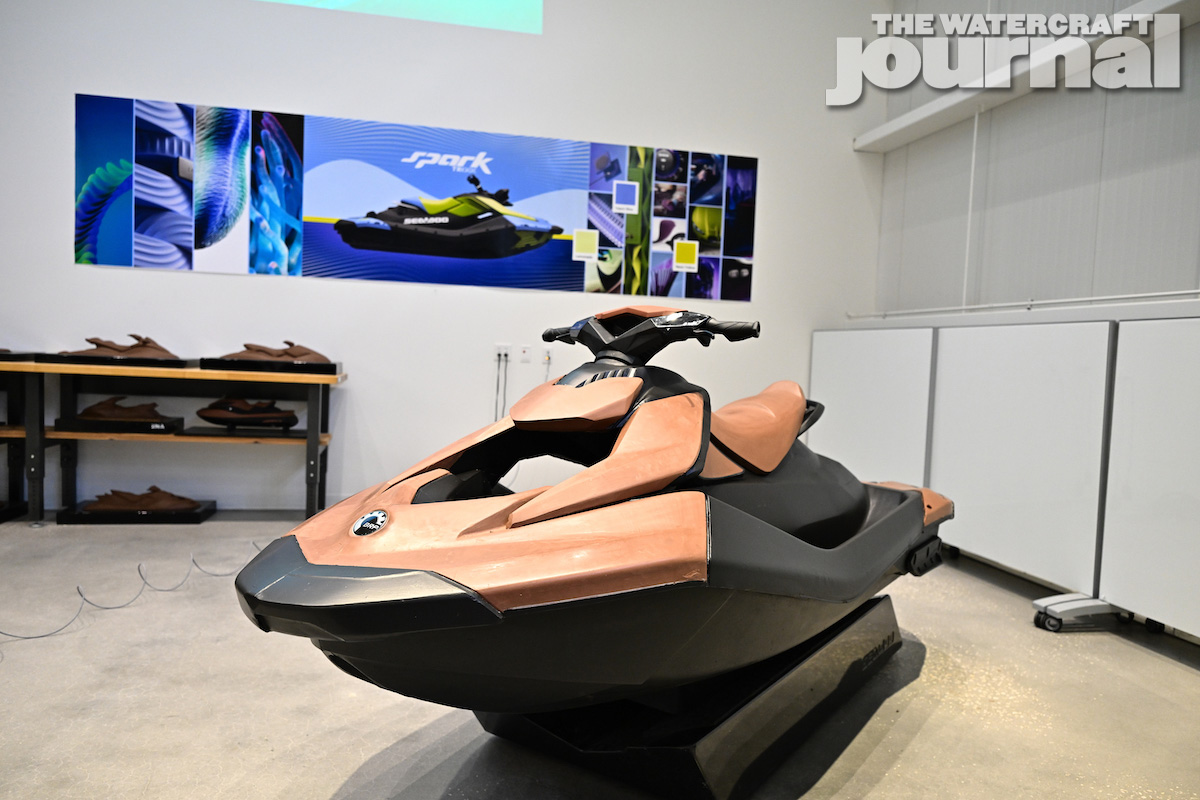
BRP has invested more than $15 million into its Palm Bay operation over the past several years, bringing design, engineering, research and development together at the sprawling 600-acre Florida property. Roughly 60 designers, engineers and technicians presently call Palm Bay home, working on everything from advanced marine concepts to propulsion systems, engine calibration, durability testing and – most importantly to us – future Sea-Doo watercraft. And “future” is the operative word here.
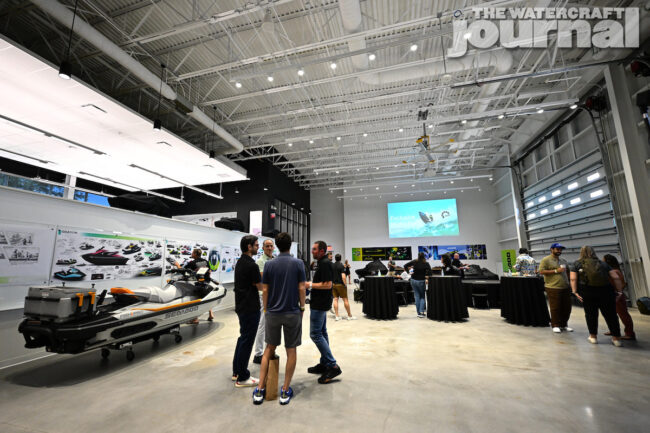
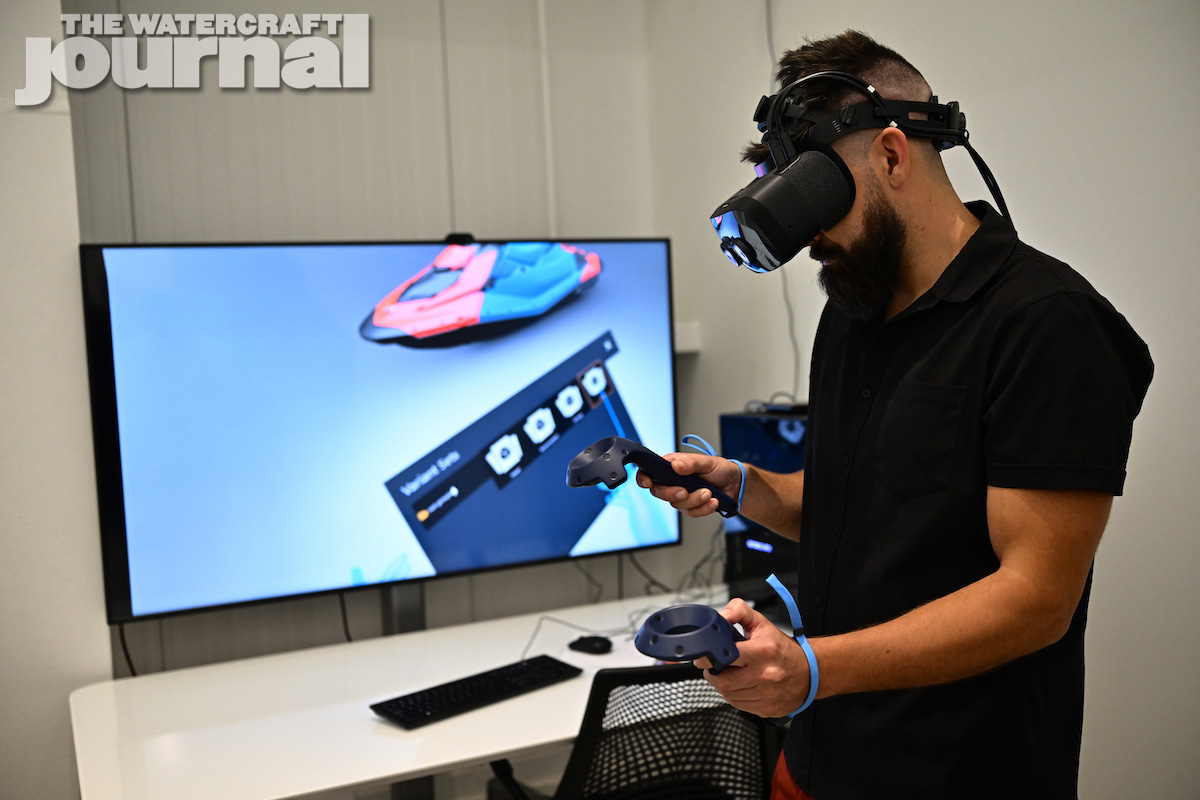
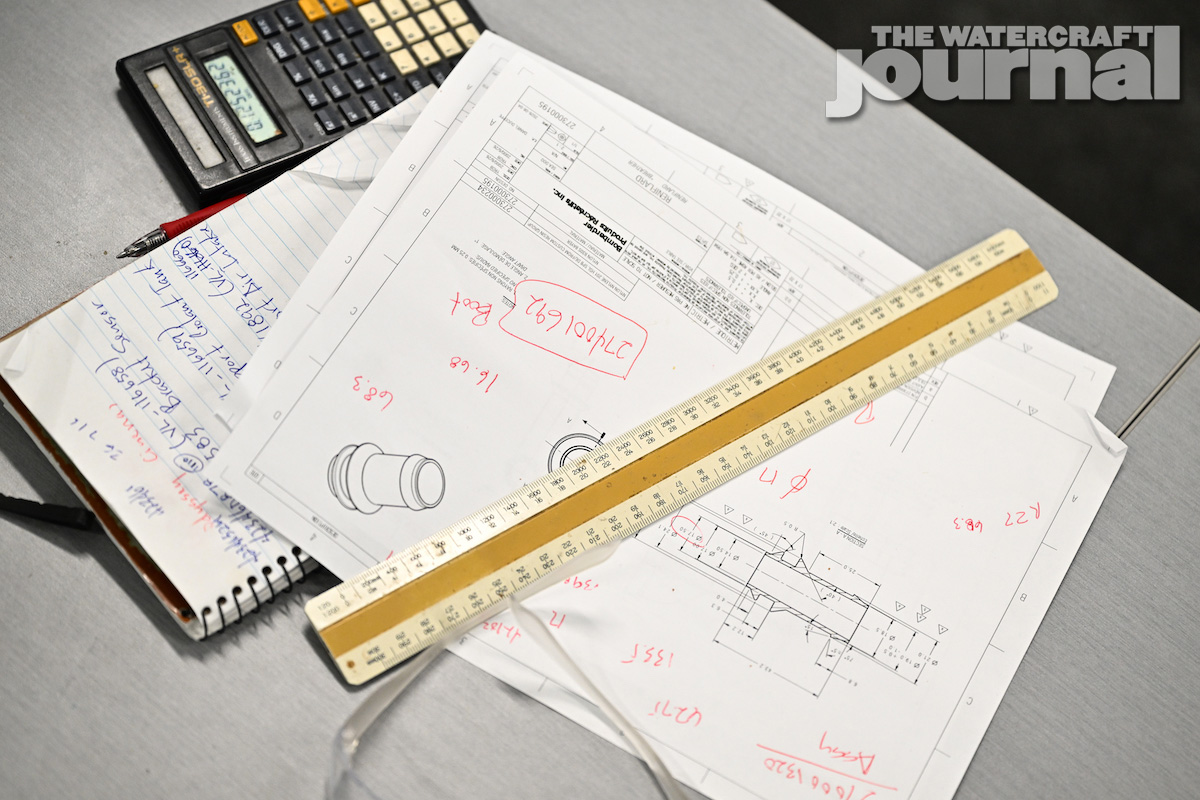
A new personal watercraft doesn’t simply materialize because somebody sketches something cool on a cocktail napkin. Development from an initial concept to something sitting on your local dealership’s showroom floor can require three-to-five years – including seemingly endless computer modeling, scale models, prototypes, component testing, calibration and real-world abuse. And boy, do they abuse these things.
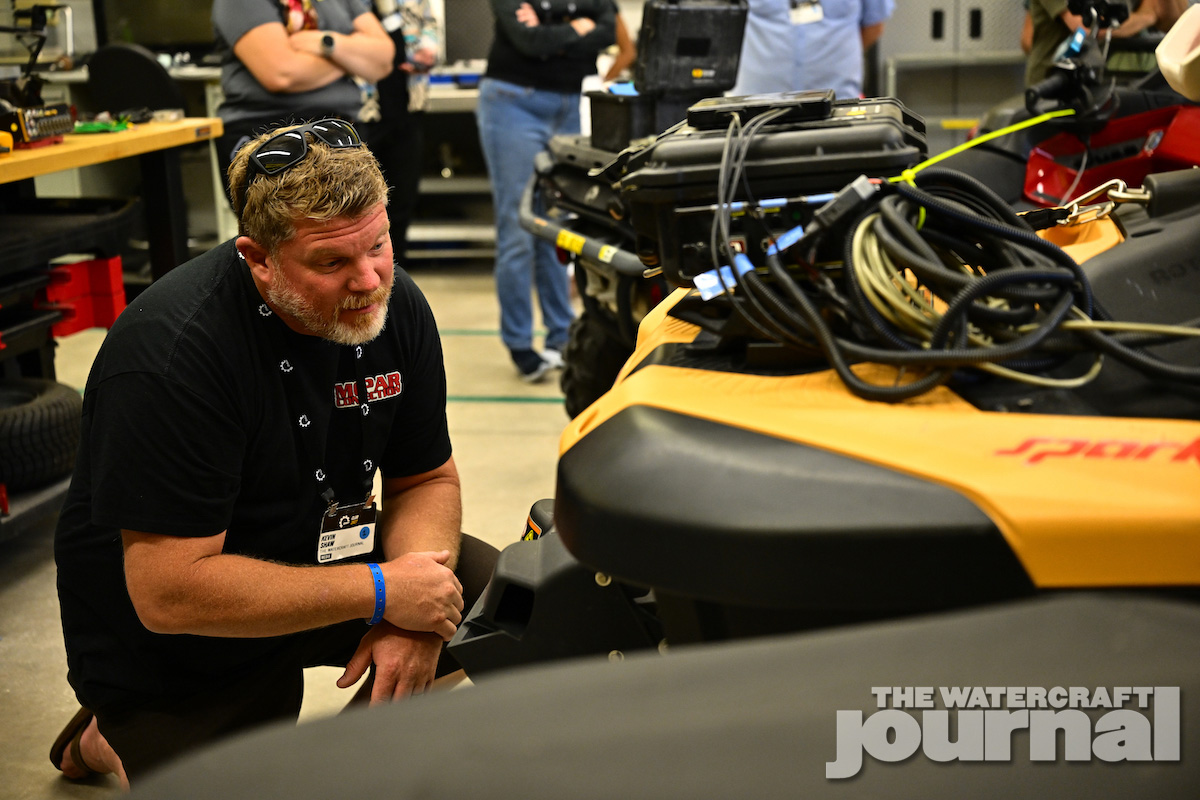
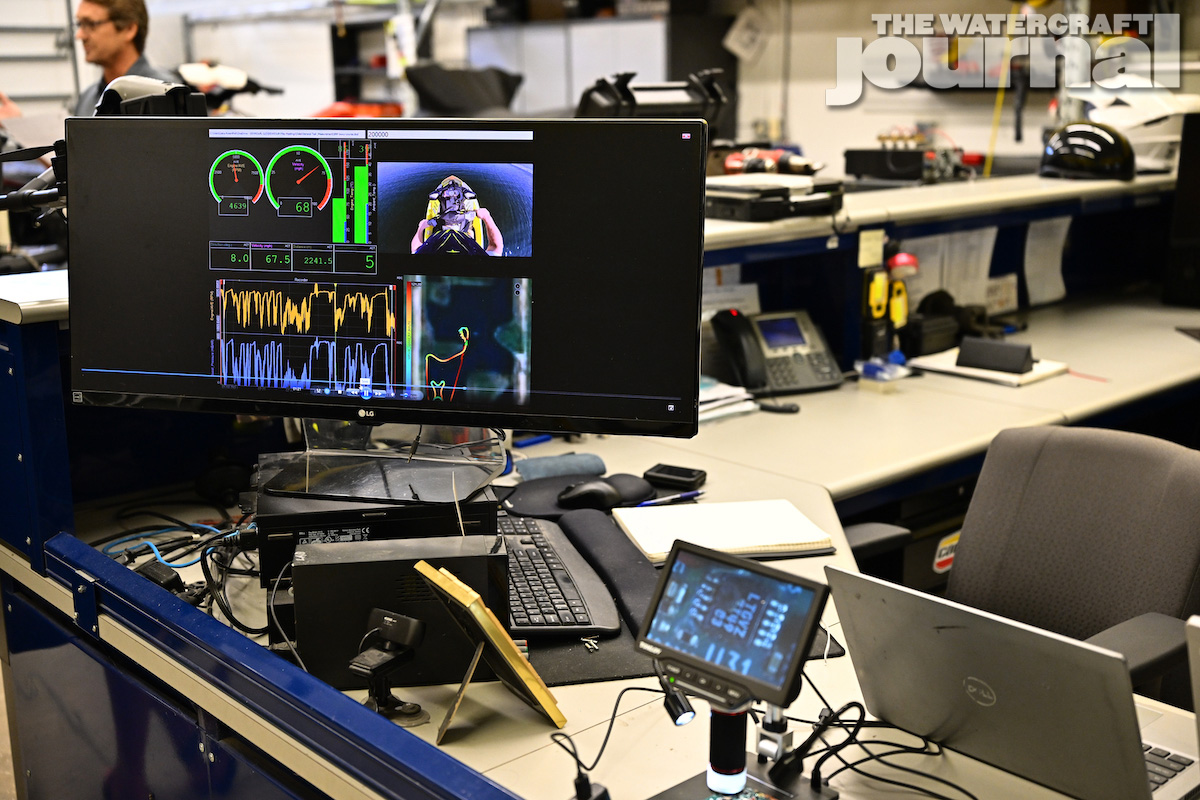
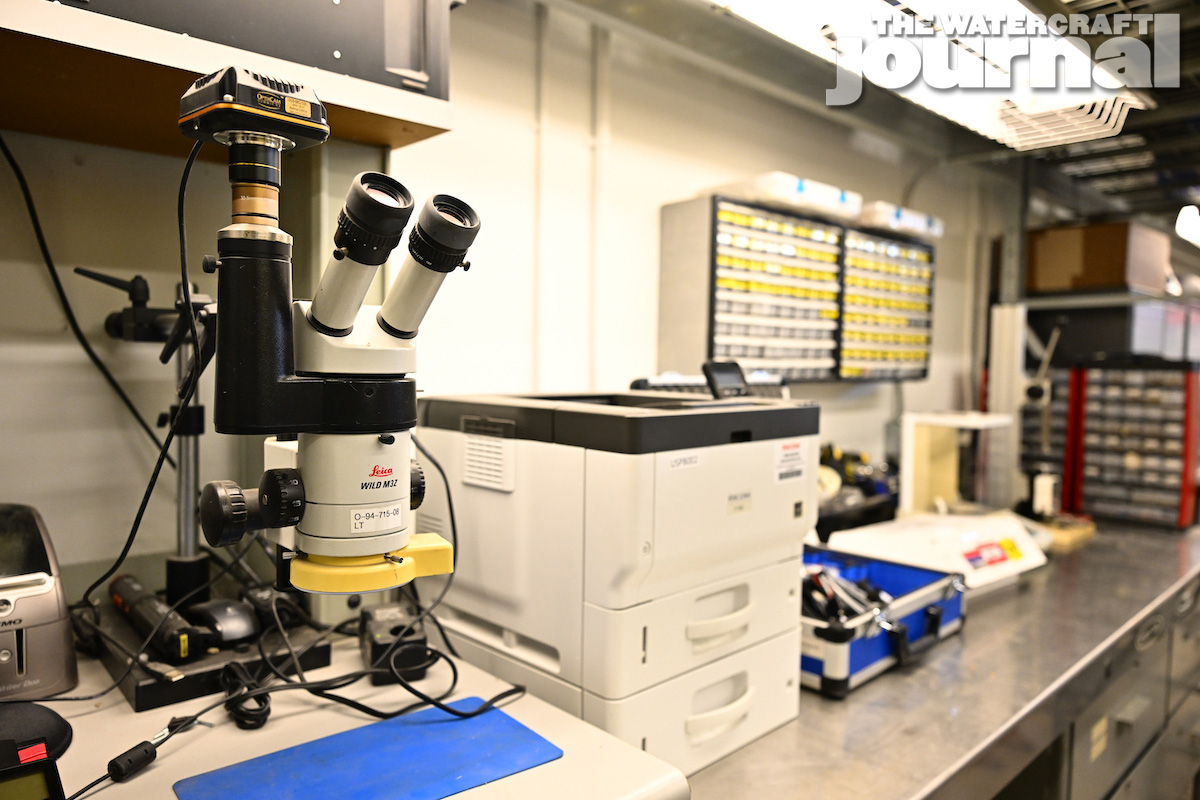
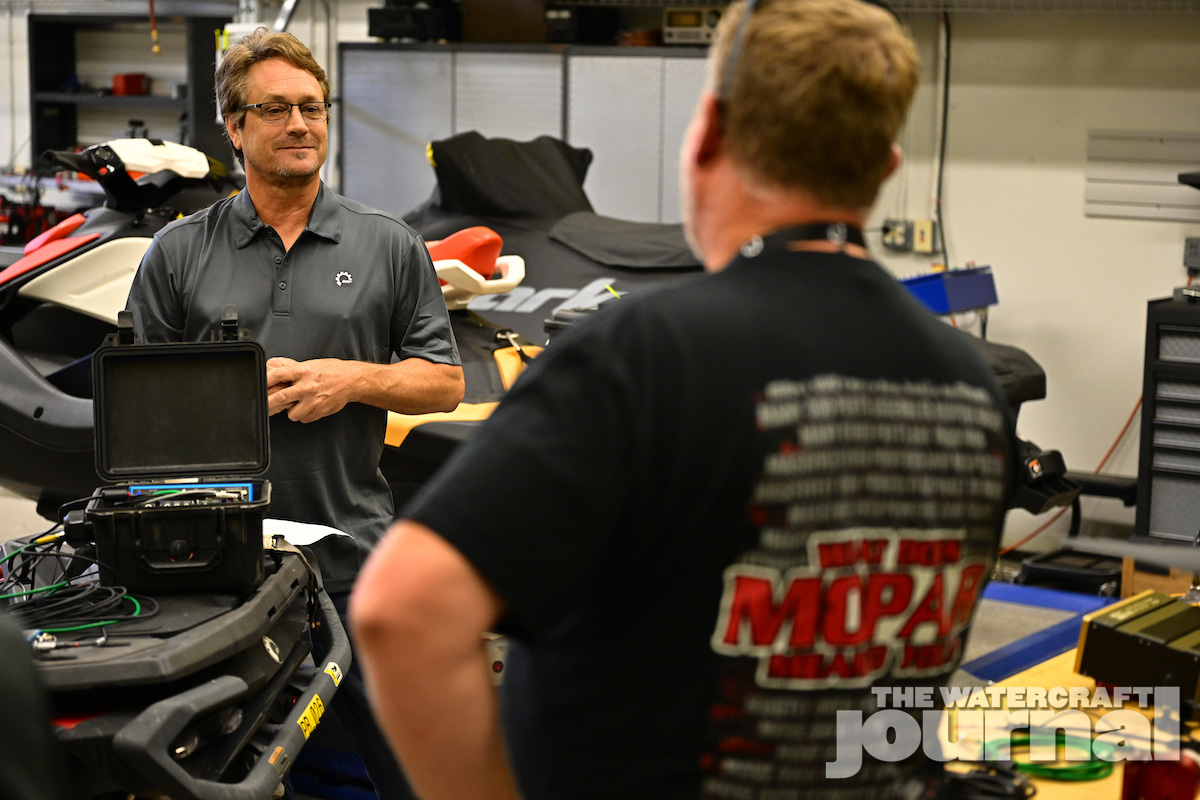
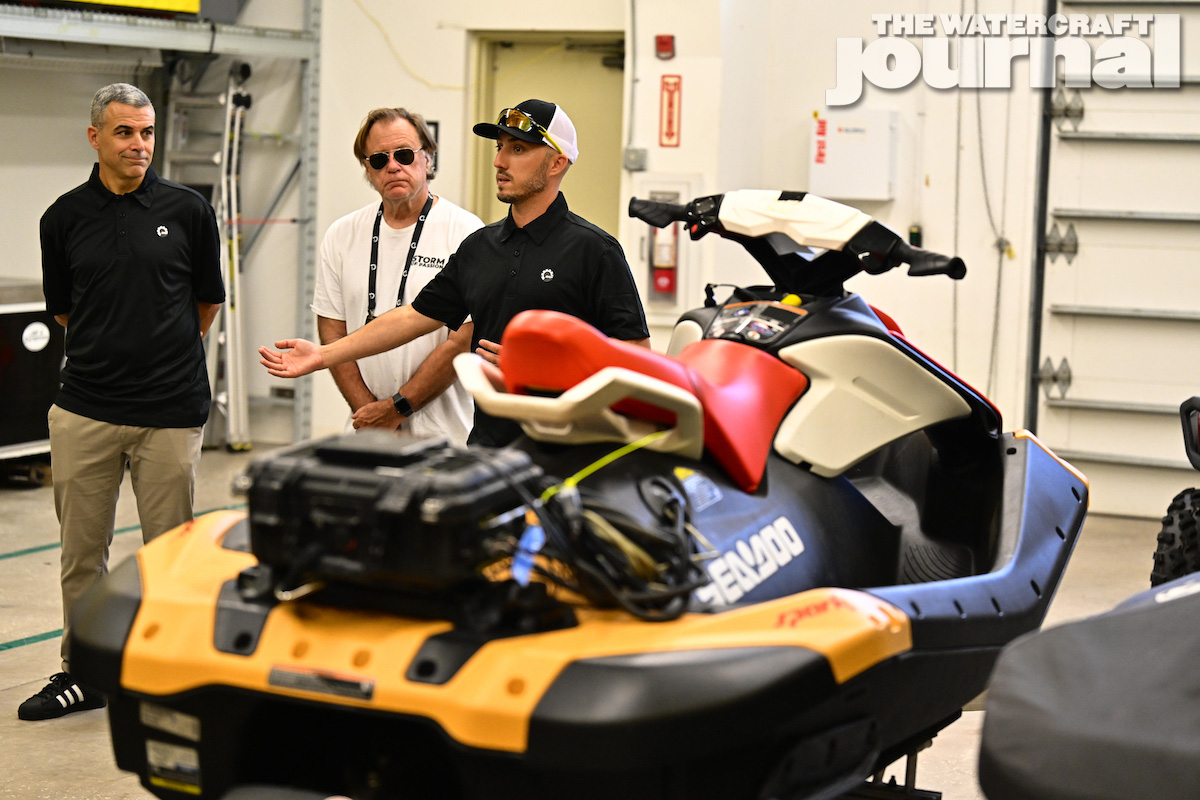
Behind the main building sit three large engineering workshops where prototypes are assembled and engines subjected to exhaustive dynometer testing. Several Sea-Doos we saw were festooned with black data-acquisition boxes and enough wiring disappearing beneath their seats to make Doc Brown’s DeLorean look positively pedestrian.
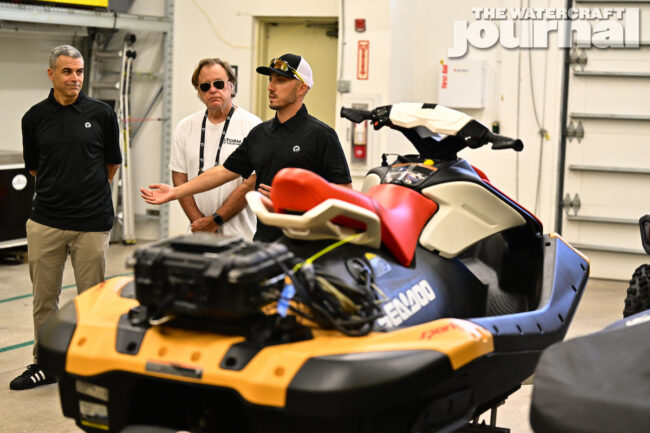
BRP engineers can monitor engine behavior down to milliseconds while recreating extreme operating conditions. Considering our visit coincided with a near-100-degree Florida afternoon accompanied by the sort of humidity normally reserved for steam rooms, Mother Nature was happily providing some hot-weather testing free of charge. But the really interesting stuff was outside.
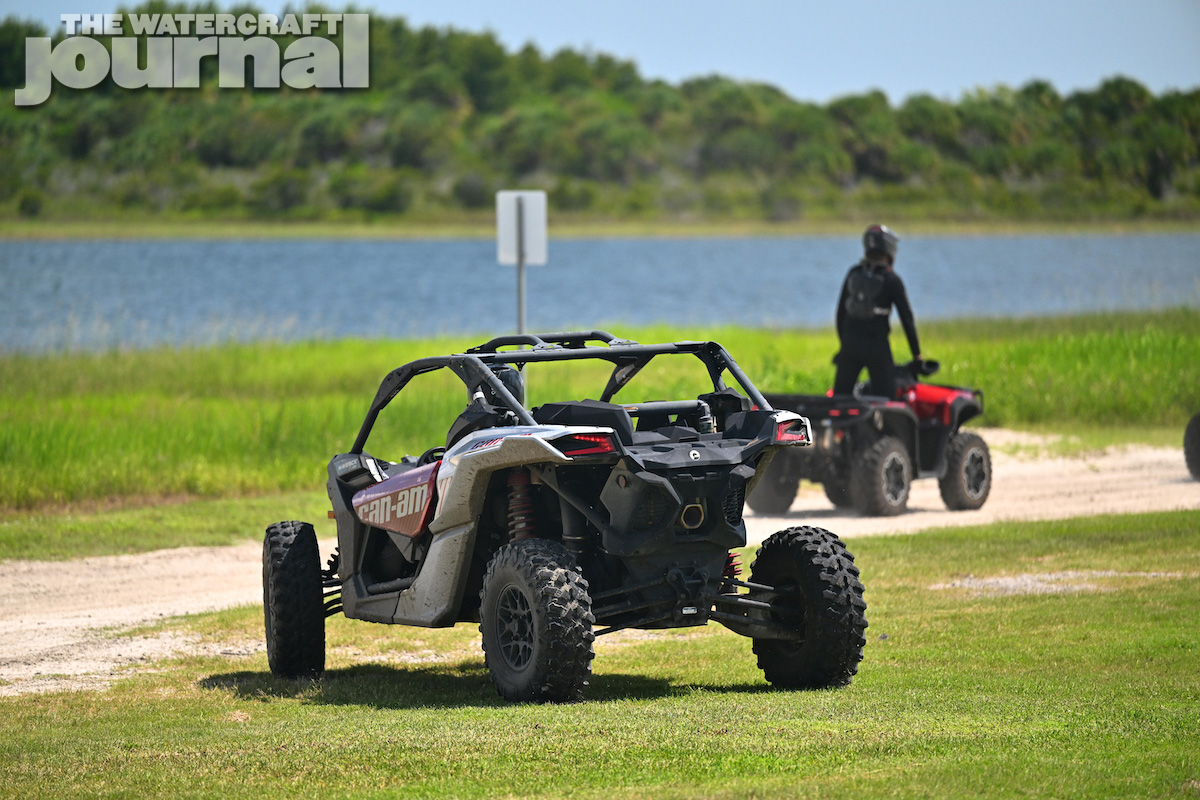
A massive man-made lake consumes much of the Palm Bay property, giving Sea-Doo a completely private playground where prototypes can be ridden without somebody lurking behind a bush with a telephoto lens. Even the perimeter is shielded by tall vegetation.
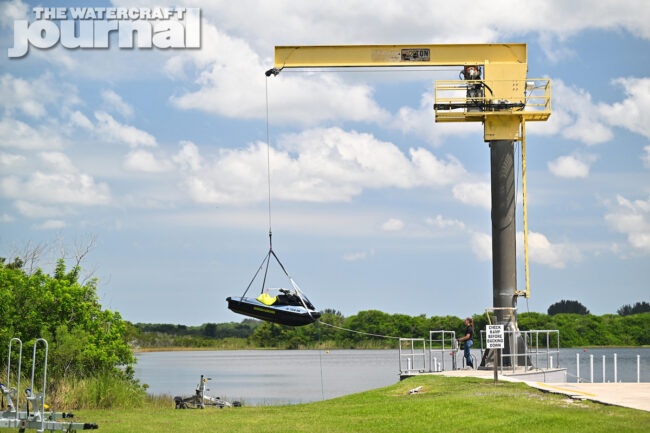
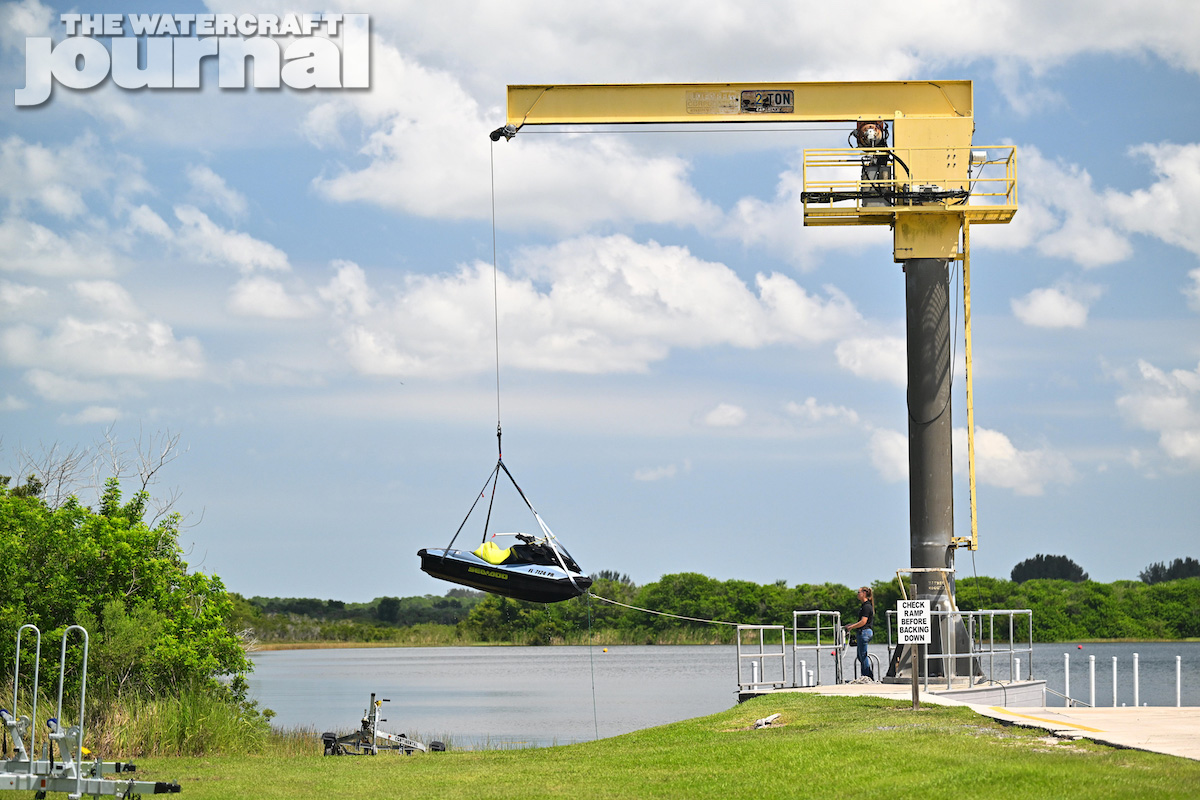
Nearby, a large crane repeatedly hoists and drops watercraft into the lake to evaluate hull durability. If you’ve ever wondered whether manufacturers deliberately try to break these machines during development, the answer is an emphatic “yes.”
Sea-Doo also employs dedicated professional test riders whose job – and yes, we’re jealous too – is literally riding Sea-Doos all day. Yet these aren’t joyrides. One day might involve evaluating a slightly different sponson profile, steering geometry or engine calibration; another could involve accumulating hours aboard something the public won’t see for several years.
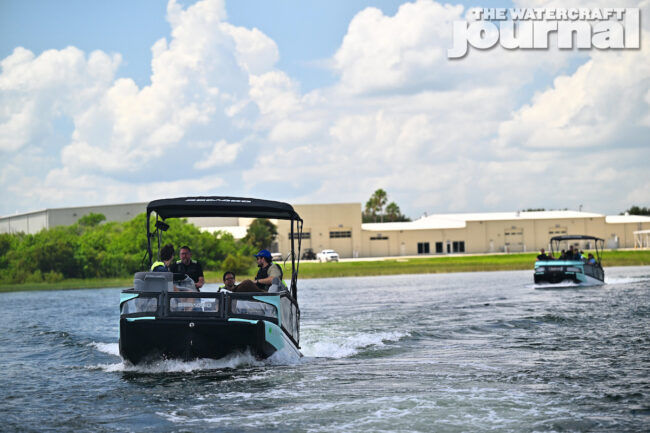
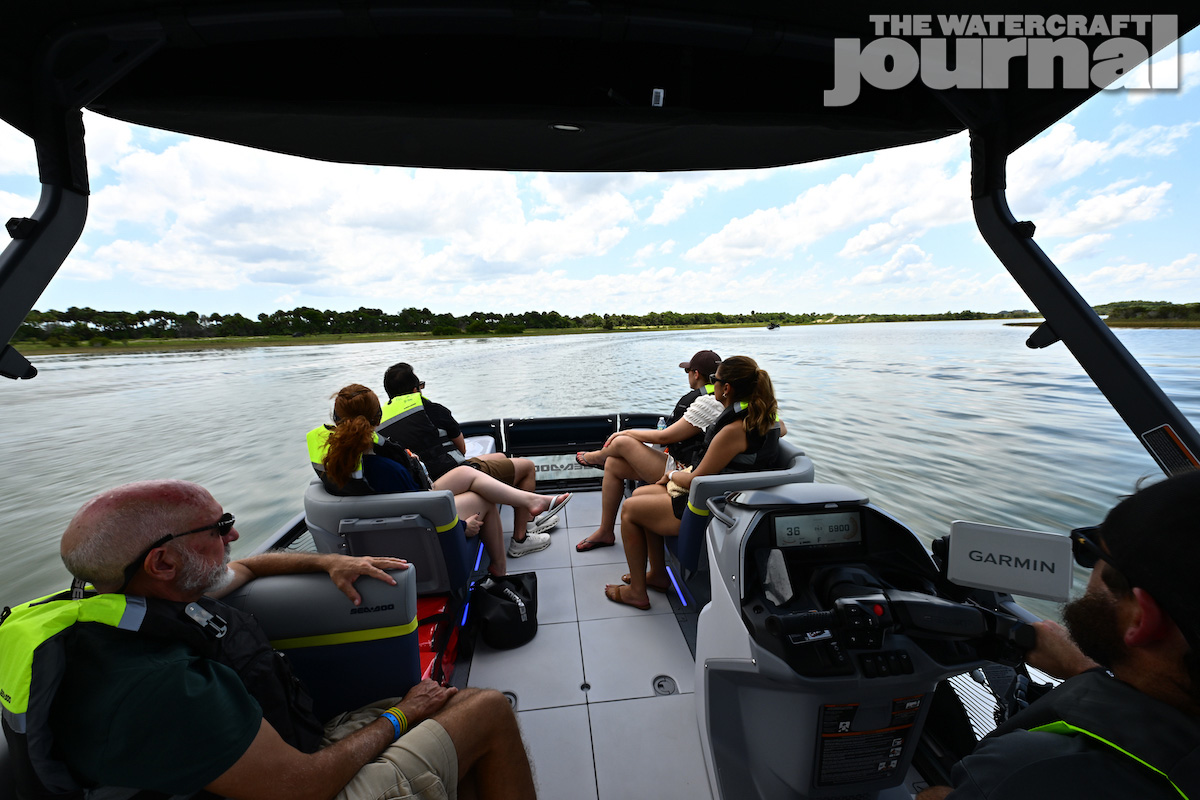
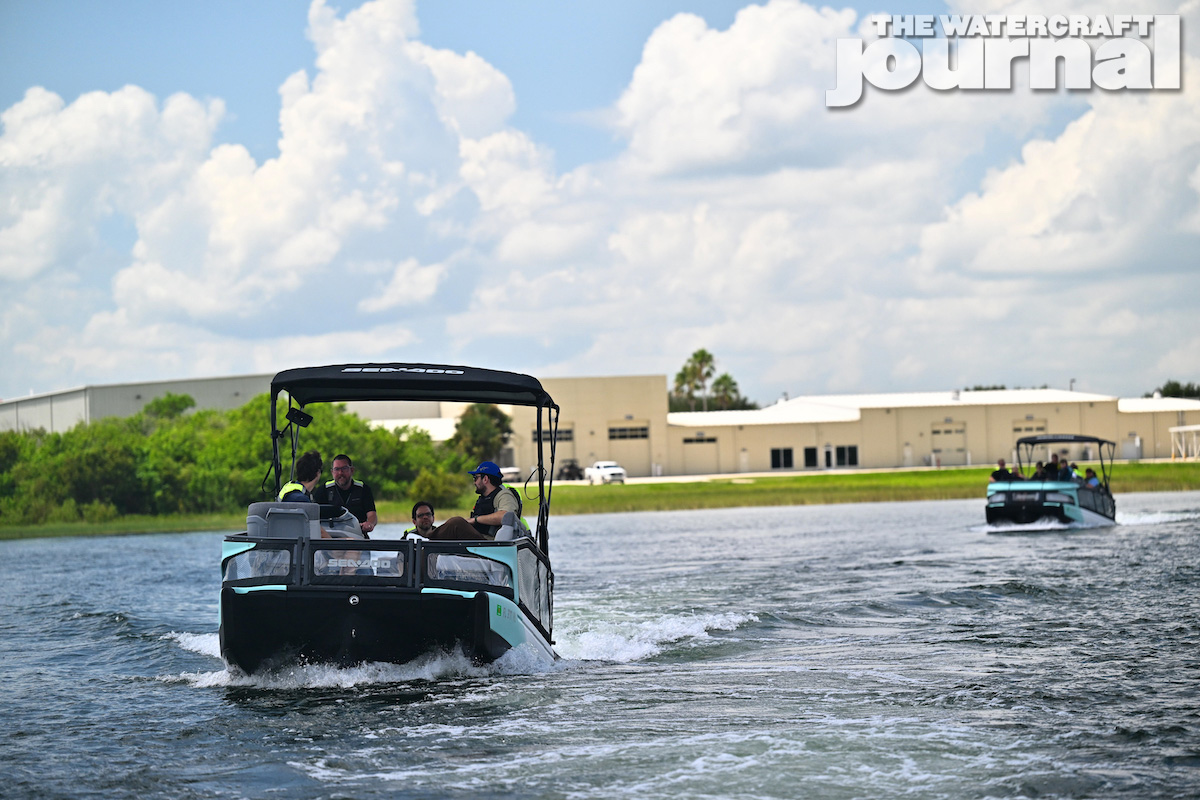
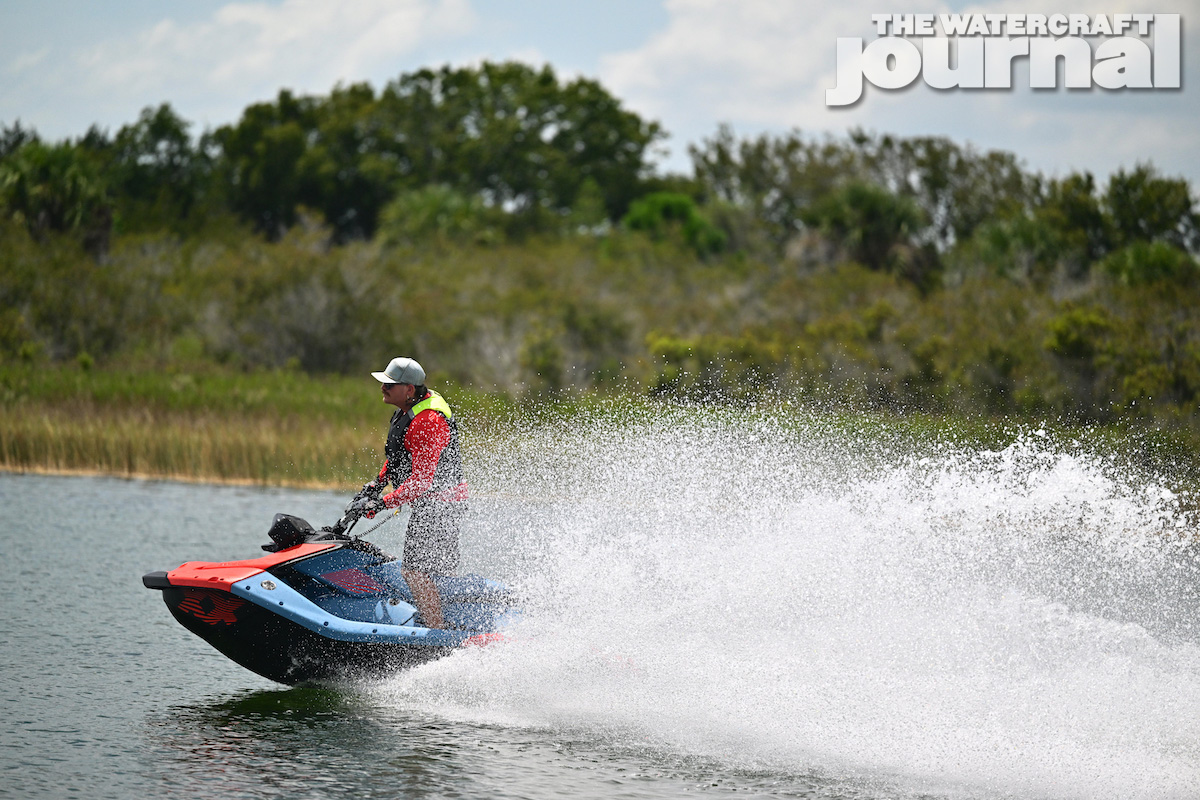
During our lake tour aboard a Switch, we watched one rider absolutely rail an RXP-X 350 through corners at speeds that initially made everyone aboard wince.
Shortly thereafter, another rider appeared aboard the new Spark X Trixx, balancing the machine vertically seemingly forever. These guys are pretty dang good at their jobs.
Of course, a controlled lake can only tell engineers so much. Roughly 15 miles away, Sea-Doo has access to Atlantic Ocean testing near Melbourne, Florida, where prototype machines are subjected to rough-water conditions. That creates another problem: hiding them from curious eyes.
Engineers can occasionally disguise a new hull beneath existing bodywork, but eventually complete prototypes need real-world testing. That’s when camouflage covers come out, concealing nearly everything except the handlebars.
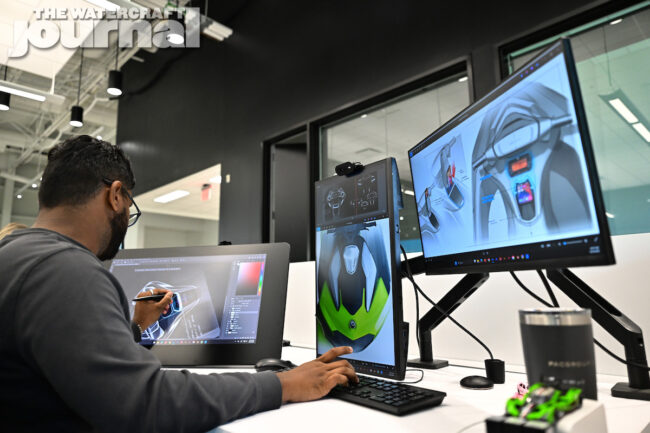
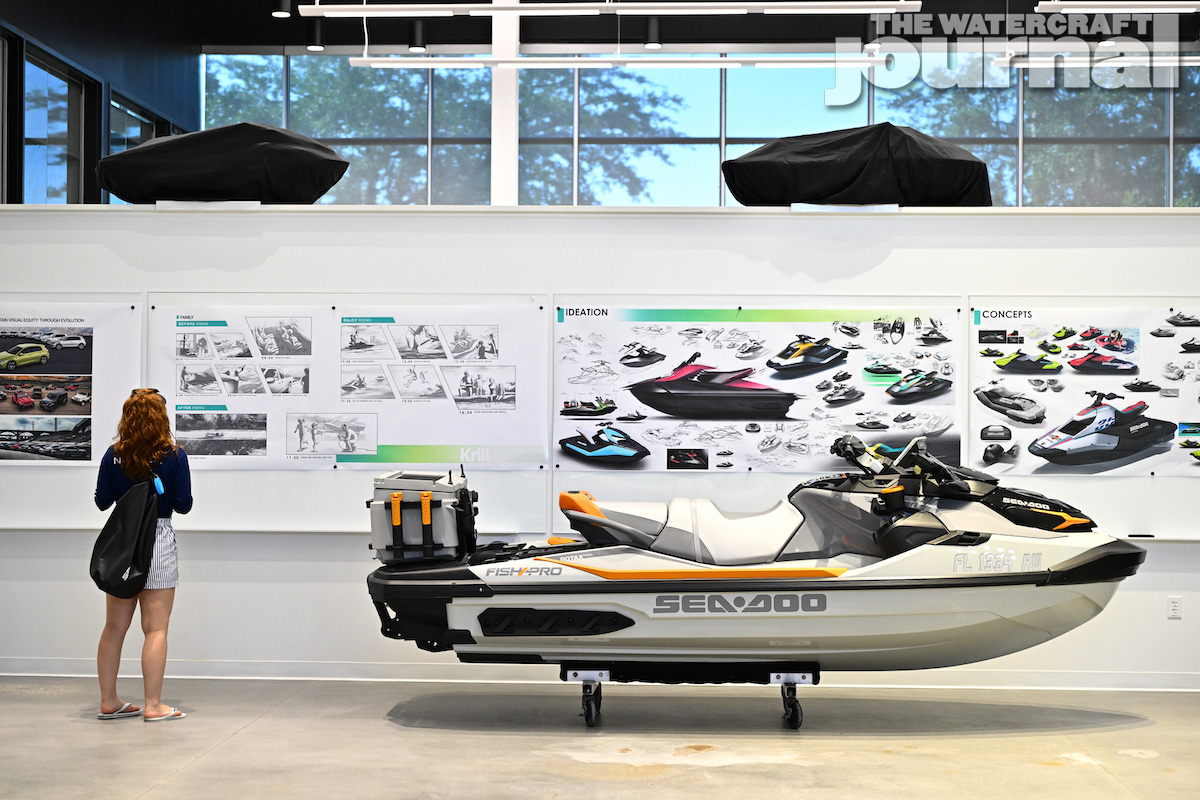
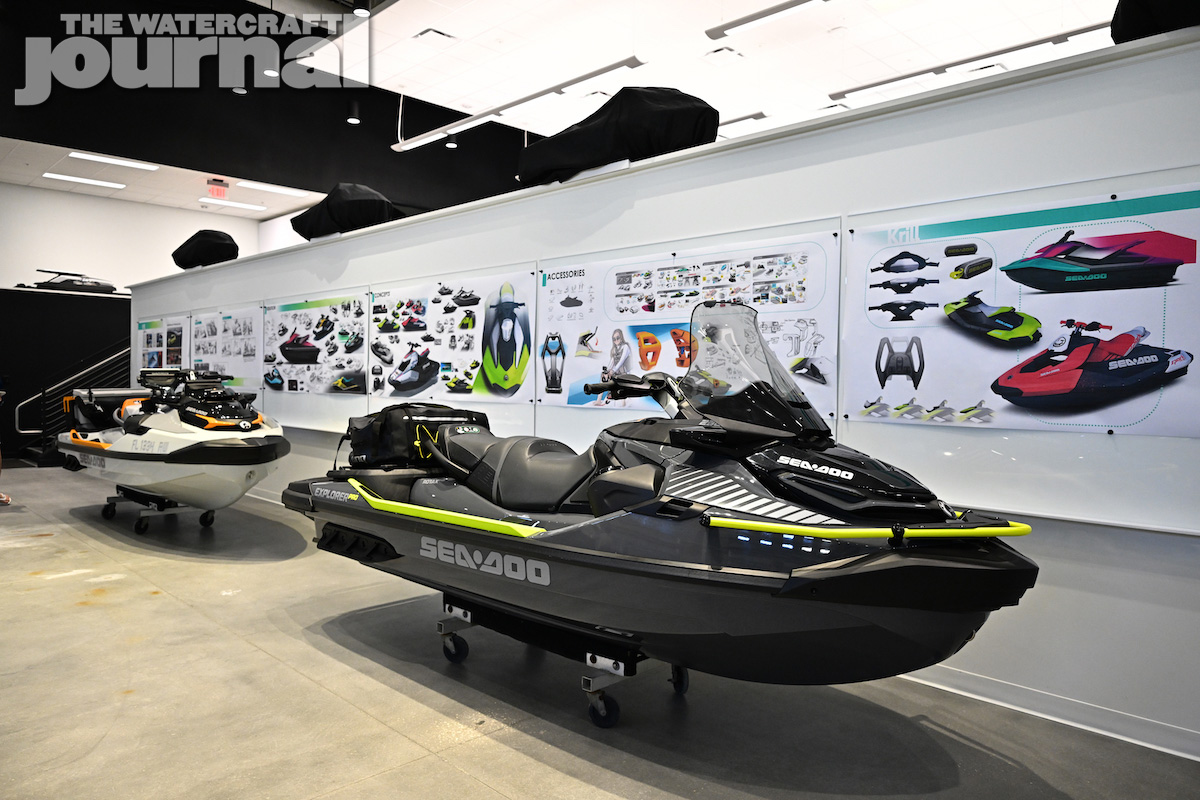
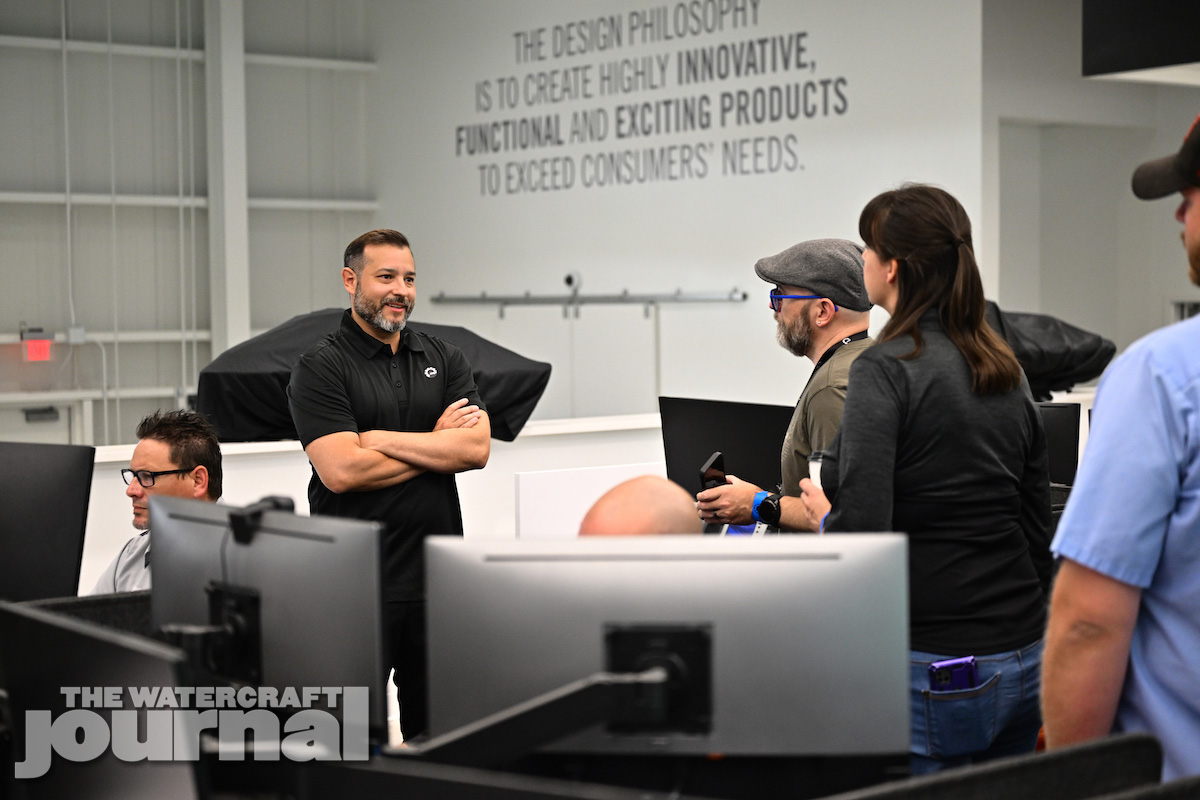
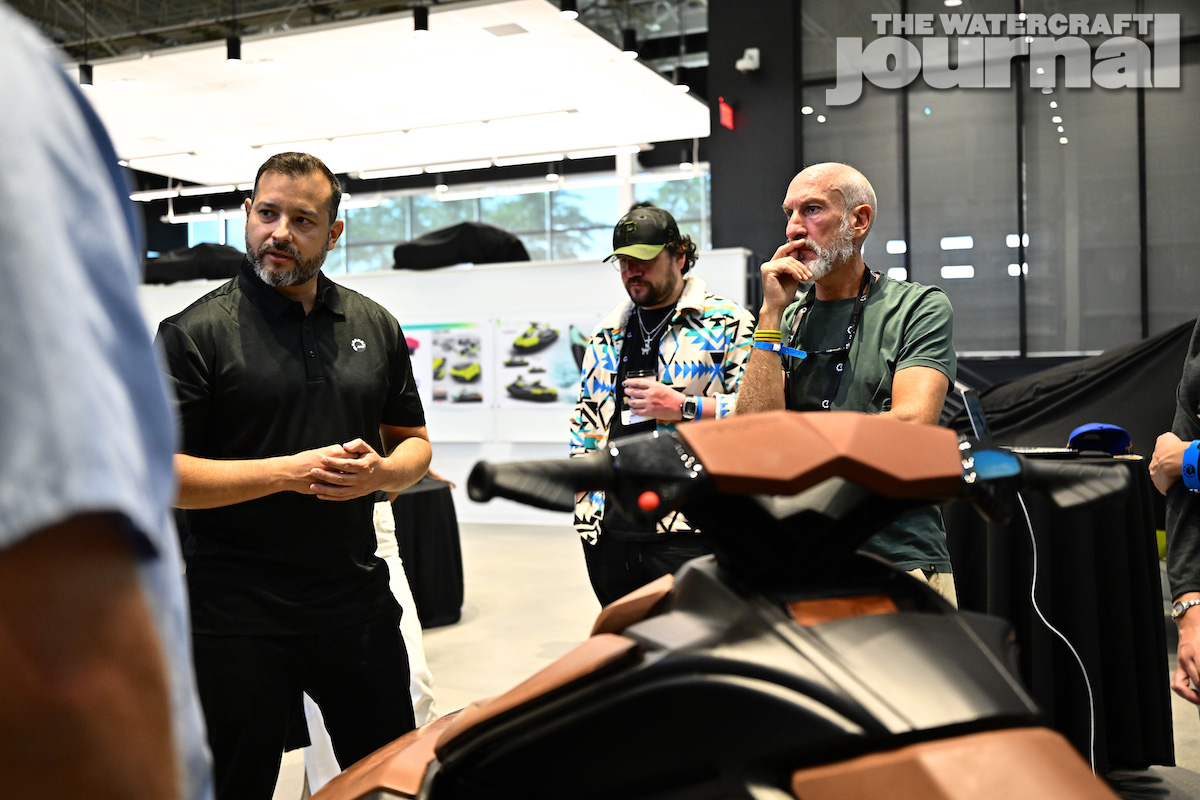
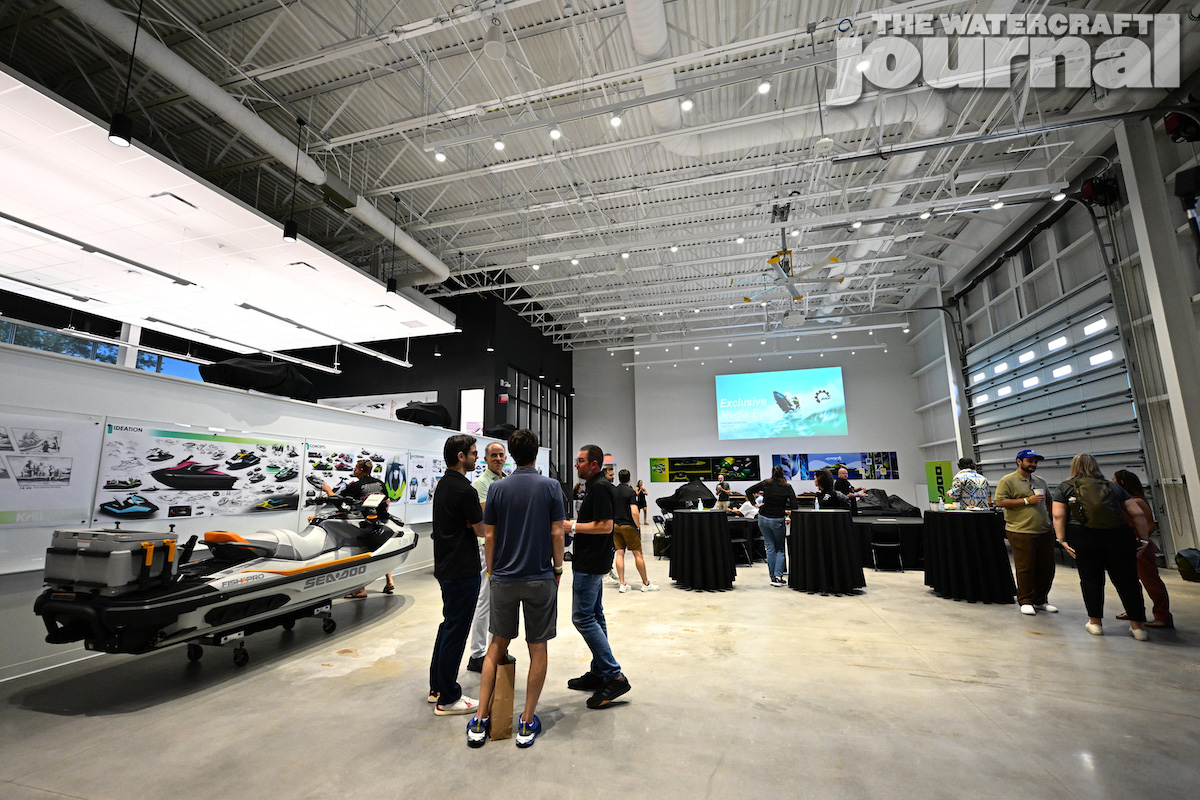
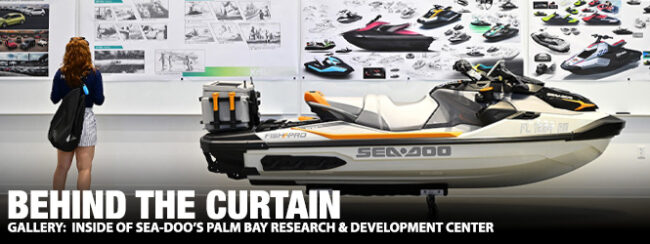
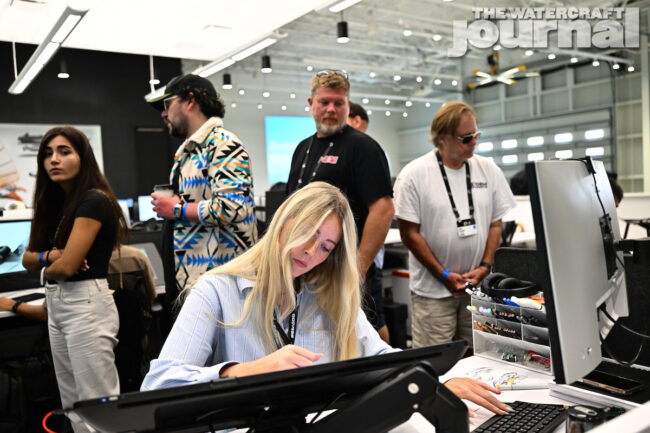
Back inside the design studio, our attention repeatedly returned to several scale models carefully hidden beneath black cloth. We weren’t permitted to peek – believe me, I tried – and nobody from Sea-Doo was volunteering any clues. Could something beneath those covers represent the eventual successor to the now 10-year-old ST3 platform underpinning today’s GTX, RXT-X, Fish Pro and Explorer Pro?
Maaaybe.
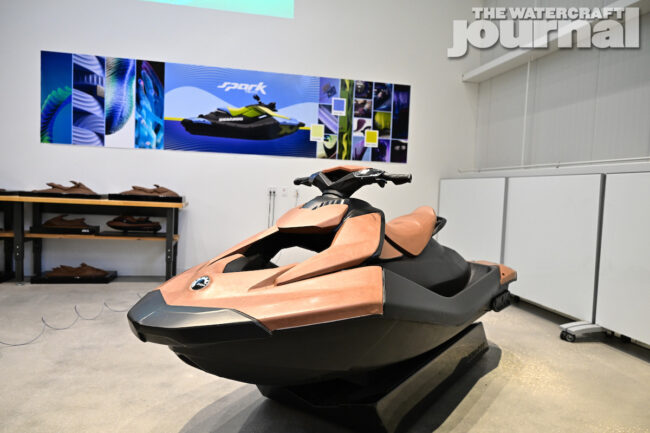
What we can say with certainty is that seeing Palm Bay firsthand dramatically illustrates just how much engineering goes into a modern personal watercraft. What eventually appears beneath the bright lights of a dealer show represents years of drawings, computer modeling, hand-built prototypes, broken parts, revised designs and thousands upon thousands of testing hours.
So while we didn’t get to pull those black covers off – and believe me, I wanted to – we did get something arguably more valuable: a glimpse at where the next generation of Sea-Doo is being created. And somewhere inside that unassuming building in Palm Bay, chances are pretty good that somebody is already working on a Sea-Doo we won’t be writing about until 2028, 2029 or beyond.