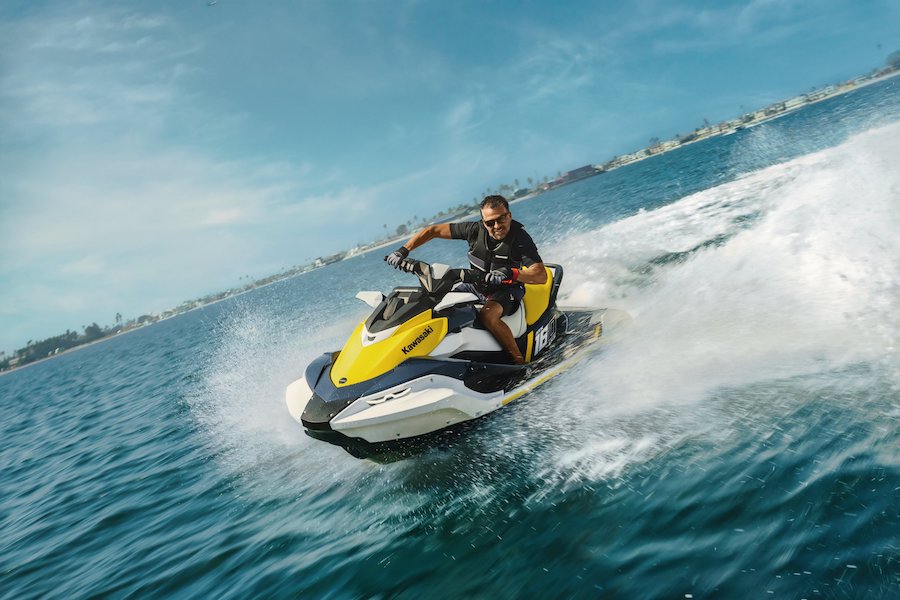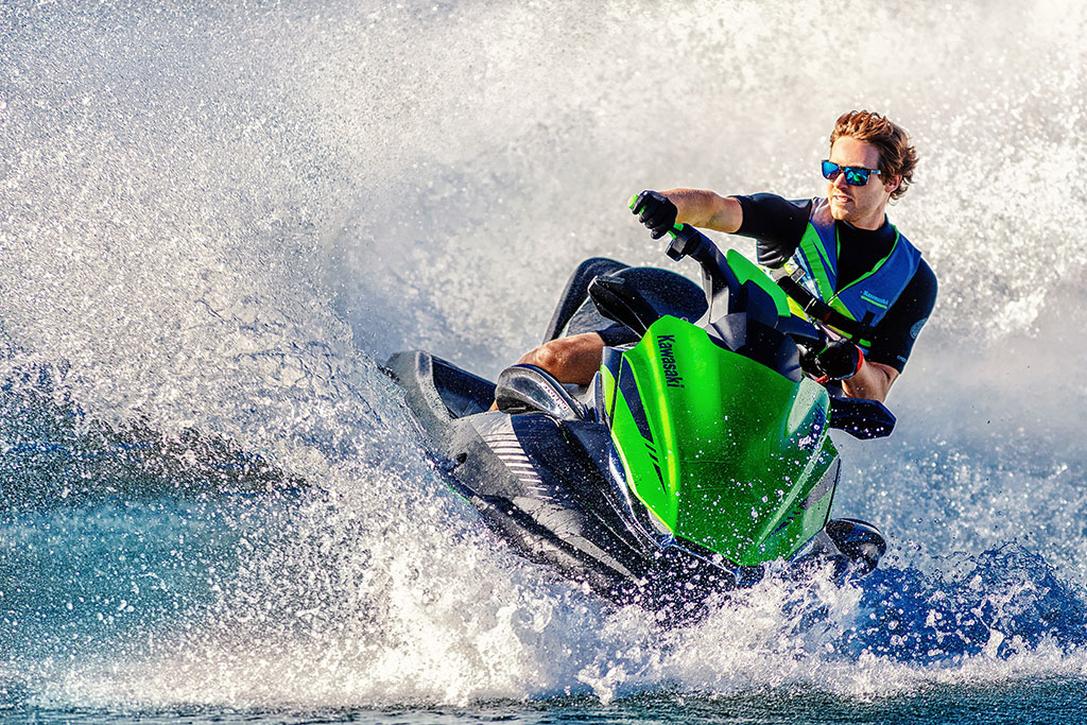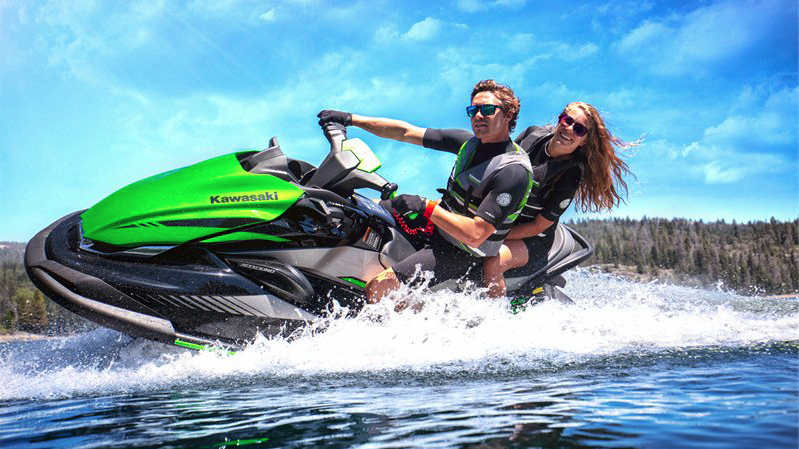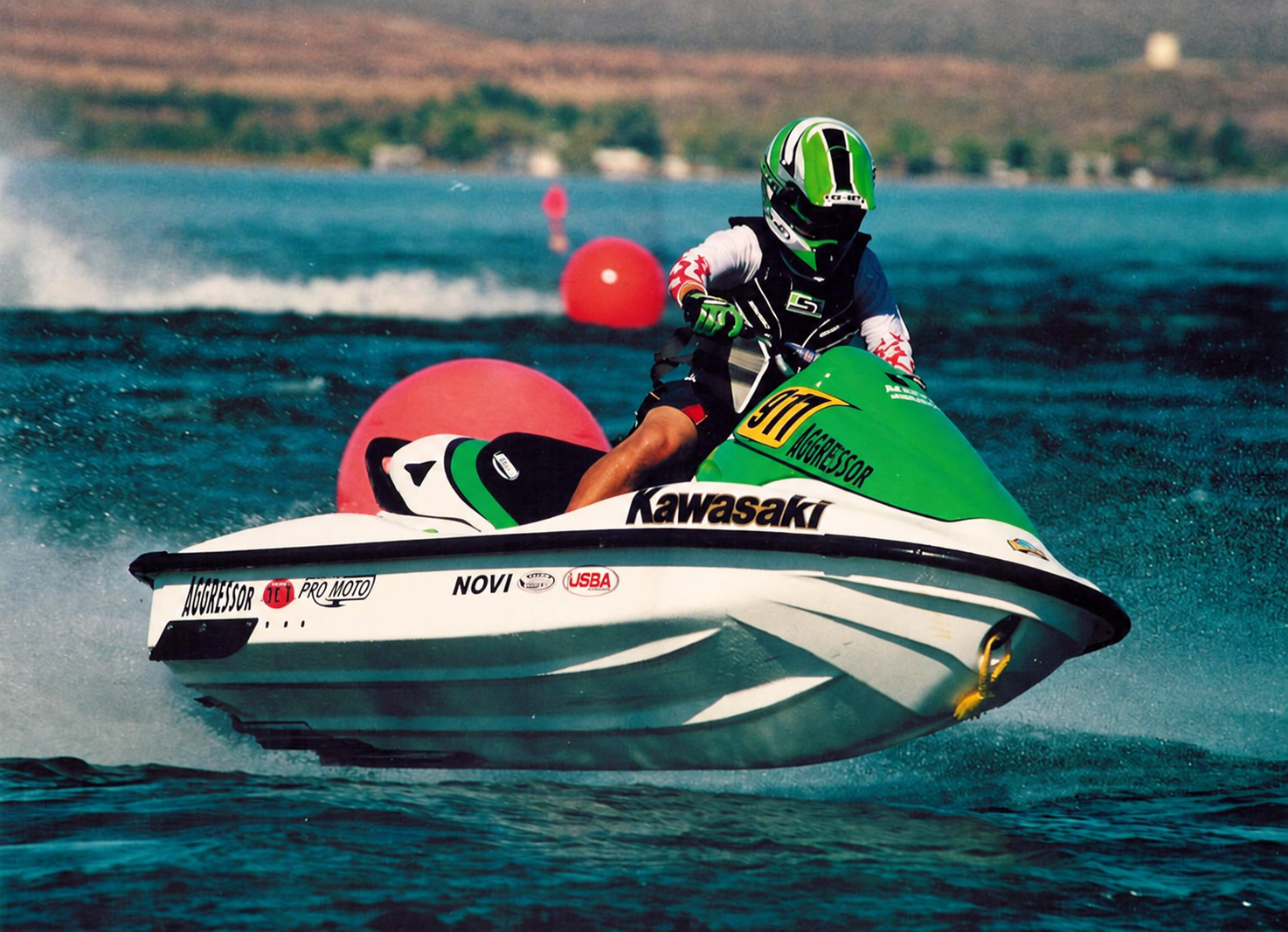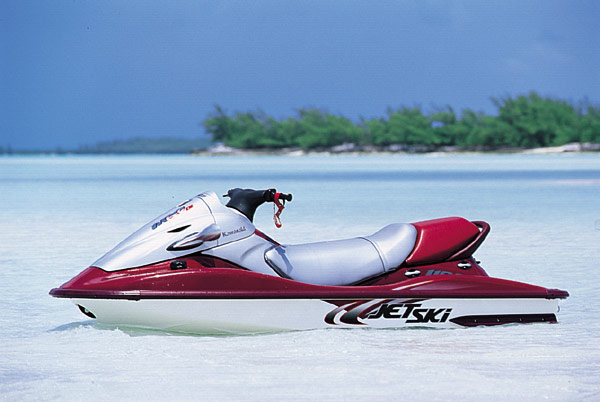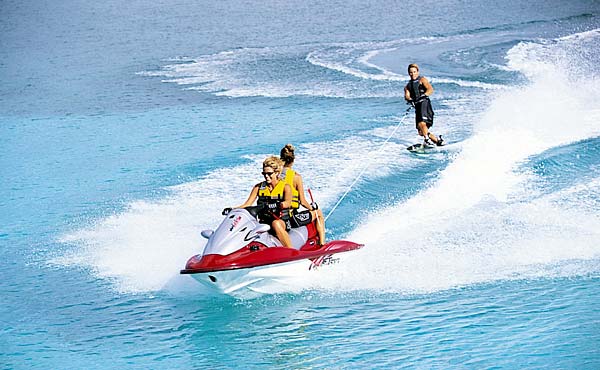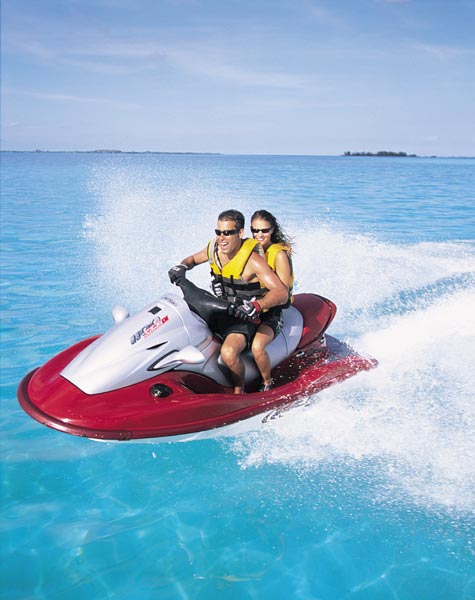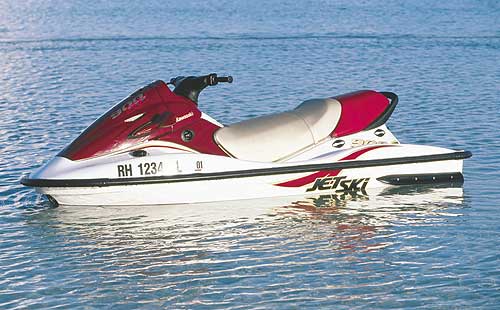




Sometimes the most important engineering decisions aren’t the ones that make headlines. Sometimes they’re the ones that quietly remain in production for decades. Such is the story of Kawasaki’s STX hull.
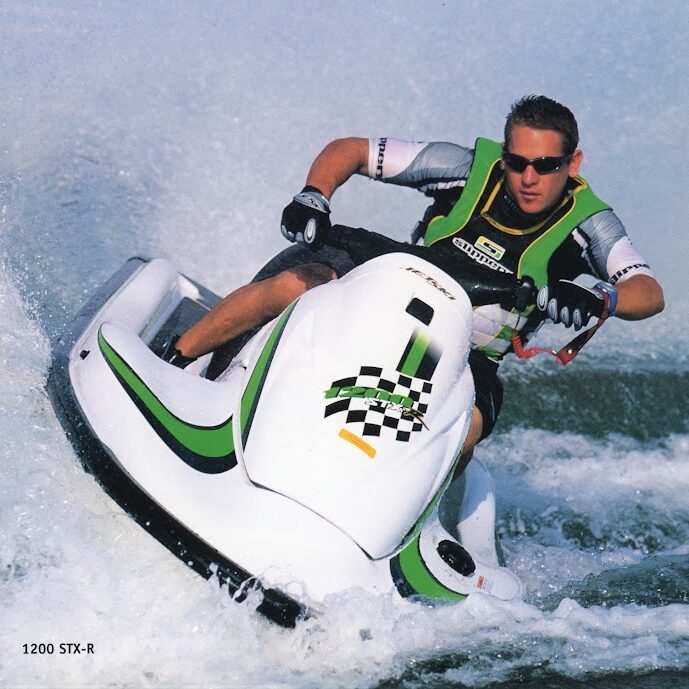
For enthusiasts today, the letters “STX” might immediately conjure images of the affordable and sporty STX 160. Older riders may remember the four-stroke STX-15F, while racers of a certain generation are likely to picture the green-and-white STX-R 1200 carving around buoys. What’s remarkable is just how closely all of these machines are related.
The basic lineage of the hull underneath Kawasaki’s current STX family can be traced back nearly three decades, surviving two-strokes, the four-stroke revolution, changing emissions requirements, multiple redesigned top decks and now — incredibly — a 310-horsepower supercharged engine.
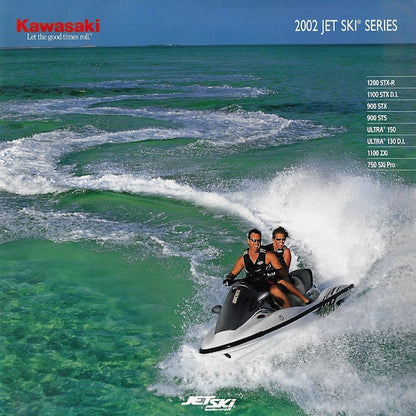
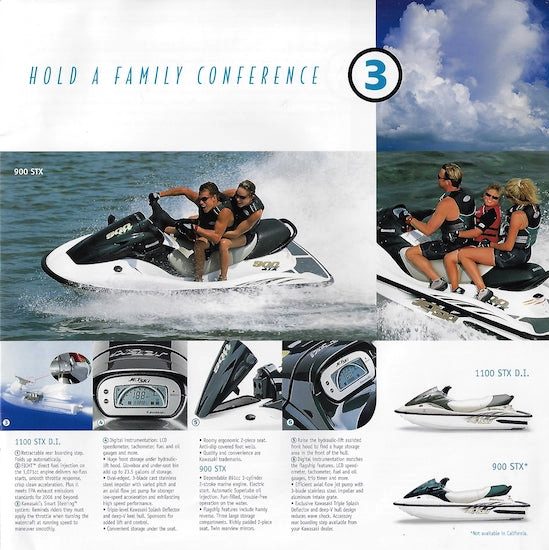
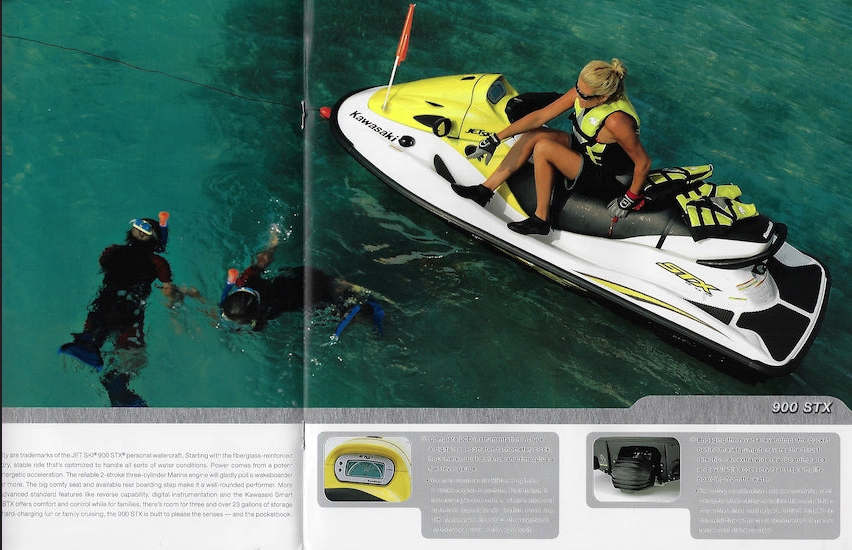
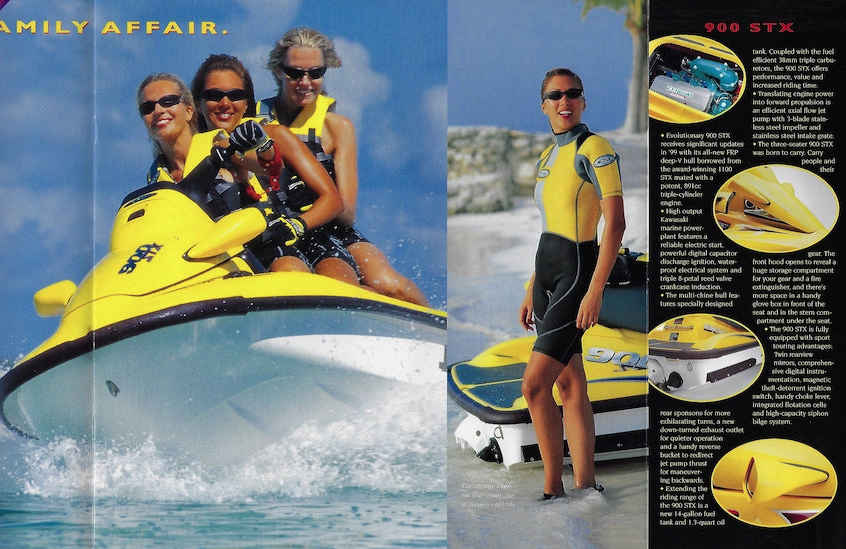
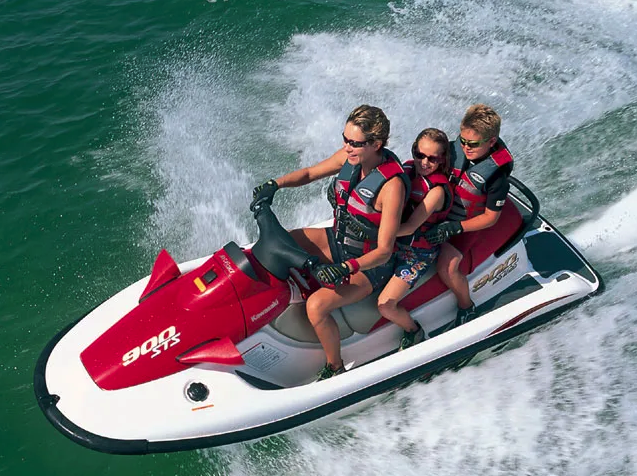
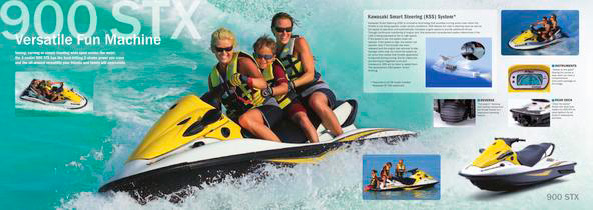
Kawasaki itself traces the STX family back to the 1997 STX 900, introduced when three-passenger personal watercraft were beginning to displace two-seaters as the industry’s dominant configuration.
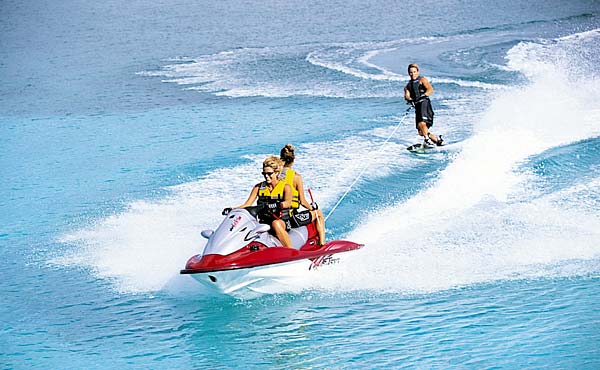
The original STX combined the practicality expected of a three-seater with considerably sportier handling than many contemporary runabouts. Kawasaki subsequently expanded the concept with the STX 1100, and the basic platform continued to evolve.
The significant turning point for the hull we recognize today came around the turn of the millennium, particularly with the STX D.I. 1100. The STX running surface continued evolving with changes to its keel, strakes and associated handling characteristics.
| Model/year | Kawasaki model | OEM HULL-COMP example | Same basic bottom hull? | Important differences |
|---|---|---|---|---|
| 2000 1100 STX D.I. | JT1100-C1 | Different 59426 | YES — apparent origin | Standard sponsons, reverse, DI installation |
| 2001 1100 STX D.I. | JT1100-F1 | 59426-3899-QF | YES | Standard recreational configuration |
| 2002 1100 STX D.I. | JT1100-F2 | 59426-3916-QF | YES | Standard sponsons/reverse |
| 2003 1100 STX D.I. | JT1100-G1 | 59426-3920-QF | YES | Last 1100 D.I. version |
| 2001–02 900 STX | JT900-C | 59426-3909-8C | YES / same generation | Different powertrain and standard sponsons |
| 2003–06 900 STX | JT900-E | different 59426 | YES / same generation | Numerous detail changes |
| 2002 STX-R | JT1200-A1 | 59426-3914-8C | REFERENCE | Lightweight/race configuration, special sponsons |
| 2003 STX-R | JT1200-A2 | — | YES | Revised/reinforced from 2002 |
| 2004 STX-R | JT1200-C1 | 59426-3947-8C | YES | Later STX-R configuration |
| 2005 STX-R | JT1200-C2 | 59426-3947-650 | YES | Final STX-R |
| 2003 STX-12F | JT1200-B1 | 59426-3930-8C | YES, basic running surface | Four-stroke installation; altered sponson arrangement |
| 2004–07 STX-12F | JT1200-B | different 59426 | YES, basic running surface | Four-stroke version |
| 2004–19 STX-15F | JT1500-A | e.g. 59426-3940-650 | YES, evolved version | Heavier 4-stroke installation, different sponsons/mounting |
| 2020+ STX 160 | JT1500 | — | Same later STX bottom | Entirely redesigned upper deck |
The above graph compares hull design, characteristics and part numbers against the 2002 STX-R 1200.
Rather than abandon a successful design and start over, Kawasaki kept refining it. That decision would prove remarkably consequential. For 2002, Kawasaki took the STX concept in a dramatically different direction with the STX-R 1200.
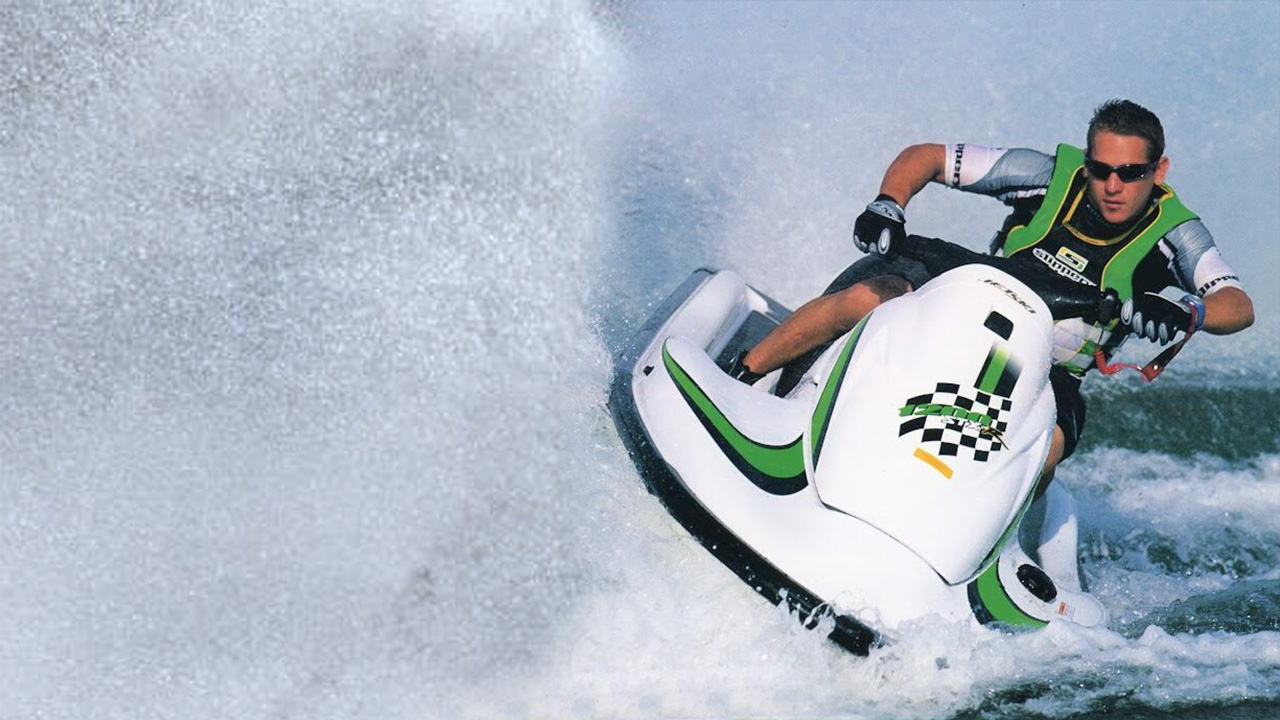
Rather than design an entirely new race-oriented hull, Kawasaki transformed its established STX architecture into a performance machine. The STX-R received the ferocious 1,176cc two-stroke triple related to the engine powering the Ultra 150, triple 38mm Keihin carburetors and Kawasaki’s K-TRIC ignition system. But the hull was equally important.
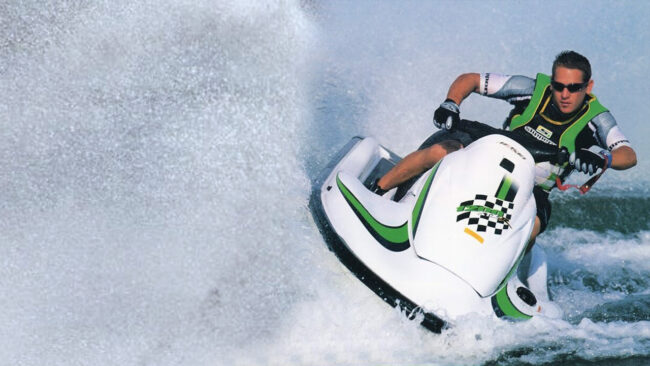
The STX-R received unique race-oriented hardware, including its distinctive multi-piece sponsons, while unnecessary recreational equipment such as reverse was discarded. Kawasaki’s OEM catalog confirms that the 2002 STX-R used its own complete hull assembly — 59426-3914-8C — as well as model-specific right and left sponson bases and wings.
This distinction is important. An STX-R hull isn’t literally interchangeable with every STX that preceded or followed it. Complete hull assemblies, mounting provisions, sponsons and other components changed over time.
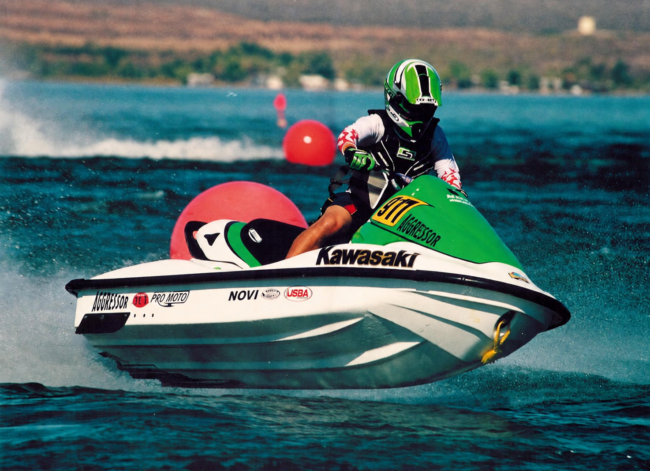
The architecture, however, remained remarkably consistent. And the STX-R proved that architecture could race.
In fact, Kawasaki would later specifically tout the STX-R’s competition pedigree, noting that the craft carried Kawasaki to the 2003 IJSBA Pro Runabout 1200 Superstock championship. The STX-R 1200 remained in production through 2005, but its influence would last far longer.
By the early 2000s, tightening emissions requirements made it increasingly obvious that the future belonged to four-strokes.

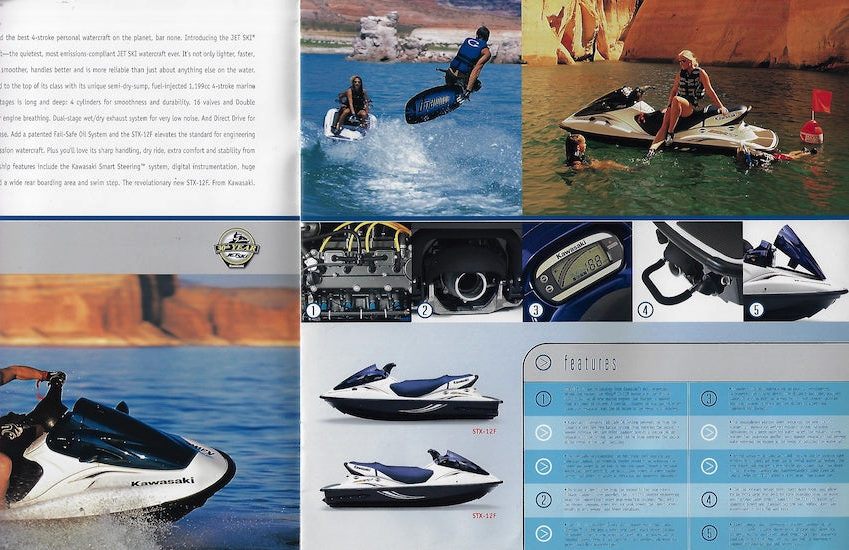
Kawasaki’s answer arrived with the 2003 STX-12F, its first four-stroke JetSki. Powered by a fuel-injected 1,199cc four-cylinder engine developed from Kawasaki’s Ninja ZX-12R motorcycle architecture, the 12F represented an enormous technological shift.
Yet underneath all that new technology was something familiar. Kawasaki specifically described the STX-12F’s fiberglass-and-gelcoat hull as being based upon the highly regarded 1100 STX series, with increased rigidity and reduced weight. Then, for 2004, came the machine that cemented the STX hull’s future: the STX-15F.
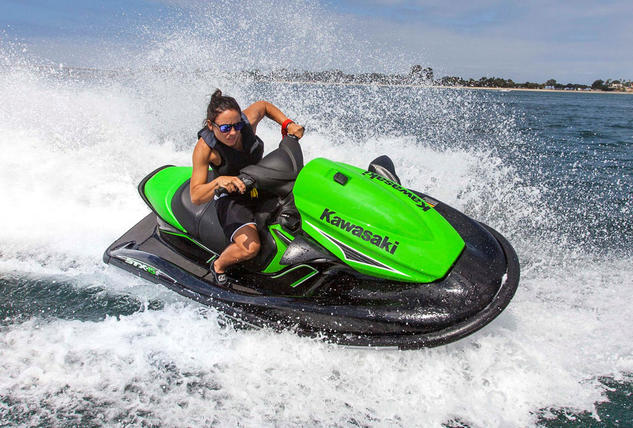
The 15F introduced Kawasaki’s 1,498cc inline-four — an engine architecture that would become nearly as long-lived as the hull beneath it. Most importantly for our story, Kawasaki’s own announcement described the new STX-15F as combining its four-stroke engine with the “compact, lightweight hull” of the championship-winning 1200 STX-R.
That statement provides perhaps the clearest factory confirmation of the STX-R/15F connection and Kawasaki apparently saw little reason to replace something that worked.
The STX-15F became one of Kawasaki’s longest-running modern personal watercraft, remaining in the lineup through 2019.
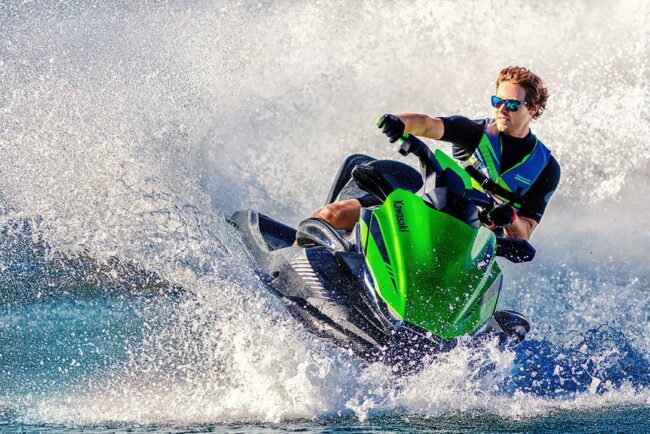
For 2020, Kawasaki renamed and extensively restyled the platform as the STX 160. The appearance was dramatically different, but beneath the new deck the proven STX running surface survived. Then Kawasaki did it again.
The substantially redesigned 2026 STX 160 received another new top deck, modern electronics, a 7-inch TFT display, electric trim and Kawasaki Smart Reverse with Deceleration. Yet the underlying hull and sponsons carried over.
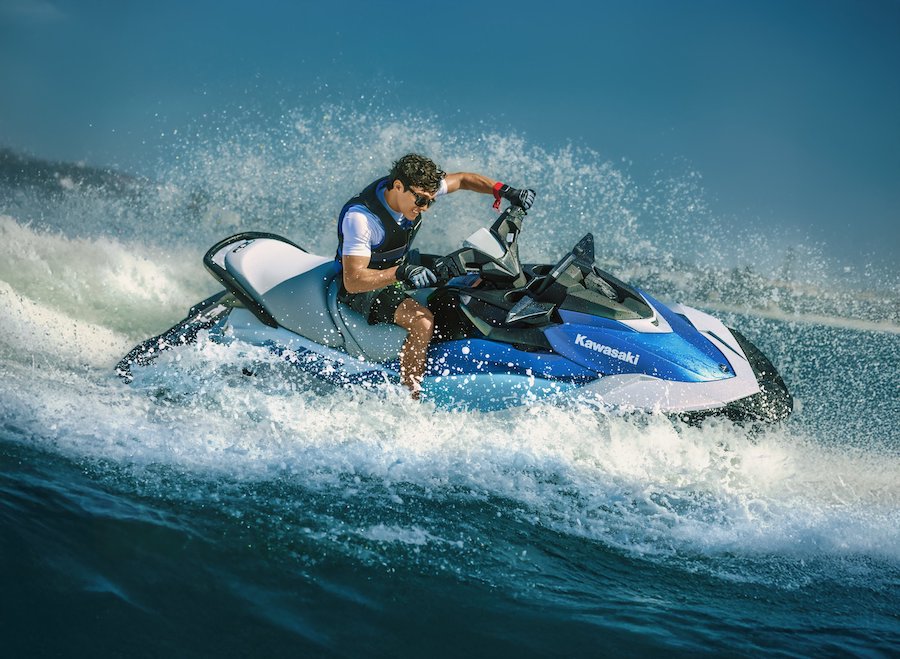
For 2027, Kawasaki’s naturally aspirated STX family now includes the STX 160X, STX 160LX, new STX 160LX-S and race-inspired STX 160R. All retain the naturally aspirated 1,498cc inline-four and the lightweight STX hull architecture.
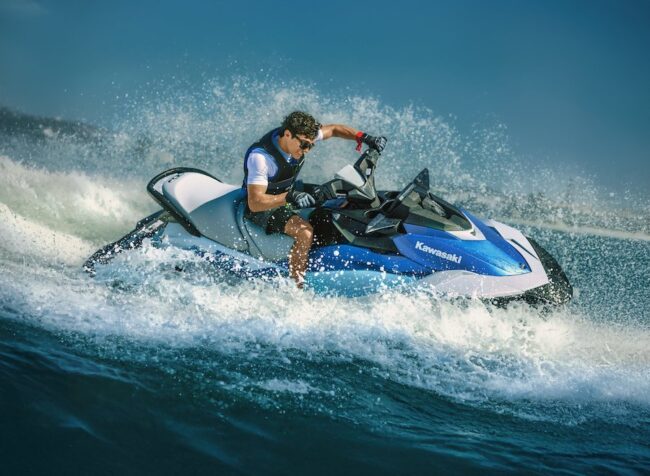
But Kawasaki wasn’t finished. Not even close. For 2027, Kawasaki has done something STX enthusiasts have imagined for years. It put the Ultra’s supercharged engine into an STX.
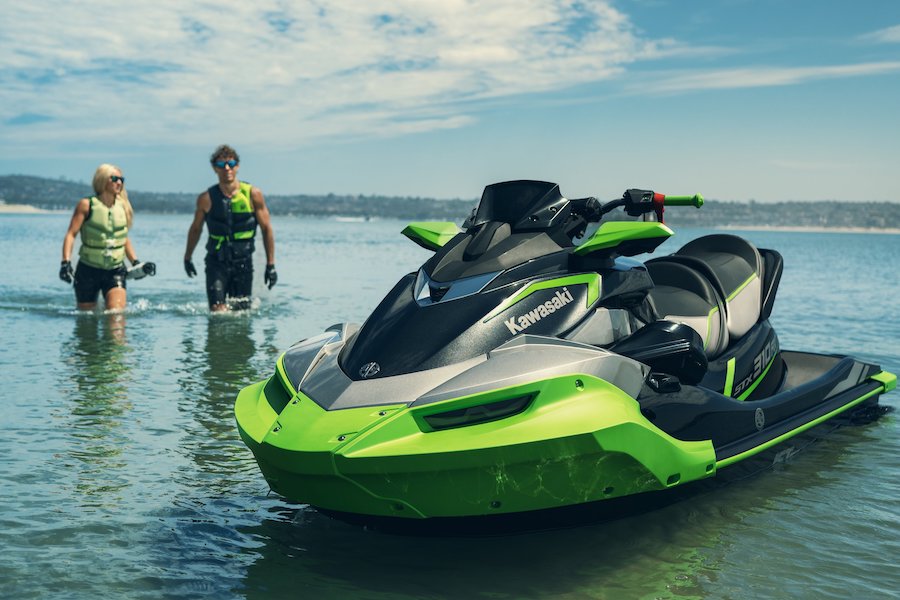
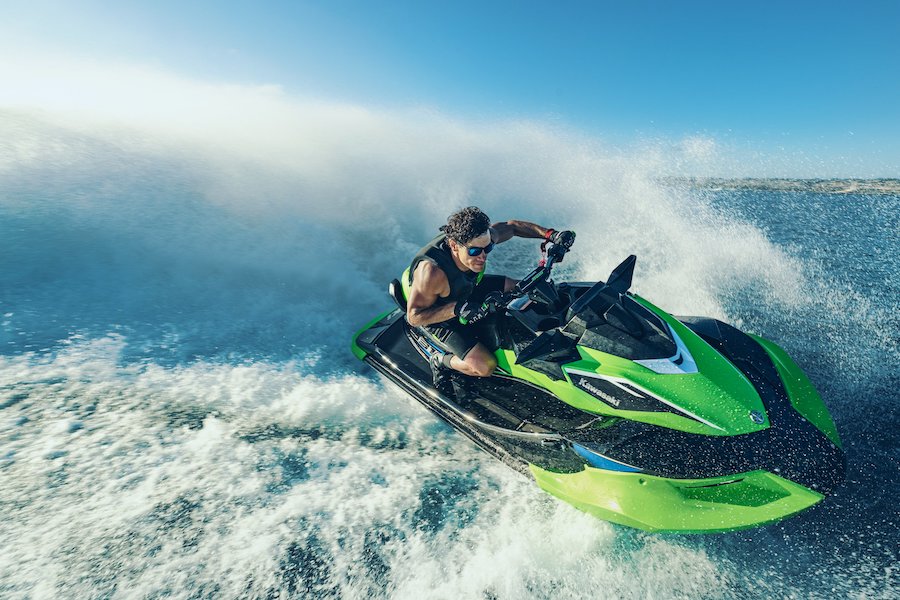
The new STX 310R and STX 310RX pair Kawasaki’s supercharged 1,498cc inline-four with a reinforced version of the compact STX hull, producing a claimed 310 horsepower. Kawasaki calls it the quickest-accelerating sit-down JetSki it has ever produced.
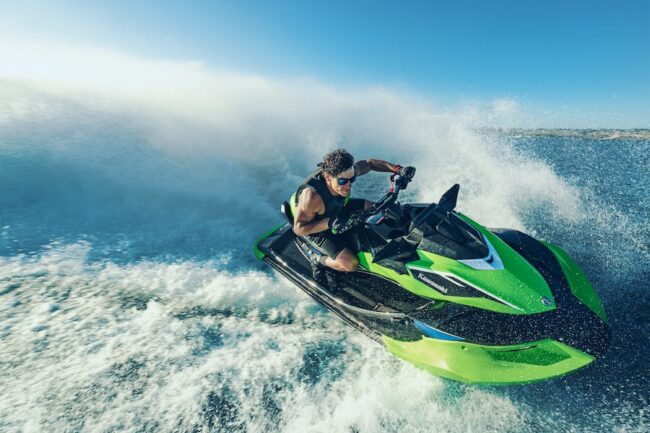
The STX 310R is the more performance-oriented two-seater, equipped with an adjustable motocross-style handlebar and sport-oriented seating, while the STX 310RX adds a three-passenger LXury seat, meter visor and Jetsound audio system. MSRP starts at $18,799 for the 310R and $20,199 for the 310RX.
The STX concept began in the late 1990s as Kawasaki’s answer to the growing three-passenger runabout market. It evolved through the 900 and 1100 STX models, became a serious racing platform with the STX-R 1200, ushered Kawasaki into the four-stroke era with the STX-12F, matured into the extraordinarily long-lived STX-15F and eventually became the modern STX 160.
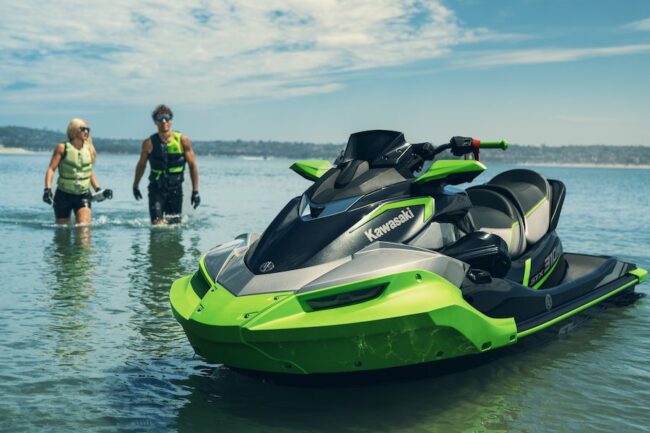
Now, three decades after the STX name first appeared, Kawasaki is reinforcing that same fundamental design philosophy to handle 310 supercharged horsepower.
Calling every STX from 1997 through 2027 the “same hull” would be technically inaccurate. Complete hull part numbers changed. Construction, reinforcement, mounting provisions, sponsons and decks evolved. The STX-R itself received specialized equipment that distinguishes it from its recreational relatives.
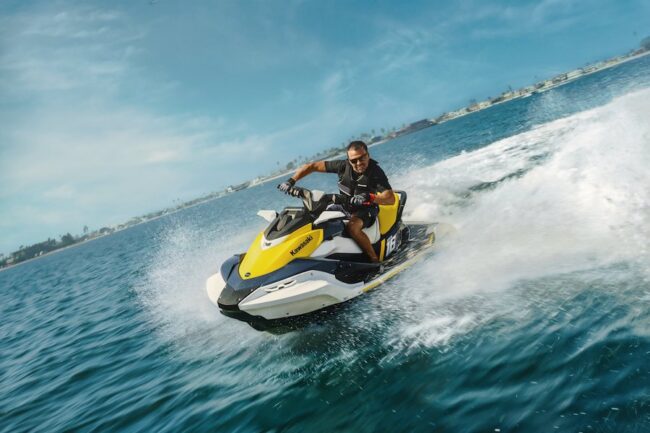
What remained was the underlying design philosophy and remarkably persistent running-surface lineage. That may ultimately be the greatest compliment Kawasaki could pay its engineers.
Most personal watercraft hulls eventually reach a point where manufacturers decide that improvement requires replacement. Kawasaki instead spent decades discovering just how far the STX concept could be pushed.
From a 900cc three-cylinder family runabout, to a championship-winning 1,200cc two-stroke racer, to Kawasaki’s first four-stroke JetSki, to the STX-15F, STX 160 and finally the outrageous 310-horsepower STX 310R, the STX hull didn’t merely survive changing times. It helped Kawasaki navigate them.