


 When we talk about helping a personal watercraft engine breathe, the conversation usually heads straight for air intakes, superchargers and the various ways to move more air into the combustion chamber. But anyone who’s tried to breathe through a stuffy nose knows that even a relatively small part of the process can make a noticeable difference.
Engines have their own less glamorous breathing concerns, and some of them have very little to do with the air intake itself.
One of those concerns is crankcase ventilation. During normal engine operation, a small amount of combustion gas escapes past the piston rings and enters the crankcase. Known as blow-by, these gases carry oil vapor that must be managed as part of the engine’s ventilation system.
In a factory configuration, crankcase vapors are generally routed back through the intake system. But on modified, high-performance engines, particularly those running increased boost, the amount of blow-by and oil mist can become more troublesome.
That’s where an oil catch-can comes into play.
Rather than allowing oil-laden vapors to travel directly into the intake, a catch-can provides a place for oil droplets to separate from the gases and collect for later draining. It’s not a horsepower-producing modification, but it can help keep unwanted oil out of the intake tract.
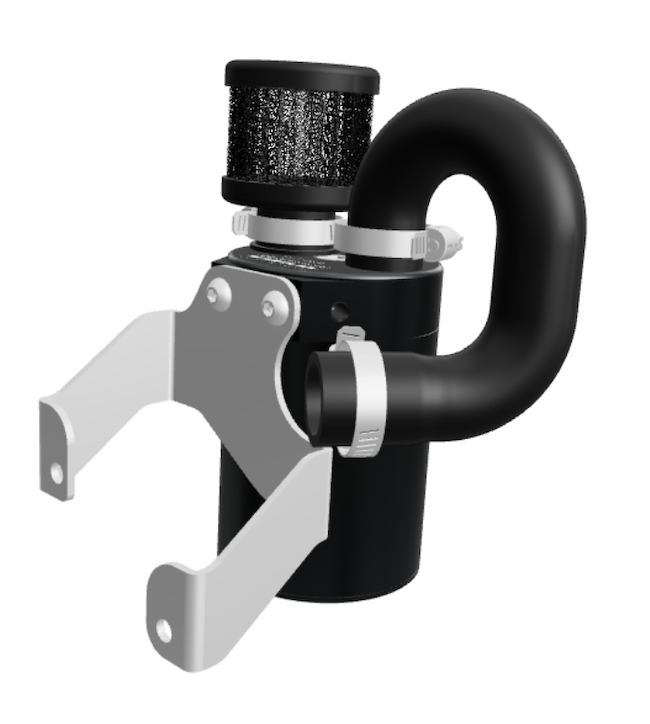 WORX Racing has now updated its Sea-Doo Billet Oil Catch-Can with an internal baffle designed to improve that separation process.
The revised design targets what WORX describes as heavy-breathing engines, where oil can be pushed out through the breather filter, particularly in high-performance applications.
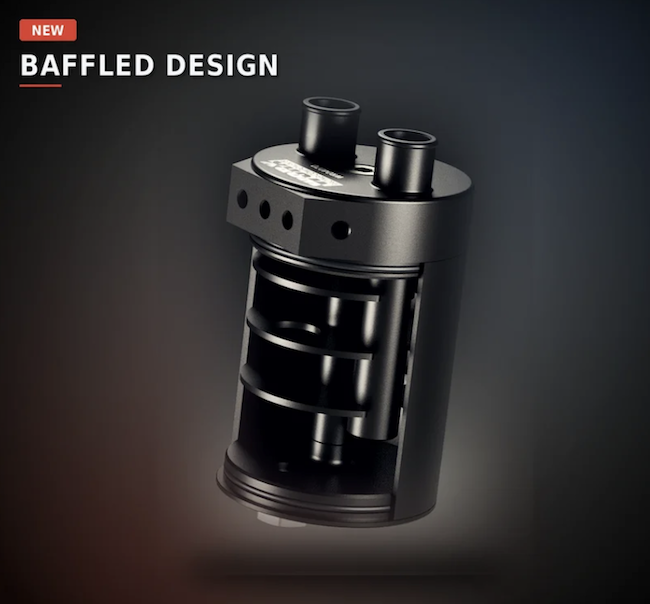
The internal baffle helps separate and contain oil mist within the canister rather than allowing it to escape with the crankcase gases. The collected oil can then be removed through a bottom-mounted brass drain plug.
Constructed from billet aluminum, the catch-can can be installed with aftermarket performance air intakes or factory equipment. WORX recommends pairing it with an aftermarket intake, although the kit includes a block-off for the factory intake’s breather connection when retaining the OEM setup.
And while installation is described as relatively straightforward, maintaining the catch-can is an important part of making the system work as intended.
WORX recommends that racers empty the can after every race event. Recreational riders can start with an interval of every two or three tanks of fuel, adjusting that schedule based on how hard the engine is being run and how much oil accumulates.
The upgraded catch-can is listed for a broad range of Sea-Doo models, including 185, 215, 230, 255, 260, 300 and 325 horsepower applications. Buyers should verify compatibility with their specific model and year.
GreenHulk PWC Performance Store lists the WORX Racing Sea-Doo Oil Catch-Can for $150, compared with $189 directly from WORX. An additional $15 discount is available using the code greenhulk, bringing the final advertised price to $135.
For riders chasing every available horsepower, the big-ticket modifications will always attract the most attention. But sometimes it’s the smaller supporting systems, and how well they manage the less glamorous side of engine operation, that deserve a closer look.