



 From Caribbean pizza runs to flooded forests, historic waterways and cold-weather expeditions, the end of summer doesn’t have to mean the end of riding.
There comes a point every fall when the days get shorter, the temperatures drop and the annual ritual begins: wash the ski, stabilize the fuel, disconnect the battery and resign yourself to several months of watching other people ride on YouTube.
The Watercraft Journal has already expressed our wholehearted disinterest in the whole “winterize your ski” schedule.
So … what if, instead of putting our summer toys away for the winter, we started planning where to ride them next?
Sure, there’s always Florida. And the Caribbean has no shortage of sunshine. But winter riding doesn’t have to mean circling a tropical resort or spending an afternoon bouncing around a rental company’s designated riding area.
There are places where you can explore flooded forests, follow waterways shaped by centuries of American history, ride beneath towering volcanic cliffs or even order pizza from a floating restaurant in a place called Christmas Cove.
Some of these adventures call for sunscreen. Others call for a wetsuit, a drysuit or a particularly adventurous attitude.
So before you pull the cover over your ski and call it a season, consider these nine destinations that might just change your winter plans.
Summer Attire OK
 Christmas Cove, U.S. Virgin Islands: A Very Different Kind of Christmas Dinner
Forget chestnuts roasting on an open fire. How about a freshly baked pizza served from a boat floating in the Caribbean?
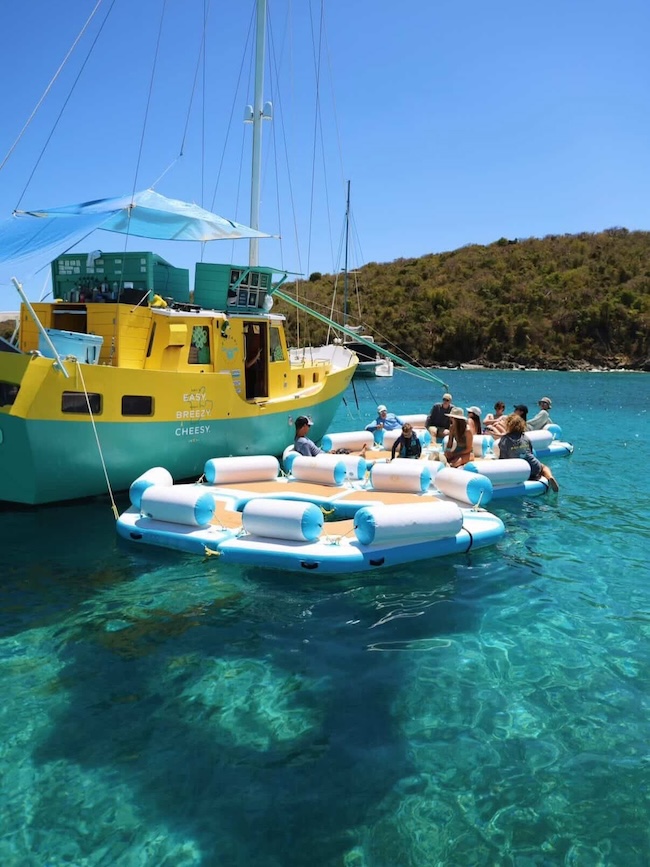
Just off Great St. James Island, between St. Thomas and St. John, Christmas Cove is home to Pizza Pi, a floating pizzeria that has turned an already beautiful anchorage into one of the more unusual dining destinations in the Virgin Islands.
The restaurant is exactly what it sounds like: a pizza kitchen aboard a boat, serving hungry visitors who arrive by water.
And yes, the place really is called Christmas Cove.
The surrounding waters offer the sort of scenery that makes winter feel like somebody else’s problem: brilliant blue water, green islands rising from the sea and protected coves where boats gather beneath the tropical sun.
For PWC enthusiasts, the appeal is obvious. Imagine spending a December morning exploring the waters around St. Thomas, then stopping for lunch at a floating pizzeria before heading back out.
And this isn’t just a hypothetical adventure. Tropical Adventure Group actually operates a guided Pizza Pi Jet Ski Shuttle from Compass Point Marina on St. Thomas. The 90-minute excursion takes riders across to Christmas Cove, where they can slip into the water, settle into floating seats and enjoy pizza delivered to one of the Caribbean’s most unusual dining spots. Private skis have been permitted to directly access Pizza Pi in prior years – it is always best to verify before booking a trip.
Pizza Pi reopens for the season November 2, making this a particularly delicious way to celebrate the holidays
Baja California Sur, Mexico: Where the Desert Meets the Sea
Most people picture a winter vacation in Mexico as a beach chair, an umbrella and something cold to drink.
The southern tip of Baja California offers a considerably more interesting view from the handlebars.
Around Cabo San Lucas, desert mountains and rugged rock formations plunge into the Pacific Ocean and the Sea of Cortez. The famous El Arco rock formation rises from the water near Land’s End, where dramatic cliffs and sea-carved passages create a coastline unlike the tropical islands farther south.
It’s an extraordinary setting for a guided PWC excursion: golden desert against blue water, towering rock formations and the feeling of riding along the edge of two very different worlds.
Winter also brings migrating whales to the region, although riders must respect marine mammal protections. A PWC excursion should never be treated as a whale-chasing opportunity, and whale-watching restrictions must be observed.
For travelers accustomed to palm trees and white sand, Baja delivers something unexpected: a winter escape that looks more like an adventure through a desert landscape that happens to meet the ocean.
Bimini, Bahamas: Shipwrecks and Shades of Blue
Some destinations earn their place on a winter riding list simply by being spectacular.
Bimini is one of them.
Located roughly 50 miles east of Florida, the Bahamian islands are surrounded by water so clear and intensely colored that photographs almost seem exaggerated.
Shallow turquoise flats give way to deeper blues, while sandy islands and channels create a landscape that begs to be explored from the water.
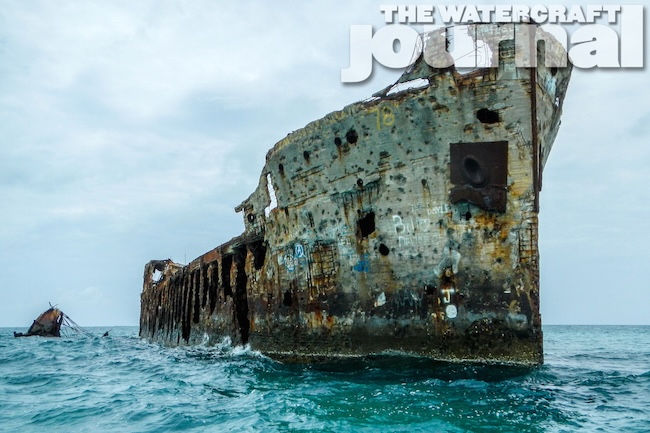
One of Bimini’s most unusual attractions is the SS Sapona, the remains of a concrete-hulled vessel that ran aground during a hurricane in 1926. The wreck still rises above the water and has become a well-known snorkeling and boating destination.
Whether a particular PWC tour can visit the wreck depends on the operator and conditions, but it gives Bimini something more memorable than another afternoon of riding in circles.
Winter is a busy tourism season in the Bahamas, and Bimini has commercial PWC operators. That doesn’t guarantee calm water: winter cold fronts can bring strong winds and rough seas.
Still, for anyone determined to trade a winter coat for Caribbean sunshine, Bimini makes a convincing argument.
Bundle Up
Galveston Island, Texas: A Ride Through Maritime History
Galveston might not be the first place that comes to mind when somebody suggests a PWC vacation.
That’s part of its appeal.
Rather than focusing exclusively on the beachfront, consider the island’s working harbor and surrounding waterways.
Galveston has spent generations as a major Gulf Coast port, and its maritime landscape reflects that history. Historic vessels, busy shipping channels, waterfront landmarks and the remains of the concrete ship SS Selma give the area a character that is entirely different from a conventional beach resort.
A guided harbor excursion offers the chance to experience that working waterfront from the water, with an ever-changing backdrop of commercial ships, historic structures and coastal scenery.
This isn’t necessarily a place to pack only swim trunks in January. Gulf Coast winters can be mild one day and sharply colder the next, with wind making exposed riding uncomfortable or unsafe.
But for riders who appreciate a little history with their horsepower, Galveston offers a winter excursion with a story behind it.
 St. Johns River, Florida: A Journey Through Old Florida
There is a side of Florida that has very little to do with theme parks, crowded beaches or high-rise condominiums.
You can find it along the St. Johns River.
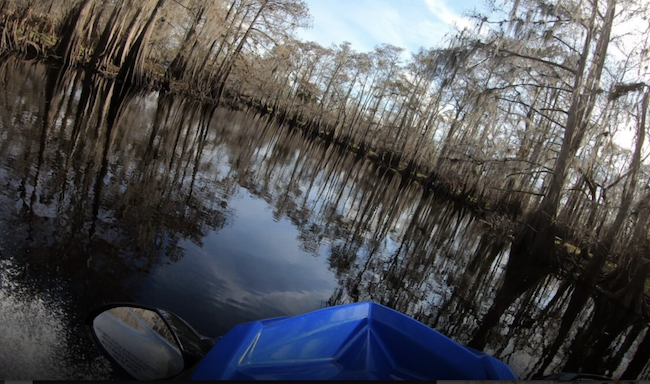
Flowing north through the state, the St. Johns passes through landscapes of sprawling cypress trees, Spanish moss, wetlands and stretches of shoreline that still resemble the Florida travelers encountered generations ago.
It’s the sort of place where the journey matters more than the destination.
One moment, a rider might be passing waterfront communities and marinas. A little farther along, the scenery changes to wooded banks, quiet backwaters and wildlife habitat.
The river’s connection to Florida’s springs adds another dimension, although riders need to pay close attention to protected areas. Blue Spring, for example, becomes an important winter refuge for manatees, and its spring run is closed to boating during manatee season.
Those protections are part of what makes the river special.
Rather than treating every side channel as somewhere to explore at speed, the reward here is slowing down, taking in the scenery and discovering a quieter version of Florida.
Winter temperatures are generally more inviting than those farther north, but cool air, cold water and changing conditions still make appropriate riding gear important.
For riders who have seen plenty of Florida’s beaches but little of its interior, the St. Johns could feel like discovering an entirely different state.
 Wetsuit Recommended
Mississippi Gulf Coast: Islands Beyond the Casinos
Biloxi and the Mississippi Gulf Coast are known for casinos, seafood and waterfront entertainment.
But look beyond the mainland shoreline and another landscape appears: a chain of barrier islands, sandy beaches and protected coastal waters that offer a very different perspective on the region.
Parts of that landscape belong to Gulf Islands National Seashore, where Ship, Horn and Petit Bois islands preserve stretches of the Gulf Coast far removed from the activity onshore.
And there’s a timely reason for PWC riders to take another look.
In 2026, the National Park Service revised its personal watercraft regulations, reducing the Mississippi flat-wake zone from one-half mile to 300 yards from shore. Protected lagoons, inlets and other designated areas remain closed, but the change provides additional flexibility in waters where PWCs are permitted.
That makes the Mississippi coast an intriguing possibility for riders interested in seeing the barrier islands from the water rather than simply looking at them from the beach.
The experience isn’t about racing between islands. It’s about the contrast between the developed mainland and the quieter coastal landscape offshore.
Winter brings another consideration: open Gulf waters can become rough quickly, and water temperatures make immersion protection important. Island crossings require careful attention to forecasts, fuel range and changing conditions.
But for experienced riders looking for a different Gulf Coast adventure, Mississippi deserves a place on the list.
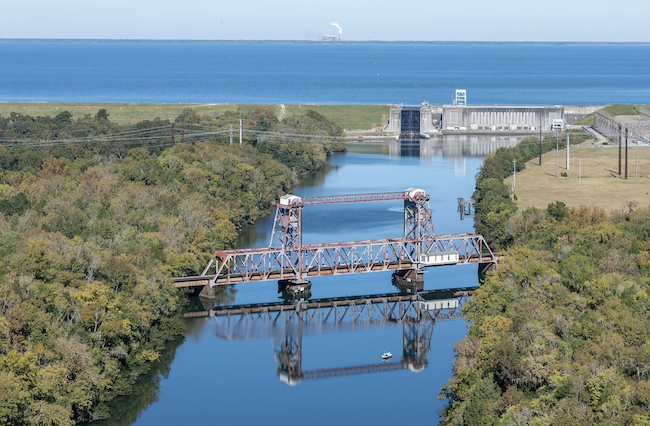 Lake Marion and Lake Moultrie, South Carolina: Ride Through a Flooded Landscape of History
Imagine riding through a forest where the trees rise directly out of the water.
Now imagine that beneath the surface lie traces of communities, roads and landscapes that existed long before the lakes themselves.
Welcome to South Carolina’s Santee Cooper lakes.
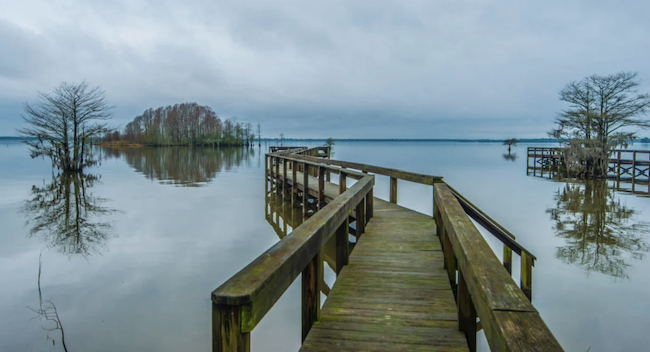
Lake Marion and Lake Moultrie were created as part of the massive Santee Cooper hydroelectric project, transforming a landscape of forests, farms and waterways into two enormous connected reservoirs.
Today, Lake Marion covers roughly 110,000 acres, while Lake Moultrie adds approximately 60,000 more. A navigation canal connects them, creating a sprawling freshwater playground with enough variety to keep an adventurous rider exploring for days.
But the real attraction isn’t simply their size.
It’s their character.
Along portions of Lake Marion, especially in areas such as Sparkleberry Swamp, cypress trees rise from the water in haunting clusters. Their trunks and exposed roots create a landscape that looks almost prehistoric.
The lake also holds stories from South Carolina’s past, including the remnants of the former town of Ferguson and land associated with plantations and settlements that predated the reservoir.
Nearby historical sites recall the Revolutionary War and figures such as Francis Marion, the famed Swamp Fox.
Not every historic site is accessible by PWC, and some nearby refuge waters prohibit personal watercraft entirely. The attraction is the broader opportunity to explore a landscape where natural scenery and history are intertwined.
Then there’s Lake Moultrie.
Its broad open water offers a completely different riding experience, with long views, wooded shorelines and enough room for wind to build surprisingly substantial chop.
And at the southern end lies one of the system’s most fascinating engineering features: the Pinopolis Lock.
The lock raises or lowers vessels approximately 75 feet between Lake Moultrie and the Tailrace Canal, creating a connection toward the Cooper River.
There’s a significant catch for PWC riders. Jet skis cannot transit the lock independently. They must be secured to a qualifying motorboat, and their operators must board and remain aboard that boat during the locking operation.
So it’s not a casual solo PWC passage. But even the existence of that connection adds another layer to the story of these remarkable lakes.
Winter here is quieter than summer, with fewer recreational boaters and a landscape that can feel wonderfully remote. It’s also cold enough to demand respect. Water temperatures, submerged timber, changing lake levels and wind-driven waves are serious considerations.
This is a destination for riders who love exploring as much as riding.
You might arrive expecting two big reservoirs.
You could leave with a fascination for the forests, history and waterways that existed long before anyone thought to build a lake.
Drysuit Territory
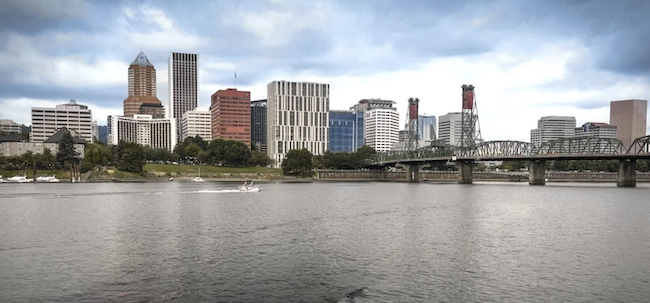 Columbia River Gorge and Willamette River, Oregon: Two Very Different Adventures
Not every great winter PWC vacation involves escaping the cold.
Sometimes the cold is part of the adventure.
Oregon offers two strikingly different river experiences, and neither looks much like a conventional jet ski destination.
Start with the Columbia River Gorge.
Here, the Columbia cuts through the Cascade Mountains beneath towering basalt cliffs, forested slopes and dramatic ridgelines. Waterfalls descend from the surrounding heights, and the landscape seems to change around every bend.
It’s magnificent country.
It’s also famous for wind.
The same geography that makes the Gorge spectacular can funnel powerful winds along the river, creating steep, challenging waves. Add cold water, commercial traffic and rapidly changing weather, and a late-fall ride becomes a serious undertaking.
For experienced, properly equipped riders, a carefully chosen November weather window could offer a remarkable opportunity to experience the Gorge from the river itself.
And for the truly ambitious? The Columbia continues west toward Astoria and the Pacific coast.
A multi-day downstream expedition is the sort of adventure that deserves its own planning notebook, with particular attention to fuel, current, traffic, weather and safe stopping points. The Columbia River Bar at the ocean entrance is notoriously dangerous, especially during winter storms, and should not be treated as an invitation to continue offshore.
But Oregon has another option.
The Willamette River flows through the heart of Portland, offering a completely different kind of scenery: city bridges, historic waterfronts, industrial landmarks and riverfront parks.
Farther upstream, Oregon City and the dramatic Willamette Falls add another layer of history and geography to the journey.
A rider could explore permitted stretches of the river, experience Portland from a perspective most visitors never see and potentially connect with the Columbia near the city’s northern end.
Oregon allows PWCs on designated sections of both rivers, although local speed restrictions and operating rules apply.
Neither is a casual winter outing. Cold water, high flows, debris and changing weather make proper immersion gear and conservative planning essential.
But that’s the beauty of this destination.
One river offers mountain scenery on an almost cinematic scale.
The other offers a journey through the middle of a city.
Both remind us that an unforgettable ride doesn’t have to happen beneath palm trees.
You’re Nuts, But We’re Here for It
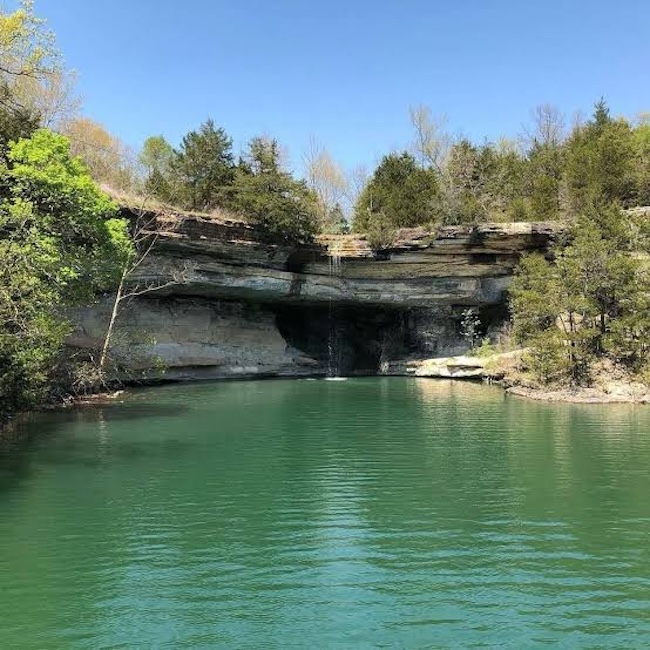 Bull Shoals Lake and Beaver Lake, Arkansas: One Last Ride Through the Ozarks
Let’s establish something immediately.
We’re talking about November here.
Not January. Not February. And certainly not a cheerful suggestion to head out during an ice storm because the boat ramp looks unusually empty.
But if autumn has arrived and you’re not quite ready to surrender the season, the Ozarks offer a compelling argument for one more adventure.
Bull Shoals Lake stretches across the Arkansas-Missouri border, winding through wooded hills and long, quiet coves. Its expansive shoreline, clear water and largely undeveloped stretches create the kind of scenery that makes a rider forget to check the time.
In November, the surrounding hardwood forests may still hold traces of autumn color, while the summer boating crowds have largely disappeared.
Farther west, Beaver Lake offers another version of the Ozark experience.
Located in northwestern Arkansas, Beaver winds through limestone bluffs, wooded hillsides and narrow arms that can make the lake feel like a series of discoveries rather than one enormous body of water.
These are places for riders who enjoy covering distance, exploring coves and taking in scenery that changes with every turn.
They’re also places where the margin for error gets smaller as temperatures fall.
Cold water, shorter daylight hours, isolated stretches and unpredictable autumn weather make proper protective equipment, reliable communication and conservative route planning essential.
And November conditions can vary dramatically from one week to the next. This is a late-fall opportunity, not a promise of dependable winter riding.
Still, there’s something undeniably appealing about an Ozark lake after the summer rush has ended.
The water is quieter. The shorelines are peaceful. The scenery belongs almost entirely to those willing to make the trip.
The good news? You probably won’t have to wait in line at the boat ramp.
The bad news? There’s a reason.
The Season Doesn’t Have to End
Winter riding isn’t simply summer riding with a different calendar.
Conditions change. Water temperatures matter. Some destinations have seasonal restrictions, and others demand far more preparation than a typical weekend outing.
A successful trip starts with understanding those differences, checking local regulations and choosing a destination that matches your equipment and experience.
But none of that means the adventure has to stop when the temperature drops.
Maybe your ideal winter escape is a tropical island with a shipwreck offshore.
Maybe it’s a South Carolina lake where cypress trees rise from flooded ground and centuries of history lie along the shoreline.
Maybe it’s a quiet November morning in the Ozarks, or an Oregon river where the scenery is breathtaking and the drysuit is nonnegotiable.
Or maybe it’s Christmas Cove.
Because, really, if the opportunity exists to ride a jet ski to a floating pizza restaurant in the Caribbean at Christmastime, shouldn’t somebody at least investigate?
The ski cover can wait.