 Sometimes the most useful performance upgrades aren’t brand-new parts—they’re the ones riders have been quietly refining and passing around for years.
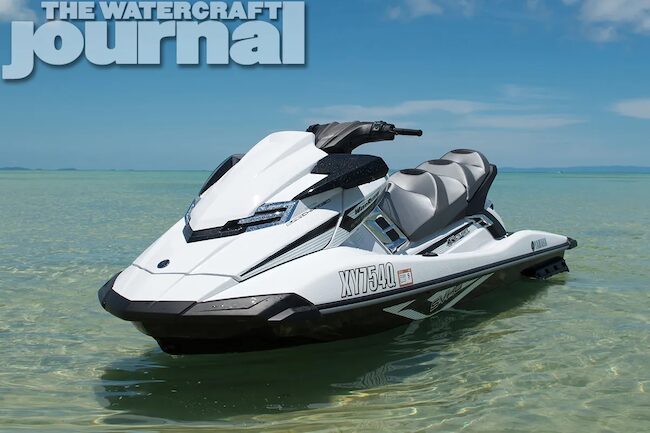
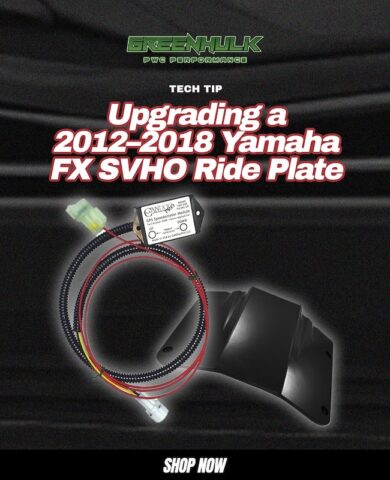
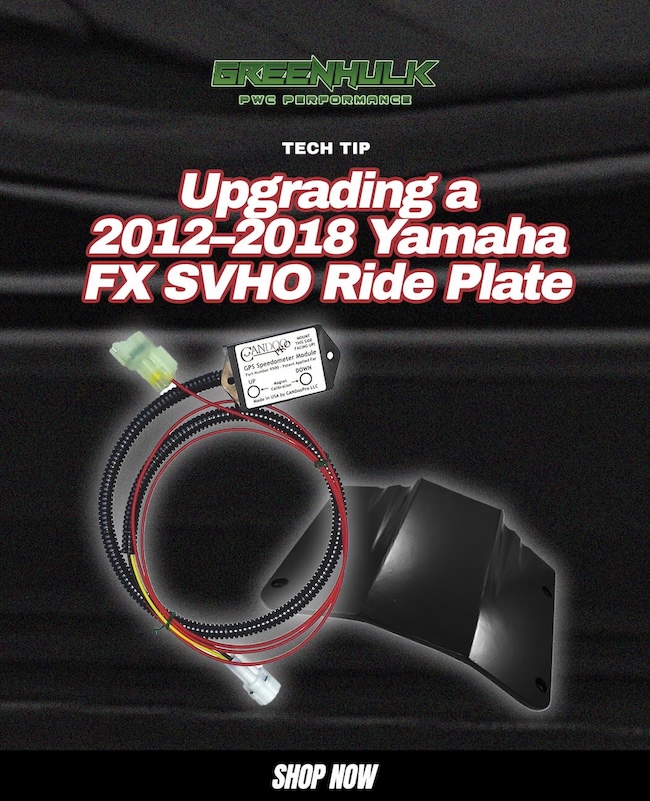
This week, the team at GreenHulk PWC Performance spotlighted one of those tried-and-true setups: upgrading a 2012–2018 Yamaha FX Cruiser or FX SVHO with a newer 2019+ ride plate.
It’s not a complicated mod. But according to GreenHulk, it’s one that consistently delivers.
One of the biggest takeaways from GreenHulk’s tech tip is how straightforward this upgrade actually is.
Despite being designed for the updated 2019+ FX platform, the newer ride plate bolts directly onto 2012–2018 hulls without modification. The hull design remained close enough that fitment isn’t an issue—something the performance community has been taking advantage of more and more.
The go-to choice here is the updated plate from RIVA Racing, which builds on Yamaha’s later design with a more performance-focused approach.
 What Changes on the Water
According to GreenHulk, the difference comes down to how the ski behaves at speed.
Riders making the switch can expect:
- Improved straight-line stability
- Reduced porpoising at higher speeds
- Better hookup in chop and through turns
- Increased top-end potential, especially on modified skis
It’s the kind of upgrade that doesn’t necessarily feel dramatic in one moment—but adds up over the course of a ride, especially when conditions aren’t perfectly flat.
There is one notable difference when installing the newer plate: the speed sensor.
Older FX models rely on a paddle wheel mounted in the ride plate, while the 2019+ design eliminates that provision entirely.
GreenHulk’s take? That’s actually a benefit.
Paddle wheel sensors are widely known for inconsistent readings, particularly at speed. The recommended move is to switch to a GPS-based system—something many riders were already doing anyway. Systems like those from CandooPro have become a common pairing with this setup.
 A Small Change That Unlocks Bigger Gains

What makes this upgrade stand out—and why GreenHulk chose to highlight it—is how well it complements other performance modifications.
On a stock ski, it sharpens handling and improves overall feel. On a modified setup, it helps translate added power into usable speed and control.
In other words, it’s not just about going faster—it’s about making the ski easier to ride fast.
There’s no shortage of new parts and big claims in the performance world. But every so often, a reminder like this cuts through the noise.
As GreenHulk pointed out, this is one of those upgrades that’s already been vetted by the community—simple to install, widely understood, and consistently effective.
For riders still on a 2012–2018 Yamaha FX platform, it’s a straightforward way to bring older hardware a little closer to modern performance.