
Home Blog Page 11

Getting the Shot: Everything You Need to Know About Action Cameras

0

Here’s the next installment for our multi-part series on PWC race photography. This time we’re diving into action cameras — what they are, how they vary, what to look for (especially from a racing vs cruising perspective), and the add-ons and features that can elevate your game. Think of this as a guide to putting the right lens on your watercraft world.

WHAT QUALIFIES AS AN ACTION CAMERA?

Action cameras are compact, rugged video devices designed to capture fast-moving activity from the rider’s viewpoint (or mounted vantage). These are made for movement, splash, wind, vibration, and in our case — watercraft (waves, spray, sun glare, you name it).

Some quick defining traits:

  • Wide field of view: To capture the scene around you rather than just a narrow slice.

  • High frame-rates & resolution: To capture smooth motion, capture a crash or splash in detail, or produce slow-motion replays. For example, the GoPro HERO13 Black supports 5.3K resolution.

  • Image stabilization: Because on a ski your mount is bouncing, spray is hitting it, handlebars shaking — you want footage you can watch, not make you seasick. As one review noted, the best cams deliver “sharp, stabilized footage in all conditions.”  

  • Water / splash proofing + rugged mount capability: For PWC use, you want something built to handle water, maybe submersion, salt or fresh, and fixed securely so you don’t lose the camera (or the shot).

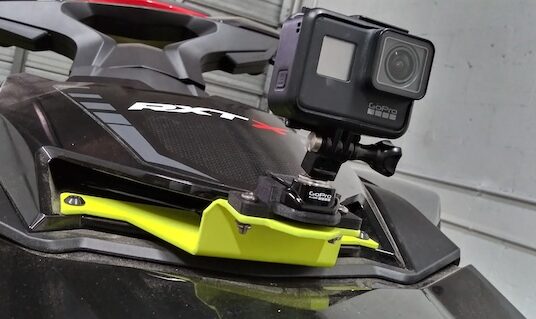
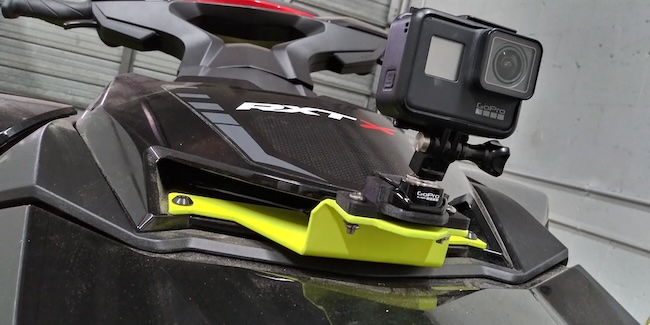
  • Mounting flexibility: Helmet mount, chest mount, stern facing mount, handlebar mount, suction cups — all of these have their advantages.

  • Action-ready features: Voice control, high-speed burst, time-lapse, 360° capture (in some models) for creative angles.

In short: action cameras are built to capture what happens while you’re moving.

DIFFERENT NEEDS, DIFFERENT CAMERAS 

Not all action cameras are created equal — and for our sport (jets, waves, speed) the type you pick will influence the footage you get. Here are the major categories:

1. Standard POV (Point-of-View) action cameras

These are what most people think of: a relatively rugged box-camera with a wide lens, you mount it on your helmet, chest, ski handle or stern. Example: GoPro HERO-series, DJI Osmo Action-series.
Strengths: Direct POV, easy to frame, many mounts and accessories available, proven in the field.
Weaknesses: Fixed field of view (unless you change lens), you fix the angle at mount time, might miss part of the action if you’re oriented weird.

2. 360° / “shoot-first, choose-angle-later” cameras

These capture spherical (or near-spherical) video so in post-production you can choose the framing. Example: Insta360 X4.
Strengths: Flexibility. On a PWC you might not know ahead of time where the best angle will be (front, side, behind). A 360 cam gives you more freedom.
Weaknesses: Higher cost / higher processing demands. Also you’ll spend more time editing (choosing angle) rather than just hitting record and go.

3. Mini / wearable / specialized cams

These include ultra-small cameras you can magnet-mount, clip, submerge easily, etc. Example: Insta360 GO 3S.
Strengths: Very light, less obtrusive, can go in odd mounting spots (helmet brim, under bow, behind seat).
Weaknesses: Often lower battery life or fewer features (less resolution, fewer frame-rates), may not handle heavy water use as well, may lack ruggedness.

4. Budget/basic action cams

If you’re just capturing for fun, or as a secondary camera, you might opt for a lower cost model (e.g., entry-level waterproof 4K). Example: some $50-100 units. (e.g., Paddsun 4K Action Camera)
Strengths: Affordable, decent for casual use.
Weaknesses: May lack stabilization, high frame-rates, long battery life, rugged mounting ecosystems, or consistent water-proofing.
IS AN ACTION CAMERA RIGHT FOR YOU?

When you’re picking an action camera for PWC use (especially racing), the “good enough” may not cut it. Here are key criteria — and how priorities shift between a racer vs a cruiser.

Key criteria to evaluate

  • Resolution & Frame Rate: For racing you want the ability to capture fast movement (high speed, splash, wake). Higher frame rates (e.g., 60fps, 120fps) are useful for slow-motion or reviewing split-second events. Reviewers say this is a major differentiator.

  • Stabilization: On a PWC you’ll have vibration, spray, rough water — image stabilization is critical. Good models will use 6-axis or advanced electronic/optical stabilization.

  • Waterproofing / Ruggedness / Mounting: Racing means being wet, being near water spray, possibly submersion. You need confident waterproofing, strong mounting options (and possibly safety tethering).

  • Battery Life / Swappability: On a long race day or photo session you don’t want your camera dying mid-moto. Also changing mounts, swapping batteries mid day is helpful.

  • Lens/Field of View Options: For racing you may want ultra-wide lenses to capture your ski, the wake, the competitors, the jump, etc. For cruising you might care more about scenic environment.

  • Accessory Ecosystem: Does it mount well on PWC? Are there suction cups, clamp mounts, helmet mounts, gimbals, floatation mounts (in case it goes overboard)? For racers, quick-release mounts, helmet mounts, behind-seat mounts, throw-overboard safety may be important.

  • Ease of Use / Quick Access: On the water you want to be able to start recording, stop, switch modes, without fumbling. If you’re racing you may not have the time to fiddle.

  • Editing & Workflow: For editing after the fact you might care about 4K resolution, color grading, ability to go to 1080p slow-motion, or use 360 footage for reframe. If you’re just cruising and uploading casual clips, maybe you don’t need everything.

  • Price vs Value: High-end cams are expensive. For cruisers on a budget, a mid-range may suffice.

RACER Vs CRUISER: DIFFERENT PRIORITIES

Racer

  • Needs ultra-reliable mounting and waterproofing — cannot risk the camera vibrating loose or flooding during a heat.
  • More emphasis on stabilization, high frame-rate (for slow-motion replays of starts, wakes, buoy turns).
  • Wider field of view to capture the ski, other competitors, and the water around you.
  • Maybe less “scenic zoom” and more “capture the action from my ski”.
  • Quick-change mounts (helmet, ski rear, chase boat), battery swaps between heats, and possibility to tether the camera (float, line).
  • Might prefer standard POV or 360 depending on how many angles you want; but reliability is first.

Cruiser / Recreational User

  • Might care more about scenic footage, the backdrop, maybe capturing rides with friends or family.
  • Might accept slightly less stabilization, or lower frame-rates, or fewer accessories, in favor of price.
  • Might use suction-cup mounts on the bow for scenic shots rather than helmet-mounted.
  • Might prioritize ease of use and quick sharing rather than ultra-professional footage.
  • Might go for a lighter, simpler action cam rather than a full pro setup.

In other words: If you’re racing, think durability and high performance along with a flexible mount system. If you’re cruising, think ease of use, lens and filter options, and budget.
SPECIAL FEATURES & ADD-ONS THAT MATTER

Beyond the core specs, there are many special features and accessories that can make a big difference for PWC photography. Some you’ll absolutely want; others are nice-to-have. Here’s a breakdown:

Special Features

  • High-Frame-Rate / Slow-Motion: Capturing wakes, sprays, jumps, buoy maneuvers — slow motion helps you relive or analyze the action. Example: GoPro shooting 400fps at 720p to capture bubbles in slow-mo.

  • Lens Mods / Field of View Adjustments: Some cams allow detachable lenses (e.g., ultra-wide, macro) or have variant angles. Example: GoPro Hero13 Black lens mods discussed in review.

  • 360° Capture / Reframing: As mentioned, 360-capture cameras allow you to pick your angle after the ride — useful when you’re moving fast and may miss the “right” orientation.

  • Safety Features for Mounting: For instance, floatation mounts (so if the cam goes overboard it floats), tethers, safety lines (especially helpful on water). Evidence from forums:

  • Water / Dive or Submersion Rating: Especially relevant for unstable craft — if you wipe out or get sprayed heavily, your cam needs to survive. Example: DJI Osmo Action rated waterproof to 18m in one review.

  • Mount Ecosystem (and quick-release systems): For racers switching mounts between heats, or photographers mounting on different positions. Some cams have standardized mounts (GoPro ecosystem) and others are proprietary.

  • Connectivity & Workflow Features: WiFi/Bluetooth to mobile device for previewing and control; cloud upload; app editing; voice control (hands-free start/stop) — helpful when you’re on the water and can’t fuss with the camera.

  • Battery & Memory: Swappable batteries, extended battery options, high-capacity memory cards, built-in memory.

  • Low Light / HDR / Stabilization Advances: For evening shoots, or shooting into the sun/glare off water, you’ll want good dynamic range (HDR), waterproofing for splash, and excellent stabilization. TechRadar notes that reviewers look at these when testing action cams.

Add-Ons & Mounting Accessories

  • Helmet Mounts: For POV from the rider’s head-level.

  • Chest Mounts / Shoulder Mounts: More stable than helmet in some cases, captures hands/controls plus ski front.

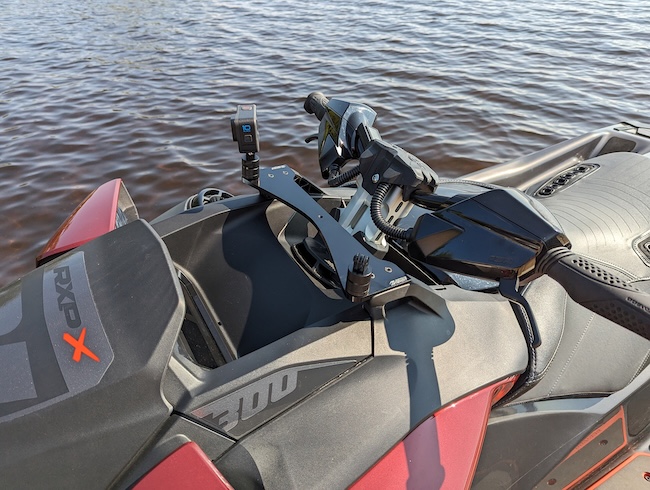
  • Handlebar / Ski-bow Mounts: For front-facing footage of the ride ahead (might capture spray, wakes).

  • Suction-Cup Mounts / Clamp Mounts: For mounting on hull, rear platform, or chase boat. BUT ensure strong suction/tether — watercraft vibration and spray are real hazards.

  • Floating Hand Grip / “The Handler”: Especially on water crafts: if the camera goes into the water, a floating grip makes retrieval easier. Many go-pros include floating accessories.

  • Safety Tethers / Leashes: Especially on water; you don’t want the camera lost overboard.

  • External Microphone / Waterproof Audio Accessories: For capturing sound (engine, spray, water ambience) you might want a mic (if the camera supports it) or a good built-in mic with splash guard.

  • Protective Housing or Lens Covers: Especially for salt, spray, UV exposure.

  • Spare Batteries & Memory Cards: Switching mid-session, or if you want long runs or high-resolution high-fps modes (which fill memory fast).

  • ND Filters / Polarizing Filters: For bright sunlight off the water, reducing glare and controlling shutter speed. One review recommends ND filters for GoPro use in bright outdoor action.

  • Editing Software / Apps: Post-production can enhance your footage (slow-mo, color grading, reframing 360 footage). For 360 cams especially, you’ll want good app support.

RECOMMENDATIONS FOR PWC SHOOTING 

  1. If you’re serious about capturing racing — go for a mid-to-high end action camera with good stabilization, high frame-rate, strong mountings, and water-ready durability – something like the GoPro HERO13 Black or Insta360 X4 would be strong choices.

  2. Mounting is just as important as the camera itself — ensure you have the right mount for your ski (helmet, bow, stern) and a safety tether/float plan in case of water contact.

  3. If you’re more casual (cruising, scenic rides, family rides) you could get by with a less expensive cam, lobby for ease of use and fun over ultra-performance.

  4. Accessories matter: a floating grip, good chest/helmet mount, extra battery, strong memory card — all these will improve the experience and results.

  5. Post-production workflow: Don’t forget after the ride: editing, selecting best clips, maybe reframing from 360 footage — factor in time for that if you want to publish good content.

  6. Budget wisely: Don’t overspend for features you aren’t going to use (e.g., 8K/120fps might be overkill for simple social clips), but also don’t under-equip and end up with shaky, unusable footage.

WCJ PICKS 

Top 5 Action Cameras for PWC Use (2025 Edition)

GoPro HERO13 Black: The top-flagship pick. Supports 5.3K/60fps video, new lens mod system, great mount flexibility. For someone serious about PWC race shoots this gives a lot of performance headroom – Our pick for racers.

Pros: High resolution, strong brand ecosystem, very good stabilization, excellent for pro/video work.
Cons: Price is higher; maybe more than you need for casual cruising; large data files and editing burden.

DJI Osmo Action 5 Pro: Premium alternative to GoPro; reviews show excellent battery life and strong low-light performance.

Pros: Top tier image & battery performance; for someone expecting to shoot long sessions or demanding environments.
Cons: Perhaps fewer accessories in the PWC world compared to GoPro’s mount ecosystem (depends on your mounts).

Insta360 X4 8K 360° Action Camera: A creative / 360°-capture option. If you want to shoot and later pick your angle (chase boat, stern, side), this can give unique shots.

Pros: 360° capture gives flexibility; might catch unexpected angles, good for creative event coverage.
Cons: Heavier editing workflow; more demanding in post; maybe overkill if you just want one simple angle.

GoPro HERO12 Black: A strong “value high-end” — many of the top features of the 13 but at better value. Ideal if you want near-top performance without absolute bleeding edge.

Pros: Good compromise; many features you’ll appreciate on the water.
Cons: Slightly less future-proof than the latest flagship; fewer lens mod options.

Insta360 GO 3S: Ultra-compact lightweight option. Great for mounting in places your big camera might be too bulky (helmet lip, behind seat, side-platform). Our pick for recreational riders.

Pros: Small size, less obtrusive, good for creative/secondary angles or cruisers who just want to capture fun.
Cons: Possibly shorter battery, fewer advanced features; may not perform as well under demanding race conditions.

And after you’ve chosen your new camera, be sure to check out our guide on proper placement for the best results.
Volunteer PWC Rescue Team Turns Training Exercise into Real-Life Mission at Woy Woy Bay

0

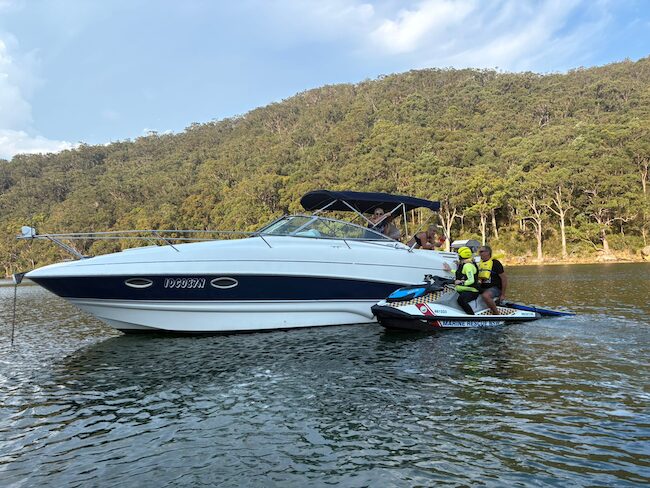
A routine weekend training exercise became a live rescue when Marine Rescue Brisbane Water PWC operators located five people and two dogs aboard a broken-down cabin cruiser in a remote section of Woy Woy Bay.

The incident, first covered by Coast Community News, occurred during a 90-kilometre operational exercise across Brisbane Water designed to test access, communications, and rapid-response capability in shallow, difficult-to-reach areas. While operating two rescue watercraft (RWCs), volunteers Stephen Maneschi and Shane Rigney discovered the immobilized cruiser in shallow water where larger rescue vessels could not safely operate.

Due to their increased maneuverability compared to larger watercraft, the RWCs were able to reach the cruiser quickly. Two passengers were ferried to Rawson Street Public Wharf in Woy Woy, where a spare PWC was called on to recover the remainder of the group and resolve the situation.

The broader exercise involved multiple local Marine Rescue unit departments and support from the radio room led by Mark Luland, with overall watch duties overseen by Brendon Weston and coordination by the Marine Rescue NSW Zone Duty Operations Manager. During the day’s operations, RWC crews also located three other vessels stranded in shallow areas, all of which have been subsequently reported to local authorities.

Perhaps the most interesting part of this rescue, for us at least, is the way it highlights some key aspects of water safety operations. First, it puts on display the increasing role of PWCs in rescue services, especially in environments like Brisbane Water, whose narrow channels and limited access points make it both a likely place for an accident and a nightmare for larger rescue vehicles.

Yet beyond the importance of the PWCs in this rescue is the demonstration of the value of effective organization for rescue services. Here, the implementation of a realistic, large-scale training operation, specifically designed for the unique navigational challenges of the local area, went beyond “preparation” and amounted to real impact for those whose lives were in danger. Moreover, this kind of organizational preparation, put on display by a volunteer team, shows the impact that community support can have.

Marine Rescue Brisbane Water is a volunteer organization based in New South Wales dedicated to saving lives on the water. Its PWC program is made up of 130 men and women and, along with its rescue services, offers “boating educational services including radio and boat license theory courses, safety courses for paddle craft and others,” according to their website.

The incident serves as a practical example of how investment in PWC capability and inter-unit coordination can turn a preventative training exercise into a timely, life-preserving operation, especially in parts of the bay where conventional boats cannot go.

Up to 50% Off Sitewide With Jet Tech’s Black Friday Blowout

0

Jet Tech isn’t waiting for the last of the Halloween candy to disappear — or for the turkey to cool — before kicking off the biggest sale of the year. Their Black Friday Sale is live now, offering up to 50 percent off sitewide, plus free gifts on select orders. Whether you wrench, race, or just ride every chance you get, this is the time to stock up on the gear that keeps your ski ready for anything.

Even better, the gifts stack as you spend. Orders over $100 include a $25 Salt Shift gift card. Spend $500 and Jet Tech adds a Marine Engine Flush Kit. Go big at $1,000 or more, and you’ll score all that plus an Intake Recovery Tool — a bundle worth bragging about before you’ve even hit the water.

Among the must-have deals is Jet Tech’s Intake Recovery Tool, now 20% off at $113.52. It’s a simple, brilliant lifesaver for when your ski swallows weeds or debris. Pop it in, clear the intake, and get back to riding in seconds instead of ending the day early — it’s one of those tools you hope you’ll never need but are always grateful to have onboard.

For riders who hate post-ride cleanup, Jet Tech’s Salt Shift Marine Essentials Kit is marked down 50% to $108.90. The two-times-concentrated formula works with a premium foam gun to wash away salt and grime without contact, cutting cleanup time in half while laying down a corrosion-fighting barrier. Want the full setup? Upgrade to the Salt Shift Boat & PWC Wash Kit, also half off at $150.15, for a complete foam-and-shine system that keeps your ski and trailer looking brand-new all season.

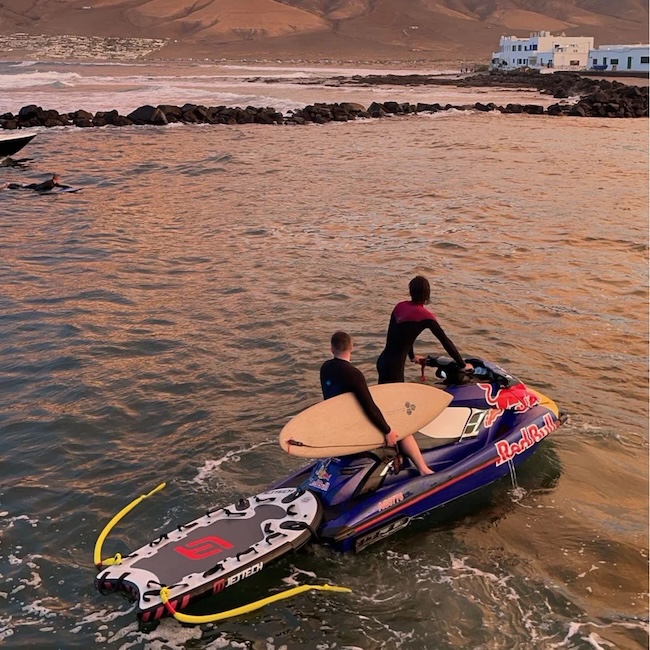
Then there’s the heavy hitter — the Jet Tech Rescue Sled, now $875.60 (20% off). Trusted by lifeguards, surf pros, and adventure riders worldwide, it’s the industry benchmark for stability and strength. The sled’s drop-stitch PVC construction, reinforced seams, and fourteen grab handles make it equally at home behind a rescue rig or on a back-country expedition.

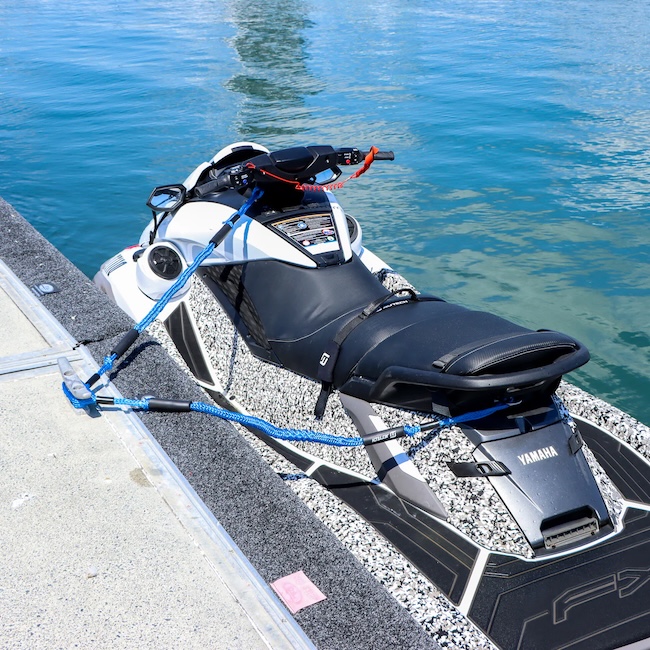
And don’t overlook the small essentials. Jet Tech’s Jet Ski Docking Lines are just $24.75 right now — simple, salt-resistant, and built to make tie-ups at the dock or island stop effortless.

So load up your cart, claim the freebies, and make room in the garage — because this sale will be gone faster than the Thanksgiving leftovers.

Video: GreenHulk Has Race-Proven RIVA Steering System for Yamaha Riders Back In Stock

0

After being sold out for months, the RIVA Pro-Series Steering System (RY20110) is officially back in stock at Greenhulk.

Designed for the 2017–2020 Yamaha GP1800 and 2015–2019 VXR/VXS, this isn’t just another aftermarket part; it’s a complete reimagining of how a performance ski should feel under your hands.

Machined from billet aluminum, RIVA’s Pro-Series setup replaces the stock steering assembly with a lighter, stronger, and fully adjustable system that feels instantly more precise. The result is a tighter, race-ready response that connects you to the water like never before — whether you’re carving buoys or just pushing your ski to its limits on the weekend. And the anodized finish and race-inspired profile make it look as good as it performs.

In his detailed walk-through video, Pete from RIVA Racing breaks down the thought process behind the system, showing how every component was built for strength and control. It’s the same setup that RIVA’s own race team relies on — a proven design that delivers sharper feedback and eliminates the flex and play of the OEM mechanism. As Pete explains, this steering system isn’t about flash; it’s about precision and confidence at full throttle.

RIVA also makes it easy for riders to get the upgrade done themselves. Their Quick Install video shows how the system bolts directly in place of the stock unit, typically in about an hour and a half. The setup pairs perfectly with RIVA’s 32-inch Pro-Bar Runabout handlebars and ODI Rogue Lock-On grips, giving riders a clean, factory-finished cockpit that feels purpose-built for performance.

Between RIVA’s engineering and GreenHulk Performance’s commitment to the riding community, it’s no surprise this part sells out every time it comes back. GreenHulk has the Pro-Series Steering System in stock right now — but supplies are already moving fast.

Head over to 4-TecPerformance.com to grab yours, and use the code “greenhulk” at checkout for a little extra incentive.

Video: Kawi Performance Shows How to Solve Intercooler Problems

0

If you’ve been around the Kawasaki Ultra 250, 260, 300, or 310 platform for long, you’ve probably heard a horror story or two about intercoolers letting go — sometimes catastrophically. Saltwater corrosion, internal rot, or poor aftermarket cores can send water straight into your motor faster than you can say “limp mode.”

That’s exactly why Steve at Kawi Performance took a closer look in his latest YouTube video. In it, he breaks down the failure points of the stock and replacement intercooler cores and shows viewers what’s really going on inside these mysterious aluminum boxes that most owners never see opened up.

“Anytime you get water in your motor, it’s screwed,” Steve reminds viewers early on. The solution? Stay ahead of the problem — pressure test the intercooler regularly, especially if you ride in salt water.

In the video, Steve examines a popular replacement core that looks good at first glance but hides a crucial design flaw. A small gap in the internal dam allows water to shortcut its intended path, keeping it from properly cascading (“waterfalling”) through the cooling fins, which leads to hot air intake temps, alarms, and limp mode headaches.

The fix, as Steve demonstrates, is simple but vital — running a bead of silicone across the dam area to fully seal the gap and restore correct water flow.

So if your Ultra is showing an intake temperature alarm or struggling to stay out of limp mode, take five minutes and watch Steve’s walkthrough before you start throwing parts at it. His clear explanation and hands-on demo might just save your motor.

https://youtu.be/7kLuMiK32qo?si=kBkXa0c4SmZrl1xp

Impros has Skat-Trak Scoop Grates Back In Stock — But Stock Is Limited

0

When it comes to getting the most out of your ski’s pump setup, the right scoop grate can make all the difference — and for a limited time, Impros Impellers has one of the most sought-after options back in stock.

After months of scarcity, Skat-Trak scoop grates are once again available for select Kawasaki and Yamaha models — including the Ultra 1500, 800 SX-R, and SuperJet — in your choice of aluminum, stainless steel, and even titanium. And yes, every one of them is offered in a CUT version for riders looking for that sharper edge on holeshot and hook-up.

If you know, you know: Skat-Trak’s grates have earned a cult following among racers and freeriders alike for their ability to feed clean water to the pump, reduce cavitation, and keep the ski planted through rough water. The CUT versions take that formula a step further with trimmed center bars that free up a little top speed while still holding strong through turns — the best of both worlds for closed-course and surf riders alike.

Impros has most aluminum and stainless grates for Kawasaki 800 and 1500 models back on the shelf, as well as SuperJet grates in aluminum, stainless, and the ultra-rare titanium construction for those chasing every ounce of performance. Each is a direct bolt-on replacement with the precision finish Skat-Trak is known for.

These grates are designed and proven for riders who demand instant hook-up out of the hole, consistent cooling water delivery, and improved handling through the chop. Whether you’re chasing split-seconds on the course or just want your ski to carve smoother, a properly matched scoop grate is one of the smartest bolt-ons you can buy, but quantities are tight, and once these grates are gone, they may not be back for a while. If you’ve been waiting to upgrade, now’s the time to jump before the limited stock clears.

Aluminum Kawasaki 800 $300.00
Aluminum Kawasaki 800 CUT $300.00
Aluminum Kawasaki 1500 (Check Impros for Pricing)
Aluminum Kawasaki 1500 CUT $325.00
Aluminum Yamaha SuperJet $275.00

Stainless Kawasaki 1500 $325.00
Stainless Kawasaki 1500 CUT $325.00
Stainless Yamaha SuperJet $275.00

Titanium Yamaha SuperJet $350.00

Unleashing the Ultra 310’s True Power With KSpeed Stage 2 Kit

0

Kawasaki PWC fans will be more than familiar with the stellar offerings from our friends over at KSpeed. Their team has put together a truly wholistic set of goods and services set up to provide just about anything a Kawasaki owner might need: from instructional videos and manuals, to performance parts, repair services, and even insurance, they’re just about a one stop shop for all things Kawasaki. While we’ve talked about a wide array of their performance parts and accessories before, we wanted to take a moment to highlight one of their most complete packages: the KSpeed Stage 2 Kit.

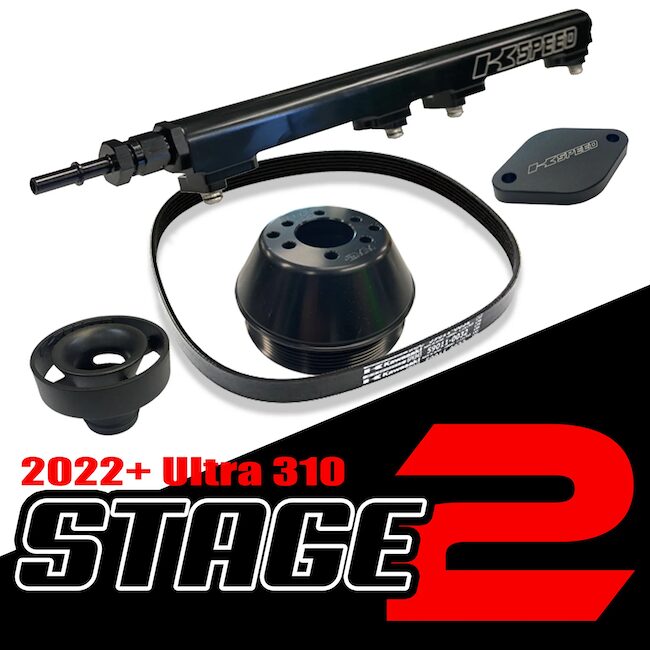
As the name suggests, this is the second of KSpeed’s performance kits made specifically for the 2022+ Kawasaki Ultra 310 models. While the first stage pack was focused on removing speed limitations and improving agility and acceleration, the Stage 2 kit aims to deliver increase air flow, improved cooling, and potent low- and mid-range performance.

Of course, the magic is all a part of the various parts they’ve combined to get these results. For example, one of the most essential upgrades in the Stage 2 kit is the Intercooler BOV Block-Off Plate. When boost levels climb past 16.5 psi, the stock intercooler’s emergency relief valve (or BOV) starts venting excess pressure, essentially dumping the very boost you’ve worked to create. KSpeed solves this issue with a precision-machined block-off plate that replaces the OEM valve entirely, preventing pressure loss and ensuring every bit of boost stays where it belongs. It’s a simple modification that makes a big difference, especially when paired with a smaller supercharger pulley.

Speaking of which, the KSpeed lightweight billet pulley is another standout component. Crafted from aircraft-grade aluminum, it’s corrosion-resistant and significantly faster to spool than stock, giving riders that instant throttle response they crave. It’s compatible with all 310 Jet Skis, though a reflash is recommended (included with Stage 1 or available separately) to take full advantage of the added power. For the truly performance-minded, KSpeed offers a 108mm race-spec pulley, but this one’s strictly for experienced riders and racers. The smaller diameter means more boost (and more heat) so running fresh, high-octane fuel is a must. KSpeed also includes a new idler to help reduce belt slack and improve long-term reliability under high load.

Next up, the billet fuel rail—a beautifully machined, high-flow upgrade designed to fit the standard OEM injectors. Its larger internal diameter helps dampen pressure pulses, increase fuel volume, and ensure each cylinder receives consistent delivery even under hard acceleration. That consistency translates directly into smoother performance and the capacity for greater horsepower.

Then there’s the Atmospheric Trumpet, a fan-favorite among those who love both performance and sound. This clever addition reroutes hot, bypassed air out into the atmosphere rather than feeding it back through the airbox, lowering intake temps and giving riders that iconic “pshhhhtt” sound when backing off the throttle. It’s the kind of satisfying detail that performance enthusiasts appreciate—not just an upgrade you can feel, but one you can hear.

Finally, KSpeed recommends replacing your drive belt if your ski or belt has more than 50 hours on it before installing the Stage 2 Kit. The added power and boost put extra demand on the belt, and a fresh one ensures reliable performance. It’s also important to note that, while the Stage 2 kit can be fitted without the Stage 1, it works best when installed together.

All together, these components make the KSpeed Stage 2 Kit one of the most complete and thoughtfully engineered performance upgrades available for the Ultra 310 platform. From sharper throttle response and cooler operating temps to smoother power delivery and a more aggressive tone, this setup is designed to make the already impressive Ultra 310 feel like an entirely new machine.

You can check out the KSpeed Stage 2 Kit over on KSpeed’s website.

Yamaha Marks 40 Years of WaveRunner Innovation with Anniversary FX Limited SVHO

0

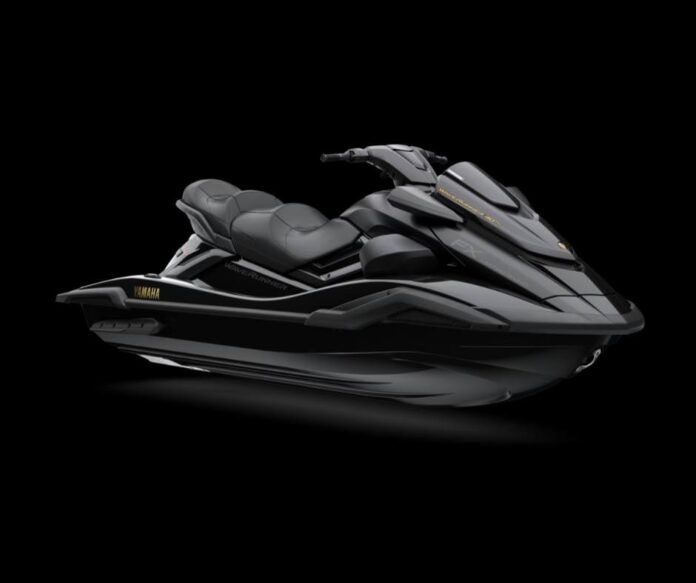
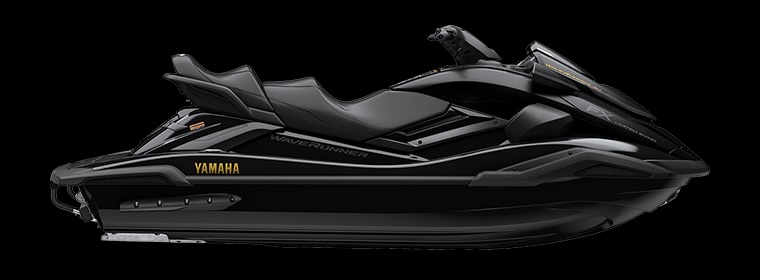
As a trailblazer of personal watercraft innovation, Yamaha marks four decades of its WaveRunner legacy with the launch of the exclusive 40th Anniversary FX Limited SVHO — a machine where luxury meets raw, super-charged performance.

At first glance, the aesthetic is unmistakably premium: gold “YAMAHA” emblems line the hull, while a bold “WAVERUNNER 40th” badge provides a visual cue that this isn’t just any ride, it’s a celebration of forty years of evolution.

Beneath the stylized exterior lies the heart of a beast: Yamaha’s supercharged 1.8-litre “Super Vortex High Output” (SVHO) engine. With a displacement of 1,812 cc and built as a 4-cylinder, 4-stroke marine engine, this powerhouse delivers more torque and thrust than any WaveRunner has previously featured. Coupled with the 160 mm high-pressure axial flow jet pump, the platform translates that brute force into responsive acceleration, carving effortlessly across open water.

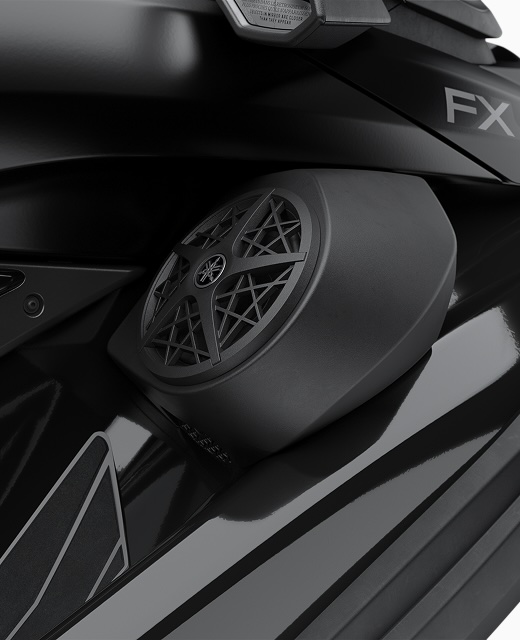
Yet the 40th Anniversary FX Limited SVHO isn’t built solely for speed — comfort and convenience were clearly written into the blueprint. Yamaha’s factory-installed marine audio speakers are engineered to withstand sun, spray and speed, and the 7″ Connext touchscreen delivers smartphone connectivity, GPS-ready mapping and enhanced drive control functions at a glance. The ergonomics follow suit: an adjustable-tilt steering column, dual rope hooks at the helm, a theatre-style comfortable three-person cruiser seat, and a softer, wider re-boarding step all speak to thoughtful design for a full-day experience.

Storage hasn’t been neglected either: a watertight glove box featuring USB and 12 V outlets, generous bow storage perfect for towels and gear, and stern platform storage designed to handle towing essentials.

Meanwhile, rider controls remain intuitive and confidence-inspiring thanks to Yamaha’s RiDE dual-throttle system that simplifies shifting between forward, neutral and reverse — ideal for dockside maneuvers or rapid deceleration.

The result? A watercraft that honors four decades of Yamaha engineering and styling — one where refined comfort, next-level technology and supercharged performance merge in a seamless package.

Greenhulk Turns Up the Boost with FuelTech Sale

0

If you’ve been waiting for the right time to step up your tuning game, that time is right now. Greenhulk PWC Performance has launched a limited-time sale on FuelTech systems — the same high-end electronics trusted by pro tuners and hardcore racers around the world. From simple monitoring tools to full-on ECU management systems, every piece of gear in the lineup is engineered for precision, reliability, and total control.

And while Greenhulk might have ‘PWC’ in the name, if your tuning addiction extends to cars, bikes, or anything else with a throttle, don’t worry — this sale’s got you covered there too (and we won’t tell!).

Nano Series — Precision Data in Your Pocket

FuelTech’s Nano units pack serious capability into a compact, easy-to-use design:

  • NanoPRO – Now $269 (was $339, Save $70!)
    Turn your PWC into a full-fledged data-tracking machine. The NanoPRO monitors AFR, boost, RPM, and more on a bright, color display that puts pro-level diagnostics right at your fingertips. Small, fast, and intuitive — it’s built for riders who want to see exactly what’s happening in their setup.

  • WB-O2 Nano – Now $169 (was $199, Save $30!)
    The WB-O2 Nano is FuelTech’s simplest wideband solution — instant AFR readings with bold LED clarity. It’s compact enough to mount anywhere and powerful enough to make every tune safer and more consistent. Pair it with a NanoPRO or run it standalone for quick, accurate monitoring.

FT Series — The Heart of High Performance

From weekend warriors to full-blown racers, FuelTech’s FT line delivers serious ECU power and data control at every level:

  • FT450 – Now $699 (was $899, Save $200!)
    All-in-one EFI control, data logging, and customizable display screens — the FT450 brings advanced ECU tech to an affordable, tuner-friendly platform. Plug in, tune, and go.

  • FT550 Lite – Now $999 (was $1,299, Save $300!)
    Lightweight, fast, and built for performance. The FT550 Lite delivers race-grade ECU management, data control, and safety functions without the extras of the FT550. A perfect balance of reliability and speed.

  • FT550 – Now $1,299 (was $1,699, Save $400!)
    Designed for tuners and pros who want full system control. The FT550 includes integrated traction control, full data logging, customizable dashboards, and advanced connectivity. It’s the perfect mix of power and precision.

  • FT600 – Now $2,199 (was $2,699, Save $500!)
    The top of the line. The FT600 is FuelTech’s flagship ECU and dashboard combo, delivering total command over your engine management system. Real-time visualization, advanced safety integration, and world-class data control — built for those who demand nothing less than the best.

Every FuelTech product is crafted for ultimate precision, control, and reliability — whether you’re dialing in your tune at the track, chasing speed on the water, or perfecting a performance build.

Understanding Sea-Doo’s Proprietary Crack-Resistant Hull

0

A recent video on Sea-Doo’s official social media accounts highlights a customer’s comment that their Sea-Doo Spark’s hull has withstood the test of time. “Never cracked a hull in 12 years of owning Sparks,” the customer writes—an impressive claim for any frequent PWC rider. In the video, James Heintz, Sea-Doo’s Director of Product Strategy, goes on to explain that this sort of durability isn’t a feature typical across all PWC manufacturers and models. But it isn’t just luck, either.

Heintz explains that what makes the Sea-Doo Spark’s hull so emphatically reliable is little more than its “solid foundations”: the Polytec Generation 2 material. The material is touted as being incredibly resistant to scratches, impacts, and just about “anything you can throw at it.” “Let the kids run into the dock, miss the trailer, run that thing onto the beaches for lunch—it can take it all,” brags Heintz. Given those strong words, we wanted to take a minute to look into the new generation of Polytec and see what makes it so special.

We covered the original Polytec material back in 2017 here at The Watercraft Journal, taking an early, in-depth look at Sea-Doo’s first-generation Polytec hull and addressing the skepticism many riders had toward its lightweight, non-fiberglass construction. The Polytec material was originally implemented by Sea-Doo in 2013 and is known for its special formula of long-strand fiberglass blended with polypropylene. After several seasons on the market, the verdict was clear: Polytec had proven to be both durable and dependable. Our coverage noted how Sea-Doo’s use of the material quickly expanded from the Spark to the GTI and Wake series, underscoring the company’s confidence in its strength and longevity. We concluded that, while no hull is impervious to repeated or high-impact collisions, Polytec’s performance in real-world riding conditions rivaled that of traditional fiberglass—all while offering advantages in weight, cost, and environmental sustainability.

It’s that same foundation that has now evolved into Polytec Generation 2, which delivers an even lighter hull than the original Polytec material (which was already significantly lighter than fiberglass). That lightness makes for easier handling and greater power on a lighter overall ski. However, the Polytec 2 is also stronger than the original formula, boasting greater scratch resistance with more internal bracing and flex—making it a great hull for cutting through waves.

One thing that we find particularly special about the Polytec 2 material is that it’s a cost-effective and affordable alternative to fiberglass, both at the point of sale and over the years. Jet Drift has an article that goes into the details of repairing and cleaning the Polytec hull, but from what customers have said, the material is easier on both fronts than a traditional hull may be.

While the Polytec material was originally made for the Spark line (expanding quickly to the GTI and Wake series as mentioned above), it’s now featured on the Sea-Doo GTI SE, GTR, GTR-X, FishPro Scout, and the Switch line (including Cruise, Cruise Limited, and Sport). So, since getting a Sea-Doo these days means you’re likely to be getting a Polytec 2 hull, it’s good to know this material is packing real benefits deep into the structure of your PWC.