



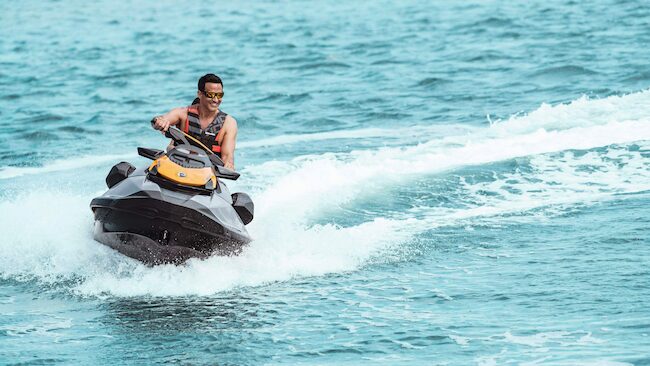
 A recent video on Sea-Doo’s official social media accounts highlights a customer’s comment that their Sea-Doo Spark’s hull has withstood the test of time. “Never cracked a hull in 12 years of owning Sparks,” the customer writes—an impressive claim for any frequent PWC rider. In the video, James Heintz, Sea-Doo’s Director of Product Strategy, goes on to explain that this sort of durability isn’t a feature typical across all PWC manufacturers and models. But it isn’t just luck, either.
Heintz explains that what makes the Sea-Doo Spark’s hull so emphatically reliable is little more than its “solid foundations”: the Polytec Generation 2 material. The material is touted as being incredibly resistant to scratches, impacts, and just about “anything you can throw at it.” “Let the kids run into the dock, miss the trailer, run that thing onto the beaches for lunch—it can take it all,” brags Heintz. Given those strong words, we wanted to take a minute to look into the new generation of Polytec and see what makes it so special.
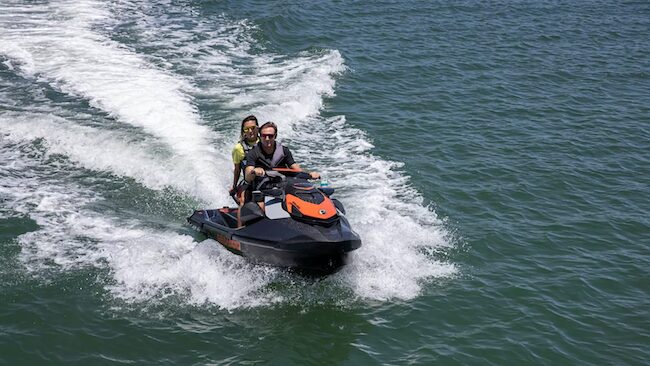 We covered the original Polytec material back in 2017 here at The Watercraft Journal, taking an early, in-depth look at Sea-Doo’s first-generation Polytec hull and addressing the skepticism many riders had toward its lightweight, non-fiberglass construction. The Polytec material was originally implemented by Sea-Doo in 2013 and is known for its special formula of long-strand fiberglass blended with polypropylene. After several seasons on the market, the verdict was clear: Polytec had proven to be both durable and dependable. Our coverage noted how Sea-Doo’s use of the material quickly expanded from the Spark to the GTI and Wake series, underscoring the company’s confidence in its strength and longevity. We concluded that, while no hull is impervious to repeated or high-impact collisions, Polytec’s performance in real-world riding conditions rivaled that of traditional fiberglass—all while offering advantages in weight, cost, and environmental sustainability.
It’s that same foundation that has now evolved into Polytec Generation 2, which delivers an even lighter hull than the original Polytec material (which was already significantly lighter than fiberglass). That lightness makes for easier handling and greater power on a lighter overall ski. However, the Polytec 2 is also stronger than the original formula, boasting greater scratch resistance with more internal bracing and flex—making it a great hull for cutting through waves.
One thing that we find particularly special about the Polytec 2 material is that it’s a cost-effective and affordable alternative to fiberglass, both at the point of sale and over the years. Jet Drift has an article that goes into the details of repairing and cleaning the Polytec hull, but from what customers have said, the material is easier on both fronts than a traditional hull may be.
While the Polytec material was originally made for the Spark line (expanding quickly to the GTI and Wake series as mentioned above), it’s now featured on the Sea-Doo GTI SE, GTR, GTR-X, FishPro Scout, and the Switch line (including Cruise, Cruise Limited, and Sport). So, since getting a Sea-Doo these days means you’re likely to be getting a Polytec 2 hull, it’s good to know this material is packing real benefits deep into the structure of your PWC.