One of the things we love about Greenhulk’s YouTube channel is that they go out of their way to upload videos that lean a little more alternative than your typical PWC channel’s output. Their latest video, titled “RESTORING A 1999 Sea-Doo XP Limited 951: UMI Steering Install + SeaDek Mats,” is surely no exception! Gaddis walks us through his “after-hours” personal project of restoring the 1999 Sea-Doo XP Limited 951, showing off some of the previous upgrades he had already incorporated into the ski, and walking us through the next steps in the restoration process.
He starts off by emphasizing that this particular vintage PWC is his favorite in the collection, and that’s even with it only being slightly tweaked. Up until now, it’s only had its original steering mechanism replaced with 32” RIVA bars, a RIVA billet throttle, an ADA billet head, ProK filters, and a Solas impeller installed to improve performance. Apart from that, everything else is stock.
One interesting aspect of this PWC is how its performance differs from newer models. While the top speed doesn’t reach that of most recent models — thanks to the gas tank being located at the front of the cavity — that also means it handles extremely well. Cutting corners and traversing buoys in races becomes a breeze on this older model, and its consistency in rough water makes it a real gem.
The current video focuses on making some key upgrades to the steering system and the aesthetics of the PWC. The particular UMI steering system he installs ends up working perfectly to make control smoother, with a full overhaul of the original steering mechanism. While the process ends up taking him about 14 hours, he then moves on to handling some of the vintage ski’s aesthetics by wet sanding and polishing off the decals, making it look good as new.
Finally, he sets about installing the SeaDek traction mats, which he highlights are perfect for not only adding a pop of color and personalization to your PWC, but also providing much-needed grip. While he goes over the installation process, he emphasizes that it couldn’t be easier or quicker to get these pieces onto your PWC.
” I just want to take a minute and soak it all in. I’ve dreamt of racing the kings cup for years. I have dreamt of racing for Factory Kawasaki for even longer. There have been a ton of people who have helped me get to this place in my career and I just want to thank all of you for helping me chase my dreams. I couldn’t have done this without each and every person along the way. THANK YOU all but just know I’m not done yet.”
Twenty years years ago, Jimmy Wilson, a young, talented racer — attending his very first world finals at Lake Havasu — walked by the Kawasaki semi, daydreaming a little and thinking to himself how cool it would be to race for Factory Kawasaki.
Two decades later, and that racer — now a multi-time, multi-class Havasu champion — just inked his second contract with Team Kawasaki and is currently 40,000 feet above the North Pacific, about to land in Japan to compete in the first round of the 2025 WGP#1 Waterjet World Series under the Kawasaki banner.
After Factory Kawasaki made the official introduction of the 2025 Factory Kawasaki Jet Ski Racing Team, which includes Wilson (Pro Ski Grand Prix), as well as Mao Sato (Pro Ski Grand Prix) and Team Pastorello Compétition (Jean-Bruno Pastorello/Pro-Am Endurance Open and Hugo Pastorello/Expert Ski GP), The Watercraft Journal lined Wilson up for Seven Deadly Questions (OK, maybe it was a few more than 7.)
The Watercraft Journal: Kawasaki has announced that you will be racing for the Factory Kawasaki Jet Ski Racing Team again this year. How did your relationship with Kawasaki come about?
Jimmy Wilson: So that’s a funny story. In 2022, I raced P1 (AquaX) for Yamaha and I was racing the standup. Sam (Nehme) was helping me and Cameron and Trey Frame were helping me with the GP1 and I won the Pro Runabout and Pro Ski national titles for the U.S. and we had a great year and then that winter, Yamaha dropped me. They dropped me, and Christian Daly and they dropped Sam’s partnership from the Yamaha team, and I went from winning the National Title to not having a ride at all. They went with Dustin’s team. It was disheartening. I felt like I had done all this hard work and spent all this time and money and won everything I could in the U.S. and had (nothing) to show for it. So in 2023, I really just didn’t do anything. I was way out of shape; I gained a bunch of weight — it was bad, but when Pro Watercross held their World Championship in Havasu, and it was $10,000 to win, I figured I would go out there and race that one and could win.
But because I raced the Pro Watercross race, I couldn’t race the (IJSBA) World Finals, so Sophie and I were out there just walking around. She had broken her leg and torn her ACL in September of that year, so we were just hanging out and Hot Products, who has helped me out for years, talked to me and said ‘would you like to go to Thailand,’ and I said ‘yes.’ And then he asked me if i would race for Kawasaki and I just said ‘wow, yes, of course.’
He asked if I wanted to meet them, and we walked all the way down to the end of the pits and they were in a white trailer, just tucked away quietly — not one sticker, all the skis tucked away. And I got to meet Minoru Kanamori. He asked if I wanted to test the ski. I was just in tennis shoes and shorts, and I borrowed someone’s life jacket and helmet and had no shoes on, and I went out and tested the boat for like 10 minutes and came back in and (Kanamori) adjusted the ride plate and did a couple things and I went back out and it ran a a lot better already. He asked if I wanted to race it (in the IJSBA World Finals). I told him that I couldn’t, and explained that I had raced in the Pro Watercross race, so I couldn’t race in the IJSBA World Finals. I will say this about Kawasaki, they want to be very politically correct. They don’t want to have any gray area. They have a lot of pull with IJSBA and I probably could have raced, but they didn’t want that and I didn’t either. You know me, I’ll voice my opinion if I’m pushed and I need to, but I try to stay very neutral and polite and help people.
So Kawasaki said they would be in touch and they contacted me a couple months later and asked if I would like to come back out to Havasu for a test, and I came out a few more times and then we signed a contract for just two months, to get through Thailand. I went to Thailand and had only ridden the boat a handful of times and I struggled but we got better throughout the weekend. Kanamori realized we needed to do a lot of work with the engine package and hull, so we kept in contact and I ended up signing a contract for just one year for 2024 and Kanamori went to work on his end and I went to work on my end and I was training and he built a great ski and improved on it drastically in a very short time. We raced last year and it was like from tomatoes to apples — we went from not being a contender, to, in the first round, getting second overall against Kevin Reiterer and Richardson. Then, this winter, they asked if I would like to sign another one year contract, and that was that.
WCJ: Who else is on the team?
Wilson: This year we have another athlete, Mao Sato, a Japanese rider; he raced in Thailand under Speed Magic and he did pretty good. He’s younger, and he’s on the team, and they always have the Pastorello team — and they have helped me a lot as well. Their holder ended up holding for me as well a lot last year, because I don’t really know a lot of people around Europe. The whole program is pretty cool because it’s a big family, and honestly I haven’t met anyone yet that hasn’t had the same mindset and a focus on having fun while winning. Now I’m furthering that partnership. It’s been a really cool process. In 2023, I was way down on the list of people to even be looked at to ride their boats, and I just got lucky. No one else wanted to take a chance with Kawasaki and the new ski, and I did. And from that one ride, we went from being a nobody and the ski being nothing to a podium in the World Series. It was a huge accomplishment for everyone involved.
WCJ: You will be competing internationally in the WGP#1 Waterjet World Series for Team Kawasaki. What races does that include, and will you be doing any racing other than the World Series this year?
Wilson: The World Series is really what I’m after with Kawasaki. We go to Japan first; we leave on May 11 to go to Round 1 in Osaka, Japan, and then Belgium this summer and then Thailand in December. And Havasu. Havasu is not part of the series — we’re just doing Havasu because, well, because it’s Havasu — it’s such a prestigious race so we’re doing that one as a bonus. And then I also race the local AJSA race series on the East Coast for training and for fun, but mainly the focus is on the World Series.
WCJ: You have raced, and excelled, in both stand up and runabout classes in the past. Are you still racing both classes?
Wilson: Right now they have Team Pastorello on the runabout. He’s unbelievable, and he’s also great on the endurance side. I would love to do some (runabout racing) in P1, but it’s expensive (to attend all the races). Honestly, if it ever came up, I would love to, but they (Kawasaki) have their program, and I’m so blessed for this opportunity with them; I just do whatever Kawasaki wants as far as racing, but if it ever came up the answer would always be yes.
WCJ: Do you race on the same ski you practice on?
Wilson: I have a practice ski from Kawasaki at home that Kanamori built and sent to me, but it’s just a good, super reliable boat to ride every day. Then he has two race boats at Kawasaki for me. So, for example, I’m in California right now; we rode Sunday on my race boat, got it broken in and it’s in a crate and getting shipped to Japan. So we’ll have one other ski sitting in the warehouse that is a full race boat so, say, we get back from Japan and need to do some tests, we have another full race boat here ready to go. Or if something happened in shipping, or we wanted to up and go to another race, we can do that.
WCJ: Is it difficult to race and practice on different skis?
Wilson: It’s crazy. We have two “identical “ race skis — and they’re not the same. That’s the way it is with all of them. Even Motz or Kommander — they can build 10 skis and each of them will be slightly different in their own little ways. They’re all hand-made and they all have their little quirks.
We have two full race boats, and I can race either, but they’re just a little different, with different characteristics. It’s definitely nice to be racing skis I’ve raced on before. I’m not learning someone else’s boat. These two skis are set up the way I want. The bars are set up the way I want. The pole is set up the way I want. But there are little characteristics that are different between them, so it’s nice to have a number 1 boat we like and that’s the one we try to ship around the world and race on all the time because it’s just running very well, but they’re very similar, with only minor characteristic differences. But in a way, I’m also a little handicapped at the races — my practice ski is not my race boat. Some of these other guys, they ride (practice on) the same boat that they race. There are pros and cons; when they ship their boat out for a race, they don’t have a ski to ride or practice on, but when they do ride, it’s the same boat. Whereas I go from a practice ski then I come out here and jump on my race boat and it’s just a monster compared to my practice ski. It takes a little bit of getting used to because it is significantly faster, and every time, Kanamori makes it even faster, which is both good and bad!
WCJ: What is the difference in racing internationally, as opposed to racing in the U.S.?
Wilson: When I race in the United States — I hate saying this, but normally, I’m one of the best that show up for the weekend. But when we go to Thailand or Poland or races like that, I’m maybe one of five to ten people that can win. I’m not the best. I’m trying to compete with the best, but I’m not the best.
WCJ: Which do you prefer, walking into a race knowing you’re one of the best, or walking into a race knowing you have to fight for a win?
Wilson: I like the attitude I have when I’m racing in the States, because I can be sick, or not sleeping or working on the skis, or there’s some little fiasco, and I don’t even think about it because I’m like “it’s OK.” I wish I could take that same mentality into the international races and I would do better.
So that’s a trick question, because I want to go race the best of the best — I don’t enjoy just getting a hole shot and winning. Honestly, it’s cool to win, don’t get me wrong, but, for example, last year we went to Poland and I was racing (Jayden) Richardson and (Kevin) Reiterer and we even beat Kevin. I finished second at the first round in Poland, and Number #4 from Thailand, he got the hole shot and we were having to battle and having to pass — I prefer those races. Even when we went to Thailand, I was under the weather and I really struggled and had to battle for fifth, but I’d rather get my butt kicked and get fifth than not have to fight.
Of course, yes, I want to podium and I want to win, that’s our goal, but the competition level is important and makes a difference. That’s why we didn’t really like going to the Pro Watercross race. The AJSA races are really good, and we’re trying to support the new series. It’s good practice, and it’s all positives and it’s a fun weekend race, but it’s not Thailand. Going to the World Series is different. On the East Coast, it’s pretty much me, Deven and Camden. That’s pretty much it. They’re great, I’m not taking anything away from them. They have great skis, they’re very talented and they’re a lot younger – they have a lot going for them and they push me. But when we go to some place like the World Finals, it’s different. Last year was the first year since 2018 that I really put my head down and had to try. Sophie was training me hard and I was working on my diet and Kanamori built a great ski and it was the first year I really did something. I was battling with Kevin (Reiterer) and we went to Thailand and whoever won Thailand won the World Series, and he beat me fair and square, but I was still there (head to head) against someone like Kevin.
WCJ: I see on your Facebook page that you’re working on skis and building skis; talk to me about that.
Wilson: So, with this deal with Kawasaki, I travel a lot, so having a full time job is almost impossible. Last year, I moved to Florida and I took a job with Sam working at Broward Motorsports and then this opportunity with Kawi came and it’s been a dream of mine since I was a kid to race for Factory Kawasaki and I started working and realized almost immediately that the schedule just wasn’t going to work with all the travel. I didn’t want to look back some day and think ‘I pissed away this opportunity with Kawasaki.I figured I can always make more money tomorrow, but I’ll never get back this opportunity (with Kawasaki) if I screw it up, so I wanted to take a year off work, and last year, I did just that.
We went to a few races where I could make a little money, and I did some side stuff here and there at home and then this year came and I knew I really needed to find a way to make some more money. So, I have a lot of friends and customers that needed help, and over the winter, I started building skis and it just kind of snowballed into 300 Motorsports. I do some general maintenance, but mostly I’ve been building a lot of race boats for local guys.
So 300 Motorsports started as just kind of a way to make some money and then it kind of took off and I’ve been so busy with it, it’s been insane. Also, I’ve always raced for Brad Hill, who owns AJSA. He is a good friend and mentor to me and Sophie and he helped me and Matthew Richuk, and his son Teagan, and he said to me, “you’re building all the boats, why don’t you just take the team.” So this year, I have a small team for regional races with Sophie and Teagan and Matthew. So really, 300 Motorsports just stared as a way to fund my “hobby” of traveling and racing, and it turned into something more than I thought it would already, which is great, because it means there is more potential than i ever thought, so we are just slowly building that side of things up to see where it can go.
WCJ: Any final words?
Wilson: It’s funny. You know Craig Warner, and you remember when we were going back and forth with each other in 2016, 17 and 18. And then I stopped racing for a little bit and when I saw Craig in Alabama at the first AJSA race and we talked and he told me that, when he retired, they (Kawasaki) asked him who he would recommend and he said “you were the only name that came out of my mouth. You’re the only person that gave me a run for my money.” It was pretty cool because there was a time when I wanted to be Craig. He was Monster Energy Kawasaki, and to have a compliment like that from him meant a lot to me. So it’s pretty cool to think that, years later, I kind of happened into this situation, but it’s like you said, the road was paved a long time ago, it just took a while to get here. These dreams and oppoturnities don’t come about very often. You have to chase them.”
When Greenhulk stands behind a product, you know you can count on an innovative idea and a quality build – especially when the item is custom-designed and created behind the scenes at Greenhulk.
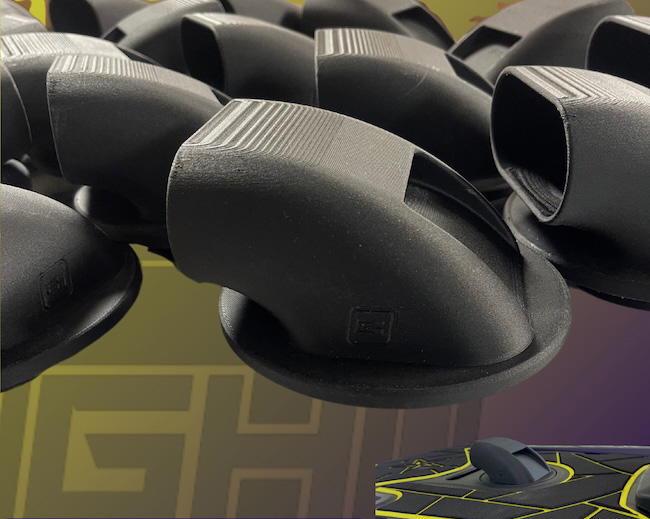
Earlier this week, Greenhulk posted to their social media accounts about a Sea-Doo Vent, and headlining the post was the claim that the item was “only available in the Greenhulk Store – which is, of course, no barrier to snagging one of these serious efficiency boosters for yourself. After all, Greenhulk has excellent customer service – both in person/in store, or online.
According to Greenhulk’s design idea and their product production, the Rear deck vent improved engine performance for 2018–2025 models, including RXPX, RXTX, GTX, Fish PRO, WAKE PRO, GTI, and GTR.
And just to up the interest quotient — this precision-engineered, lightweight, easy-to-install vent is 3-D printed using UV- and water-resistant PETG**.
Installation of the vent, easily and quickly accomplished by replacing the existing cover plate, improves engine bay ventilation by allowing hot air to escape more efficiently. The result is better airflow and cooler air temps, enhancing engine performance.
Head to the Greenhulk website to check out this new GreenHulk exclusive vent, available for $99.95.
** Delving into the technical side of things, according independent research and technology organizations TWI, PETG is “Polyethylene terephthalate glycol, known as PETG or PET-G, – a thermoplastic polyester that delivers significant chemical resistance, durability, and formability for manufacturing. PETG is an adaptation of PET (Polyethylene terephthalate) where the ‘G’ stands for glycol, which is added at a molecular level to offer different chemical properties. PET uses the same monomers as the glycol modified PETG, but PETG has greater strength and durability, as well as being more impact resistant and better suited to higher temperatures. Due to the low forming temperatures of polyethylene terephthalate glycol it is easily vacuum and pressure formed or heat bent, making it popular for a variety of consumer and commercial applications. These properties also make one of the more widely used materials for 3D printing and other heat-forming processes.
“Due to the low forming temperatures of polyethylene terephthalate glycol it is easily vacuum and pressure formed or heat bent, making it popular for a variety of consumer and commercial applications. These properties also make one of the more widely used materials for 3D printing and other heat-forming processes. PETG is also well suited for techniques including bending, die cutting and routing.”)
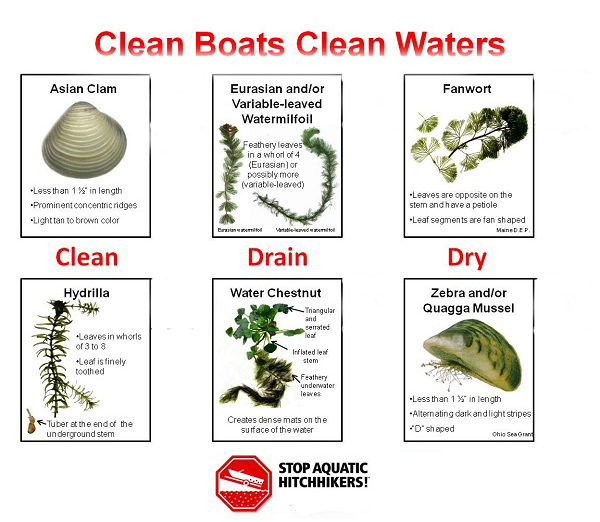
Green crabs, zebra mussels, hydrilla, and Northern Snakehead – each of these species is cropping up in and around waterways outside of their native habitat, and their presence has the ability to disrupt and negatively impact the ecosystems where they make their new homes – and the ability to disrupt PWC racing, recreation and the PWC lifestyle in general.
Definitely not the beginning of one of the more exciting and fun articles WCJ will publish this spring and summer, but one that bears mentioning, especially in light of a recent note from IJSBA lead man Scott Frazier.
For the past several years, there has been a fairly steady stream of news briefs regarding regulations, practices, policies and check-station procedures for Watercraft Inspection and Decontamination Programs. While significantly noted in the western portions of the country, we are now beginning to see smatterings of similar concerns in a more widespread region, and lately, it is rare that a day goes by that there are not a dozen or more alerts that come across my desk regarding new, increased or altered regulations put in place to try and address the growing problem of aquatic invasive species, and the efforts being put in place to prevent these species from hitchhiking from one body of water to another on your PWC, trailer and gear.
According to the U.S Fish and Wildlife Service, “Aquatic invasive species cause tremendous harm to our environment, our economy, and our health. They can drive out and eat native plants and wildlife, spread diseases, and damage infrastructure. Aquatic invasive species damage wildlife and communities by permanently altering habitats, reducing production of fisheries, decreasing water availability to residential and commercial users, blocking transportation routes, choking irrigation canals, fouling industrial and public water supply pipelines, degrading water quality, and decreasing property values.
Preventing introductions of potentially harmful species is the most efficient way to reduce the threat of invasive species. Once introduced, an invasive species can spread uncontrollably, harming vital ecosystems and native wildlife and plants and impacting recreation, human, animal, and plant health, the economy, and infrastructure.
In a post on the IJSBA website earlier this month, Frazier acknowledged the issue, its growing prominence in guiding and amending state and federal regulations, and addressed this direct impact this may have on the PWC racing industry.
“Noting that several reservoirs are being closed with mandatory vessel quarantine a prerequisite to using the waterway when they open, IJSBA is being proactive in creating a best practices plan for personal watercraft competitions. When an IJSBA sanctioned event is held, it is usually in a location that requires most participants to travel from out of the area. If quarantine methods are in place, participants could face difficulty launching and using the waterway where an event is held. IJSBA expects the issue of quarantine and prevention to increase beyond the Western United States where such concerns are currently ramping up. IJSBA has already reached out to water regulatory bodies in California and Oregon to begin creating a best practices program where event permit holders may be required to prevent the introduction of invasive species into the permitted area. If you have expertise in this field and would like to participate, please contact [email protected].”
On direct purchases, RIVA offers top dollar value and instant cash, and for trade-ins, the process is quick and easy. You can even use the online form to get the value of your ski almost instantly.
Going a step further to smooth your way to a new ski for your spring riding, RIVA finance associates are knowledgeable about current financing specials and rates and are dedicated to getting you approved and making your entire sale process a fun, and hassle-free experience. As an added bonus, RIVA will work with you pre-sale to add in all your parts and accessories, apparel, extended service plan and insurance to the finance package so you have everything you need, and you only have to make one monthly payment.
Plus, right now at the Deerfield beach store, you can take advantage of some great Manager’s Special deals, including this 2024 Yamaha EX® Deluxe – Retail Price $10,199, Sale Price $7,988 (Savings $2,211) or this 2024 Yamaha FX Cruiser SVHO® – Retail Price $19,799, Sale Price $16,788 (Savings $3,011) and more.
Manager specials are also available at the Miami, Space Coast, and Keys locations.
There is a list – fairly extensive, but committed to memory nonetheless – of PWC-related vendors, manufacturers, builders and supply houses that make up the bulk of source material that comes across my desk. There is, of course, our WCJ sponsors, without whom we would not be able to bring you the content we do each day. There are also well-known names in the industry who are not (yet) WCJ sponsors, but whose products, services and offerings are important to our readers – and therefore, important to us.
Sometimes, I’ll see a new name – often touting look-alike products that fall short of the quality offered by the more well-known suppliers. But every once in a while, someone comes up with a new look, a new angle, or a new approach, and just the novelty is sometimes enough to grab attention. Such is the case with MGM Trailer’s new GT45 jet ski trailer.
In the release video posted at the end of February, MGM discusses the inspiration for the functionality, as well as the unique design, saying “Our main goal was to create a safe, light trailer in which we can maximize the use and management of space according to the needs of our customers. Of course, we cannot forget about the unique design of this beauty.”
Constructed entirely from marine-grade aluminum, the GT45 trailer is resistant to damage from salt water and corrosion, as well as resulting in a light-weight unit.
According to the MGM website, “Aluminum is a very versatile material when used properly. Aluminum has several valuable advantages: no corrosion, low weight, flexibility. The entire structure is fully welded, including the main frame, cross beams, inner and outer supports, fenders, and lamp brackets, forming a monolithic whole. We use top-quality marine-grade aluminum Hydro PA13AW 5083, 4mm thick for the main frame, and 3mm for side supports and fenders.”
The locking wet-storage area is another benefit of the GT45. Another highlighted feature is the roller tracks that allow the ski to be unloaded without having to back far enough into the water to completely float the ski.
MGM also offers custom graphics to match the color scheme of your ski.
On the downside, the trailer is manufactured in Poland , and carried through Tangiri Boats. They are, however, seeking additional dealers, with more information available through the website.
At that time, IJSBA Executive Director Scott Frazier commented that “A considerable amount of correspondence has been received over the last two weeks requesting that a specific section of the rules is reviewed due to the outdated language allowing modern product technology to push performance levels well beyond what was anticipated by the creation of the class. Specifically, allowing an aftermarket ignition module that does not restrict the timing curve.”
Frazier opened a comment period for interested racers and others to submit comments on the proposed rule adjustment, with a closing date of April 28.
Moving quickly to finalize any rule change, Frazier posted on May 2 that a rule change will go into effect for IJSBA on Monday, June 30, that will restrict the aftermarket ignition used when 760 cylinders are affixed to a Yamaha watercraft in Sport Spec. Frazier noted that individual promoters may implement the rule change prior to the June 30 date, at their discretion.
While mid-season changes in rules can cause complications, and are therefore typically avoided by most sanctioning bodies in all sports, exceptions are made, in most sports, for safety reasons and/or to address concerns of equitable and impartial rules, scoring or regulations.
As stated by leadership with East Coast Watercross, “The racing community saw a problem, voiced the opinion to the right people and changes were made in record time! The amount of time and effort that went into a mid season rule change like this was staggering! and ill be happy to do it again if its the right move to make to keep the playing field fair especially in a class like Sport Spec that has been and will continue to be a driving force in Region 8 racing! Thanks to everyone who helped contribute opinions and data to get us to this point!! Thank you to the IJSBA and Scott for taking the time to make this happen in a timely manner!”
Read more details about the rule change and the process taken to arrive at the new rule in the full press release, posted below:
IJSBA is alerting competitors in the Sport Spec class of racing that a change is pending to the ignition provision in this category of rules. Based on public input, the rules will be changed to restrict the aftermarket ignition used when 760 cylinders are affixed to a Yamaha watercraft in Sport Spec. This ruling is in full effect sixty days from today and may be implemented sooner by each promoter as they see fit for their market. Please read the information below for complete details.
Background: Sport Spec is a community created class of competition which was added to the IJSBA Rule Book more than ten years ago. Since the inception of the class, Yamaha watercraft were allowed aftermarket ignition in the Sport Spec Class: “units may be modified or aftermarket provided ignition timing is not manually adjustable.” An aftermarket ignition, per IJSBA rules, is defined :” A part replacing or used in addition to the original equipment part. Aftermarket parts are not limited to providing the same function as their original equipment counterparts.” Therefore, an aftermarket ignition could use any ignition curve so long as the curve could not be changed manually by the end user. Indeed, the MSD Enhancer product had been widely used which did not maintain the OEM curve and was not programable. The MSD Enhancer is only available with one specific timing curve and cannot be ordered customized.
In 2024, IJSBA allowed the Yamaha watercraft to utilize 760 Cylinders. IJSBA intended to ensure there was a distinction between ignition provisions for Yamaha with 760 Cylinders than for those that retained the 701 cylinders. The ruling allowed Yamaha with 701 cylinders to utilize an ignition that was programable by the end user while those with the 760 cylinders could not: “Yamaha units which do not have 760 cylinders may use an IJSBA approved programable ignition so long as charging features are maintained.” This ruling created a situation where an individual could simply buy several ignitions, preprogramed for different curves each, and swap them out.
As the 2025 competition season got underway, numerous concerns were brought to IJSBA that the situation of now being able to order any curve was creating a situation that, essentially, made no difference whether an end user could program the ignition if they had the ability to buy multiple ignitions. Additionally, the timing curves being introduced into the Sport Spec category were outside of the parameters that could have been expected when the original rules about programable ignitions were created due to the products on the market at the time. The issue seemed to narrow on controlling the timing curve. IJSBA sent inquiries to several engineers, tuners, builders, and seasoned technical inspectors regarding the ability to check timing curves at events and the reply was nearly unanimous that such an attempt would result in a disaster. With the complaints coming in, rapidly, over concerns about the class rapidly advancing to require expensive race fuel, IJSBA sent this problem to the community to be the dominant part of the solution to this problem.
Voting: IJSBA requested an advisory vote from the Sport Spec committee. The vote was to select one of the three following options for Waveblasters equipped with 760 Cylinders:
Only allow the OEM CDI or a know OEM Replica CDI.
Allow only the MSD Enhancer as an aftermarket ignition provision.
Continue to allow the Zeeltronics ignition that is not end user reprogrammable.
Exactly 25 persons submitted advisory votes to IJSBA. Option 1 received five votes. Option 2 received 12 votes. Option 3 received 8 votes. Votes to restrict the Zeeltronic to only 701 cylinder platforms were greater than 2:1. Votes to keep the MSD as an option for 760 cylinder platforms was also greater than 2:1 against only allowing OEM CDI.
Outcome: IJSBA is accepting this advisory vote from the Sport Spec community and will modify the IJSBA Rule Book’s Sport Spec section to read that “IJSBA shall allow approved aftermarket ignitions for Yamaha Watercraft equipped with 760 Cylinders and, at this time of this publication, the only allowable aftermarket ignition is the MSD Enhancer as furnished by the manufacturer.”
IJSBA will enforce the new version of Sport Spec Rules at the 2025 World Finals and will require IJSBA Sanctioned Promoters to adhere to this new rule beginning 60 days from today’s date: May 1, 2025. IJSBA Sanctioned Promoters are free to enforce this new provision at any time but recommends that each promoter provide a 21 day notice prior to enforcement.
Please note that it is unusual for IJSBA to make a mid season rule change. However, Sport Spec being a community class, IJSBA will give deference to the community who has the primary drive and investment in this category of racing and has, generally, the best understanding of the direction the class needs to go.
Questions or comments regarding this bulletin may be submitted to IJSBA by emailing [email protected].
If you snooze, you lose. We’ve all been there – but you don’t want this to be one of those times!
Fuel Tech’s 22nd Anniversary sale is soon to be in the history books. Let just five more days slip by and you’ll miss out on some of the hottest deals on some of the most coveted performance additions for your PWC.
Luckily, FuelTech has the “anniversary gift” thing a bit backwards, and five days is plenty of time to jump on the Fuel Tech website and take advantage of Fuel Tech’s anniversary gift to you in the form of up to $400 off select inventory.
Deals include:
$200 off on the FT450 EFI System ECU – FuelTech’s FT450 is the perfect ECU for projects with limited input and output channel needs, offering 7 configurable inputs and 10 outputs. This cost-effective aftermarket ECU is equipped with the same FTManager software and many of the same features offered in the FT550, FT550LITE, and FT600 including sequential injection and ignition, O2 closed loop, active traction control, integrated boost controller, internal datalogger, progressive and PRO-Nitrous controls, odometers, drag racing features and more! The touchscreen display offers an integrated dash display, eliminating the need for additional gauges, has 4 programmable screens, and a customizable splash screen. The IP67 rating makes it perfect for off-road and marine applications such as PWCs / Jet Skis. Now on sale for $699.
$400 off on Fuel Tech’s FT550 – FuelTech’s FT550 is more than an ECU offering electronic fuel injection, integrated dashboard, data acquisition, and power management. The FT550 is designed for engines with up to 12 cylinders, or up to 4 rotors, and features 14 programmable inputs and 24 outputs. In addition to offering all of the features and functions of the FT450, including touchscreen display, 4 programmable display screens, customizable splash screen, sequential injection and ignition, O2 closed loop, active traction control, integrated boost controller, internal datalogger, progressive and PRO-Nitrous controls, odometers, drag racing features, the FT550 is loaded with additional features such as electronic throttle control, inclinometer gauge, integrated GearController with strain gauge sensor on the shifter for more efficient gear shift cuts, built-in accelerometer (G-meter), and gyroscope. The FT550 is housed in a high-quality ABS case and is IP67 rated for marine and off-road applications. Now just $,1299
$300 off the FT550LITE EFI System ECU – FuelTech’s FT550LITE is more than your standard aftermarket ECU offering electronic fuel injection, data acquisition, and power management. The FT550LITE is designed for engines with up to 12 cylinders, or up to 4 rotors, and features 14 programmable inputs and 24 outputs. Enjoy the wide range of functions offered by the FT550 at a reduced cost! If you are in the market for a powerful aftermarket ECU and do not need a touch screen display screen, the FT550LITE is the perfect fit. This model offers GearController (power-shifts), built-in accelerometer (G-meter) and gyroscope; in addition to PowerFT ECU line standard features such as sequential injection and ignition, O2 closed loop, active traction control, integrated BoostController, internal datalogger, progressive and PRO-Nitrous controls, electronic throttle control, drag racing features and more! IP67 rated for marine and off-road applications. Anniversary sale priced at $999 Note: The FT550LITE ECU does not include an LCD touchscreen display.
$200 off the FT600 EFI System ECU – The FT600 ECU is our most advanced engine control and monitoring system. This top of the line ECU is capable of managing sequential injection and ignition on engines from 1 to 12 cylinders, or up to 4 rotors, and accommodates up to 20 inputs and 32 outputs. The FT600 offers the features and capabilities offered by the FT450 and FT550 models and more! Housed in an extremely durable aluminum case, the upgraded design also includes an upper visor to reduce glare and houses 10 LED lights with adjustable color and intensity, ideal for a progressive shift light. The 4 virtual LED lights on the FT450 and FT550 have been replaced with 4 adjustable LED lights, 2 on each side of the screen, that can be configured for alerts or to show the current status of any sensor. The 4.3” color touchscreen has been upgraded with an anti-glare display, integrated digital dashboard, 4 programmable display screens, and a customizable splash screen. The FT600 features dual 34 pin SuperSeal connectors, 2 CAN Bus ports, and USB-A mini. Equipped with FTManager software and an impressive list of features, including sequential injection and ignition, O2 closed loop, active traction control, integrated boost controller, internal datalogger, progressive and PRO-Nitrous controls, odometers, drag racing features, electronic throttle control, inclinometer gauge, integrated GearController with strain gauge sensor on the shifter for more efficient gear shift cuts, built-in accelerometer (G-meter), gyroscope, and more! IP67 rated for marine and off-road applications. $2,499 for a limited time.
Not only do they have amazing anniversary sale prices, as always, Fuel Tech makes sure customers understand what they are buying – and why – with ample product documentation and even video guides such as this FT600 ECU – Unboxing video.
Be sure to check out their Youtube Channel for more helpful videos.
Some sentences just pack a powerhouse punch, and no amount of fancy linguistic footwork or journalistic pontification is going to improve them. So when you get a press release whose opening lines include words like “MacClugage mentorship,” “Monster Energy,” “Dean’s Team Racing” and “P1 AquaX,” you know that you’ve got a heavyweight announcement.
Which is just what Caldwell Racing Team owners John & Danylle Caldwell dropped in The Watercraft Journal’s lap earlier this week with the announcement of the 2025 Caldwell Racing lineup and sponsorship.
Partnered with Monster Energy, the team — consisting of Pro Class racer Tim Miller, Amateur 300 Class powerhouse Cooper Caldwell, and Baron Mernik doing double duty in the Stand Up and 200 Amateur Runabout classes — will be bringing not only their own PWC racing skills to the line in 2025, but will do so with the innovation and expertise of Dean Charrier and Dean’s Team racing at their fingertips, and “under the hood.”
And as if that wasn’t enough energy to pack into a single press release, Caldwell Racing has also revealed that they will be partnering with Circus Media USA — an industry leader in marine action sports video production — to launch a YouTube Webisode Series. The series will offer an inside look at the Caldwell Racing program, covering everything from testing and tuning to training strategies and race weekend action.
Get all the details in the full press release below:
Monster Energy-backed: “Caldwell Racing” Unveils Powerhouse Lineup for the 2025 P1 AquaX Championship Season
Fort Worth, Texas – April 23, 2025
The torch has officially been passed. With heartfelt thanks to the legendary Chris MacClugage, whose legacy and mentorship paved the way, the Caldwell Racing Team charges into the 2025 season of the P1 AquaX US Championship with an elite new lineup, fresh talent, and serious podium ambitions.
This season, Monster Energy continues its commitment to high-octane racing and next-gen riders, powering a stacked team of athletes who are ready to make waves on the national and international stage. As part of this mission, Monster Energy has partnered with Texas-based Caldwell Racing to bring that vision to life.
Team Owners John & Danylle Caldwell shared their excitement: “Their support is a game-changer. Having a major motorsports sponsor like Monster Energy behind us is beyond exciting—I’m honestly at a loss for words. It’s just super cool!”
All of the team’s PWC boats are built and tuned with assistance from none other than Dean’s Team Racing out of Orlando, Florida, the gold standard in PWC performance and tuning. Led by industry veteran Dean Charrier, the team brings decades of race-winning experience and championship pedigree to every machine. From innovation in ski setup to unparalleled consistency on the water, Dean’s legacy is deeply embedded in the sport — and this year’s results are already proving it.
2025 TEAM LINEUP Tim Miller – #37 300 Pro Class in P1 AquaX / Pro-Am Runabout Stock With podium finishes at both the World Finals in Lake Havasu and Thailand, Miller continues to climb the ranks as one of the fiercest competitors on the tour. With more than 20 years of AquaX racing experience, Tim Miller’s continuous results are a testament to his speed, control, and race IQ. Keep your eyes on #37 — he’s a contender in every heat. World Ranking: #3
Cooper Caldwell – #193 Amateur 300 Class in P1 AquaX / Amateur Runabout Stock (Closed Course) Caldwell enters the season riding high as the 2024 P1 AquaX Amateur 200 Class Champion, having locked in a strong second-place finish at the 2023 World Finals. With additional podiums in Havasu and Thailand in 2024, he’s bringing serious momentum into this year and looks to translate his success in the 200 Class to the 300 Class for 2025. World Ranking: #4
Baron Mernik – #297 Racing Stand Up (Super Jet & Kommander GP1) & 200 Amateur Runabout Stock in P1 AquaX Baron is one of the most exciting young talents to hit the scene — transitioning from a baseball standout to a rising star on the water. At just 15 years old, Baron is now making the leap into Runabout racing in the P1 AquaX series, as well as running standup machines in both the Super jet and Kommander GP1 Classes. Though new to the scene, Baron has already claimed a win at the 2025 MudBug Nationals in Morgan City, LA and stood on the podium at the 2024 Nationals in Texas last fall. Mernik’s fearless style and work ethic are turning heads across the circuit as he gears up for his rookie season in P1 AquaX.
In addition to boasting a powerhouse lineup and substantial resources dedicated to on-water performance, Caldwell Racing has teamed up with Circus Media USA—an industry leader in marine action sports video production—to launch a YouTube Webisode Series. The series will offer an inside look at the Caldwell Racing program, covering everything from testing and tuning to training strategies and race weekend action. View the newest content from Caldwell Racing here.
The 2025 season kicks off with high expectations and the full force of Monster Energy behind the throttle. From the calm before the green flag to the final checkered finish, this squad is ready to race.
Closed course racing, endurance racing, touring, fishing, adventure rides – The Watercraft Journal covers all aspects of the PWC industry and lifestyle. One minor niche cubbyhole of the PWC world that we tend to stay away from is any industrial, military or government use of PWCs in law enforcement or military operations.
However, a recent LinkedIn post that made it across my desk via Goggle alerts added in enough graphic-novel, Dark Knight looking illustrations and a name familiar enough to grab my attention despite the clear non-recreational bent to the announcement.
In the April 16 post — which also caught the attention of industry publication Powersports Business, but seems to have flown under the radar in terms of widespread social media notice — Canadian venture capitalist Charles Bombardier talked about the shortcoming of any existing vehicle in terms of adaptability to the requirements of persistent, low-profile patrols. He proposed a solution – a set of solutions, actually, that would not only increase patrol capabilities, but do so “without putting personnel in harm’s way.”
Charles Bombardier poses on his property in Quebec’s Eastern Townships in Hatley, Quebec July 15, 2016. Photo by Christinne Muschi
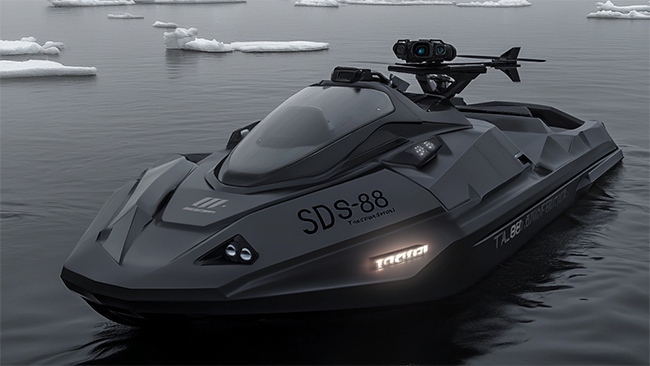
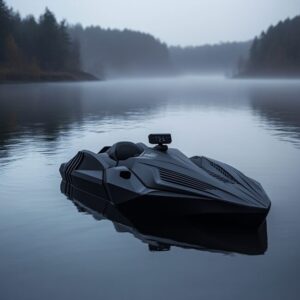
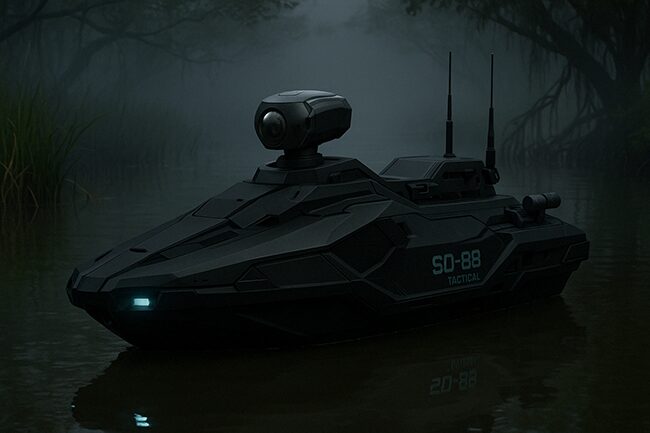
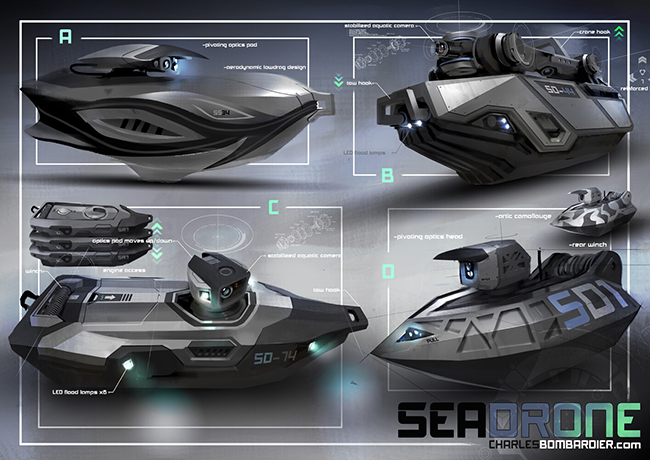
Bombardier, who is the grandson of Bombardier Inc. founder and snowmobile inventor Joseph-Armand Bombardier, and a well-known innovator, engineer and angel investor in his own right, said that his concept craft – the Sea-Drone 88 – is an “autonomous, electric-powered personal watercraft designed to patrol sensitive rivers, coastal zones, and Arctic waters.”
He described the design as “compact, modular, and remotely deployable” and said the unmanned Sea-Drone 88 could “transform how nations protect their territory.”
Bombardier highlighted the fact that “manned patrols are costly, risky, and logistically difficult — especially at night or in extreme environments … or limited by terrain, weather, or deliberate evasion tactics.” He said that these challenges, especially when faced with an increased need to monitor waterways brought on by “illegal crossings at the Rio Grande, to drug routes through the Florida Straits, and foreign ships inching into the Northwest Passage,” call for a stealth personal watercraft that would patrol where others can’t.
The Sea-Drone 88 is the latest in a series of more than over 325 design concepts introduced since 2019 by Bombardier, including prototypes for recreational products, cars, boats, and aircraft. As with each of his concepts, Bombardier leverages collaboration with industrial designers from around the world to convert his vision into 3D models and graphic images.
Bombardier also sets himself apart from a large sector of “design concepts” that can be found for any number of futuristic products by utilizing his connections, experience and training – which includes a master’s degree in Innovation Management from the École de technologie supérieure (ÉTS) and a Ph.D. in Mechanical Engineering from the University of Sherbrooke – to take his concepts past the initial stages and delves fully into design details and functionality breakdowns.
According to the announcement, the Sea-Drone 88, “would be based on a high-performance PWC platform powered by a 300hp+ marine engine, stripped of seats and handlebars, and reengineered for autonomy. The craft would rely on Electric or hybrid propulsion for silent operation.”
Envisioned in three separate models – the SD-88 Tactical for border patrol and night surveillance, the cold-adapted SD-44 Arctic with ice-resilient hull and long-range comms, and the SD-COMMS mobile comms relay or surveillance node – the SD-88 would feature stabilized HD and thermal imaging cameras mounted on a gimbal, satellite or LTE communication relays. a reinforced, impact-resistant Kevlar hull and towing gear and optional modular payload bay.
According to Bombadier’s release, the SD-88 units “could be deployed from mobile trailers, ships, or shore stations and navigate pre-mapped patrol routes using onboard AI. They would send real-time feeds to command centers and operate day or night, adjusting behavior based on activity.”
Bombardier included additional details of the concept SD-88 units, which can be read in the full release, below, but drew numerous comments of support and agreement on his LinkedIn post with a conclusion statement that “Sea-Drone 88 could help reduce the need for human patrols in dangerous or logistically complex environments. It would operate quietly and continuously, making it ideal for border monitoring at the Rio Grande or southern Mexico, wildlife protection in marine reserves, surveillance missions in the Arctic and Great Lakes, and day/night patrols in coastal security zones. By offering a cost-effective, low-risk, and adaptable platform, Sea-Drone 88 would complement aerial and terrestrial surveillance assets while enabling new types of missions.”
Other design concepts introduced by Bombardier include:
Skreemr and Antipode supersonic aircraft
The Skreemr and Antipode concepts depict two types of hypersonic passenger airliner concepts able to fly from New York to London in less than 11 minutes. Reusable rocket boosters would initially accelerate and propel the aircraft to Mach 5, after which, scramjets engines would take over and continue accelerating them up to Mach 24. An opening in the Antipode’s nose would expel counter-flowing jets of air to cool the aircraft surface and reduce its sonic booms. This technology, dubbed long penetration mode (LPM), was inspired by a NASA study. Both concepts were featured in publications including Popular Mechanics, Architectural Digest, CNN and Forbes.
Seataci
The Seataci is a yacht concept that uses a biomimetic propulsion system resembling the movement of whale’s tail. Its main hull would be lowered underwater, providing passengers with an excellent underwater view of the coral reefs and marine life. It features a dozen villas and two landing pads specially designed for personal flying drones.
The Solar Express
The Solar Express is a space train that would be designed and used to ferry humans, supplies and minerals between celestial bodies and space stations in the Solar System. It would run non-stop, so smaller vessels would need to catch the train when it passed by. It provides an artist’s rendering of a Mars cycler spacecraft.
Original Sea-Drone concept images created by Matthew Betteker in 2014.
Charles Bombardier Board Director | Innovation Architect | Seed-Stage Investor
April 16, 2025 ➔ The Sea-Drone 88 is a personal concept project by the author, unrelated to any existing OEM or manufacturer.
Could a personal watercraft shaped drone redefine border surveillance?
What if coastal security could be handled without putting personnel in harm’s way — and without making a sound? The Sea-Drone 88 is a concept for an autonomous, electric-powered personal watercraft designed to patrol sensitive rivers, coastal zones, and Arctic waters. Compact, modular, and remotely deployable, this unmanned platform could transform how nations protect their territory. With Canada’s renewed focus on Arctic sovereignty and increased defense investment, revisiting the Sea-Drone concept feels both timely and strategically aligned.
Silent waters, unseen threats From illegal crossings at the Rio Grande, to drug routes through the Florida Straits, and foreign ships inching into the Northwest Passage, many critical waterways remain under-monitored. Manned patrols are costly, risky, and logistically difficult — especially at night or in extreme environments. Even when combined, fixed and mobile sensor networks may be limited by terrain, weather, or deliberate evasion tactics. There is growing political will to better secure national borders and protected zones, but many of today’s tools are ill-suited for persistent, low-profile patrols. The Sea-Drone 88 was conceived to fill this gap.
The Sea-Drone 88 would be based on a high-performance PWC platform powered by a 300hp+ marine engine, stripped of seats and handlebars, and reengineered for autonomy. It would rely on:
Electric or hybrid propulsion for silent operation
Stabilized HD and thermal imaging cameras mounted on a gimbal
Satellite or LTE communication relays
A reinforced, impact-resistant Kevlar hull
Towing gear and optional modular payload bay
Three modular variants could be envisioned:
SD-88 Tactical: for border patrol and night surveillance
SD-44 Arctic: cold-adapted with ice-resilient hull and long-range comms
SD-COMMS: acting as a mobile comms relay or surveillance node
These units could be deployed from mobile trailers, ships, or shore stations and navigate pre-mapped patrol routes using onboard AI. They would send real-time feeds to command centers and operate day or night, adjusting behavior based on activity.
Autonomous, but always accountable Operators could oversee Sea-Drone 88 units through secure dashboards, receiving alerts and telemetry in real time. The interface would allow remote control if needed, but most missions could run autonomously. Safety protocols would include collision avoidance, encrypted communications, and geofencing. Thanks to its compact size, the drone could be launched and retrieved by two people with minimal equipment. Its electric propulsion system would enable near-silent patrolling in both civilian and tactical scenarios.
Mission-specific configurations when needed In addition to its core surveillance roles, Sea-Drone 88 could be outfitted with optional mission-specific modules for higher-risk deployments. These configurations would remain compliant with defense regulations and adaptable to the rules of engagement in each operating region. Examples could include:
Non-lethal deterrents such as flare or smoke launchers
Electronic warfare tools for localized jamming or interference
Remote-operated micro turrets, offering light payloads in the 5.56–7.62 mm range
Laser target designators for coordination with aerial or ground assets
These options would be tightly integrated within the platform’s modular payload bay and would only be activated under authorized use cases, reinforcing the drone’s adaptability without compromising safety or oversight.
Trilateral collaboration in a shifting world In an era of rising geopolitical tension and renewed focus on national sovereignty, platforms like Sea-Drone 88 could support new modes of collaboration between allied nations. Canada, the United States, and Mexico have all recently expressed political will to invest in modern defense technologies, particularly in securing coastlines and border rivers.
By leveraging complementary expertise — such as the Royal Canadian Navy, the U.S. Coast Guard and Border Patrol, the Secretaría de Marina (SEMAR), and the Mexican National Guard — Sea-Drone 88 could become a flexible tool within shared security frameworks. Its deployment along waterways like the Rio Grande, Chiapas rivers, the St. Lawrence, and even the Bering Strait, could support both sovereignty enforcement and humanitarian missions. Arctic patrols, conservation monitoring, and cross-border coordination could all benefit from a common autonomous platform.
These developments echo recent policy shifts. Canada’s Our North, Strong and Free strategy emphasizes enhanced Arctic presence, stating: “Canada will assert its sovereignty in the Arctic through enhanced presence and capabilities adapted to the North’s unique operating environment.” Meanwhile, Mexico’s federal leadership continues to expand the role of the Secretaría de Marina (SEMAR) in national defense and infrastructure — reinforcing the need for mobile, autonomous solutions capable of operating in sensitive zones.
Flexible. Scalable. Low-risk. Sea-Drone 88 could help reduce the need for human patrols in dangerous or logistically complex environments. It would operate quietly and continuously, making it ideal for:
Border monitoring at the Rio Grande or southern Mexico
Wildlife protection in marine reserves
Surveillance missions in the Arctic and Great Lakes
Day/night patrols in coastal security zones
By offering a cost-effective, low-risk, and adaptable platform, Sea-Drone 88 would complement aerial and terrestrial surveillance assets while enabling new types of missions.
This conceptual idea was originally released with the help of industrial designer Matt Betteker and first published in The Globe and Mail on October 22, 2014.


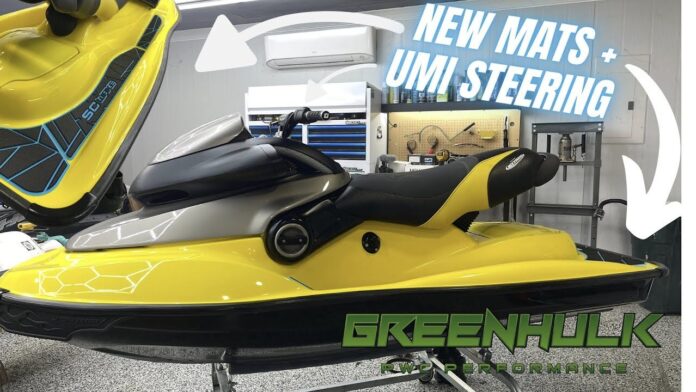
 One of the things we love about Greenhulk’s YouTube channel is that they go out of their way to upload videos that lean a little more alternative than your typical PWC channel’s output. Their latest video, titled “RESTORING A 1999 Sea-Doo XP Limited 951: UMI Steering Install + SeaDek Mats,” is surely no exception! Gaddis walks us through his “after-hours” personal project of restoring the 1999 Sea-Doo XP Limited 951, showing off some of the previous upgrades he had already incorporated into the ski, and walking us through the next steps in the restoration process.