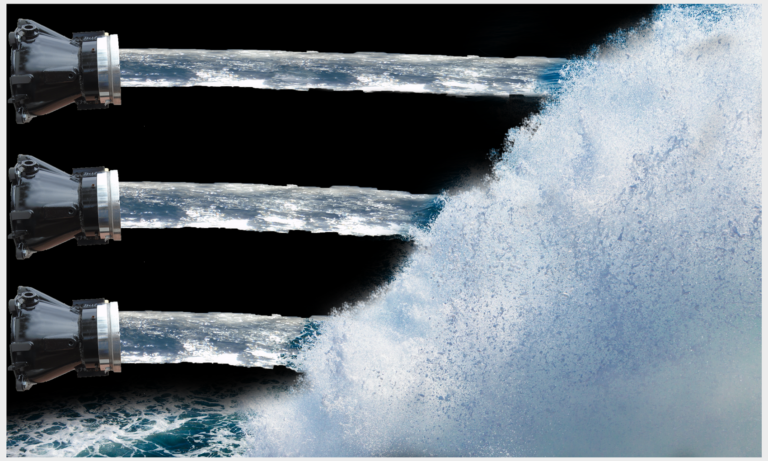
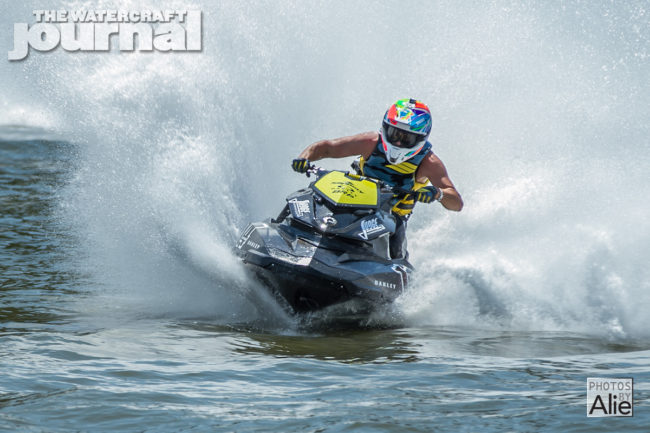
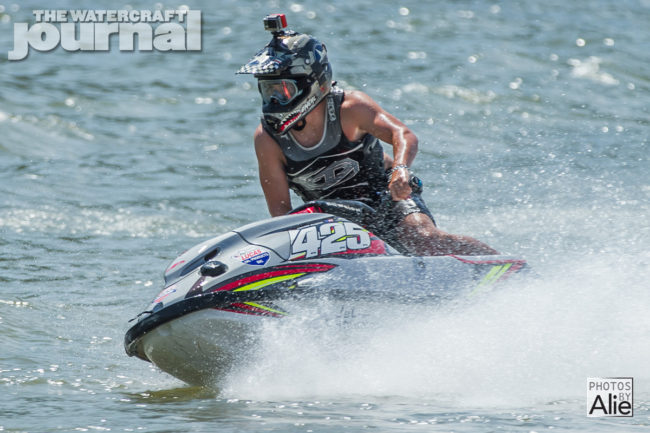
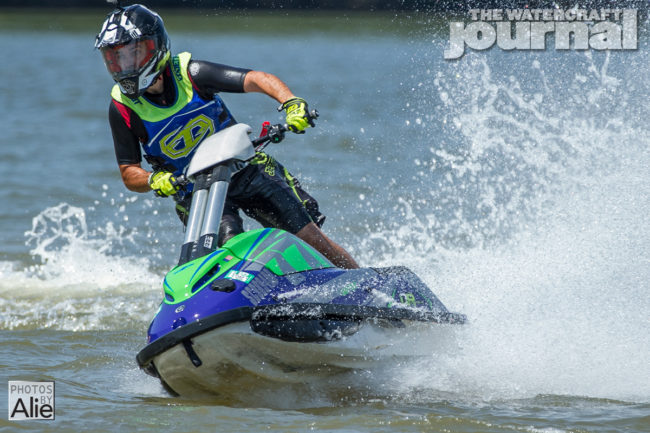
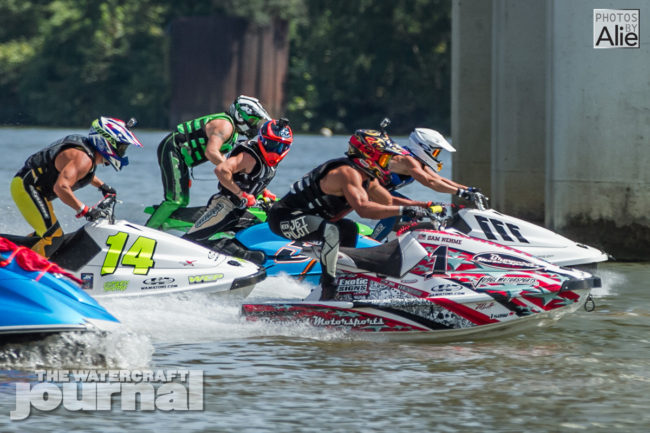
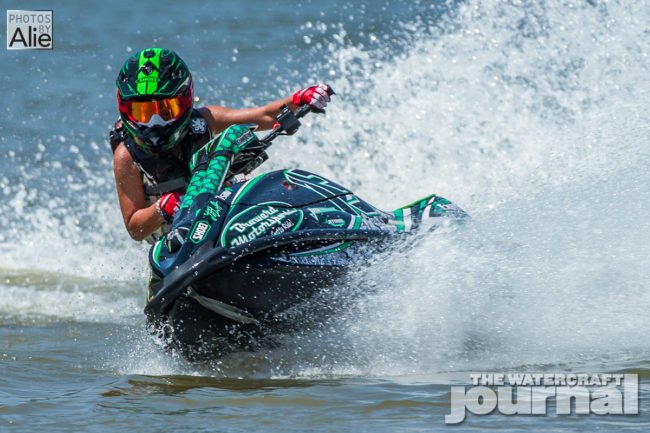
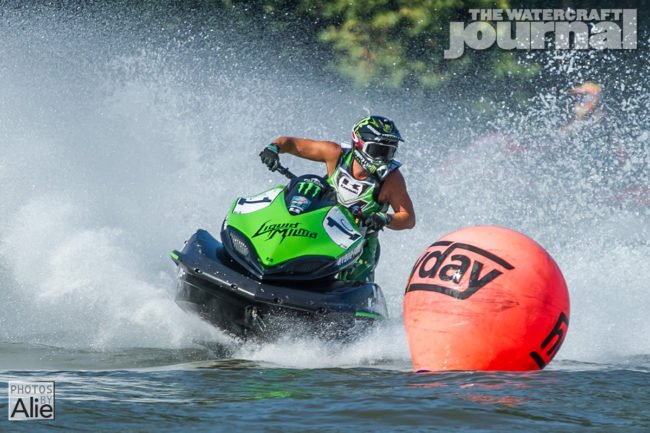
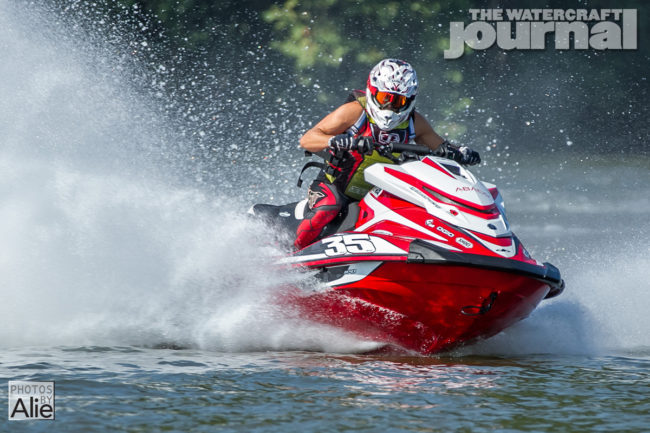
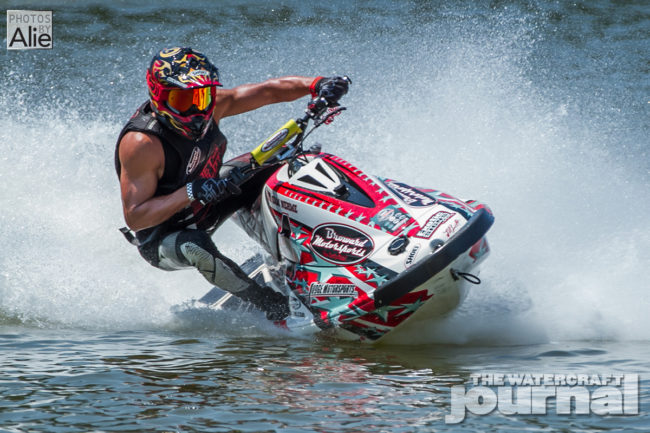
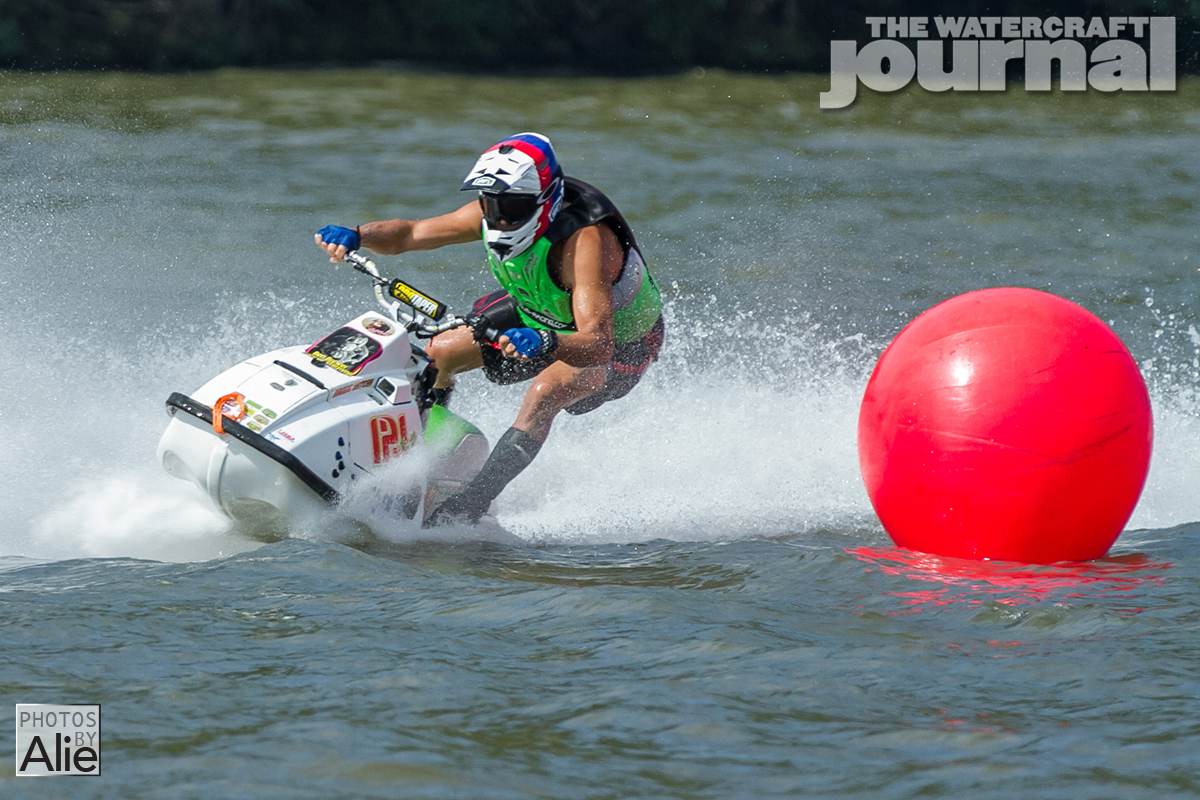
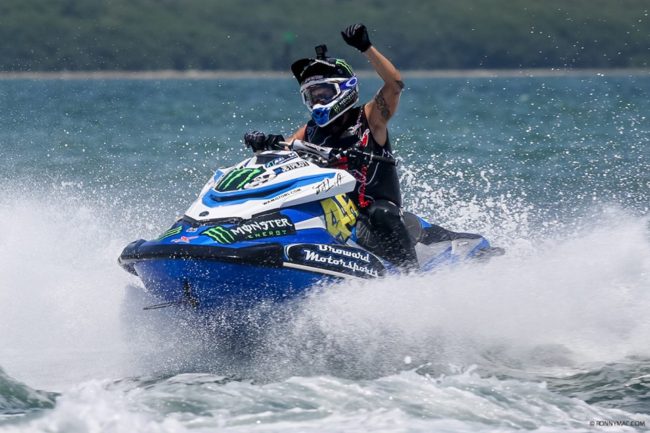
Each year we see many industry-related products set on display at the trade show during the World Finals in Lake Havasu City, AZ. This year will be no exception. In fact IJSBA Just Announced that there will be a new additional vendor at the 2017 Blowsion World Finals. MCD Tech is going to exhibit a variable exit nozzle which they have created.
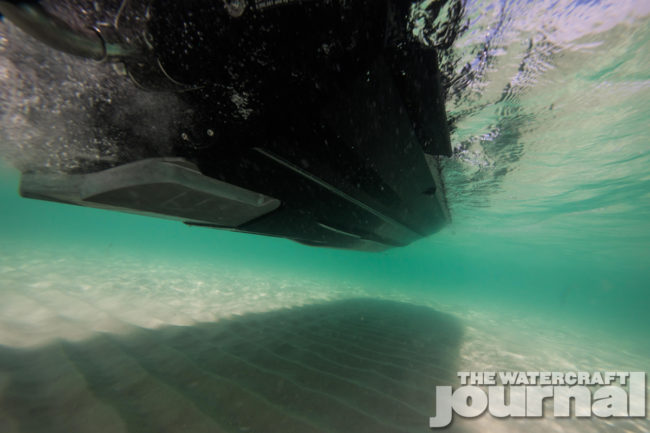
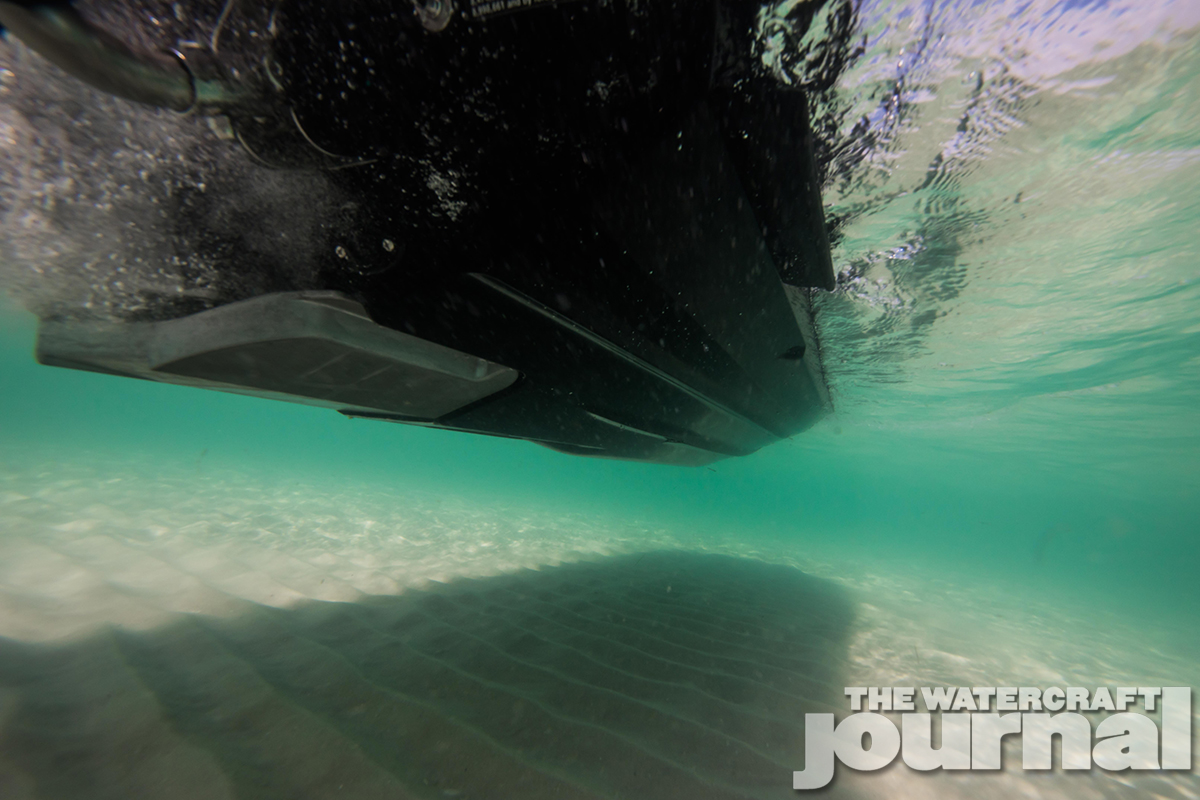
The Variable Diameter Nozzle (VDN) is a nozzle that can change diameter via electronic control. According to the manufacturer, it is a patented replacement for a fixed exit nozzle, allowing you to vary the diameter automatically via computer control. The control will automatically adjust the VDN to a smaller diameter as forward motion increases, thereby providing greater thrust at high speed. Additionally the control will automatically reduce the VDN diameter to obtain the best top speed.
The way it works is by collecting data from GPS, an accelerometer, and the RPM’s of the engine. It houses a bladder which inflates or deflates hydraulically, depending on the signal received from the control. This in turn moves the actuator to the correct position based on the forward motion of the watercraft and automatically changes the VDN diameter.
This technology has been around for decades and has been utilized in aircraft jet engines, fluid systems, and even been brought to the watercraft industry in the past. This type of patent dates back to the early 1990’s and we have seen companies over the years offering continuously variable thrust systems.
It will certainly be interesting to see what MCD Tech is going to offer and how receptive the industry will be, especially if the performance and efficiency gains are significant enough.
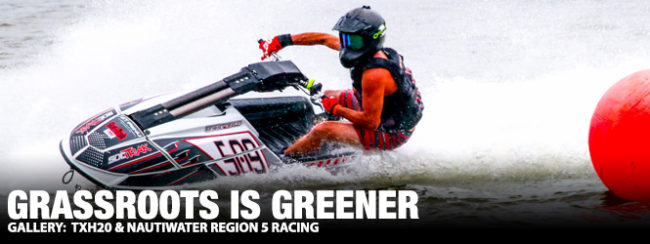
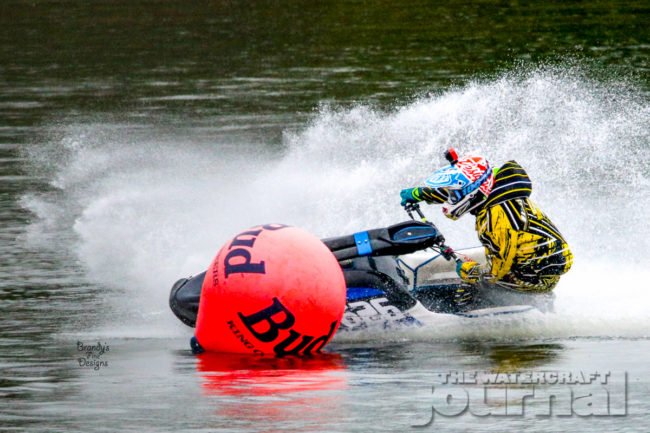
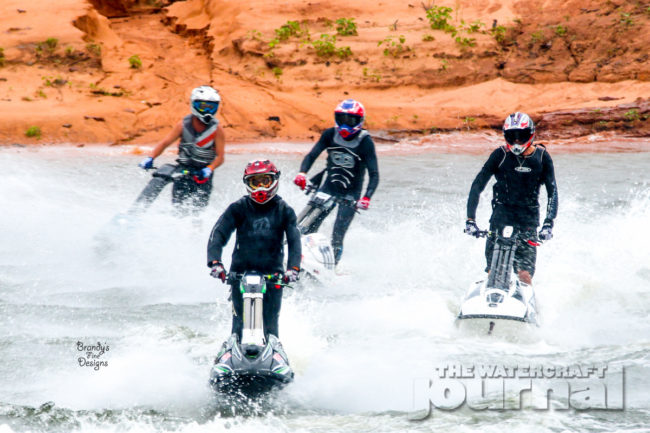
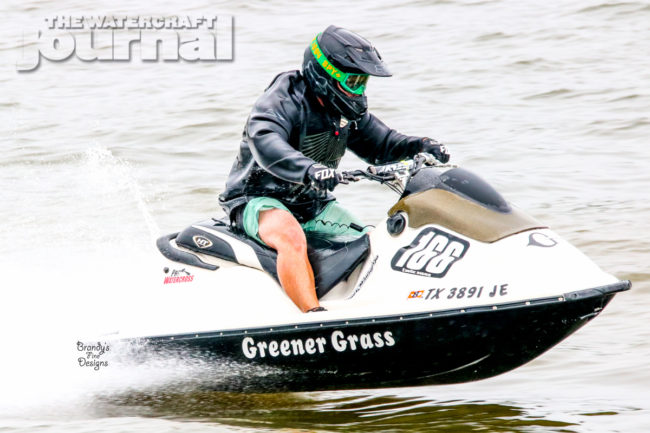
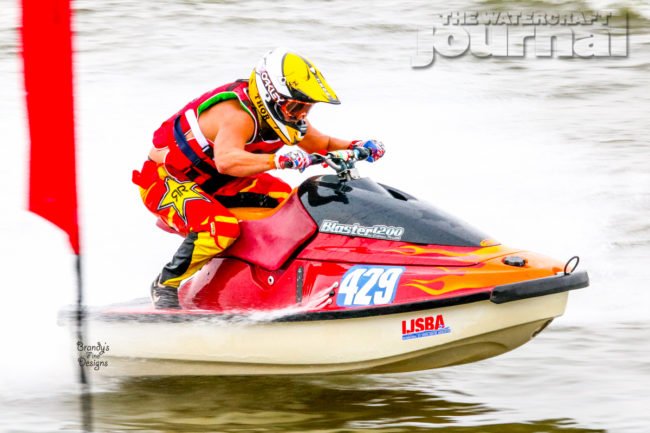
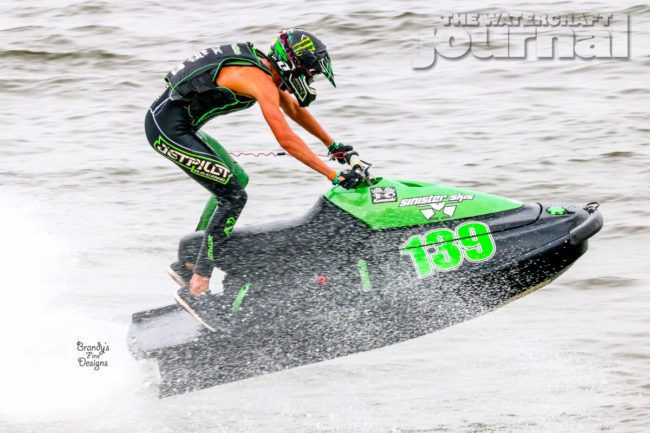
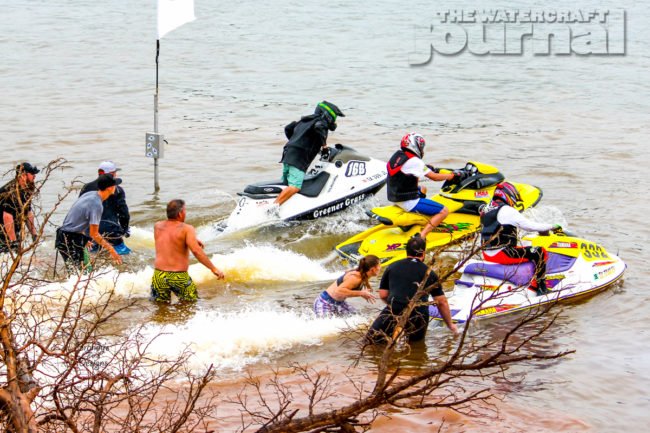
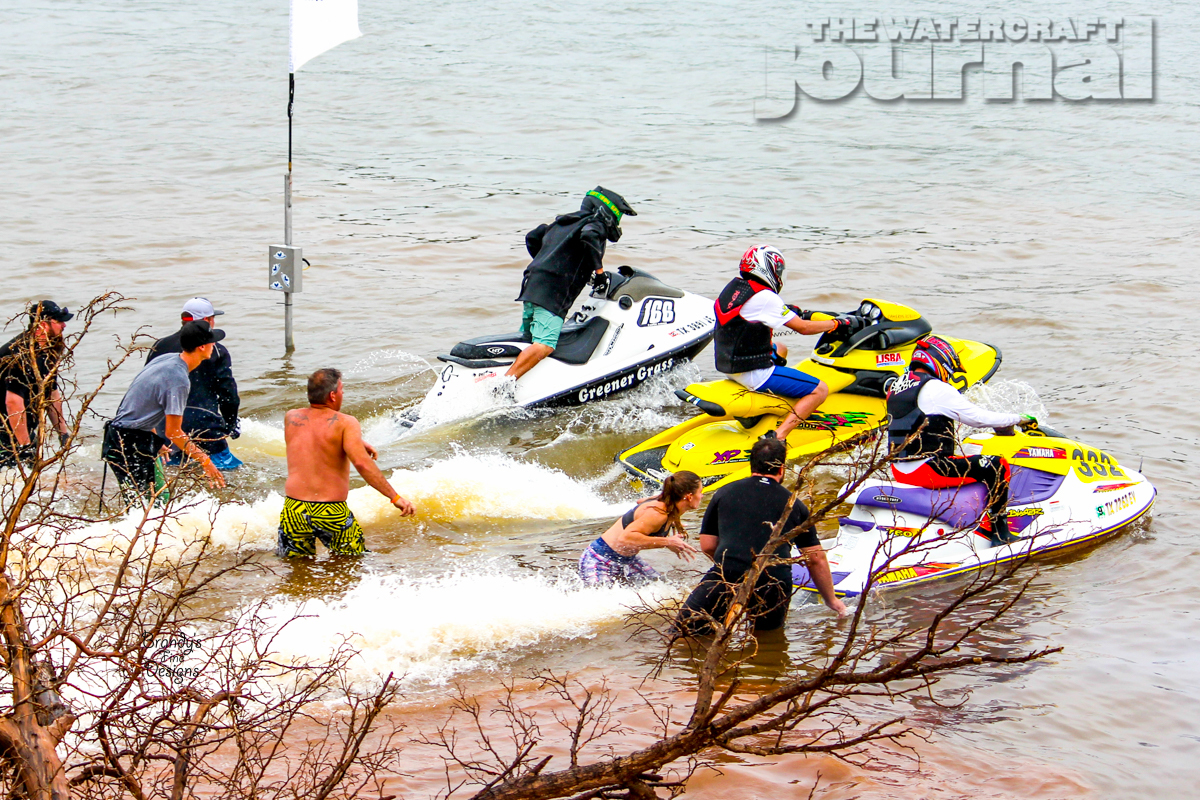
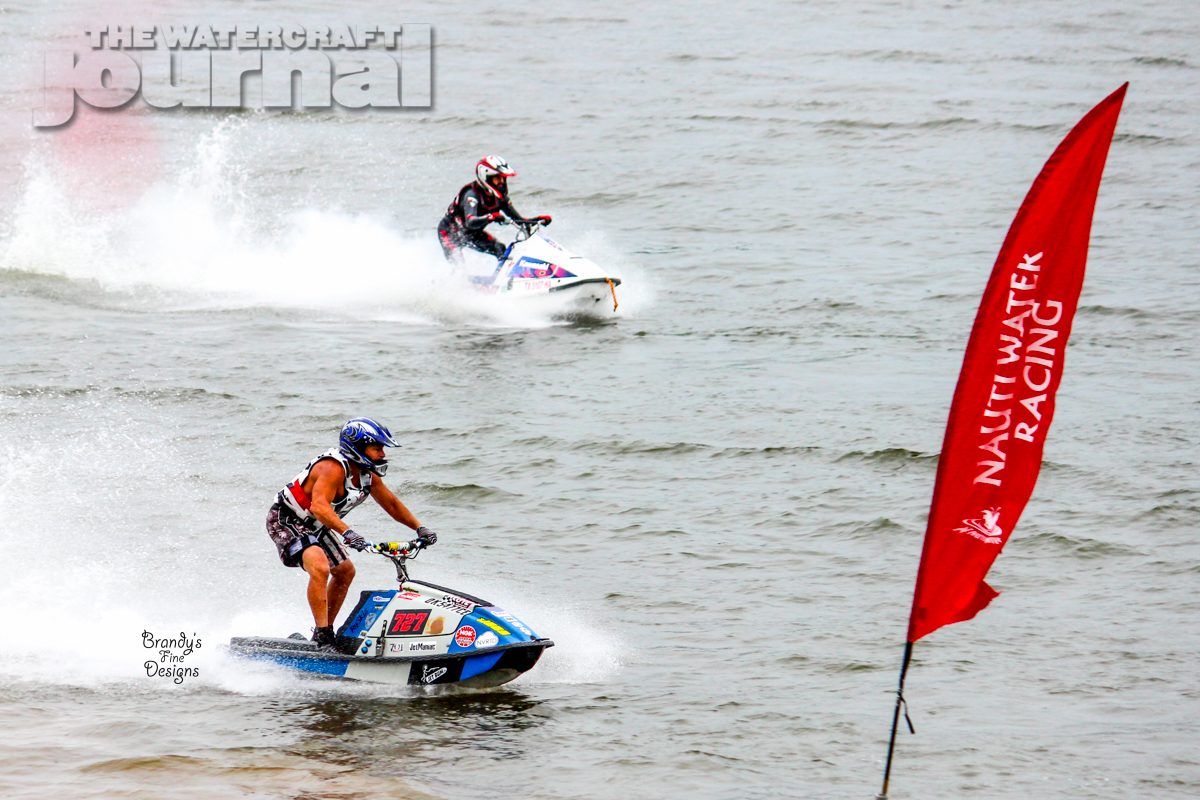
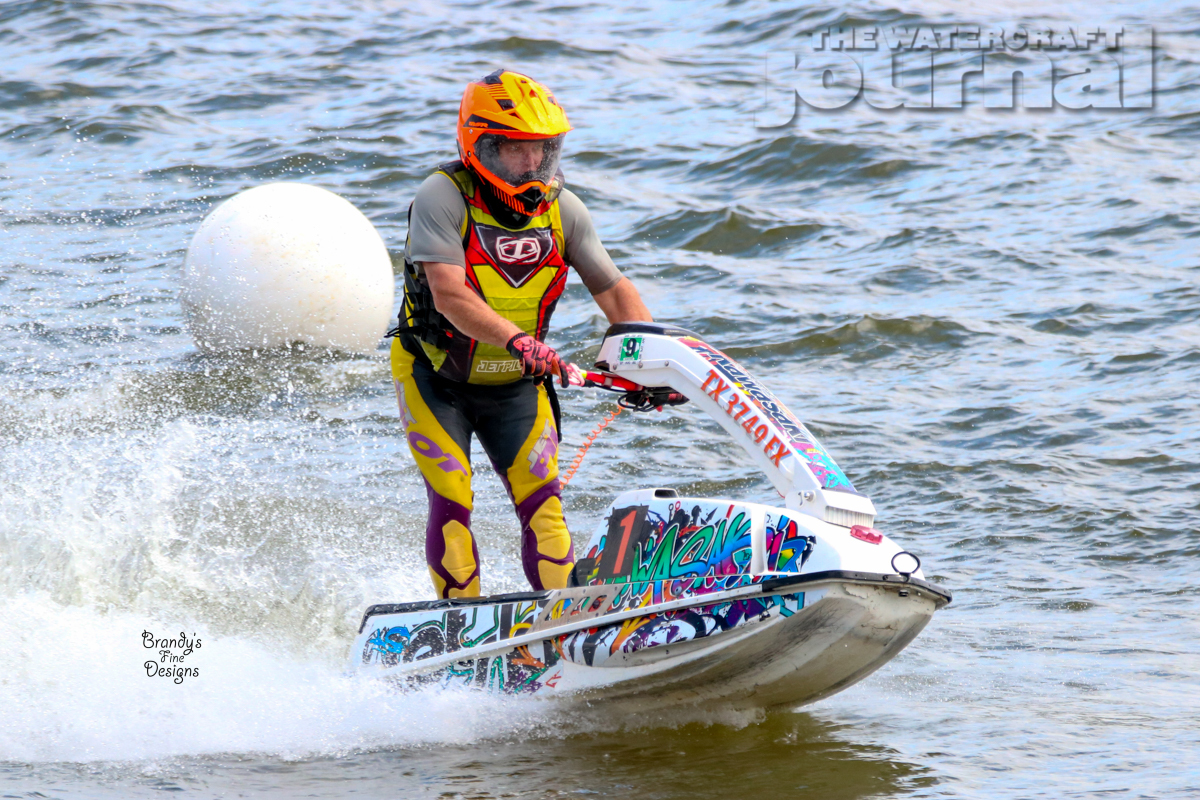
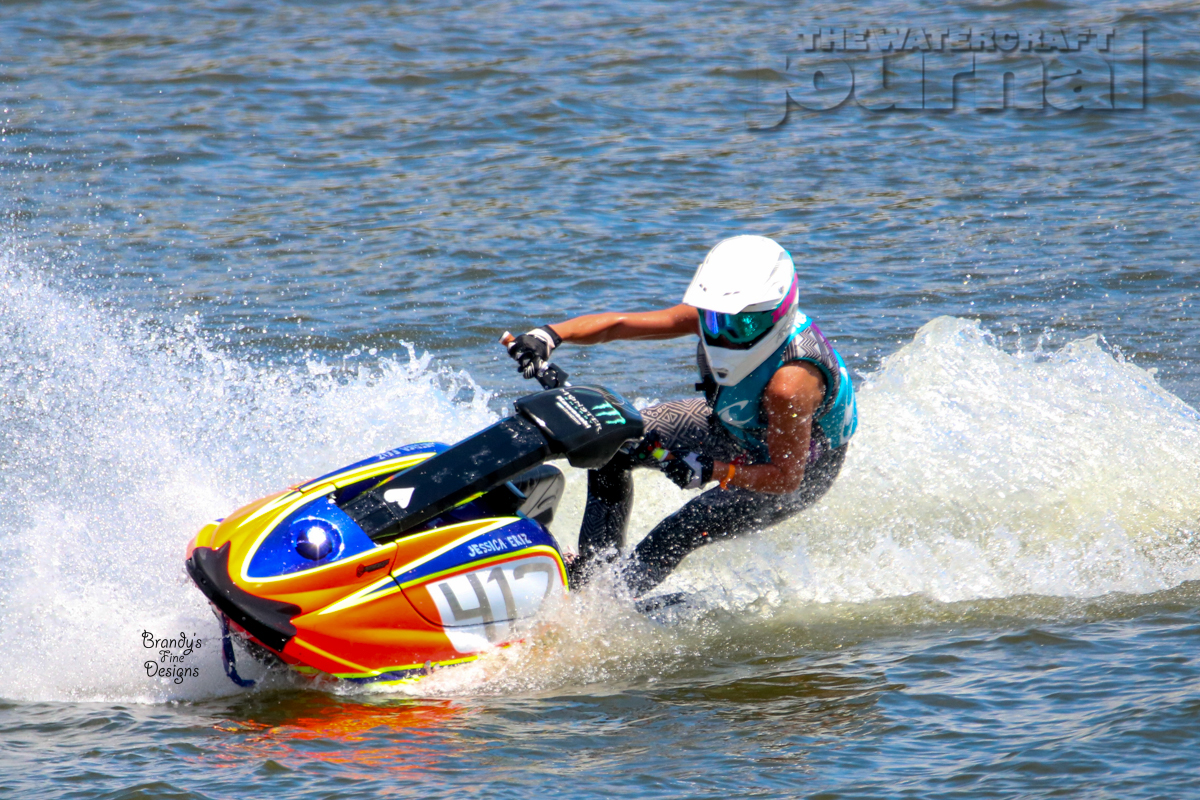
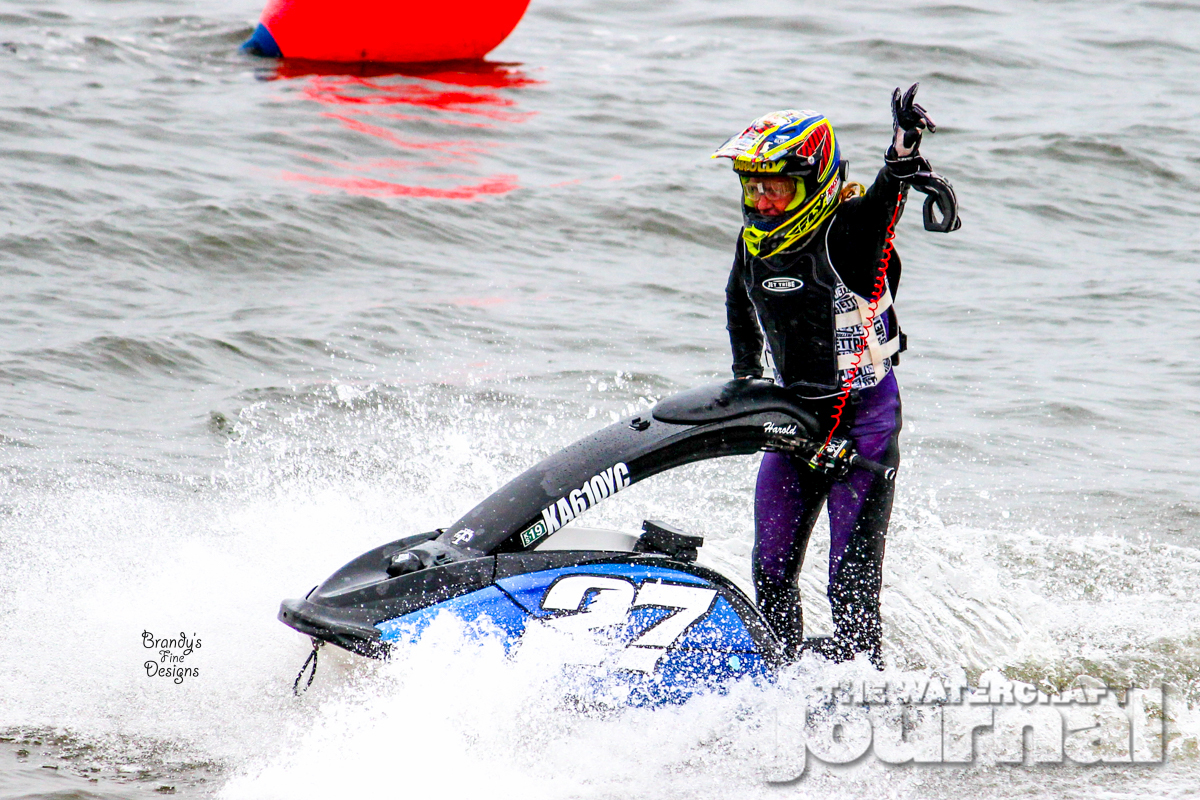
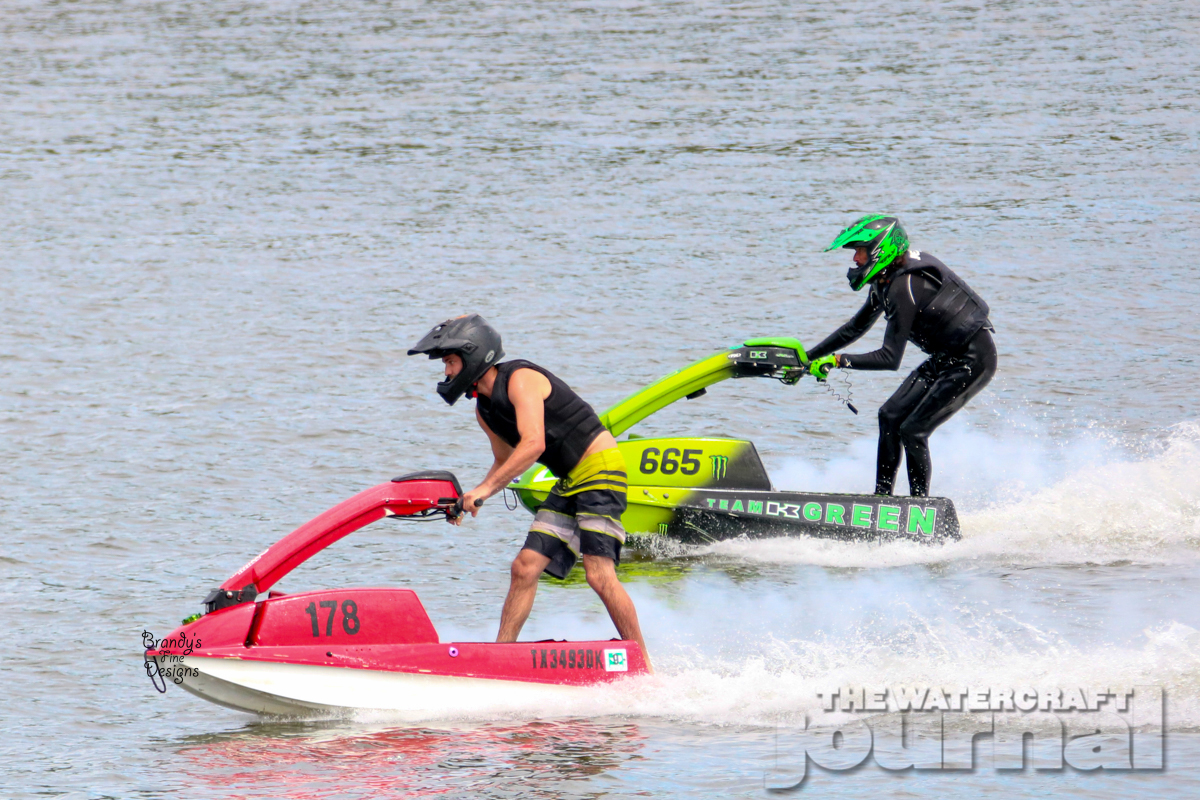
Like peanut butter and jelly, IJSBA’s Region 5 (TXH2O Racing) & Region 9 (NautiWater Racing) came together to create something totally sweet! With summer in full swing, racers and freestylers from all around the country gathered on the sandy, red shores of Keystone Lake in Mannford, Oklahoma on August 12th-13th 2017. This event was the season finale for each IJSBA sanctioned region where racers packed start lines to clench regional titles and take advantage of their last chance to race locally before World Finals in early October. Age groups ranged from pre-teens to racers in their 70s. Ski classes from Vintage X2s, Stand-ups, Runabouts, Modified and Stock to Freestyle.
Grassroots racing has made a resurgence with the availability of modern race-ready technology in both sit down and stand up personal watercraft. Competitors drove in from Colorado, Texas, Idaho and other states to the beautiful venue at Akdar Park, less than 30 miles from Tulsa, Oklahoma. PWC racing is not only about competition, but family friendly fun and giving back to the community. Attendees could donate to the Shriners’ cause as well as purchase award-winning BBQ and concessions on-site. The city of Mannford was welcoming to local and long-distance racers alike looking for a place to stay, eat and shop.
Saturday morning brought cloudy skies and drizzle as racers finished registration, but the dreary weather did not dull anyone’s spirits. On the contrary, the cooler temperatures were a welcome companion over sweltering summer heat. Family, friends and spectators lined the beach huddled under umbrellas and tents to cheer on the competitors giving it their all out on the water. Sunday had the sun chasing away clouds for a spectacular view of Keystone Lake beyond the race course. Course designer Ben Swanson created one of the most well-engineered tracks of the season, some said comparable even to the renowned World Finals course on Lake Havasu. It was impressive with long straights, high speed sweepers and a tight split section that challenged even seasoned competitors.
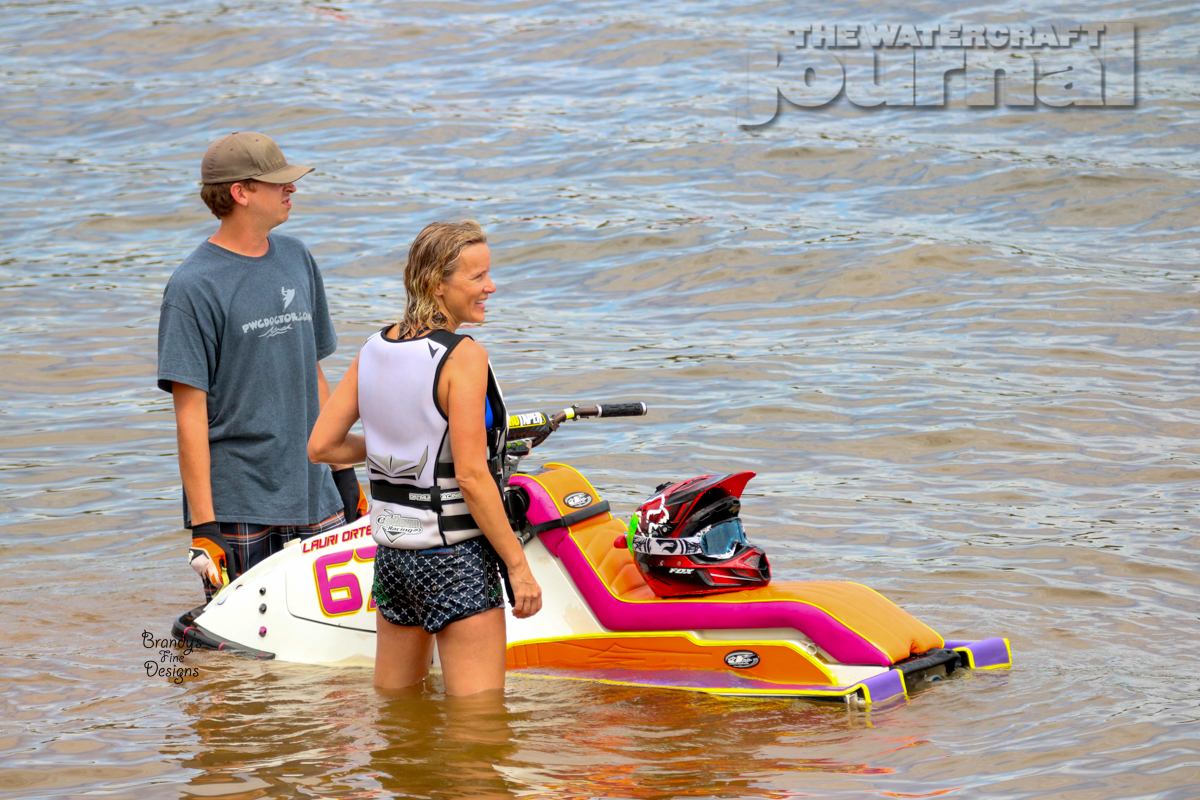
There was fierce competition in all classes, each day kicked off with Amateur Ski Limited with big names in the ski community like regional heroes such as Clayton Lobue and Brian Smith to battle it out on the water. The following races included both stand up and Runabout Stock, Lites, Vintage and Open classes. Gregg Stolfa, age 74, enjoyed the rush of racing on his Yamaha WaveBlaster in the 2-stroke Runabout class. Vintage X2 brought out husband and wife competitors Lauri and Danny Ortega to show the crowd some incredible corner-carving skills. Vintage Ski 550 was another packed start line and TXH2O Racing promoter Tim Hutchison’s class of choice.
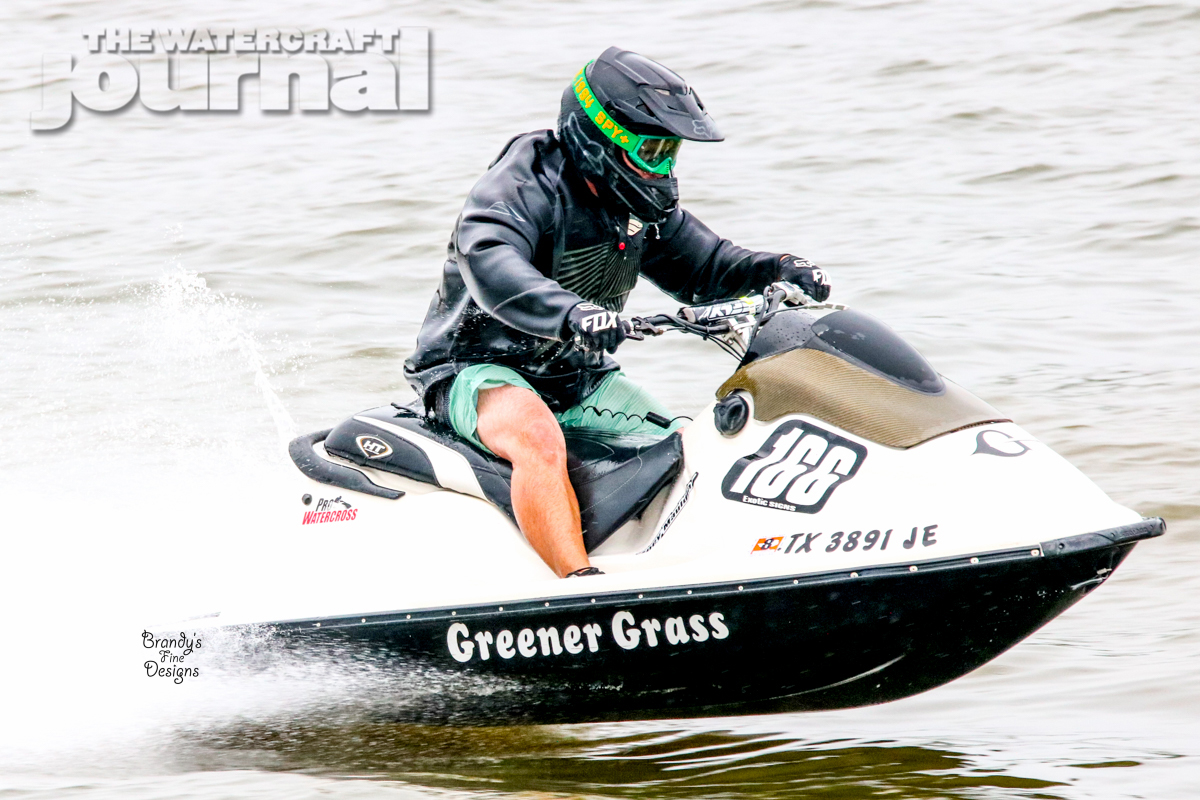
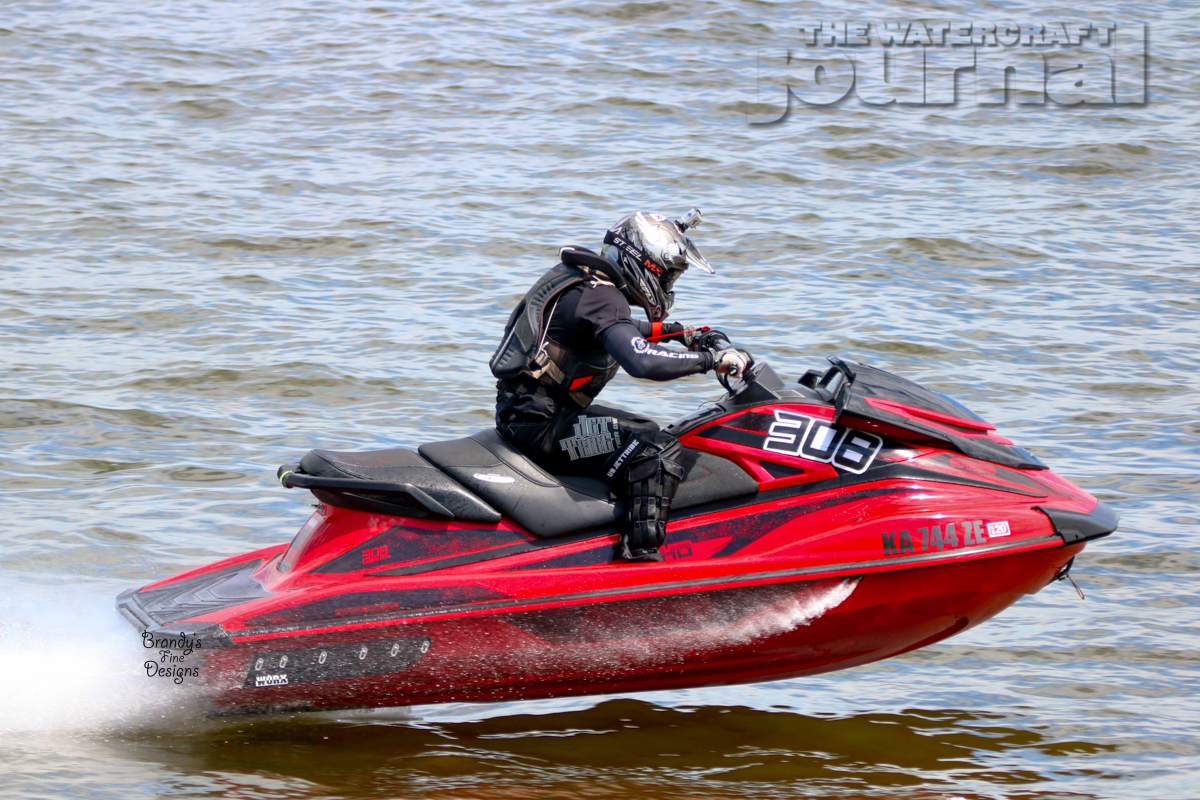
Riders such as Ryan Smith and John Hecox fought to hold on the brutal NA and supercharged runabouts as they maneuvered around the chop at blazing fast speeds. Sport GP and Ski Open were crowd favorites as these machines filled the air with the smell of race gas. The beautifully modified Yamaha WaveBlaster 1s dominated in the sport class and aftermarket manufactured hulls like the ProForce and Bullett battled with Kawasaki’s new SX-R in the Ski Open class. These competitors had to ride the most laps at the fastest speeds, no small feat for body, mind and equipment. Top finishing riders in the Ski Open classes like Tim Warner chose to compete with two stroke powered aftermarket hulls whereas Tim Miller and others finished well on their new Kawasaki SX-Rs.
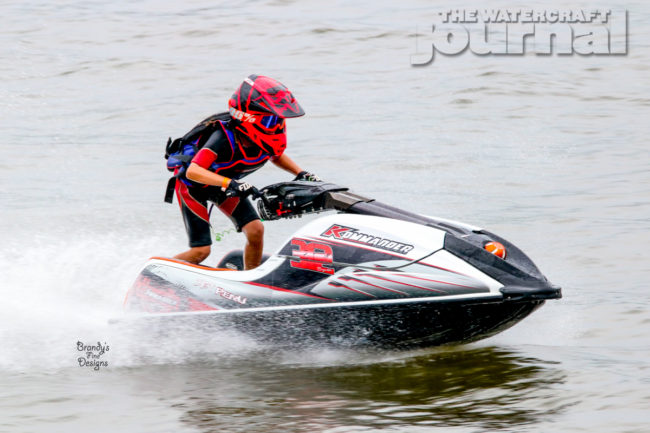
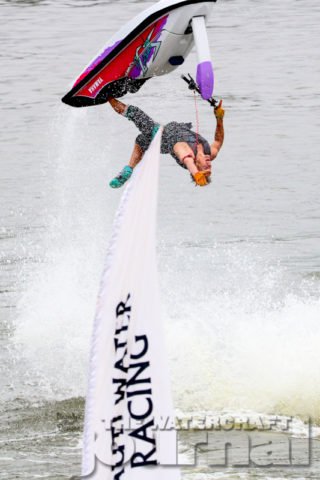
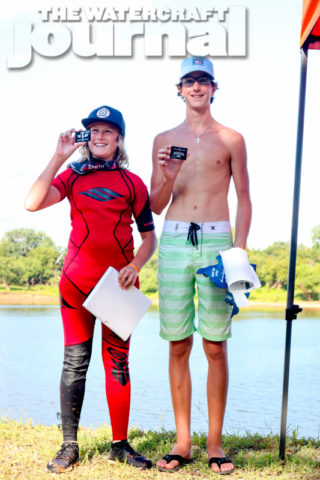
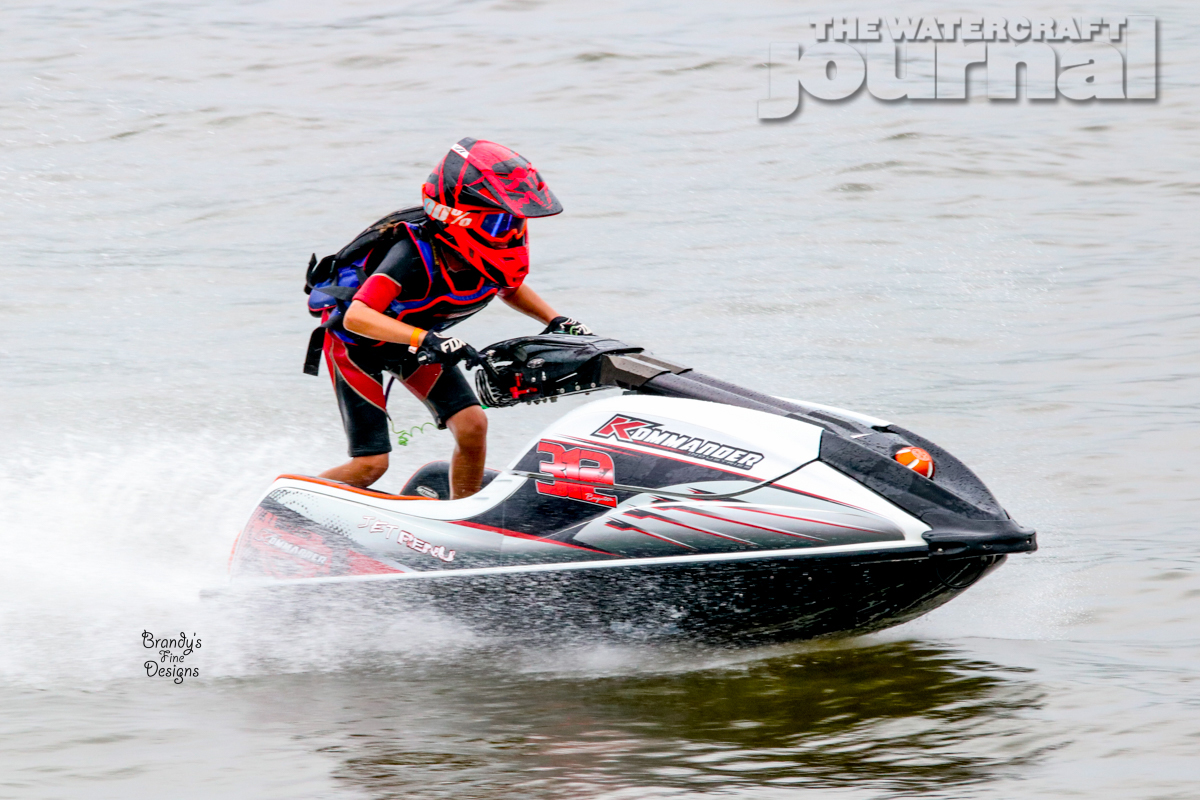
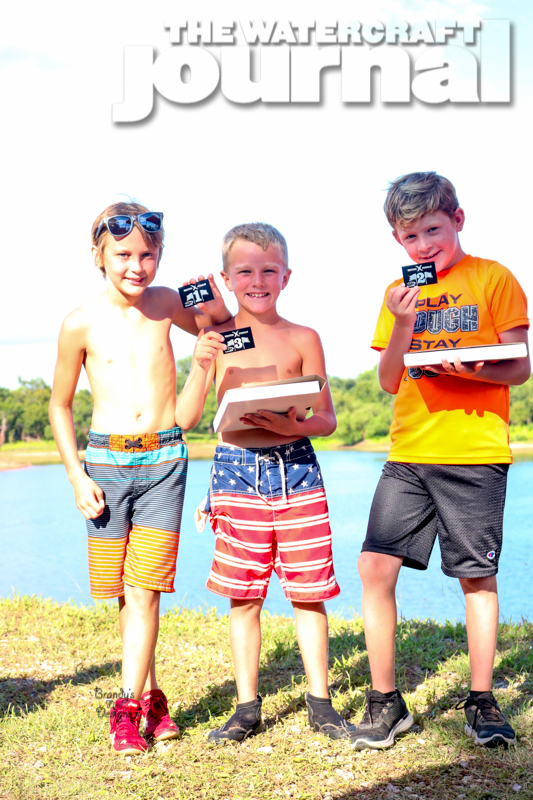
Stock and Lites proved competitive racing did not require expensive modifications. Riders Christopher Cowan on an older model two stroke Kawasaki SX-R and course designer Ben Swanson on a Yamaha Superjet placed in the top of their classes. Like a game of chess, Stock and Lites highlighted racer skill and good line choice through the buoys. Those facts proved winning was more about the rider than the equipment. The midday show brought us freestyle competitor Taylor Kress on his square nose SuperJet livery DVX as he flipped high into the air for the cheering crowd. In the Junior Ski classes, we witnessed the first generation of racers born from racers. Brynton Handshy in 10-12 Ski Lites and Haigen Smith in 13-15 Ski Lites finished at the top to make both their parents and the ski community proud. They were excited to receive awards ranging from plaques to custom graphics kits for their efforts in this 2017 season. Junior racers are the future of our sport, and if all events turn out as great as this one – watercraft competition has a bright one.
Camaraderie of father and son, of husband and wife, riding bumper to bumper together to share a love of watercraft was one of the most special parts of TXH2O and NautiWater racing’s partnership for this event. After the competition, each region held an awards ceremony on a cliff overlooking the lake with friends and family gathered. The evening sun setting on the campground as awards and congratulations were given was a fitting end to an epic weekend of watercraft racing.
Massive thanks go out to the Shriners and city of Mannford for a beautiful race site and community support over the weekend. Much appreciation for all the hard work and time TXH2O Racing event promoters Tim and Marisa Hutchison and Heath and Hunter Hoekstra in addition to NautiWater Racing promoter Terry Hiebert put in to create such amazing regional events. Also cannot forget photographer Brandy Fraley for toughing out the heat and rain to capture incredible images of the competition for both regions as well as all the volunteers who helped set up and tear down each event. You can visit TXH2O Racing’s website and NautiWater’s website for final results of the event and season.
All images courtesy of Brandy’s Fine Designs; unedited original versions of these images can be purchased HERE.
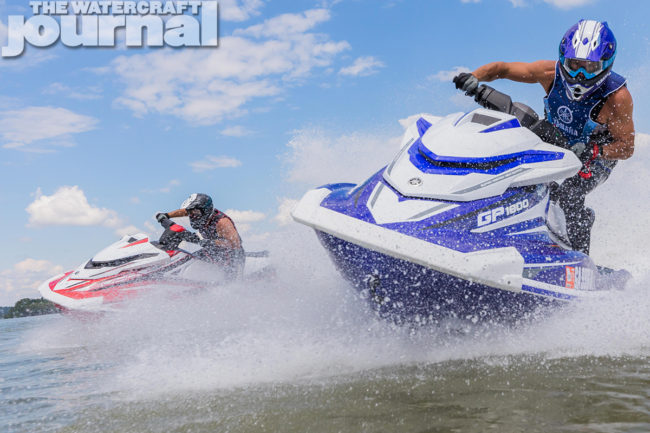
It’s incredible to believe, but not since the tipping point of 2008 has the boating and marine industry been so vibrant. During a private meeting with the Yamaha Motor Corp. USA marine division’s top brass, The Watercraft Journal was presented with some of the most exciting and encouraging data that we’ve had the pleasure of reporting since our launch in 2013; during the past 12 months, 88 million Americans took to the water, equating to a growth explosion 3-to-4 times greater than previous projections. Of that growth in the boating market, the personal watercraft industry leapt up an incredible 11-percent in new unit sales.
Marking that growth were gains from all three OE manufacturers: Sea-Doo picked up 6-percent in sales, Kawasaki nabbed an impressive 11-percent (thanks in no small measure to the introduction of its 4-stroke SX-R), and Yamaha, who rocketed ahead with a staggering 18-percent gain (making Yamaha the fastest growing brand). Of that impressive growth, an impressive 49-percent of new vehicle sales went to first-time buyers (Kawasaki also reported a strong 38-percent in first-time buyer sales). That is a percentage unmatched by any powersport market, be it motorcycles, snowmobiles or otherwise.
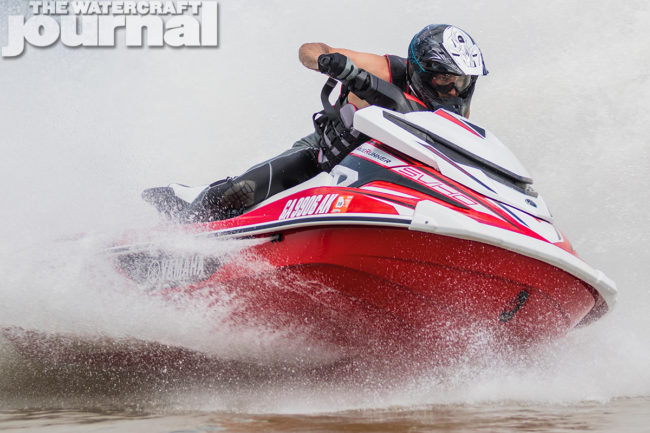
Moreover, Yamaha’s EX Series lead the percentage of first-time buyers for the brand, while the GP1800 was praised for being the first performance runabout in the Top 10 sellers in years (fetching a respectable 6th place). In fact, six Yamahas filled the Top 10 best sellers for 2017, with the EX Sport grabbing 3rd place in the Top 3, behind Sea-Doo’s Trixx and 3up Sparks. (Of the 130,000 estimated used PWC sales sold – across all brands – 54-percent of new EX buyers had considered buying used until purchasing a new Yamaha.) And speaking of the GP1800, the runabout out-sold the Sea-Doo RXP-X 300 two-to-one in 2017, and was one of the fastest-selling PWC on the market.
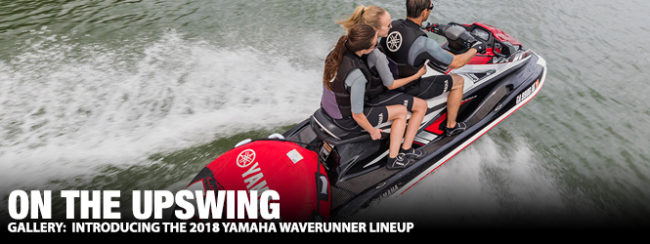
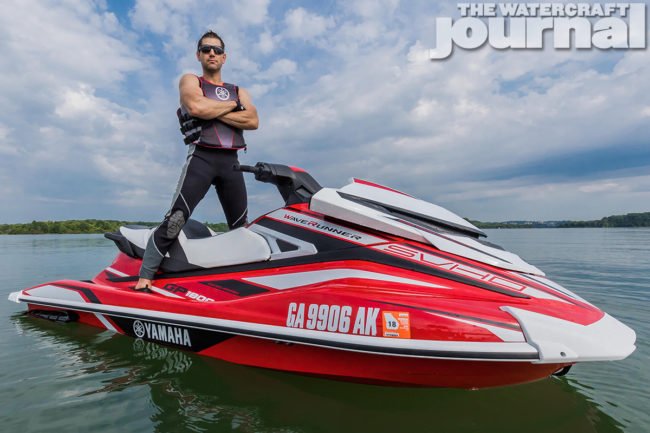
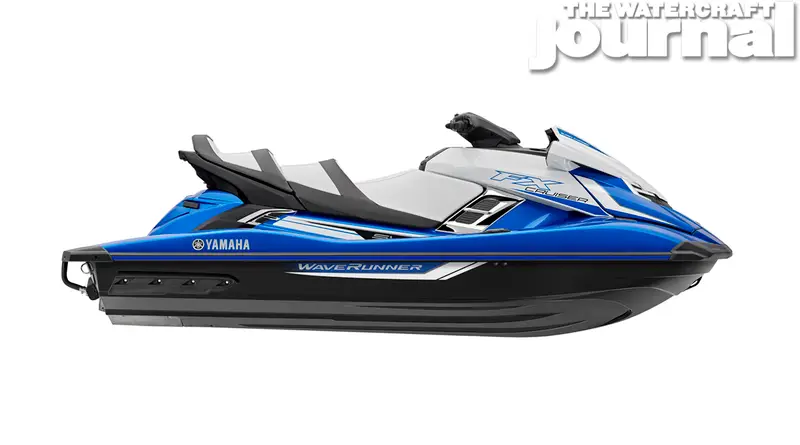
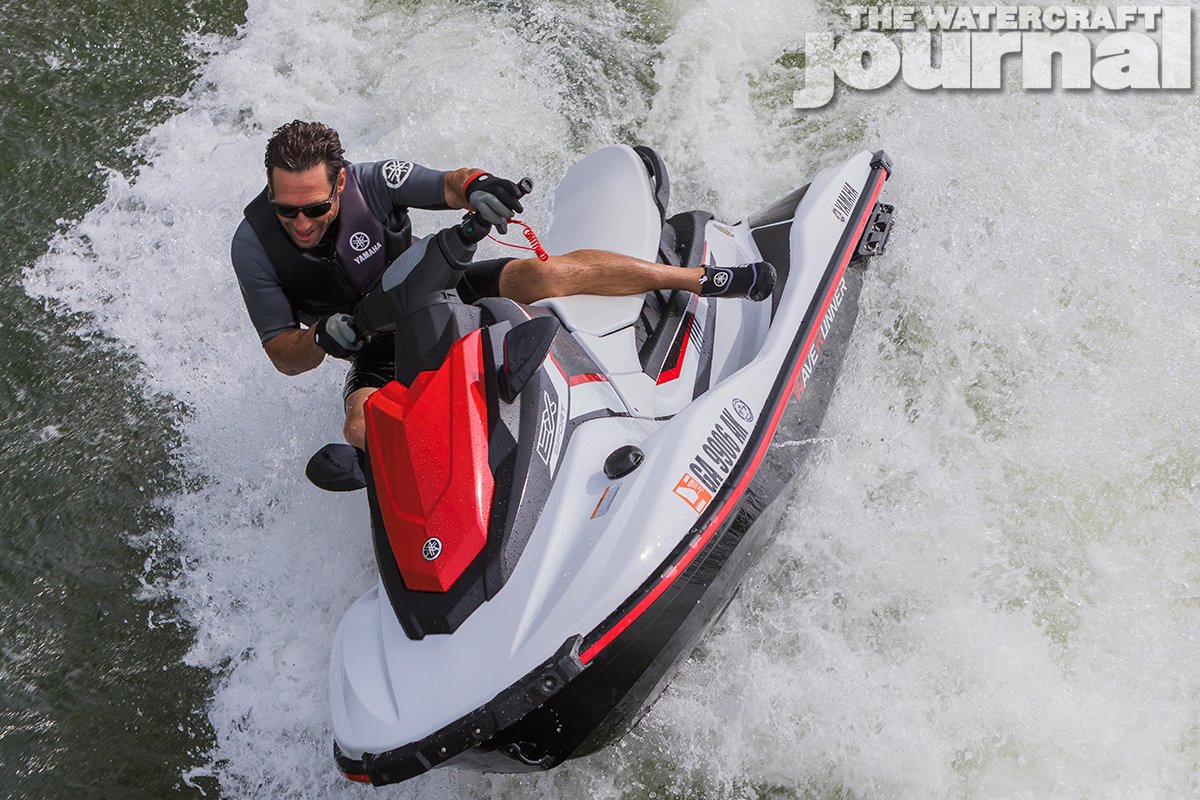
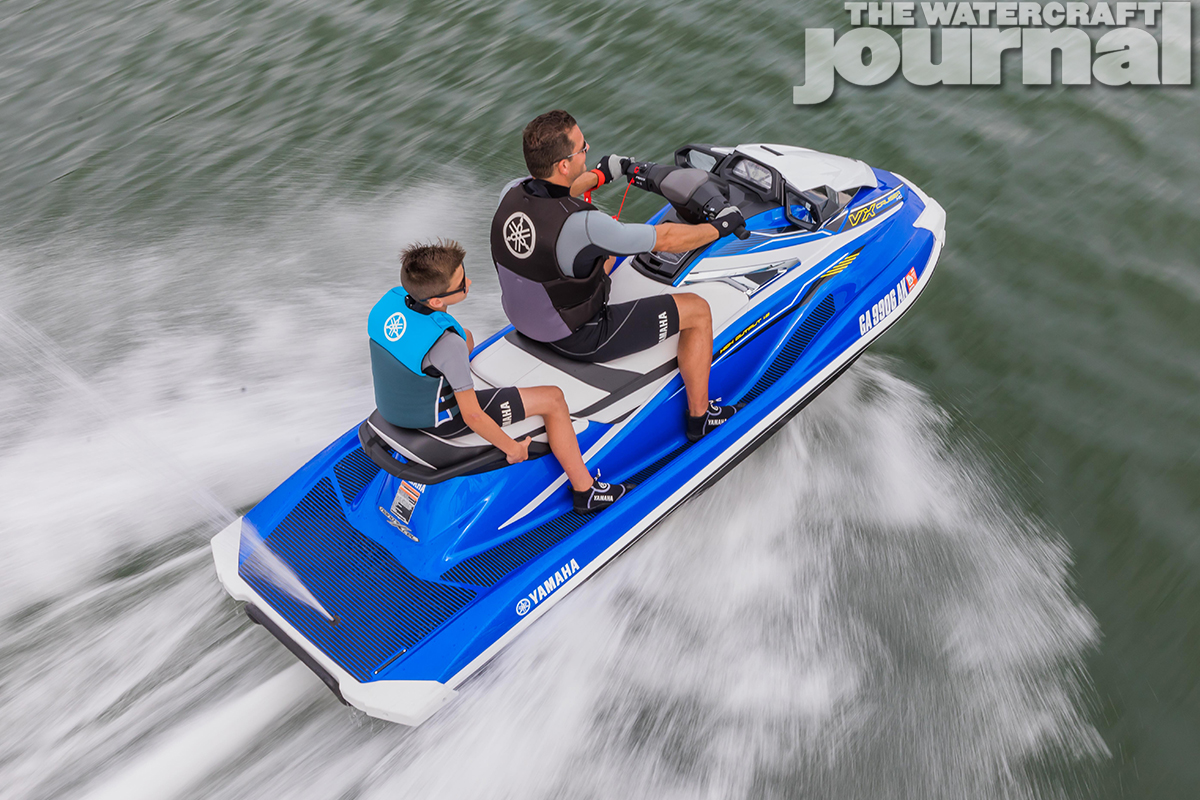
At the close of 2017, Yamaha WaveRunners is looking pretty dang strong: among shoppers and current customers, Yamaha ranks highest for reliability and continues as the Number 1 choice for rental organizations for the past 20 years. For 2018, Yamaha is marking 50 years of marine engine technology as well as the 50th anniversary of YamaLube. In regards to the 2018 lineup of WaveRunners, Yamaha is offering 25 models (15 if you exclude color options), all of which feature new coloring, graphics and moldings from last year. And if Yamaha needed 2018 to be any more exciting, it’s projected to produce its one millionth WaveRunner in April, which is sure to be a highly desired production number among the diehards.
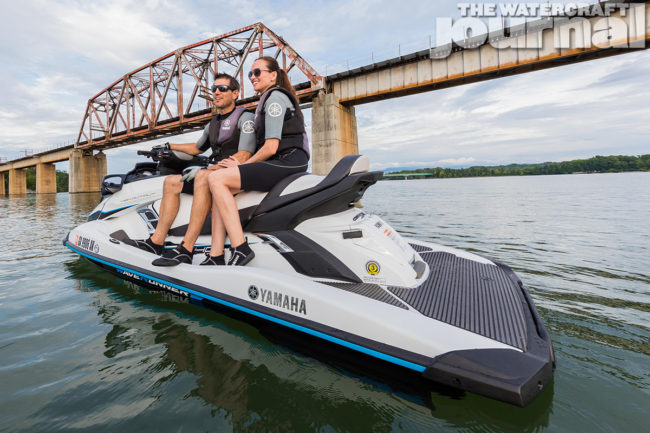
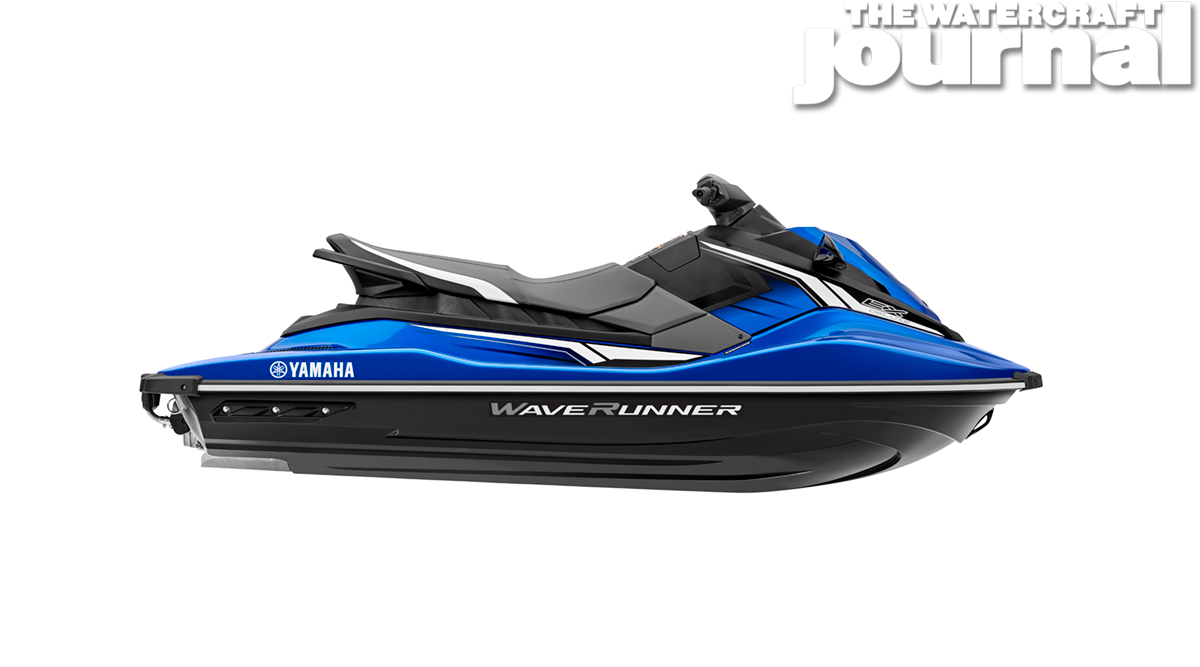
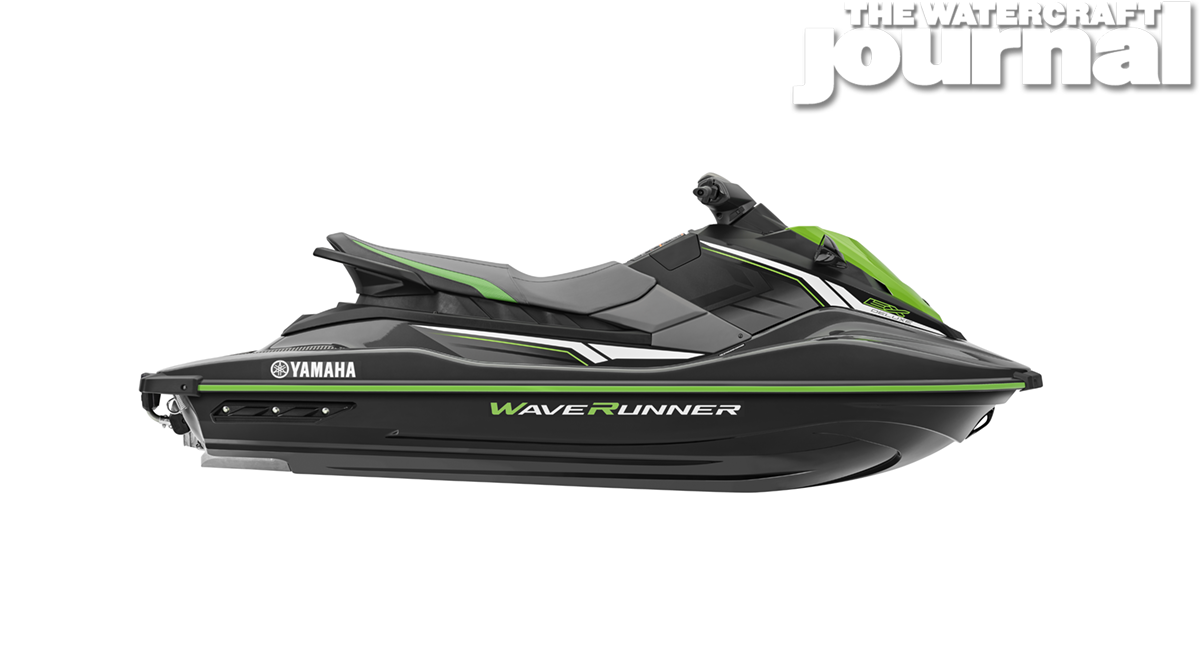
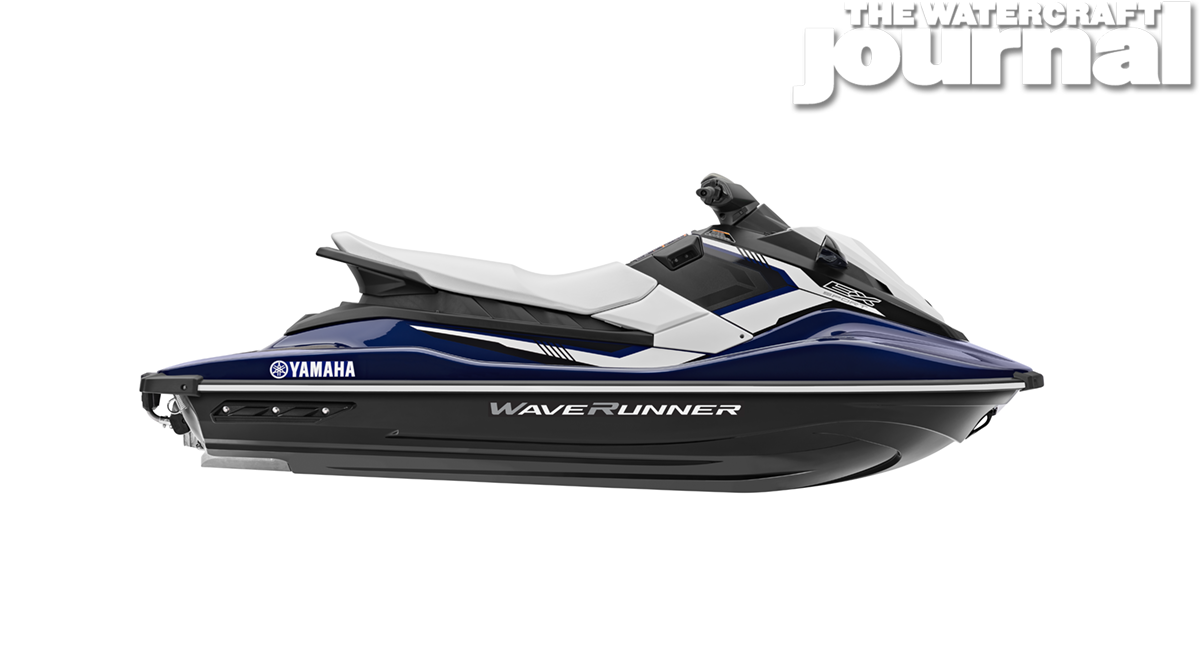
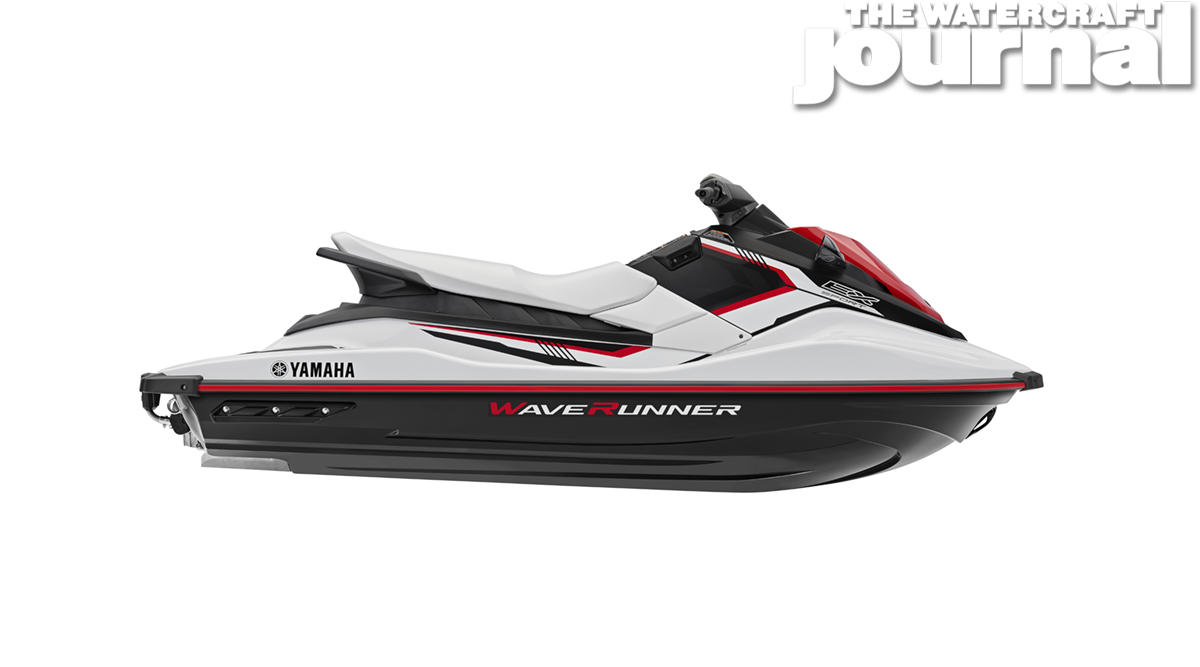
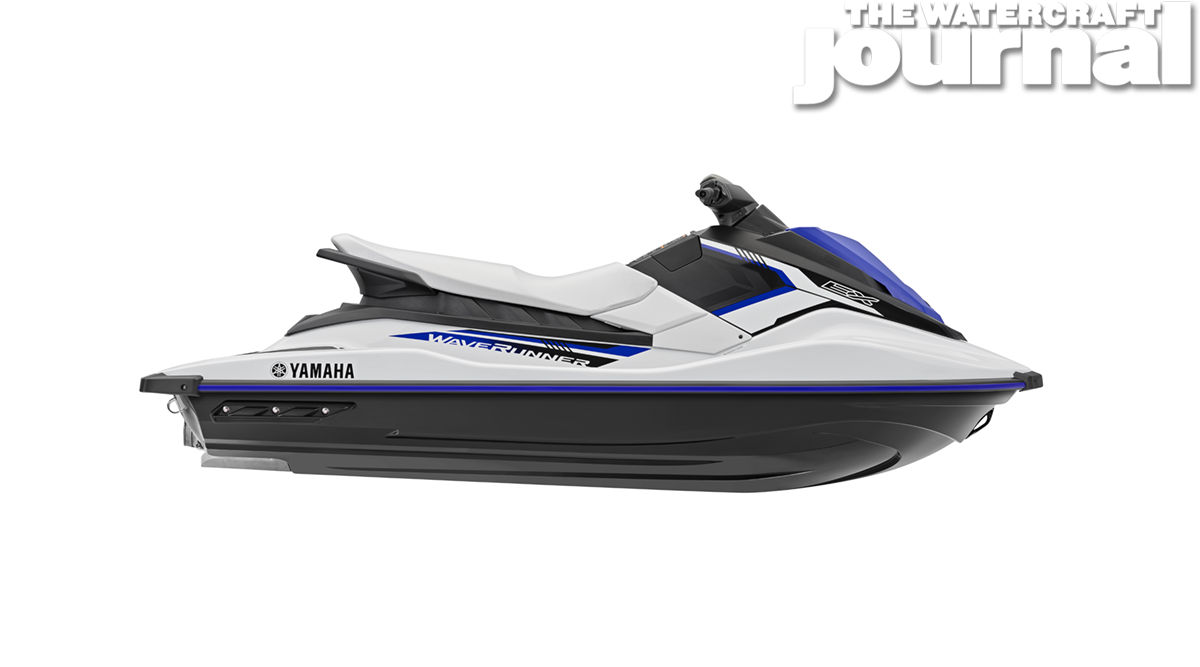
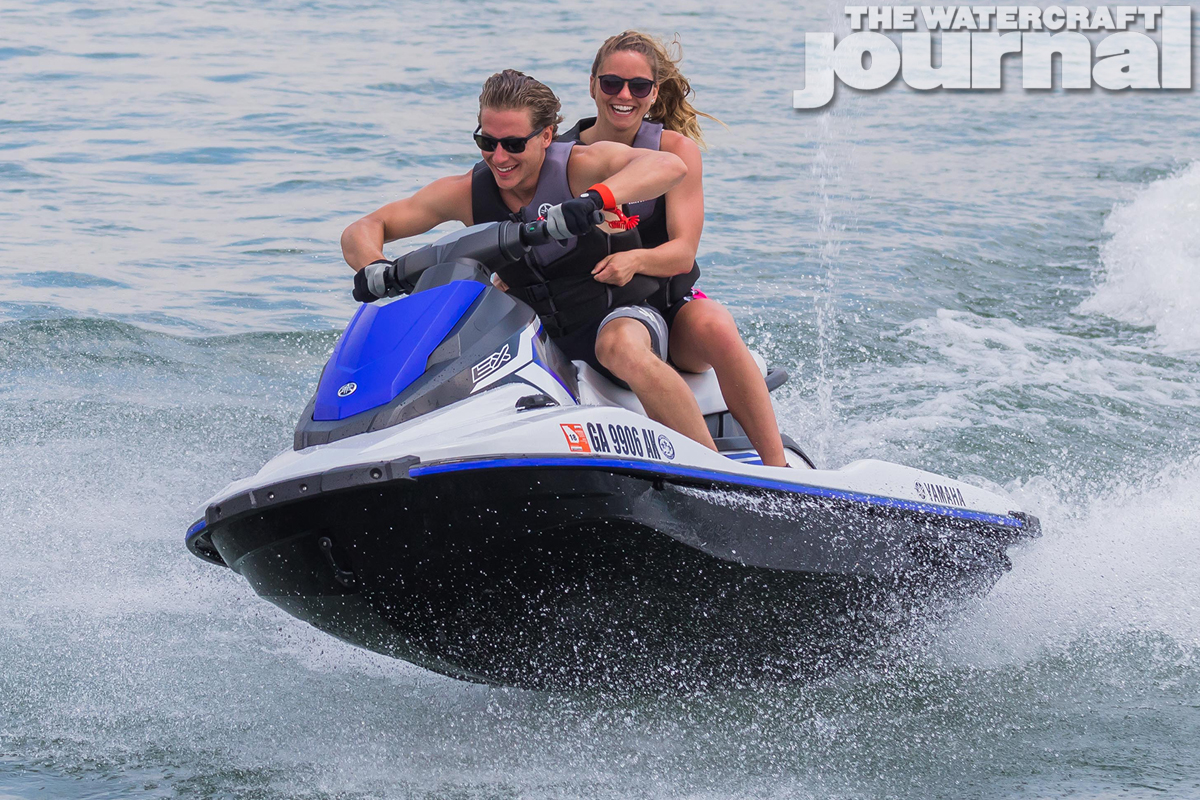
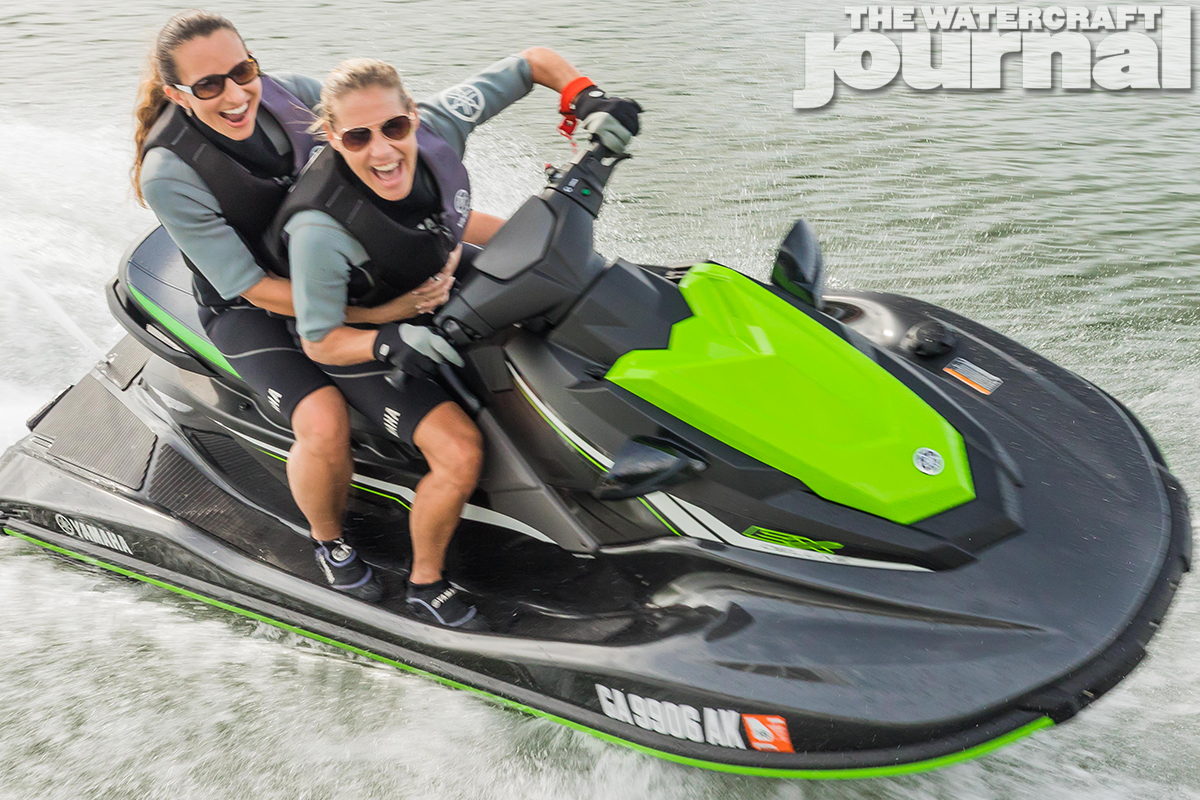
As noted, Yamaha’s Rec Lite segment entry – the EX Series – experienced a heck of a freshman year, slipping in behind Sea-Doo’s two most popular Spark models. For 2018, the EX lineup remains the same; the base model EX ($6,699) is available in Pure White-and-Deep Blue, and is powered by the 102-horsepower 1049cc TR-1 EX 3-cylidner engine. The EX Sport ($7,699) ups the ante with side mirrors, a spring-loaded reboarding step and a mechanically-operated reverse. It also comes in a choice of Yacht Blue Metallic or Pure White-and-Torch Red Metallic. Finally, the EX Deluxe ($8,699) features a choice of metallic paint hues (Carbon Metallic-and-Electric Green, or Metallic Azure Blue), a two-tone “cut and sew” seat, more aggressive graphics and of course, Yamaha’s RiDE dual-throttle brake-and-reverse system.
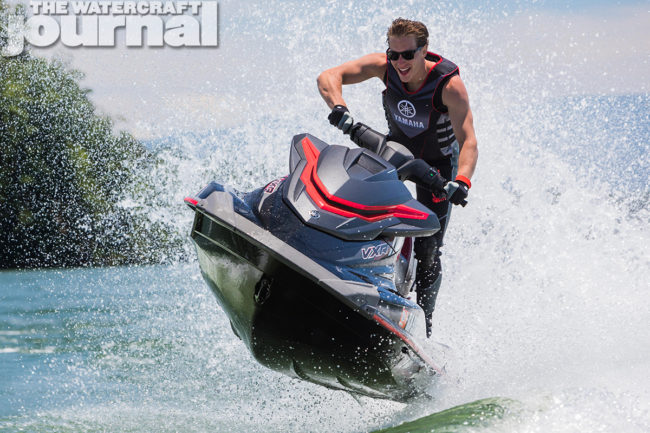
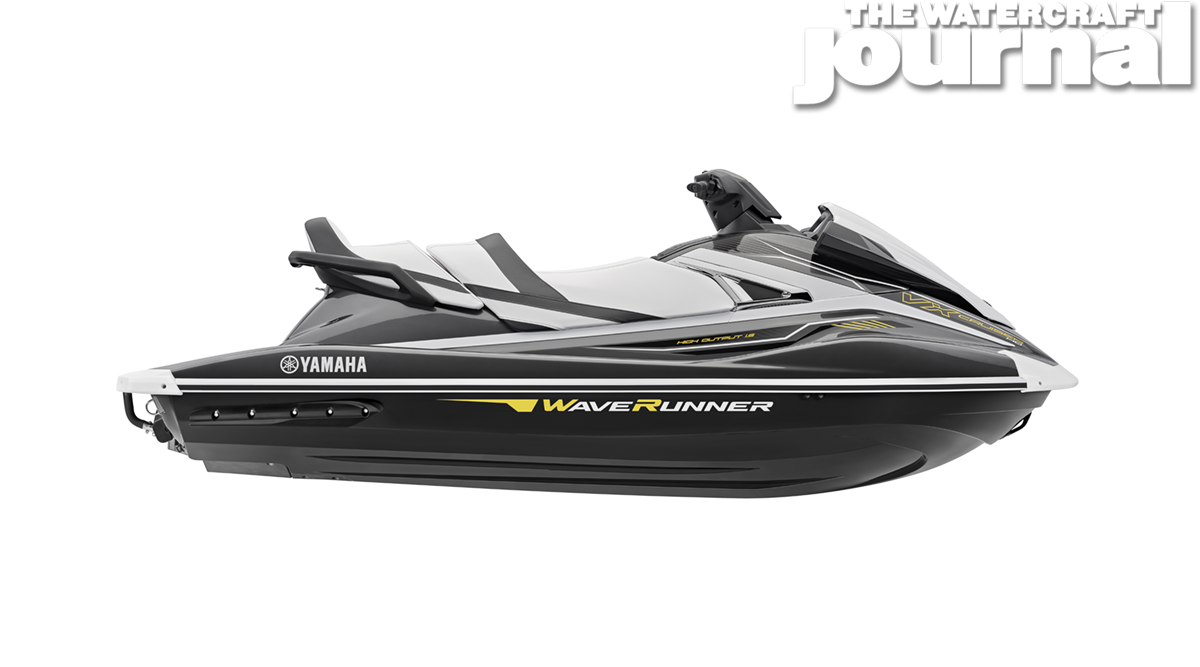
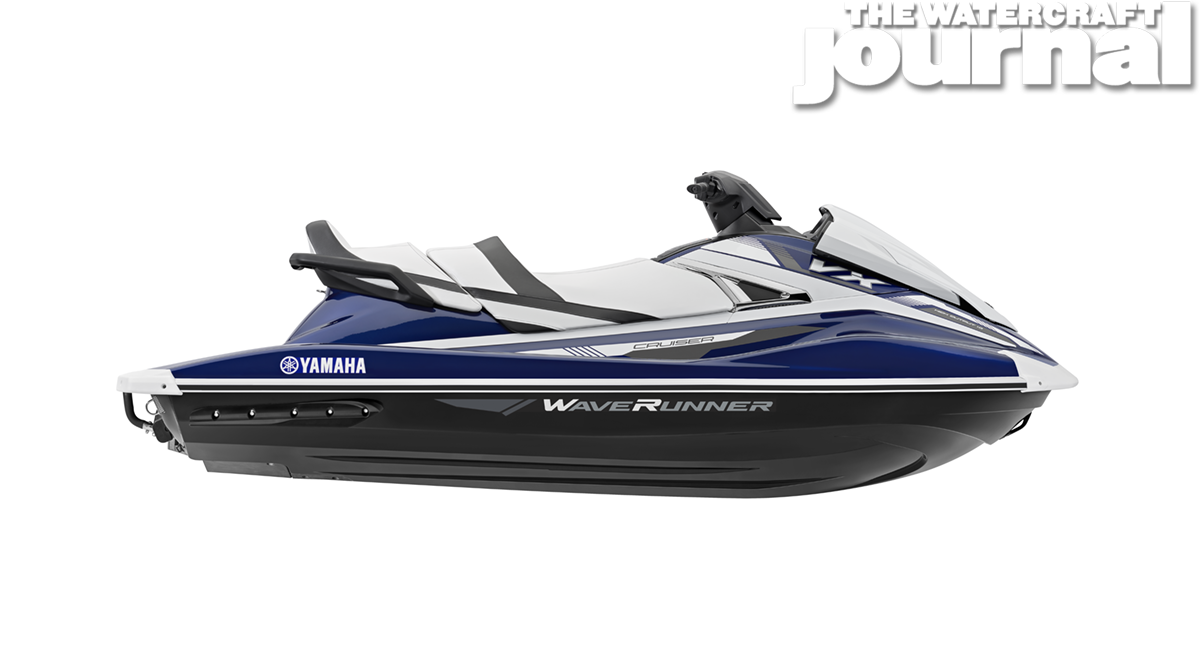
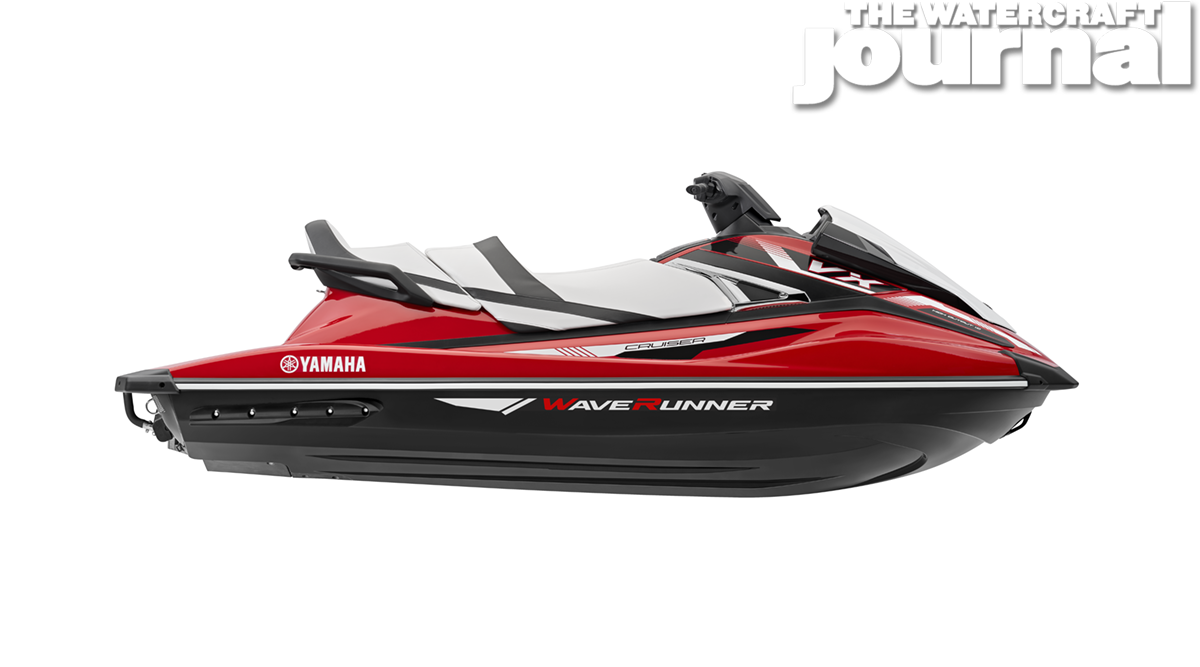
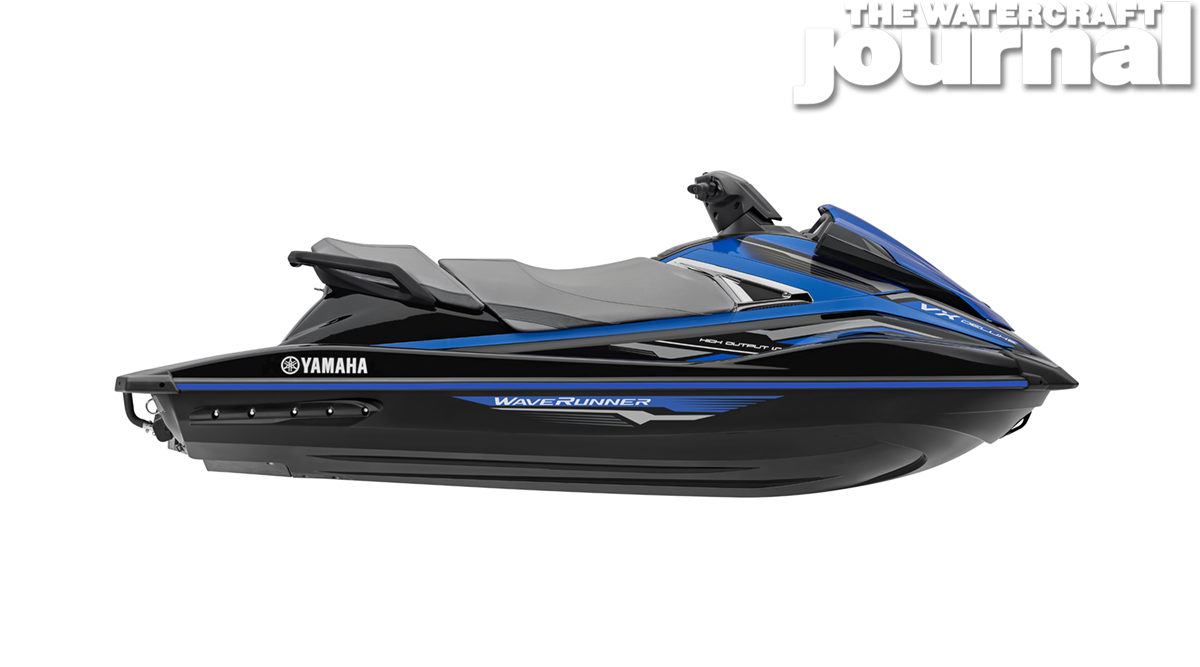
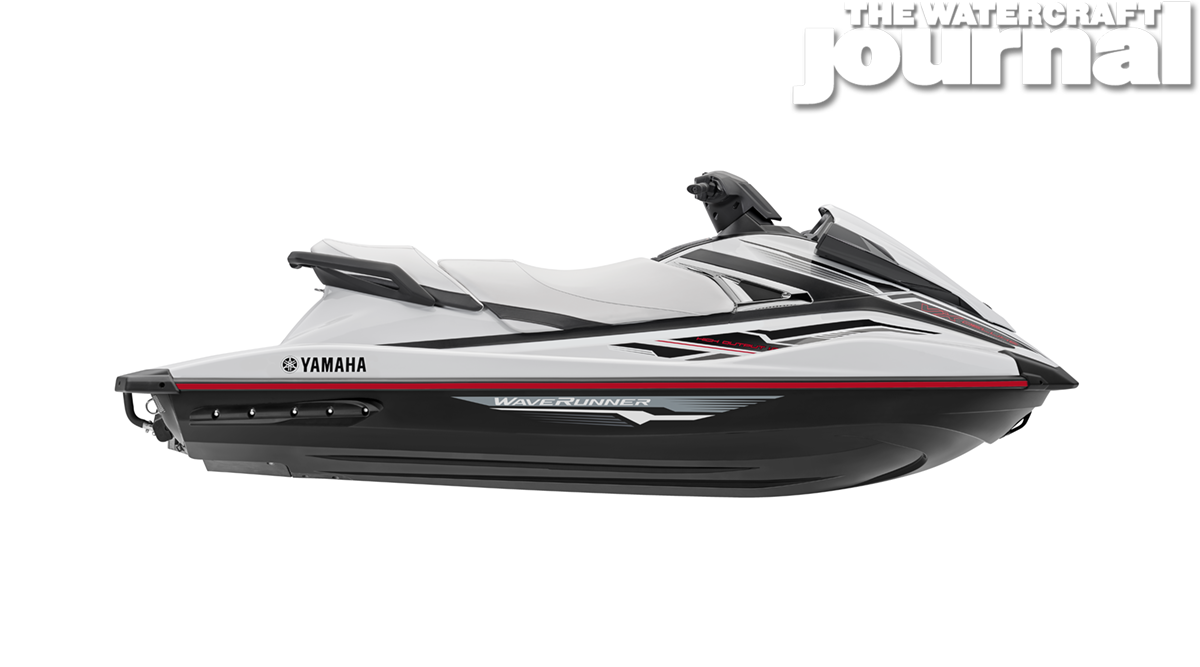
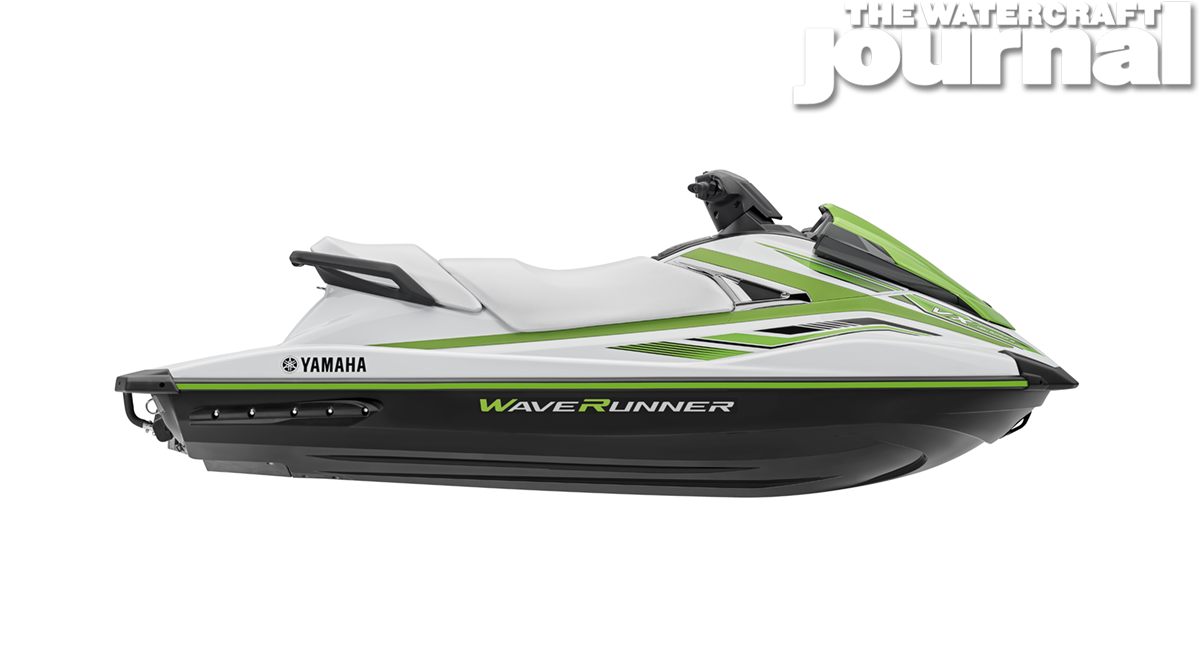
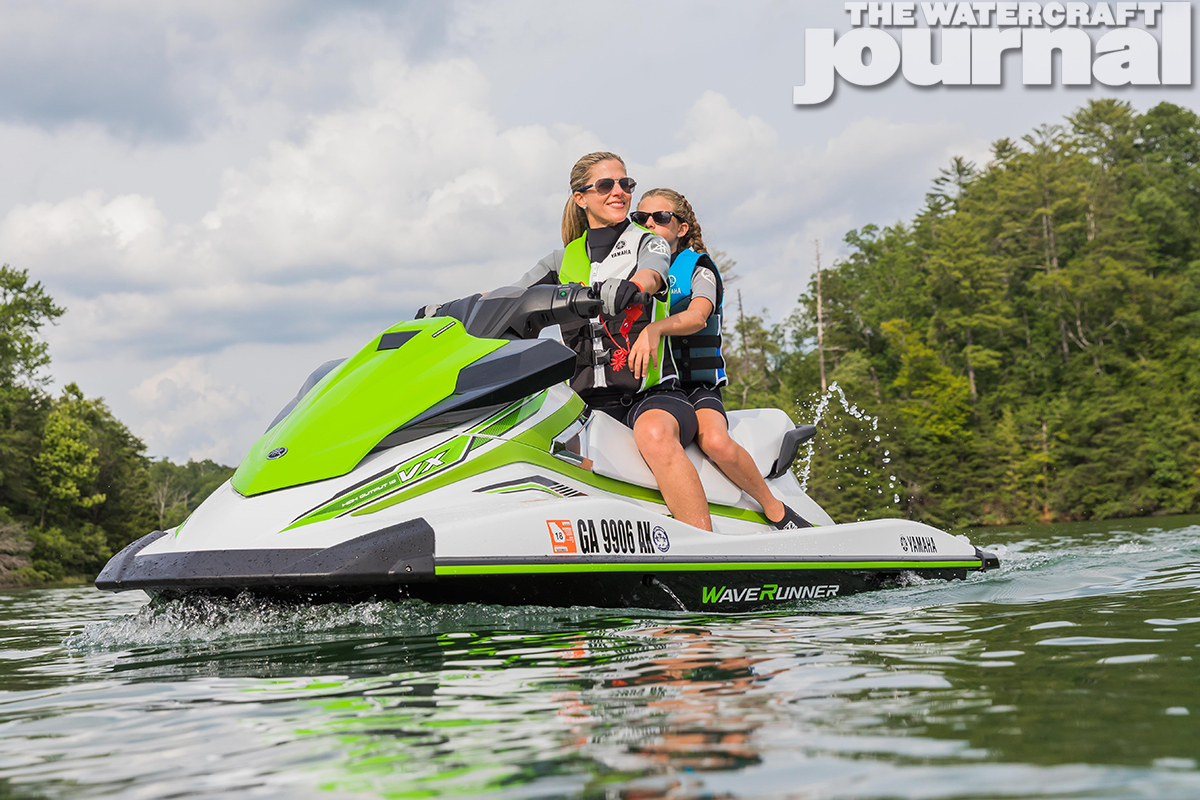
Yamaha’s best-selling segment – the VX Series – continues to offer the Recreation group the widest variety of trim, comfort and performance options. Constituting the second-largest percentage of buyers (29-percent), the VX Series offers a little bit of everything. The entry-level VX ($9,599) is powered by the unrestricted 1049cc TR-1 producing an official 118-horsepower. Equipped with a 18.5-gallon tank, the VX can provide hours of fun without requiring extra fuel. The next level up, the VX Deluxe ($10.399) remains the best-selling PWC model in history, and like the base VX and all other Yamahas, comes standard with RiDE. The VX Cruiser ($10,699) is equally equipped but with the tiered Cruiser bench seat. The VX comes in Pure White-and-Electric Green; the VX Deluxe comes in either Pure White or Black Metallic/Azure Blue; as the VX Cruiser is offered in either Torch Red Metallic or Azure Blue Metallic.
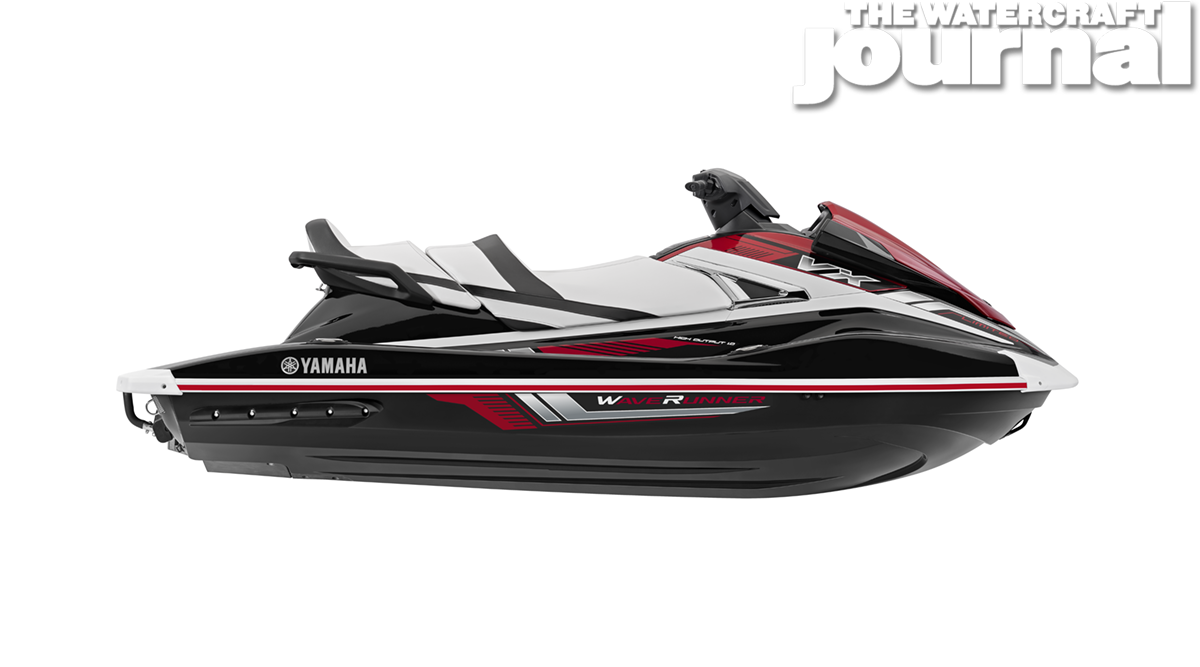
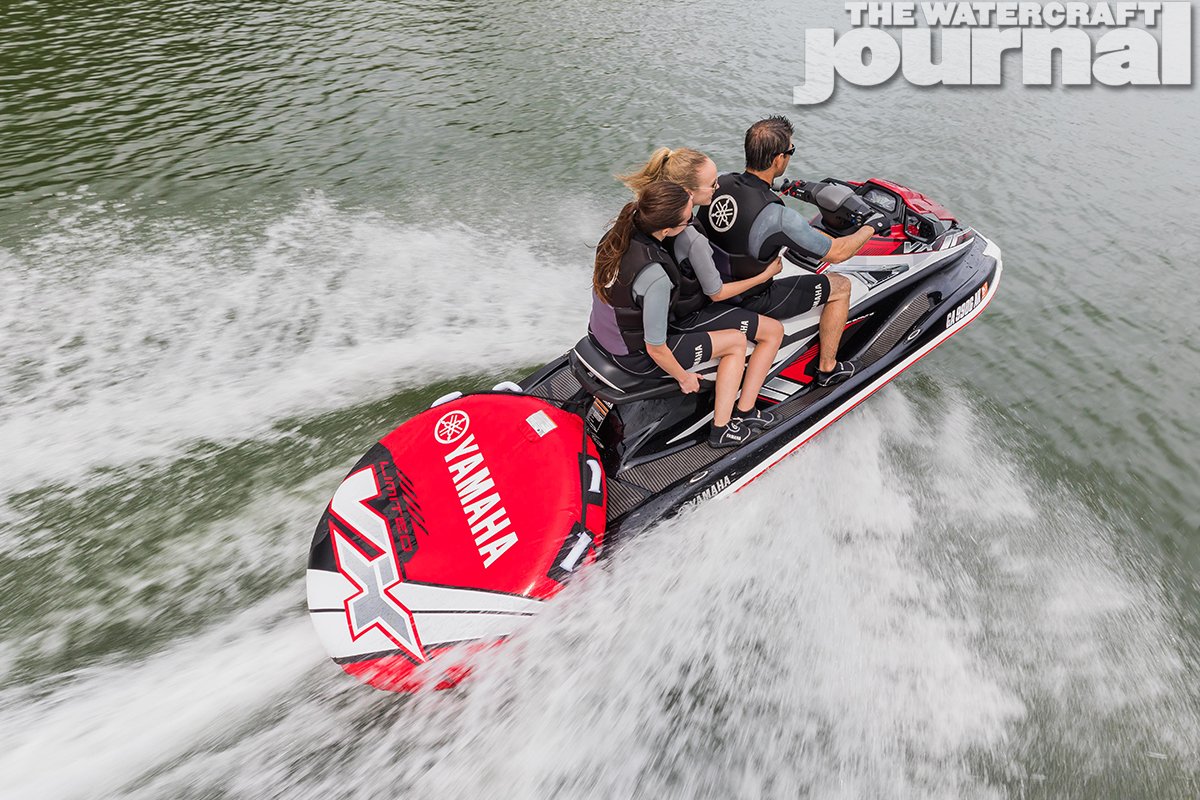
The VX Limited ($11,099) is the most-heavily equipped TR-1 3-cylinder powered VX model including the now famously popular Limited Watersports package, which includes a one-person raft, electric inflator, custom graphics and badging, a unique PWC cover and solar panel battery tender, a 12-volt socket in the glovebox, and a color-matched tow rope – specifically Black Metallic/Crimson Red Metallic. And finally, the VX Cruiser HO ($11,299) comes with Yamaha’s Cruise Assist and No Wake mode settings as well as the manufacturer’s super-successful naturally-aspirated 1.8L 4-cylinder producing 180-horsepower. Its Azure Blue Metallic-and-white or Black Metallic livery is also new.
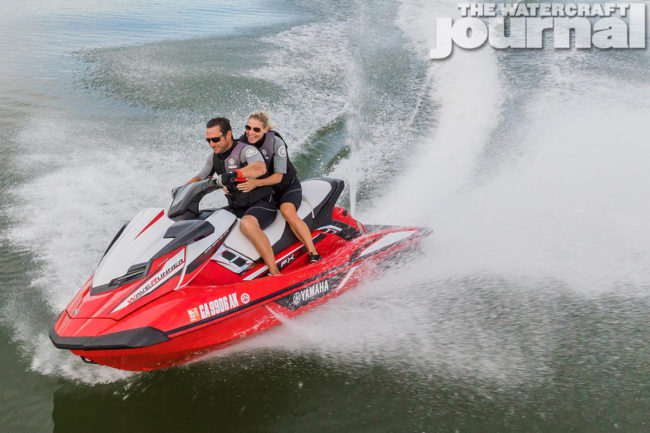
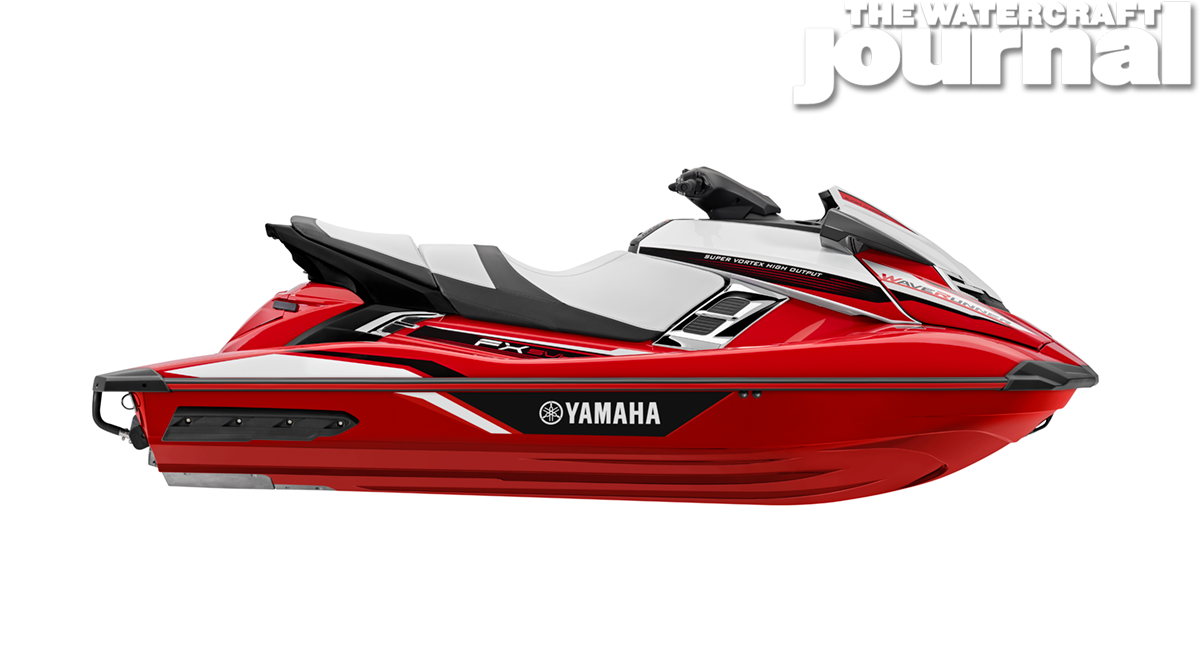
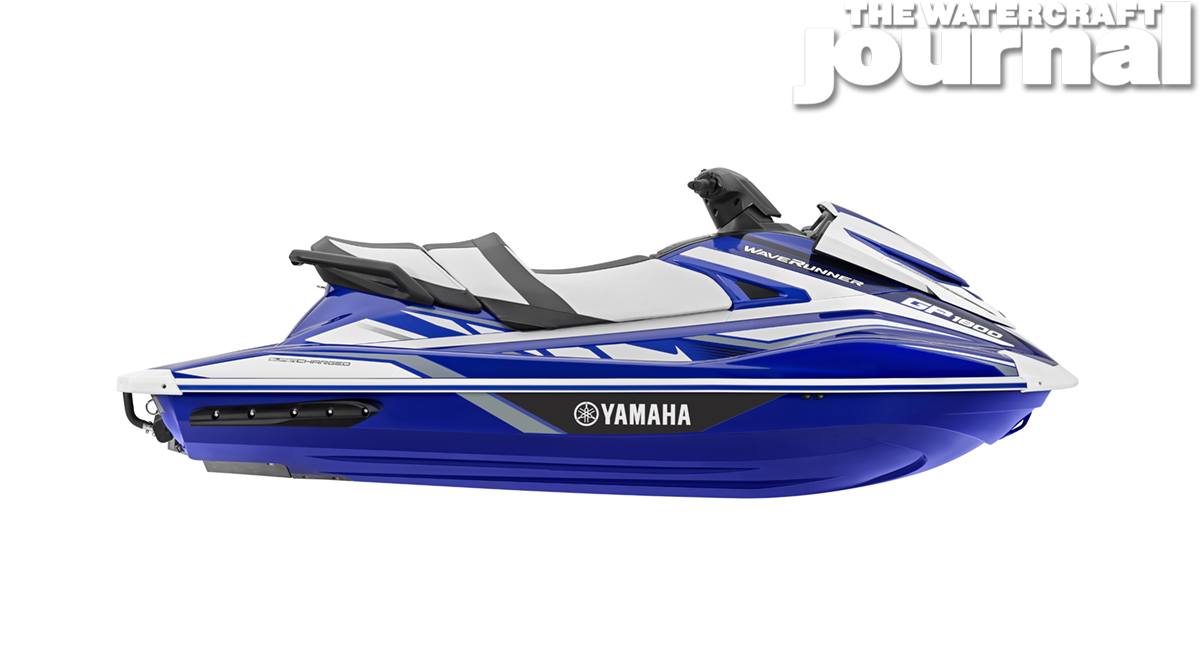
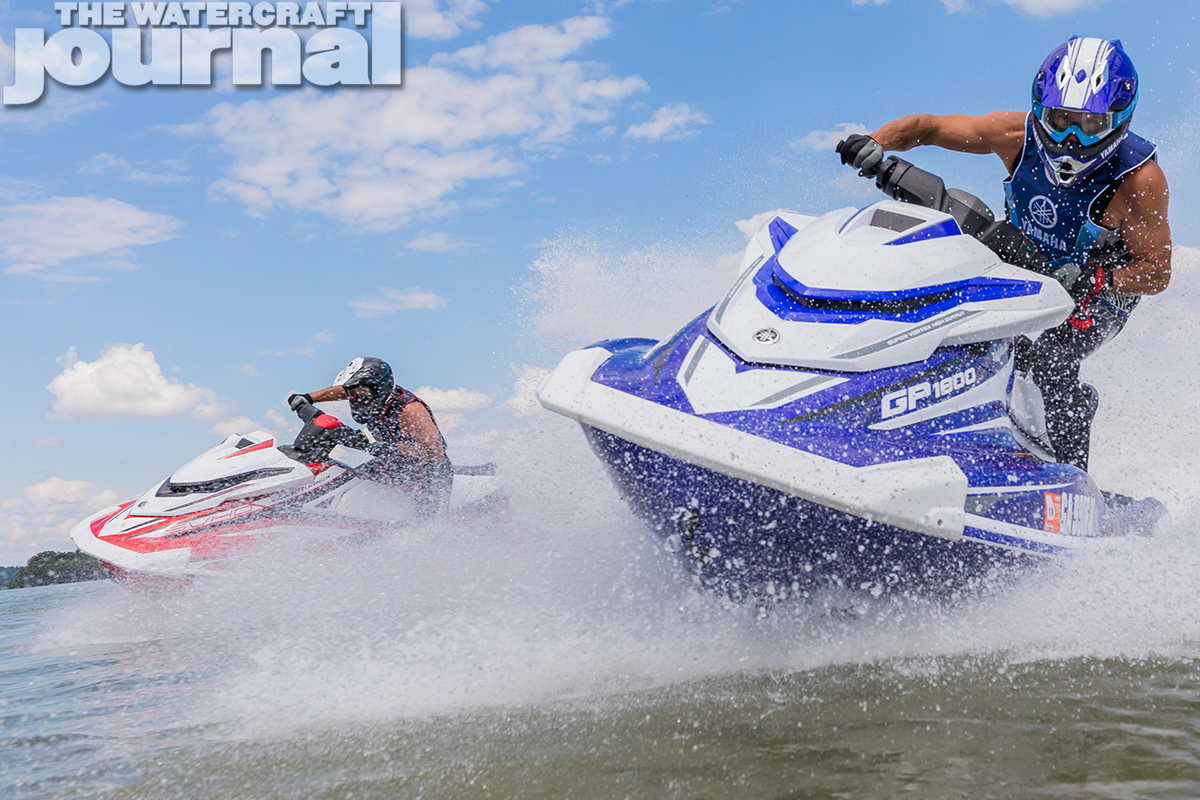
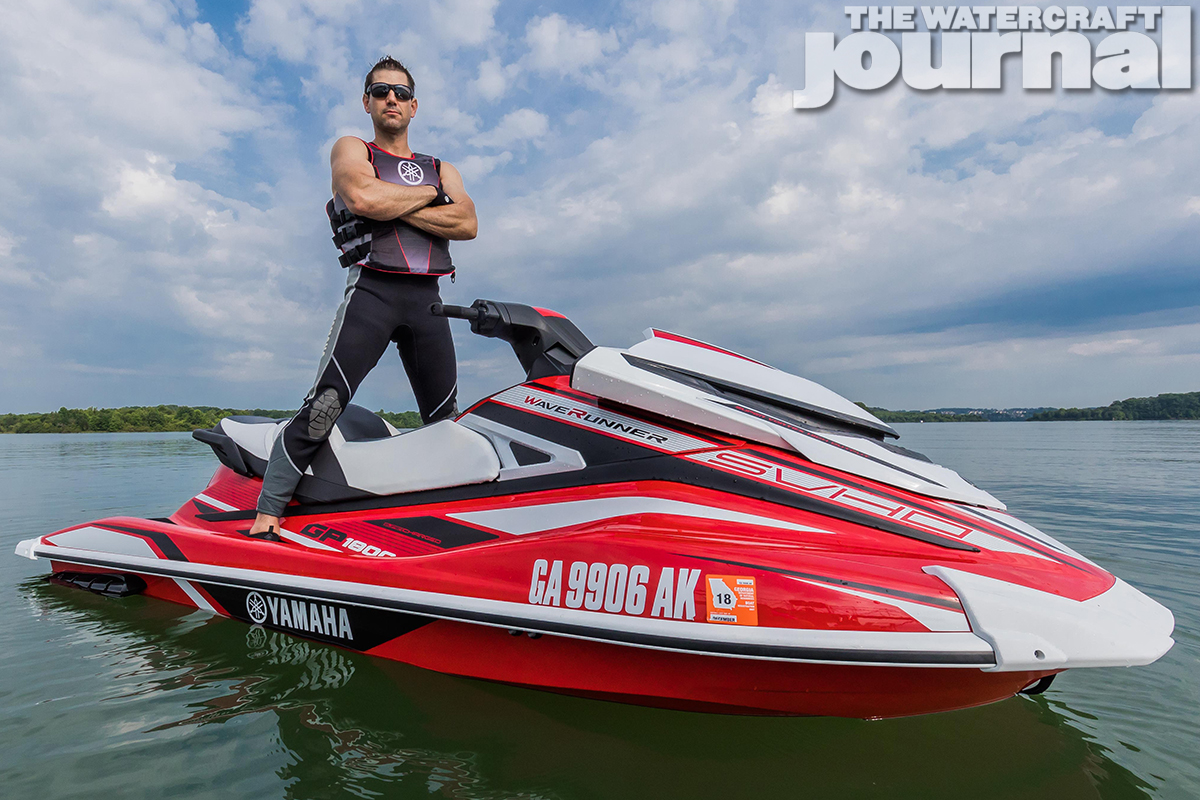
The typical Performance segment buyer equates the strongest single demographic of Yamaha sales at 33-percent. They are the youngest and most interested in overall speed, handling and performance. Leading this group is the GP1800. As noted, the resurrected GP model proved a runaway hit, both in sales and on the race track. For 2018, the GP1800 ($13,999) is offered in Torch Red Metallic with white and black accents, and Team Yamaha Blue with white accents. The 1,812cc Super Vortex High Output 4-cylinder did receive a single upgrade for the year: a redesigned supercharger housing.
The Watercraft Journal asked Yamaha’s Scott Watkins regarding the change who explained it was one of structural and economic necessity, and that no performance gains were expected to come from the change (quelling rumors bouncing around the chat rooms). The wheel, shaft and boost level remains identical to the previous model year. And while commenters will chide the SVHO’s officially-unofficial 250-horsepower output, the proof of the GP1800’s potency has been proven seemingly every weekend. Currently, Yamaha owns a staggering percentage of moto, class and series wins, from closed course to open ocean offshore racing.
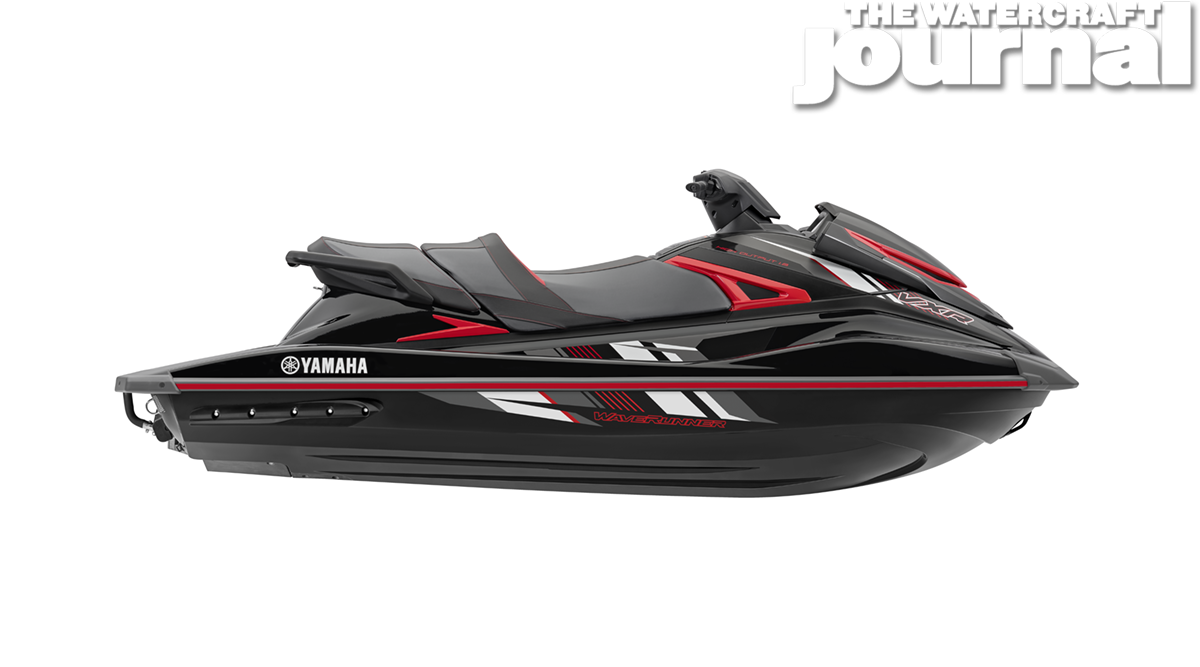
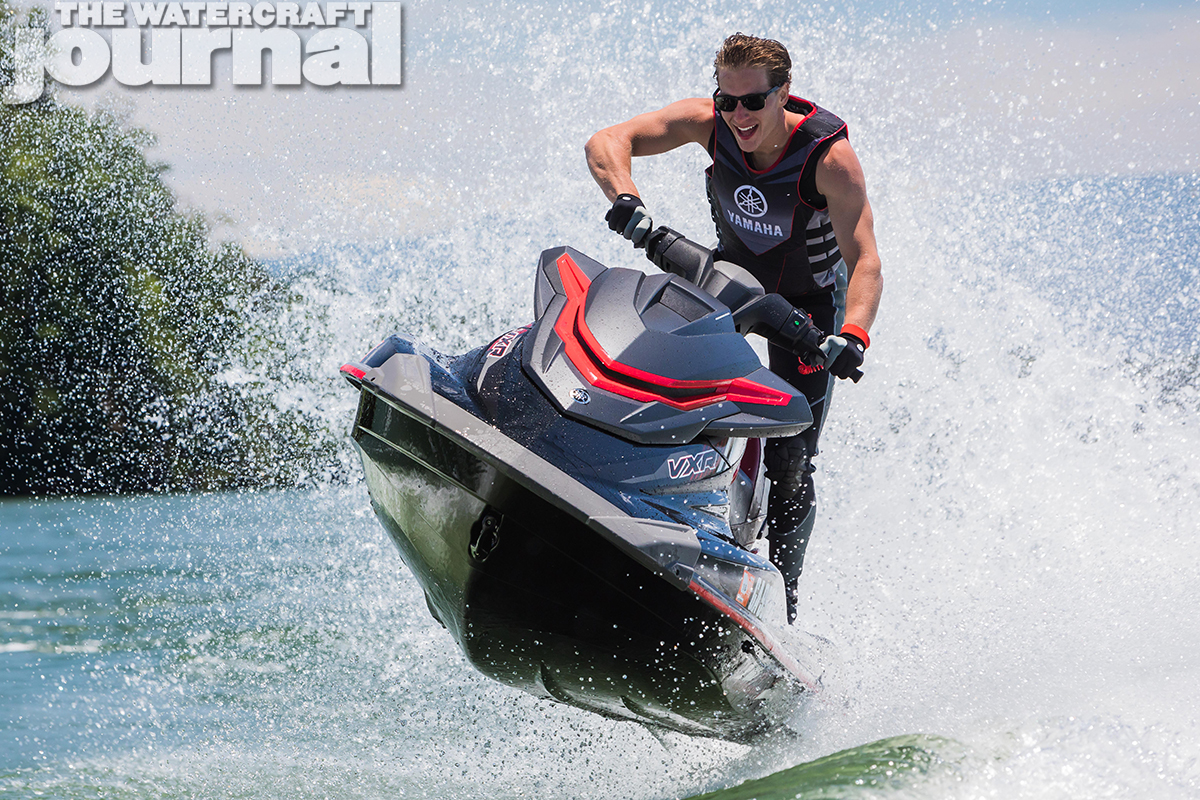
Strangely enough, the naturally-aspirated, NaneXcel-equipped VXR ($11,999) is arguably far more striking in either Black Metallic/Matte Carbon with red accents, or Black Metallic/Azure Blue Metallic than either of the two GP1800 offerings, but that is just our opinion.
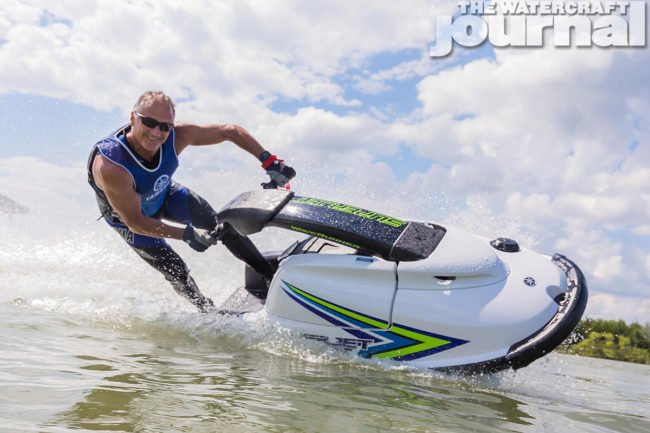
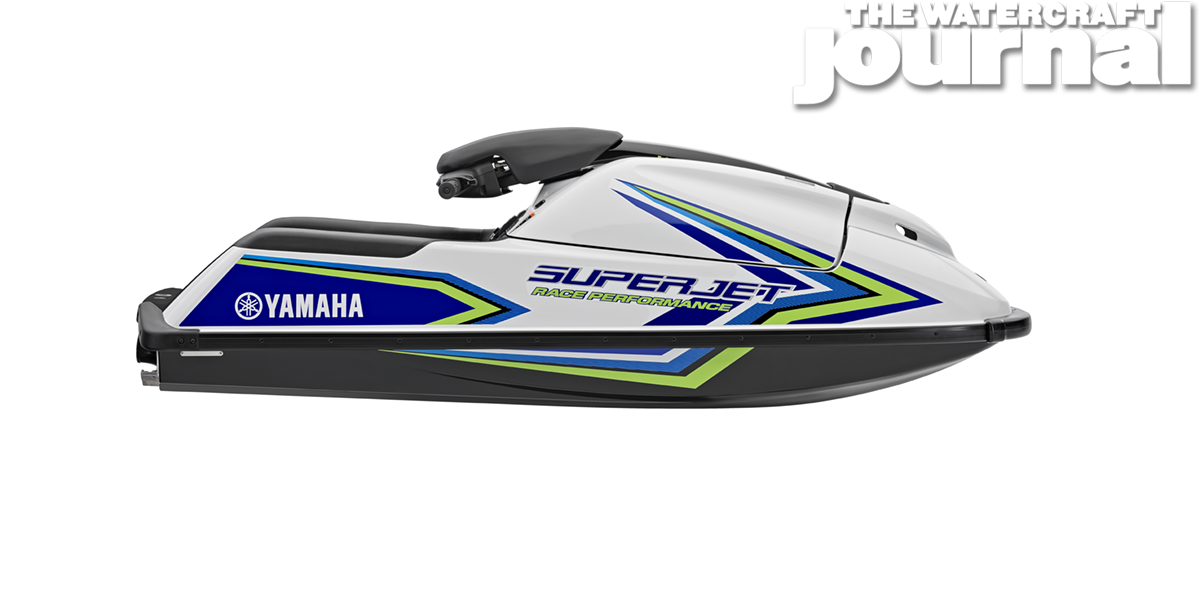
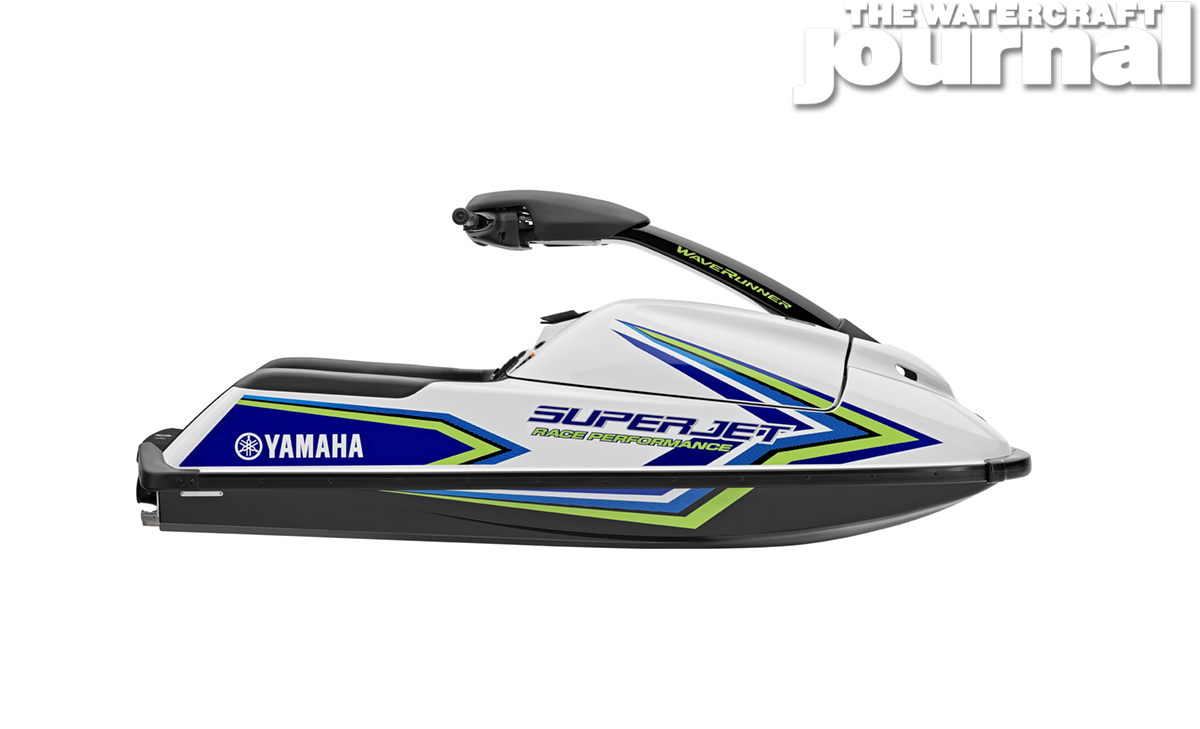
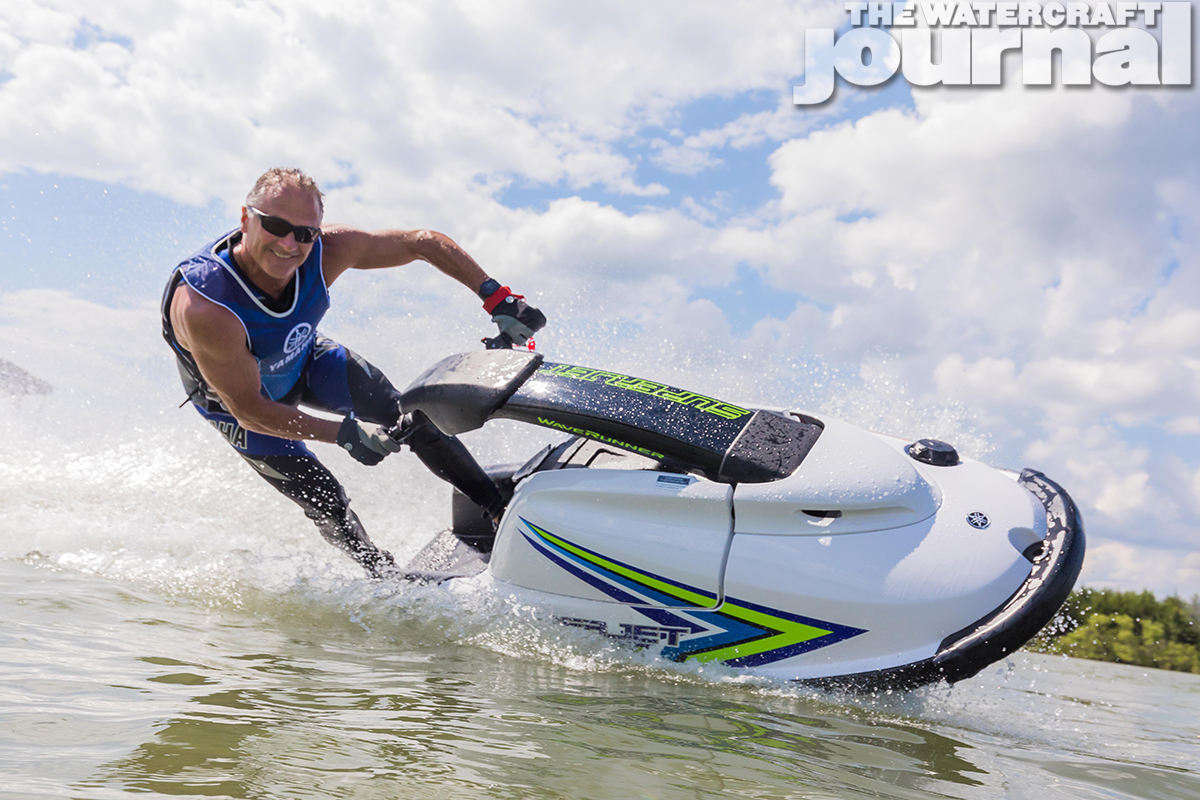
The final entry to this group is the venerable SuperJet ($8,499). In order for Yamaha to continue production of the 701cc 2-stroke, only cosmetic changes would be allowed, as per USCG regulations. This grandfather clause has allowed the SuperJet to remain, and this year (rumored to be its final year as-is) has some very special coloring. The standup features brilliant “throwback” neon yellow, electric and Yamaha-blue accents, iconic to Scott “Hollywood” Watkins’ signature wetsuits and JetPilot-sponsored skis. Many believe this is a nod to the long-time Yamaha Product Developer and a final send-off to the current SJ.
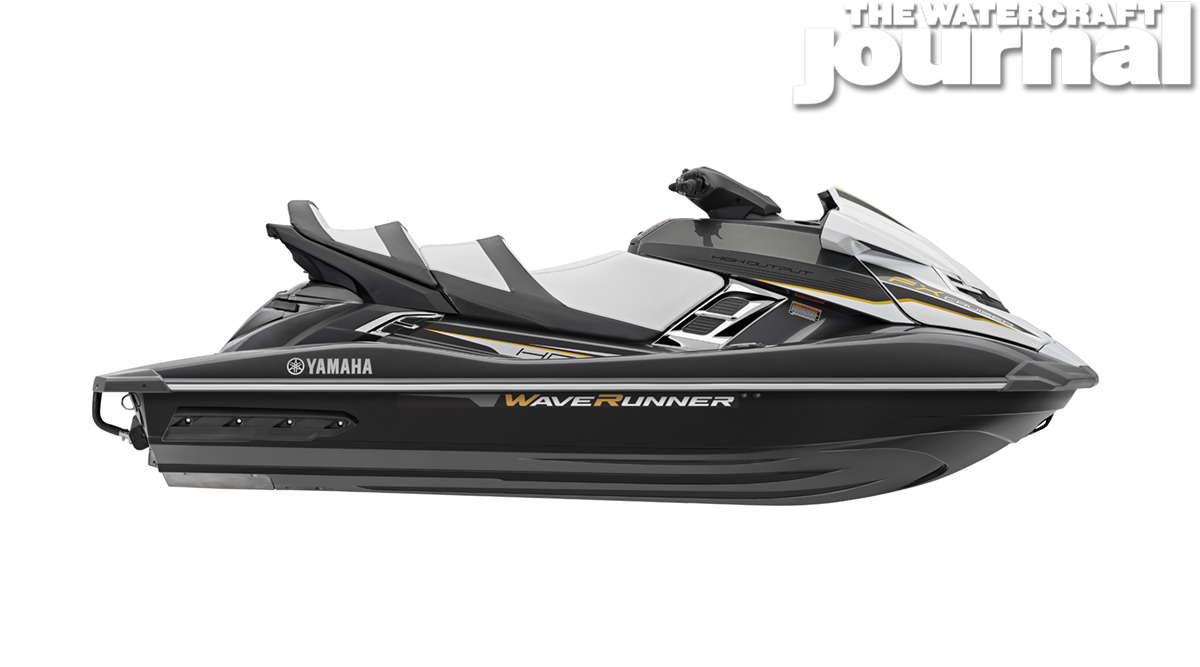
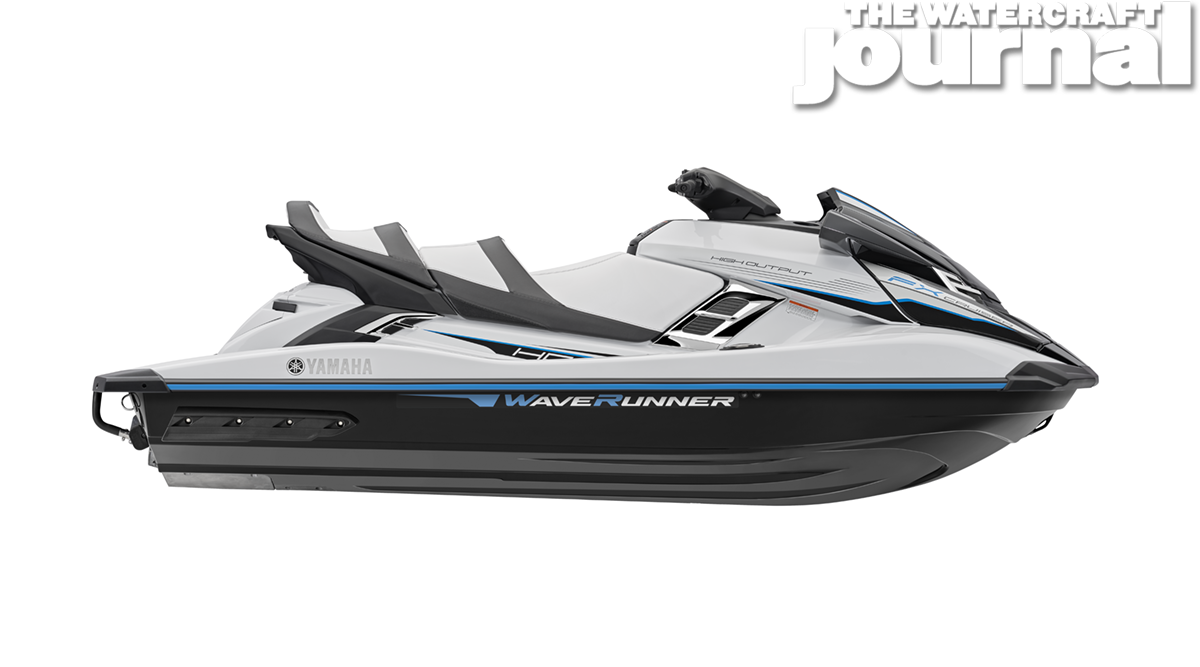
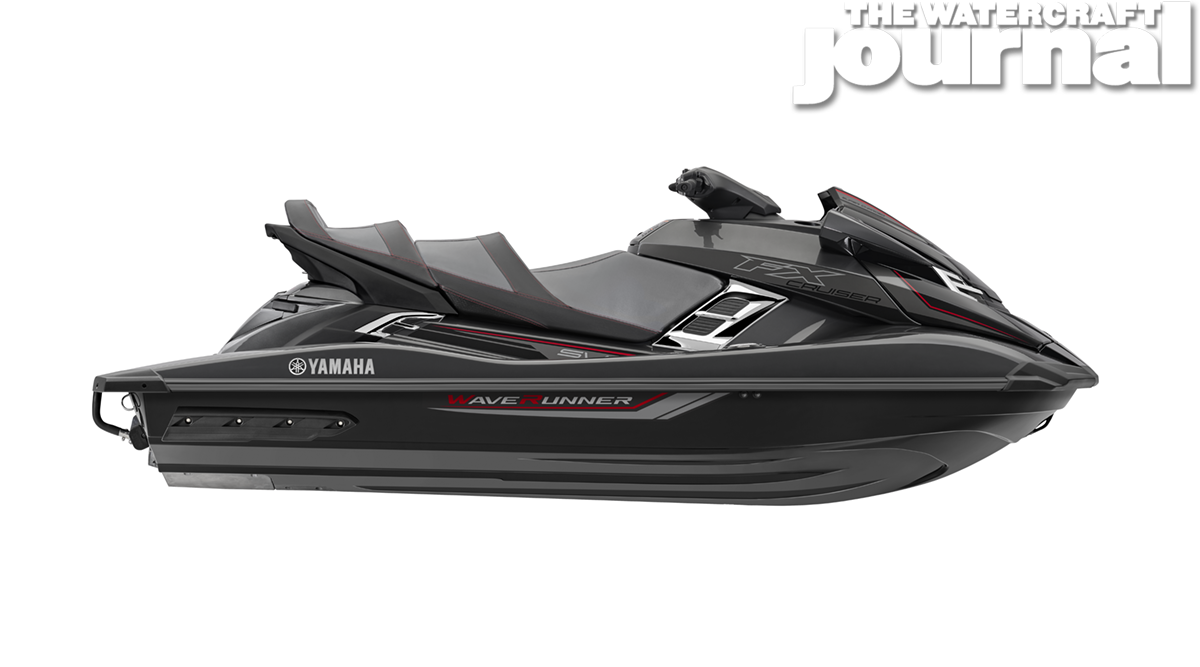
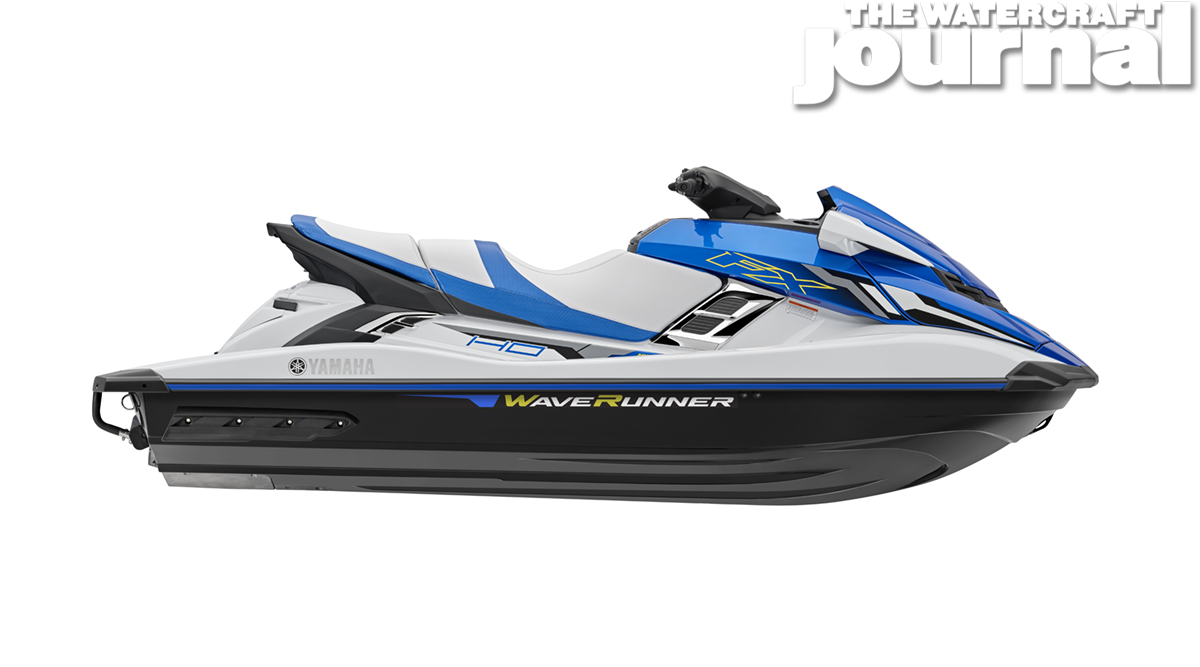
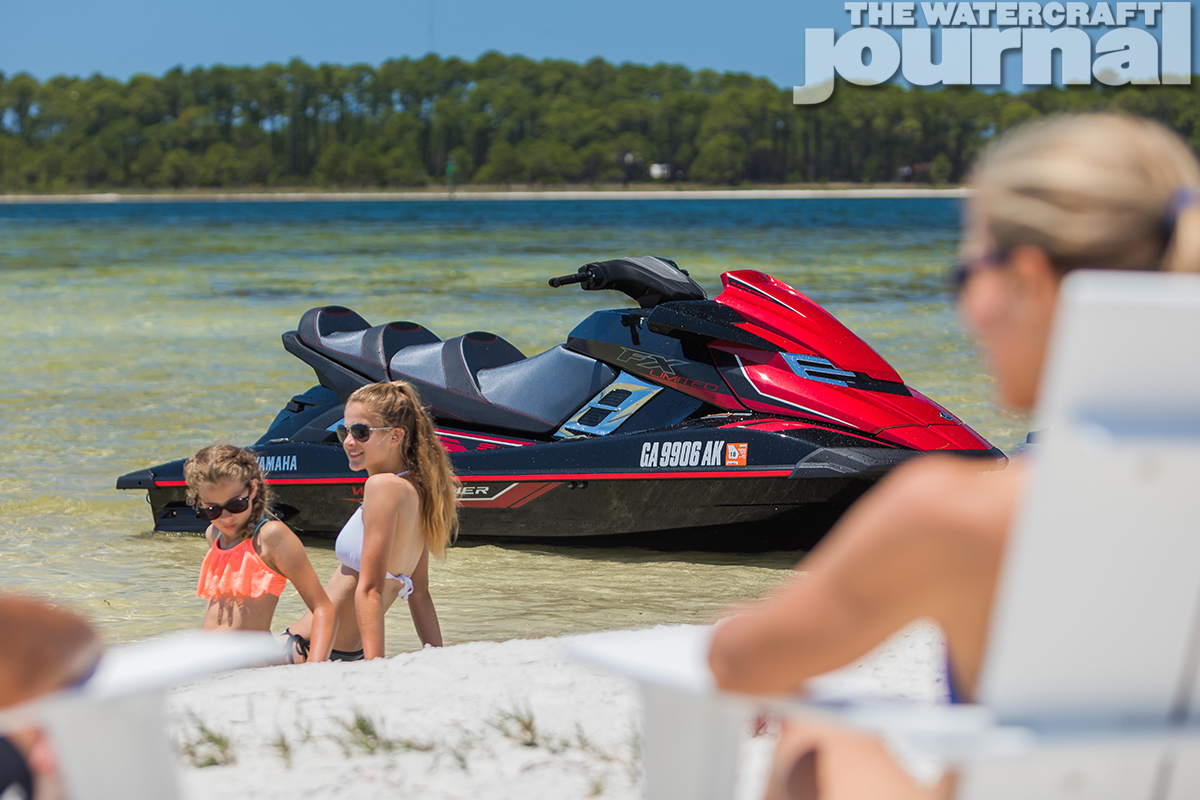
The final segment – Yamaha’s FX Series – doesn’t fail to impress, either. With the phasing out of the Super High Output engine two years ago, the FX models are split between the naturally-aspirated 180-horsepower 1,812cc plant, and the aforementioned supercharged-and-intercooled 250-horsepower SVHO. The FX HO ($13,299) and Cruiser HO ($13,799) vary only slightly, with the FX HO in brilliant Azure Blue Metallic and Pure White; as the Cruiser HO comes in a choice of Pure White with black with teal accents, or Carbon Metallic. Both include tilt steering, Cruise Assist, No Wake Mode, bountiful storage and some of the best fuel economy for a full-sized 3-seater in the market (due to the Low RPM Mode, reducing fuel consumption up to 26-percent). Only the Cruiser features the tiered-bench and pop-up cleats.
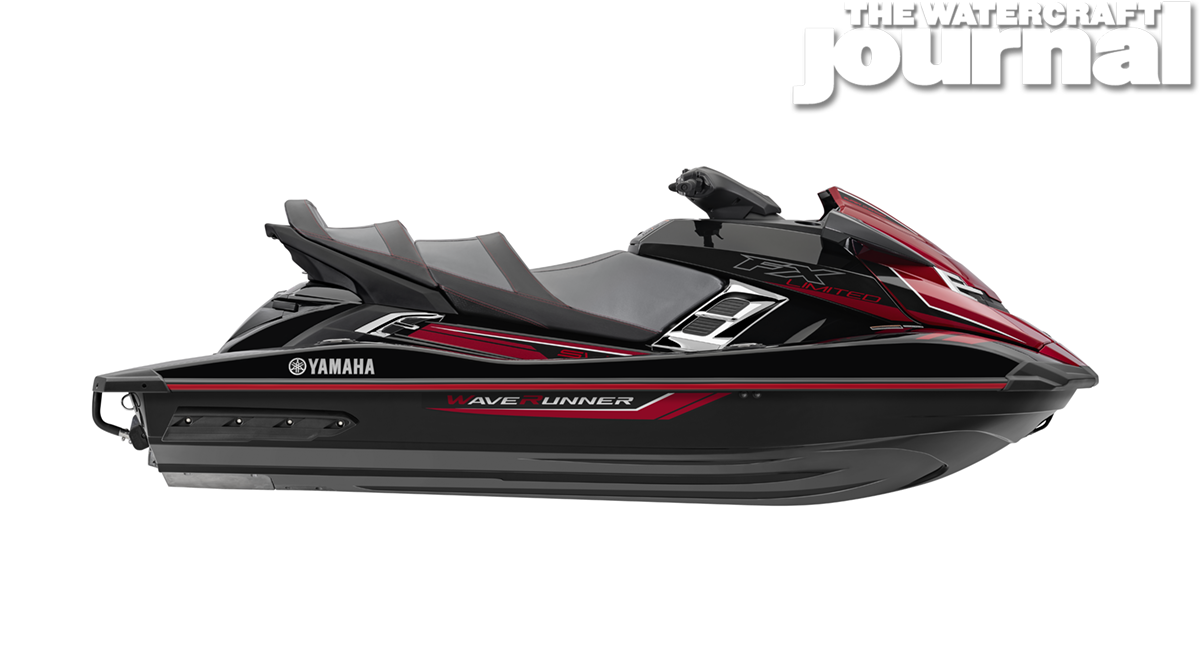
For those looking for a more exciting fare, the FX SVHO ($15,299) comes in a sporty Torch Red Metallic as the Cruiser-edition of the FX SVHO ($15,999) is offered in a choice of Azure Blue Metallic or Carbon Metallic with red accents. Similar to the naturally-aspirated models listed previously, differences include the Cruiser seat and cleats; apart from the SVHO engine and 160mm pump. Finally, the Black and Crimson Red FX Limited SVHO ($16,899) – similar to the VX Limited – comes equipped with the Limited Watersports package, including a single-rider raft, inflator pump, matching PWC cover and solar panel battery tender, a 12-volt socket in the glovebox, and a color-matched tow rope.
[All 2018 prices have been added to the text – Ed.] Unfortunately, new prices for 2018 were not disclosed to The Watercraft Journal at the time of this writing, but are expected to be published on the Yamaha WaveRunners website after 8pm EST, August 28th, 2017. Until then, enjoy the slideshow below and remember to leave any comments or questions at the end of this report.
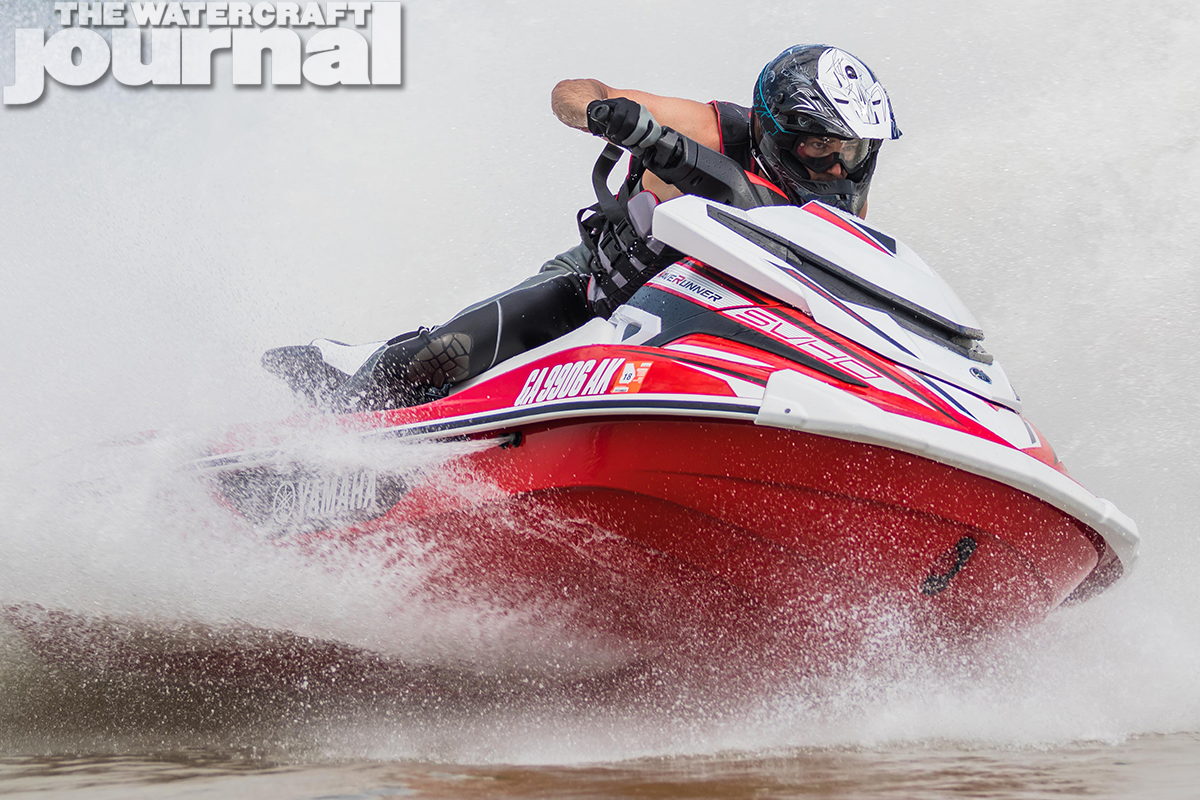
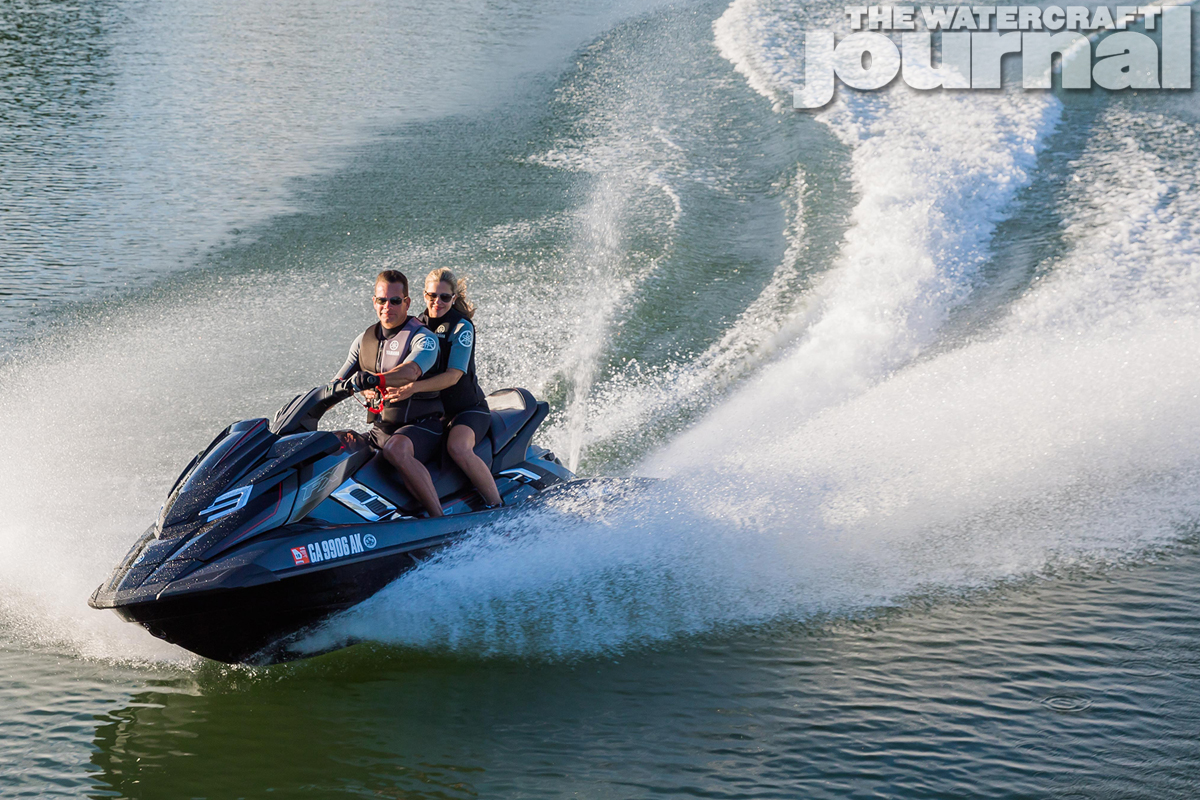
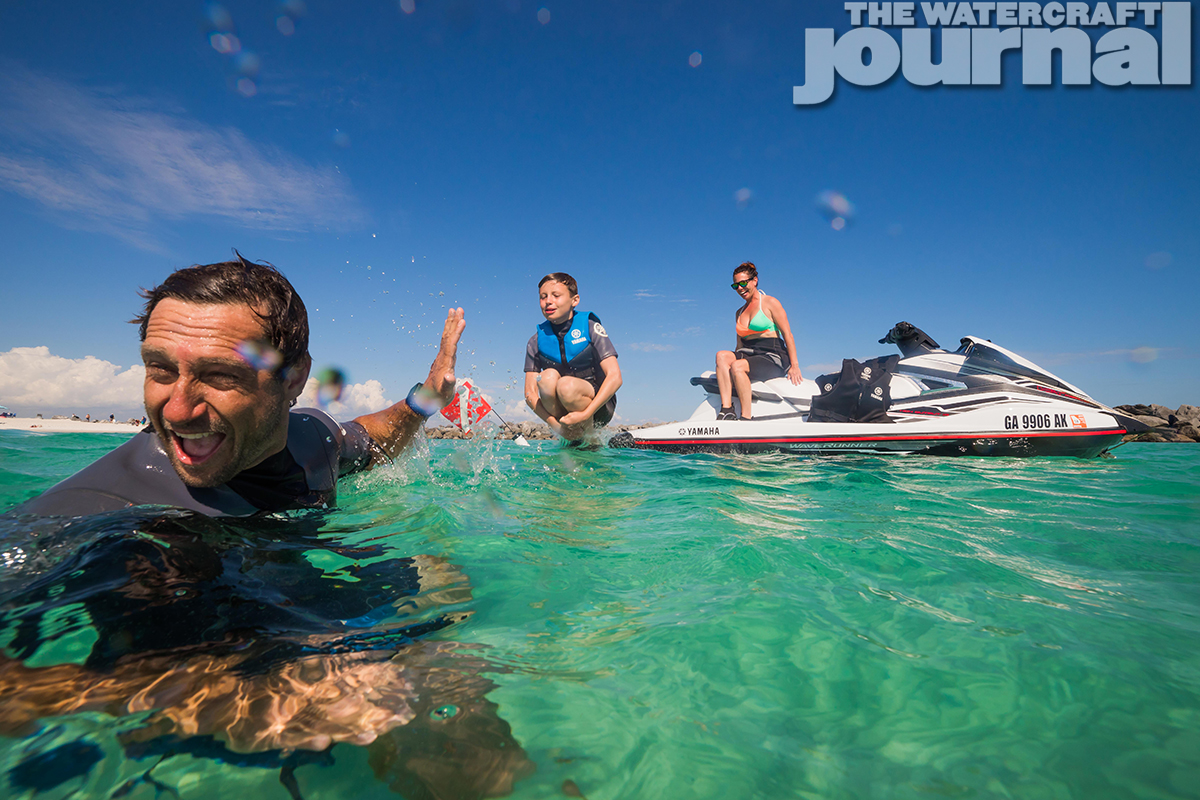
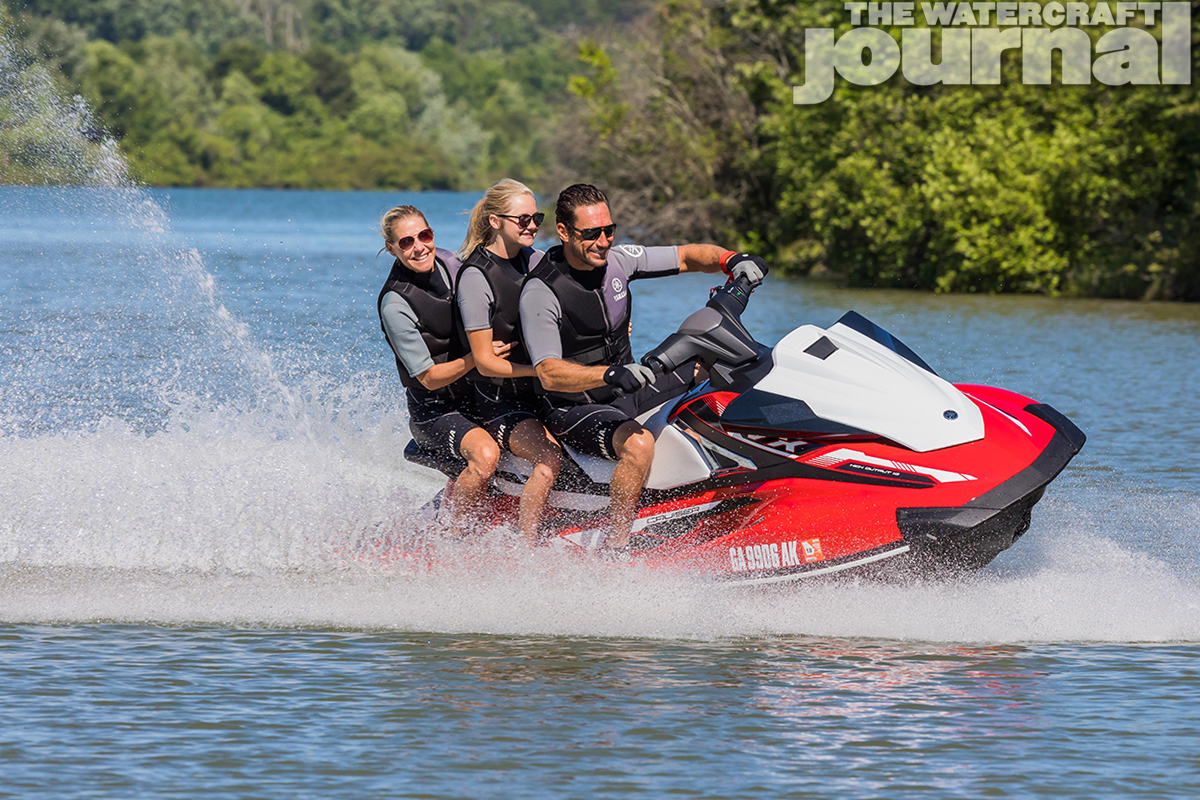
We’re just gonna cut to the chase here: At exactly 8pm EST (Eastern Standard Time), The Watercraft Journal will publish a complete reveal of the 2018 Yamaha WaveRunner lineup including an exclusive photo gallery of studio and action shots, as well as a bevy of “inside baseball” information regarding the growth of the personal watercraft industry as well as Yamaha’s own explosive year of record-setting sales that is sure to get you excited not only for 2018 but the future of our industry!
There’s lots to share and we’re pretty excited to do so – but not before the right time (we don’t want to upset Yamaha). So again, make sure to pay attention to our social media channels for the hyperlink bringing you back to The Watercraft Journal so that you can get all of the nitty-gritty details on the latest batch of WaveRunners from the brand with the tuning forks in its logo.
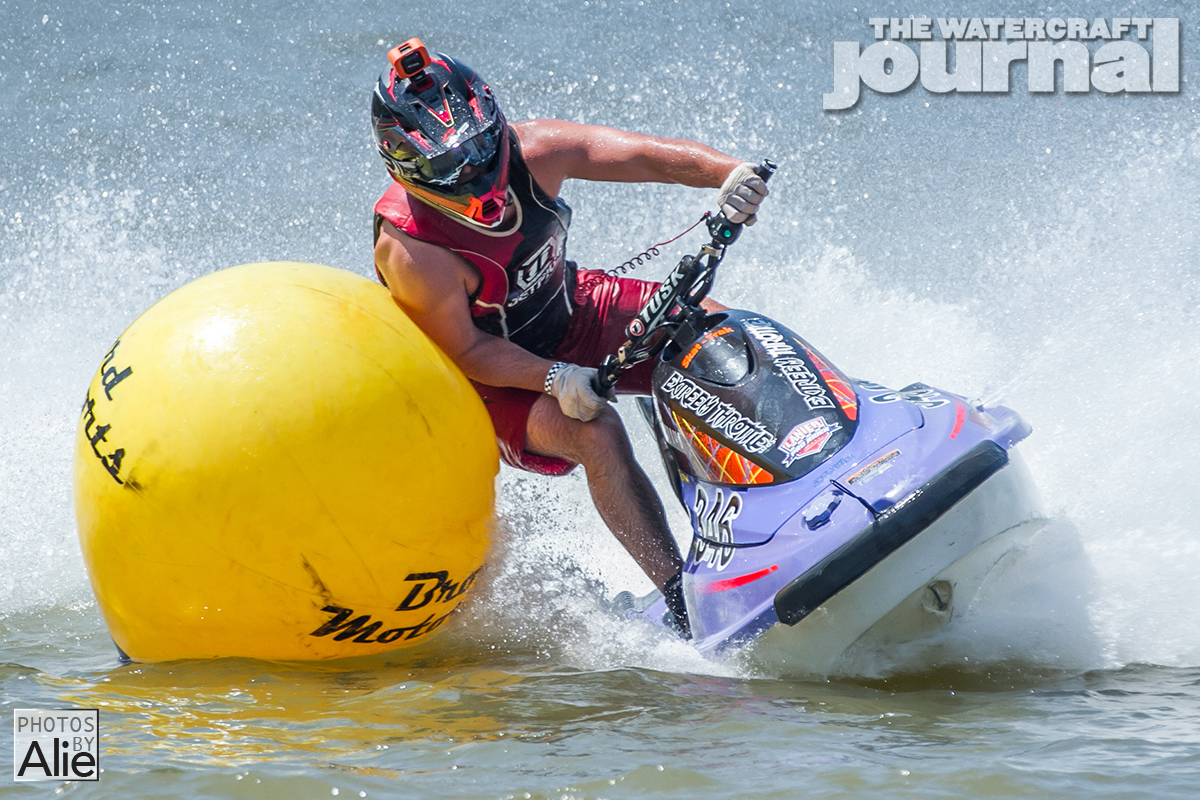
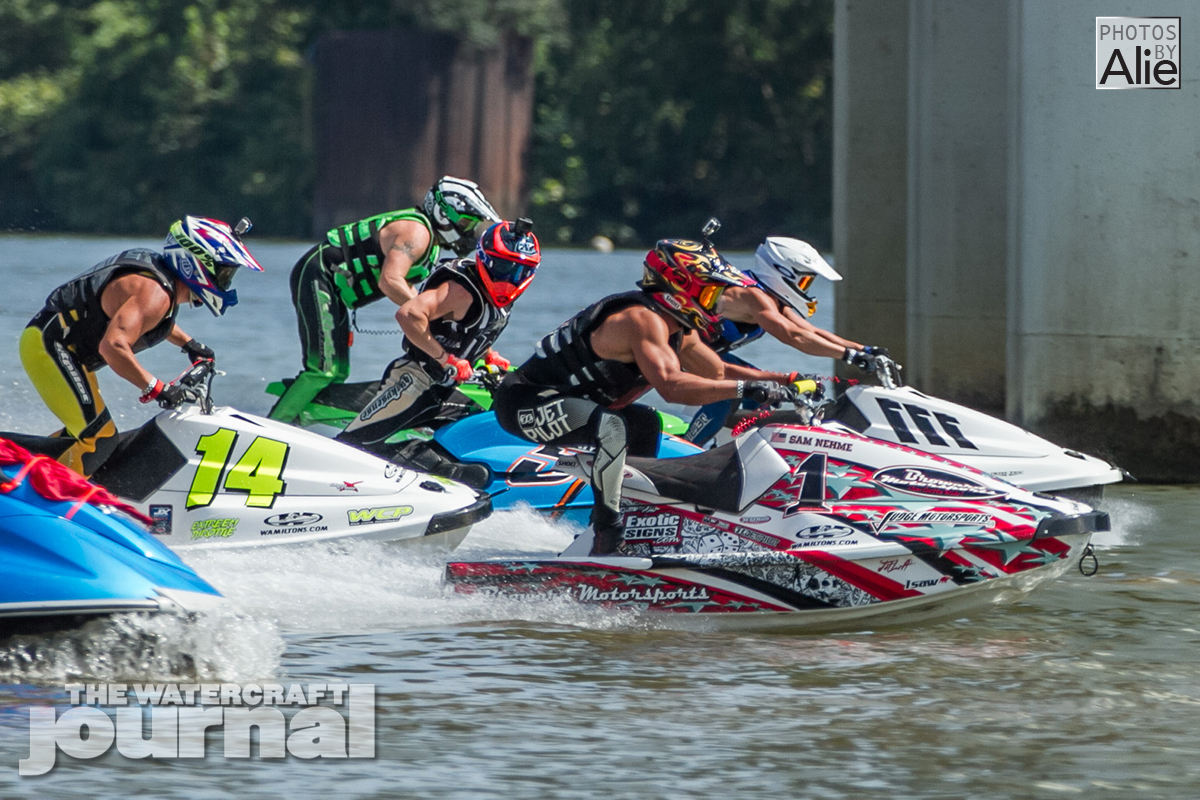
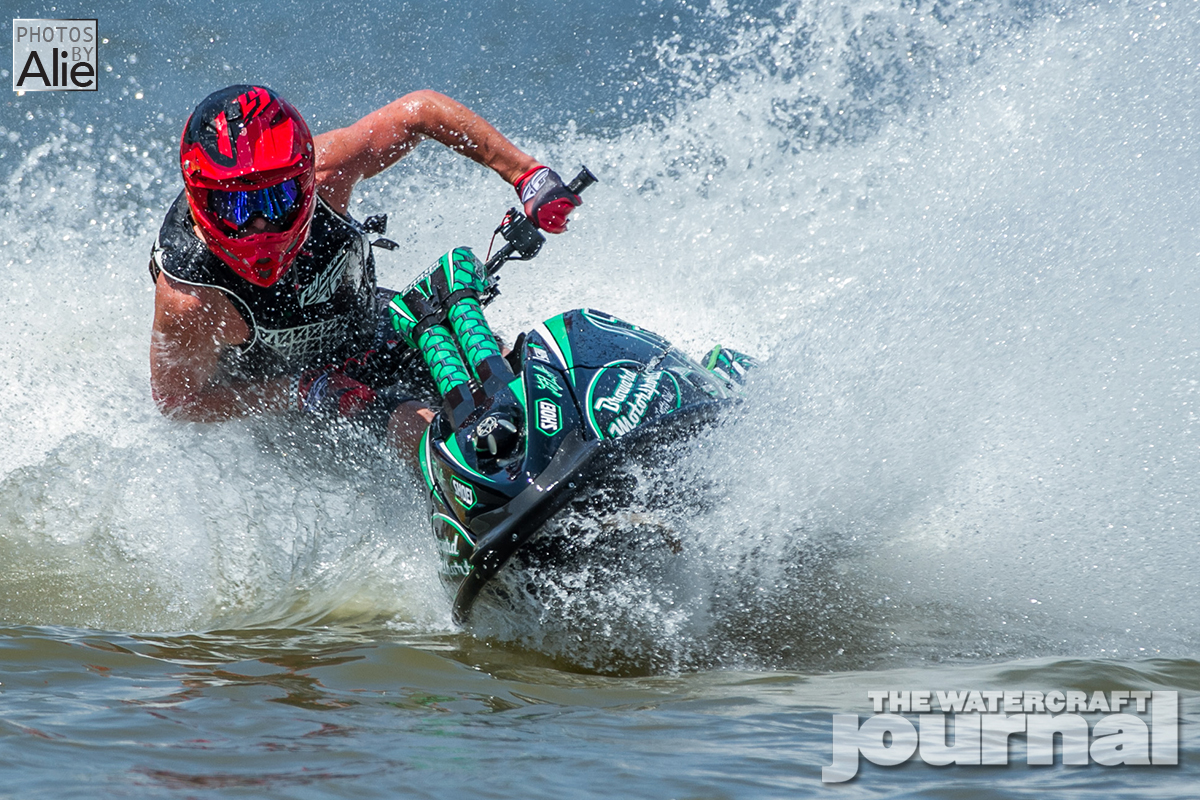
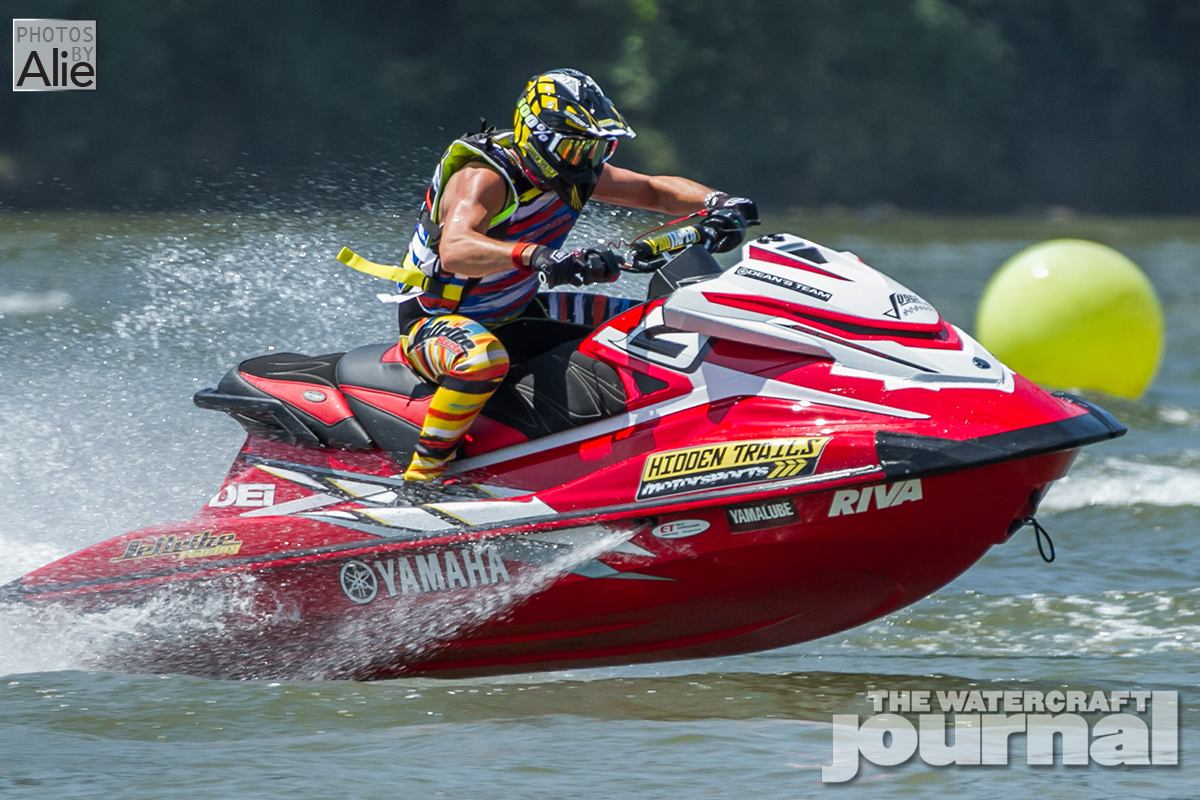
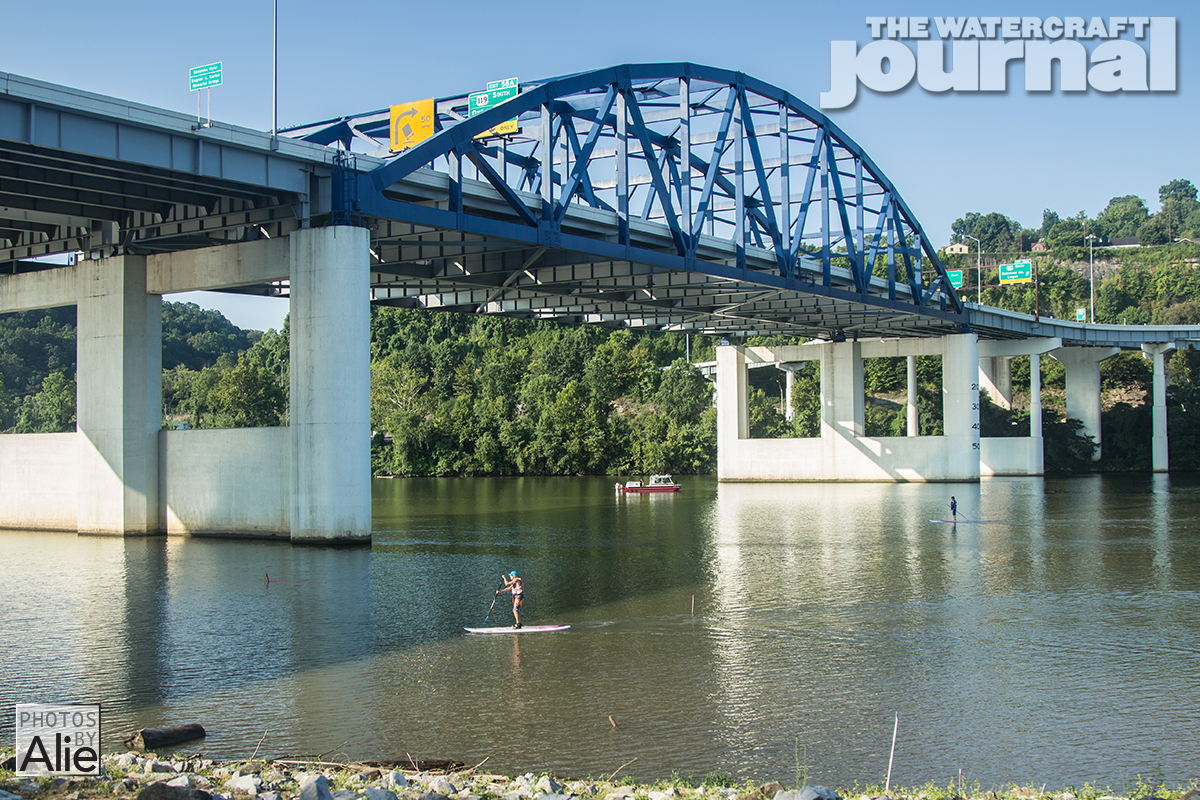
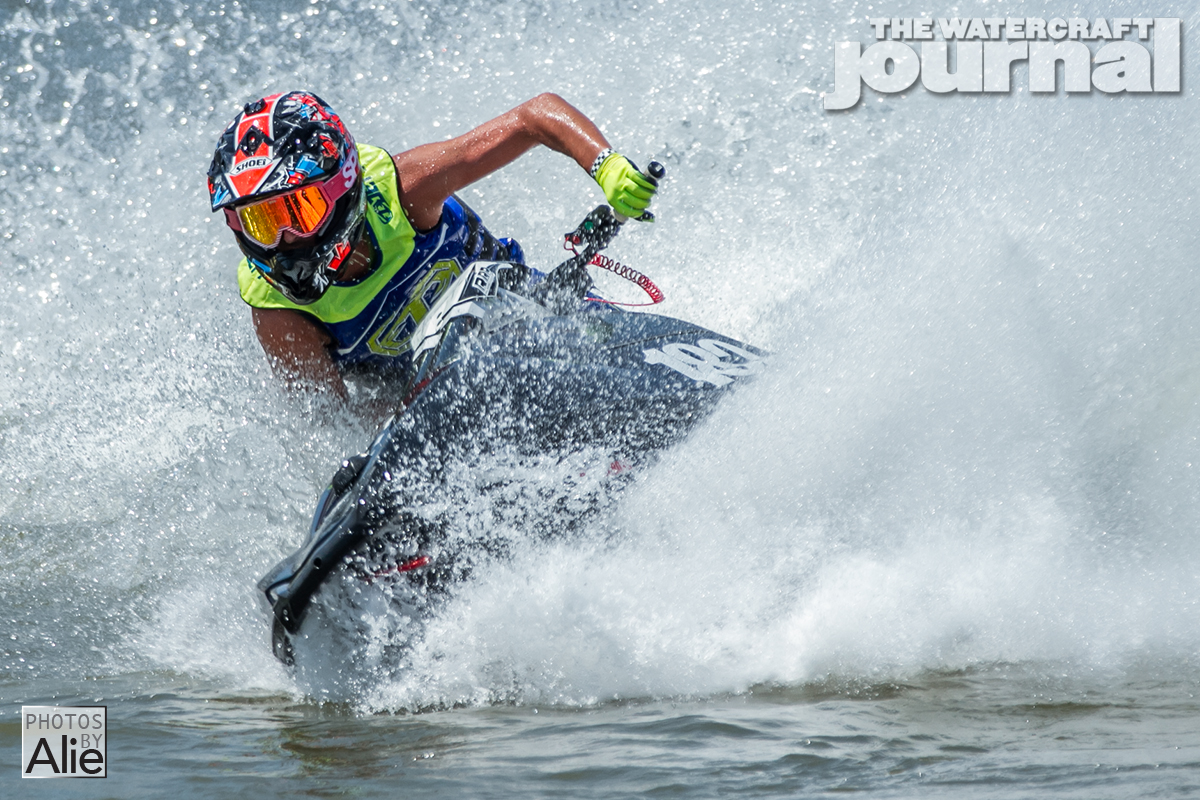
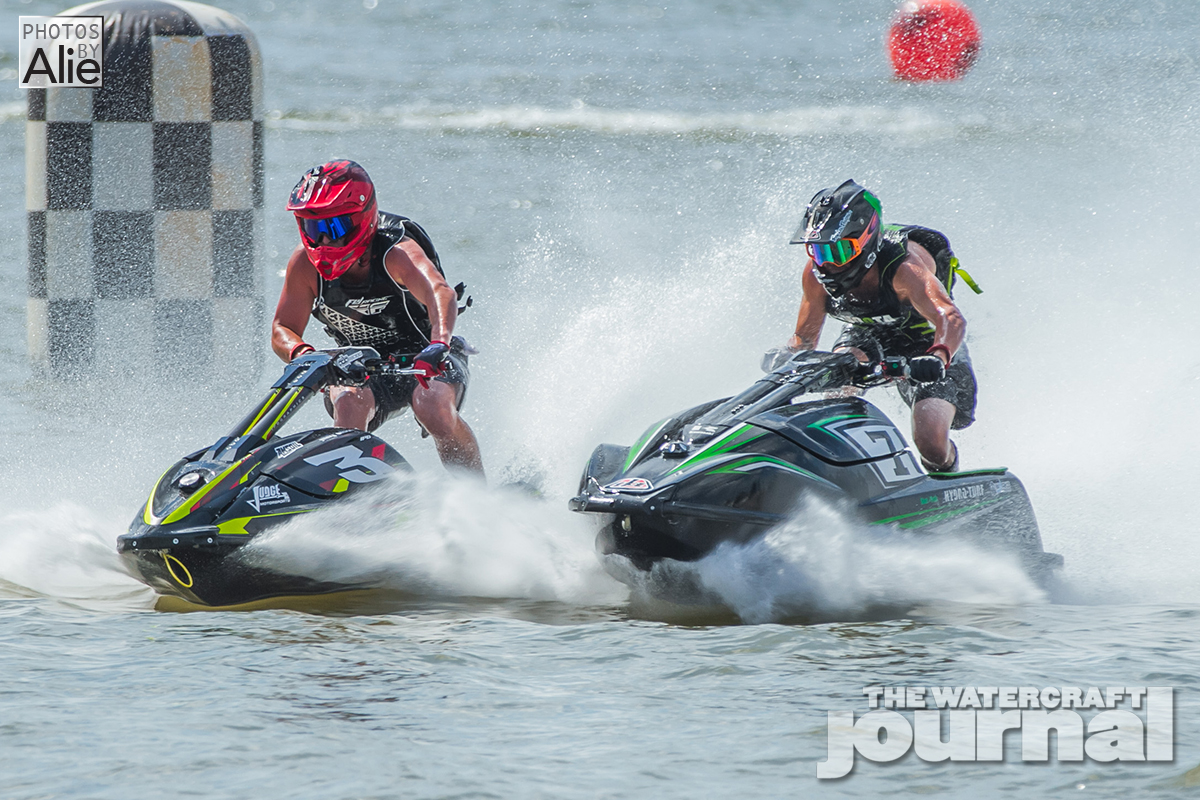
The Pro Watercross Tour came to an end this past weekend in Charleston, West Virginia. Tour Champions were crowned as well as National Champions based on these events results. Points were doubled so many Champions were decided at this event so there was a lot at stake for many of the competitors.
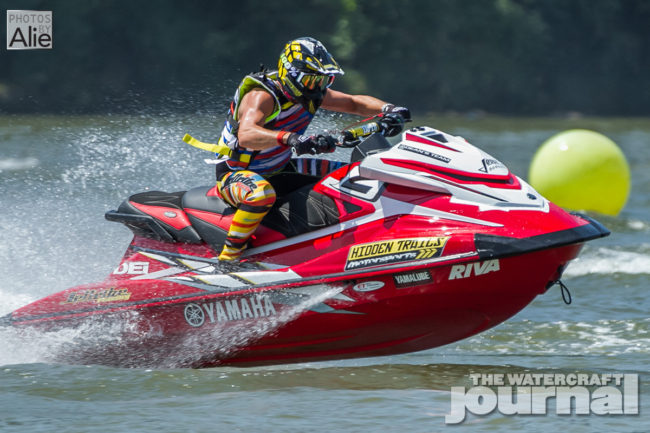
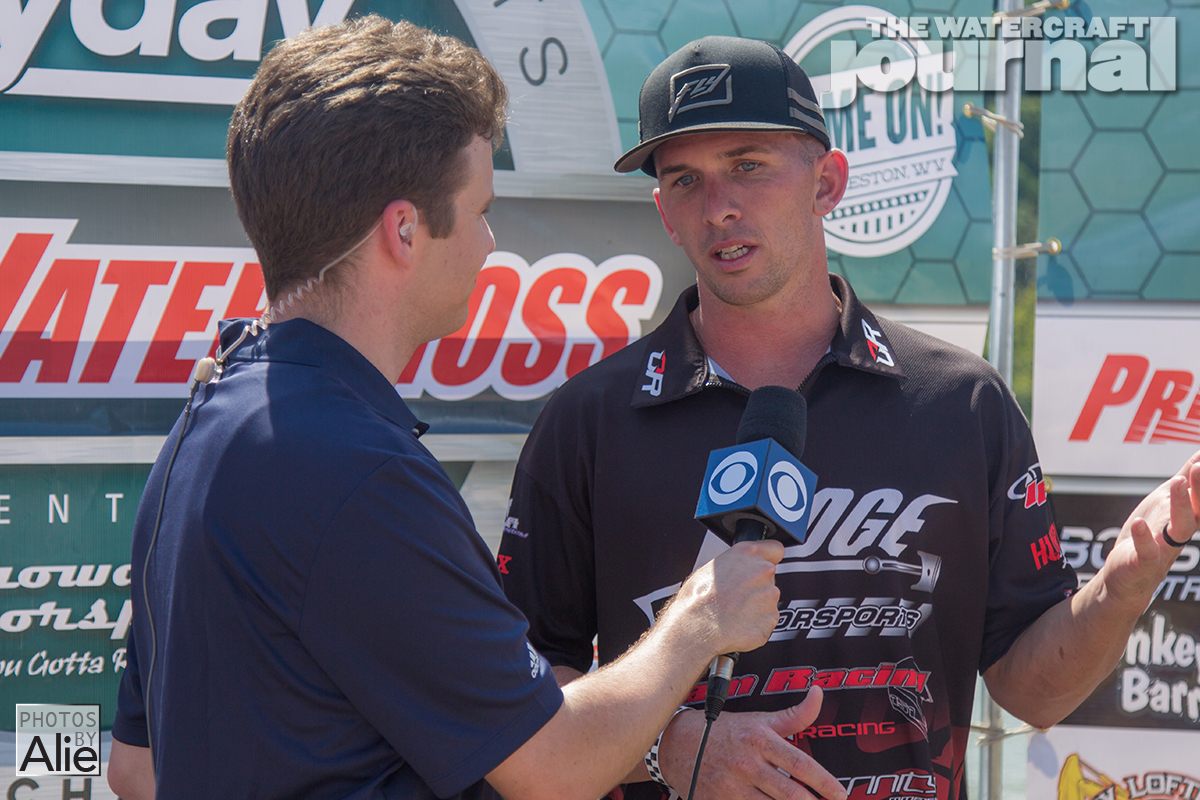
The City of Charleston always rolls out the red carpet for the Pro Watercross Tour and with the help of local shop Hidden Trails and the entire Frame family and staff; the event is always a good one. The competitors even overlook some of the obstacles like the muddy mushy loading area to get boats in and out of because the event itself is so enjoyable. CBS Sports was on hand Saturday to film the Pro Show and the format was a bit different than usual. Typically the Pro Show is a 3-Moto format with 1 Moto being run on Saturday and the final two motos being run on Sunday. On this weekend it was changed to a 2-Moto format both being run on Saturday for TV.
In Pro Am Ski Stock it was Kenny McKenzie in only his second race of the season on the Tour taking the overall over Matthew Richuk. The two swapped moto wins with Richuk getting the nod in Moto 1, but as we all know, the second moto weighs heavier in points in the event there’s a tie, so with the Moto 2 win going to McKenzie the overall was his. The track was pretty much a wide-open type of track other than the splits, which unfortunately, seemed pretty uneven and Tour Veteran Jimmy Wilson just couldn’t make up time from the onset. Wilson finished third overall with a 3-4 finish. Wilson still earned the victory in the Tour Championship points while Richuk took second in the Tour Championship. Gene Daniel would take third in the Tour Championship.
The ever-popular Pro Sport GP class was filled with excitement and drama. Christmas, Florida’s Richard Taylor was steady as he racked up the overall going 3-1 on the day. Defending tour champ Sam Nehme started out the day well taking the Moto 1 win, but his troubles continued to plague him in Moto 2 and a mechanical forced him off the track late in the final moto while he was leading. He finished Moto 2 in 9th which ultimately gave the overall National Championship and the Tour Championship win to Keith Dill who finished with a 2-5 for the weekend. Nehme finished second in Tour Championship points just behind Dill that once again proved that consistency wins Championships. Billy Dearman wound up third in points but had problems early in Moto 1 that left him with a 9-8 finish on the day. Kyle Hayes had a great run finishing third overall for the event with a 4-4.
In Pro Am Ski GP it was an exciting battle between Jimmy Wilson and Craig Warner. And not far behind those two was Broc Harris just watching and waiting for either one of those top guys to bobble or take each other out. In the end it was Wilson taking both moto wins for the overall on the day while Warner had to settle for a not-so-distant second overall going 2-2. Harris took the final spot on the podium in both motos going 3-3. The Tour Championship Points ended the same way with Wilson taking first, Warner taking second and Harris taking third. At the awards ceremony at the Hidden Trails After Party Saturday night, in a touching display of Sportsmanship, Craig Warner showed a ton of humility while honoring the skill and tenacity of fellow competitor Jimmy Wilson, the man who beat him.
It was a weekend of attrition that decided the outcome of the Pro Am Runabout GP class. Claude Clayton jumped out to an early lead on his beautiful black carbon fiber Sea-Doo RXP-X and took Moto 1 with Dylan Osborn taking second. Jeff Dyckowski would take the third spot in Moto 1 while the Frame brothers ,Cameron and Trey, both had mechanicals. In Moto 2 however, it was all Dylan Osborn taking the moto win and the overall. Clayton brought it home with a second overall. Justin Taylor, who finished 4th in Moto 1, put together a great ride for second in Moto 2 giving him the last spot on the podium for the day. For the Tour Championship, Claude Clayton took the number 1 spot while Dylan Osborn finished second. Jeff Dyckowski took home third.
A lot of these same guys in Pro An Runabout GP ran their same stock boats in Pro Am Runabout Box Stock. But Judge Motorsports’ Troy Snyder came to set the record straight. In recent weekends, it was a small rivalry getting started between himself and Cam Frame. It looked as though the rivalry would continue as Cam grabbed the Moto 1 win with Snyder taking second. But Snyder was not to be denied for Moto 2 and he won taking the overall to Frame’s 1-2 finish, which gave him second, overall. Jeff Dyckowski finished third overall on the weekend with a 4-3. Snyder also took the overall Tour Points Championship while Dyckowski took second on the Tour. Dylan Osborn took third on the Tour.
In Pro Freestyle it was Luke Stocks taking the overall for the weekend followed by Phil Clemmons.
The Amateur classes, which quite frankly are filled with Pro riders, are just as exciting as the classes that are designated as the Pro Show classes. Mostly determined by what ski is being raced, Veteran/Pro riders make up the majority of the classes other than the Jr. classes (for which an argument can be made that most of them are Veterans or Pros already as well!). The “Amateur” races consisted of the normal 3-Moto format this weekend and the winners of this particular event would be crowned National Champions, which would be a different designation than the Tour Championship.
Going into Sunday’s final moto of Amateur Ski Stock it was a 2-way battle for the overall with Wyatt Hayes and Jeb Zarzour having 4 points each. Team Faith’s Kelly Smith could upset the party if he had a good Moto 3 result coming into the final moto with a 3-2, but a bad start would relegate him to only being able to make it up to 6th for a 4th overall. AJ Lunistra would pull off a 4-4-2 for third overall leaving the door open for Wyatt Hayes and Jeb Zarzour to battle it out for the overall. In the end it was Hayes with a 1-3-1 finish taking the top spot on the podium while Zarzour went 2-1-5 for second overall. This put Brett Underhill as the overall Tour Champion, Wyatt Hayes second in Tour Championship points and Team Faith’s Dawson Newby as third.
There was some controversy surrounding the outcome of the Sport Stock class. In the past two events, organizers have made a significant effort to police the rules via the Technical Inspector for this particular class resulting in several of the competitors from last weekend’s Lake Hartwell race and this weekend’s Charleston race being DQ’d for technical infractions.
Danny Ortega came to play on his Kawasaki X2 and he was the odds on favorite believe it or not! Yes, he’s on an X2! The spirit of the rules in the class allow an X2 many more modifications than the other machines like the Yamaha WaveBlaster and the Sea-Doo HX that compete in the class which have significant advantages based on their updated hull designs. But you wouldn’t know it by Ortega’s performance! The elder statesman of the class flat out put a whoopin’ on the field piloting his X-2 to three second place finishes and having lead most of the laps of all three motos.
He was only bested by one competitor, Christian Daly, who rode phenomenal on his Sea-Doo HX but was found to be in violation of the technical rules in the post race inspection and was DQ’d. (It also appeared that Ortega’s X-2 hull was modified beyond the scope that the rules allowed, but none of the competitors were willing to file an official protest since the guy rode the heck out of the craft.) In the end it was Ortega on his X2 going 2-2-2 for the overall, Susan Anderson going 3-3-4 for second overall and Team Faith’s Jeff McPhail going 4-4-7 for third overall. The tour Points Championship was as follows: Keith Dill took the Tour Championship while Jeff McPhail took second and Billy Dearman took third.
Hayden Skellet continued to dominate the Jr. Ski Stock class in the 10-12 year old bracket going 1-1-1, while Devon Farthing, who has gotten noticeably better over the past 2 rounds went 1-1-1 in the 13-15 year old bracket. Sammy Nehme came in second with a 2-2-2 and Taylor Skellett rounded out the podium with a 3-3-3.
Our favorite Canadian Colombian Juan Rada pulled off the overall in Amateur Runabout Box Stock with a Moto1 win and a 3-3 for the final two motos. He also clinched the Tour Championship as well! Joe Johnson had a bad first moto missing some buoys, but looked good in the last two motos to go 5-1-2 for second overall. Jim Bennett was the third place overall winner going 6-2-1.
Veterans Runabout Box Stock saw Jason Lester sweeping all motos against Jim Bennett and Tony Savage for the overall on the day but it was Tony Savage in his first year racing that managed to take the Tour Points Championship. All three motos were won by different competitors in the Amateur Runabout Superstock class but consistency paid off for Greg Neal as he went 2-2-2 to take the overall on the weekend. Justin Taylor took second overall with a 1-3-3 and Michael Borges went 3-4-1 for third overall.
The always exciting IROC Stock class once again did not disappoint. Eric Gabriel continued his winning ways posting a perfect three-moto score of 1-1-1 to take the overall and the Tour Championship Title for another year. Jason Lester aboard his RIVA powered/Jesus Garcia tuned Yamaha EX went 2-2-2 for second overall. In a battle between teammates it came down tot he last moto for Team Faith’s Brian O’Rourke and Kelly Smith to see who took the last spot on the podium for the weekend. In the end it was Smith, who looks to be able to adapt to just about anything he throws his leg over taking third overall with a 4-3-3 finish. Brian O’Rourke finished 3-4-4 but managed to take second in the Tour Points Championship despite having some not-so-great finished int he surf races. Jason Lester was third in Tour Points.
It was all Eric Gabriel in the IROC GP class on his turbo Spark. Even when he lines up against older 2-stroke rippers like the X4 hull that Cory Roush has nobody has been able to best Gabriel who pretty much races almost every weekend somewhere! Gabriel took the overall for the weekend and the Tour.
More and more Kawasaki SX-R 15F Skis are starting to make their way on the line for the Ski 4-stroke class. In Moto1 AJ Luinstra got the early jump on Veteran Craig Warner and Warner bobbled in Luinstra’s pump wash to go down momentarily giving Luinstra enough of lead to hold of the hard charging Warner for the win. Moto 2 and 3 belonged to Warner, but a post race technical inspection revealed a violation of the rules for Warner and he was DQ’d. That gave Luinstra the overall for the weekend and put Sean Miles, who left the IROC Stock class for the new SX-R taking second overall. With the double points awarded on this weekend, that gave 3 2 1 Kawasaki’s AJ Luinstra the Tour Championship, Sean Miles second in the Tour Championship and Craig Warner third in the Tour Championship.
Amateur Freestyle saw 2 of the 3 competitors jump off their race boats and onto their freestyle machines in an effort to perform and compete for the crowd on hand. Ryan Doberstein took the overall going 1-1 for the weekend but also took the Tour Championship. Zeb Zarzour took second for the weekend going 3-2 and Daryle Winters went 2-3 for the weekend third overall.
As the Tour came to an official end and everyone said their goodbyes, talk turns now to the Pro Watercross World Championships in Naples, FL on November 2-5. Undoubtedly, the competitors have faced enough scenarios and race conditions to know where they and their machines stand for the Championships. We look forward to seeing who steps up their game in the upcoming months leading into Naples.
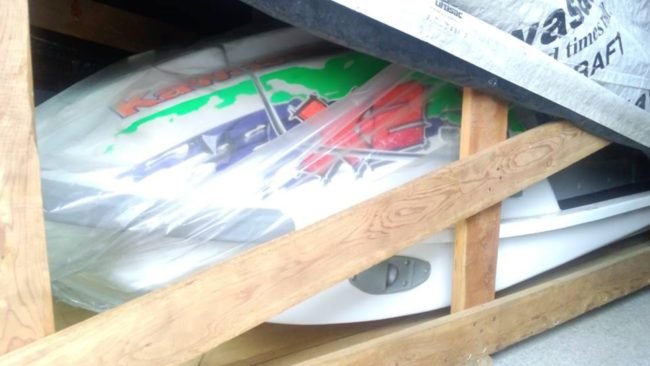
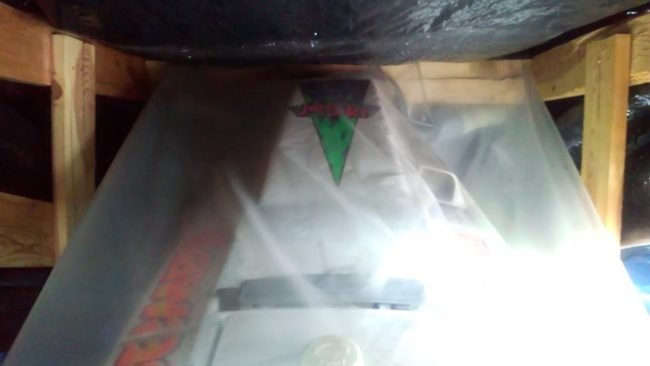
It isn’t every day that you find a brand new 1995 Kawasaki JetSki X2 still in the crate, especially one that is more than two decades old. Well, that is exactly what Belgian Team AJ Performance did according to a recent Facebook post on the team’s page.
Simply stated as “Brand New,” the team posted a series of pictures of the beautiful hybrid ski still in its original crate with only a peek view of the factory cover pulled back. Untouched and still brand new with zero hours, we can even see the factory drape with the bold “Kawasaki” letters and the infamous logo “Let The Good Times Roll.” We don’t hear much about these vintage ski’s anymore these days, but AJ Performance seems to be all these Kawasaki X2 JetSkis as we have covered some of their previous X2 conversion work.
The Kawasaki X2 hybrid jet ski that was basically a blend between a stand-up ski hull and a narrow, fixed-steering sit-down (but don’t call it a “couch”). When it was first introduced, it came with a 652cc, 52-horsepower engine and it was the first time a JetSki featured adjustable handlebars and trim. By 1995, the X2 was still powered by a water-cooled, two-stroke twin producing 52HP at 6,000 rpm via an axial flow pump but also marked the last production year of the “old body style.” We are not sure where this team found such a pristine machine, but it definitely seems like they lucked out while on a hunt!
Hydro-Turf racer, rider and spokesman, Mark Gomez wrote: “We finally launched our new web site after all these years! To celebrate, we are offering free shipping (UPS Ground) on all domestic orders over $50 placed through our new website through August 31st 2017.”
Well, that’s something to be excited about right? But as you read above, you only have a week (as of this writing) left to act on this special offer. And remember, while you’re shopping around on the new site, make sure to check out Hydro-Turf’s selection of currently available hats and T-shirts are now featured online and only cost $10! And yeah, you’ll get free shipping on those too! So again, there’s not much time left to act on this deal to get cracking HERE!
Mother Nature showed her fury this past weekend during Round 4 of P1 AquaX in Islamorada, Florida. This did not stop Yamaha Racers as they dominated the podium. Not only did Yamaha riders sweep all three podium positions, but Yamaha took the top seven spots overall for the weekend.
Day one of the event saw Chris MacClugage take the win for Yamaha as he stole the holeshot and never looked back. Day two was no different although bumpy conditions made the team work for their victories. Chris MacClugage on his Yamaha GP1800 took First Place overall. Eric Francis and Brian Baldwin took Second and Third respectively both also aboard the durable GP1800.
This race was the first time Islamorada welcomed P1 AquaX and there were more than fifty racers battling it out. Fourth Place went to Mike Klippenstein with Chris Saxon taking Fifth aboard his FX SVHO. The Sixth and Seventh Yamaha finishes went respectively to Cyrille Lemoine and Eric Lagopoulos.
The fact that so many racers chose Yamaha Waverunners and dominated the finish in fierce conditions is a testament to the performance and durability of these PWC’s. Yamaha Race Director Scott Watkins said ” The new GP1800 came out in force even in the rough conditions usually dominated by the FX SVHO.”
We look forward to see what the next round brings in Chicago for Round 5 this coming September 9-10.
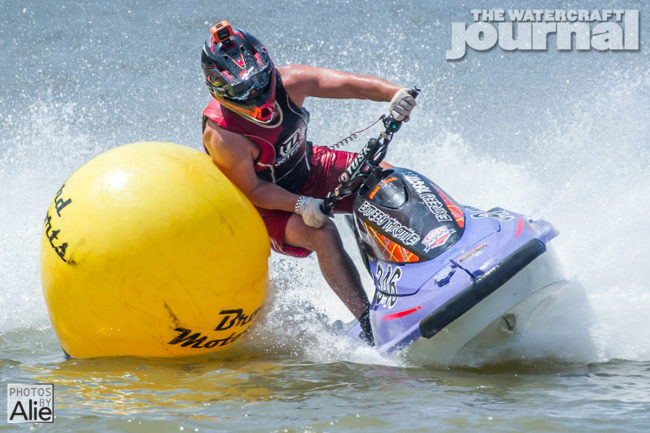
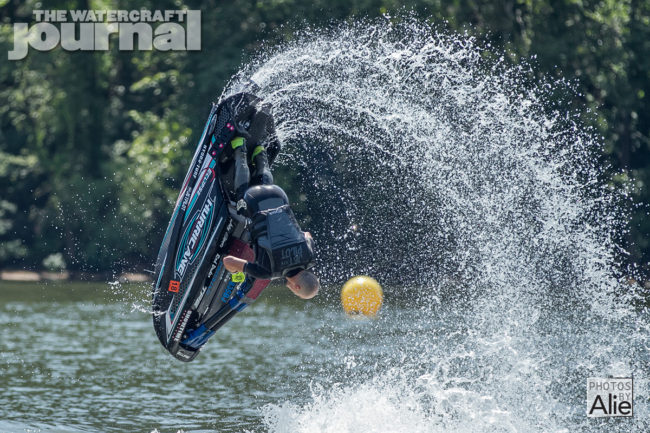
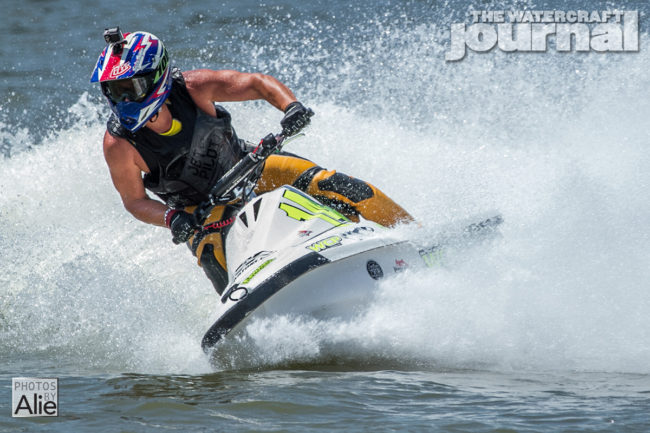
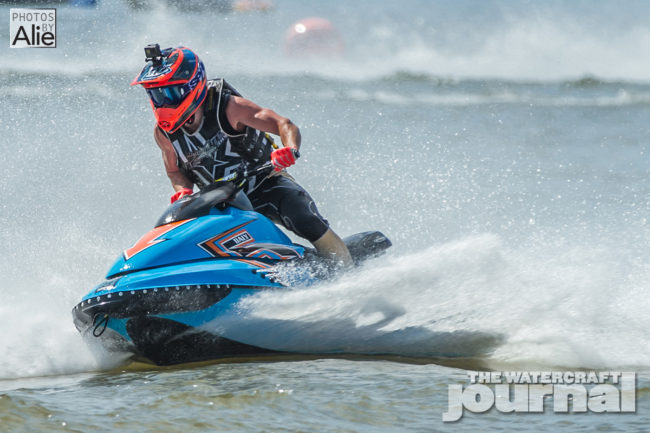
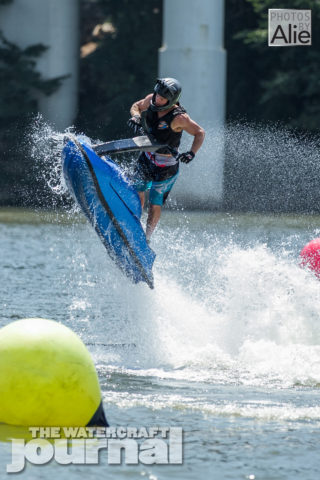
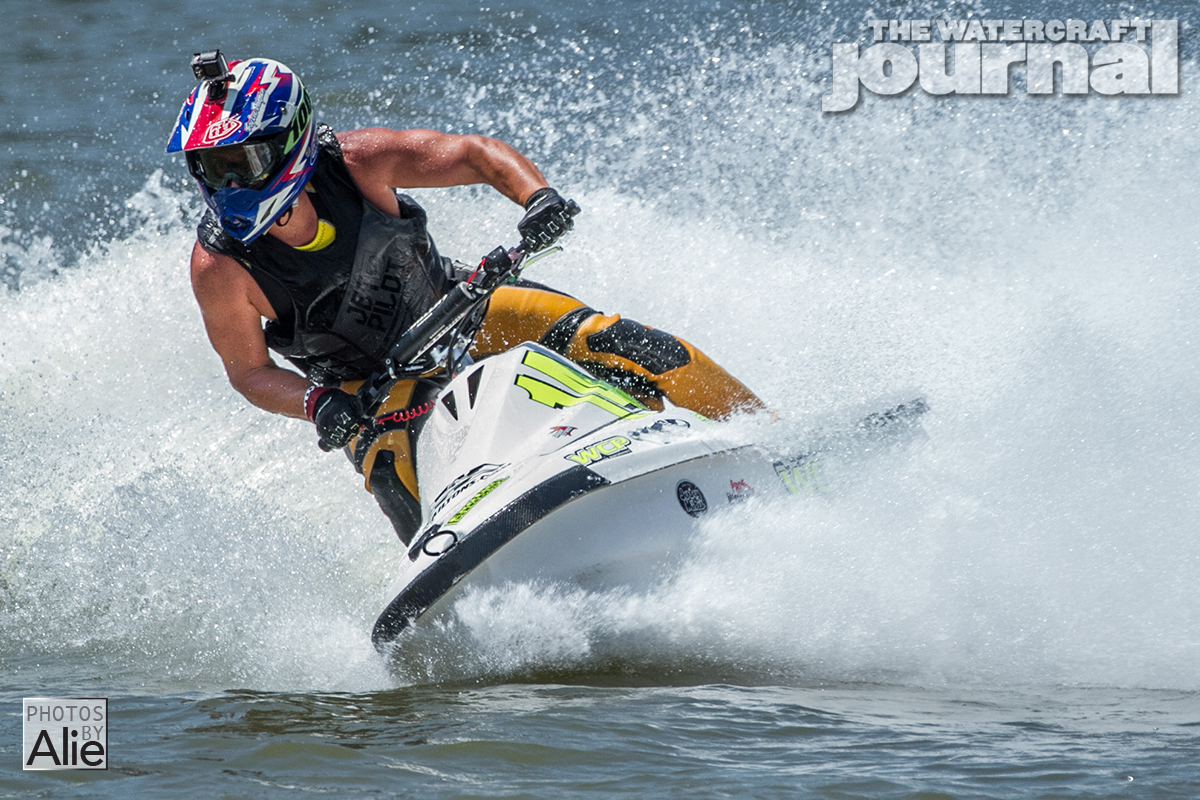
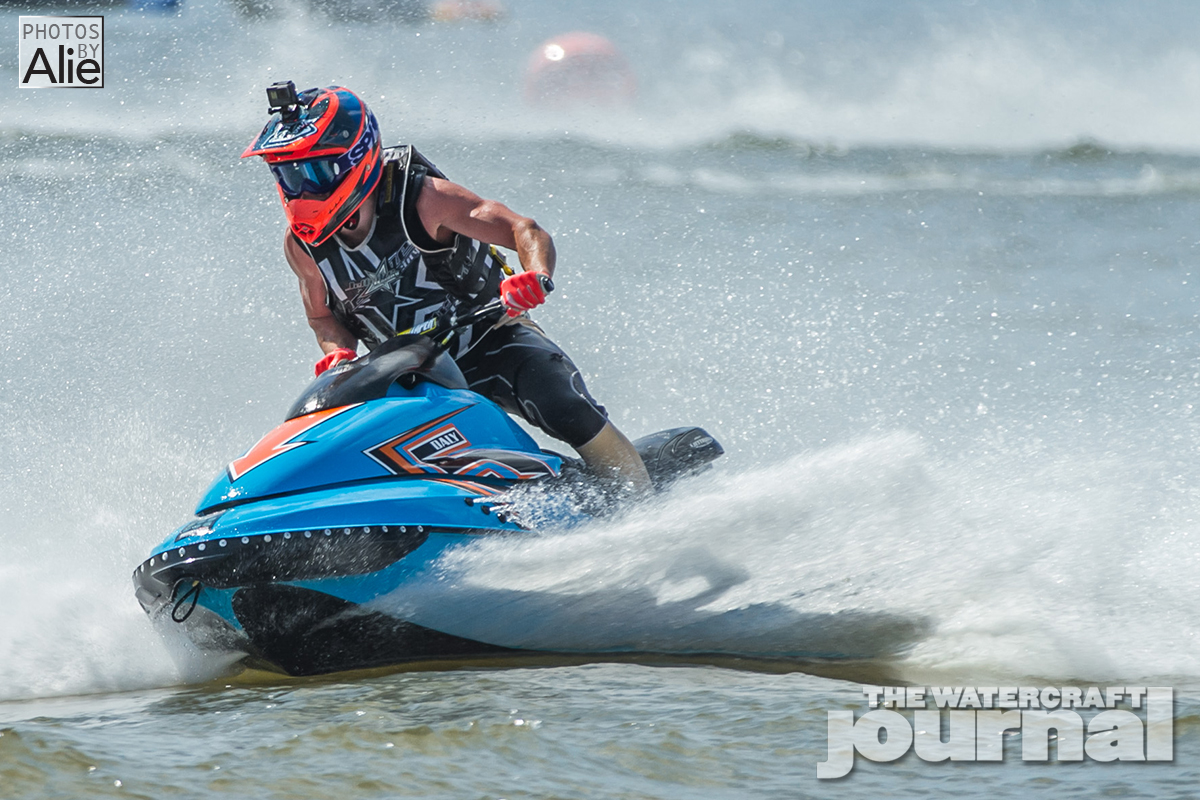
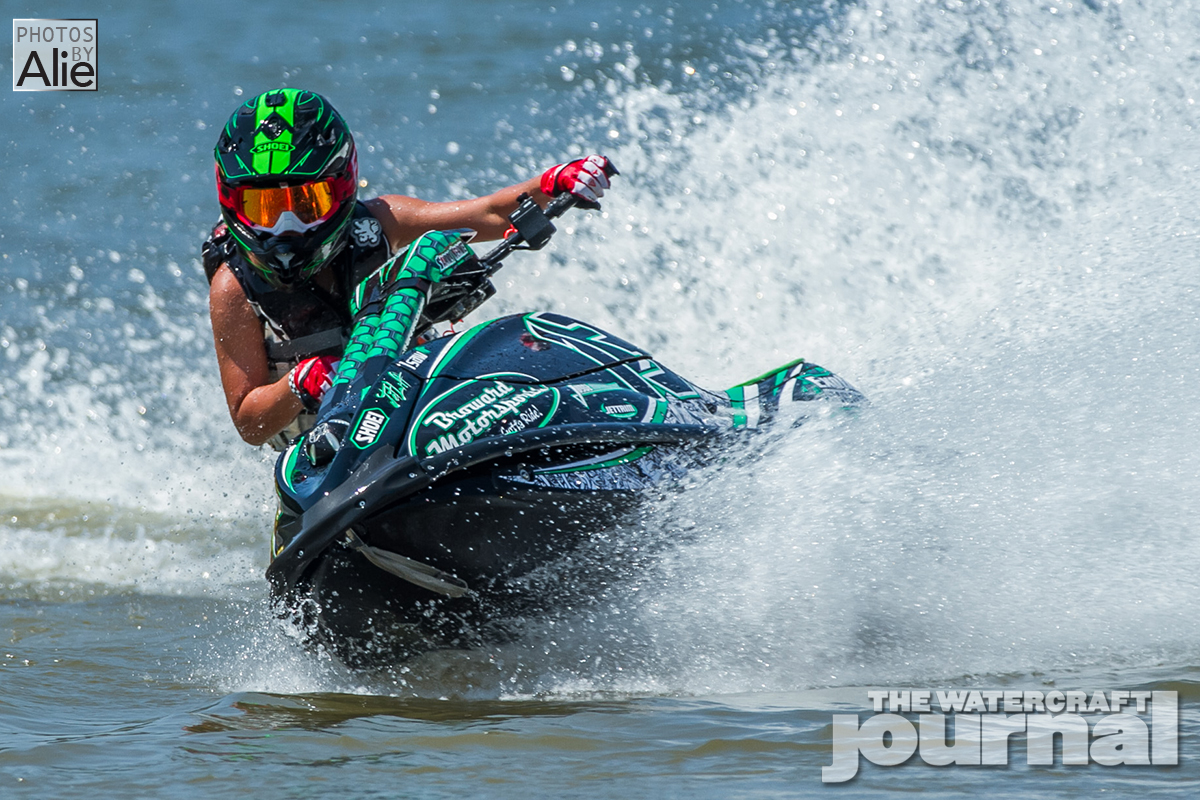
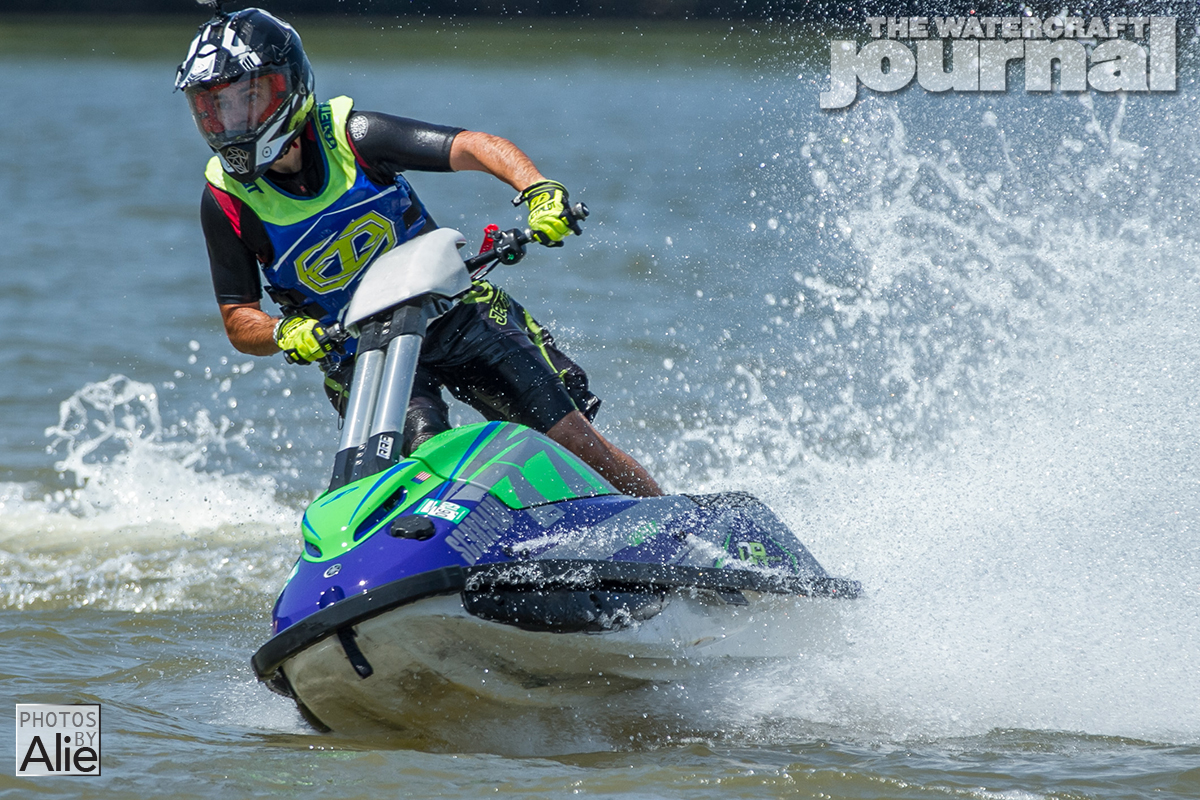
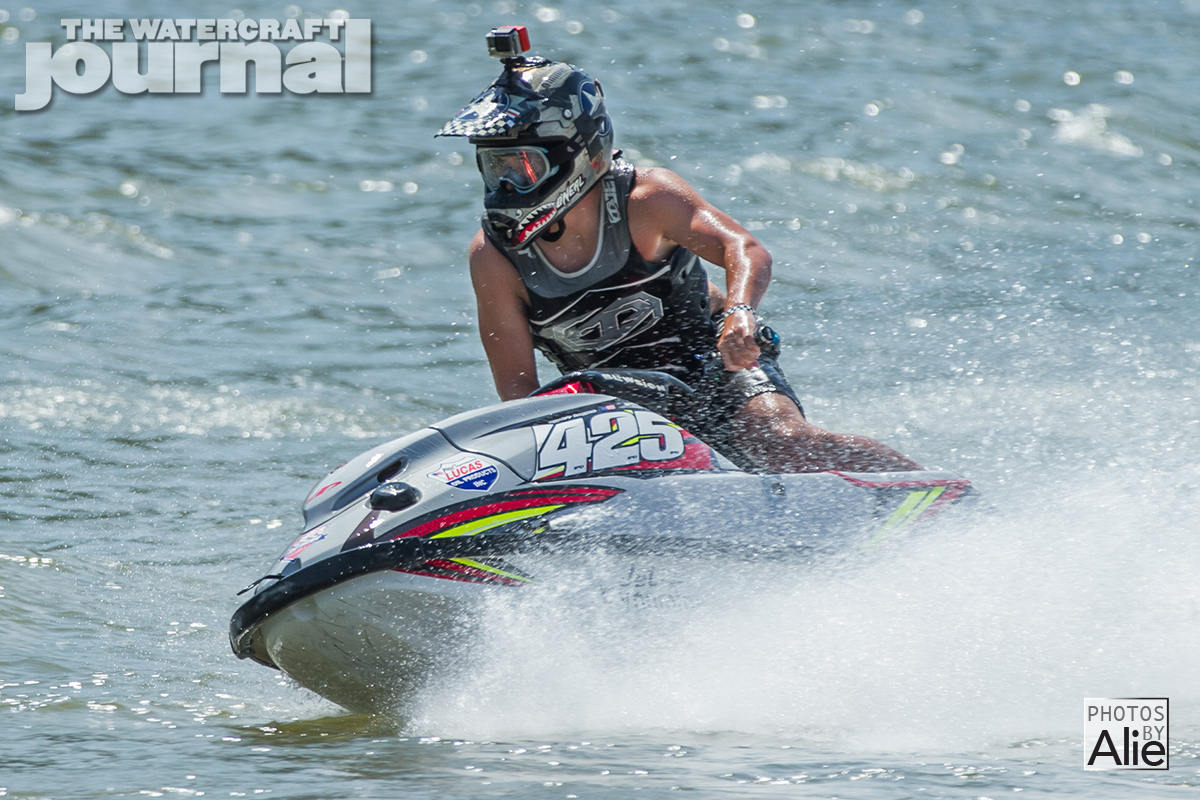
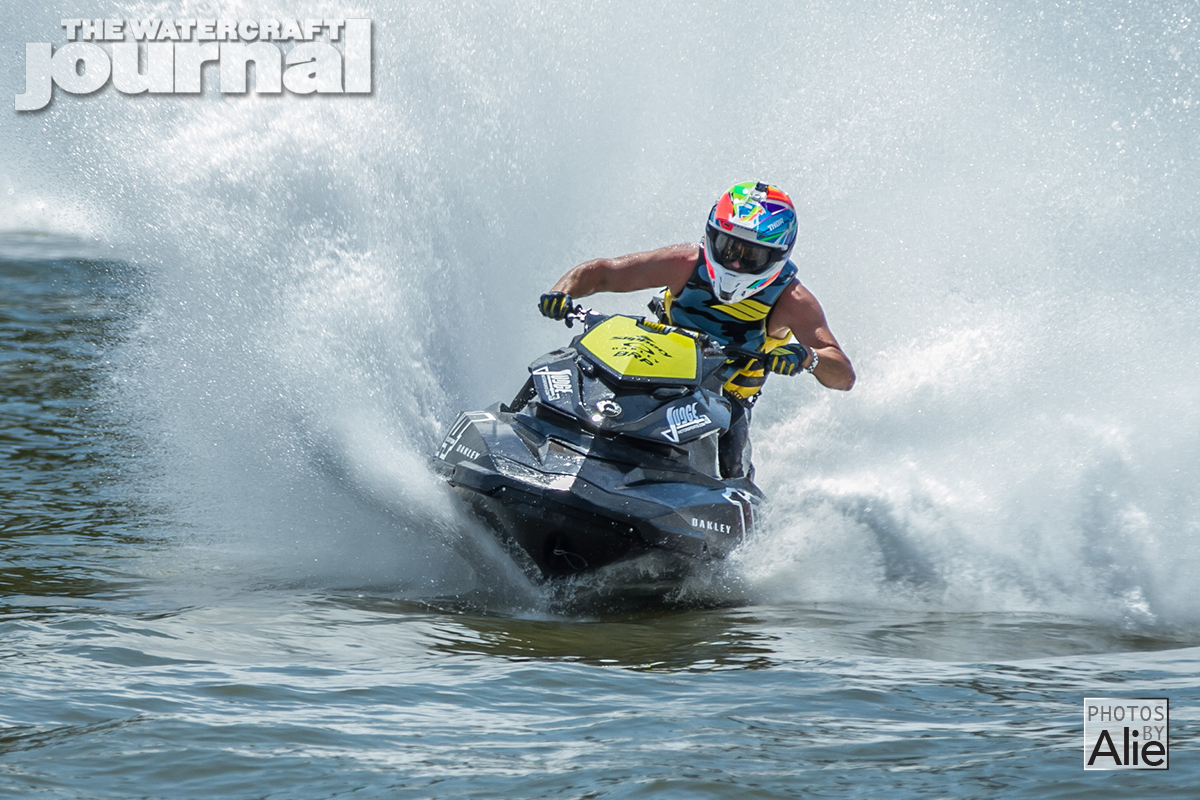
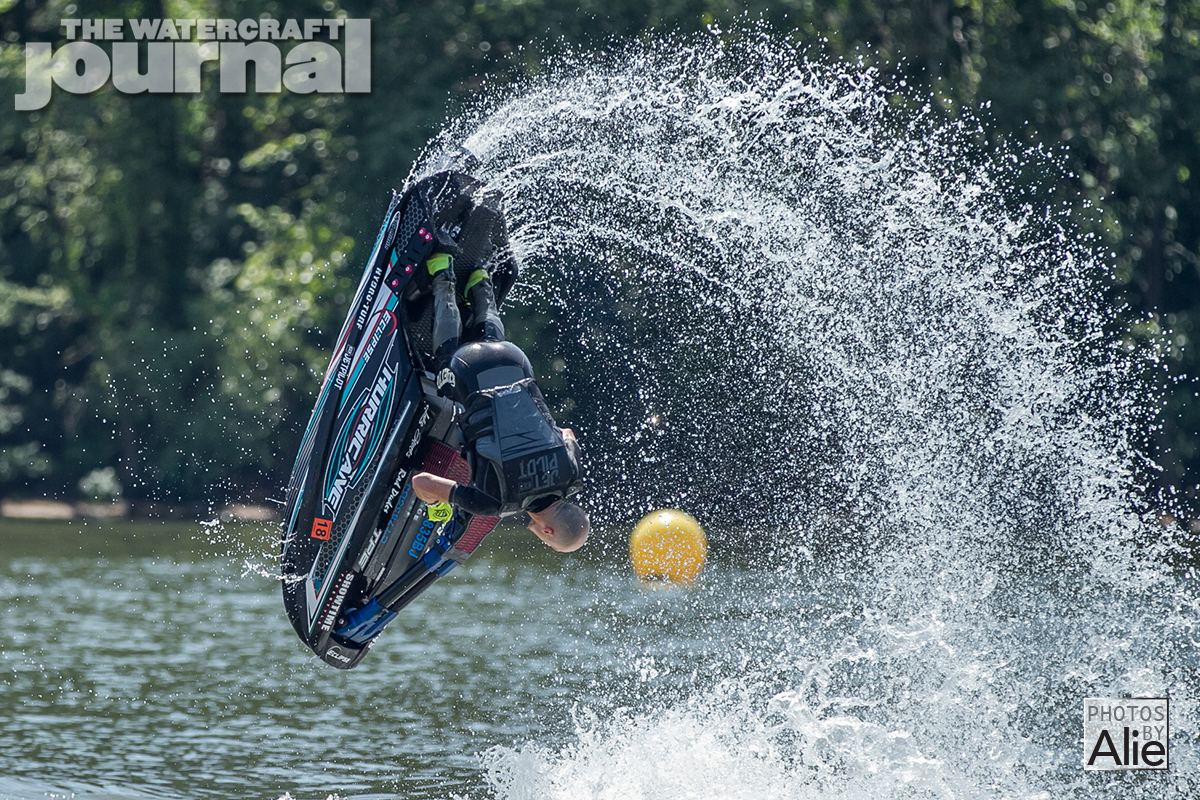
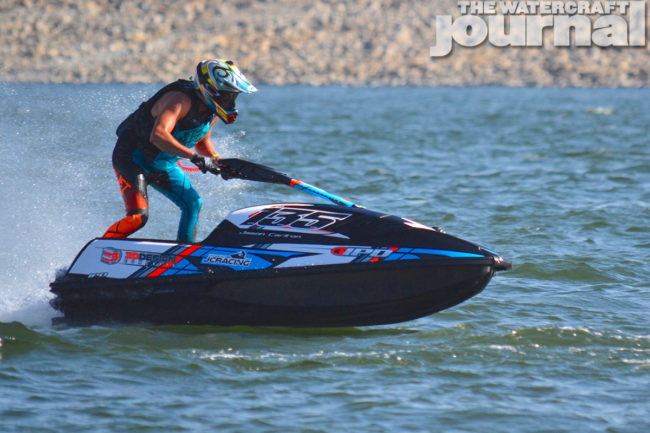
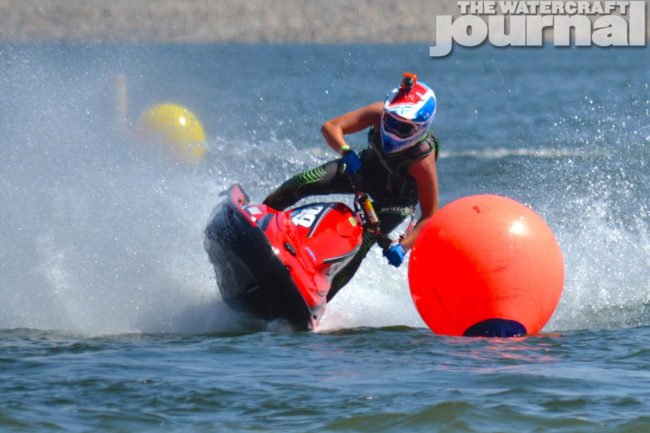
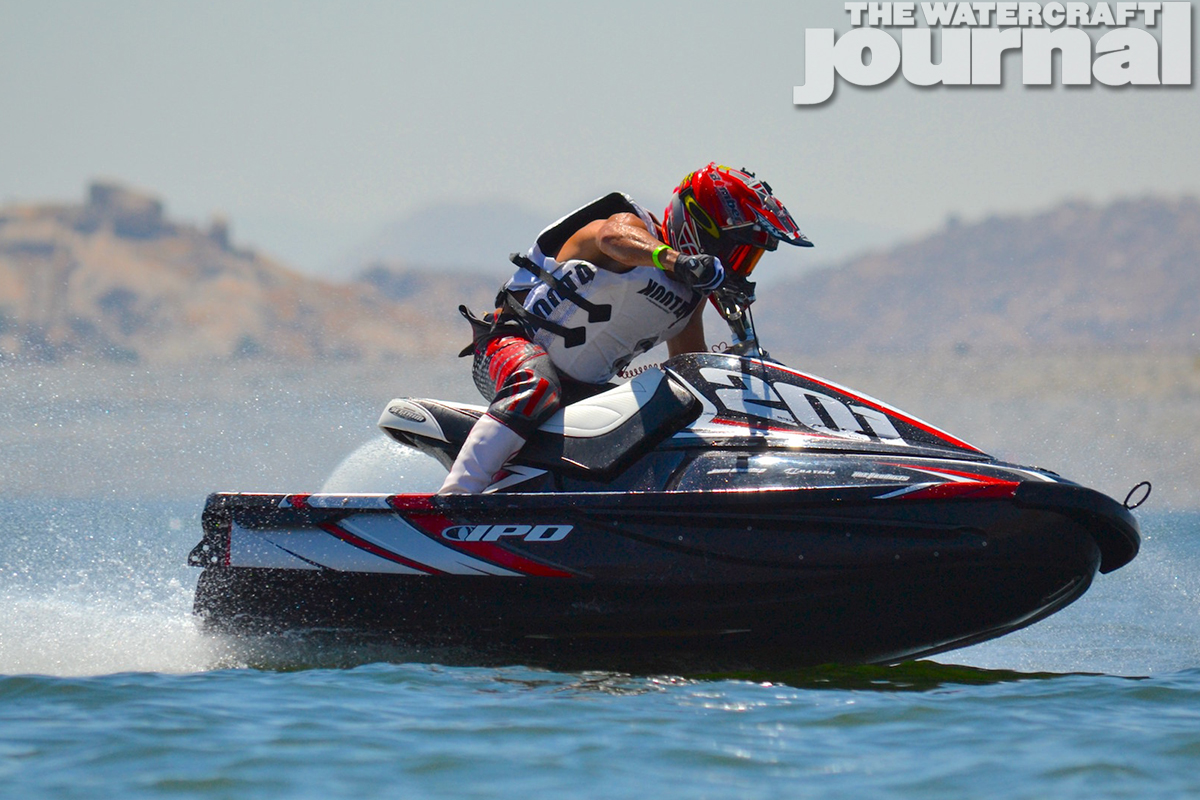
The season finals of the Jettribe Best of the West series went down August 12th and 13th at Lake Perris in Southern California, and what a way to wrap it up. This was the last opportunity for racers to qualify for the IJSBA Blowsion World Finals and it showed with some stacked classes and 114 entries. Racers traveled from all over the western United States including Arizona, Nevada, Utah, New Mexico and even Canada to participate in the race and defend and add to their season points in hopes of earning the coveted season title.
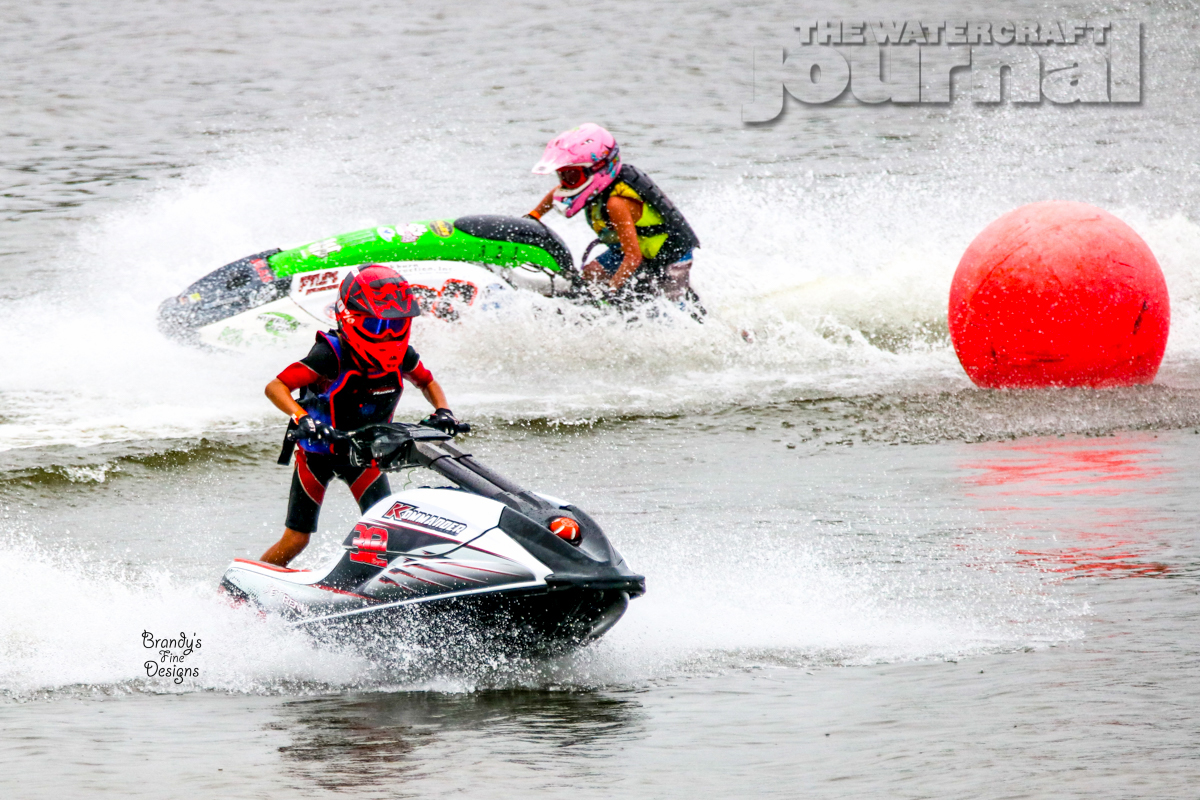
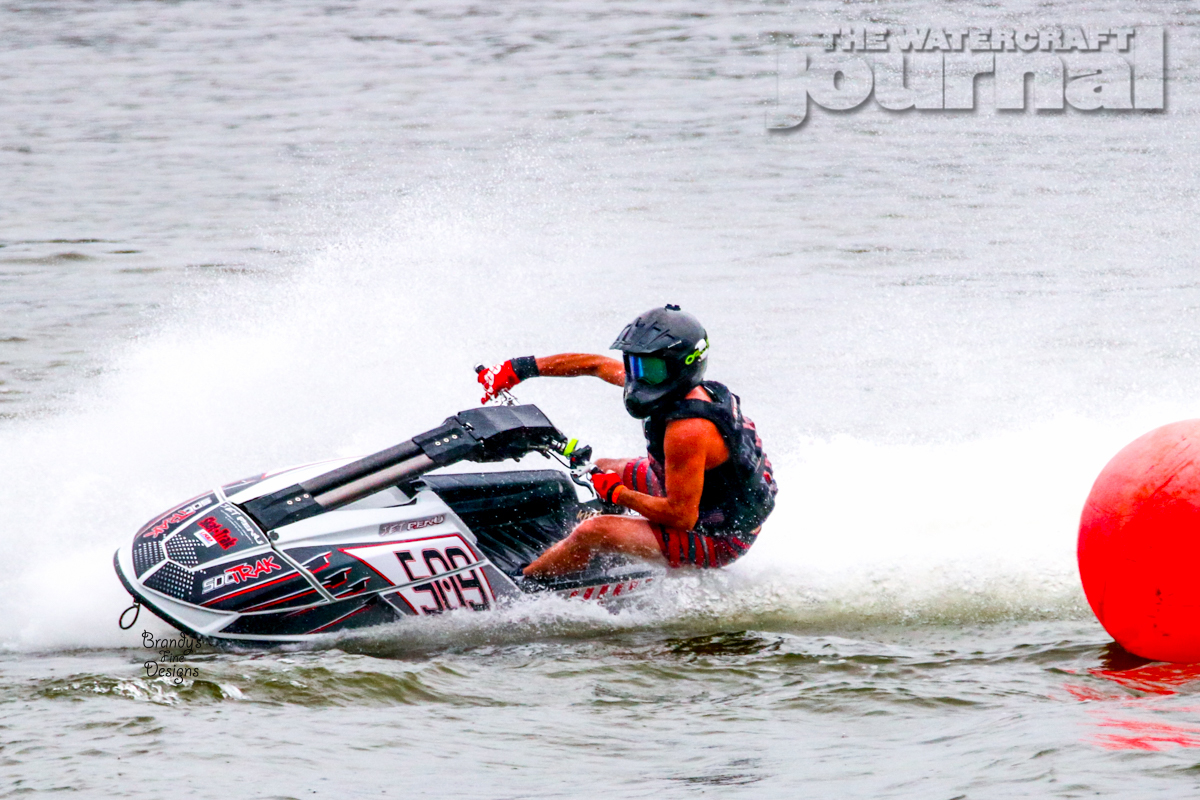
The Junior Ski 13-15 Lites and Amateur Ski Lites classes are always exciting with young talent like Tallon Chambers and Brady Courson battling every moto. Tallon won every moto on Saturday and Sunday in Junior Ski 13-15 Lites with Brady not quite able to make the move. But in Amateur Ski Lites, Brady made an amazing inside line pass on Tallon and checked out going 1-1 on Saturday. Tallon redeemed himself on Sunday with first overall in Amateur Ski Lites. Junior Ski 10-12 Lites had some great racing between Revin Harris and rookie Coy Curtis. It’s truly amazing how fast these little prodigies can go around the track…it must be their low center of gravity, at least we’d all like to think that. Coy stands in the tray not much above the handlepole and can really make his SuperJet scream! On Saturday, Revin went 2-1 for first overall while Coy went 1-3 for second overall. Sunday showed Revin’s dominance once again by taking the top spot with a 1-1 performance while Coy took second overall.
Multi-time world champion Tommy Bonacci showed up and, no surprise, put on a clinic, winning every moto on Saturday in the Sport Spec and ‘Blaster Spec classes. Battles pursued behind him as Tony Martinez, Nanette Sanchez and Hunter Dunn fought for the remaining two podium positions in Sport Spec, and Annie Sims, Ron Henderson and Hunter Dunn were at it tooth and nail in the ‘Blaster Spec class, Hunter taking the top spot on Sunday.
The biggest class of the weekend was Vintage 550 Ski with 15 entries! Competition was stacked and brought several veterans of the sport back to their beginnings in the 1980’s. Tommy Bonacci tried his hand at the class which also included Rob Flores, Charles Sims and Lake Elsinore’s own, 13-year-old 550 superstar Wyland Reden. Wyland showed he is a force to be reckoned with as he came from behind and ran down the two previous world champions, Rob Flores and Tommy Bonacci. Wyland has brought new blood to this class, he is spectacular to watch and is sure to be making a big name for himself in the sport. The top spots on Saturday went to Wyland Reden on top of the box, Payton Hill finishing second, Charles Sims third, with Tommy Bonacci and Rob Flores rounding out the Top 5, respectively. Sunday’s results were similar with Wyland getting first overall, Charles Sims a very close second, and Rob Flores rounding out the podium.
Over the course of the season, there were 292 entries over 8 rounds. A few other notable items from the series, Mr. Consistent Jesse Dirnberger from New Mexico won every race this season except one in Amateur Ski Modified and is sure to be a title contender at this year’s World Finals. This season had a great Women’s Ski turnout with 17 different women competing in 3 different classes. Keep an eye out for Women’s Ski Novice Lites champion Alyssa Musselman at the World Final this year, along with runner up Angie Carlton and third place champ Stevie Bascom who won 5 of the 8 rounds of the series.
The Series Champions were crowned Sunday afternoon, and as the curtains came to a close on the season, there was one last treat for the racers. Series sponsor JetLift donated and raffled off two beach totes to racers who competed in every round of the series. Hunter Dunn who won the series titles in both Sport Spec and ‘Blaster Spec walked away with the first tote, and Revin Harris, series champion in Junior Ski Stock and Lites, made out and captured the second tote, along with a set of JCRacing ‘Blaster Sponsons that were raffled to all ‘Blaster racers.
Congratulations to all the competitors and champions of the 2017 Jettribe Best of the West series and thank you to all the staff who puts on these wonderful events. The 2018 Best of the West season is sure to be another exciting and highly anticipated series.
All images provided by Ally Emig and unaltered originals can be purchased by emailing HERE.
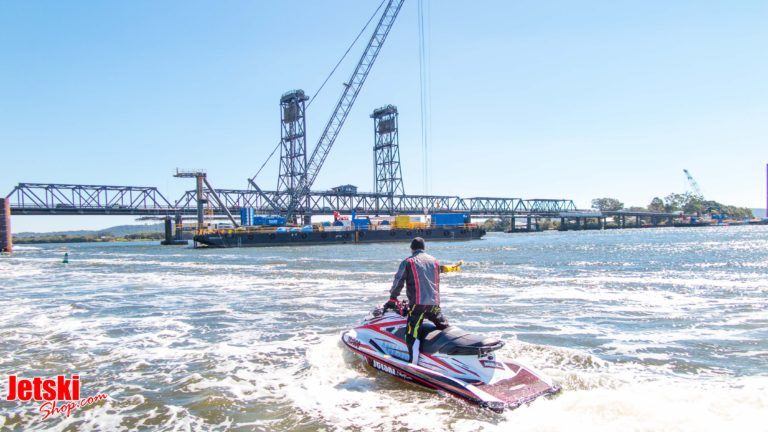
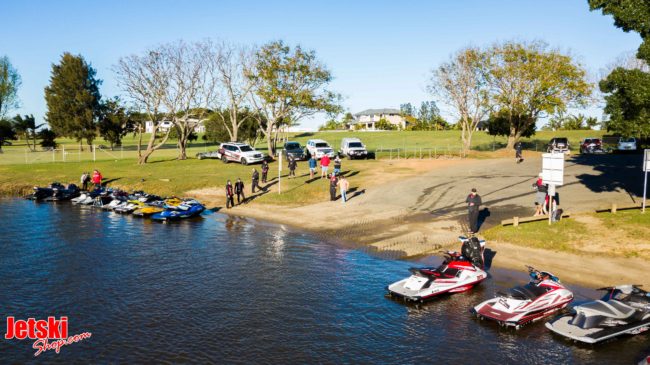
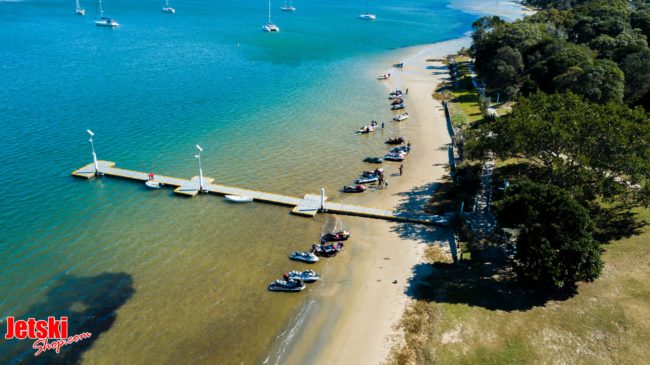
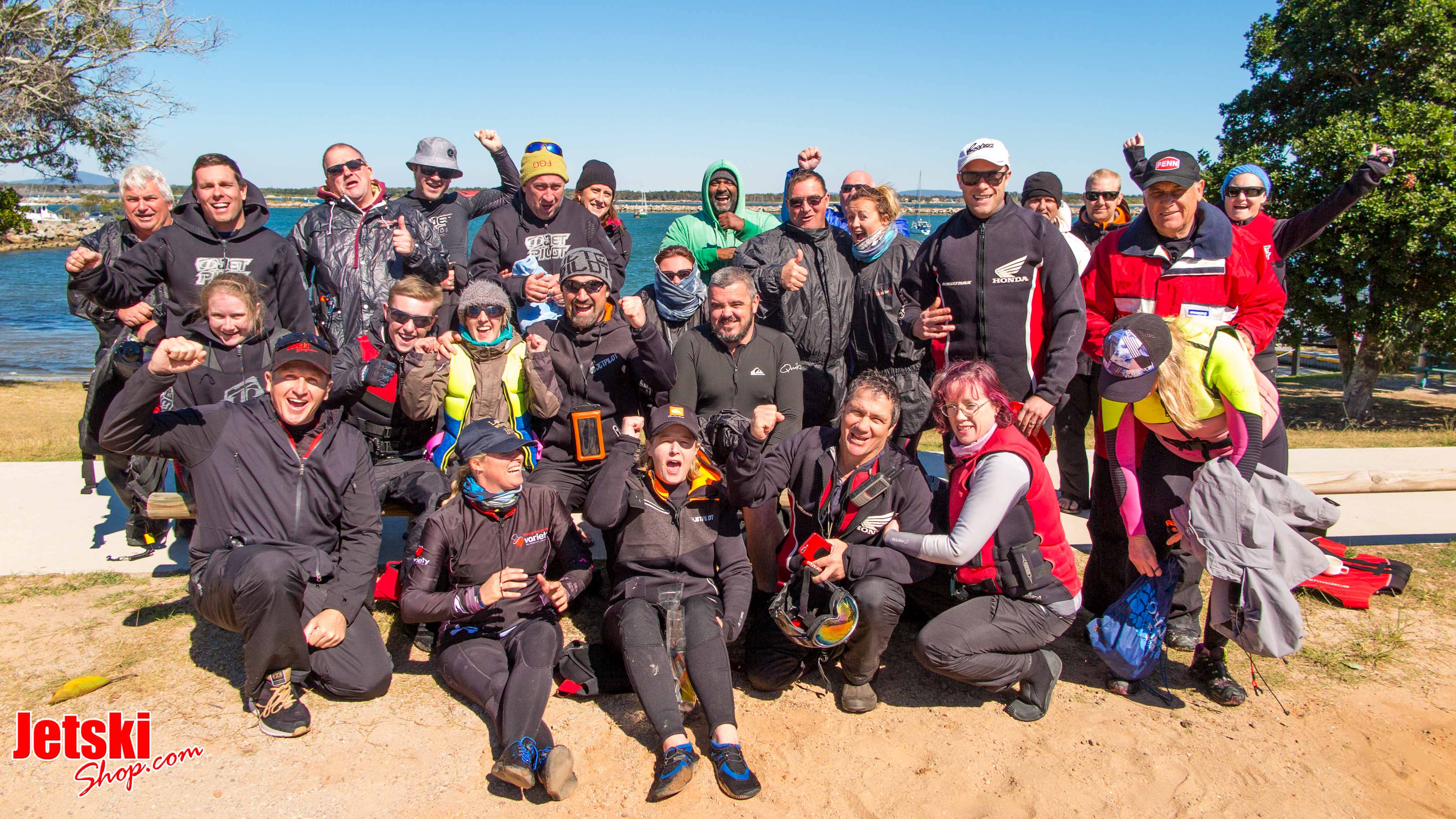
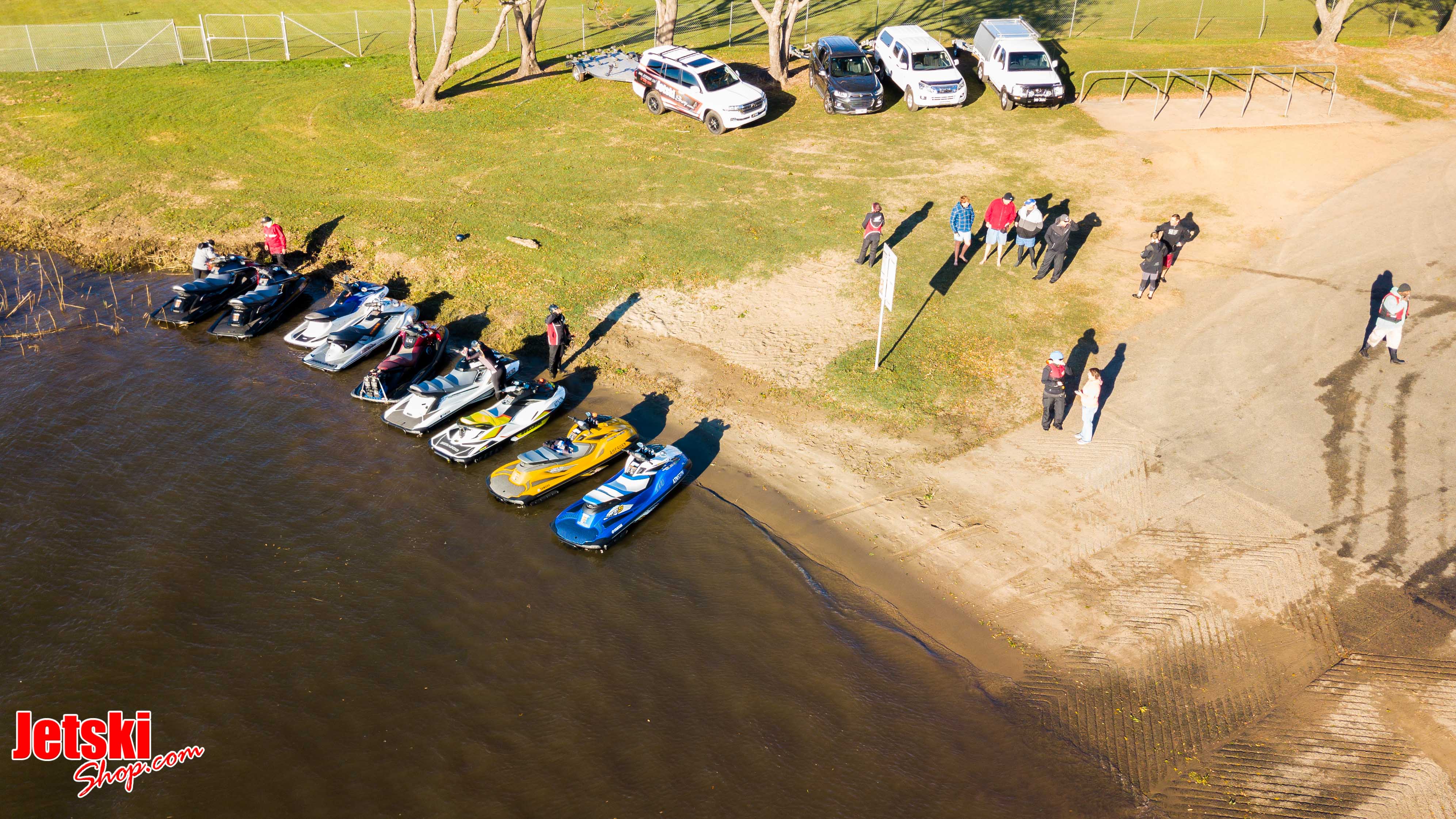
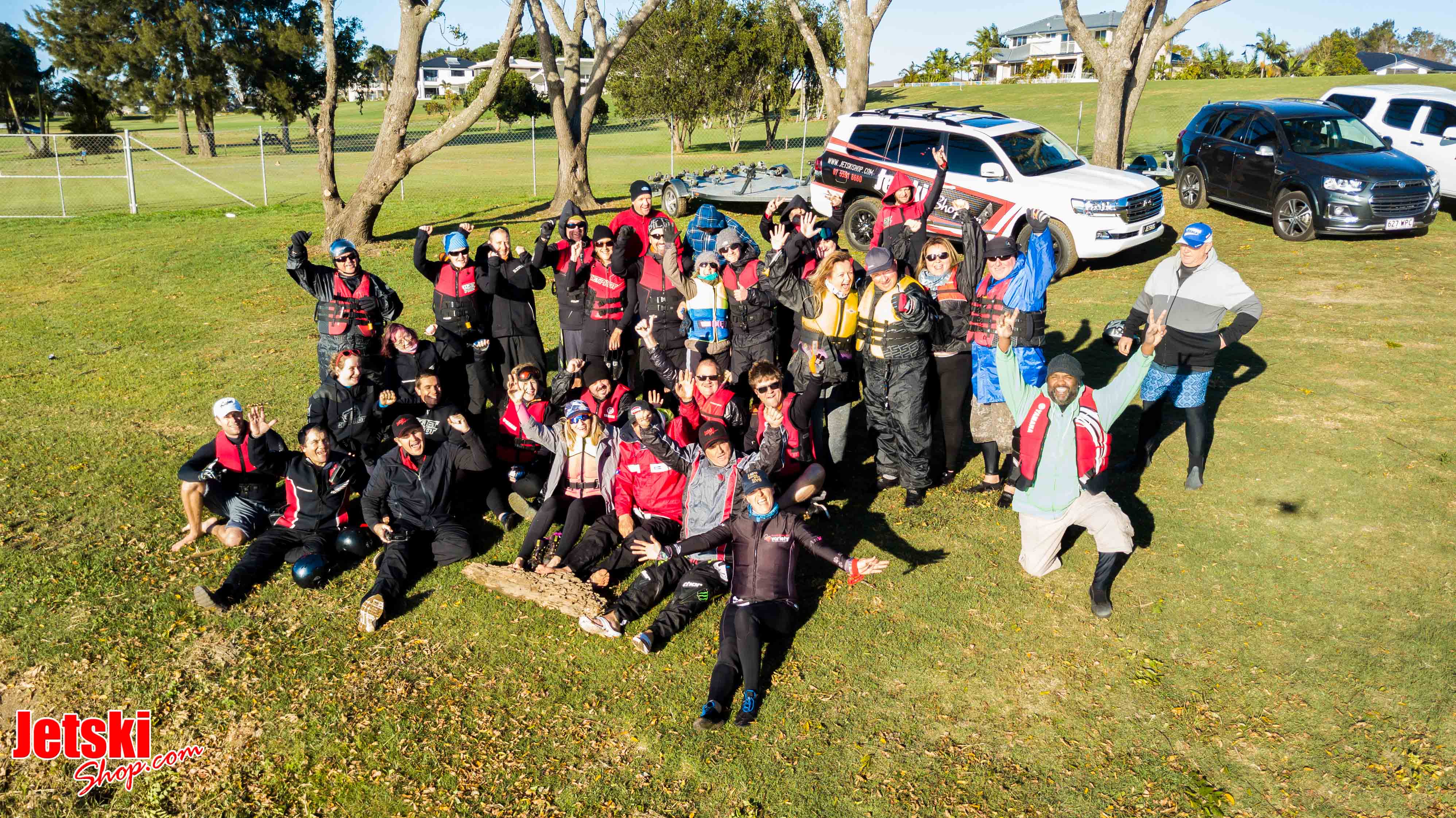
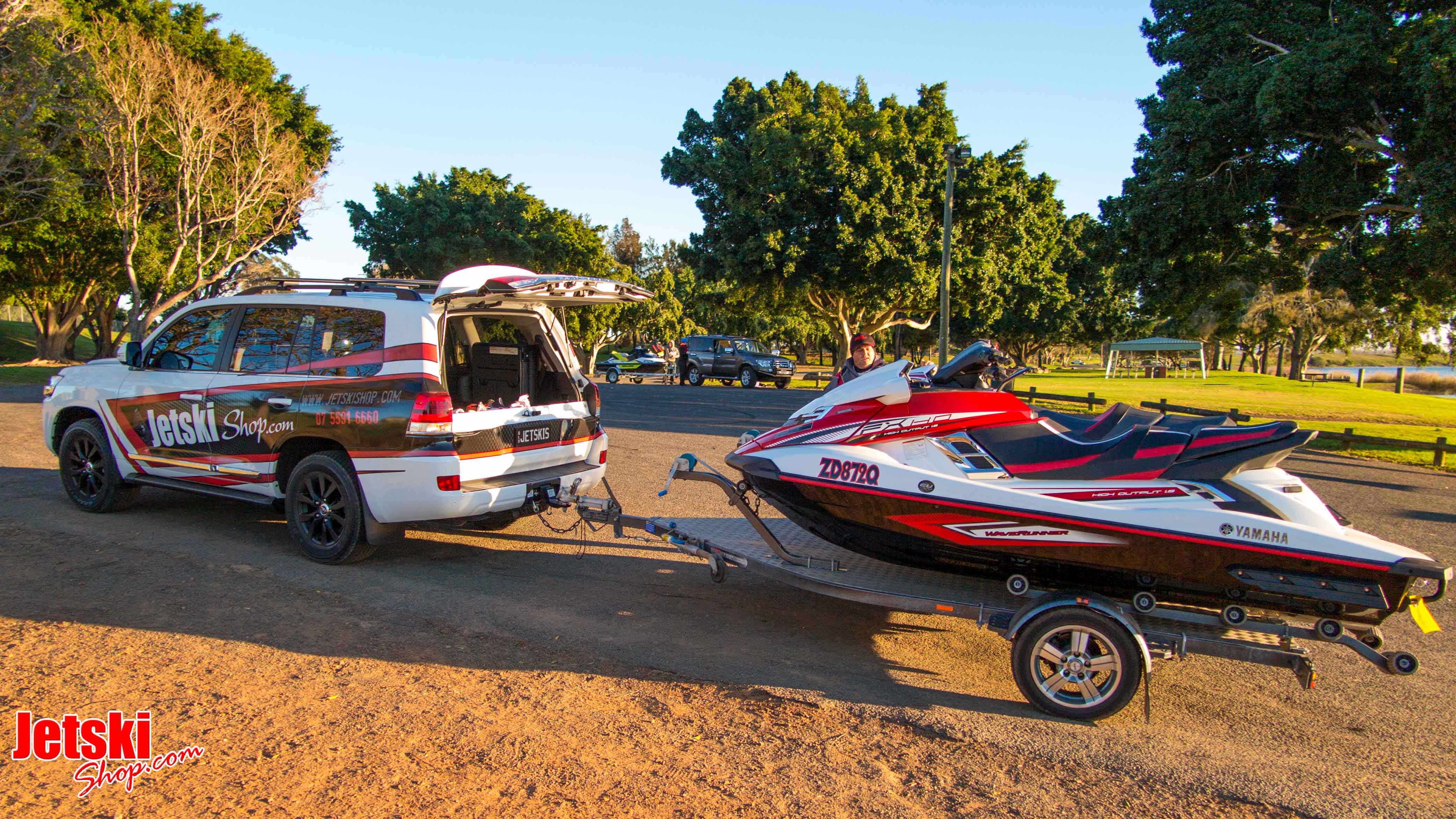
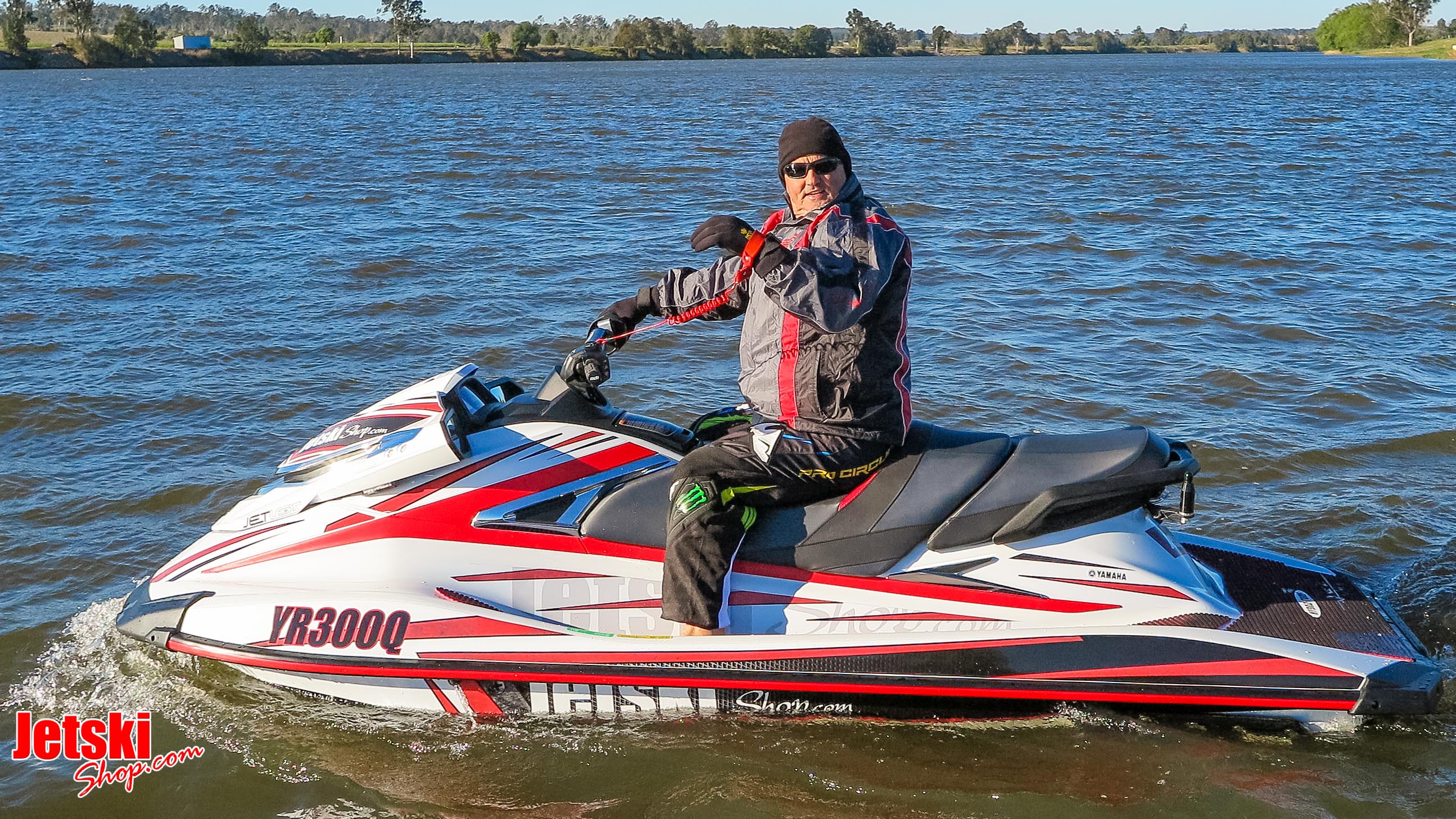
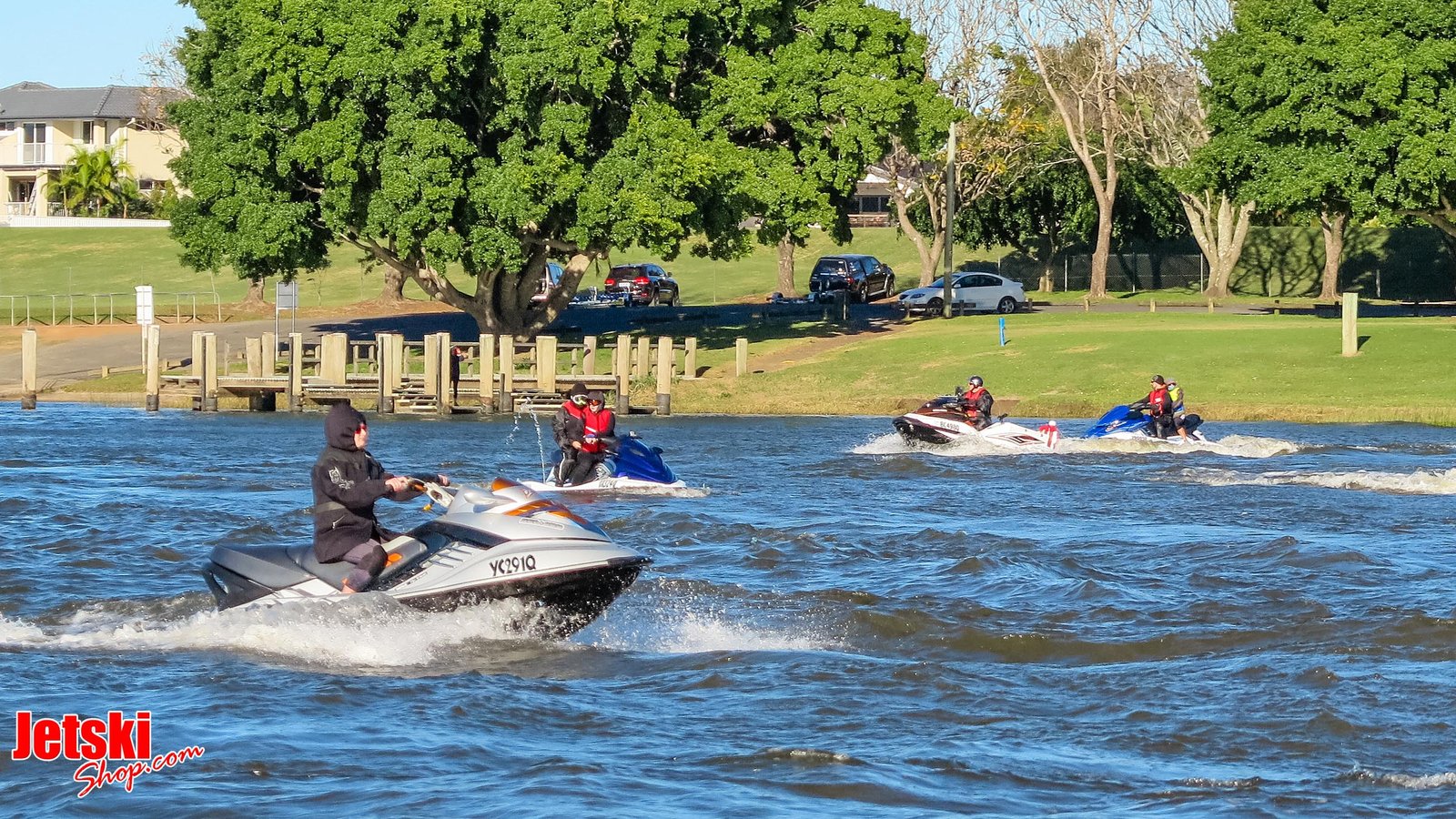
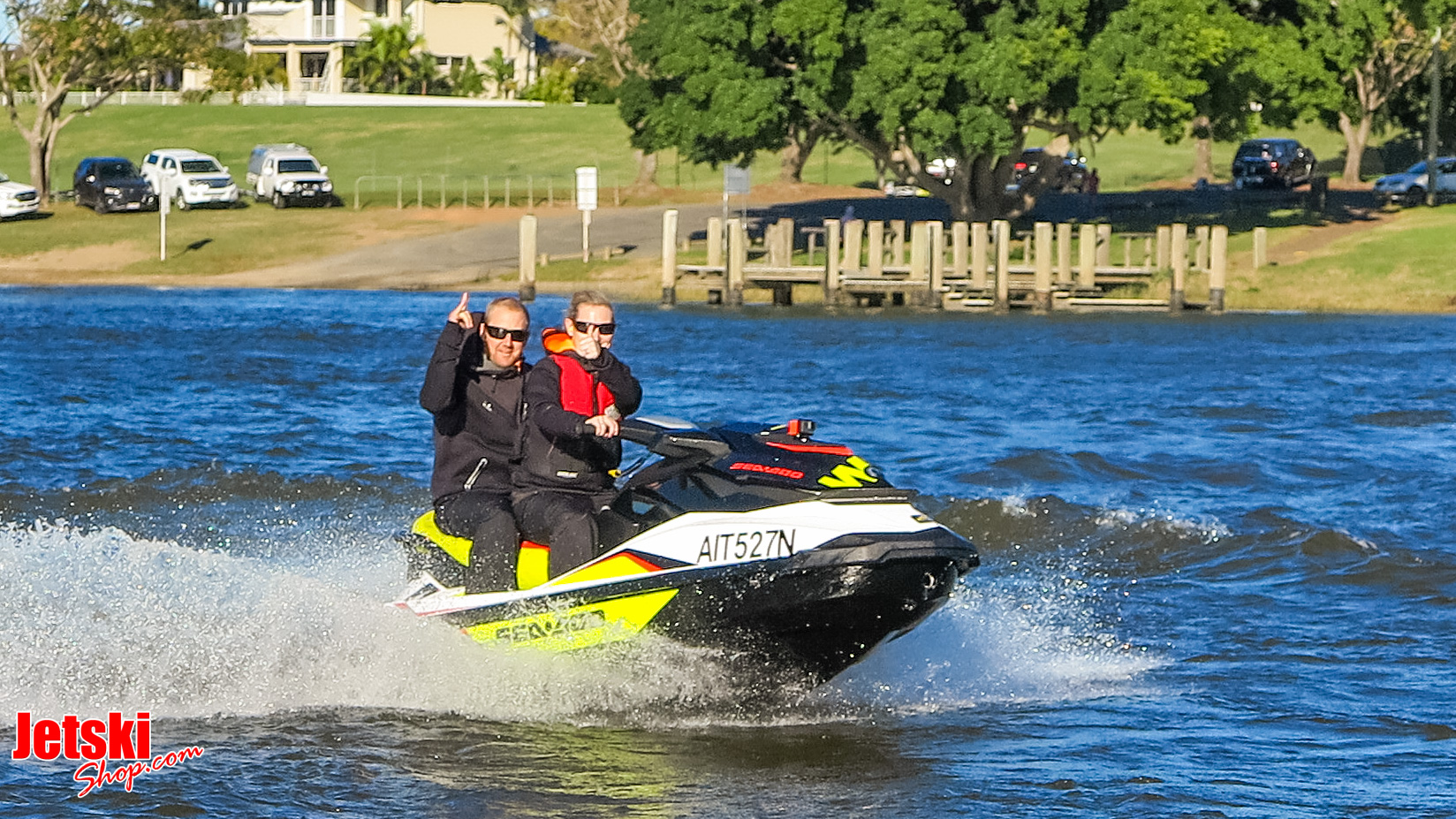
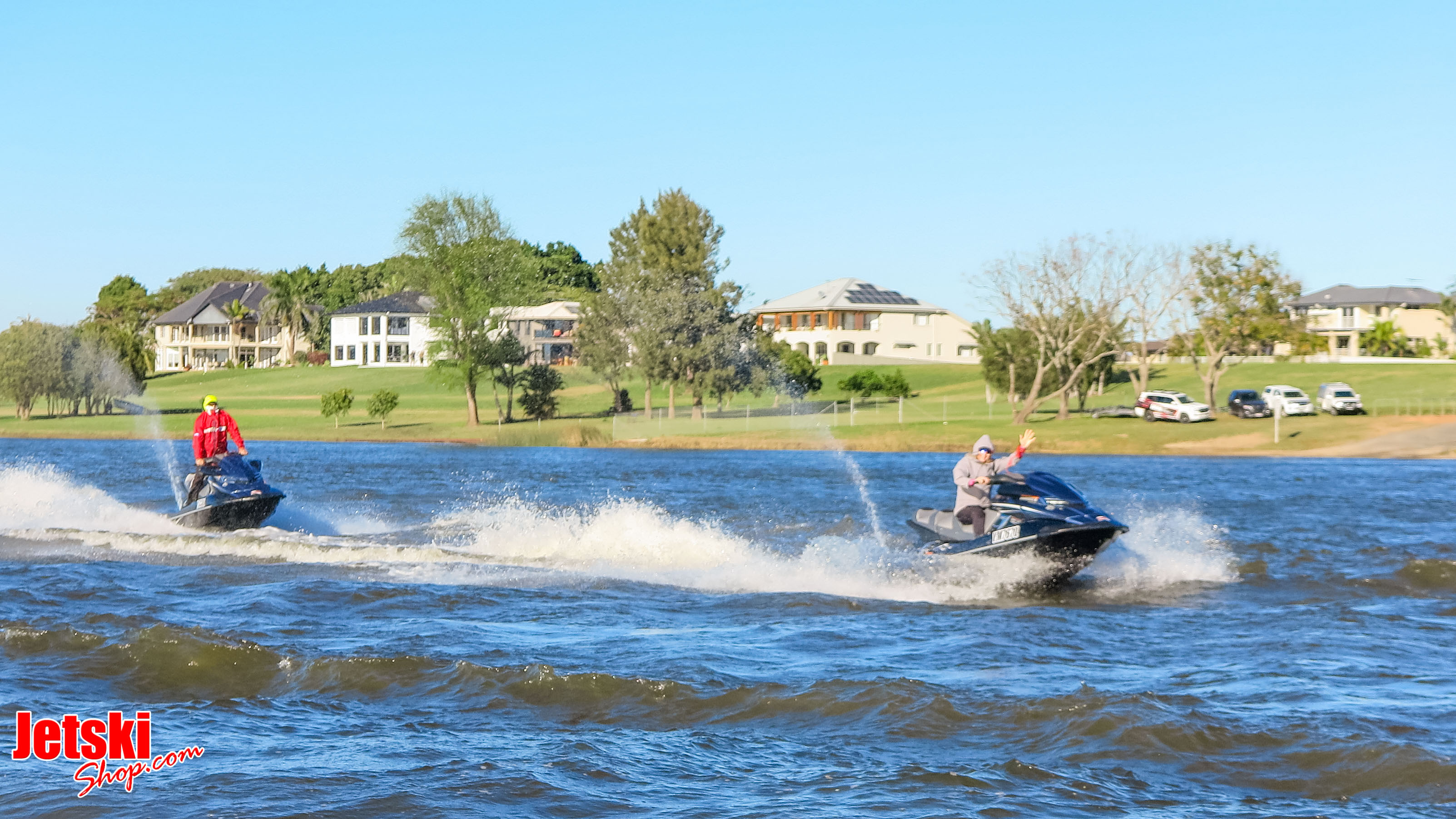
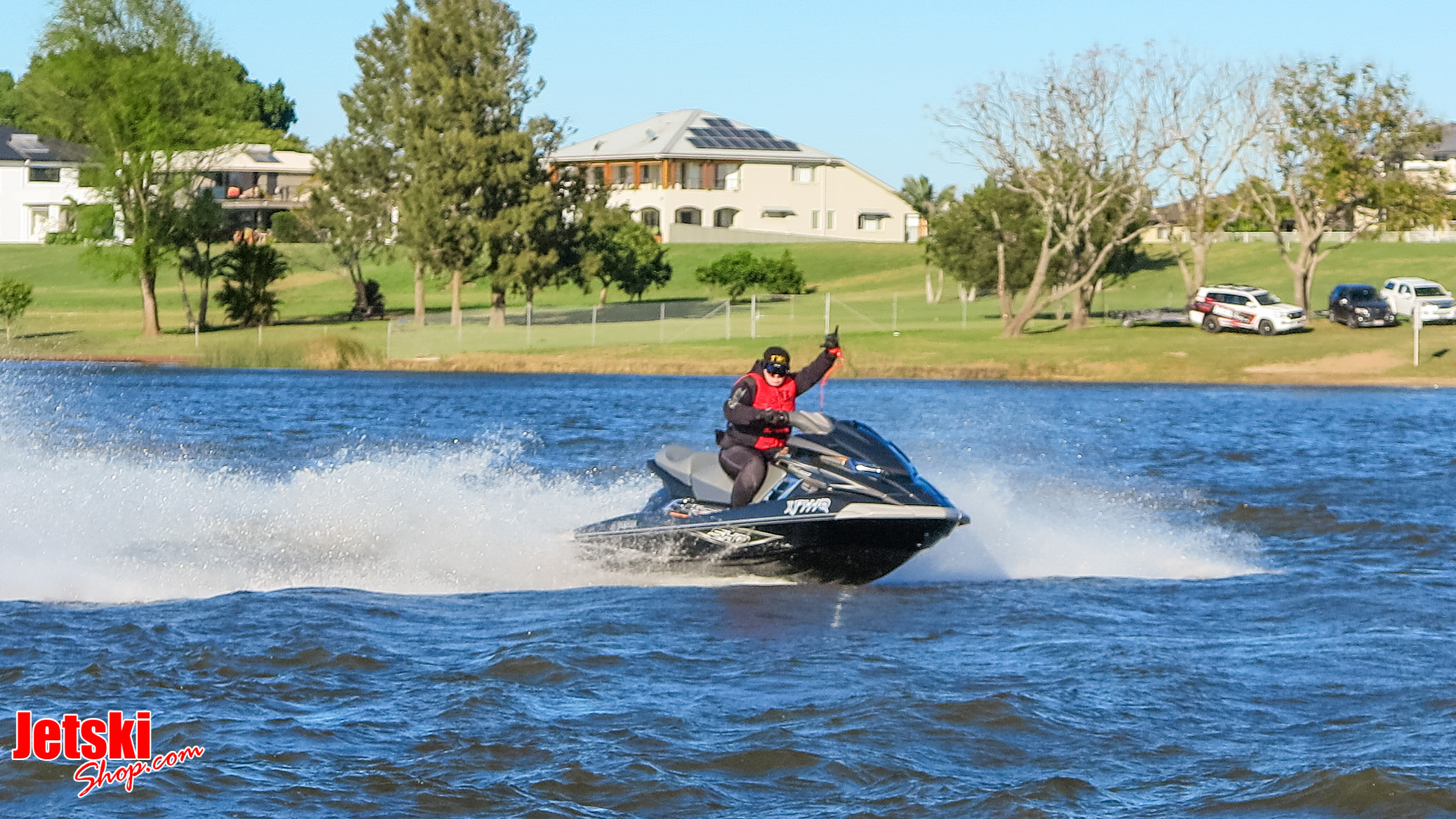
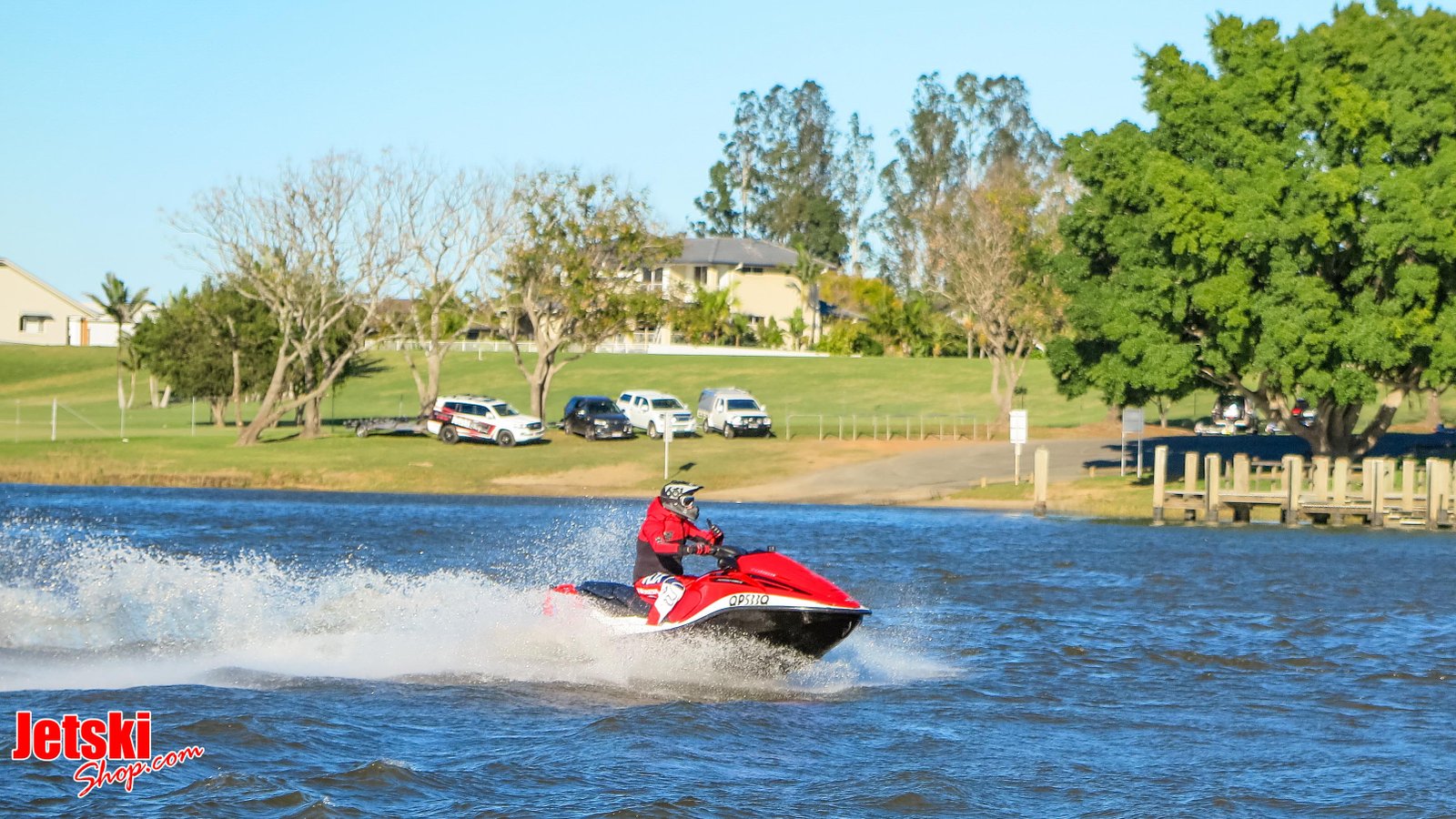
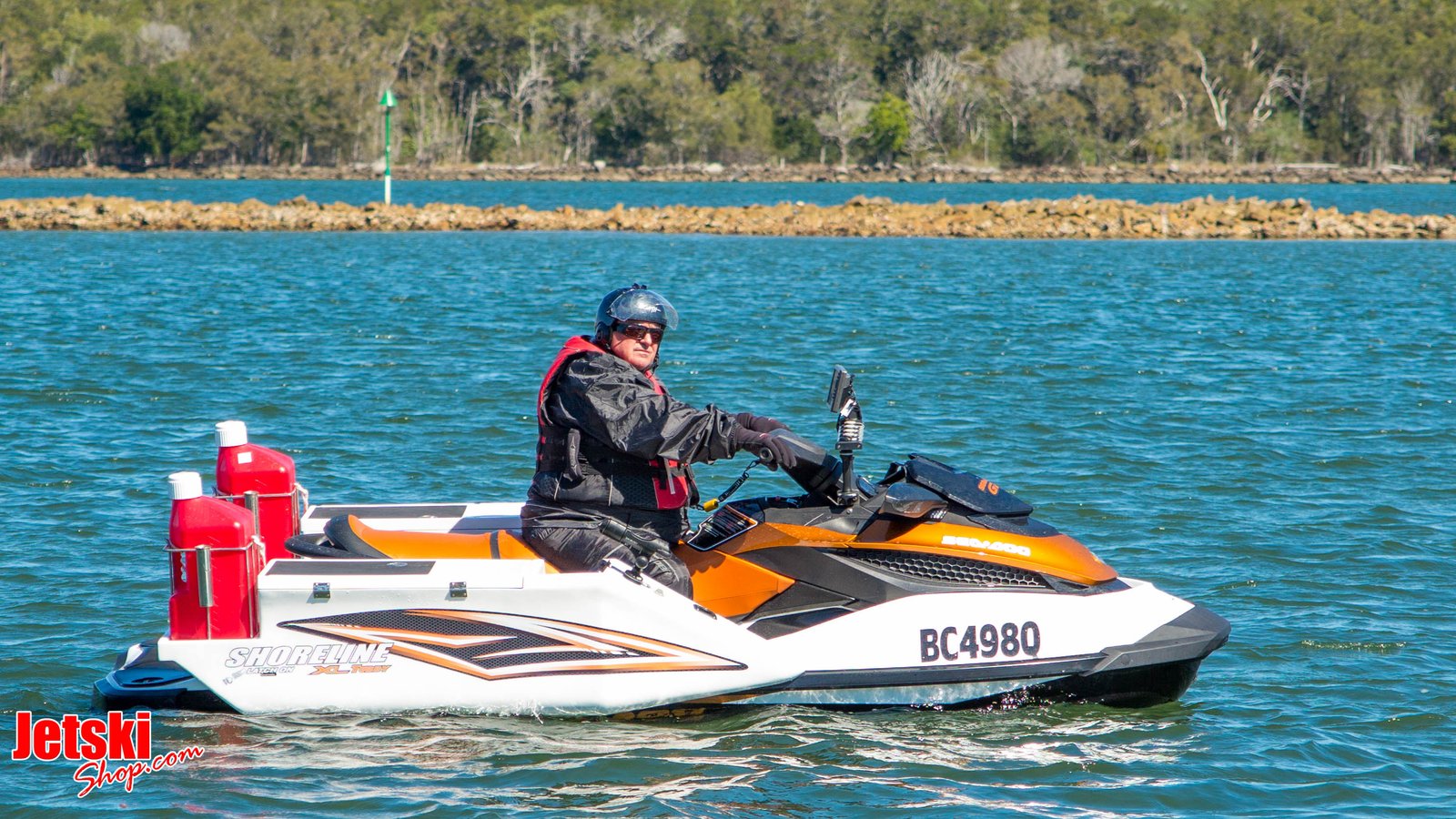
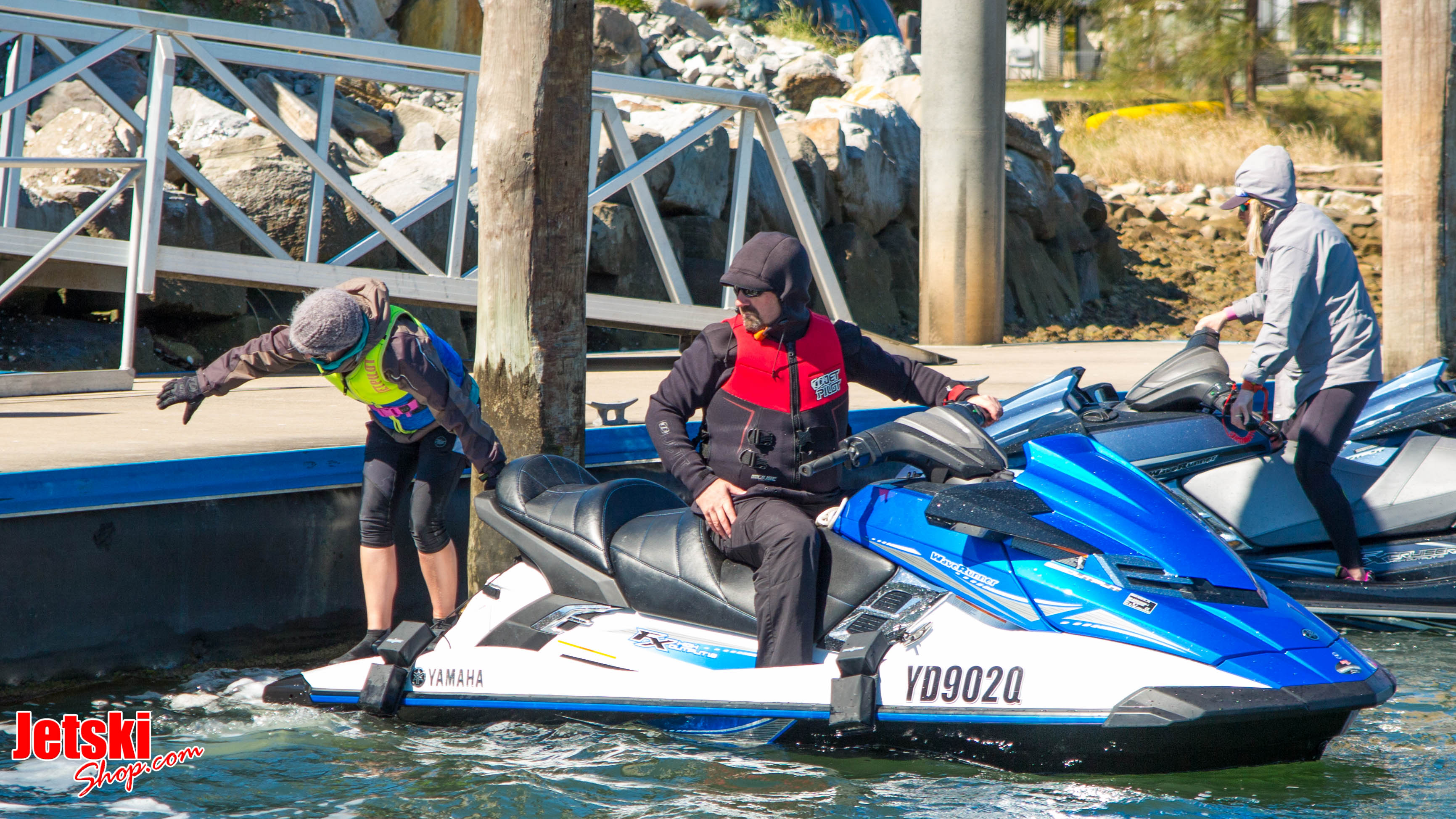
The Clarence River Ride always promises an amazing adventure. What we were all looking forward to was 230km of flat water riding. What we got was slightly different. It started at about 6am when cars started streaming towards the ramp at the Big River Holiday Park and Ski Lodge at Sealands just south of Grafton. The plan was to meet everyone at the ramp at Grafton at about 7:15. Not all stayed at the ski lodge, as we had some locals joining in on the ride.
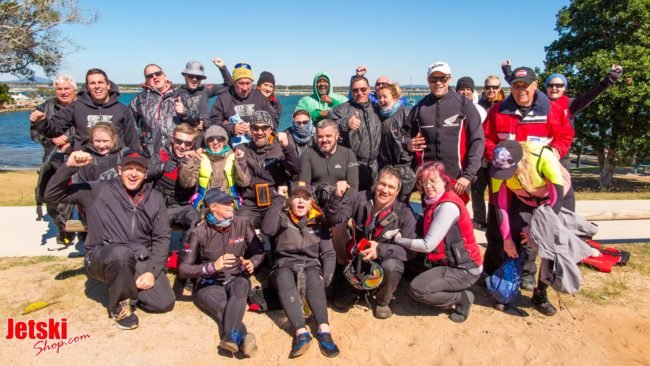
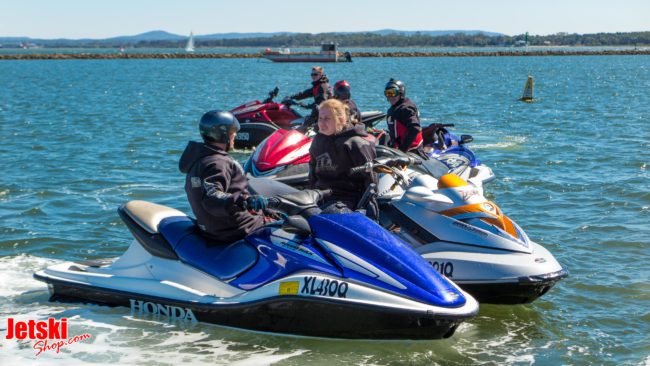
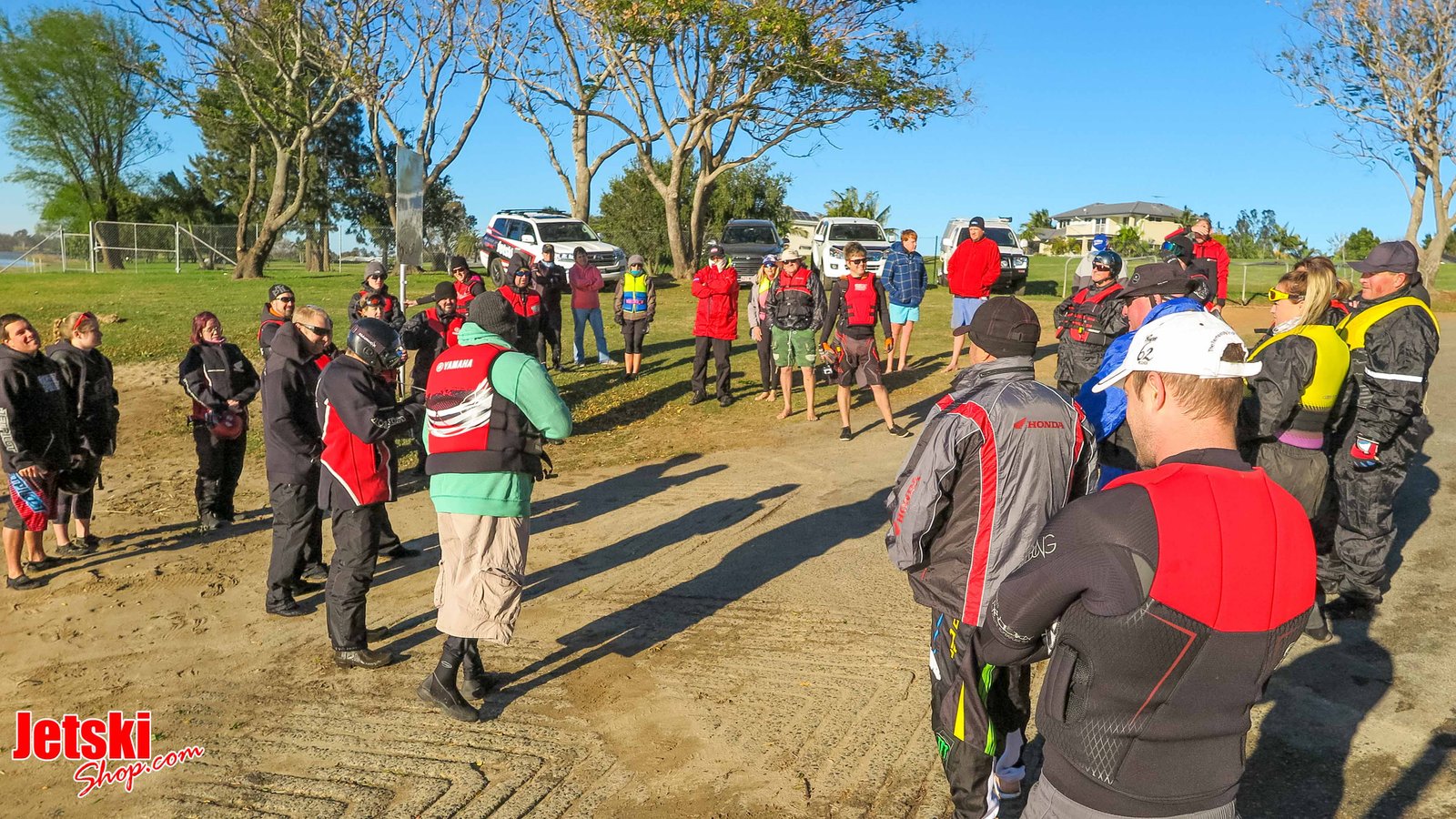
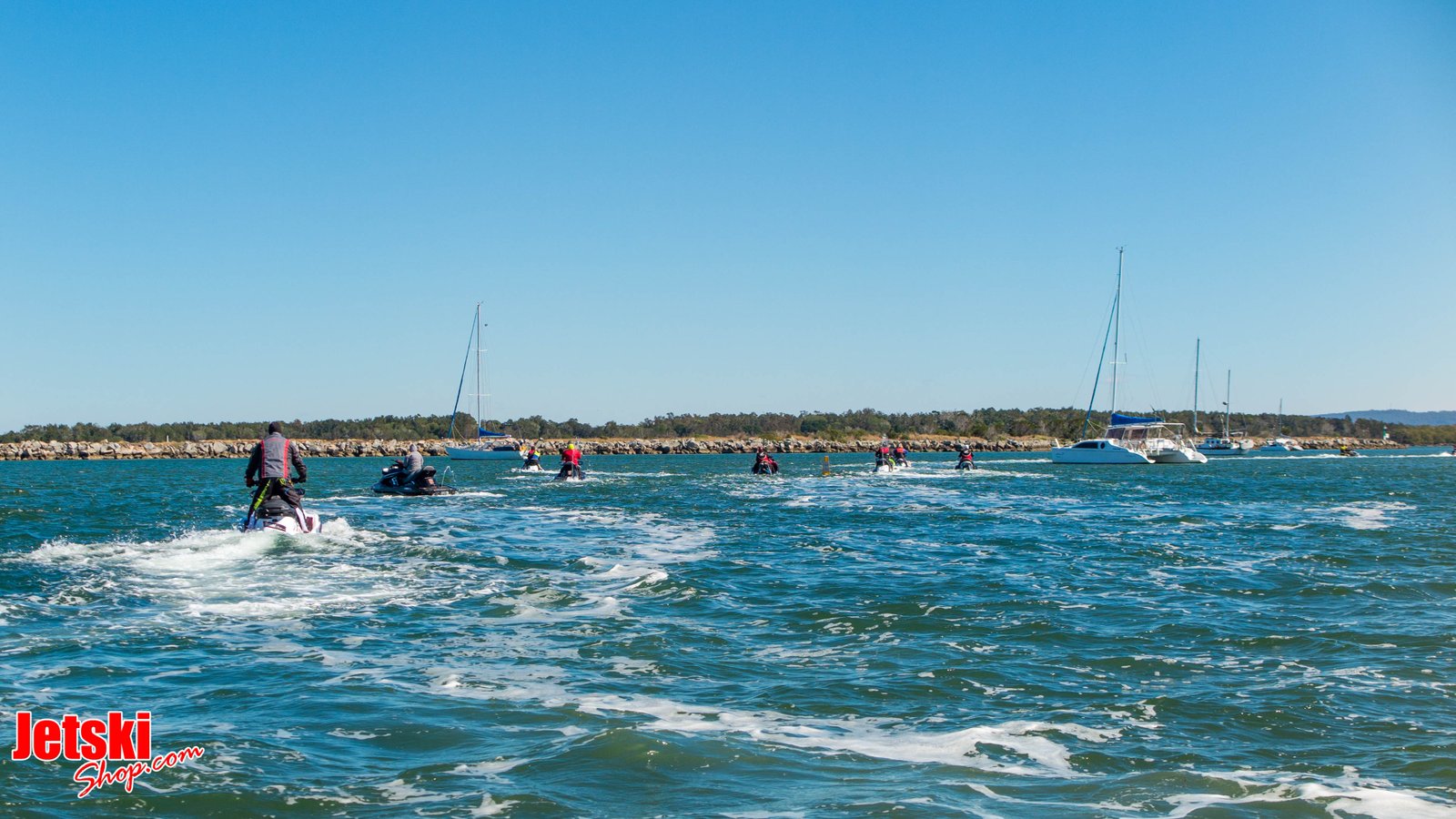
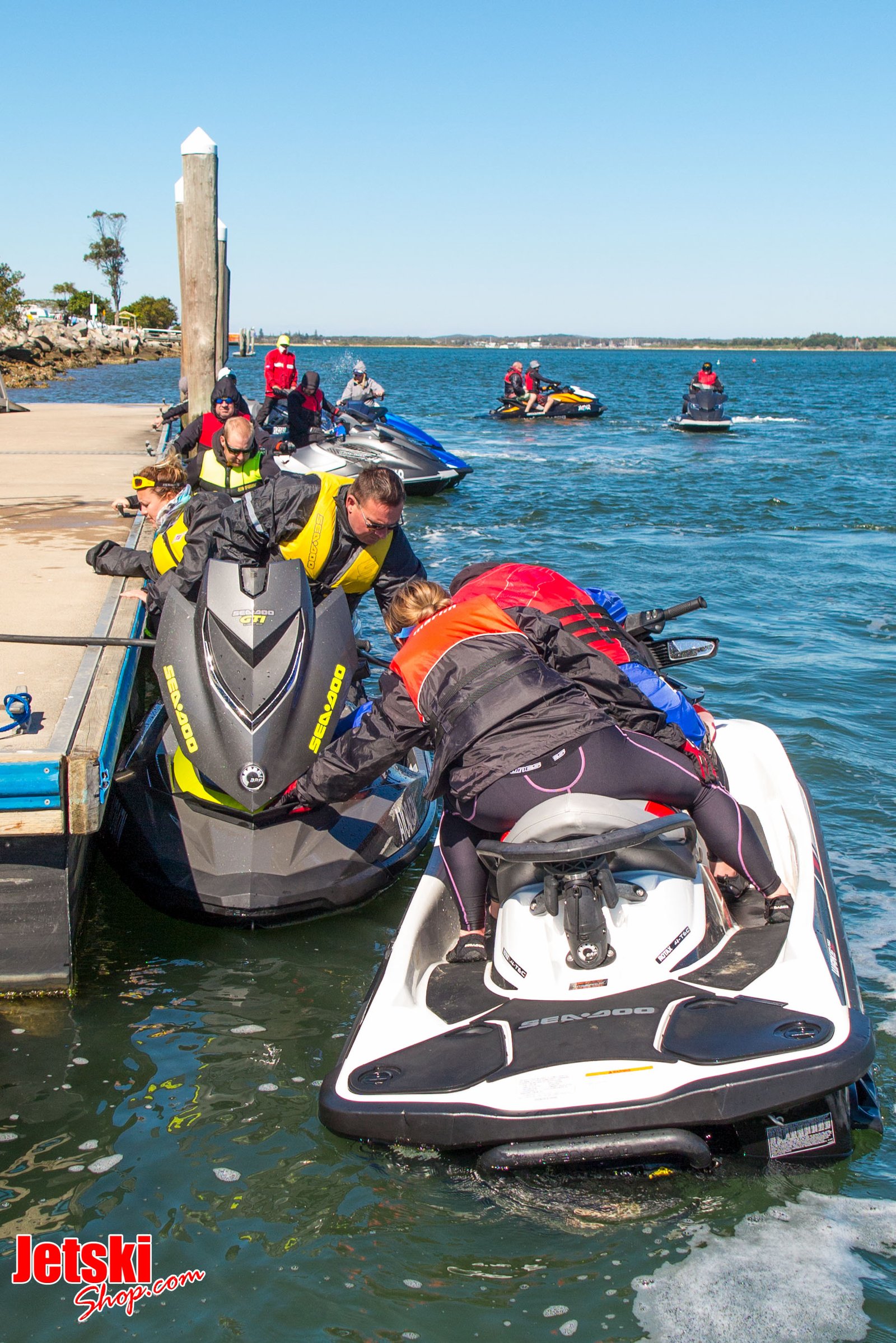
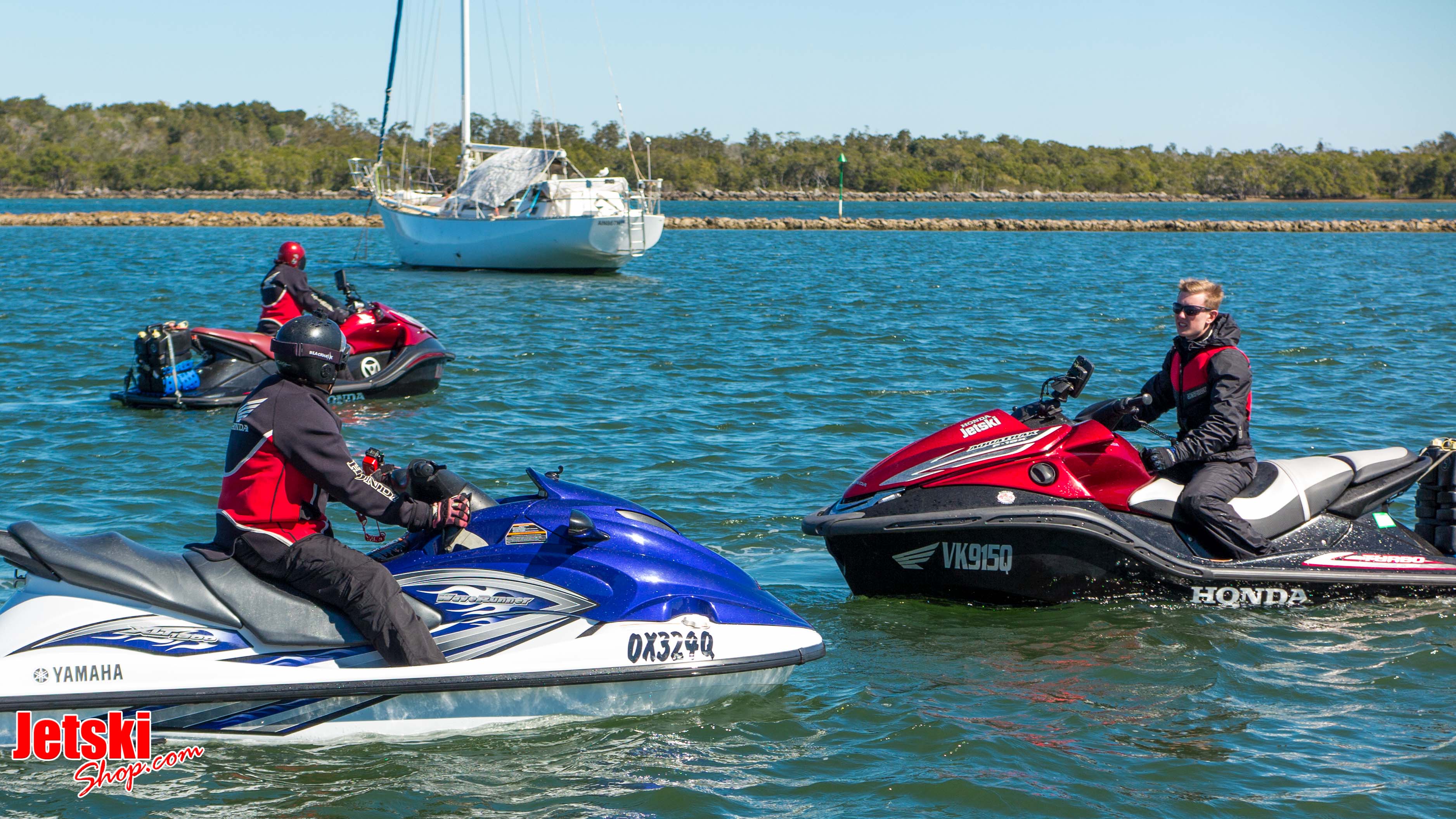
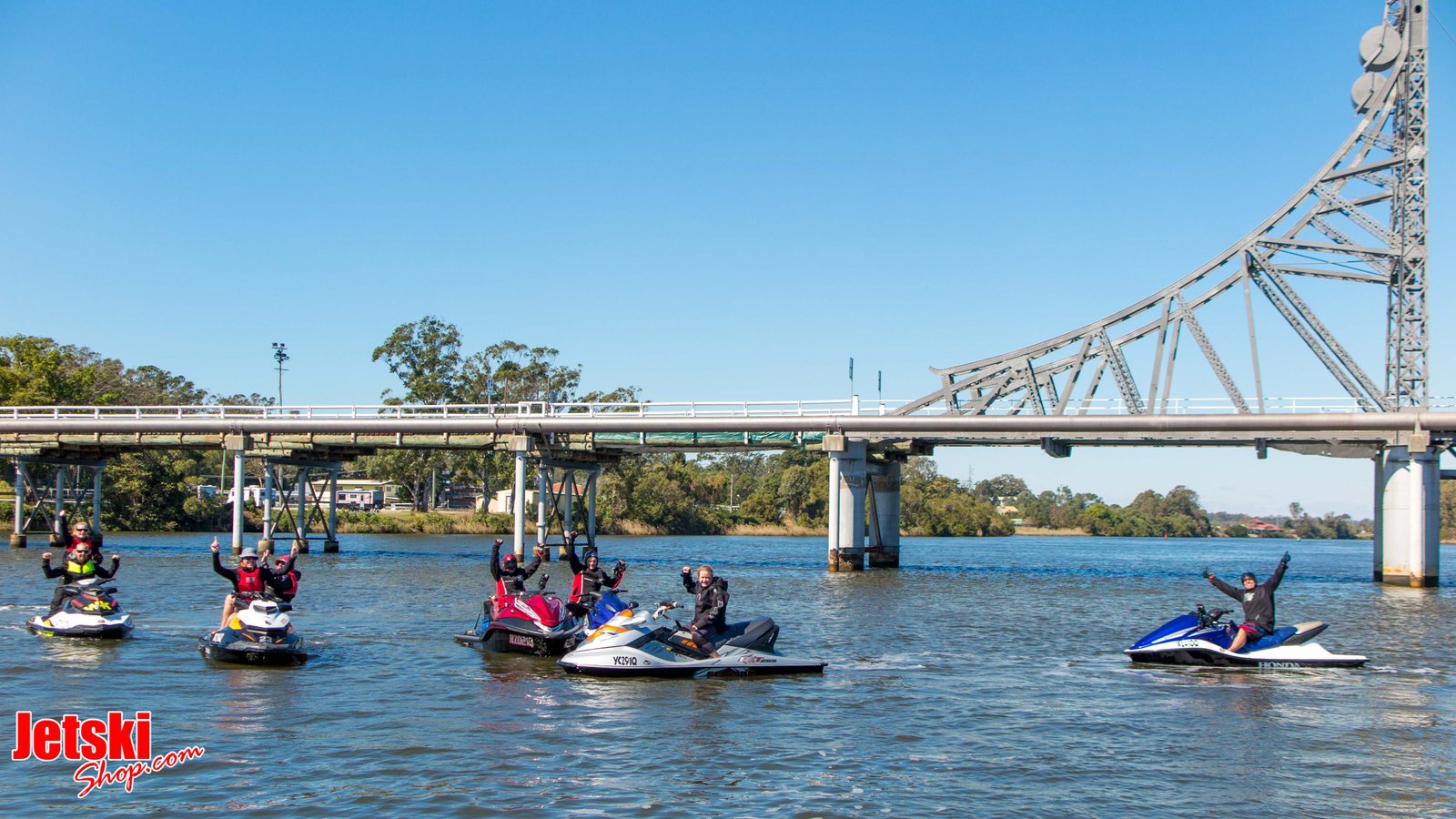
We pulled in to the ramp and gathered round for our safety brief. We had 25 skis and 33 people all itching to get on with the ride. We decided to run two groups to cater for the speed freaks and the cruising characters. The wind was higher than any of our previous rides, but we were on an adventure.
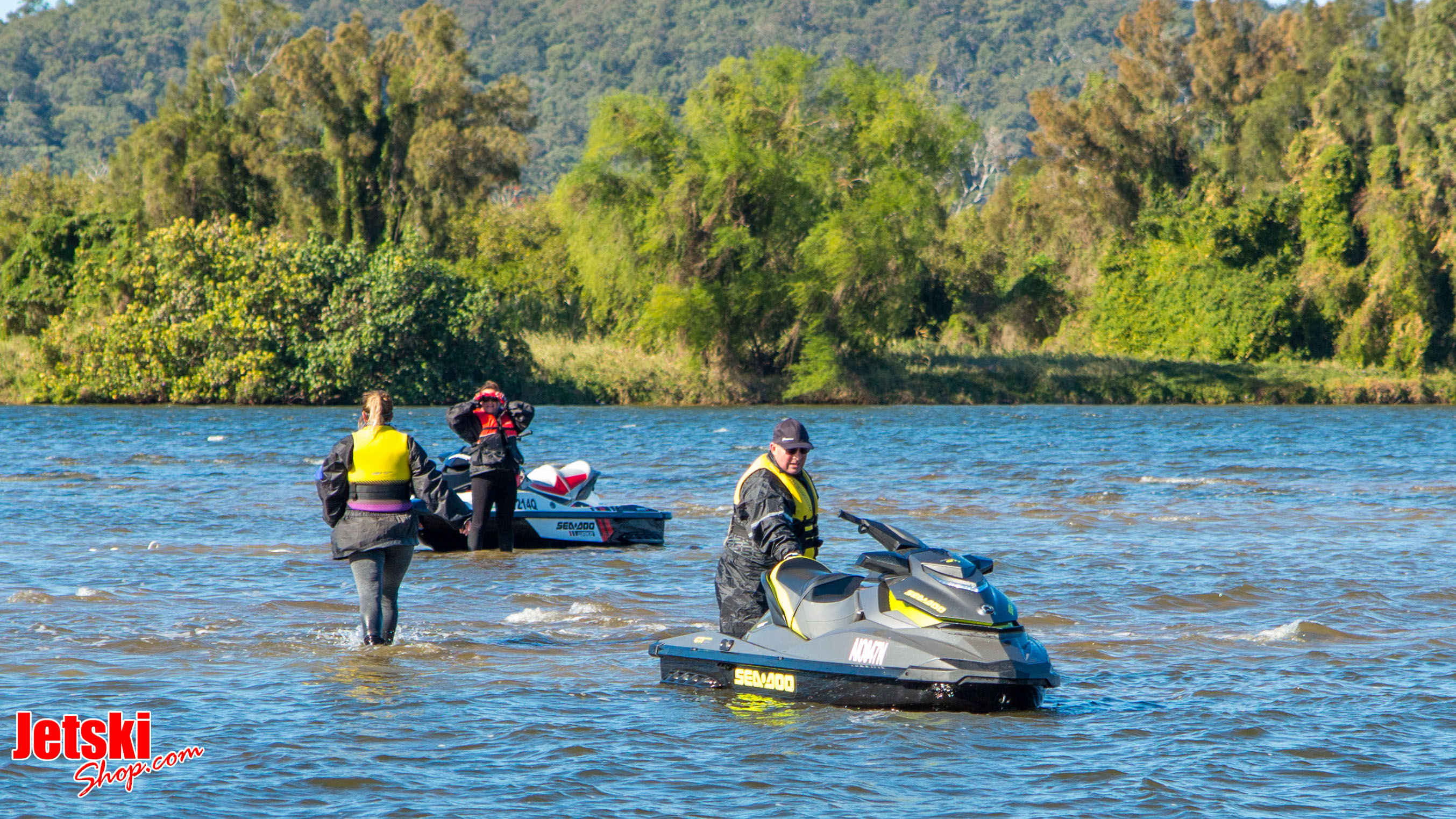
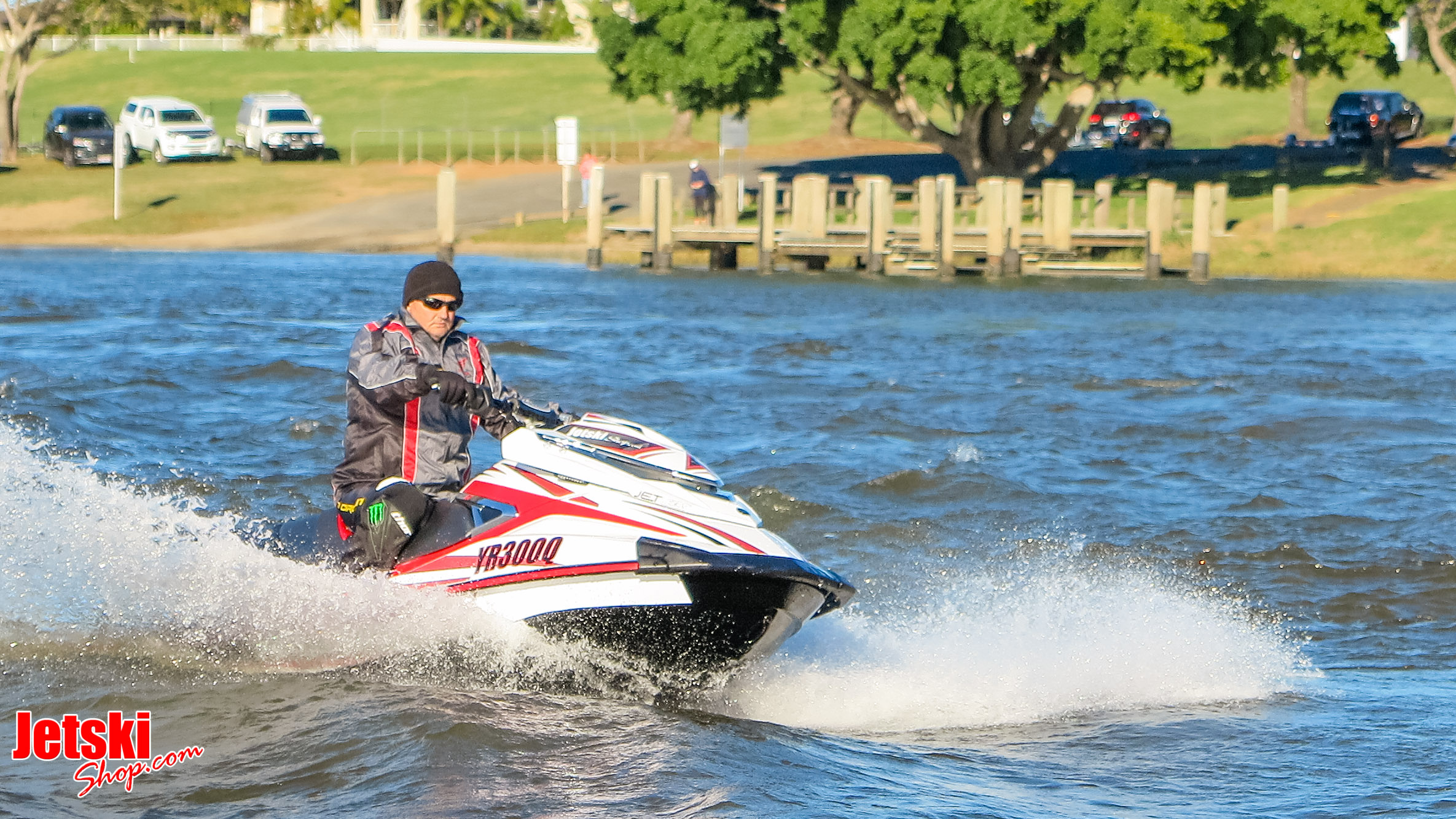
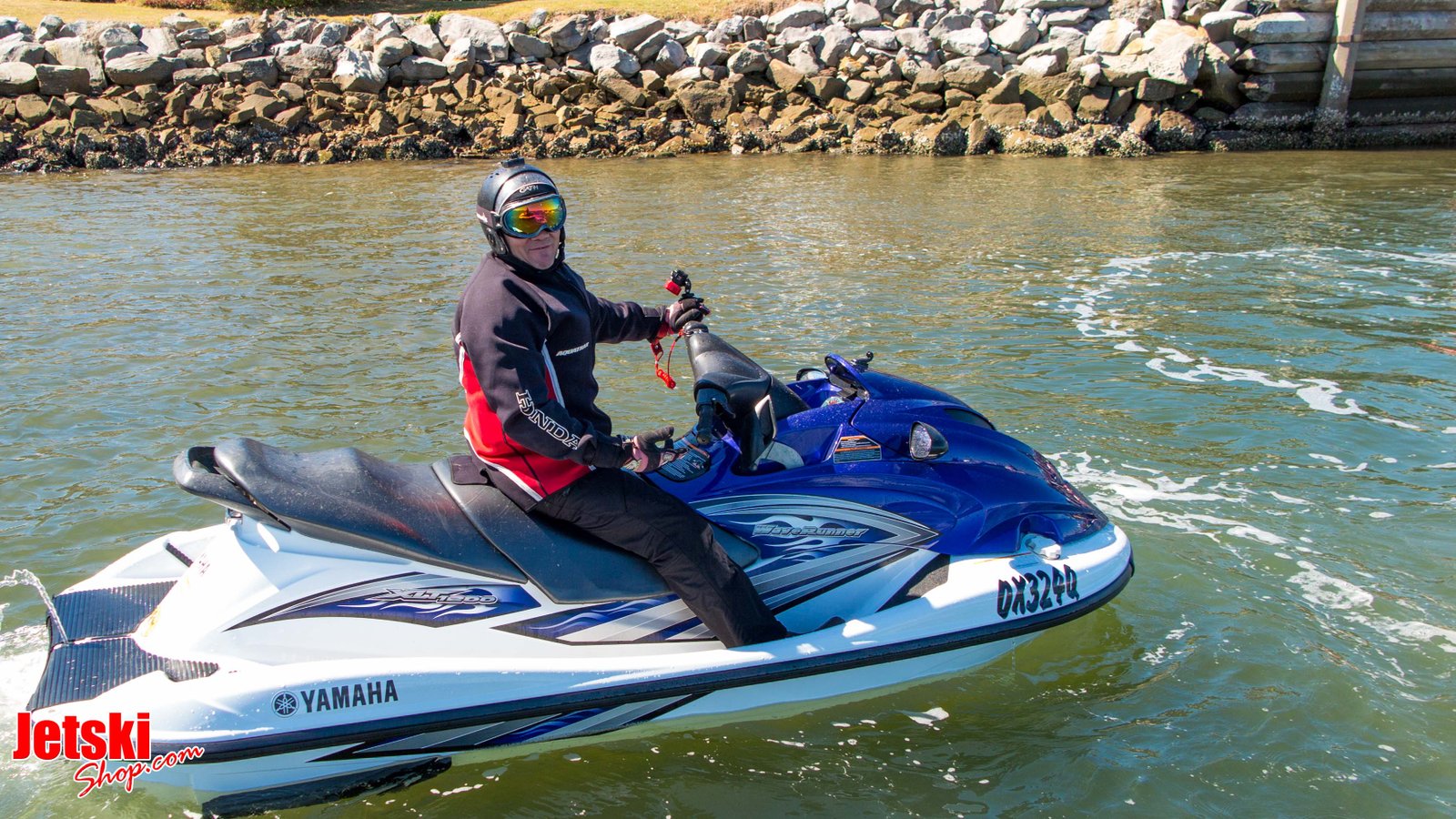
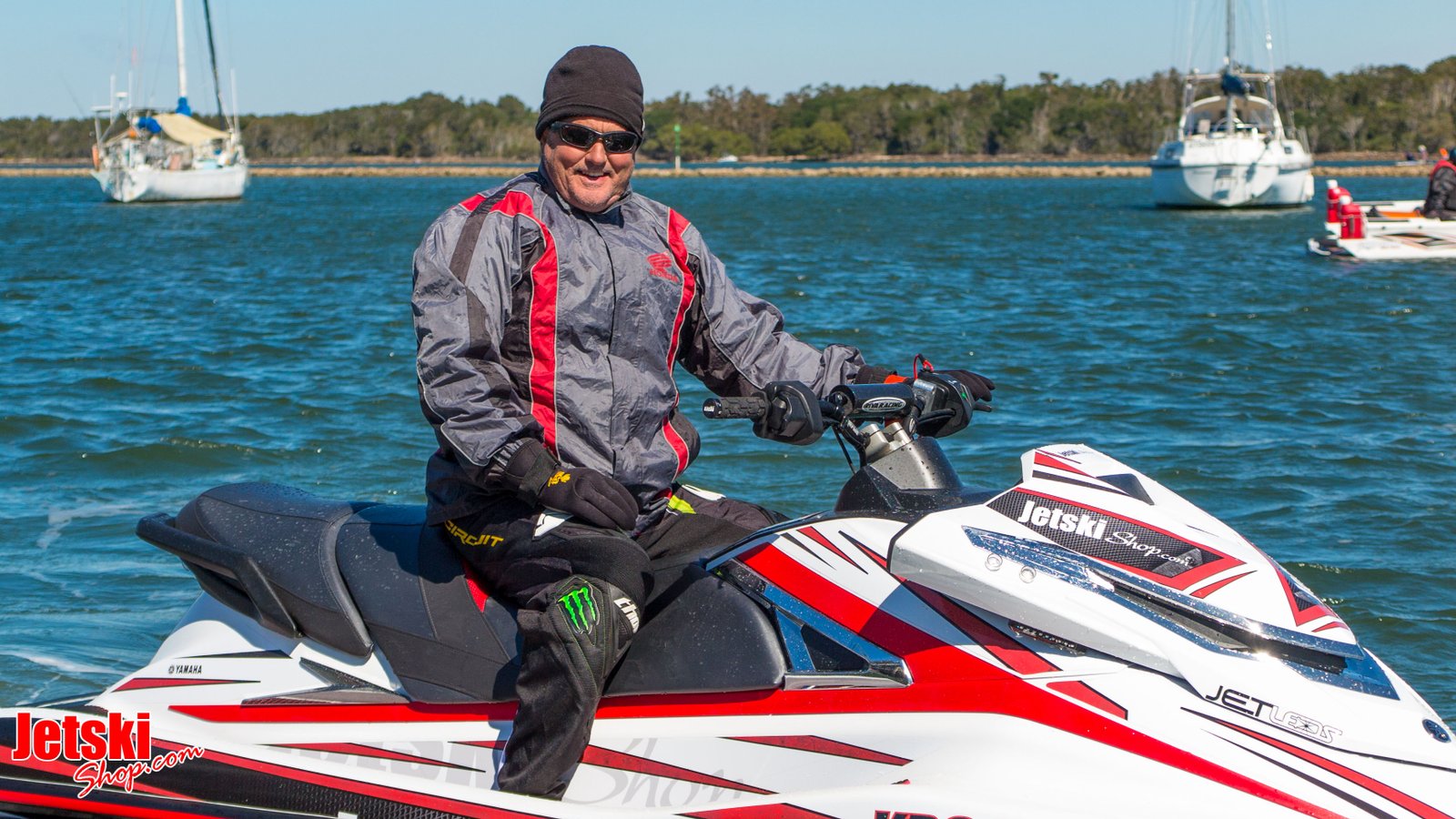
Soon after leaving Grafton we encountered the results of high wind with some pretty sizable swell. People didn’t mind the swell as much as the cold. Group leader Tom McNaught often says that there’s no such thing as bad weather on a ski, just inappropriate clothing. Tom says he’s the sort of person that really feels the cold so he had the appropriate gear and was quite comfortable.
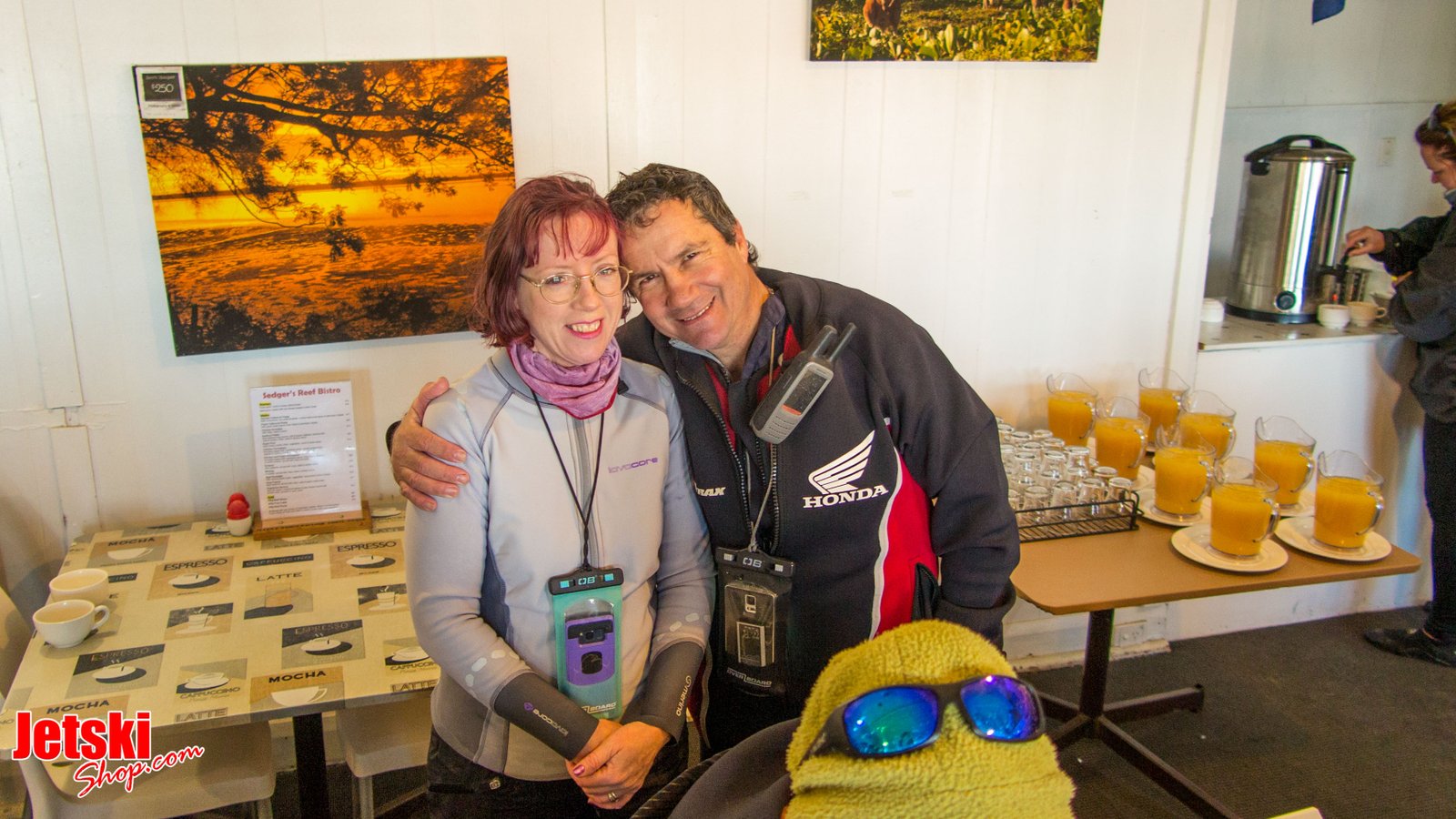
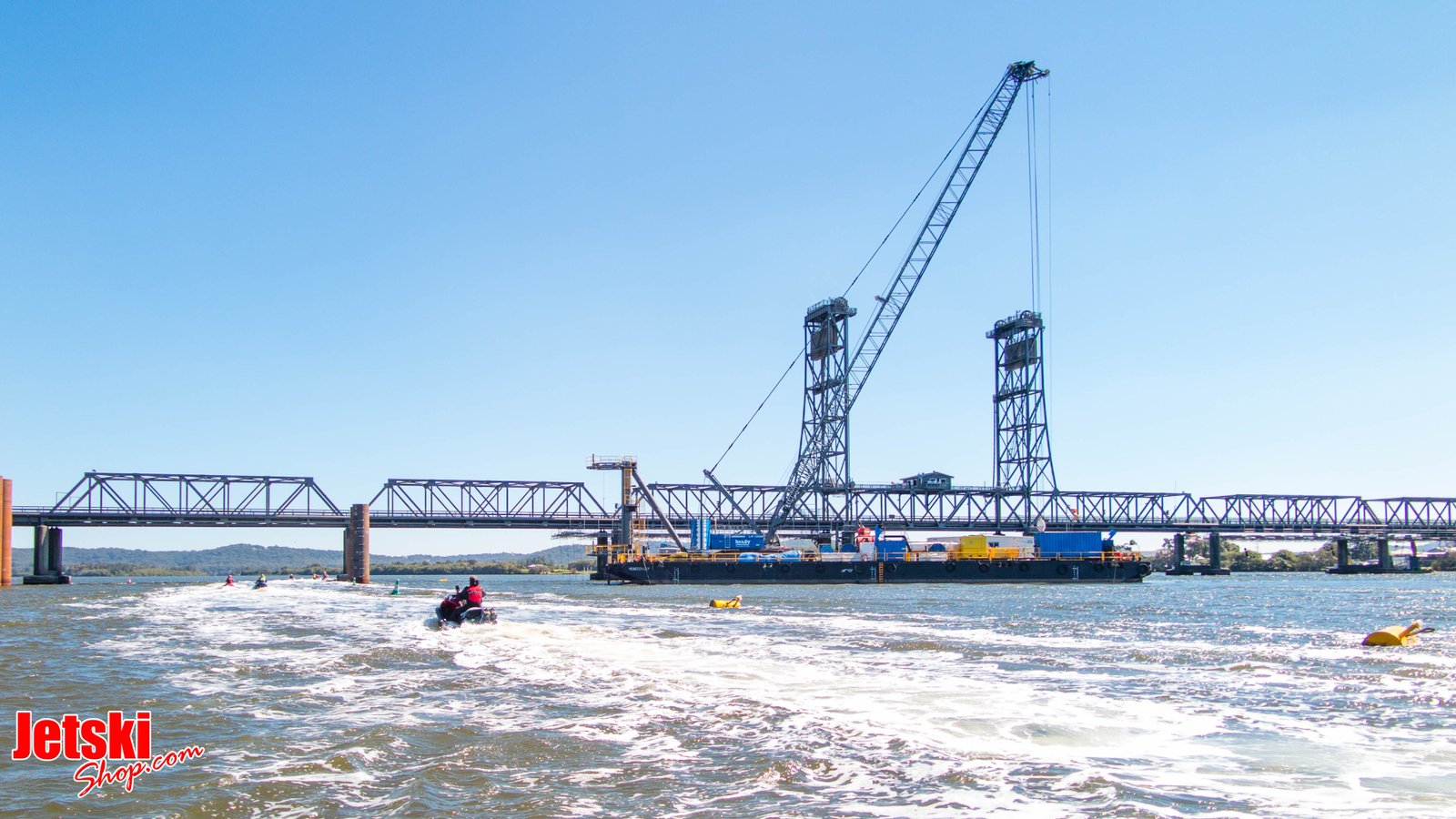
We had breakfast arranged for 9:30 at Sedges Reef Hotel. The owner was opening up just for us, so we wanted to be there on time. The conditions were making it a challenge to keep the group together. Tom was leading the speed group but decided to regroup. Noticing five skis missing, Tom asked our local mate Desan, to continue leading the group towards breakfast while he went to check. The great thing about a river ride is until you come to a fork in the river, you just can’t get lost. Upon finding the remaining riders he discovered that one of the skis was not running right. It was one of the Grafton locals. Two other riders, both locals, escorted him back to Grafton in case he needed support. This is one of the great things about riding in a group. Tom then lead the other two skis toward breakfast.
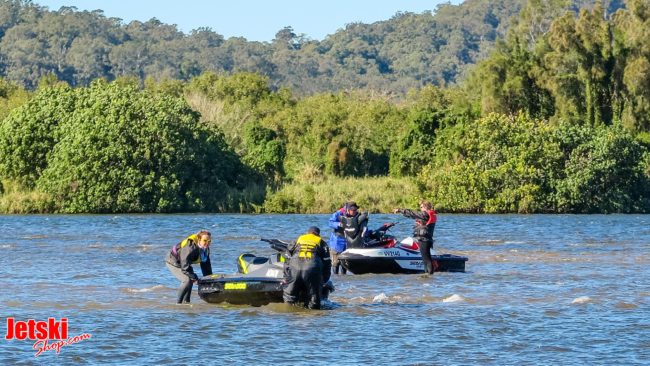
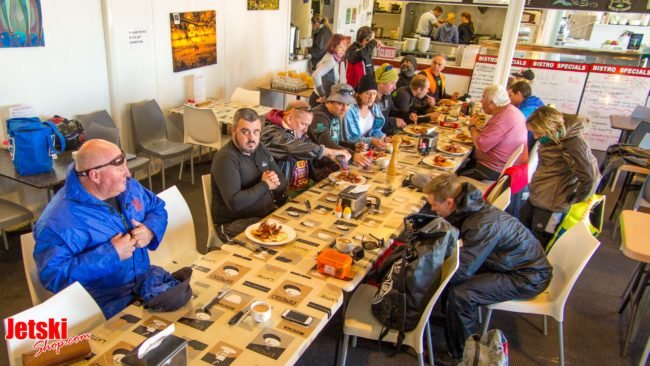
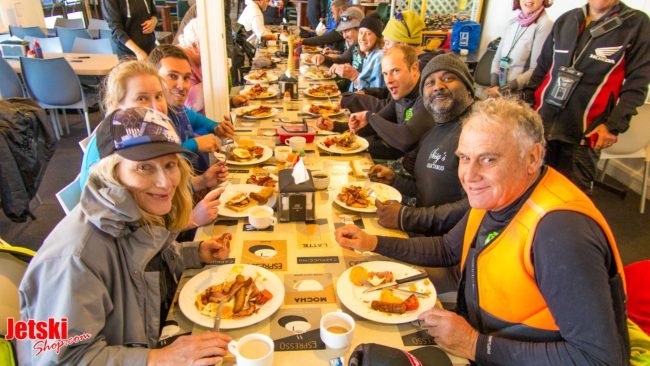
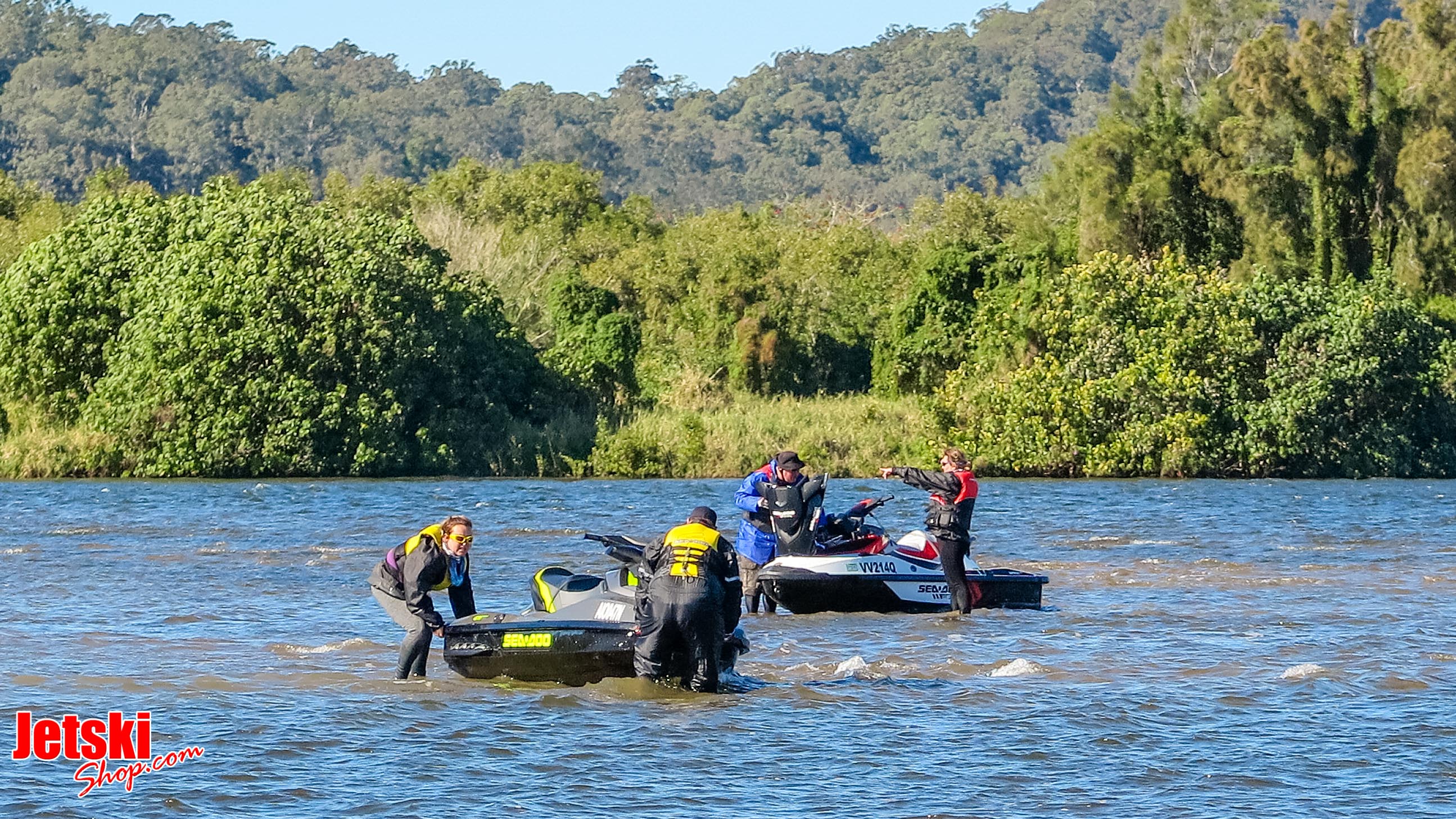
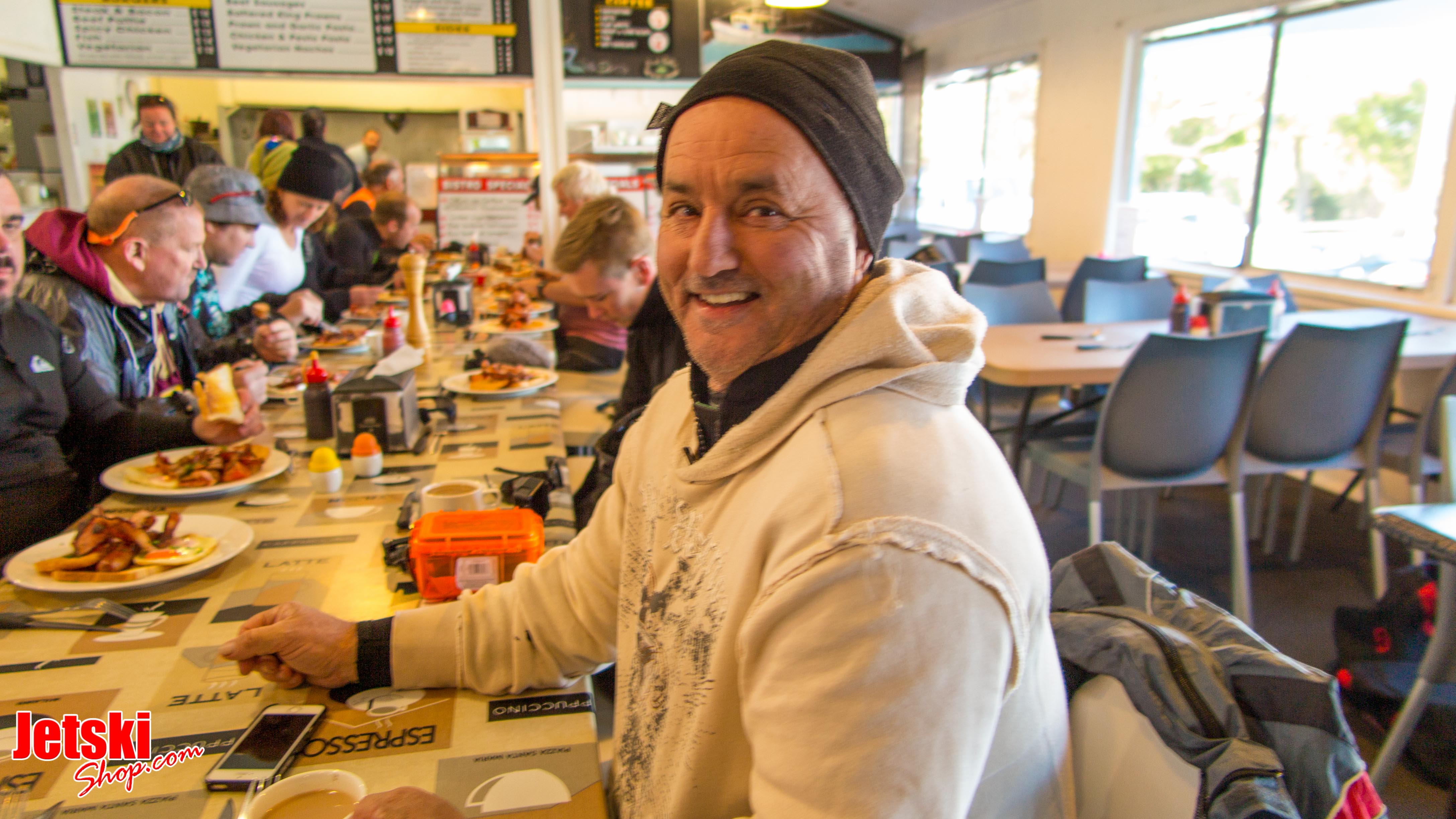
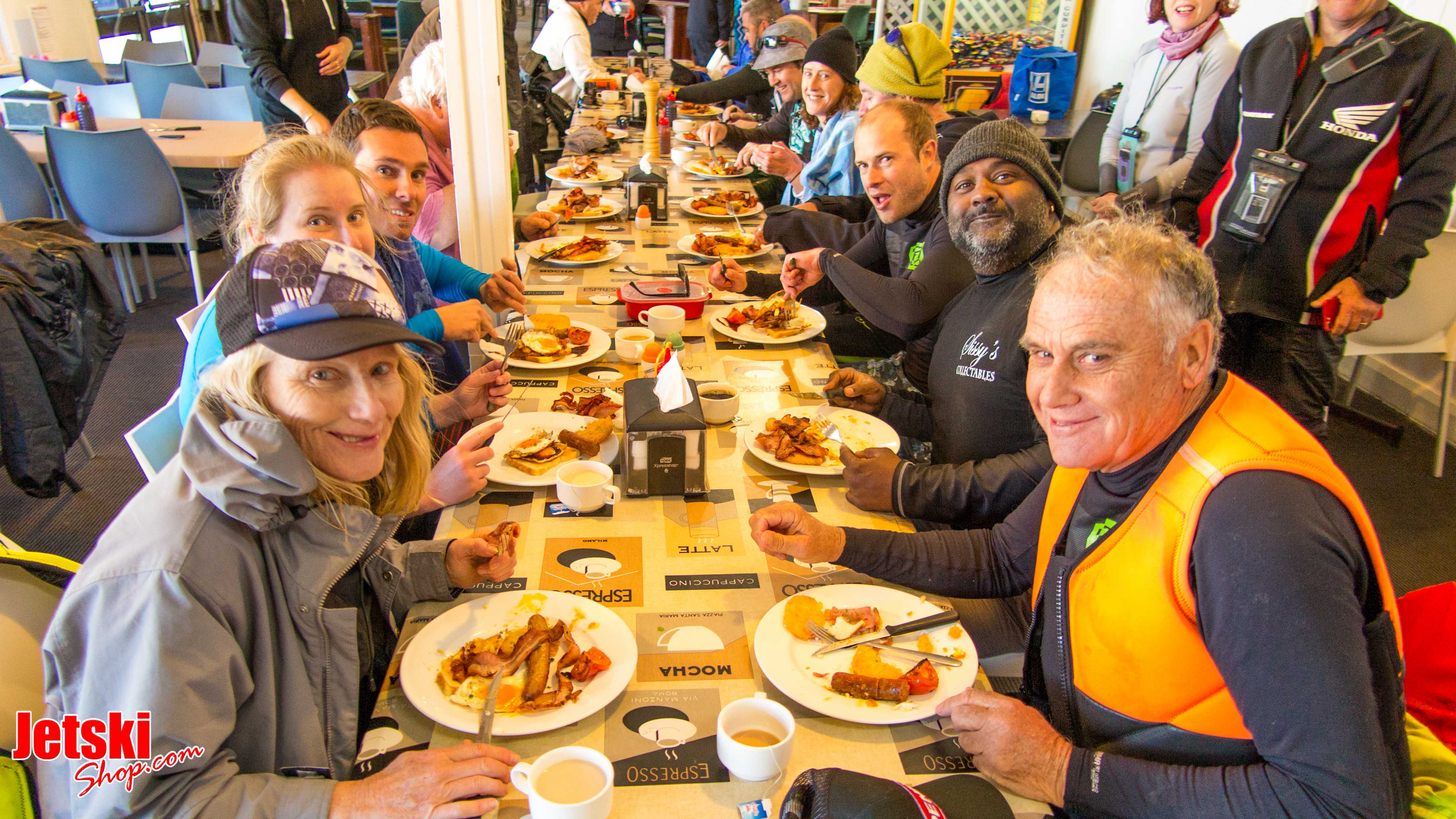
While Tom was bringing up the rear, another group of riders had strayed from the original line and run aground. After a little group help, the skis were floating again and Jimmy The Jet found himself the leader of this part of the group. Jimmy knew to head towards the ocean, and away he went. Tom and Jimmy rode into the Marina wheel breakfast was waiting at 10am. As we were running late, Phil the owner was not phased and served up a great breakfast of bacon, eggs, tomato, hash brown, toast and juice, tea, or coffee on the agreed set menu. It was well appreciated by all.
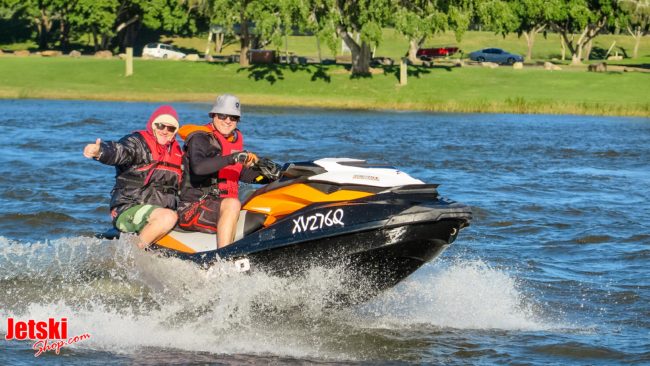
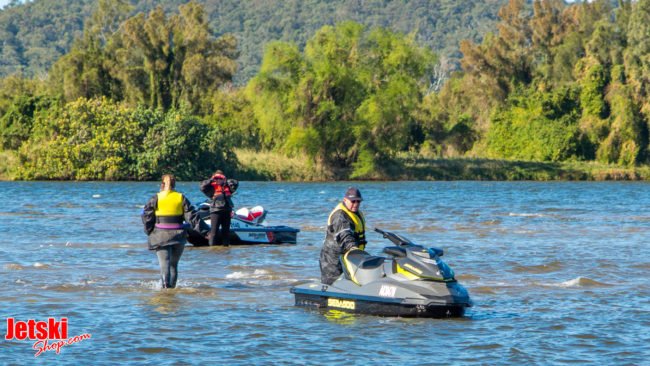
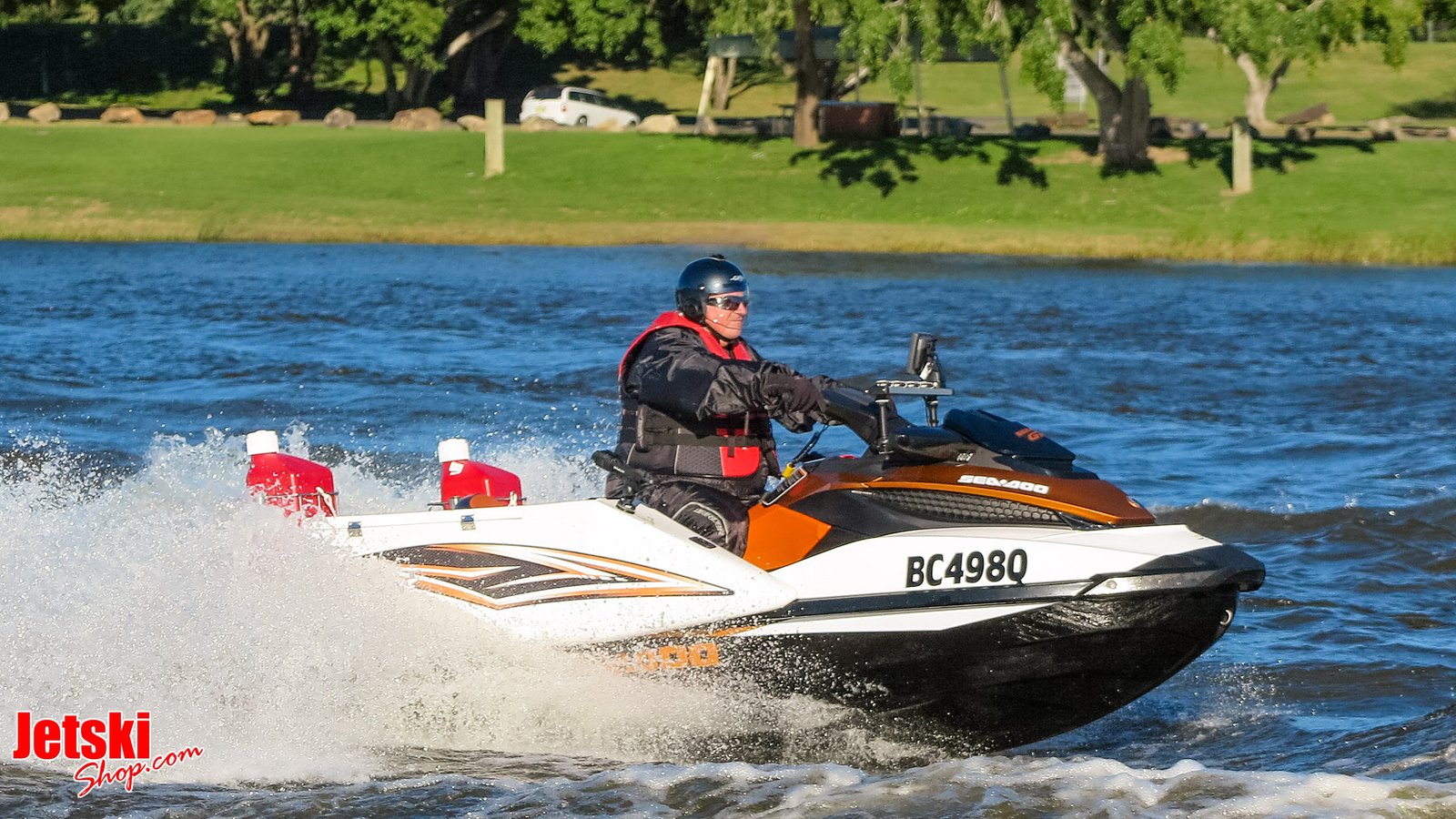
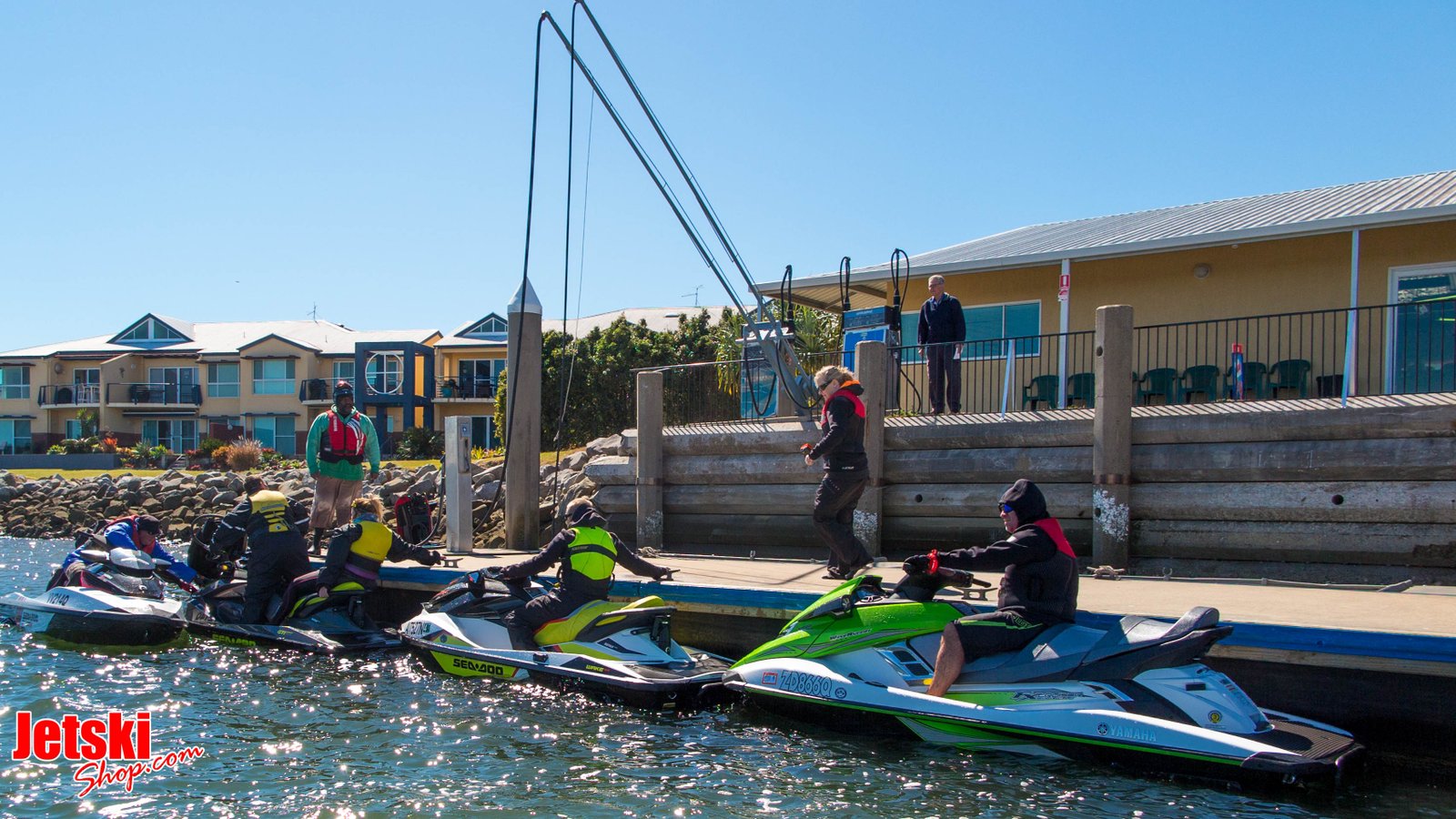
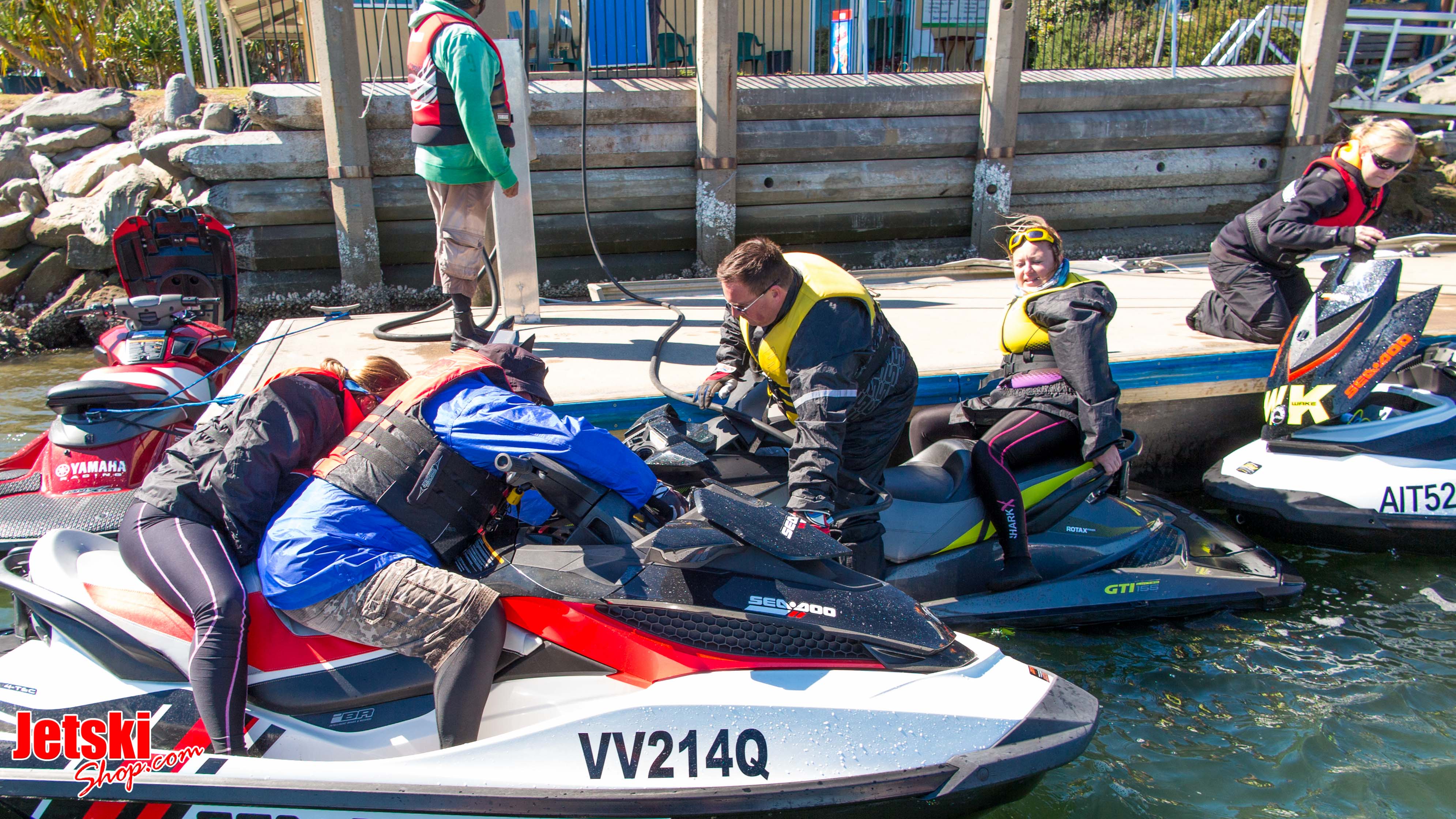
The ride home offered much smoother water and most riders opened up the throttle to enjoy the smooth water. One of the skis had an overheat alarm sounding and to protect the ski Tom decided to tow the ski to a ramp a few kilometers up the river. From there, a trailer was organized to come and collect the ski. To save everyone waiting around, Tom arranged for Jimmy The Jet to lead the group back to Grafton while he waited for the trailer. It’s all part of the adventure, recalls Tom. The afternoon finished off with a BBQ back at the Ski Lodge.