Every now and then, something comes across my screen that makes me forget what I was supposed to be doing.
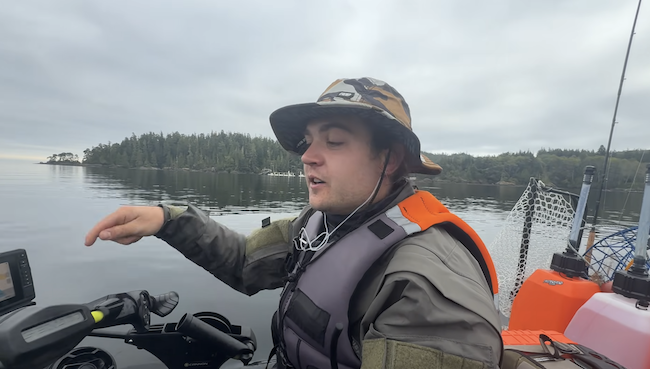
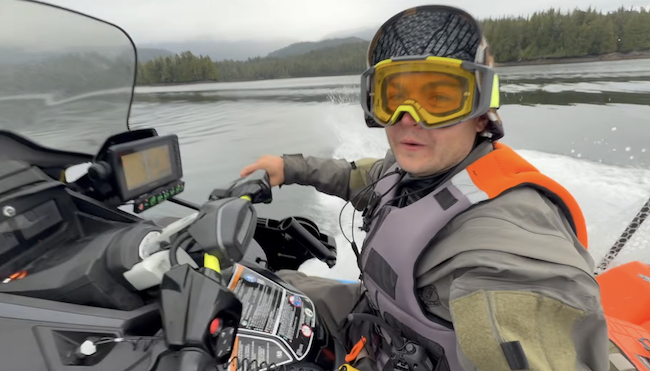
This week, that something was a YouTube video titled Riding 1300 Miles to Alaska on Jet Ski – Camping & Fishing.
I was settling in to tackle the results from the IJSBA World Finals when the video caught my attention. And when a video has racked up more than 4.9 million views in less than two days, well, curiosity is a powerful thing.
So I grabbed some popcorn and hit play.
An hour and a half later, I understood what all the fuss was about.
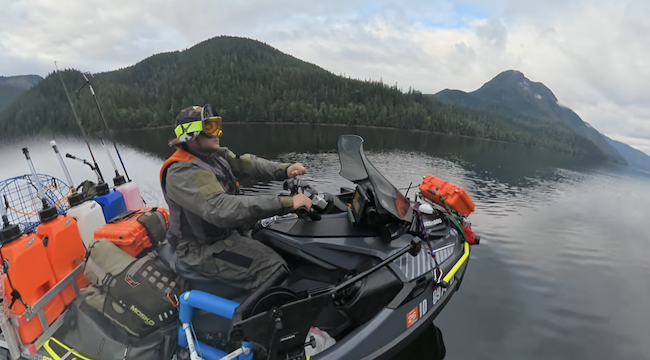
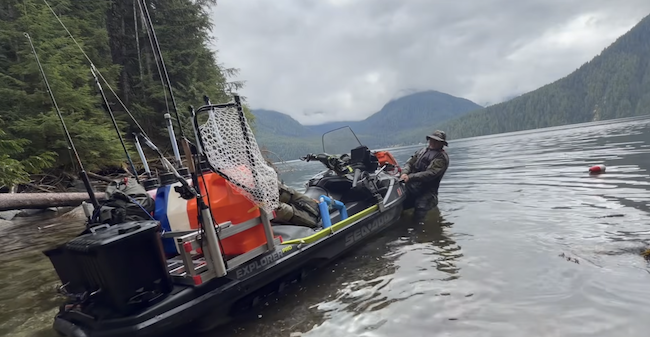
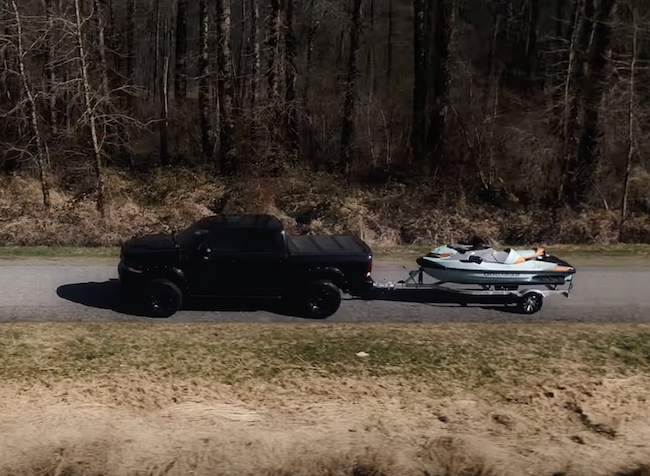
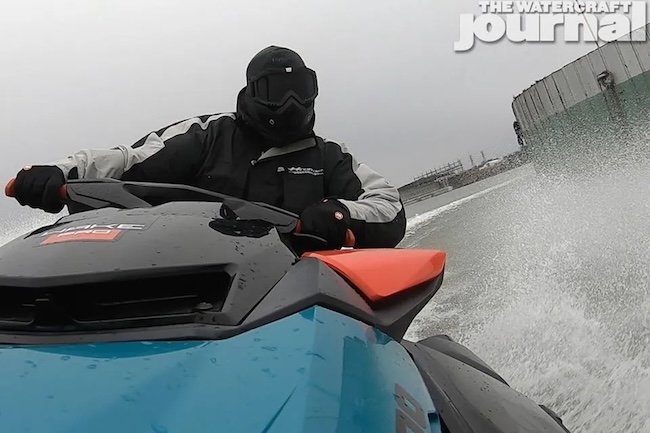
YouTuber Matt Spears set out from Washington aboard a heavily modified Sea-Doo Explorer Pro, bound for Skagway, Alaska, by way of the Inside Passage. His plan? Cover roughly 1,300 miles, traveling solo and unsupported, camping along the way and, whenever possible, catching his own dinner.
And this wasn’t exactly a shiny new machine fresh off the showroom floor. Spears purchased the Sea-Doo after it had been wrecked, repaired the damage and outfitted it for a journey that would test both rider and machine.
There were fuel calculations to make, unpredictable weather to navigate, and some very cold water separating him from his destination.
There were also whales, glaciers, incredible scenery and a few moments that probably had viewers holding their breath.
But here’s what makes the video so enjoyable: Spears himself.
He’s enthusiastic, funny, remarkably good-natured when things don’t go according to plan, and genuinely delighted by the world around him. Whether he’s dealing with an unexpected problem or discovering something extraordinary just around the next bend, he has a way of making you feel like you’re along for the ride.
And judging by the response, I’m hardly alone in that assessment.
One viewer summed it up particularly well: “No unnecessary drama, no click bait, no sleazy attention grabbing b.s. Just a nice guy on an adventure, which is so relaxing, so enjoyable.”
Another pointed out that most creators would have turned an expedition like this into a 10-part series. Spears simply delivered nearly an hour and a half of adventure in one sitting.
And people are watching.
There’s plenty more I could tell you about what happens along the way, but frankly, I don’t want to spoil it.
The scenery is spectacular, the journey is impressive, and Spears manages to make a trip that required months of preparation, extensive modifications and some serious determination look like something the rest of us might want to try.
Even those of us who start getting grumpy when the temperature drops below 65 degrees.
My recommendation? Set aside an hour and a half, grab some popcorn and watch the whole thing. It’s worth it.
And with any luck, we’ll have more to share soon. I’ve reached out to Spears to see if he’d be willing to spend some time talking with The Watercraft Journal about the journey, the machine and just what possessed him to point a jet ski toward Alaska and keep going.
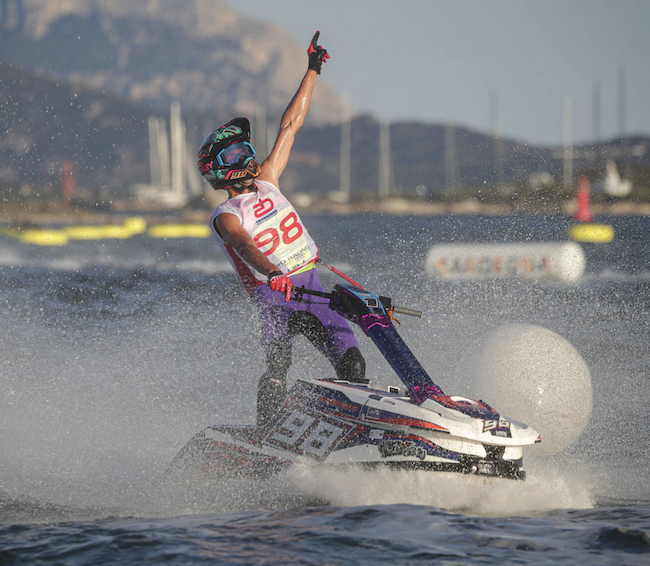
Two riders. One World Championship. And a final Moto that would turn the 2026 UIM-ABP Aquabike World Championship standings upside down.
Gyorgy Kasza and defending World Champion François Medori entered the final Runabout GP1 Moto in Olbia, Italy, tied at 111 points after a spectacular battle that had already seen mechanical failures, dramatic comebacks and some of the weekend’s fiercest racing.
Kasza would cross the finish line first. Medori would follow in second. But when the official results were settled, neither would be World Champion.
Instead, Samuel Johansson would leave Sardinia with the crown.
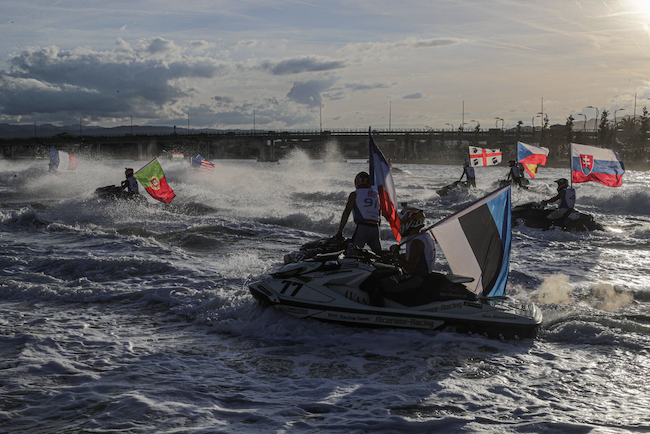
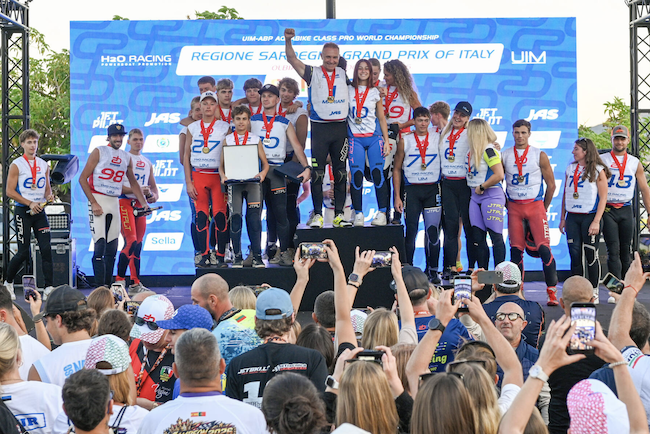
The extraordinary conclusion came during the Regione Sardegna Grand Prix of Italy, which brought 160 riders from 27 nations to Olbia for the final round of the 2026 championship. Long regarded as the spiritual home of Aquabike racing, the coastal city hosted the season-ending GP1 battles alongside single-round World Championships in Ski GP2, GP3 and GP4, and Runabout GP2, GP4 and GP4 Ladies.
Friday’s qualifying sessions unfolded under intense sunshine and increasingly choppy conditions, while Saturday brought calmer seas, commanding victories and mechanical setbacks. A crash at the start of Runabout GP1 Moto 2 forced officials to postpone the race until Sunday, setting up an unforgettable final day.
All photos courtesy Simon Palfrader
Runabout GP1: A Championship Turned Upside Down
Kasza arrived in Olbia leading the championship after sweeping all three Motos in Shanghai. He secured pole position during Friday’s qualifying, but Saturday’s opening race quickly complicated his championship hopes.
Medori grabbed the holeshot, with Jeremy Perez moving into second while Kasza slipped to fourth. The Hungarian recovered quickly, passing Robin Laforge and closing on Perez, only to see Perez retire with mechanical problems.
Johansson moved into second during the confusion, but Kasza soon overtook him and appeared ready to challenge Medori.
Then mechanical trouble struck Kasza’s own watercraft.
His pace deteriorated, allowing Johansson to reclaim second as Medori extended his advantage. Kasza managed to finish, but dropped to tenth, surrendering his championship lead as Medori claimed the victory and entered Moto 2 three points ahead.
Sunday’s postponed Moto 2 brought a remarkable reversal.
Starting tenth, Kasza charged into fifth off the line and climbed to third before the opening lap was complete. Medori had taken another holeshot and was building a comfortable advantage over Johansson.
Kasza began hunting down Johansson, eventually taking second on lap eight. By then, Medori had established a lead of more than eight seconds.
But Kasza was just getting started.
The Hungarian began carving enormous chunks out of Medori’s advantage, recording a ninth-lap time of 1:28.770 compared with Medori’s 1:31.591. By the start of lap ten, the gap had shrunk to just 1.635 seconds.
One lap later, Kasza emerged from the splits ahead of Medori.
And once he had the lead, he never looked back.
Kasza crossed the finish line an extraordinary 22.921 seconds ahead of Medori, completing a stunning comeback from Saturday’s mechanical disappointment. Johansson finished third, leaving Kasza and Medori tied at 111 championship points, with Johansson eleven points behind.
The final Moto began with Kasza making his intentions unmistakable. His explosive acceleration carried him into an early lead, with Medori chasing and Johansson running third.
Rough water through the splits briefly worked in Medori’s favor, allowing him to close within 1.752 seconds. But Medori then missed a buoy and was forced to take the penalty buoy, increasing the gap to 5.709 seconds.
The championship appeared to be slipping toward Kasza.
Then came the unexpected turn that would decide everything.
Both Kasza and Medori received two-lap penalties for cutting the course, dramatically reshuffling the race results and championship standings.
Although Kasza crossed the finish line first and Medori second, the penalties dropped them to ninth and eleventh, respectively, in the official results. Johansson, third across the line, was elevated to the Moto victory.
With that result, Johansson secured the Runabout GP1 World Championship with 125 points, just two ahead of Kasza’s 123, while Medori finished third with 121.
For Kasza, it was a heartbreaking conclusion to a weekend that included one of the season’s most impressive comeback victories. For Medori, it meant surrendering the title he had fought so fiercely to defend.
And for Johansson, it was a World Championship victory secured in one of the most extraordinary finales of the season.
All photos courtesy Simon Palfrader
Ski GP1: Bossche Completes an Unbeaten Season
Quinten Bossche didn’t just win the 2026 Ski GP1 World Championship. The Belgian completed a perfect season across both the World and European Championships, winning every Moto he entered — including a remarkable last-to-first comeback in Olbia.
Bossche arrived in Sardinia having already swept the opening World Championship round in Shanghai and every Moto of the European Championship season. Despite increasingly choppy conditions during Friday’s qualifying, he secured pole position with a lap of 1:36.457.
Saturday’s opening Moto brought another commanding performance. Bossche grabbed the holeshot and quickly distanced himself from the field, building a lead of more than ten seconds by the third lap before crossing the finish line an astonishing 53.716 seconds ahead of Alec Enderli.
Jeremy Poret, who had missed qualifying because of engine problems, charged from the back of the field to finish seventh.
But Moto 2 would provide Bossche with perhaps his greatest challenge of the season.
An engine change forced him to surrender pole position and start from the back, giving his competitors an unexpected opportunity to interrupt his perfect season.
Enderli inherited pole and grabbed the holeshot ahead of Mattias Reinnas and Raphael Maurin. Bossche, meanwhile, wasted no time working forward, advancing to eighth on the opening lap and sixth by lap two.
Enderli lost the lead on lap four as Reinnas and Maurin moved past. Bossche continued his charge, overtaking Poret and Soshi Sato to reach fourth, then passing Enderli for third.
By lap seven, Bossche had climbed into second. One lap later, he overtook Reinnas for the lead, completing an extraordinary last-to-first comeback.
The performance echoed his Moto 3 victory in Olbia the previous year, when he also charged from the back to take the win.
By Sunday’s finale, Bossche had built an insurmountable 31-point championship advantage, mathematically securing the world title before the last race began.
But there would be no easing off the throttle.
Bossche took the holeshot and led Moto 3 from start to finish. Poret ran second, while Sato initially held third before falling into the water on lap seven and retiring when he could not restart his watercraft.
Bossche’s victory completed an undefeated 2026 campaign, sweeping every Moto in both the World and European Championships. Reinnas finished second in the Olbia Grand Prix standings, with Maurin third.
Ski Ladies GP1: Chavanne Claims Third World Title
Jessica Chavanne claimed her third UIM-ABP Aquabike World Championship title in Olbia, adding the 2026 Ski Ladies GP1 crown to her previous championships in 2020 and 2023.
But the road to her latest title was anything but uneventful, as Benedicte Drange and Jasmiin Ypraus delivered some of the weekend’s most competitive racing.
Chavanne opened with Friday’s pole position, recording a qualifying lap of 1:43.934 despite increasingly choppy conditions. Drange was her closest challenger at 1:44.985, followed by Emy Garcia.
Drange claimed Saturday’s opening Moto, setting up an intense second race in which Chavanne briefly edged ahead at the start before Drange reclaimed the lead coming out of the splits.
Ypraus, meanwhile, was working her way into contention. After closing to within 1.565 seconds of Chavanne, she overtook her for second on the fourth lap, then set her sights on Drange.
Two laps later, Ypraus took advantage of the faster inside split to move into the lead, holding off the field to secure her first Moto victory of the season.
Sunday’s championship finale brought another dose of drama.
Chavanne entered Moto 3 knowing a top-six finish would secure the world title, while Drange remained in contention for the Grand Prix victory.
The opening start was red-flagged after Chavanne and Naomi Benini fell into the water. On the restart, Ypraus grabbed the holeshot, followed by Drange and defending World Champion Estelle Poret.
Chavanne slipped to fourth, then fifth as Garcia charged through the field, recording the race’s fastest lap and overtaking both Chavanne and Poret to move into third.
At the front, Ypraus steadily extended her advantage, building a lead of more than ten seconds by the fourth lap. Drange held second despite pressure from Garcia, while Chavanne maintained the fifth-place position she needed to secure her third World Championship.
Ypraus crossed the finish line first, completing a sweep of the weekend’s final two Motos.
Although Chavanne claimed the season’s biggest prize, Drange emerged as the Regione Sardegna Grand Prix of Italy winner, edging Ypraus by a single point in the weekend’s overall standings.
All photos courtesy Simon Palfrader
Freestyle: Morgan Makes Her Mark in Debut Season
American freestyle rider Demi Morgan made an impressive showing in her debut UIM-ABP Aquabike World Championship season, finishing second in the overall championship standings after an energetic performance in Olbia.
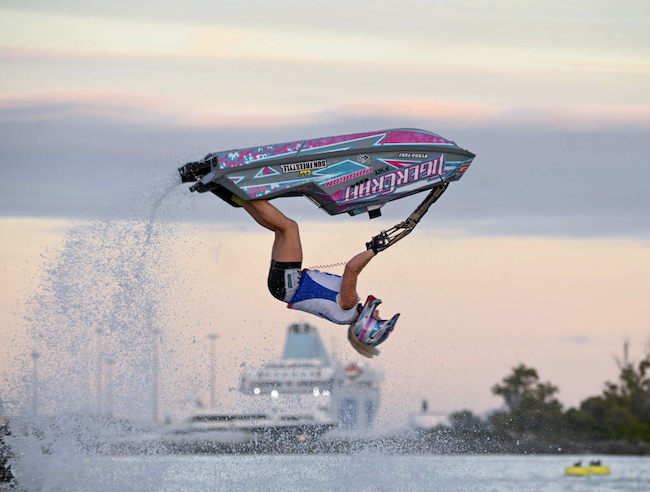
Morgan, who finished second in Shanghai before arriving in Sardinia, quickly became a crowd favorite during Saturday’s competition. Her high-energy routine featured technical somersaults and several remarkable recoveries that kept her out of the water when a crash appeared almost inevitable.
The performance earned her 227 points from the judges and added another dimension to an already competitive Freestyle field.
Sunday proved more challenging for the American. Although Morgan again brought plenty of energy to her routine, several unsuccessful trick attempts cost her valuable points, leaving her with a score of 190.
Defending World Champion Roberto Mariani of Italy delivered a crowd-pleasing performance highlighted by an impressive sequence of 20 consecutive backflips, earning 226 points.
But neither rider could match Rashed Al Mulla, who successfully landed a double backflip that had eluded him earlier in the weekend. The judges awarded Al Mulla 252 points, securing the Grand Prix victory and his seventh career Freestyle World Championship.
Mariani finished second at Olbia, with Morgan taking third. However, the final season standings told a different story: Morgan secured second place in the World Championship in her debut season, finishing ahead of Mariani, the reigning European Champion, who took third.
For Morgan, the championship runner-up finish capped a remarkable first season on the international Aquabike stage and established the American as a contender in a category long dominated by established Freestyle veterans.
For many personal watercraft owners, the end of riding season means flushing the engine, stabilizing the fuel, checking the battery and getting the cover secured. But while the watercraft gets plenty of attention, the trailer beneath it may be overlooked.
After a season of launching, loading, highway miles and exposure to the elements, that trailer deserves a little attention of its own.
Make yourself a mental checklist: Tie-downs, Tires, Bearings, Bushings, Body, Bunks, Wiring and Winches (and brakes if you’ve got them).
Tie-Downs: Ratchet straps spend much of their working lives exposed to sunlight, moisture, road grime and whatever else the highway throws at them. Before winter storage, inspect the webbing for cuts, fraying and abrasion, and check the hooks and ratcheting mechanisms for corrosion or damage.
For owners using retractable tie-downs, a little maintenance can make a difference.
Strapinno, which offers retractable ratchet straps for marine applications, recommends cleaning dirty webbing with mild soap and warm water, rinsing thoroughly and allowing it to dry before retracting. The company also recommends occasional light lubrication of the ratchet mechanism with a silicone-based spray.
Even stainless steel components benefit from a freshwater rinse after saltwater exposure.
This is also a good opportunity to evaluate your trailer’s tie-down setup. Strapinno offers bolt-on retractable transom straps in steel, stainless steel and all-stainless configurations, providing options for different trailering conditions and corrosion-resistance needs.
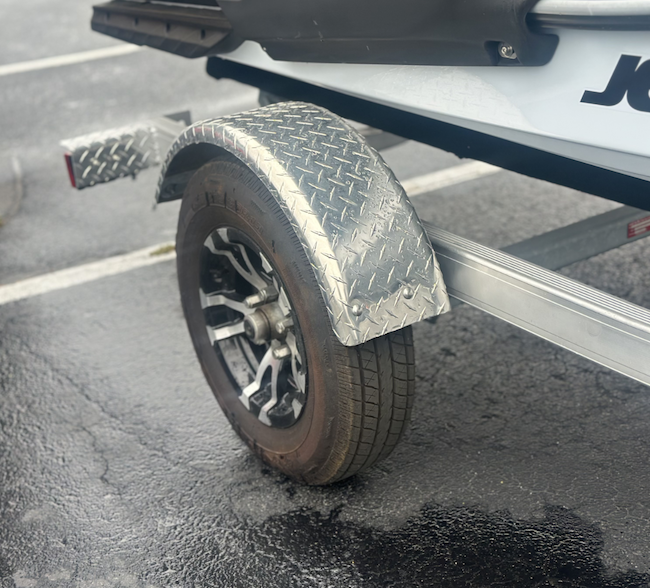
Tires: Inspect tires for uneven wear, cracking, dry rot and proper inflation. Check the sidewalls and tread, and don’t forget the spare. Trailer tires can deteriorate from age and exposure even when they have plenty of tread remaining. Follow the tire and trailer manufacturers’ recommendations for inflation and extended storage.
Bearings and Bushings: While you’re inspecting the wheels, check the hubs and wheel bearings for signs of water intrusion, damaged seals or excessive play. Service the bearings according to the manufacturer’s recommendations. Inspect suspension bushings, springs and mounting hardware for deterioration or corrosion.
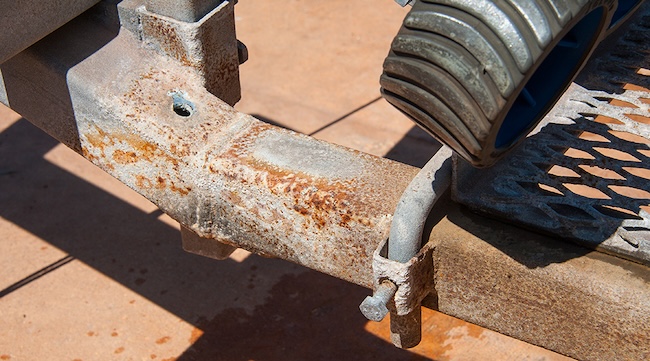
Body: Examine the trailer frame, crossmembers, bunks and mounting brackets for rust, cracks or loose hardware. Pay particular attention to areas where water collects and to components exposed to saltwater. Repair damaged protective coatings before corrosion spreads.
Bunks: Inspect the carpet or other bunk covering for tears, excessive wear and exposed fasteners that could damage your PWC’s hull. Check the wood or other supporting material for deterioration, and make sure the bunks and mounting brackets are securely attached. Look for loose, bent or corroded hardware, and address any problems before the next launch.
Wiring: Check trailer lights, connectors and wiring for corrosion, cracked insulation or loose connections. Make sure the running lights, brake lights and turn signals work properly. A little attention now can prevent an electrical troubleshooting session on the first warm Saturday of spring.
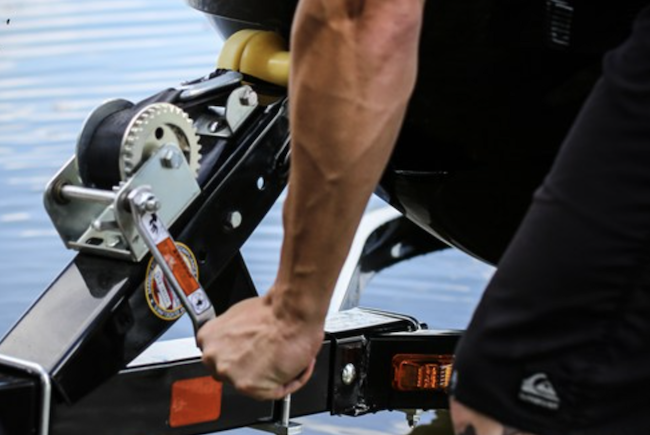
Winches: Don’t forget the winch, bow stop and safety chains. Check mounting hardware for looseness or corrosion, and make sure the winch strap hasn’t developed frayed edges or other damage. Inspect the winch mechanism and lubricate it according to the manufacturer’s instructions.
Stop: If you’ve got trailer brakes, check the pads or shoes, brake lines and connections for wear, leaks or corrosion, and make sure the braking system is operating properly before putting the trailer away for winter.
Finally, consider where the trailer will spend the winter. Choose a suitable storage location, follow manufacturer recommendations for long-term storage and address any needed repairs before parking it for the season.
Your PWC may be ready for winter, but the trailer that gets it to the water deserves the same attention. A little maintenance now, including taking care of your Strapinno tie-downs, can help make sure both are ready when riding season returns.
For more information about Strapinno’s retractable marine tie-downs, visit Strapinno.com.
The chill has arrived in North Georgia like Dumbo on a hang glider — unexpected, hard, fast and somewhat painful.
And right about this time every year, we here at The Watercraft Journal, along with approximately 99.999999999 percent of the powersports, automotive, home maintenance and personal care publications in the hemisphere, start talking about the W-word.
You know the one. It rhymes with it’s-too-damn-cold-to-ride-anymore.
(Bet you didn’t know “winterize” had such a spectacular rhyming partner, did you?)
Well, this year, we’re breaking with tradition. We’re going to delay our annual winterization tutorial just a little longer.
We know. Shocking.
But here’s the thing. Winter is coming. The days are getting shorter, the temperatures are dropping, and Jack Frost is already eyeing your favorite riding spot like he’s got a reservation.
But are you really ready to put your ski away?
Yeah. Neither are we.
So, instead of immediately surrendering to the inevitable, we’re going to explore a different question. What can we do, what can we buy, what can we change and what can we prepare for to squeeze just a little more riding out of the season?
We’re talking cold-weather riding gear, practical upgrades, smarter planning and a few creature comforts that might make the difference between another weekend on the water and another weekend staring longingly at your ski in the garage.
And because cold-weather riding comes with risks that summer riding doesn’t, we’ll talk about those, too.
Don’t worry. We’ll get to How to Winterize Your Jet Ski, Edition 4,872 soon enough.
But first, let’s see if we can’t wring the last little bit of summer out of our skis before we surrender to Jack Frost.
Dress for the Water, Not the Calendar
Let’s start with the obvious. That lightweight riding gear that served you perfectly in July may not be nearly enough when October turns into November.
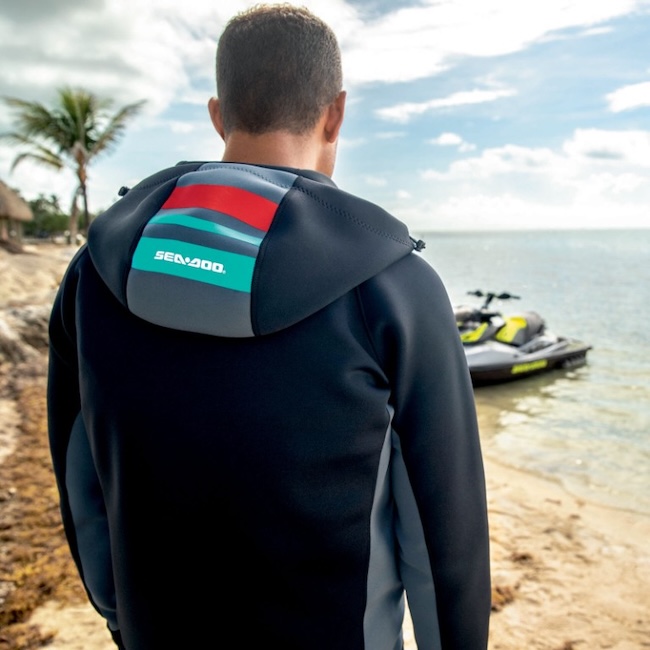
The first investment worth considering is proper thermal protection. Depending on the water temperature, air temperature, conditions and type of riding, that might mean a full wetsuit of appropriate thickness or a drysuit designed for PWC use, worn with suitable insulating layers.
A sleeveless John-style wetsuit might be perfectly adequate in warmer conditions, but when temperatures start dropping, exposed arms become considerably less appealing. A full wetsuit provides additional coverage, although thickness and construction matter just as much as coverage.
Neoprene boots, gloves and a hood can also make a tremendous difference. Cold fingers aren’t merely uncomfortable. They can affect your ability to operate the throttle, maintain your grip and respond quickly when something unexpected happens.
A wind-resistant touring jacket or coat can help reduce exposure to wind and spray, provided it’s appropriate for PWC riding and doesn’t interfere with your PFD or movement. Rash guards and base layers have their place, too, particularly for comfort beneath other gear, but don’t mistake a lightweight rash guard for meaningful cold-water insulation.
And if your cold-weather wardrobe could use an upgrade, this might be a good time to do a little shopping. RIVA Racing currently has a clearance sale on a selection of JetPilot riding gear, including ride socks, gloves and several styles of jackets. It’s worth checking out before paying full price elsewhere, particularly if you’re looking to add a few warmer layers without spending a fortune. Just remember that choosing the right equipment is about matching protection to conditions, not simply finding the warmest-looking jacket on the rack.
And here’s the most important part. Dress for the possibility of ending up in the water, not just sitting comfortably above it.
Cold-water immersion can quickly become dangerous, even when the air temperature feels reasonably pleasant. Your thermal protection needs to account for that possibility, and your properly fitted PFD remains essential.
And don’t overlook one of the simplest safety precautions of all: the old-fashioned phone-a-friend plan. Before heading out, let someone know where you’re going, your intended route and when you expect to return. A quick “Hey, buddy, I’m heading out to the point. Should be back around 3” could make an enormous difference if something goes wrong — particularly if you’re riding solo.
Give Your Ski a Little Cold-Weather Love
Now that we’ve addressed the rider, what about the machine?
No, we’re not suggesting you install a fireplace beneath the seat — or invest in electrically heated underwear. Something about mixing electrical wiring, undergarments and large bodies of water strikes us as an experiment best left untested.
Although somewhere, somebody has probably considered both.
There are, however, some practical upgrades that can make cooler-weather riding more comfortable.
Heated grips are one option worth investigating, particularly for riders who regularly venture out when temperatures fall. Sea-Doo has offered heated grip accessories for certain models, and retailers such as RIVA Racing are worth checking for compatible equipment.
Handlebar wind deflectors can also help reduce direct exposure to wind and spray. They won’t replace proper gloves, but anything that reduces the wind battering your hands on a chilly morning deserves consideration.
And while we’re talking about maintaining a secure grip, don’t forget what’s beneath your feet.
Wet decks, neoprene boots and colder conditions make reliable footing particularly important. Traction mats aren’t specifically winter equipment, but they’re the kind of practical upgrade that can improve the riding experience year-round.
Of course, no amount of aftermarket equipment can compensate for hands that are too cold to function properly. If you’re losing dexterity, it’s time to get warm, not add another accessory to the shopping cart.
Keep the Battery Ready for the Next Warm Weekend
One of the nice things about extending the riding season is that you don’t necessarily have to ride every weekend.
Perhaps the forecast calls for a miserable stretch of cold, rain and wind, followed by an unexpectedly beautiful afternoon.
Wouldn’t it be nice if your ski were ready?
Unfortunately, batteries don’t always appreciate extended periods of inactivity, particularly in colder weather.
A compatible smart battery maintainer can help keep your battery charged during those longer breaks between outings.
Choose a maintainer compatible with your battery’s chemistry and specifications, and follow the watercraft and battery manufacturers’ recommendations for charging and storage.
It’s a relatively simple bit of preparation that could save you from spending the first beautiful Saturday in November staring at a ski that refuses to start.
One important reminder, though. Keeping a battery charged isn’t the same thing as protecting an engine or water system from freezing temperatures. If a freeze is possible, follow the manufacturer’s procedures for protecting the watercraft between rides, even if you’re not ready for full seasonal storage.
Photo courtesy Waterskiers World
Change Your Riding Habits Along With Your Wardrobe
Here’s something that won’t cost you a dime.
When the temperatures drop, change the way you ride.
Those long summer excursions that seemed perfectly reasonable in July may deserve a little reconsideration in November.
Plan shorter routes. Stay closer to shore and accessible launch points. And ride with another properly equipped watercraft whenever possible.
Keep an eye on daylight, too. Shorter days can catch you off guard, particularly when you’re accustomed to lingering on the water until late evening.
And don’t forget the weather. Fall conditions can change quickly, making it especially important to check the forecast before launching and keep an eye on changing conditions throughout your ride.
Sea-Doo riders with compatible BRP Connect displays may be able to access AccuWeather forecasts through their watercraft’s connected technology. Yamaha’s Connext and Kawasaki’s RIDEOLOGY systems offer their own combinations of navigation, smartphone connectivity and vehicle information, although comparable integrated weather forecasting hasn’t been confirmed.
Regardless of what’s on your dashboard, check a reliable marine forecast before heading out, particularly for wind and changing water conditions. And don’t assume you’ll have cellular service everywhere you ride.
A waterproof means of communication, appropriate signaling equipment and a reliable way to navigate become even more important when fewer people are out enjoying the water.
Cold-water conditions also leave less room for mechanical problems or unexpected delays. A breakdown that might be an inconvenience in August can become an emergency when the water is cold enough to rapidly impair your ability to function.
And perhaps most importantly, know when to call it a day.
Shivering, numbness, loss of coordination, unusual fatigue or difficulty concentrating aren’t signs that you’re becoming a more dedicated rider. They’re warnings that you need to get warm and, depending on severity, seek help.
Make the Boat Ramp Part of the Adventure
Now we’re getting to the fun stuff.
Because there’s one aspect of cold-weather riding that doesn’t receive nearly enough attention.
Getting off the ski.
More specifically, getting out of wet riding gear when the temperature has dropped, the wind has picked up and your fingers have decided they’re no longer participating in the operation.
This is where a little advance planning can transform the end of a ride from an exercise in misery into something considerably more civilized.
Start with a complete change of dry clothes, including socks and footwear, packed somewhere they’ll actually stay dry.
Add a couple of towels, an insulated container of something warm to drink and perhaps a portable changing shelter if your favorite launch ramp offers absolutely no privacy.
A changing robe or oversized hooded changing poncho can be a surprisingly useful addition. It gives you some privacy while wrestling your way out of a wetsuit and into dry clothing without treating the entire boat ramp to an impromptu performance.
And because we firmly believe practical equipment should occasionally be ridiculous, we’d like to nominate a cosmic goat-print changing poncho for consideration.
Yes. Cosmic goats.
After all, this is a sport with its share of GOATs, and even the Greatest Of All Time occasionally need to change their clothes.
Just remember that a towel-style changing poncho isn’t the same as an insulated changing coat, and neither replaces appropriate protection during cold-water riding.
Once you’re safely back at the truck, a heated seat cushion or heated seat can feel like a luxury beyond description. A vehicle-compatible heated blanket, dry boots and a warm drink can make the trip home considerably more pleasant.
And if you’re considering a portable shower or other warming accessories, remember that someone experiencing suspected hypothermia needs appropriate medical care, not simply a blast of hot water.
But First, Coffee
Speaking of warm drinks, we’re going to pause here to recognize one of the most important accessories in the cold-weather rider’s arsenal.
Is a cup holder going to extend your riding season?
Not by itself.
But there’s something undeniably appealing about taking a break on a calm, chilly morning and enjoying a warm drink while watching the mist rise off the water.
Just make sure the beverage is secured, keep hot liquids covered and save the sipping for when you’re safely stopped. Nobody needs a lap full of scalding coffee halfway through a sharp turn.
And no, coffee doesn’t prevent hypothermia. It’s a creature comfort, not cold-water safety equipment.
Don’t Confuse Riding Longer With Ignoring Winter
Before we wrap up, there’s one distinction worth making.
Delaying your annual winterization routine doesn’t mean ignoring the possibility of freezing weather.
Depending on the model, its cooling and exhaust systems, the manufacturer’s instructions and local temperatures, your watercraft may require freeze protection even if you plan to ride again next weekend.
That might mean performing specific post-ride procedures or taking other precautions before the next overnight freeze.
Consult your owner’s manual and follow the manufacturer’s recommendations. Don’t assume that because your ski survived one cold night, it’ll survive the next.
And remember that colder conditions don’t automatically make riding unsafe, but they do make preparation, appropriate equipment and good judgment more important.
Summer Isn’t Over Until We Say It Is
Eventually, of course, the day will come.
The forecast will turn ugly, the water will get colder, and even the most determined among us will finally admit that perhaps it’s time to put the ski away for a while.
When that day arrives, we’ll be here with our annual winterization guide, ready to walk through the steps necessary to protect your investment until warmer weather returns.
But until then?
Maybe there’s another beautiful afternoon waiting around the corner. Maybe that new pair of neoprene boots will buy you another weekend. Maybe the heated grips, better riding gear and a little smarter planning will make those cooler outings more enjoyable than you expected.
Or maybe you’ll simply decide that a quiet autumn ride, followed by a hot cup of coffee and a warm truck seat, is worth a little extra preparation.
Whatever the case, don’t let the first chilly morning convince you that the season is necessarily over.
There’s still riding to be done.
And somewhere out there, a psychedelic goat is waiting to help you do it.
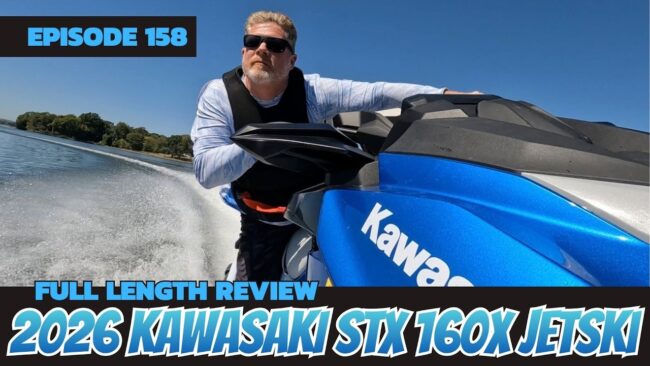
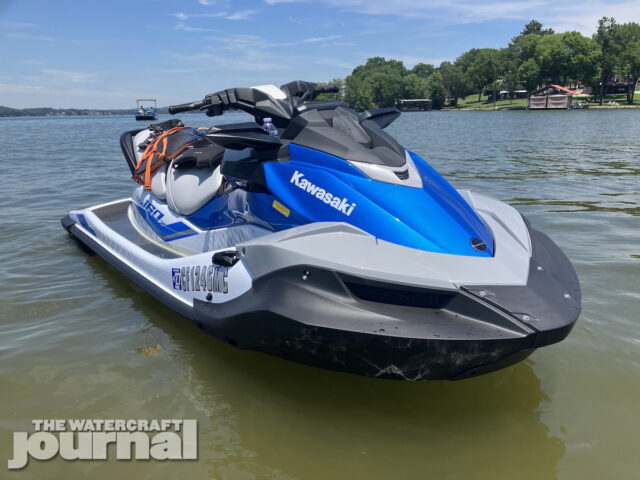
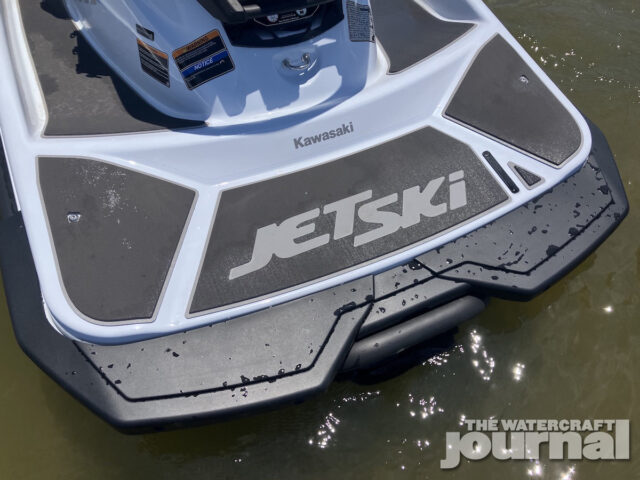
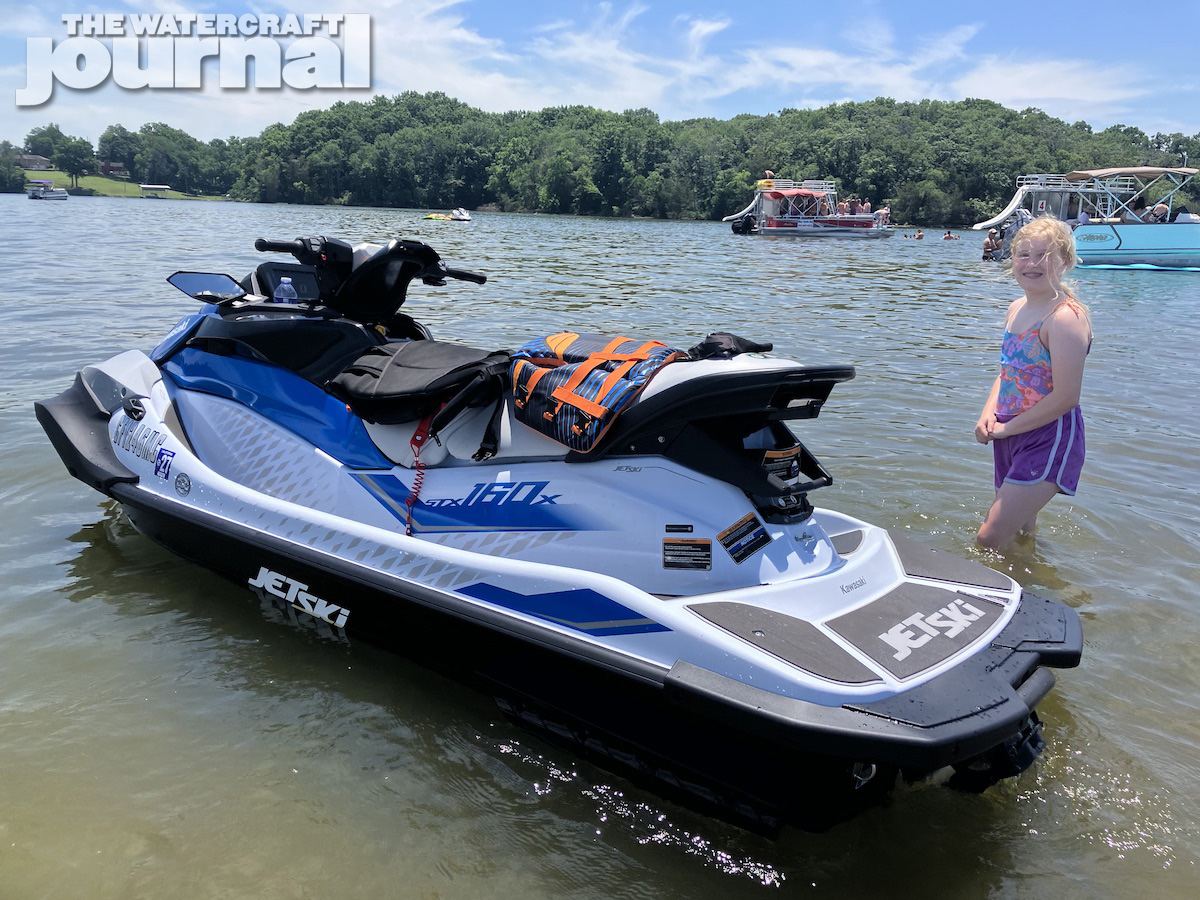
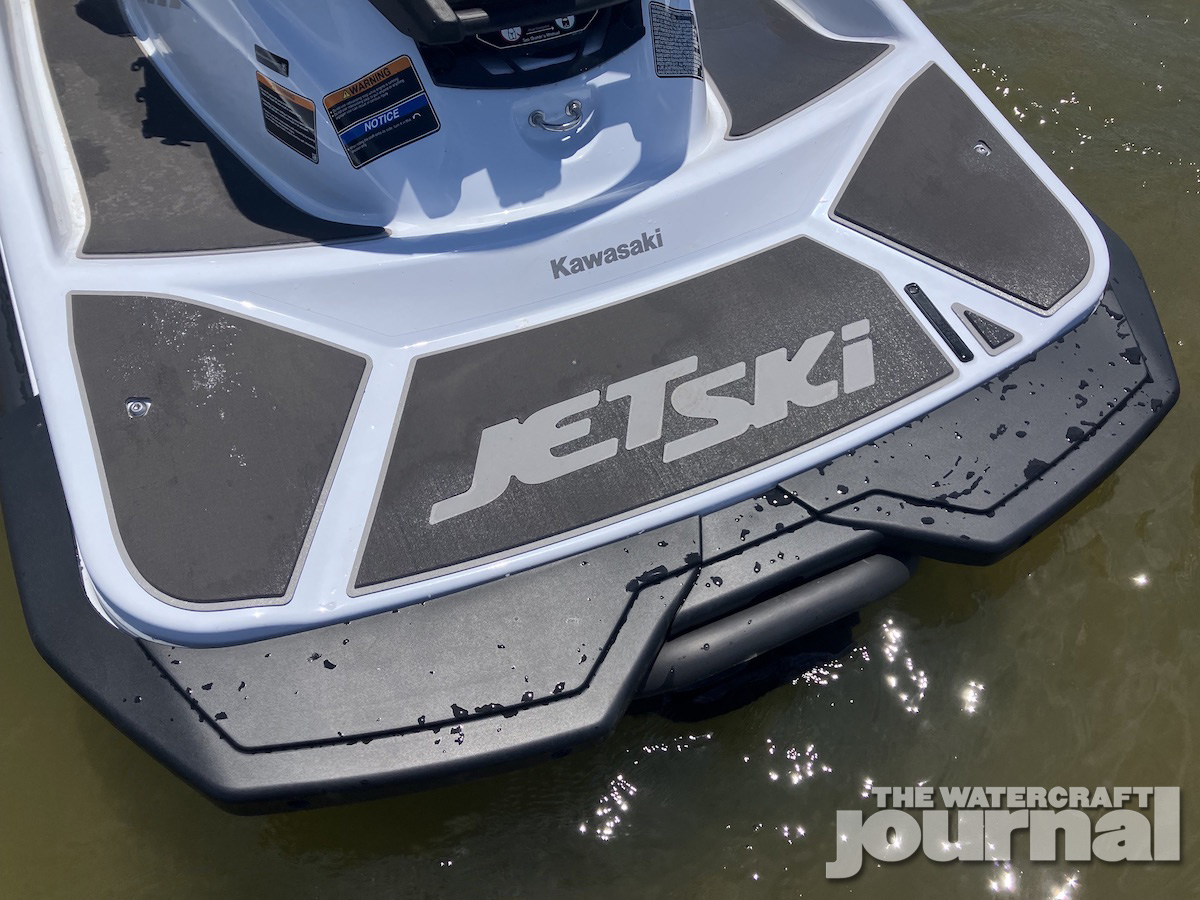
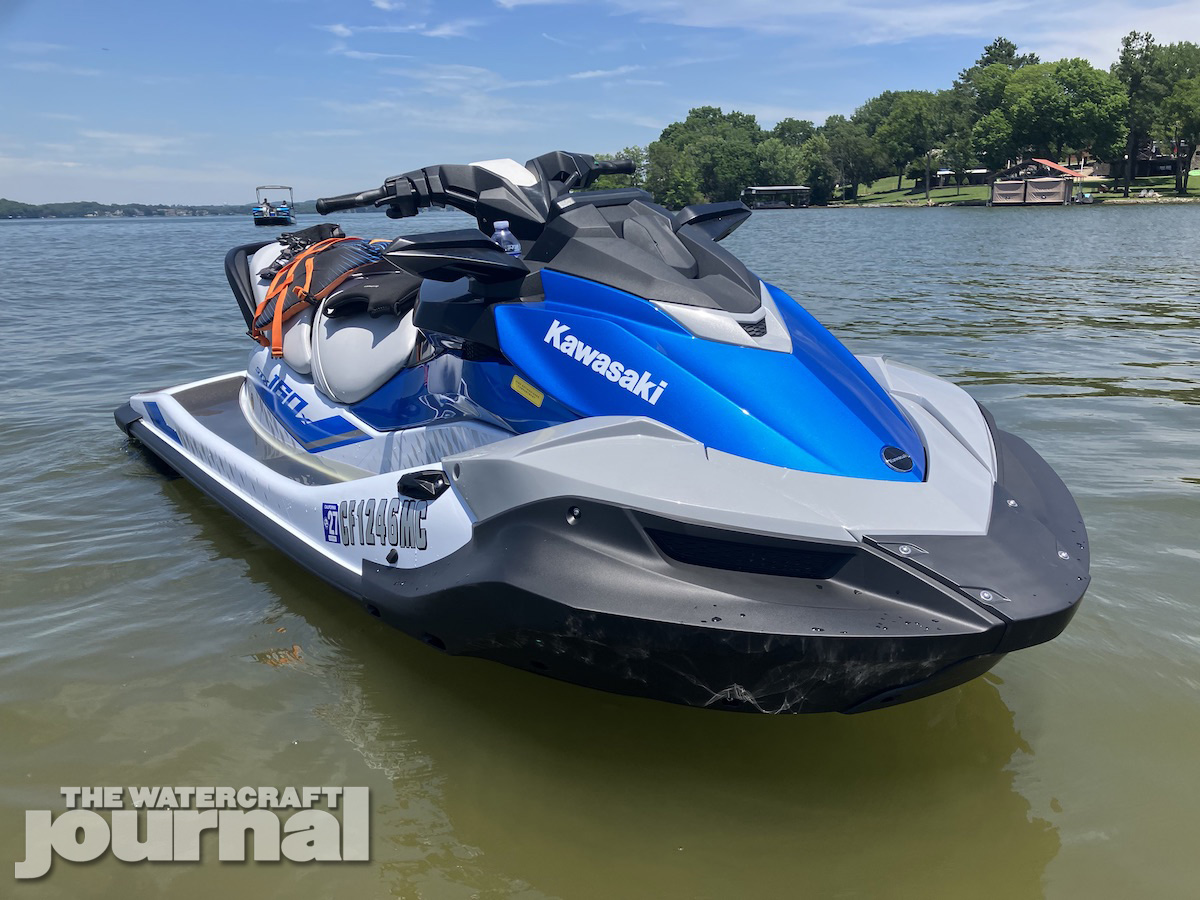
Admittedly, this review feels a little superfluous given the reveal of the vastly expanded STX lineup from Kawasaki Motor Corp. USA for 2027. When released late last year, the 2026 STX 160X was only one of three JetSkis available in the competitive Recreation segment here in the States; namely, the STX 160, STX 160X and STX 160LX.
All three units shared the identical 1,498cc four-cylinder 4-stroke engine and the nearly-identical hull first employed back in 2004; the fiberglass-and-gel coat combination proving to be the strongest, most durable combination despite Kawasaki’s competitors’ many budget-breaking efforts to reinvent the wheel.
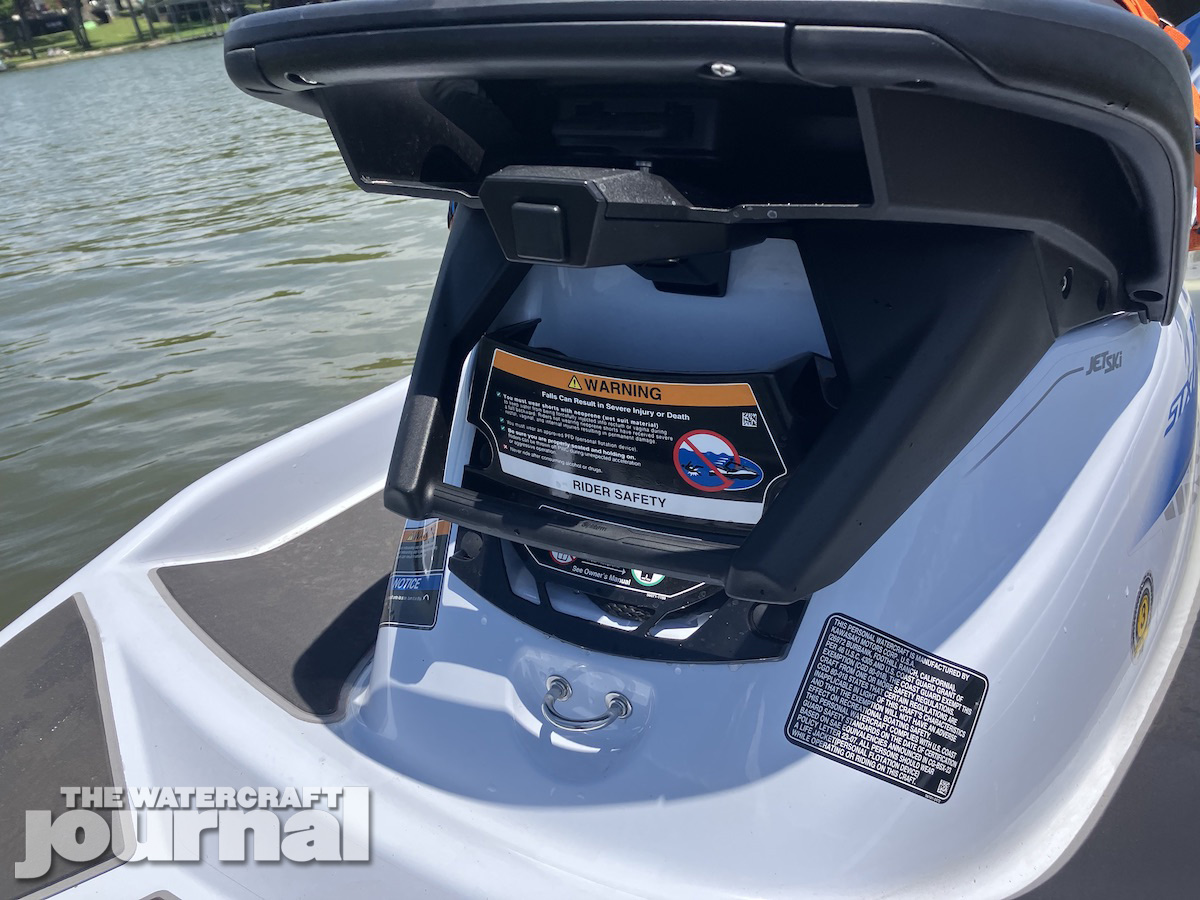
Equally, all shared the same deck (made in the same process) redesigned for model year 2020, giving riders deeper footwells; a taller posture in the saddle; a wider tiered swim platform; and a voluminous glove box. And to correct a previous misstatement in the above video, a fully electronic throttle trigger.
For 2020, Kawasaki used a DC motor in the trigger, eliminating the cable-operated actuator used on the first generation Ultra 310 models. The old actuator had more physical resistance as it featured more contact points making it far more precise. Many noticed that the new trigger lost some precision but was way easier on the fingers.
Of the three, only the 160X and 160LX featured completely redesigned splash deflecting bumpers, a redesigned hood, console and upper deck fairings. (The 2026 STX 160 remained relatively unchanged since its debut in 2020.) These aesthetic changes not only gave the 160X and 160LX a striking new look but served a purpose:
Being relatively unchanged since late 2004, the STX had earned a reputation with less experienced riders for low speed “plowing” in No Wake Zones. The race-bred hull tended to plow and even submerge when traveling at speeds below 7-8mph, causing water to flood the footwells and if prolonged, spill into the bow storage.
Despite adding electronic trim controls, a dedicated Low Speed mode and even altering the ride plate, riders couldn’t correlate the submarining with bringing the bow up by traveling at planing speed. Ergo, the 2026 STX 160X and 160LX received an entirely redesigned nose that fans the wake outward and deflects wash.
Yet, this redesign didn’t come without a cost: The STX 160X swelled in total length by 6-inches (124.1-inches to 130.3-inches); and gained a corpulent 72.7-pounds between a single model year (937.1 lbs. versus 864.4 lbs.). This of course is all curb weight numbers; dry weights estimate at 798.2 lbs., still a hefty gain over 2025’s 725.4 lbs.
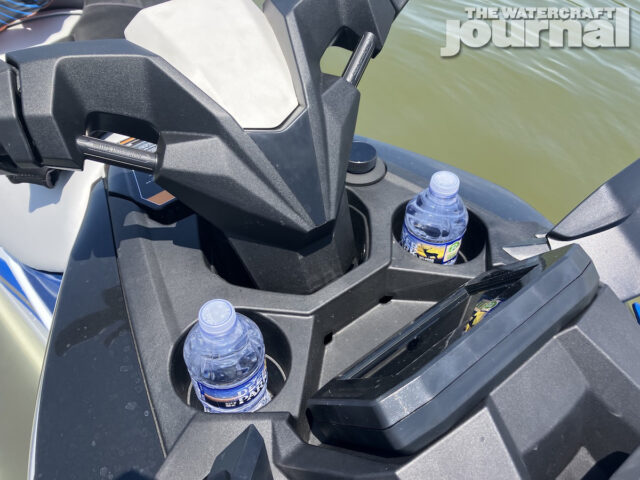
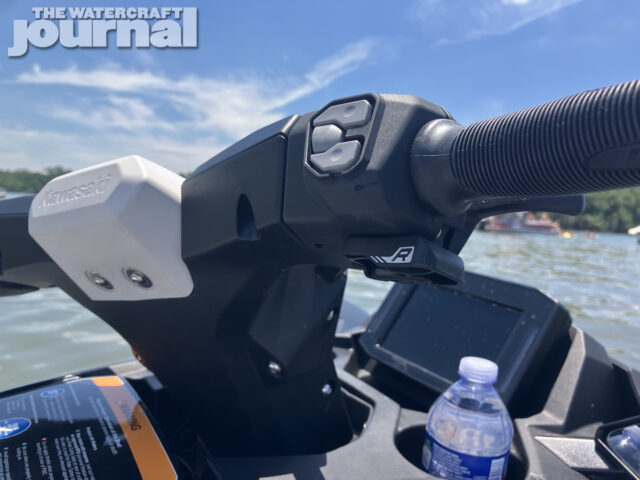
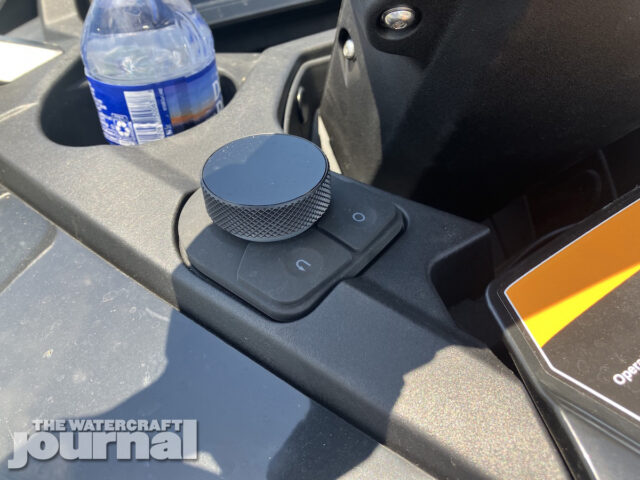
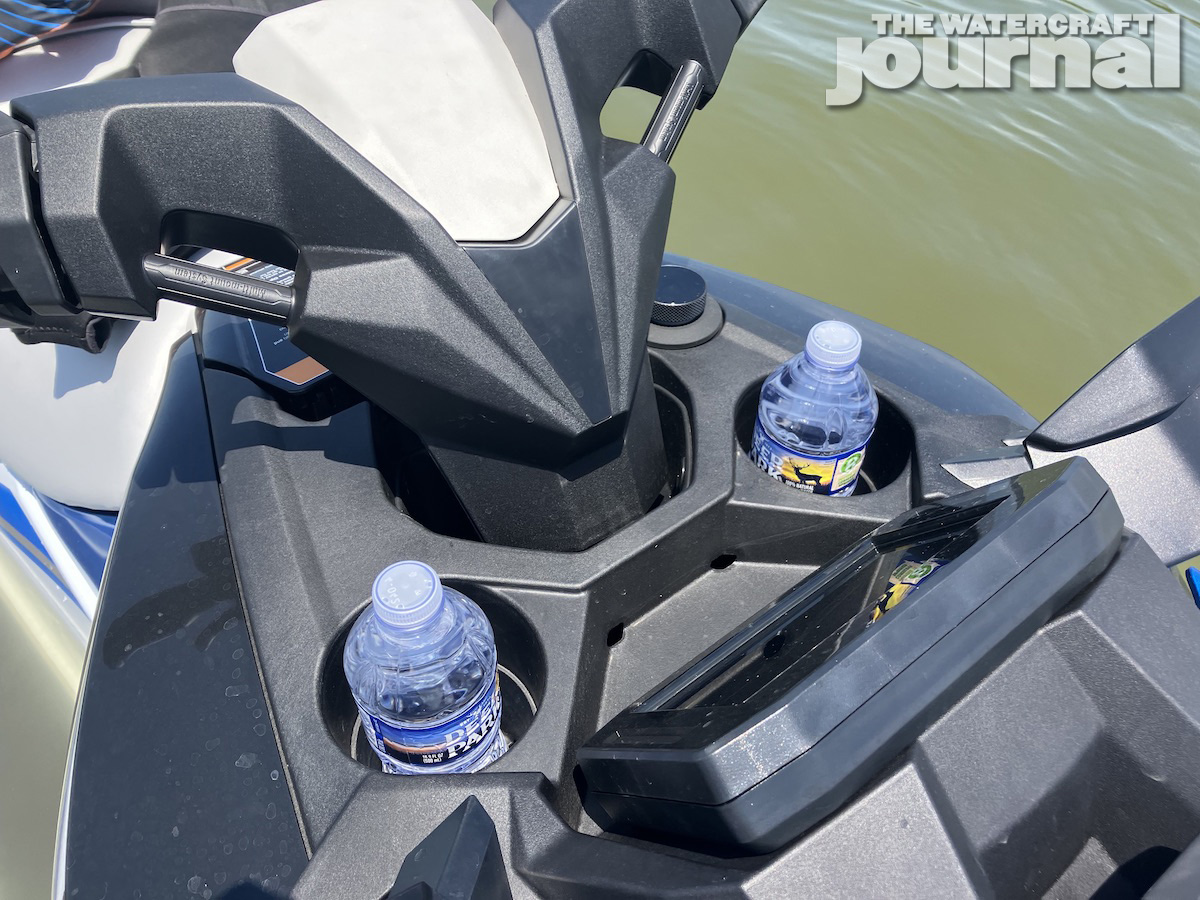
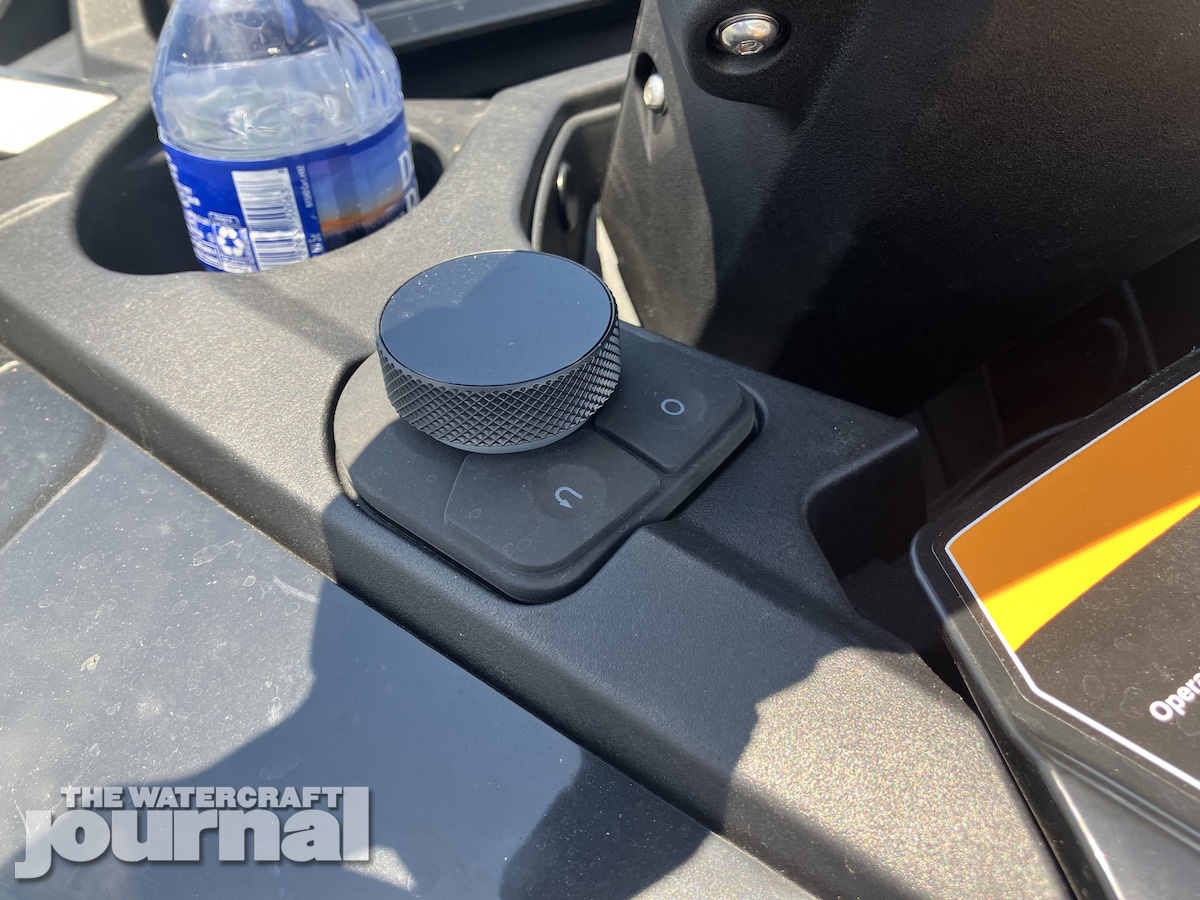
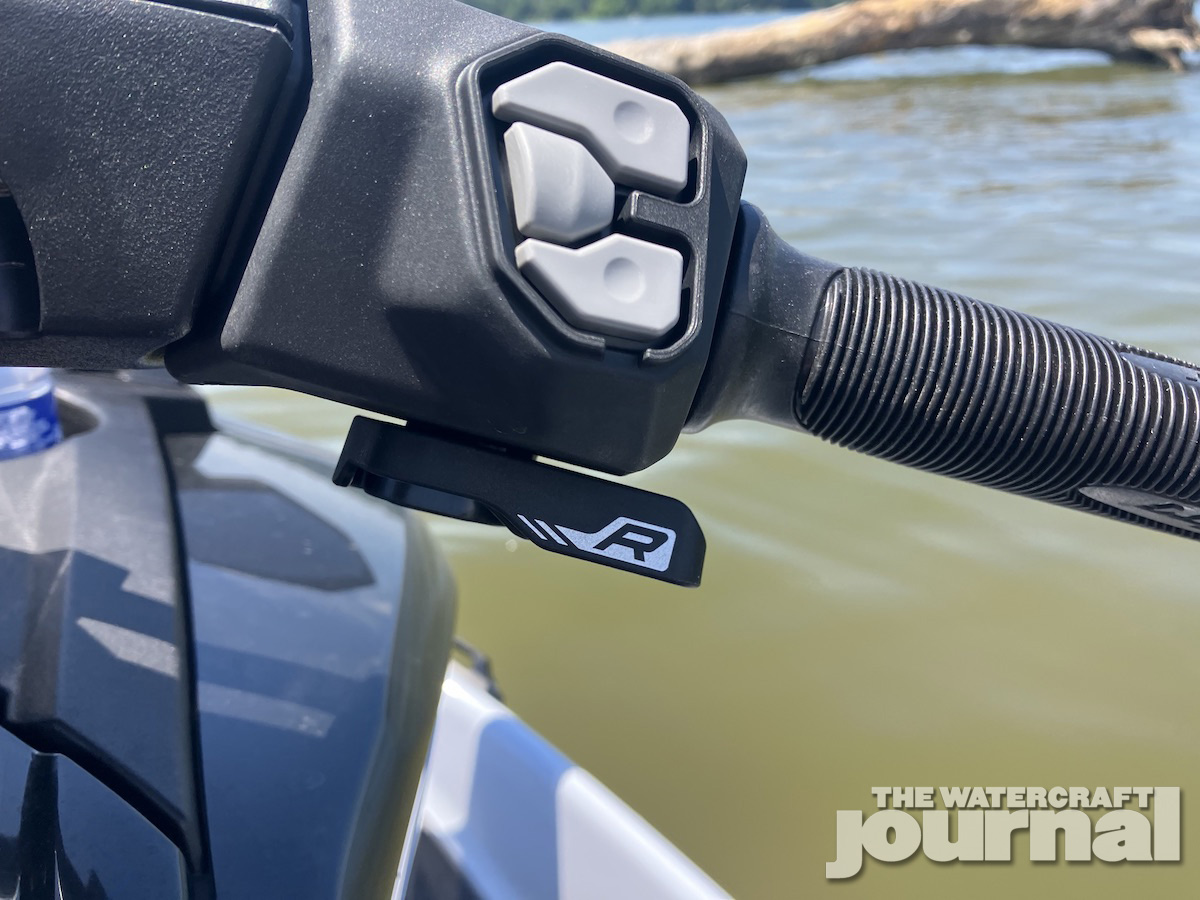
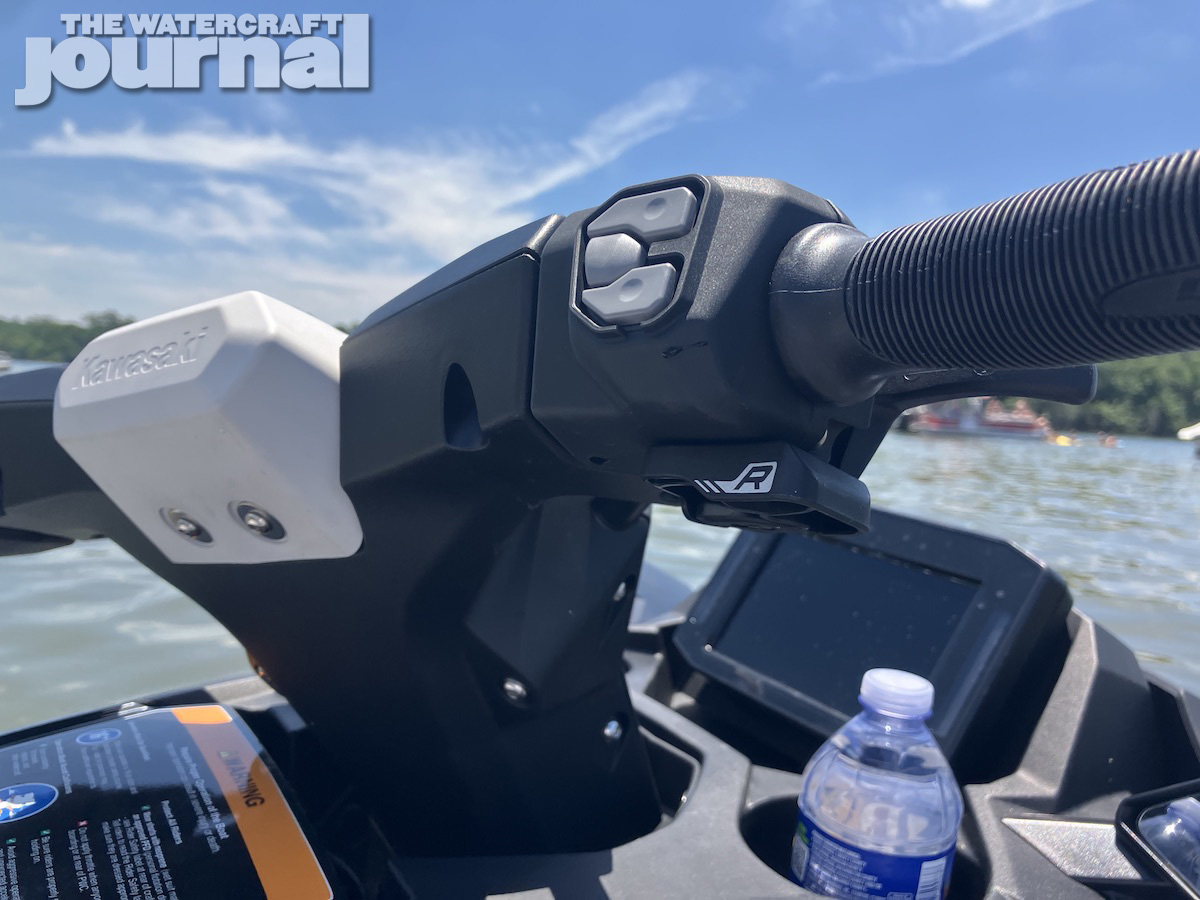
Gratefully, fuel capacity remains as the industry leader at 20.6-gallons as did total storage at 35-gallons. For 2026, the STX 160X picked up the Ultra’s full-color TFT 6-inch screen operated via a jog dial and dual buttons located just off to the left of the fixed steering neck. And yes, the STX received the Ultra’s satisfying thumb controls on the handlebars.
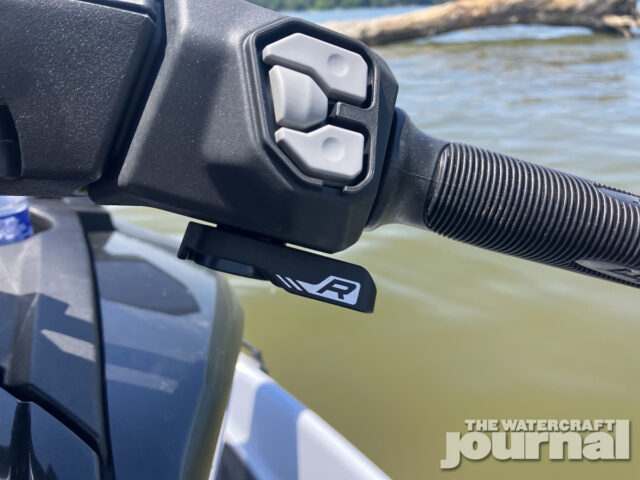
Speaking of which, each button confirms with a tactile *click* whether you’re selecting your Mode settings (SLO, Medium or Full); adjusting trim or setting your cruising speed. It’s a small detail, but one you’ll come to appreciate. And this year also marks the introduction of Kawasaki Smart Reverse with Deceleration (KSRD) to the STX.
Kawasaki’s engineers are adamant that the right-hand-thumb control is not a brake in the same vein as iBR and RiDE, but that’s exactly how people are using it. It’s sorta like Johnson & Johnson telling folks that Q-Tips are not for cleaning your ears despite everybody using them exactly for that purpose.
And to this point, as more people come to use KSRD as a high speed brake, it would behoove Kawasaki to accept this outcome and properly adjust the system’s coding to begin to deploy the bucket sooner when engaged. KSRD is dreadfully slow to respond in this regard and struggles to quickly shuffle between Reverse, Neutral and Forward.
The STX includes a smattering of peculiar additions that continue to confound: the action camera “multi-mount” bars on the steering; the incomprehensible clear access door beneath the passenger seat; the awful flip-up rear seat track (with kickstand); etc. All of these wouldn’t be missed and, in the very least, could shave a few bucks off of the asking price.
Something which gets lost in the accessory soup is just how good this ski is at being a fun little performer. Buried beneath all of the marketing bluster and unnecessary features is a ski that just wants to rip around the lake. The STX 160X is just a whole lot of fun. It’s well balanced and doesn’t wander or track weirdly in chop.
In fact, it’s ability to hold a straight line in white-capped offshore chop is what earned this hull its street credibility so many years ago. Moreover, the STX hull can do something most Recreation-segment hulls can’t do: it can play both good cop/badcop depending upon the driver. Allow me to elaborate:
A casual rider can comfortably ride high in the padded saddle and leisurely meander alongside their lake’s shoreline as smoothly and effortlessly as could be imagined. But when coaxed by a superior rider, the STX can aptly break stride and snap a corner as tightly as a sportbike riding on the outermost edge of their tires’ tread.
Yes! All one needs to do is slide their butt out over the edge of the seat, drop a knee deep into the footwell, vise the throttle and snap the handlebars to their stop – and you’ll experience something that most jet skis don’t dare today’s insulated riders to do: a ski that directly responds to body English.
This ski – despite its added bloat and layers of creature comforts – still has the heart of a closed course contender buried underneath. It feels a little like a retired athlete shedding his business suit and taking to the track again. The muscle memory is still hard wired into this machine.
At the time of its release, the 2026 Kawasaki STX 160X JetSki came with an MSRP of $13,899, which is on par with Yamaha’s VX Deluxe ($13,499) and Sea-Doo’s GTI 170 SE ($13,899). While down 10HP than the Sea-Doo, the STX wields 50-ponies over the Yamaha and five more gallons of storage; not to mention more fuel capacity than either PWC.
Sure, the fetching Metallic Surf Blue & Crystal White livery, padded swim step, laser-cut carpets and docking cleats might lure in the showroom lookie-loos; but to the sharpened eye, they’ll see a former world champion athlete whose enjoying a little quieter lifestyle outside of the ring but that can still rip it up on the water.
Adding horsepower is one of the most familiar approaches to improving personal watercraft performance. But getting more power out of an engine and translating that power into better acceleration or higher speeds are two different things.
Between the engine and the water sits the jet pump, responsible for converting engine power into thrust. And when that system isn’t operating efficiently, additional horsepower may not deliver the results a rider expects.
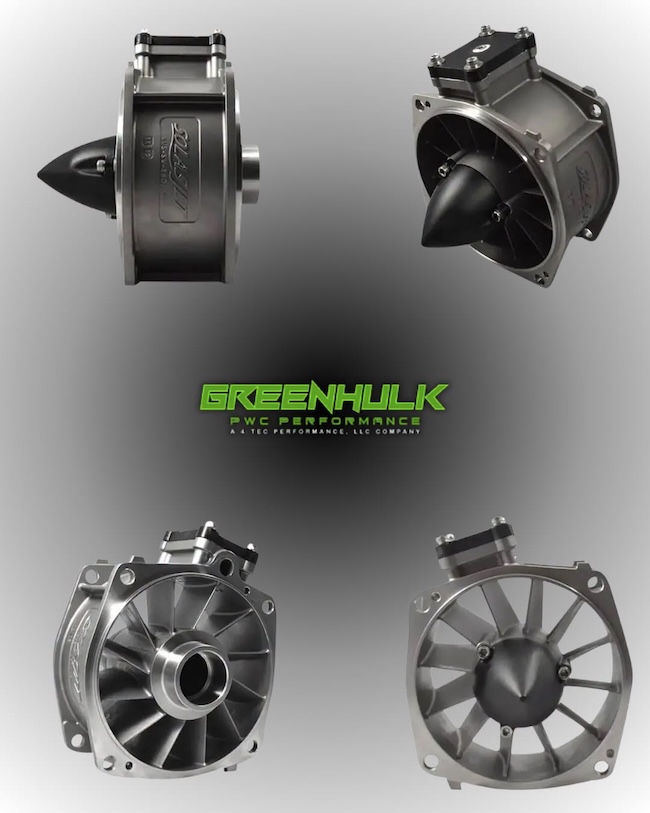
That’s the focus of a recent product spotlight from GreenHulk PWC Performance Store, which highlighted a range of Yamaha pump components intended to address everything from worn factory parts to the demands of heavily modified performance builds.
Getting the Power Into the Water
Unlike a conventional propeller operating beneath a boat, a personal watercraft’s jet pump draws water through an intake and accelerates it through the pump and nozzle to generate thrust.
The system depends on maintaining effective water flow through the pump. When that flow is disrupted, performance can suffer.
One potential problem is cavitation, which occurs when localized pressure drops cause vapor bubbles to form in the water. Those bubbles can reduce effective thrust and contribute to poor acceleration, particularly when the pump is placed under heavy load.
Excessive clearance between the impeller and wear ring can also compromise pump performance. As components wear or become damaged, the pump may become less effective at transferring power into the water.
For riders experiencing a loss of acceleration or poor hookup, the issue may not necessarily be a lack of engine horsepower.
Different Components, Different Purposes
GreenHulk’s Yamaha pump-performance selection includes products addressing several aspects of pump operation, from routine replacement components to more extensive performance modifications.
Among the simpler offerings are OEM Yamaha 155mm and 160mm wear rings, along with stainless steel replacements from RIVA Racing. Wear rings help maintain the close clearance required between the impeller and surrounding pump housing. Replacing a worn or damaged ring can address a source of lost pump efficiency without increasing engine output.
GreenHulk also carries pump cones from WORX, TBM and Lucky 13. These components alter the geometry of the pump’s discharge area, with the manufacturers’ designs intended to influence water flow, pump loading and hookup characteristics.
Another option is the pump wedge.
GreenHulk highlights 2-degree wedges from RIVA, WORX and Fizzle, describing them as a way to raise the bow, reduce hull drag and potentially gain 1–2 mph.
That performance estimate comes from GreenHulk’s product promotion, however, and should not be interpreted as a guaranteed result. Changes in pump angle and running attitude can affect a watercraft differently depending on hull design, loading, operating conditions and the rest of its setup.
For more extensive modifications, the retailer features RIVA/Solas 160mm stainless steel race pumps, marketed toward riders seeking improvements in pump efficiency, acceleration and top speed.
GreenHulk also lists upgrade kits designed to convert compatible earlier Yamaha SHO and SVHO pump configurations to the newer one-piece pump design introduced for 2020, along with a 2021-and-newer GP1800R SVHO 160mm transom plate upgrade for compatible earlier models.
According to GreenHulk, these upgrades are intended to improve characteristics such as hookup, holeshot and resistance to cavitation.
More Than Performance Modifications
Not every component in GreenHulk’s lineup is intended to produce additional speed.
The retailer also offers OEM Yamaha pump housings, SVHO driveshafts, bearings, seals and O-rings for repairs, rebuilds and pump conversions.
These components serve an important distinction in pump maintenance: restoring a system to proper operating condition is not the same as modifying it to exceed its original performance.
For highly modified applications, GreenHulk additionally lists pump tunnel reinforcements for Yamaha FX SHO/SVHO and FZR/FZS models. These products are intended to provide additional structural support in demanding, high-horsepower applications rather than directly increase speed.
Matching the Parts to the Application
The range of products illustrates why pump performance involves more than choosing the component advertised to deliver the greatest speed increase.
GreenHulk markets different solutions for different objectives, including restoring worn components, changing pump characteristics and supporting more extensively modified machines.
Its product listings also distinguish between particular Yamaha model years, pump sizes and configurations. Those compatibility requirements matter, especially when considering complete pump conversions or components developed for specific hull and drivetrain combinations.
GreenHulk’s published performance claims reflect the retailer’s descriptions of the products and their intended applications, not independent testing conducted by The Watercraft Journal. Actual results can vary with the watercraft, existing modifications and operating conditions.
For Yamaha owners, the broader takeaway is straightforward: horsepower is only one part of the performance equation. The condition and configuration of the jet pump also influence how effectively that power becomes thrust.
GreenHulk’s Yamaha pump-performance parts and upgrade options are available through its online store at 4-tecperformance.com.
Below is GreenHulk PWC Performance Store’s original product spotlight, with details on the Yamaha pump components and upgrades discussed above.
YOUR YAMAHA MAKES THE POWER… NOW MAKE SURE THE PUMP CAN USE IT! 🚀
Adding horsepower is only half the equation. If your Yamaha isn’t hooking up, is fighting cavitation, or you’re looking for harder acceleration and more top speed, your pump setup matters. https://www.4-tecperformance.com/index.php..
🔥 YAMAHA PUMP PERFORMANCE & UPGRADE PARTS 🔥
⚡ 2° Pump Wedges from RIVA, WORX & Fizzle — raise the bow, reduce drag and potentially pick up 1–2 MPH
⚡ 2020+ SVHO Pump Upgrade Kits — upgrade compatible SHO/SVHO setups to Yamaha’s newer one-piece pump design
⚡ RIVA/Solas 160mm Stainless Race Pumps — increased pump efficiency, acceleration and top speed for serious performance builds
⚡ OEM Yamaha 155mm & 160mm Wear Rings — restore proper pump clearance when your original wear ring is worn or damaged
⚡ RIVA Stainless Steel Wear Rings — heavy-duty stainless construction built to handle demanding performance applications
⚡ WORX & TBM & LUCKY 13 Pump Cones — improve water flow through the pump for better hookup, acceleration and reduced cavitation
⚡ 2021+ GP1800R SVHO 160mm Transom Plate Upgrade — upgrade earlier GP1800R SVHO setups for less cavitation, better holeshot and stronger acceleration
⚡ OEM Yamaha Pump Housings & SVHO Driveshafts — repair your existing setup or complete your pump conversion
⚡ OEM Pump Bearings, Seals & O-Rings — the small parts you don’t want to overlook when rebuilding or replacing your pump
⚡ FX SHO/SVHO & FZR/FZS Pump Tunnel Reinforcements — added strength for highly modified and high-horsepower builds
🏁 BETTER HOOKUP. LESS CAVITATION. HARDER ACCELERATION. MORE SPEED.
From a simple pump wedge to a complete 160mm race-pump setup, GreenHulk has the Yamaha pump parts to get your horsepower out of the engine and into the water. 💪
👉 SHOP GREENHULK YAMAHA PUMP PERFORMANCE PARTS
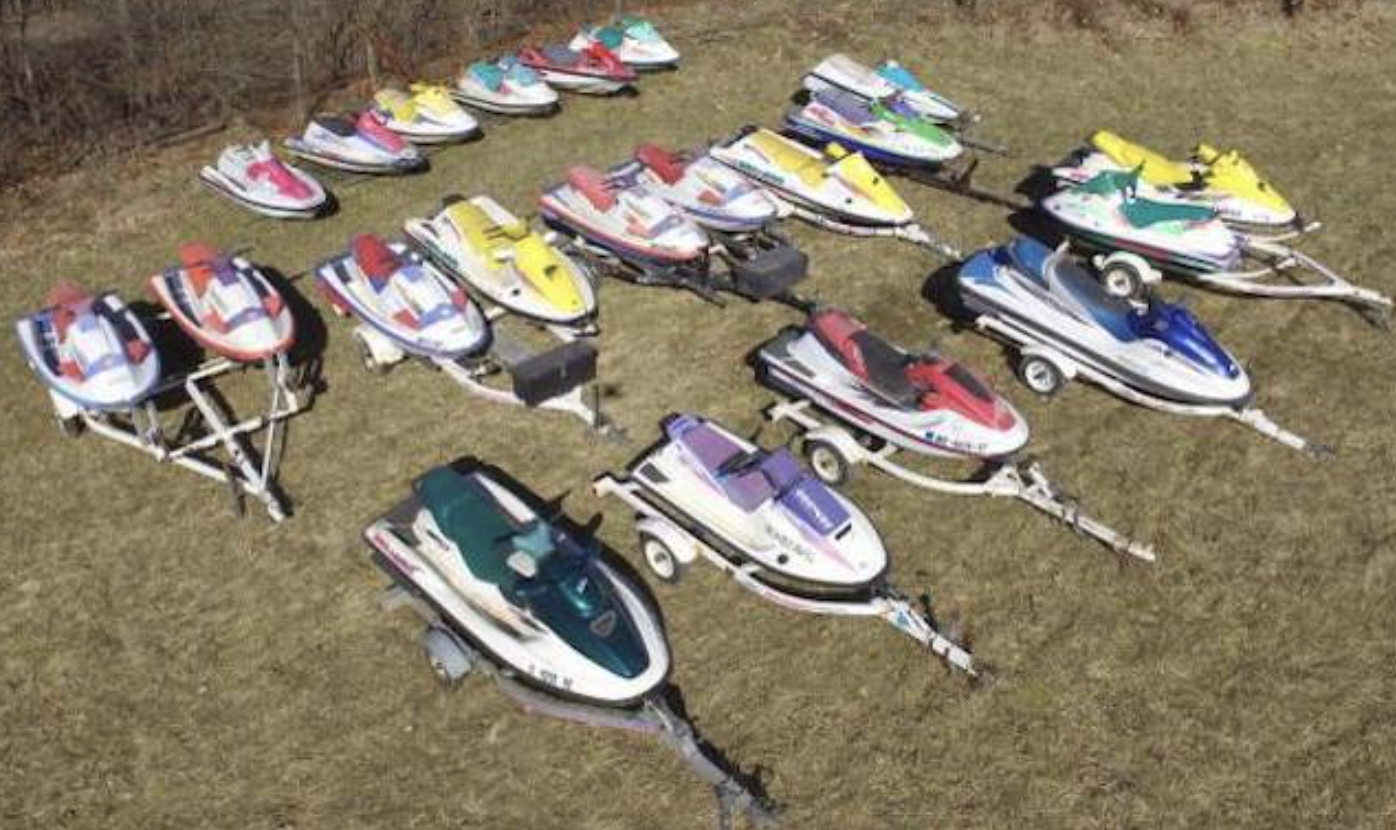
One ski, two skis, three skis, four … sometimes the hardest part of bringing home another PWC is figuring out what to do with the ones you already have. RIVA Motorsports offers both trade-ins and outright purchases of pre-owned powersports vehicles, giving owners a way to make room — and potentially free up some funds — for their next adventure.
Just about everyone has been there — the “one hand or the other” conundrum of the PWC lifestyle.
On one hand, I sure would like another jet ski…
On the other hand, I’ve already got three, and there’s no more room in the garage.
On one hand, I’d sure like to upgrade my old jet ski…
On the other hand, my bank account thinks otherwise.
And, of course, there’s always the rider who loves their ski but has started eyeing a motorcycle, ATV or side-by-side instead.
The “sure would likes” can sometimes seem never-ending. Unfortunately, those “other hands” are usually just as plentiful.
And with Sea-Doo, Yamaha and Kawasaki having recently unveiled their 2027 personal watercraft lineups, those “sure would likes” have been getting quite a workout.
The new model announcements have generated plenty of conversation among riders, from excitement over the latest offerings to some less-than-enthusiastic reactions to particular changes and choices. But whether the newest machines have you reaching for your checkbook or reconsidering what you already own, the arrival of another model year tends to raise a familiar question:
What am I going to do with the ski I’ve already got?
For some riders, the answer is to trade up. For others, it might mean moving into a different style of watercraft, downsizing the fleet or even trading time on the water for another powersports adventure.
Luckily, RIVA Motorsports may be able to give you a hand with that.
In a recent social media post, RIVA Motorsports in Deerfield Beach, Florida, announced that it is actively looking to purchase pre-owned powersports vehicles, encouraging owners to find out what their machines might be worth.
And for PWC owners, that opens up more possibilities than simply trading an old ski toward a newer one.
Want to sell your ski outright? RIVA is interested in purchasing pre-owned units, meaning you don’t necessarily have to buy something else to part with your current ride.
Looking to upgrade? Trading in your existing PWC could help offset the cost of moving into a newer model, whether you’re looking for more performance, additional seating or simply a change of pace.
Thinking about something completely different? RIVA’s powersports inventory extends beyond personal watercraft, opening the door to cross-category trades. A Can-Am Spyder or other eligible powersports vehicle could potentially be traded toward a PWC, or an existing ski could be used toward the purchase of an ATV, motorcycle or side-by-side.
That’s particularly appealing for riders whose recreational interests have changed over the years — or whose garages have reached maximum capacity.
And getting started is easy. RIVA’s online trade-in valuation tool walks owners through a three-step process, beginning with information about their existing vehicle and ending with a trade-in value estimate.
RIVA advertises top-dollar offers, a fast and easy process, and the option of either an outright cash purchase or a trade-in toward another vehicle.
That means you don’t necessarily have to be shopping for a replacement to take advantage of the program. If you’re simply ready to part with an existing PWC, RIVA wants to hear from you.
As with any vehicle appraisal, final offers may depend on the machine’s condition, equipment and other details.
For riders considering a replacement, RIVA also maintains an extensive inventory of new and pre-owned powersports vehicles, along with financing options for qualified buyers.
A Few Temptations for That Other Hand
Of course, once you’ve figured out what your current ski might be worth, there’s the equally enjoyable question of what could take its place.
RIVA’s Deerfield Beach location is advertising several Manager’s Specials on new 2026 personal watercraft, including a Sea-Doo FishPro Sport 170 with iBR and iDF for an all-in RIVA price of $17,488, a savings of $3,386 over its listed retail price of $20,874.
And Yamaha fans aren’t left out. A 2026 Yamaha JetBlaster PRO 3-Up is listed at $12,988, a savings of $2,136 over its advertised retail price of $15,124.
Those all-in prices include manufacturer and dealer fees, with applicable sales tax and registration additional.
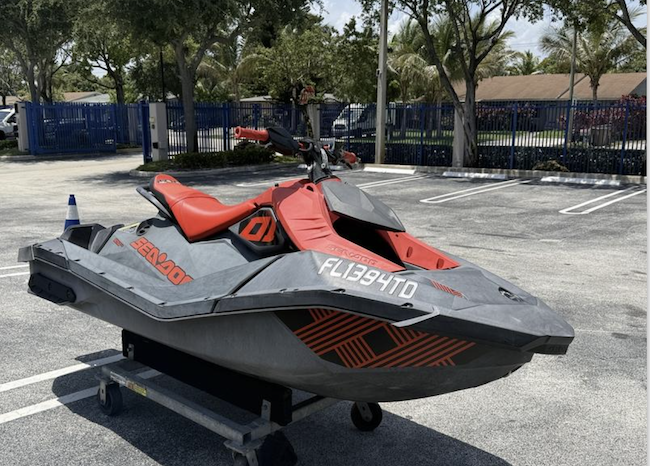
And for riders whose budgets have a slightly louder voice in the conversation — or who simply prefer a smaller, playful machine — RIVA also lists pre-owned watercraft, including a 2022 Sea-Doo Spark Trixx 2-up advertised at $6,990.
The Trixx’s lightweight design, 90-horsepower Rotax engine and extended-range Variable Trim System make it an appealing option for riders who prioritize playful handling over sheer horsepower.
As always, advertised prices and inventory are subject to change, so interested buyers should confirm availability and final pricing directly with RIVA.
With locations in Deerfield Beach, Miami, Space Coast and the Florida Keys, RIVA offers South Florida riders several places to explore their next purchase. Trade-in and outright-purchase arrangements should be confirmed with the participating dealership.
So whether you’re looking to make room in the garage, put the value of your current ski toward something newer, or swap weekends on the water for a different kind of adventure, your existing machine might be worth more to your next purchase than you realize.
And who knows? You might finally be able to satisfy one of those “sure would likes” without giving your bank account quite such a fright.
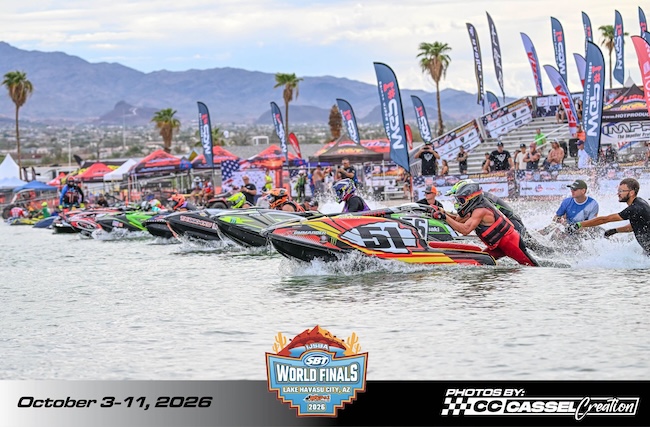
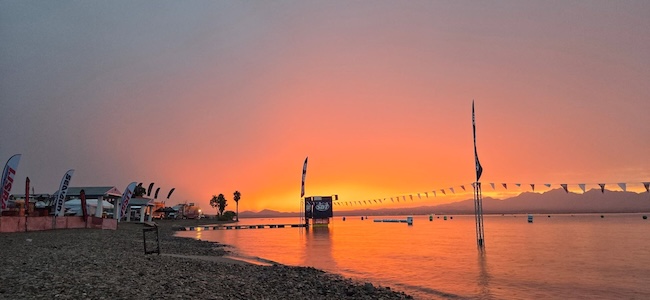
The racing is over, the trophies are being handed out, and the long roads leading away from Lake Havasu are calling.
There’s a particular kind of silence that settles over a race site when the competition is finished.
The engines stop. The crowds begin to thin. The tools go back into their boxes, the tents come down, and the seemingly impossible task of fitting everything back into the trailers begins.
Somewhere, someone is probably looking at a newly purchased part — or entire ski — from Vendor Row and wondering exactly where it’s supposed to fit.
For some competitors, the journey home from the 2026 SBT IJSBA World Finals will include a world championship trophy. Others will carry home broken parts, hard-earned lessons, unforgettable memories and plans for next year.
For all of them, the journey is another chapter in the World Finals experience.
As the event concluded Sunday, organizers offered a heartfelt farewell to the racers, families, crews, volunteers, officials and support staff who made the gathering possible.
In a message written by Kelly Stine and shared through the IJSBA World Finals social media account, organizers acknowledged the work that happens long before the first starting line fills and continues after the final checkered flag.
“What many don’t see are the countless hours of preparation, the early mornings, the late nights, the blood, sweat, tears, and dedication that go into making the SBT IJSBA World Finals something truly special,” the message read.
The organization also thanked Go Lake Havasu, Big O Tires, Anderson AZ West and Red Rock Waterside for their support, including helping keep spectator admission free.
That support matters. Racing is expensive enough for the competitors, and opening the shoreline to spectators without an admission charge gives families, local residents and curious visitors an opportunity to experience the sport.
Sunday’s competition unfolded against a challenging weather backdrop, with storms and strong winds affecting the Lake Havasu area. Competitors also described choppy water conditions, adding another demanding element to the final day’s racing. Organizers acknowledged challenges during the day, including an interruption to freestyle competition.
But as the competition gives way to the awards and the journey home, there is plenty to celebrate.
A Few Trophies for the Ride Home
Among the highlights was Austria’s Kevin Reiterer, listed atop the Pro Ski GP standings in the IJSBA’s October 11 results report with 214 points across four motos.
Lake Havasu City’s Harley Ritchie followed with 172 points, while Deven Farthing was listed third with 169.
The published freestyle standings supplied for the event listed Nolan Jukish first, Gabe Jukish second and Kyle Kreeger third.
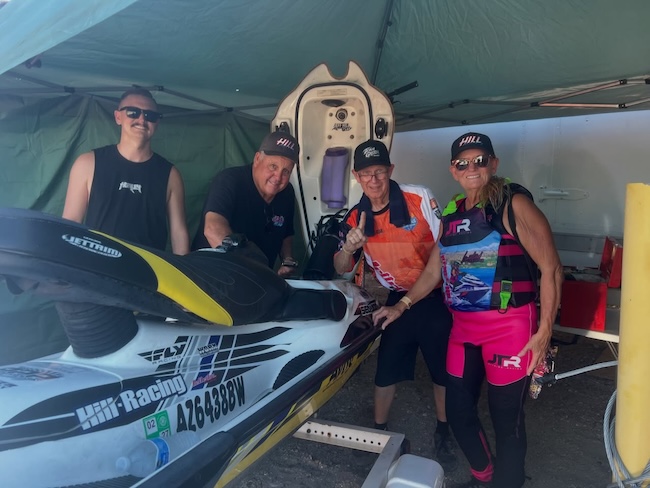
And one particularly noteworthy championship belonged to Renee Ann Hill, who captured the inaugural Women’s Sport Spec World Championship with moto finishes of 1-1-2 aboard her HX.
She credited her husband with building the machine and thanked Gary Warner and Jeffrey Scott Hill for their help on the starting line.
Her accomplishment is one of the many stories competitors will carry away from Lake Havasu — some recorded in the results, others remembered in the pits and around the dinner table long after the trophies have found their shelves.
For competitors who traveled across the country to reach Lake Havasu, the end of racing doesn’t mean the end of the adventure.
It means loading up, checking the trailer, filling the fuel tank and pointing the truck toward home.
Some will be back in their own beds after a relatively short drive. Others face days on the highway, towing race machines, equipment and everything necessary to keep a team operating through a week of competition.
And there are several ways to make the journey part of the experience.
Eastbound toward New Mexico, Texas and beyond: Interstate 40 is a major corridor for travelers crossing Arizona and New Mexico. The route passes through Flagstaff, where elevation and mountain weather can be a considerable change from the warmth of Lake Havasu, before continuing toward Albuquerque and the Great Plains.
For travelers with time to spare, northern Arizona offers opportunities to explore historic Route 66 communities, including Williams and Seligman. Farther east, Petrified Forest National Park offers a memorable detour, provided the trailer, schedule and park access requirements cooperate.
Northbound toward Nevada and the Pacific Northwest: Routes through Nevada, including US 93, offer dramatic desert scenery and long stretches where fuel planning becomes particularly important. Travelers heading toward Idaho, Oregon or Washington should check mountain weather and road conditions before committing to a route.
Westbound toward California: Southern California travelers may have fewer miles ahead, but that doesn’t necessarily mean an easy drive. Desert highways, busy interstate connections and metropolitan traffic can turn a relatively short trip into a long day behind the wheel.
Southeast toward the Gulf Coast and Florida: For teams headed toward the Gulf states, Interstate 10 and its connecting highways provide another major east-west option. Given recent hurricane activity, travelers should check official weather advisories, closures and local conditions before selecting a route through potentially affected areas.
These are general travel corridors, not recommended turn-by-turn itineraries. The best route depends on the destination, weather, vehicle, trailer and individual travel plans.
And for those who have spent the past week operating on race schedules, early mornings and too little sleep, perhaps the most important stop is simply the one where the driver gets some rest.
A week at the races can be hard on equipment, and the trip home deserves as much attention as the drive to Havasu.
Before pulling out, take a few minutes to check trailer tires, including the spare, for proper inflation and visible damage. Inspect wheel hubs and bearings for signs of trouble, check trailer lights, verify the hitch and safety chains, and make sure the breakaway system is properly connected where equipped.
Give the watercraft another look, too. Check bow and stern tie-downs, secure loose equipment and make certain nothing can shift or escape during a sudden stop.
And remember that the tools, spare parts, coolers, tents and assorted treasures acquired during the week need to be secured just as carefully as the race machines themselves.
For anyone towing a long distance, a quick walk around the trailer at fuel stops is a small investment that can prevent a much bigger headache.
Official state transportation websites and 511 travel-information services can help drivers check conditions, although coverage and services vary by state.
Photo: IJSBA
More Than the Finish Line
The World Finals bring together people who may spend most of the year separated by states, countries and oceans.
For a few days, those distances disappear.
The pits become a neighborhood of sorts, filled with competitors, mechanics, families, friends and familiar faces who may see one another only a handful of times each year.
There are victories worth celebrating, disappointments that sting, machines that perform beautifully and machines that choose the worst possible moment to develop a problem.
There are the people who lend a tool, offer advice, help push a ski to the line or simply pull up a chair when someone needs a friend.
And when the racing is finished, all those little neighborhoods begin to disappear into trailers and trucks.
The World Finals organizers captured that sentiment in their farewell:
“It’s more than racing. It’s friendships, families, memories, and a worldwide community brought together by a shared passion for the sport we love.”
For those who have made the journey year after year, that may be as much a reason to return as the competition itself.
Tell Us About Your Long Haul Home
Now it’s your turn.
Whether you’re leaving Lake Havasu with a world championship trophy, a broken engine, a new personal best or just a collection of stories nobody back home is going to believe, The Watercraft Journal wants to hear about it.
Tell us about your toughest moments on the racecourse this past week. Your favorite memories. The friends you hadn’t seen in years, the people who helped you get to the starting line, and the moments that made the entire trip worthwhile.
Send us your photos — the podium celebrations, the pit crews, the late-night repairs, the family gatherings and the sights along the road home.
We want your victories, your frustrations, your gripes and your gratitude.
And we especially want to know what you bought on Vendor Row that seemed like such a good idea at the time but now, somehow, won’t fit into the trailer.
Are you making a straight run home, or turning the trip into one last adventure? Found a great roadside diner, an unexpected scenic stop or a stretch of highway you’d rather never see again?
Tell us about that, too.
Because the World Finals aren’t just the races that happen on the water. They’re the journeys that bring everyone together — and the stories they take home.
From all of us at The Watercraft Journal, congratulations to the competitors, thank you to the people who made the event possible, and safe travels to everyone heading home.
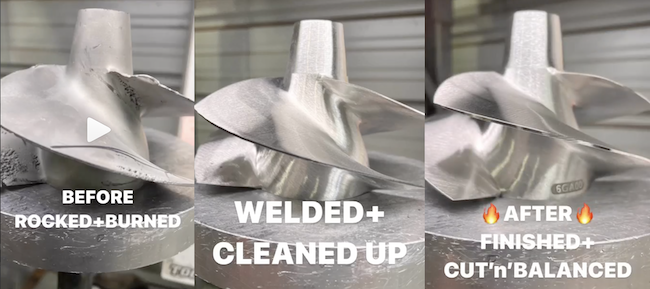
From rock damage to restored performance: These before, during and after images from Impros show a damaged impeller undergoing welding, refinishing and balancing. Depending on the extent of the damage, professional restoration may offer riders an alternative to purchasing a replacement impeller. (Photos courtesy of Impros Impellers)
That unexpected encounter with a rock, a patch of gravel or some unseen underwater debris can turn a perfectly good day on the water into a very expensive-sounding problem.
Maybe you heard the impact. Maybe you didn’t notice anything until you accelerated again, only to discover your personal watercraft wasn’t responding quite the way it should. Acceleration feels sluggish, top speed has dropped, or the engine seems to be working harder without producing the thrust you’re accustomed to.
Before you start shopping for a replacement impeller, though, there’s another question worth asking: Can the one you already have be repaired?
For riders facing that decision,Impros Impellers offers several levels of professional impeller restoration, ranging from minor blade repairs to more extensive welding, machining and balancing.
And depending on the damage, replacing the entire impeller might not be necessary.
Small Damage, Big Problems
The impeller is one of the hardest-working components in a personal watercraft’s propulsion system. Unlike an exposed boat propeller, a PWC impeller operates inside the jet pump, drawing water through the intake and accelerating it toward the steering nozzle to generate thrust.
That location offers some protection, but it doesn’t make the impeller immune to damage.
Rocks, gravel and other debris entering the intake can nick, bend or gouge the blades. Even relatively minor damage can affect how efficiently the pump moves water, potentially reducing acceleration and overall performance.
Damage can also contribute to vibration and pump inefficiency. In some cases, riders may notice the engine revving higher without a corresponding increase in speed.
Then there’s cavitation, a condition in which localized pressure drops cause vapor bubbles to form in the water. When those bubbles collapse, they can damage surfaces and interfere with efficient propulsion.
The takeaway? An impeller doesn’t have to be completely destroyed to cause noticeable performance problems, and ignoring damage can lead to additional wear elsewhere in the propulsion system.
Not Every Damaged Impeller Is a Goner
That’s where professional repair comes into the picture.
Its Rocked Stage One service is intended for impellers with relatively minor leading- or trailing-edge damage that doesn’t require welding. The service restores blade specifications and includes the company’s race-tolerance blade profile and recreational finish.
For impellers with more substantial damage, Rocked Stage Two adds welding for damaged blade edges or gouges, along with additional attention to blueprinting and balancing.
Then there’s The Worx, designed for impellers requiring more extensive restoration, including welding and machining of a worn outside diameter. The service also addresses blade damage, blade angles and balancing, with the goal of restoring the impeller to appropriate specifications and tolerances.
Impros lists base service prices of $85 for Stage One, $105 for Stage Two and $135 for The Worx, although its website notes that prices may vary depending on the repair. Additional charges apply for certain modifications and finishes, and customers should confirm current pricing directly with the company.
The important distinction is that these services aren’t simply about making a damaged impeller look better. They’re intended to restore blade geometry, balance and operating clearances that influence how effectively the pump performs.
Impros says it checks every impeller it services for balance within two-tenths of a gram, including during the finishing process.
Don’t Forget the Pump
Of course, the impeller isn’t the only component that can suffer when debris makes its way through the propulsion system.
The stationary vanes inside the pump housing can also become chipped or damaged, disrupting water flow even when the impeller itself is in good condition.
Impros offers pump-vane repair services that involve welding damaged areas and regrinding the vanes to restore their shape.
The company lists starting prices for OEM pump repairs ranging from $120 for six-vane configurations to $150 for 10-vane configurations, with final costs dependent on the extent of the damage.
That means riders experiencing persistent pump performance problems shouldn’t automatically assume a new impeller will solve everything. The condition of the pump housing, stator vanes and wear surfaces matters, too.
Repair, Replace or Modify?
There isn’t a universal answer to whether a damaged impeller should be repaired or replaced.
The extent and location of the damage, the condition of the underlying material, the cost of restoration and the availability of a suitable replacement all factor into the decision.
And for riders who have made performance modifications to their watercraft, the question can go beyond simply restoring the original setup.
Impros also offers impeller pitch modifications intended to help match impeller characteristics to a particular engine and performance configuration. Changes in pitch can affect engine loading, operating RPM and acceleration, making proper selection important.
That doesn’t mean every damaged impeller is a candidate for repair, or that every performance problem can be solved with a pitch adjustment. An inspection and evaluation are the sensible starting points.
Before You Buy Another Impeller
If your PWC has taken a hit, or its performance has changed unexpectedly, inspecting the impeller and pump is a worthwhile first step.
Look for visible nicks, bent blade edges, gouges, unusual wear and signs of contact between the impeller and surrounding components. A damaged wear ring or pump housing may also require attention.
If you aren’t comfortable inspecting or removing these components yourself, have a qualified technician evaluate them. Never reach into the intake or pump with the engine running, and follow the manufacturer’s service procedures before beginning any work.
For riders considering professional restoration, Impros provides a shipping form to accompany impellers and pumps sent in for service. The company recommends evaluating damaged pump components in person to determine an accurate repair cost.
The next time your impeller has an unfortunate meeting with something lurking beneath the surface, don’t assume the only solution is an expensive replacement.
Sometimes the better first move is finding out whether the damage can be repaired.
For information on impeller restoration, pump-vane repair and pitch modifications, visit Impros Impellers.
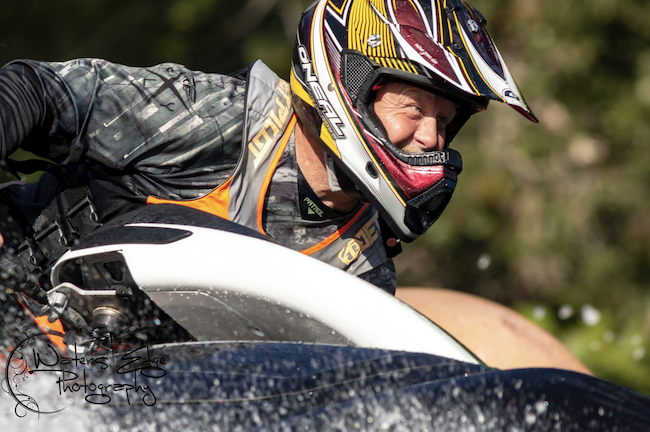
Course Marshal Randy Scott spends plenty of time being the responsible one on the water. Apparently, every now and then, even the responsible one needs to grab a little throttle. Riding style is one variable no PWC spec sheet can account for when calculating real-world fuel range.
I’ve watched it happen through a long lens more times than I can count.
There’s the new rider, tentative at first, learning the machine and testing the throttle — until something changes. The shoulders loosen. The speed picks up. And even from shore, through a camera lens, you can see the moment the bug bites.
I’ve watched it happen to returning riders, too. Older now, maybe retired from racing, back on the water just to mess around — right up until muscle memory and a little competition wake up something that apparently wasn’t nearly as retired as they thought.
And then there are the racers. Exhausted, coming out of the final turn after spending everything they had on the course, with absolutely nothing left to prove — and somehow that throttle hand still doesn’t want to back down.
There is nothing wrong with burning fuel for fun. That’s one of the reasons we ride personal watercraft in the first place.
But if you’re trying to answer a deceptively simple question — how far will this PWC go on a tank of fuel? — that look in the rider’s eye matters.
Because the biggest variable in your PWC’s range may be sitting on the seat.
Same Ski, Different Answer
It’s tempting to think of range as another specification.
A PWC has a certain size fuel tank. It carries a certain number of gallons. Figure out how much fuel it burns, do a little math and — presto — there’s your range.
Except PWCs don’t consume fuel at one constant rate, and riders don’t ride them at one constant speed.
Put two riders on identical machines with identical full tanks and send them out on the same stretch of water. One settles into a steady, moderate cruise. The other spends the afternoon launching hard, backing off, carving, chasing wakes and grabbing another handful of throttle every time open water appears ahead.
They may return to the same dock with very different amounts of fuel remaining.
Hard acceleration asks more of an engine than maintaining a steady cruise. Sustained high-speed riding can consume considerably more fuel than cruising at a more economical pace. Repeatedly slowing and accelerating adds up, too.
And let’s be realistic: PWCs practically beg us to do all three.
I learned that part firsthand last year.
After more than four decades on motorcycles, I’m a decidedly conservative street rider. I don’t drag knees. I don’t pop wheelies. I don’t routinely pin the throttle just because the motorcycle will let me.
Then Sea-Doo put me on a PWC in Chicago.
Apparently, looping a lanyard around my wrist opens a release valve through which perfectly good judgment escapes.
Two miles later, I was apparently Erminio Iantosca on the straightaway and Chris MacClugage in the corner.
The fuel gauge, unfortunately, was under no such delusion.
It’s Not Just Your Throttle
Riding style may be one of the easiest variables to overlook, but it isn’t the only thing determining how far a tank will carry you.
Add a passenger and gear and the machine has more weight to move. Rough water can change how you ride and how hard the machine works. Wind and current can help you in one direction and work against you coming home. No-wake zones, extended idling, towing and an afternoon spent playing rather than traveling from Point A to Point B all create different operating conditions.
What you’re doing matters, too.
A rider planning a 30-mile trip naturally thinks about distance and fuel. A rider spending the afternoon goofing around within sight of the launch may never think about range at all.
But distance from the truck isn’t the same thing as fuel used.
You can spend hours accelerating, carving, stopping and doing it all over again without ever getting particularly far from where you started. Meanwhile, another rider may cover considerably more distance at a steady cruise.
That’s why somebody at the ramp, in a Facebook group or on a forum telling you, “I get ___ miles out of a tank,” only tells you so much.
They very well may.
That doesn’t mean you will.
Where You Ride Matters
It’s one thing to hear the engine sputter during a club ride in the middle of a busy lake, surrounded by other riders and within sight of shore.
It’s another to hear that same sputter as the sun disappears over a horizon that contains no truck, dock or recognizable landmass.
The amount of fuel in the tank hasn’t changed. The consequences of getting the calculation wrong certainly have.
That doesn’t mean every ride needs to become an exercise in fuel mathematics. The concept is simpler than that: know where you’re going, have some idea how much fuel you’re using, leave enough to get home and don’t plan around arriving with fumes and good intentions.
Your surroundings should be part of that judgment. Distance from shore or the launch, changing weather, current, wind, available fuel stops and whether you’re riding alone or with a group all change how much margin makes sense.
And there will eventually be something you didn’t expect.
Maybe the wind picked up. Maybe the water got rough. Maybe you took a detour. Maybe you spent considerably more time playing along the way than you intended.
Or maybe your carefully planned economical cruise lasted until the first time somebody beside you squeezed the throttle.
Keep Another Clock In Your Head
Fuel isn’t the only reason to pay attention to how you’re using your PWC.
Unlike a car or motorcycle, where owners commonly think in miles, PWC maintenance is generally tracked by engine hours and calendar intervals. Your owner’s manual — not the odometer or your buddy at the ramp — should determine when scheduled maintenance is due.
But an hour meter doesn’t tell the entire story of how those hours were accumulated.
Fifty hours spent primarily cruising and 50 hours spent repeatedly accelerating and running hard still put the same 50 hours on the maintenance clock. That doesn’t mean the machines necessarily experienced identical use.
It’s another reason “How many hours does it have?” shouldn’t be the only question when you’re evaluating how a PWC has been used — particularly if you’re shopping for one secondhand.
And don’t forget what’s already in the tank. Fuel that’s been sitting for months deserves some attention before you head out expecting a full day’s ride; manufacturers include storage and fuel-stabilization guidance for a reason. Check your owner’s manual, especially when waking a ski up after a long break.
Ask A Better Question
So when you’re standing in a dealership looking at a new PWC, don’t stop at asking how much fuel the tank holds.
Ask what kind of range riders are seeing at a normal cruising speed. Ask whether there is a particularly efficient cruising speed or operating range. Ask how dramatically aggressive riding changes fuel consumption. If you’re planning to carry a passenger and gear, ask how that changes expectations.
And ask what the fuel warning actually means on that particular machine. You don’t want your first lesson in the difference between “low fuel” and “almost no fuel” to happen miles from the launch.
Most importantly, be honest with yourself about what you’re buying the PWC to do — and how you’re actually likely to ride it once you get it.
If your plans involve long-distance exploring, your range calculation needs to reflect that. If you’re mostly going to play close to home, outright range may matter less — but that doesn’t mean you aren’t burning fuel.
And if you’re buying a high-performance PWC because you fully intend to use all the performance you just paid for, don’t calculate your fuel needs based on somebody else’s leisurely Sunday cruise with Grandma.
There is nothing wrong with burning fuel for fun.
Just remember that every squeeze of the throttle is part of the answer when you ask: