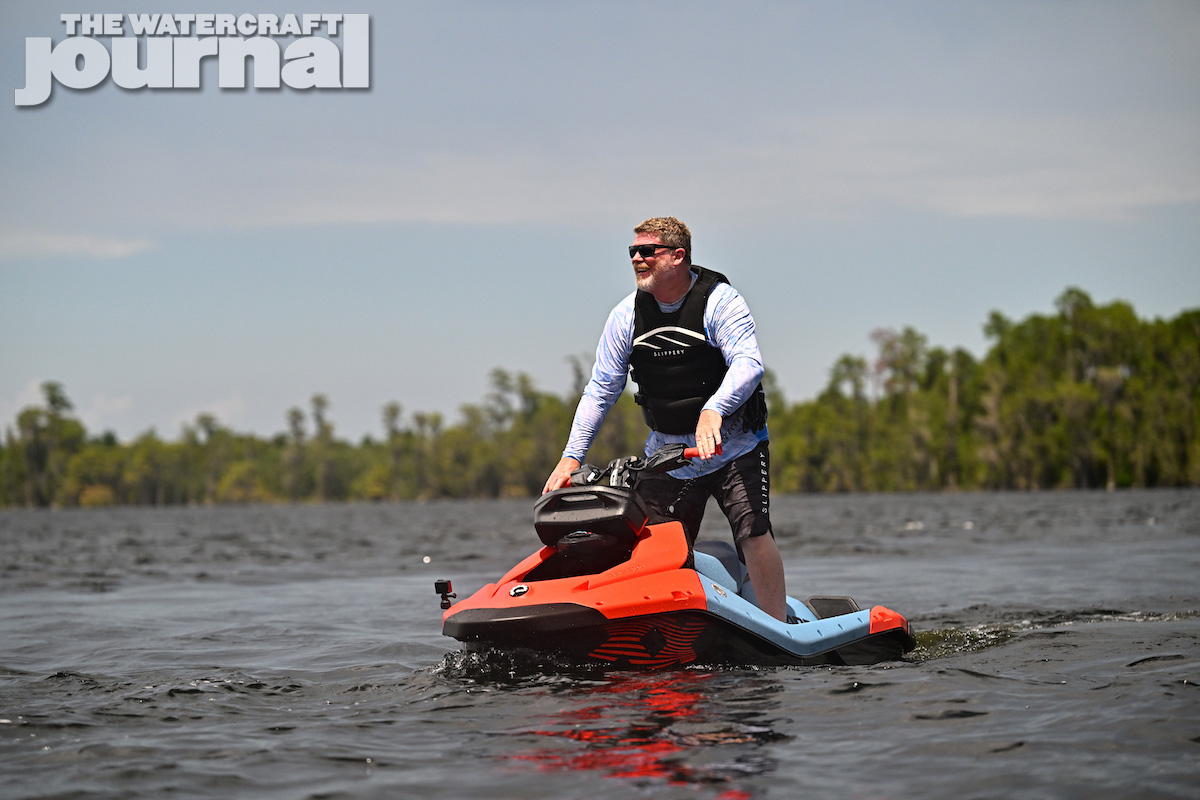
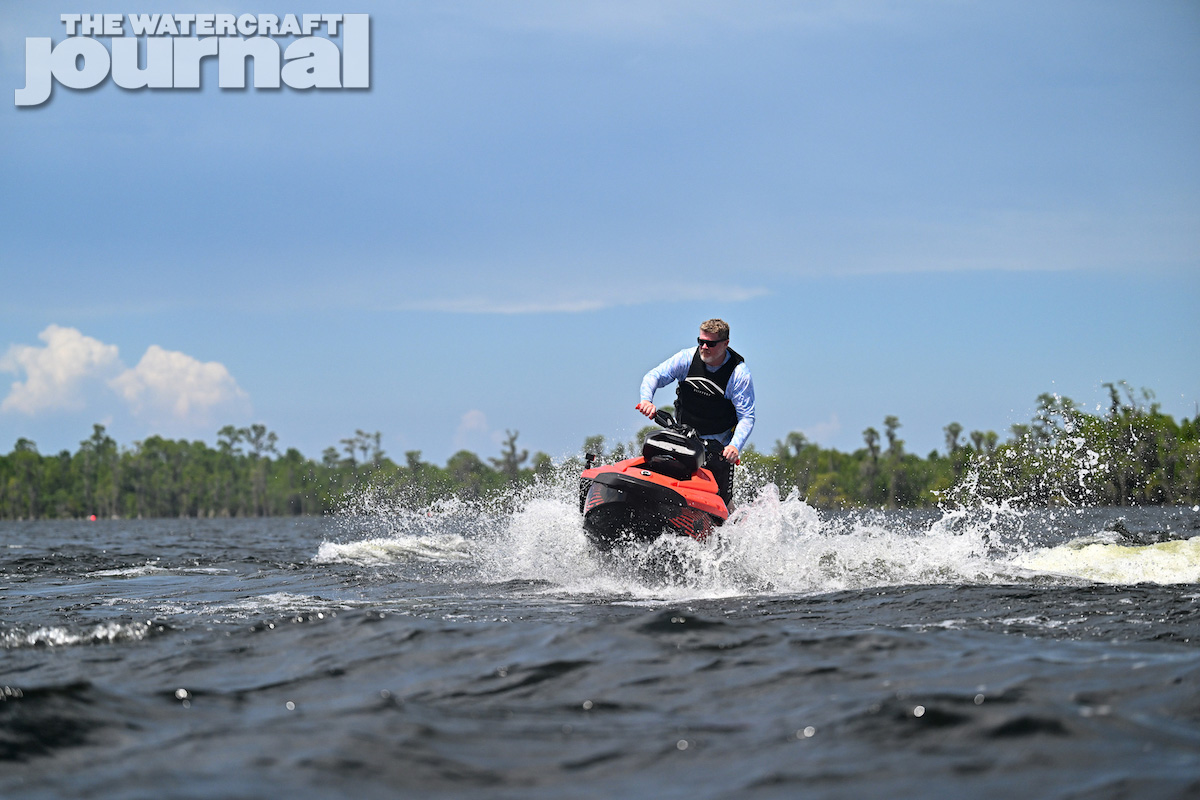
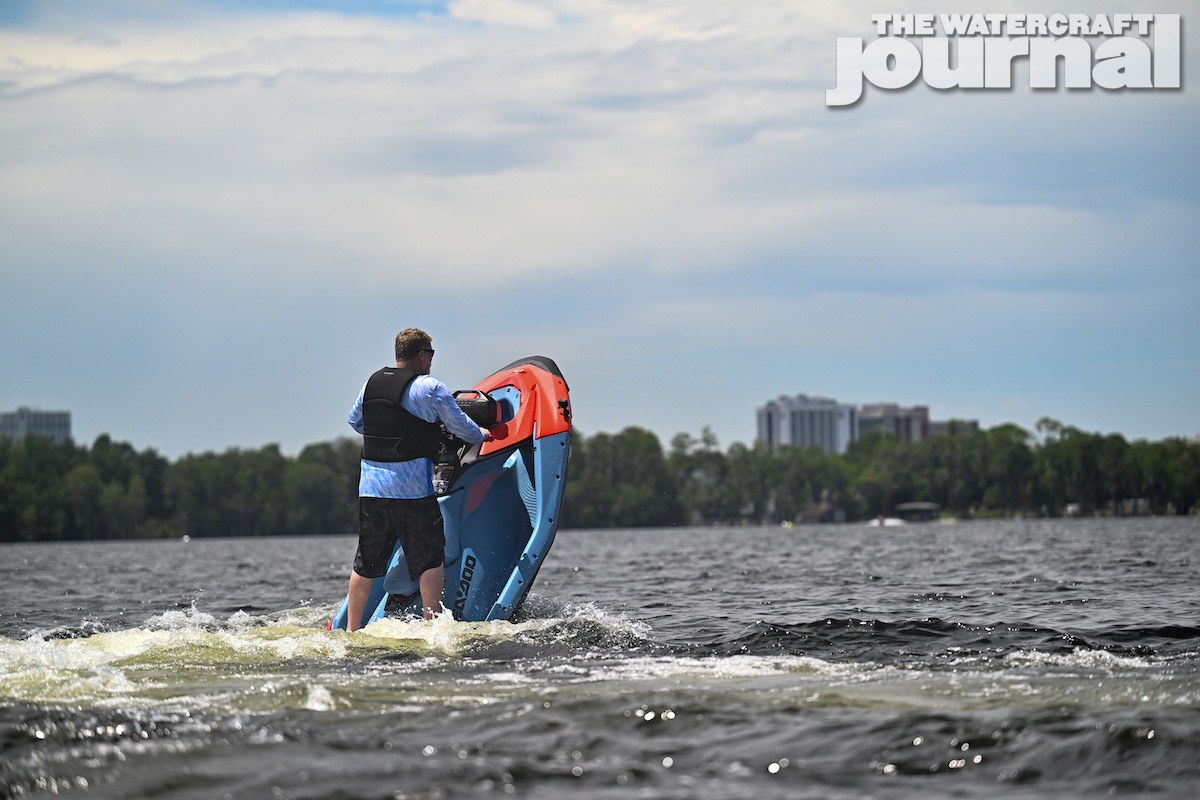
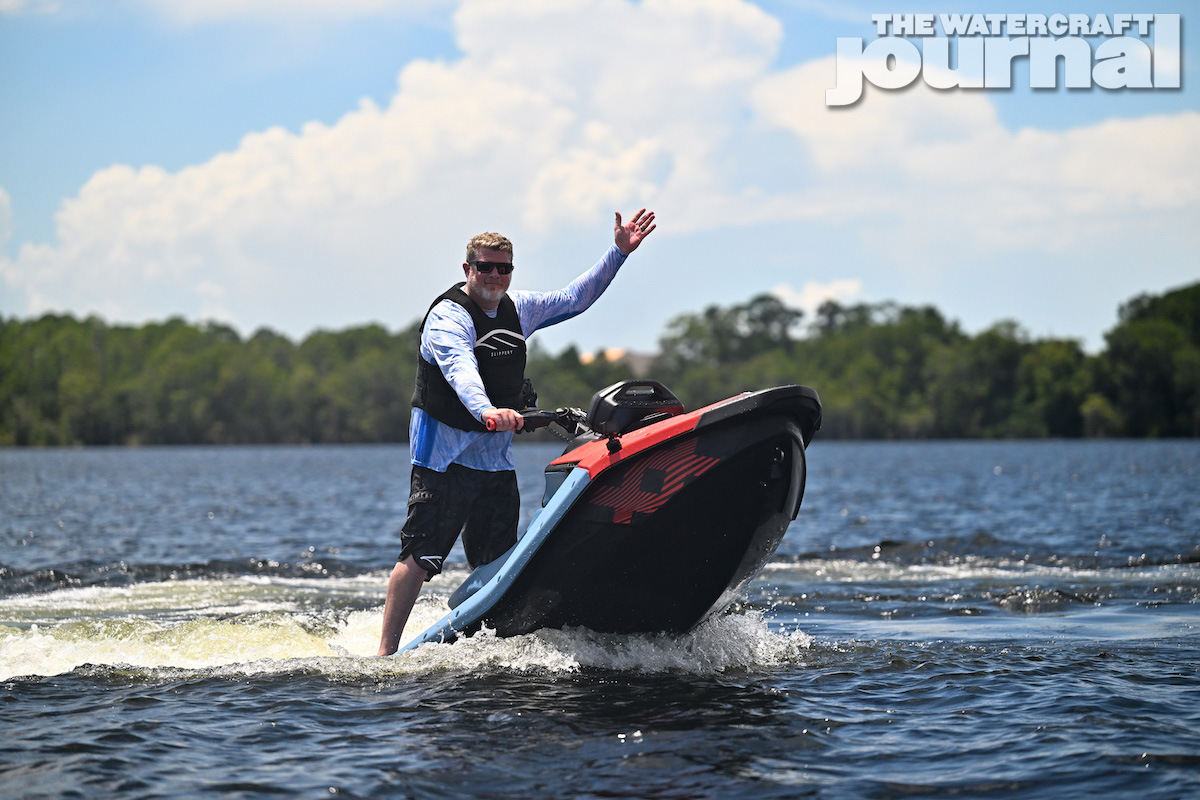
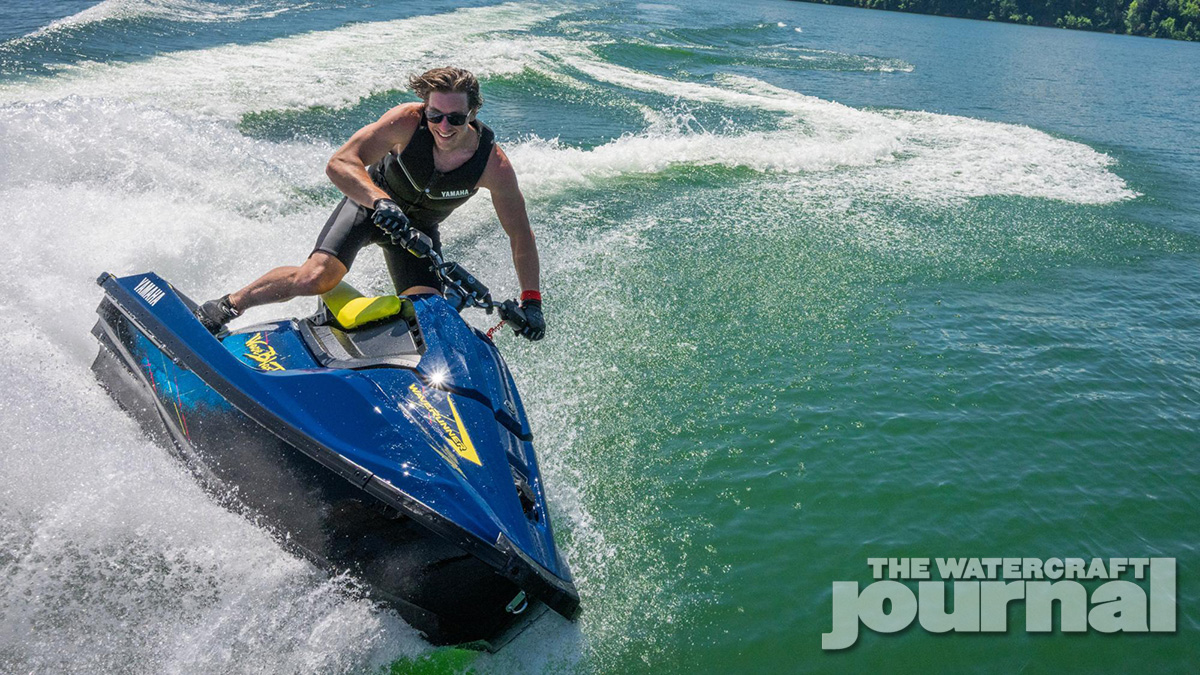
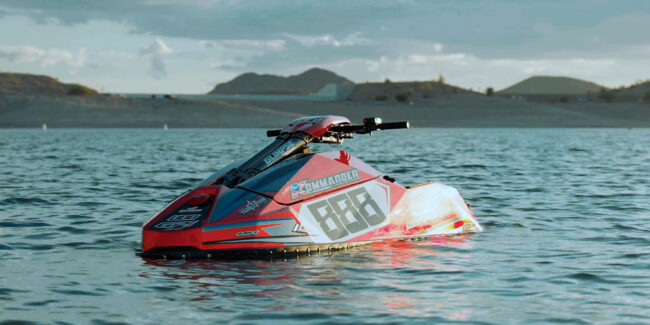
Launched in 2008 by famed stand up tuner and builder, Steve Webster, Kommander Industries has grown to become one of the most eponymous names in performance stand-up jet skis. From racing closed-course racing to freeride hull innovation, Webster cuts though the chop and delivers customers a premier, world class-winning product time and time again.
And Webster takes pursuing excellence personally. Kommander Industries is family owned and operated, and that level of care is evident in the hulls. As of September 16th, Kommander Industries has done it again, introducing the world to the GP1 EVO. A literal “evolutionary step forward,” the EVO builds upon the winning characteristics of the previous GP1 and refines the design all the more.
“The hull was re-engineered through CAD design and CNC machining,” Kommander states. “Then built with vacuum-infused composite manufacturing and best-in-class materials — a process chosen for consistency, not convenience. Every hull comes out of the same tooling to the same standard, with the emphasis in the same four places: strength, weight, stability, and performance.”
In a highly anticipated Facebook post, Kommander wrote the following: We’re proud to officially unveil the newest evolution of the Kommander Industries lineup: the GP1 EVO.
Built on the proven foundation of the World Championship-winning GP1, the EVO takes everything we’ve learned on the racecourse and pushes it forward.
Improved performance. Sharper handling. Increased stability. Easier operation.
Everything that made the GP1 a winner — kept. Everything else — refined.
Some brands are sales driven. Others are mission driven. JTPLT is the latter. With a central, laser-like focus on optimum performance on the race course, JTPLT products have been developed, worn and tested by professional PWC athletes around the world. From this, JTPLT launched its VAULT collection in 2019, providing competition-proven apparel with a focus on protection, performance and innovation.
Being already established among elite racers worldwide, JTPLT is bringing its catalog to the largest market in the world: the United States of America. Darren Attard, Founder of JTPLT, stated, “Our vision is simple: to give every PWC rider the confidence to ride with zero hesitation. ‘Safety’ and ‘technicality’ aren’t marketing words for our team, they’re the entire product brief.”
Expect to see more from JTPLT shortly as they present themselves at the Monster Energy IHRA World Cup in Lake Havasu, Arizona, as well as across the backs of more athletes around the world – all building up to an official launch in early 2027.
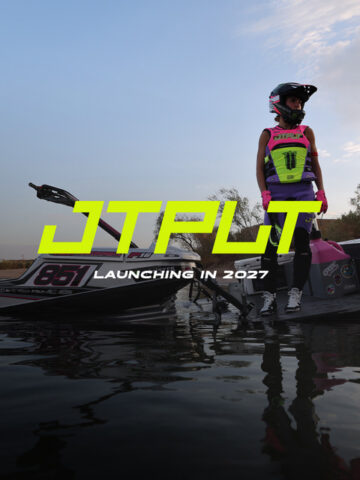
Here’s the original press release issued by JTPLT: JTPLT, the premium specialist brand built specifically for the professional and performance side of personal watercraft racing, is officially coming to the United States.
Since 2019, JTPLT’s flagship VAULT collection has been developed, worn and tested by professional PWC athletes around the world. Season after season, the products have been refined under real-world racing conditions by world champions and some of the sport’s top competitors.
Now, American racers will have greater access to the same competition-proven apparel focused on protection, performance and technical innovation.
At the heart of the VAULT range is Pro-Tech, JTPLT’s globally patented, CE-certified impact protection system engineered specifically for the forces generated at race speeds and validated through rigorous laboratory testing. Rather than treating protection as an accessory, JTPLT integrates safety directly into its race apparel.
The philosophy is captured in the brand’s message: Zero Hesitation.
“Zero Hesitation is more than a slogan, it’s the outcome we engineer for,” said Darren Attard, Founder of JTPLT. “Our vision is simple: to give every PWC rider the confidence to ride with zero hesitation.”
JTPLT has already been put to the test by some of the most recognized racers in personal watercraft competition over the years, including Quinten Bosch, Jeremy Poret, Dustin Farthing, Jeremy Perez, François Medori, Coy Curtis, Mohammed Burbayea, Mohammad Albaz, Deven Farthing, Morgan Poret, Dustin Motzouris and many more athletes around the world.
Unlike traditional recreational watersports apparel, JTPLT draws its identity from motorsport culture, discipline, precision, technical performance and a no-compromise approach to safety. The VAULT wetsuits and Johns incorporate padding directly into the garment, taking inspiration from motorsports where protection is engineered into the race suit itself.
JTPLT’s mission goes beyond simply introducing another apparel brand to the United States. The company’s objective is to help raise the safety standard of PWC racing through technical innovation and continuous product development.
As part of its expansion into the American market, JTPLT will also be supporting and showcasing its products at the Monster Energy IHRA World Cup in Lake Havasu, Arizona, giving racers and teams an opportunity to see the latest JTPLT technology firsthand at one of the sport’s biggest international events.
“Safety and technicality aren’t marketing words for our team, they’re the entire product brief,” Attard added. “Every rider wearing VAULT and our Pro-Tech inserts knows exactly what they’re getting, because it’s been tested at the level that matters.”
With a history already established among elite racers worldwide, JTPLT isn’t starting from zero in America. It’s bringing a proven international standard to a new market.
Supercharged Yamaha owners know that horsepower comes with responsibilities — and an expensive supercharger clutch is one component riders would rather protect than replace.
When a rider abruptly releases the throttle, unwanted pressure can remain trapped within the intake system. A blow-off valve gives that pressurized air an escape route, helping reduce the stress placed on the supercharger clutch.
GreenHulk PWC Performance Store is now offering the newly revised WORX Blow-Off Valve Kit for Yamaha’s supercharged 1.8-liter engine. Designed for both stock and modified machines, the kit combines added protection with the unmistakable sound many performance-minded riders want from their Yamaha.
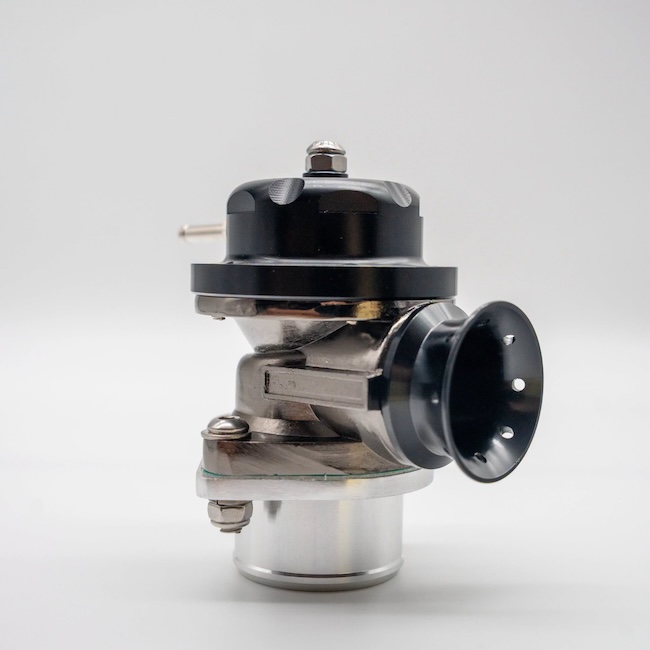
The centerpiece is a larger, lightweight blow-off valve designed to disperse more air when the rider lets off the throttle. WORX has also fitted the valve with a new trumpet-style outlet, producing a louder and more aggressive release of air.
In other words, riders should have no trouble hearing the valve do its job.
The lightweight construction reduces the amount of weight hanging from the silicone hose, which can help extend hose life. The valve can also be disassembled for cleaning and maintenance rather than treated as a sealed, disposable component.
WORX supplies the components required for installation, including the blow-off valve, a replacement silicone BOV intake hose, one meter of vacuum hose, a 1½-inch hose clamp, T-fitting and 10 zip ties.
The valve’s vacuum line connects to the factory MAP line with the included T-fitting, making this a relatively straightforward addition rather than an extensive intake-system overhaul.
Most importantly, the kit is not limited to heavily modified race builds. WORX developed it for use on stock and modified Yamaha 1.8-liter platforms, giving recreational riders an option for relieving intake pressure before pursuing other performance upgrades.
GreenHulk currently offers the revised kit in Stealth Black, Nitro Blue and Race Red. Customers can also save $30 by entering the discount code “greenhulk” when ordering through the GreenHulk PWC Performance Store.
A blow-off valve may announce itself with an attention-grabbing burst of sound, but its more important job takes place inside the intake system: releasing unwanted pressure and helping protect one of the Yamaha’s costlier performance components.
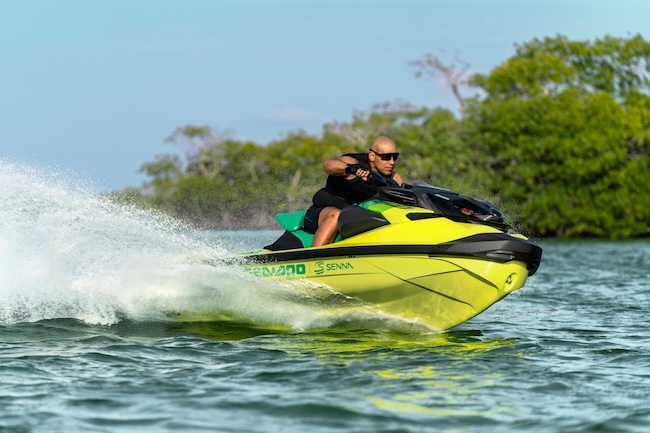
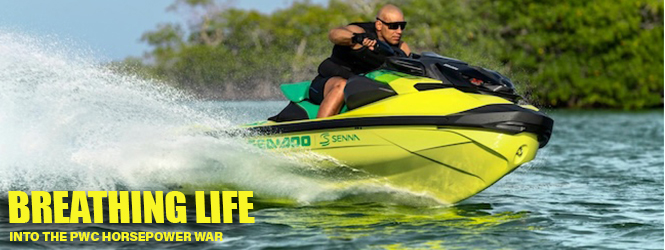
Racer and Sea-Doo ambassador Anthony Radetic puts the limited-edition 2027 RXP-X Senna 350 through its paces. Radetic said the machine’s defining achievement is not simply producing 350 horsepower, but putting that power into the water. Photo courtesy of Anthony Radetic/Facebook).
Breathe.
Yep, that stuff. Oxygen. It — or, more precisely, the lack of it — is where the modern personal watercraft horsepower war began.
For years, PWC engines breathed perfectly well on their own. Air flowed in, fuel joined it, combustion followed, and the resulting power was enough for what riders asked them to do.
But “enough” has never enjoyed a particularly long shelf life in the powersports industry.
Riders wanted harder acceleration, higher speeds and more power from increasingly sophisticated machines. The engines needed to burn more fuel to deliver it, and to burn more fuel, they needed more oxygen than they could draw in naturally.
Imagine jogging comfortably around a track when a high school coach in spectacularly unfashionable shorts suddenly begins shouting, “Pick it up! Pick it up!” You can run faster. You just need more oxygen.
“Control the breath, control the race. Panic breathes fast; power breathes deep.”
— Ancient Track Coach Proverb, probably.
PWC engines faced essentially the same problem. The solution was forced induction: Stop waiting for the engine to inhale and begin packing more air into every breath.
The trouble with an erstwhile photographer-turned-editor tackling a technical subject is that, sooner or later, her understanding and her vocabulary part company. So I did what any resourceful journalist would do: researched until superchargers began appearing in my dreams, then combed through more than two decades of manufacturer archives and riding impressions from people who actually knew what all that compressed air was doing.
What emerged illustrates one of the great truths about engineers: Give them one destination, and they will devise several entirely different ways of getting there.
A supercharger uses power from the engine to force more air into that engine. A turbocharger harvests energy from the exhaust to do the same job. Centrifugal superchargers, such as those used by Sea-Doo and Yamaha, compress air with a rapidly spinning impeller. Kawasaki took a positive-displacement route, first with a conventional Roots-type blower and later with Eaton’s TVS design, moving a relatively fixed volume of air with every rotation.
Different paths. Same command from the coach: Breathe harder. We’re going faster.
Sea-Doo Fires the Opening Shot
Lift the engine cover on a 2003 Sea-Doo GTX 4-TEC Supercharged and you would see red.
Literally.
Sea-Doo painted that landmark supercharger red, ensuring that anyone peering beneath the seat understood immediately that this was not an ordinary GTX. The centrifugal unit force-fed enough additional air into the 1,494cc Rotax four-stroke to produce 185 horsepower — then the most ever offered in a production watercraft.
Unlike a turbocharger, which must wait for exhaust flow to spin its turbine, the mechanically driven supercharger was always working with the engine. The payoff was immediate throttle response without turbo lag.
Sea-Doo did not introduce the machine quietly. The company used Bombardier’s connection to Indianapolis Motor Speedway and launched the 2003 GTX 4-TEC Supercharged around the Brickyard 400. NASCAR drivers Tony Stewart and Bobby Labonte rode the new watercraft to an Indianapolis dock to meet the assembled media the following morning.
Subtle, this was not.
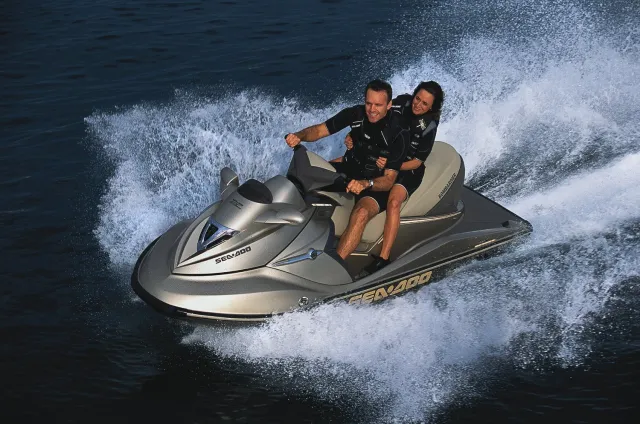
One year later, Sea-Doo added an intercooler, increased output to 215 horsepower and placed the revised engine in the smaller, sharper RXP. Compressing air also heats it; the intercooler removed some of that heat, making the incoming air denser and allowing the engine to use still more oxygen.
Although its saddle technically accommodated two riders, Sea-Doo offered a number-plate cover that concealed the passenger portion altogether — perhaps the clearest admission that this machine was never really about sharing.
The RXP established a formula Sea-Doo would continue refining: 255 horsepower in the 2008 RXP-X, 260 in 2012, 300 in 2016 and 325 in 2024.
Those numbers tell only part of the story. Revisions to the supercharger, intercooling, engine internals, electronics, pump and hull progressively changed not only how much power Sea-Doo produced, but how effectively a rider could use it.
By 2016, The Watercraft Journal Editor-in-Chief Kevin Shaw warned that Step One in operating the RXP-X 300 was respect. He distinguished between a machine that was frightening because it was out of control and one that was frightening because its abilities exceeded those of its rider. The RXP-X was emphatically the latter.
The 300 demanded an aggressive, forward riding position and rewarded commitment with extraordinarily precise cornering. It resisted lazy sweeps and casual Sunday cruising. Shaw’s eventual verdict required no engineering glossary: It was “a Stinger missile with handlebars.”
Eight years later, the 325 did not persuade him to retire the weapons metaphors.
The most startling difference was not its top speed, but its midrange acceleration. Cruising at 35 or 40 mph could become 70 almost immediately when the throttle was squeezed. Yet the power arrived smoothly and remained linear through repeated corners, without the surging or heat soak that might make that output difficult to use.
With the factory speed limiter intervening at 7,600 rpm — well below the engine’s 8,250-rpm redline — Shaw believed an unrestricted 325 could reach approximately 75 mph “without breathing hard.”
That observation would prove prophetic.
Honda Takes the Road not Traveled
While Sea-Doo drew power from the crankshaft to drive its supercharger, Honda looked at the hot gases rushing from the exhaust and saw energy being thrown away.
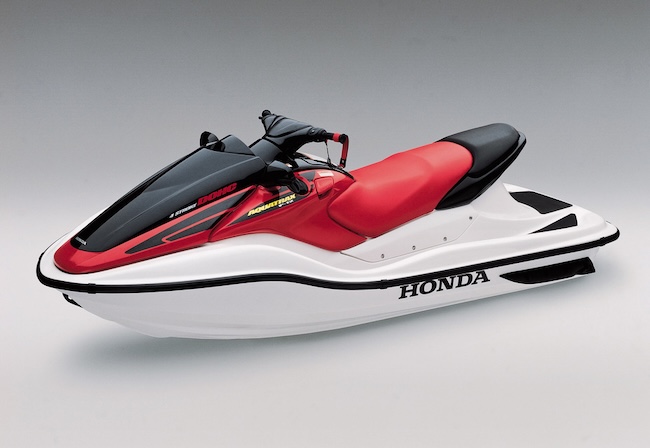
New to the PWC business in 2002 — and apparently unburdened by any obligation to do things conventionally — Honda introduced the three-passenger AquaTrax F-12X, the industry’s first turbocharged production PWC.
Honda’s reasoning was straightforward. A turbo could reclaim energy from the exhaust rather than taking power mechanically from the engine. It eliminated the parasitic loss of a supercharger and avoided the need for a crankshaft-driven power takeoff, while allowing Honda to keep the engine package relatively compact and light.
The 1,235cc four-cylinder used a water-cooled IHI turbocharger and water-cooled intercooler. At maximum boost, the system produced 13 psi and raised output 32 percent over the naturally aspirated engine, to 165 horsepower.
An electronic control unit monitored atmospheric pressure, boost, engine speed, temperature and engine knock, then managed an electronic wastegate to regulate boost and protect the machinery. Forged pistons and connecting rods helped the engine withstand the additional cylinder pressure, while a ceramic-ball turbine bearing reduced friction during sustained high-rpm operation.
One year after the F-12X appeared, Honda announced the 2004 R-12X. The same turbocharged powerplant now lived in a shorter, narrower two-person hull intended for aggressive sport riding. Honda added a racing-inspired quick-trim system and, in an otherwise sober technical release, invited readers to say “Holeshot with a capital H.”
Even engineers occasionally escape supervision.
Honda took the idea further for 2008 with the F-15X, pairing a larger 1,470cc four-cylinder with an intercooled turbocharger and a new hull. But Honda remained alone among the major PWC manufacturers in committing to exhaust-driven forced induction, and the path disappeared when Honda itself withdrew from the PWC market after the 2009 model year.
That makes Honda more than a brief curiosity in this history. It demonstrated that a factory turbocharged PWC could combine strong performance, relatively low noise and emissions compliance. But Honda’s departure left the industry without another generation to show where that road might ultimately have led.
Yamaha Joins the Race — Quietly
Yamaha entered the forced-induction contest in 2008, but it declined to join the numerical shouting match.
Sea-Doo increasingly treated horsepower as a public scoreboard. Kawasaki would eventually stamp the score directly onto the Ultra’s name. Yamaha offered Super High Output, followed by Super Vortex High Output, and generally left the enthusiast world to argue about how many horses those vowels and consonants represented.
The machines themselves were considerably less reserved.
The 2008 FX SHO and FX Cruiser SHO introduced Yamaha’s supercharged and intercooled 1.8-liter four-cylinder. But Yamaha did not initially present boost as a bare-knuckled racing proposition. It installed the new engine in its flagship cruiser alongside electronic throttle, Cruise Assist, No Wake Mode and a NanoXcel hull Yamaha said was 25 percent lighter than its previous SMC hulls.
The FX Cruiser SHO even offered four storage areas and a beverage holder, because civilization must advance alongside horsepower.
One year later, Yamaha placed the same basic powerplant in the sport-oriented FZR. The respectable cruiser had begun removing its jacket.
Then came 2014 and the Super Vortex High Output engine. SVHO retained the supercharged, intercooled 1,812cc architecture of SHO, but revised the supercharger, intercooler, fueling and supporting systems for substantially greater performance. Yamaha gave that engine two personalities: deep reserves of power and comfort in the FX models, and harder acceleration and more aggressive handling in the FZR and FZS.
After riding the 2014 FZR SVHO, Shaw reported that it launched from zero to 30 mph in 1.3 seconds and pulled from a standstill with “excessive force.” Its lightweight NanoXcel hull was less forgiving over rough surfaces, but extraordinarily responsive and grippy in corners. It behaved less like a recreational cruiser than a race-prepared machine sold directly from the showroom.
There was, however, one Yamaha innovation he remained unwilling to embrace: the trademark plume of water spraying behind the craft. Shaw disconnected the rooster tail for the photo shoot.
Some principles survive even excessive force.
The SVHO engine ultimately moved into Yamaha’s GP performance family while remaining available in the flagship FX line. For 2026, Yamaha’s naturally aspirated performance engine has grown to 1.9 liters, but the supercharged SVHO continues with the 1,812cc platform.
Yamaha’s contemporary description of the GP SVHO includes the phrase “catch me if you can.” That is quite a journey for an engine that entered the world alongside cruise control and a cupholder.
Kawasaki Puts the Score on The Machine
If Yamaha entered the horsepower war while politely declining to disclose its troop count, Kawasaki arrived with the number printed on the hull.
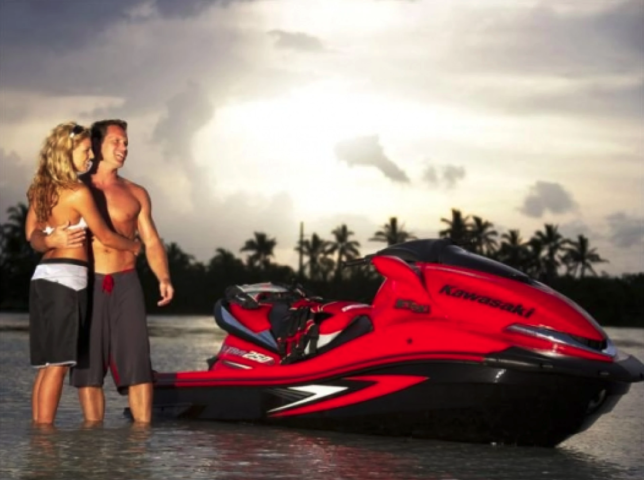
The 2007 Jet Ski Ultra 250X was Kawasaki’s first supercharged PWC. Its belt-driven Roots-type supercharger used two counter-rotating lobed rotors to deliver pressurized air to a 1,498cc inline-four, including low in the rpm range. Kawasaki paired the engine with an intercooler and a new hull, creating a three-person machine intended to accelerate hard and remain composed in rough conditions.
The 2009 Ultra 260X refined the existing formula through changes to the engine, cooling, tuning and impeller rather than replacing the supercharger architecture. Its extra 10 horsepower also returned Kawasaki to the top of the industry’s publicly advertised numbers race after Sea-Doo’s 255-horsepower RXP-X and RXT-X had edged ahead.
The larger transformation came with the 2011 Ultra 300X — and one generation earlier than many riders remember.
The Eaton TVS supercharger now strongly associated with the long-running Ultra 310 actually debuted aboard the 300X. In place of the previous two-lobe Roots blower, the TVS used twisted four-lobe rotors to provide smoother, more continuous airflow. Kawasaki claimed 28 percent greater charging efficiency while reducing mechanical loss by 10 percent.
The company paired it with a high-capacity liquid-cooled intercooler, electronic throttle, cruise control and a one-touch five-mph mode. Kawasaki also installed Fuel Economy Assistance and an illuminated ECO indicator, allowing riders to congratulate themselves on their restraint while presiding over 300 horsepower.
For 2014, Kawasaki retained the TVS supercharger but improved almost everything supporting it. Revised oiling and cooling, new pistons, a long-runner intake manifold, increased fuel delivery, a repitched impeller and dual blow-off valves helped manage as much as 17 psi of boost.
The result was 310 horsepower, although Kawasaki’s Bret Snider told The Watercraft Journal at the time that the additional output had not been the principal goal. It emerged from efforts to improve the engine’s efficiency and durability.
The Ultra 310 also carried approximately 56 gallons of storage, a removable drink holder and a second muffler that helped address both sound and the machine’s tendency to list during low-speed turns. Engineers had successfully forced 310 horsepower from a 1,498cc engine. Persuading several hundred pounds of stationary watercraft to sit politely beside the dock remained a separate discipline.
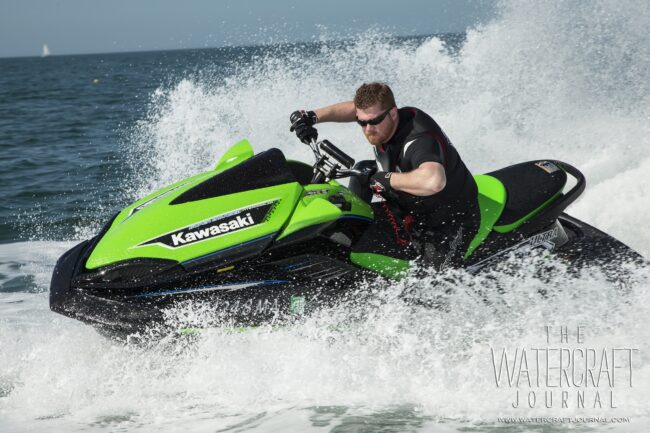
On the water, the results were less polite. Shaw described acceleration with sufficient force to threaten a rotator cuff, a pump that remained loaded through two- and three-foot chop, and a supercharger that whistled like a passing bullet.
More than a decade later, the 1,498cc supercharged engine remains the foundation of Kawasaki’s Ultra 310X, 310LX-S and 310LX. The names have endured because, unlike Yamaha, Kawasaki never saw much reason to conceal the score.From Making Power to Using it
For 2027, Sea-Doo has returned to move the number again.
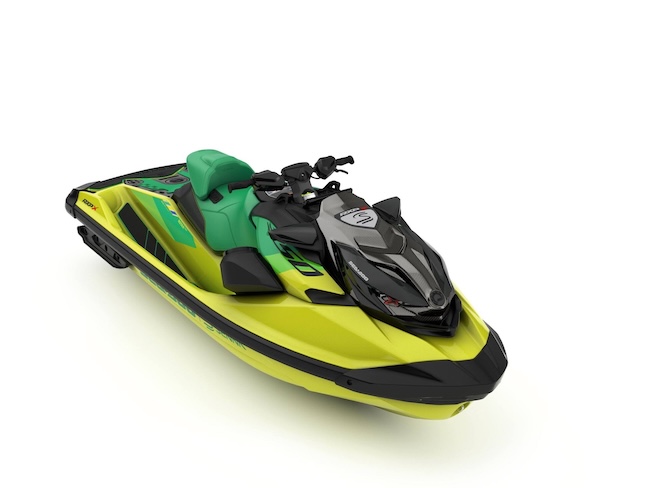
The new RXP-X 350 and limited RXP-X Senna 350 raise factory output another 25 horsepower. Sea-Doo calls the new Rotax the most powerful factory-installed engine in the industry, bringing the sequence that began at 185 horsepower in 2003 to 350 less than a quarter-century later.
But after riding both versions, racer and Sea-Doo ambassador Anthony Radetic found himself less impressed by the number than by the machine’s ability to use it.
The 350 retains Sea-Doo’s Rotax 1630 ACE architecture but increases the engine’s rev limit from 8,250 to 8,500 rpm. A larger supercharger compressor wheel — increased from 72.5 mm to 75.5 mm — moves more air and produces additional boost. Radetic also noted revisions to the rocker arms, valve lifters, piston lubrication, throttle body and engine calibration.
The changes did not stop at the engine. A redesigned intake grate and ride plate, new pump stator, lighter repitched impeller and larger-diameter driveshaft helped keep the pump loaded as the machine crossed rough, choppy water.
“The RXP-X 350 doesn’t just make more power,” Radetic wrote. “It puts that power into the water.”
That may be the most important lesson in the entire forced-induction arms race. Engineers first had to make the engine breathe harder. Then they had to cool the air, regulate the boost, strengthen the machinery and persuade a jet pump and hull to translate all of it into controlled forward motion.
Sea-Doo chose the centrifugal supercharger and kept pushing the public number higher. Honda briefly showed what an exhaust-driven turbocharger could accomplish. Yamaha developed its own centrifugal formula while declining to plant a horsepower flag atop the anthill. Kawasaki chose the immediate response of a positive-displacement blower and refined the Eaton TVS architecture it introduced on the 300X.
Different manufacturers took different paths, and each discovered that horsepower was only the beginning. More than two decades after Sea-Doo first decided its engines needed help breathing, the industry has become remarkably good at forcing air into them.
The true evolution was teaching the rest of the machine what to do with the result.
Here’s this week’s WCJ Weekly Racing Roundup, where we check in with the organizations, racers, and championship battles shaping the 2026 personal watercraft racing season. This week, European champions are crowned on French water as the UIM-ABP Aquabike season closes out, IJSBA rolls out fresh World Finals details ahead of its 45th consecutive year in Lake Havasu, the Western Canadian Watercross Association reflects on a season of major organizational growth, East Coast Watercross addresses a championship-format mixup head on, and we tip our hats to Great Lakes Watercross as its 2026 season officially comes to a close.
AquaBike
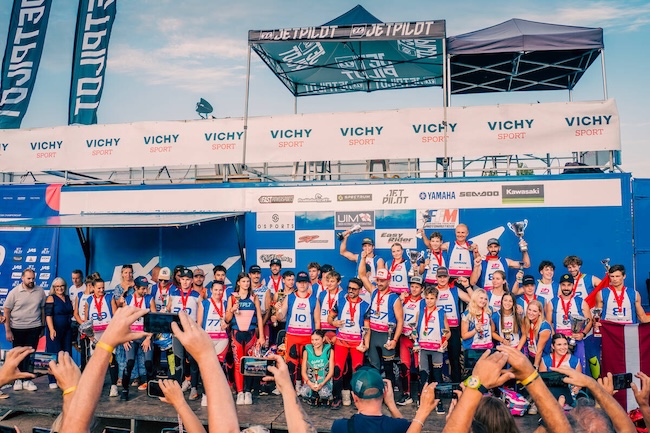
The 2026 UIM-ABP Aquabike European Continental Championship crowned its champions this weekend at the season-ending Grand Prix of Vichy in France, closing out a European campaign that came down to the wire in several categories.
Belgian rider Quinten Bossche delivered what may be the most dominant season in recent memory, entering Vichy with a perfect win record and closing it out the same way, taking both remaining motos by comfortable margins to finish the year undefeated and claim the Ski GP1 European Championship. Current World Champion François Medori made a guest appearance in Vichy despite skipping most of the European season to focus on his world title defense, and he made the most of it — lapping the field in the final moto and setting a best lap more than six seconds faster than anyone else on the water. Medori’s absence from earlier rounds kept him out of title contention, but it allowed Jeremy Perez to lock up the Runabout GP1 European Championship, extending a run of French dominance in the category that traces back to Perez’s first title in 2014.
The women’s Ski Ladies GP1 class delivered one of the weekend’s bigger swings. Current World Champion Estelle Poret won all three motos in Vichy on home soil, but her European title hopes had already been undone by a scoreless showing earlier in the season at Gyor. That opened the door for Benedicte Drange to reclaim the championship she first won in 2024, edging out Jessica Chavanne for the title. Roberto Mariani, meanwhile, held off a hard-charging Massimo Accumulo in Freestyle to secure his European crown, adding it to his current World Championship title.
Several other categories went down to the final moto of the season. Estonian rider Mattias Siimann outlasted countryman Karl Keskula for the Runabout GP2 title by a single point, while Robin Sylvester denied Daan Hoeke the Ski GP2 crown by a nine-point margin despite Hoeke’s last-gasp moto win. Jose Vainio claimed both the Runabout GP4 and Runabout Junior GP4 European titles, and Csongor Jászai held on for the Ski GP4 championship despite being outpaced in Vichy by Daniils Potrivailo. Leo Kete swept both the Ski GP3 and Ski Junior GP3.3 titles in dominant fashion.
With the European season now complete, the Aquabike calendar turns to the opening round of the UIM-ABP Aquabike World Championship in China next month.
IJSBA
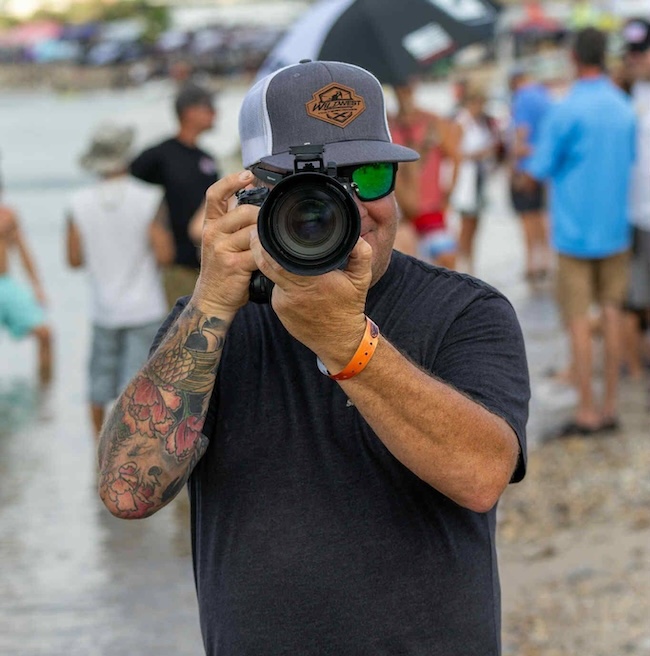
IJSBA has announced Cliff Cassel of CasselCreation as the official photographer of the 2026 Short Block Technologies World Finals, with veteran World Finals photographer Ronny McHenry joining in a guest co-photography role. Cassel has built a strong reputation this season as official photographer for the IJSBA-sanctioned Wild West Watercross series, one of the largest-turnout tours in the country in 2026, known for his action work as well as his eye for candid moments among racers and crews trackside. McHenry’s return marks a welcome sight for longtime followers of the sport — a fixture behind the lens for decades, he’s been away from the World Finals in recent years while recovering from a stroke. IJSBA said more details on photography packages will be released soon; fans can follow Cassel’s work on CasselCreation’s Instagram and Facebook pages.
The 2026 SBT World Finals run October 3-11 at Red Rock Waterside in Lake Havasu City, Arizona, marking the 45th consecutive year the event has been held, uninterrupted, since 1982. Competition dates run October 6-11, and the event remains free for spectators courtesy of support from Go Lake Havasu. IJSBA released a tentative first-draft class schedule this week, front-loading as many classes as possible into the first two days of racing to accommodate a new Thursday awards ceremony. The schedule remains subject to change, and IJSBA is asking racers to direct any questions to [email protected].
This year’s World Finals also doubles as the second round of the WGP#1 World Series, with WGP#1 organizers pledging additional prize money, paid in Thai Baht, for select classes scored across both series. Running alongside the main event, the IJSBA-sanctioned US Freestyle Championship returns to Bridgewater Channel under the London Bridge on October 3, serving as a crucial last-chance qualifier for World Finals freestyle classes.
On the operations side, RaceReady will return as the event’s official scoring and registration partner for a second straight year after debuting in 2025, with founder Greg Call rolling out a newly integrated platform covering registration, website management, social media, and membership cataloging. VP Racing Fuels also returns as the World Finals’ official fuel supplier, though racers are being encouraged to pre-order and pick up fuel early in the day, as vending will run half-days only and close shortly after the lunch break to help keep on-site prices down.
Western Canadian Watercross Association
The Western Canadian Watercross Association wrapped its 2026 season having completed a full organizational overhaul behind the scenes, transitioning from its previous Saskatchewan incorporation to become an Alberta-registered non-profit society with a newly formal Board of Directors. Along with the restructuring, the IJSBA affiliate rewrote its bylaws, updated its rulebook and race procedures, and strengthened both its Event Safety Plans and Emergency Response Plans as part of a broader push to tighten the organization and professionalism of its events, while deepening its working relationship with IJSBA.
On the water, the WCWA completed a six-round championship season that saw new racers and families join the sport alongside strong turnout in its Beginner and Vintage classes and expanded opportunities for Junior competitors. The organization pointed to families racing together — parents, children, and siblings sharing the same weekends alongside seasoned racers — as one of the season’s most encouraging developments, calling that mix of new and experienced competitors critical to the sport’s long-term future in Western Canada.
Thirteen champions were crowned across the WCWA’s class structure this season. Casey Merrills claimed three titles — Pro-Am Open Ski, Pro-Am Ski Lite, and Veteran Ski Open — while Ian Stafford (Beginner Runabout, Pro-Am Runabout) and Emery Burton (Novice Ski Lite, Novice Ski Open) each doubled up as well. Hudson Merrills topped both Junior Ski Lites (Under 16) and Vintage Ski, with Alexandre Gates, Lincoln Maki, Bryn Mallard, and Kim Richardson also claiming season titles in their respective classes.
Looking toward 2027, the WCWA said its priorities will center on continued growth in its Beginner, Junior, Vintage, and Pro-Am ranks, along with ongoing improvements to safety, race procedures, equipment, and volunteer resources. The organization credited its volunteers, officials, safety crews, EMS personnel, board members, sponsors, and host venues for making the season possible, and specifically thanked IJSBA for its communication and support throughout the year. Full 2026 standings and results are available at wcwa-online.ca.
IJSBA’s National High Points standings are heating up as racers close in on the season’s #1 plate, with awards set to be handed out during World Finals week in Havasu. Full standings are updated regularly at nationalhighpoints.com, but a few of the tighter premier-class battles include Brayden Sebben’s lead over Harley Ritchie and Patrick Parker in Pro-Am Ski GP, and a close three-way Sport Spec race topped by Parker over Ryder Bliss and Shannon Watson.
Separately, East Coast Watercross showrunner Shawn Dudek issued a lengthy public statement this week addressing confusion over the series’ 2026 championship format. In a post to racers, Dudek explained that an original May 27 announcement had described the five-round championship as a “best four of five” format, allowing racers to drop their lowest finish. That plan changed internally on June 4, the Friday before Round 1, when ECW shifted to scoring the championship on all five rounds instead — a decision made alongside the development of the related 8 Ball Cup, which requires full attendance across all five rounds to be eligible for payout and podium contention. The problem, Dudek acknowledged, was that the original May 27 post was never removed and no standalone announcement clearly told racers the championship format itself had changed, leaving outdated information publicly available for months.
Dudek took personal responsibility for the miscommunication, saying it fell on him regardless of the workload — which this year has included simultaneously running ECW, the Pro Watercross National Tour, the 8 Ball Cup, and a full slate of race operations, scheduling, and marketing duties, all while managing a minor injury. He confirmed the 2026 ECW championship will be scored 5-of-5 as decided in June, with no dropped round factored in. Looking ahead, Dudek said the situation underscored a need to bring on dedicated communications support as both series continue to grow, pointing to recent investments in GPS transponder timing and Live Race Services, along with the addition of respected scoring and registration veteran Dawn Carey, as examples of the kind of structural upgrades the organization plans to keep making.
Dudek closed by thanking racers for their support this season, with East Coast Watercross now turning its attention to the Road to Havasu National Tour Finale.
Great Lakes Watercross
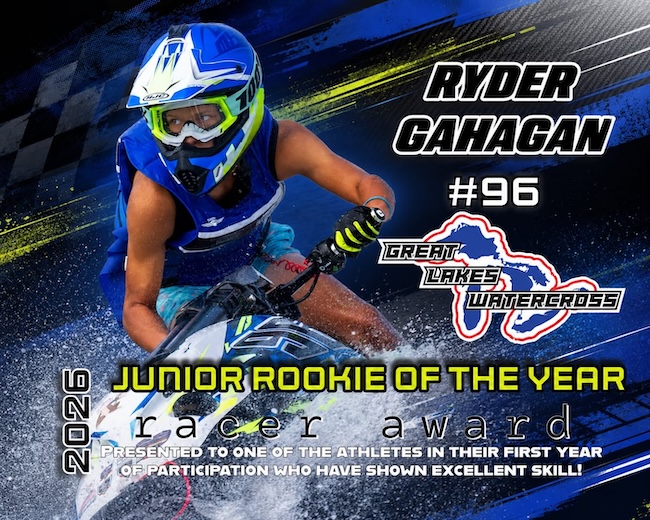
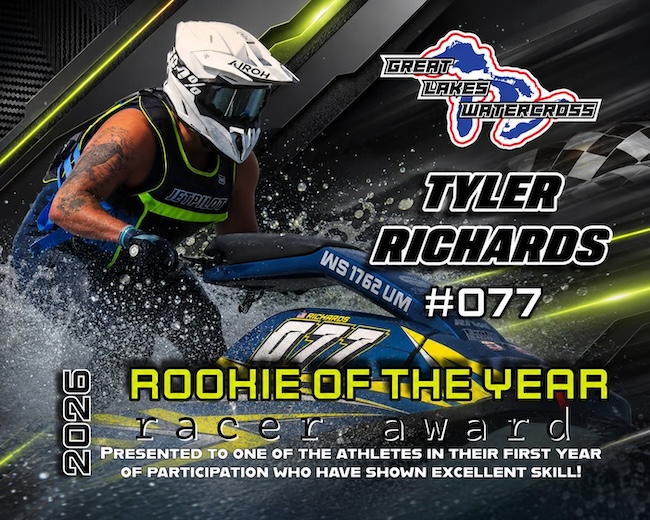
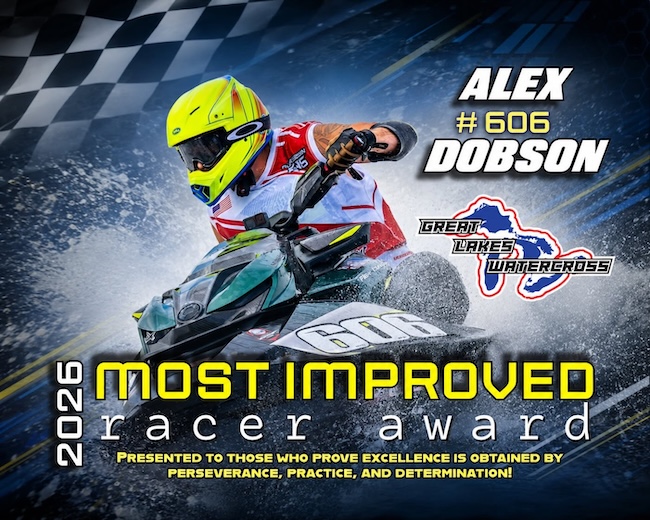
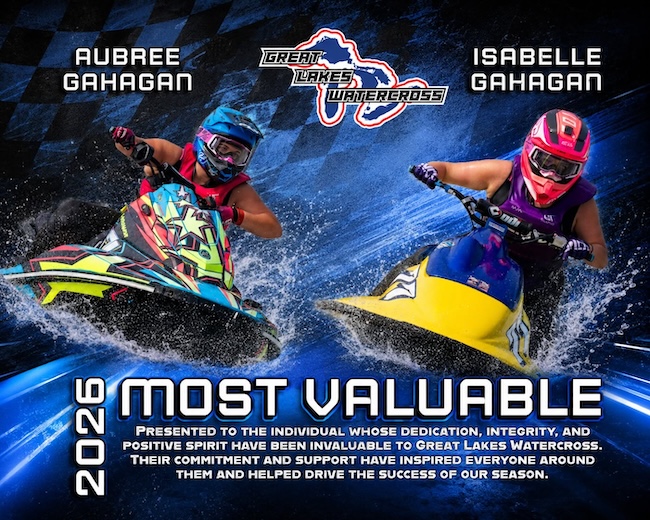
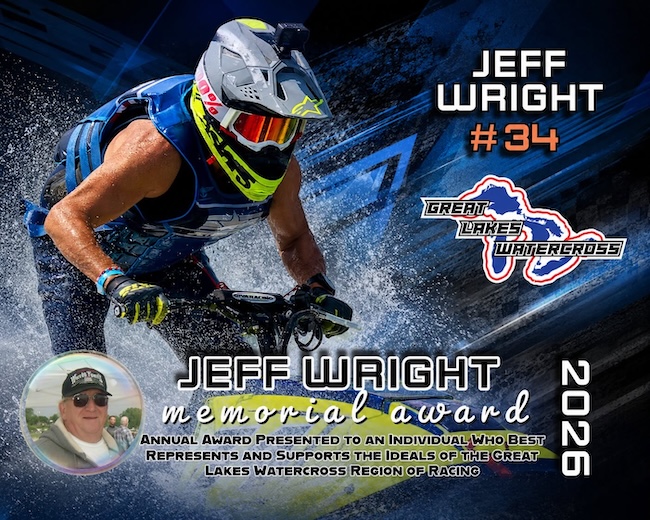
We’ll catch up properly with the close of the Great Lakes Watercross season soon, but we couldn’t let the season wrap pass without offering a quick congratulations. GLW capped its 2026 championship by handing out its special end-of-season awards, with Ryder Gahagan taking Junior Rookie of the Year and Tyler Richards earning Rookie of the Year honors. Alex Dobson was named Most Improved, while Aubree Gahagan and Isabelle Gahagan shared Most Valuable Racer. Jeff Wright took home the Ed Bohat Memorial Sportsmanship Award. GLW also recognized racers who competed in a specific class at every single round of the tour with special Dedication Awards, honoring the commitment it takes to make the full season-long journey. Congratulations to all of this year’s champions and award winners — and just like that, the 2026 Great Lakes Watercross season is officially a wrap.
From European title battles in Vichy to a season of institutional growth in Western Canada, this week’s roundup is a reminder that personal watercraft racing’s momentum doesn’t stop at the water’s edge — it’s built race by race, season by season, and often by the hard, unglamorous work happening behind the scenes.
As the 2026 season pushes toward its final stretch, WCJ will keep tracking the stories, competitors and organizations shaping personal watercraft racing — both on the racecourse and throughout the communities that make these events possible.
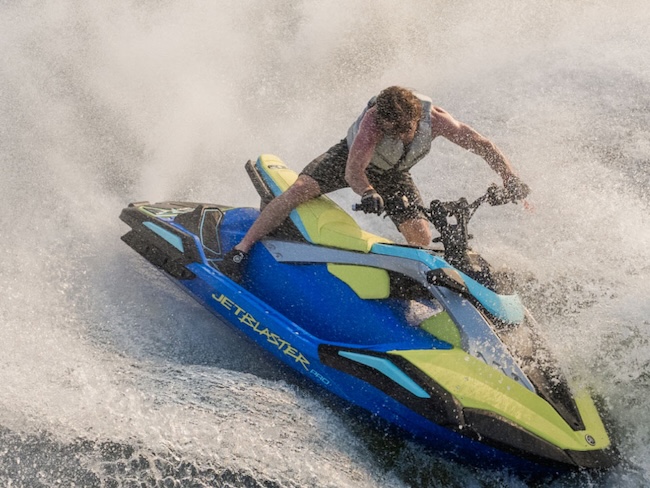
South Florida riders looking to add a Yamaha JetBlaster to the garage have a new incentive to make their move before the end of September.
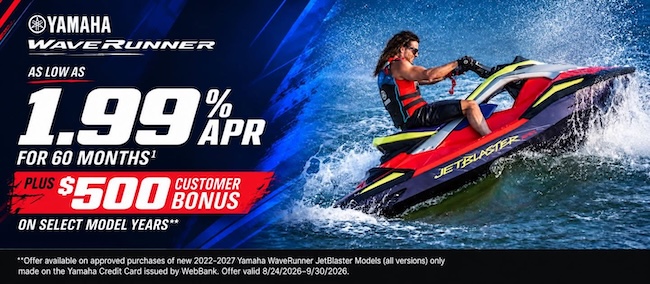
Broward Motorsports of Jupiter is currently offering financing as low as 1.99 percent APR for 60 months, along with a $500 customer bonus, on select model years of Yamaha’s WaveRunner JetBlaster lineup.
The offer applies to approved purchases of new 2022–2027 Yamaha WaveRunner JetBlaster models, including all versions, made through Sept. 30. Financing is provided through the Yamaha Credit Card issued by WebBank, and eligibility and other restrictions may apply.
Although the traditional summer riding season may be winding down in some parts of the country, September still leaves South Florida riders with plenty of time on the water — and the region’s year-round riding weather means a new personal watercraft does not have to spend its first several months waiting in the garage.
Yamaha introduced the JetBlaster name as a playful, freestyle-oriented addition to its WaveRunner lineup. The models pair accessible performance with styling and features aimed at riders who want something more spirited than a conventional recreational runabout.
For shoppers who have already been considering one, combining promotional financing with the $500 customer bonus could make the next few weeks a particularly attractive time to buy.
Broward Motorsports of Jupiter says it currently has JetBlaster models in stock and ready for the water. Available inventory can be viewed at BrowardMotorsportsJupiter.com.
Riders can also visit the dealership at 152 Bridge Road in Tequesta, Florida, or call (561) 748-9424 for availability, eligibility requirements and complete offer details.
The promotion began Aug. 24 and ends Sept. 30, 2026.
Completed personal watercraft do not appear on Canada’s Sept. 8 list—but trailers, parts, corporate costs and a widening trade dispute leave questions unanswered
As this article publishes at 12:01 a.m. Eastern on Sept. 8, Canada is scheduled to impose new tariffs ranging from 15% to 50% on U.S.-origin goods representing approximately 27.6 billion Canadian dollars in annual imports.
The counter-tariffs are Canada’s response to additional U.S. tariffs on Canadian goods that took effect Aug. 22.
But will any of it affect personal watercraft?
The short answer, based on The Watercraft Journal’s initial review of the official documents, is that completed personal watercraft do not appear to be directly targeted by Canada’s newest tariffs.
The longer and more honest answer is that it is too soon to know how far the effects could travel through the PWC industry.
Canada’s published list contains hundreds of individual tariff classifications covering products including steel, aluminum, dairy goods, appliances, agricultural equipment, electronics, pulp and paper products, motorcycles and trailers. It does not include a tariff line expressly identifying personal watercraft, Jet Skis, WaveRunners or Sea-Doos.
The list also contains no Chapter 89 classifications, the section of the tariff schedule encompassing ships, boats and other watercraft.
That provides no apparent basis to conclude that a completed PWC entering Canada from the United States will suddenly carry a new 15%, 25% or 50% tariff under the measures taking effect Sept. 8.
It does not, however, establish that the PWC industry has escaped the trade dispute.
What is—and isn’t—on the list
Among the powersports-related products expressly included is one classification of motorcycles with internal-combustion engines exceeding 800cc. Those will be subject to a 50% Canadian tariff when they qualify as U.S.-origin goods.
ATVs, side-by-sides, golf carts and generators—the equipment commonly used to transport watercraft through race pits or between a home and launch site—are not expressly identified on the list. Neither are marine engines.
Numerous steel and aluminum products, copper wire, electrical conductors, printed circuit assemblies, tools and other industrial goods are included. Their presence does not mean every PWC, trailer or accessory containing one of those materials will be tariffed. Customs duties apply according to the classification and origin of the product being imported, not simply because it contains aluminum, steel or wiring.
Trailers present a less certain question.
Canada’s list imposes a 25% tariff on several trailer classifications. One covers commercial transport trailers but expressly excludes noncommercial snowmobile, utility, boat and horse trailers. A following classification covering “other” trailers is also subject to 25%.
The published descriptions alone do not definitively establish whether an ordinary single- or double-PWC trailer, beach dolly or other watercraft-hauling equipment falls within the tariffed “other” category. That will require clarification from customs officials, brokers or the companies importing those products.
Canada also says the new duties apply only to goods originating in the United States. A product does not necessarily become U.S.-origin merely because it was sold or shipped by an American business. Likewise, a brand’s headquarters alone does not settle the origin of every product it sells.
Goods already in transit to Canada when the tariffs take effect are exempt, provided importers can document that status.
One dispute, several sets of tariffs
Understanding the potential effect on PWC is complicated because this is not one tariff applied universally to everything crossing the U.S.-Canadian border.
On July 20, the White House announced three sets of additional 50% tariffs under Section 338 of the Tariff Act of 1930. The administration said the measures responded to Canadian policies affecting American alcoholic beverages, dairy products and motor vehicles. The covered Canadian goods ranged from wine to hockey sticks and cement.
Those tariffs were initially scheduled to take effect Aug. 19. An Aug. 18 presidential proclamation delayed them for three days while negotiations continued, moving the effective date to 12:01 a.m. Eastern on Aug. 22.
Canada announced its response Aug. 25, saying it would match the U.S. measures “dollar for dollar, rate for rate.” Its Sept. 8 counter-tariffs apply rates of 15%, 25% or 50% to specified U.S.-origin products.
Those actions are separate from tariff changes that shook the broader powersports industry months earlier.
On April 14, Sea-Doo parent company BRP suspended its full-year financial guidance after an amendment to U.S. Section 232 tariffs on steel, aluminum and copper took effect April 6.
BRP estimated that amendment could produce more than C$500 million in additional tariff costs during the remainder of its fiscal year before mitigation efforts. Importantly, BRP said the change primarily resulted in a 25% tariff on the total value of its imported snowmobiles and most off-road vehicle models. It did not identify Sea-Doo watercraft as the source of that direct cost.
Nevertheless, BRP’s response demonstrated how dramatically tariffs affecting selected products can alter the outlook of a company whose portfolio spans multiple powersports categories.
BRP manufactures Sea-Doo watercraft alongside Ski-Doo and Lynx snowmobiles, Can-Am on- and off-road vehicles and other recreational products. Yamaha and Kawasaki also operate across PWC, motorcycles and other product categories.
A tariff on a motorcycle, snowmobile or side-by-side is not automatically a tariff on a PWC. But substantial expenses in one division could potentially influence companywide decisions involving investment, production, research and development, dealer incentives, marketing or pricing.
Whether that will happen cannot be determined from a government product list—and none of the three PWC manufacturers has yet told WCJ that the Sept. 8 measures will raise watercraft prices or change production plans.
What comes next
This article is an initial review, not a definitive accounting of every tariff that could touch the PWC industry.
Customs classifications are highly specific. Global supply chains are not readily visible from the showroom floor. A completed machine may avoid a tariff while a component, replacement part, trailer or piece of aftermarket equipment does not. A company may absorb additional costs, change suppliers, shift production or distribute expenses across multiple divisions.
WCJ will follow this review by seeking answers from BRP, Yamaha and Kawasaki, as well as dealers, aftermarket manufacturers, trailer companies, customs specialists and racers who routinely transport machines and parts across the U.S.-Canadian border.
Among the questions: Are any completed PWC, components or replacement parts directly affected? Which trailers are included? Are manufacturers sharing added costs across product lines? Could Canadian racers pay more for American-made parts and equipment? And will any of those costs ultimately reach the showroom?
For now, Canada’s Sept. 8 list provides no apparent reason to assume that completed personal watercraft will immediately cost 15%, 25% or 50% more.
But the expanding trade dispute has already reached the larger powersports world. The question now is whether its costs remain confined to the products named on paper—or eventually follow riders all the way to the water.
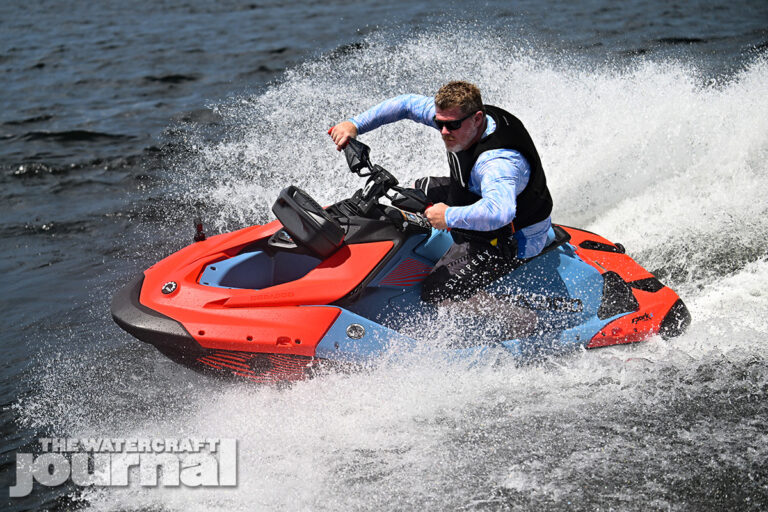
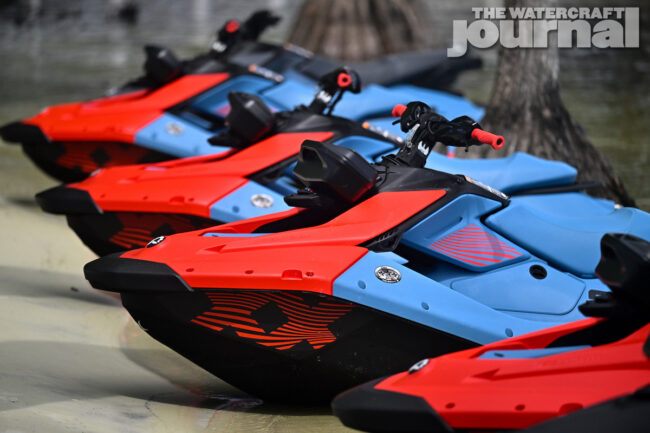
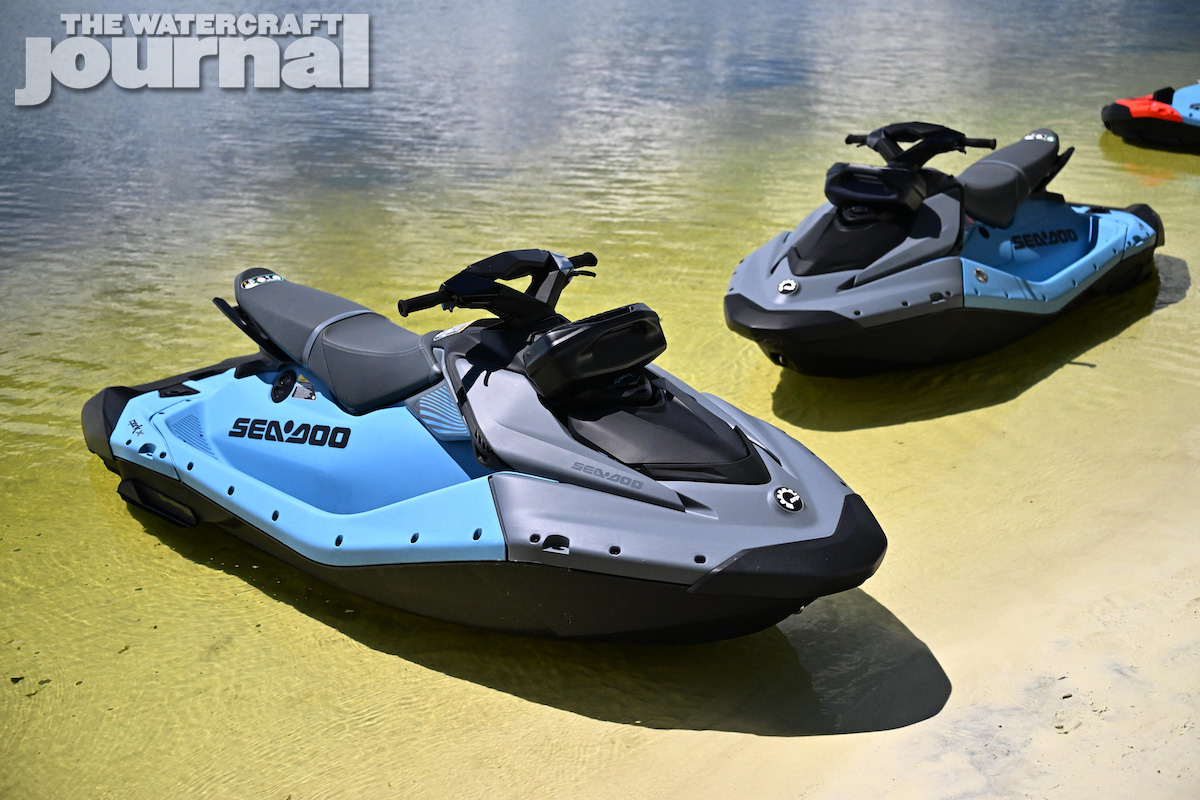
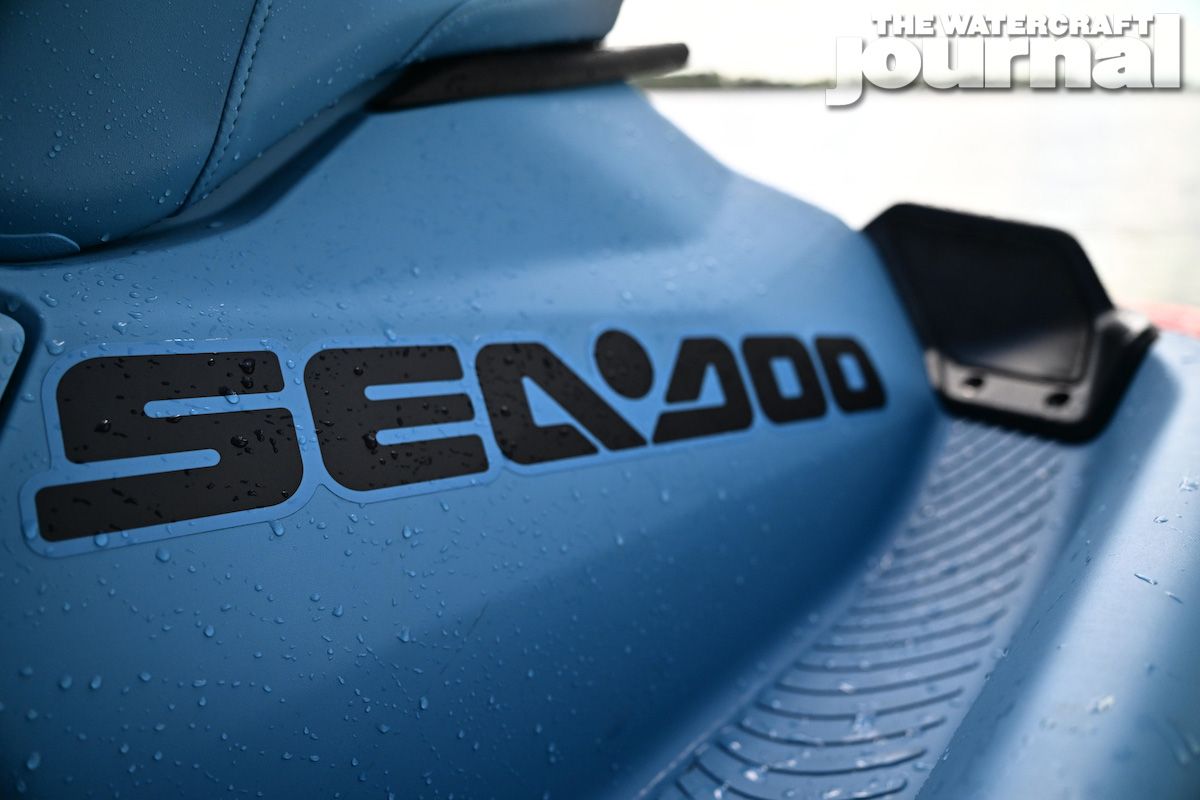
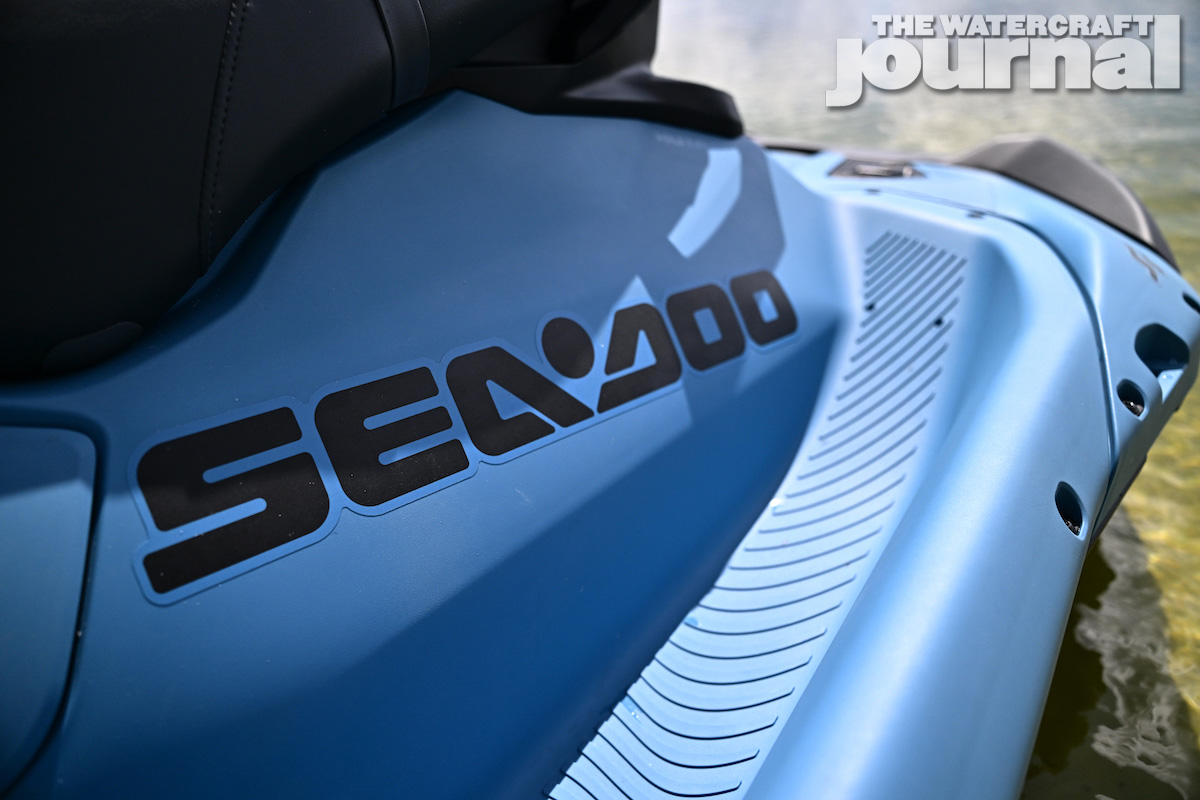
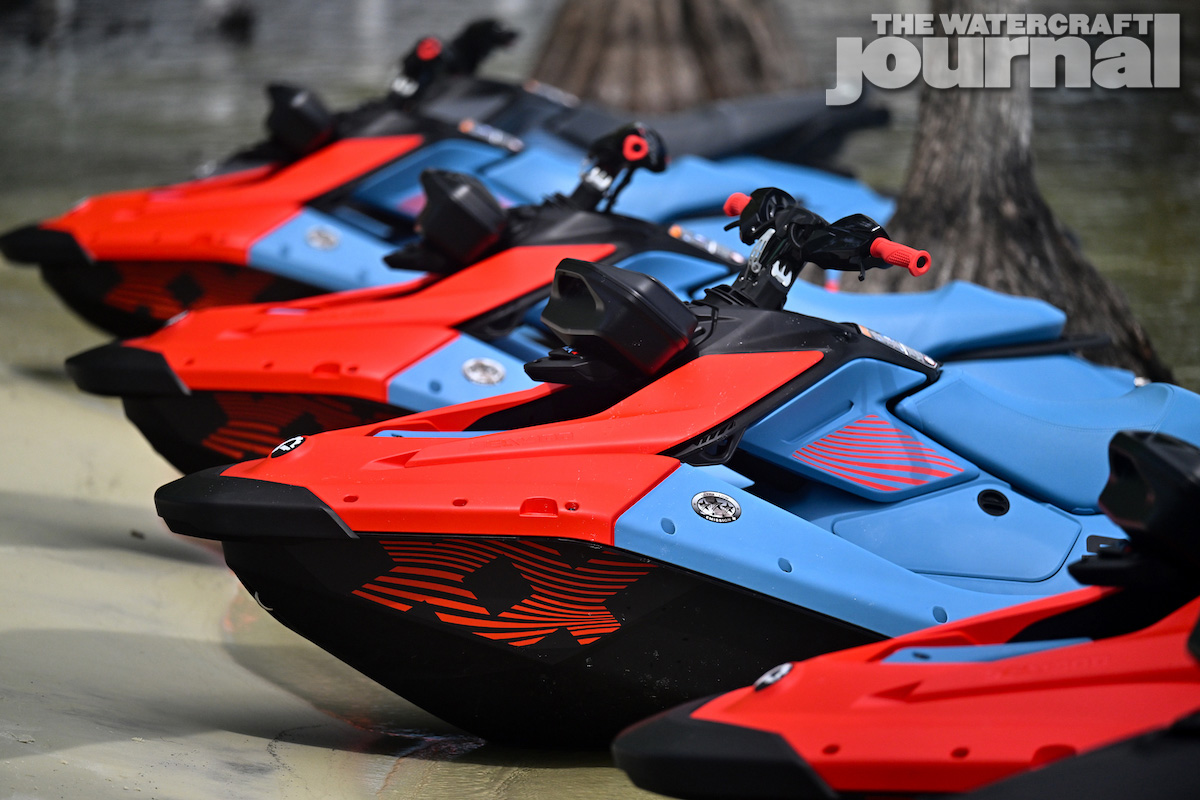
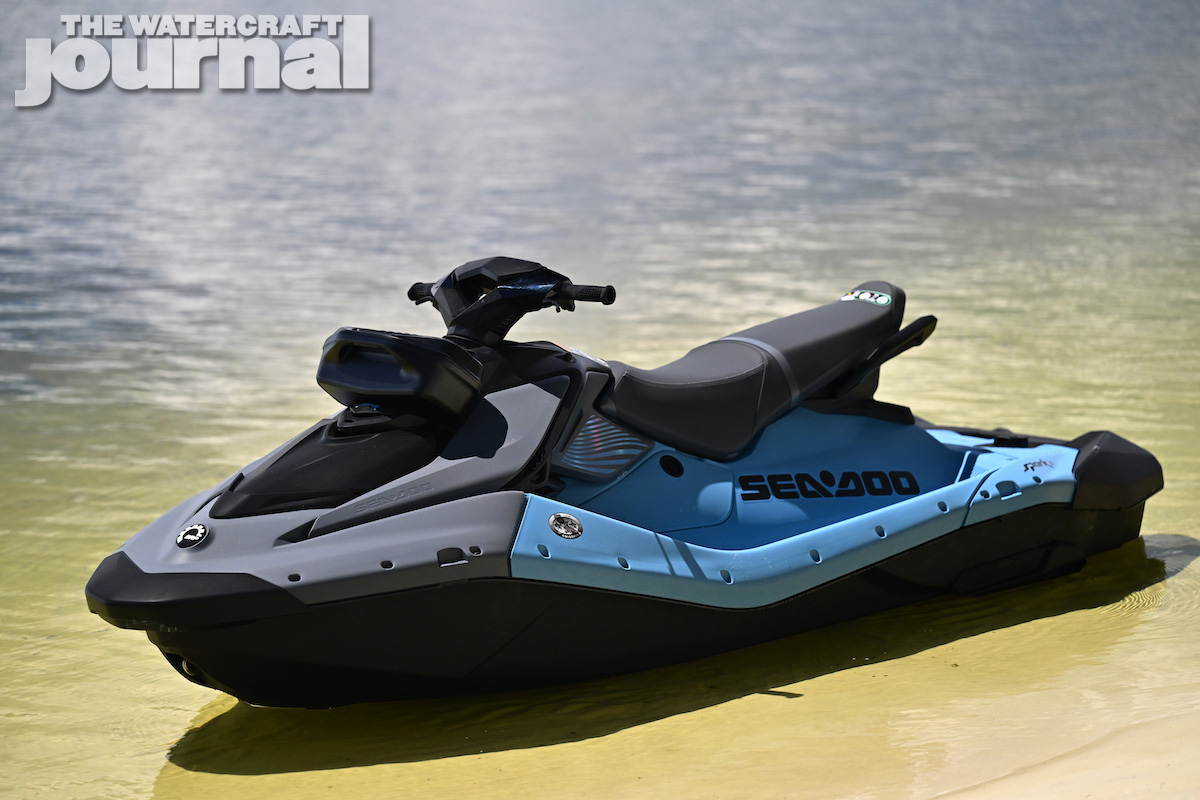
“Well,” my informant began. “You should be pretty happy with next month’s reveal.” They had hinted that the Spark X was indeed “a thing” and would be finally revealed to the public as a 2027 model. Equally, that the “X” would be more than just a bump in power. I, of course, expected the 1630cc Rotax 3-cylinder producing 130-horsepower because that is what I knew one of the working prototypes were.
What wasn’t expected was an entire re-engineering of the 900 ACE engine nor did the notion of a new Polytec hull and revised pump cross my mind. The 899cc ACE engine had been a tried-and-true platform for the Ski-Doo snowmobiles and even boasted a turbocharged application that many felt as I initially had, that it would eventually find its way beneath the Spark’s seat. But such was not the case.
Rather, Rotax was already encountering limitations of the sub-liter 3-cylinder. It’s cylinder head couldn’t process the air volume necessary to maintain flow speeds. Revised camshaft grinds and ECU tunes couldn’t compensate for the limited runner lengths and volumetric efficiency. Engineers went back to their computer modeling to revise the intake manifold and “charge” side of the cylinder head.
Even the exhaust ports and manifold went under the knife to increase evacuation speeds. Getting more air in and getting it out faster was the goal here. A remodeled piston with underskirt oiling increased cylinder compression while keeping down temperatures. “Externally,” Sea-Doo’s Director of Engineering, Kim Ross explained, “the engine looks identical. Internally, the [new] 1000 ACE is completely different.”
And Ross was right. The 1-liter boasts a seemingly race-fuel-only cylinder compression ratio of 12.5:1. “No, no,” Ross assured The Watercraft Journal. “We’re able to run on 87 octane just like before. It’s all tuned through the software.” Additional changes accomplished through tuning is the 110-horsepower at 8,500rpm, while the 60- and 90-horsepower models cap off at 7,250rpm and 7,500rpm, respectively.
“We have to detune [the 1000 ACE] to achieve the original horsepower outputs,” Sea-Doo’s Director of Product Strategy, James Heintz admitted. “The 110-horsepower number is where we’re choosing to introduce this engine. There’s still plenty left on the table.”
Ross had brushed off aftermarket claims of ECU tuners achieving 110-horsepower through the previous 900 ACE. “We tried them all,” he laughed. “We saw maybe 2 or 3-horsepower on the dyno.” Throwing in a cold air kit and free-flowing exhaust couldn’t get the previous engine to 100 horsepower. Only forced induction (ie. turbocharging) could get the 900 ACE closer to 110-ponies, and, as Ross explained, was pushing the ACE to its very edge.
But equipping the new Spark X with a beefier 1-liter powerplant is only as good as the pump that backs it. Ross continued, “We redesigned the stator; we changed the vanes and continued them into the venturi casting. The pump was also changed to accept a plastic wear ring like all of its larger siblings. While Sea-Doo still remains mum on its thrust numbers, Ross assured that the Spark X produced “significantly more thrust” than the previous 90HP variant.
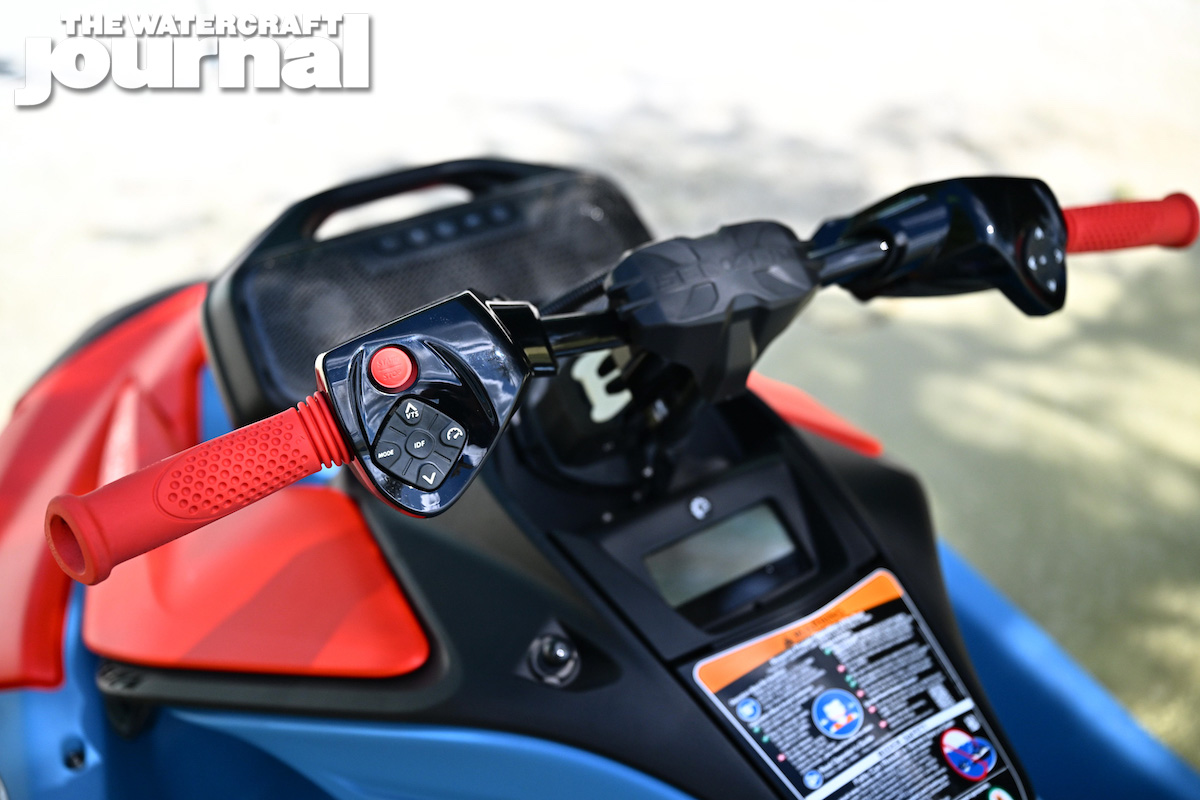
Sea-Doo adapted its IDF (Intelligent Debris-Free Function) system to the new 1000 ACE. “It’s entirely unique to the ACE,” Ross detailed. “Maybe only 20% of the existing IDF components carried over to the ACE version. We also replaced the ‘dog gear’ with a sealed bearing. It’s lighter, smoother and cycles faster.” When asked why even offer it for the Spark, he shrugged, “Customers kept asking why it wasn’t available.”
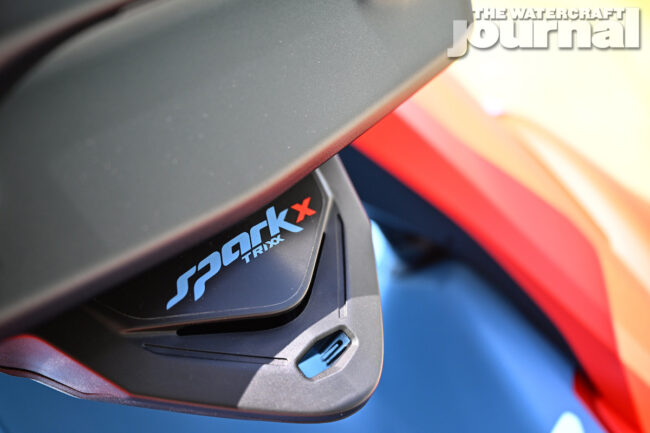
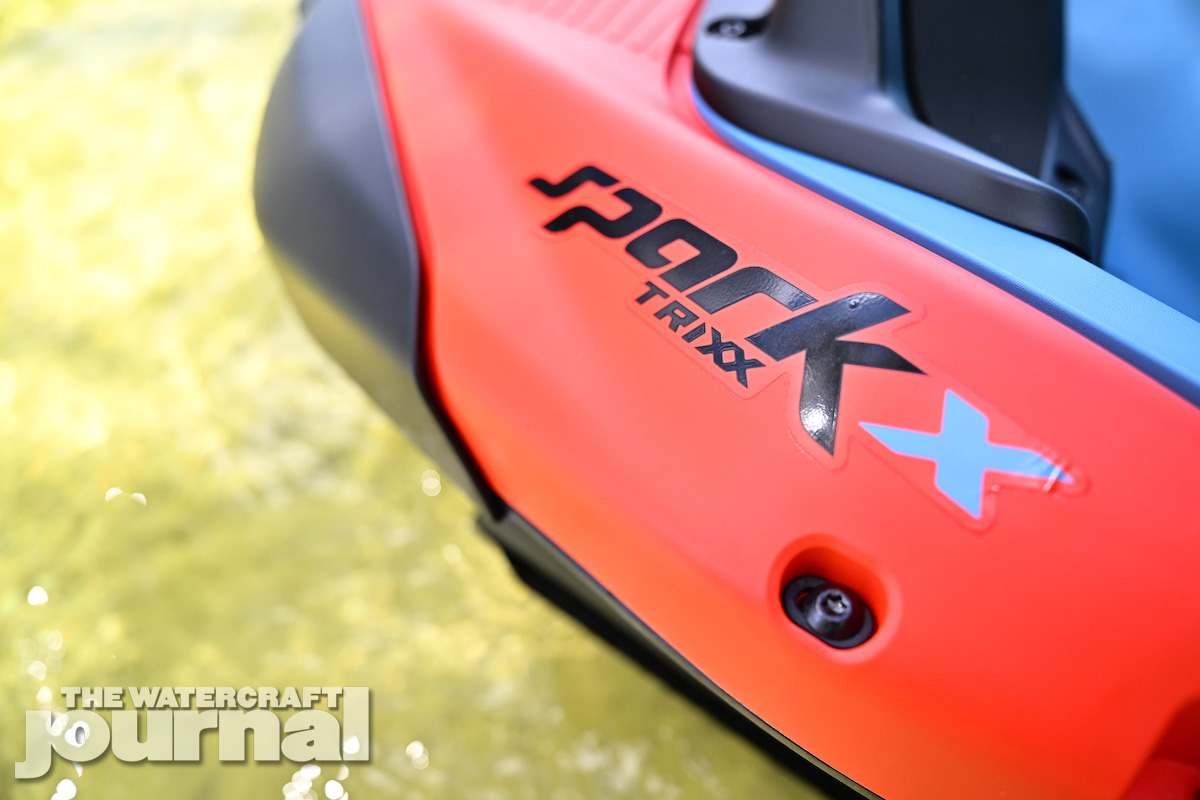
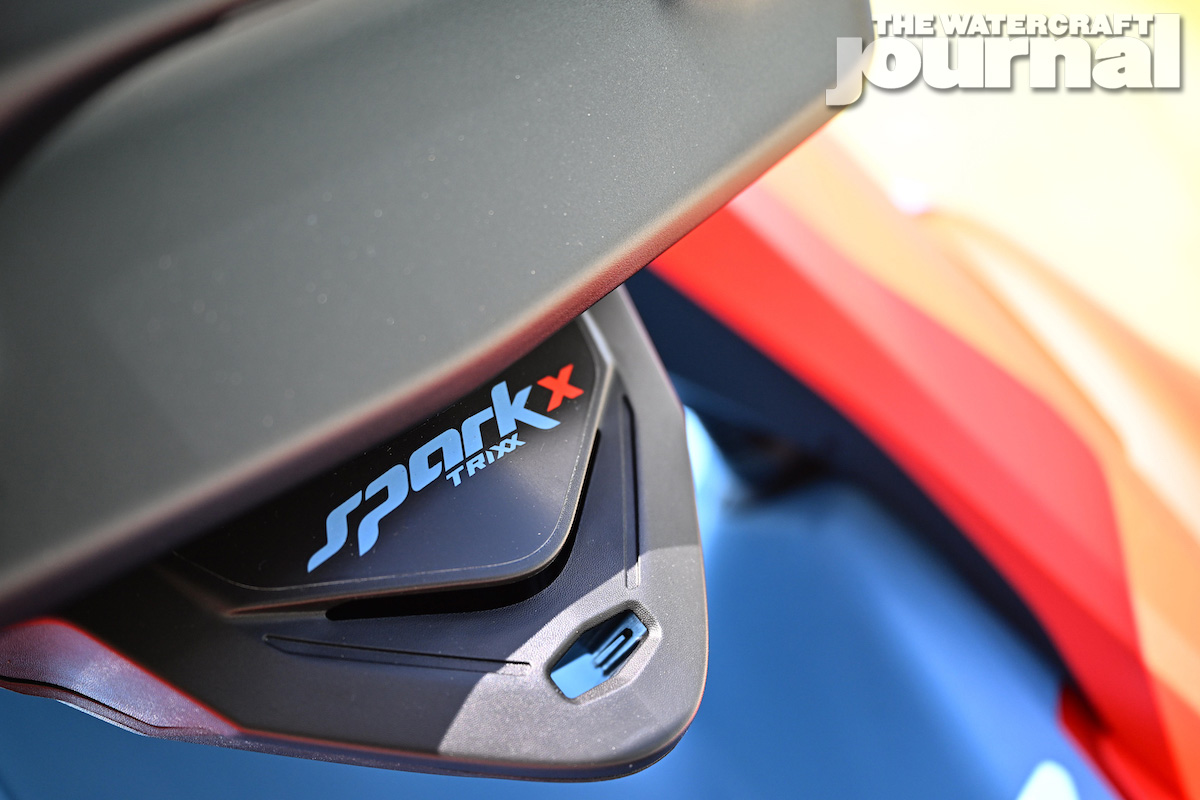
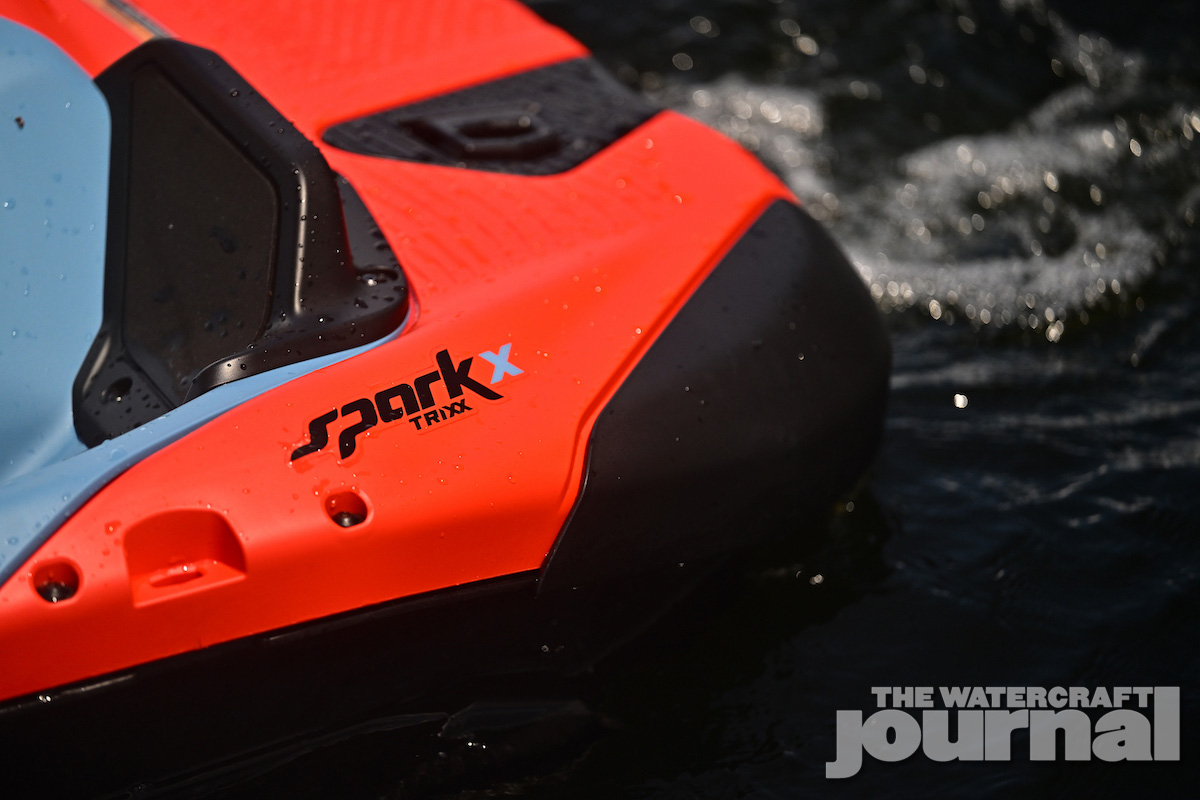
The Spark X and Spark X Trixx retain the same 7.9-gallon fuel cell and 11.7-gallons of storage [Frankly, I have zero idea how Sea-Doo is calculating that number – between the glove box (which is generous) and the underseat fire extinguisher cubby, there’s no way that equates nearly 12-gallons of cargo room. –Ed.] but their designated packaging are equally infuriating as misguided. I’ll explain:
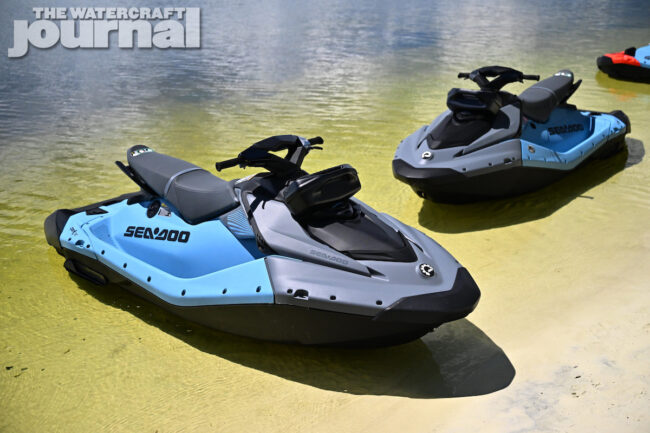
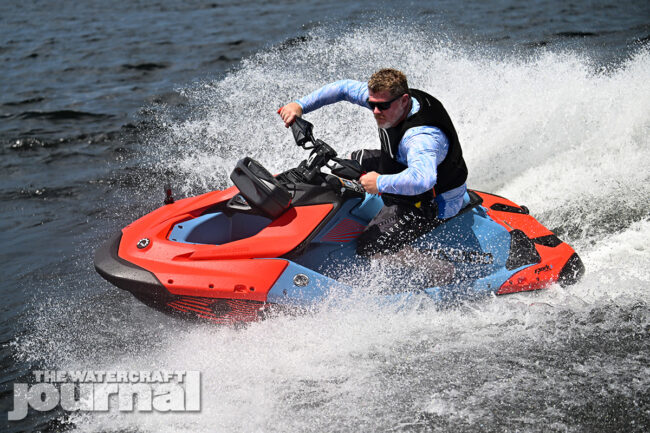
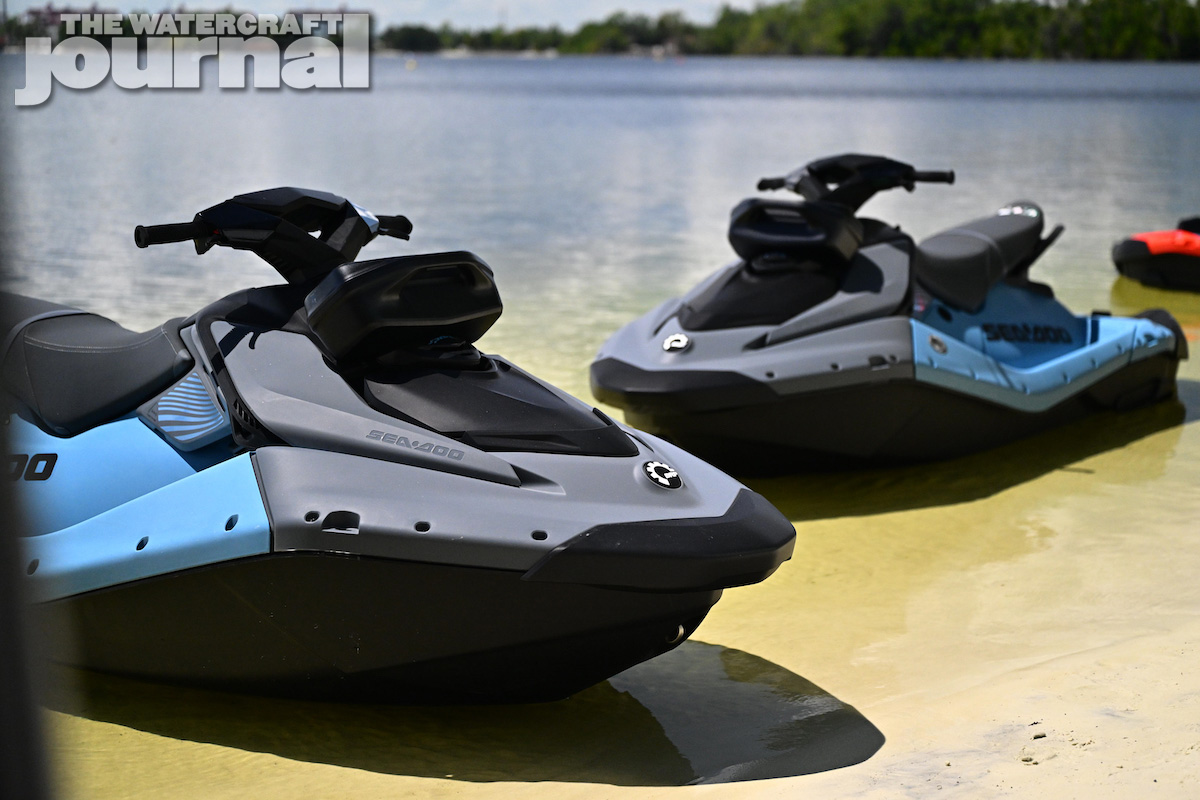
The Spark X is only available as either a 2-up ($10,849 MSRP) or 3-up ($11,449 MSRP) with gratefully, only the 3-up adding the deck extension and elongated seat and base. Both are strictly available in Blue Mist and Deep Black. It’s only when opting for the wildly popular Trixx package does the 110-horsepower Spark X shine: First, only the Trixx permits for the sporty single-rider seat – and as the base option. A 3-up variant is also available.
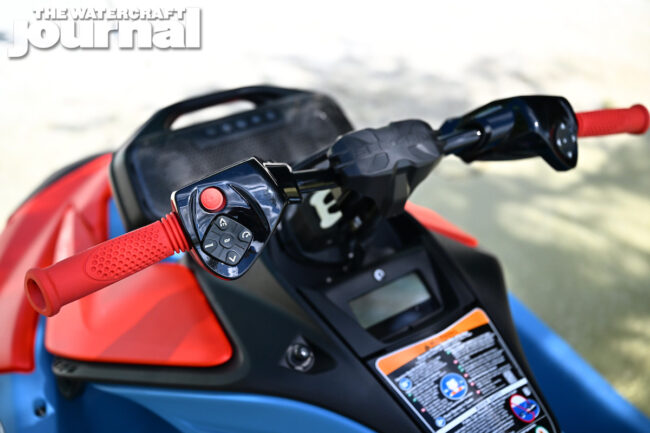
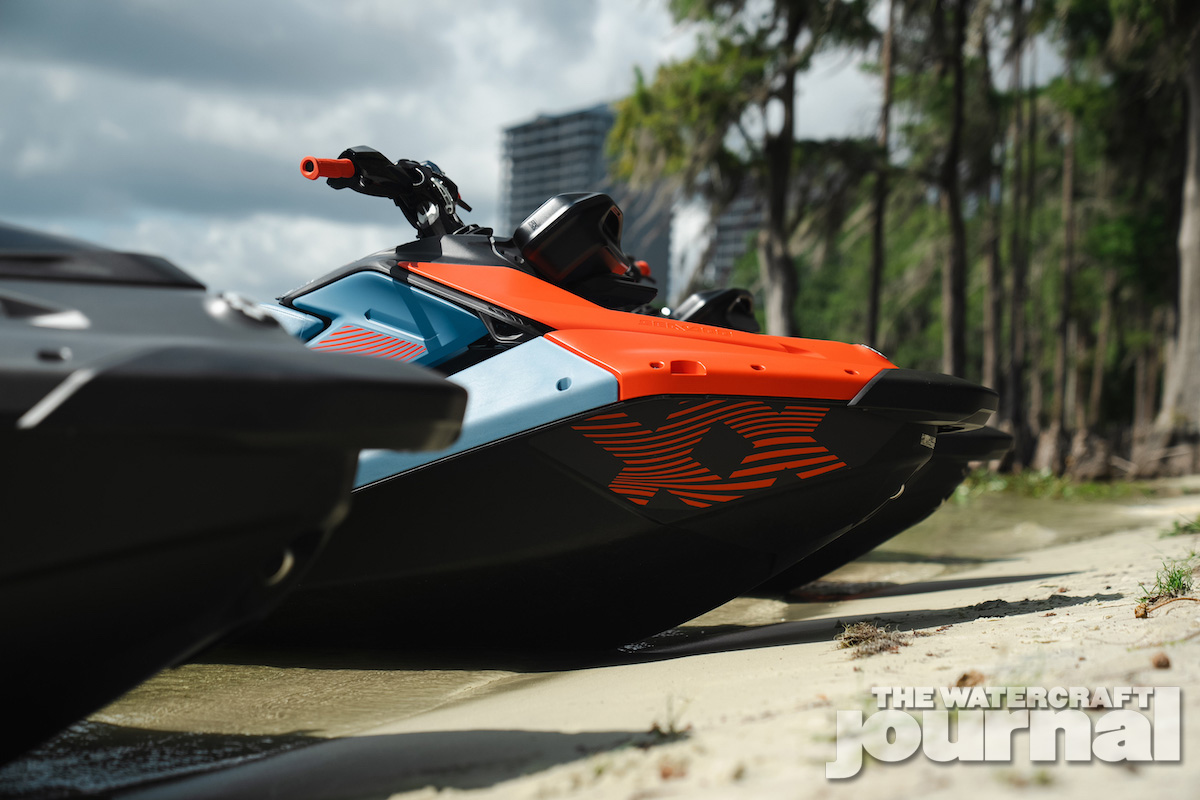
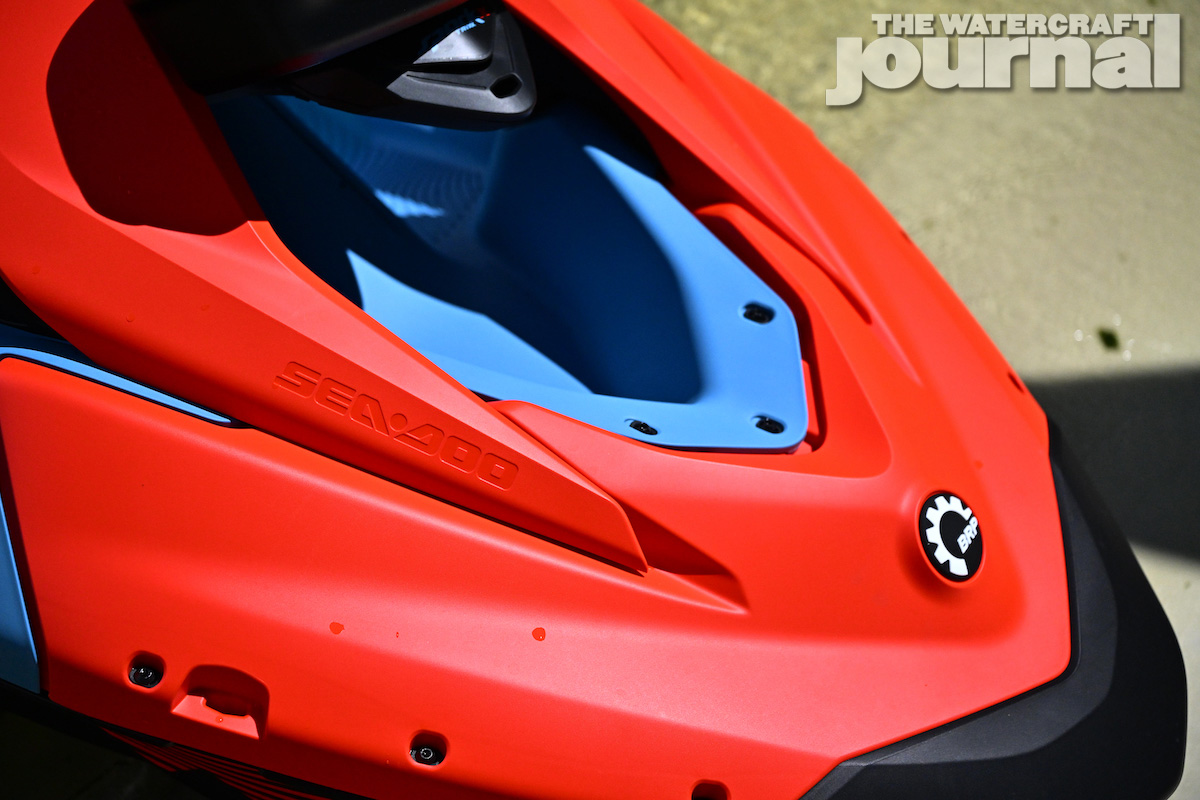
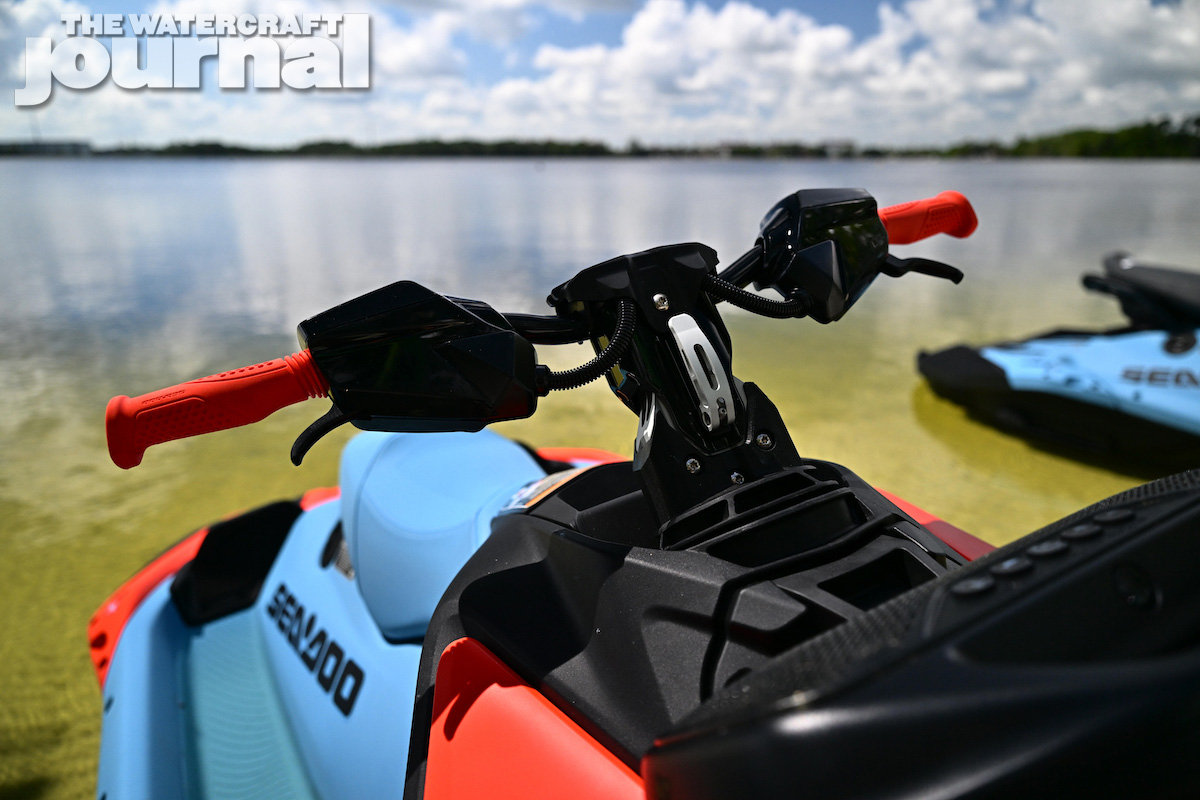
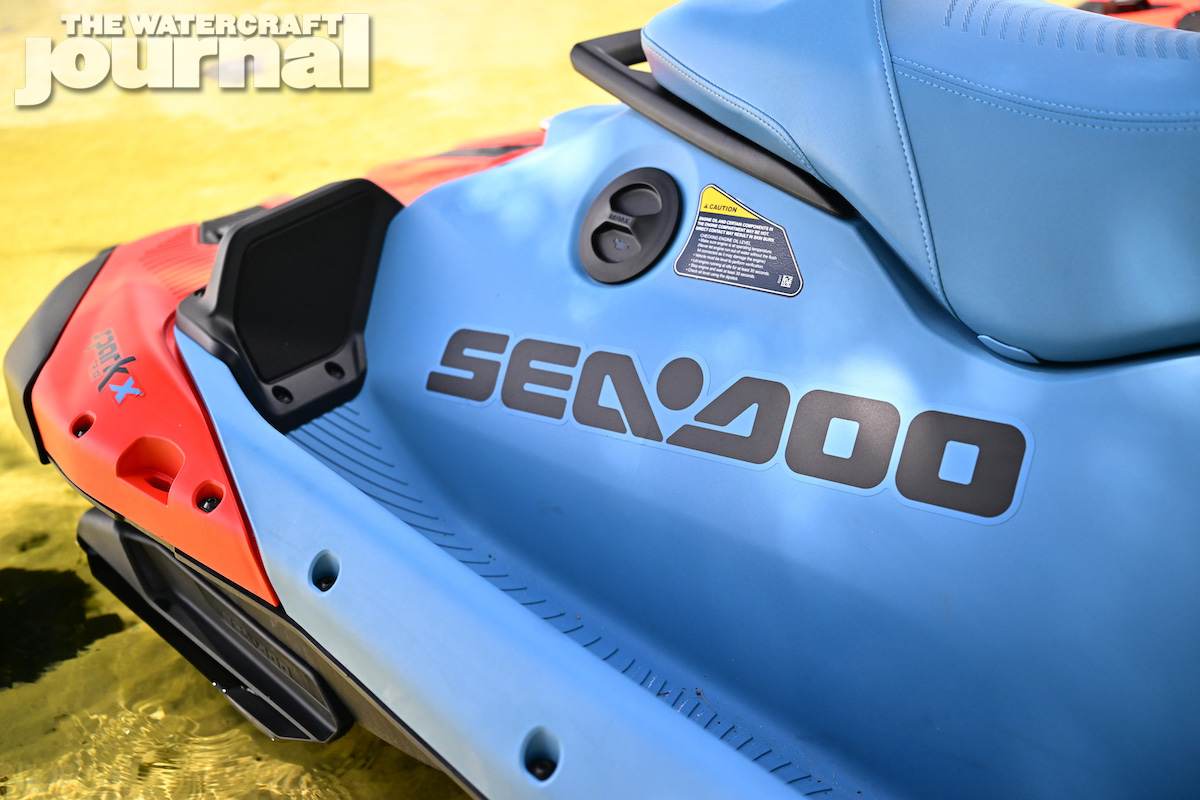
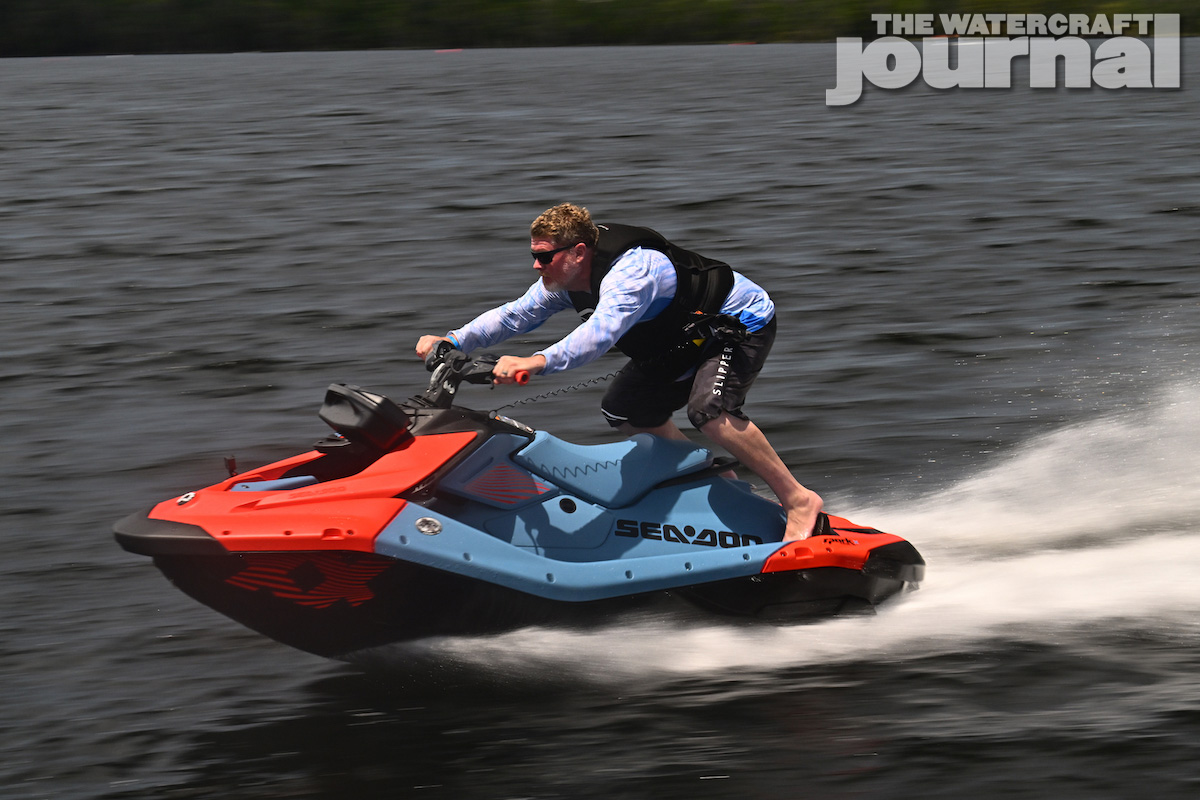
Either of the 1-up ($10,749 MSRP) or 3-up ($11,349) Trixx models are available in Gulfstream Blue and Orange Crush or the new Blue Mist and Coral Blast liveries; but be warned, opting for the latter is a painful $800 add-on just for a colored Polytec deck. And as expected, the Trixx comes with padded angle foot wedges, the billet aluminum adjustable handlebar rider, colored grips and exclusive VTS trim gear necessary for those iconic “water wheelies.”
The elephant in the room yet to be addressed is the rescultped hull. I pressed Sea-Doo’s Director of Design and Innovation, Curt Wilson why BRP didn’t introduce the new hull with the 2024 redesign. “We felt delaying it until now would better demonstrate the Spark X’s added horsepower and vice versa. Most riders wouldn’t be able to feel the difference [in hull shapes] with the 90-horsepower [900 ACE]. The new 1-liter paired with [the new hull] really play off of each other.”
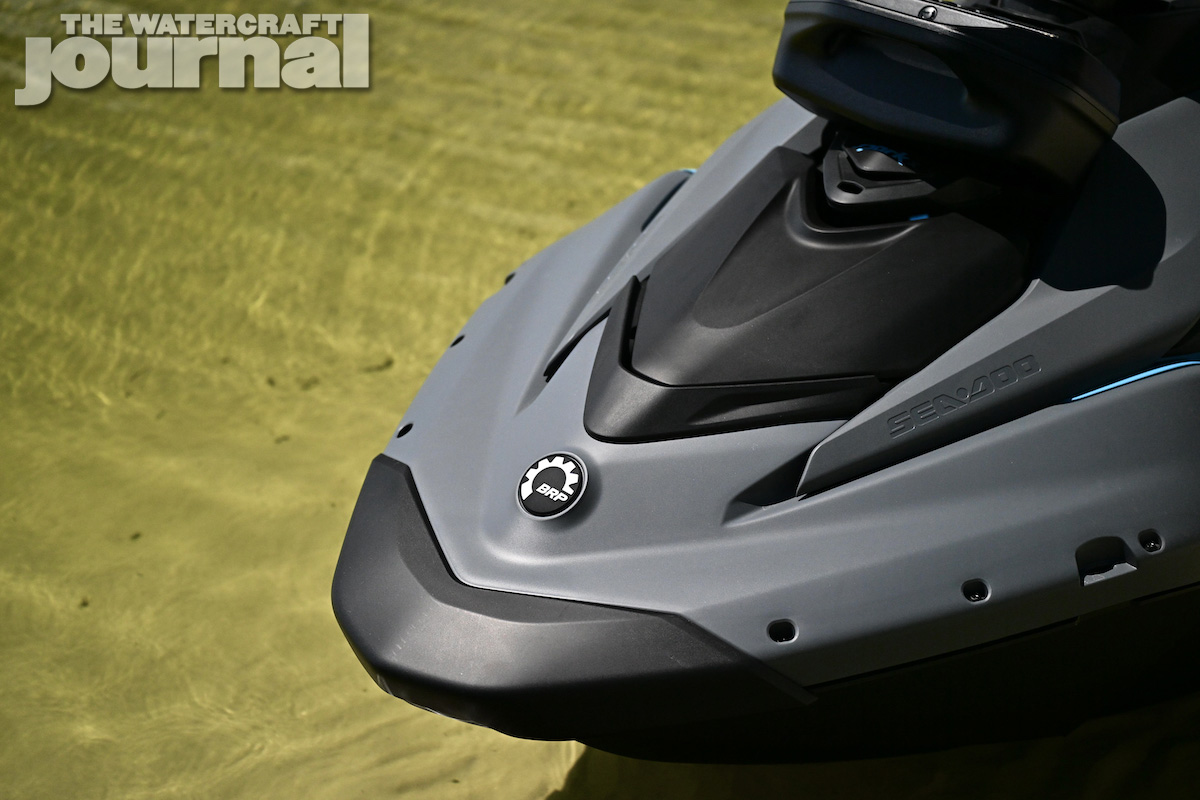
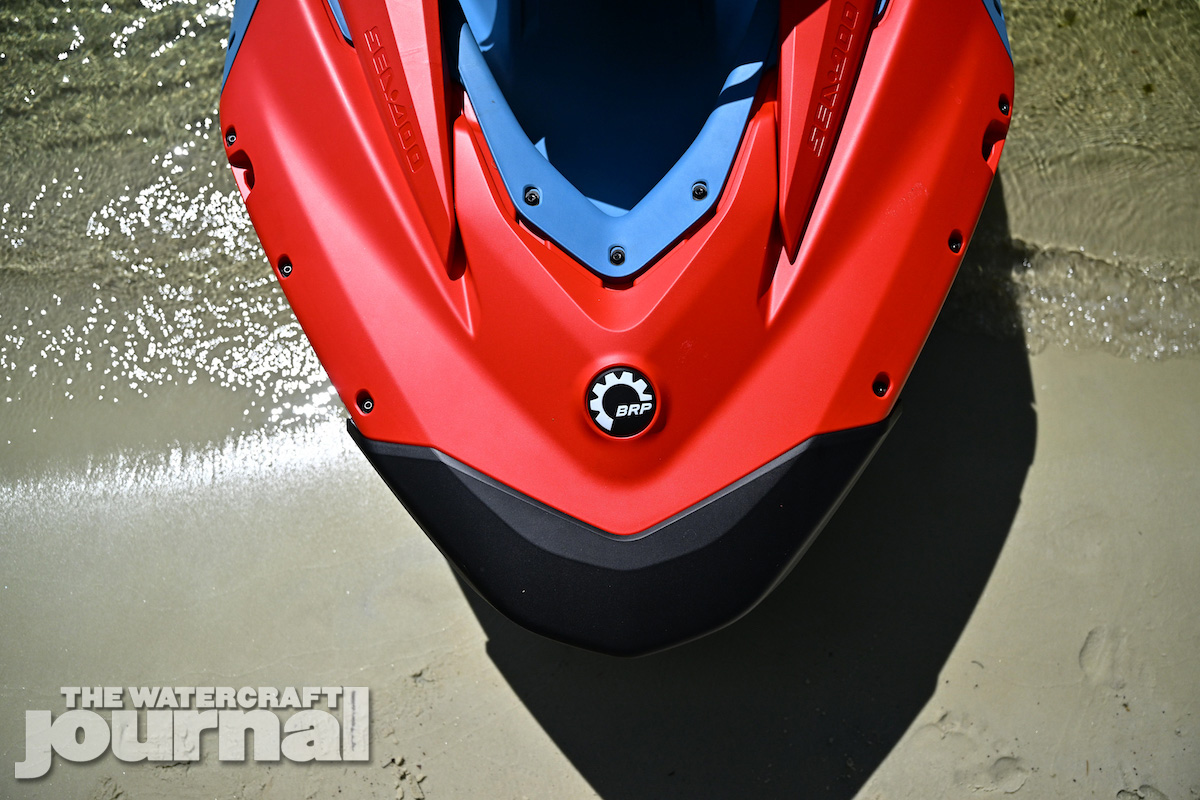
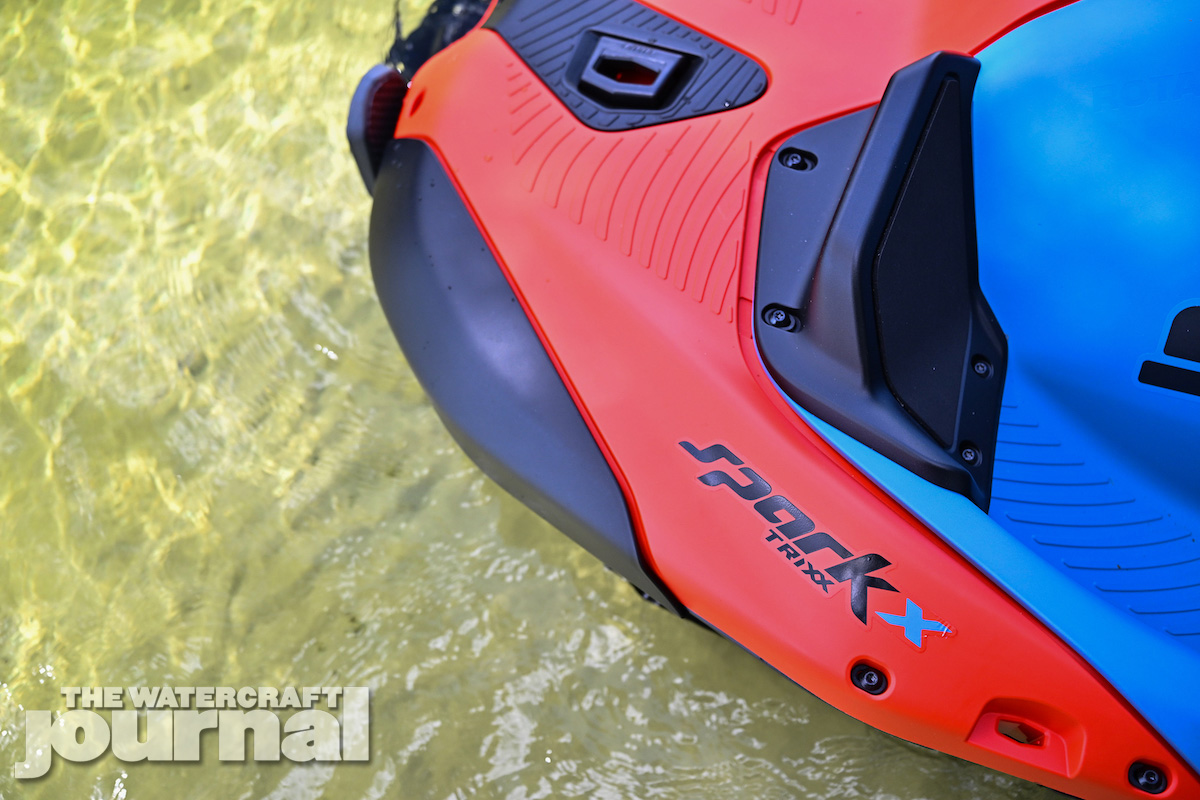
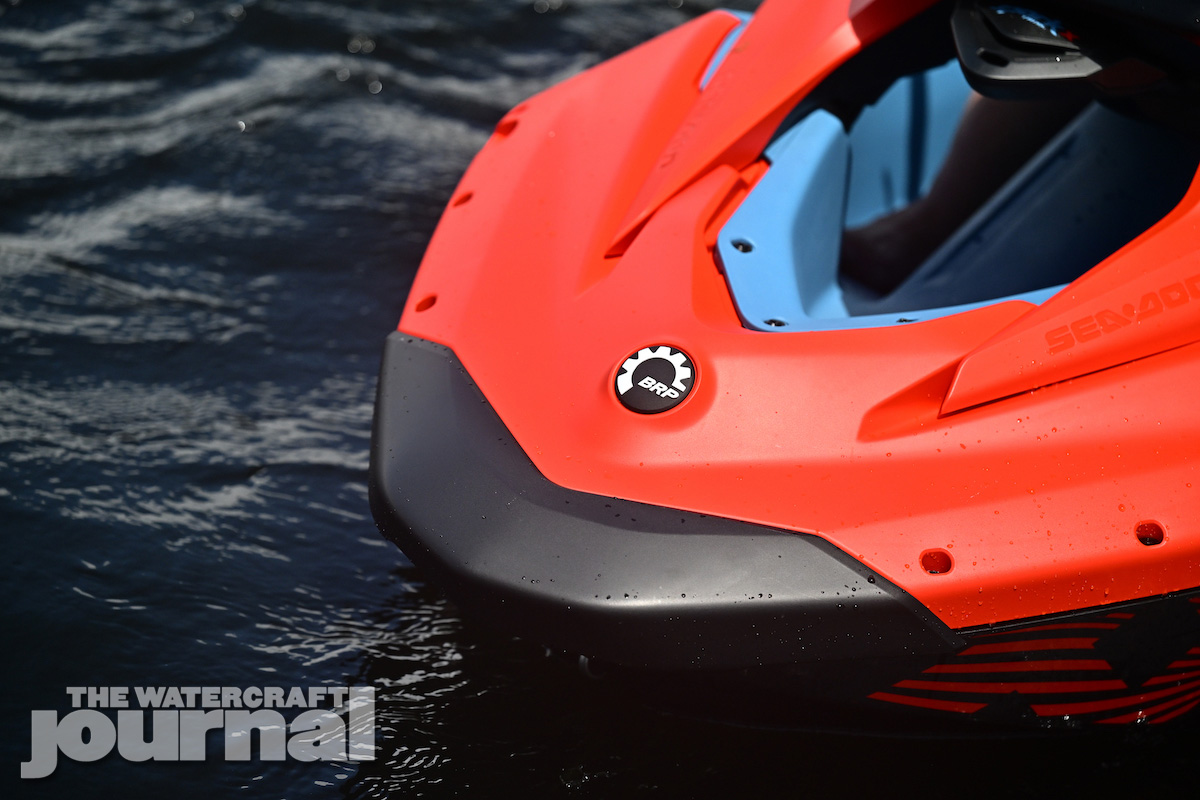
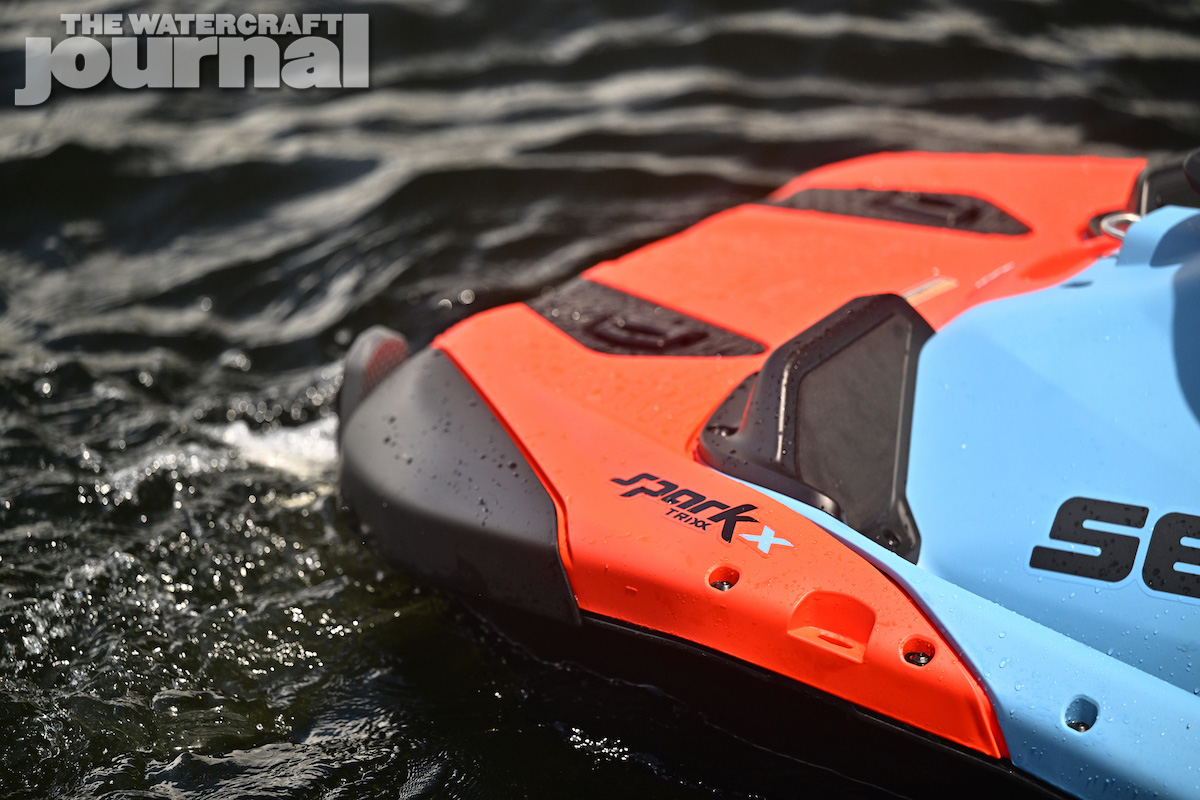
And to his credit, Wilson is right. The Spark X and Spark X Trixx ride on a slightly sharper keel that blends into a progressive semi-displacement hull. The bow and tail break into a angled outside chine, but midships, the outside chine is rounded allowing for elongated powerslides as long as you’re talented enough to disengage the hooked blades of the tail sponsons (I wasn’t). So what does all of this jargon mean to the layman?
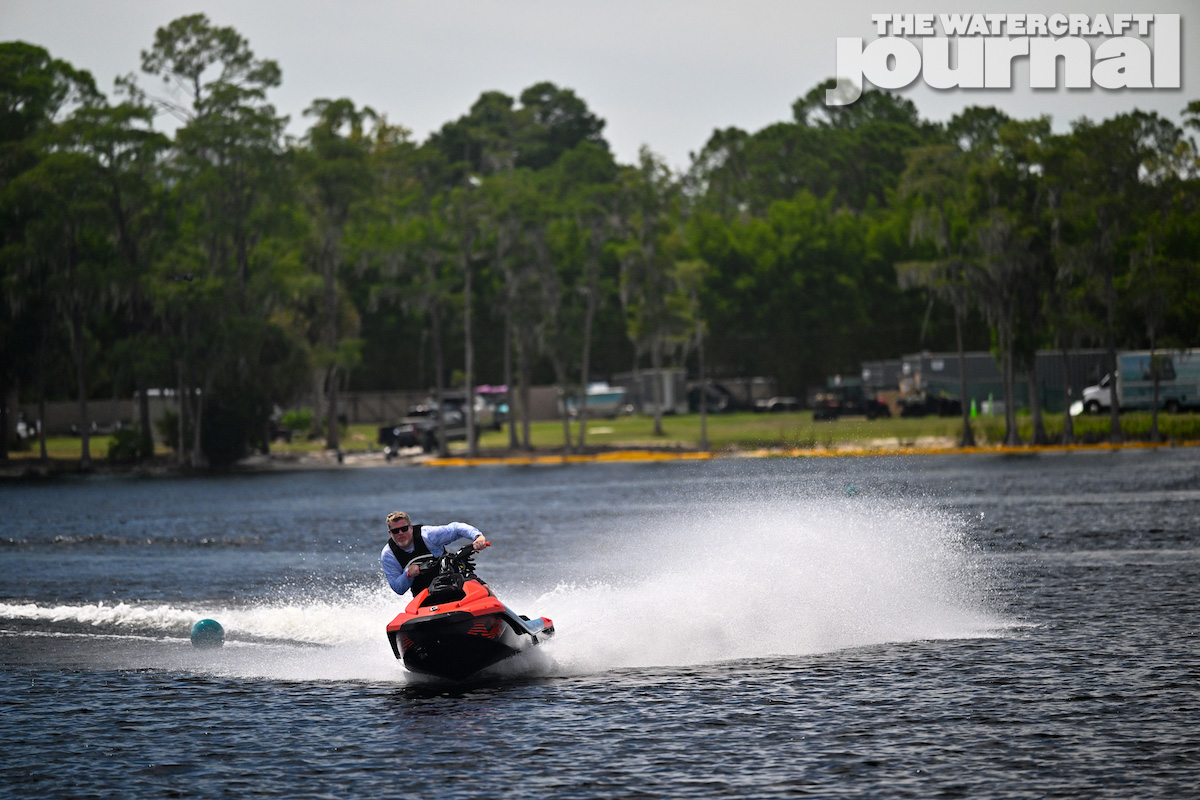
Easy. The Spark X tracks truer through glass and mild chop. You can maintain a pretty tight track around a buoy course or zipping around your lake’s shoreline. The Spark X feels sportier, tighter in corners and nowhere near as loose or sloppy. This may sound like heresy, and you wouldn’t be wrong. Key to the Spark’s appeal was being loose and playful. It’s all still there, you just may have to work a little harder to break it free.
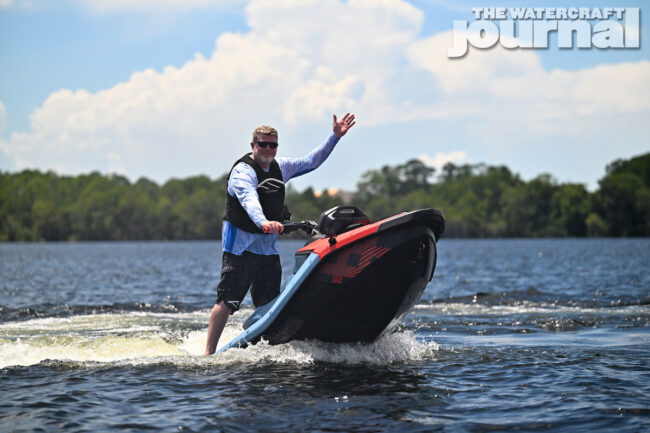
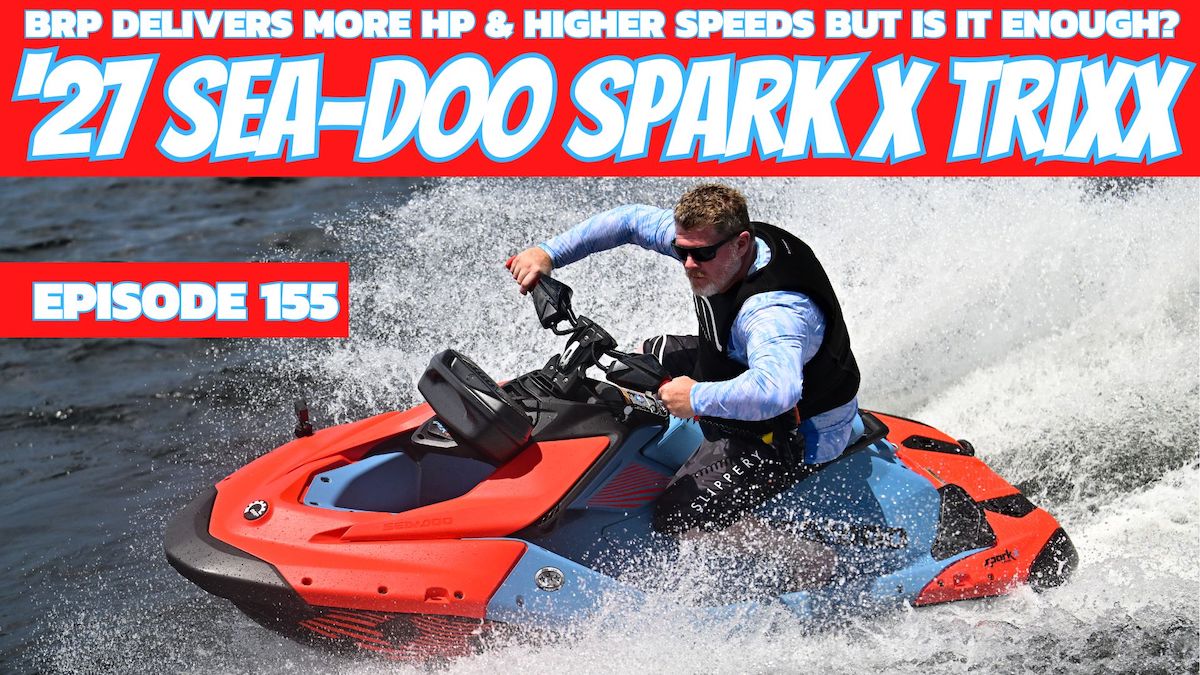
So do I love it? Sorta. What I love more is what it means, and that is that Sea-Doo wants to appeal to a more youthful audience (again). I was able to reach 56mph on the Spark X Trixx with 3/4-tank of fuel, all of the extra Trixx stuff and a LinQ radio, plus a 250-pound rider. Not too shabby but 60mph would’ve been really something. Nevertheless, Spark X is here and there’s no way it’s slowing down. And that’s a great thing.
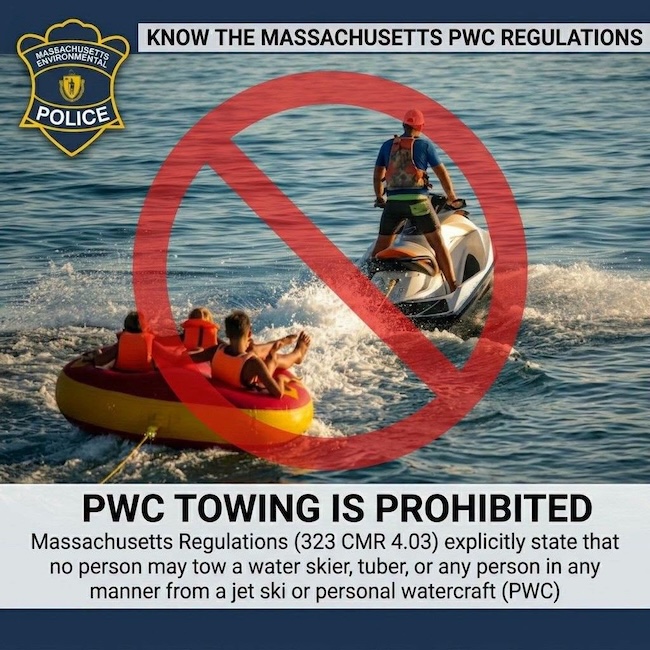
If you missed it, the Massachusetts Environmental Police posted a reminder graphic last week that caught a lot of riders off guard: towing a water skier, tuber, or anyone else from a personal watercraft is illegal in Massachusetts. Not “illegal without an observer.” Not “illegal if your ski isn’t rated for it.” Just illegal, full stop.
The regulation itself isn’t new — 323 CMR 4.03(3) has been on the books since 2004 and reads plainly: “No person shall tow a water skier or any person in any other manner from a personal watercraft.” No exceptions carved out for three-seat skis, no capacity workaround, no observer clause. If you’re towing from a PWC on Massachusetts waters, you’re breaking the law, regardless of how your craft is set up.
What made this one land differently is the reaction. The post has pulled in nearly 1,500 comments and counting — and as of this writing, Massachusetts Environmental Police hasn’t responded to a single one. The range is exactly what you’d expect any time a state posts a “did you know this was illegal” reminder: genuine surprise, a healthy dose of Boston Harbor jokes, and a few one-liners good enough to steal. Our favorite so far, from commenter Chris Rogers: “My pwc identifies as a boat.”
A sampling of the range:
“Oh I’m sorry, I thought this was lake America” — Chris CJ Jutras
“Oh now I see why yall always come to fl for vacation..” — Thomas Wander
“Isn’t that how almost all jet skis are used in surfing and lifeguarding?” — Eric Davis
“Let me guess who create that law, a kayak owner??” — Jaime Jaime
“If it’s fun it has to stop. Did my wife make this rule” — Beniah James
“chuckles in floridian” — Paulo Alexander Casimiro
“Probably need a permit to go on any carnival ride in that state lol” — Derek Sechrist
Not every comment was a jab, either:
“That’s a good law, especially for saltwater. Only do one stupid thing at a time.” — CR Mcsendy
Myth check: A few commenters floated the idea that three-passenger PWCs are titled as “boats” and therefore exempt from the towing ban. That doesn’t hold up. Massachusetts defines “personal watercraft” by design, not seating capacity — under MGL c.90B §1, it’s any vessel using a water jet pump (or similar machinery) as its primary propulsion, built to be ridden sitting, standing, or kneeling on the craft rather than in it, and the statute names jet skis, surf jets, wetbikes, and water jet devices specifically. A 3-up ski meets that definition exactly the same as a 1-up ski. PWCs and powerboats do get registered under the same process, but that’s a paperwork mechanism — it doesn’t reclassify a PWC as a different type of vessel or carve it out of 323 CMR 4.03. However many seats it has, if it’s jet-propelled and you ride on top of it, it’s a personal watercraft, and the towing ban applies.
Another common pushback in the comments went the opposite direction — a few riders pointed to the standard capacity math (3-person ski = driver, spotter, and one person on the tube) as proof towing is “fine in every state.” That math is correct for most states, which is exactly the pattern in the comparison below — but it doesn’t rescue you in Massachusetts. MA isn’t layering a capacity requirement onto towing; it removed the activity outright. A 3-up ski with a spotter aboard satisfies the rule everywhere else on this list and still doesn’t satisfy 323 CMR 4.03.
So how unusual is this, really?
Here’s the part that actually matters if you ride outside Massachusetts: most states don’t ban towing from a PWC outright. They regulate it. Which means the rules people assume are universal — an observer on board, a minimum seating capacity, an age minimum for who can watch the person being towed — are usually the actual law, not just good practice, and they vary more than most riders realize.
A quick sample of how the “regulate, don’t ban” states handle it:
State
Approach
California
Allowed — PWC must have rated capacity for operator + observer + towed person
New York
Allowed — observer must be at least 10 years old; PWC must be rated for 3+ people
Ohio
Allowed — observer required in addition to operator
Wisconsin
Allowed — PWC must be manufacturer-rated for 3+ people, competent observer aboard
Texas, Missouri, Virginia, Washington
Allowed — general vessel-towing statutes apply to PWCs; observer or approved mirror required
Massachusetts, by contrast, isn’t regulating the activity — it’s removed it entirely. That puts it in a small minority of states that treat PWC towing as a flat no, rather than something you can do correctly if your setup and observer meet the requirements.
The most common requirements you’ll run into, state to state:
An observer aboard — separate from the operator, watching the person being towed (age minimums vary: some states set it at 10, others 12, some don’t specify)
Minimum seating capacity — the PWC has to be manufacturer-rated to carry the operator, the observer, and the person being towed
An approved mirror as a substitute — a handful of states will let a properly rated mirror stand in for a human observer
Daylight-only restrictions — many states that allow towing still prohibit it between sunset and sunrise. Not surprising on its own, since PWC operation in general is commonly restricted to daylight hours regardless of whether anyone’s being towed — this is less a towing-specific rule and more the baseline riding rule carrying over
Distance/proximity rules — staying a set distance from docks, swimmers, other vessels, and anchored boats while towing
None of this is exotic — it’s the same skeleton of rules that governs towing from a boat. But “know before you go” applies here more than most riders think, especially if you’re trailering across state lines for a lake trip or a rental.
While we were down this rabbit hole…
Once you start pulling state PWC regulations, a pattern shows up fast: most states land on some version of the same rulebook — 2 or 3-seat capacity requirements, an observer or mirror (sometimes both, sometimes either), an age minimum for the observer that ranges anywhere from 8 to 13 depending on the state, and a sunset-to-sunrise ban. One requirement that shows up almost everywhere and gets overlooked constantly: a visible orange or red flag whenever a skier or tuber is down in the water or the tow line is out. It’s not a formality — it’s how nearby boat traffic knows there’s a person in the water they can’t easily see.
A few states break from the pattern in ways worth knowing before you trailer across a border:
Hawaii — towing a surfer requires a weather event. Hawaii doesn’t just regulate PWC-assisted surf towing, it gates it behind conditions: towing a surfer with a jet ski is only legal during an official National Weather Service High Surf Warning, and only in designated tow-in zones. Operators need both a Boater Education Card and a separate Thrill Craft Operator Certification — a two-day course through the Division of Boating and Ocean Recreation — plus a valid tow-in decal on the craft itself. The equipment list is its own hurdle: a rescue sled at least 3 feet wide and 4 feet long, a quick-release tow rope at least 30 feet, a separate 6-foot bow towline, a two-way communication device, dive fins, and a safety knife on board. This one exists because of big-wave tow-in surfing culture, not recreational tubing — but it’s a real, codified set of requirements, not just a best practice.
Arkansas — no mirror allowed, period. Most states that permit a mirror as a substitute for a human observer draw the line at PWCs specifically (since PWCs are harder to mount one reliably on). Arkansas skips the exception entirely: no rearview mirror substitution on any towing vessel. If you’re towing in Arkansas, you need a second person aboard watching the person in tow — no equipment workaround.
Connecticut — stacks a fourth requirement on top of the usual three. Most states stop at age, certification, and observer/mirror. Connecticut adds a fourth: anyone towing a skier or tuber must be at least 16, hold a boating safety certificate, and carry a separate Connecticut Safe Waterskiing Endorsement most other states don’t require. Tubes towed in CT also need permanent (not clip-on) handholds, and operators can’t tow more than one inflatable at a time.
Oregon — one stretch of river has its own sticker. Most of Oregon follows standard towing rules, but the Newberg Pool on the Willamette River (river mile 26.6 to 55) requires a separate Towed Watersports Decal issued by the Oregon State Marine Board — proof to law enforcement that both the operator and the craft meet that specific stretch’s congestion-control rules. It’s not required anywhere else in the state. If you’ve only ever ridden outside that stretch, you’d have no reason to know it exists.
Oklahoma — the extremes on both ends. Oklahoma sets the youngest observer age minimum we found in any state at 8 years old for a non-PWC towing vessel. But if the towing craft is a PWC, the requirement flips to needing two wide-angle mirrors, not one, positioned so the operator can watch both.
New Hampshire vs. Pennsylvania — opposite philosophies on group towing. New Hampshire allows towing up to two skiers or up to six people on inflatable tubes at once (with added observer rules once you’re towing multiple tubes). Pennsylvania goes the other direction entirely: one person being towed at a time, no exceptions for tubes or groups.
Alaska — the “call first” rule. Alaska’s standard towing and proximity rules are fairly typical, but some specific areas ban PWC operation outright, and there’s no single statewide list — riders are expected to contact local land managers before launching in unfamiliar waters. It’s less a specific “don’t do” and more a reminder that “legal in the state” doesn’t always mean “legal on this particular lake.”
Have a law from your home state that catches out-of-state riders off guard? Drop it in the comments — we may be doing a follow-up.
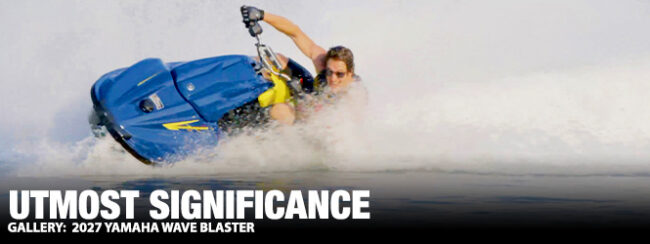
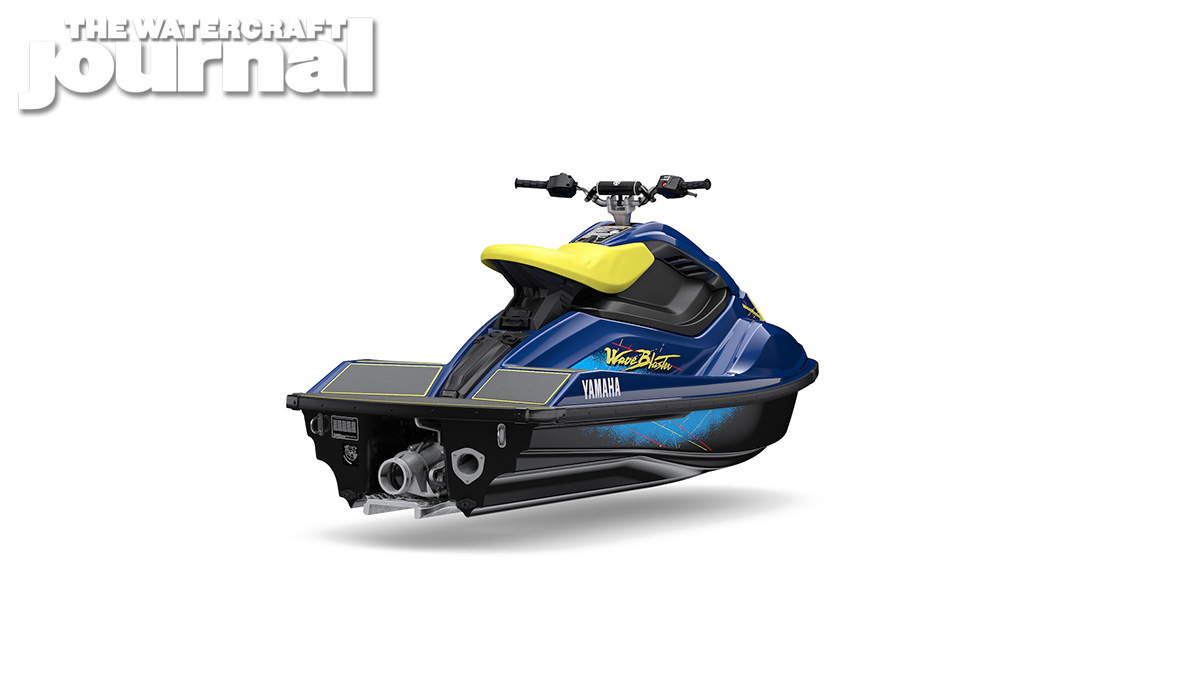
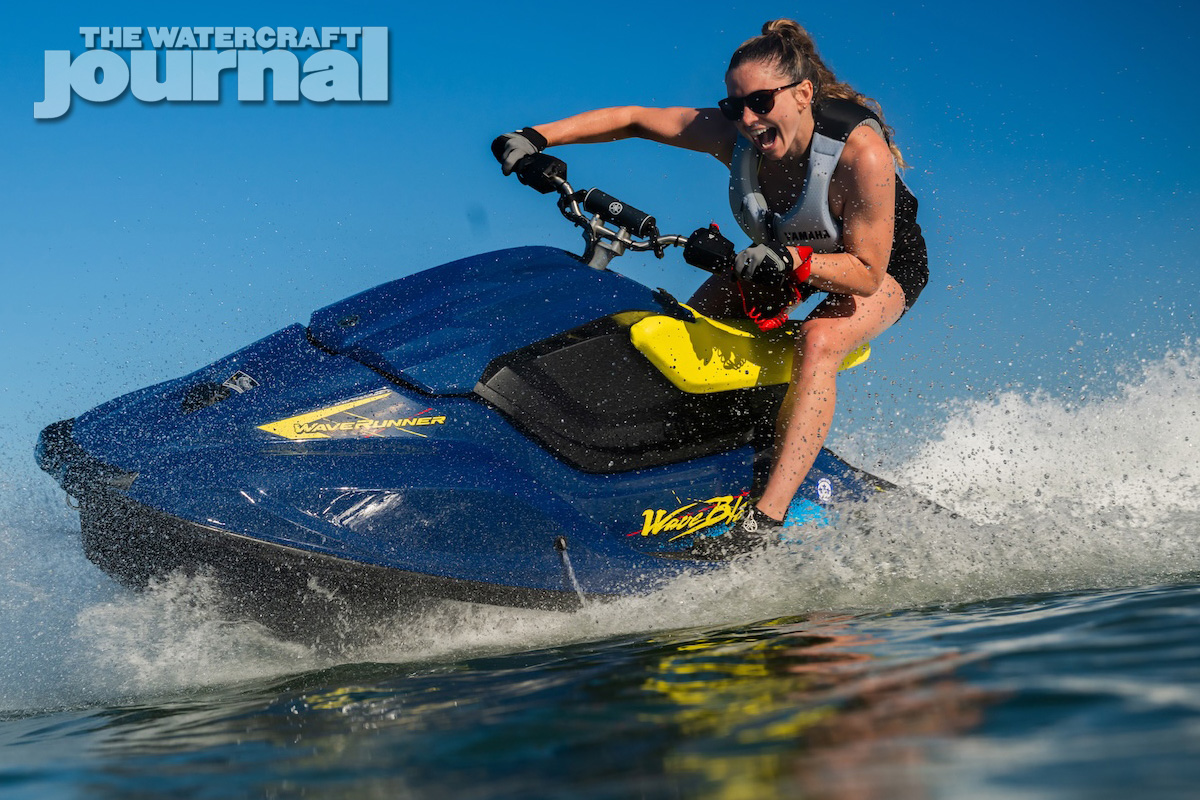
This article is not a review. It cannot be as we haven’t been able to ride a production unit yet – or any unit, for that matter. Equally, this isn’t the typical “introducing Yamaha’s newest line of WaveRunners” article either because frankly, everything else is just BNG (inside industry speak for “bold new graphics” and colors). Rather, this is strictly an introductory overview of the 2027 Yamaha WaveBlaster and a perspective on its potential impact on the PWC industry as a whole.
Out of the gate, we’ll happily admit that we did not see this one coming. We had heard rumblings of “a big ol’ barge and a little one-seater” a year or two ago, and saw that fulfilled with the arrival of the CrossWave and what we thought was the JetBlaster Pro. Most wouldn’t blame us for making such a safe assessment. But no, the JetBlaster certainly wasn’t it and what did appear at this recent dealer meeting was far, far more significant to riders, vintage enthusiasts and the industry itself.
In a reel published by SoFla Nick, WaveRunner Product Manager Martino Ruggiero detailed Yamaha’s awareness of vintage watercraft’s explosive sales on Facebook Marketplace – particularly of original B1 and B2 WaveBlasters – and identified a “cult following” that would be receptive to a modern iteration only as far as it remained a true spiritual successor to the original. It would need to be “a runabout that is playful, deliberately aggressive and rewards skill,” Ruggiero states.
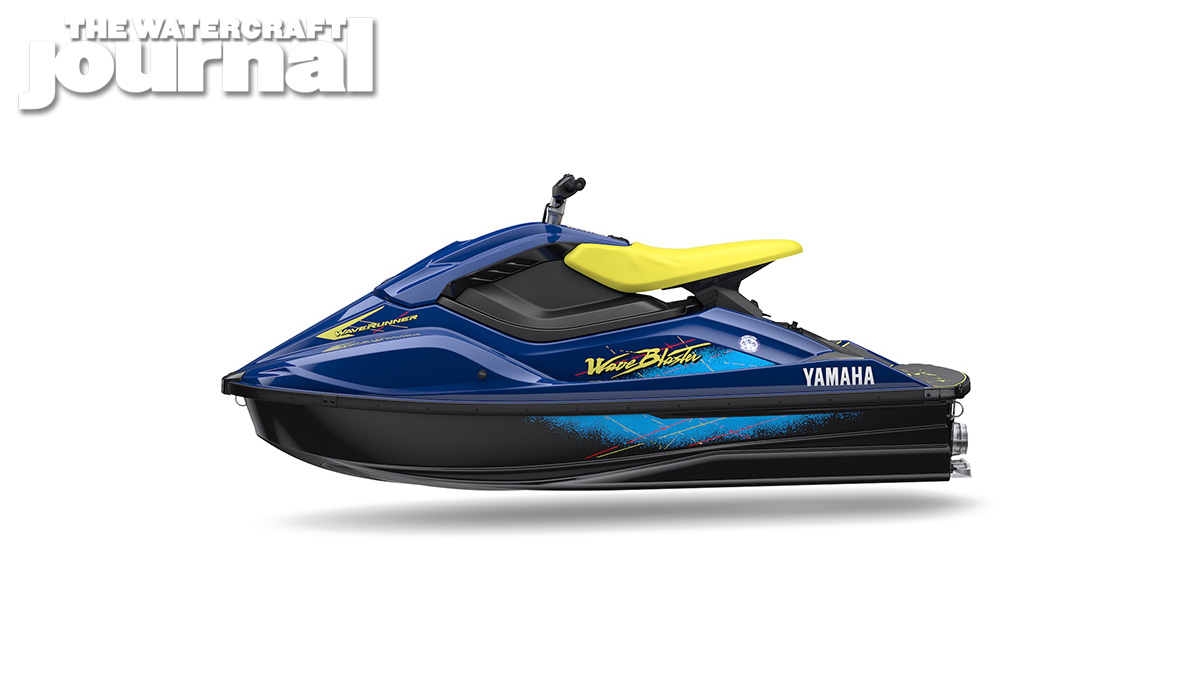
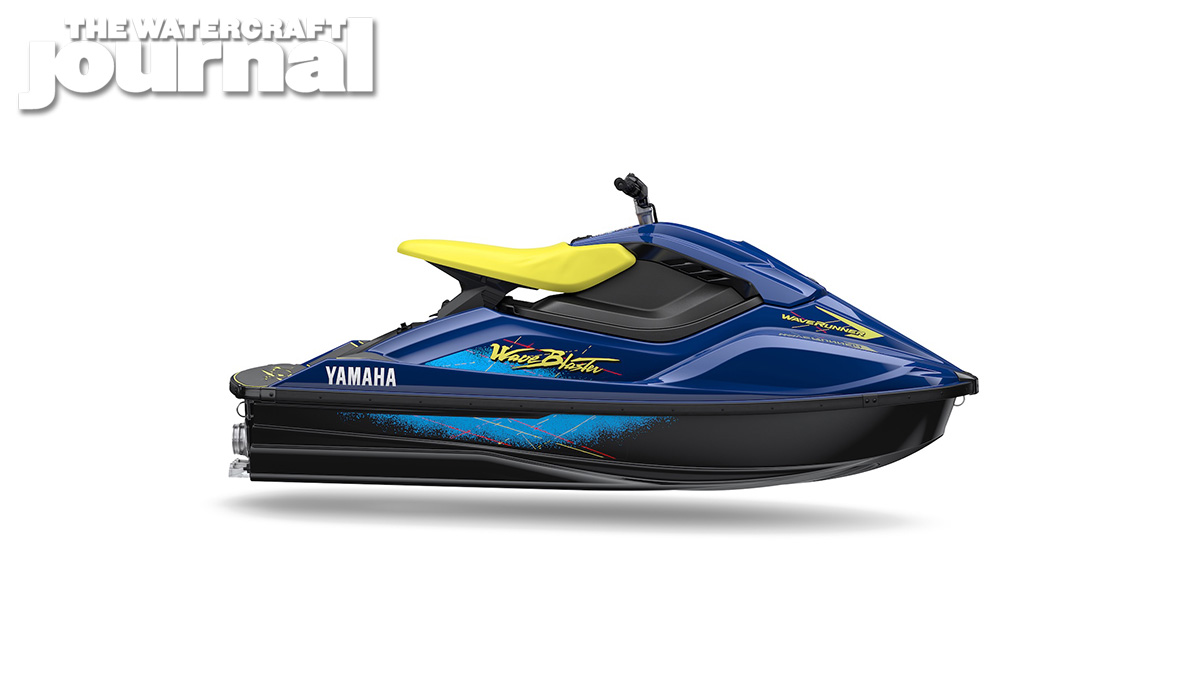
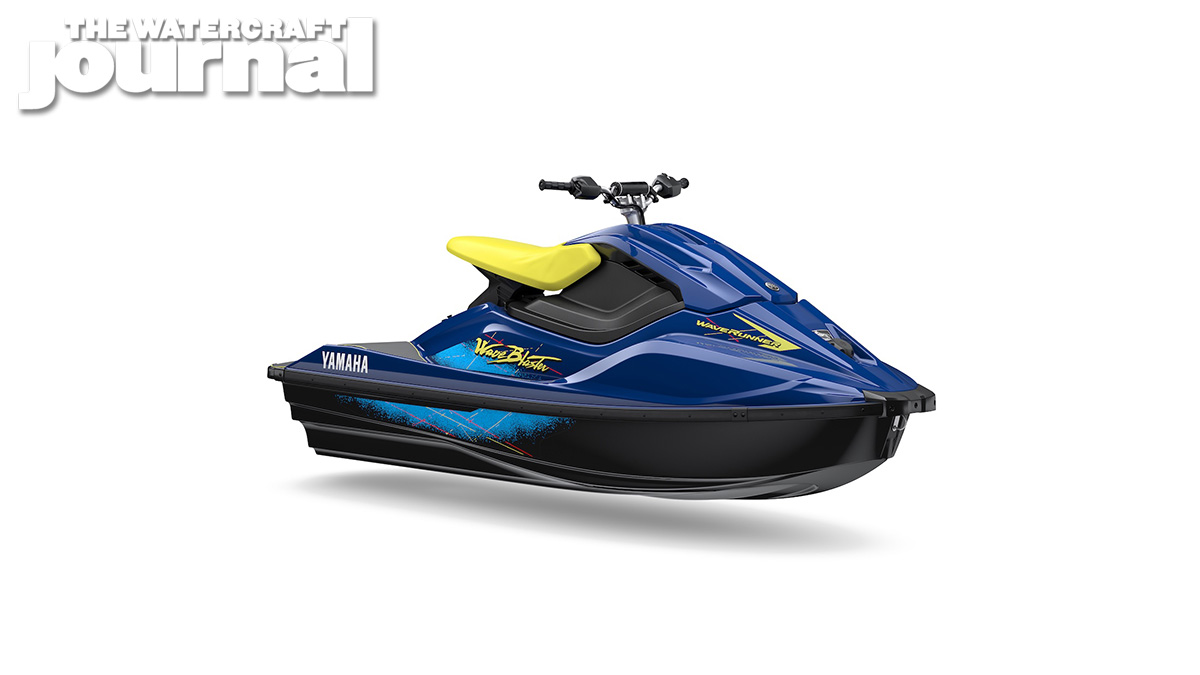
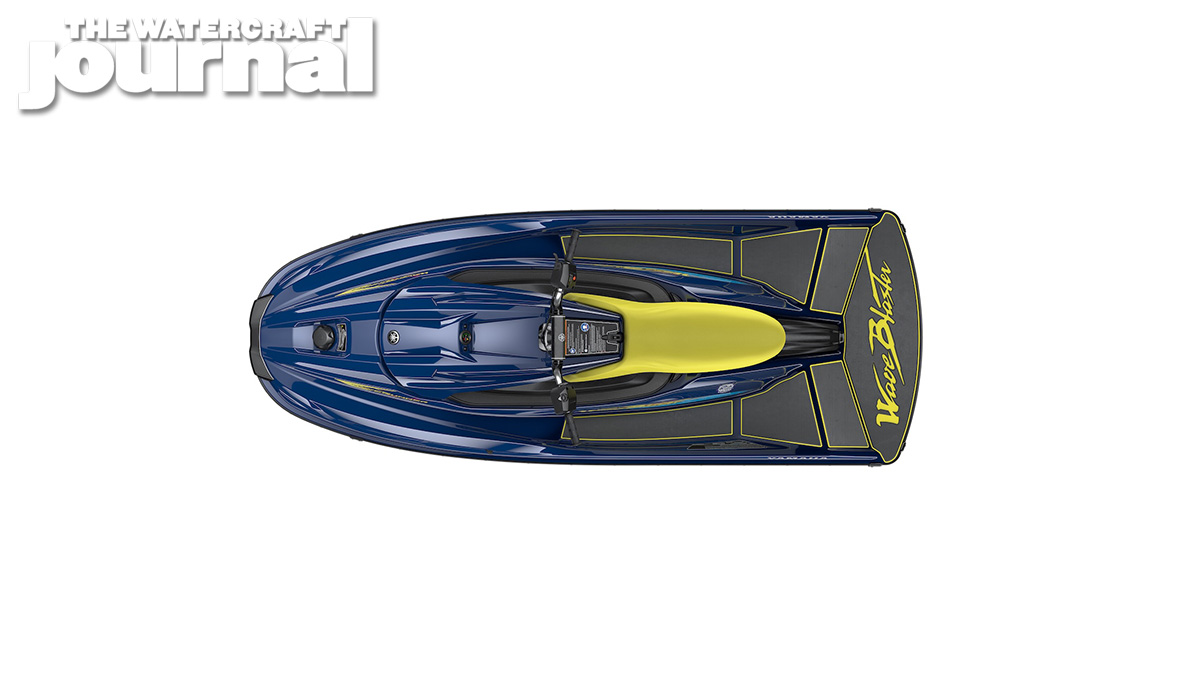
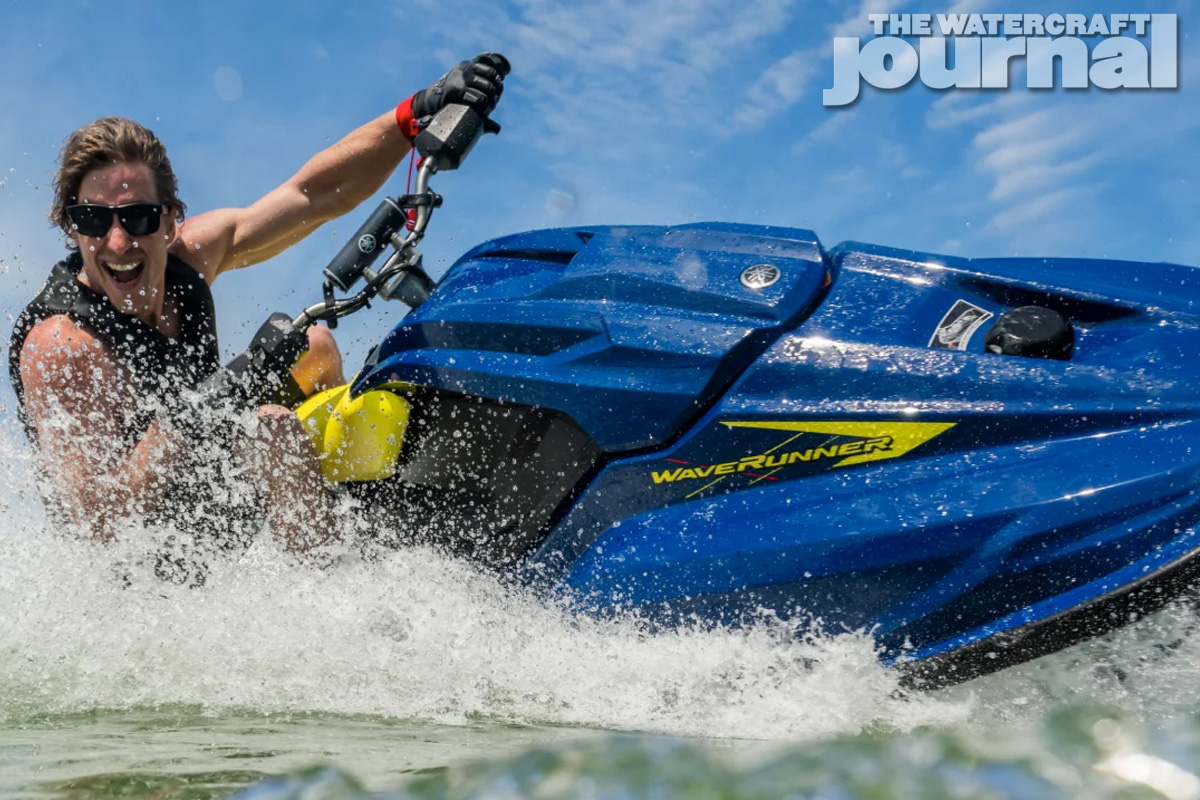
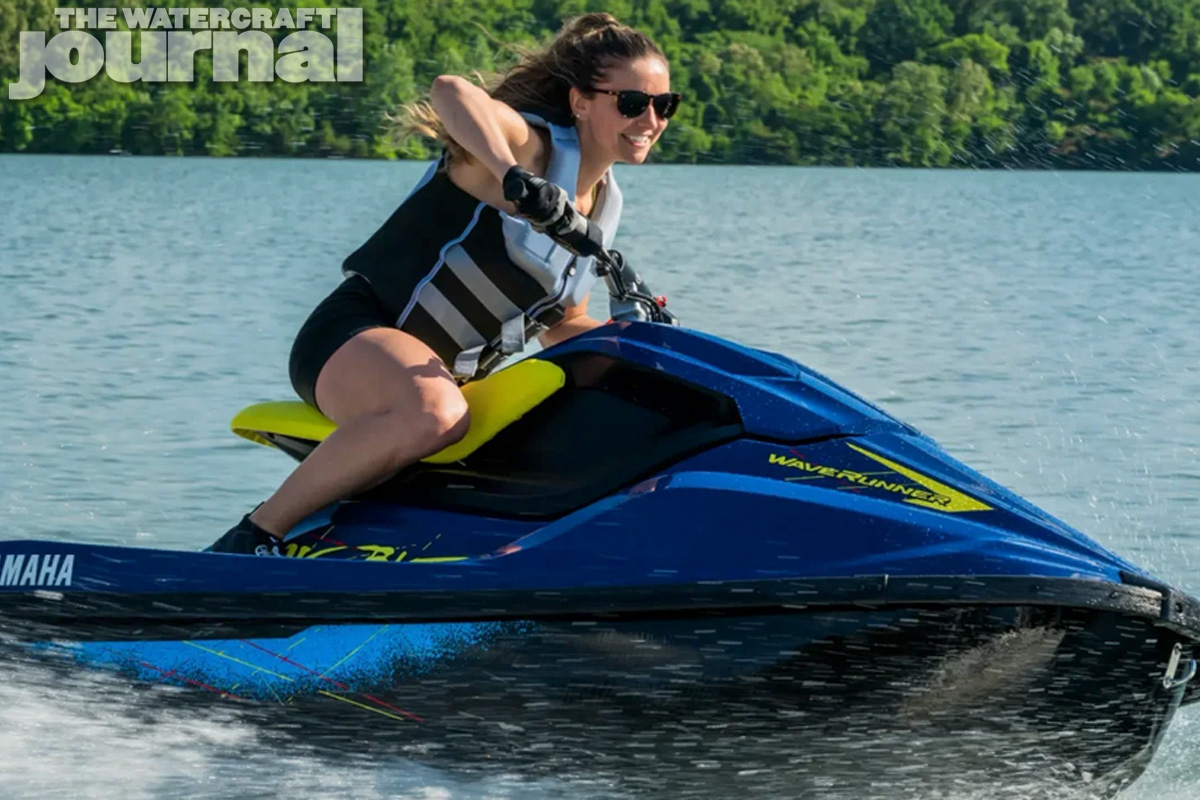
Gambling big on this potential audience, Yamaha invested heavily in the WaveBlaster; sculpting both a new mold for the deck as much as for the hull. Fairings, cowling, seat structure…it’s all unique to this one unit. The 2027 WaveBlaster is 99-inches long, 38.6-inches wide and 42-inches tall; making it 6-inches longer, over a foot wider, and 6-inches taller than the existing 4-stroke SuperJet. And pound-for-pound, the new ‘Blaster comes in at an even 50-pounds over the standup at 425lbs.
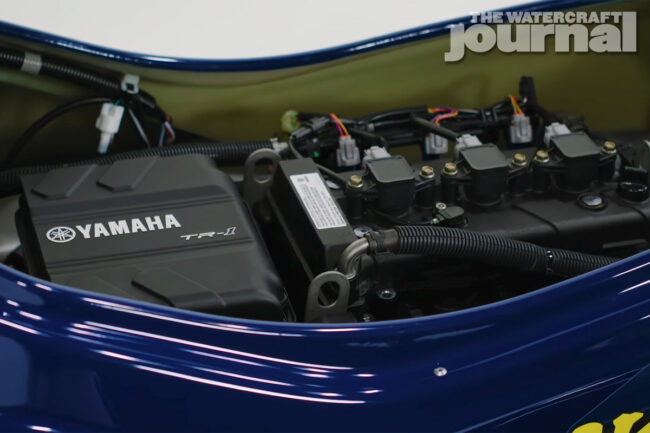
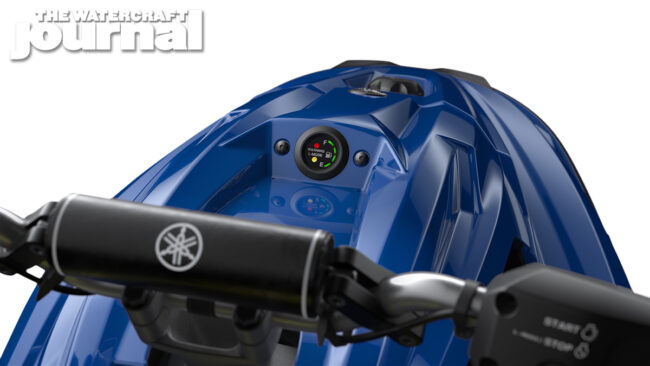
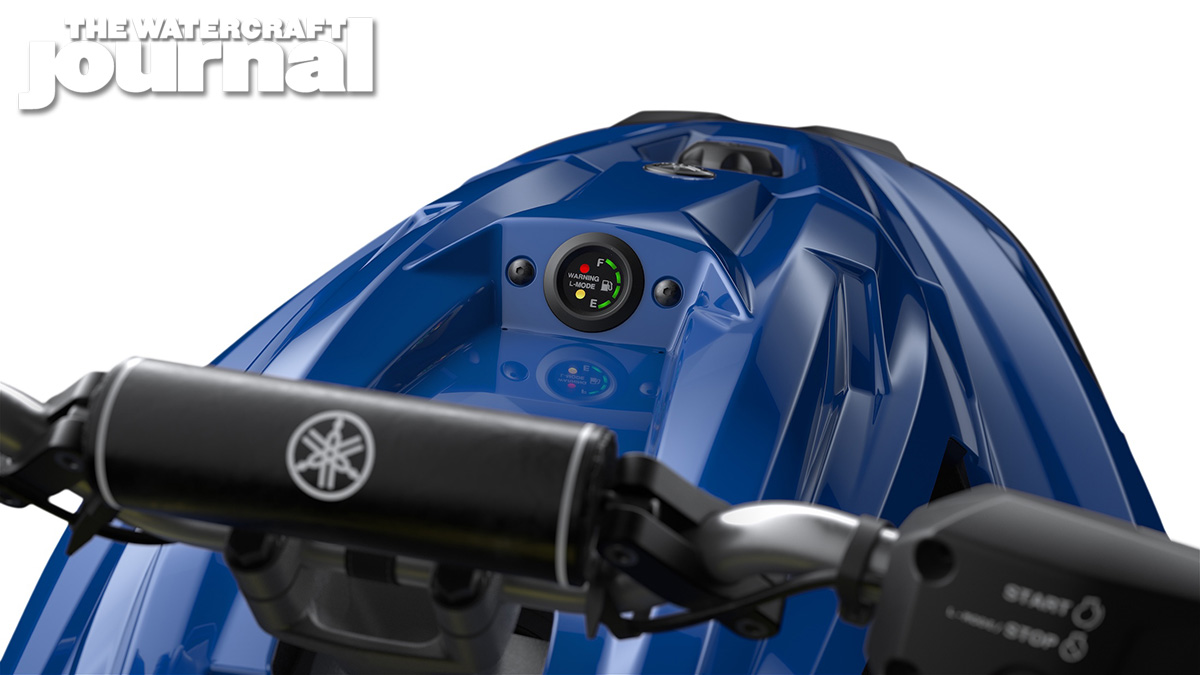
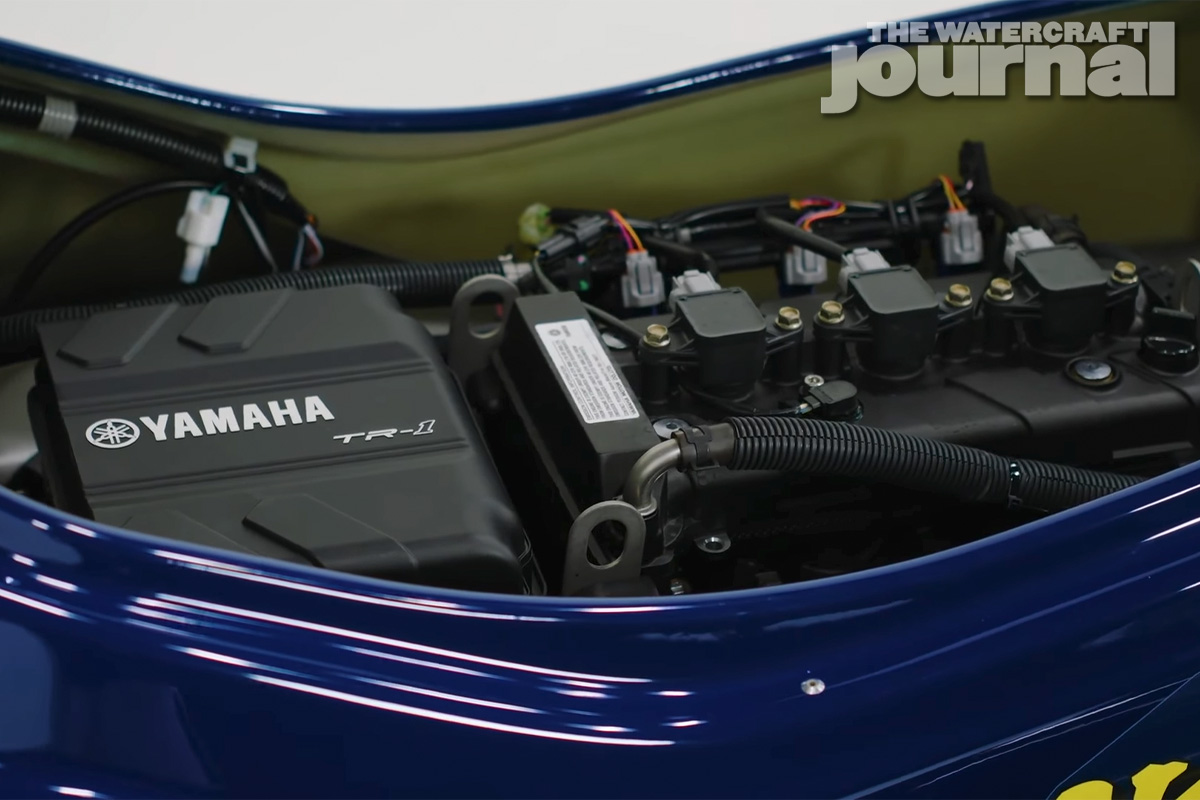
So what do the SuperJet and WaveBlaster have in common? The powertrain for one. Yamaha’s 1,049cc 3-cylinder four-stroke TR-1 propels both units – the ‘Blaster producing 110-horsepower over the SuperJet’s 100. They also share the same 5-gallon fuel cell, simplified throttle/ignition controls, axial-flow 144mm jet pump and bare-bones digital gauge reading the fuel level and whether L-Mode (“Learning Mode”) is active or not. There’s also a red “idiot light” alerting the rider of a malfunction or other alert.
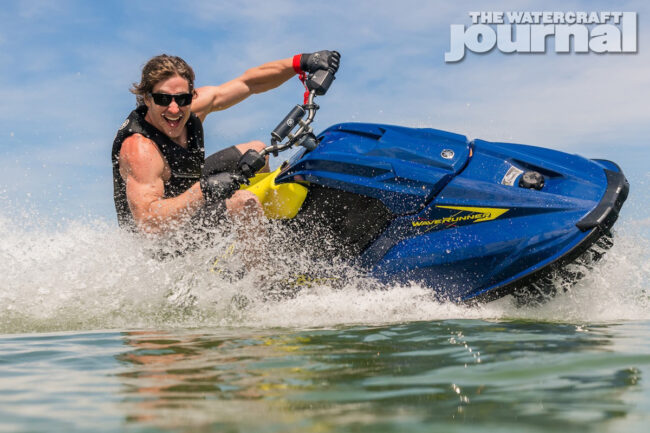
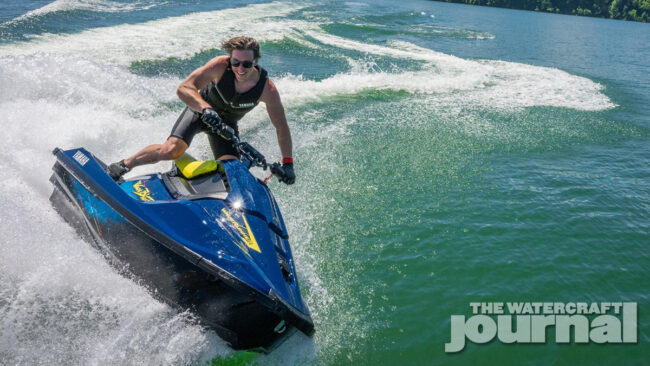
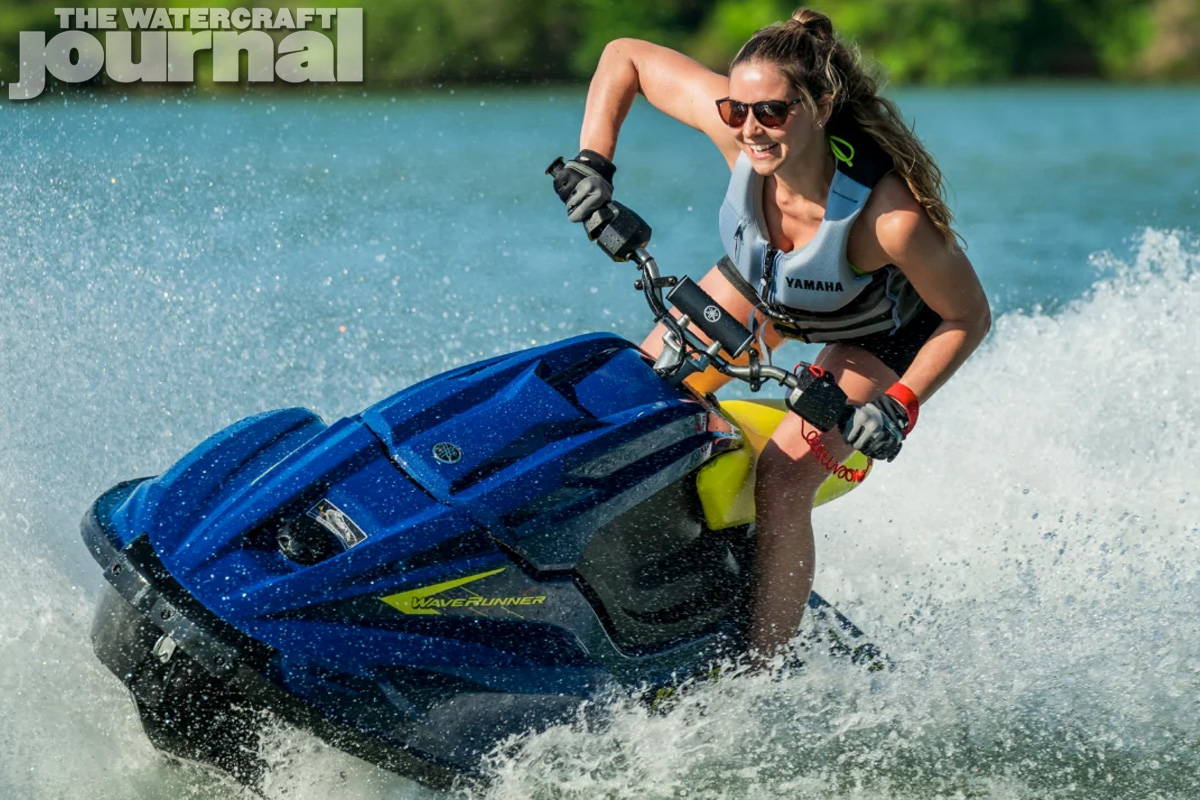
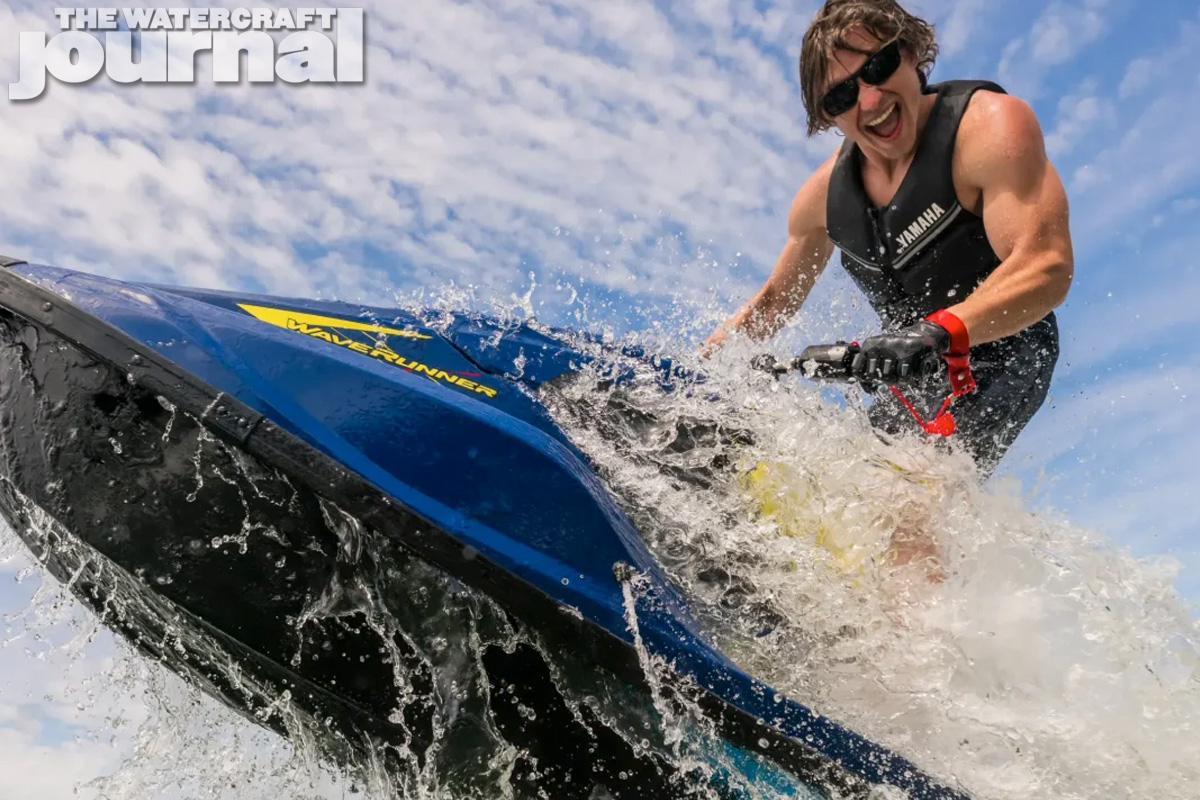
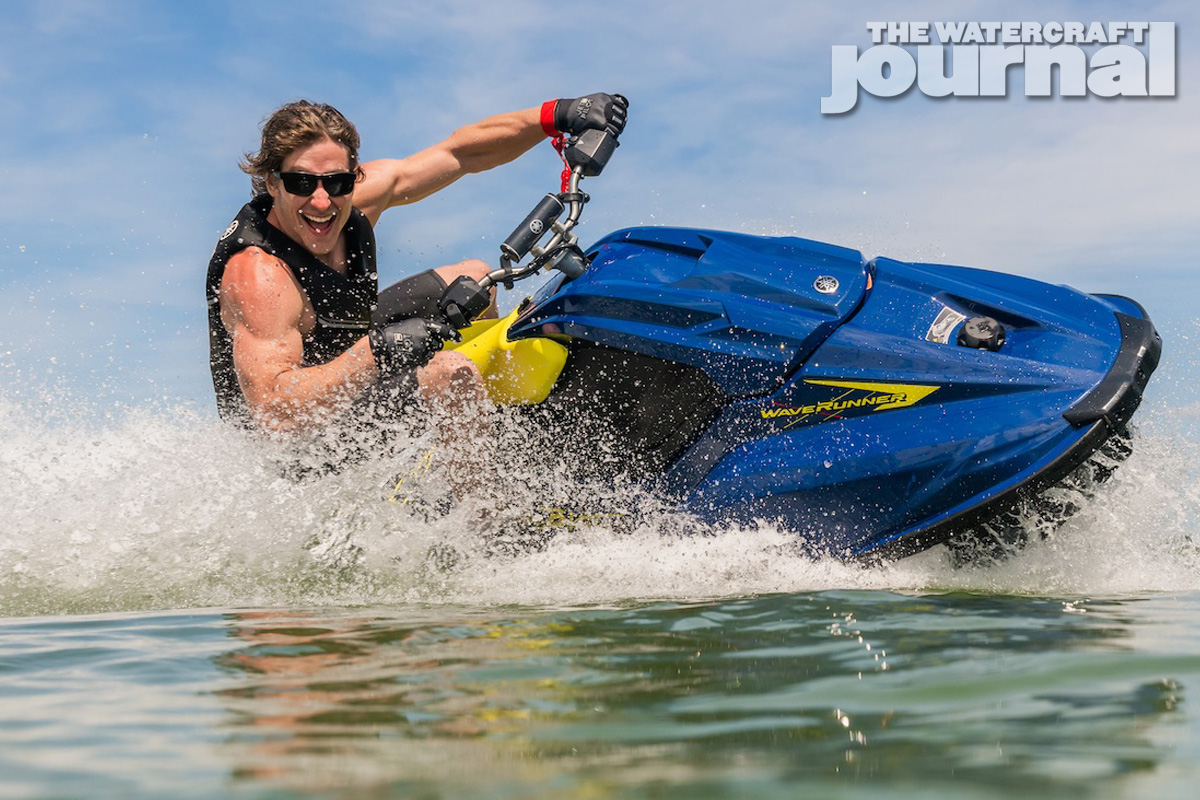
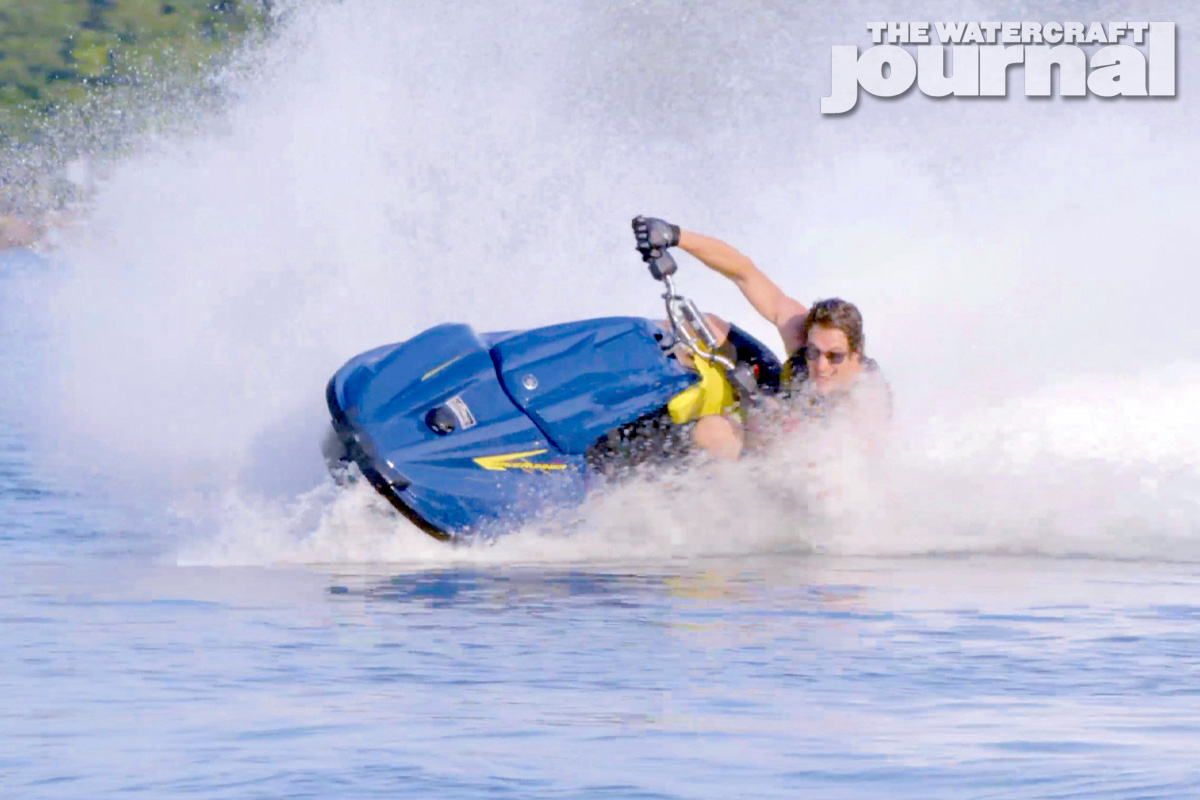
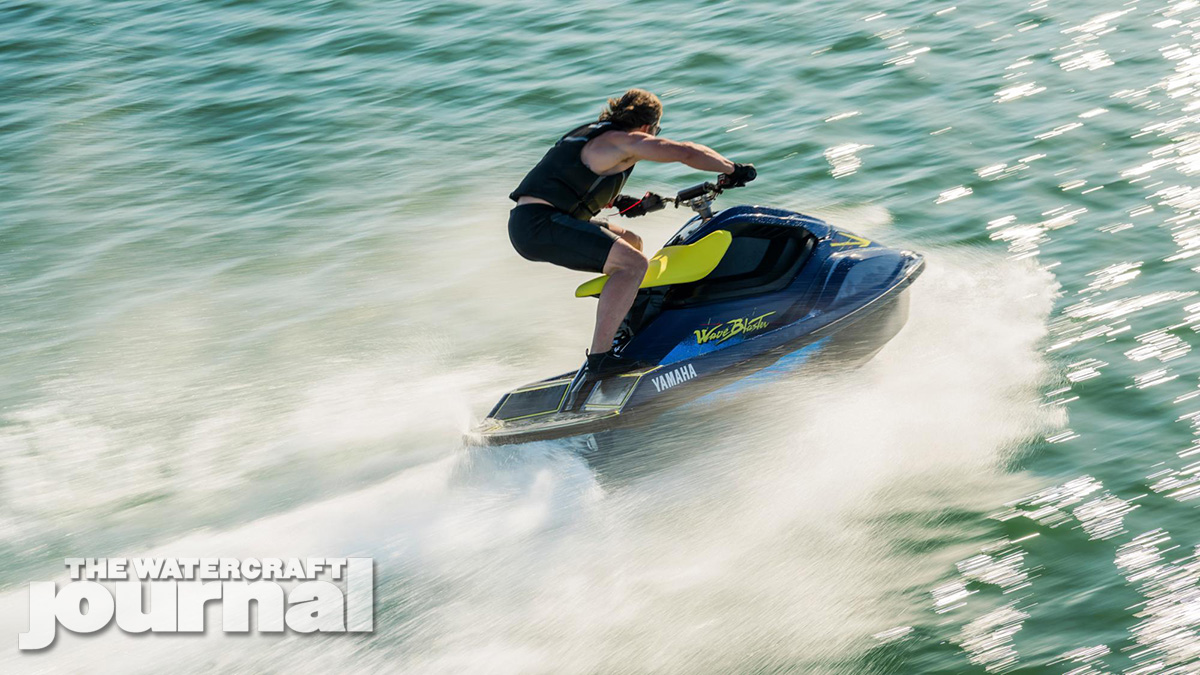
The bright yellow “banana seat” is narrow and minimalist. Don’t expect the same level of cushiness from your FX Cruiser. The footwells are purposefully angled to put the rider forward in the saddle, up and over the bars. The ‘Blaster – like its namesake – relies on body English to execute sharp turns as the hull is devoid of side sponsons. Rather, the hull is tapered like a teardrop with “tubbies” sculpted into the factory design. This ski is meant to turn on its nose, not on the tail. The uniquely smooth ride plate keeps things loose.
Speaking of which, the ride plate features an elongated running surface intentionally pitched to bring the nose up. If seated, the ‘Blaster will feel off balance as its nose angles sky-high. Only when throttle is applied and the rider gets up over the bars will the ‘Blaster come to plane, even out, and really begin to play. This is a rider’s ride. Today’s more casual riders will find this machine exhausting, physically taxing and mentally challenging. More athletic riders will embrace this ski like a long lost friend.
Now a little bit about the hull construction: both the hull and deck are made via a Vacuum-Assisted Resin Transfer Molding process (VARTM). This method stacks layers of composite sheets of fiberglass within a sealed bladder that is heated and pressed into a mold. Then resin is extruded through the material, filling the negative atmosphere left by the vacuum process first pioneered for carbon fiber paneling. The result is a durable, bubble-free media that is surfaced and painted.
During its dealer presentation, Yamaha identified who this machine is aiming for. First, the older “nostalgic” rider who remembers the original WaveBlaster and has been anticipating this exact machine. The other, and far more important, target demographic is the young, athletic rider otherwise unfamiliar with the original but is looking for a challenging, thrilling and sporty WaveRunner giving them a true “dirt bike on the water” experience.
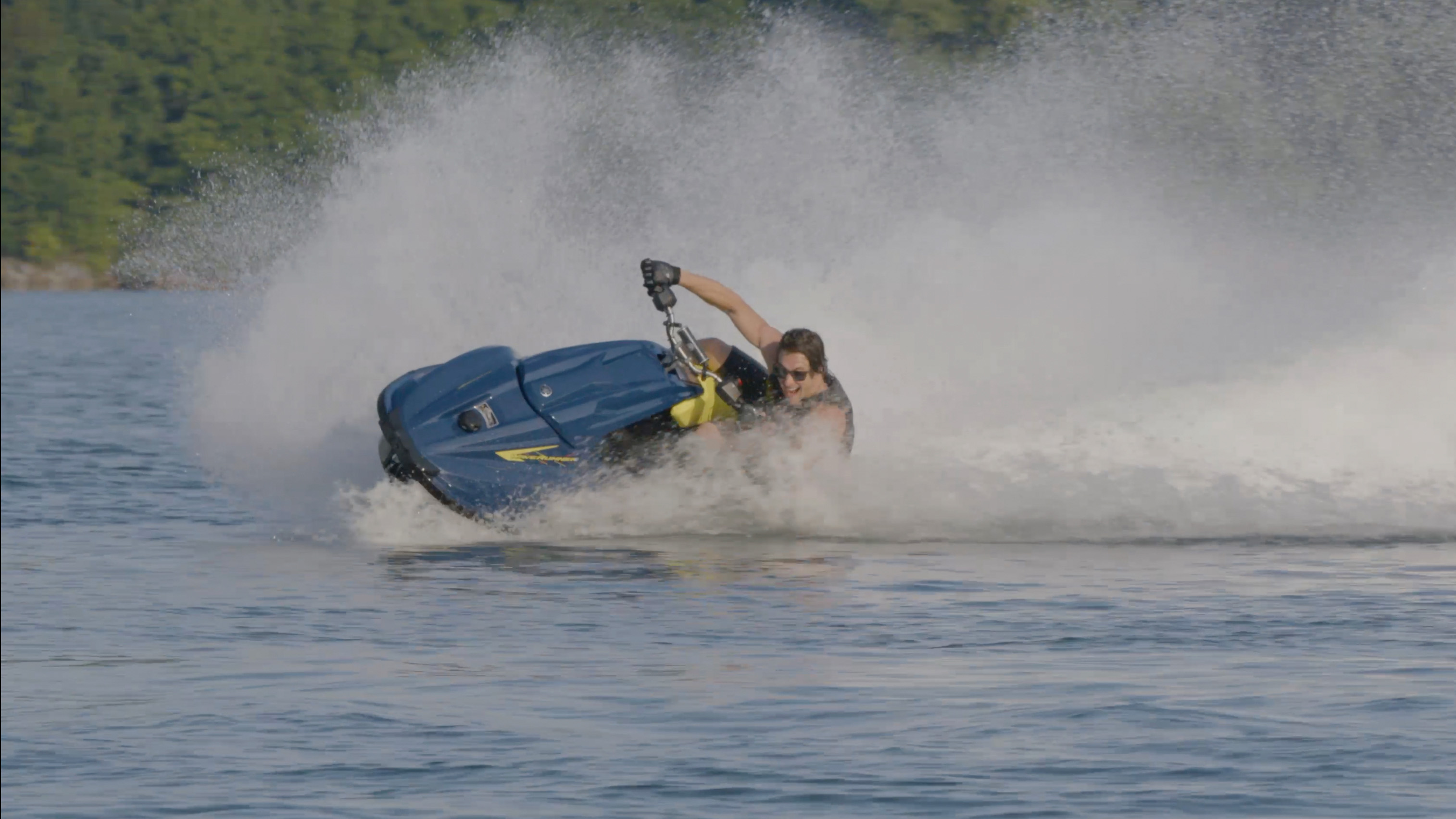
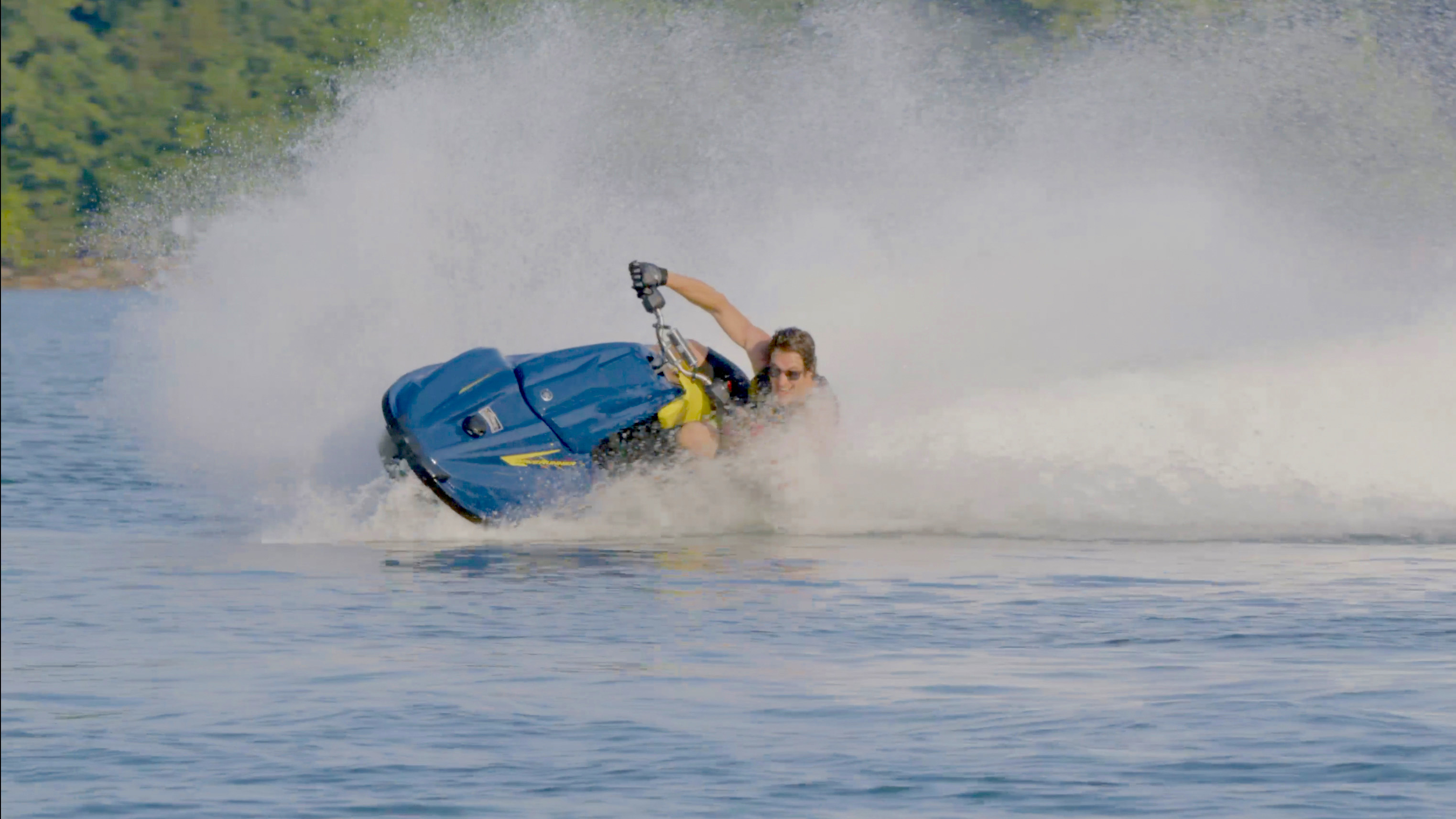
To galvanize this point, Yamaha had 6-time champion Monster Energy racer Haiden Deegan ride the new WaveBlaster on camera. To quote Deegan, “it’s the closest thing to riding a dirt bike on the water. Same instincts. Body English through the corners. Throttle control off the chop. Weight forward, pin it, let the hull do what the rear tire does.” Again, it’s a dirt bike for the water. Just be prepared for a new wave of “boatercycle” and “waterscooter” jokes from your friends.
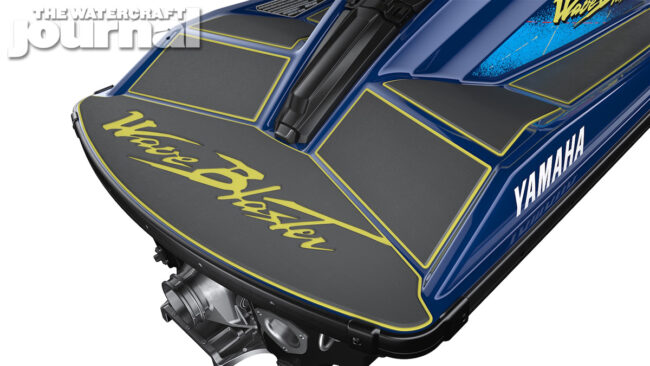
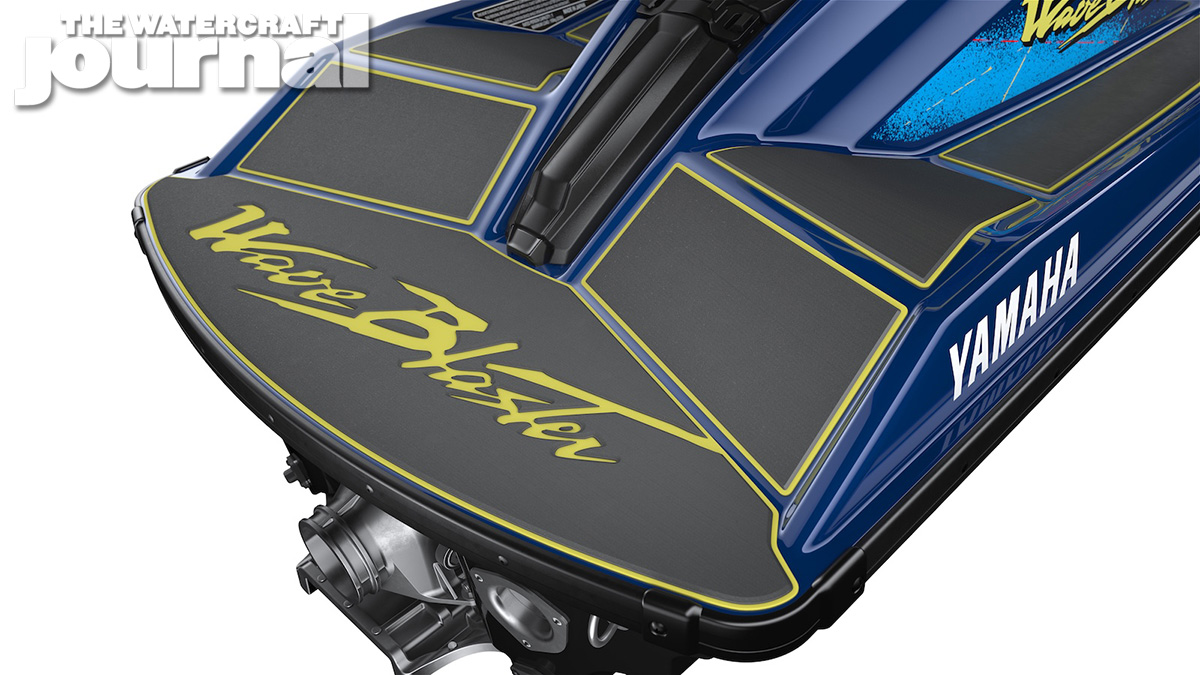
Bathed in Midnight Blue and Black (with iridescent yellow decals, seat and “splatter” graphics featuring the original logo unchanged since 1993), the 2027 Yamaha WaveBlaster retails for $11,999. Unfortunately, the projected limited run of only 400 units for its initial year all but ensures predatory dealers and private vendors will surely mark up what units they can get to capitalize on public demand. Alas, “if you want the rainbow, you gotta put up with the rain,” opined the late Dolly Parton.
Nevertheless, there is zero denying the crater-sized impact the reveal of the new Yamaha WaveBlaster has made in such a short time. The Watercraft Journal paired up with Greg Gaddis of Greenhulk Performance for a special podcast just to gush about it and the potential influence this single ski could have on the course of future PWC (see video below). Massive unrestrained kudos go out to Yamaha for taking such a bold move – and we think they’ll be handsomely rewarded for it.



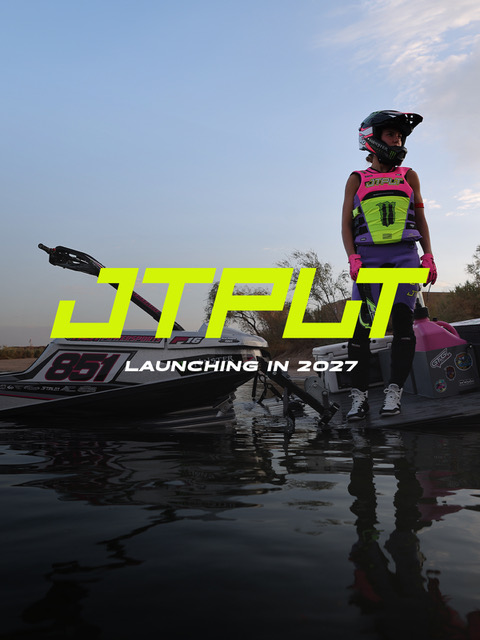

 JTPLT, the premium specialist brand built specifically for the professional and performance side of personal watercraft racing, is officially coming to the United States.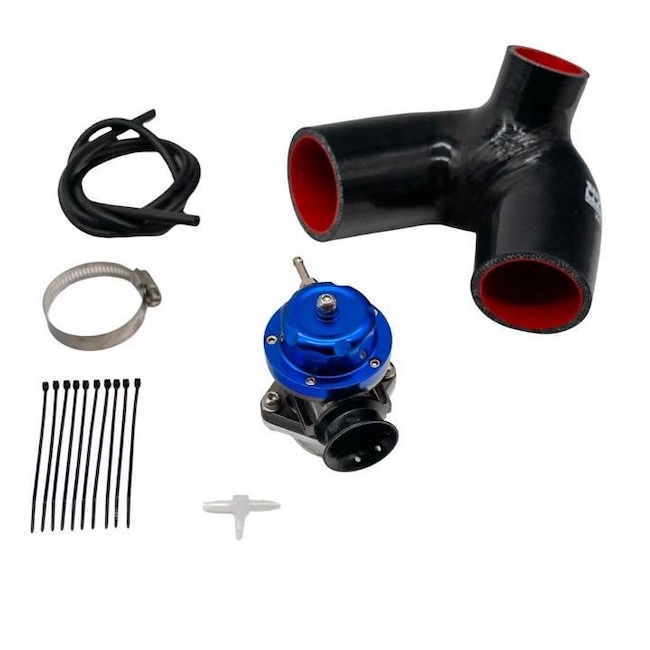
 Yamaha Joins the Race — Quietly