
Home Blog Page 4

Caldwell Racing Loads Up for 2026 With Expanded Lineup and Multi-Series Push

0
Cooper Caldwell
Cooper Caldwell

Caldwell Racing isn’t easing into 2026—they’re stacking the deck.

Fresh off a strong 2025 campaign in P1 AquaX, the Texas-based team is rolling straight into the inaugural IHRA Pro Watercraft Racing Series with an expanded rider lineup, new technical partners, and a schedule that touches nearly every major corner of the sport. Between IHRA, WXGP, and select IJSBA events, Caldwell Racing is clearly positioning itself as an all-in, everywhere-you-look program for the coming season.
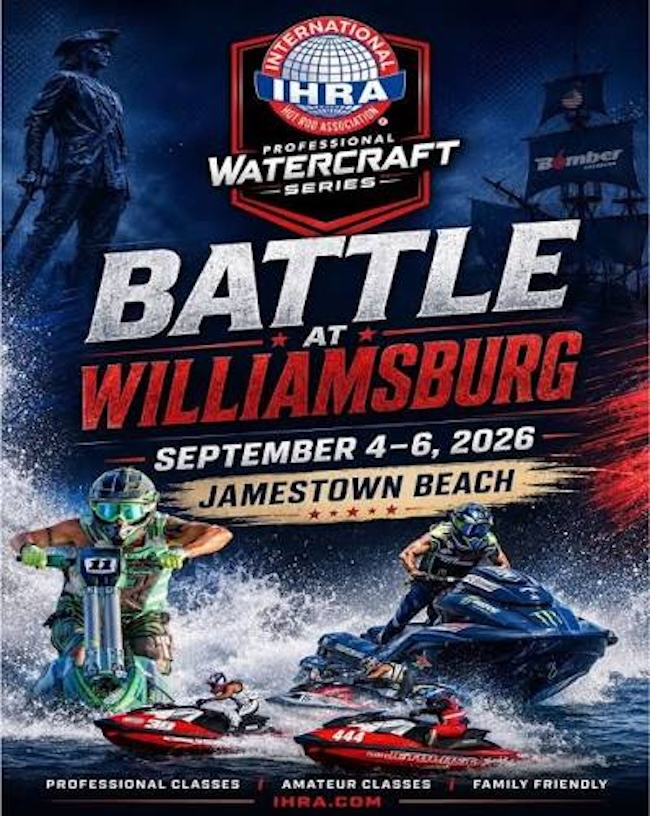
The timing couldn’t be better. IHRA’s new Pro Watercraft Series debuts in 2026 with a $250,000 prize pool and a stated goal of elevating watercraft racing alongside its established Offshore Powerboat Racing platform. For teams looking to grow visibility and sharpen their competitive edge, the series represents a major opportunity—and Caldwell Racing is one of the first to plant its flag.
“We’re confident our team will be competitive across all relevant areas in 2026,” said team owner John Caldwell, pointing to both sponsor support and momentum carried over from last season.

Camden Powell

A Lineup Built to Win—and Grow

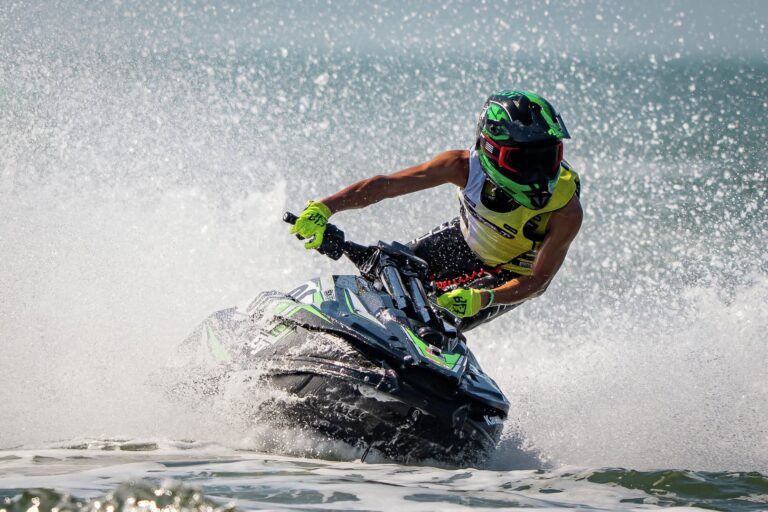
Headlining the 2026 effort is Camden Powell (#44), who joins Caldwell Racing to compete in Pro Ski GP and Pro Endurance. The 22-year-old Purdue University senior has already proven he can run at the front, finishing third overall in Pro Enduro during the 2023 P1 AquaX season while battling factory-backed talent. Powell’s résumé spans endurance and closed-course podium

s, and Caldwell made it clear the motivation behind the signing was simple.

“We went after Camden because we believe he can win,” Caldwell said. “I’m into winning.”

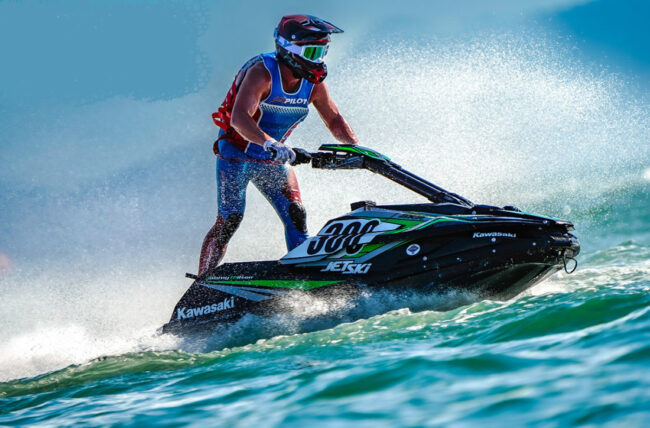
On the endurance side, Cooper Caldwell (#193) returns after back-to-back championships in P1 AquaX’s 200AM (2024) and 300 AM (2025) classes. The Fort Worth native enters 2026 focused on defending his 300 AM title while continuing to prepare for an eventual step into the Pro Endurance ranks. He’ll also contest select closed-course events, including WXGP and Pro Watercross stops, after earning a runner-up finish in Runabout Stock at the 2025 IJSBA World Finals.

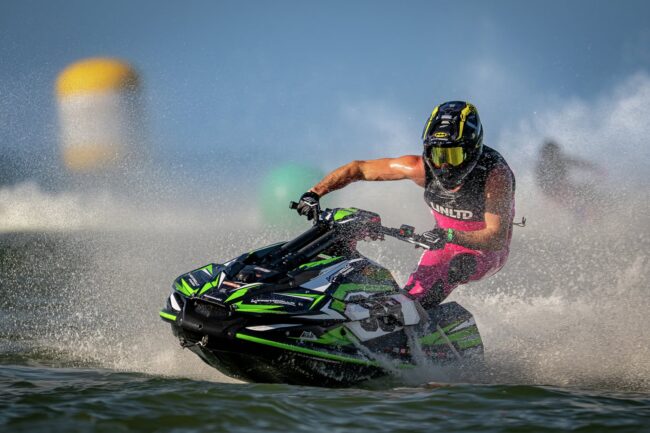
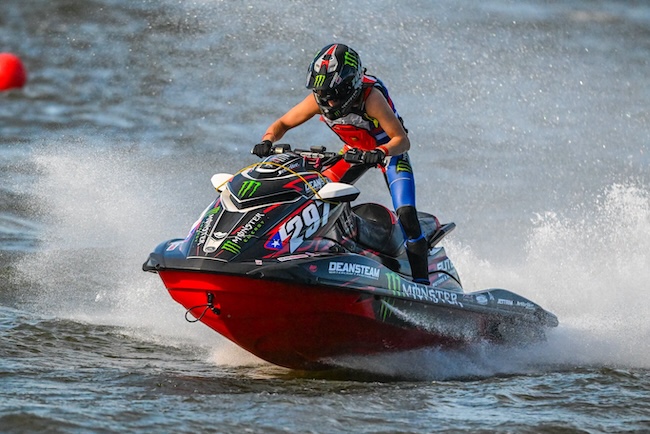
Another young standout, Baron Mernik (#297), continues his rapid rise after an impressive rookie pro season in 2025. The 16-year-old finished third overall in P1 AquaX’s 200 AM Endurance class, notching wins at Kissimmee and Clearwater, and followed that up with multiple strong results a

t the IJSBA World Finals in stand-up competition. In 2026, Mernik is expected to race across several ski classes while also entering select endurance events.

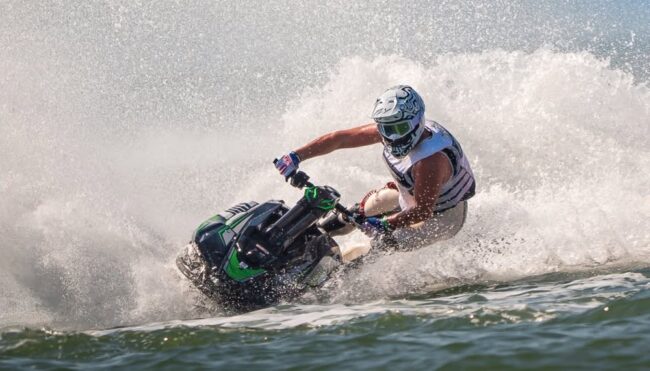
Rounding out the rider lineup is Straus Mernik (#55), who transitions from motocross into personal watercraft racing in the Sport Spec AquaX class. While new to the water, Straus brings high-level motorsports experience and will continue contributing to Caldwell Racing’s team management efforts. He also enters 2026 as a member of Monster Energy’s Monster Army, representing the brand both on dirt and on the water.

Experience in the Pits—and on the Course

Behind the scenes, Leroy Whittaker (#777) returns as Caldwell Racing’s Head Team Mechanic. Based in the Cayman Islands, Whittaker brings extensive technical experience along with recent competitive success, including the 2025 Cayman Islands Watercraft Association Amateur Limited Championship and a second-place finish in Pro Runabout at the 2026 East End Surf Challenge. His role will be critical as the team juggles multiple riders and series throughout the year.

New Partners, Broader Reach

Caldwell Racing’s 2026 program is backed by a mix of returning and new partners. Longtime supporters Monster Energy, MTI Boats, J Caldwell Custom Pools, Circus Media House, Jettrim, Jettribe, Dean Strong, and RP Elite Motors & Marine remain on board, while Kommander Yamaha, Riva Racing / MapTuner, and 6D Helmets join the program for the upcoming season.

Off the water, fans can expect continued behind-the-scenes coverage through Caldwell Racing’s YouTube series with Circus Media House, offering a look at race prep, travel, and the day-to-day grind of a modern multi-series program.

With proven riders, emerging talent, and a schedule that spans endurance, closed-course, and festival-style events, Caldwell Racing heads into 2026 with one clear goal: compete at the front—and help push the sport forward while doing it.

Full press release follows below.


Caldwell Racing Goes All-In for 2026 With New Team Lineup and Sponsors Ahead of IHRA Pro Watercraft Series
Fort Worth, Texas – February 4th, 2026

After a highly successful 2025 season in the prestigious P1 AquaX Series, Caldwell Racing is carrying its momentum into the off-season, wasting no time in preparing for the highly anticipated inaugural 2026 IHRA Pro Watercraft Racing Series.

This new chapter for Caldwell Racing arrives close behind the launch of the all-new IHRA Pro Watercraft Racing Series, a championship series driven by a “Bold Vision for the Sport” and highlighted by a $250,000 prize pool for the 2026 season. With plans to partner alongside IHRA’s Offshore Powerboat Racing Series, the initiative is poised to elevate visibility and
unlock new growth opportunities for both sports.

Caldwell Racing will also compete in the WXGP Series during the 2026 season, a three-event, festival series designed to unite high-speed watercraft racing with community engagement and celebration. Last but not least, Caldwell Racing is excited to participate in select IJSBA-sanctioned Pro Watercross National Tour events as part of its “Road to Havasu” campaign.

“I feel like this is going to be a great year for watercraft racing,” said Caldwell Racing owner John Caldwell. “With the continued support of our sponsors and the momentum our race program carries from 2025, we’re confident our team will be competitive across all relevant areas in 2026.”

Caldwell Racing is grateful for the continued support of its valued partners, including Monster Energy, MTI Boats, J Caldwell Custom Pools, Circus Media House, Jettrim, Jettribe, Dean Strong, and RP Elite Motors & Marine, while also welcoming new partners to the
program: Kommander Yamaha, Riva Racing / MapTuner, and 6D Helmets.

2026 Caldwell Racing Team Line Up

Camden Powell – #44
Pro Ski GP / Pro Endurance – Syracuse, IN
Joining the Caldwell Racing program for the 2026 season is 22-year-old Camden Powell of Syracuse, Indiana. A senior at Purdue University, Powell brings proven success at the highest levels of personal watercraft competition. During the 2023 P1 AquaX season, he finished third overall in the Pro Enduro class while competing against the sport’s top Sea-Doo- and Yamaha-
backed athletes. His versatility extends beyond endurance racing, with multiple podium finishes in closed-course competition, including a second-place result in Pro-Am Ski GP on the Pro Watercross Tour.

“We went after Camden because we believe he can win. I’m into winning,” said Caldwell Racing owner John Caldwell. “Adding a rider of Camden’s caliber to our lineup brings a new level of excitement as we head into the highly anticipated 2026 season.”


Cooper Caldwell – #193
300 AM Endurance – Fort Worth, TX

Widely regarded as one of the most promising young talents in personal watercraft racing, Cooper Caldwell will continue his career in the IHRA Pro Watercraft Racing Series’ 300 AM Endurance class for the 2026 season. After claiming the 2025 P1 AquaX 300 AM class
championship, and the 2024 200AM class championship, Cooper enters 2026 focused on defending his title while continuing to sharpen his skills in preparation for a future move into the Pro Endurance ranks.
Cooper will also compete in closed-course racing at select WXGP and Pro Watercross Tour events in the Runabout Stock class, where he earned a second-place finish at the 2025 IJSBA World Finals in Lake Havasu City, Arizona.


Baron Mernik – #297
GP3 Ski / 200AM Endurance – Fort Worth, TX

In his first professional racing season in 2025, 16-year-old Baron Mernik made an immediate impact on the P1 AquaX circuit, finishing third overall in the 200 AM Endurance class, highlighted by notable race wins in Kissimmee and Clearwater. He also competed in stand-up competition at the IJSBA World Finals, where he earned third overall in Junior Ski Modified 1100, sixth overall in Junior Ski 4-Stroke Lites, and seventh overall in Amateur Ski Modified 1100.

Baron is slated to compete across multiple stand-up categories, along with select runabout endurance classes, during the 2026 season.


Straus Mernik – #55
Motocross / Sport Spec AquaX – Fort Worth, TX

New to personal watercraft racing but no stranger to high-level motorsports competition, Straus Mernik will expand his racing efforts from motocross to watercraft in 2026, competing in the Sport Spec class. Alongside his on-water program, Straus will continue to support Caldwell Racing’s team management efforts while remaining focused on his motocross career.

Additionally, Straus has been selected for Monster Energy’s Monster Army program for the 2026 season, where he looks to represent the iconic “Green Claw” on the podium—whether on dirt or on the water.


Leroy Whittaker – #777
Team Mechanic & Cayman Rider – Cayman Islands

Rejoining Caldwell Racing for the 2026 season is team mechanic Leroy Whittaker of the Cayman Islands. In addition to his extensive experience as a professional PWC mechanic, Whittaker is also a proven competitor on the racecourse. He captured the 2025 Cayman Islands Watercraft Association National Tour Amateur Limited Championship and has opened the 2026 season with a strong second-place finish in the Pro Runabout class at the 2026 East End Surf Challenge.

Whittaker will serve as Caldwell Racing’s Head Team Mechanic throughout the 2026 season, providing technical support and race-day assistance to Camden, Cooper, Baron, and Straus as needed.

Beyond competition, Caldwell Racing will continue its YouTube content series in partnership with Circus Media House, offering viewers an inside look at the team’s race program—from practice sessions and race weekends to the lifestyle that surrounds the sport.
With a proven foundation, an expanded 2026 lineup, and strong partner support, Caldwell Racing heads into the season focused on performance, growth, and elevating the sport both on and off the water.

TR-1 Oil Checks Keep Catching Riders Out. Here’s How GreenHulk Says to Do It Right

0

If you’ve owned a Yamaha powered by the TR-1 engine for more than five minutes, there’s a decent chance you’ve had that moment.

You check the oil.
It looks high.
You panic.
You drain some out.
Then you check it again later… and now it’s low.

Welcome to one of the most misunderstood maintenance steps in modern Yamaha ownership.

The TR-1 engine is rock-solid, but its oil level and oil change procedure is very specific, and skipping steps—or checking it cold—can leave riders chasing a problem that doesn’t actually exist. That confusion is exactly why GreenHulk Performance Store recently reposted Yamaha’s official TR-1 oil level and oil change procedures as a reminder to do it by the book.

If you’ve ever questioned your dipstick reading, here’s the problem—and the solution.

The Problem: Cold Checks, Short Warm-Ups, and Overthinking It

Unlike older engines where a quick glance at the dipstick told the whole story, the TR-1 requires:

  • A fully warmed engine

  • The ski sitting perfectly level

  • A very specific check-and-recheck process

Check it cold, rush the warm-up, or don’t seat the dipstick properly, and you’ll get a false reading. That’s how perfectly healthy engines end up overfilled—or dangerously underfilled—by well-meaning owners.

The Solution: Do the Oil Check the Way Yamaha Intended

GreenHulk’s reminder walks riders straight through Yamaha’s official procedure, starting with one critical step many people skip:

If the engine is running on land, hook up a garden hose. Always.

From there, the process is all about patience and consistency.

TR-1 Engine Oil Level Check (The Right Way)

  • Place the watercraft on a level, horizontal surface

  • Start the engine and let it idle for at least 6 minutes

    • If temps are 68°F (20°C) or lower, add another 5 minutes

  • Shut the engine off

  • Remove the oil filler cap, wipe the dipstick clean, and reinstall it fully

  • Remove it again and confirm the oil level is between the min and max marks

If it’s low, add oil.
If it’s high, extract oil with an oil changer.
No guessing. No shortcuts.

Oil Changes: Simple, Clean, and Extracted

TR-1 oil changes are designed to be done with an oil extraction system, not by pulling drain plugs. GreenHulk’s post reinforces that process step-by-step, including warming the engine first, removing the filler cap, disconnecting the extraction hose, and pulling the oil cleanly from the system.

Yamaha recommends Yamalube 4W or an equivalent 4-stroke oil, with API ratings SG through SL, and viscosities ranging from 10W-30 to 20W-50, depending on conditions.

Oil capacity matters here too:

  • 3.2 L (3.38 US qt) without a filter change

  • 3.4 L (3.59 US qt) with a new filter

Overfilling is just as problematic as running low, so measured pours matter.

Oil Filter Tip Worth Remembering

One standout tip GreenHulk highlighted:
Before removing the oil filter, punch a small hole in the top of the filter and let it drain internally for a few minutes. It’s a simple move that minimizes mess and keeps oil out of places it doesn’t belong.

Just don’t use power tools—metal shavings and engines don’t mix.

The TR-1 isn’t fragile—but it is precise. Following the correct oil procedure eliminates guesswork, protects the engine, and saves riders from chasing phantom problems caused by improper checks.

The Right Tools Make This a 20-Minute Job, Not an Afternoon

One thing GreenHulk’s reminder quietly reinforces is that the TR-1 oil system is designed to be serviced with the right tools—not improvised ones.

An oil extractor isn’t just a convenience here; it’s the correct way to remove oil from the TR-1 without introducing mess or risk. The same goes for a proper oil filter wrench, which lets the filter break free cleanly and evenly instead of being crushed or overtightened during removal.

GreenHulk Performance Store stocks the Yamalube Watercraft Oil Change Kit (with four quarts Yamalube 4W 10W-40 Oil, one Yamaha 5GH oil filter, and drain seals and O rings) as well as the oil extractor and Yamaha-specific filter wrench that match this procedure exactly, which takes a lot of the guesswork out—especially for riders doing their first TR-1 oil service. When the process depends on measured quantities, clean extraction, and accurate rechecks, using tools built for the job helps ensure the oil level ends up where Yamaha intended it to be.

It’s not about doing anything fancy—it’s about doing it once, doing it clean, and not having to revisit it a second time because the reading didn’t make sense.

Below, you’ll find the full GreenHulk-posted Yamaha TR-1 oil level and oil change procedures, exactly as shared.

(Full GreenHulk post follows below)


Yamaha TR-1 Engine Oil Level & Oil Change Procedures
NOTICE
When starting the engine on land, connect a garden hose to the watercraft to ensure proper water supply.
Ensure that debris or water does not enter the oil filler hole.
Check Engine Oil Level
If the engine oil level is not within the specified range, add or extract oil as required.
Recommended Engine Oil
Yamalube 4W or equivalent 4-stroke motor oil
Recommended Engine Oil Grade (API)
SG, SH, SJ, SL
Recommended Engine Oil Viscosity (SAE)
10W-30, 10W-40, 20W-40, 20W-50
Procedure
a. Place the watercraft in a level, horizontal position.
b. Start the engine and allow it to idle for at least 6 minutes to warm up.
TIP
If ambient temperature is 20°C (68°F) or lower, warm the engine for an additional 5 minutes.
c. Stop the engine.
d. Remove the oil filler cap “1”, wipe the dipstick clean, then reinstall the cap fully.
e. Remove the oil filler cap again and confirm that the oil level is between the minimum mark “a” and maximum mark “b”.
f. If the oil level is below the minimum mark, add the recommended oil until the proper level is reached.
g. If the oil level is above the maximum mark, extract oil using an oil changer until the correct level is achieved.
h. Install the oil filler cap securely.
ENGINE OIL REPLACEMENT
WARNING
Engine oil is hot immediately after engine shutdown. Use care to avoid burns.
NOTICE
When starting the engine on land, connect a garden hose to ensure proper water supply.
Ensure that debris or water does not enter the oil filler hole.
Drain Engine Oil
a. Place the watercraft in a level, horizontal position.
b. Start the engine and allow it to idle for at least 6 minutes to warm up.
c. Stop the engine.
d. Remove oil filler cap “1”.
e. Disconnect oil extraction hose “2”.
f. Extract the engine oil using an oil changer.
g. Reconnect the oil extraction hose.
Fill Engine Oil
Recommended Engine Oil
Yamalube 4W or equivalent 4-stroke motor oil
Recommended Oil Grade (API)
SG, SH, SJ, SL
Recommended Oil Viscosity (SAE)
10W-30, 10W-40, 20W-40, 20W-50
Engine Oil Quantity
Without oil filter replacement:
3.2 L (3.38 US qt, 2.82 Imp qt)
With oil filter replacement:
3.4 L (3.59 US qt, 2.99 Imp qt)
Procedure
a. Remove oil filler cap “1”.
b. Pour half of the specified oil quantity into each oil filler hole “2” and “3”.
c. Install the oil filler cap(s).
d. Check engine oil level (refer to Engine Oil Level Check).
OIL FILTER REPLACEMENT
Remove Oil Filter
a. Place a rag under oil filter “1”.
TIP
Punch a small hole in the top of the oil filter using a nail or similar object to allow the filter to drain internally. This helps minimize oil spillage during removal.
Do not use power tools such as drills, which may introduce metal shavings into the filter.
b. Loosen oil filter “1” approximately 360 degrees using special service tool “2”, then allow it to sit for 2–3 minutes.
c. While waiting, extract engine oil (refer to Engine Oil Replacement).
d. Remove oil filter “1” using special service tool “2”.
Install Oil Filter
a. Install oil filter “1”.
Torque:
17 N·m (1.7 kgf·m, 13 lb·ft)
Fill and Check
a. Fill engine oil (refer to Engine Oil Replacement).
b. Check engine oil level (refer to Engine Oil Level Check).

Rumors of CarPlay on the Water Hit the Right Buttons — But Do Riders Need It?

0
Sea-Doo includes a large touchscreen on some models - Image: Sea-Doo
Sea-Doo includes a large touchscreen on some models – Image: Sea-Doo

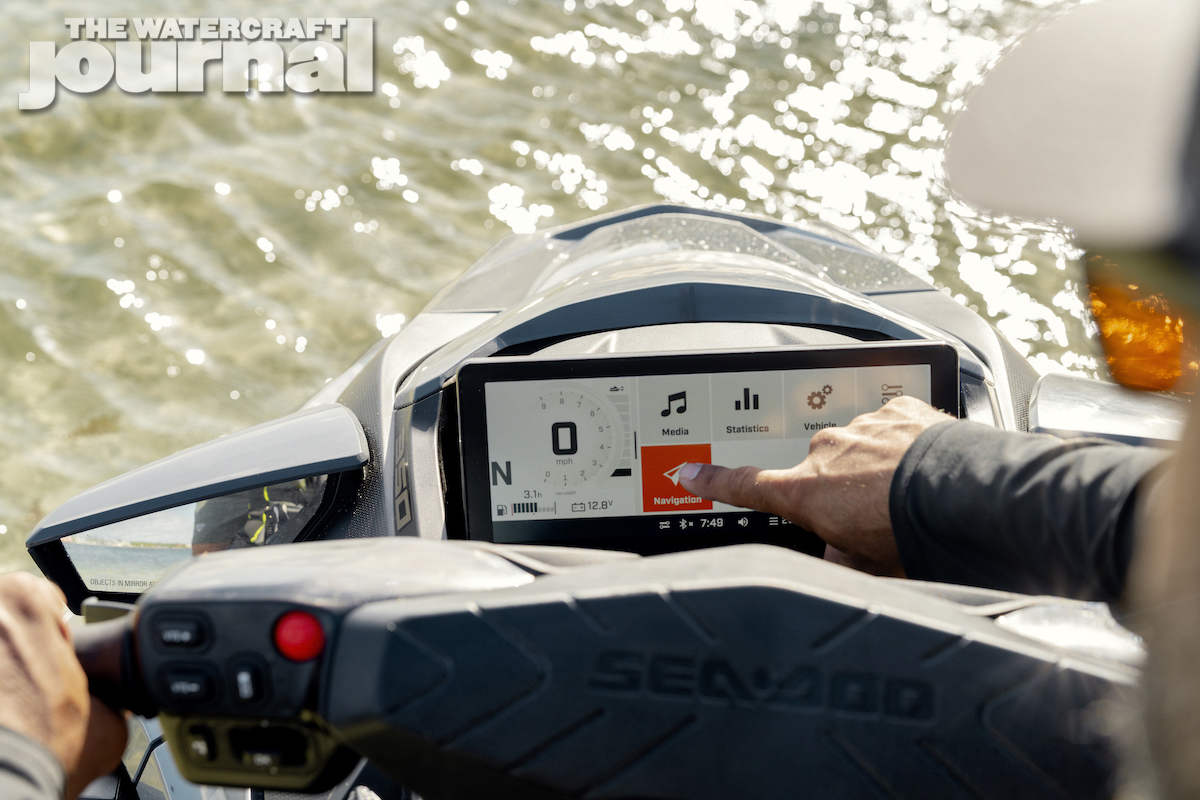
Rumors of Apple CarPlay making its way onto personal watercraft have been rippling through tech publications and industry circles alike, fueled by Sea-Doo’s confirmation that it’s exploring the idea for future high-end models. (Yes, we teased a similar “CarPlay on the water” scenario in an April Fools’ post last year — this time, it’s actually being talked about for real.) On land, the concept feels almost inevitable. On the water, it raises a more complicated question — not whether it’s possible, but whether riders actually want or need it once the throttle’s down and the shoreline disappears.

Bigger screens, bigger questions

Sea-Doo’s current 10.25-inch touchscreen is already the largest display in the personal watercraft market, now standard on nearly half of its 2026 lineup. It’s a serious piece of hardware, shared with BRP’s Can-Am three-wheel motorcycles — and notably, those Can-Am models already support Apple CarPlay.

That alone explains why this conversation exists. The technology isn’t theoretical. The screen isn’t new. The capability is already proven — just not in a marine environment.

What’s interesting is that the screen itself isn’t inherently the problem. Displays, when done right, can enhance riding. Engine vitals at a glance. Fuel range confidence. GPS navigation that opens up longer routes and farther exploration. Diagnostics that help riders understand what their machine is doing beneath them.

All of that aligns with a more capable, more adventurous kind of riding — not less.

Where things start to feel uncomfortable is when the conversation shifts from information to infotainment.

Seat-of-the-pants vs. “bigger, better, more toys”

Personal watercraft have always lived in a strange middle ground. They’re not dirt bikes, but they’re not boats in the traditional sense either. For decades, the appeal has been immediacy — throttle response, hull feedback, the physical connection between rider and machine.

Lately, the industry has been drifting in two directions at once. On one side, there’s an appreciation for bigger skis that ride better in real water, track cleaner at speed, and give riders the confidence to push farther from shore. On the other, there’s the slow creep of features that feel borrowed from cars: cupholders, massive displays, ever-expanding menus.

CarPlay sits right at that crossroads.

Is a bigger screen simply another “floating couch” checkbox? Or is it a tool that helps riders ride more — more distance, more time, more confidently?

The answer depends on what that screen is actually doing.

When tech helps — and when it competes

There’s a real difference between tech that supports riding and tech that competes with it.

Monitoring engine vitals while running hard offshore? Useful.
Knowing exactly how much fuel you have left before committing to a long run? Smart.
Seeing where you are when exploring unfamiliar water? Confidence-building.

But CarPlay isn’t designed around those priorities. It’s designed for roads, lanes, and dashboards — not chop, spray, gloves, vibration, and constant body movement. Navigation apps like Google Maps and Apple Maps don’t translate cleanly to open water. Notifications, app grids, and car-style interfaces introduce mental noise into a space that’s always demanded focus.

The moment something is called “infotainment,” it stops being about the ride and starts competing with it.

The music complication

Even the most old-school, stand-up-minded riders aren’t riding in silence. Bluetooth speakers are everywhere. Music is already part of the culture, whether we like it or not. Pretending otherwise just ignores reality.

So the real question may not be whether riders want CarPlay — but whether they want better, more reliable music control on the water.

If CarPlay’s biggest appeal is easier access to playlists and streaming apps, that’s a pretty expensive and complex solution to a relatively simple desire. Riders don’t need album art and app icons. They need volume control that works with gloves, doesn’t glitch, and doesn’t distract them at speed.

That’s a very different design problem than full-blown automotive infotainment.

Cool… but necessary?

Sea-Doo has been open about the hurdles. Marine environments are harsh. Apple’s approval process for non-automotive applications is strict. And perhaps most importantly, the company itself seems unsure whether the feature is truly needed — or simply attractive because it’s familiar.

That hesitation is telling.

CarPlay on a PWC would absolutely be cool. It would look impressive at the dock. It would generate headlines. It would photograph well.

It’s easy to see why the idea has the industry talking

Whether it actually makes riding better is a much tougher question.

At its best, modern PWC technology should fade into the background — quietly supporting the ride, not demanding attention. The challenge for manufacturers isn’t adding more features, but deciding which ones genuinely serve the experience.

CarPlay might get there someday. Or it might turn out to be one of those ideas that sounds perfect on land, but feels unnecessary once the throttle’s pinned and the water’s moving.

Either way, the conversation itself says a lot about where personal watercraft are headed — and what riders may or may not want to bring along for the ride.

GreenHulk Offers RIVA iDF Delete Kits for Serious Sea-Doo Performance

0

For riders pushing the limits of their Sea-Doo, the RIVA Racing iDF Delete Kit is a tried-and-true upgrade available through GreenHulk PWC Performance Store – now at a discounted price. The kit replaces the iDF system—a clever design meant for low-speed maneuvering that can, at high RPMs, create unwanted drag and stress on internal components—with OEM engine and driveline parts that backdate your setup to non-iDF specification.

The iDF system has built-in safeguards to prevent engagement while riding, but even so, modified craft operating above 8,400–8,500 RPM can see premature failures in the gearbox and associated driveline components. Removing the iDF reduces mechanical drag, improves reliability, and opens the door for performance modifications beyond RIVA Stage 2. Riders will notice smoother top-end response and less stress on small moving parts.

GreenHulk carries kits for multiple models, including:

  • 2025 GTX Limited 325 – $1,488.32 retail, $1,413.90 discounted

  • 2022–25 RXT/GTX 300 – $1,550.78 retail, $1,473.24 discounted

  • 2021 GTX 300 – requires a different output sleeve and driveshaft, both in stock at GreenHulk

Installation isn’t for the casual weekend wrench-turner. RIVA and GreenHulk recommend certified Sea-Doo mechanics or highly experienced technicians. It requires deactivating iDF through the BRP Dealer Diagnostic System (BUDS) or Maptuner X with a tuning license, along with several specialty tools and careful inspection of the carbon seal and floating ring.

For those serious about Sea-Doo performance, the iDF Delete Kit delivers smoother rides, reduced driveline drag, and improved reliability, making it a staple upgrade for modified craft. GreenHulk remains the go-to source for riders looking to push their machines beyond stock limits.

Video: Avoid a Tow Back to Shore with Kawi Performance’s High Modulus Supercharger Belt

0

If you ride a Kawasaki Ultra 300 or 310, you know the feeling: long, wide-open runs, cruising for hours, or pinning it hard at full throttle, and the last thing you want to worry about is your supercharger belt. Yet one soft, slip-prone belt can turn a perfect day on the water into a long tow back to shore. Kawasaki’s recent shift to softer, automotive-style OEM belts has left some riders frustrated, and while cheaper aftermarket belts exist, they still fall short under sustained load. That’s where Kawi Performance steps in. Their new High Modulus Supercharger Belt isn’t just a replacement — it’s a return to the kind of reliability and durability that serious riders have been missing. Stiff, textured, and engineered to resist water, oil, and heat, this belt is built to handle the Ultra’s most extreme conditions without compromise.

Even seasoned Ultra riders might not realize how much the belt itself has changed over the years. Kawasaki’s new OEM belts, made overseas with softer, automotive-style backing, simply aren’t built for extended rides or sustained throttle. On long cruises or full-throttle blasts, they can stretch, slip, or degrade faster than riders expect — leaving you stranded when you least want it. Standard aftermarket options improve on price, but they often lack the stiffness, textured grip, and water-resistant design needed to handle the Ultra’s extreme conditions without compromise.

That’s why Kawi Performance’s High Modulus Supercharger Belt is such a game-changer. Drawing on the same design used on Kawasaki’s Ultra 250/260 models, this belt is engineered for real-world reliability. The textured outer layer grips like it should, high-tensile chords keep it from stretching, and its oil- and water-resistant inner rib ensures maximum traction even under constant load. The result is a belt that can handle hundreds of hours of riding, whether you’re hammering the throttle or logging long, steady runs, giving riders confidence that their day on the water won’t end in an unexpected tow.

Kawi Performance has been in the game long enough to understand what riders really need. Since the early Ultra 250/260 days, high-modulus belts were the standard for anti-slip, oil- and water-resistant performance. Riders pushing those machines knew that belt failure wasn’t just an annoyance — it could ruin a ride or a race. The new High Modulus belt brings that same engineering to the 300/310 platform, blending tried-and-true design with modern materials built to withstand today’s extended rides and higher demands.

For riders who like to push their Ultra to the limit, whether on a full-throttle sprint or hours of open-water cruising, the belt’s stiff, textured construction keeps power delivery smooth and reliable. It’s engineered to resist stretching, slipping, or degrading even under heat, water, and oil exposure.  

Right now, Kawi Performance is making it even easier to upgrade: the High Modulus Supercharger Belt is on sale for $135 (originally $149.99). While the new OEM and standard aftermarket belts are still available, riders serious about reliability, longevity, and peace of mind know there’s only one belt engineered to handle the Ultra’s full potential. Quantities are limited, and once these belts are gone, it’s uncertain when — or if — more will be available, making now the ideal time to secure one for your ride.

Money Matters: Setting Yourself Up For A New Ski In 2026

0

With boat show season well underway, anticipation is building. New models are landing on showroom floors, spring riding is creeping closer, and a lot of riders are quietly doing the same math in their heads: Is this the year?

For most of us, a new—or newer—personal watercraft doesn’t mean cash on the barrelhead. It means financing. And while every rider’s situation is different, there are a few patterns that repeat themselves every season once people actually start shopping.

Timing Matters More Than Most People Expect

When riders talk about financing, the focus usually lands on credit score. But timing often plays just as big a role. When you apply—February versus May versus early summer—can change how flexible lenders are and how much room you have to work with.

As boat show season ramps up, riders generally fall into one of three timelines.

Trying to Be Riding by Mid-February

This is the short-runway scenario. At this point, most riders aren’t changing much—they’re finding out how their current situation looks to a lender right now.

What usually matters most here is stability. How much revolving credit is already in use. Whether anything big changed recently. How clean the last few months appear. Riders with stronger credit typically focus on rates and terms, while others find that approval hinges more on down payment and consistency than the number itself.

Plenty of riders make it work in this window. It just tends to be more about accepting what’s available than shaping the outcome.

Aiming for the Start of Spring Riding

For riders targeting April or May, things start to feel different. This is where preparation shows up—not in dramatic ways, but in small shifts that lenders tend to notice.

Balances move. Payment cycles post. Old issues age a little. Nothing flashy, but enough to change how an application is viewed. This is also when some riders realize that waiting a few extra weeks opens up better options than they expected, whether that’s a different model, better terms, or simply less pressure to rush.

Planning for July 4th and Beyond

By early summer, riders who started thinking ahead during the winter usually have the most flexibility. Not because their credit suddenly became perfect, but because there’s been time for everything to settle.

This is often when financing shifts from “Can I get approved?” to “What actually makes sense long-term?” Riders in this window tend to have more say in the process—and more confidence walking into it.

So What Actually Helps

Here are some concrete, rider-tested steps that tend to make financing smoother—regardless of where your credit score starts.

• Pull your credit reports early
Not to obsess over the number, but to see what lenders will see. Errors, outdated balances, or old late payments show up more often than people expect.

• Lower credit card balances if you can
Even modest paydowns can change how an application looks. It’s less about total debt and more about how much of your available credit is already in use.

• Avoid big financial moves right before applying
New cards, new loans, or closing accounts can raise flags. Riders who keep things quiet leading up to an application usually have fewer surprises.

• Have your basics ready
Proof of income, insurance information, and a realistic down payment plan all help the process move faster once you’re serious.

• Ask questions early—before you fall in love with a ski
Knowing how different lenders view your situation can save a lot of back-and-forth later, especially during busy boat show weekends.

Where Credit Scores Fit In

Credit score still matters, but it doesn’t tell the whole story. Riders in the 700s often find themselves fine-tuning details. Riders in the 600s tend to see real differences based on timing and preparation. Riders below that range often discover that stability affects how they’re approved, even if approval was always possible.

The Reality Most Riders Don’t Hear

Financing a ski isn’t about being perfect. It’s about looking predictable at the moment you apply. A little patience can matter more than people expect, especially during the rush of boat show season.

Every year, some riders move fast and make it work anyway. Others slow things down just enough to land better terms, more options, or the ski they actually wanted instead of the one that simply fit the payment.

The Takeaway

Boat show season has a way of speeding everything up. But for riders who can give themselves a bit of runway, timing can be just as important as the model on the floor.

Whether your goal is late winter, early spring, or spending the Fourth of July on the water, understanding how financing typically plays out can make the process smoother—and make that first ride of the season even sweeter.

Remembering Team Faith Founder, Brian O’Rourke

0

The PWC community – and the larger action sports and racing community as a whole – lost a familiar, steady, and compassionate presences on Saturday, Jan. 30, with the passing of Brian O’Rourke, founder and president of Team Faith.

O’Rourke’s impact stretched far beyond any single discipline. From watercross to Supercross and across the broader powersports world, he was a constant at the track — not as a headline seeker, but as someone who showed up, listened, encouraged, and quietly supported those around him.

Team Faith announced his passing in a statement shared over the weekend, noting that O’Rourke had served 31 years of ministry through the organization he founded in 1994. An outreach ministry often referred to within racing as a “race ministry,” Team Faith became known for meeting athletes and crews where they already were — in the pits, at the truck, after a long day — offering prayer, conversation, meals, and a sense of belonging.

For many racers, Brian was simply there. He was the person who checked in first. The one who noticed when someone was carrying more than just race-day stress. The one who remembered names, families, and quiet struggles.

“Every race he was always the first to come over, share a moment with us, and offer words of encouragement and strength,” wrote Sebastian Lezcano — himself a familiar name within the watercross community. “That’s something we will never forget.”

Across social media, the tone of remembrance was strikingly consistent. Racers, organizers, sponsors, and friends didn’t speak first about titles or accomplishments — they spoke about conversations, prayers, patience, and timing. About help offered before it was asked for. About feeling seen.

Brian’s work through Team Faith was rooted in a simple idea: that athletes are influencers, and that faith didn’t have to live outside the sport to matter. Team Faith teams traveled to nationally televised events across the United States and internationally, pairing chaplains with competing athletes, providing devotions, meals, Bibles, and support — all while fully participating in the sport itself.

Monster Energy Supercross, along with numerous racing organizations, issued statements expressing condolences to the Team Faith community and Brian’s family, underscoring just how widely his presence was felt.

For those who knew him, Brian’s faith was never something he imposed. It was something he carried gently, often stepping in during moments of uncertainty, grief, or exhaustion — and just as often following up the next day to make sure someone was okay.

As one longtime friend shared, when words or prayers felt impossible, Brian’s response was simple: “That’s okay. I’ll pray for you until you can.”

Brian O’Rourke leaves behind a legacy that can’t be measured in trophies, lap times, or podiums — but in people who felt supported, encouraged, and less alone because he was part of their life.

He will be deeply missed by the Team Faith community, the broader racing family, and all those whose lives he touched along the way.

Kspeed Tunes Up That Supercharger Sound With New Sound Enhancer

0

There’s a moment every supercharged Kawasaki owner recognizes, even if they don’t consciously think about it. The ski is idling at the dock, the engine note steady and familiar, and then — there it is — that faint, high-pitched whistle sitting just above the exhaust tone. It’s subtle, but unmistakable. And for many riders, it’s the sound that confirms they’re not just on a jet ski — they’re on a supercharged Kawasaki.

At KSpeed, moments like that are treated as more than background noise. They’re treated as part of the riding experience itself. While horsepower numbers and boost pressure still matter, KSpeed’s work with Kawasaki platforms starts from a deeper understanding: sound is feedback, and riders respond to it instinctively, often before they ever look at a gauge or a data log.

Supercharger sound has always lived in a strange space in the performance world. The sound itself isn’t what adds horsepower on a dyno sheet or changes top speed — the supercharger already does that job. And yet, riders obsess over the noise it makes. They chase it. They discuss it endlessly in forums and group chats. They notice immediately when it’s missing, muted, or doesn’t sound quite right. For Kawasaki riders in particular, that sound becomes part of the machine’s identity — almost as important as how the ski pulls out of the hole or how it feels at wide open throttle.

Part of that obsession comes down to what sound represents mechanically. Kawasaki’s supercharged platforms use an Eaton Twin Vortices Series (TVS) positive-displacement supercharger, a design that delivers boost consistently across the RPM range. That consistency produces audible cues riders quickly learn to recognize — the idle whistle that signals readiness, the soft whoosh when cracking the throttle, and the sharp release of pressure when coming out of full boost. Even without gauges, those sounds tell the rider what’s happening under the seat.

Kawasaki’s approach stands in contrast to centrifugal-style superchargers found elsewhere, where boost builds differently and sound is often less pronounced at lower RPM. On the water, that difference matters. Kawasaki riders don’t just tolerate supercharger noise — they expect it. When it’s subdued, filtered out or redirected back into the intake system, even a perfectly healthy ski can feel oddly disconnected, as if part of the experience has been softened and part of the conversation between machine and rider has gone quiet.

That’s exactly where KSpeed’s new MK2 Atmospheric Bypass Trumpet enters the conversation.

Designed to work across all supercharged Kawasaki Ultra models from 2007 through 2024, the MK2 Atmospheric Bypass Trumpet takes the supercharger sounds riders already respond to and brings them forward. By venting waste air to atmosphere rather than routing it quietly back through the airbox, the system amplifies the distinctive whistle at idle, adds a pronounced whoosh when the throttle is cracked, and delivers a sharp, unmistakable “psssht” when boost is released under load.

Importantly, this isn’t about making the ski obnoxiously loud. The MK2’s low-profile, OEM-like fitment integrates cleanly into the rear vent area, preserving the factory look while changing how the ski communicates. The result is a more expressive, more mechanical sound profile that mirrors what the rider is doing with the throttle in real time.

From a technical standpoint, venting hot waste air to atmosphere also helps reduce intake air temperatures, offering a subtle efficiency gain and a slight increase in available horsepower. The performance difference may not show up dramatically on a chart, but it shows up where many riders feel it most — in responsiveness, clarity, and engagement.

Installation reflects KSpeed’s practical, rider-focused approach. The MK2 installs in roughly five minutes using basic tools, with a block-off cap for the airbox, a low-profile hose clamp, and clear step-by-step instructions included. It’s a simple modification with an outsized impact on how the ski feels and sounds every time it’s ridden.

What KSpeed has found over time is that sound-focused upgrades like this often appeal most to experienced owners. Riders who already understand their ski’s power delivery and limitations aren’t always chasing more speed — they’re refining the experience. For them, sound becomes a finishing touch, a way to make a well-sorted machine feel more intentional and more alive.

In the end, supercharger sound matters because it changes how riders interact with their machines. It reinforces identity. It heightens anticipation. And it turns an already capable Kawasaki into something that feels sharper, more mechanical, and more connected — even before the throttle is pinned and the boost comes on hard.

For riders who want to lean into that experience — not just ride their ski, but hear and feel what makes it special — KSpeed’s MK2 Atmospheric Bypass Trumpet delivers exactly that. It’s a small change with a big sensory payoff, designed for riders who understand that performance isn’t just measured in numbers, but in how a machine makes you feel every time you fire it up.

Region 8 Announces 8 Ball Cup Championship Series, Preps for Winter Series

0

For 2026, Region 8 is officially back on the table, and it’s doing it with intent. What racers once knew as the Triple Crown has been reborn as The 8 Ball Cup, a championship series that doubles down on what made Northeast racing special in the first place: tight competition, deep fields, and zero room for shortcuts.

This isn’t a national mashup. This isn’t a traveling experiment.
The 8 Ball Cup stays exclusively rooted in IJSBA Region 8, reinforcing the loyalty, grit, and long-standing rivalries that define East Coast Watercross racing.

And the theme is fitting.
High stakes. One chance. Call the 8.

Four Classes, Ten Rounds, No Mulligans

The 8 Ball Cup will be contested across four cornerstone classes, each running the full ECW season:

  • Pro/Am Runabout 1100 Limited

  • Novice 1100 Limited

  • Pro/Am Sport Spec

  • Pro/Am Ski GP

From developing talent to established veterans, this lineup reflects the depth Region 8 has quietly been building for years.

The format is simple and unforgiving:
Five race weekends. Ten total rounds. IJSBA points system.
No cherry-picking weekends. No hiding from bad finishes. Championship contenders will be the racers who can show up — and deliver — every single round.

The final verdict comes at Sylvan Beach, New York, where the ECW Season Championship also doubles as an official Pro Watercross National Tour stop, complete with national TV exposure for racers and sponsors.

Real Hardware, Real Prizes

Backing the series is a lineup of names deeply tied to the sport, including Todd Czarzinski, Nickerson Performance, Jay “The Chicken Man” Edworthy, Jet-X Powersports, Extreem Service Center, and Hot Slag Co.

The projected prize pool is already pushing $30,000+, with fundraising raffles adding serious incentive along the way — including an XP800 donated by Todd from the BRP Museum and a fully restored, race-ready Sea-Doo HX Sport Spec built by Brad Nickerson.

Cash payouts go only to the top three finishers in each class, reinforcing that this is a championship chase, not a participation trophy tour.

And then there’s the hardware.
Hot Slag Co’s custom metal trophies return once again — iconic Region 8 iron that racers know carries real weight. Winning one doesn’t just mean points. It means legacy.

Winter Racing Is Closer Than You Think

If all this talk of gates dropping has you itching to ride sooner, don’t forget — ECW’s 2026 Winter Series in Florida is coming up fast.

Lake Alfred Lions Park will once again host two back-to-back winter race weekends (February 20–22 and February 27–March 1), complete with Friday practice days, youth development programs, camping on site, pit parties, and even AMA Supercross Daytona streaming live in the pits.

Between the return of Region 8’s flagship championship and winter racing loading up in Florida, East Coast Watercross isn’t easing into 2026 — it’s throttling into it.

Read Below for the Full Press Releases


The Region 8 Name Lives ON!!!!
The passion of the classic competition classes lives with it.

The 8 Ball Cup – Region 8 Championship Series

With the launch of the 2026 season, what was formerly known as the Triple Crown is coming back bigger, stronger, and fully rooted where it began.

Originally built around the core of IJSBA Region 8 racers, the series returns under a new identity — The 8 Ball Cup — and for the first time will remain exclusively within the iconic Northeast Region 8, reinforcing the strength, loyalty, and competitiveness of East Coast Watercross.

The 8 Ball Cup represents high stakes, no shortcuts, and all-in racing, where every round matters and every racer must “call their shot” across the entire season.

Classes Competing in the 8 Ball Cup

  • Pro/Am Runabout 1100 Limited

  • Novice 1100 Limited

  • Pro/Am Sport Spec

  • Pro/Am Ski GP

Season Format
Full ECW season: 5 weekends (10 rounds) using the IJSBA points system.
Champions will be crowned at the Sylvan Beach, NY finale, an official Pro Watercross National Tour stop with national television exposure.

Prize Pool, Payouts & Giveaways

  • XP800 donated by Todd from the BRP Museum

  • Sea-Doo HX Sport Spec race-ready build by Nickerson Performance

  • Projected prize pool exceeding $30,000+

  • Cash payouts to Top 3 finishers in each class only

Iconic Region 8 Hardware
Custom metal trophies by Hot Slag Co — a defining symbol of Region 8 championships for over a decade.

Ten rounds. Four classes. One region. One shot to call the 8.


2026 Winter racing in Florida is coming back to Lake Alfred Lions Park!

The Address for the venue is 175-N N Nekoma Ave, Lake Alfred, FL 33850

Dates- February 20-22, February 27-March 1

Friday Feb 20th and Friday February 27th practice 11-4pm

****NEW****Buoy 101 class held on friday the 20th! free of charge hosted by Cardone Race Corner- scroll to bottom to review details!

*****NEW***** Young Guns youth development will be on site on friday the 20th to do youth racer training! This is a non profit and runs soley on sponsorships so please donate! Big thank you to Worx Racing and Hot Products and all of the volunteers that put these events on! This will follow similar details as the buoy 101 just geared towards the 8-17 year olds. more info at the bottom of this page.

Saturday and Sunday both weekends riders meeting @8:30am followed by practice at 9am, then right into racing!

Weddings scheduled at the Adams Estate for 4pm so our quiet time is 4pm for all of the days we are there and we must be good neighbors so we need to make sure racing stays on time!

HOST HOTEL-  call and tell them you are with ECW you save %15 on your stay! Or CLICK THIS LINK

Staybridge Suites Winter Haven – Auburndale

No booking link yet, call and tell them you are with ECW and you will receive 15% off!

Office: 863.229.5145

Mobile: 815.690.6462

305 5th St. NW Avenue D

Winter Haven, FL 33881

Tentative Class list- if we have 4 or 5 entries we can create any class!

– Junior X2

-Junior ski (depending on turnout we can break up into IJSBA junior age classes)

-Junior WX1050 AJSA RULES

-Junior Four Stroke Ski Lites

-Junior Sport Spec

-Vintage Ski 550

-Vintage Ski OPEN

-Superchicken

-Pro/am Sport GP

-Pro/am Sport Spec

-Pro/am Runabout 1100 Limited

-Nov Runabout 1100 Limited

-Beginner Runabout 1100 Limited

-Womens Runabout 1100 Limited

-Pro/am Runabout 1100 Open

-Pro/am Ski lites

-Pro/Am X2 Open

-WX1050 (AJSA rules)

-Pro/am runabout four stroke STOCK *******

-Pro/am Runabout Rec Lites

-Pro/am Ski Stock

-Pro/am Four stroke ski lites

-Pro/am Ski GP

CAMPING ON SITE ALLOWED- CAMPING IS ALLOWED DURING THE WEEK IN BETWEEN RACES! FREE OF CHARGE IF YOU PAY YOUR WEEKEND FEE NO ADDITIONAL COST FOR MID WEEK!

Racers can leave trailers on site if you need to fly home to get back to work for a few days between the races, we have a fenced in area that can be “locked” and we will have local police keep an eye on things as well as a good amount of people staying the week on site

Camping will be $100 per weekend paid on site per rig whether thats a trailer, camper, truck or van.

If Anyone needs to get trailers down to FL before too much snow flies we have a property available to us in orlando area courtesy of Sean Hagen- email me to coordinate.

LAKE ALFRED LIONS CLUB will be providing us with breakfast and lunch on site friday to sunday on both weekends and will also be hosting a friday night pit party each friday! complete with Pulled pork, baked beans, Mac n Cheese, and strawberry shortcake for only $20!!! oh yea and A CASH BAR!!! The lions club building is right on site so it couldn’t be easier and it goes to support a great cause! They may even have Bingo Saturday night if you are feeling lucky! Check them out at www.lakealfredlionsclub.com

SATURDAY FEB 28 AMA SUPERCROSS Daytona ON THE BIG SCREEN IN THE PITS!!! We will bring a projector and tie into our stereo system and projector! bring a chair and hang out and watch the pros race!! 

Support Juan Rada’s Cancer Treatment and Recovery

0
Screenshot

If you’ve spent any real time around PWC racing, odds are you already know Juan Rada—even if you don’t realize how many moments he’s been part of.

Juan isn’t just “around” the sport. He’s woven into it. A racer in his own right, a tireless crew member, a team guy, a holder, a helper, a problem-solver, and the kind of person who somehow manages to keep things light even when everything else is chaos. Heart of gold. Funny as hell. Always moving. Always helping. Always there.

Right now, Juan is facing something far bigger than any race weekend or mechanical issue. He’s battling cancer—and he’s doing it with grit, humor, and that familiar bad-ass, positive mindset he’s always carried. But no one should have to carry this kind of weight alone.

As Craig Warner put it:

“He doesn’t need to stress about bills right now.
He just needs that bad-ass happy mindset that he’s always had.”

That’s where the PWC family comes in.

This community has always been about more than machines and competition. It’s about showing up. It’s about helping each other load trailers, fix skis, make the next moto—and sometimes, getting through life when it hits hard.

A GoFundMe has been set up to help Juan focus on treatment and recovery without the added pressure of financial stress. Whether it’s a donation, sharing the link, or just sending support, every bit helps remind Juan that the same community he’s supported for years is standing right behind him.

GoFundMe Detail are below:


We are raising funds to support our friend Juan Rada, who has been diagnosed with Stage 2 esophageal cancer and is currently undergoing treatment. While Juan is focused on his health and recovery, the financial burden of this diagnosis has become overwhelming.

Due to treatment and recovery requirements, Juan is unable to work for an estimated 3 to 6 months. During this time, medical expenses continue to accumulate, and he is also struggling to keep up with everyday personal bills such as housing, utilities, and basic living expenses. The loss of income combined with ongoing medical costs has made this an extremely difficult period.
We are asking for help to support Juan with medical bills and essential living expenses while he focuses on treatment and healing. Any contribution, no matter the amount, will help ease the financial stress during this challenging time. If you are unable to donate, sharing this page is also deeply appreciated. Thank you for your kindness, support, and compassion.