As boat season begins to fade into the new riding season, people are getting pretty antsy to get back onto the water. With a huge selection of new and preowned watercraft available on the market today, it’s oftentimes difficult to make an informed decision. There’s plenty of hype from the various magazines (like us!) and forums, and no shortage of exciting photography and video footage to boot. So what is a would-be buyer to do?
Turn to the Internet, of course! (Ha ha, we’re only slightly joking.) All of the information necessary to weigh the many pros and cons of each unit are at your fingertips if you know what you’re looking for. In the realm of entry level and family budget-target personal watercraft, there’s quite the showdown happening between Sea-Doo’s GTI and Yamaha’s VX Series. Both are vying for your dollars, so it’s worth noting the differences.
In this video, you’ll be hosted by Yamaha’s Product Manager Scott Watkins (y’know, “Hollywood” Watkins of multiple IJSBA World Championship fame), who walks us through the virtues of the VX Cruiser (as well as the rest of the VX Series). Since its introduction in 2005, the VX has remained the highest selling segment in all PWC. And all new for 2014 is the addition of Yamaha’s NanoXcel hull and deck material (for the VX Cruiser and VX Deluxe, only).
The nano-technology used in this material helps drop the overall weight of the craft by an impressive 65 pounds, providing significant gains in performance, fuel efficiency and handling.
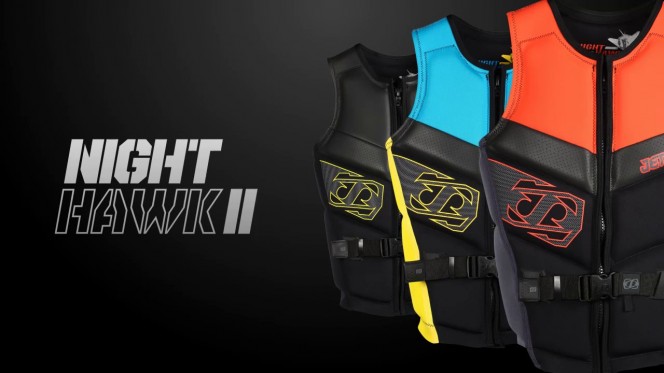
Earlier this week we published a look at Slippery Wetsuit’s new 2014 catalog, replete with world champion racers Craig Warner and Claude Clayton happily shredding up the water. As we’ve been big fans of the various Slippery products we’ve had the pleasure of reviewing here the last few months, we’re equally excited to see JetPilot‘s newest entries for the new year.
It’s hard to argue with JetPilot’s name and legacy in the personal watercraft industry. One of the longest running manufacturers of PWC riding gear and apparel as well as the favorite choice of more racers in the sport than any other, it’s pretty evident that JetPilot has quite the reputation to live up to. With a variety of specifically-tailored vests for a breadth of uses, JetPilot has expanded well past that of PWC.
With a huge presence in wakesports, surfing, and freeride, JetPilot has mastered the art of developing vests that protect and buoy, as well as provide maximum flexibility and range of motion. Now with quick-drying technology, many of JetPilot’s vests dry faster, breathe easier and feel more natural against your skin than ever before.
Make sure to check out their lineup after watching the video below:
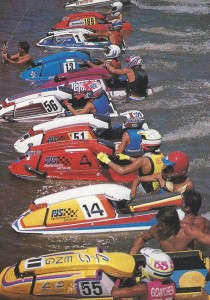
Where personal watercraft magazines have failed to do since the collapse of the last of the print titles (ie. Personal Watercraft Illustrated in 2010), is re-establish a social tone, a sense of style to the sport that was so prevalent during the 1980s and 1990s. The handful of print publications competing for supremacy had a task at hand, and that was to showcase the sport in the most attractive way possible. And as we reflect upon history, few did it better than Splash Magazine.
Helmed by Clark Emery, Splash not only provided readers with exciting event coverage but a litany of useful tech, trick tips, interviews with tuners, riders and developers, custom ski showcases and lots and lots of girls. To the layman, Splash made you feel like you were seriously missing out if you weren’t part of the party. It’s easy to see why so many remember Splash over any other title from those days.
We strongly recommend that you peruse the pics, read the captions and comments. You’ll be impressed with what you see. Here’s how it went down in Clark Emery’s own words:
I feel fortunate to be the Editor of Splash during the Vintage Jet Ski era. I was around 25 then, had been in the magazine business for a few years. I was ready to kick some butt. My career and success were important to me.
I was a ruthless little SOB of a competitor. The best example of this is what made Splash a hit around the world in the first place: cool images. I always had first pick of all the top photographer’s photos. After picking the best shots, I would often hold on to everyone’s pics a week or two, just long enough to make the competing magazines run my picked over images a month later than Splash.
But any mention of the Vintage Jet Ski era has to include Tom Kerker. I practically dragged Tom into the business. After knowing him a very short time, I realized magazine skills or not, he would be my perfect partner in crime. Tom had real world Jet Ski credibility, which is something myself and all the other magazines lacked at the time. Tom had to learn to type, work in an office and deal with me as a boss. We soon developed a friendly little creative photo competition which also helped sell a few magazines as well.
The end of Splash, like my decision to leave the magazine business is not very cool or romantic. And they were caused by the same thing. McMullen & Yee, our once mighty Automotive Publishing company ended up getting sold when both owners suddenly died within six months of each other.
In short order, our company was purchased by some Jackwagon publishing company. There were all kinds of suits walking around, trying to prove their worth. Splash was killed by some accountant who probably never even looked at the magazine.
About 10 years later, after sitting at the helm of many successful magazines, one day I realized I didn’t have another “Mission Statement” or Editorial Calendar inside of me. I left. Just went home. And never came back.
Arguably, there are fewer skis more striking in design than the Ultra JetSki, even after seven years since its initial introduction.
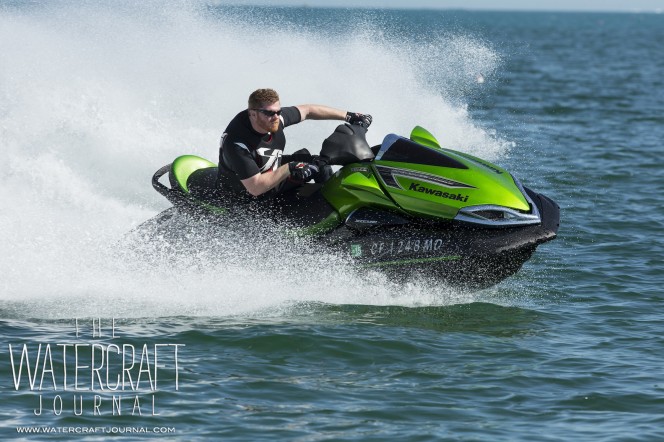
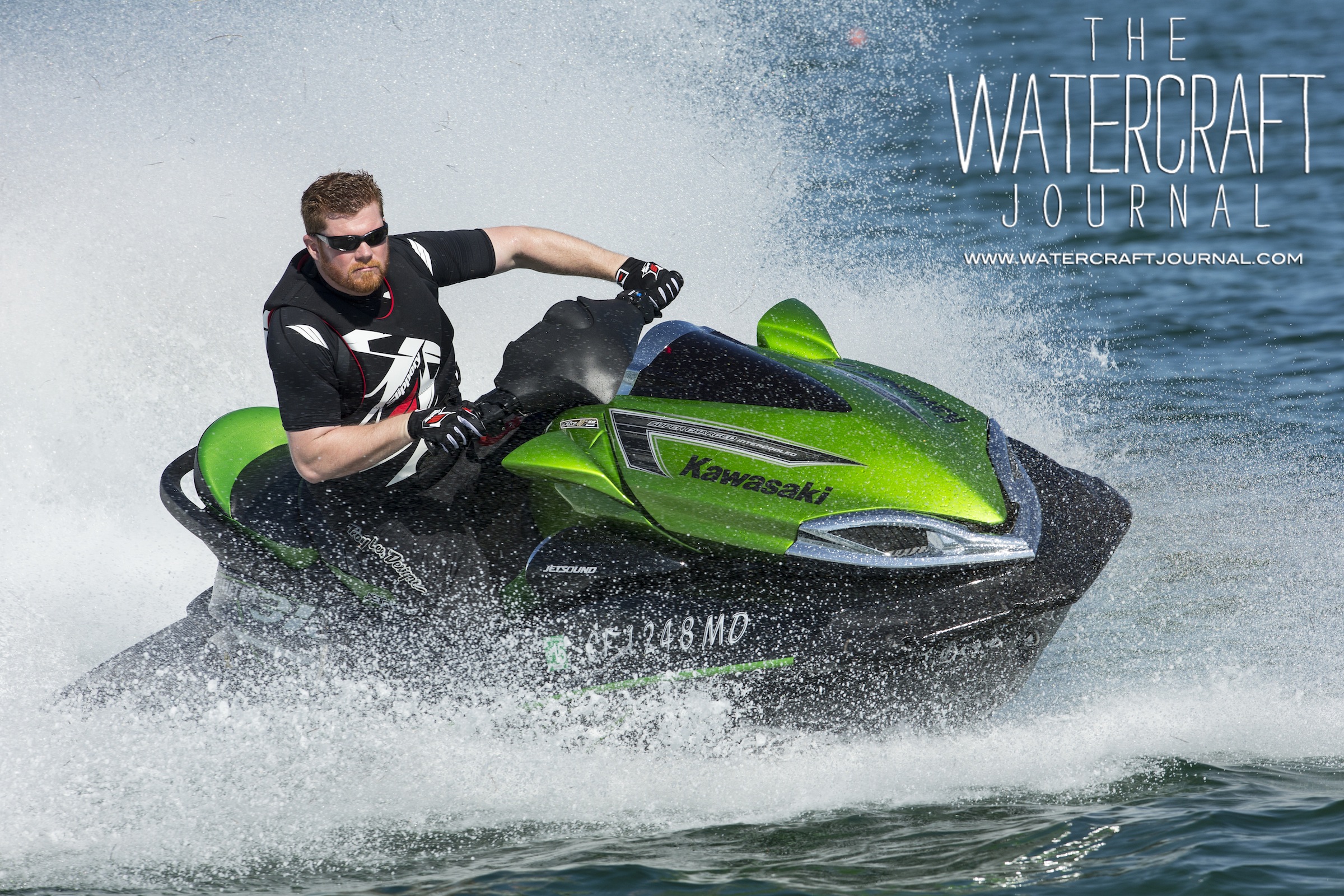
Even now, four months after my first foray with the 2014 Kawasaki Ultra 310LX, I’m not sure where I stand. Albeit a short dalliance with the fully-equipped JetSki, my brief time spent with the machine left an indelible impression on my mind. Even my second time with it two weeks ago, which provided me significantly more seat time, still has me torn.
The new Kawasaki retails for well over $18,000, and the type of customers who typically purchase a personal watercraft within this price range trend in their sixties. They’re often retired and looking for safe, stable and comfortable excitement, all the while still maintaining a glimmer of the good spirited fun that has kept them young all of these years. They are the cool parents (or grandparents, depending on your age) you wish you had.
Now, don’t misunderstand my tone. The plush Ultra by no means falls short. But it does make one question what makes for a luxury personal watercraft.
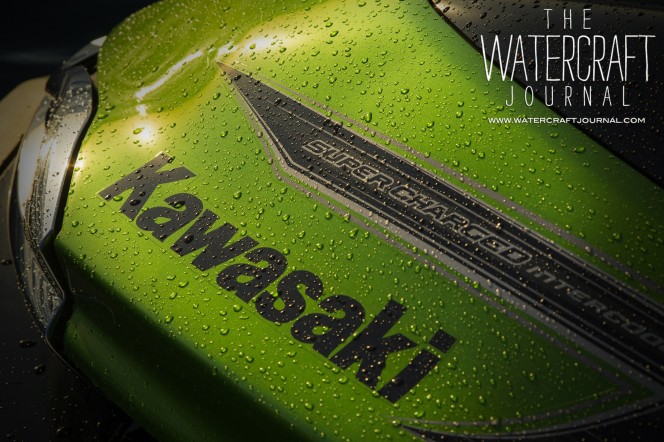
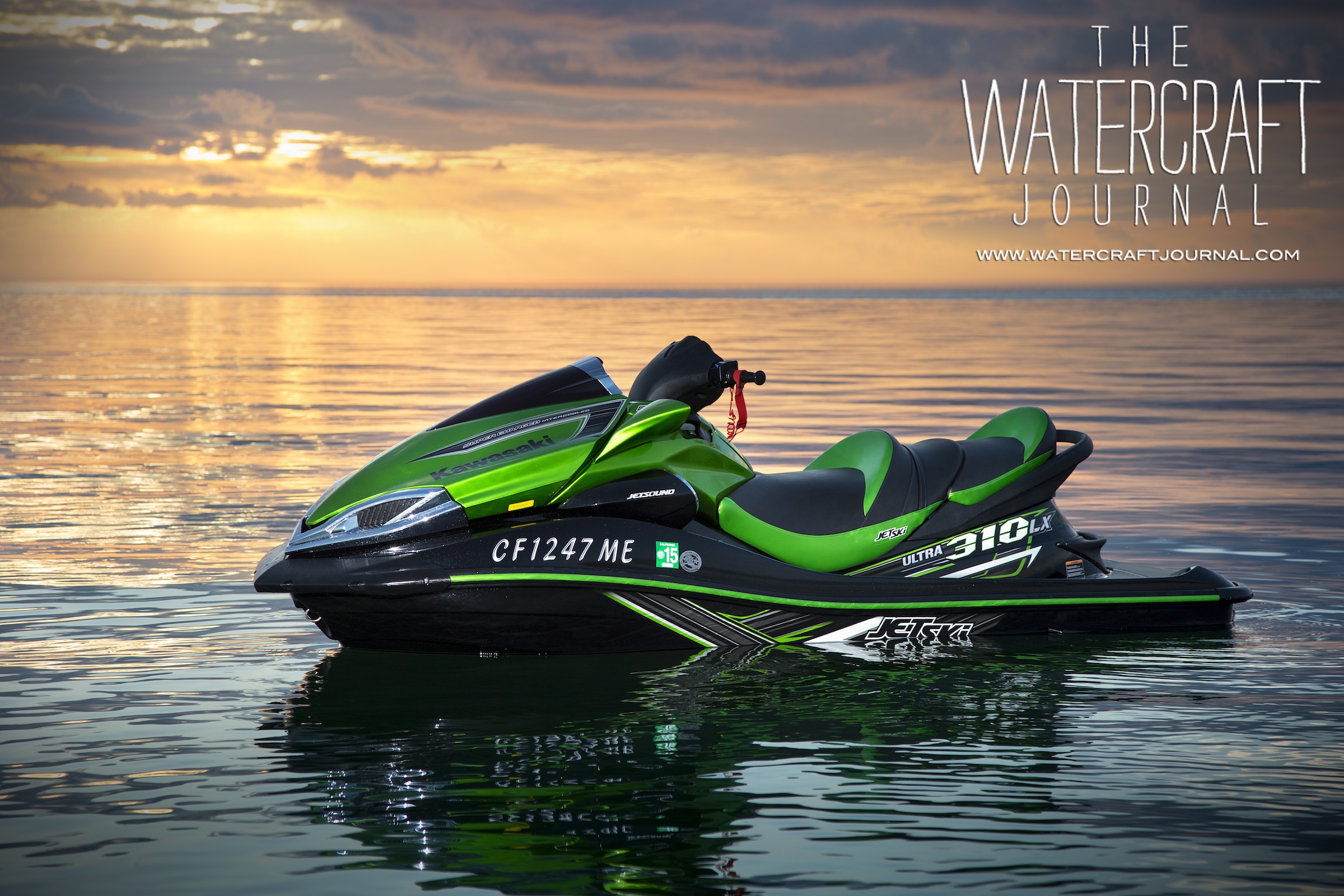
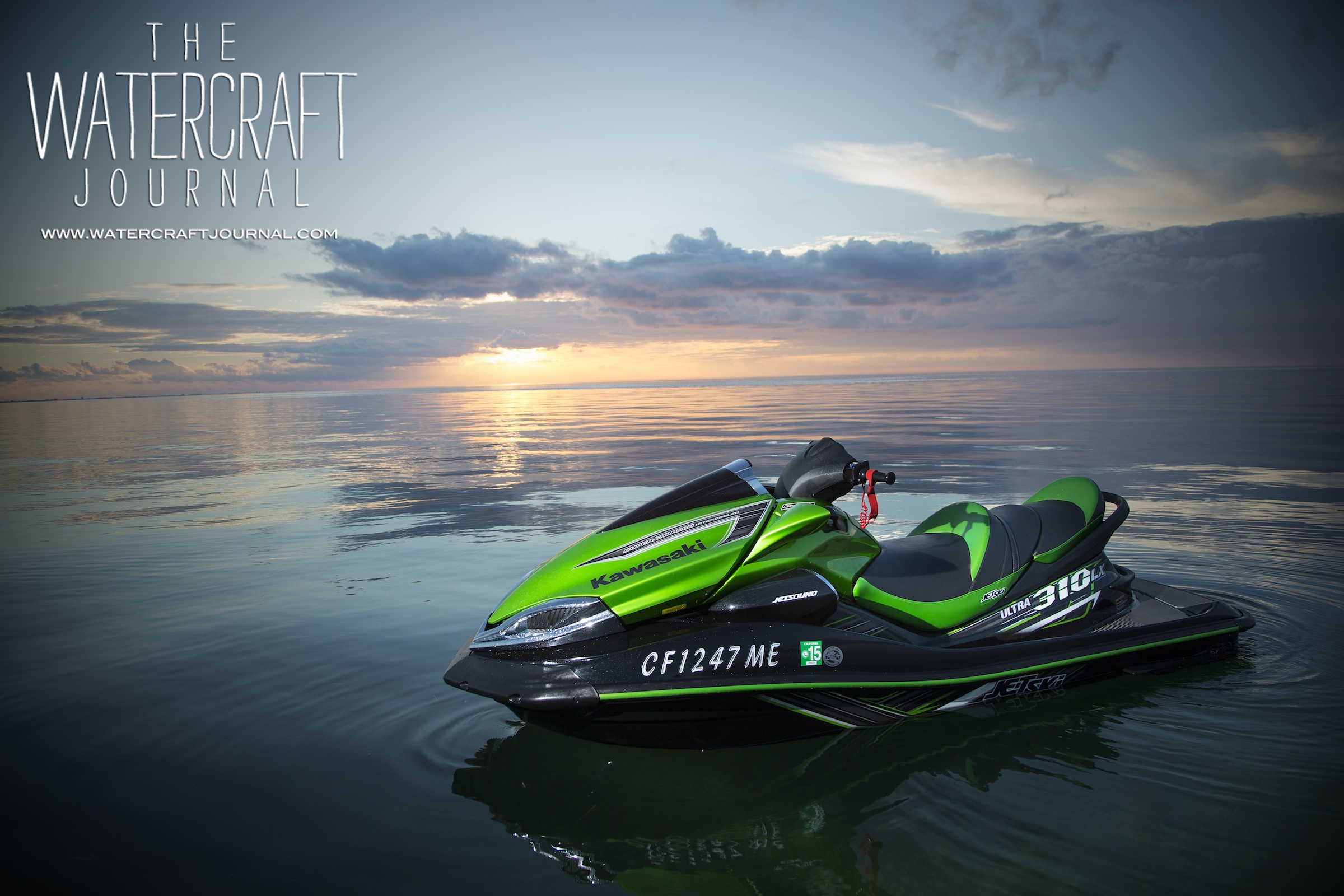
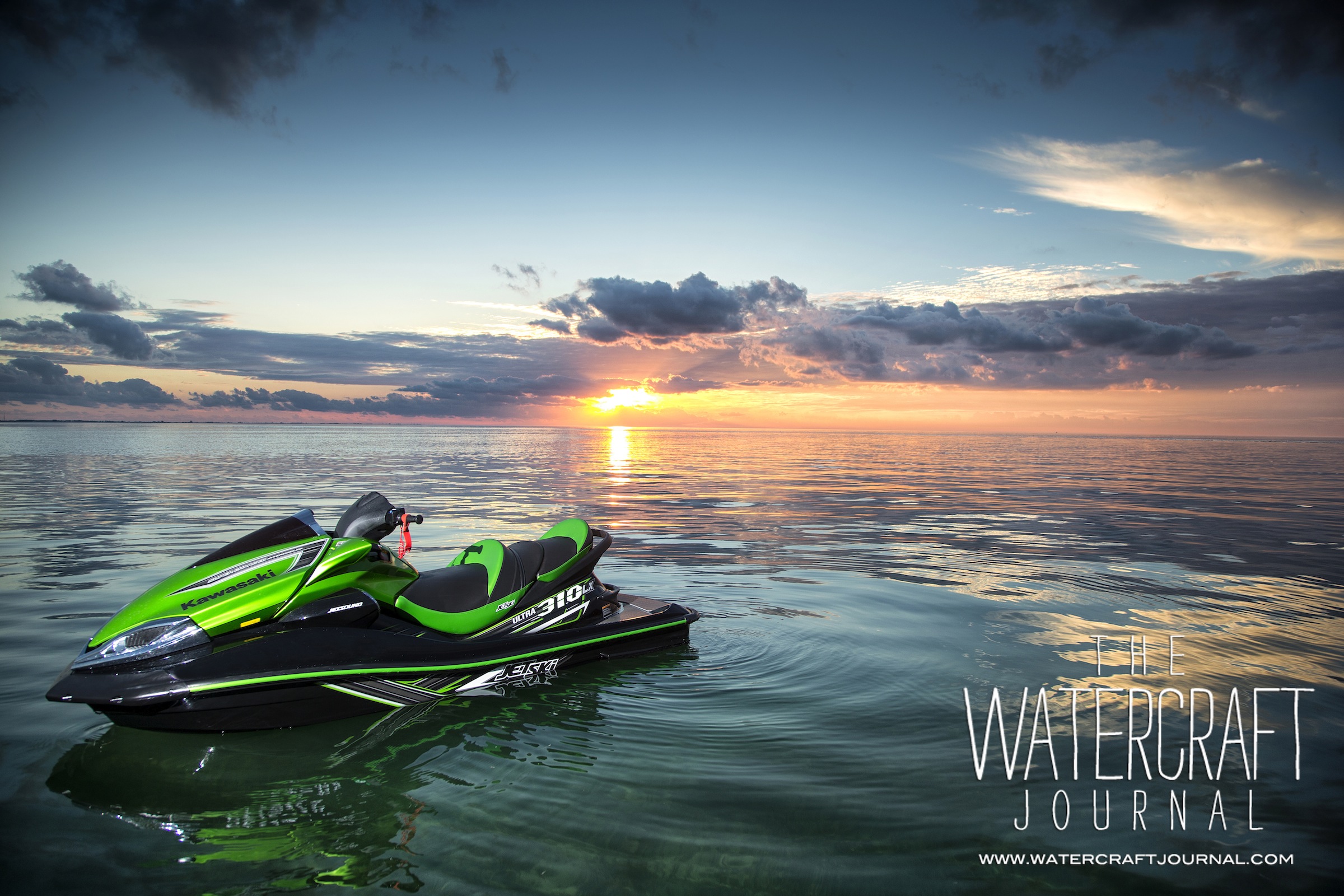
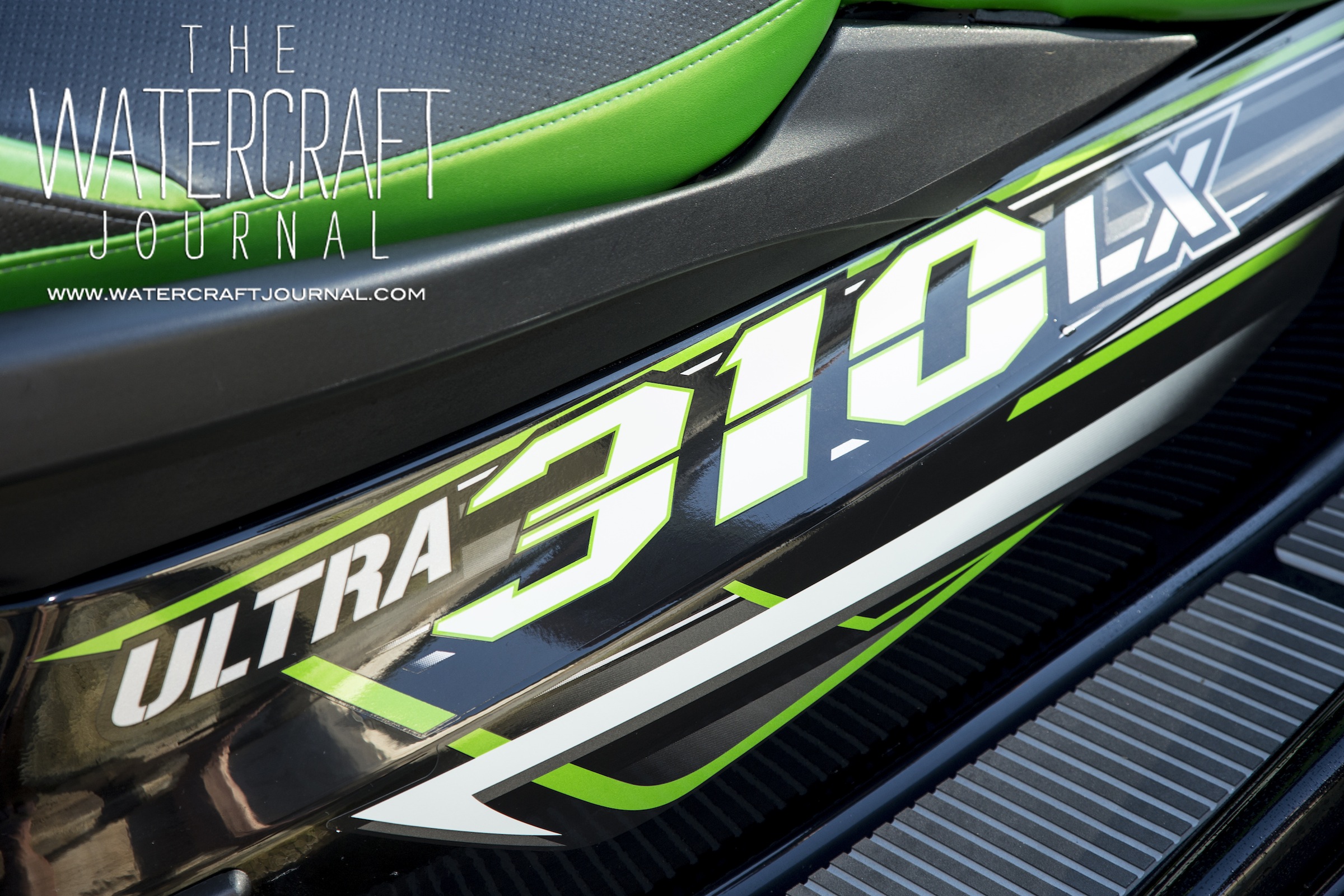
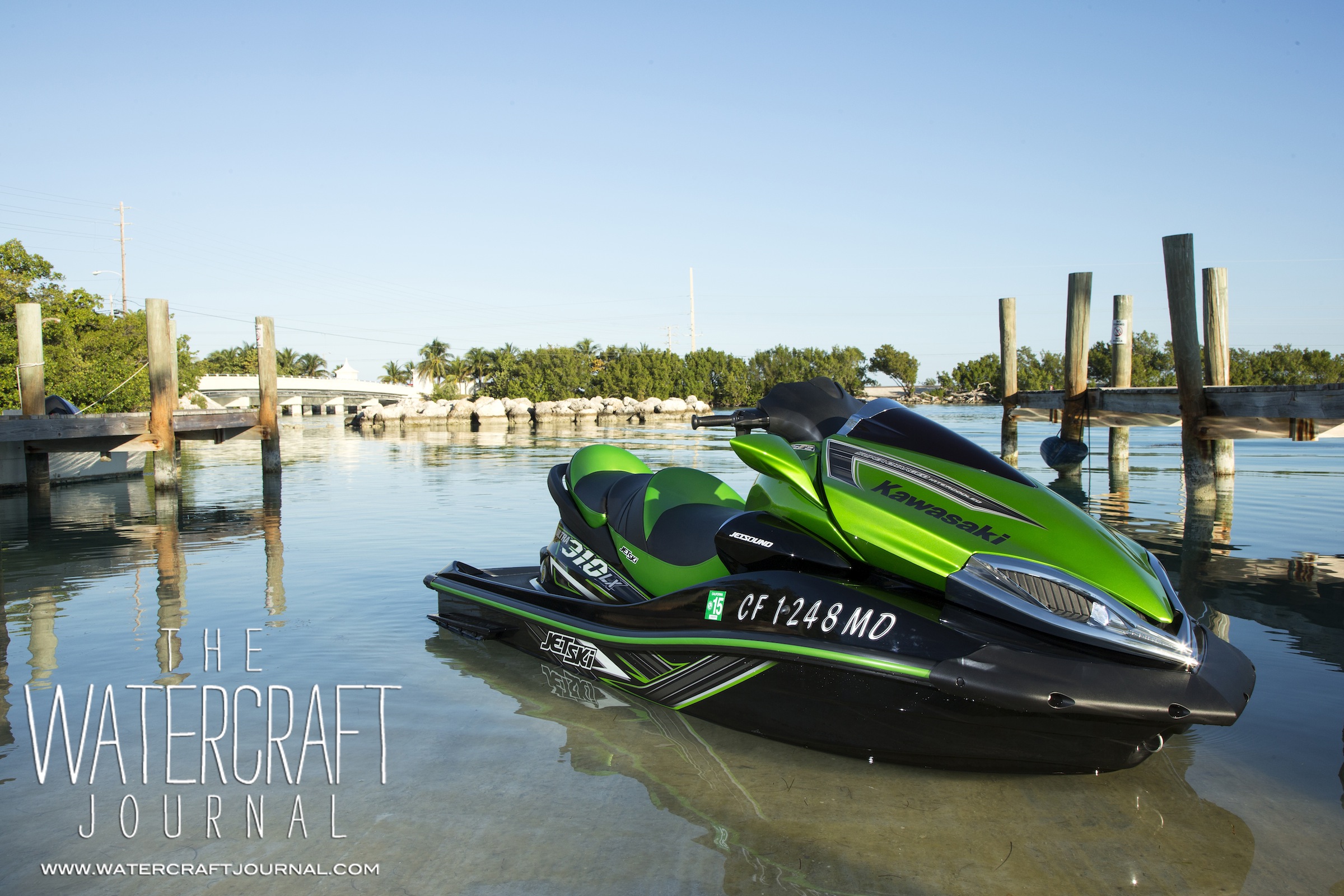
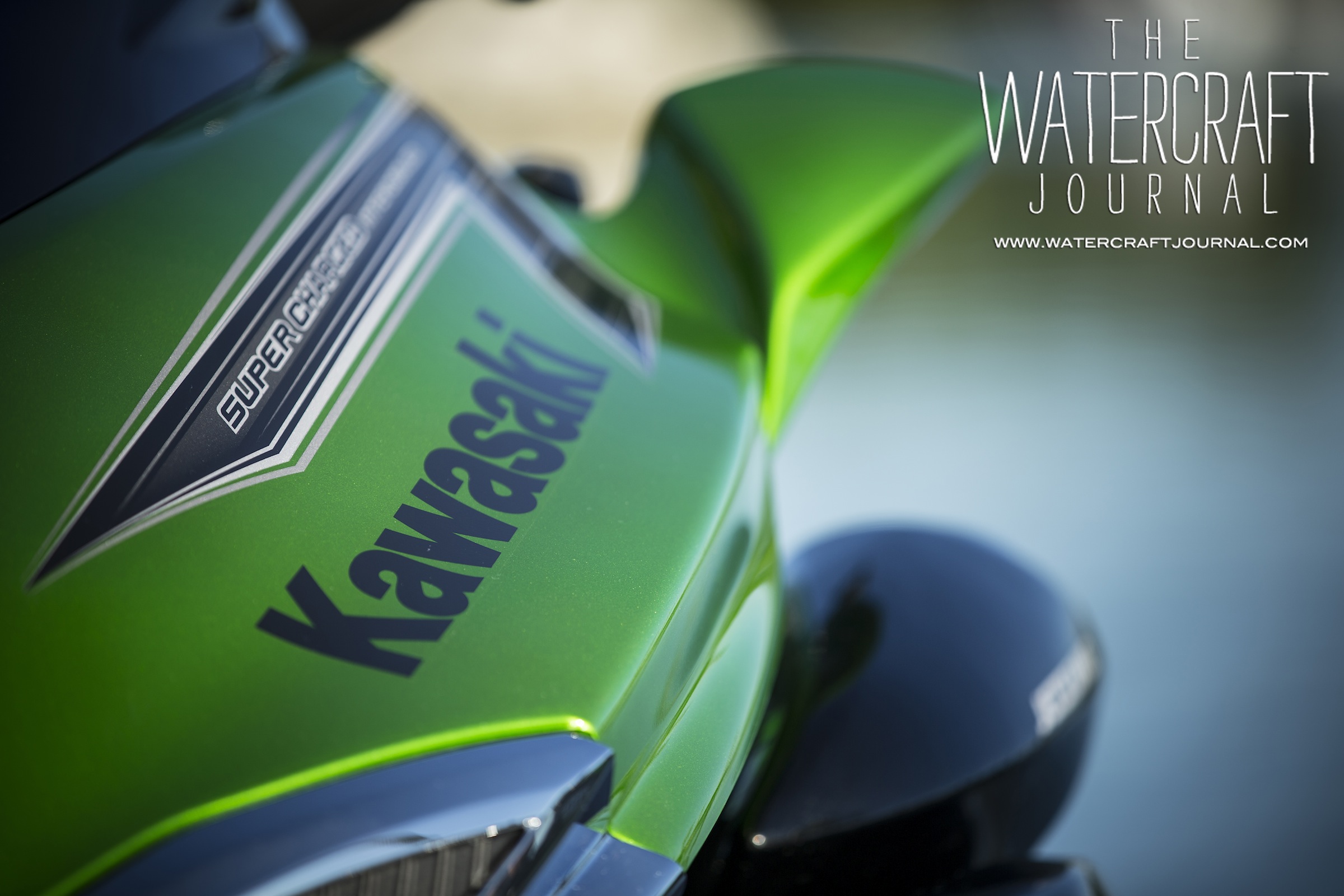
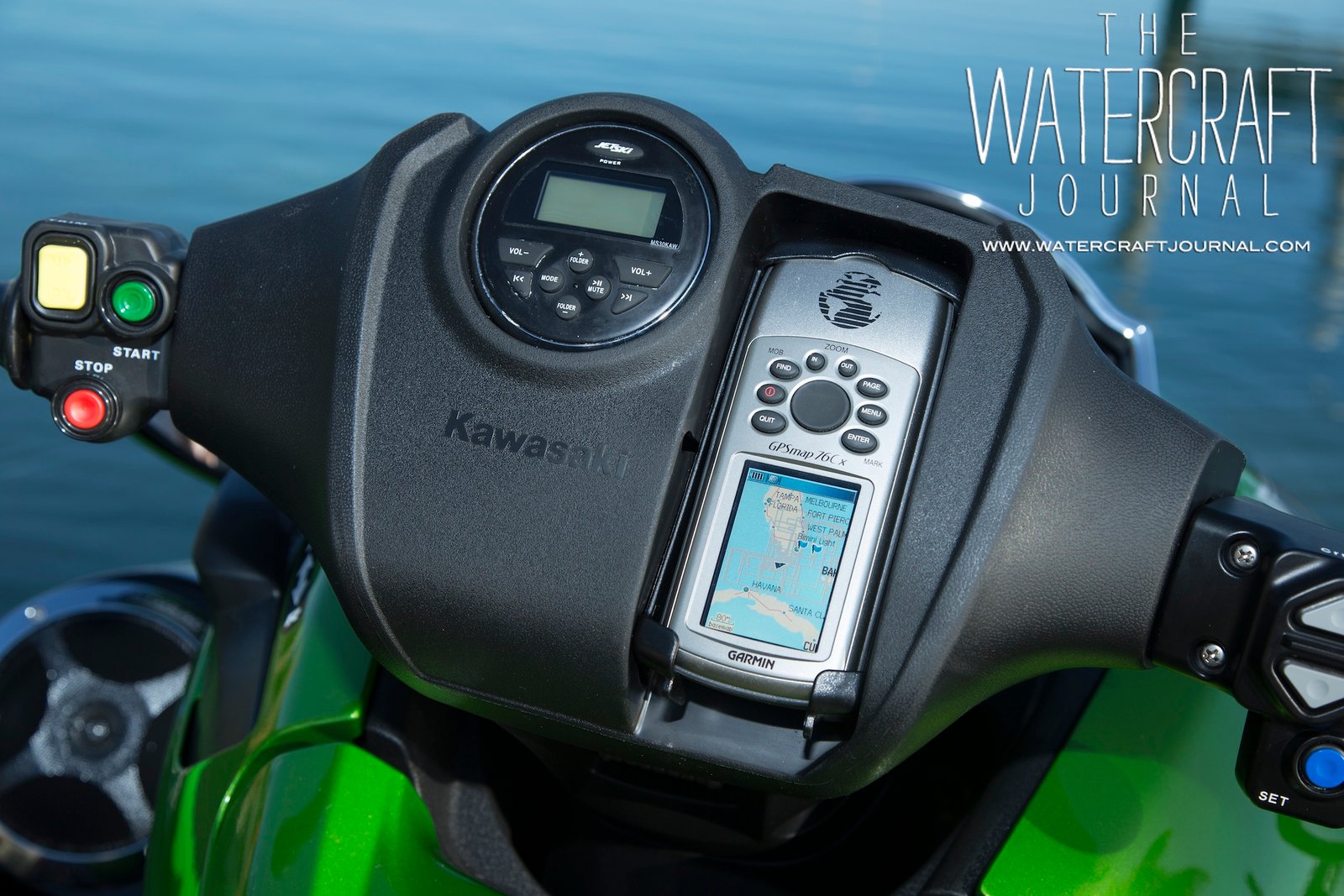
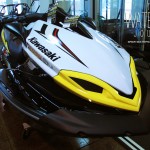
Although bold racing colors aren’t par for the luxury course, Kawasaki’s Candy Lime Green and Ebony livery on the LX is undeniably striking.The greatest distinguishing feature on the 310LX is the incorporation of a Garmin GPS mount and the Jensen-built Jetsound head unit.
Were it merely chrome accents, metallic paint, a bolstered seat, cruise control, tilt steering and gobs of storage, the new 310LX would qualify without debate. But where the LX meets the letter of the definition, somehow the spirit of a luxury personal watercraft is oddly absent.
That I believe is the blurred gray space wherein the 310LX resides. It’s a wolf wrapped in a golden fleece. It’s a sumptuously leather-wrapped punch to the face. It’s a gilded missile. Here’s something that I have probably never uttered before: The 310LX is too fast.
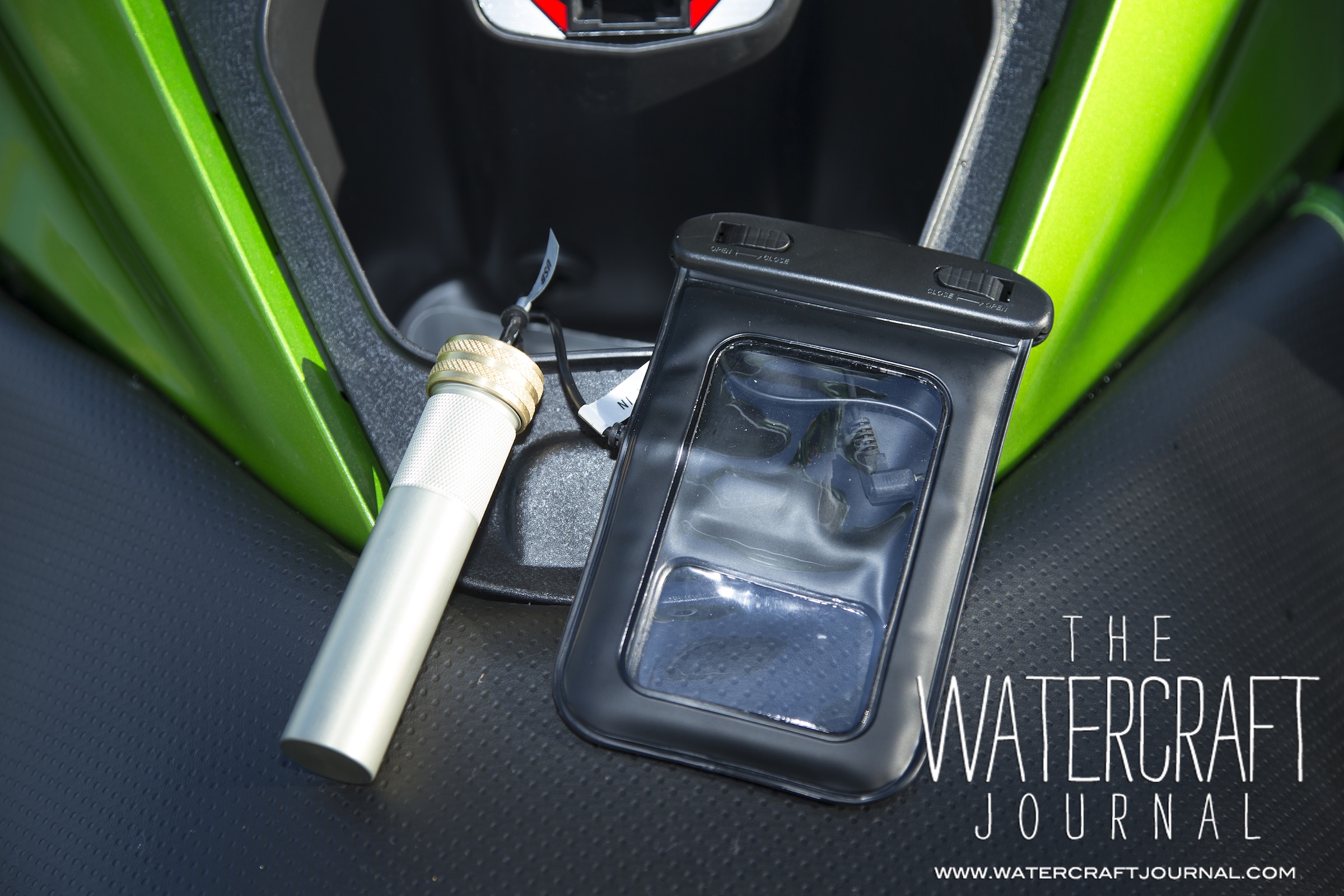
Yes, most luxury-level PWC aren’t capable of boiling water with this kind of speed. The 310LX is 100-percent identical in performance as the 310X and R models, which might be a little too much for the typical luxury PWC customer.Supplying the Jetsound system with music is your choice of a USB data stick or an MP3 player, be it a smartphone, iPod or other device. The LX comes with water resistant cases for either that plug directly into the head unit.
Sharing all of the powertrain of the 310X and R, the LX’s revised engine benefits from a drastically improved oiling system – larger passages, a baffled pan, improved V-grooved lightweight pistons and two-per-piston underskirt oiling jets – as well as a redesigned crankcase that allows for greater cooling capacity thanks to thicker water jackets. A new heat-resistant polymer intake manifold features long intake runners, and a high capacity fuel pump and larger injectors (500cc) increase fuel flow.
By doubling down on improving engine longevity and efficiency, the 1,498cc Eaton Twin Vortices Series (TVS) supercharged-engine unleashed an extra 10 ponies, bringing the Kawasaki’s output up to a neck-snapping 310-horsepower. All of this is expressed through a 160mm axial-flow 8-vane pump producing a nearly ridiculous 1,890 pounds of thrust.
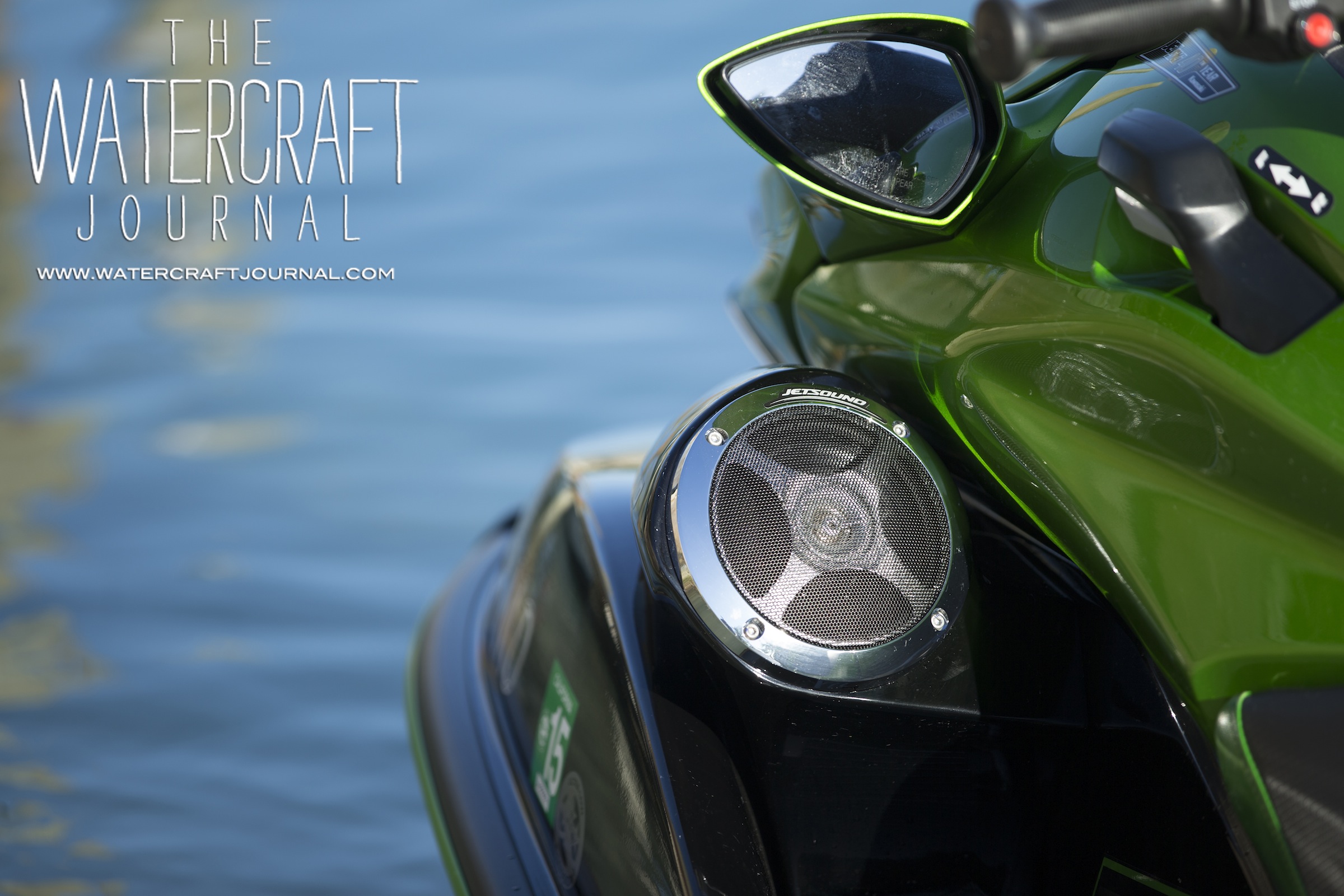
Kawasaki dedicated a great deal of time and effort to develop the LXury seat, which besides providing added support and comfort thanks to a newly reshaped and scalloped bolstering, is wrapped in heat resistant perforated matting that won’t cause singed skin on hot days.Beneath the mirrors are a pair of 30-watt waterproof speakers powered by a 20W amp. These speakers won’t rattle your fillings, but even at 60mph, you’ll be able to hear pretty clearly.
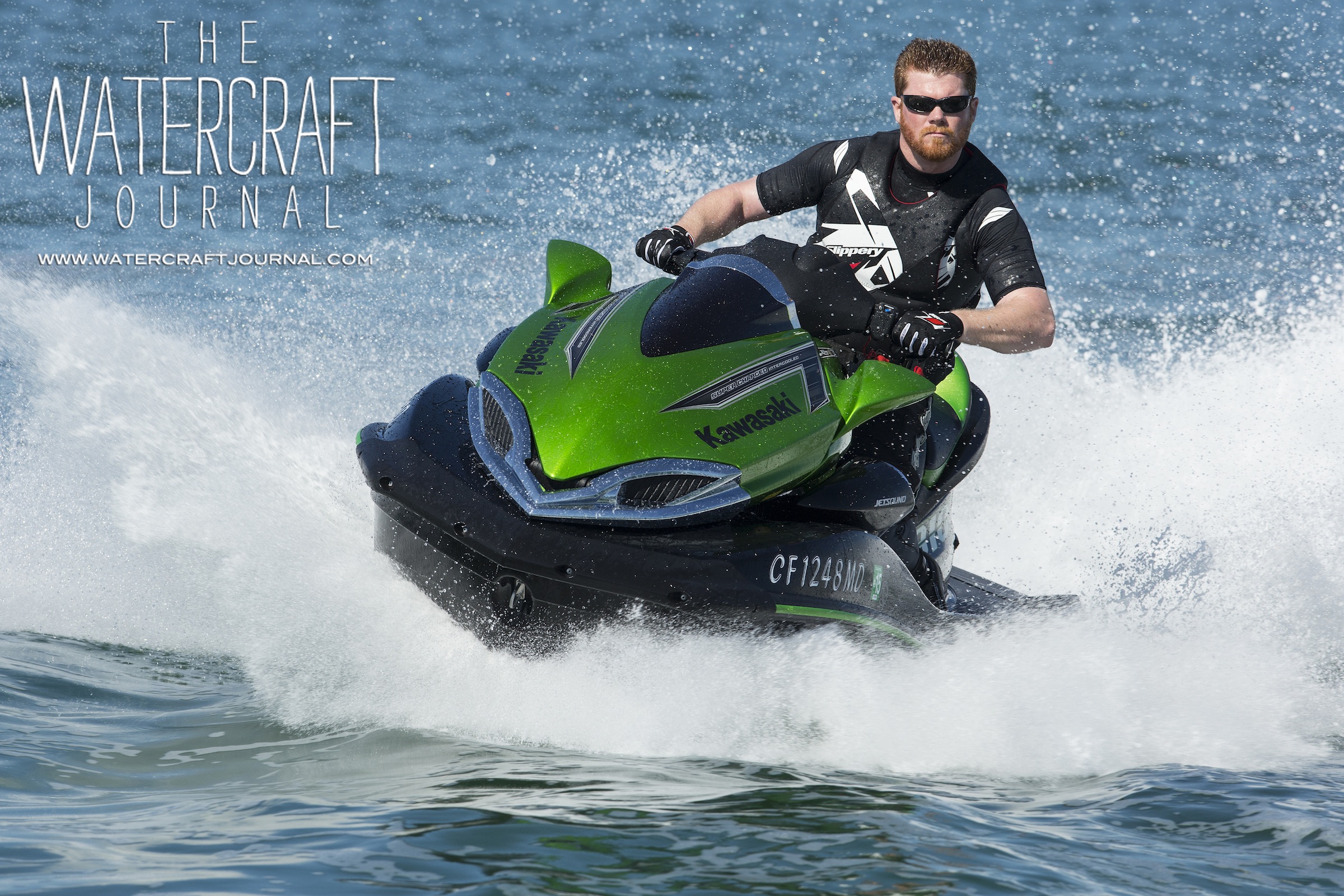
Out of the gate, the LX – like all 310HP Ultras – leaps to speed hard, the staccato whistle of the blower shrieking over the water. Throttle response is razor sharp as the boost is always on demand. Through chop, glass or around a hairpin, the Ultra is continually pulling.
Only when you’re airborne or you reach the speedometer-limited 67mph does the fly-by-wire Electronic Throttle Valve (ETV) back off. Improvements made to the hull for the 300X three years ago amplified the Ultra’s handling, and the improved power of the 310 only magnifies it.
It’s hard not to love the new 310 Ultra as it delivers more wind-stretched smiles than any full-sized runabout before it.
At the end of the day, the Ultra 310LX didn’t feel like a luxury watercraft with extra horsepower, but a fully-loaded 310X. The aggressive behavior of the Ultra overshadowed its amenities, making the features almost superfluous.The new Hydro-Turf mats are clearly marked, but we had wished the luxurious LX would feature two-toned mats similar to those found on similarly-optioned Yamahas.
Considering the age demographic of would-be buyers, I couldn’t help but feel that this might be a little too much. I pondered whether a more gradual “touring” tune might be needed. Sure employing Kawasaki’s “Learning Key” would do the trick, as much as the new SLO mode, but c’mon, no sexagenarian shines to the idea of riding with training wheels.
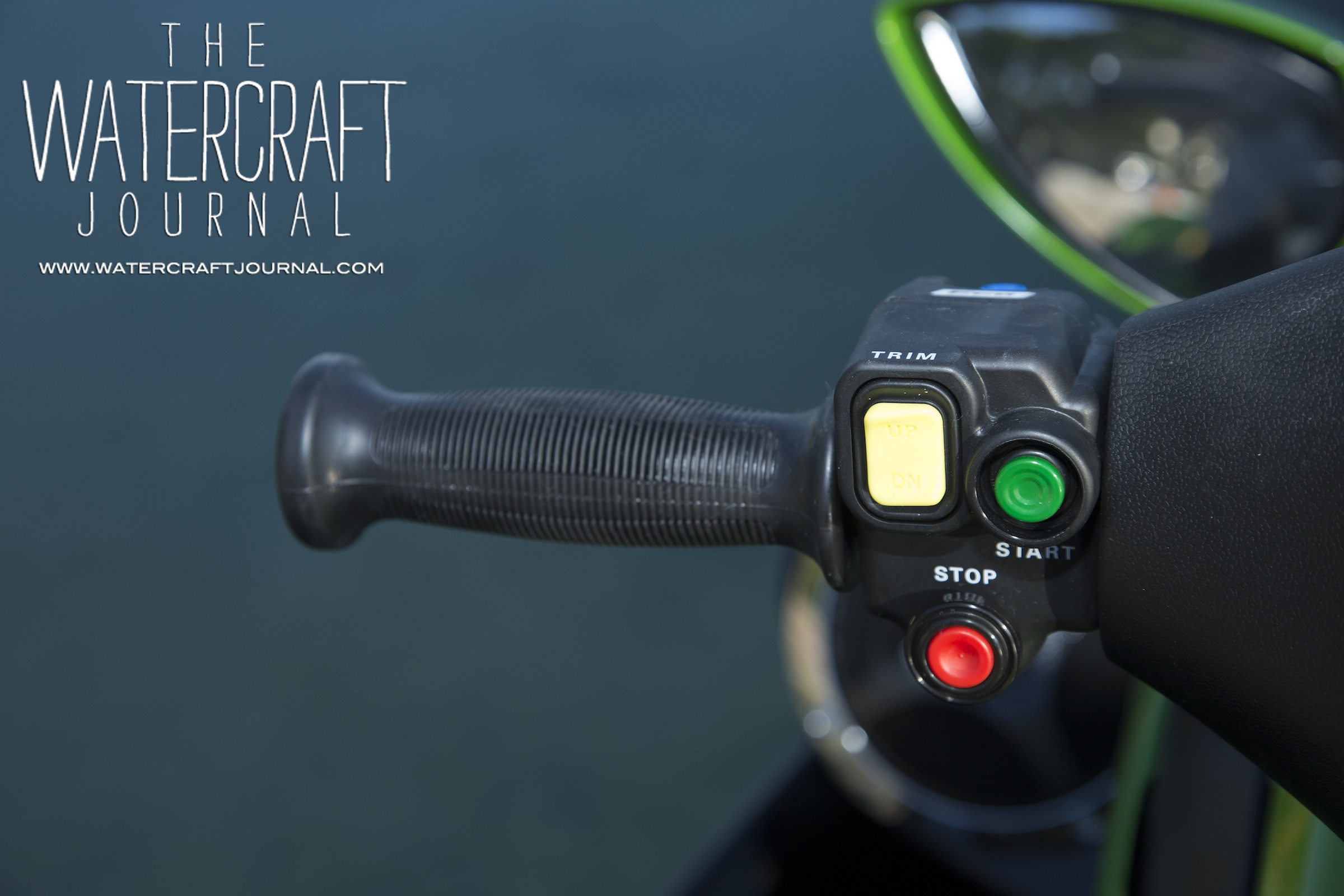
At a glance, the 310LX isn’t too distinct from the rest of its siblings. It’s slathered in a shade of Kawasaki’s iconic green. The heavily padded steering is tilt adjustable, its handlebars arrayed with multicolored switches and toggles.
Identical to the rest of the 310-horsepower Ultra JetSkis, the 310LX braves the open ocean with aplomb, chewing up chop without breaking a sweat. The Eaton TVS delivers a steady supply of 17 pounds of boost throughout the powerband.The seat is a tiered and bolstered affair, two-tone in green and matte black, and the decorative graphics are subdued and classy.
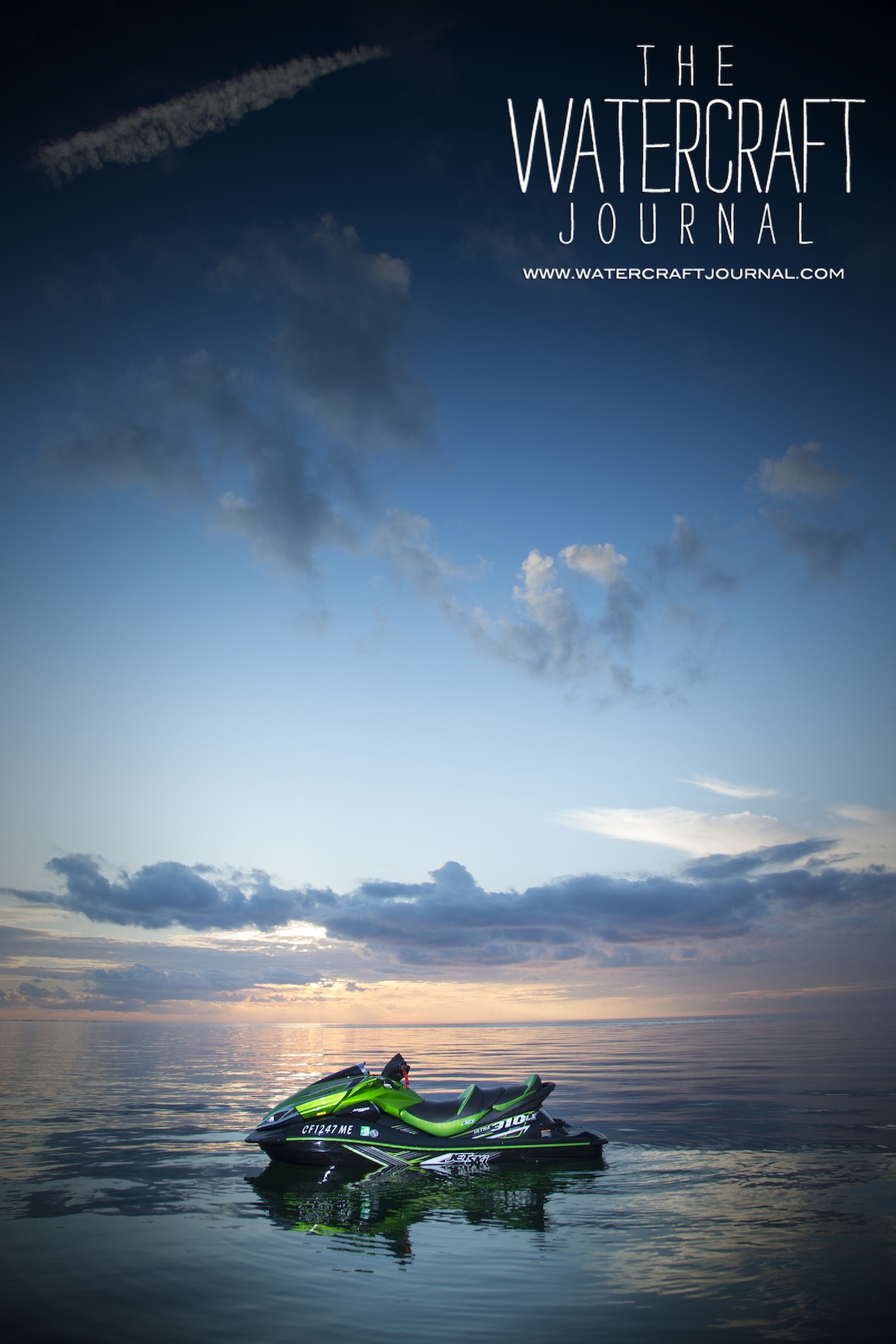
In celebration of its 40-year anniversary, Kawasaki bathed the LX in a sumptuous Candy Lime Green hue – not quite Kawasaki Green, but close enough. It’s gorgeous and glistens under the sun. But again, older customers habitually prefer more staid colors – silver, champagne, charcoal, copper, gold, bronze. “Racing green” is not the first to come to mind for an $18,000 JetSki.
Kawasaki was very proud to introduce it’s new LXury seat. Contoured and scalloped, the three-passenger bench offers great support while sluicing through chop or simply cruising long-distances. Wrapped in the company’s all-new heat-resistant seat material, the fear of scorched legs on a hot summer day are now gone. Adding one last bit of traction is a new Hydro-Turf deck mat.
Although not immediately recognizable to the layman, the mirrors too have been reconfigured, with convex glass for better rear visibility as well as new mounting brackets.The Ultra 310LX remains a stable and dry ride for the most part. Issues with low speed listing have been amended thanks to the addition of a second waterbox.
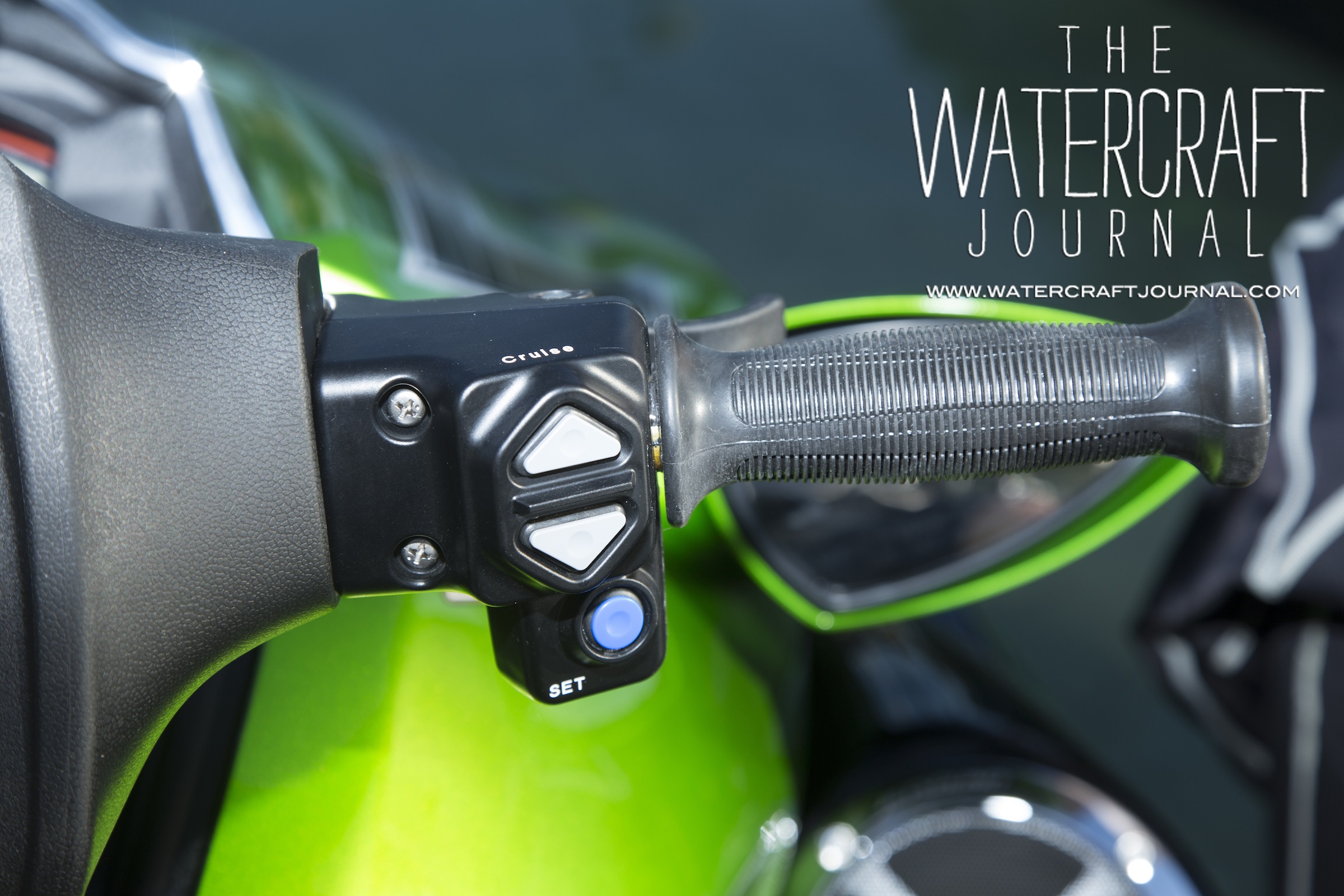
But it’s around the handlebars where the LX stands above its lineup siblings. Fixed between the digital trim controls, cruise control toggles, throttle and ignition switch is a padded mass that can house a portable Garmin GPS and Jensen head unit to control Kawasaki’s new Jetsound audio system display. A pair of 30-watt waterproof speakers are smartly mounted below the mirrors, powered by an amp rated at 20W (x2 channels, max 40W x2) which can play all of the MP3s your USB memory stick or iPhone/iPad/iPod (or other digital music player) can carry.
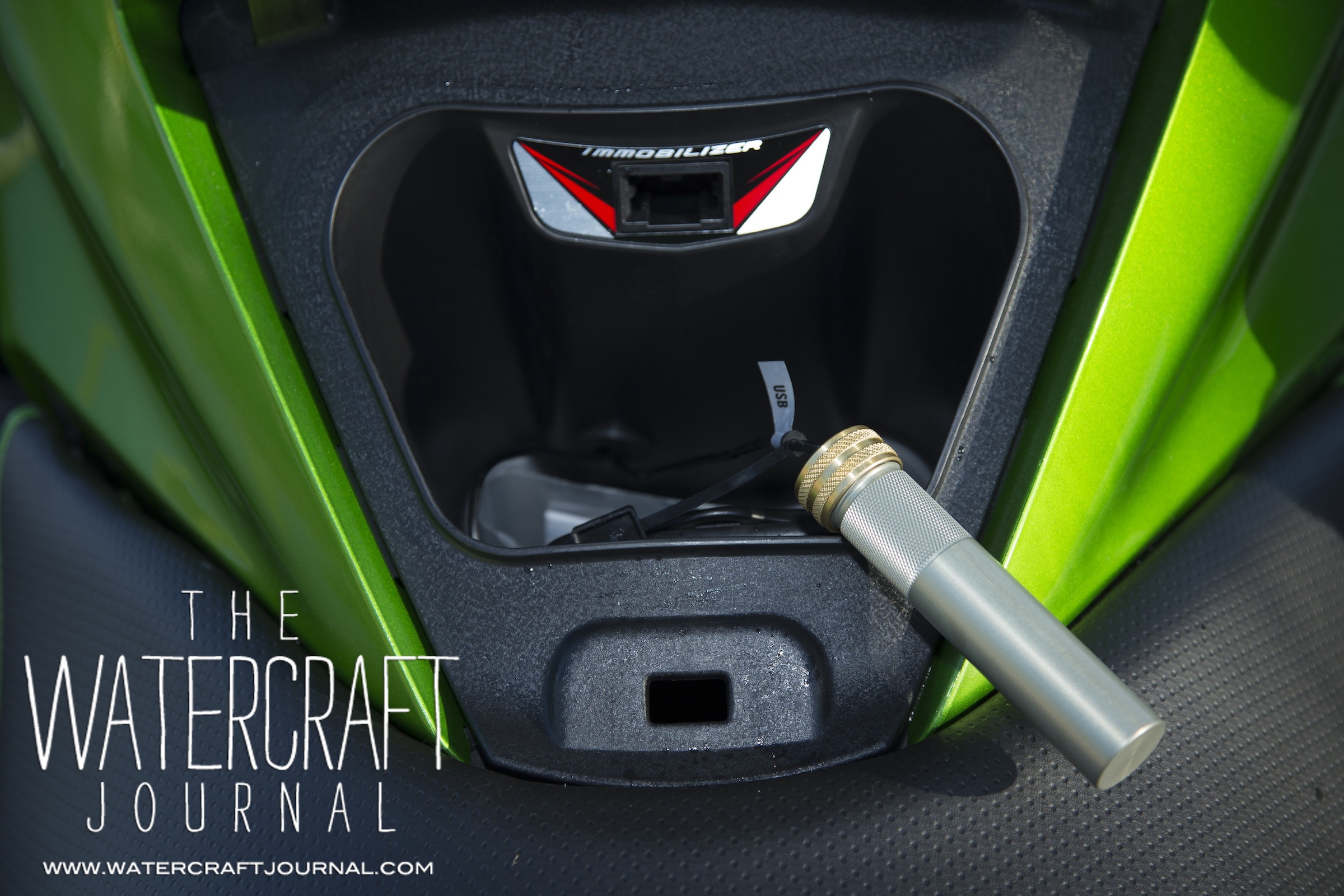
Inside of the glove compartment are two water-resistant storage cases, including a billet cylinder for the USB drive, and a sealable pouch for your phone or other device. Unfortunately, the head unit won’t be able to shuffle through your tunes if you’re using anything other than the USB drive.
The Ultra 310LX felt too aggressive for most persons willing to drop upwards to $20K on a PWC. Were Kawasaki to truly vie for the attention of elder boaters, we’d suggest retracting the claws and baring fewer fangs.
I got to play with the Jetsound for a few hours and was impressed with how loud it truly could get (when using my iPhone 5). Maxing out the volume on both my phone and the Jetsound unit carried the rhythmic beats of Bob Marley clear across the water. More than once, I found myself either scrolling through my playlist or fumbling inside of the glovebox to skip to another song – making me keenly aware that I was severely impairing my attention while clipping along at 65mph.
Kawasaki’s new Cruise Control, digital trim control, and SLO mode are welcome additions. We struggled with setting the cruise while underway, but found the button placement and feel intuitive and easy to reach.
Therein lies my greatest concern. Besides my fellow boaters not caring for my taste in music, I was noticeably distracted. And if I, a seasoned PWC rider, was so easily distracted, how much worse would the occasional rider be?
In understanding more of the Jetsound system, I asked Kawasaki’s Manager of Public Relations, Kevin Allen who explained, “[The 310LX] was aimed at elevating the riding experience in the same way the fully-loaded Vulcan Voyager might for the motorcyclist.”
All in all, apart from the Jetsound system that still has me guessing, the Ultra 310LX is a sublime machine that is rich with state-of-the-art technology, rife with creature comforts and yielding to no other personal watercraft on the water. But as a luxury watercraft, it’s deceptive. It’s not a refined uptown gentleman, but a trained killer in a tuxedo.
For those Texan jet ski enthusiasts looking to have a lot of fun with friends and family and fellow standup riders, the 6th Annual Jet Ski Extravaganza is primed to go off Saturday, August 2, 2014. While that might feel like quite a ways away, remember, the summer goes by quickly and if you don’t plan ahead, you might just forget.
There will be plenty of food, music and fun to be had by all, as well as a closed course track and plenty of freestyle action to soak in. We at The Watercraft Journal are excited to help announce this event and many more like it, as it helps grow the sport better than anything we can do. Here’s the original announcement:
“Please join us in the 6th annual Jet Ski Extravaganza! Come one, come all to another standup Jetski ride on Saturday, August 2nd 2014 on Lake Travis that benefits the Austin Animal Shelter. Please bring your family and friends along to partake in the jetski festivities or catch some sun on the beach with a cold drink. Last year we also had a BBQ grill so bring some meat!
“As before, this is not a competition, just a fun event for us die hard stand up riders. I will, however, set up a buoy course for those who want to play. There will be organized practice for both beginner/novice riders as well as advanced riders. Helmets are recommended while on the closed course.”
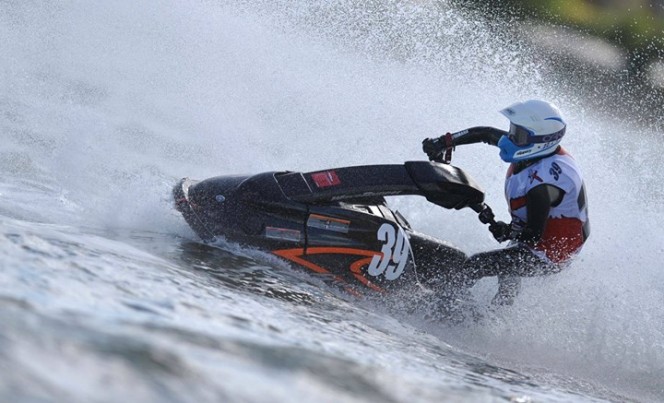
After his tremendous win at last year’s Mark Hahn Memorial 300 and his record-breaking sweep at the 2013 Hot Products IJSBA World Finals, we can’t think that anybody would blame Chris MacClugage if he chose to put his feet up and relax. And why not, right? Apparently, slowing down is not in his DNA, and the multi-multi champion racer is taking his winning streak worldwide.
It was announced last night that MacClugage has entered the 2014 UIM Aquabike World Championship. Beginning with Round 1 in Doha, Qatar next month (March 6-8), the once “Kid” (and now patriarch racer) will battle for the Ski GP1 World Champion title against some of the best racers in the world.
The UIM World Championship series skirts the planet, beginning in Qatar, heads to Milan, Italy in June, the Ukraine in July, next to Liuzhou, China in October, and finally concluding in Abu Dhabi in December. Unlike the IJSBA, the UIM is a “90-year old sports federation, recognized by the International Olympic Committee (IOC).” This of course, lends itself a little more credibility to the claim of “World Championships” than say our current use of the phrase. But, we digress.
We look forward to seeing how America’s winningest racer does on the global stage and wish him the best. Click here for the original announcement.
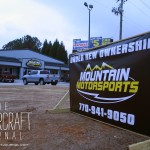
Key to the Mountain Motorsports renovation was the updating of the service department which is kept in immaculate condition.
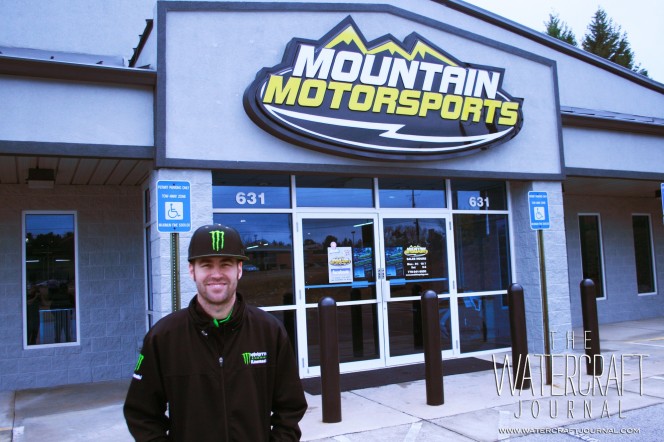
“Mountain Motorsports, Internet Sales. This is Craig,” is the greeting on the other end of the phone. There’s an accent ringing in the words, but its definitely not the lulling tones of a Southern drawl, as the dealership’s Lithia Springs, Georgia location might connote. Well, that’s not entirely true. It’s a southern accent, but more precisely Southern Californian.
It took quite a bit to get Craig Warner to uproot his family from sunny SoCal and move across the nation to the Atlantan suburb a few months earlier. The deal that Warner couldn’t refuse came from fellow racers and famously successful powersports dealership owners Dustin Farthing and Ryan Hardwick.
Farthing and Hardwick had partnered years earlier to open the Marietta and Conyers, Georgia Mountain Motorsports franchises. Farthing’s flair and talent of relentless promotion attributed to the latter’s near-immediate success. Warner, who at the time operated a printing service, was approached by the two to helm a third Georgian store.
Taking over an existing dealership, the Mountain Motorsports Lithia Springs, GA location is the third for the state.Behind of the counter of the parts department is a well-stoked warehouse able to serve both over-the-counter sales and the service techs behind it.
Located only a few minutes northeast of Six Flags Over Georgia, the new Lithia Springs Mountain Motorsports inhabits a 40,000-square foot former motorcycle dealer. Launched the first week of the new year, the rechristened store quickly began its ongoing renovation to match the brand’s level of panache found in the aforementioned stores.
“The Mountain Motorsports stores take a great deal of pride in its service departments,” Warner explained as we walked the new facility. “We kept three of the service techs from the old dealership. They’re great guys and know their stuff.”
The floors of the garage are epoxied white, glimmering under the fluorescent lights above. The service bays are kept tidy, with toolboxes backed up against the freshly painted walls. New retractable motorcycle stands are already holding customers’ bikes. Even in the middle of repairs, the work stations are clean, a testament to the store’s commitment to cleanliness.
Inside of the store, the service department’s lobby is voluminous. “This used to be the employee breakroom,” Warner continued the tour. “We knocked down the wall and opened it up. It’s going to be the waiting room. We’ll have a couple of couches in here and a widescreen TV. We want to make sure that our customers are comfortable if they need to wait for service.”
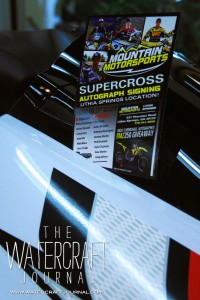
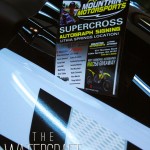
The showroom floor is chocked full of the best toys available on the market. Soon to come are Ducati motorcycles, which Warner mentioned would help distinguish the Lithia Springs location from the Conyers and Marietta locations.Paramount to the formula for success developed by franchise owners Dustin Farthing and Ryan Hardwick is the relentless marketing effort. The Lithia location is scheduled to host a who’s who of motocross superstars later this month.
The floor of the main hall of the dealership is a labyrinth of Can-Am Spyders, quads, street, off-road, road and dual sport motorcycles with the larger side-by-sides ringing the perimeter; their chrome and glossy plastics brilliant under the canister lights hanging from the warehouse-style ceilings.
“We’re actually really excited. We just signed on as a Ducati dealer. We’ll be the first of the Mountain Motorsport dealers to carry them,” Warner continued as we walked past the Hondas, Arctic Cats, Yamahas and Kawasakis. “We’re pretty stoked.”
Before Warner could finally take his place at the controls of the Lithia Springs store, he needed to work his way up through the ranks. “They warned me before coming out that I’d be starting from the bottom,” Warner explained. “My first few weeks were spent in training. There was only so much I could soak in before needing to get out on the ‘floor.'”
“That first month, I outsold everybody. I killed it,” he beamed. In fact, Warner decimated his fellow salesmen by employing some craftiness of his own. “I printed up a bunch of promos and had my wife stick them on car doors at banks, the mall, everywhere. What can I say? I was hungry to win.”
Staffed by a crew of powersports enthusiasts is what makes the Mountain Motorsports buying experience so much more enjoyable.Although Craig Warner might be your first choice to discuss purchasing a PWC, the rest of the MMS staff are well equipped to assist in matching you with the right bike, quad, watercraft or Side-x-Side.
In fact, it’s Warner’s hunger that’s helped bring success to the newly minted store even during an extra-cold winter. Although the previous week’s record freeze helped shut down the state’s biggest metropolis, it didn’t dampen the dealers’ dealings.
When I arrived at the Lithia Springs store, I walked in the middle of a sale. “I’ve got a guy wanting our last two STX-15Fs. They’re ’12s that never moved. I’m selling them at $7 grand each and with a trailer for like $15 thousand. It’s a pretty good deal. If he doesn’t take ’em, I know somebody will.”
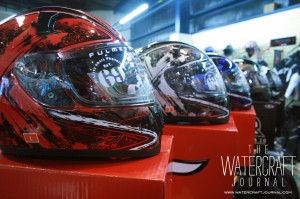
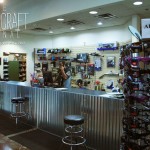
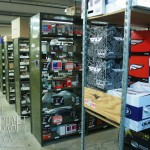
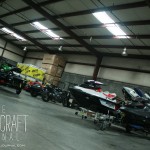
Even the back warehouse has an impressive collection of available vehicles. Although it was in the mid-20s when we visited, it was hard not to get excited about taking one of the many PWCs out for a spin.In addition to the many bikes, quads and skis available for purchase or the well-equipped service department, the parts counter also stocks a wide array of riding gear and apparel to keep you safe and looking good while enjoying the open road, trail or lake.
Weeks earlier, the Mountain Motorsports dealers combined their efforts and invaded the Atlanta Boat Show in a big way. “We sold over 60-something skis,” Warner grinned. What he left out was the fact that Warner accounted for nearly 10 of those sales himself. In fact, as Farthing and Hardwick will account for is the novelty of purchasing a personal watercraft from one of the most recognized name in professional PWC racing today.
The extra celebrity added by Warner’s position at the new store has definitely attributed to the franchise’s immediate success. “Oh, I get calls from racers all the time. I’ve got a couple of guys on the other side of the country asking me for deals on skis in time for the Mark Hahn [Memorial 300].”
As we walked the floor and the back of the store, I could see the brilliance in pairing world champions and dealerships. It’s easy to trust the guy selling you a Kawasaki Ultra 300X if he’s personally won multiple races with it. It’s like having an exclusive backstage pass to factory insider knowledge. Of course, the dealership is much more than just Warner. He’s teamed with a fantastic group of fellow enthusiasts, and ultimately those are the people you want to buy your toys from.
While wholly dedicated to making this store the most successful dealership in the Mountain Motorsports family, Craig Warner isn’t hanging up his wetsuit just yet. He recently resigned with Kawasaki for 2014 and is planning on competing in both the KaruJet (with fellow Kawasaki racer Eric Francis) as well as the Long Beach-to-Catalina Offshore Enduro. If you want to contact Craig directly, call 866/425-2585
For those paying attention, it would seem that all of the personal watercraft industry are refocusing their combined efforts in racing. Most of the OE manufacturers are presenting new high horsepower runabouts that are, without a doubt, race-ready. And now, it looks like even the most staid of aftermarket companies are turning towards the more exciting aspect of our sport.
Recently Slippery Wetsuits released this video showcasing their new 2014 lineup of riding apparel and gear. From full suits and johns, to spring suits, jackets, gloves, boots, and shorts, Slippery’s got a whole new look for this year’s upcoming riding season. Of course, the best news coming from the little sibling to MX riding gear manufacturer Thor, is Slippery’s superior comfort. Improved molds, better materials and more attractive designs make the wetsuit manufacturer once known as “Slippery When Wet” much more than another life vest brand.
But what is most interesting in this video is Slippery’s choice of models. Multi-time World Champion Monster Kawasaki racer Craig Warner and National and World champ Sea-Doo racer Claude Clayton both appear as the subjects of this video, showcasing much of Slippery’s new product line.
Obviously, you’ve likely seen Slippery quite a few times in our “Reviews” section. Slippery was kind enough to supply us with quite a bit of product to wear and review last season, and thus far we’ve been very happy with what we’ve used. We’ve experienced no failures, no tearing, breaking or discoloration. Look forward to more reviews of Slippery products from The Watercraft Journal in the weeks and months to come!
It’s baaack! The newest racing series to hit the United States – the AquaX USA – has announced the dates for its first stop, Daytona Beach, FL and some big news for people wanting to truly test their mettle. Scheduled to launch April 26th through April 27, not only will the AquaX’s first stop return to the same spot where it started last year, but also this past month’s Daytona Freeride, which coincidentally, will try to take a page from.
New to the AquaX USA series will be the new Standup ski class. As of right now, the level of permissible modification to the standups is yet to be known. This is a major factor, as almost every standup we know of has been modified well past AquaX’s minimalist-mod rules for the runabouts.
The AquaX’s strict ruling against modified skis is its key point of interest, aimed at luring in more first-time and “sportsman” level entries. If the rules are too strict regarding standups, we wonder if there will be enough contestants to fill the 20-entry limit. This is the first time standups have been allowed in an American AquaX event, so let’s try to fill that starting line.
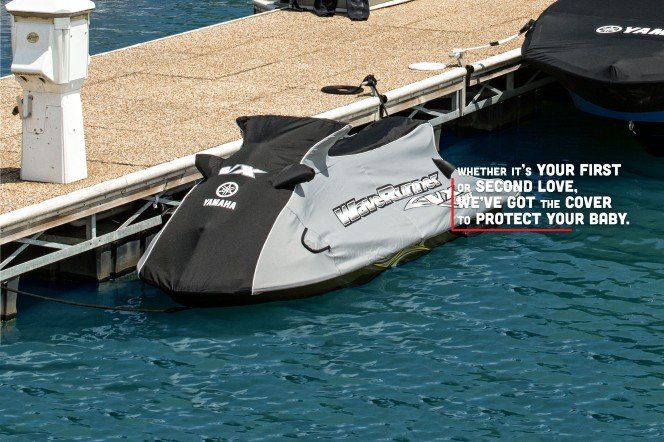
While it’s not quite boating season yet, Yamaha WaveRunners would like to entice you to stock up on all the accessories, riding gear and apparel you’ll need for the warmer months now before Memorial Weekend rolls around? Because the early bird gets the deals, that’s why. Waiting until the week before the big family trip to the lake will result in back orders, prolonged processing and fatefully, you going out without everything you had hoped for.
Of course, that’s the same cause-and-effect found anywhere, but Yamaha is looking out to keep their customers happy before the big weekend bottleneck. Like everything, the most popular items sell out before summer begins, and March is typically one of their busiest months as people usually get a jump on the riding season then.
So beat the rush – which typically begins at the end of March – and check out Yamaha WaveRunner’s official accessory and apparel pages to stock up for summer!