Home Blog Page 274

Video: 2017 Yamaha FX Limited SVHO WaveRunner – Long Haul Ep. 10

0

For those not paying attention, at The Watercraft Journal we publish two new videos a month – always including a fresh episode of “Long Haul,” our ongoing YouTube series where we review the newest and most innovative personal watercraft, participate in awesome adventure rides and give you the real dirt on the future of the PWC industry. Like we’ve said before, for 2017, we’ve severely stepped up our production, and now produce not one, but two unique, new and entertaining videos a month – completely free to you and shared exclusively on The Watercraft Journal YouTube channel.

This month, we take you further into our review of Yamaha’s FX Limited SVHO for 2017. Building off of one of its most successful new additions to its 2016 lineup – the VX Limited – the new addition to Yamaha’s lineup of FX-based WaveRunners wields a full catalog of accessories for the whole family to enjoy (like a 1-person towable raft and color-matched tow rope, gear bag, dry bag, waterproof phone case, 12v raft inflator, etc.), as well as a supercharged & intercooled Super Vortex High Output 4-stroke engine. Without a doubt, this machine is one of most impressive and well-equipped that we at The Watercraft Journal have tested.

So enjoy the latest episode of “Long Haul” and make sure to subscribe to our YouTube channel, as you’ll receive updates when a new video is uploaded, as well as other notifications. We’re stepping up our video segments in a big way, and we’re excited to bring you along for the ride. So again, please check out the latest episode of “Long Haul” shown below, as well as click on the link to subscribe (for free) to our YouTube channel.

Sea-Doo Watercraft Racer Contingency Program

0


An announcement in a Pro Watercross email reports that the 2017 Sea-Doo X-Team is offering a bounty to racers who excel on all sanctioned closed course races in the United States and Canada. The bounty program applies to racers in all Pro Watercross Divisions, with the exception of slalom races.

If you’re up for the challenge, register for this cool program. Sea-Doo are looking for riders willing to adhere to the contingencies required to receive a bounty. The box below contains the list of specific race classes and their payouts. Below is a short compilation of Sea-Doo’s contingencies in order to qualify. If you would like to read all of them, see this page.

Racers must compete on a Sea-Doo with a 4-TEC or ACE engine powered machine. Racer must list Sea-Doo as the brand and Sea-Doo X-Team as a sponsor on all entries. A Sea-Doo logo decal must be distinct, visible, and legible with a minimum of 2 inch tall lettering forward of the handlebars and above the water line.

*Racers are eligible for as many contingency payouts earned during an event. Championship bonus points are awarded if the racer piloted only a Sea-Doo in a runabout heat, LQS, or motos, regardless of class. The bonus point rules apply to each 2017 race.

When the racer finals, there must be a minimum of five competitors in the class in order to qualify for contingency. All claims have to be received within ten days of an event, otherwise your bounty is forfeited.  Payments will be issued form BRP after the Pro Watercross and BRP verify results and make sure the claims are signed by an event sanctioning official.

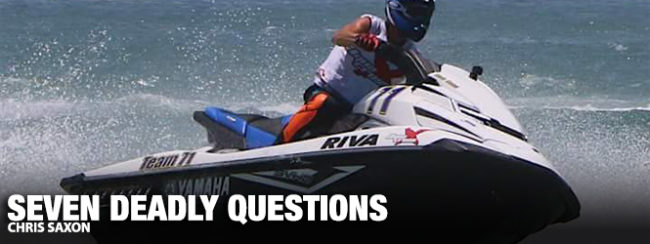
Seven Deadly Questions With Chris Saxon

0

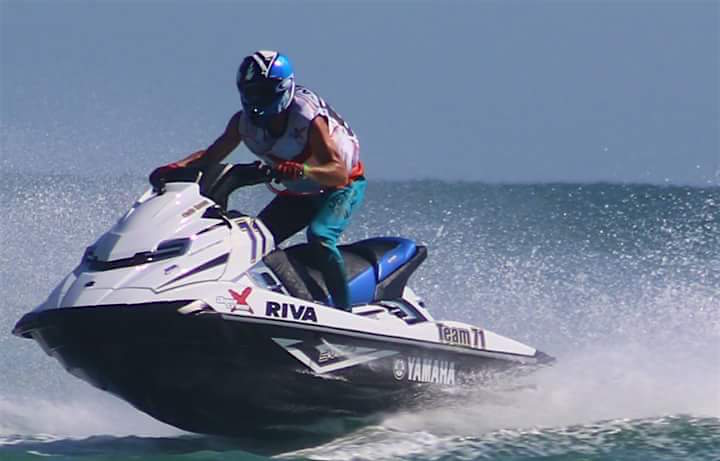
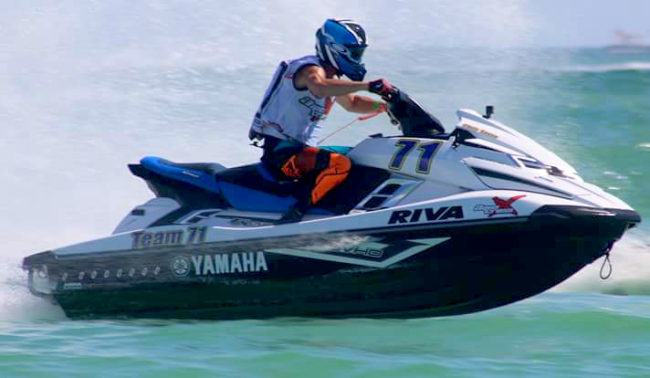
The Watercraft Journal: Thanks for meeting with us, Chris [Saxon]. As one of the RIVA Racing Support Team racers, you made a big move this year. How has your transition from Amateur to Professional gone?
Chris Saxon: The transition from Amateur to Pro has been challenging. These guys in the Pro class are all there to win. I knew it would be tough but had no idea how much faster the pace would be. Two races into the season and I’m still trying to get used to it. I came into this year with a lofty goal of being in the Top 10 every weekend, and so far I’m meeting that goal.

WCJ: That’s great! What do you think the main difference between the two is?
CS: One of the biggest differences between Am and Pro is the power and speed of the skis. Compared to a stock ski, these mildly modified skis can be a handful at 75 and 80 MPH, especially for 30 minutes at a time. Another difference is the level of competition. I’m not used to getting passed, much less lapped.

WCJ: So, why did you choose to make the transition?
CS: I chose to move up to the Pro class after winning the Florida 300 class series, and just short of an international series title, last year. I wanted to see how I stacked up with the best riders in the world. If you want to see the best watercraft racers in the world, you need to come to an AquaX race. They have the best races series out there and a world class staff promoting and running it.

WCJ: You mention the difference in the level of machines that racers are riding. What’s the difference in performance parts between the two levels?
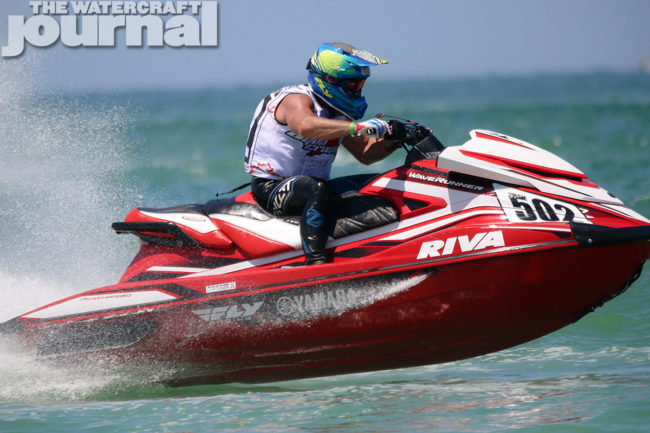
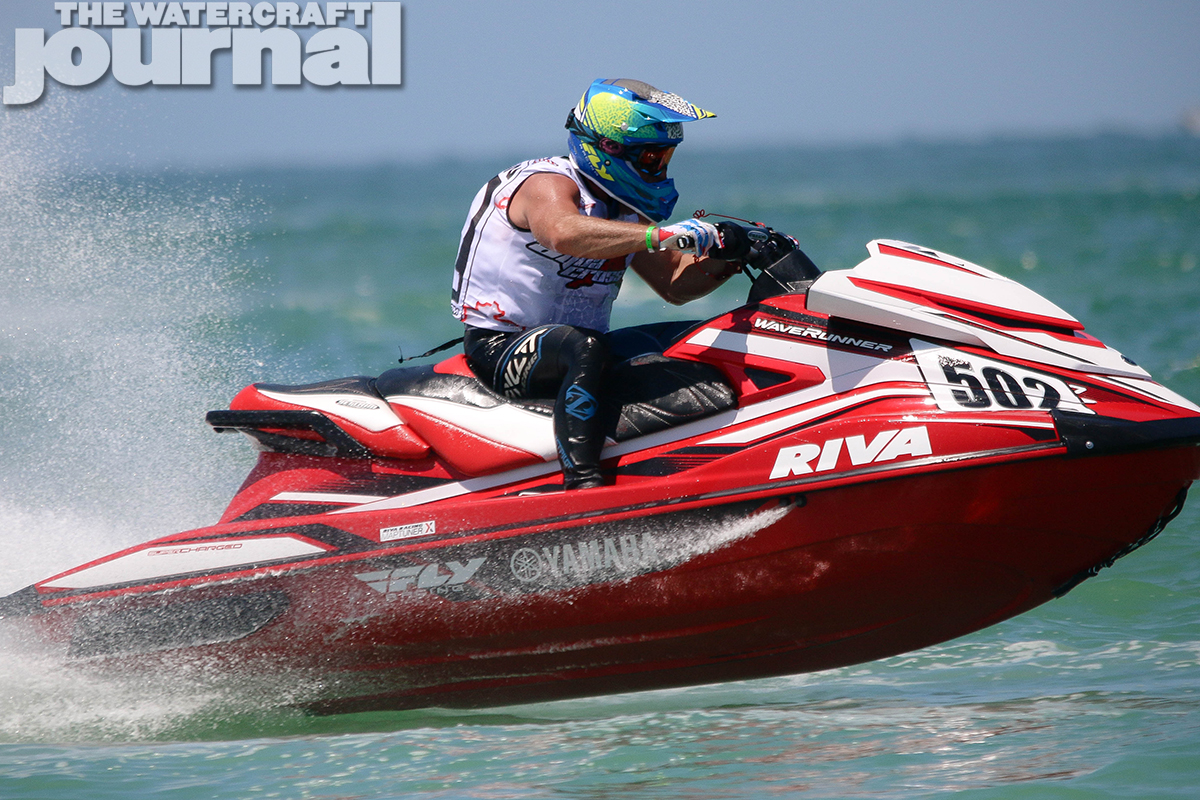
CS: Parts are one of the reasons I didn’t want to to move up to the Pro class. In the Amateur class the skis are almost entirely stock. Besides the normal handling modifications like sponsons, intake grate, and ride plate, you’re allowed to install a blow off valve which is supposed to help prolong the life of the supercharger. For the Pro class you can also install an aftermarket prop which will improve hook up, acceleration, and top speed. The one single most important part however is reprogramming the ECU. One of my biggest sponsors, RIVA Motorsports, has made that easy with the Maptuner X. I can reflash my ECU to a race tune at the races and then put it back to stock tune if I just want to cruise around at home.

WCJ: Is there a different strategy in his racing? How has your training changed?
CS: I’m not sure if there is a different strategy, but I do have to make sure I can race at full speed for the whole race. Last year, I could usually get a comfortable lead and put it on cruise control. This year I have to fight all the way to the checkered flag. I’m practicing and training a lot harder this year. I’m usually at Cross Fit 3 or 4 times a week and out riding in the gulf as much as possible.

WCJ: What PWC are you riding this season? Why do you prefer this model?
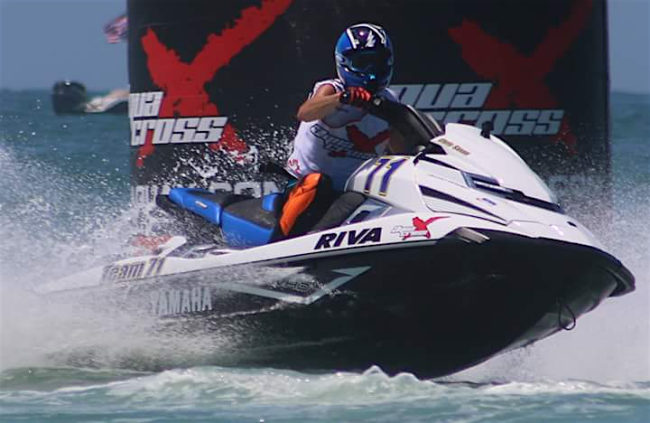
CS: Well, the first race of the season in Daytona, I was racing a Yamaha GP1800. For the second race I switched back to the Yamaha FX SVHO. It’s not quite as fast as the GP but I feel it’s a better fit for me, especially as choppy as the water can get during a race. The FX is longer and heavier than the GP so it rides a little more steady. No matter if you choose the GP1800 or the FX SVHO, Yamaha WaveRunners make the best skis for racing you far !

WCJ: Who would you like to thank? Sponsors, family, etc.?
CS: I don’t have a title sponsor this year (yet), but I’d like to thank Advanced Carpet Cleaning and Restoration, without them I probably wouldn’t even be racing this year. I’d also like to thank Scott Watkins and Nicholas Goodsell at Yamaha. Also, thanks to Dave Bamdas, Jesus Garcia, and the other guys at RIVA Motorsports for hooking me up with the best go fast parts, and tech support out there. And last but not least I’d like to thank JetPilot,  Jettrim, and Fly Racing.

Get Your Blast On: RIVA Racing’s New “Riva Blaster” T-Shirts!

0

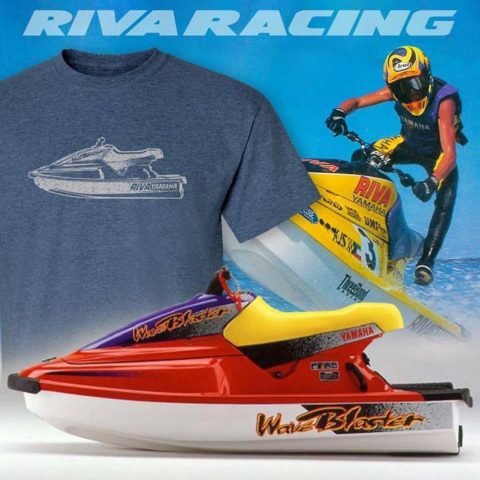
All of us here at The Watercraft Journal love our T-shirts! T-shirts are an important part of our lives, considering most of the time we’re wearing them. If you love T-shirts as much as we do, then you’ll love RIVA Racing’s “RIVA Blaster” T-shirt! These killer new shirts have been battleground tested out on the water and are sure to hold up to whatever you toss at them.

The RIVA ‘Blaster shirts come in a sleek “Navy Heather” color and go with everything; you’ll be the talk of the lake wearing one of these shirts! They are also made with pre-shrunk cotton so you’ll always be comfortable and you’ll never have to worry about them shrinking in the wash.

The “RIVA Blaster” shirt celebrates the original Yamaha WaveBlaster B1 WaveRunner that has created and inspired legends worldwide and still has a huge following 20 plus years later. The shirts come in sizes from Medium-to-XXL and cost $16.95 USD. Don’t delay, get yours today. They won’t last long!

Gallery: P1 AquaX Round 3; St. Petersburg, FL

2

Welcome to Round 3 of the P1 AquaX tour and beautiful St. Petersburg, Florida. Round 2 in St. Cloud, Florida was in the past and the racers were ready to get back on the water. This round would be the first time in the 5-year race series that it would grace the shores of St. Pete and it was a welcome venue. The Amateurs who raced Round 2 welcomed back the professionals along with the P1 Superstock race boats for this site.

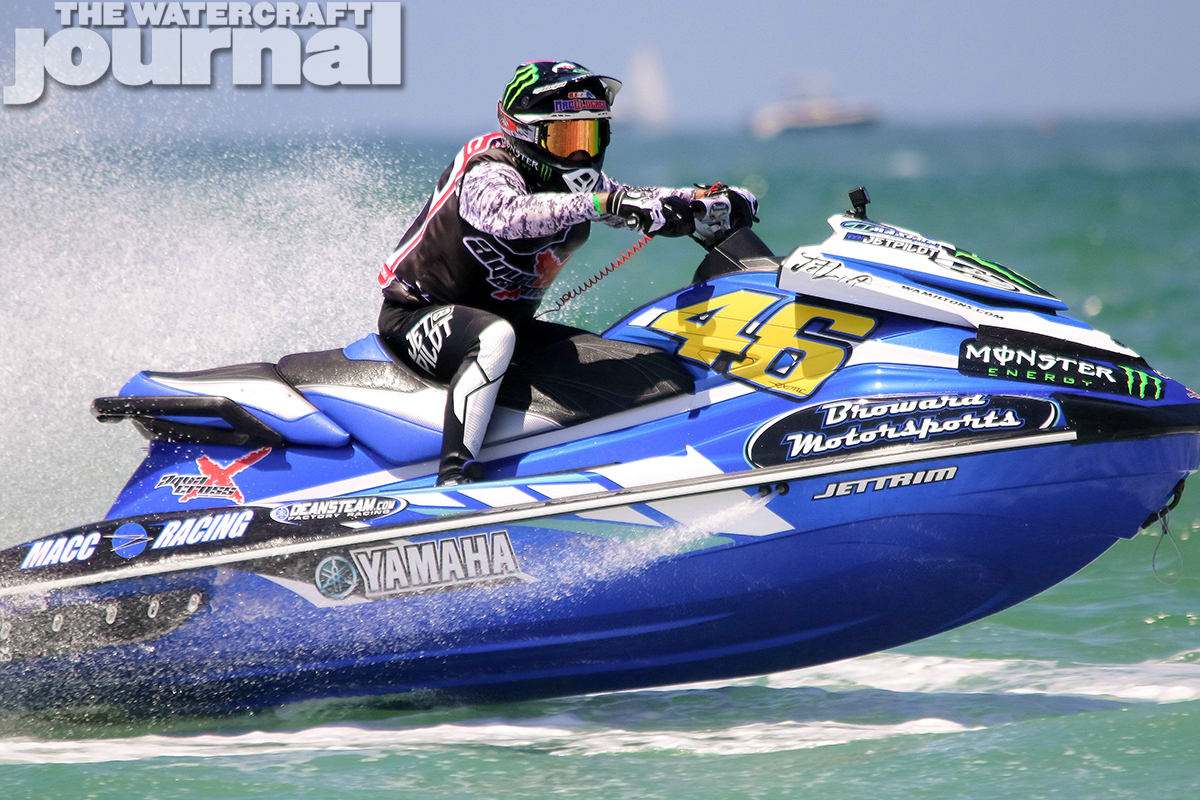
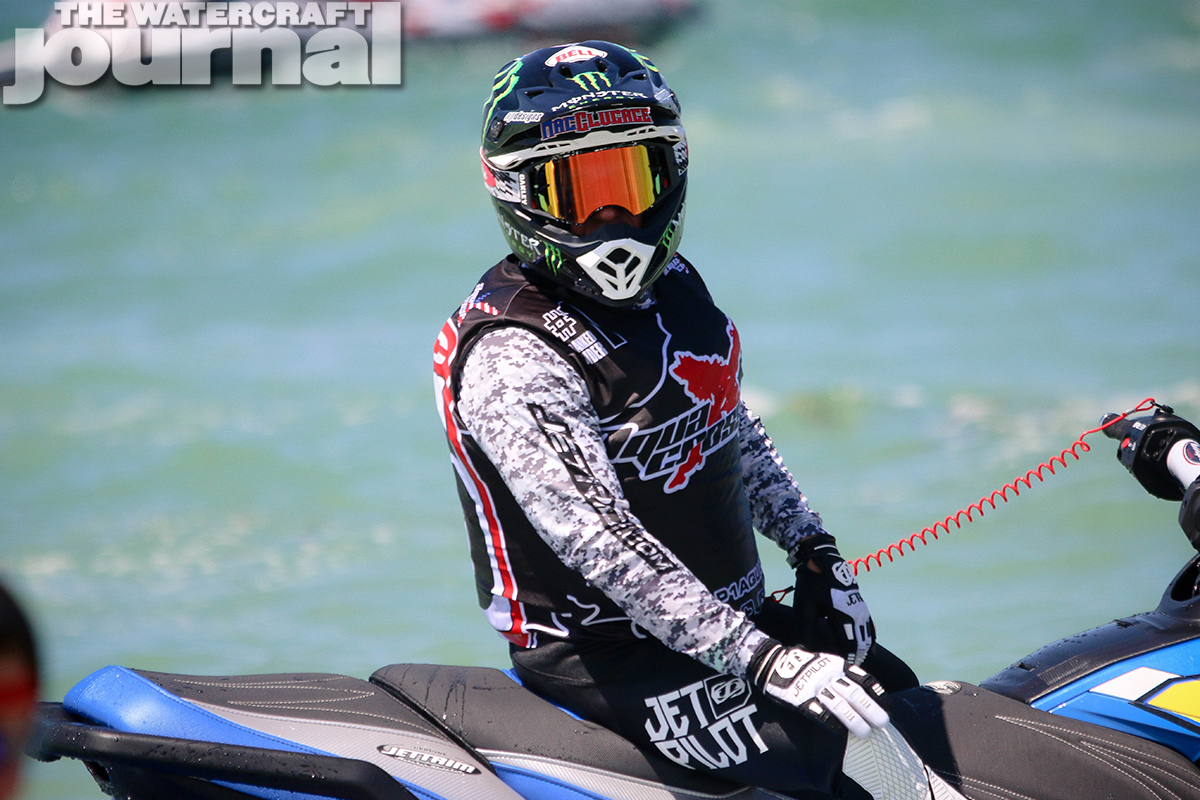
Prior to this weekend, the overall point totals showed that there was a new Number One racer on the tour for the professionals. Chris MacClugage was named the new world leader coming into the weekend (taking it over from Aero Aswar) and it was going to be interesting as many racers had it set to knock him off the podium.

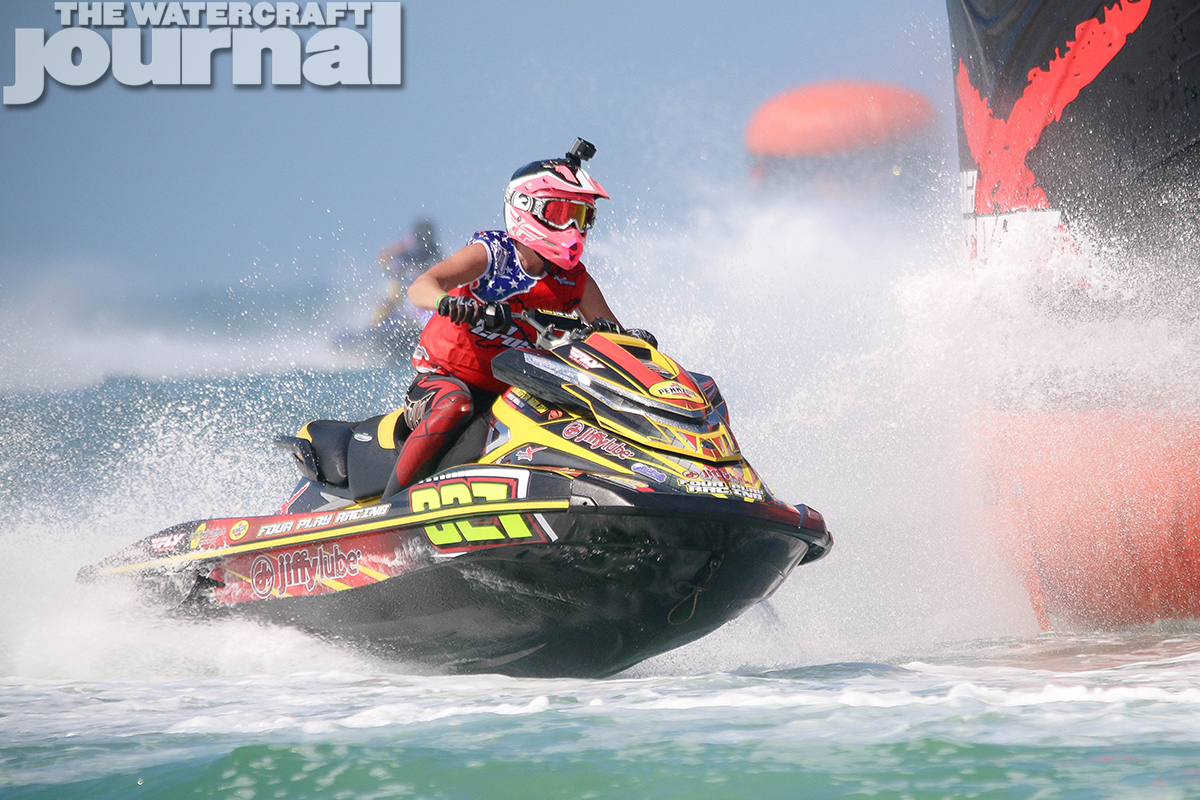
First up for the weekend was the Amateur class, so the battle for the top spot in the Pros would have to wait just a little bit. The racing started had Enrique Chia taking the hole shot just as he had done in St. Cloud and many wondered if he would gain his second win of the season. Sophie Francis, who in the past races came up just a tiny bit short of getting a podium spot followed Chia. Sophie looked like she was on a mission and took the lead from Chia and held off all the rest of the racers all weekend to claim her very first win in AquaX. With the win she also became the very first female racer to ever win a race in the 300 class, showed that with her husband Eric Francis, that a family who trains together can both get big wins.

In the 250 class, Kevin Sullivan would continue his winning streak for the season and take the first win for the weekend in his class. In the 200 class, we would see Jennifer Nolan take the win over Eric Diaz. After the race, Jennifer was glad for the win but was really tired. A combination of the extreme Florida heat and humidity – along with fighting a severe case of bronchitis, she definitely needed to get as much rest as possible if she was going to finish racing the entire weekend.

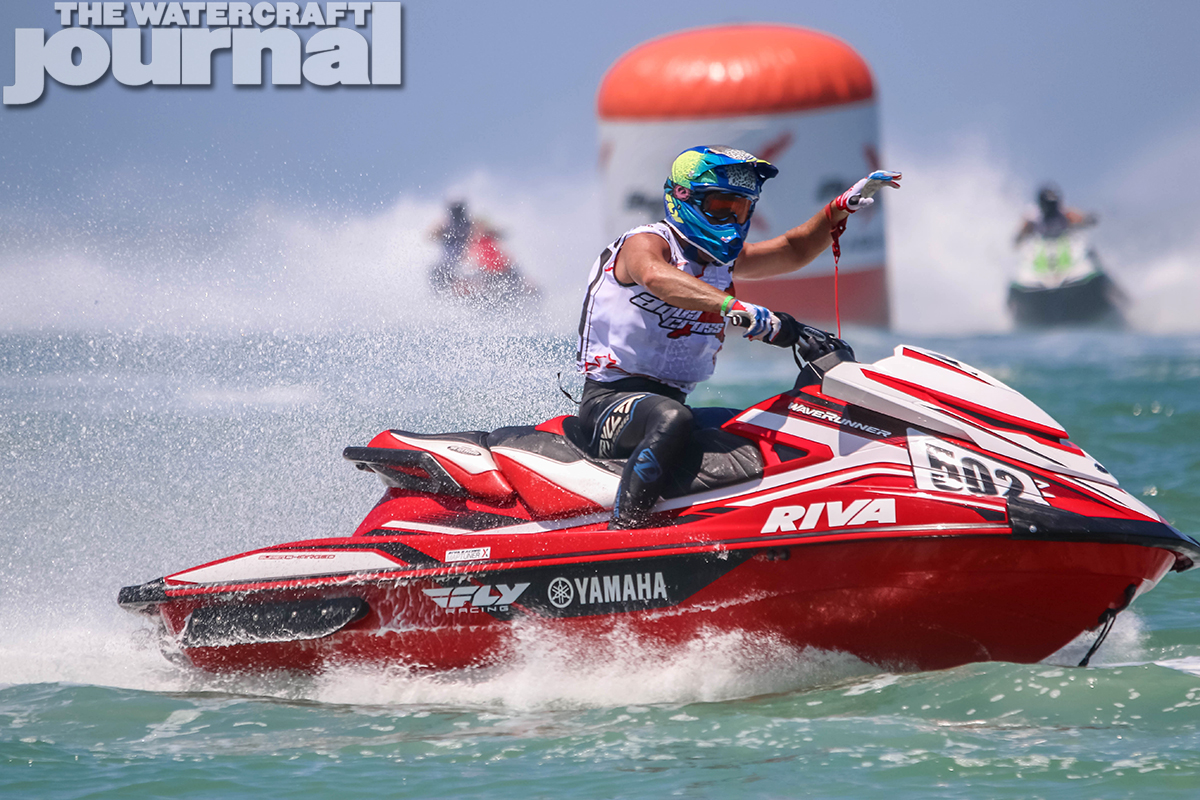
Then, the Pros took the water. Many wondered who would come out on top in a field of 25 racers that included numerous world champions. As the race started it was RIVA-sponsored racer Brian Baldwin who grabbed the hole shot and would not relinquish the lead the entire race. Chris MacClugage would try to chase him down but it appeared from the shore that Macc wasn’t charging as fast as he usually does.

Nicholas Rius and Eric Francis were on the hunt; as the race ended it was Macc and Rius following Baldwin. As soon as MacClugage arrived back to the shore, he tore off his race gear and we knew something was going on with him. It turned out that Macc was also battling a severe case of bronchitis and with no wind and the thick Florida humidity; it would be a lot for him (as well as any racer) to endure for 30 minutes.

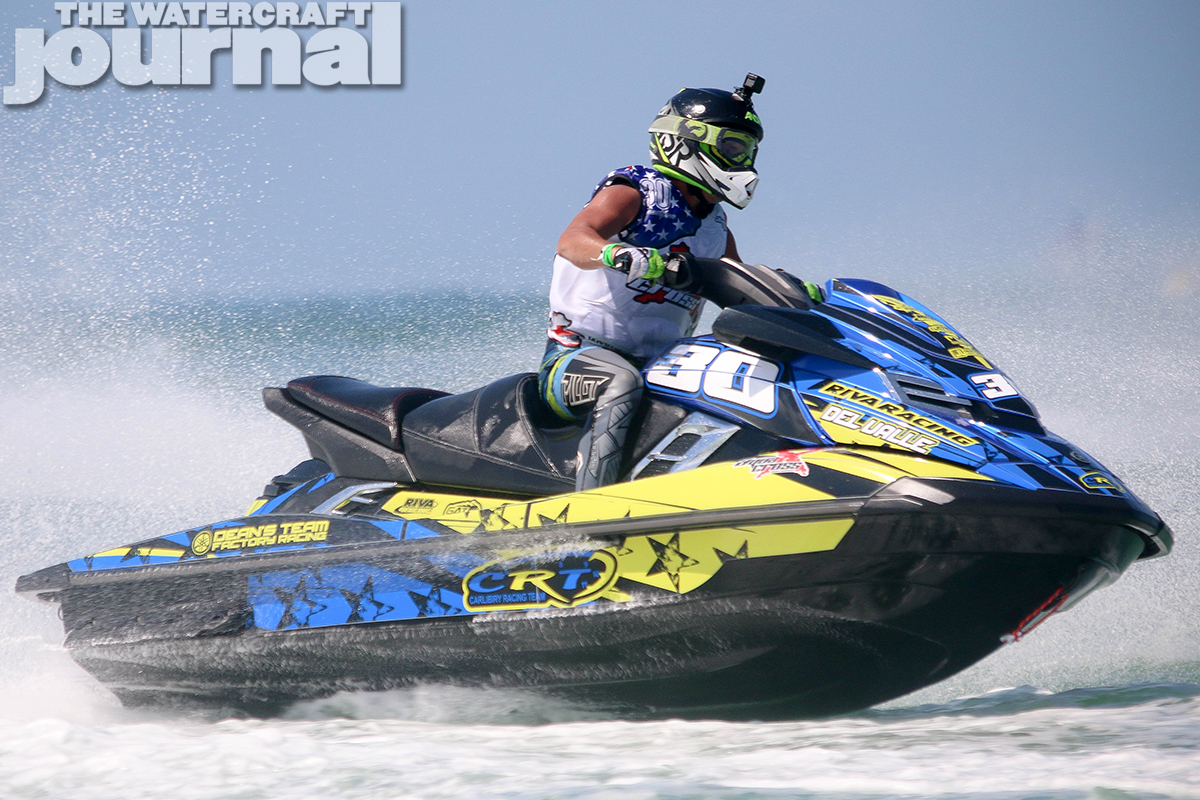
Race 2 in the Amateur class was up next. After seeing Daytona winner Carlito Del Valle take the win in the 300 class, Kevin Sullivan in the 250 class and Jennifer Nolan in the 200 class, the second Pro moto saw Nicolas Rius take the win in the 300 class followed by Chris MacClugage and Eric Francis, respectively. Day 1 of racing was officially in the books and the racers were pumped up for the Day 2 of racing to get here.

Day 2 arrived and the conditions were a repeat of the previous day with the same high temperatures. Would Chris MacClugage be rested enough from his bronchitis to get a get a win and maintain his number one ranking in the world or would someone else take the win? Racing started with the Amateurs racing again. Cody Tetreault took the win in the 300 class and the Overall win for the weekend. Sophie Francis would follow him for second place and garner her very first podium spot in the series. Following Sophie was Enrique Chia but it wasn’t enough for him to gain points for a podium spot.

In the 250 class, Kevin Sullivan who would get a clean sweep for the weekend and put him at the top podium spot in his class. In the 200 class, Eric Diaz took top honors for the final race of the weekend in the Amateur class. Jennifer Nolan would get the overall top podium spot for the weekend even while fighting bronchitis.

The final race of the weekend had the Pros in Race 3, with Eric Francis taking the win over Chris MacClugage, garnering him a podium spot, and joining his wife Sophie for the weekend. Brian Baldwin would take third place in the final race of the weekend. Due to points, it ended with MacClugage getting the overall top spot (by one point) for the weekend having finished a consistent second in every race. Eric Francis and Brian Baldwin finished tied for the weekend and would have them rounding out the top three. Another race weekend was in the books and the racers said good bye to St. Petersburg and have now set their sights to the next round, which will be only the Pros racing in Sarasota, Florida in July.

Join The Club: WNY PWC Owners

0

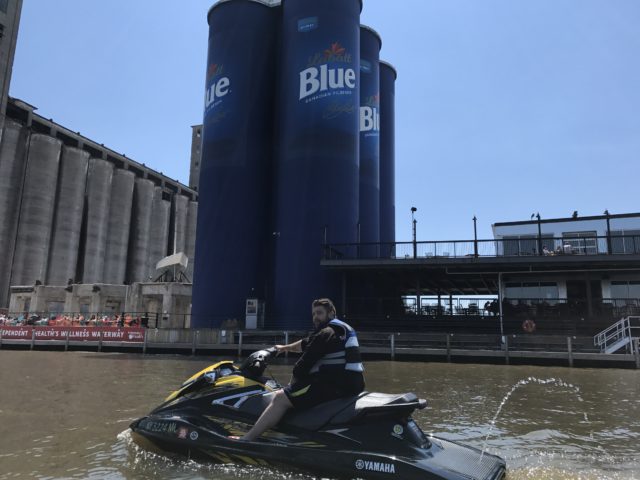
[For today’s installment of “Join The Club,” The Watercraft Journal welcomes Craig R. Witt from the WNY PWC Owners, a group comprised of local watercraft enthusiasts around the Lake Erie, Niagara River, Lake Ontario region. -Ed]

“It all began with as a way to connect local riders focused on maximizing our short seasons here in a region known only for our blizzard stricken winters by the outside world. WNY PWC Owners takes great pride in utilizing our Facebook page to provide a no cost membership and share a plethora of information concerning weather conditions, water temps, small craft advisories, new waterway rules, local launch information, share classifieds, trouble shooting support and more.

“Riding on the American/Canadian boarder also has its own share of challenges. We have multiple law enforcement agencies patrolling our waters every day, along with a different set of rules depending on what countries water you are in. It is not uncommon to have multiple routine inspections within a few hours from various agencies. WNY PWC Owners has a deep understanding of safe / legal operation within our region. We pride ourselves with great sense of comradeship regardless of what you ride, your age, sex or ethnic background. The most important thing is being out on the water safely, surrounded by good people and having fun.

“Through our rapid member growth and strategic partnerships with local and industry organizations, we have gained members and support from all across the region and globe.

“Although, we only recently founded back in April of 2017 we are pleased to announce our first ‘Group Ride’ Saturday June 10th 2017 in the Upper Niagara River with the patio booked at ‘Smoke on the Water’ a local BBQ spot with dock access. We have ordered custom ordered vinyl decals of our logo for each member participating and will have a professional photographer in the water to document our day. Thanks to the gracious supports from our sponsors and the items they have donated, along with our volunteers, we are also compiling ‘grab bags’ for the members in attendance that day to celebrate this momentous occasion. It’s sure to be a memorable one!

“Currently we stand strong at over 200 members. Moving forward as we grow, we plan on coordinating charitable rides as Buffalo, NY is known as the ‘city of good neighbors!’ As many of our members are also avid dog owners, We have recently talked about a ‘ride for pitties’ (pit bulls) with all contributions going to our local shelters.

“Ultimately, Our team is always open to suggestions from members and those willing to volunteer their time or companies who would like to sponsor our events. WNY PWC Owners is 100% operated by volunteers and not for profit. With that being said, your support is always greatly appreciated. I would like to welcome each and everyone of you to join our group to either participate or to just simply see what our crazy lifestyle is like.”

Links to our Facebook page and additional contact information can be found on our website HERE.

Dad Takes Teenage Daughters on PWC Ride Down Mississippi

0

Friends and colleagues have warned that venturing the Mississippi River is not a ride you want to do. Contrary to the lulling appeal of sailing the “Old Man,” traversing the Mississippi is one of temperamental weather, combative boat traffic, surprisingly currents, stretches of drab and lifeless scenery, seemingly limitless flotsam and almost life-threatening pollution. Although not off of my personal “bucket list” it has been bumped to my “maybe” file.

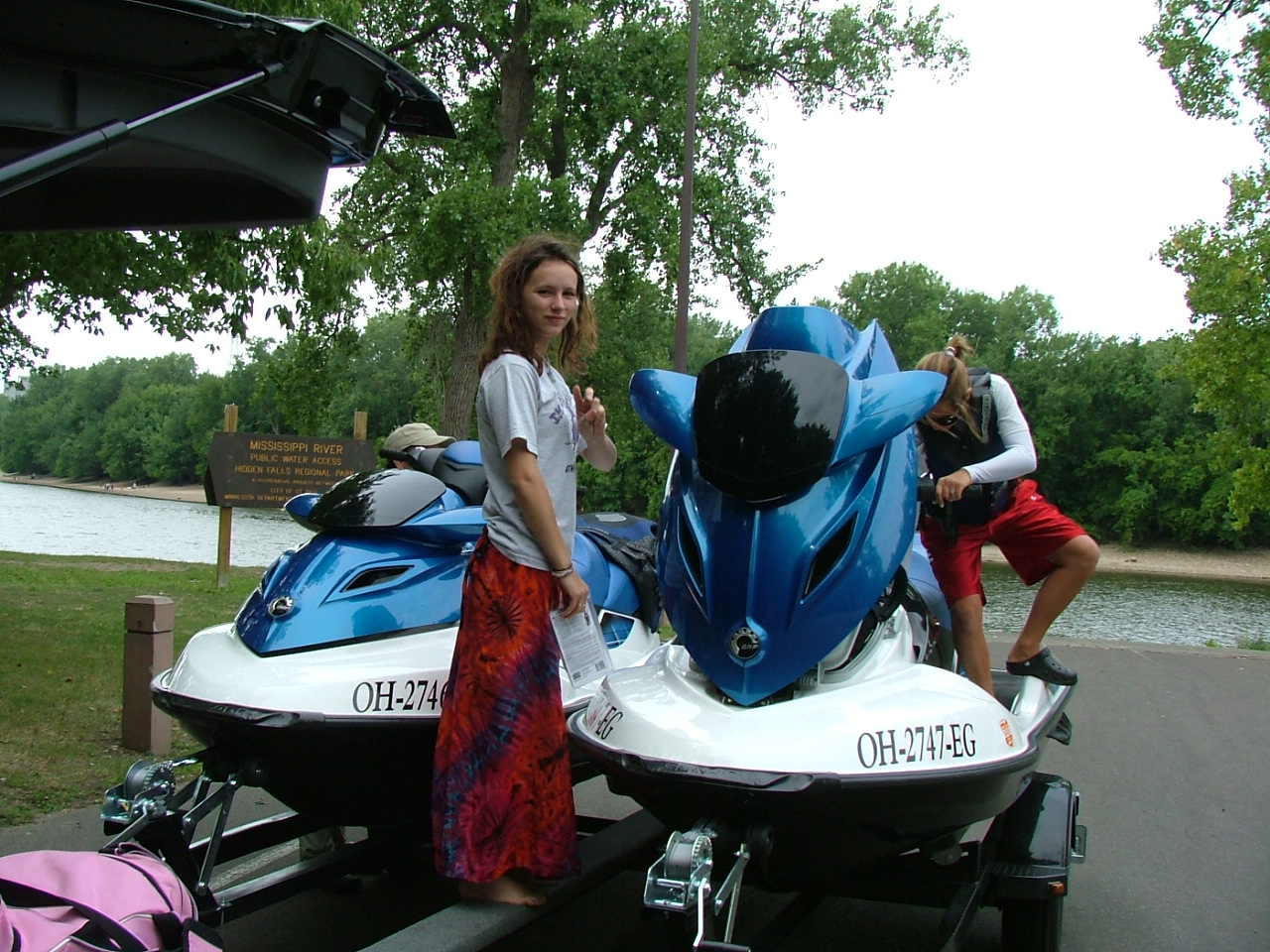
One adventurer who already faced his mortality was Bill Ayars, who sought to take his teenage daughters down the legendary river via a pair of Sea-Doo GTXs. The ride itself has been documented by Ayars himself who wrote My Journey Down the Big Muddy. Ayars reached out to The Watercraft Journal and was kind enough to share a couple excerpts from his book, which we have included below (as well as links to how you can purchase a copy of his book).


The idea for a jet-skiing trip down the Mississippi River came while poison dripped slowly into my arm.

I was 50 years old and recently diagnosed with Non-Hodgkin’s lymphoma, a cancer of the white blood cells. Every third Friday for five months, I sat in the hospital in my hometown of Cleveland, Ohio, for eight hours undergoing chemotherapy.

Toward the end of treatments, in December 2006, I started thinking about taking an adventure. I wanted something to look forward to, something to celebrate my survival. I wanted my teenage daughters, Jennifer and Jackie, to come with me.

Seven months later, my oldest daughter, Jennifer, and I were flying down the Mississippi River having fun, each on our own jet ski. It was the first day of our 1,700-mile jet-skiing trip from St. Paul, Minnesota, to New Orleans, and we were full of energy. As far as I knew, no other woman or girl had jet skied the Mississippi.

We had left St. Paul, Minnesota, earlier that morning from beautiful Hidden Falls Regional Park, just below the first lock and dam on the river at mile marker 844. Our destination that day was Alma, Wisconsin, 95 miles away.

We were all a little nervous at the start, uncertain of what lie ahead. It didn’t help that a woman we met the night before warned us of whirlpools that she claimed could pull entire boats under.

We later learned they’re called wing dams – and they do not “eat” boats. Still, the next seven days would be full of uncertainty, scary moments, and challenges. But triumphs and fun, too.

Frequent Obstacles
There were locks and dams about every 25 miles. We often had to wait for long periods, sometimes hours, to be let through. We’d pass the time by studying our maps or just lying back on the jet skis and resting.

The 27 locks and dams on the Upper Mississippi, as we learned, were built to control the water levels and tame a series of rapids on the upper Mississippi from St. Paul to St. Louis, Missouri.

Over this 600-mile stretch, the water fell more than 400 feet, often through boulders, rapids or small water fall systems. Entering a lock was sort of like getting into an empty bathtub. Once inside, water poured in to “raise” you up to the next portion of the river.

“Dad, I don’t know what to do!”
About halfway through our trip, a storm hit. The rain and wind stirred up the river something fierce. The waves were huge and washed over the front of our jet skis.

At one point, Jennifer stood up and a wave crashed into her, almost knocking her off her jet ski. She screamed to get my attention but I couldn’t hear her. When she finally caught up to me, she glared.

“I could have died behind you. I could have died!” she screamed. This was not the start I anticipated. New Orleans was still a long way.

To read more about Bill Ayars’ adventure, go to http://www.thebigmuddybook.com/ to purchase his book, “My Journey Down the Big Muddy.’’ Ten dollars from each purchase price goes to The Emerald Jenny Foundation, which provides online resources to families struggling with drug and alcohol addiction. Also, check out photos and chapter excerpts on http://www.facebook.com/thebigmuddybook and follow us on Twitter @thebigmuddybook


 

Miss Geico Racer Jason Russo Wears Fly Racing F2 Carbon Animal Helmet

0

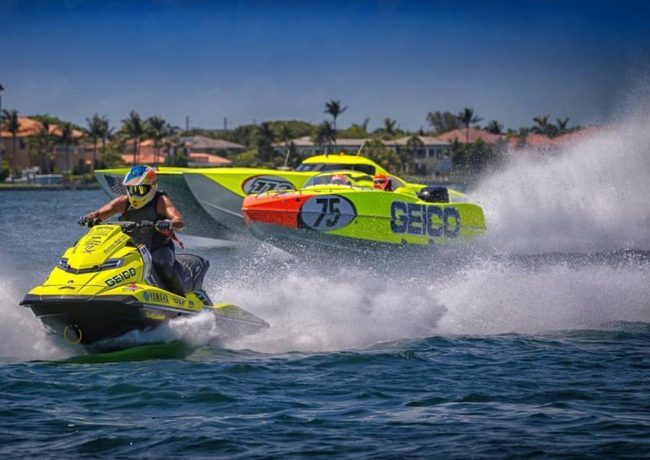
As part of the official Miss GEICO racing team, competing in the P1 AquaX Pro Enduro class, Jason Russo and his iridescent yellow Yamaha FX SVHO WaveRunner have quite a bit of competition out on the water. Recently placing 5th overall at the St. Petersburg, FL tour stop this past weekend, Russo pushed ahead of a field of 22 other racers (including the likes of Aero and Aqsa Aswar, Nicholas Rius, and Erminio Iantosca) to edge out the top 5.

In acknowledgement of their sponsored racer, Fly Racing shared on its Facebook page this great shot of Russo aboard his Yamaha leading the Miss GEICO race boat, as well as the tag “[Jason Russo] flexing in that Animal F2 carbon helmet.” The image, taken during a video shoot for Greenlight TV and taken by photographer Gary Stray, reveals Russo’s safety gear of choice – specifically his orange, white and teal F2 Carbon Animal Helmet.

Made from a proprietary blend of carbon fiber and Kevlar, Fly Racing’s F2 Carbon Animal helmet is as close to “a factory race bike as a helmet can get” according to Fly. The race-ready helmet both meets and/or exceeds the highest safety standards (Snell 2015, DOT approved for USA); is constructed using state-of-the-art, aircraft grade woven carbon fiber and Kevlar composite materials for superior strength and light weight; the dual density EPS liner combines two layers of EPS (Expanded Polystyrene), one softer, one slightly harder for more progressive impact absorption; 11 intake and 4 exhaust vents that create massive airflow to keep your head cool; quad-vent goggle anti-fog vents; a washable Coolmax comfort liner & cheek pads; and uses super-strong, lightweight machined aluminum screws, rivets, and stainless steel D-rings for superior strength.

Diver Discovers Lost Krash Industries Freeride Ski Off Gold Coast (Updated)

0

Although far too close to shore to grant full salvage rights, maritime law states that the person to recover a sunken vessel is awarded (typically) between 10-to-25 percent of the value of the recovered item. While that might not sound like much, considering the market value of some historical artifacts pulled from the ocean floor, salvage diving can actually prove to be quite lucrative. And surprisingly, sunken jet skis – much like sunken sailboats, fishing boats and other vessels – are strewn across the ocean floor wherever mankind has sailed.
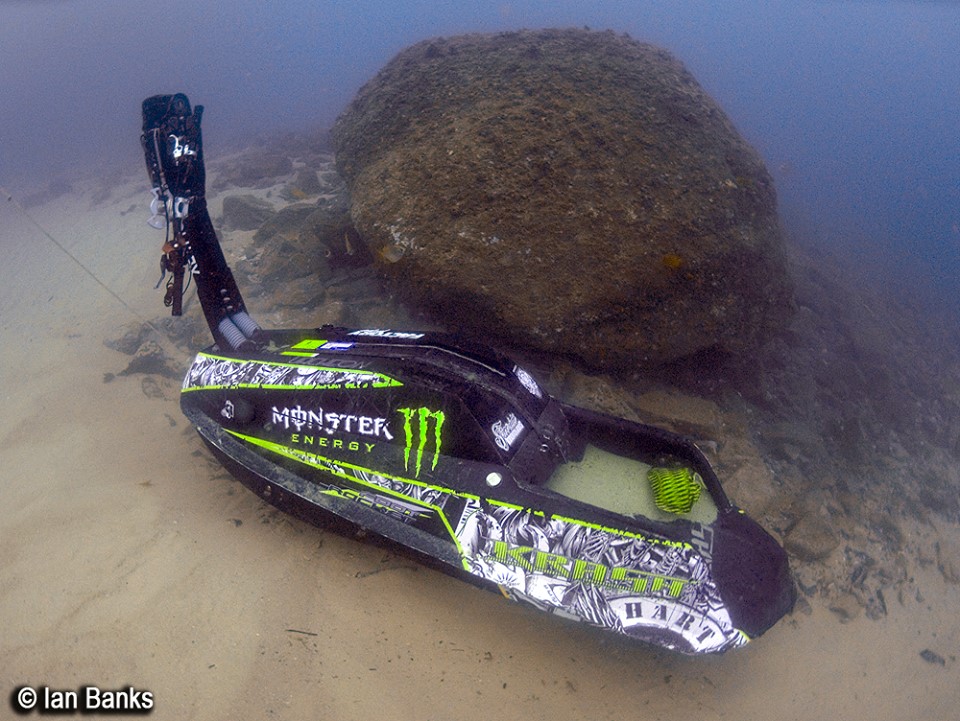
Of course, in late May of this year, one former owner of a Krash Industries Predator (sp.) became very happy when Ian Banks, a scuba diving enthusiast, discovered his lost freeride ski off of Gold Coast Seaway, in Queensland, Australia. When properly equipped, such machines can cost upwards to $25,000 to $30,000 USD, considering all of the lightweight, hand-formed carbon fiber and billet aluminum components. Freeride skis are some of the most intricate in all of jet skiing, requiring some seriously skilled hands to build machines capable of the amazing acrobatics shown in just some of the coverage published on The Watercraft Journal.

Of course, Queensland’s Gold Coast is considered one of the most desirable freeride locations in the world, and is host to several world famous freeride competitions. When more information arrives regarding the owner and details pertaining to its loss, we’ll update the story.

[Updated 6/18/2017]

Thankfully, the personal watercraft community came through in a big way over the weekend. A virtual avalanche of information came pouring in, as reports revealed the Krash Industries Predator ski belonged to Australian freerider James Ricardo. Richardo suffered a sudden steering failure which sent the ski into a nose dive down to bottom of the Gold Coast Seaway.
Clint Ebbesen who was part of the rescue, explained the reason for the sinking, “[It was a] mechanical failure. A bolt holding on the handle bars sheared off. As the handle bar was pulled away from the ski it pulled on the steering and throttle cables, making the ski go full throttle at full lock and the ski just dived underwater and went down very quick.”

With quick work by Ian Banks, who located the ski in no time at all (and tied a locator buoy to it), a response crew was aboard a rescue boat, and with a few ropes and 3 hours time, Richardo’s ski was back on dry ground. Because of the heavy ingestion of sand, the Predator was whisked onto a trailer and hauled off to a local shop to be completely disassembled, cleaned and rebuilt as new.


The Watercraft Journal Looks to Hire a News & Feature Editor

0

Did you know that you could make upwards to $1,500 a month writing for The Watercraft Journal all by putting in an extra hour or two a day worth of work? Seriously, it’s that easy. Because The Watercraft Journal continues its aggressive industry-leading daily (Monday-through-Friday) publishing schedule, and we need as much help as we can get to continue to entertain and inform our ever-growing readership, we’re excited to announce that we’re hiring!

Right now, The Watercraft Journal needs to fill a very important position: a News & Feature Editor! That’s right, we’re looking for self-motivated, dedicated enthusiasts looking to work with the single most popular PWC magazine in the world to help spread the word about our industry’s best and brightest brands and manufacturers, as well as help provide a focused spotlight on our sport’s best freeride/freestyle riders, manufacturers and events! Here are the details below:

News Editor
Shaw Group Media, the publisher of The Watercraft Journal (watercraftjournal.com) is looking a self-motivated, energetic person to hire as News & Feature Editor. The News & Feature Editor must have a strong interest in the personal watercraft (PWC) industry, be at least somewhat familiar with proper terminology, technology and persons/companies therein, or willing to learn quickly.

The News & Feature Editor must be able to turn around news content into fast, legible and informative written content for The Watercraft Journal. Applicants are encouraged to have several social media feeds providing leads for potential news that the rest of the Editorial teams might not have access to. An ongoing Google document is regularly updated with already pre-approved news topics to be written about, as well.

Riding ability, photographic talent or writing experience is appreciated and encouraged, but not necessarily mandatory.

The News & Feature Editor position is a 1099 freelance/subcontractor position and will be paid twice a month per a predetermined scale for each written article. There will be a 90-day trial period for every applicant to evaluate work ethic, determination and commitment to providing superior, reliable news-worthy PWC content for The Watercraft Journal audience.

All serious inquires are to email introductory “cover letter” and resume to [email protected].