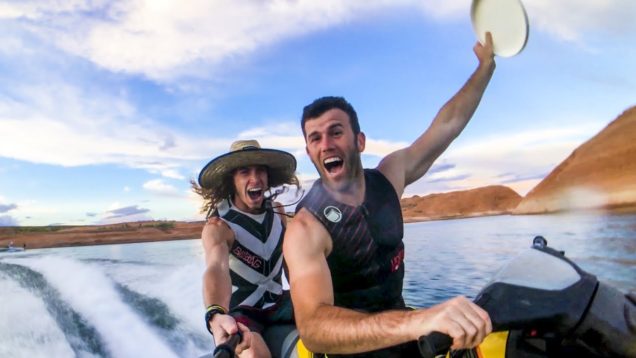
What could be more exciting than a fun-filled day riding on your Sea-Doo PWC? How about chasing a Frisbee on it? Yes, this is officially a thing. “Team Super Tramp” video producer Devin Graham has teamed up with Brodie Smith on this one to make an epic action video.
If you have browsed through social media websites in the last couple years, chances are you have come across Frisbee trick shot videos and chances are those videos star trick shot athlete Brodie Smith. This latest video labeled “Trick Shots and Boats” captures some awesome Frisbee trick shots utilizing Sea Doo PWC’s and other related watersport equipment.
The very first scene in the video we see Smith launching a Frisbee as he immediately hops on his Sea-Doo. Gunning the throttle, the ski jumps out of the water and hurls toward the flying Frisbee. As he inches closer and closer, he stands up, reaches out slightly fumbling, and clinches onto the flying saucer immediately celebrating his victory.
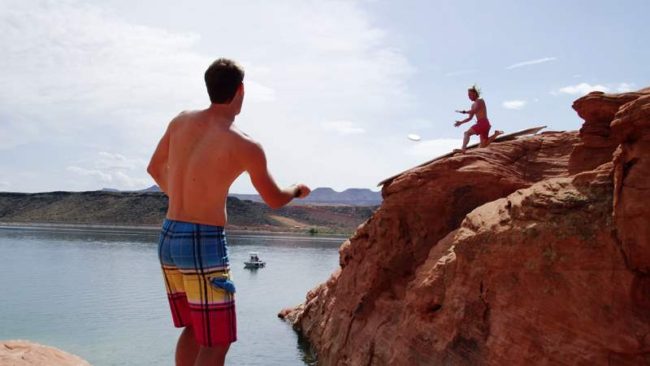
We then continue to see a series of trick shots with people jumping off of cliffs, throwing a Frisbee between each other, the Sea-Doo, and a boat. There are even some various props thrown in the mix using float tubes and cones as aerial targets and nets as catching devices. After the final trick shot we see Smith celebrating in awe as he says “That was incredible!” We must say that we agree.
The annual Truckboss Truck Decks mega sale is back by popular demand! Grab an all inclusive Winter Snow Package to easily transport your snowmobile. Purchase a high quality Fall Bundle for your ATV or UTV. Personal Watercraft packages are also available for great savings. All packages are offered with a Base or Deluxe savings cost. The Deluxe Savings Bundle is available with more and different accessories at a higher cost. Whichever purchase you make comes down to what your needs are. The bottom line is TruckBoss manufactures high quality products.
The sale runs from August 2 to August 31st. Sales must be finalized by September 15th. Check out the Truckboss Decks site for details pertaining to each deal. You get a lot of bang for your buck.
Truckboss Decks are patented and made in the USA. The decks have a winch loading system that is exclusive to Truckboss. The telescoping ramps are also patented and only Truckboss carries this specific ramp. The decks have an infinite number of tie down points, which is a bonus. We really dig the no maintenance anodized finish. Less work equals more play time. With the deck having a modular style, it fits all trucks. There is room under the deck for safe and secure storage for gear. Your gear is also protected from the weather. The Truckboss Deck has a 2000 pound capacity so feel free to load it up.
Hurry to your nearest dealer or have your Truckboss Deck and accessories shipped. Truckboss offers $300 shipping to the USA.
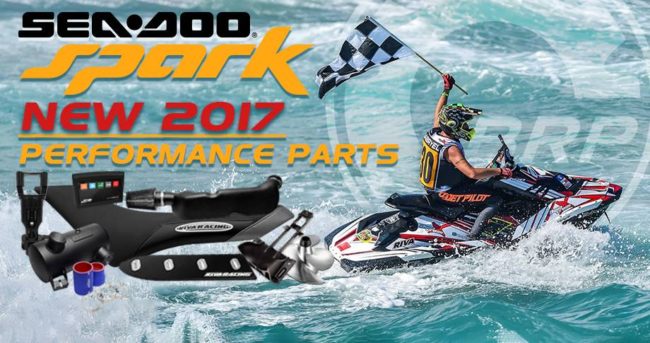
If you are looking to bump up the power on your Sea-Doo Spark, RIVA Racing has tons of go fast goodies that are sure to help you tear up the water this summer. They carry a full line up of over 50 performance items for the Spark model; everything ranging from cold air intakes to race batteries to Pro-Series sponson kits. They also offer three performance bundles that are guaranteed to give you instant power out on the water. These bundles come in three versions depending on how much extra power you want to make; Stage 1, Stage 2 and Stage 3. Let’s take a look at them:
Spark Stage 1 Kit- $282.00 USD
The Stage 1 kit delivers a +2mph boost over stock thanks to an easily installed air intake and pump components. No internal engine modifications are required. RIVA’s Intake Manifold Upgrade Kit is included and a precision tapered billet sleeve directly replaces the restrictive mesh element in the intake tract instantly enabling your Spark’s engine to produce more horsepower by delivering increased air flow. The Stage 1 kit also includes a Solas R-Series Concord Impeller. This special performance impeller is offered exclusively by RIVA and is specifically pitched for their specifications using a pitch block to ensure accuracy. A billet impeller cone is also included.
Spark Stage 2 Kit- $$1203.35 USD
The Stage 2 kit delivers a +4mph boost over stock through an easily installed air intake and pump components; just like the Stage 1 kit. No internal engine modifications are required also. Like the Stage 1 kit, you get RIVA’s Intake Manifold Upgrade Kit and Solas ‘R’-Series Concord Impeller. Further boosting the power in this kit is RIVA’s MaptunerX BRP Bundle that reflashes your Spark’s original ECU. The MaptunerX provides the ability to quickly and easily load performance tunes directly into your stock ECU. Performance Tunes are calibrated to provide optimum fuel delivery, ignition timing and rev limit. Your OEM dash display, engine diagnostics & engine safety functions are retained. The MaptunerX features a full color, touch screen display, ability to restore stock tune settings and access to RIVA’s complete tuning library and technical support.
Spark Stage 3 Kit- $1650.35 USD
If you want the maximum power out of your Spark, the Stage 3 kit is for you! This kit delivers a +5mph boost over stock. Like the other kits, no internal engine modifications are required. With the Stage 3 kit, you also get RIVA’s Intake Manifold Upgrade Kit, Solas ‘R’-Series Concord Impeller and RIVA MaptunerX BRP Bundle. On top of that, you also get RIVA’s Power Filter Kit and Free Flow Exhaust Kit. The Power Filter Kit relocates your air intake forward away from the hot engine and delivers cold, fresh air from the front of your craft that is supplied by the factory hull vents. Air is channeled past the fuel tank and into the OEM airbox. Their Free Flow Exhaust Kit allows the removal of the restrictive sound suppression system located between the water box and hull exit on your Spark. This improves the engine performance by reducing back pressure and restriction.
All three kits are currently on sale, so don’t wait to grab one!
You just drove away from the dealership with your brand new PWC and chances are if this is your first PWC or you are new to towing a trailer altogether, you may be trying to balance your excitement with concentration on towing your new prized possession. Before you make your first journey to the boat ramp, you will want to spend some time practicing towing your trailer and especially backing up. As this can be one of the trickiest things to learn, it is recommended that you take some time to learn it right so that you can effortlessly perform at the launch ramp.
There are many tips and videos online about this topic and you will see that everyone has his or her preferred techniques but the basic skills can easily be learned and we have found a recent personal watercraft article that sums it up pretty well. The first thing to do as already mentioned, is to practice before you get to the boat ramp. You want to find a large open space such as an empty parking lot, away from traffic and distractions. The idea is to create a low-pressure environment so that you can practice without any time constraints.
Spend some time backing up and maneuvering to learn how the trailer responds to your steering inputs. You will notice the trailer moves in the opposite direction that your car moves in reverse. A good way to remember is that you “push” the bottom of the steering wheel in the direction you want the trailer to go. For example, push the bottom of the wheel left (turn the wheel clockwise) and the trailer will move to the left.
Once you are fully confident on how your trailer backs up and maneuvers, then you can head to the ramp but you need to also learn a few tips on planning ahead. You want to get on and off the ramp as quickly and safely as possible so that other boaters are not waiting for the same spot. You should do all of your preparation work before you get to the launch area such as deciding what gear to take with you, placing your bumpers or tie down ropes, and checking that your PWC is in operating condition.
Once you are in the water, move your watercraft out of the way before tying it to the dock so that the ramp is free when your vehicle is pulled out of the water. When you are finished riding, just do everything in reverse. Your fellow boaters will be a lot happier and you won’t get those glaring eyes staring at you.
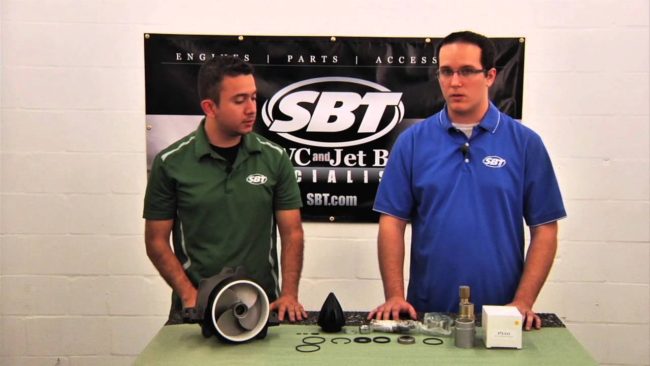
The jet pump assembly is the major driveline of every personal watercraft. Without it working properly, the engine is just doing less efficient work and you will notice less performance out of your ski. SBT Inc. shows a “tech tip” video on the rebuild of a jet pump. This video has been out for a few years now however it definitely serves as a reminder of the importance of proper pump maintenance.
Some of the details in the video include indications that your jet pump may be due for a rebuild, the important components of the rebuild kit, where to buy your kit, and the important steps of the rebuild process. The specific pump which the SBT crew detail in the video is from a supercharged Sea-Doo.
The general purpose of rebuilding a jet pump is to replace items that are subject to wear during the normal course of usage. These parts include the impeller, wear ring, bearings, and seals. The video starts out showing what these wear items are and what comes with a rebuild kit. It also shows some special tools which are necessary for this particular application. It finally gives an overview of each step involved in the rebuild process so that you can get an idea if this is something you wish to tackle at home.
For those that may not want to invest in special tooling or simply just want the ease of bolting in a pre-assembled jet pump, SBT also offers new and rebuilt jet pumps for certain applications.
We at The Watercraft Journal recently got word of a pretty great announcement regarding this weekend’s Pro Watercross Racing happening in Lake Hartwell, GA, from Team Faith‘s Brian O’Rourke: “Team Faith is pleased to announce its support of the Sport Stock class at Rd. 6 of the Pro Watercross Tour in Lake Hartwell, GA this weekend. Team Faith will award the 1st Place Overall Winner of the Sport Stock class $100, 2nd Place Overall will receive $50 and 3rd Place Overall will receive $25.”
For those unfamiliar, Team Faith is a non-profit multi-faceted outreach ministry for people share a common interest and enthusiasm for action sports since 1994. And while this news should be a huge boon to the already growing Sport Stock class, Team Faith isn’t alone in their effort, as their sponsoring the Sport Stock class a couple people stepped up including Course Marshall Randy, who recently promised to match Team Faith’s contribution and and Normy The Flagman giving $25 per first, second, third and fourth place finishers for total of $100 bucks.
So what does that mean? If you win the overall in Sport Stock class, you will walk away with an impressive $225 in cash, $125 for second place overall, $75 for third and $25 for fourth. Not too shabby, right? And that’s all thanks to some seriously generous individuals who want to see the sport grow. As O’Rourke said, “God bless the sport of Watercross!”
Hal Monkman from Ontario, Canada has been a white water jet skier for almost 15 years. He says “I first got into it as a professional kayaker. We bought a jet ski to use as a filming platform to make kayaking videos back in 2003. We’ve been using them since in the kayaking world for filming, safety uses and as a means to access water that we can’t easily get to in our kayaks”. He goes on to say while quite a few people in the kayaking world have jet skis, he seems to take it up a notch.
Hal is very passionate about jet skiing and spends a few hours every weekend riding his Sea-DooSpark on the Ottawa River; the location you’ll see in the video below. The Ottawa River is a very popular white water rafting river about 1.5 hrs outside of Ottawa, Ontario. Another spot Hal says he loves to frequent is the Lachine Rapids in downtown Montreal, Quebec. “There are big waves and big jumps. I love it. They also do a lot of jet boating there” says Hal.
He tells the Watercraft Journal that he has quite the adventure planned for the near future and is looking forward to sharing it with us and our viewers. “I’ve been training up and planning for a real extreme adventure for almost a year now. This adventure will see me Sea-Doo down 140 kilometers of real crazy rapids far out in the Canadian wilderness in search of a big river wave that I can surf in my kayak. It’ll be cool!” explains Hal.
We look forward to sharing that adventure with you all and hope you enjoy the video below!
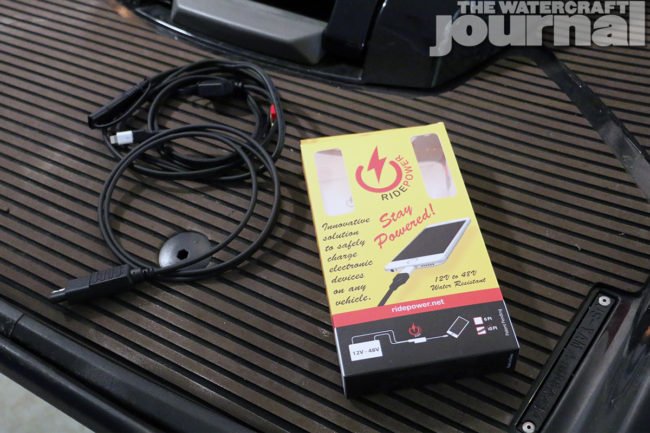
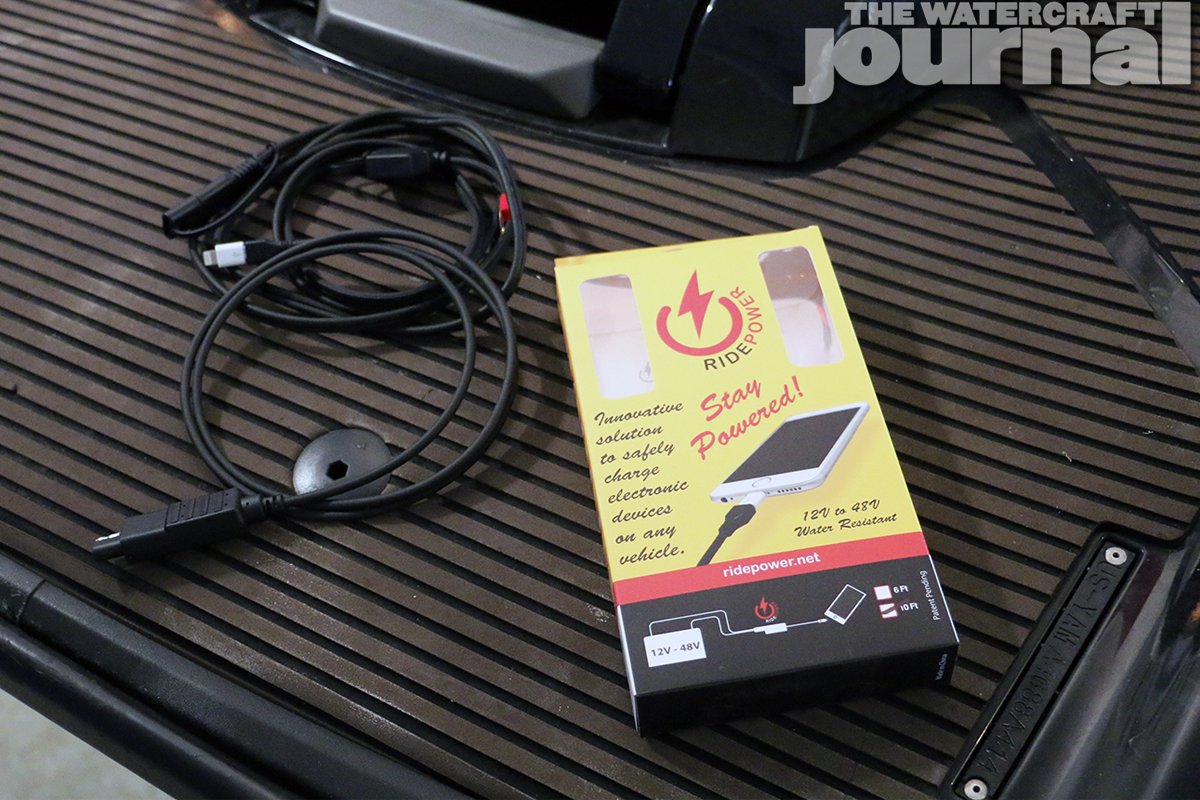
Over 3 years ago, we were first introduced to the RidePower phone charging system. Intrigued, we reached out and picked up a kit for an ’05 Sea-Doo RXP 215. The installation was straight-forward enough and took us about an hour to complete. When done, the kit (which operates “live” or without the need of turning on your PWC) worked great and continues to work flawless until this day. Using a standardized USB cell phone port for a Samsung Galaxy smartphone, the only major changes to the RidePower phone charging system is the inclusion of a Apple-style Lightning adapter and a heavily discounted cost, down from $69 in 2014 to an impressive $39.95 today.
Because of the overall length of the vessel, the various bulkheads and fairings and complexity of the current Yamaha FX WaveRunner platform, we thought we’d take a swing at installing our second RidePower charger on a ’14 FX SHO. Obviously, the process requires quite a bit more drilling, which we know frightens quite a few folks, but with the right instructions and tools, the final result can actually look like it came equipped like this from the factory. [And we wager that 12v charging ports – currently available on all Yamaha VX and FX Limited models – will become the next standard feature on all craft – Ed.]
Above: Given the length of the full-sized FX SHO, we opted for the 6-foot cable, which actually ran a little long anyways. (Too much is better than not enough!)
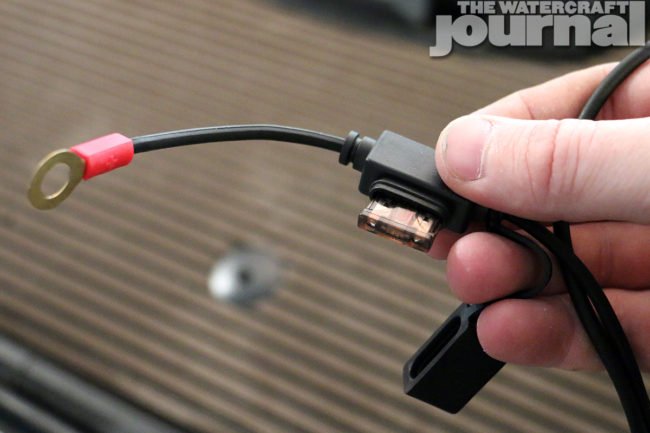
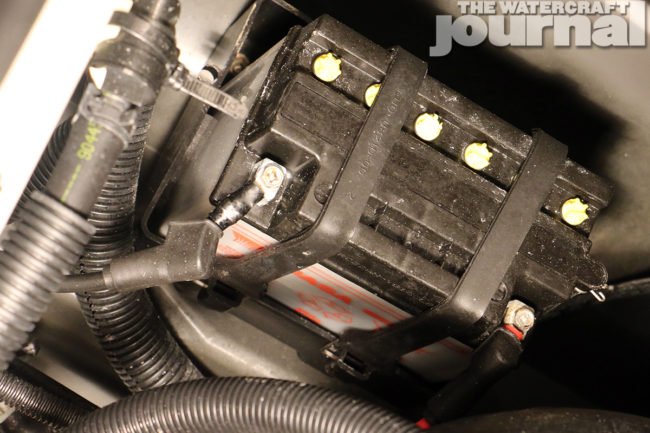
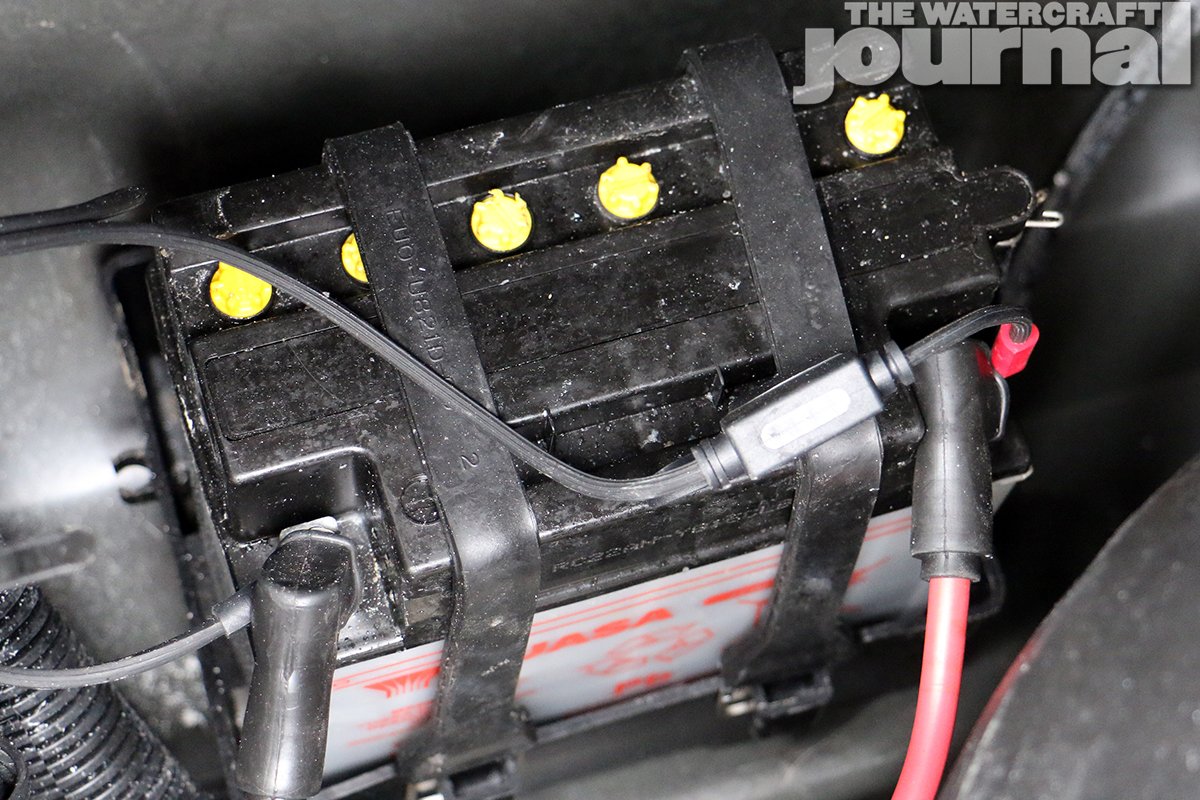
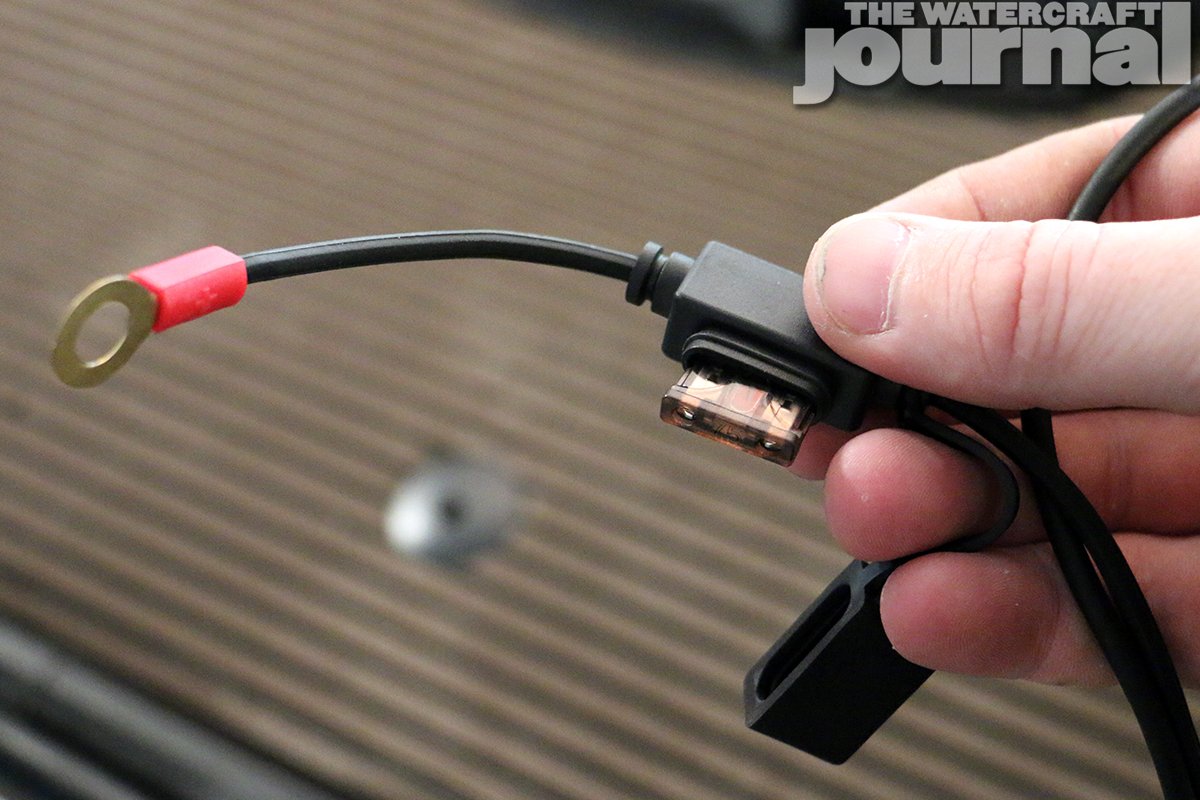
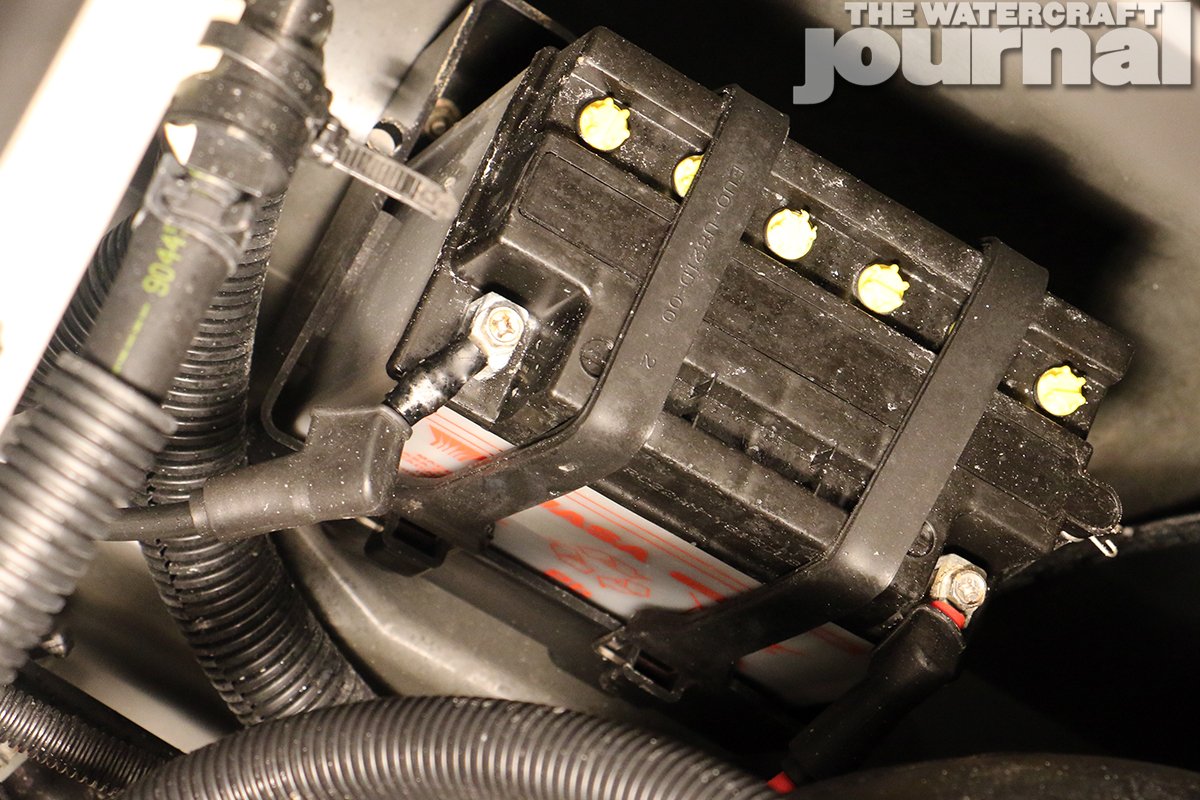
Above left: The fuseable link is a safety precaution ensuring that any power surge won’t injure the phone. Above right: The RidePower merely connects to the positive and negative terminals (respectively). The rubber boots will even cover most of the new RidePower connections.
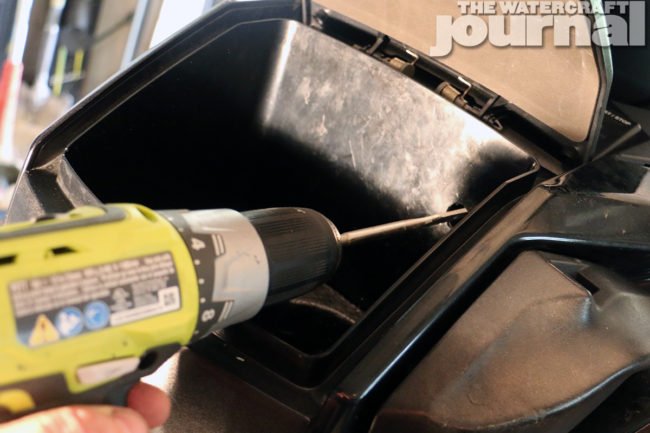
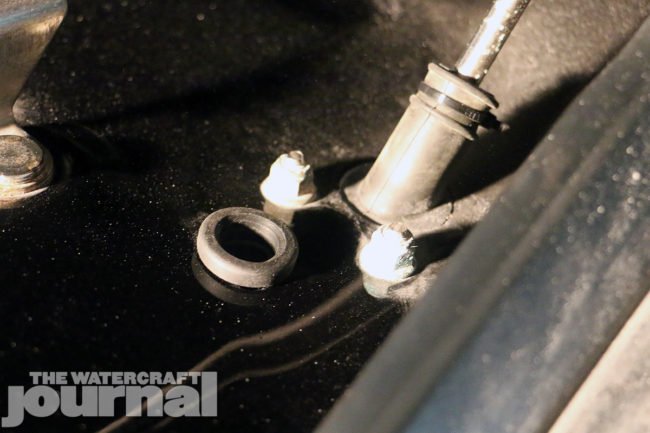
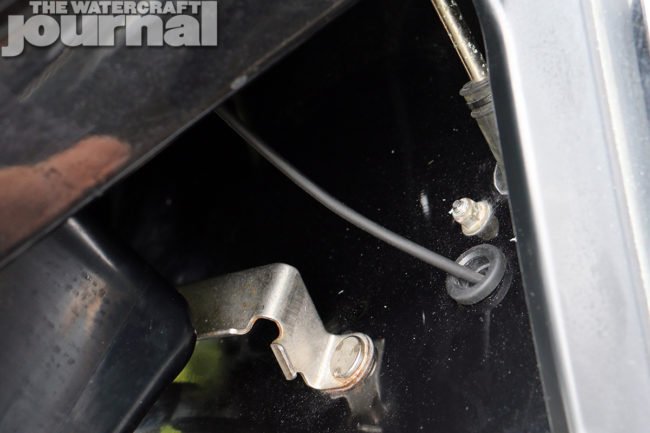
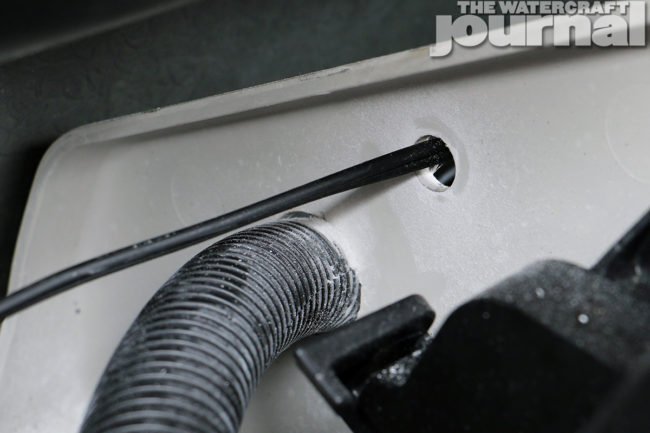
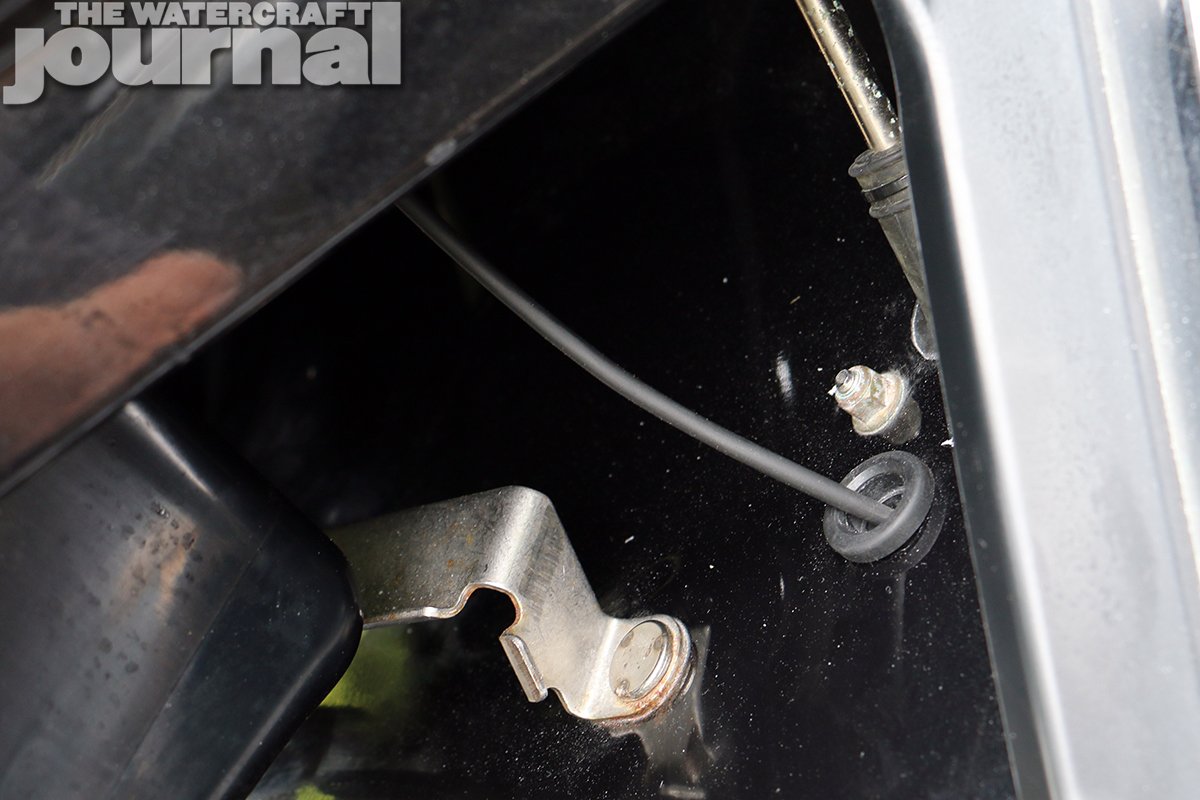
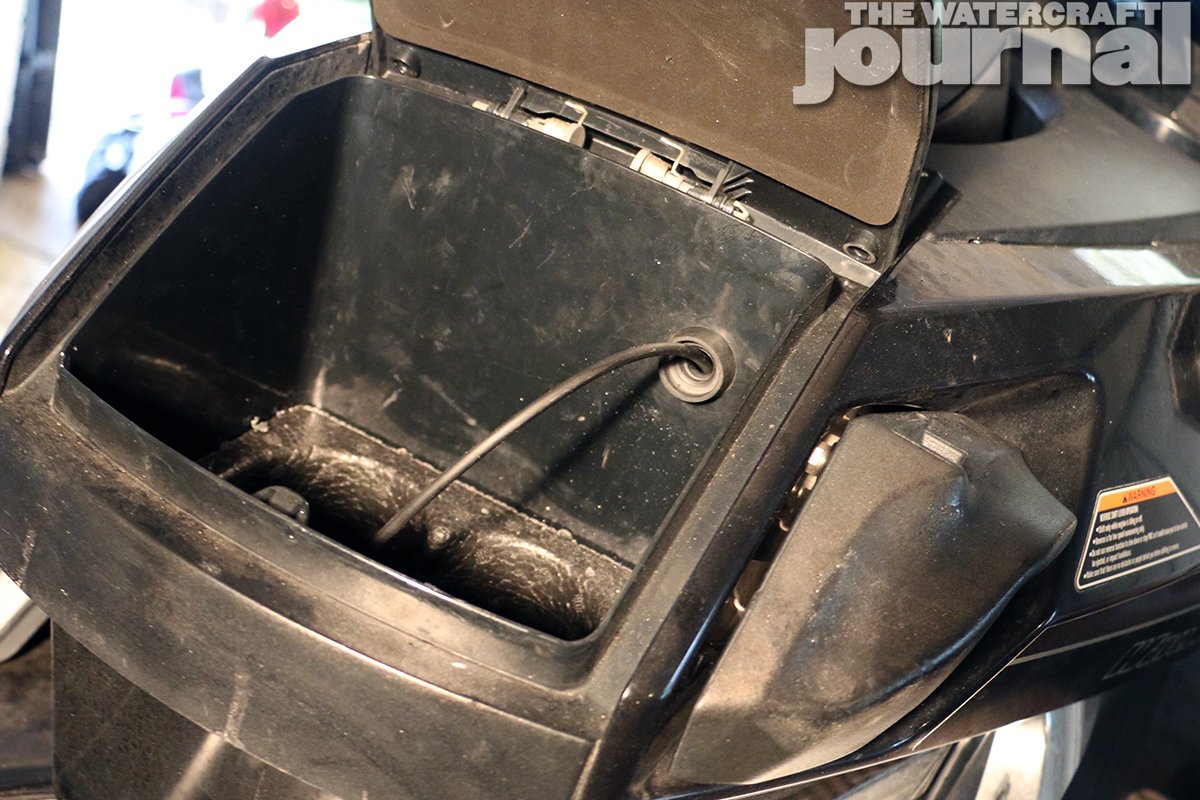
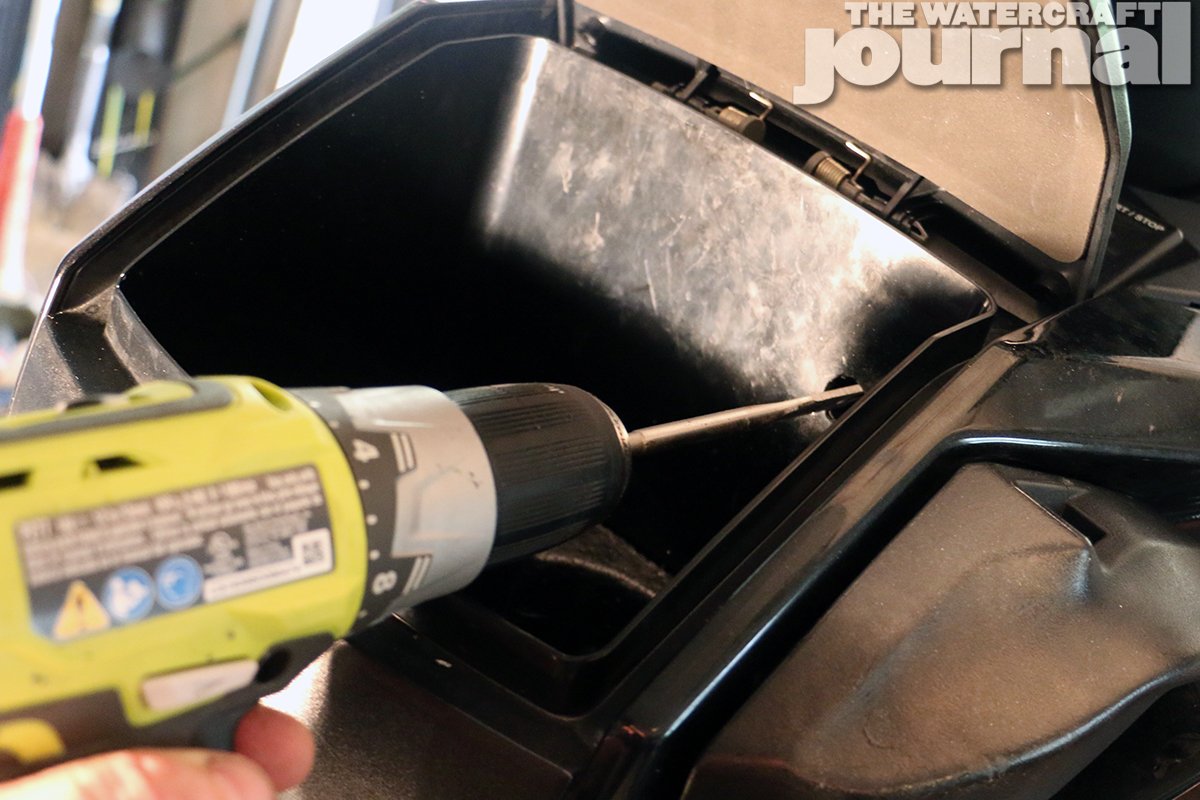
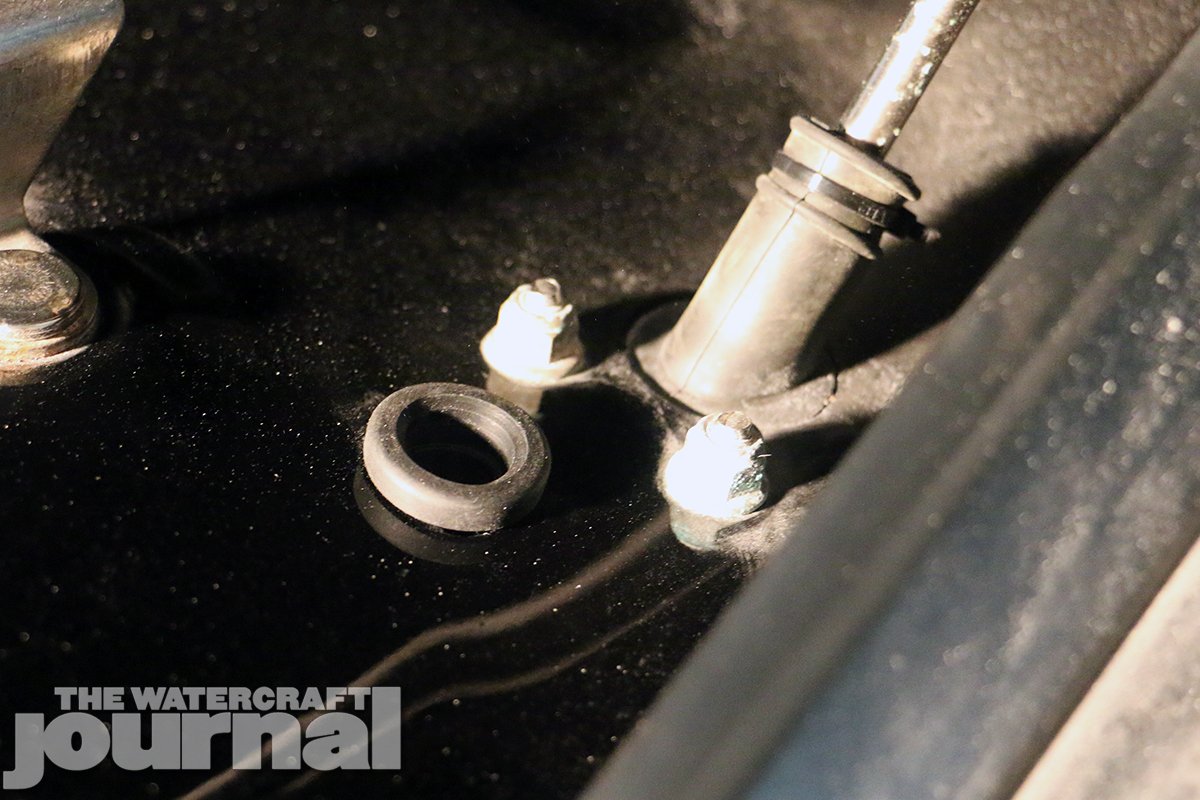
Above left: After marking our locations, drilling a pilot hole with a 1/16″ bit, we used a 1/2″ hole bit to drill into the glove box, as well as on the top of the deck, behind the fairing on the port side. We also drilled through the white bulkhead with the same bits, feeding the partitioned cable through. Above right: We sorted through a variety pack of rubber grommets purchased from our local automotive parts chain store and found properly-sized grommets to seal up our holes.
Above: As mentioned above, once we inserted our grommets, we fed the RidePower charger plug from the battery, through the firewall, pasted the engine, up through the top of the deck and into the back of the glove box.
Above: We went back over our work, careful to allow enough slack so the charger wouldn’t bind, but not enough to flop freely around. Here can be seen where we drilled into the bulkhead and also connected to the battery.
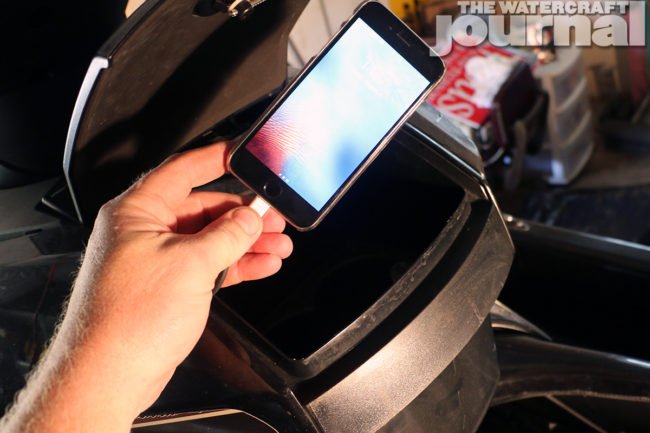
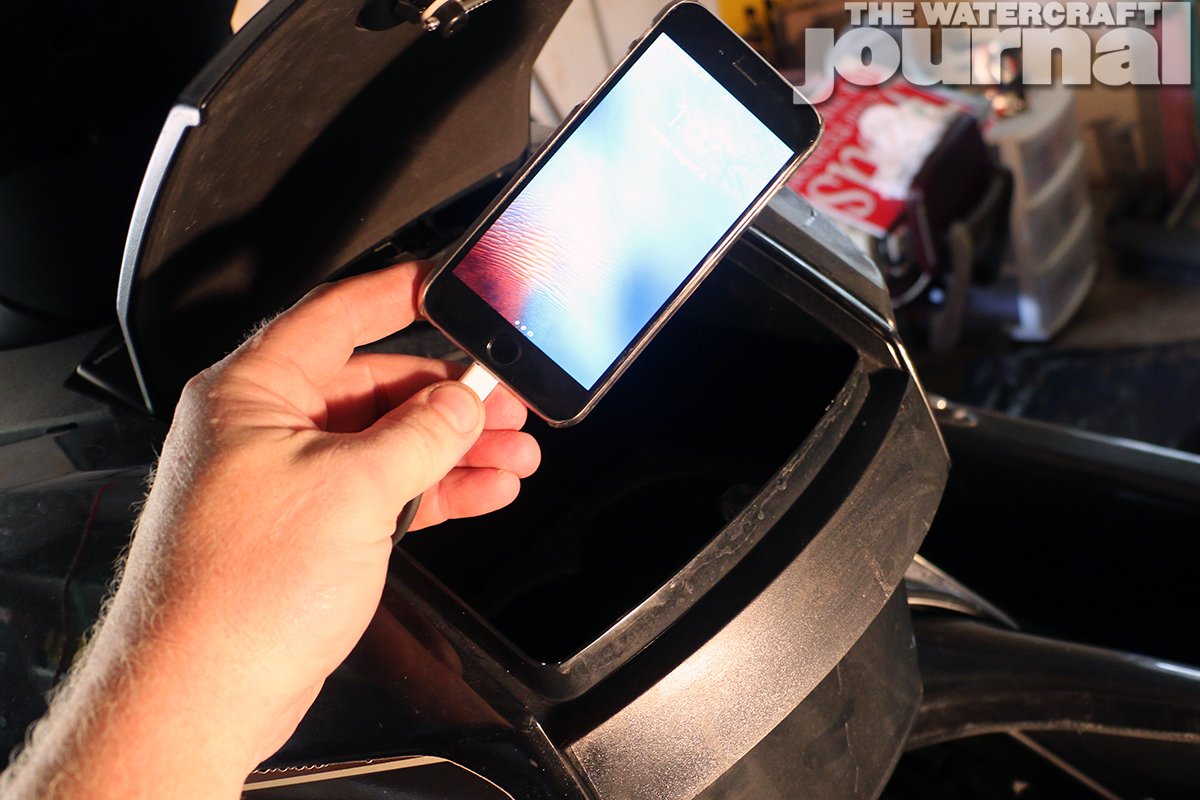
Above: Although the screen brightness glares-out the charging icon, believe us when we say it immediately went to work recharging this iPhone 6’s battery. This will definitely earn its keep while out on the water as so many of us use our smart phones to take pictures and video, and chart our progress on the water.
Again, with a heavily discounted price from three years earlier, and an incredibly easy installation, the RidePower phone charger is bar none one of the best aftermarket installations we’ve performed on a personal watercraft. As we stated earlier, we all use our phones while on the water and the fact that manufacturers aren’t offering phone charging ports like this as standard equipment is almost egregious. And that’s why we’re glad that RidePower is here doing it for them.
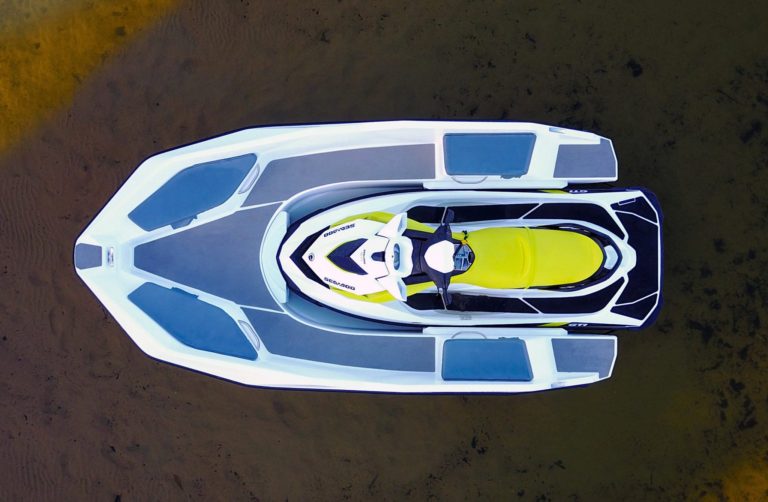
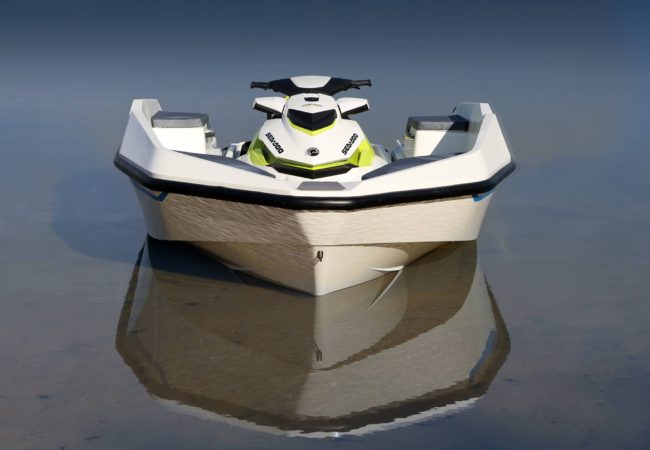
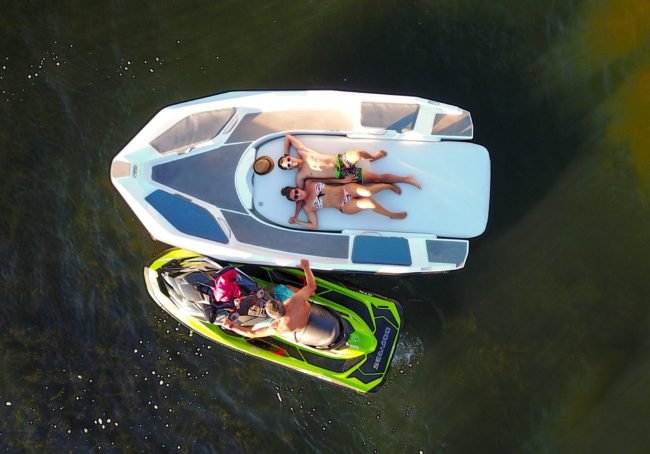
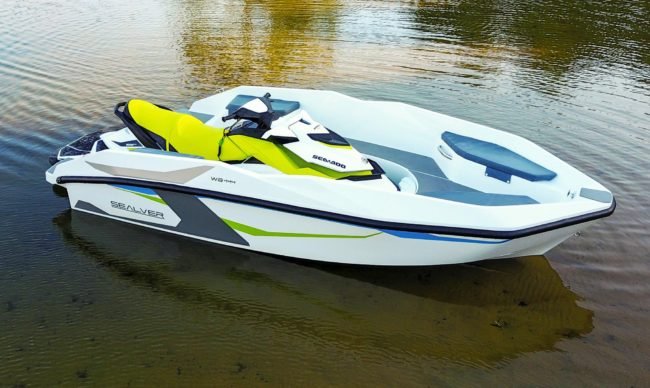
OK, we’re just going to come out and say it: we’re kinda digging on these. Literally 3 years ago, we introduced the readers of The Watercraft Journal to Sealver Waveboat with some mixed feelings as there’s still quite a few questions left to be unanswered in perusing the website and watching the videos they produce – most of which encircle the mounting process and how well the coupling works while battling late afternoon chop and big wakes. Nevertheless, the selection of craft that Sealver is now offering for hookups with today’s modern runabouts is rather impressive.
In a recent post celebrating over 500,000 views of its “Jet Ski + Boat = Wave Boat” video (which we have embedded below this article), Sealver showed off a variety of applications, be it Recreation class GTI models, larger RXT and GTX Luxury model Sea-Doos, and even VX and FX Yamaha WaveRunners. The attachment system firmly wraps around the bondlines on either side of the craft, and is expected to winch tightly to the bow eye, although we haven’t seen the actual mechanism. Once connected, the runabout acts as the powertrain and steering for the craft, although it can float freely without the PWC connected.
Variations of the Sealver line include Zodiac-style inflatable pontoon craft, small open cabin vessels, and even larger vessels featuring wake towers, a variety of storage compartments and bimini tops, not to mention running lights, drop-in cleats and comfortable bench seating surrounding the watercraft. Unfortunately, Sealver is headquartered in France, making ready commercial access to these pretty dang difficult. Once US distribution is found, we would be very interested in testing one of these for the season. (wink, wink)
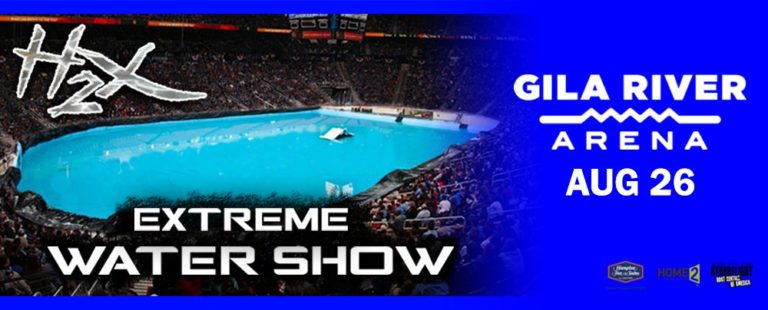
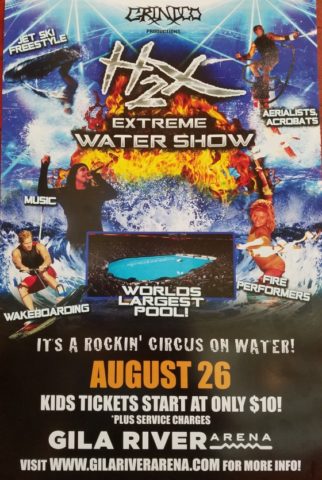
“Sunday! Sunday! Sunday!” the old adage goes. Well not quite, actually Saturday! Saturday! Saturday! August 26 the H2X Extreme Water Show is coming to the Gila River Arena in Glendale, Arizona. The arena will transform into a giant indoor aquatic playground for the H2X Water Show presented by Grindco Entertainment.
The show will feature watersports riders, aerialists, fire dancers, and live music in the World’s Largest Touring Pool! Yep that’s right, more than 650,000 gallons of water are to be pumped to the area floor, creating H2X’s “World’s Largest Portable Pool.” The water circus thrill show will feature fourteen different acts including jet skis, wakeboards, Flyboards, aerialists, fire dancers, and acrobats. All acts will be set to a live electronic-rock band soundtrack.
This performance is scheduled to be the first ever of its kind staged in and flying high above the theatrically lighted enormous pool, spanning 200 feet by 100 feet inside the arena. The Gila River Arena is the home of the Arizona Coyotes of the NHL. It is a state-of-the-art, multi-purpose facility that is dubbed the “crown jewel” of sports and entertainment complexes.
Ticket prices for this spectacular event start at $10 for kids and $22 for adults. VIP tickets are available, which include floor access, inclusion during the concert finale, and a backstage meet and greet with H2X performers after the show. Tickets are already on sale at gilariverarena.com so get yours while they last!












 “Sunday! Sunday! Sunday!” the old adage goes. Well not quite, actually Saturday! Saturday! Saturday! August 26 the H2X Extreme Water Show is coming to the Gila River Arena in Glendale, Arizona. The arena will transform into a giant indoor aquatic playground for the H2X Water Show presented by Grindco Entertainment.