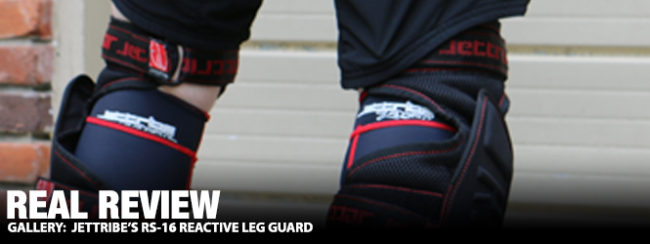
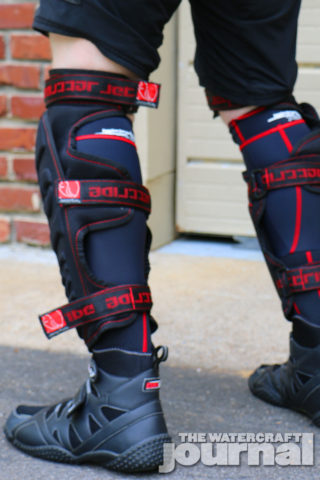
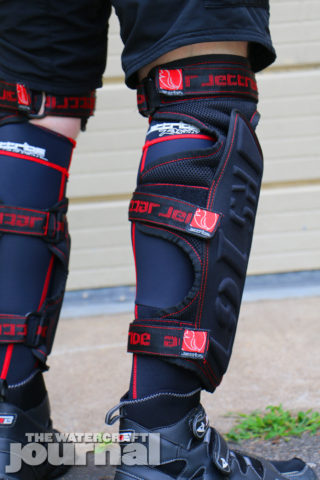
The first rule of designing and manufacturing safety equipment should always be providing the optimum level of protection for the athlete. Yet, the second rule to not inhibit the athlete’s ability to move should be not equally as, but darn near close to as important. In the curious case of Jettribe’s Reactive Leg Guards, our verdict is split exactly 50/50.
But let’s step back and get this out of the way first: this review is for a product that 99.8-percent of the personal watercraft enthusiast market will never have any use for. Even if you’re an active racer, you’ll likely have no need for these. Heck, we haven’t seen these worn by Jettribe’s own US-based racers, be them participants in either runabout or standup ski. Now, some international sanctioning bodies have taken a shine to requiring leg braces/guards in the same way they adopted neck braces for standup racers a few years ago. Whether enough pressure to P1 AquaX, Pro Watercross and the IJSBA to mandate all racers use these will be applied remains doubtful.
Why? Because initially, Jettribe’s Reactive Leg Guards simply don’t make much sense for standup racers, and those racing full-sized runabouts don’t often encounter the kinds of collisions (at least the good ones) that would require the level of engineering and protective materials that Jettribe has poured into these (and in all sincerity, there’s quite a bit). Frankly put, upon first glance, they’re complete overkill.
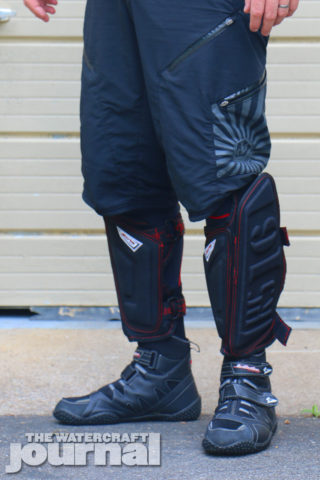
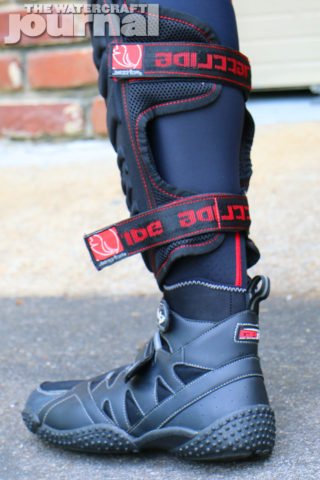
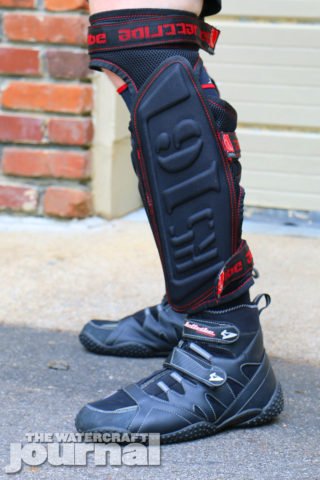
Each leg guard is comprised of a pair of flat, rigid impact panels composed of five layers of energy-dissipating materials: first, a compression-molded outer shell, two laminated, honeycomb polycarbonate sheets, EVA high-density energy absorbing foam, and wrapped in thick, 1680D ballistic nylon. Despite their build, each panel is surprisingly lightweight (thanks in large part to the neoprene and air mesh materials), and incorporate built-in water drain holes to keep them from water-logging.
Both panels are sown to a nylon webbing with three D-rings and large Velcro straps, the upper wrapping around your thigh above the knee with the two lower straps tightening above and below your calf. Unfortunately, the upper D-ring digs into your leg behind the knee, and if tightened enough actually can pinch your Achilles tendon. Moreover, these panels have nearly zero contouring, so unless your legs are build from Lego, they’re gonna feel more than a little uncomfortable, especially climbing up and into the tray of a standup.
If these become mandatory equipment per the description on Jettribe’s website, be prepared to spend $89.99 a pair. Again, there is a great deal of effort by Jettribe’s team in keeping the PWC racer safe particularly by incorporating top-of-the-line materials such as these; we only wish that there was a greater effort into developing a much more comfortable and natural fit.
OK, yeah we know, it’s not Monday. Yesterday was a national holiday and time got away from us. Anyhow, in this week’s Case of The Mondays, we revel in that which is the ever popular “fail video” but this one, much more than a compilation of people being hit in the genitals, is actually quite terrifying when you consider what is actually happening here:
On January 7th of this year, the Nelscott Reef Big Wave Classic was held off of the coast of Oregon, welcoming some of the biggest names in big wave surfing to the Pacific Northwest. As the world’s most talented wave riders converged, the frigid surf was building up, looking to humble a few of these athletes a peg or two.
Of course, when it comes to conditions like these, a surfer’s best friend is the capable tow-in pilot, manning the controls of a well-equipped personal watercraft. Today’s big wave surfers use PWC to not only reach distance offshore breaks, but also be picked up and in the off chance, be scooped up and saved from oncoming surf whenever they find themselves in harm’s way.
Unfortunately, in the video provided, you’ll see one such surfer and his trusty pilot be less than successful in reaching the swell they hoped for. Around 1:50, the lime green runabout is swamped, washing both the driver and surfer from the PWC. While the two tread water in the whitewash, the ski is promptly carried nearly all the way to shore, tumbling over and over in the surf.
Although filmed from a drone, the speed in which the PWC is carried by the wave is both impressive and terrifying, especially if you imagine yourself either as another PWC operator or worse yet, another surfer in its path.
Burgeoning fast food chain Five Guys Burgers and Fries is quickly ruining us from enjoying any other burger chain because ordering a standard cheeseburger automatically gets you a double cheeseburger, and even if you opt for the smaller portion, ordering french fries rewards you with a brown paper sack filled nearly twice the delicious fat fried goodness. In fact, over-delivering has become the restaurant’s motto, and for those lucky enough to patron a franchise know this fact intimately. Nobody leaves that place hungry.
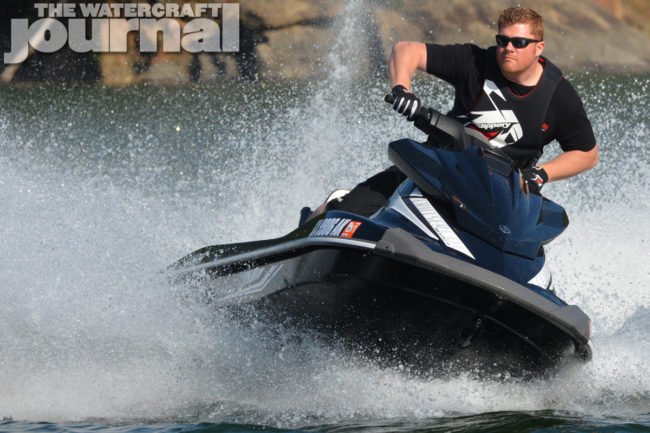
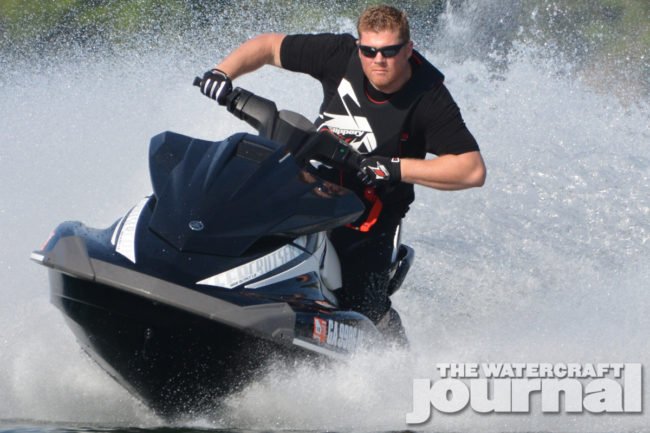
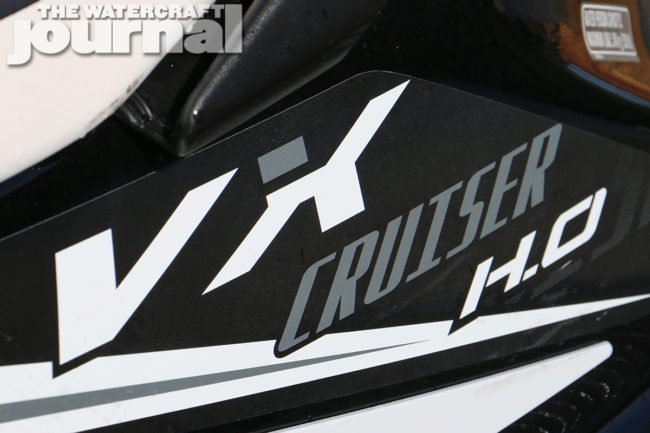
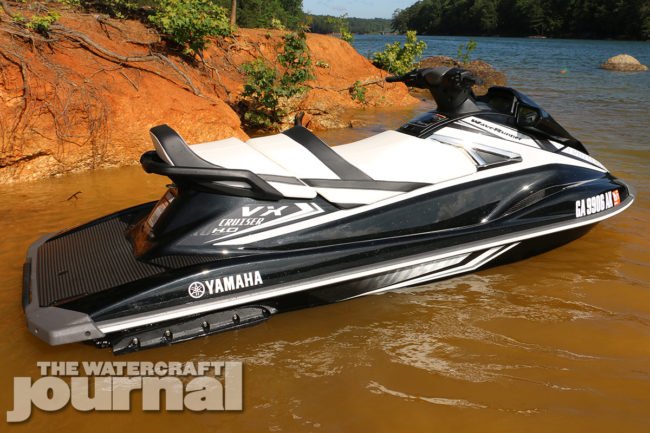
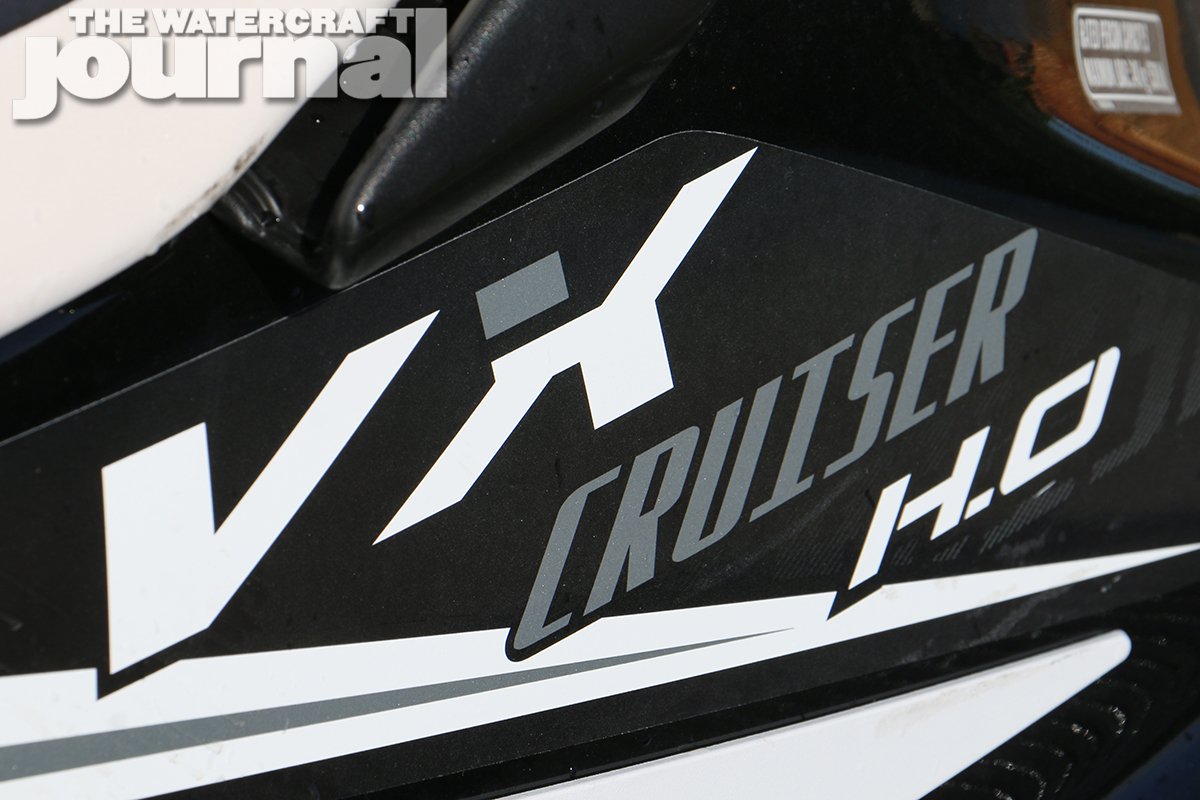
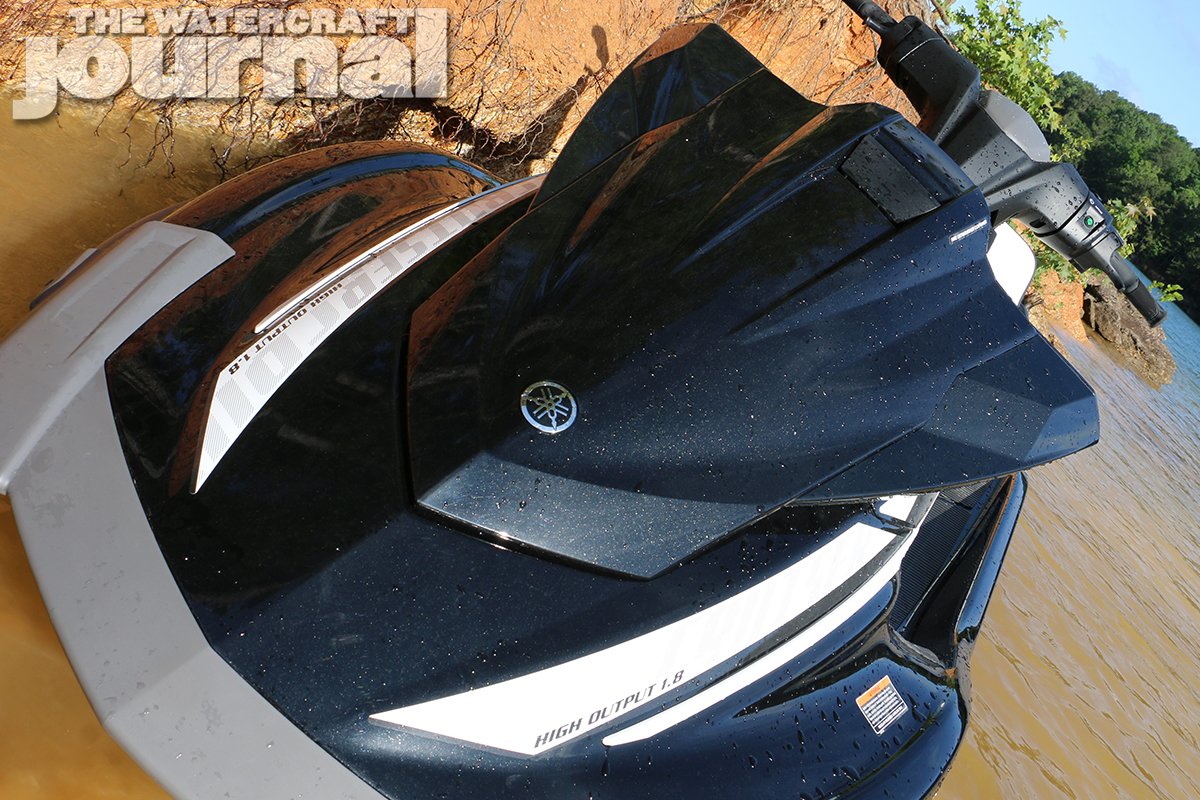
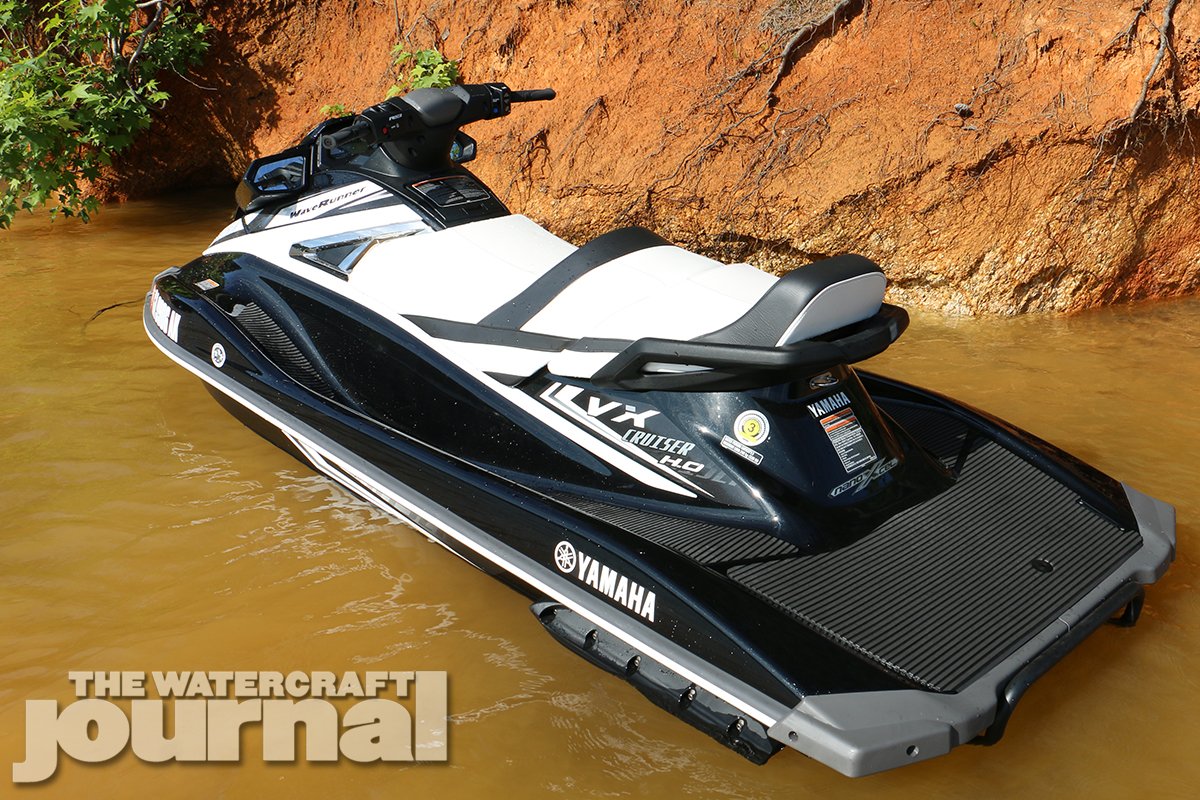
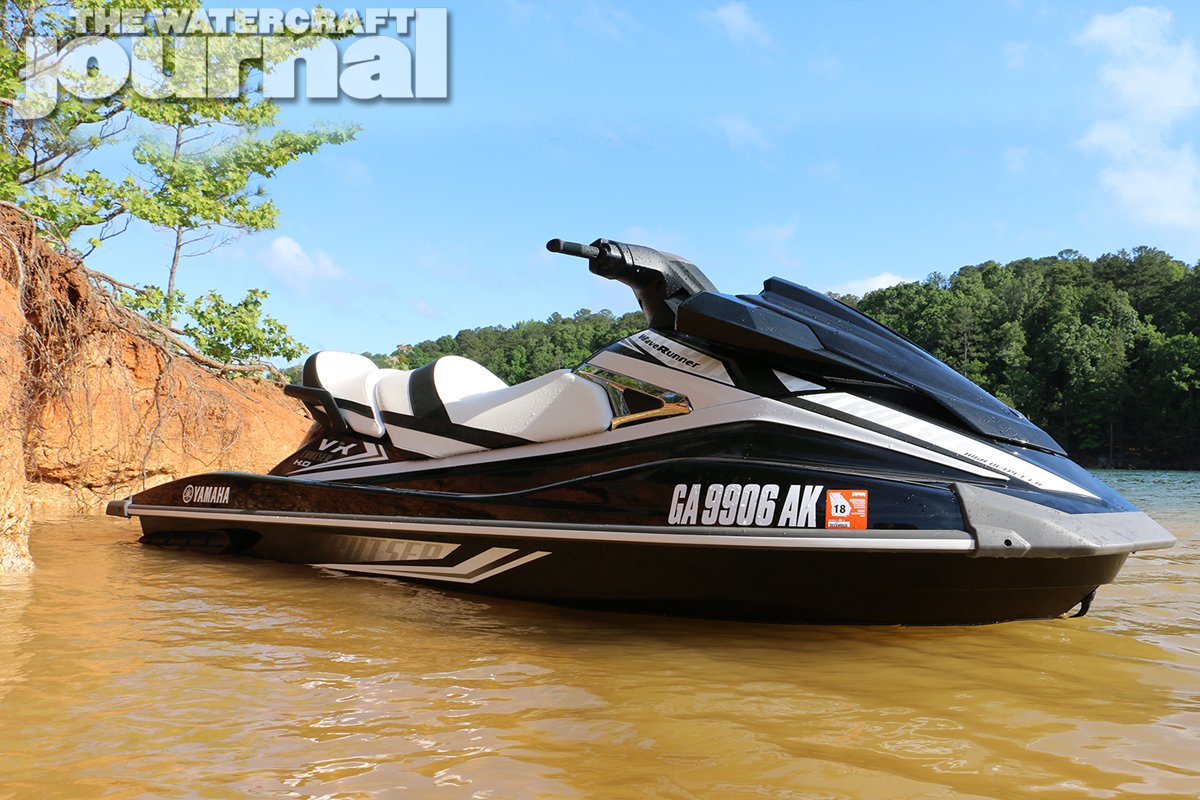
In recent months, we’ve come to feel much of the same way towards Yamaha’s VX series. The lineup of seven models offers the potential buyer a veritable buffet of choices, ranging from the most affordable, stripped-down VX to the built-to-the-hilt VX Cruiser, from the frills-free, nothing-but-performance VXR to the one-stop-shop, family summer starter pack VX Limited, and everything in between. New for 2016, Yamaha decided to go one better with their redesigned VX platform, and offer a fully-loaded version of the VXR, in the form of the VX Cruiser HO.
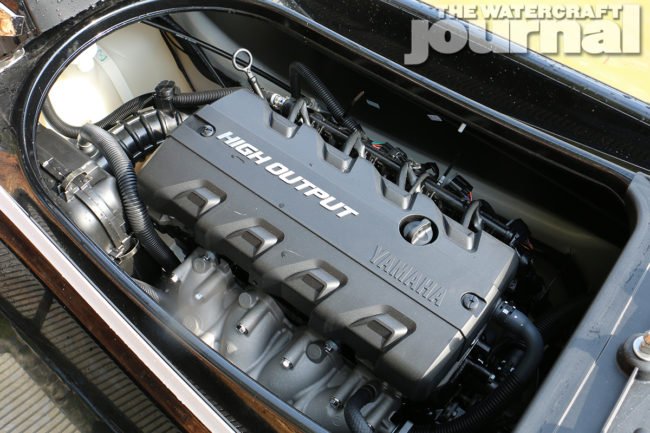
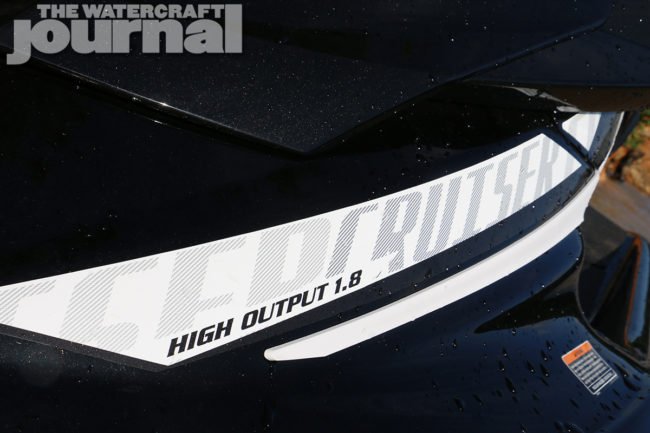
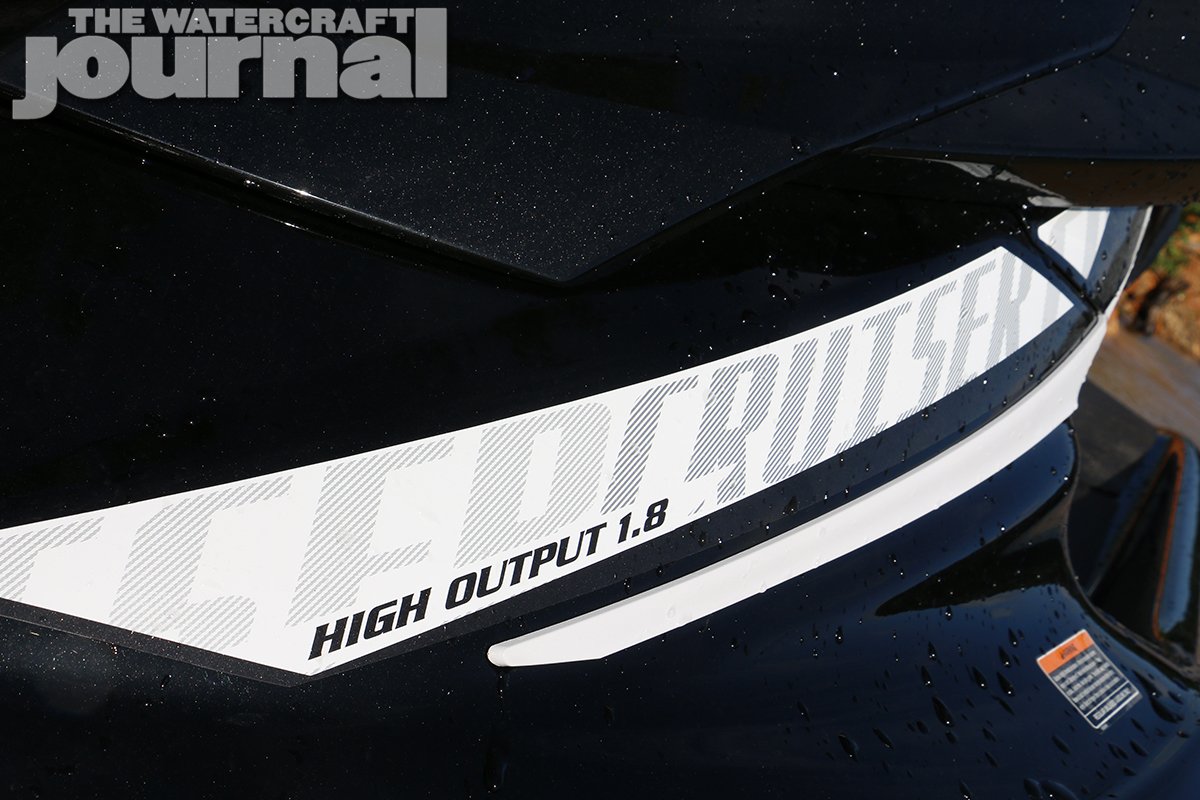
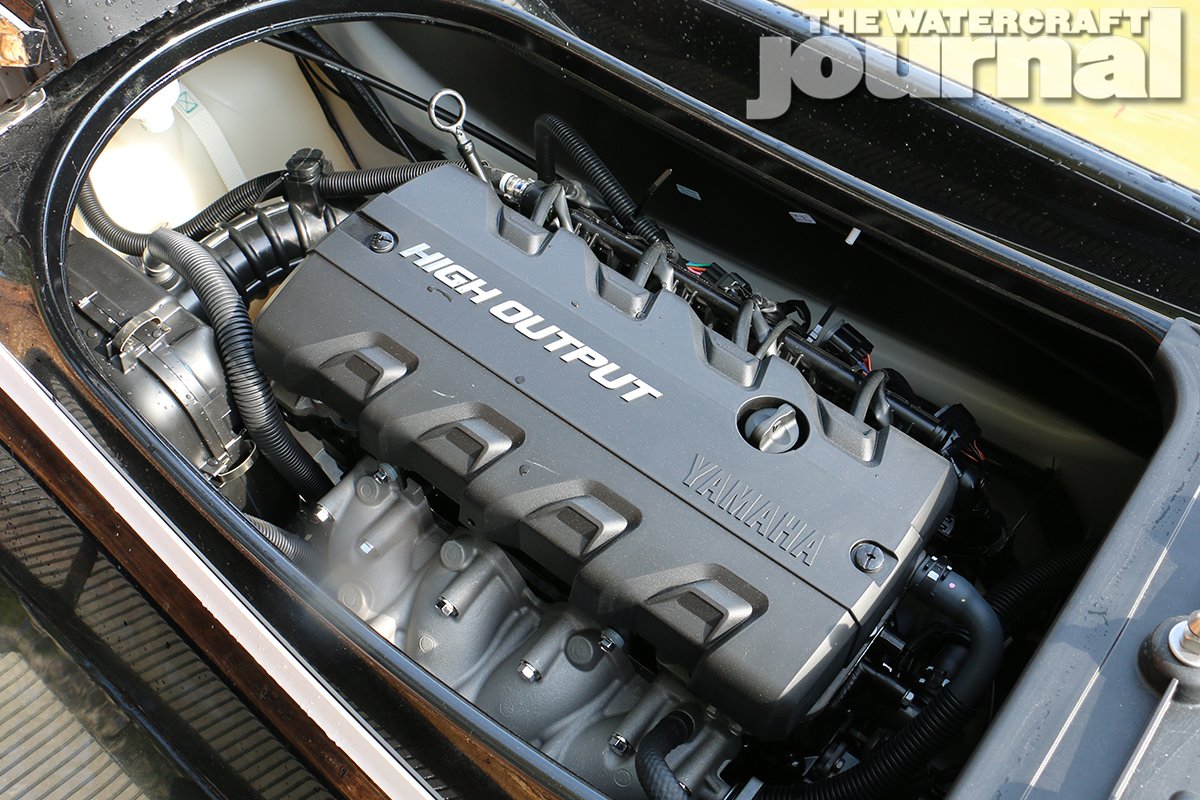
The VX Cruiser HO most notably comes with Yamaha’s dual-overhead-camshaft, four-valve-per-cylinder High Output 1,812cc four-cylinder 4-stroke powerplant, equal to the VXR/S, and the larger naturally-aspirated FX models. This gives the lighter (767-pounds) 3-seater a superior power-to-weight ratio than the larger FX Cruisers, particularly in no small part due to its use of Yamaha’s proprietary NanoXcel hull and deck material. The rest of the running gear (including a 155mm axial pump) is also identical to the VXR/S, so you’re truly getting the best Yamaha offers.
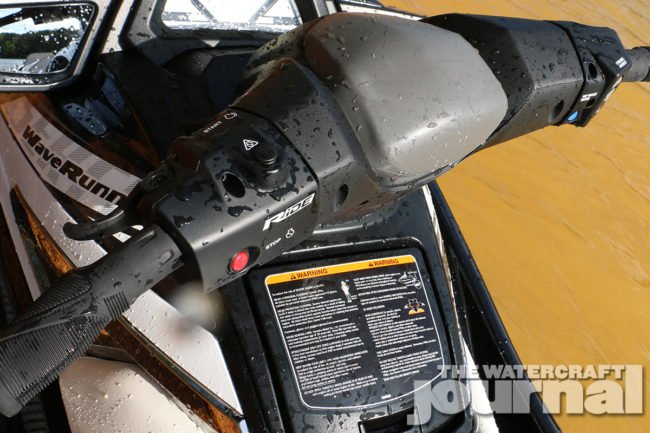
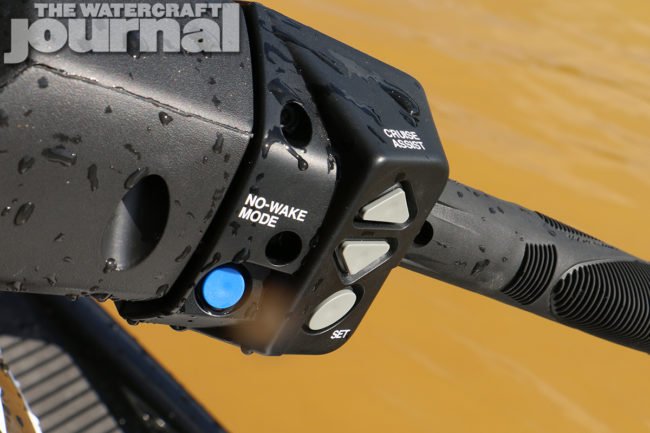
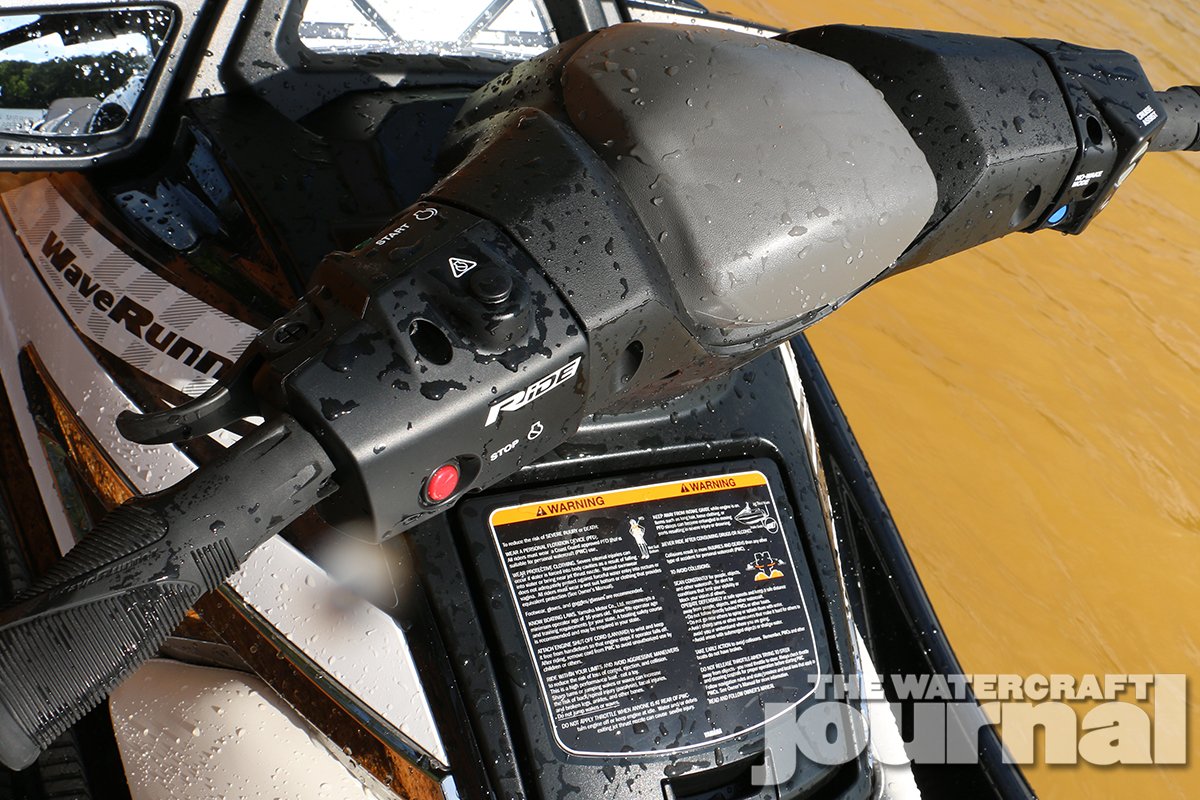
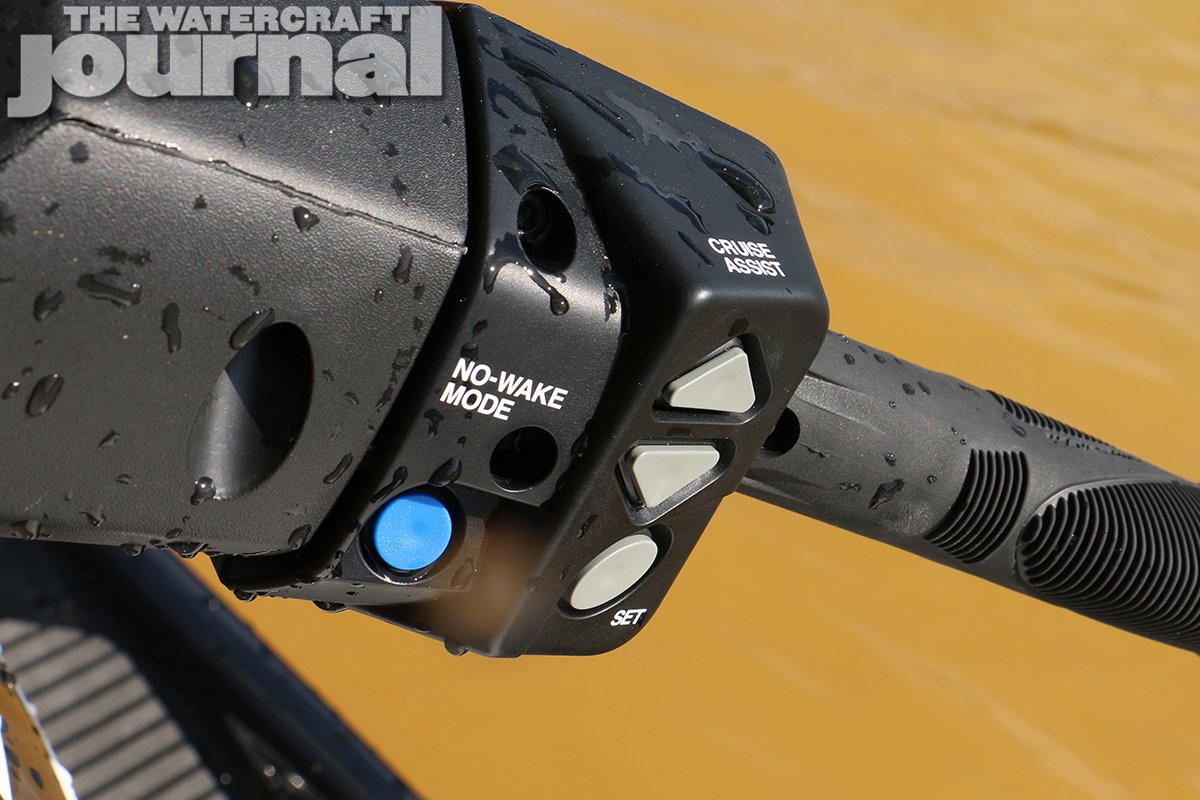
Although the VX Cruiser HO does not include the brand’s electronic trim control found on the VXR/S, it does trade out for the easy-to-navigate Cruise Assist toggles an No Wake Mode, allowing cruising through marinas and No Wake zones far easier. And as with all Yamaha models (besides the FZR/S), the VX Cruiser HO features the traction-controlled brake-and-reverse RiDE system. Of which, we found its best application when it comes to gently approaching a dock. Other brake-equipped models are slightly “clunky” when it comes to changing gears between forward, neutral and reverse, as the small VX does so handily.
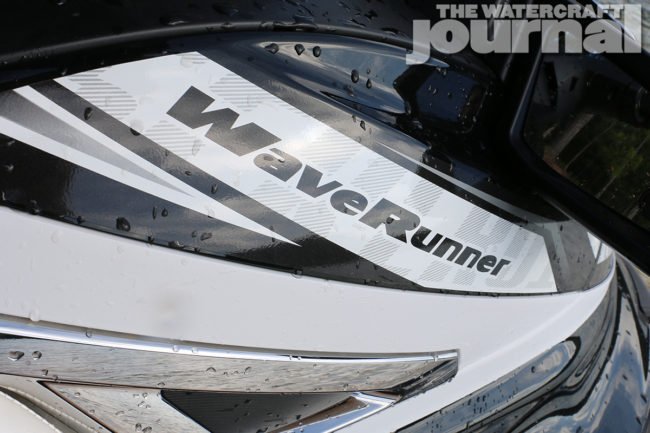
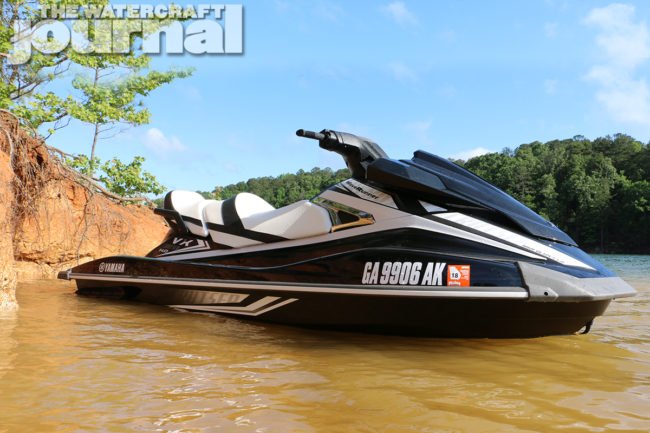
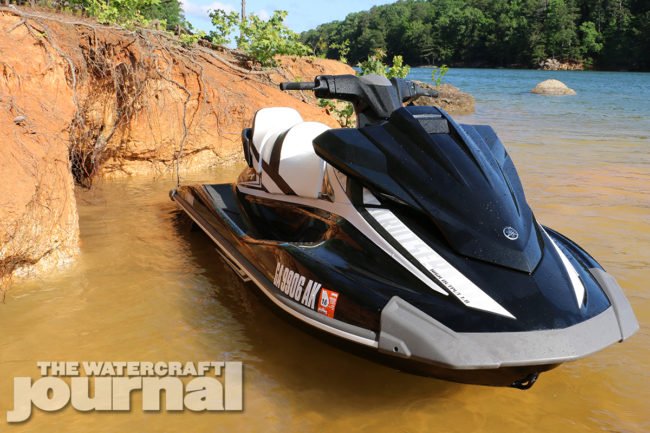
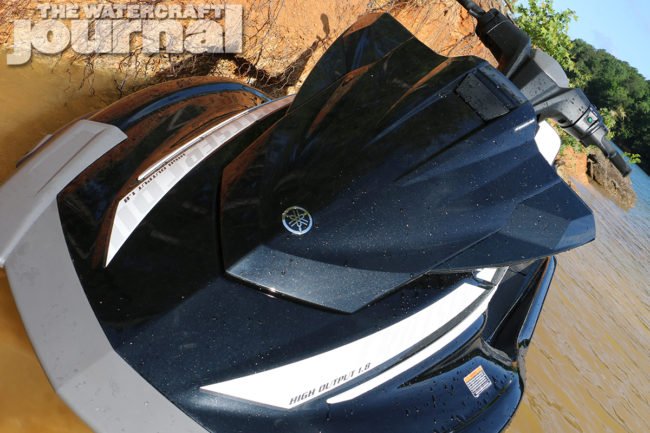
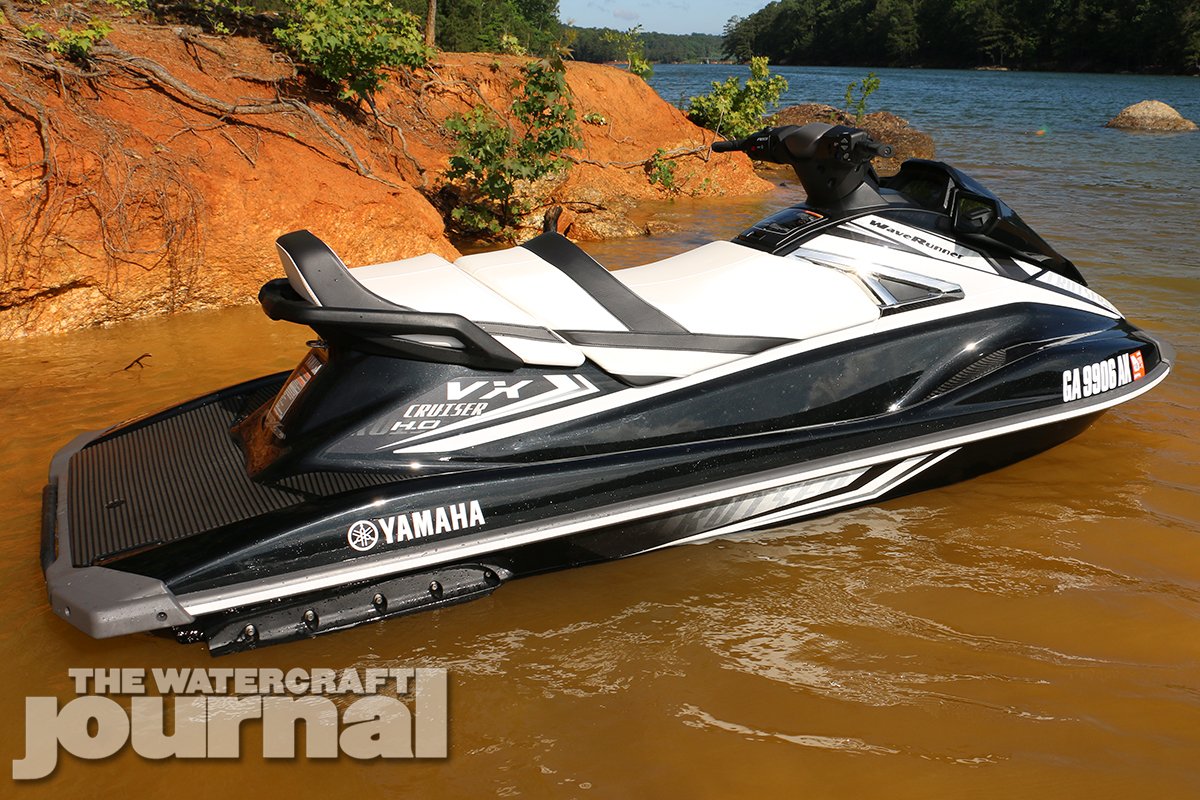
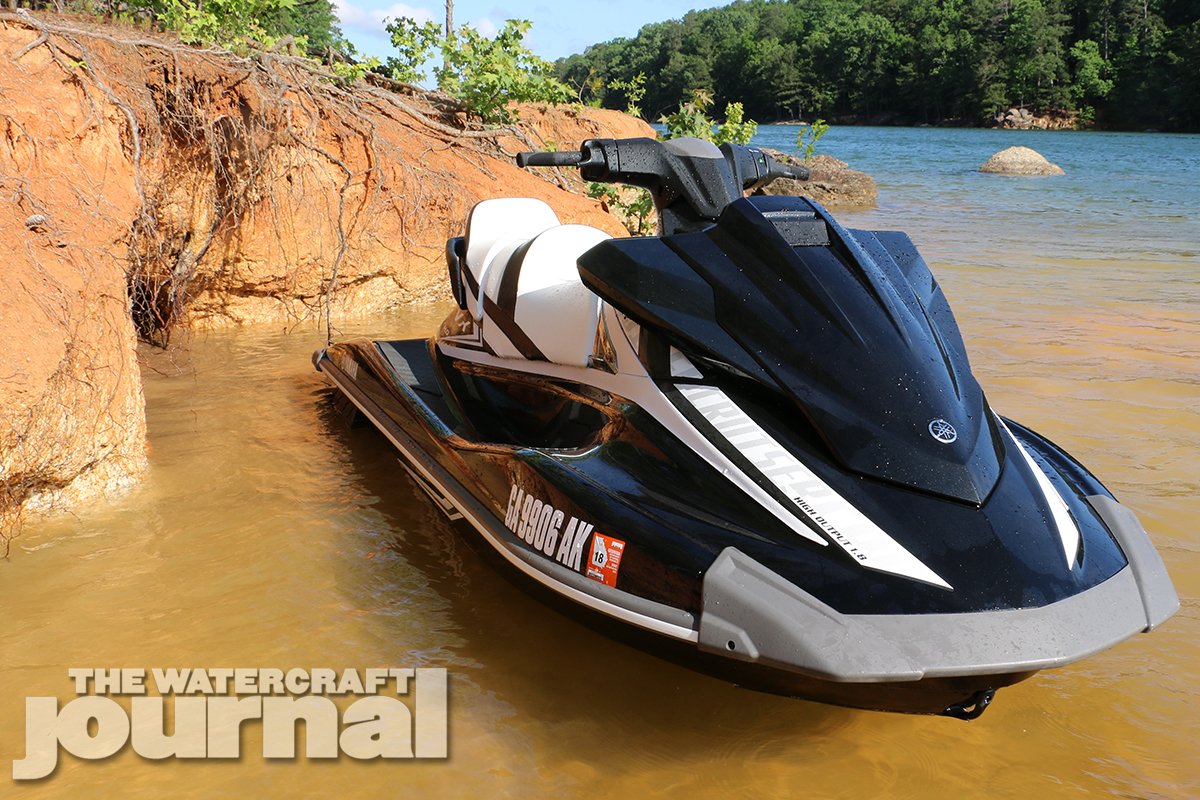
The 2016 VX Cruiser HO comes in Yamaha’s Black Metallic livery with brilliant white highlights and seat, giving the machine a striking profile. Yamaha’s use of automotive-grade metallics really stand out when the sunlight hits the VX HO just right, and even their (albeit conservative) use of decals and chrome are able to give each of the VX models its own unique look and feel despite being so physically similar. The deep cove Cruiser seat provides some pleasant lower back bolstering while it elevates the second and third passenger to see above and past the driver’s shoulders.
As is with all VX models, the steering neck is fixed (no tilt), but is nicely equipped with pistol grip handlebars, light-to-the-touch electronic throttle controls that don’t fatigue your hands like traditional cable-operated systems, and responsive buttons. We did find setting the Cruise Assist at speed a little bit of a stretch for our thumb to reach without either chopping or pegging the throttle in the process, but once set, the up-and-down toggles work masterfully. Steering response is on point – particularly in reverse – and there’s absolutely zero slop, something we’ve found more common than we care to admit.
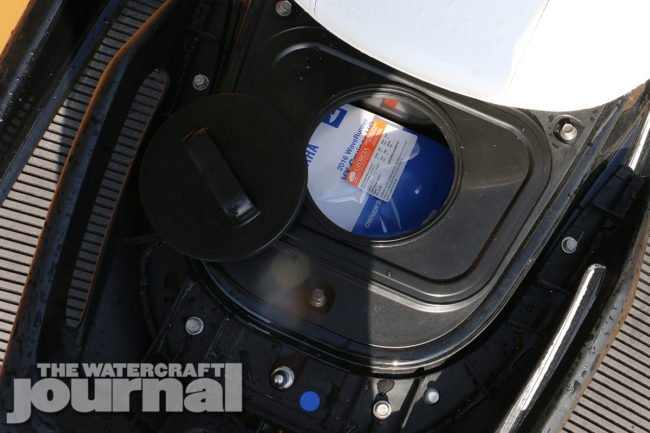
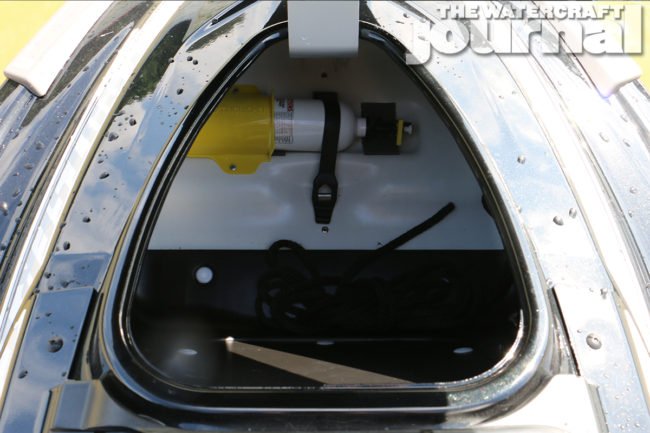
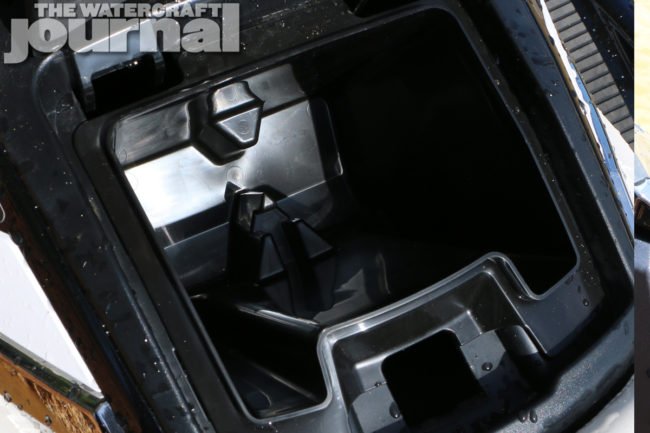
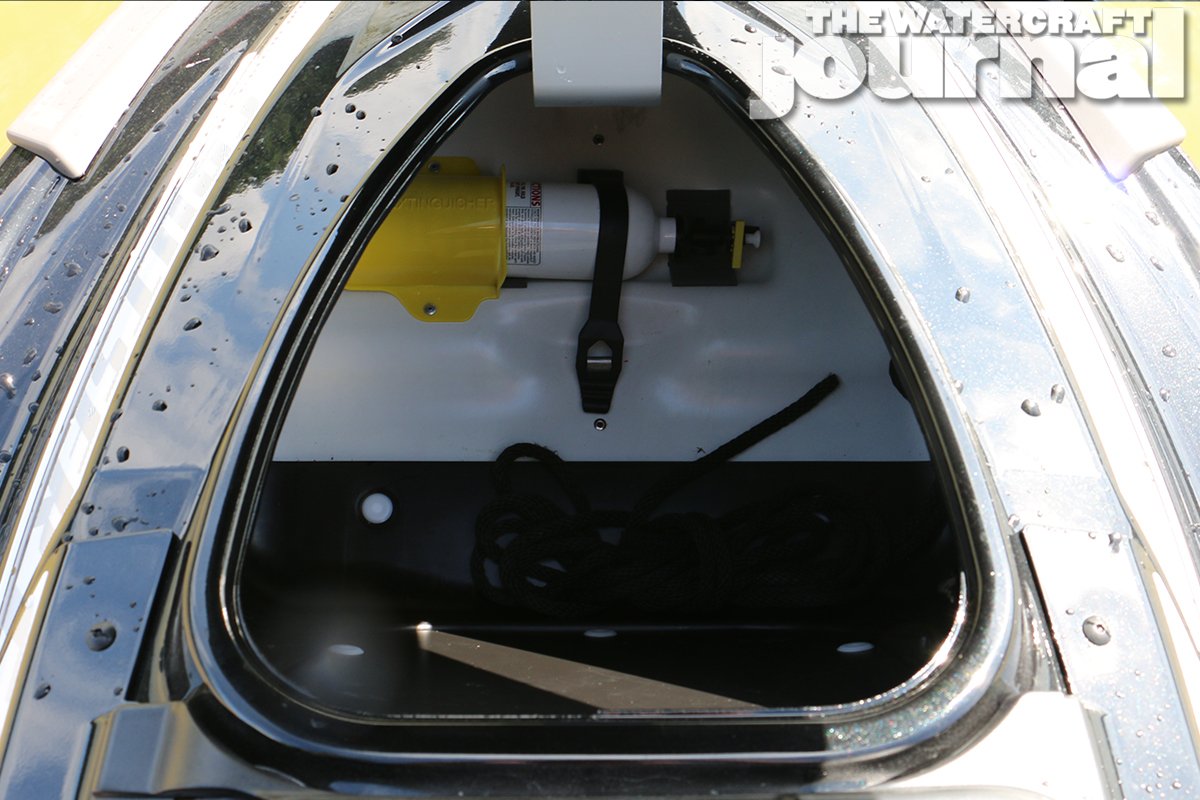
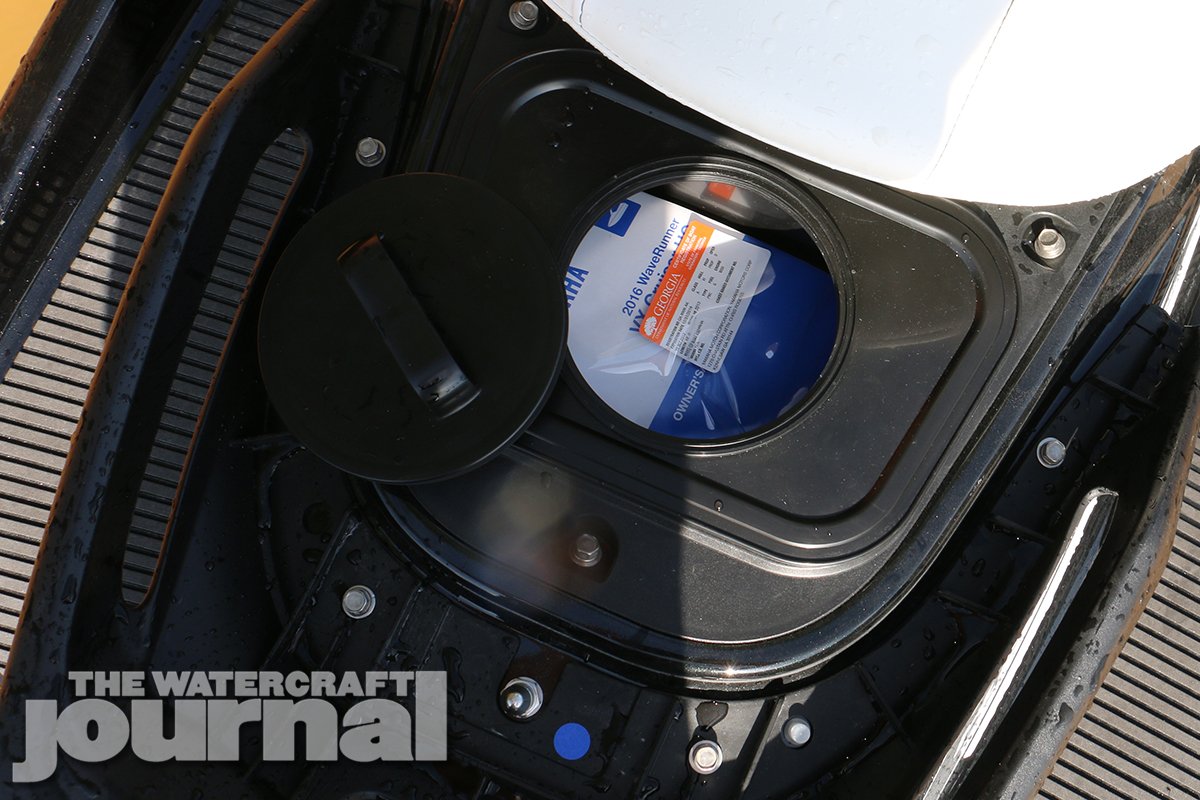
Despite its small(ish) size, the VX Cruiser HO comes with Yamaha’s largest fuel cell (18.5 gallons), and although its larger plant would caution one to stay out of the throttle, we scantily made a dent in our supply despite flogging on the machine for half the day. (Some owners are reporting over 130 miles on a single tank of fuel when operated at cruising speeds!) Storage isn’t sacrificed either, as the VX Cruiser HO includes 24.6 gallons worth in the form of a watertight storage bin beneath the passenger seat in addition to a bow storage and glove box (with Styrofoam dual cup holders).
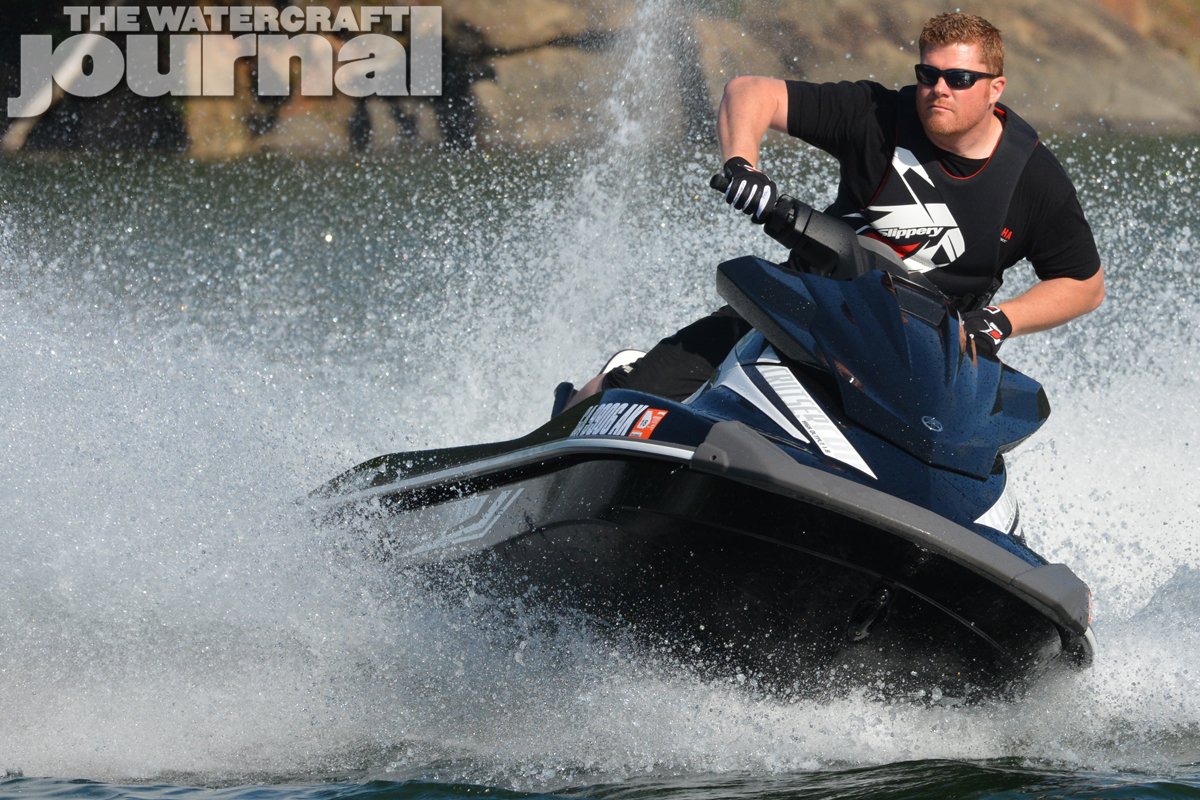
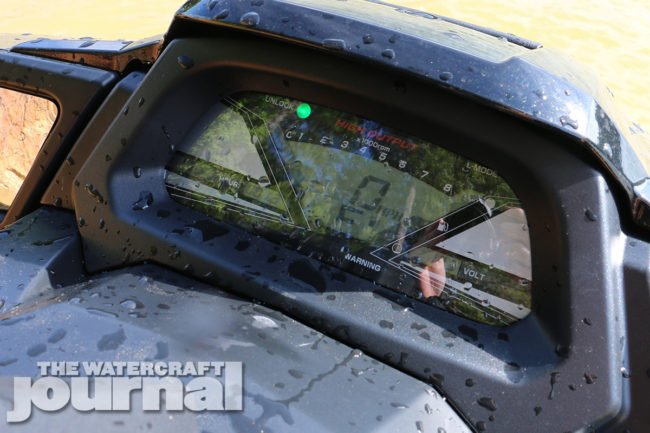
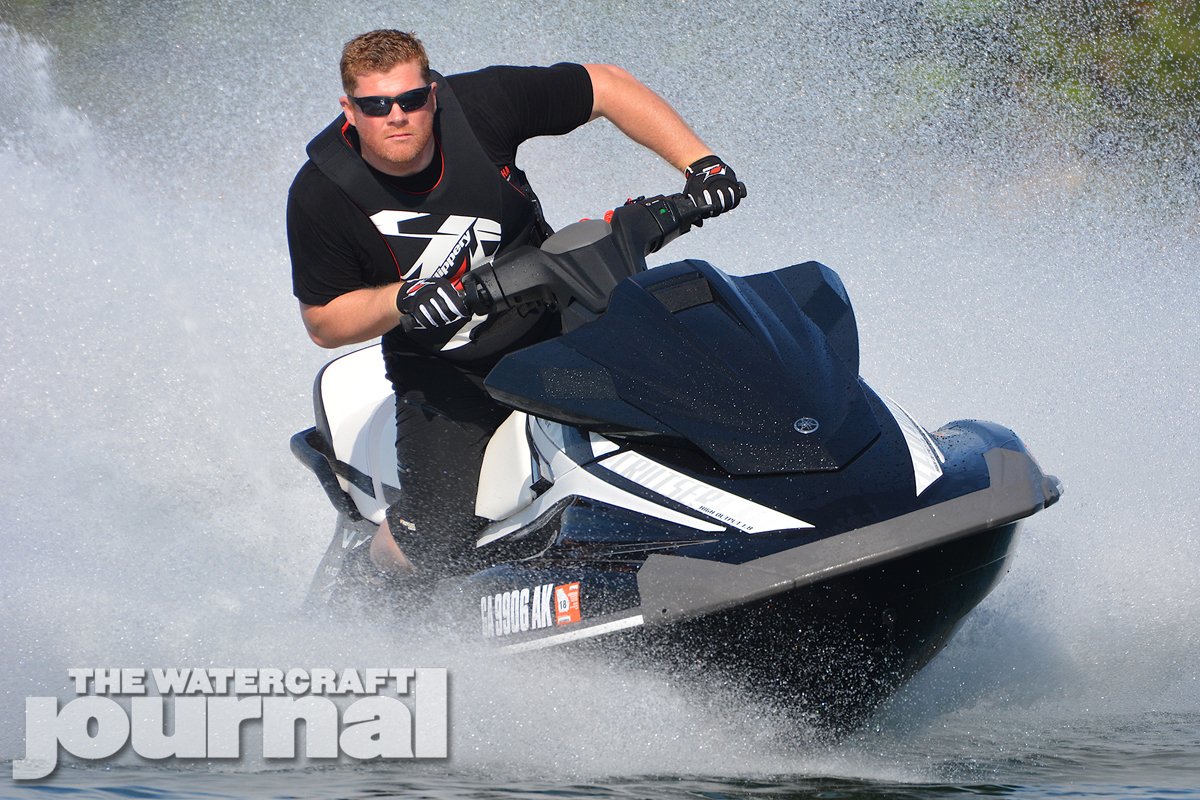
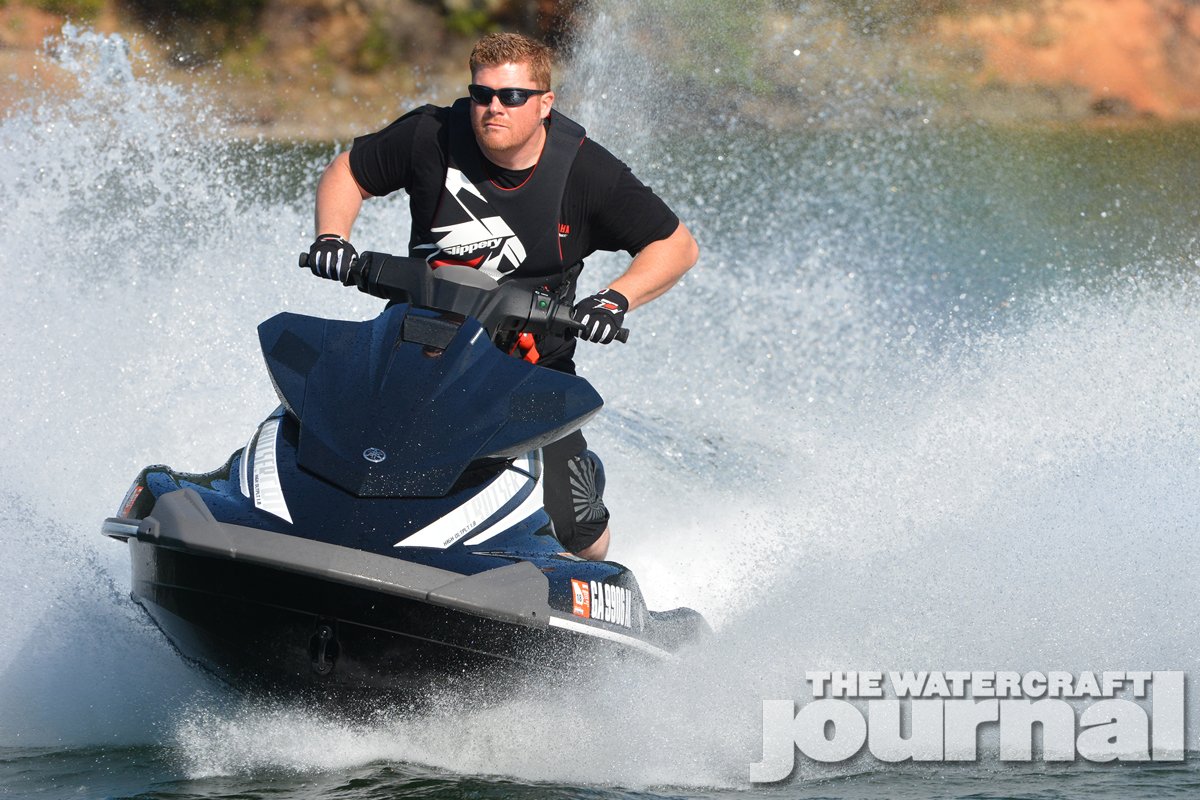
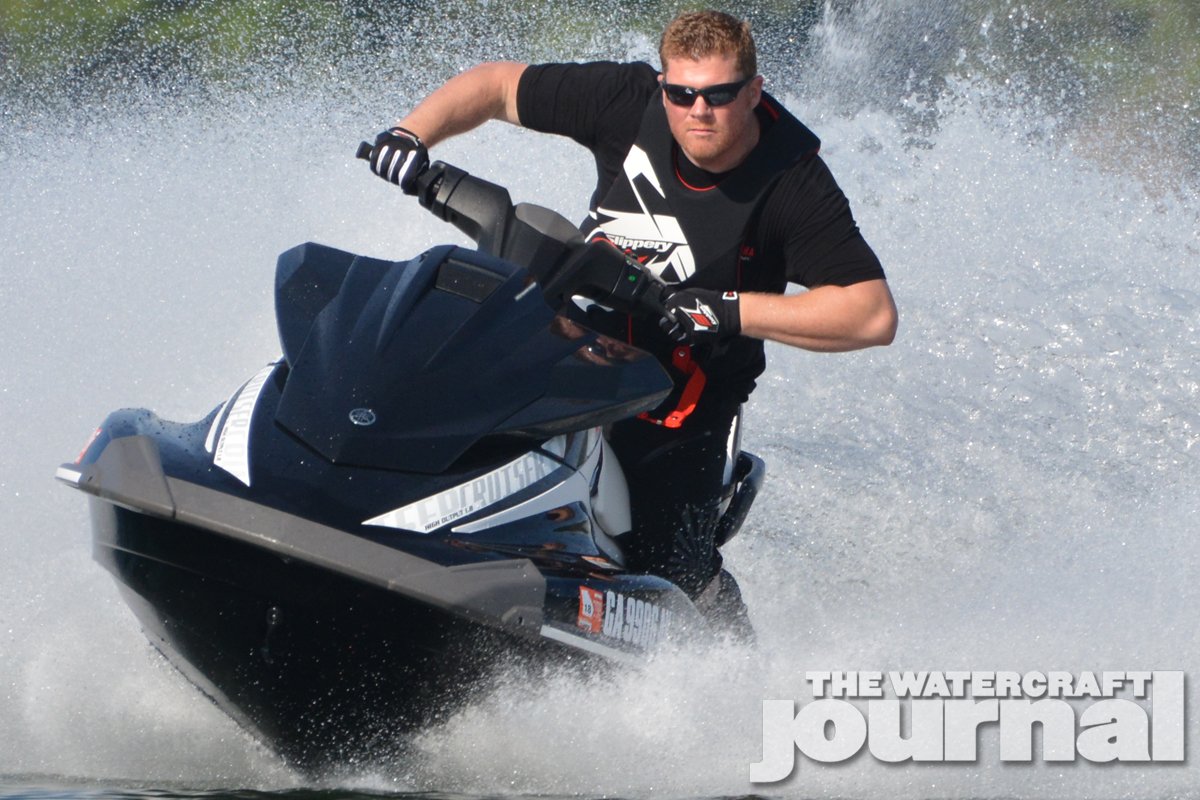
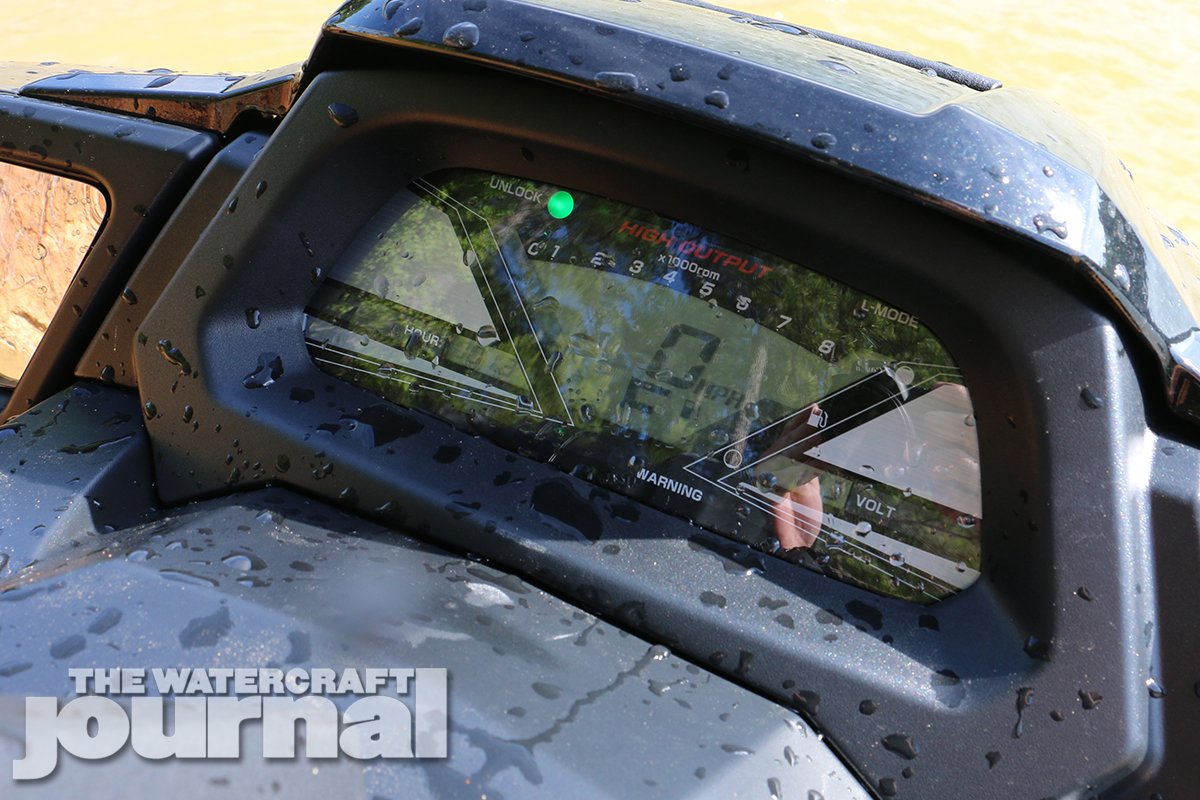
On the water, it behaves on par with the VXR/S, and looks just as good doing so. Obviously being unable to adjust the trim settings handicaps the ski’s ability to lean in low and execute a neck-snapping turn, but a little bit of body english is really all you need to make the VX Cruiser HO obey your every command. Being taller than average (6’2″), we found the Cruiser seat to be a little too close for comfort, but again, building a “one-size-fits-all” craft is all but impossible. The LCD digital dashboard requires no interaction and is easy to read even at speed.
As other final features include two-tone Hydro-Turf mats (black and gray) and a folding swim step, which is common to the brand’s Cruiser designation. But again, despite all of the bells and whistles, the VX Cruiser HO comes in below the $11,899 asking price for the VXR. Listed at $11,099, this machine tickles 65mph without the use of a supercharger or turbo, sips fuel, seats three and stores more than you’re likely to take with you. And while we think this machine over-delivers and is more than enough to suit anyone’s appetite, we can’t help but pine for a truly top-of-the-line VX Cruiser HO replete with trim control and maybe some form of tilt steering sometime in the future.
Additionally photography provided by Andrew Cullen
“With over 20 years of experience in watercraft racing world, and over 30 years in motorsports racing, Dean Charrier has built Dean’s Team into one of the most prolific and respected names in the industry,” PWC Performance’s Jerry Gaddis wrote. “Since 2009, Dean’s Team and Yamaha Factory Racing have worked together to build the strongest and most consistent team in watercraft racing. Dean’s Team was recently awarded as the Team of The Year by P1 AquaX after dominating the 2015 season.”
By visiting the PWCPerformance.com online store, you’ll find that there’s a whole array of available ECU reflash services, elevating your WaveRunner from a Level 1 performance reflash designed to work with all stock OEM components, all the way to a Level 6 reflash that elevates your SVHO to 8,600-plus-rpm speeds. And if you look closely, there’s a total of 11 different reflashes, allowing you the option of each level as-is or with a engine-saving, mileage-friendly “Cruise” option.
The level of air-to-fuel mapping data gathering here is extensive and genuine Dean’s Team software. This isn’t some knockoff trying to pass off their goods as “just like Dean’s Team” – no, this is the real deal. You can elevate your machine from mid-70s without breaking a sweat to pushing mid-to-high 90s with the use of some RIVA Racing Stage kit equipment all without leaving PWCPerformance.com.
Just remember, this is a reflash service, so once you make your order, you’re gonna have to ship your ECU to the address provided for the reflash service. All of the instructions are included.
After leaving Sydney Harbour on April 1, the local Sydney residents went on to complete 3500km of their planned 23,000km trek, but found conditions near Cooktown (about 300km north of Cairns) to be far too dangerous to continue on, as high winds and rough seas played a serious toll on the couple. With no relief from the grueling weather in the near future, Glenn announced, “We’ve made the really tough decision that the circumnavigation is over and so is the world record attempt”.
Lorraine added, “It was a really tough decision to make, we’ve been sick over it. But we’re not going to die for it. Being out on the water in 40 knot winds is just ridiculous. We feel like we’re letting people down, but at the end of the day our safety has to be paramount.”
The Keatings had completed only 16 hours of riding before they started the journey, thinking that the world record attempt would be uncharacteristically easy. Their plans were such: arrive in Darwin in June, reaching Perth in July. Then they planned to be in Adelaide and then Melbourne in August before reaching Tasmania in September. Had everything gone according to plan they would return to Sydney in October.
But hasty scheduling, poor planning and again, 16 hours of prior riding experience did not prepare them for what lie ahead. Harsh weather conditions, raging seas, and even getting their 4WD and trailer stuck in the beach’s soft sand (while attempting to launch one day) all proved that the challenge was far more than the Keatings could handle.
Lorraine Keating perfectly summarized their cluelessness when she cried, “When we envisioned doing the trip, [this was what] we had in our mind: beautiful, flat ocean, awesome scenery, gorgeous day. That’s the stuff I signed up for, not that big (sea) rubbish.”
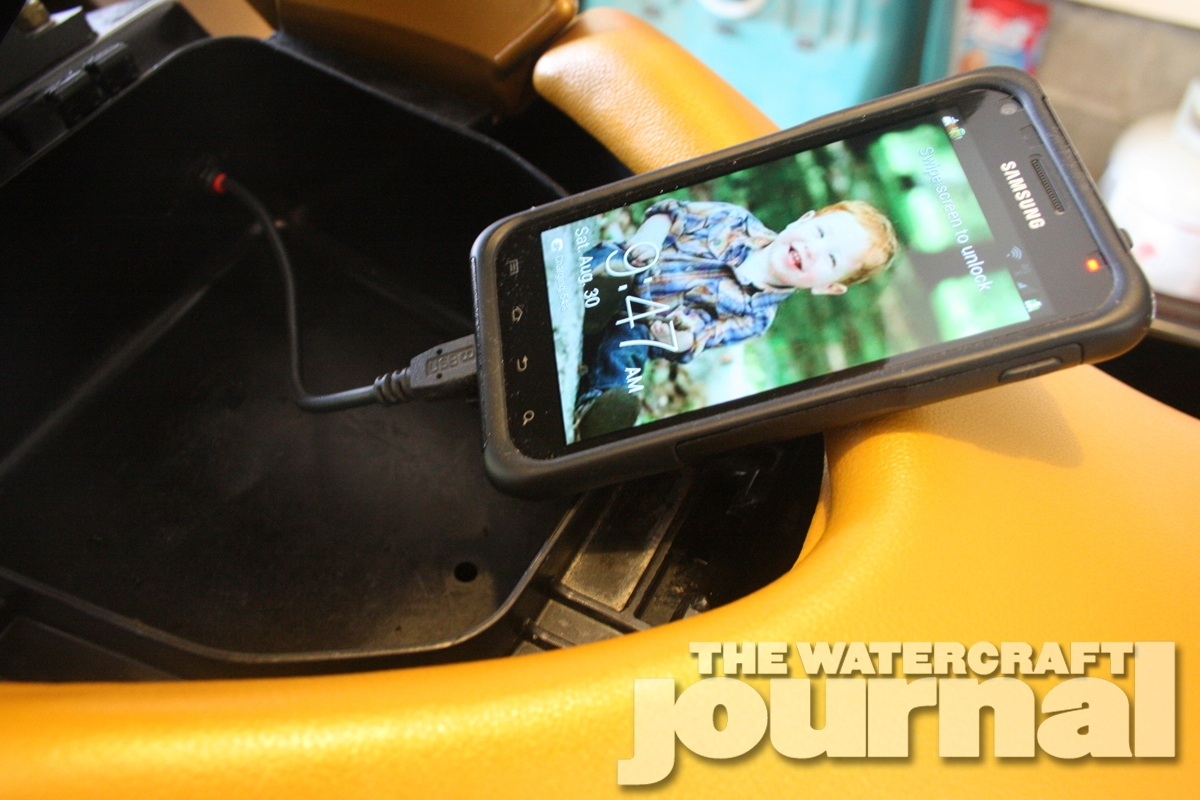
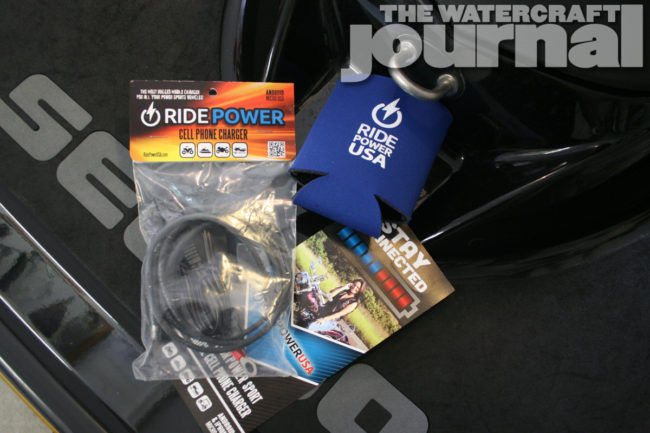
We know you all take your phones out on the water with you, and so does RidePower – that’s why they’re the industry leader in developing universal phone chargers that wire in to your motorcycle, boat or personal watercraft. And to help keep everybody’s phone charged a lot easier, the RidePower phone charger cable is now available at J&P Cycles (www.jpcycles.com), the world’s largest aftermarket motorcycle parts and accessories superstore.
In a release issued today, RidePower wrote: “Adrenaline junkies and weekend warriors have several ways of enjoying their free time, including: hitting the links, bouncing through waterways or cruising the open road. Culturally, smartphones continue to be the device of choice for how we enjoy music, obtain location and map information, get our news and capture memories, making the dependability on these devices as important as our recreational time.
“However, using your camera, texting, GPS and music streaming quickly drains your phone or device battery. The ability to live an active and thrill seeking life while staying powered is essential. RidePower is a compact, water-resistant, advanced circuit protection cable that connects your device to multiple sports vehicles.
“When I invented this technology, I knew it was going to solve a big problem for a lot of people, and I needed innovative thought leaders with global retail distribution as well as an online presence that would compete fiercely in the sports vehicle space,” RidePower inventor Steve Young said. “That’s why I knew GloDea® was the right partner for my success. Their global footprint and shared values of product excellence tied perfectly with my own.”
“We are thrilled with the performance of this product,” Miller said. “We’ve been listening to the consumers in the sports vehicle accessories market for a long time and understood the shortcomings of other products already in the marketplace. In producing RidePower, we knew we had to accomplish four key objectives: it had to be easy to use, streamlined, safe for a wide range of vehicles, including golf carts, and compatible with both Android and iPhone devices.”
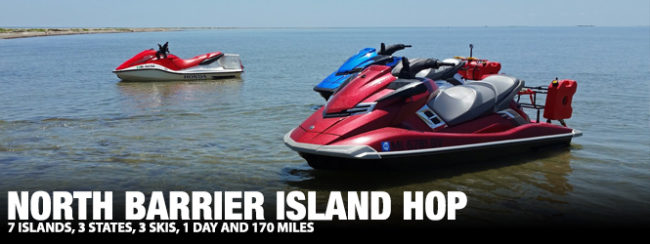
(Disclaimer: This 170 mile open water ride is NOT for beginners! Do NOT try this ride alone or without carrying extra fuel and at least a marine radio or a PLB! …scratch that, you better have both a marine radio and a PLB!)
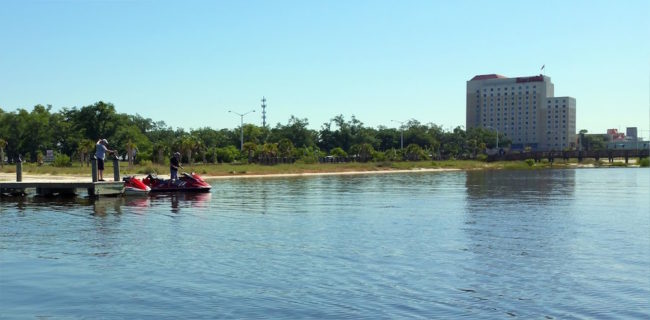
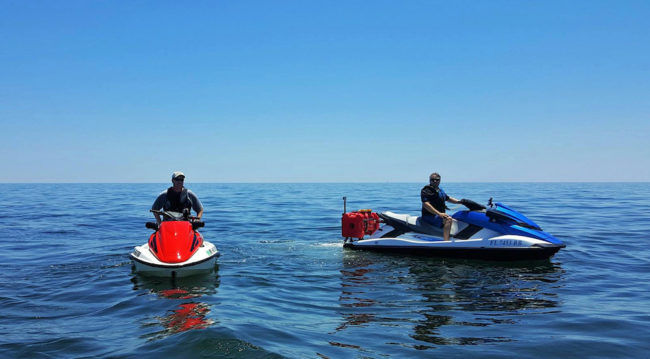
We started this adventure in Biloxi, Mississippi on a beautiful Saturday morning. The Sound was reasonably smooth when Mike, Wade and myself left the Kuhn St boat ramp around 9:30 in the morning. We headed west, hugging the coast towards Gulfport, then making a turn south in the direction of Cat Island. After a short, uneventful ride we beached our skis at the north tip of Cat Island, on the west shore. We explored for a few minutes, took some pictures, and knowing we had a long way ahead of us, departed towards West Ship Island.
As was to be expected for a Saturday, Ship Island was fairly busy. The ferry and dozens of other boats were there. We beached our skis near the pier and walked up to explore the well preserved Fort Massachusetts. A quick look over the South ramparts confirmed – the Gulf was smooth, so off to the pièce de résistance – the Chandeleur Islands!
Above: Departing from the Kuhn St. pier in Biloxi, MS
Above: Glassy conditions on the MS Sound
The nearly 17-mile ride from West Ship to the Northern tip of Chandeleur was made even more enjoyable by the sight of big sharks, pods of dolphins, basking stingrays so thick you could almost walk on them and even a loggerhead turtle. The water was smooth enough to maintain an easy 35 mph cruise without getting wet. Though we could have gone faster, our main concern was fuel, so we tried to keep it at a reasonable speed.
Once we reached the north tip of Chandeleur, we pulled up on the seemingly endless crystal clear flats to the west and parked the skis near the beach in smooth as glass water. As we parked, we observed a lone dolphin swimming around in about knee deep water about 100-feet to our west. The Chandeleur Islands are amazing and being that they are eroding at an alarming pace, they may not be around for much longer. Visit this place while you can! During our roughly 30-minute stay, we only saw two other boats, one heading towards Mississippi off the east shore, and a small boat that was just beaching as we departed. Seclusion would be an understatement compared to other islands in the area.
As tempting as it was to explore more of this magnificent island chain, we had a few more islands on our agenda, so we loaded up and made our way towards the East tip of Horn Island. About 10 miles into our venture, we stopped for a short break. After a quick discussion, a decision was made to head straight north for the west tip of Horn Island instead, so that we could ride east along the north shore. As was to be expected, the western beaches were covered in boats reminiscent of a Walmart parking lot on Black Friday. We continued our ride until we found a quiet stretch of beach on the North side of the island, just west of the Ranger Station.
Above: Arrival at Ft. Massachusetts on west Ship Island
Above: Garrisoned only by the NPS, Ft. Mass silently guards the entrance to the MS Sound
Once rested and refreshed, we kept pushing East towards Petit Bois Island. After partially refueling the skis from our jerry cans and the obligatory photo op, we head eastward into Alabama. We decided to try our luck on the south side of islands again, but after getting fairly beat up by some good waves, we decided to hop back on the north side once we hit the west tip of Dauphin Island. After riding the nearly 15-mile stretch that is Dauphin Island, we finally reached the marina near the bridge. We all topped off our tanks for the last leg of the ride and the ride home. When we pulled out of the marina the wind had picked up, and once we crossed into Mobile Bay, we were greeted with the typical nasty Mobile Bay chop.
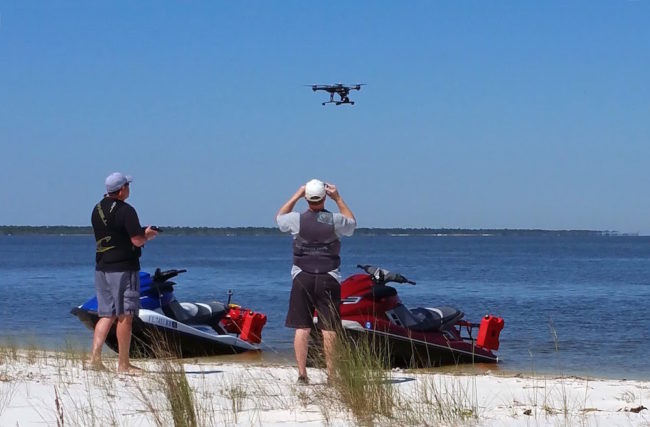
Our last island on the list was Sand Island. This island has an abandoned lighthouse, right at the entrance of Mobile bay. It is approximately four and a half miles south-southeast of Fort Gaines. The sea was rough but we managed to get close and take a few pictures. Unfortunately, the sea also claimed a valuable piece of equipment that now rests on the bottom of the Gulf. It turned out to be a costly day for Mike on the water, as the drone had a mind of its own shortly after takeoff. It flew about 200-feet away, then abruptly came back towards him, nose diving into the Gulf a mere 20-feet away from his ski. It immediately began to sink, and was impossible to attempt a retrieval.
It was starting to get late in the day, so we rode back towards the Dauphin Island bridge. A slight misread of the GPS by Mike put us in some shallow water, maybe less than a foot deep in some points, just west of the bridge. Mike ended up just getting off his ski and walking it back to deeper water, roughly 300-feet back where he came from. Wade and myself found a little shortcut to the north and were able to get to deeper waters much faster. We couldn’t blame Mike about the little snafu with the route, he was probably somewhat distraught over the drone accident.
Above: Twenty miles off shore and nearing the Chandelure chain of islands
Above: A visit to the crystal flats of LA, via the Chandelure Islands
After we were all back together again in more suitable depths, we had a brief discussion about what time it was, and our plan from there. It was 5:36 p.m., and we had to decide if we wanted to stop and eat, or just head straight back. At this point, we had maybe two hours of daylight left, so we decided it would be smart to just head back. This turned out to be a very wise choice! We began our nearly 50-mile ride back to Biloxi, which would prove to be a brutal 2 hour and 15 minute ride.
We all knew that this would be a rough ride home, but a few minutes in we realized that it would be a test of endurance. We were hitting 2-3 foot whitecaps about every second, drenching us with every hit, and rattling the spine pretty good, too. It took us over an hour to reach the Mississippi line, averaging only about 13 mph.
Luckily, once we reached the Pascagoula area, we stopped getting dowsed by every other wave and could finally resume something resembling touring speed. Riding straight into the setting sun did not make things any easier, and seeing the GPS screen was not an option. Fortunately, Mike knew the area very well, and was able to guide us back in the right direction with no issues. As it turns out, each one of our GPS unit’s batteries died back around Pascagoula, and we didn’t even notice.
Above: In memory of the BIP tactical field drone: Though she rest in Davy Jones’ locker, may she never be forgotten
Above: The Sand Island Lighthouse standing tall and showing the way into Mobile Bay, AL
Finally, we came around the last bend of land near the Ocean Springs area, and could see the casinos on the horizon. The sun was dropping fast, and so was visibility. Both Mike and I have navigation lights on our skis, so we would have been fine if we got back at dark. But Wade was not prepared for a night ride, so he rode in the middle, hoping not to run across the 5-0! As we pulled into the channel between Deer Island and the Golden Nugget, the sun had set, and we barely had enough light to load up the ski’s and get them back in order to be towed home.
Despite all of that, this was an amazing ride and well worth it. We managed to cover 170 miles and visited seven islands in the states of Louisiana, Mississippi and Alabama.
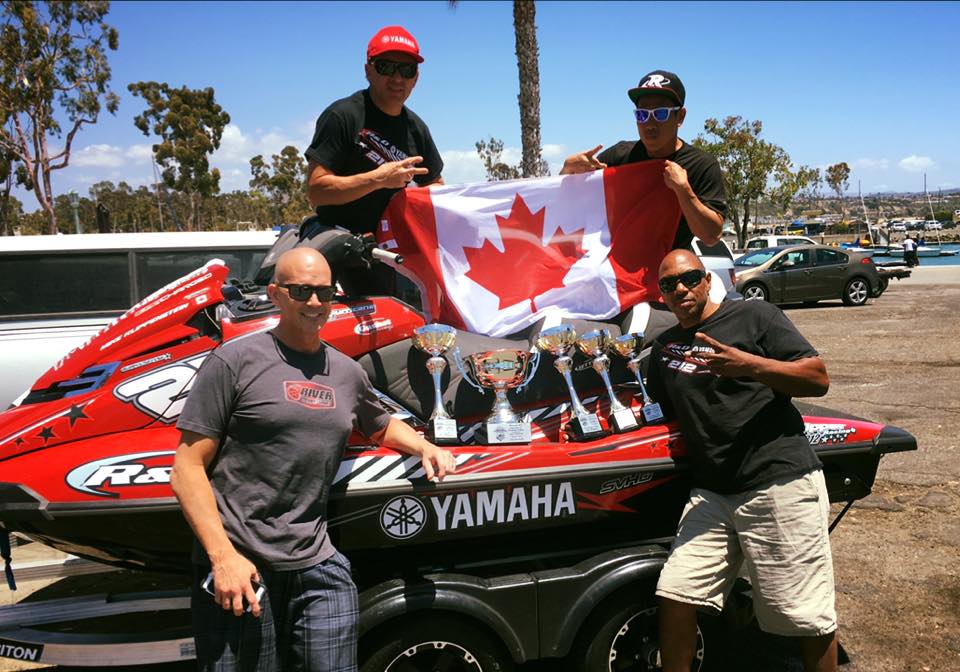
Dedicating his third consecutive dominance of the annual Dana Point-to-Offshore (and Back) Championship to the victims of Fort McMurray, Alberta, Canada, fellow Canadian Mike Klippenstein piloted his heavily-reworked #212 turbocharged Yamaha FX SVHO ahead of local and seasoned offshore racers.
Although Klipper brought out the big guns, competing PWCOffshore.com team members KC Heidler and Mark Gerner chose not to race any of their turbo race boats for fear of injuring their craft too soon before the annual Long Beach-to-Catalina Offshore Championship. This of course, gave Klippenstein the advantage.
With so many riding reliable, stock craft for the Oceanside event, the field broke up rather evenly between heavily prepped machines and more factory class rides, although the early morning sprint to the turn boat anchored just outside of Oceanside harbor was markedly smooth, the ride back to Dana Point churned up a little, spreading the seasoned athletes from the weekend warriors.
The Dana Point-to-Oceanside-and-Back is one of the few ongoing American offshore races presented by RPM Enterprises and Ross Wallach. The 54-mile race skirts the the Southern California shoreline, past historical landmarks, surf spots, and even the Marine Corps Base Camp (and Navy SEAL training grounds) in Fort Pendleton.
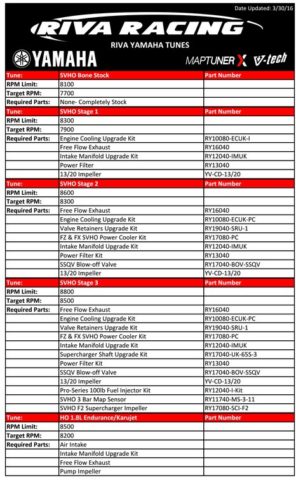
After running 77-plus-mph with a bone stock ski with the “bone stock” RIVA/V-Tech tune on my 2016 Yamaha FZS, I decided to put the Stage 1 parts on and upload the RIVA/V-Tech Stage 1 tune with my MaptunerX unit, and am extremely pleased with the results:
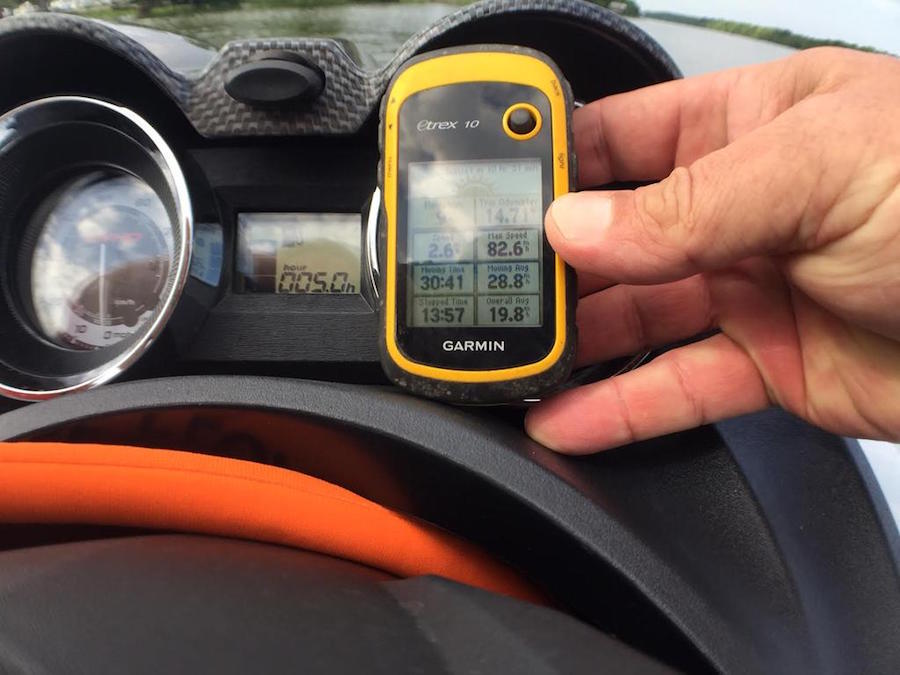
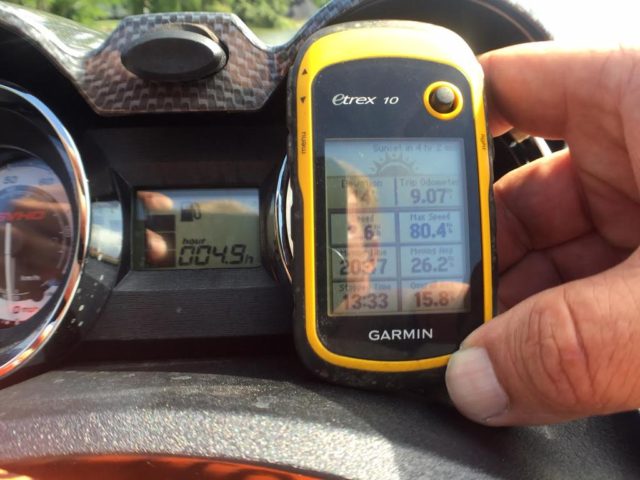
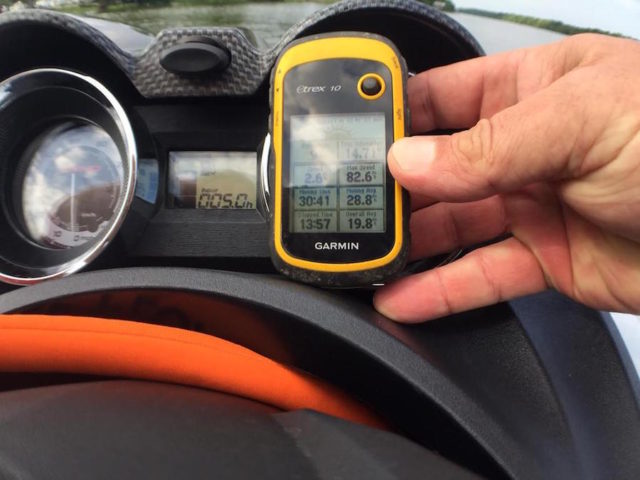
80.4 mph came very easy at only 8220 RPM. I depitched the Solas 13/20 that comes with the kit to a 13/18 – being that I ride in a very hot climate. The acceleration is brutal! Air temps for this test were 89 degrees F and fuel was 3/4 tank, and I’m a 255 pound rider.
As you can see in the image [above] there is only 4.9 hours on this ski. This test was with the stock ride plate and trim one click up from Neutral. Adding the Jim’s ride plate would have yielded another 2 mph. I will test that this weekend.
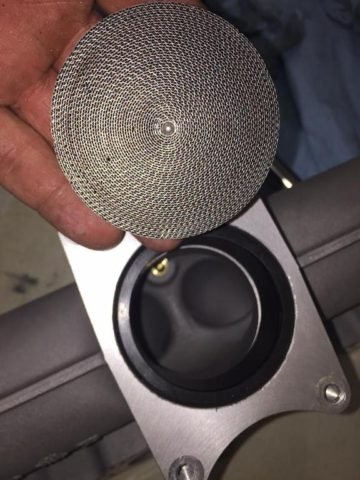
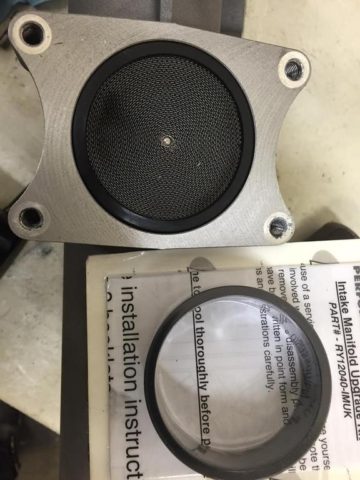
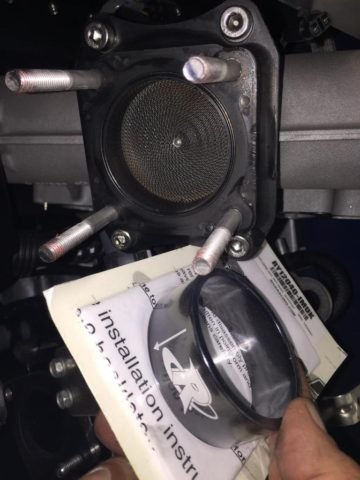
Above: Have a look at how restrictive the intake manifold flame arrestor is (ribbon). Doing the intake manifold upgrade is a MUST for any ski.
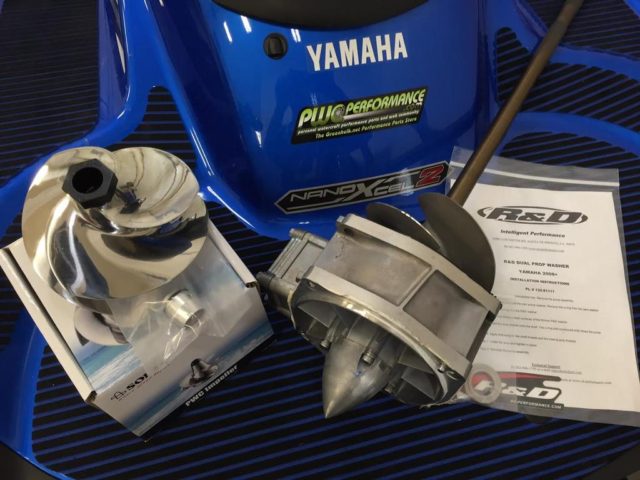
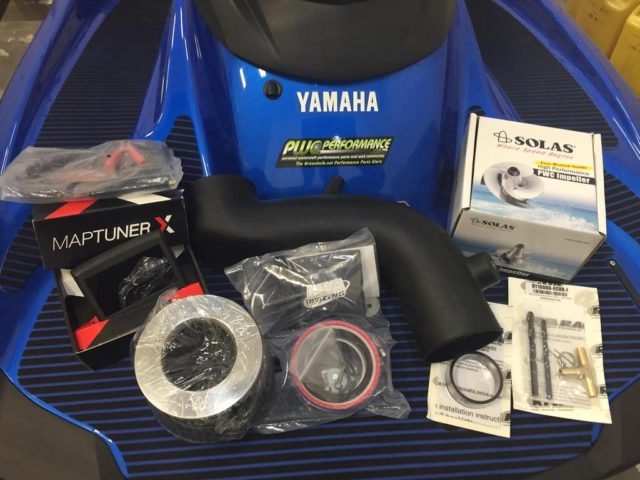
Top: All of these parts and V-Tech MaptunerX system are available in PWCPerformance’s online store at discounted prices. (The discount code is “greenhulk”). Below: Take note that I also installed the R&D dual friction washer between the pump and impeller. This makes removing the impeller in the future a breeze. I highly recommend this for all skis!
Above: And the big news: I then put the Jim’s Modified SVHO plate on my ski and gained a solid 2.2 mph. 82.6 mph with only Stage 1 parts and tune and a Jim’s plate? Incredible!
We spend a lot of time perusing for timely, quality or just plain entertaining news in the jet ski industry, and oftentimes we come up empty-handed. Sometimes its just a lack of anything really newsworthy going on, and other times, it’s because we searches might be limited. That’s why we so regularly look abroad to find news and content that’s worth reporting.
We stumbled across Watersport Today’s website earlier this year and have been dropping in to see what our friends in the Netherlands have been up to time and again, and really enjoyed their latest gallery of videos titled “Top 5 Freestyle jetski videos.” Most are from here in the States and Australia, and the five are personal favorites from the staff. Having seen so much awesome freeride action over the years, we tend to agree.