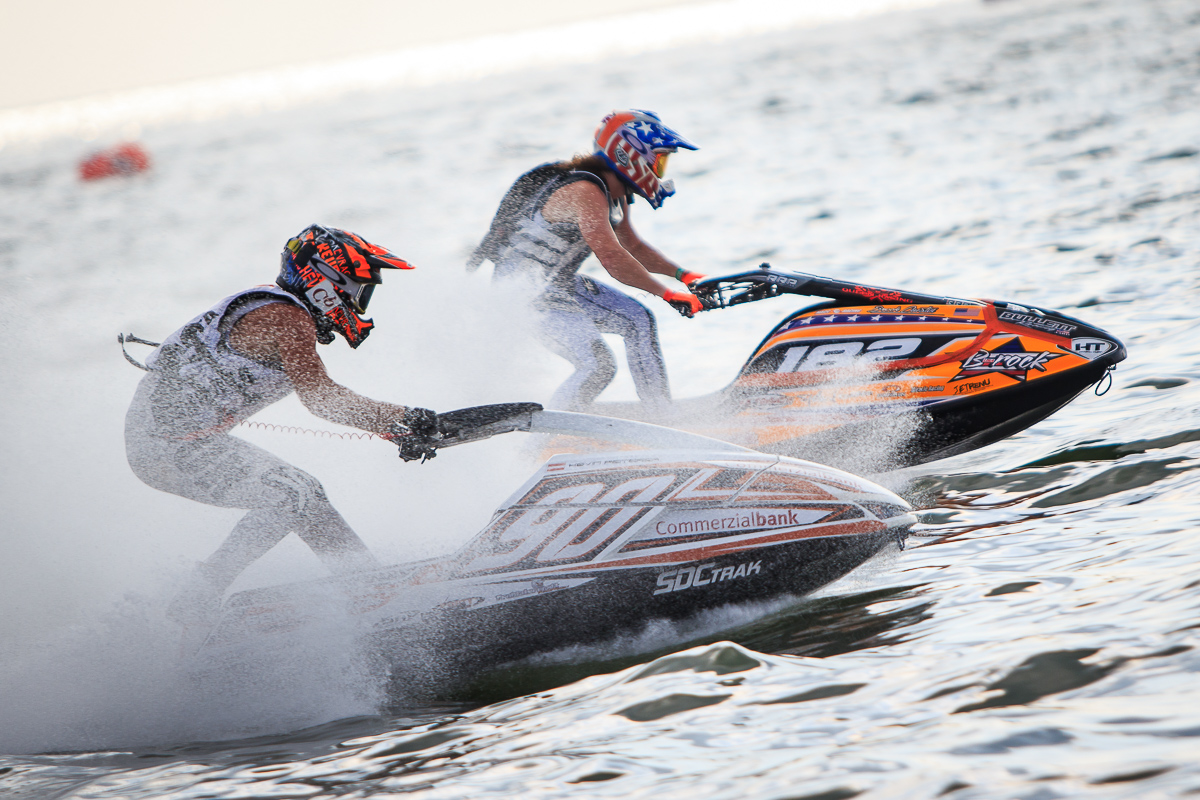
It’s been a long time coming, but Austrian Pro Ski racer Kevin Reiterer finally earned the top spot at the 2015 King’s Cup in Thailand, seven years after his 2008 championship. Competing some of the most talented and competitive racers in the world – including Chris MacClugage, Steven Dauliach, Brock Austin and Jeremy Poret – Reiterer fought back a field of 20 over four motos to earn the world championship.
Conditions for this year’s event were brutal with heavy seas challenging the racer to their limits. Reiterer leaped out of the gate, putting up an amazing performance on the first day. “Waves and riding against the best in the world takes me out of my comfort zone. Pushing myself to the limit on a 220hp monster, over 16 minutes and an average heart rate of 186 beats per minute is what I love to do and showed me once again why I love what I am doing,” said the 23-year-old.
Reiterer’s performance only improved over time, earning a third place in his first moto, followed by two second place spots in the next two motos, and finishing strong with a first place finish for the final. According to his official press release: “The Austrian knew what he wanted to achieve and had a solid second day that led him to overall victory. Thanks to the high recognition of the sport by Thailand’s royal family, the winners received their trophy by the princess of Thailand.”
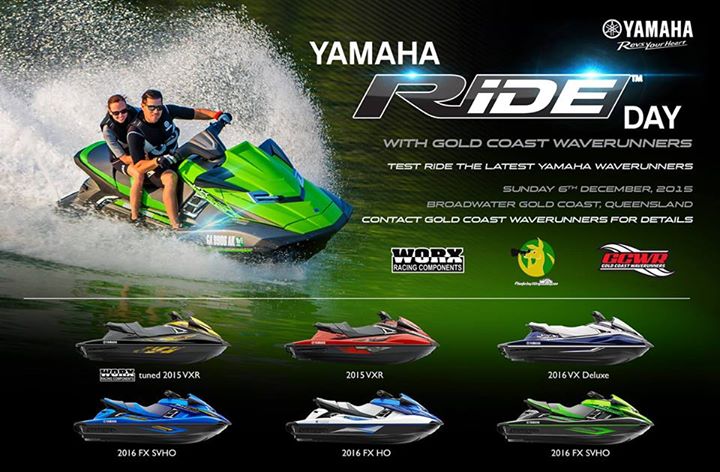
Yamaha WaveRunners Australia and Gold Coast WaveRunners have teamed up for a fantastic day, while raising funds for the RBWH Burns Unit. In addition to enjoying a gorgeous day of test riding the newest and latest in Yamaha WaveRunners, participants are invited on a guided WaveRunner cruise to Paradise Point leaving The Spit boat ramp (located at the SeaWorld Boat Ramp – Gold Coast, QLD) this upcoming December 6th, at 8am. After the ride there will be a BBQ and activities for everyone in the park at 10am.
For those interested in joining the group ride to Tipplers, all are asked to bring their own ski (as well as all appropriate safety equipment and PWC license) and a small donation to join in the fun. All brands and models are welcome to join in on the cruise and test ride, so don’t hesitate to come along if you’re not a Yamaha owner. Yamaha will bring along The Watercraft Journal‘s own professional photographer Andrew “Skip” Donovan, who will be on the water to capture the day.
Gold Coast WaveRunners will be raffling away a $200 Gift Voucher, and Worx Racing Components will also be raffling a $200 Gift Voucher, to raise funds for the RBWH Burns Unit. So please everyone come along for a great day out and raise money for an awesome cause. The team at Yamaha and GCWRs look forward to riding with you and raising funds for the Burns Unit. For further information, contact Gold Coast WaveRunners.
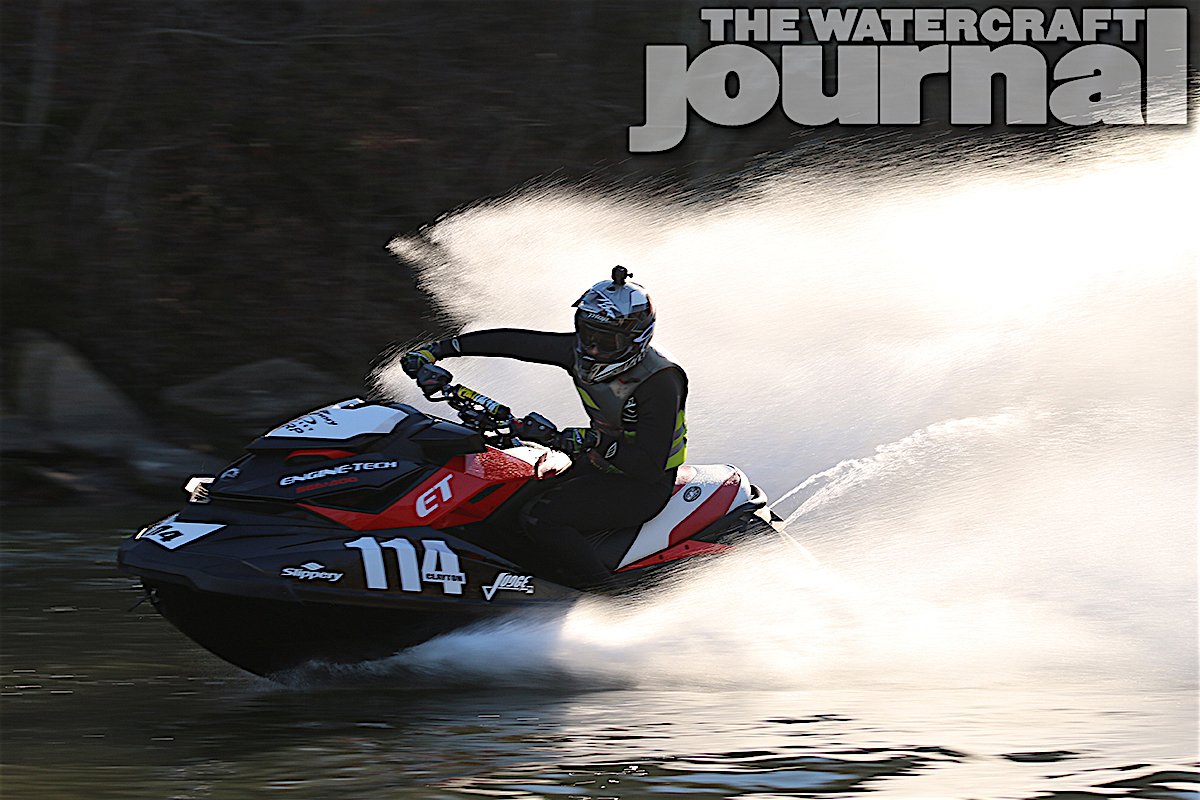
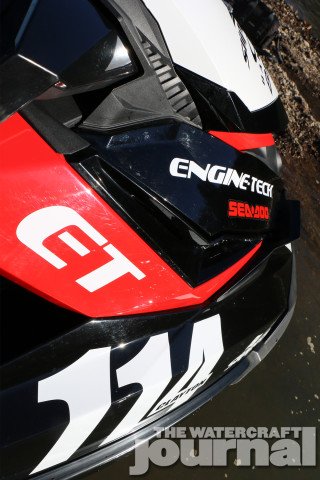
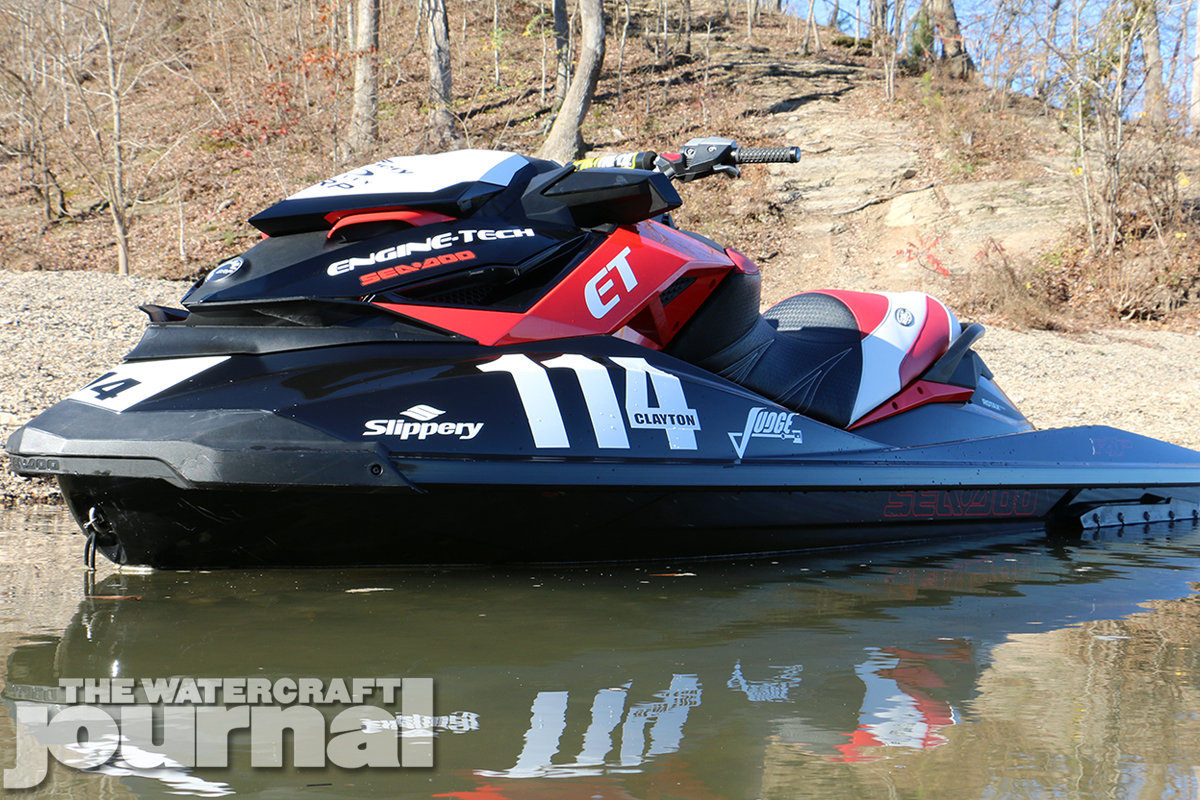
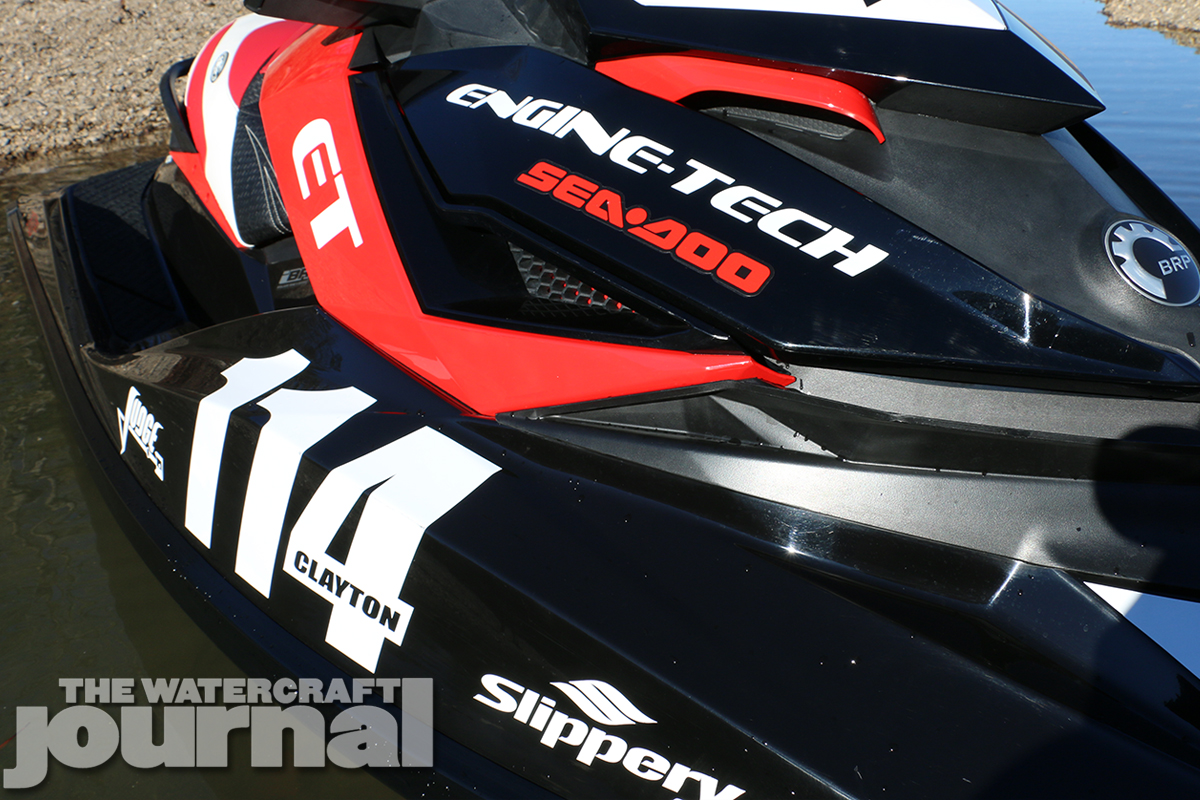
“But, it’s only like, two bolts!” Claude Clayton protested emphatically. “It takes me 15 minutes to swap it out.” Yes, the Sea-Doo X-Team racer had a point, but we stood our ground that the average enthusiast wouldn’t be as comfortable with swapping out a supercharger with an Engine-Tech (ET) blower as readily as say he, a seasoned racer, or tuner, and thereby wasn’t a “bolt on” part. We had been debating the definition of what made a “bolt on” part for 10 minutes by now and hadn’t paid much notice that our food had arrived.
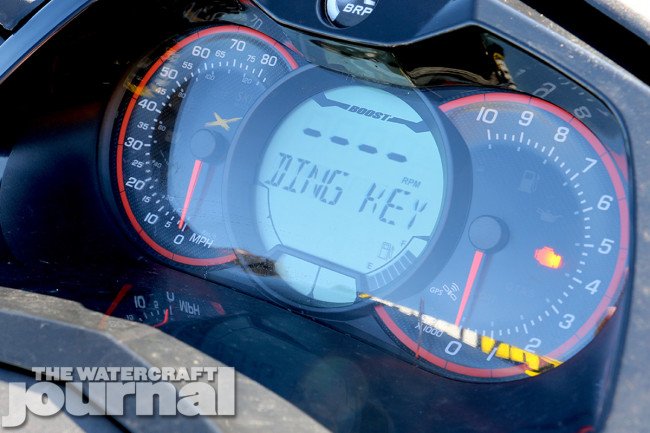
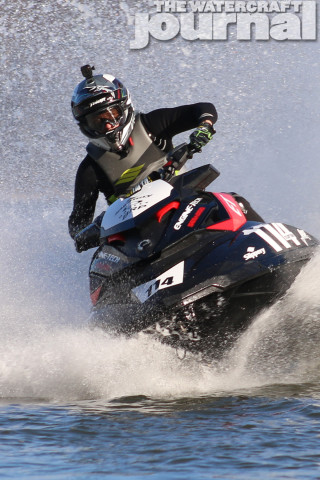
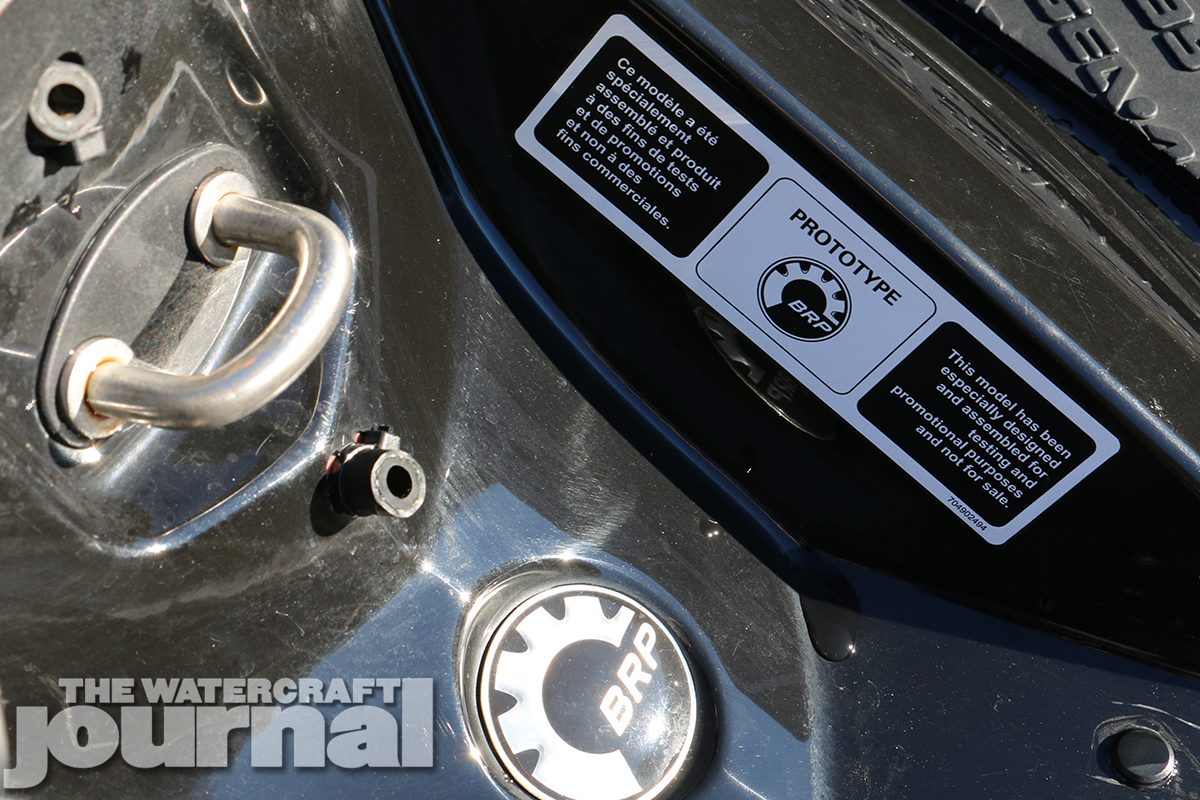
We met Clayton earlier that morning to finally take a ride on his yearlong “Bolt 85” project. Within weeks of his near season-ending injury at the first round of the 2015 AquaX series in Daytona Beach, Florida, Clayton contacted The Watercraft Journal about his plans to build a competitive Pro Open closed-course race boat that runs a staggering 85mph while being fed E85 fuel. The numerical theme was also to be carried further by completing the machine with (or less than) $8,500 in additional “bolt on” parts. We even teased it back in May.
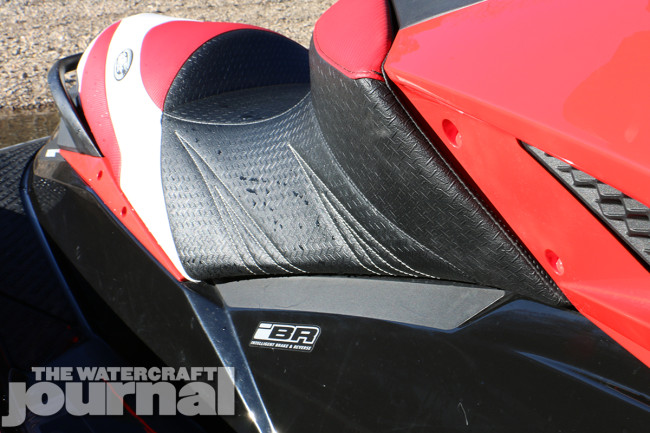
Above left: The custom-mapped Sea-Doo X-Team E85 Race ECU maintains us the the iBR and iControl display. Above right: A deep Clayton-Spec designed saddle is covered by Jettrim.
Clayton’s road to mending from a shattered ankle and crushed larynx required a succession of surgeries resulting in the 34-year-old living with a handful of titanium hardware holding his neck and foot together, respectively. Clayton and his wife also welcomed their newborn daughter, which in turn, pushed the project back further. It was completed in time for Clayton to participate in both the IJSBA National Championships (that shadowed Round 6 of the AquaX series) in Cocoa Beach, and the first Pro Watercross World Championships in Naples, FL.
When it finally came time for Clayton to trailer the Bolt 85 to Counce, Mississippi, for our photoshoot, it was still in its closed course configuration as it had competed in Naples; meaning its prop, sponson and handlebar configuration were exactly how Clayton preferred it for closed course racing. But conditions wouldn’t match those of Florida; December on the Tennessee River offers less than ideal conditions for pretty much anything, as air temperatures lingered at 46 degrees, making the on-the-water temp 36 degrees.
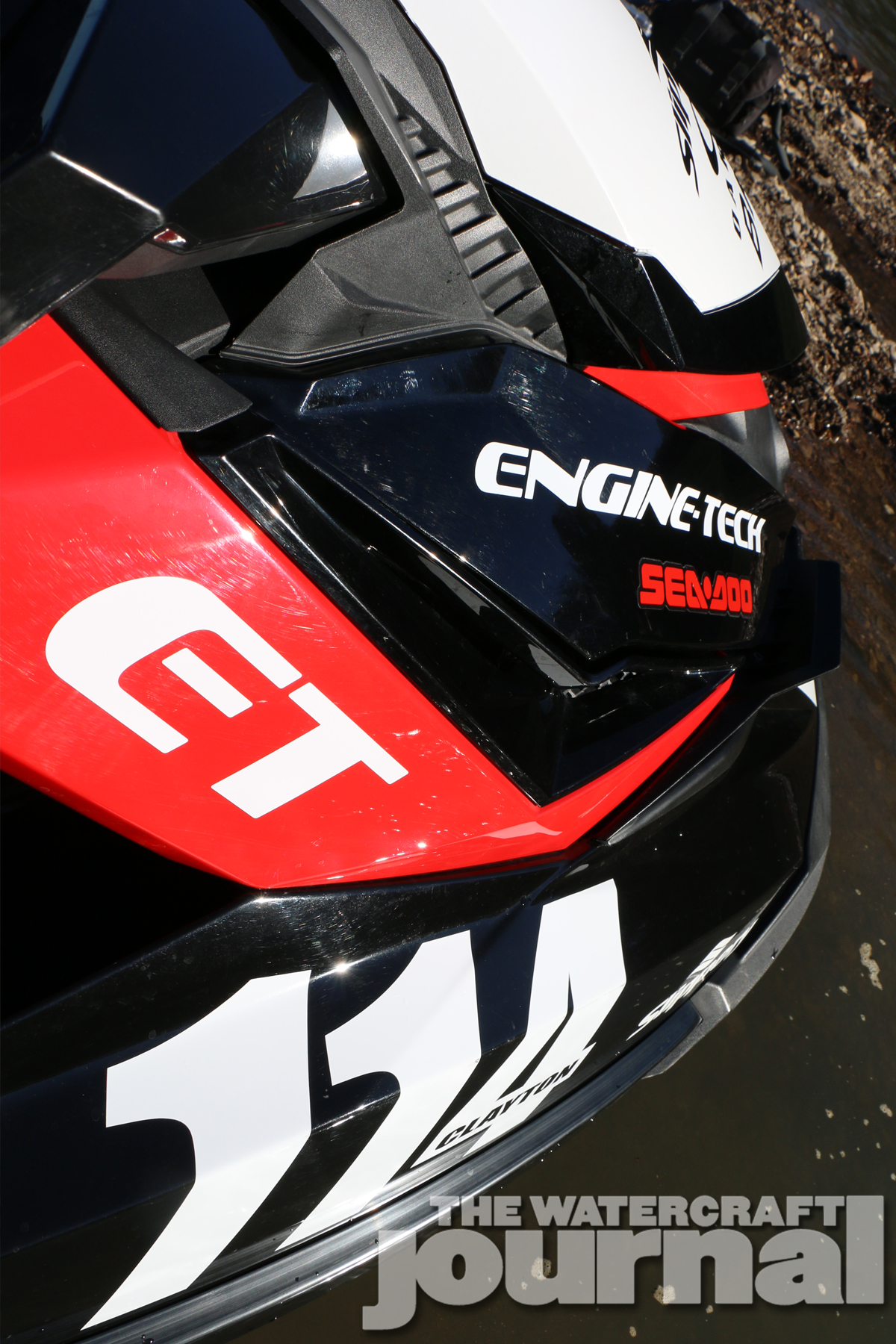
Above: The incomplete AquaX season decal marks how Clayton’s injury at Daytona Beach benched him for most of the season.
The water surrounding Pickwick was rough, with 3-foot rollers and a brutally cold southbound breeze unbroken by the barren treeline. This made searching for enough flat water to collect a decent top speed number almost impossible. Having cut his teeth at the family lake house just a few miles south towards Eastport and halfway towards Muscle Shoals, Clayton directed us towards Cooper Hollow, one of countless inlets that become “party coves” when the weather is more favorable.
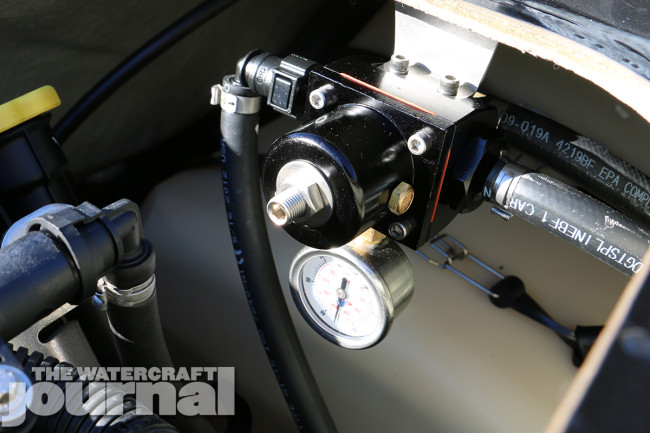
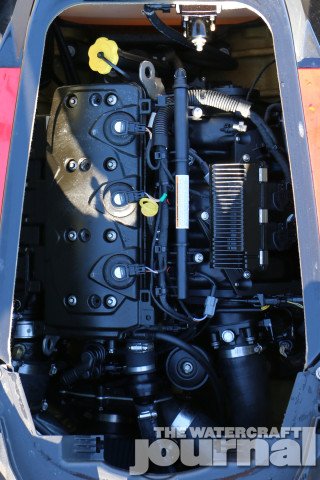
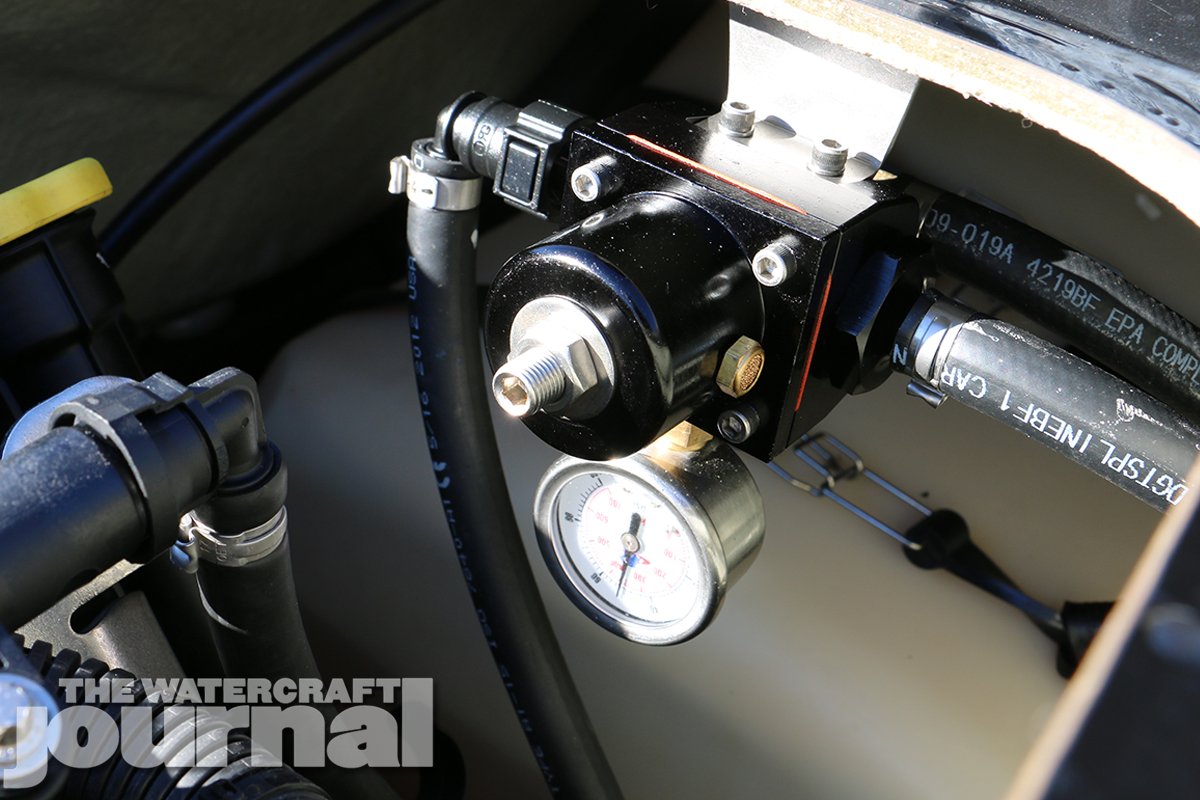
“Sorry for getting here so late,” Clayton apologized as we snapped pictures. “I had to run across town to the ethanol station to fill it up.” Converting the Sea-Doo from traditional gasoline to ethanol required some work, particularly to the fuel system; a Walboro 255 fuel pump, a RIVA Racing Fuel Pressure Regulator, massive 1000cc injectors and a custom-mapped Sea-Doo X-Team E85 Race ECU allowed the RXP-X to operate on the alternative fuel. While many tout the environmental benefits of E85 (were you to disregard the fact that E85 increases the emissions of acetaldehyde), its weak overall popularity has made finding it at times difficult.
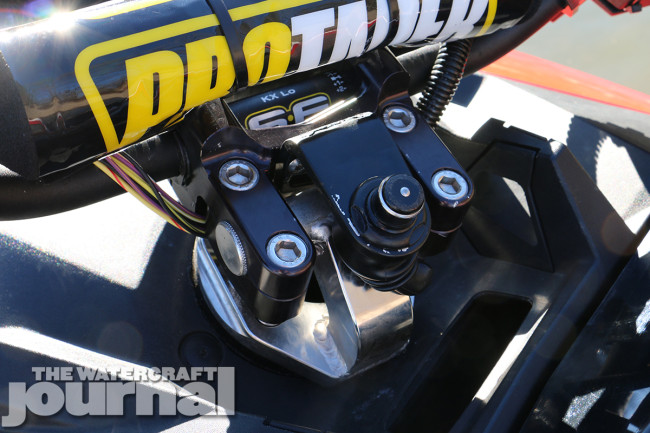
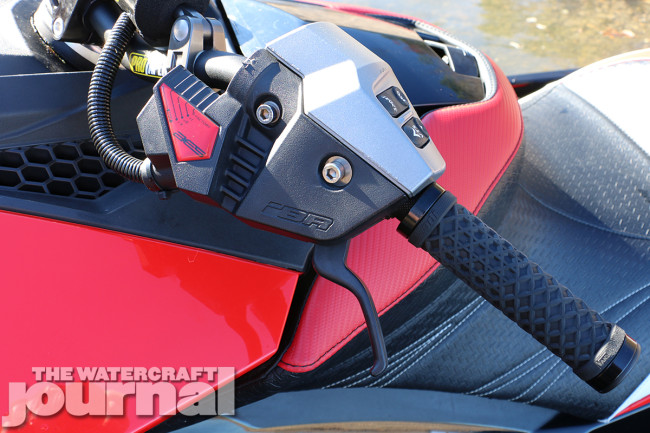
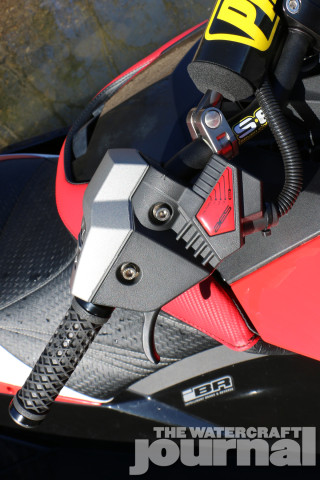
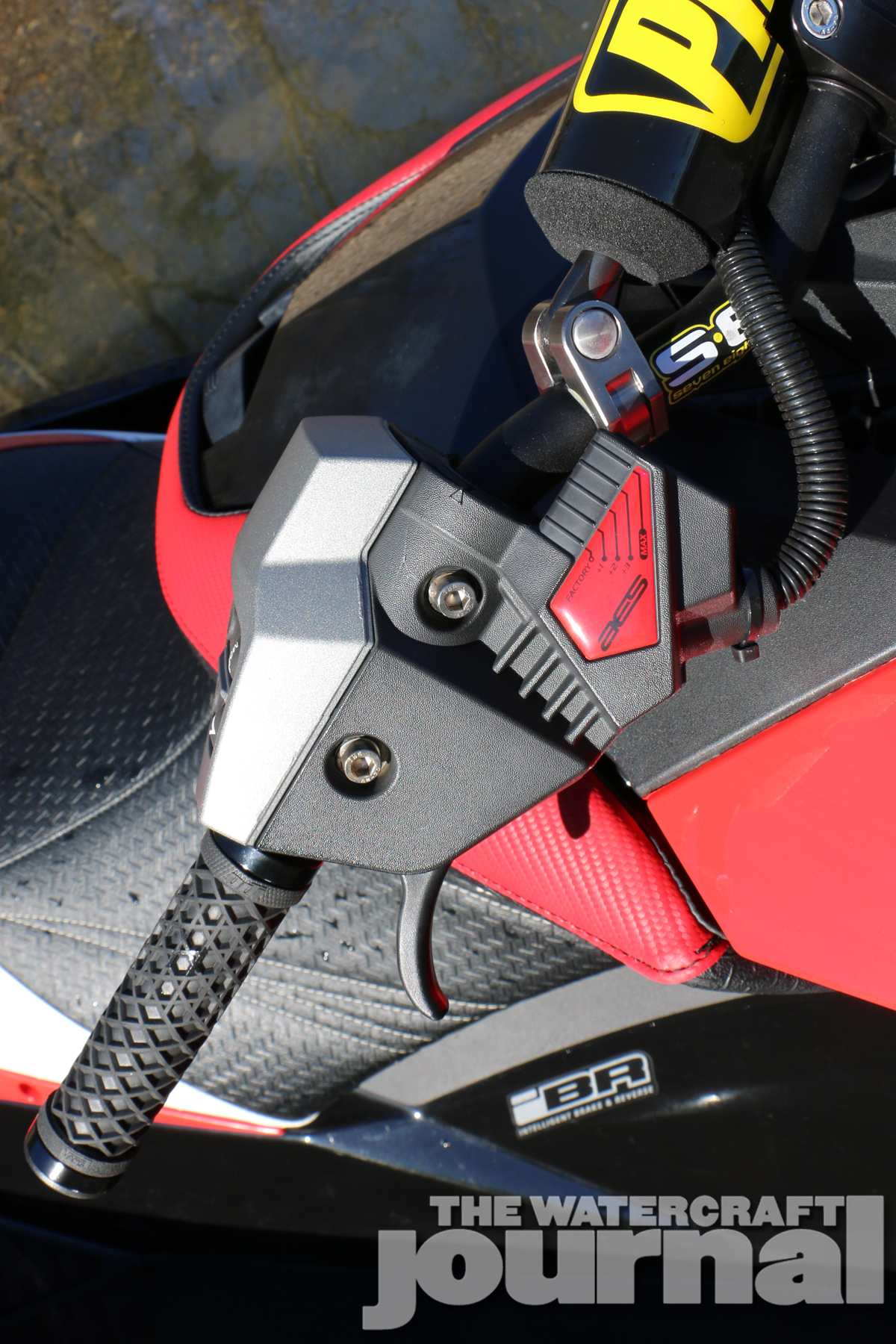
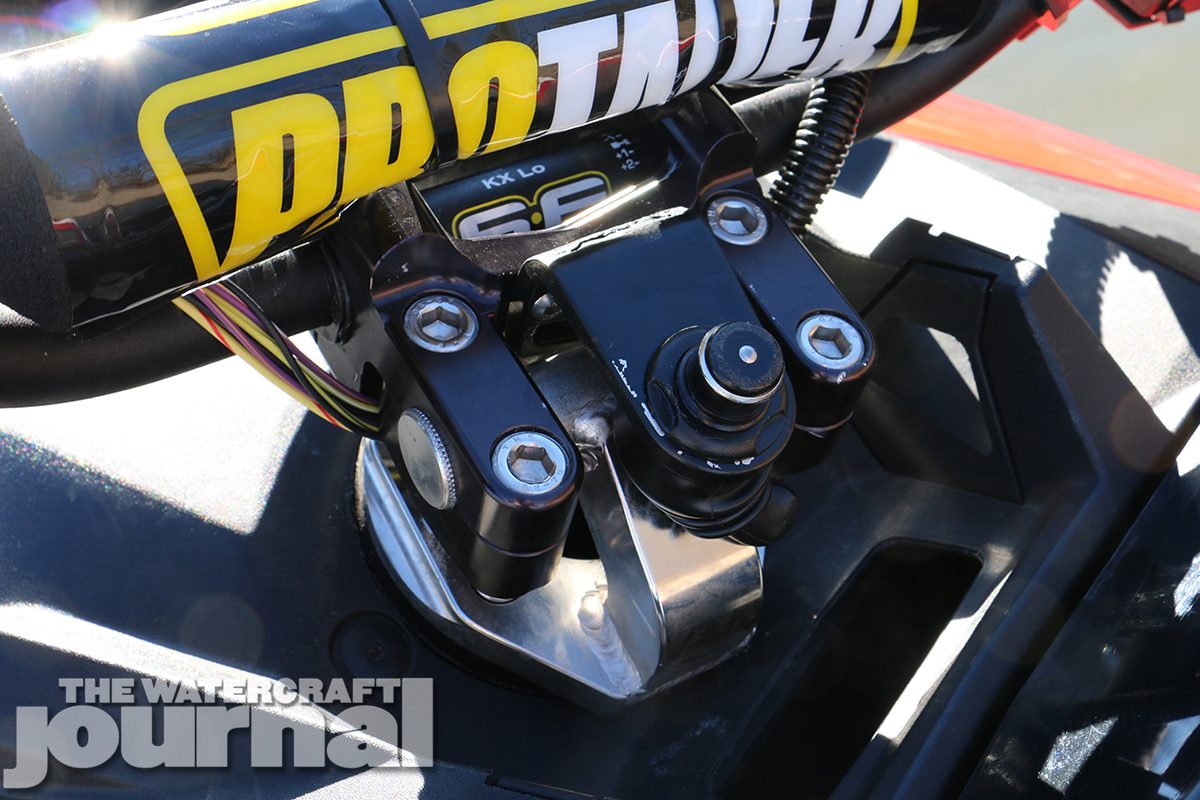
Above left: A modified RIVA Racing steering neck features a custom DESS key mount and low-profile KX Pro Taper bars. Above right: Black ODI grips replace the factory rubber.
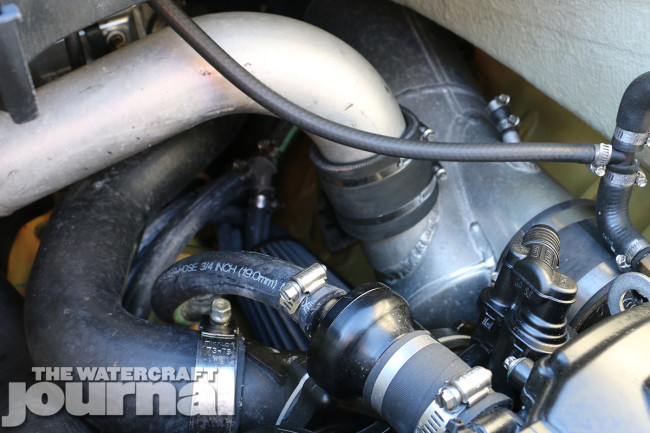
Yet, many performance enthusiasts have found the fuel incredibly receptive to high compression and big boost (psi) engine combinations. Replacing the Sea-Doo’s cylinder head is an unported Judge Motorsports Race Head that has been slightly milled, increasing the engine’s compression to 9.5:1. The addition of the aforementioned ET 68-140 supercharger increases the overall boost to a consistent 18psi at 9,100rpm. Although E85 characteristically burns cooler than traditional gasoline, a large RIVA Intercooler and RIVA Flame Arrestor were added to chill the intake charge. Lastly, a custom-built Judge Motorsports Waterbox replaced the stock exhaust.
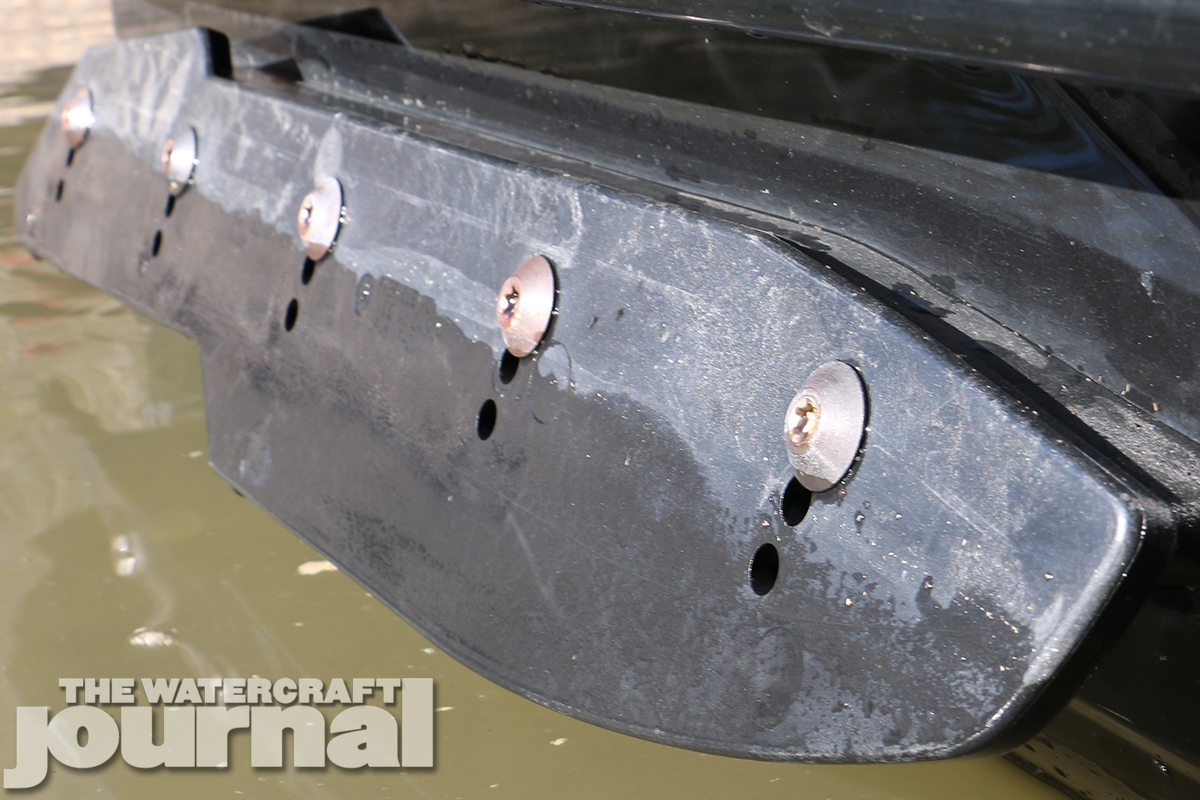
A 155mm Judge Motorsports Impeller features an aggressive pitch that together with a Sea-Doo X-Team Intake Grate launches the RXP-X from a dead stop or from the apex of a turn with gecko-like traction. A modifed RIVA Steering neck holds a set of low-profile KX Pro-Taper Bars wrapped in black ODI Grips, that together with a special home-brewed pair of Clayton-Spec Sponsons gives the Bolt 85 the best steering input-to-execution handling we’ve ever encountered on a stock RXP-X hull.
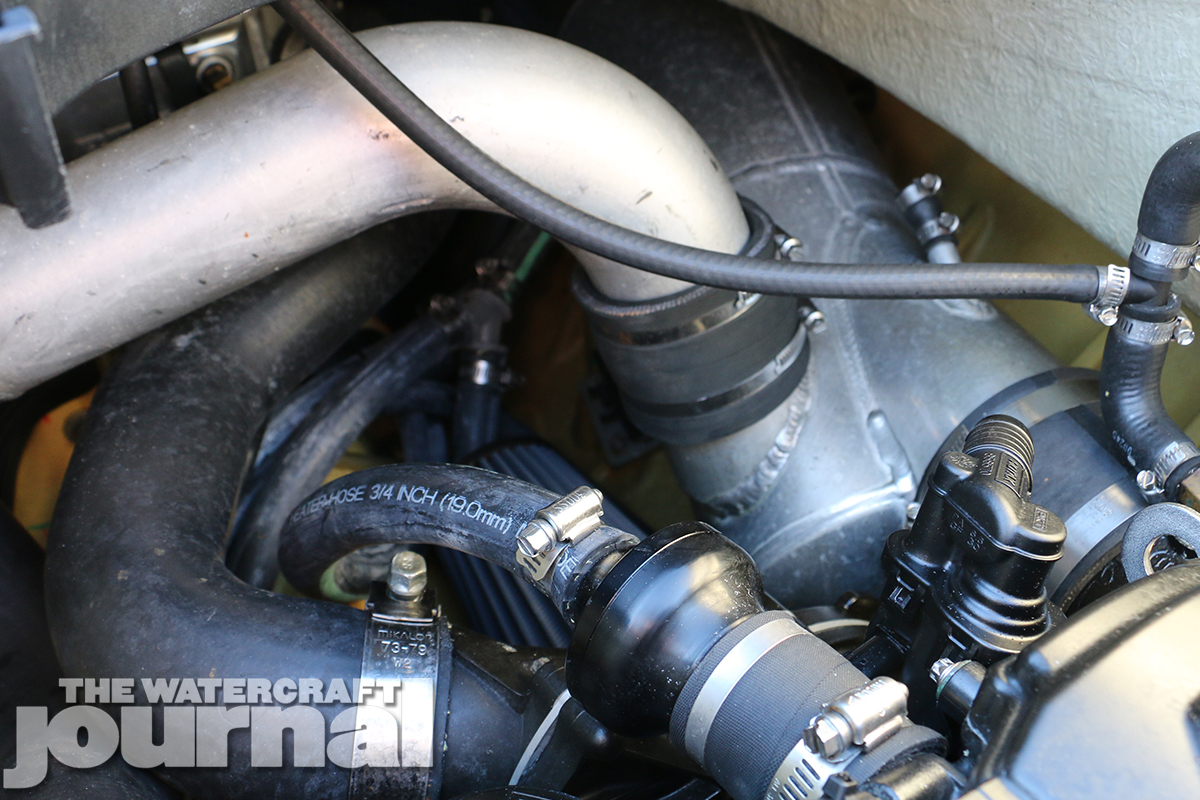
Above left: Converting the RXP-X’s Rotax 1503 to run on E85 ethanol required some doing, including converting to 1,000lbs. injectors, a Walboro 255 fuel pump and a RIVA Racing Fuel Pressure Regulator. Above right: A Judge Motorsports waterbox replaces the factory exhaust and a large K&N conical air filter replaces the BRP air induction box.
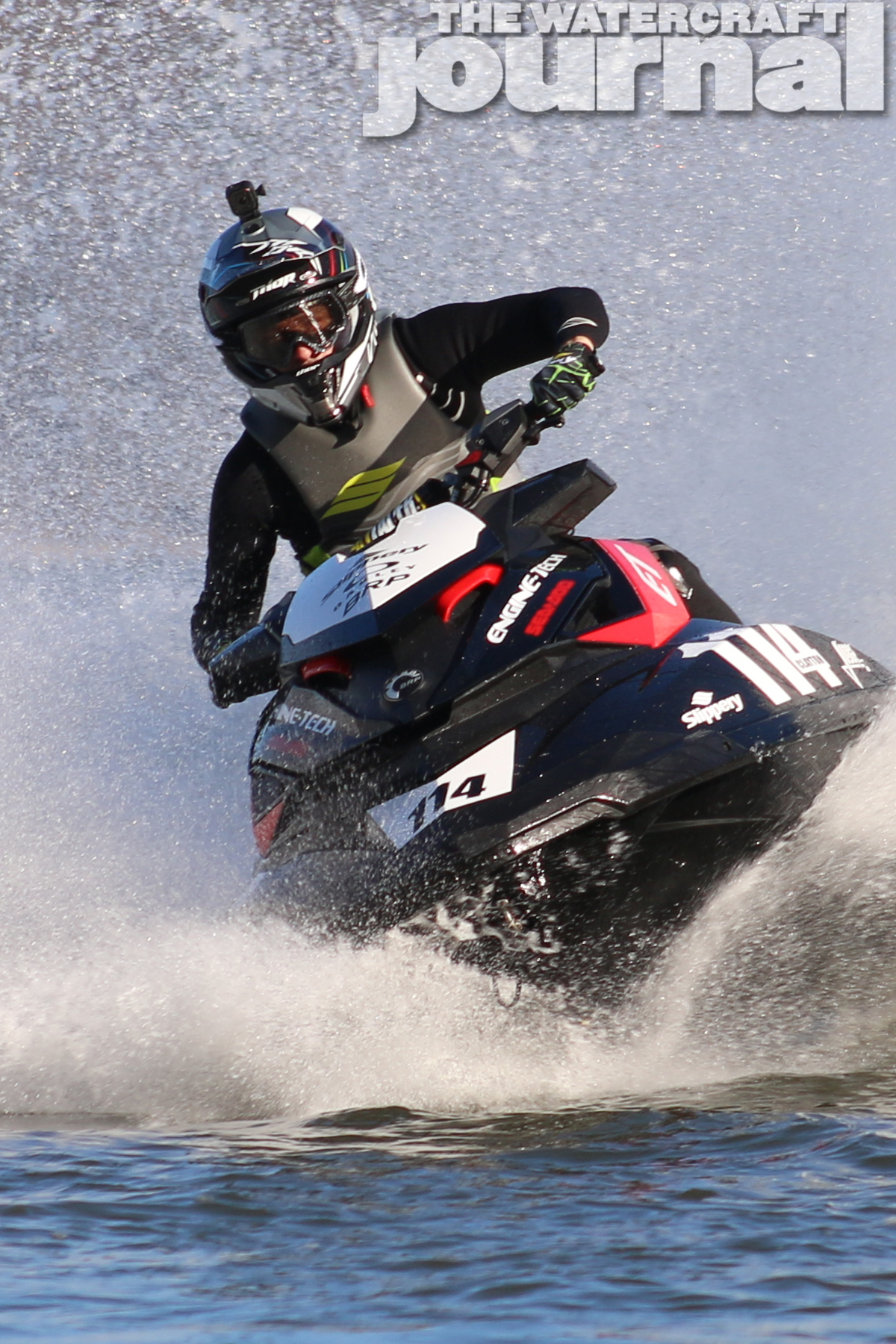
In fact, even in the brutish chop along the Mississippi/Alabama border, the Bolt 85’s ability to bite and snap corners was impressive. Typically, we’ve found stock-hulled RXP-X’s to struggle in wide sweeper turns, but not so with the Bolt 85. Equally, the immediacy of power-upon-demand helped propel the ski through tight hairpins that otherwise would require a little more finesse. It was the explosive throttle response that truly made the Bolt 85 an experience. “It’s making about 350-ish,” Clayton shrugged. “My turbo boat makes about 100 more horsepower.”
Slinking as low as we could into the custom-shaped Clayton-Spec Jettrim seat, even inside the cove, with water so clear you could see the rocky bottom as you sped along, we could only manage 79.4mph. Clayton’s lighter frame and familiarity with the racecraft fared better, fetching an 80.8mph top speed. “The other prop got us up to just over 83mph,” he explained. “This prop is really set up for the closed course, and comes on a lot harder.” A point that didn’t evade us.
Above: The sponsons are deceptively simple in design but make a huge difference in how the RXP-X’s stock hull behaves. Removing the winglets and a large portion of the rearward trailing surface allows the Sea-Doo to stay engaged in large sweeping turns and keep it from searching while maneuvering through chop.
As one can deduce from the list of high performance parts listed, Clayton’s definition of “bolt on” gets a little murky. Despite coming in just under the targeted top speed and a hair above the budget, the Bolt 85 project delivers on power, handling, and seat-of-your-pants excitement. Both Tim Judge and Clayton toyed with the idea of offering the Bolt 85 as a comprehensive package allowing enthusiasts to recreate the project at home. With some fine tuning, Clayton is positive he can meet his goals and we look forward to seeing the results.
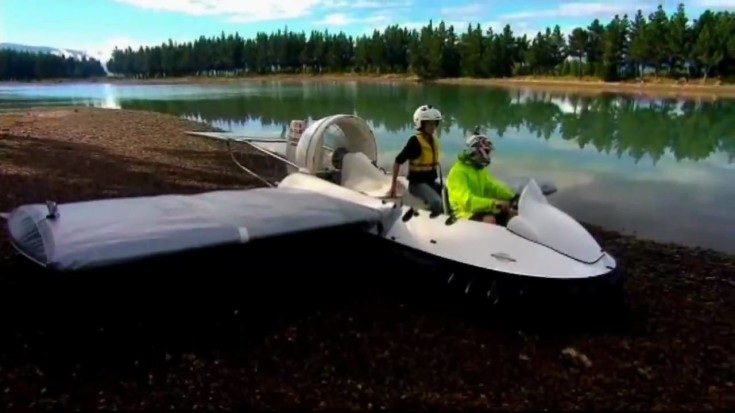
While this isn’t exactly a PWC, we do think many of you will see some design similarities that’ll blur the lines between a personal watercraft and a personal hovercraft. And c’mon, it is still a very cool build worth sharing.
This one of a kind creation built by New Zealander, Rudy Heeman isn’t your average back yard build, either. He has successfully manufactured a functional hovercraft! This hovercraft took precision engineering and serious know-how to make it work properly. There’s very little room for error when building something like this. Heeman did a terrific job designing and building a craft this unique. With no baseline as to how a hovercraft should look, Rudy Heeman had to dream it, design it, then manufacture it from scratch.
Along with being a functional “hovercraft,” once it exceeds 40 miles per hour, it is capable of flying. It promises to give you the ultimate air, land, and sea experience. It’s a boat, a plane, and a land-going vehicle all in one! After watching the video, it looks like it would be a blast to ride, and a very versatile craft, too. I can’t think of many places this thing couldn’t go. Who wouldn’t want one of these?
It floats, flies, hovers, slides, there’s not a whole lot it doesn’t do. If you’re anything like we are, you’re probably thinking “Sign me up!” But you don’t want to go through the trouble of building one yourself. You don’t have to build one to own one, as Heeman plans on marketing his design at a price of $13,000. Watch it in action HERE:
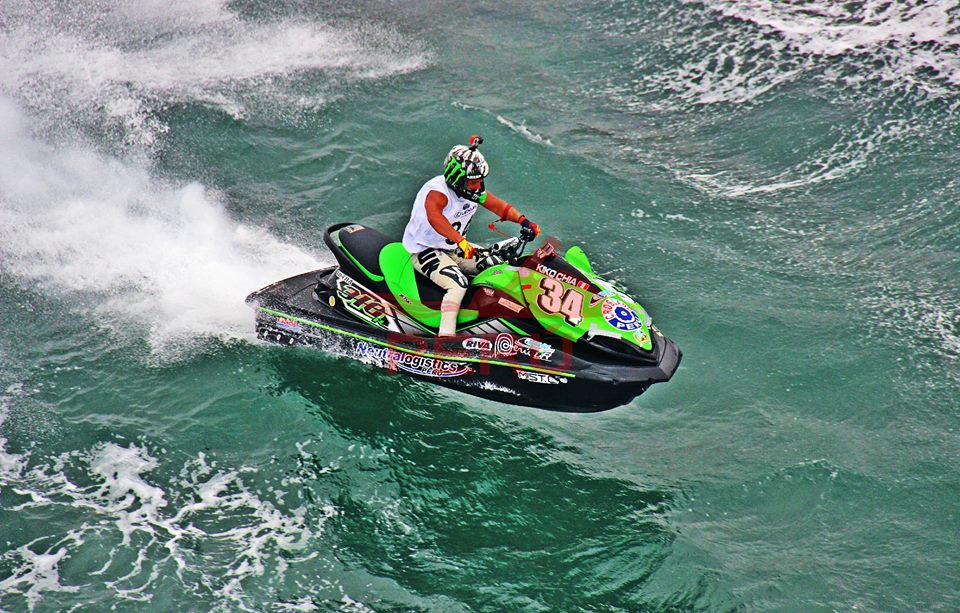
Last week, Peru played host to some of the world’s best racers in the sport, as they held the INKA Jet Raid in Lima, Peru. This eight day rough water racing gauntlet was a tough, demanding challenge for both riders and skis alike. Only the ultimate rider/machine combo can come out on top.
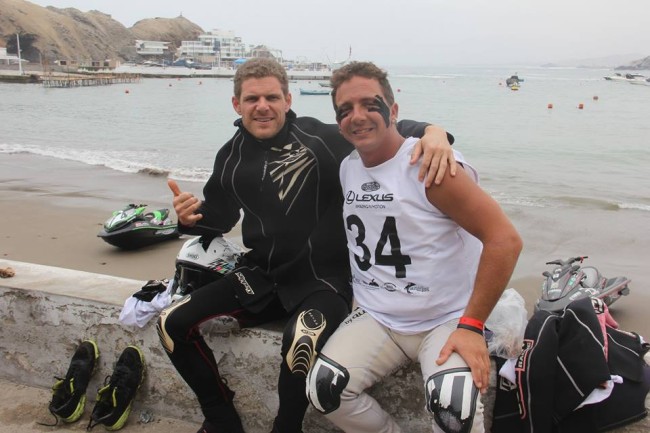
American Eric “The Eagle” Francis came into the event with high hopes, partnered with Kiko Chia and Rafael Davila, who are also outstanding riders. But things didn’t look too good for US rider and the rest of Team Chia after Day 3. They battled issues with their Kawasaki Ultra 310, from broken supercharger belts to a ride plate coming off. It was obvious that luck was not on their side going into Day 4 either. Some may have counted Francis out after struggling early, but if you’ve ever seen this guy in action, you know he doesn’t ever give up.
On Day 8 (last day of racing), there was an 85 km (about 53 mi.) race in very rough water around the islands. This was Team Chia’s last chance at taking the lead in the F3 class. The team decided to put their fate in Francis’ hands. That turned out to be a great decision, as he won the event with a lead of around 10 minutes over the next rider!
Just getting a podium finish in the F3 would have been a huge feat for this team after a rather unfortunate start to the week, but they weren’t willing to settle for second or third. They fought back all week to take the win in the F3 class! They also managed to get third overall for the event. It’s amazing what they were able to overcome to leave Peru with a win.
Francis summed up the week stating, “After a very rough start to the week, my team and I pulled it together and finished 1st in our class and 3rd overall at this year’s INKA Jetraid in Peru! It has been an amazing experience and I can’t thank my friend Kiko Chia, my manager Valerie Chia and the rest of the Chia team for all the help and support here.”
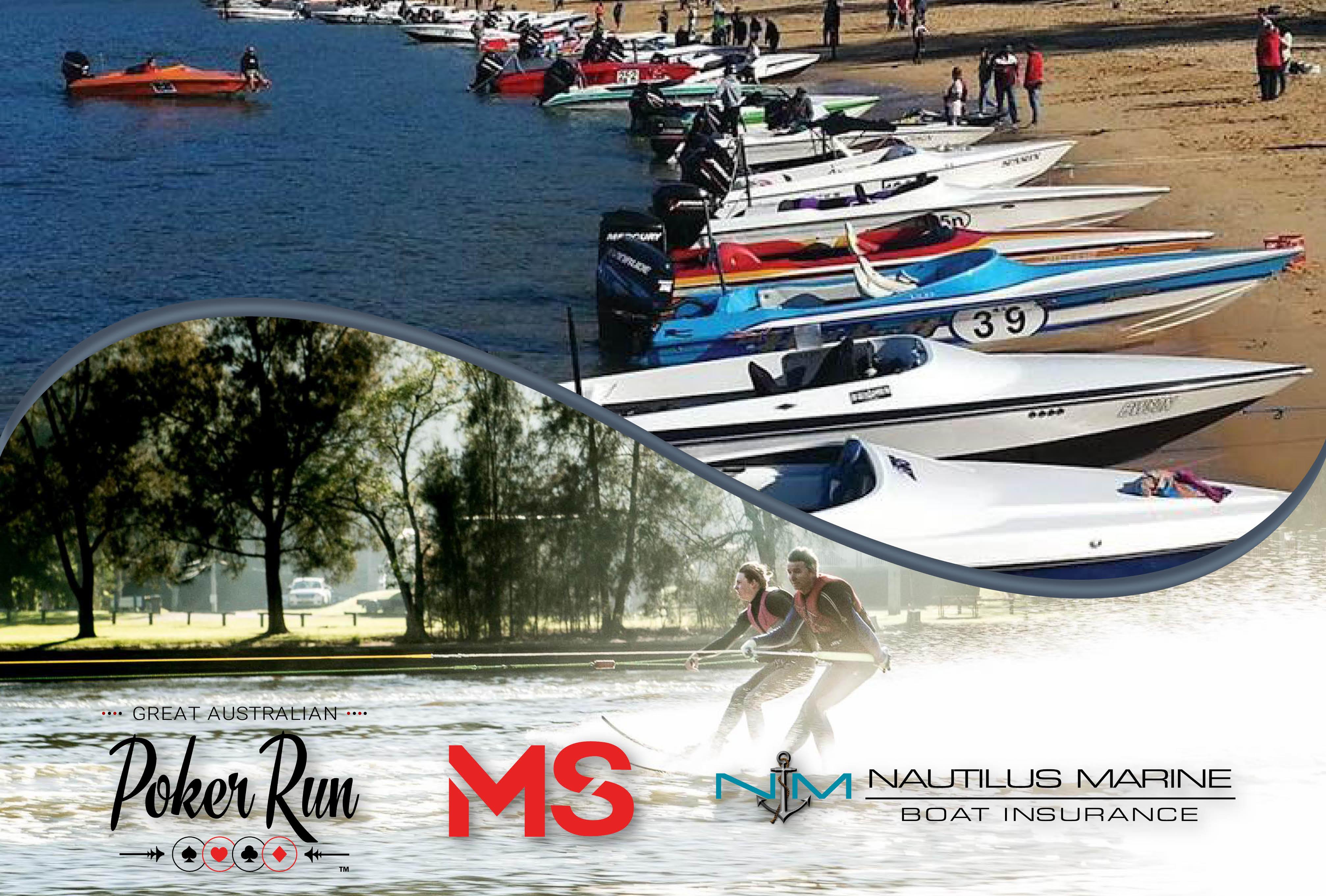
The fundraiser for multiple sclerosis is accepting personal watercraft entrants for The Great Australian Poker Run in Sydney, Australia, according to OZPWC. That was great news since that meant raising more money for a great cause. The run takes place December 12th on the Hawksbury River, starting at Wisemans Ferry, heading downstream to hit Checkpoint 1 at Spencer. Participants must ride in single file and a crew will be on hand doing a drive by to pick up cards.
Riders will continue to a private beach located in front of the Broken Bay Sports and Recreation Center, which is also the half way point. A 70 foot Predator Sunseeker will be set up with a band playing. People can enjoy listening to music while eating lunch, provided they bought an entry that included food.
The beach stop includes a landing area and an area to anchor offshore. Toilets, shade, and a netted swimming area will be located along the beach. The plan is to leave Broken Bay in single file by 1pm and the boats will head upriver for another drive by checkpoint located in Spencer. From there, all watercraft will head back to Wisemans Ferry to complete the run.
Del Rio Resort is booked for participants so they can enjoy more live music, buckets of prawns, cheese platters, and bars until 7pm. This group enjoys raising funds for MS, having a great time on their boats, and giving people joy on the water in a family friendly environment. You can book your tickets for the run and get more information here. Just click the link and it will direct you to the correct page.
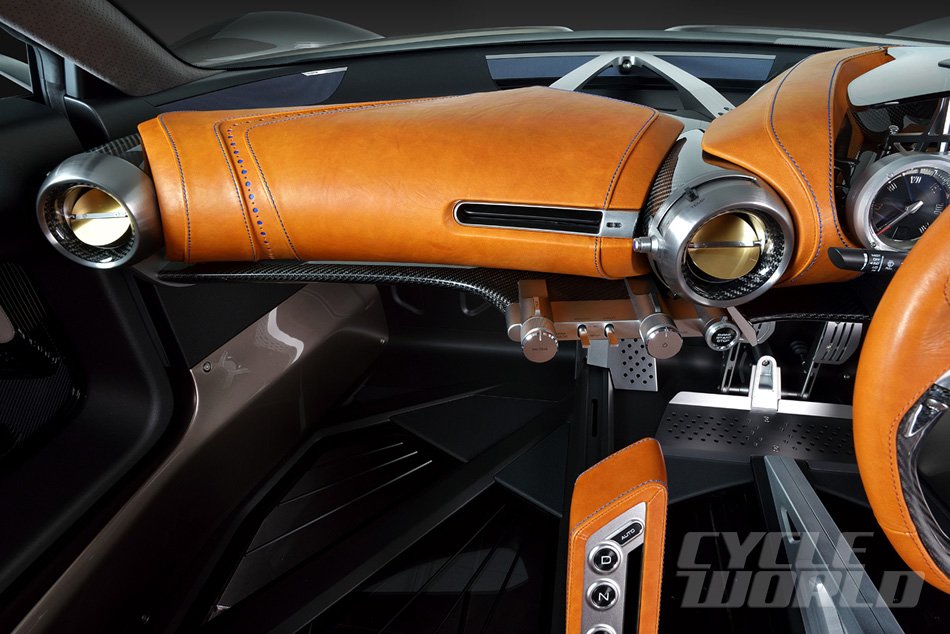
Yamaha’s Sports Ride Concept car was revealed at the 43rd annual Tokyo Motor Show which shouldn’t come as a complete surprise to folks who have kept up with the company. According to an article at Cycle World, Yamaha has been involved in the four-wheeled business for a very long time. The company built the original Toyota 2000GT and then top-quality engines for the Ford Taurus SHO and Volvo XC90 V-8.
According to Road and Track Magazine, this new concept car by Yamaha is really stylish and lighter than a Mazda Miata. The Sports Ride Concept weighs in at a mere 1,653 pounds and even 400 pounds less than a Lotus Elise. The interior looks quite futuristic and just all around great! it is comprised of leather, metal, and carbon fiber. It is a 2-seater with a front-engine/rear-driver and a mini McLaren look on the outside. It is built using the iStream process developed by famed F1 designer Gordon Murray.
The carbon-chassis Yamaha is touted as rigid and extremely light. This makes for a sports car that’s a half-inch shorter and a half-inch narrower than the Mazda MX-5 Miata. Moreover, this new Yamaha concept presumably hasn’t had to meet any sort of crash standards. There is still no information on what type of engine Yamaha plans to install in this beast or has installed.
For all we know, it may have a motorcycle engine under the hood. Mind you, this is speculation along with the rumor that the Sports Ride Concept may be the basis for the new Toyota MR2. Time will tell! In the mean time take a look at some pictures of this rad vehicle.
High performance engines simply require better care, high quality parts and studious maintenance than their less potent siblings. Since its introduction in 2003, the supercharged Rotax 4-tec 3-cylinder has remained one of the most prolific and popular performance powerplants in the industry; finding its way in more top speed-pursuing conversion skis, more race-ready watercraft and more enthusiasts’ machines than feasibly any other personal watercraft engine.
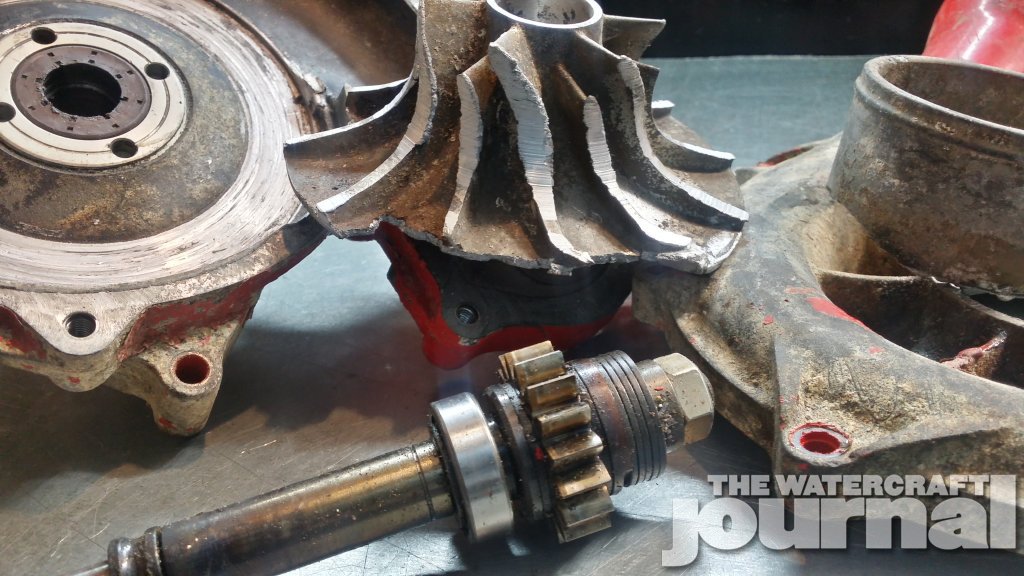
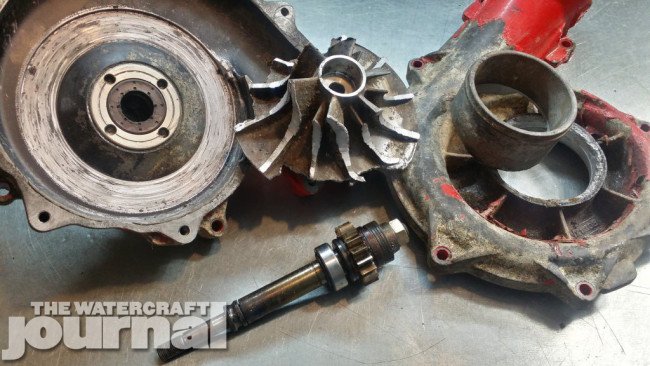
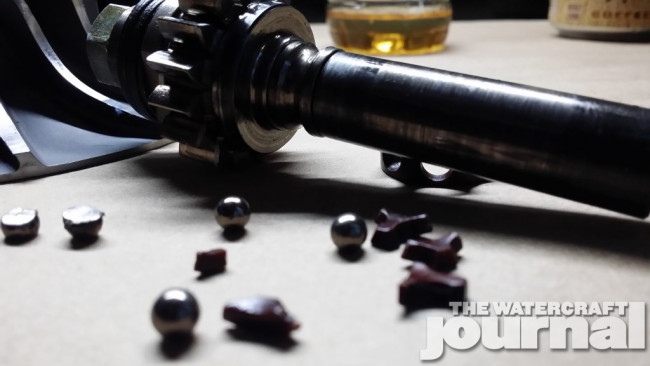
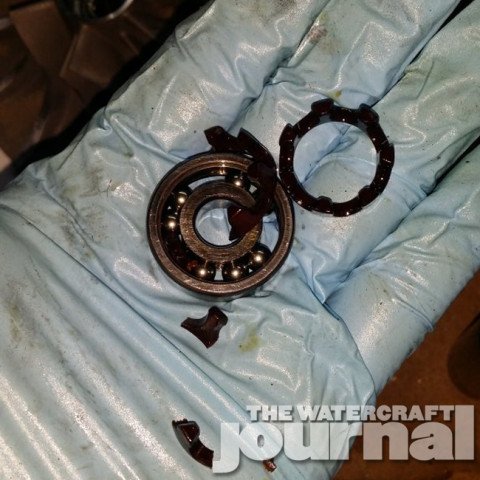
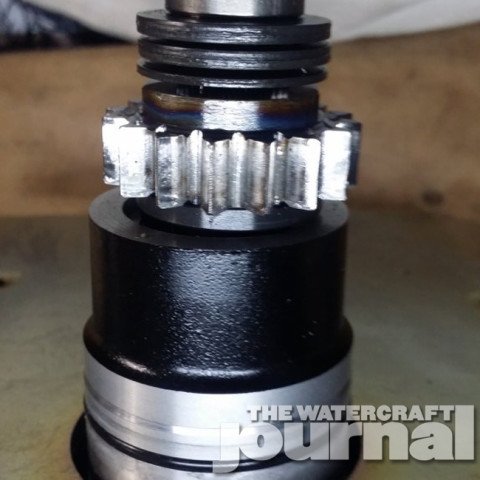
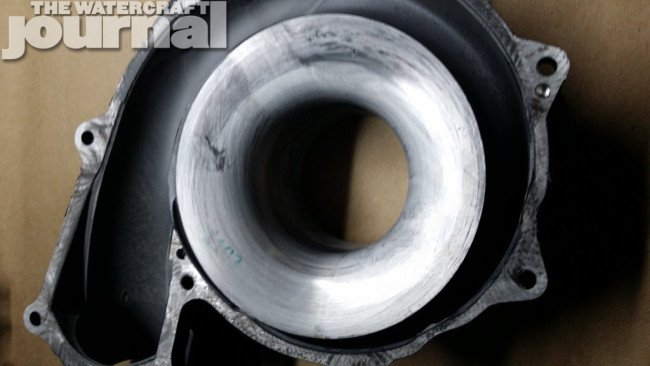
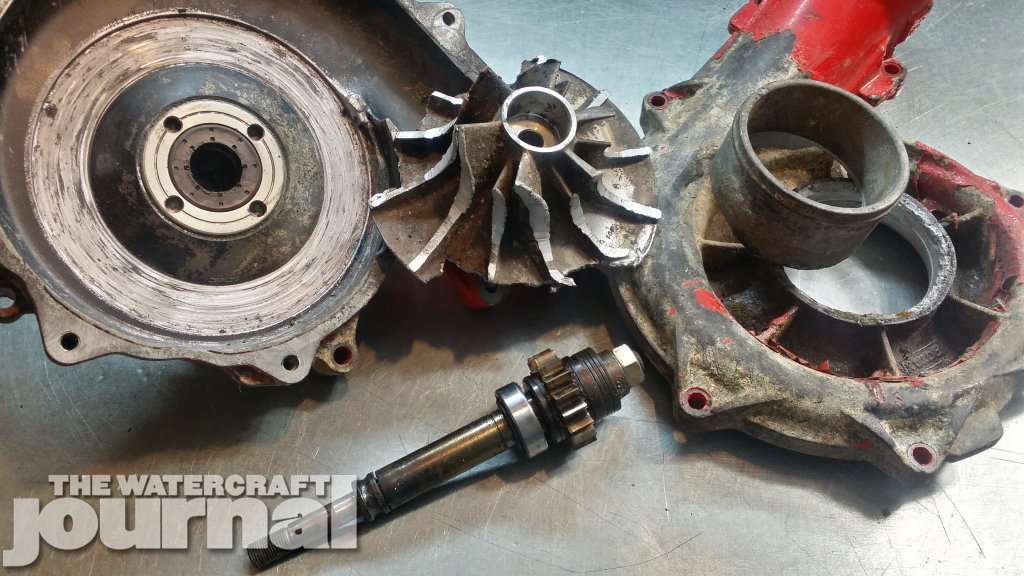
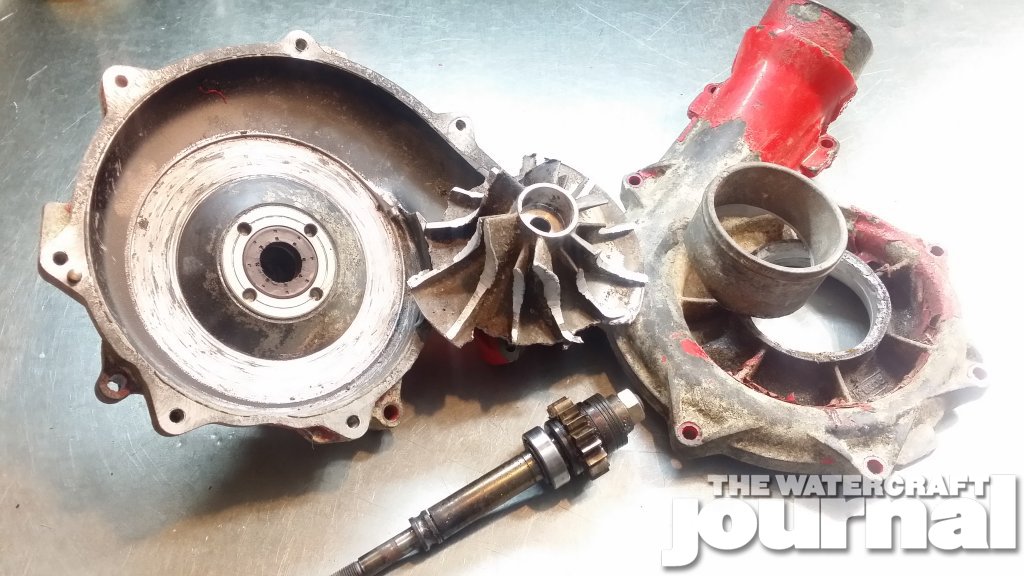
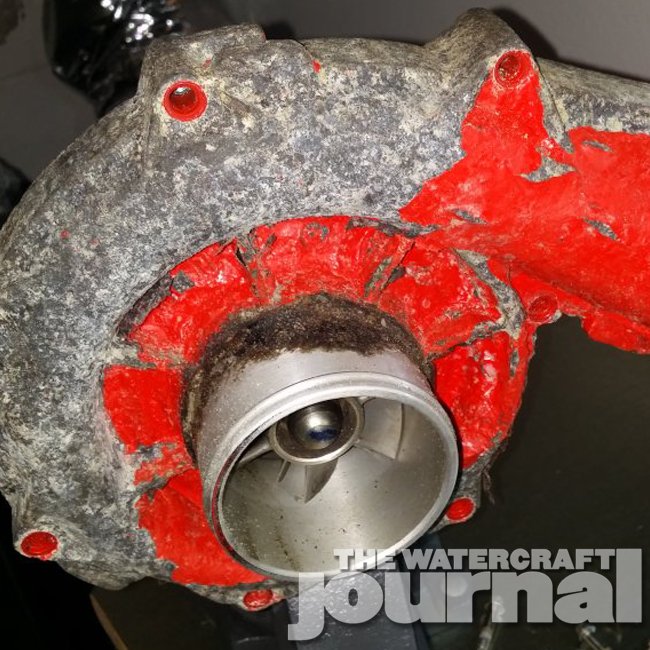
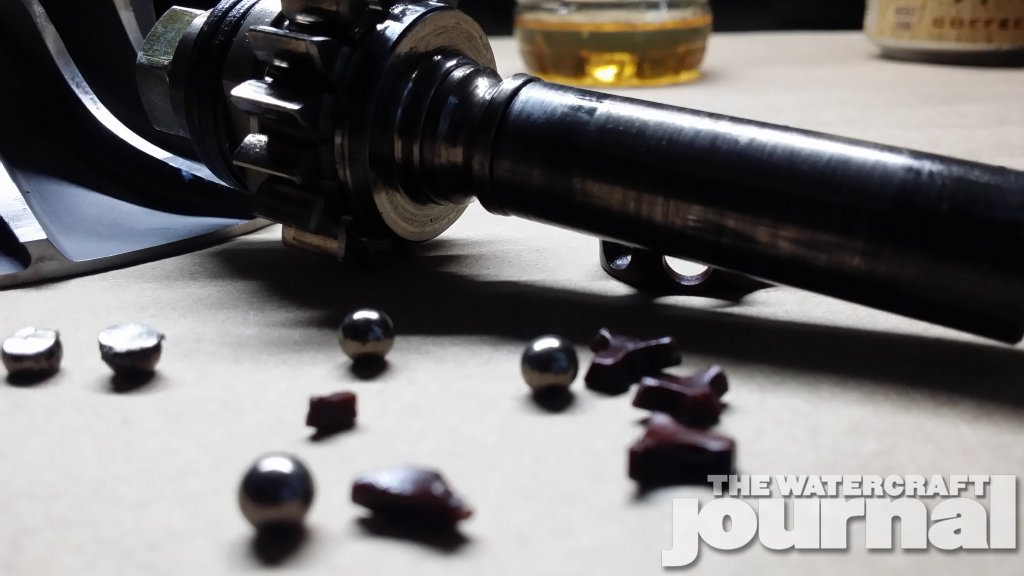
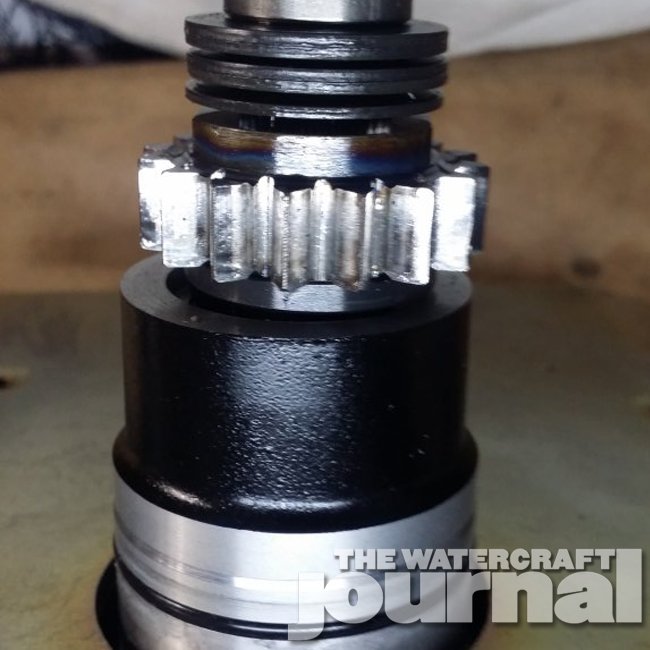
With its popularity comes the need to service it regularly, and we’re not just talking about regular oil changes. From 2003 until 2008, Sea-Doo used ceramic clutch washers in their shaft-driven supercharger assemblies. When subjected to high instant loads over a long period of time and use (without proper maintenance), these ceramic washers have been known to fail, fracturing into many pieces, which can lead to catastrophic engine failure.
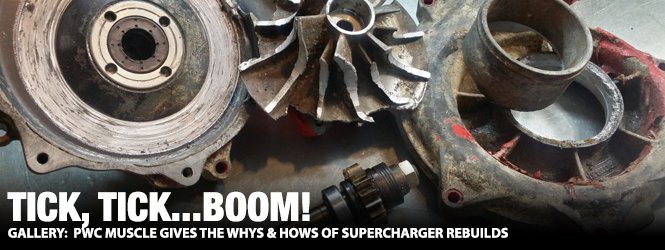
We discussed this matter with PWC Muscle’s Joe Zammataro, whose shop offers comprehensive supercharger maintenance and rebuilds service to hundreds of Sea-Doo enthusiasts annually. Zammataro was willing to not only draw back the curtain on PWC Muscle’s process, but also walk us through how a supercharger can fail, what happens when it does and finally, what goes into rebuilding one if and when it does.
“When the ceramic washers fail, they leave highly-abrasive materials in the oil pan. This can affect all of the bearings in the engine’s lower assembly,” Zammataro explained. “The supercharger clutch sits directly above one of the engine’s oil pumps. Usually the material gets caught in the oil screen (not to be confused with the oil filter), but eventually works past it. If this happens, it will ruin the oil pump and you’ll get oil starvation. That’ll lead to what is known as grenading the engine, as the whole thing will lock up due to lack of oil.
“Supercharger clutches exist so there can be a variance between engine speed and the impeller in the supercharger. The highest amount of wear comes from jumping the ski out of the water, allowing the revs to get very high with the unloaded jet pump, and then coming back down into the water and having that instant drop in RPMs. While the engine might go from say 9,000 rpm down to 4,500 rpm, the supercharger impeller has to decelerate from 50,000 rpm to 25,000 rpm.
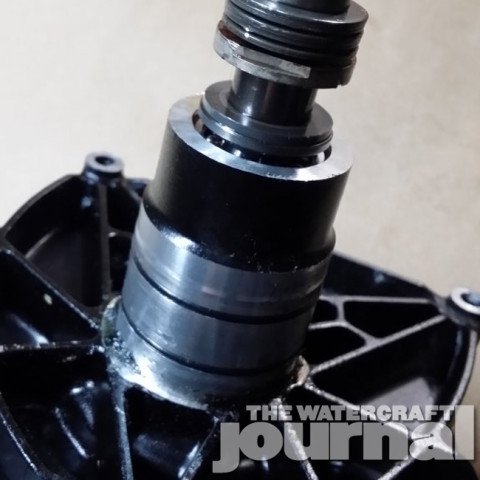
“It takes longer to slow down the impeller, so it needs to be asynchronous from the engine. The clutch allows it to do this. There is a very specific amount of hold (called “slip moment”) that the supercharger clutch must have. Too strong and it will break, too weak and it will slip under normal operation. A combination of shims and different spring washers must be carefully combined to make sure the tolerances are correct.”
Aggressive riding or surf jumping is directly attributed to producing the most wear and heat on these clutches. Throughout the life of the clutch, aggressive riding of this type will drastically reduce the hold of the clutch, inducing additional slippage, which generates more friction and heat. And although metal clutch washers do manage to fail every now and again, Zammataro revealed that it is the bearings that suffer the worstwear and tear.
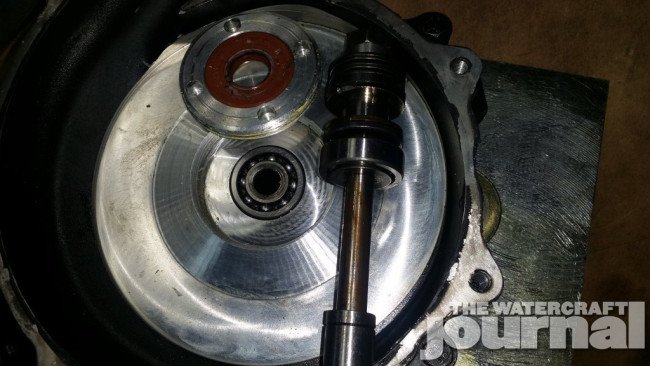
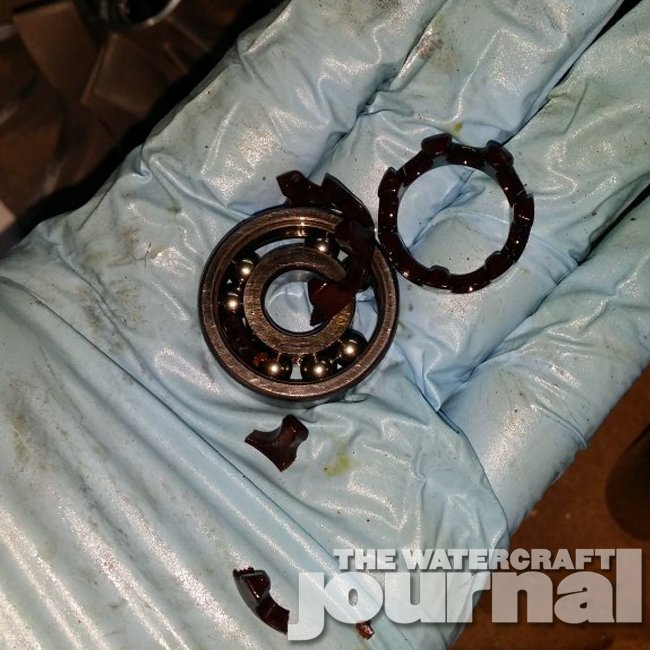
“The bearings get essentially splash oil. They do not have a dedicated oil passage, despite revving to up to 50,000 rpm,” Zammataro explained. “Because of this, plastic cages need to be used to reduce friction. If metal cages were used, they fail due to the additional friction. These plastic cages, however, become brittle over time and heat. When the clutches slip, we see the bearings fail more often due to the additional heat.
“When the clutches fail (especially with metal clutch washers), usually if addressed immediately, the affects are reversible. You need to rebuild the supercharger and extract the metal washers from the engine. If the owner continues to take out their ski and ride, the metal washers will work their way past that oil screen and severely damage the engine.
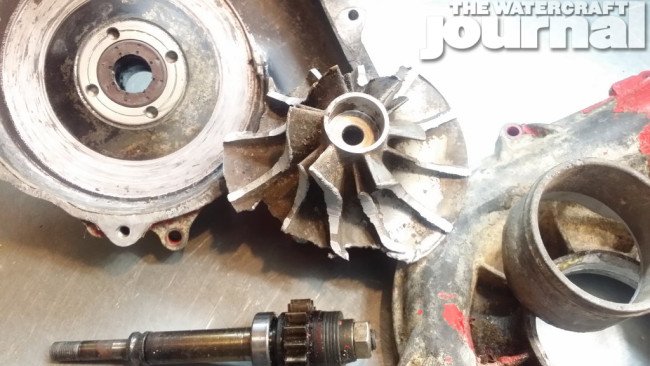
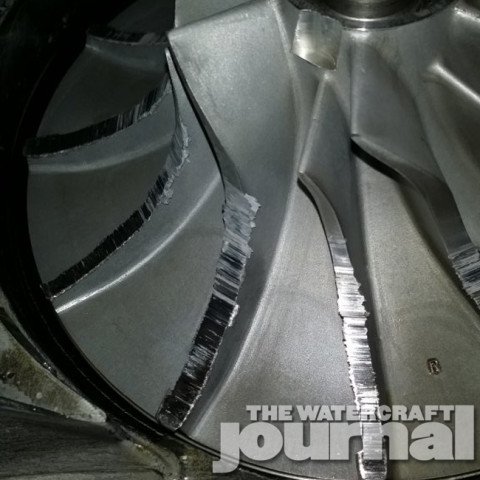
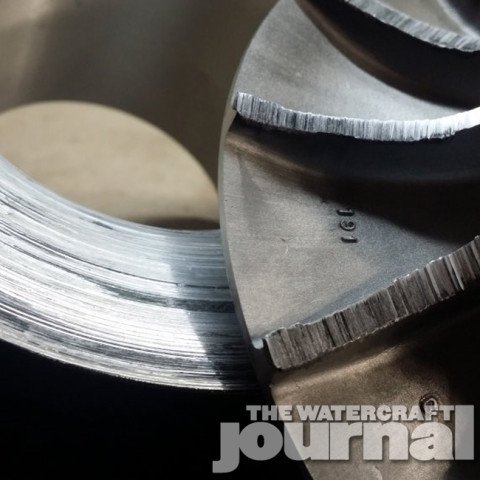
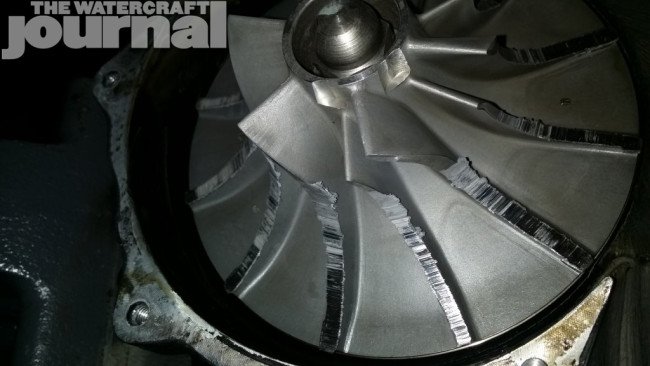
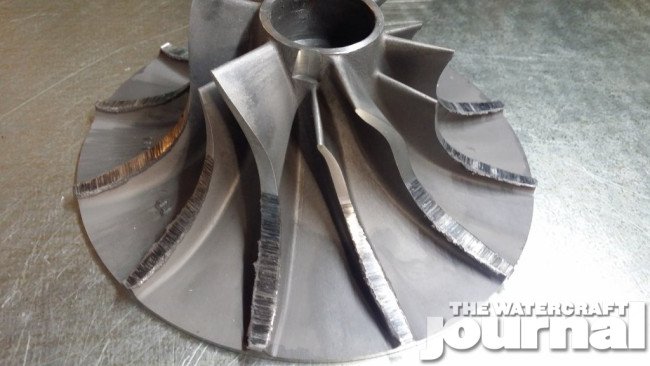
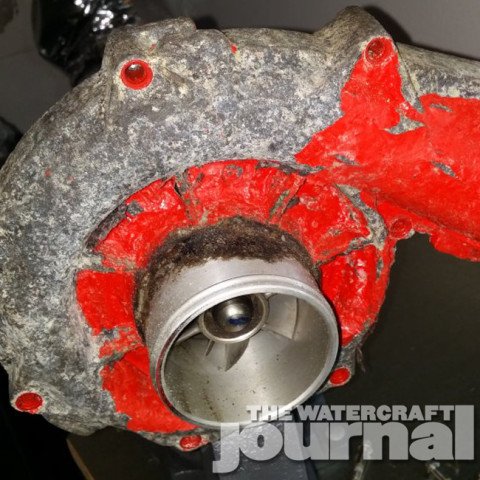
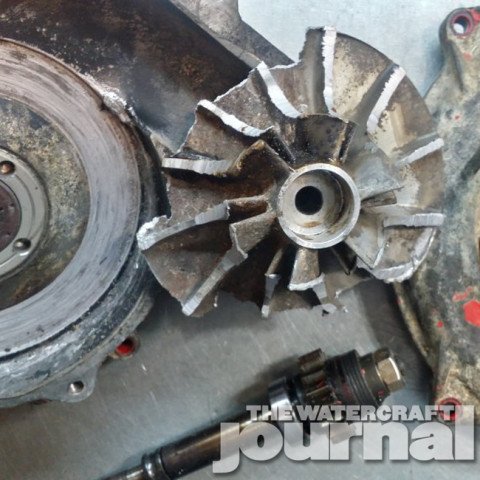
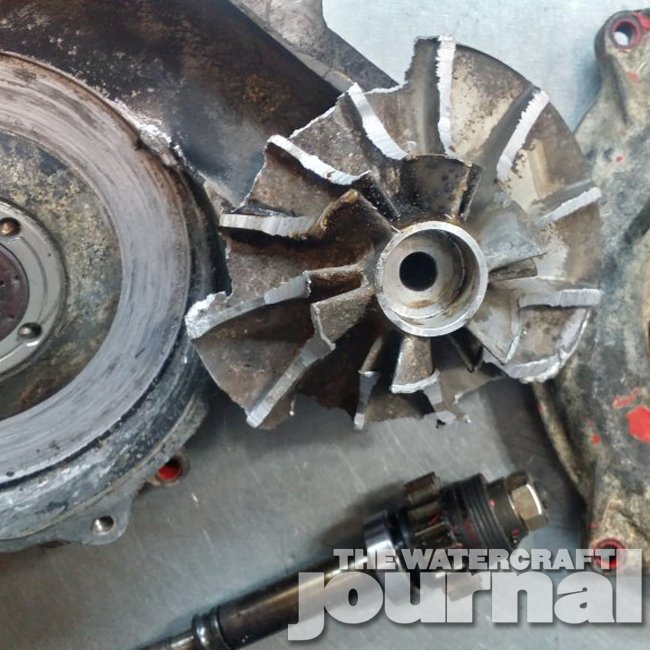
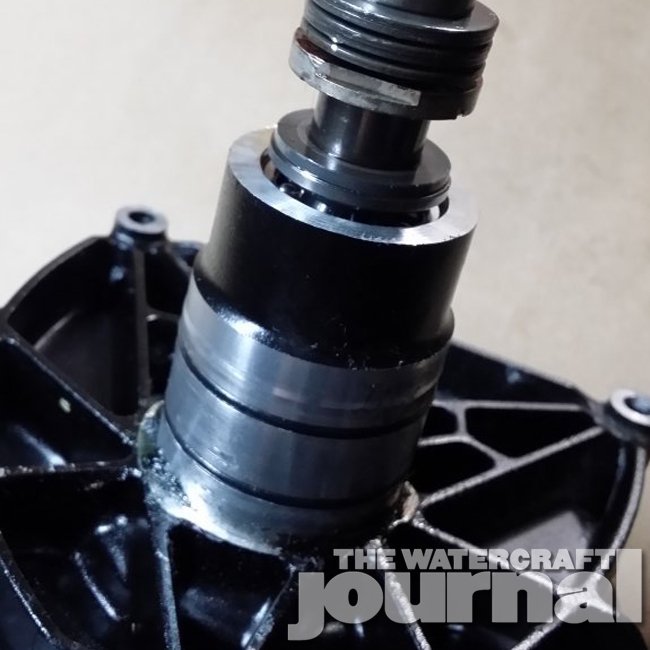
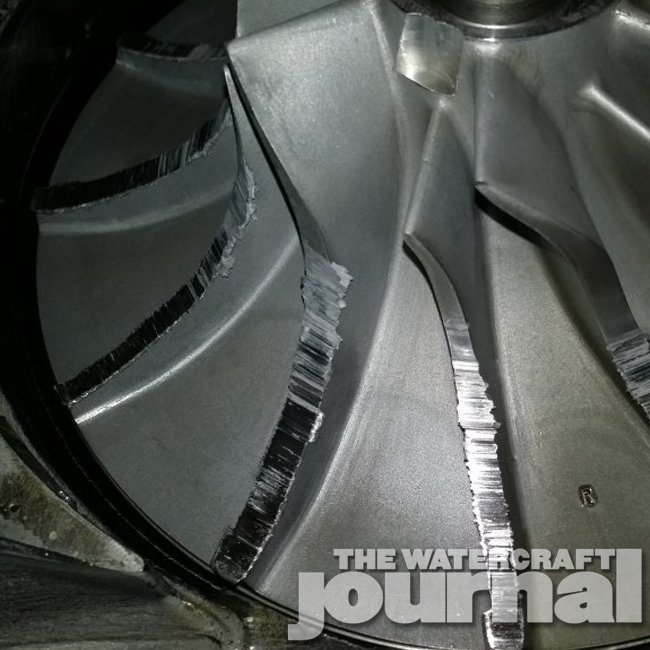
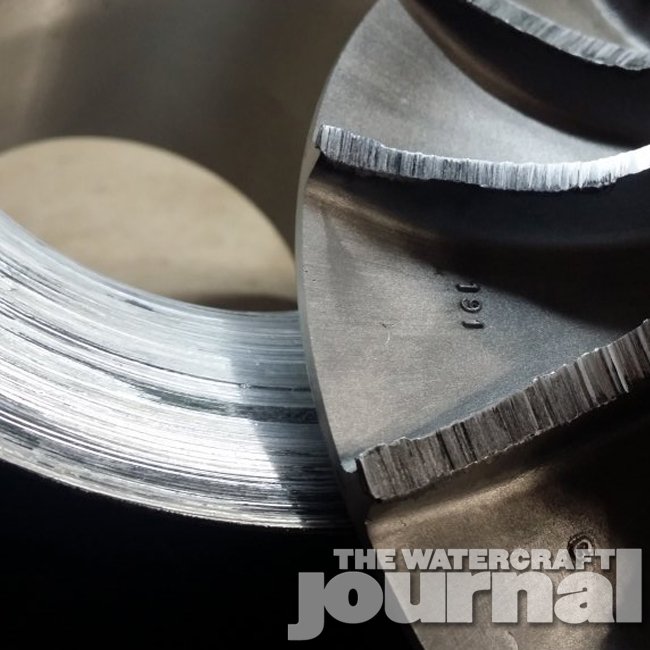
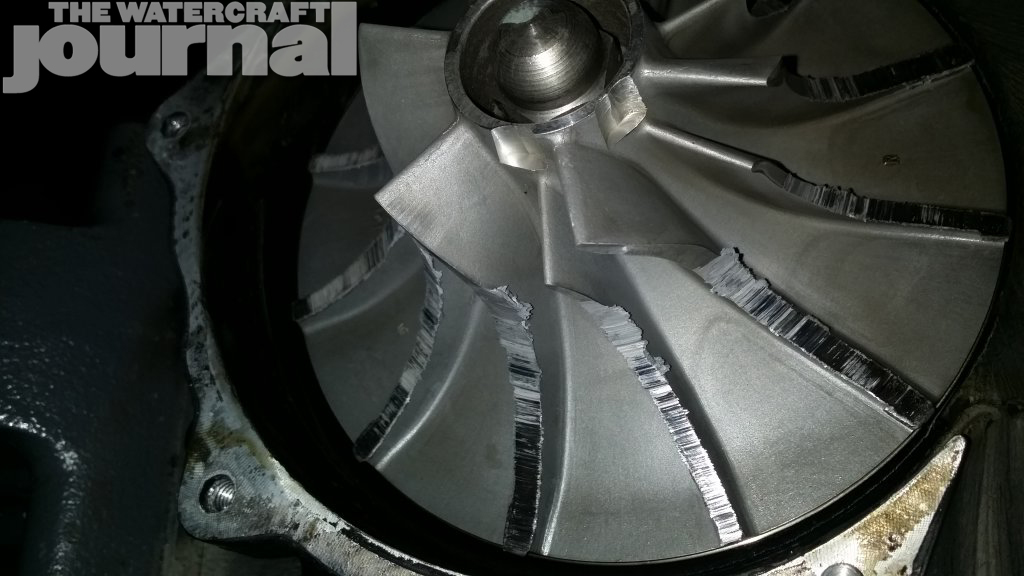
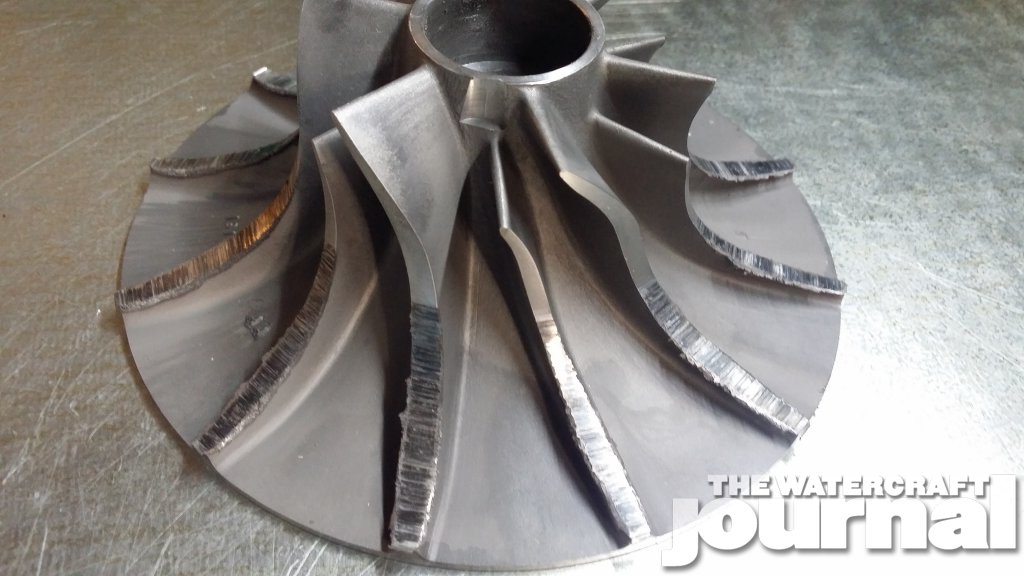
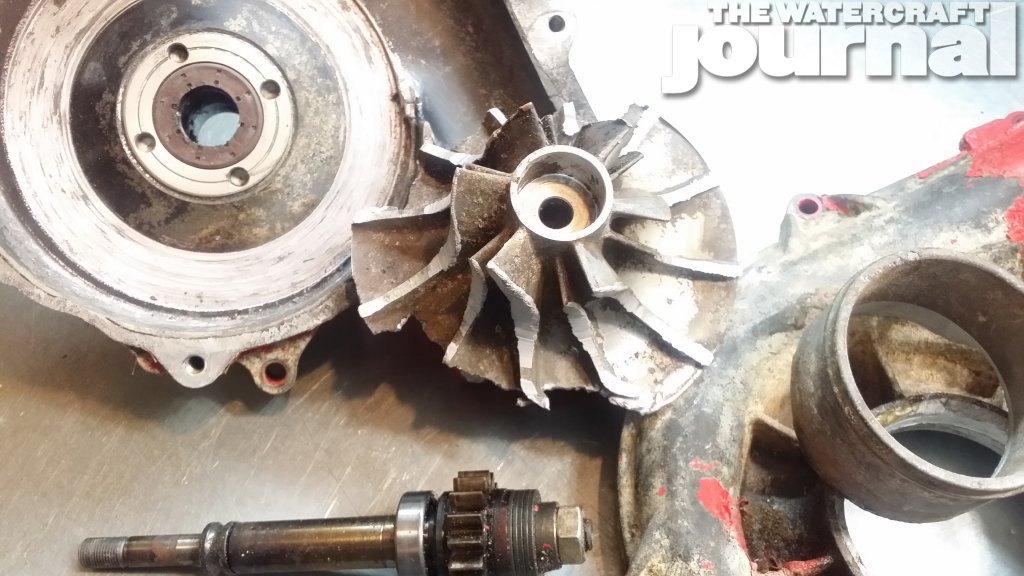
“When a bearing fails, the shaft of the supercharger becomes unstable and begins to wobble. This allows the impeller to make contact with the housing, creating what is known as a touchdown. When this occurs, a new impeller is typically required.”
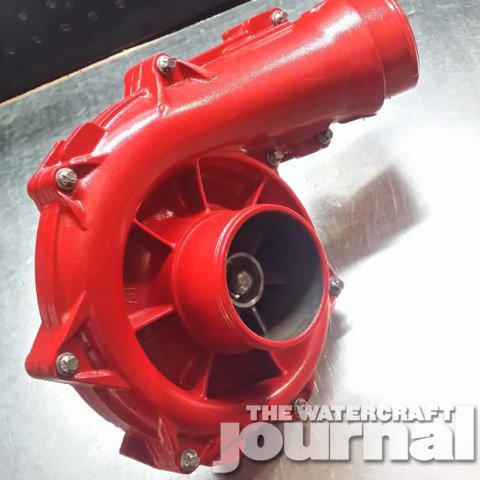
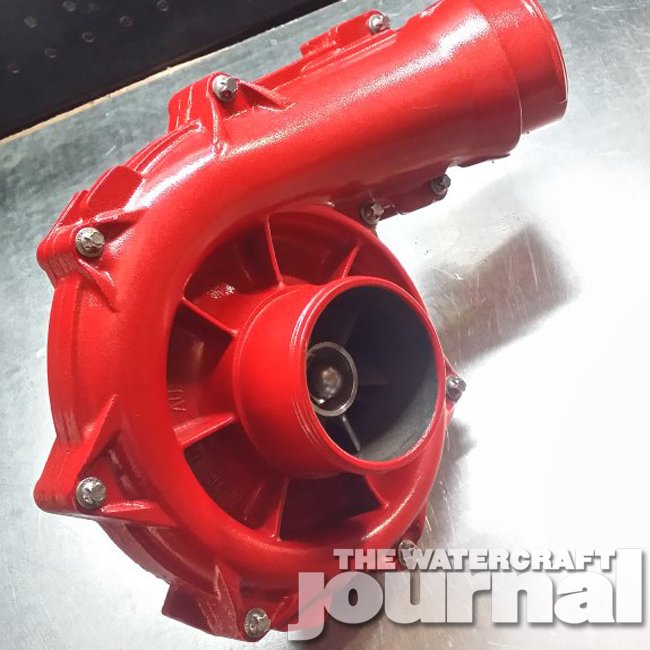
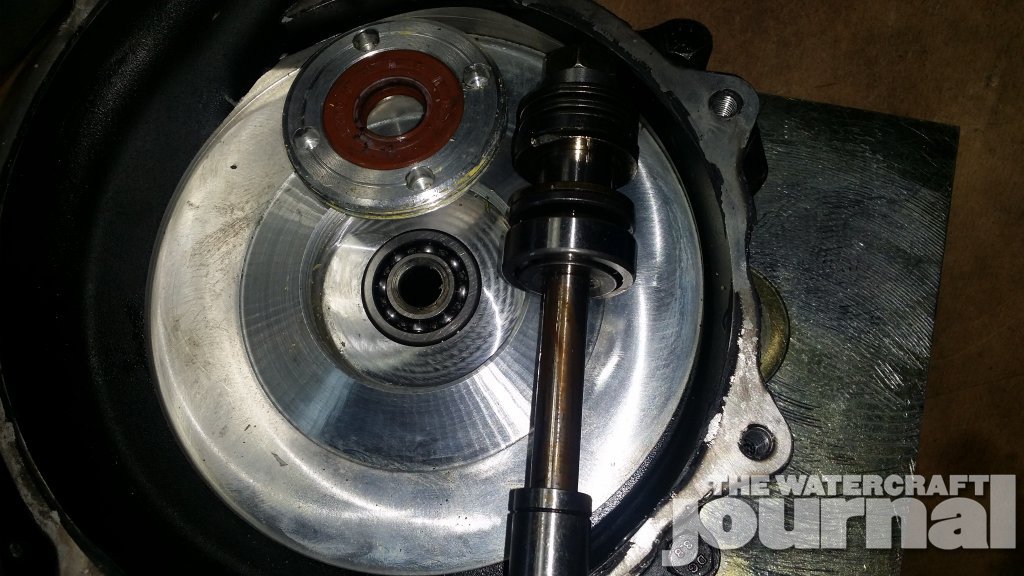
PWC Muscle prides itself on its quality, and its rebuilt superchargers come assembled with absolute precision, with each of the impellers individually balanced prior to reassembly. When rebuilding the supercharger, Zammataro and his team keep strict adherence to the clearances, as they are extremely important for the longevity and reliability of the supercharger. Zammataro noted that due to the design of the plastic cage bearings, the bearings must be installed in a special sequence to avoid adding lateral stress or risk a premature failure.
“When maintained, supercharged Sea-Doos are very reliable. Since Sea-Doo had the last revision of their rebuild kits, we are no longer seeing supercharger failures within the service interval from normal use,” Zammataro noted. “To check the supercharger, while the ski is off, remove the intake hose and carefully try to spin the impeller by hand. If it can be spun more than 20′ degrees, then the clutch is slipping and a rebuild is required. Likewise, if the ski won’t go over about 50, it usually is from needing a rebuild.
“In about 99.5% of the supercharger rebuilds we do handle, we can repair them. Additional costs may be involved (ie; new impeller), but typically we don’t raise the price for this. Luckily, we have the art of rebuilding down to a science. Our supercharger rebuild service is the most affordable and reliable way to keep the supercharger maintained. We use only 100-percent OEM parts.
“OEM rebuild kits are the only way to go. Aftermarket kits usually have several problems with them. For one, many use metal-caged bearings, which just isn’t safe in these engines. Also, we’ve seen aftermarket kits literally rust while inside the engine. Overall, the aftermarket kits are design to be cheap, which cheaper materials. Only OEM gives you the quality to keep a reliable 100 hour or 2 year service interval. The two year portion is because the plastic cages will start becoming brittle past this point.”
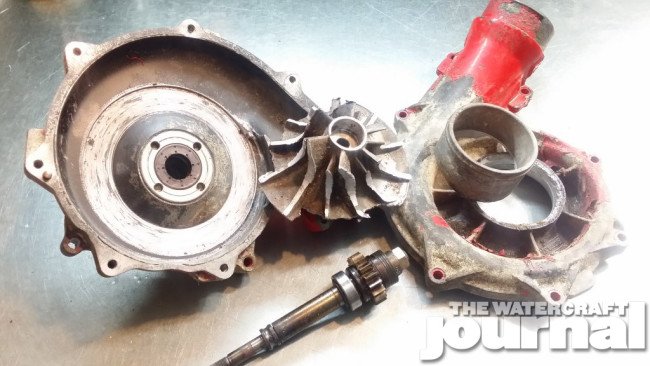
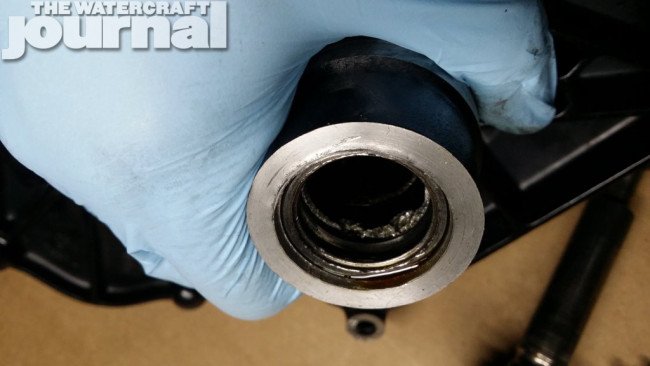
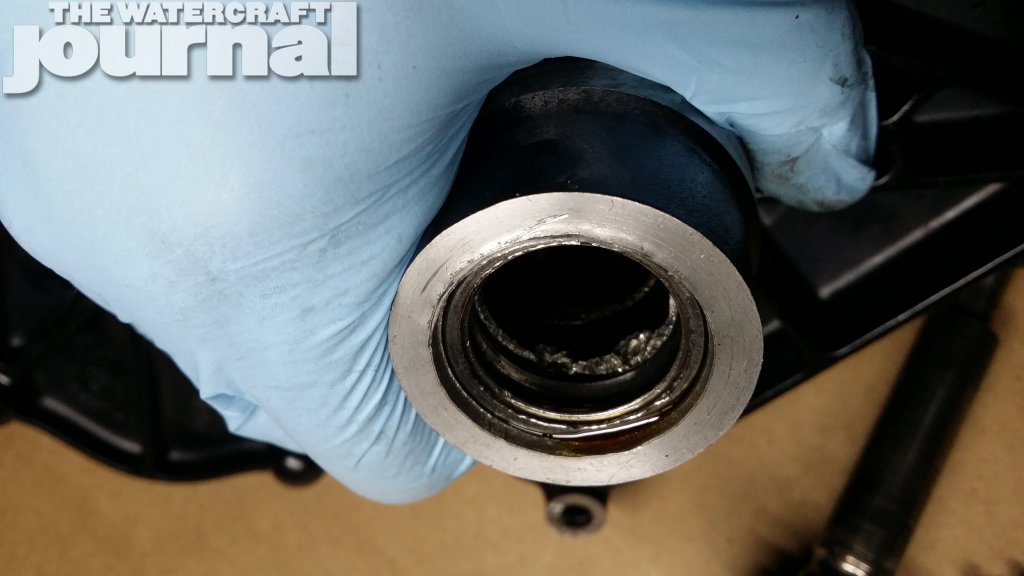
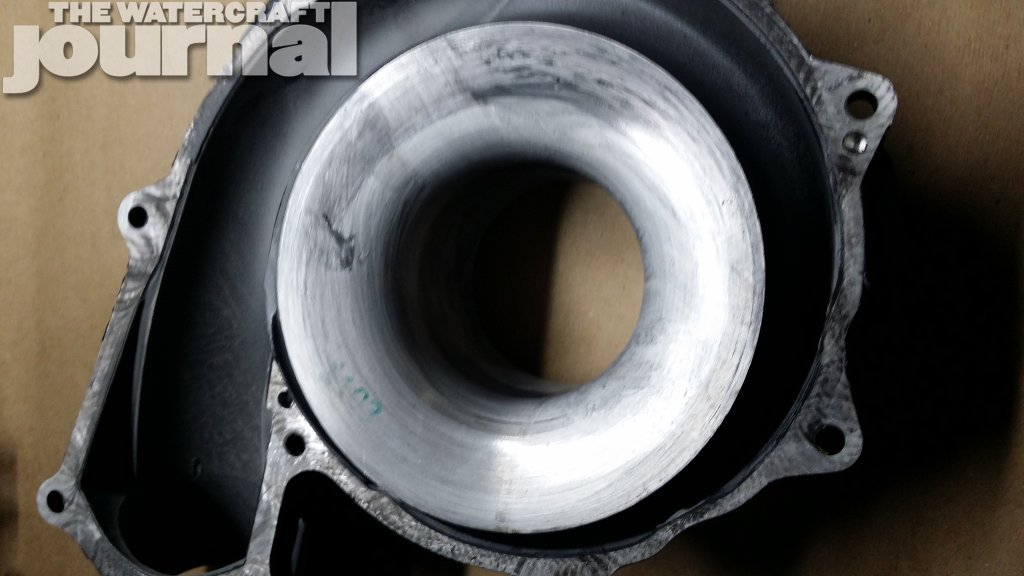
Maintenance is key to any and all high performance engines, and the incredibly popular Rotax 4-tec engines are no different. PWC Muscle sees plenty of superchargers come in that look as pristine as the day they left the assembly line, their owners simply fulfilling their obligation to keep their skis running in tip-top shape. Others, sadly, don’t take care of their watercraft and often see damage like this or worse.
In last month’s segment of “By The Numbers” we celebrated our two-year anniversary, documenting our almost unnatural growth in an industry that so many naysayers deem as being well past its “heyday.” Although the manufacturers aren’t moving 200,000 units a year like 1995, we are seeing exponential growth in new and pre-owned OE unit sales, a boom in aftermarket hull and engine sales, products, apparel and riding gear, and accessories. In fact, it hasn’t been this good in nearly a decade. And that should be reason enough to celebrate.
For The Watercraft Journal, our growth patterns the OE industry almost in lockstep. Besides our median demographic being exactly the target audience that manufacturers look for – 44-to-46 years old males with some college or vocational schooling – we too are growing event during the so-called “off season.” While our readership numbers aren’t that of July or August, they are double that of November last year, for which we share below.
In fact, it’s so important for us to illustrate that we took a different take on this month’s “By The Numbers” to compare 2015’s November against last year’s November, rather than this past October. Showing how much our audience is growing, even when many of us are shoveling snow off of the driveway, is the best way to evidence how The Watercraft Journal is North America’s most popular personal watercraft magazine regardless of season or time of year.
Again, these monthly updates are written primarily for the benefit of manufacturers looking to expand their reach to new and returning customers. We are a completely transparent publisher, so much so that we publish our numbers openly every month and our ad rates at all times (see “Advertise” in the navigation bar above). So if you’re looking at putting your company and/or product before the biggest audience of actively engaged PWC enthusiasts, then there is only one place: The Watercraft Journal!
November 2015 November 2014
Continued Growth Through Winter
Wintertime notoriously shrinks the industry all the way around: be it new vehicle sales, product and accessory sales, and of course, recreational use. Heck, it even cuts the average monthly user count on the biggest forums in half. Admittedly, much of the same happens with us. Such is life in a seasonal industry. Yet, why it’s significant to show this year versus last year’s numbers is to illustrate how our November readership has doubled over 365 days. And why? Because no other publication offers more consistent and reliable coverage of the industry, be it important announcements, race coverage or product reviews.
November 2014
Total number unique readers: 8,895*
Total number of articles read: 21,725
Percentage of new readers: 56.8%
November 2015
Total number unique readers: 16,297*
Total number of articles read: 38,598
Percentage of new readers: 56.6%
*This number is considered equal to an individual sale of a single copy of a magazine.
Cold Weather Won’t Slow Us Down
As many “pack it in” for the slow season, we see less content coming from those few remaining media outlets. Fortunately, The Watercraft Journal doesn’t take a winter break, but rather, continues to crank out some of the industry’s best content from throughout the globe, and coverage from the entire personal watercraft industry – be it touring, fishing, racing, freestyle/freeride, or do-it-yourself tech. We bring the enthusiast the widest array of coverage possible – and completely free to the reader!
News articles published in November 2015: 27
Feature articles published in November 2015: 10
Total feature word count: 8,699 words
*When this number is translated to print publication standards equals a 98-page magazine. Please note that this number does not include an average of two uniquely-written news articles published daily.
Social Animals
Unlike other publications or sites, The Watercraft Journal doesn’t require its readers to download, or pay for a subscription, or even a setup a password to log in and access our content. Why? Because trending shows that people flee from such websites. Rather, we give our content freely and easily-accessibly to them; whether it’s via a desktop, a laptop or a portable device, they can read our content. And with our Facebook, Twitter, Instagram, YouTube, and weekly newsletters, we bring our content directly to them. And that’s a huge part of our success!
November Facebook likes: 14,684
Top Five countries: United States, Australia, France, United Kingdom, Canada
Baby, It’s Cold Outside
Many find that the diehard PWC enthusiasts will either brave the winter’s chill and continue to riding (that is, in states where weather actually plays a factor in recreational riding), or will dedicate the months to working on their skis in preparation for the coming Spring. That is why getting your company and its products and/or services on The Watercraft Journal now is so important. Get in before the rush and establish your brand in front of the biggest readership of PWC lovers before all of the latecomers try to jump in. The Watercraft Journal has a variety of editorially-supported ad programs that will fit your budget and meet your goals for the coming year.
There’s some pretty exciting news being shared by the IJSBA: the 2016 US National Championships will be held in downtown Chicago, Illinois over the September 10th and 11th weekend. In contingency with an already growing AquaX series, the US National Championships is locked in to bring in tons of exposure to the sport by hosting the event in the city’s most trafficked area. And for those taking note, the announcement of AquaX USA’s expansion outside of Florida is also equally as exciting.
Additionally, the IJSBA is currently at work to arrange transportation for jet skiers and their equipment to travel from Chicago, Illinois to Lake Havasu City, Arizona in time to attend the quakysense IJSBA World Finals held October 1st-through-9th. For those taking note, that’s a relocation from 2015’s pairing of Round 5 of the AquaX series and the US Nationals in Cocoa Beach, FL. As more information is unveiled concerning the host location, The Watercraft Journal will be sure to share it post haste.
You can read the original announcement here: IJSBA is very pleased to announce the dates for the 2016 United States National Championships: September 10-11.
The National Title will be bestowed upon the high points winner, of a small set of categories, after the completion of the stand alone event. The 2016 United States National Closed Course Championship will take place in Chicago, Illinois allowing for a very centralized location for the US contingent. The event will take place in the famous Downtown Chicago with high visibility opportunities for athletes and sponsors alike.
The 2016 USA National Championships will be produced by IJSBA’s partner in the USA, P1 AquaX.
Plans are underway for possible transportation support from the USA Nationals in Chicago to the 2016 quakysense World Finals which take place October 1-9 in Lake Havasu City, Arizona.
Please visit IJSBA.com regularly for more news an information regarding this exciting event.