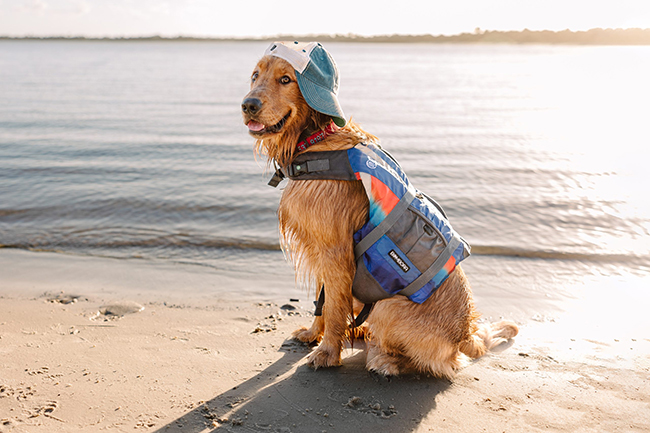
Man’s (and woman’s) best friend – our four-legged, cold-nosed companions are certainly that. And there are countless members of the PWC family who include their dogs in their on-the-water fun, or at the very least – the fun at the water’s edge. And while having your pup nearby to take part in the PWC lifestyle, safety is paramount. And that is where the Bombora Dog Life Vest comes in.
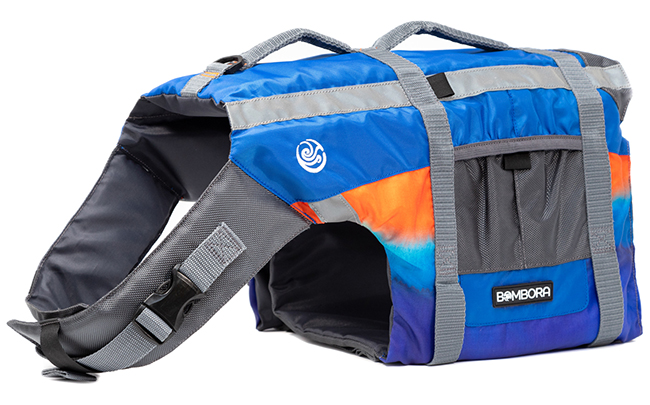
Built for comfort as well as safety, and built specifically for a dog – not simply a mimicked version of your PFD – the lightweight vest comes in a variety of color combinations and a full range of sizes to fit dogs up to 90 pounds. Designed to provide strong buoyancy in the water without restricting your dog’s movement, the vest features layered and segmented foam that provides flotation and underbelly protection. A padded and adjustable neck collar and three Delrin quick-release buckles allow for a custom fit and makes it easy to get the vest on and off your dog. The sewn-in leash D-ring and large padded and reinforced webbing grab handle provide secure leash control as well as a quick-grab restraint or support option. Side pockets are perfect for storing leads, treats, waste bags and other essential gear.
Check out the full details below and keep your dog paddling, safe and secure, at your next PWC outing or family day at the lake.
There are dogs that can’t seem to stay out of the water and those that prefer to keep their paws dry. Whether its human companion is boating, paddling, swimming or lounging poolside, pups are safer when wearing a Bombora Dog Life Vest. Four sizes fit dogs from extra small to up to 90 lbs.
The key to canine apparel is comfort. The lightweight Bombora Dog Life Vest naturally contours to the body and allows for unrestricted movement — both in the water and on shore. The vest is covered in a soft yet durable polyester. Layered and segmented foam provides flotation and underbelly protection. A padded and adjustable neck collar and three Delrin quick-release buckles allow for a custom fit and easy donning.
Designed by dog owners, the Dog Life Vest features a sewn-in leash D-ring and a large padded and reinforced webbing grab handle. Side pockets are perfect for storing leads, treats, poop bags and other essential gear.
The Bombora Dog Life Vest is available in two color combinations: Tidal turquoise/white and Sunrise blue/yellow/red. The Extra Small model fits dogs up to 12 lbs.; the Small version is for pups 12–24 lbs.; the Medium size is for 24–60 lbs.; and the Large model is for dogs 60–90 lbs. They cost $58.
Contact Bombora, 243 Oak St., Pembroke, MA 02359. 508-789-6522. [email protected]; www.bomboragear.com; www.instagram.com/bomboragear; www.facebook.com/bomboragear; www.tiktok.com/@bombora.gear.
Sometimes it’s the smallest changes which can make the biggest difference in the quality of time you get to spend out on the water. Let’s take a hat for example; very few people think about anything but the aesthetic when it comes to buying a new one. But functionality can be just as crucial as fashion, and that’s where Jet Tech’s new Oceanguard Hat comes in. This isn’t just any hat; it’s designed to enhance your water adventures in practical ways.
For starters, this hat is designed to be compatible with their hybrid sunglasses and goggles. This means that the hat is part of a larger, integrated system of gear designed to make your time on the water more convenient and enjoyable. You can even bundle the hat with the sunglasses/goggles and save 10%, which is a great bonus for those looking to upgrade their water-ready wardrobe.
On top of that, the Oceanguard Hat is water-repellent and fast-drying, making it ideal for anyone who spends time on the water. Whether you’re jet skiing, fishing, or just cruising along the coastline, you don’t have to worry about your hat getting soaked and staying that way for hours. The fast-drying material keeps you comfortable and ready for action.
Another unique feature is that the hat floats. This small detail can make a world of difference when you’re on the water. No more losing hats to the depths below – the Oceanguard stays on the surface, easily retrievable if it gets knocked off in the wind or a sudden wave.
With a removable chin strap and availability in four colors, the Oceanguard Hat is versatile, comfortable, and designed with water sports in mind. It’s a small change that can truly elevate your time on the water, so be sure to check it out on Jet Tech’s website now.
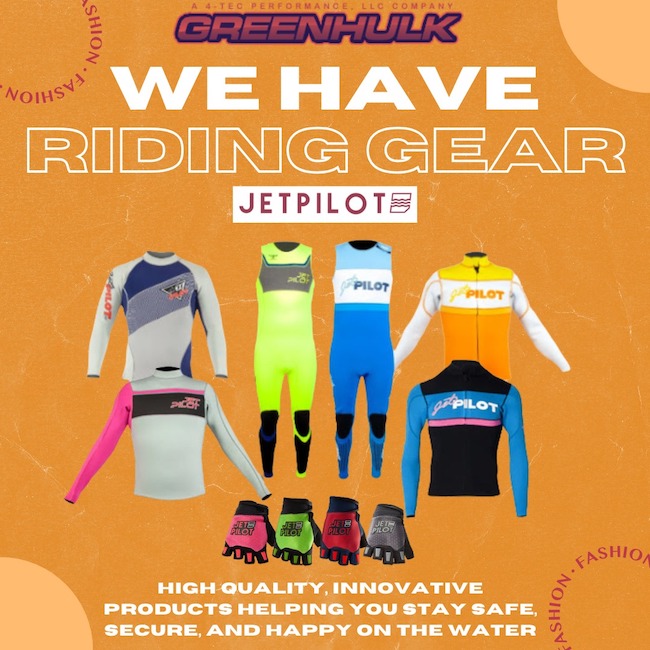
If you’re looking for utility, comfort, fashion and durability at great deals, look no further than Greenhulk’s featured collection of Jetpilot riding gear.
With an emphasis on quality and innovation, Jetpilot’s line of PWC gear helps riders stay safe, secure and happy on the water, whether you’re relaxing with friends and family on a weekend jaunt to your favorite lake, or angling for the hole shot on the course, Greenhulk and Jetpilot have got just what you’re looking for.
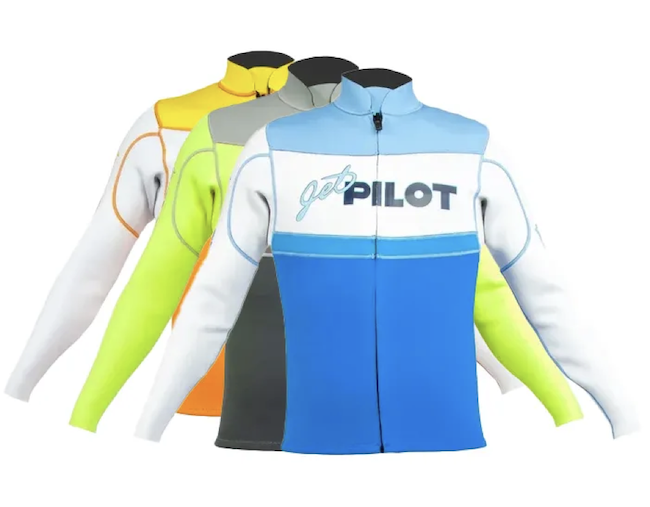
Start off with the Jetpilot F-86 Sabre Jacket, with an engineered fit and the softest, lightest neoprene with limited seams for more flexibility – in blue/camo, grey/camo, navy/orange, neon/navy, or silver/pink for $129.95.
Next is the Vintage Class John, offering a completely refined fit with premium neoprene and a fresh new look. The zip free entry and super stretch neoprene make this a performance suit in a vintage shell. 1.5mm neoprene with flatlock construction offers protection and comfort while remaining cooler on the water. Available in colors to match the Sabre Jacket, for $109.95.
For top-of-the-line safety, GreenHulk also carries Jetpilot’s F-86 Sabre Flight Coast Guard Approved Vest featuring premium foam and reinforced nylon providing comfort and durability. Its patented internal 3 buckle design eliminates belt snags and provides safety and comfort. This side entry vest has 15-panel construction and is ergonomically engineered to offer maximum comfort and flexibility. Its premium Evoprene material, combined with soft Aero Jet foam front panels, Jet-Foam layered panels, and beveled foam panels, ensures an exceptional fit that allows for improved mobility and reduced bulkiness during any type of riding. Available in a variety of colors for $149.95.
You can keep your extremities protected at all times with the Jetpilot Hold Fast Full Finger Glove. Built out of an ultra-thin 1mm neoprene build, this glove will give you a heightened grip and maximum protection. Featuring Spandex Finger Gussets, Rubberized Progrip Thumb Panel, Icon Supertrack Pvc Finger Print, Embossed Knuckle And Wrist Stretch Panels, Double Stitched High-Stress Zones, Durable 2-Ply Padded Palm, Adjustable Velcro/Rubber Wrist Closure, and Molded Rubber Finger Protection Patches, they’re a steal at $39.95, again in a wide variety of colors to match any kit.
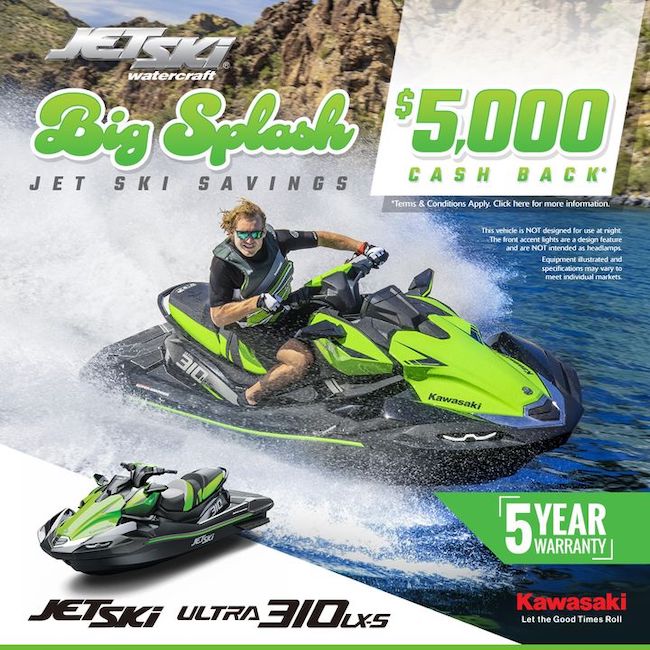
Brisbane Kawasaki’s Big Splash Promo offers serious savings, with the price slashed to $17,565 and the promotional ride-away price at $25,247, not including trailer. With few details even posted yet, one thing that Is clear is that you aren’t going to find many who are as knowledgeable about this machine and what it offers. If you’ve been considering adding this Ultra to your motorsports collection – or starting that collection, Brisbane Kawasaki can walk you through each feature, benefit and advantage of the model. Check out the full listing below, and be sure to check out their Ultra 310 video.
Marine 1,498 cm3 4-Stroke In-Line Four Engine Fitted with a supercharger and intercooler, the liquid-cooled 1,498 cm3, In-line 4-cylinder marine engine that propels the ULTRA 310 Series models forward with an exhilarating rush of acceleration produces an output much greater than a normally aspirated engine of the same displacement. This is due in large part to the use of a roots type TVS supercharger, which generates boost even at low rpm to ensure powerful acceleration, right from idle. Maximum output is a lofty 228 kW (310 PS)*. *Output measured at the crankshaft under controlled conditions. Actual performance may vary. * DOHC, 16-valve, fuel-injected, 4-stroke In-Line Four engine displaces 1,498 cm3 and has a bore/stroke ratio of 83.0 x 69.2 mm. Compression is 8.2:1. * A single throttle body is used with a bore diameter of ø60 mm. * High-flow fuel injectors with 4 orifices complement the engine’s substantial output and contribute to combustion efficiency. * For efficient piston cooling, each piston is cooled by two oil jets with 0.5 mm jet nozzles. * Water jacket distributes water evenly around the cylinder for efficient cooling performance. To help prevent dilution due to over-cooling, a check-valve opens to release the water from the jacket when the engine is idling or turned off; it closes when running to allow the jacket to fill. * Oil cooler features a second water-cooling layer to ensure adequate cooling at higher rpm.
TECHNICAL DETAILS * Baffle plates (2 longitudinal, 1 cross) in the oil pan act as partitions, helping to keep oil from collecting on one side of the pan during tight turns, or sudden acceleration / deceleration. * The ULTRA 310 Series models feature a 4-into-2-into-1 powerboat-style exhaust system, which routes the exhaust pipe upwards. This allows the smoothest flow for exhaust gases, maximising exhaust efficiency. * Dual water muffler arrangement provides greater volume, which reduces exhaust back pressure, and in turn contributes to performance. The large muffler volume also contributes to a quite ride.
Supercharger and Intercooler * The roots type supercharger is known as a fixed displacement supercharger. This design produces large amounts of boost even at low rpm, for instant and powerful acceleration right off of idle. With every revolution, it force-feeds the engine 2 litres of air (theoretical volume is 2,019.3 cm3 per engine revolution), ensuring a stable supply of high-pressure intake air at all rpm. The result is a very flat and meaty torque curve and step-free power across the rev range, with none of the time lag associated with turbochargers. * Twin Vortices Series (TVS) Roots supercharger, featuring twin 4-lobe rotors, is highly efficient and quite compact. Boost pressure is 16.8 psi. * Where some superchargers deliver compressed air in waves, the TVS unit offers continuous delivery, contributing to smooth throttle response. * Internal planetary gearing increases supercharger speed 2.1 times, to ensure the necessary speed to deliver the high-power output. An external pulley has a 0.9 reduction ratio. The combination delivers the required rotational speed while ensuring a low belt load.
* To ensure ideal intake air pressure, not one, but two air bypass valves are used. A vacuum air bypass valve is used to balance air pressure upstream and downstream of the throttle body. It works mostly at low and medium rpm. A second, regulatory air bypass valve aids the vacuum air bypass valve in preventing over-boosting when the throttle is shut (or opened) suddenly. Should the system’s specified maximum pressure be exceeded, the regulatory air bypass valve is activated, allowing air to escape.
* Efficiently cooling the high-pressure intake air is a liquid-cooled intercooler. Friction between the air molecules heats the intake air to extremely high (power-robbing) temperatures, but the intercooler cools the air back down to ambient temperature. Cooler air results in high engine output.
Electronic Throttle Valve Electronic throttle valves efficiently manage the engine’s massive power output. They also make minute engine control possible, enabling easy switching between riding modes. * Accelerator Position Sensor (APS) converts throttle lever input to an electronic signal. This signal is then used by the ECU to control the throttle valve via electric motor. A Throttle Position Sensor (TPS) on the throttle body provides feedback to the ECU. * Redundancy in the system (APS and TPS each send two sets of signals to the ECU) ensures some control is maintained in case of failure.
Propulsion (Jet Pump / Impeller) Electric Trim-Control System * To efficiently convert the ULTRA 310 Series engine’s massive power into thrust, a large-diameter ø160 mm jet pump is used.
* Developed based on feedback from Kawasaki’s race machines, this pump was specially designed to deliver breathtaking acceleration, stable output and good “bite,” even when riding in rough water. * A large impeller, featuring a sophisticated 3-blade design, delivers both high performance and quiet operation. A revised impeller blade angle contributes to increased acceleration performance off the line. * 8-vane guide smooths and regulates the flow of water from the impeller for efficient and powerful propulsion. * Horizontal guide vanes on the grate “grip” the water, keeping the bow from rising on acceleration for improved stability. The improved hookup enables a more efficient transfer of power to thrust. * ø88 mm steering nozzle, designed to be short and slim, ensures a light steering load. Handling feels light despite the high-power output.
Electric Trim-Control System * This convenient system allows the angle of the jet pump nozzle to be controlled electrically (seven positions: STD +/- three positions), making it easier for riders to adjust the attitude of the hull to suit water surface conditions and riding style. * In rough water, angling the jet pump upwards raises the bow for rough water handling. Conversely, when conditions are smooth, angling the jet pump downwards lowers the bow for turning performance.
Launch Control Mode – NEW When accelerating with the system engaged, the trim is automatically adjusted to suit vehicle speed.
* Two modes allow either single or repeated launches. – Single mode: once set, Launch Control Mode is only active for the first acceleration period. – Repeat mode: once set, Launch Control Mode is active each time the rider accelerates from a slow speed.
Electronic Cruise Control This mode fixes speed (rpm) at the level specified. It is a convenient feature for long-distance cruising.
* The mode is activated by pushing the button on the right handle when riding. * Cruising speed can be adjusted using the UP and DOWN buttons. * During operation, the speed displayed on instrument panel will flash slowly. * After activation, the throttle is pulled all the way in to maintain speed. (This position is more relaxing than keeping the lever at partial throttle.)
Releasing the throttle lever disengages the system.
One-Touch “NO WAKE” Mode – NEW This handy mode is used in “No Wake” zones. It regulates engine speed to maintain a forward speed of 5 mph (8 km/h).
* When activated, the drive mode indicator will read “5mph.” * When riding into a headwind or with a load, pushing the cruise control UP button offers three levels of increased rpm. Speed range is 5 mph (8 km/h) to 6.2 mph (10 km/h). NEW * To disengage, press the button again, or pull the throttle lever.
Power Mode Selection / SLO-Mode – NEW Riders can select from Full, Middle and Low Power Operation, as well as Smart Learning Operation (SLO)-Mode.
Full Power Operation (FPO 310HP) – engine output is unrestricted, allowing riders to experience the unbridled potential of the supercharged engine.
Middle Power Operation (MPO 248HP) * Default setting when first starting the engine is MPO, which is manageable for beginners.
Low Power Operation (LPO 186HP) – offer progressively more restricted engine output. MPO limits output to approximately 80% of FPO; LPO sets output to approximately 60% of FPO.
Smart Learning Operation (SLO 160HP) -Mode function allows newer riders to become familiar with the handling and response of the JET SKI watercraft at a more relaxed pace before unleashing the full power of the supercharged engine. * A separate SLO-Mode key that restricts operation to SLO-Mode is coloured bright yellow, making it easy to distinguish from the FPO key.
Kawasaki Smart Steering * The KSS (Kawasaki Smart Steering) supplementary steering system is designed to assist new riders as they learn turning and manoeuvring of a personal watercraft. *Ideal for novice riders, can be easily disconnected for more advanced riders.
KSRD (Kawasaki Smart Reverse with Deceleration) -NEW * Kawasaki Smart Reverse with Deceleration electrically deploys the reverse bucket. Activated with a thumb switch on the right handle, it enables thrust to be controlled with one hand. When fully deployed, the reverse bucket contributes to deceleration.
* To reverse the JET SKI, simply push the thumb switch. This will fully deploy the reverse bucket and apply thrust. Pushing the thumb switch farther increases the thrust. * In addition to “Forward” and “Reverse” modes, a “Neutral” drive mode, where the reverse bucket is partially deployed, helps keep the JET SKI in place when idling. To engage “Neutral” from “Forward” mode, release the throttle lever and gently push and release the thumb switch. From “Reverse” mode, simply releasing the thumb switch will engage “Neutral.”
Reverse Assist * With the reverse thumb switch fully depressed, the Trim control buttons (UP/DOWN) can be used to increase/decrease engine rpm to adjust thrust. This feature is handy when backing the JET SKI out of trailer into the water. * When the reverse thumb switch is released, rive mode switches to Neutral and the engine returns to idling.
Lightweight Hull Loaded with technology from Kawasaki’s championship winning machines, the race-developed hull handles with precision and control, with a high level of seaworthiness – and at speeds from idle to its impressive top end. Specifically designed to handle the enormous output from the supercharged engine, the hull achieves a balance of strength and light weight. * Deep-V hull design enables banked turning performance. This reduces the lateral G-loads imposed on riders during turns, allowing them to better concentrate on riding. Measuring 22.5°, the idealised V-angle at the bottom of the hull helps prevent spinouts during sharp turns. As a result, the ULTRA 310 Series models deliver the neutral handling and turning characteristics for which Kawasaki JET SKI watercraft are famous. * Feedback from Kawasaki’s numerous IJSBA championship winning racing machines contributed to a hull specially designed to cope with the engine’s massive output while offering precise performance and responsive handling in both calm and choppy-water conditions. * The bottom of the hull slants upwards steeply from the centre section to the bow, allowing the ULTRA 310 Series models to penetrate swells and waves with less shock. At low speeds the result is great composure; at higher speeds the massive thrust enables the hull to push through most waves rather than bounce over top of them. * The lower hull is specially designed to distribute the engine and power delivery loads over a wide area. * With hull thickness determined based on a detailed strength analysis, the hull offers an idealised strength balance matched to the engine’s high output, and a lightweight package.
Ride Plate * A groove running from the centre to the rear of the ride plate makes it easier to hold a straight course when running straight ahead.
Quattro KSD – Kawasaki Splash Deflectors * Ridges across the bottom of the bow, Kawasaki Splash Deflectors deflect water splashing forward from under the hull. A fourth splash deflector mounted at the top reduces spray during high-speed turns. Whether turning or blasting straight ahead, at high speeds or low, the Quattro KSD minimises spray, allowing greater rider concentration.
Increased Splash Protection – * Front bumper is 50 mm taller, offering increased splash protection for improved comfort. Channels in the bumper allow water that sprays up onto the bonnet to be redirected overboard.
* At its tallest, the rear bumper is 100 mm higher, making it harder for water to wash on deck during tight, banked turns.
Extensive Cruising Range – NEW * Offering more fuel capacity than any machine in its class, the fuel tank holds 80 litres of fuel. At cruising speed (70kph, in ECO mode this will yield approx 150km’s of range in ideal conditions with 1 Rider and 10kg of luggage)
*Kawasaki’s use the Marine law. 1/3 out, 1/3 back, 1/3 in reserve. The Kawasaki will tell the rider they are on LOW fuel when the tank see’s 1/3 remaining. This is equal to approx 28Litres of fuel and almost enough to travel a further 50klms.
Sponsons * Sponsons extend from the hull to provide stable straight-line performance (e.g. porpoising from start is minimised, etc) while helping to retain the machine’s narrow overall design. They also contribute significantly to the superb manoeuvrability when changing direction (particularly at higher speeds).
Built-in Cleaning System * The ULTRA 310 Series models feature a built-in cleaning system to purge seawater used to cool the engine and intercooler. There are two separate circuits (one for the engine, one for the intercooler), each with a dedicated flushing port on the transom. Fitting a separate connecting tube is quick and easy. (Flushing the engine requires the engine to be running; flushing the intercooler requires the engine to be off.)
Dynamic Luxury Styling All-new from the deck up, the 2022 ULTRA 310 Series models were completely restyled to give them a fresh image. Their “dynamic luxury” design maintains the dynamism of their predecessors while adding a three-dimension feel, and a high attention to detail ensures a luxurious, high-grade finish for each of the three distinctive, head-turning designs.
* Sleek, dynamic styling, headed by an aggressive intake-style design at the bow, conveys their sporty prowess and ensures that these JET SKIs stand out on the water. * Designers carefully crafted parts with a three-dimensional feel to complement the dynamic styling, expertly weaving these pieces together to create a high-grade, bespoke design.
Storage – NEW Completely rethought storage system offers a total storage capacity of 168.5 litres.
* Under the bonnet, the large-capacity, fully sealed 124-litre front storage area has plenty of room for recreational equipment.
* With the elimination of the reverse lever freeing up space, the new Easy-Access Storage offers 40 litres of space behind the handle. The PWC industry’s first sideaccess storage space, it is accessible from either the left or the right, offering a highly convenient place to keep high-use items.
* Inside the Easy-Access Storage (on the right side), a 1.7-litre waterproof compartment complete with USB outlet is ideal for mobile phones and other items that you do not want to get wet.
* Gullwing design of the Easy-Access Storage covers give the ULTRA 310 Series models the air of a supercar when they are open – just one example of the high attention to detail that makes these flagship runabouts the envy of the marina.
* Attractive and functional, the stylish new mirrors feature larger mirror surfaces offering greater fields of vision while contributing to the luxurious design. Mirror covers on the ULTRA 310LX-S (black) and 310LX (painted) are another high-class touch.
* Dual cup holders are built into the centre console between the TFT display and handle.
* Aft of the rear seat, the Easy-Access Rear Pocket offers an additional 2.8 litres of space for rope, tools and other small items.
7” TFT Display – NEW Large, easy-to-read 7” full-colour TFT instrumentation offers multiple display modes, jog-dial control, Bluetooth connectivity, and even infotainment features.
* Riders can use the jog-dial to select from three display modes (Digital Speedometer, Analogue Tachometer, Digital Speedometer + JET SKI image) depending how they want their information presented. The screen background can also be set to black or white to suit preference.
* Screen brightness adjusts automatically to suit available light, contributing to the instrument’s high legibility. Brightness can also be set manually to suit driver preference. LCD bonding technology allows the screen to be positioned close to its glass covering, helping to minimise glare for high clarity.
* Screen display functions include: * The Economical Riding Indicator appears on the display to indicate favourable fuel consumption (i.e. at planing speed, when hull resistance is minimal). Paying attention to this indicator can help riders maximise their fuel efficiency. * Surrounding the screen, a number of indicator lamps provide at-aglance information: * When linked to a smartphone† via Bluetooth, notification of calls and messages received will be indicated on the instrument display. †Compatibility limited to iOS-type smartphones • speedometer (GPS-based) • tachometer • fuel gauge • drive mode (F, N, R) • boost pressure • clock • Power Mode (FPO, MPO, LPO, SLO) • compass • trim • selectable display that includes: digital tachometer, trip meter, total time, trip time, oil temperature, engine coolant temperature, battery voltage, intake air temperature, diagnostic code, external air temperature, external water temperature
• Bluetooth indicator • telephone call indicator† • mail indicator† • Economical Riding Indicator • Cruise †Compatibility limited to iOS-type smartphones • GPS • low fuel • engine • oil • battery • engine coolant temperature • immobiliser • master warning • trim • reverse * The instrument’s large screen size makes it ideal for infotainment functions. Features like the programmable way point indicator (GPSbased), vehicle information (including trim condition and preferred trim settings), rearview camera monitor, and audio track display† offer both information and entertainment value. †When linked to an iOS-type smartphone. * Highly convenient waypoint function displays the distance and direction to a destination programmed by the rider. Up to three points can be programmed: start point, destination 1, destination 2. Riders can choose between north-up (map is fixed, with north always at the top) and track-up (map rotates to match the direction of travel) display options.
Keys & Immobiliser
* Key slot is now located in the centre of the handle (previously on centre console). The ignition switch is at the left handle.
* Adding a high-class touch, the FPO key is emblazoned with the River Mark. The SLO key is plain yellow, as before.
5-Way Adjustable Handle Bars * The models of the ULTRA 310 Series feature a 5-way adjustable handle that suits a wide range of riders and riding styles, allowing either stand-up or sit-down riding.
Riding Position and Ergonomics – NEW Ergonomics on the ULTRA 310 Series models were designed to comfortably accommodate three people, as well as facilitate both stand-up and sit-down riding.
* Handle grips are positioned at a fairly wide stance, contributing to riderfriendly control. The grips are 10 mm lower to match the new deck design.
* Revised throttle lever offers lighter operation. Riders require less effort to maintain the throttle, contributing to increased comfort. * Ergonomic deck design gives plenty of legroom without necessitating a high seat, for rider-friendly seating accommodations. * The deck is flatter and 35 mm lower at the rider’s feet, offering more leg room for increased comfort.
* Two-piece, three-person seat offers roomy accommodation for three people. Its redesigned front portion is 80 mm slimmer at the knees, greatly facilitating stand-up riding.
Large Rear Deck and Re-Boarding Step * Wide deck space behind the seat offers plenty of room to set up gear for water sports, and facilitates getting back on board from the water.
* A long re-boarding step makes it easier to climb on board, and the step retracts inside the bumper to help prevent damage.Multi-Mount System – NEW Multi-Mount Bars (and Multi-Mount Rails) contribute to the increased convenience.
* Two Multi-Mount Bars (ø22.2 mm pipes) are built into the front of the handle (one on each side).
* A third Multi-Mount Bar is located below the Easy-Access Rear Pocket.
Easy-Access Cleats – NEW * Built-in cleats (one on each side) provide convenient cinch points when mooring at a dock. Their clever design helps redirect water overboard.
Cruising on a personal watercraft can be one of the most exhilarating experiences on the water, and there’s no better feeling than operating a PWC with great response that lets you feel truly close to the water. However, there are times when you need to relinquish a bit of control and know that your craft will stay reliable throughout the ride. That’s where Yamaha’s Cruise Assist feature comes into play. This handy tool allows riders to maintain their desired engine speed effortlessly, making your time on the water even more enjoyable.
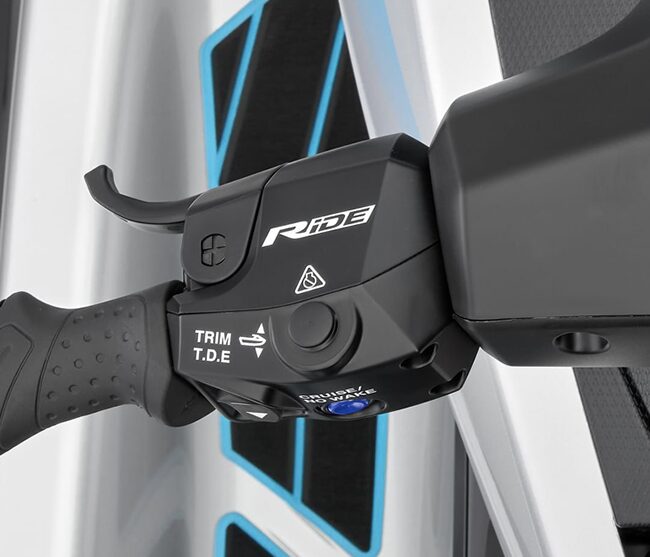
So, how does it work? First, you operate the throttle lever until you reach your preferred speed. Once you hit that sweet spot, simply push the “CRUISE/NO WAKE” switch. You’ll hear three beeps, letting you know that Cruise Assist is activated. It’s like having a co-pilot that helps you keep things steady while you enjoy the ride!
One of the best parts about this feature is the speed adjust option. If you want to tweak your speed, the “SPEED ADJUST” switch lets you increase or decrease your engine speed by up to 5 units. This is especially useful when you’re navigating different water conditions or simply want to take in the scenery without having to constantly adjust your throttle.
The benefits of using Cruise Assist are pretty straightforward: it reduces fatigue, allows for better focus on your surroundings, and can even enhance fuel efficiency by maintaining a steady speed. Plus, it’s particularly useful for activities like fishing or leisurely rides, where you want to take it easy without constantly worrying about your speed.
Overall, Yamaha’s Cruise Assist feature is a must for WaveRunner enthusiasts. It not only enhances your ride but also allows you to enjoy the water more fully, making every outing a little more special. Check out Yamaha’s website to learn more, and this wonderful tutorial video to see it in action!
If you’ve been waiting for the right moment to upgrade your pwc gear, now’s the time to act. RIVA Racing is hosting a major blowout sale on select Jetpilot gear, with some items marked down by as much as 50%. The sale includes top-tier apparel for PWC riders, such as life vests, wetsuits, jackets, and gloves—all engineered for maximum comfort, performance, and durability on the water.
Jetpilot is well-regarded for creating watercraft gear designed with riders in mind, combining functionality and style. Whether you’re looking for safety essentials or stylish outerwear for your next adventure, this sale offers the chance to grab some of their best products without breaking the bank. With discounts this steep, it’s a great time to stock up, especially with colder weather and holiday sales coming up soon.
Among our favorite items on offer is the Jetpilot Vintage Class Jacket, a super stylish water jacket made with soft lightweight neoprene material, which allows you to upgrade your style on your water while ensuring top quality.
In addition to these impressive discounts, RIVA Racing sweetens the deal with free shipping on all orders over $150 within the continental US. That means if you’re putting together your PWC essentials or replacing worn-out gear, you can save on both the products and delivery. It’s an ideal opportunity to get everything you need for next season without paying full price.
Take advantage of the sale while it lasts, because this kind of blowout doesn’t come around often. Check out RIVA Racing’s website and grab the gear that’ll make your next ride on the water safe and stylish!
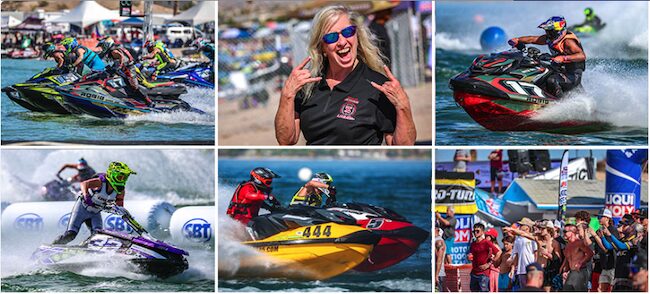
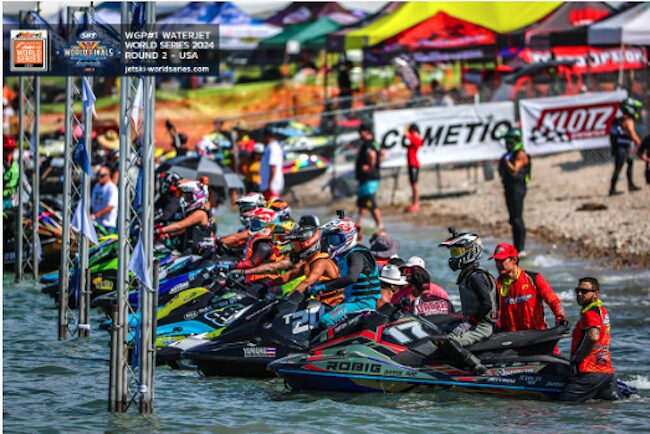
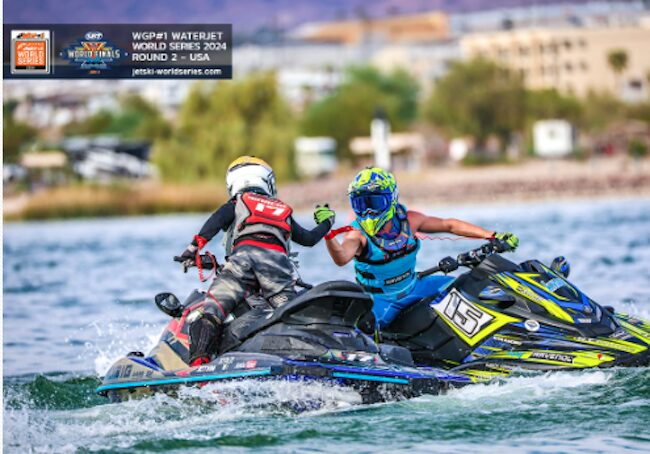
With the 2024 SBT WGP-1 World Finals drawing to a close this past Sunday, Oct. 13, results were held as pending until a thorough review of times, penalties and race reviews was completed. However, final results have now been released, with IJSBA World Champions named for each class, including Belgium’s Quinten Bossche as Pro Ski GP Champion, Cambodia’s Saly Ou Moeut taking the Pro Sport GP Championship, Nolan Jukish securing the pro freestyle championship, ranked just ahead of his brother Gabe Jukish.
In Pro Runabout GP, Kuwait’s Mohammed Burbayea secured the championship while Jaiden Ruis of Lake Havasu City is Junior Ski 10-12 Lites World Champion, Sophie Benson is World Champion in Jr Ski Lites 13-15, and Mike Klippenstein secured the Championship in Grandmaster Ski Stock.
WPG#1 WaterJet World Series
Reese Giese walked away with the Championship in Pro Am Women’s Ski Stock and the Championship in Pro Am Women’s Ski Modified.
River Varner of Lake Havasu City took the Ski Slalom Championship and Kashe Crawford is World Champion in Junior Slalom and Junior Ski 10-12 Four Stroke Lites.
In Pro Am Runabout, the Championship was taken by Jean Bruno Pastorello, and Cash McClure of Soddy Daisy, Tennessee is the Junior Ski 10-12 Stock World Champion. Revin Harris is the 2024 Sport Spec World Champion.
Also, IJSBA has released the following announcement regarding the 2025 World Finals:
IJSBA is altering competitors that the 44th annual World Finals event will take place October 4-12, 2025. Crazy Horse Campgrounds in Lake Havasu City has been reserved and IJSBA hopes to give final confirmation of this location and venue shortly. Competition will begin October 6 and October 13 will be held as an emergency overflow day.
Whether you’re looking ahead and starting early on your Christmas shopping, or you’re in the market for a new fit for yourself, look no further than Sea-Doo’s 2025 Sportswear collection.
Recently released, the collection is designed to cater to both the adventure seeker and those searching for more relaxation, and Sea-Doo sportswear and accessories offer quality, style and comfort.
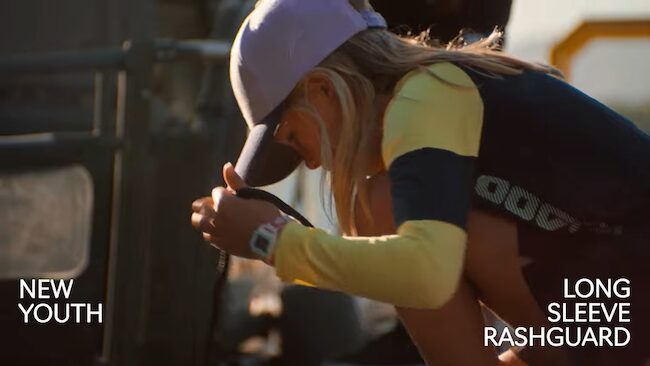
Browse through the new arrivals at the Sea-Doo website and choose from a stylish selection of rashguards (like these long-sleeve men’s and women’s rashguards for $44.99), caps like the Unisex Light 5 Panel Floatable Cap for $29.99, fleeces that are sure to become your favorites, such as the Women’s Fleece Overshirt and Men’s Half-Zip Fleece Pullover, each for $74.99, and more to keep you protected from the elements. With fashionable and functional styles, the new collection has you covered for your days on the water, and with everything from quick-dry ponchos for kids and adults, to reversible bucket hats, the 2025 Sea-Doo collection is full of novelties as well as core basics.
Check out the collection highlight reel and be sure to share!
If you split the PWC world into two general categories – the race world and the rec ride world – it would, at least at first glance, seem that racers have it easier in one category – that of knowing exactly where they’re going and how to get there (although, after shooting numerous amusing Abbot-and-Costello-worthy race starts, I can confirm that race-course navigation is Not as easy as would seem!).
But for recreational riders, the horizons are endless, both in terms of “where should I go?” and occasionally, “where the heck am I?.”
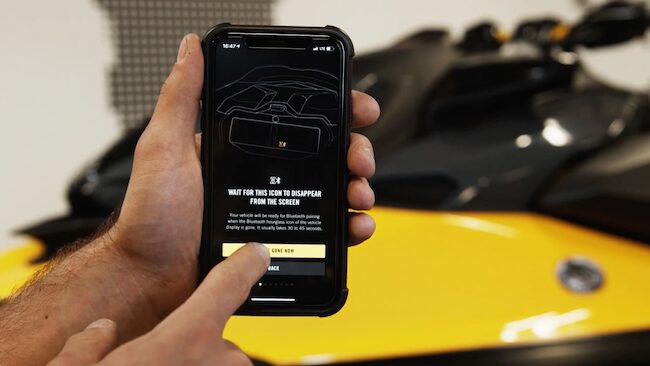
Luckily, Sea-Doo has you covered, in both cases, with the BRP Go App. Essentially a GPS system on steroids, the BRP Go App is a navigation and mapping app for powersports vehicles that helps users plan and track their rides, and with the newest BRP Go features, including the ability to download map areas in advance for offline riding, and double-checking that the app’s key features are functional in spots without cellular service, you can access GPS navigation when you need it most, with plenty of additional ride-enhancing features to suit the Sea-Doo Lifestyle.
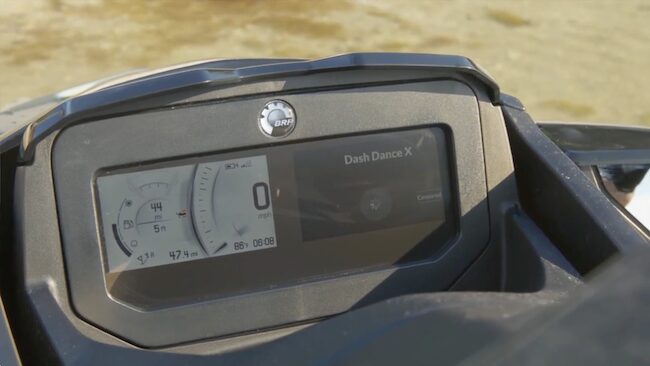
The BRP GO! app can be used on the 7.8″ wide LCD color display and the 10.25″ touchscreen display available on select Sea-Doo models. BRP Go provides turn-by-turn guidance on official sled trails for Ski-Doo models, provides access to more than 235 miles of official snowmobile trails for Lynx models, and Can-Am Off-Road capabilities provides turn-by-turn navigation and ride tracking for ATVs and SxS.
BRP GO! – which supports devices with Apple iOS 16+ or Android 10+ operating systems – is available free of charge on both Google Play and the Apple App Store.
For your on-water adventures, BRP Go allows you to search thousands of official points of interest — marinas, boat ramps, restaurants, lodging, BRP dealers and more — and instantly load them up on your dash display. Then you can plan excursions and create your own itinerary with guided navigation from point A to B with distance indications between your waypoints. You can also manually enter as many waypoints as you want.
For water navigation, a map layer is offered for free. A paid annual subscription is offered to have access to two additional Navionics™ charts layers – nautical charts that let you locate navigation aids (such as buoys and lighthouses) & nearby marine services, study safety depth contours & port plans; and SonarChart™, which allows you to discover what lies underneath in detail with the precise bottom contours of an HD bathymetric map, perfect for better locating shallow waters and identifying fishing areas. Additionally, all the features of BRP GO! such as trip recording, route planning, real-time friend tracking and offline riding all work with these nautical chart layers.
To track your ride, simply hit the “RECORD RIDE” button and point your watercraft wherever your inner adventurer takes you. The App will track the path of a ride, creating a breadcrumb trail that follows your path so you can see where you’ve been and how to get back, and also provides information such as distance traveled and time since departure. Your rides save automatically in the app so you can access route and ride statistics at any time.Tracks the path of a ride and provides information such as distance traveled and time since departure
You can also invite friends to join your rides and share your itineraries with them, and with active cell connection, you can locate friends in real time on the map while you’re riding.
BRP Go is available in English, French, Spanish, Portuguese, Swedish, Finnish, Norwegian, German, Italian, Japanese and Dutch.
You can check out an overview of the Sea-Doo BRP Go App by watching the promo video, as well as find step-by-step instructions for utilizing the main features of the App by watching Sea-Doo’s Plan A Ride, Group Ride, Ride Record and Custom Points of Interest tutorial videos online.
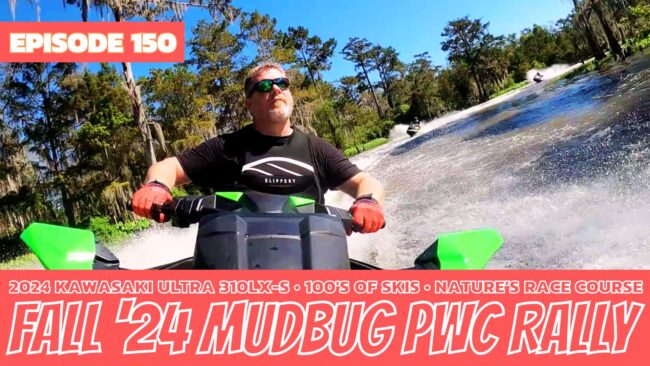
For those who know, the annual Greenhulk.net Mudbug PWC Rally has undergone some changes since its first happening 19 years ago. What began as a heads-up drag race hidden deep within the trails and canals of Morgan City, Louisiana’s bayou; the rowdy and somewhat questionable racing format eventually ground to a halt as the blistering speeds of these heavily-modified machines continued to increase.
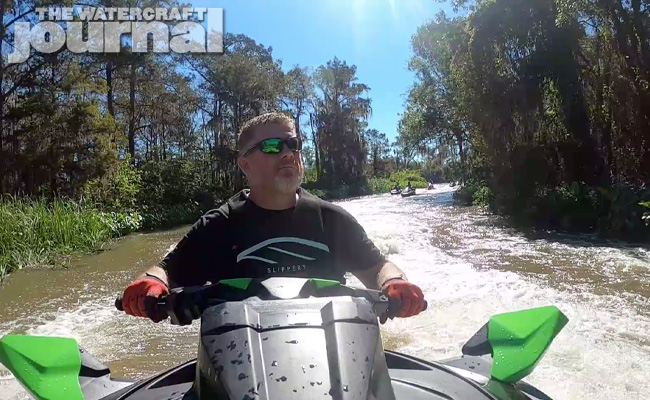
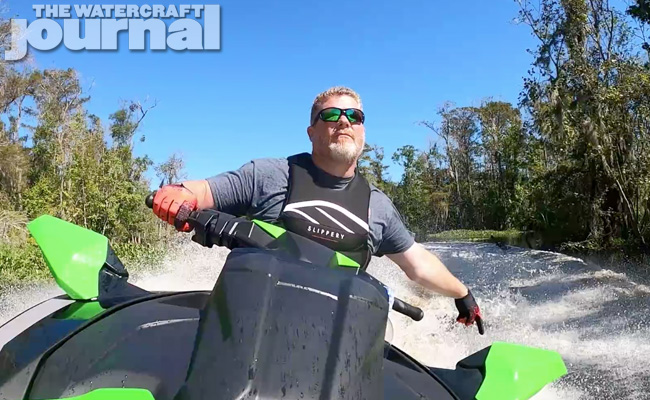
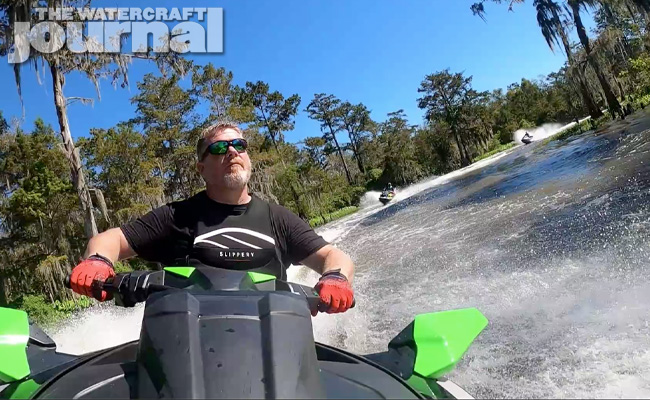
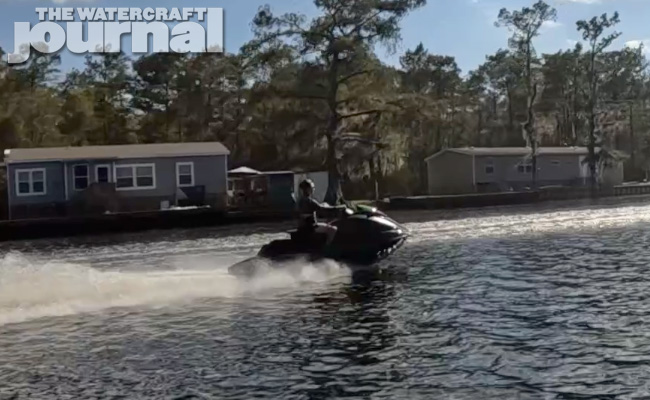
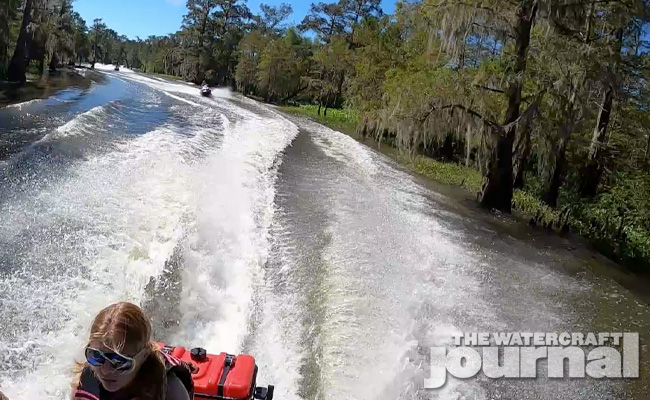
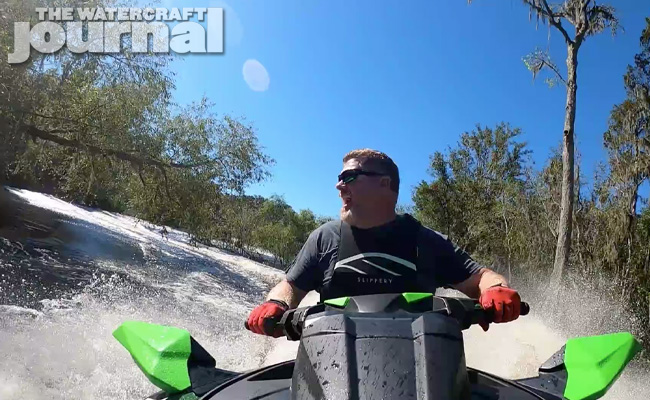
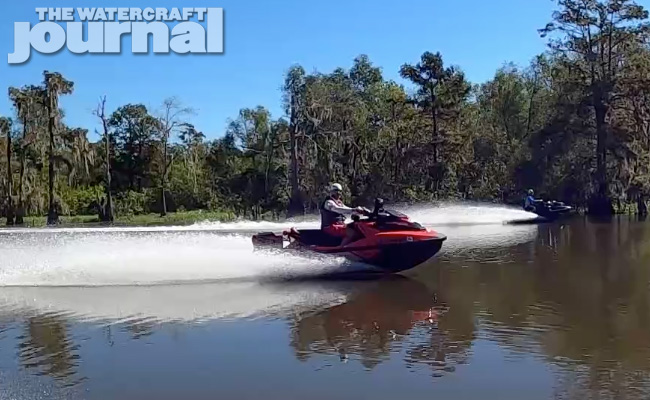
From there, newcomers found the naturally-cut trails through the cypress trees an ideal – and frankly, totally unique – setting for explorative day rides and cruising. Although a considerable change from its high octane early years, the Mudbug evolved into a free-for-all, loose-knit weekend of scattered groups careening through the swamps, crisscrossing the various lakes, and otherwise, bombing the heck out of St. Mary Parish.
Over the years, the Mudbug sprouted two more additional events. The main event has been and will always be held the second week of June; but an earlier “Spring Mudbug” in April and “Fall Mudbug” in October offered attendees lower body counts, and in many cases, far, far more favorable weather conditions.
Personally, my schedule made attending in June a nail-biting “Sophie’s Choice”, so Fall became far more doable. Plus, temperatures in Fall were 10-to-15 degrees cooler (we’re talking the low-to-mid 80s) with far less insects swarming about. Plus, the gators preferred to layout on the muddy banks instead of floating in the water, making swimming and lazing about a little less nerve-racking.
I’ve been attending Mudbug for 9 years thus far, and always bringing one or more of my kids with me. While not what you might call a “family venue” I always wanted my girls to be comfortable with high performance machines and the thrill of racing through these locations. As a kid who grew up on the other side of the country, whose dad regularly took him to Glamis, California, the Mudbug is the closest I can get my kids to experience things like Oldsmobile Hill, climbing up China Wall or shooting the whoops.
Unfortunately, my public endorsement of the Fall Mudbug over the “big event” in June had some unexpected consequences. This past Fall event welcomed not only far, far more attendees than any fall rally ever before, but it even eclipsed this year’s June event. Rough estimates counted over 100 skis with close to 150 people on the water.
This might not sound like a big deal to those who’ve seen the mob-like numbers of some Florida events, but compared to previous numbers of 30 or 40 attendees, 150 bodies is both record-breaking and a little unmanageable. Add to that the recent passing of the torch of managing the event from father Jerry Gaddis to son, Greg Gaddis, the Mudbug had officially crossed into entirely new territory.
Thankfully, Greg had made preparations. First, the date was moved up a couple of weeks from the first weekend in October to the second-to-last weekend in September. Official riding shirts were printed with a creative new logo. Scheduled rides with designated routes were officially announced and posted on Greenhulk’s social media and forum pages. Both The Watercraft Journal and ProRider Magazine had done its job of banging the war drums. Everything pretty much led up to this weekend.
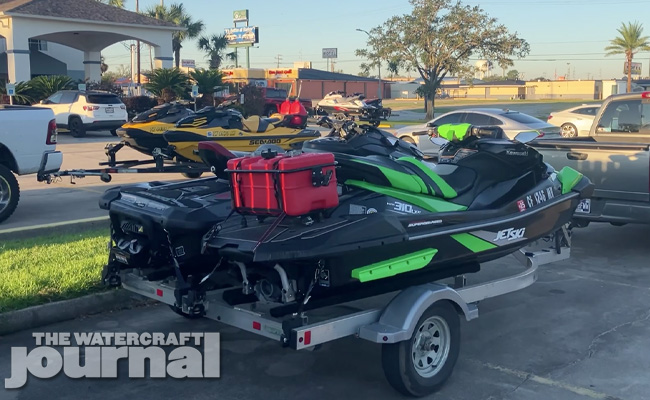
I traveled down from Nashville, Tennessee with a 2024 Kawasaki Ultra 310LX-S JetSki equipped with my personal auxiliary fuel system hooked up. I was assured that the added 13-gallons wouldn’t be necessary as the day’s longest route would come in under 75 miles, but considering how thirsty the Ultra tends to be and how rarely I practice “conservative throttle control” I erred on the side of caution on this one.
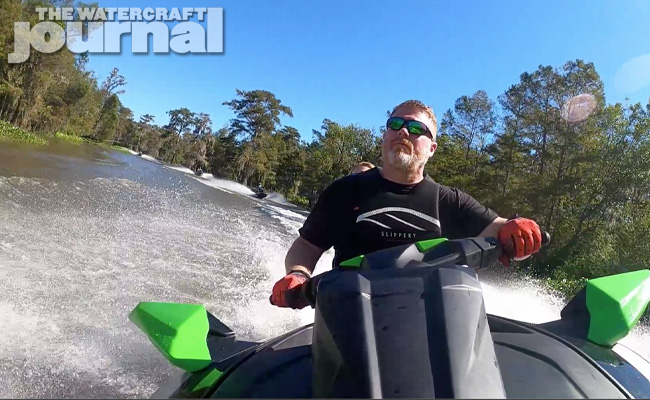
My 10-year-old daughter rode shotgun with me this year. Amazingly, she’s proven to be one of my most daring; willing to hang on at full throttle racing across white-capped, wind blown lakes, and shrieking through the bayou at full speed. The big Kawasaki had plenty of room, rode incredibly comfortably, and never once felt tippy or imbalanced with the passenger and added weight of the fuel tank on the transom.
Although the Kawasaki is certainly not the fastest full-sized runabout out of the box, it does carry a considerable presence and stood out among a sea of Yamahas and Sea-Doos. We never did see above 66mph on the speedometer this weekend, and to be frank, this year’s loaner unit from Kawasaki has been one of the most sluggish we’ve had to test, but it still did what Kawasakis do best and that’s slice its way through chop.
One major critique is one that is both easily fixable through a single line of code in the ECU and inexplicably allowed to even reach production units: and that is the agonizingly slow response time of the KSRD – what they like to call “Kawasaki’s Smart Reverse & Decelerator.” Sadly, it’s anything but smart. In fact, it’s defiantly dumb. The ECU’s sluggish inability to toggle between Forward, Neutral and Reverse is much more than just frustrating, but potentially dangerous.
OK, OK, I’m the first to say “if you need a brake to ride a jet ski, you’re already in trouble” but we’re well beyond asking people to arrive at the dock with any sort of riding ability. Rather, we’re telling folks “Hey, don’t worry! This ski has a brake!” and setting them on their way. Well, when the brake takes 3-to-5 seconds just to engage the reverse bucket, and only does so with a restricted amount of thrust, you’ve got yourself a problem.
Aftermarket leader, RIVA Racing and other tuners have found this line item in the code and have tweaked it to switch gears multitudes faster. Why it comes from the factory so stinkin’ slow is baffling. You’re going to tell me nobody thought this wasn’t acceptable but ME? C’mon. But I digress…
Unlike previous years, I didn’t plop Greg on a second ski for us to conduct a comparison. Rather, Greg opted to ride his bonkers 90-plus-mile per hour Yamaha GP1800R SVHO on Friday. He had no qualms with showing off the power this wild Stage 3 WaveRunner had; particularly as we raced across a very choppy and wild-blown Lake Verret that afternoon.
Without a readable pattern and rapidly dynamic breaks, even the big Kawasaki struggled to cut a straight path through the whitecaps. Greg had pulled far ahead of us on the Ultra, but the rest of the group were several hundred feet behind me and my 10-year-old daughter.
As we stopped to regather the group, a few came up to check on us. My daughter would flash a smile with a thumbs up, much to their surprise. Everybody wants to dump on the Ultra until the conditions turn sour. I’ve encountered a lot more chop than I have glass in my years, and having the right ski to traverse those waters has always been the secret to my success.
Waiting a good while for the rest of the group to regather, we raced back up the trails and canals to Doiron’s Landing and quickly packed up for the evening. A few continued their ride, wanting to rack up more than the day’s 74-miles, which was fine – but for me and our group, we were happy to call it a day.
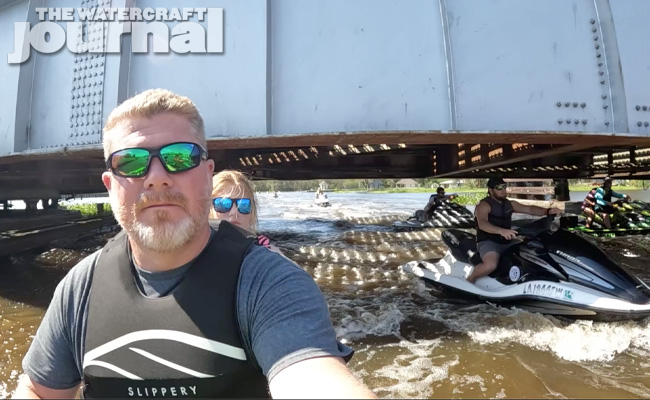
Saturday went a bit differently. Launching on the levee side of Doiron’s, we collected our biggest group to date – over 70 of us. This lead to some pretty unfavorable conditions, meaning slow traversing through otherwise really fun trails, a few more added stops to make sure we hadn’t lost anyone, and frankly, much more babysitting of less enthusiastic riders than most of us would like.
What is the most appealing aspect of Mudbug – at least in my book – is pinning the throttle through some of the most challenging natural race courses on earth. Being forced to sluice through these trails at 20 miles per hour because of several less skilled, meandering riders is torturous.
Moreover, word had come through that several dozen riders had missed one or two key turns in our path causing them to get lost. This is only possible because these individuals were riding too dang slow to keep up with the rest of the group. Sorry to be so pointed about it, but if you get lost it’s because you were going too damn slow.
While we waited for the remaining riders to catch up, many pulled up on the shady banks of the river, reapplied some sunscreen, cracked open some cold drinks and began to socialize. What started as a quick stop drew into two hours of waiting.
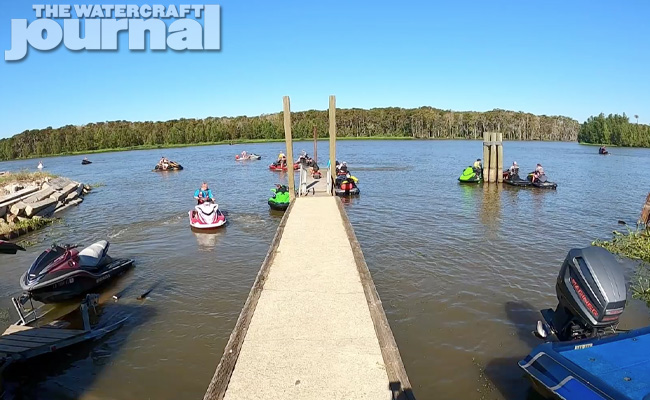
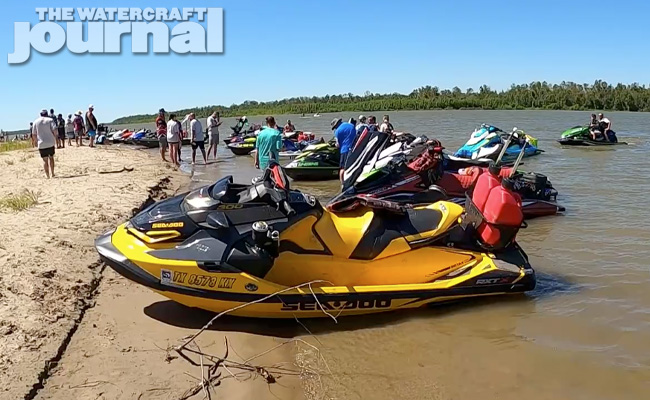
Finally, the last bit of the stragglers rolled in, allowing us to break up camp and continue riding. Greg had planned for a bit of a gathering at the sandbar on the Atchafalaya River, where his brother Alex was preparing jambalaya for everyone. Driving his newly restored bright blue metal flake bass boat, Greg led a group the shorter route to the beach where others were already waiting to be fed.
Lee Beirhorst, who had led most of yesterday’s ride and Saturday morning’s group, led a smaller group of us through some more technical trails, allowing a few of us to romp on the throttle. The route was a load of fun and scratched our itch for some more spirited riding, but as we rolled up to the sandbar, that would pretty much be the end of it.
High winds kept the flames from cooking the food in a timely manner. The big group became increasingly more bored, many started dipping deeper into their coolers (if you catch my drift) and caution became increasingly less of a priority.
A couple of close calls during some heads up drag racing was all that I needed to make the executive decision to wrap up today’s riding. Sure we were disappointed to not take in the whole day, but nobody was interested in breaking away and riding more trails, most of us were sunburned and hungry, and with the oversized crowd (many of whom exhibited less than questionable riding abilities), I knew somebody would’ve ended up in an emergency room.
With that, we packed up our ski and followed the channel markers around Flat Lake and back to the launch. Most folks were more than happy to get in some quality time socializing and catching up with friends. Others geared a little more like me, were hoping to get in a few more hours of riding. But that’s OK. The Mudbug offers a little bit of everything for everyone.


 Man’s (and woman’s) best friend – our four-legged, cold-nosed companions are certainly that. And there are countless members of the PWC family who include their dogs in their on-the-water fun, or at the very least – the fun at the water’s edge. And while having your pup nearby to take part in the PWC lifestyle, safety is paramount. And that is where the Bombora Dog Life Vest comes in.
 There are dogs that can’t seem to stay out of the water and those that prefer to keep their paws dry. Whether its human companion is boating, paddling, swimming or lounging poolside, pups are safer when wearing a Bombora Dog Life Vest. Four sizes fit dogs from extra small to up to 90 lbs.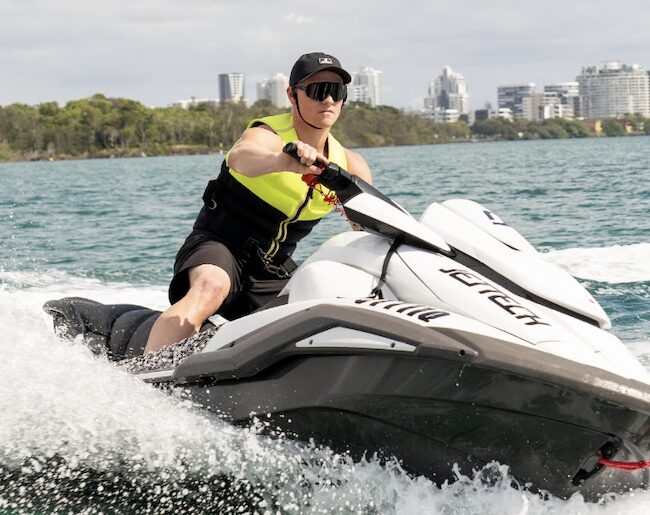
 On top of that, the Oceanguard Hat is water-repellent and fast-drying, making it ideal for anyone who spends time on the water. Whether you’re jet skiing, fishing, or just cruising along the coastline, you don’t have to worry about your hat getting soaked and staying that way for hours. The fast-drying material keeps you comfortable and ready for action.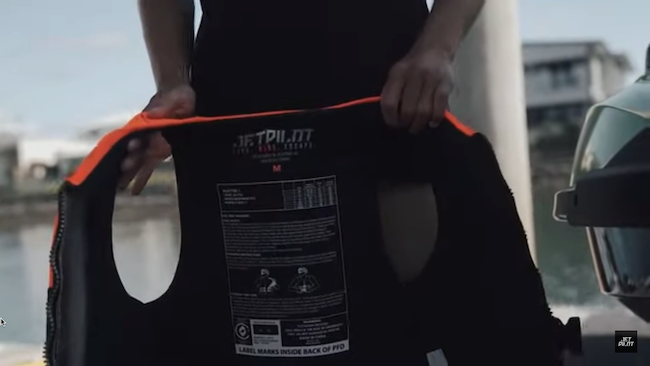
 If you’re looking for utility, comfort, fashion and durability at great deals, look no further than Greenhulk’s featured collection of
 Brisbane Kawasaki’s Big Splash Promo offers serious savings, with the price slashed to $17,565 and the promotional ride-away price at $25,247, not including trailer. With few details even posted yet, one thing that Is clear is that you aren’t going to find many who are as knowledgeable about this machine and what it offers. If you’ve been considering adding this Ultra to your motorsports collection – or starting that collection, Brisbane Kawasaki can walk you through each feature, benefit and advantage of the model. Check out the full listing below, and be sure to check out their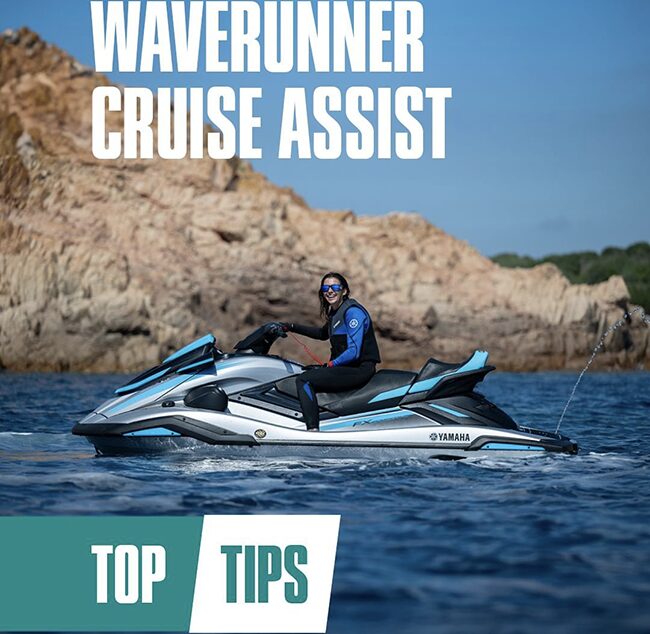
 The benefits of using Cruise Assist are pretty straightforward: it reduces fatigue, allows for better focus on your surroundings, and can even enhance fuel efficiency by maintaining a steady speed. Plus, it’s particularly useful for activities like fishing or leisurely rides, where you want to take it easy without constantly worrying about your speed.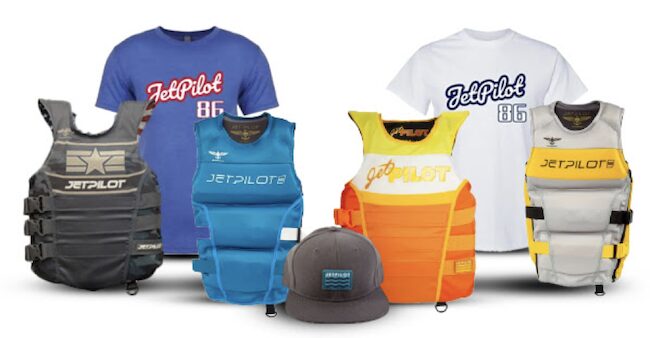
 In addition to these impressive discounts, RIVA Racing sweetens the deal with free shipping on all orders over $150 within the continental US. That means if you’re putting together your PWC essentials or replacing worn-out gear, you can save on both the products and delivery. It’s an ideal opportunity to get everything you need for next season without paying full price.