Hey guys. It’s your daring do-gooder Editor-in-Chief, Kevin here. I woke up this gray and wet Wednesday this the early signs of a headcold. The numb, slogging ache that comes with a winter’s chill. You know the type. And as I perused my morning feed of industry news, I couldn’t help but be drawn back to the same video I’ve had stowed in my “to do” file for over a year. Published way back in December of 2011, the content itself isn’t incredibly timely, but the action therein still resonates. Three years ago, Hurricane Irene pummeled the East Coast, pounding the northeastern shoreline with massive inky black swells, whipping winds and sheets of rain.
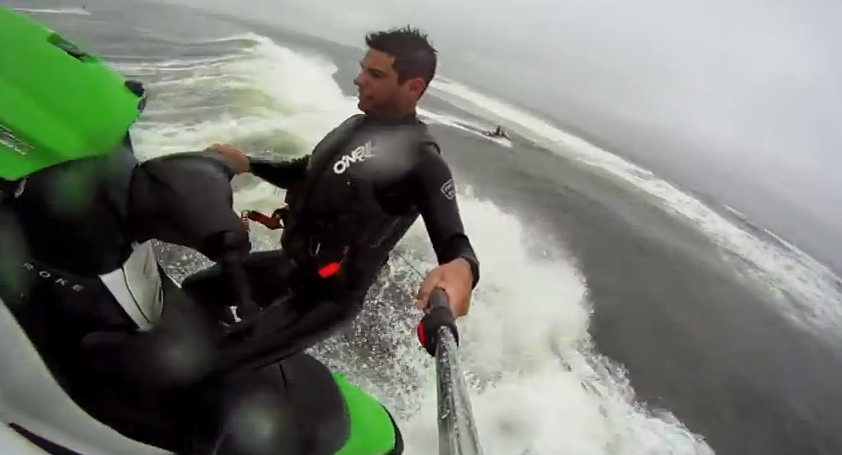
Y’know, the perfect weather to drag out the skis and go surf jumping in.
Below is a fun compilation of a few day’s rides, as a trio of friends – using two Kawasaki STX-15Fs and a Yamaha GP1200 – confront Mother Nature in all her fury off of Long Island. Interspersed between some pretty impressive one-handed head- and shoulder-high jumps is some great high speed footage blasting through the grassy wetlands nearby. Towards the end, the beating surf gets the best of the Yamaha, washing off the seat and swamping the engine compartment. The first STX comes to assist and also gets washed out before the second Kawasaki needs to come to the rescue.
With over half a million views, this video has definitely picked up some traction over the years, but again, sitting here loaded up on cold medicine and pushing back the desire to curl up back in bed, this fun video was something really fun that I wanted to share.
You read that right! This coming January 15-through-18, 2015 is the 2015 Thrust Innovations Daytona Daytona Freeride presented by Aquamoto, Watercraft Superstore, Super Freak Skis, Grand Seas Resort, Pro Rider Watercraft Magazine, ExoticSigns.com, Hydro Turf, Wamiltons Customs and Jet Renu!
According to a Facebook post by Nicholas Foederer, each day will have four EMT/Lifeguard/Active Volusia County Police Officers on site with a rescue ski ready to go, ensuring that participants and spectators will be kept safe and have emergency access.
According to Nicholas, the party start early on Thursday and lasts well in to Sunday evening. Below is the tentative schedule:
Thursday January 15: Gates on beach open around 6am as the event starts officially 9am. Riding starts at 9am and ends at 5pm (in coordination with the city noise ordinance). All vehicles, cars and trucks need to be off the beach 30 minutes before sunset (approximately 5:20pm). From there, the festivities will move to Mick’s Tavern for the meet and greet party, where attendees are invited to “party on the pool deck ’til whenever.”
Friday January 16: Gates on beach open around 6am with riding starting at 9am and ending at 5pm (noise ordinance). Again, all cars and trucks need to be off the beach 30 minutes before sunset.
Saturday January 17 (main event day): Gates on beach open around 6am (with parking availability on a first come-first serve basis). The riding schedule follows the same, beginning at 9am. Noon (12pm) starts the SBT/Watercraft Superstore sponsored lunch, with the Surf and Style competition beginning at 12:30pm.
The Aquamoto 3 class race (Sport, Standup Open, Vintage) starts at 2:30pm with all riding ending at 5pm. Stay around for the 6pm raffle. Again, all cars and trucks need to be off the beach a half hour before sunset (appox 5:20pm); city officials recommend you have them off before 5pm. An after party on pool deck will have sponsored drink specials.
Sunday January 18: The final day is much of the same with gates on beach open around 6am, riding beginning at 9am and ending at 5pm with all vehicles off the beach 30 minutes before sunset. The event officially ends at 5pm, but there will be the final party on pool deck ’til “whenever.”
And remember, if you can’t attend, The Watercraft Journal will be the only magazine attending to provide you our stellar full-length feature coverage (with a huge photo gallery) faster than anybody else. Y’know, like we always do.
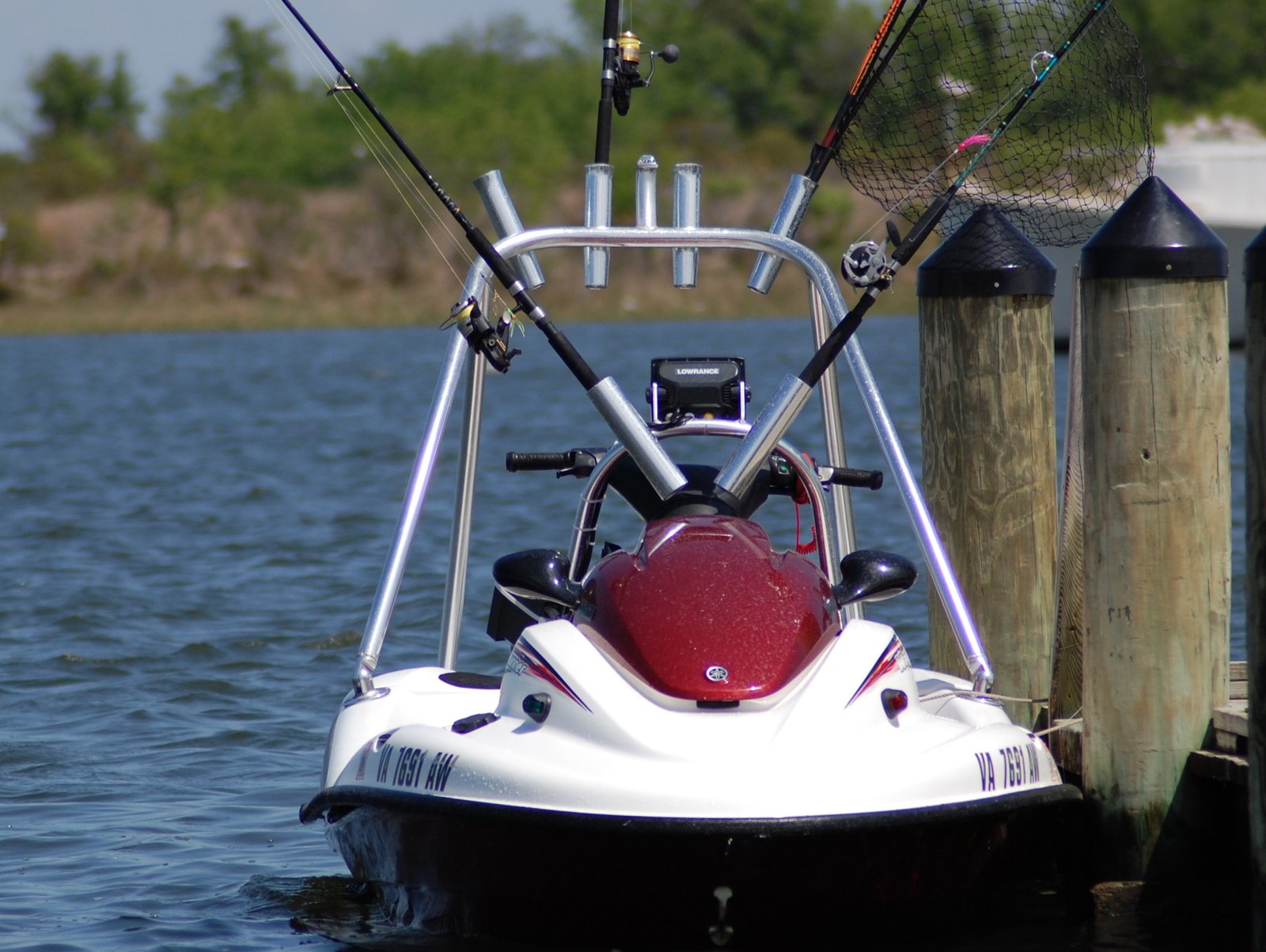
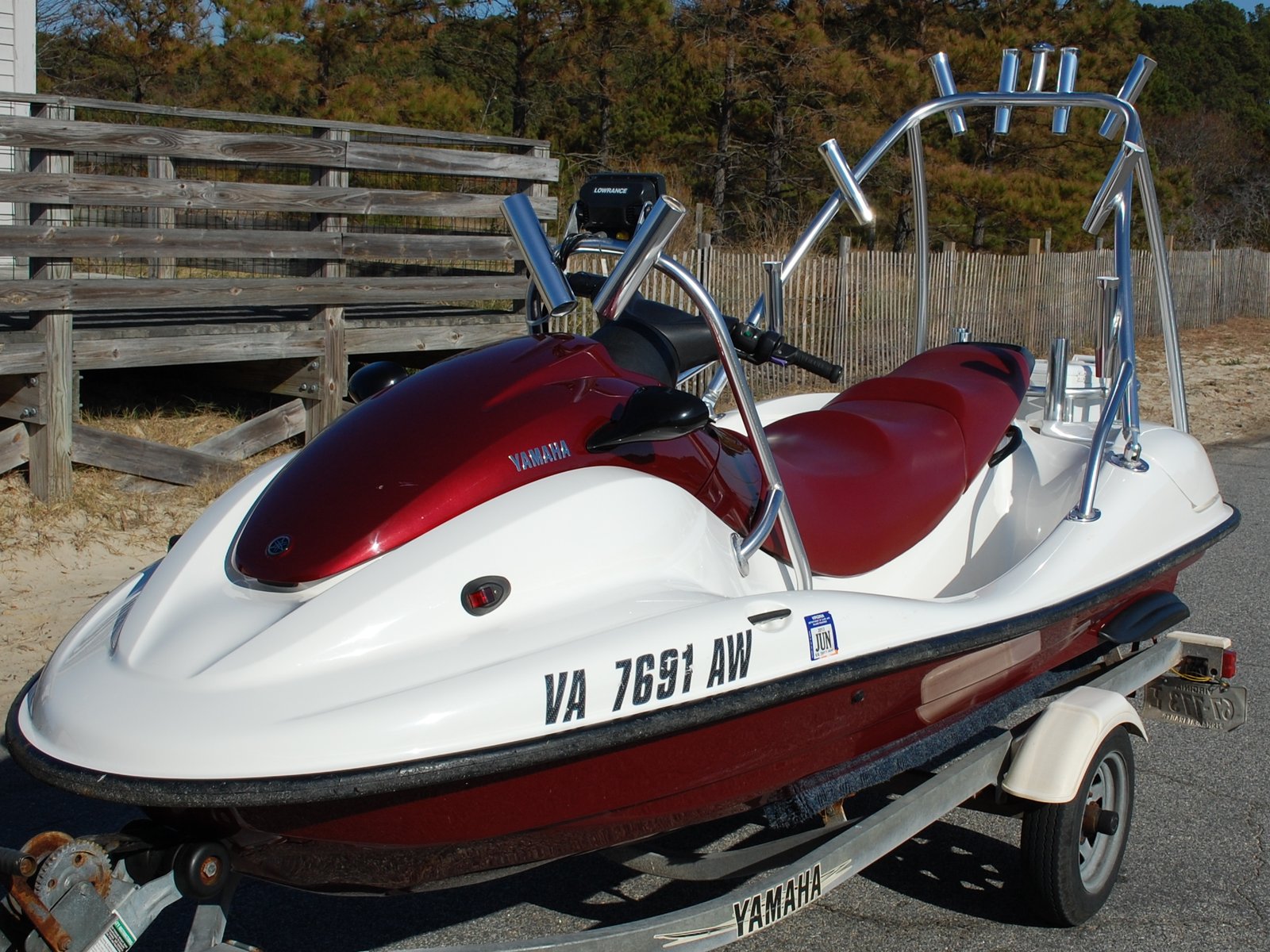
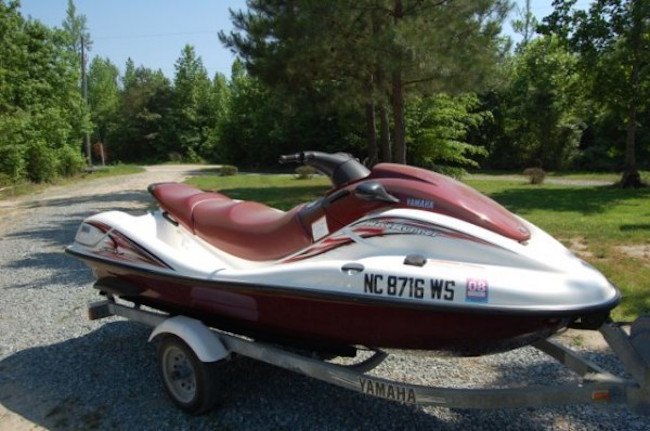
Out-rigging a personal watercraft for offshore fishing use isn’t as expensive as you might think, but then again, to do it right (and have it last), it takes more than a bunch of PVC pipe and contact cement. If you enjoy the subject of jet ski fishing, then you’ve probably seen this outfitted Yamaha SUV before. I often get questions about how I did it or how much it cost, so I thought I would do a post on the subject.
My brother recently purchased a used 2001 Yamaha SUV 1200 just like the one I’ve been using for a while. It wasn’t the most popular ski Yamaha produced, but the SUV is very stable, the engine is reliable and the extra storage comes in real handy. I rigged it up for him and took some pictures of the process as well.
First off, purchasing a used 2001 Yamaha SUV with 85 hours set us back $5,000. Next, we picked up some necessary navigational equipment, namely a chartplotter/sounder for $500 and a VHF radio and antenna for $180. We also grabbed an Optima gel battery ($150), and some marine grade hardware and wire connectors ($200) as well as some miscellaneous safety equipment (flares, mirror, compass, Spot GPS tracker, dye pack, whistle, air horn, life vest, personal strobe, anchor, rope and chain for around $500). Finally, we dropped the ski off for some custom pipe fabrication to hold our rod holders and cooler ($850).
All in all, we ended up with a pretty nice fishing ski for $7,380 give or take.
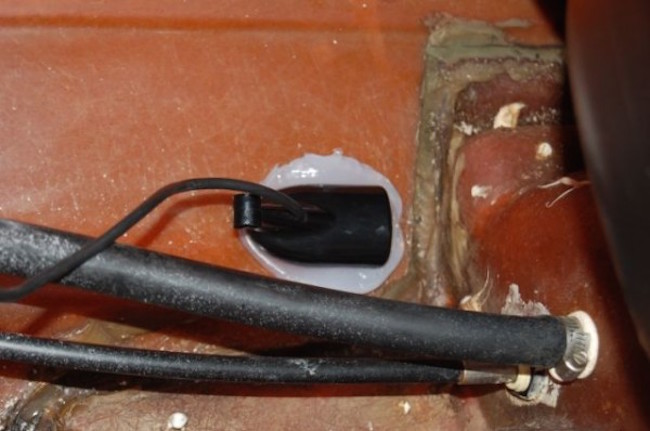
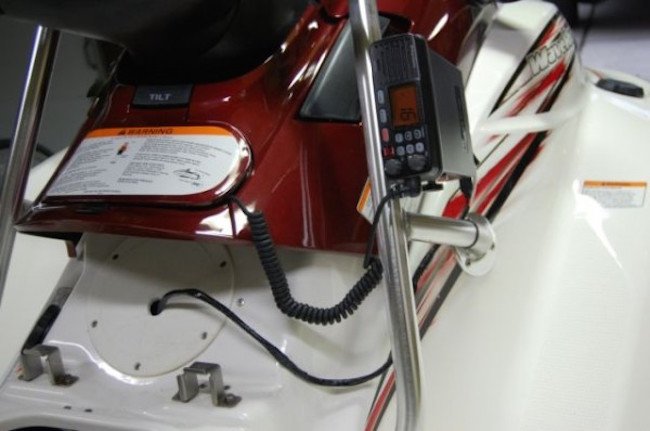
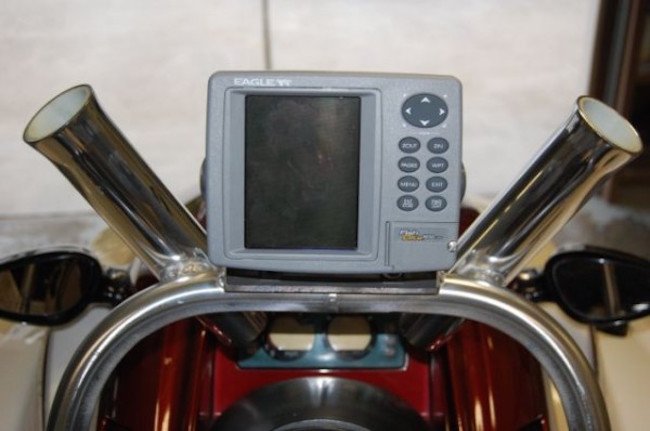
We searched out for a pretty clean 2001 Yamaha SUV 1200. With 85 hours on the clock, it was in pretty good condition for $5,000.Extra power is necessary to run all of the extra electronics we have on board. The Optima gel battery was secured in the rearward storage bin.We installed the sounder in the bottom of the SUV’s hull.Once our custom-fabricated rod holders were completed, we mounted the VHF radio and antenna to the ski.Finally, we mounted the GPS/chartplotter above the handlebars.Needless to say, my brother is very happy with how it turned out.
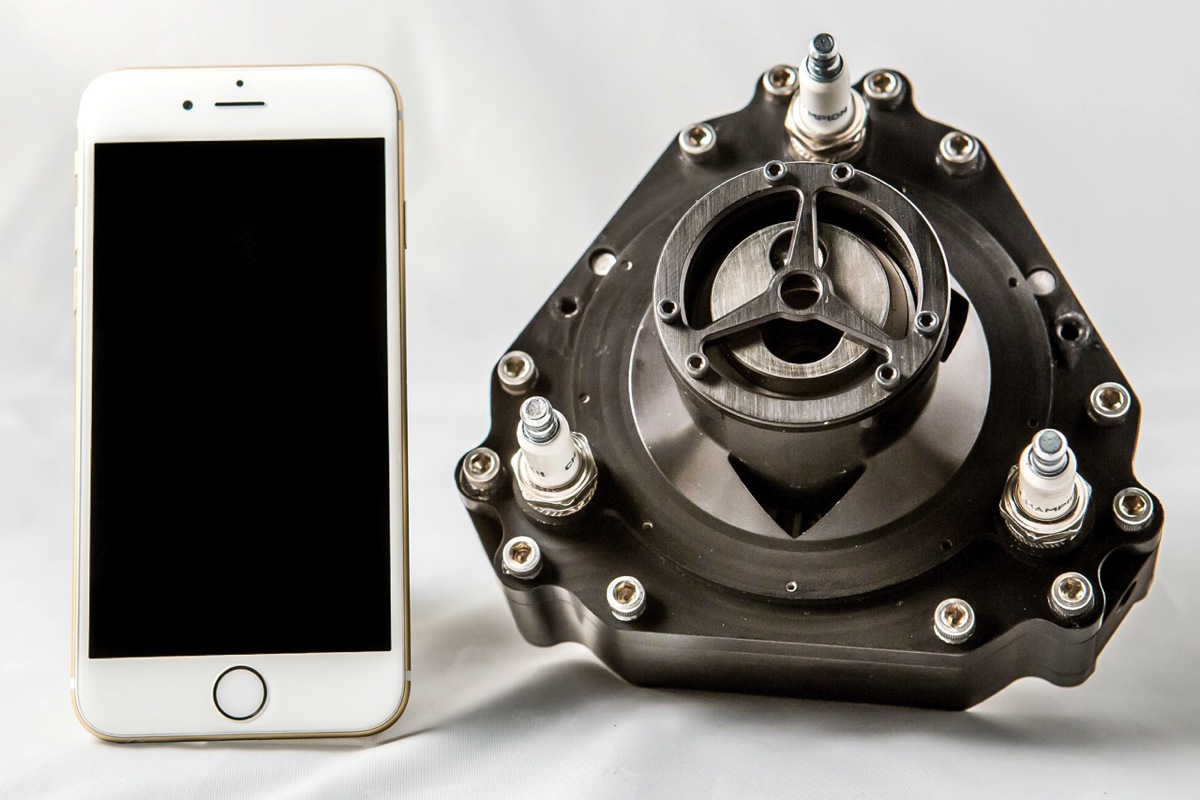
Yes, what you’re looking at is a real rotary engine that is just a little bit bigger than an iPhone. This innovative little 4-stroke motor can produce 5 horsepower at 10,000 rpm and do so with only two moving parts. Officially unveiled by LiquidPiston during November’s SAE International/JSAE 2014 Small Engine Technology Conference in Italy, the “X Mini” is the successor to the company’s initial four-pound prototype that expelled 3.5 horsepower at 10,000 rpm.
Unlike its predecessor, Liquid Piston says that once finalized, X Mini could spin 15,000 rpm making more than five horsepower while weighing only three pounds. “The X Mini is an incredible breakthrough, and we expect to further optimize the engine for increased power (greater than 5 horsepower) and efficiency, and even lower operational noise,” says Dr. Alexander Shkolnik, president and co-founder of LiquidPiston.
Shkolnik sites LiquidPiston’s patented thermodynamic cycle and engine architecture as its greatest asset. Although previous larger displacement engines from the company produced 40 and 70 horsepower, the X Mini employs a High Efficiency Hybrid Cycle (HEHC) that allows the engine to be equally effective as it is condense, making it ideal for small displacement markets like “lawn and garden equipment, small motorcycles, robotics, range extenders for hybrids, auxiliary power units and even unmanned aerial vehicles,” according to a report by EngineLabs.
It continues, “The HEHC technology is said to optimize fuel efficiency by combining the best features of four current automotive engine cycles: high compression ratio in diesel; constant volume combustion in Otto; over-expansion to atmospheric pressure in Atkinson; and internal cooling with air or water in Rankine.”
Although similar to a Wankel or rotary engine with three separate combustion chambers to create three power strokes per revolution, LiquidPiston stresses that the engine doesn’t operate identical to the aforementioned engines. A closer study of the video below shows how the design is distinguished from other rotaries. Of course, the X Mini doesn’t offer itself for major applications in the PWC market, but a larger 70-horsepower unit using the same advanced technology could prove very useful for aftermarket standup ski builders.
We’ve prefaced a previous Real Review with the same level of trepidation as this article will only speak to a very small percentage of our readers. As once stated by Greenhulk.net founder Jerry Gaddis, “I can safely say that 90 percent of the people on the forum have never once worn a helmet while riding a jet ski.” And he would be right; if not more so. Wearing a helmet, although a safe and practical practice, is almost entirely restricted to those who participate in the most extreme of riding, namely racing, freeride and freestyle competition.
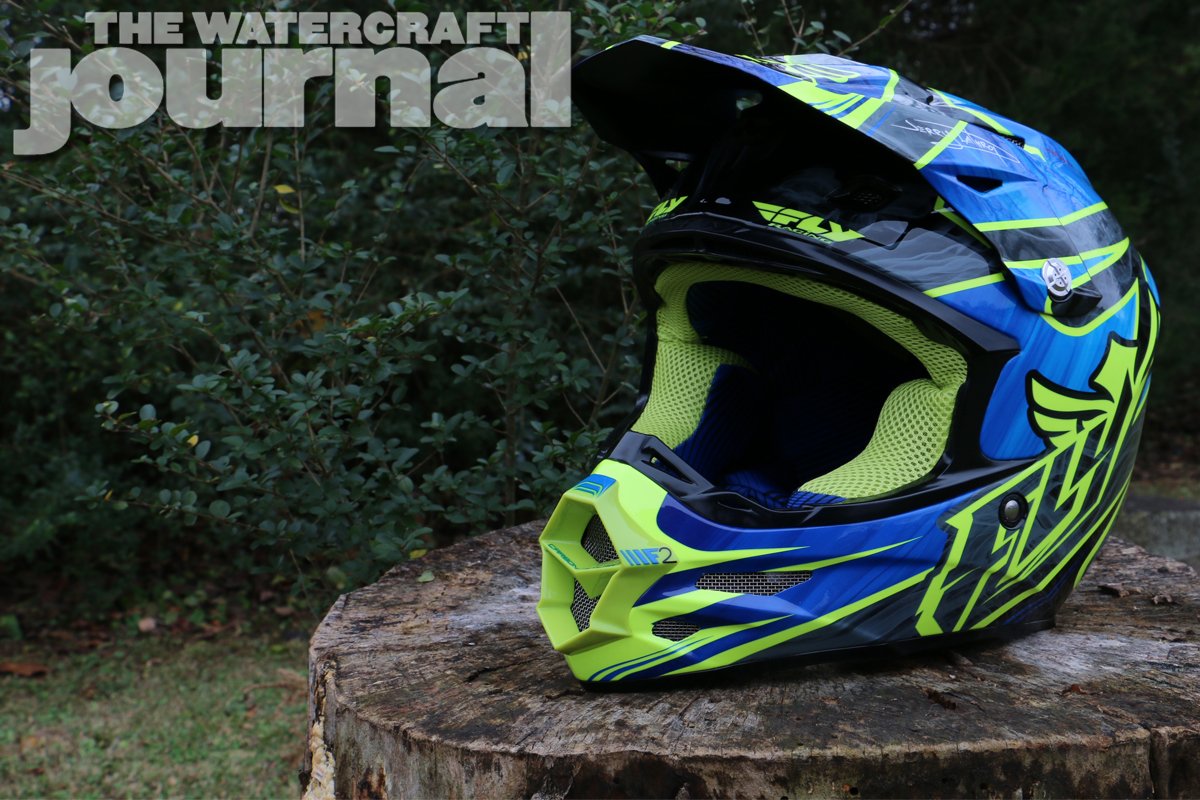
That being understood, we did feel that offering a review on such a product would serve an ancillary purpose, as many who ride personal watercraft also ride motorcycles – be them street or off-road bikes. All that being said, we were very honored to be provided a 2014 Fly Racing F2 Acetylene Helmet from our friends at Western Power Sports. Initially part of our Long Beach-to-Catalina Offshore Championship effort, Fly insisted that we “step up” to their stellar F2 Carbon series, as we had originally opted for a cheaper brain bucket.
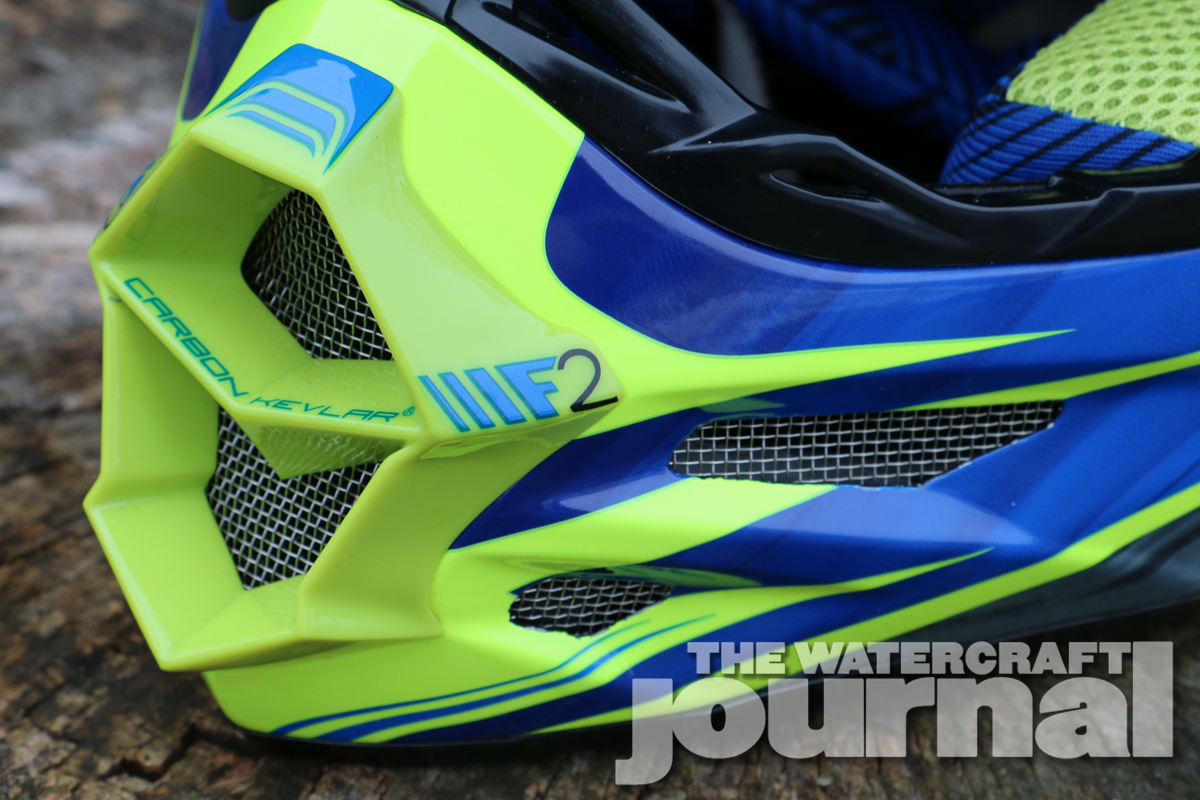
Of course, those familiar with Fly will no doubt know them for their unique and eye-catching styling, but the F2 not only incorporates race-inspired, lightweight helmet technology – through the use of the brand’s advanced Carbon/Kevlar Composite Construction Shell, wherein the outer shell is made using state-of-the-art, aircraft grade woven carbon fiber and Kevlar composite materials. In fact, the helmet is so durable that it meets or exceeds all SNELL M2010, DOT Approved For USA, ECE and AS (Australian) standards.
Inside, the F2 Carbon features a Dual Density EPS Liner, composed of two layers of EPS (Expanded Polystyrene) – one softer one slightly harder – that provides “more progressive impact absorption” for varying levels of impact. The list of safety features continue with custom-molded rubber trim meeting in a one-piece nose guard, designed with smooth, soft edges to shield debris away from the rider’s nose.
While we used our F2 Carbon Acetylene helmet for on-water riding, we were impressed how the Multi-Port Air Induction Cooling System (comprised of eleven intake and four exhaust vents) helped keep ventilation circulating while at speed or sitting still. Likewise, Fly’s three Tri-vent Goggle Anti-Fog Vents above goggle eye port worked well at drawing in air from goggles, effectively clearing away fog. Lastly, the Flow Through EPS And Comfort Liner Air System, made of EPS (Expanded Polystyrene) provided both a comfortable fit and allowed superior airflow.
Obviously, using a motocross-style helmet for waterborne riding lends itself to a few problems, the first being waterlogging. We’ve encountered helmets whose liners struggled to dry after a washing. Thankfully, the Fly Racing F2’s Quick Release Washable Comfort Liner and Cheek Pads is designed specifically for this purpose, allowing for the liner to be easily removed and cleaned out, reattaching with its quick-snap system.
The whole of the F2’s design is to maximize ventilation, which is perfect for watercraft use as any racer can attest to particularly when falling off of their ski. Allowing for water to drain quickly is a must, and we found that the F2 does so better than all other helmets we’ve used. When back to speed, the cheek pads quickly wick away water and sweat as the increased air circulation over the top and sides of our face dried our face immediately.
The large, open mouth inlet allows for easy breathing and the large goggle port helps fight back any feelings of claustrophobia (as many might feel in tighter, more confined helmets). And it weighing just under five pounds (thanks to the Carbon/Kevlar construction and lightweight aluminum hardware – ie. machined aluminum screws, rivets, and D-rings), makes it a perfect fit for high speed riding without the “bucketing” sensation that comes from heavier helmets.
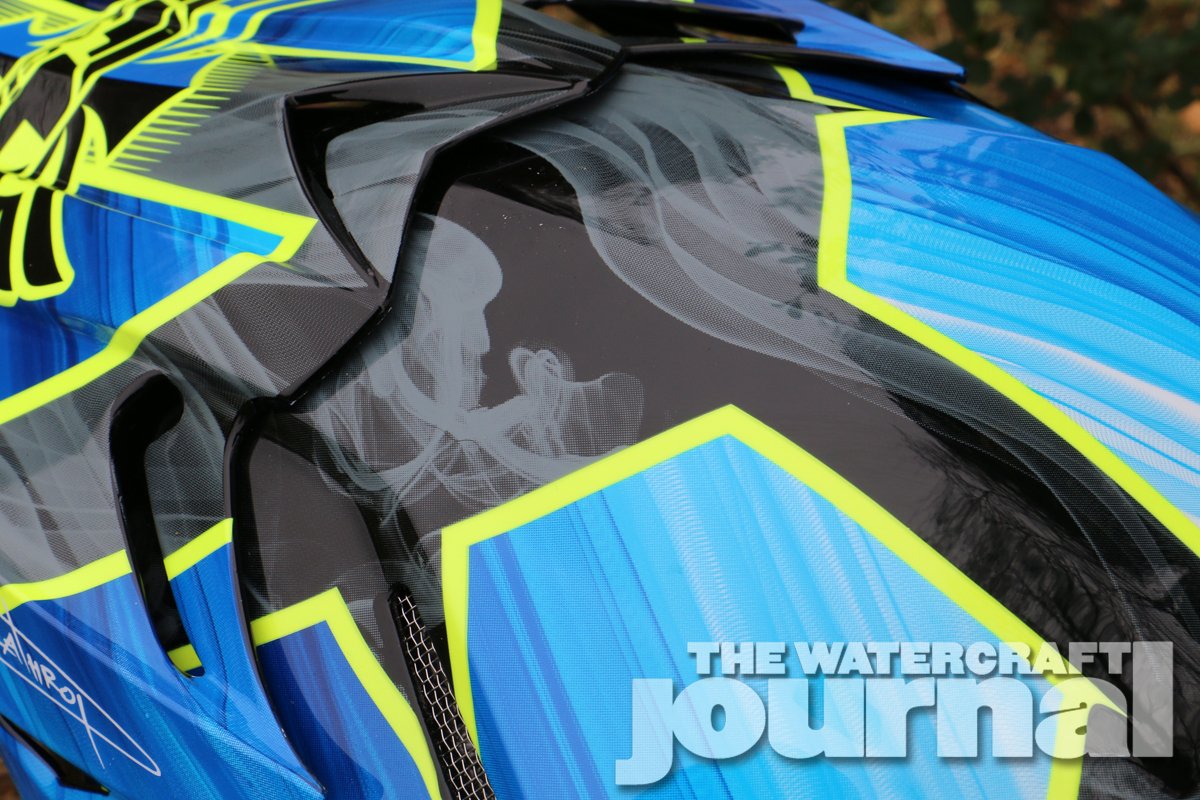
Priced at $319.95, the F2 Carbon Acetylene helmet is no small purchase, but in the realm of high speed, intense riding, protection and comfort are key to enjoying a long life of competition. On the surface, the F2 is simply beautiful in its design and will make you wonder if this wasn’t a hand-painted custom piece. Yet, as our moms always taught us, it’s what inside that counts, and Fly Racing has spare no expense to provide a solid, safe and lightweight helmet.
[Editor’s note – We recently had the chance to use our Fly Racing F2 Carbon Acetylene helmet during some brutally cold riding and were very impressed how it managed to keep our face both warm and well-ventilated. It’s clearly not its intended purposed, but again it was worth noting.]
We’ve seen no shortage of amphibian cars over the past 80 years (yes, it’s been that long). Some have looked more like boats with wheels, others have been full-blown luxury motorhomes, but nevertheless, these machines have fulfilled your dreams of driving up to the launch ramp and, well…just keep on driving into the water.
Possibly the most well executed of these amphibian autos only arrived a year ago and has surprised many by its ability to do both land and sea remarkably well. The Panther WaterCar, built by Fountain Valley Body Works – a company appropriately out of Fountain Valley, California – takes much of its styling cues from the traditional Jeep Wrangler, but that’s about it.
The Panther’s powertrain is an Acura 3.7L VTEC V6 engine. Rated at an impressive 305 horsepower, the aluminum engine features single-overhead camshaft cylinder heads and 24 valves, each controlled by Acura’s Variable Valve Timing & Lift Electronic Control (VTEC) management software.
Backing the WaterCar is a patented transfer case using a set of Winter’s Quick Change gears and components, and a model 091 VW Vanagon bus transaxle. Amazingly, the Panther can speed up to 80-plus-mph on the road and 40-plus-mph on the water! With all that grunt, the Panther is suddenly a prime candidate for wakeboarding, tubing, or towing skiers.
But wait, there’s more! The Panther can also hold its own in the sand! The lightweight chromoly chassis is stout and can handle some duning, but the Panther has no rear-wheel drive, so drive conservatively. Likewise, the developers recommend entering the water no faster than 15mph.
Now don’t expect to pick up your new toy tomorrow. All Panthers are individually built and priced to order. In highest trim setting the Panther WaterCar comes in with a hefty $155,000 price tag. But hey, it runs on 91-octane gasoline, so that’s something. Right?
If you’re looking to not only improve your game as a professional jet ski racer, freerider or freestyle rider, then it’s all about getting some sponsorships. Sure, sponsorships can score you some sweet swag and deals on gear and equipment, but the bigger picture is getting yourself in front of hundreds – if not thousands – of people who you never had access to before.
And as fate would have it, one of the biggest names in all of personal watercraft is taking applications for 2015. Hydro-Turf the industry leader in performance traction mats and seat covers recently announced it has begun accepting applications for racers looking to join the ranks of some of the biggest names in all of professional jet skiing.
Starting now and running all the way until January 31st, Hydro-Turf will be reviewing resumes (details below) and hand-picking those persons who not only approach this opportunity with professionalism and tact, but show the most promise in properly representing Hydro-Turf while competing throughout the new year.
All resumes must include the following:
Full name
Complete mailing address
Phone & email address
Region you race in
All skis used in competition
What classes you will compete in 2015
Events you will or plan to compete in for 2015 season
Race History
All media exposure you have had (supply pictures or articles)
Hydro-Turf’s Mike Bolin states, “If you were sponsored last year you must submit competition plans for the 2015 season in order to be sponsored this year. If you have any questions please let me know.” You can reach Mike directly at [email protected], or send by mail to:
Hydro-Turf
Attn: Sponsorship Program
1367 S Lewis St.
Anaheim, CA 92805
Seeing that last week’s “Flashback Friday” was so popular and it’s Thanksgiving here in the States (meaning get off your computer/phone/tablet and spend some time with the family, why don’t ya?), we thought we’d toss out another Throwback Thursday post that should warm the cockles of your vintage ski-loving heart; namely this great old school footage from ESPN 2’s coverage of the 1998 IJSBA Nielsen National Finals on the shores of Lake Michigan in Zion, Illinois.
Documenting the conclusion of the 1998 Big Red IJSBA National Tour, this video picks up with the conclusion of the Pro Runabout class where Nicolas “The Fighter” Rius bested Chris “Macc” MacClugage. Next in line is the Pro Ski class, where Yamaha racers Jeff Jacobs and Chris “Fish” Fischetti are in the points running to best current pack leader and Kawasaki rider Victor Sheldon.
That’s a lot of big names right there and we’re telling ya, it’s worth watching every minute of the Pro Ski bout as both Jacobs and Sheldon rise from the back of the pack to the front with Jacobs taking the win for weekend’s racing but Sheldon leg-dragging his way to the National Championship title. Seeing these two stellar racers battle it out for Yamaha and Kawasaki respectively is enough to make you want to shake off the cold and get out and ride.
But wait, there’s more! Make sure to hang out for the very end where a very young and very peroxide blonde Dustin Farthing is interviewed chatting up the Sea-Doo prize purse. We look forward to a renewed National Tour for 2015 and hope to see venues like Lake Michigan open up again. Until then, enjoy the video below:
Listen, we’re harped on you to get insurance for your personal watercraft for a while now. Like wearing a lifevest, riding without insurance (or even keeping it in winter storage) is taking a big chance that simply, you cannot afford to risk. Thankfully, there are many of you who already maintain some level of protective coverage for your PWC, and some who have heeded our words and reached out to your insurance provider.
But here’s the rub: not all watercraft insurance is created equal. While the same insurance company who covers your home or automobile might offer powersports insurance doesn’t mean they have the level of coverage that’ll actually help you. That’s why we advocate looking into McGraw Powersports Group (MPG). The crew at McGraw are actual enthusiasts of powersports vehicles and actively ride and recreate.
The video below was produced for Pacific Specialty, the parent company for MPG. Featuring a “suite of powersports insurance products that provide genuine protection for riders, whether that be a motorcycle, ATV, watercraft, boat, RV, travel trailer or other gas powered toy,” McGraw and Pacific Specialty have been in the industry since 1976 and have accrued a great deal of experience and know-how in insuring and processing claims on motorcycles and powersport vehicles.
“In fact,” Pacific Specialty writes, “motorcycle insurance was the first product we actually wrote. This isn’t car insurance dressed up in a leather jacket — we were purposely built as a company to insure powersports. Our products are designed to provide the coverage you need and not a lot of extra stuff. We want to get you back out on the street, back out on the dirt, back out on the water.”
Get more information on all of powersports products, visit HERE.
It’s a small point of pride that we at The Watercraft Journal have that we only do our product reviews on items that we actually get our hands on. Be it our monthly personal watercraft reviews or write-ups on the various bits of riding apparel or various products, you can rest assured that what we’re writing about has been in our hands long enough to warrant a full-length review. Earlier in the year, we got our hands on a whole bunch of JetPilot gear and have been logically spacing them out to give us the most time possible.
Today’s review of Jetpilot’s Flight Lace Up Race Boot has been a long time coming, but we really wanted to beat on these all season long before publishing a review. Right off the bat, we need to address one major misnomer: these are not boots. These are shoes. Boots by definition lace high up over the ankle, offering some joint support. When compared to other brands’ boots, the lack of ankle support of the Flight boot is a little disappointing.
A neat feature is the molded heel bumper, which makes removing the boot slightly easier.
Although the Flight Race Boots end just above the ankle, there’s little to no ankle support to be found. Rather, the laces tie up at the joint, with a 2mm blind stitched bootie acting as a water sock, pulling high up the ankle. The bootie is smartly shaped and comfortable, and as with all JetPilot products we’ve tested, are made from a superior material that allows maximum breathability without being thin or cheap.
But we’ve found that’s par for the course with JetPilot. The use of excellent materials and top-of-the-class molding makes the Flight Boot a win. Made with what is dubbed “Hydro-flow” mesh, the upper half of the shoe drains water fast for fantastic drying. The sole is thick and padded with gecko-like traction (that JetPilot hilariously names “posi-traction,” which should make any hot rodders giggle a little), and features a heel bumper for easy removal, but we found it worked best when resting your feet up high in the footwell.
Some riders have reported the molded hook breaking off after extended use. Ours remained intact but we did encounter some binding issues around the ankle.
Admittedly, we struggled our first few times with the Flight’s nylon hook and eyelet lacing setup. The boot doesn’t have a traditional tongue like most, so in lacing the boot we experienced an uncomfortable binding and wadding around the ankle. It wasn’t until we gave in and literally looked up pictures on JetPilot’s catalog did we realize we were lacing the boot incorrectly. Although JetPilot coins the Flight as their “ultimate” in racing footwear, we recall previous iterations that featured higher lacing and an ankle strap.
Priced at $55.99, the JetPilot Race Lace Up Boot is equal in price – if not surprisingly more competitive – than others on the market. Again, it’s comfortable as your favorite pair of jeans, durable as an old pickup truck and a great piece of riding gear, but as aggressive riding of any form requires said ankle support, we found the Flight to be a great riding shoe, but not the “ultimate” race boot they described.
Although the Flight Lace Up Race Boots are comfortable, well-made and offer great traction, they lacked the ankle support that we expect from higher-laced boots.