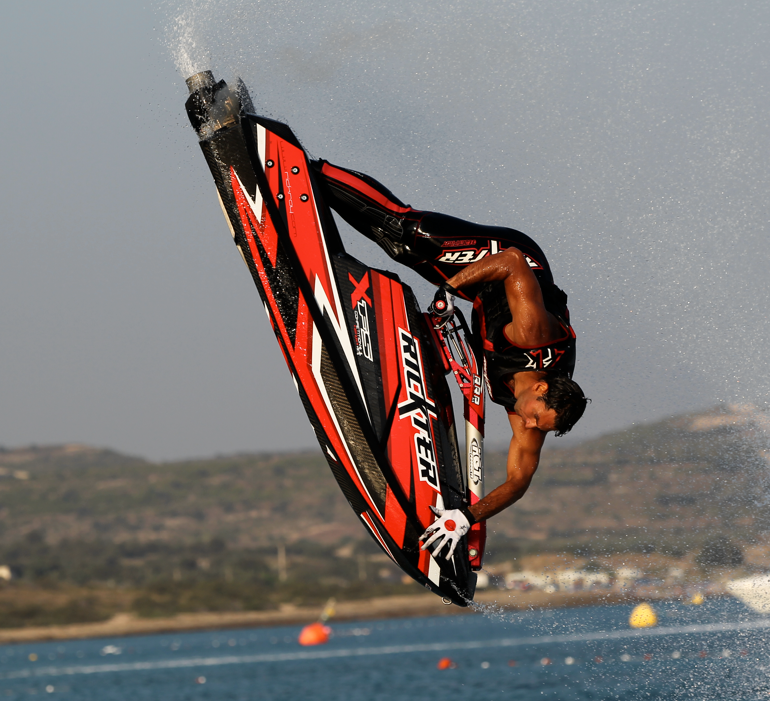
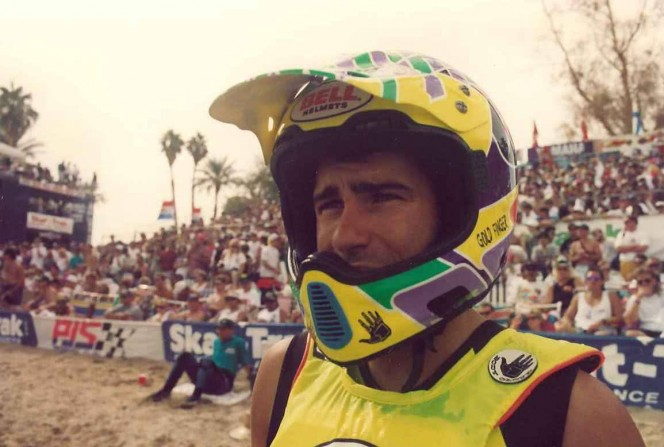
Montreal, Canada’s favorite freestyle son, Rick Roy continues to dominate the world of professional freestyle but from a completely different vantage point. The four-time World Pro Freestyle champion (between 1996 through 1998), and four-time US National Pro Freestyle champ has come a long way since his pioneering barrel roll and back flip on stand up. As the captain behind Rick Roy Products (RRP), Roy has been instrumental in elevating the excitement and athleticism of freestyle and freeride worldwide.
Evolving from signature handlepoles and lightweight billet components, RRP has expanded into mass producing professional-grade hulls through its Rickter line. For 2015, Rickter’s redesigned XFS Ninja and XFS Ninja Competition hulls are designed for the hardest of hard core flat water freestyle riders. The Ninja hull is shorter and wider for increased stability and added maneuverability. A lower tray positions the rider’s feet lower in the ski, literally flanking the pump, which lowers the ski’s center of gravity.
The engine has been pushed back, centralizing the weight closer to the rider effectively improving the ski’s speed of rotation while executing tricks. Redesigned rails improve cornering while an all-new intake design is “longer, wider, and deeper resulting in better hook up. The pump is also set back allowing it to be connected to the water longer during jumps. This intake design will accept 144mm, 155mm and larger pumps.”
Likewise, an all-new adjustable binding system allows the rider to “adjust the lift of the the nose by moving the riding position forward or back. The further back you are the more lift you will get. The option to ride with feet in the front for surf riding is a big advantage over other freestyle hulls and makes it easier for novice and intermediate riders.”
Available in either 100-percent carbon fiber, a carbon look or fiberglass black base, the XFS Ninja hulls will accept all Yamaha SuperJet mechanical parts, making it easily compatible with existing SuperJet components (except for ’08-up units need to replace the driveshaft with previous models).
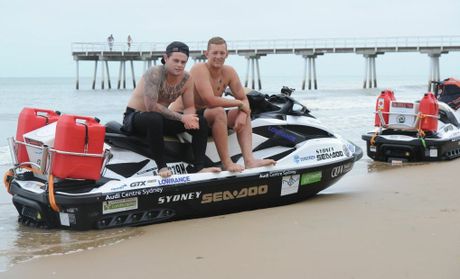
Two Australian lifeguards – Trent “Maxi” Maxwell, and Jesse Pollock – have participated in the retrieval of a dozen bodies from Bondi Beach’s notorious “Gap” cliff face not far from the main beach. Sadly, each of these deaths were of victims – all under the age of 30 – of suicide. In fact, suicide rates continue to grow in Australia for youths, accounting for the single-largest cause of death. Amazingly, 30-percent of youths aged between 12-to-25 have admitted to contemplating suicide.
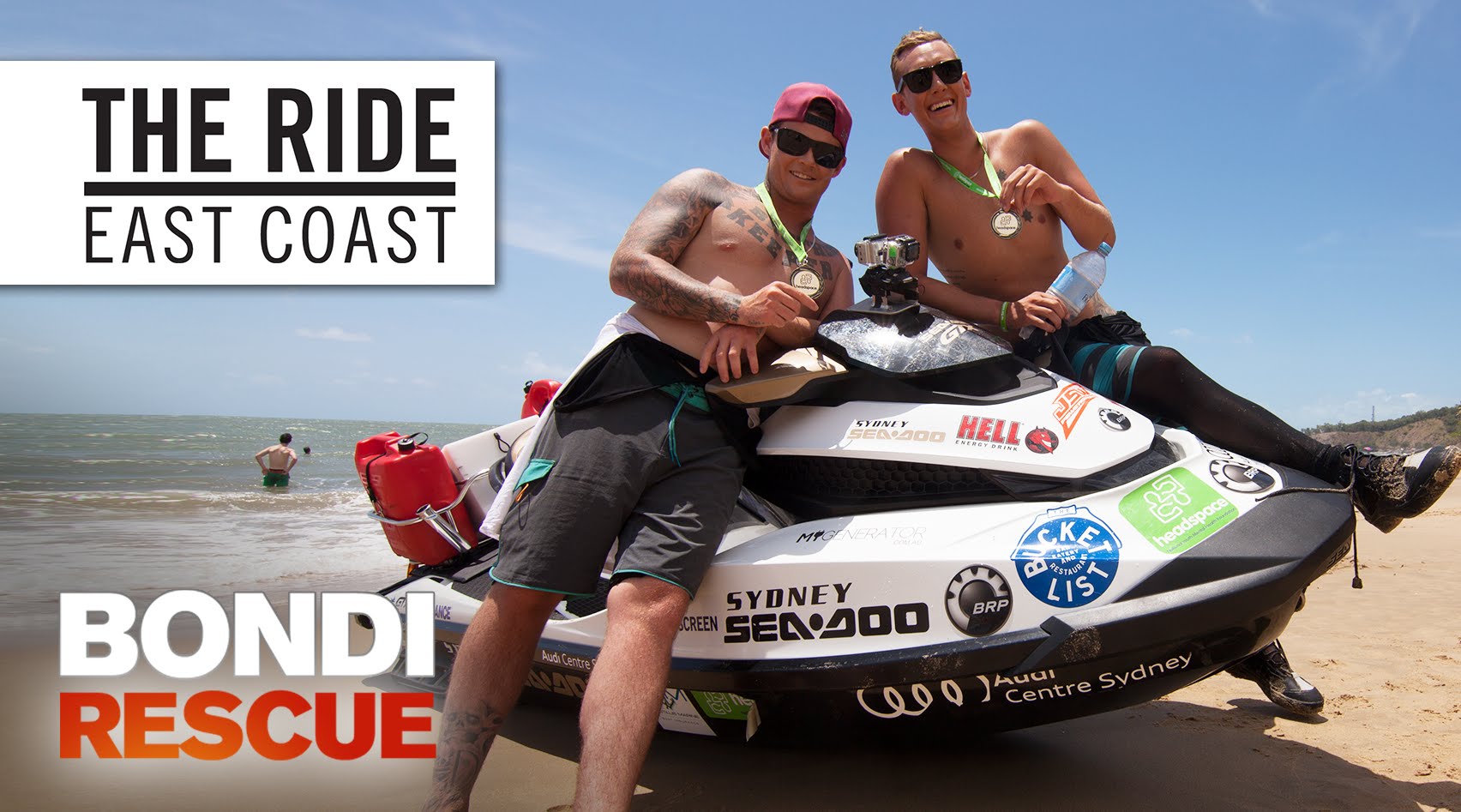
Only weeks before filming, Jesse lost one of his own friends to suicide. Wanting to help prevent more unnecessary deaths and “send the message to young people that it’s OK to seek help,” the two embarked on a grueling 2,500km (1,550-mile) open ocean ride on jet skis. Earlier last year, a crowd sourcing effort was launched to raise $100,000 to fund the project. With only a few weeks remaining, the two hit their goal and generated over $105,000.
Looking to help raise awareness of the mental health charity Headspace, the duo created a great web series documenting their journey from Bondi (Sydney) to Cairns over 16 days of riding. According to the show, “Throughout their trip, Maxi and Jesse will visit various Headspace Centres along the coast to meet people that have been affected by suicide. They’ll share their personal stories and try to give people a laugh and a taste of their adventure.”
Those of The Watercraft Journal’s Australian readers might recognize Maxi and Jesse from the popular Bondi Rescue web series focusing on the lifeguards of one of Australia’s most popular beaches. Below we’ve included each of the 14 episodes (which will play in succession) because who really wants to get any work done today anyways?
We can always count on the crew from Queensland, Australia’s JetSkiShop.com to provide some fun, top notch video footage from their weekly exploits (seriously, when are these guys actually working?). Recently, the JSS team were preparing for another weekend edition of their “Breakfast Club” rides by trying out some new toys for everyone to enjoy.
One toy in particular was JetPilot’s new Slingshot Towable. Although not entirely revolutionized for the new year, the two-seater raft does feature a very cool GoPro mounting point that also is adaptable for all POV cameras available today. Made from a heavy gauge PVC bladder wrapped in an equally heavy-duty full nylon cover with zipper, the Slingshot features thick double-webbing foam handles with padded knuckle guards, pull-up straps for easy re-boarding, and a self-bailing drain vent.
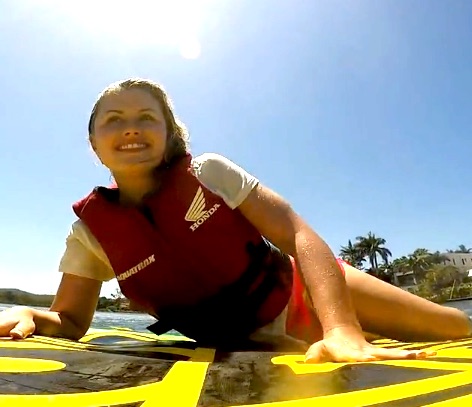
With two very fetching models as the weekend’s guinea pigs, JetSkiShop’s James Tod did his best to whip the two girls loose of the raft through some pretty wicked handling. Thankfully, the Slingshot’s reinforced, quick connect tow hook held up to the challenge a whole heck of a lot better than the models’ grip on the raft. There’s a bit more footage expected to come out of this past weekend’s product testing but we wanted to pass along this fun film reel as we’ve all experienced the blend of elation, exhaustion and sheer terror at being on the tail end of the whip.
We’re not the types to sit around and pine for the “glory days,” but there’s something to be said when regional promoters put on full season schedules of heart-pounding races, all building up to a National Tour showdown, culminating in only the cream of the crop being permitted to race in the annual IJBSA World Finals. Not to mention the massive presence of big name race teams, sponsors and media outlets at nearly every stop.
We eyed this great bit of throwback fun over at WMF Watercraft’s website that should crank up the nostalgia for you too. You might be wondering, “What is WMF doing with a bunch of vintage racing videos on their site?” and you’d be interested to know that WMF Watercraft is one of the nation’s biggest RIVA Racing performance parts dealers as well as staffed with some of the best-trained technicians cranking out custom-built buoy burners for clients all year ’round.
So how about that video, you ask. A promotional reel for the RIVA Racing Team, the video is spliced together from awesome ESPN 2 highlights from the 1994 Bud Jet Sports Tour featuring some very familiar names: specifically Tim Judge, Rob Flores and Lloyd Burlew. Now you might know them for their current vocations, but back 21 years ago, we see as a very youthful Tim Judge takes the checkers in Pro Sport class, Lloyd Burlew wow audiences with some stellar freestyle trickery (including a very impressive handstand), and some very exciting footage of then-rookie Rob Flores aboard his signature bright yellow Yamaha SuperJet grabbing his first National Championship – making him the first rookie to win in five years.
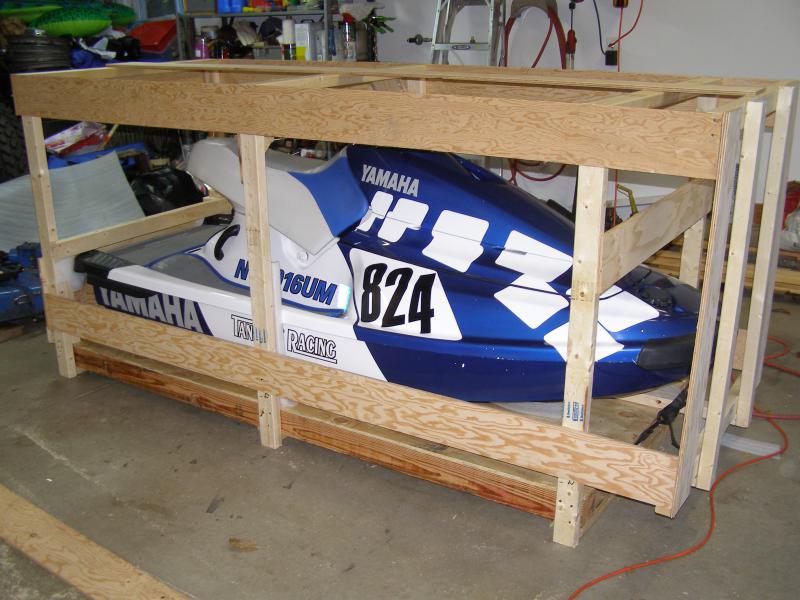
For some, the cost of hauling their prized machine across half a continent (or even beyond) far outweighs that of crating it up and shipping it. Racers constantly box up their racecraft, loading them up in the back of a cargo container and meet them at a designated shop, dealership or depository. We know many adventurous PWC enthusiasts who regularly ship their skis several states over as they fly a day or two later to their desired group ride destination. The idea might sound alien to some, but the practice is more common than you think.
And there’s one guy who’s been doing it for more big names in the personal watercraft sport than anybody else. Unishippers’ own John Carter has been working from his Wichita, Kansas headquarters shipping PWC all over the continental United States and beyond. From bulk orders from aftermarket hubs like RIVA Racing and Jerry Gaddis’ PWCPerformance.com, to specialty crate motors and custom hulls, all the way to cross-country new unit sales and full-blown race-ready machines, he gets them loaded and safely shipped where they need to be.
But that’s his job, after all. Simply call (316-943-1468) or email John (at wichita@unishippers) and he’ll create a complete, individualized shipping solution that will save you time, trouble and money, because one size definitely doesn’t fit all, and John is more than happy to tailor a solution for your needs. Whether you need same day, overnight, and next day shipping through Unishippers’ relationship with UPS, or express, ground and international, all the way to heavy freight, John can provide you with a wide range of shipping options.
As it stands, the world’s fastest personal watercraft holds the record at 112 miles per hour. That number has yet to be officially repeated since Maikel Gonzales’ epic run this past July. Emboldening all of those in contention for the Speed Alley championship, Gonzales record run effectively painted a large red target on the drag racer’s back. Replicating that kind of speed requires the perfect blend of power-to-weigh-to-hull design and many feel they have what it takes to challenge Gonzales’ “Blue Zone” conversion ski.
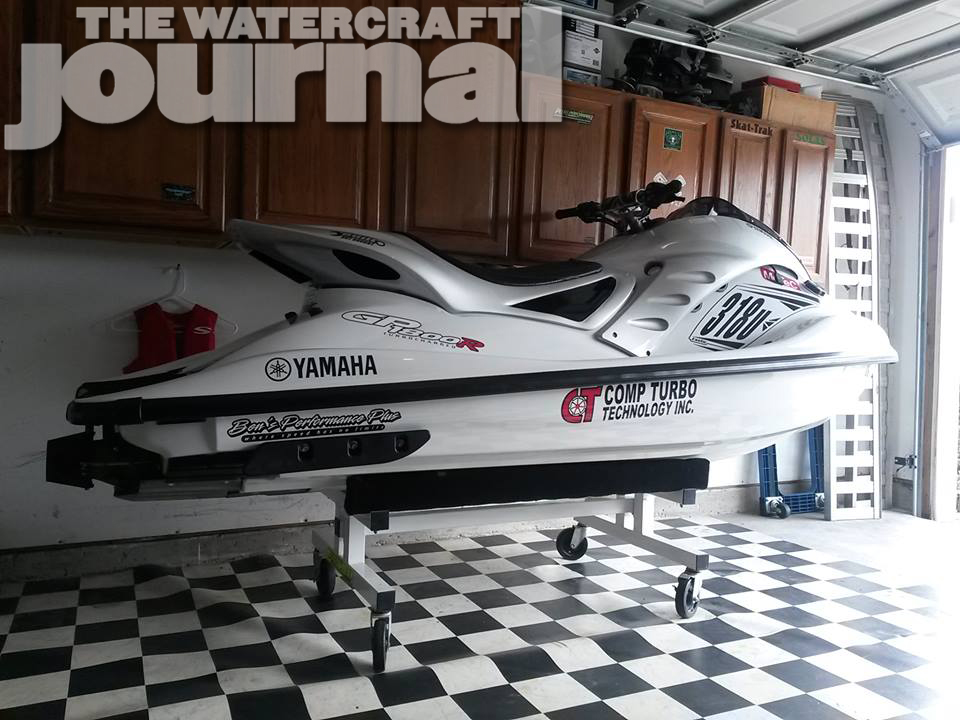
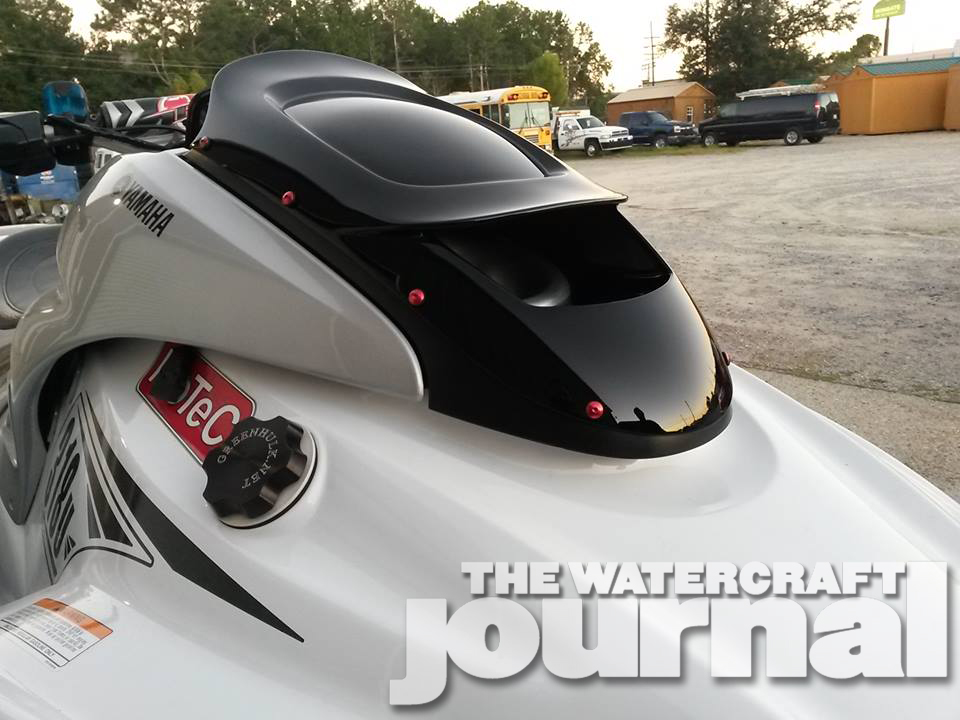
One such machine stands out among the others, as it breaks away from the conventional Yamaha GP1300R hull-and-Rotax 4-tec 3-cylinder combination. Slidell, Louisiana’s Keith Salles‘ original plan was far removed from his final result, but the journey to a SHO-powered GPR capable of 107-plus-miles per hour is a tale all unto itself.
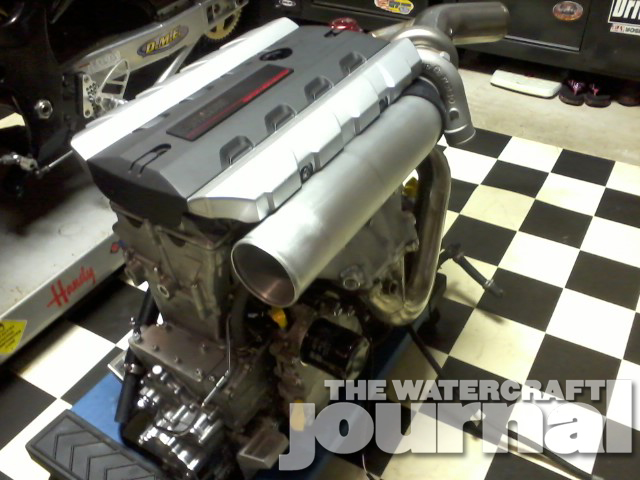
Procuring a Super High Output Yamaha engine was the easiest part of the build. Hours of customization when into making this SHO a turbo-powered beast capable of triple-digit speeds.
“I purchased the ski from a warehouse where it was stored and covered up on a pallet for approximately 7 or 8 years,” Salles began. “We had initially set the ski up with a stock motor and aftermarket supercharger impeller, our custom intercooler, a V-Tech ECU flash as well as miscellaneous other things and the ski ran 96mph on the GPS. After this, we wanted to step it up considerable so we built a custom turbo setup and had the motor fully built.”
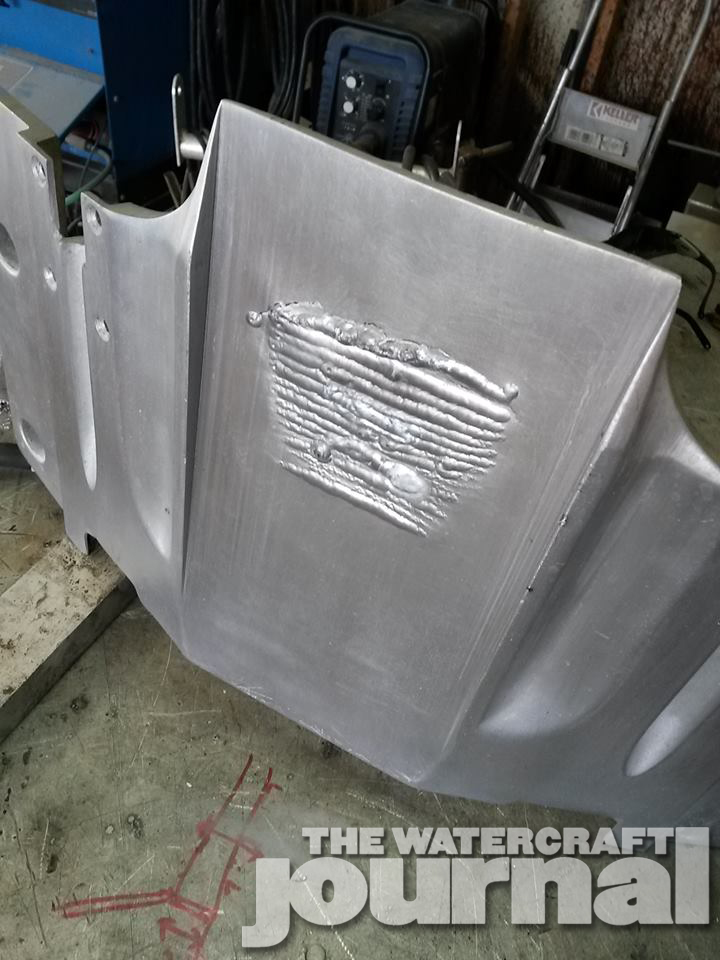
Prior to deciding on the big displacement 1.8-liter Yamaha SHO motor, Salles sought about perfecting the hull for such high speeds. “I brought the hull to Ben Herman of Ben’s Performance Plus in Jackson, Mississippi. He’s known for building some of the world’s fastest two-stroke GPR skis. He basically set the hull up for me which included setting the shoe to his custom specs, installing a stainless steel GP800 intake grate with upgraded billet mounting bosses, installed a pump tunnel reinforcement, which is needed at the higher speeds the ski is capable of. He basically prepped the hull and made it safe at speeds at or over 100mph.”
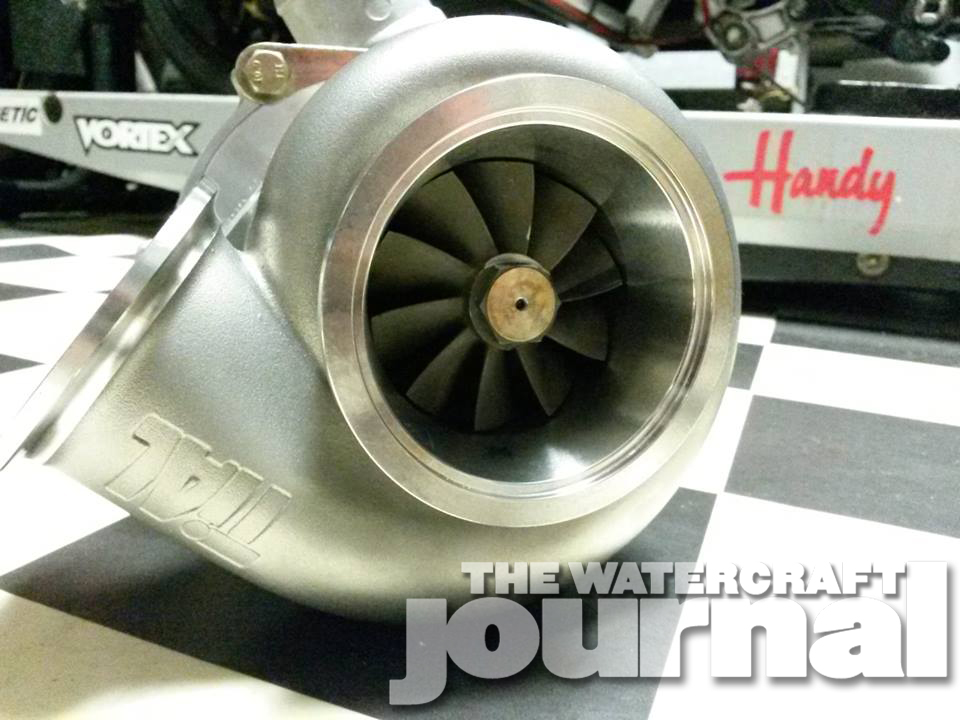
A series of specially-crafted parts were needed for the turbo package, and Comp Turbo Technology was reached for custom components when required.
The engine was sent off to Brad Mattei of Mattei’s Cycle Supply in New Orleans East, Louisiana. Salles said, “Brad is also a long time friend of mine who has been with me for years in the sport bike drag racing scene. He has been my crew chief for years and has been a motorcycle mechanic and engine builder his whole life, specializing in late model four-stroke 4-cylinder motors.”
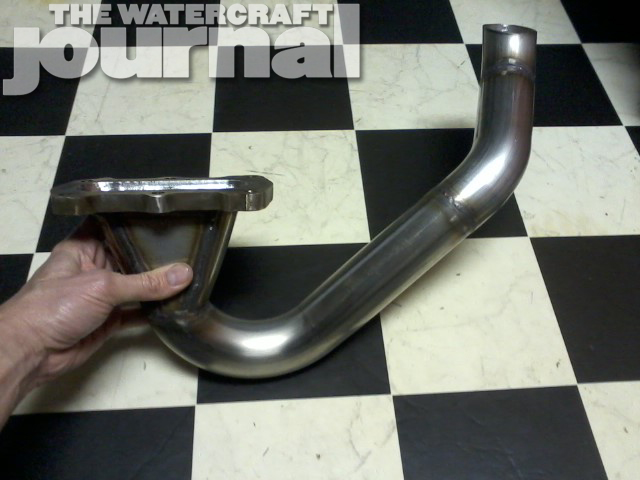
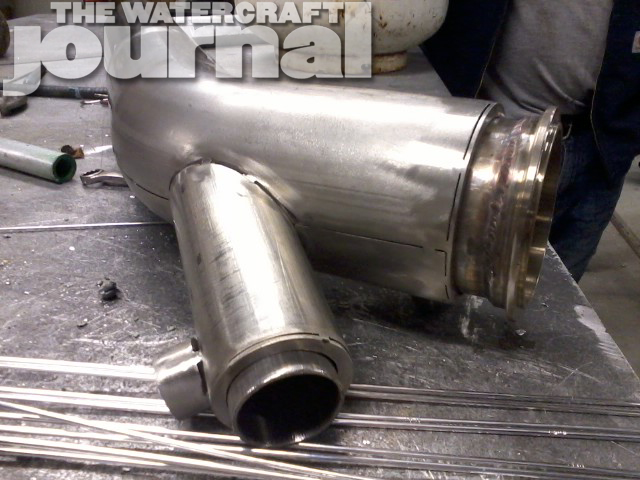
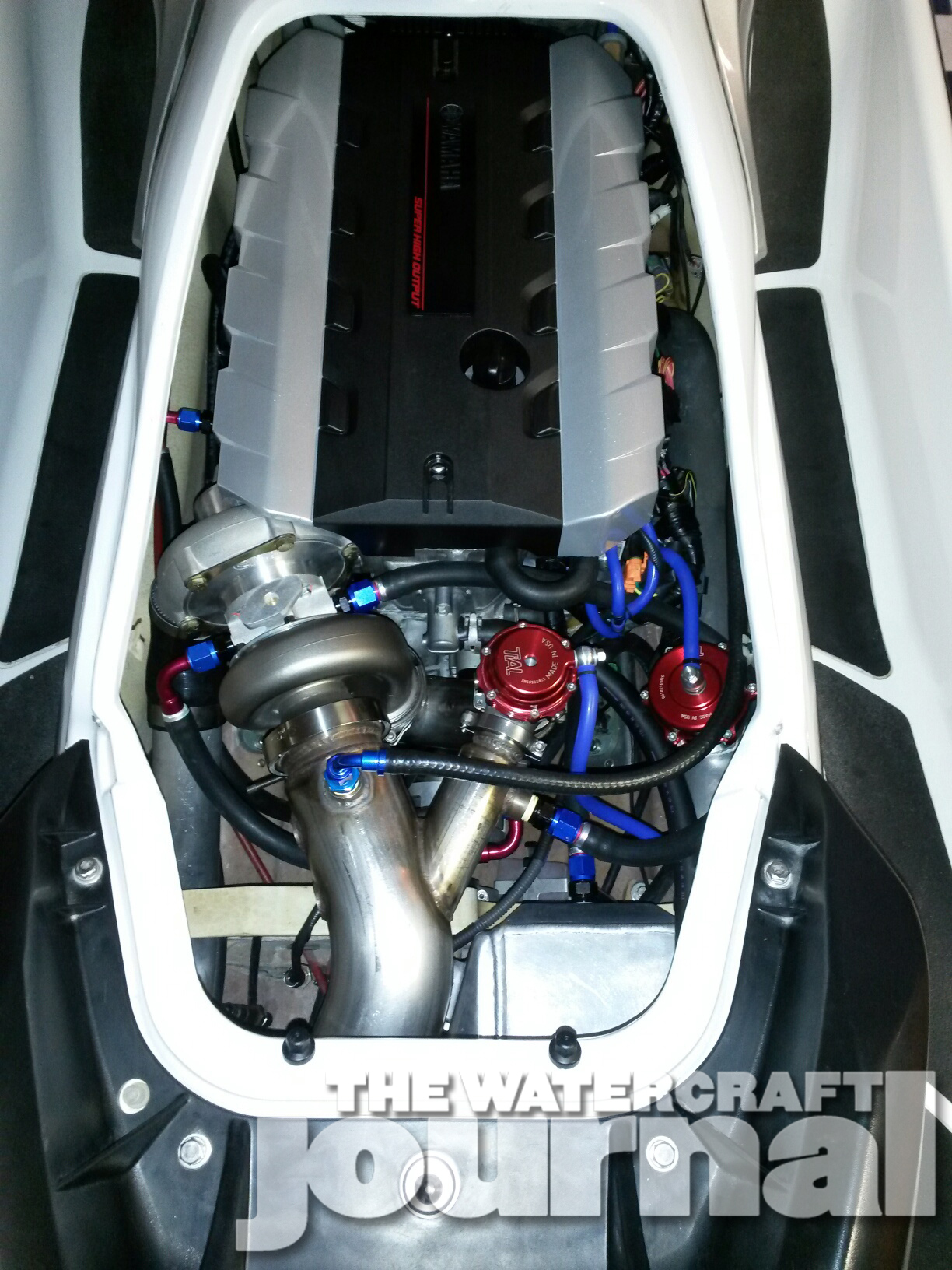
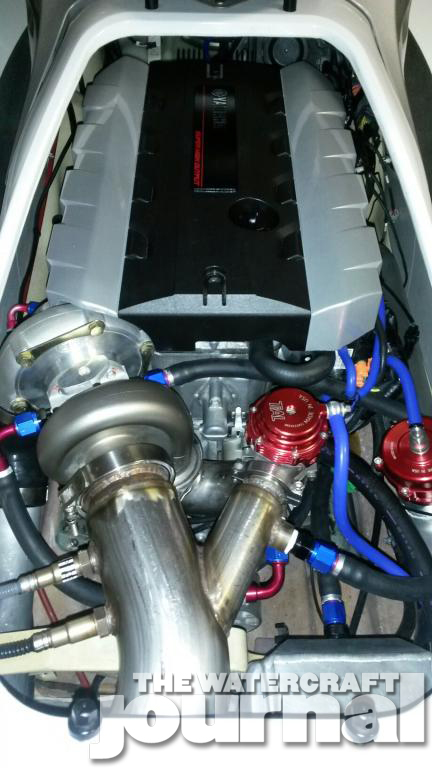
Pressing air through the SHO would require a lot of work. For that, Salles reached out to long time friend, Jesse Gonzalez. “[Jesse] shares performance interests with me. [He] completely fabricated the turbo kit and intercooler setup. [He fabricated] the merge collector (the V-looking funnel) for the header as well as the dump pipe off the turbo for the exhaust (the Y-looking piece). All the piping is fully water jacketed stainless steel and all one-off pieces.
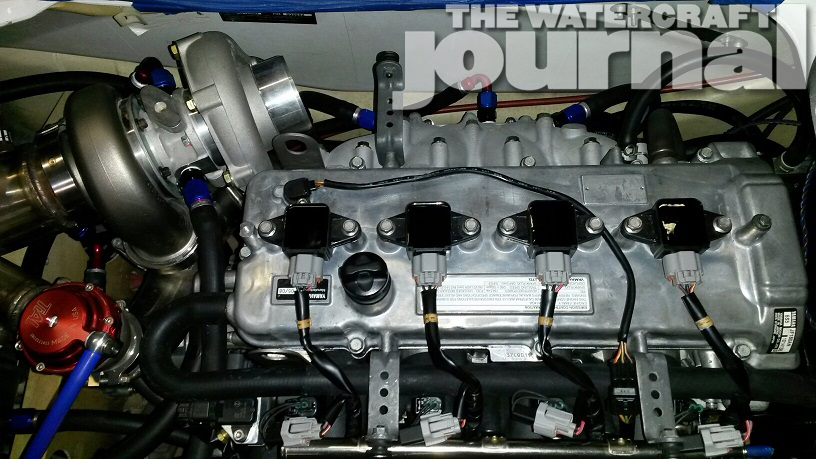
Countless hours were taken in development of this kit in effort to make it as stock appearing as possible, even building it in a manner where the stock motor cover could be used.
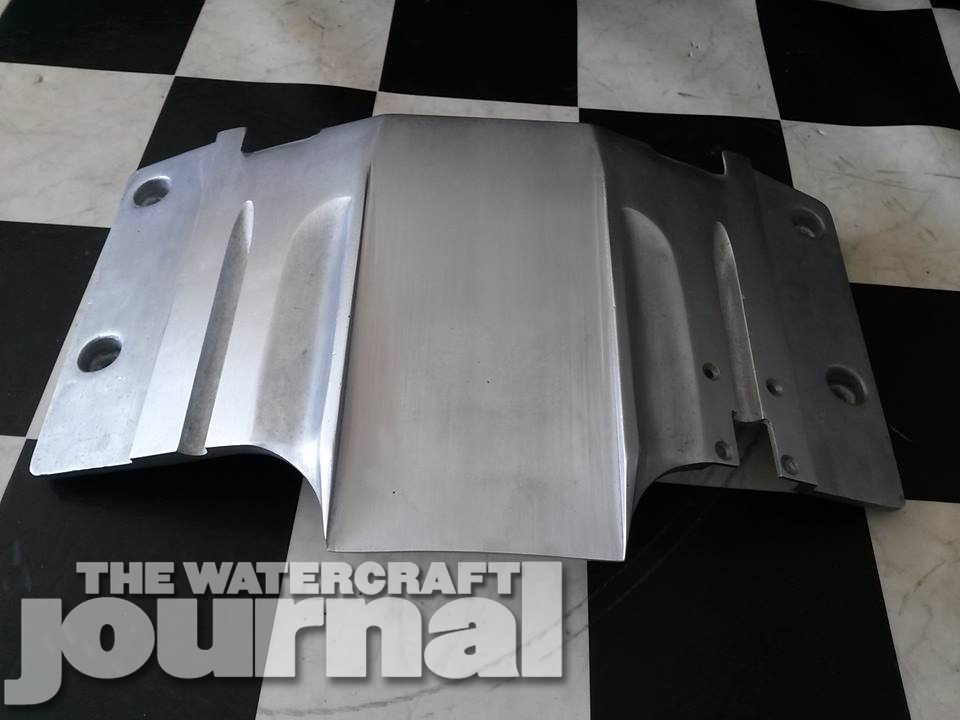
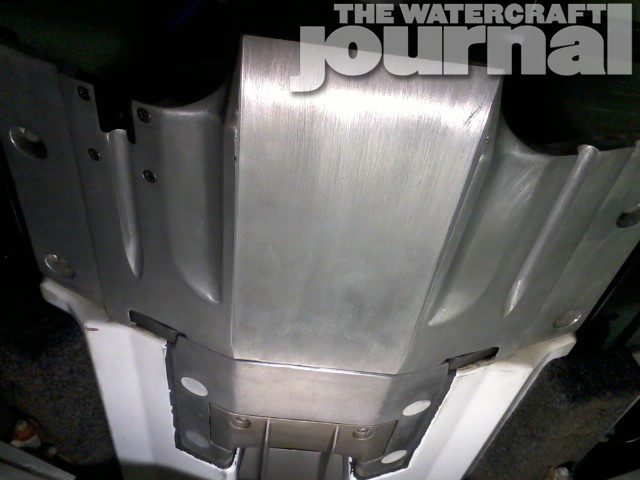
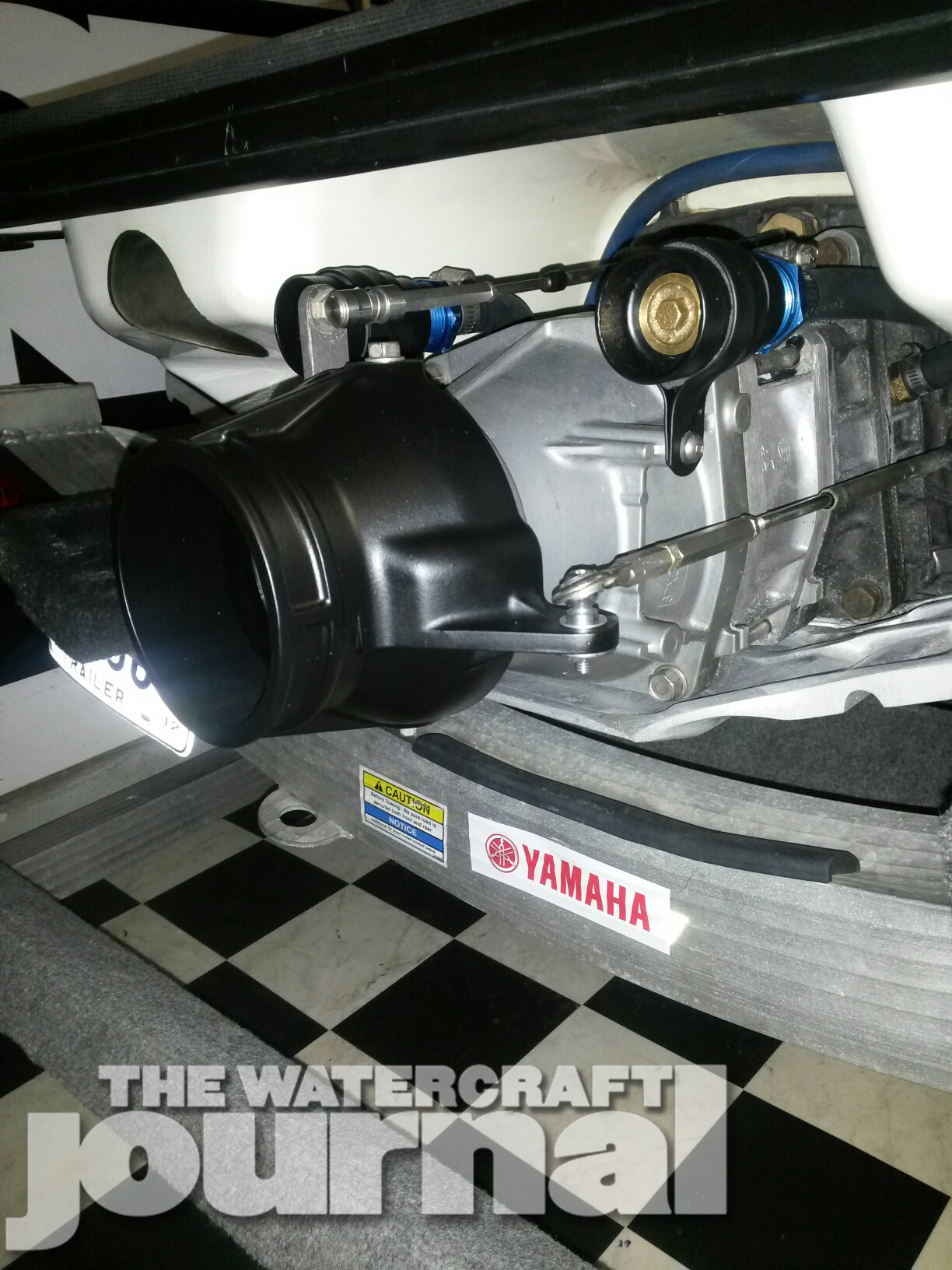
On the hull, the GPSHO has a FF GPR Jim’s Performance modified ride plate. “The pump is a stock Yamaha SHO pump with a custom made prop, and modified venturi nozzle to achieve the desired ride plate angle we’re after,” Salles detailed. “[We] custom-made pressure relief valves mounted to the venturi nozzle as well as the bored aluminum steering nozzle.”
When it came time to prove the GPSHO, there was no time for testing. Arriving at the race site’s launch ramp on Saturday, at 3am the morning of the Hydrodrag World Finals, in Tavares, Florida, Salles and crew knew they had a full day ahead of them.
“His attention to detail is second to none and his craftsmanship and talents are expressed in his work as you can see. Funny thing is, he works at a family owned body shop, Alex’s Body Shop in Slidell, LA. He was a huge asset in this project and has his hands in just about anything pertaining to it,” Salles continued.
“We pulled into the race site around 3am and sat in the truck until we heard Kristian on the lake testing with his Silver Bullet turbo FZR. I said ‘We’re going to race, not to sleep.’ After finalizing a few things with Mike Young Sunday morning, …we decided not to test and race off the trailer, being we tuned the morning before in Slidell and I made adjustments relative to what the weather was scheduled to be in Tavares. This allowed us to hang out more and work less, which is essentially what we wanted to do.
“We didn’t run as fast as we tuned or planned to, but I’ve heard from several people that ‘this lake isn’t that fast’ and ‘don’t expect to make big mph on a GPR.’ The way I saw it was everyone is racing the same water, so we’ll give it a shot. It’s unfortunate we never had time to tune the hull between runs, because I’m pretty sure I could have gotten a handle on it and got that bounce out.”
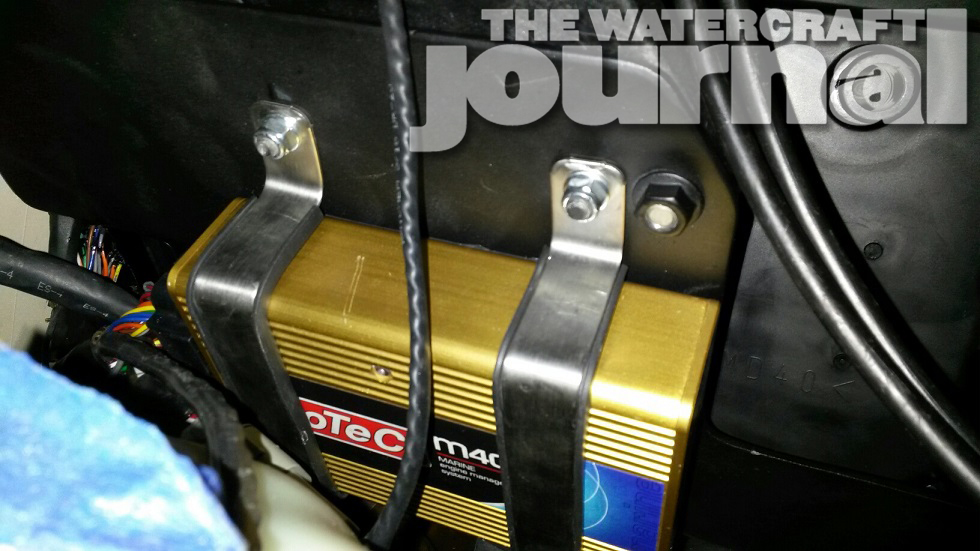
A stand-alone Motec M400 was fitted to the front of the motor on a custom cradle Jesse fabricated (along with all of the other electronics generally housed behind the motor on a stock SHO ski). Salles added, “[Jesse] opened up the harness and rerouted wires where necessary to give a stock appearing look with all the wiring and electronics moved in front of the motor.”Salles continued, “Right as the ski started to make speed, it started bouncing, which it literally had never done before. We’ve been spoiled with flat water and generally don’t run when it’s windy, for more safety sake, not speed sake. That’s racing and I’m not complaining, we were just disappointed we never ran the speed we went to run.”
Nevertheless, at its debut run, the GPSHO ran a lightning-fast 107.4mph earning Salles and crew the coveted first place in the Unlimited Speed Alley competition. He beamed, “We’ll be back and look forward to hanging with all you guys again. Thanks to everyone who supports the events and has a hand in making them happen.” Between now and then, Salles plans on making a few more modifications to ion out the aforementioned “bounce” and eke out a few more miles per hour prior to the beginning of next year’s HydroDrag series. Until then, we’ve got a lot of videos and images of the build below to enjoy.
It’s a cold, hard reality, folks: the temperatures in the Northern Hemisphere are dropping (you know it’s bad when the Jetski Junkies are wearing thick gloves and fleeces on their rides). And for those residing in states where snow and freezing temperatures appear, it’s time to pack those skis up for the winter. Thankfully, the process isn’t too tough – especially if you’ve got all the right tools.
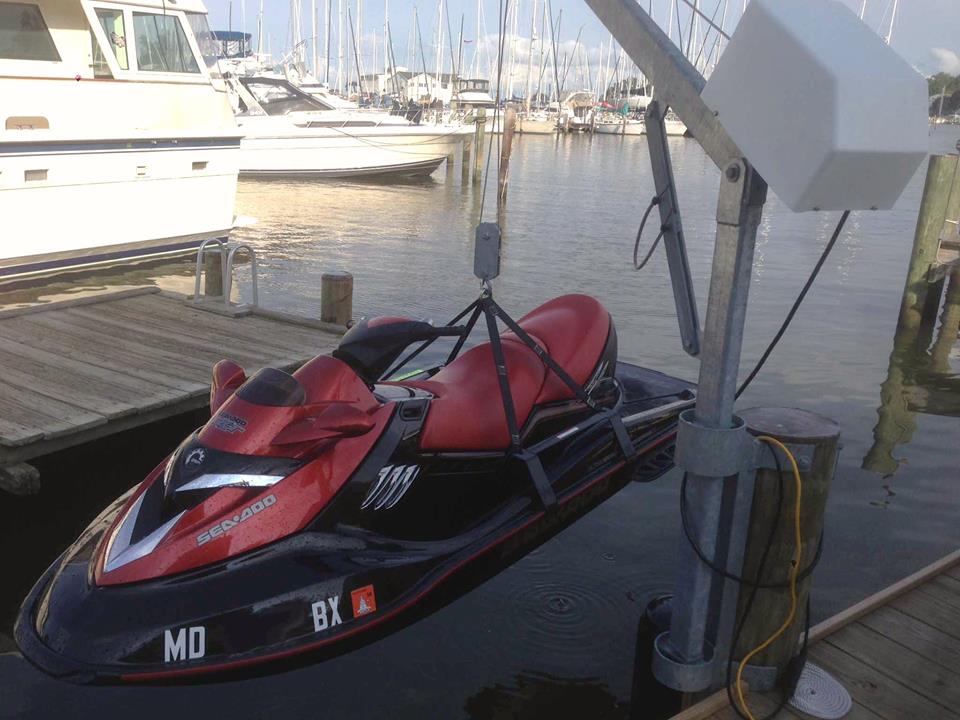
We spotted this sweet setup over on Aquacart’s Facebook page of loyal Aquacart customer Barry and his dockside davit in Chesapeake Bay, Annapolis, MD. Using Aquacart’s heavy duty Lift Harness/Sling and Shop Cart, pulling his Sea-Doo RXT in and out of the water is a synch. Using the same harness as major shops and dealers, the Aquacart sling is made of superior materials to ensure that your PWC will remain safe and secure whether being lifted by a winch, lift, cable or forklift.
Best of all, you don’t have to be shop to own one; all Aquacart Lift Harnesses are made with vinyl-coated steel brackets (with superior coating than on competitor models) for maximum hull protection that won’t scratch your ski, double stitching for added security and strength, UV protected ultra high strength webbing (up to 6,000-pounds), and thick double stainless steel lift rings (rated at 4500-pounds).
All of Aquacart’s products are made with the most durable of materials promising a long life of reliable usage. No matter whether you’re a professional shop, business or a dyed-in-the-wool enthusiast, Aquacart has the right equipment to keep you riding (and rolling) longer.
Good news in the world of personal watercraft! the Personal Watercraft Industry Association (PWIA) is receiving some national recognition for its PWC renter orientation DVD, earning the Seal of Safe Boating Practices from the esteemed National Association of State Boating Law Administrators (NASBLA) for its recent Personal Watercraft Renter Orientation DVD & Checklist.
In an effort to better acclimate first-time boaters and renters of PWC, the PWIA developed a thorough and thoughtful DVD walking through the major highlights of safe and considerate boating, best practices and major safety do’s and dont’s. The video, designed to be played for renters at resorts and other major rental outfits is not only an instructional tutorial, but a bit of liability coverage for the PWC renter themselves.
To help spread the word, the PWIA has distributed over 300 copies of their tutorial DVD to locations in as many as 27 different states. In conjunction with their “Safe Rider” pledge, the PWIA has made greater efforts to ensure safe riding practices are taught across the nation more than any other organization in our industry. All of us at The Watercraft Journal applaud the PWIA for their recent award and are sure many more are to follow.
Here’s the original press release:
PWIA Receives NASBLA Seal of Safe Boating Practices Award Award Presented For Association’s PWC Renter Orientation DVD & Checklist WASHINGTON, DC– The Personal Watercraft Industry Association (PWIA) announced today that it has been awarded the National Association of State Boating Law Administrators’ (NASBLA) Seal of Safe Boating Practices for its Personal Watercraft (PWC) Renter Orientation DVD & Checklist. NASBLA’s seal certifies that PWIA’s boating safety videos and other educational materials meet the highest standards in quality, accuracy and effectiveness. All materials must meet the requirements and guidelines set forth by NASBLA to receive the recognition. Recipients of this award include the National Safe Boating Council, the U.S. Coast Guard Auxiliary and numerous boating safety programs developed by government and private entities. “This recognition by NASBLA adds an additional level of credibility to our materials,” said David Dickerson, Executive Director of PWIA. “Now, liveries across the U.S. who use our free Renter Orientation DVD & Checklist, can be confident that our materials meet the high standards of NASBLA, a nationally-recognized, independent expert in safety education, Today, PWIA has distributed more than 300 of the orientation DVDs and other safety training materials to liveries in 27 states as part of its mission to promote safety and enjoyable experiences on PWC. Along with its rental education initiative, PWIA sponsors the “Safe Rider” pledge program to promote safe riding practices among PWC owners and riders. By signing the Safe Rider pledge, PWC riders agree to the take the following steps towards safety and fun on the water: · Scan the water for hazards and other boats · Avoid aggressive maneuvers · Follow local boating laws, including rules to prevent the transfer of invasive species · Examine your equipment · React to conditions · Insist on a safe distance from other boats, swimmers and fixed objects · Drive sober · Evaluate weather and waterways · Respect the environment by avoiding fuel spills and operating close to marine life The pledge form can be accessed at www.pwia.org, along with more information about the “Safe Rider” campaign. Information on instructional courses and downloadable safety materials, including a brief handbook titled Riding Rules for Personal Watercraft and PWC Orientation Checklist can also be found at www.pwia.org.
The Asian Beach Games though, are not merely a jet ski race. Hosting Olympic athletes from across the Asian continent, competitions are held in swimming, volleyball, water polo, track events, parasailing, basketball, handball, soccer, wrestling and a wide variety of other beach-centric sports, which includes PWC racing. Unlike Western Nations, Asian Olympic councils recognize the mental and physical prowess necessary to excel in jet ski racing, and has welcomed it into part of the pantheon of watersports held throughout the week-long event (November 14-23).
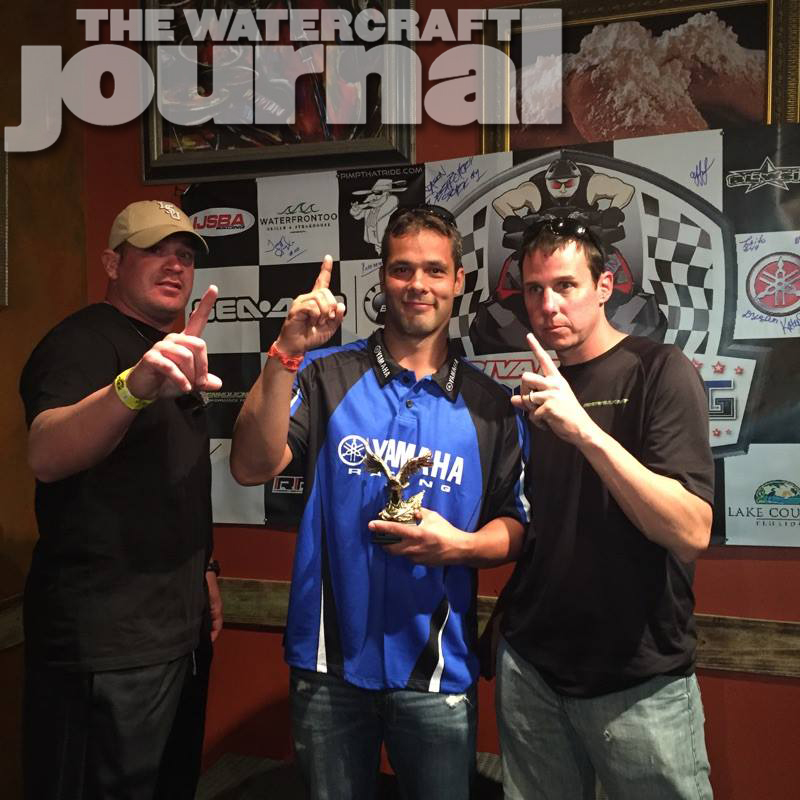
During the three-days of racing, Dean’s Team racers – consisting of Aqsa Aswar and his brother, IJSBA World and Pro Watercross National Champion Aero Aswar (both representing Indonesia), and Abdullah Al-Fadhel, representing Kuwait – bested the competition and took Gold, Silver and Bronze metals, respectively. Impressively, all three each won a moto in the single-day’s three moto race, Aero suffering a broken hose clamp in the first race, leaving the win to his brother Aqsa; Abdullah running out of gas the following moto, handing the win over to Aero; Aqsa remaining consistent throughout.
Aqsa recounted, “The race was very tight between my brother, Abdullah, and myself. In the first moto I got first; the second moto I was second and in the last moto, I was third. The 2015 Yamaha FZR was awesome today! With Dean Charrier of Dean’s Team tuning on it, it was a rocket. I pulled two boat’s length holeshot in the first moto and the three of us (Aero, Abdullah, and I) were pulling away from the other riders in every lap. It’s a very good handling boat and also a very fast!”
Abdullah echoed Aqsa, “It was a great race and the course was open. I’m happy to be on the podium for [Factory] Yamaha and Dean’s Team.”
Aero added, “I felt really good after the race. I’m happy that only Yamahas got podium [spots] and especially that my brother took gold. The event was excellent; the government involvement made a major change to the sport itself unlike [any other] single events we have like World Finals or King’s Cup.”
As to the performance of the ’15 FZR, he concluded, “The ski was really good! Dean Charrier of Dean’s Team made a really good boat for the heat over here.”
Charrier went on to explain his pleasure with the execution of the event itself, “[It’s] very good! [I’m] actually I’m having flashbacks of [the] good old days. The track was laid out with switch backs, apex buoys and a good old “2-card, 1-go” starting system that ran like clockwork. Only having three or four classes a day with three long motos is the ticket, and keeps spectator and media coverage happy and [all of us very] busy. The day was filled with excitement and very busy, [just] like I like it.”
Races continue today with Open class and Endurance racing the following. We wish everyone the best of luck!
I’m not sure if you have the problem I do, but pretty much every ride that I do: I find my throttle hand cramping a lot, and it’s not like you can constantly keep stopping when you’re touring with a group. I can imagine that racers have this issue even more with the constant changes in throttle position during their events. Many times I’m doing the left hand throttle “reach over,” which can be dangerous in certain conditions. I also have very bad gout (severe arthritis) that has effected my throttle hand tremendously. That is why I was very excited to find the EZ Throttle.
EZ Throttle was invented in Okeechobee, Florida, by Ron Ripple, a PWC enthusiast who encountered this problem and created a solution. The EZ Throttle, according to it’s website, claims to be able to help keep the hand from cramping, allowing us to ride longer and have more fun. The installation is pretty easy and straight forward.
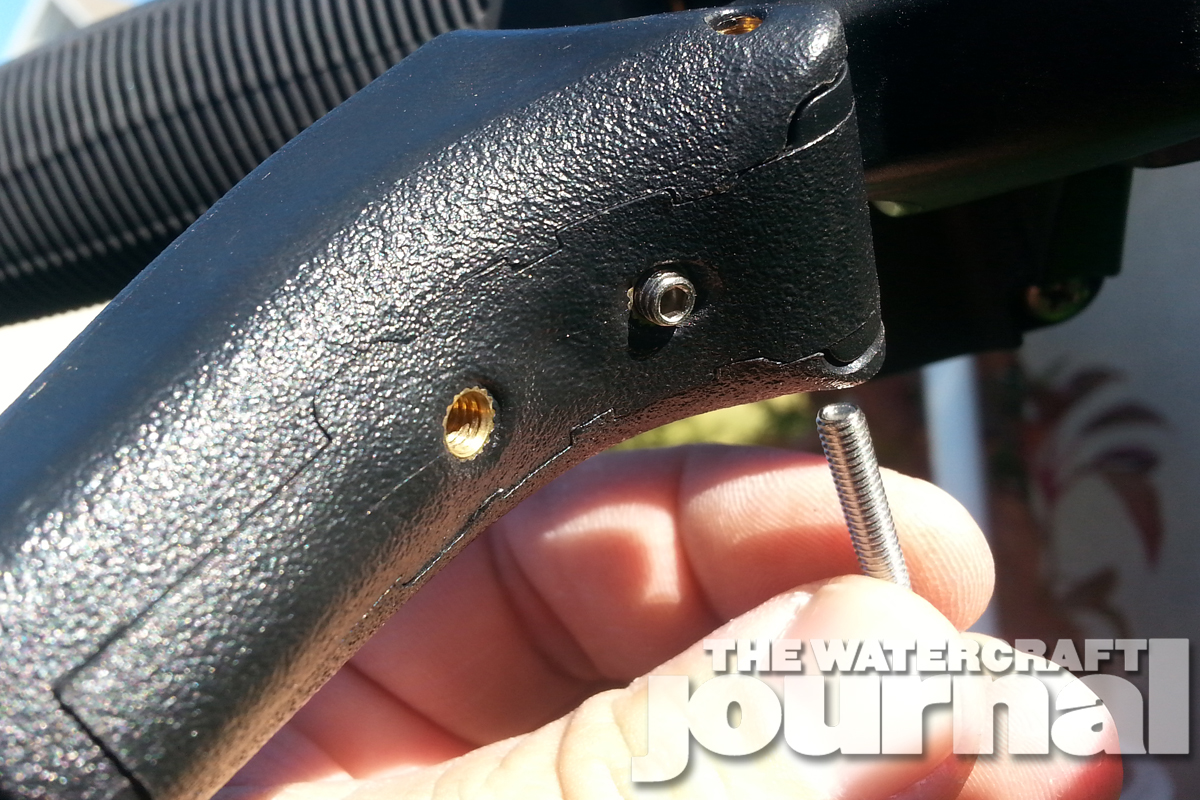
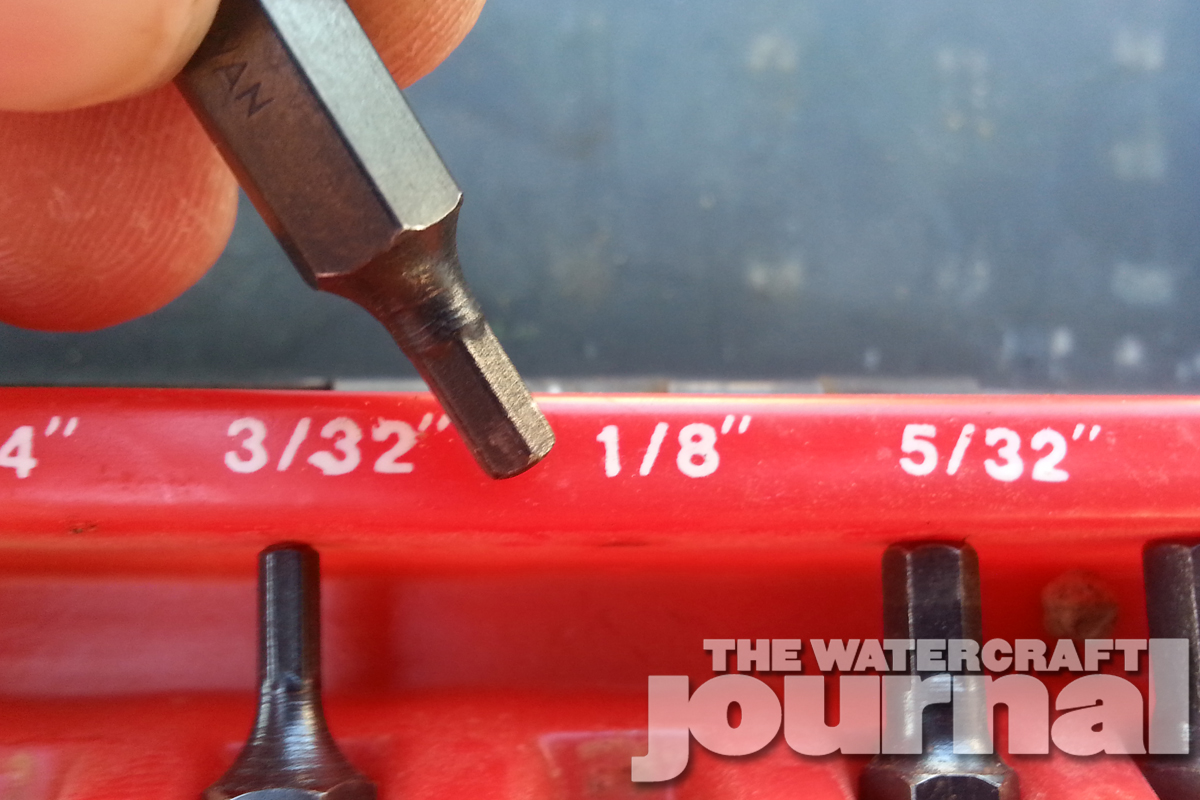
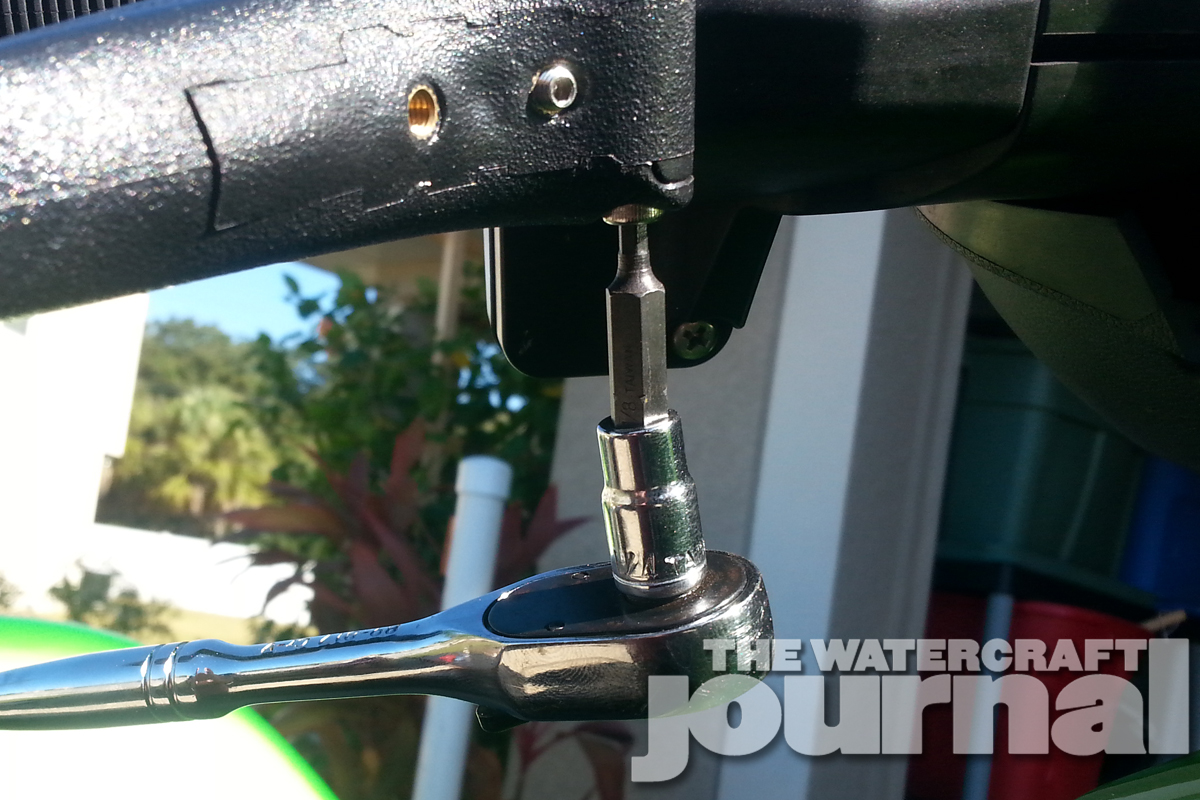
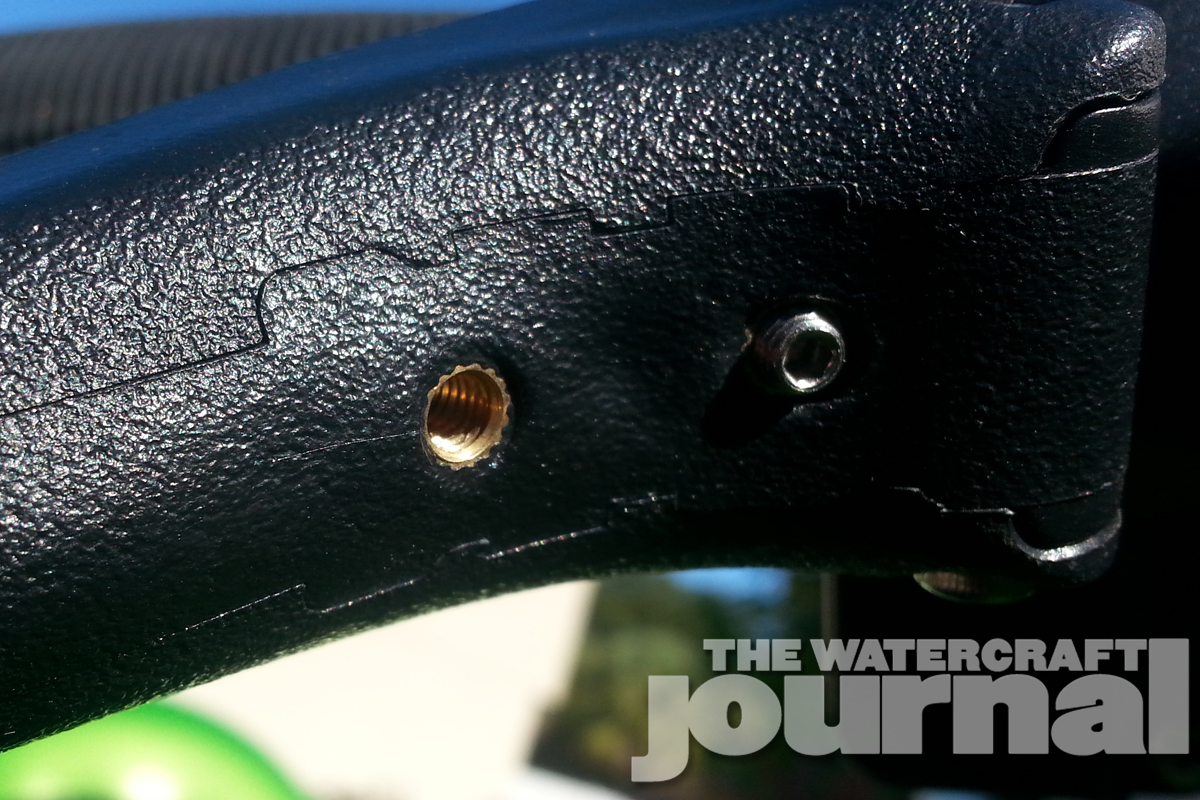
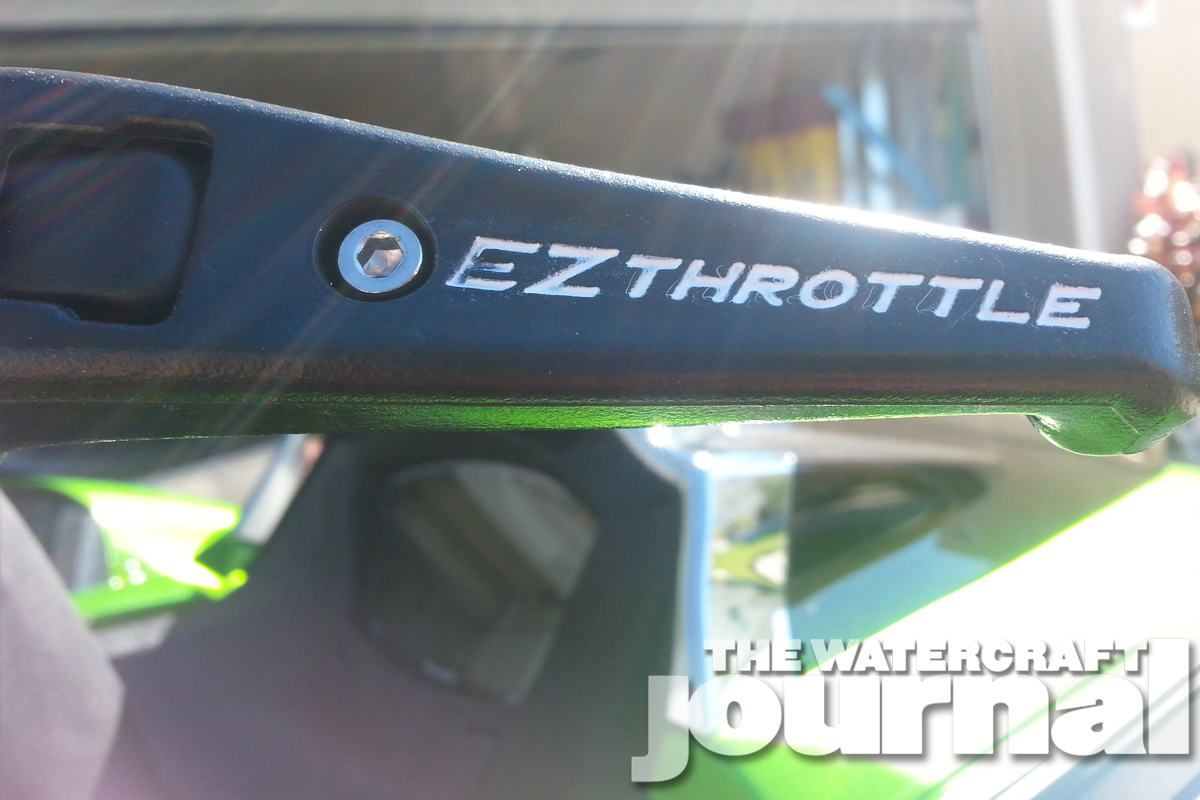
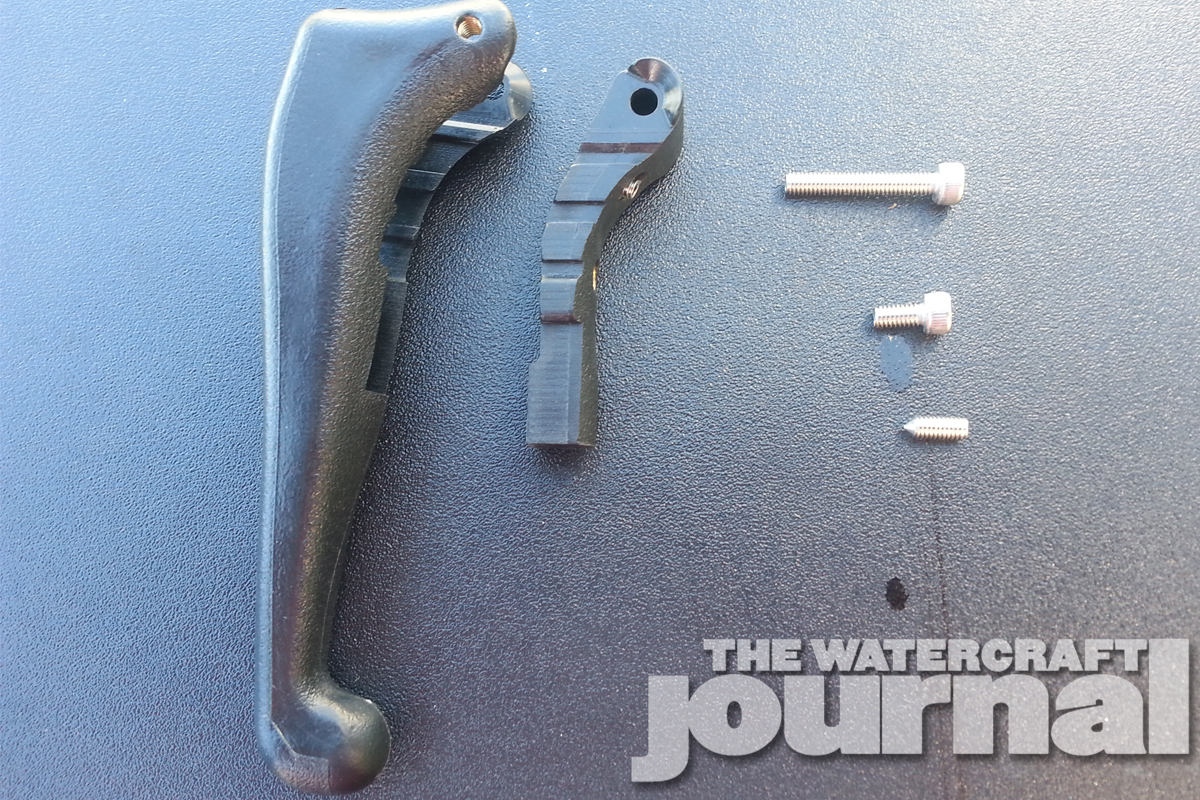
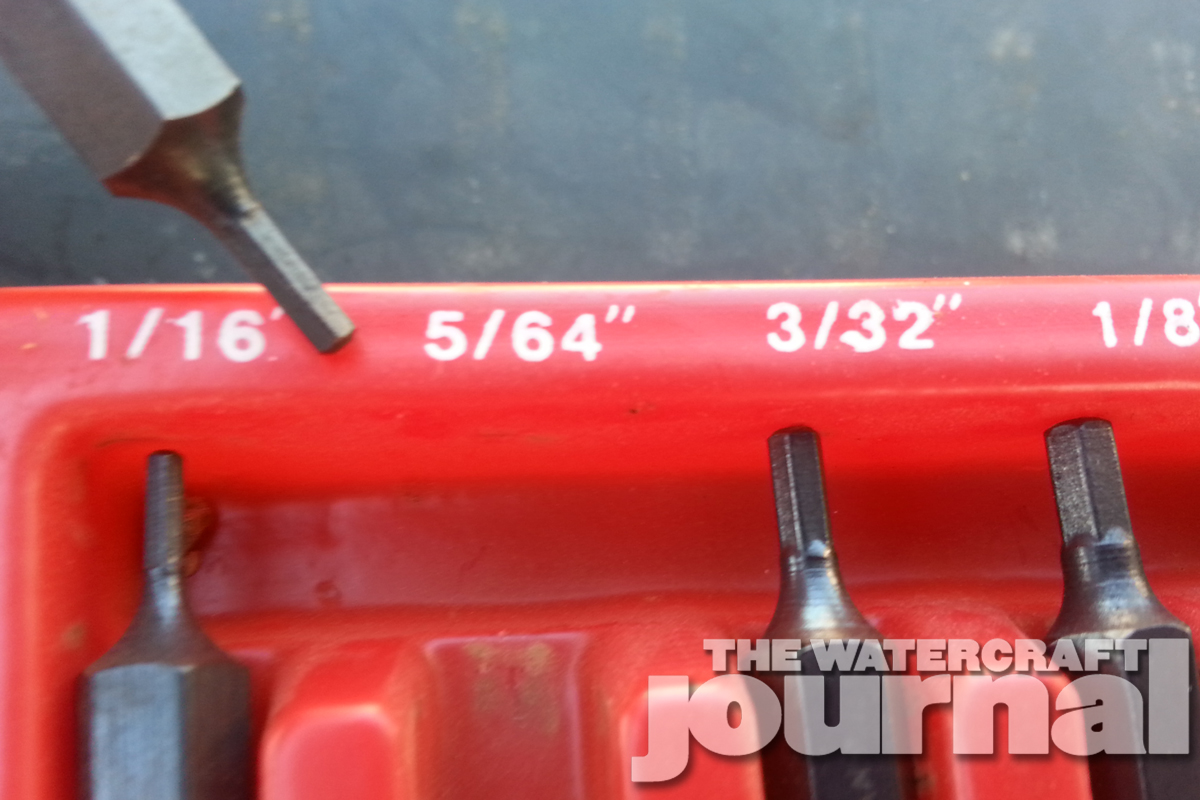
I picked up two, one for the Kawasaki 310LX and one for the Yamaha FX SHO. Although it is the same throttle for all models of PWC’s, the Yamaha has one longer set screw noted on the throttle by a red dot. I installed the EZ Throttle on both skis today in less than 20 minutes with minimal tools. All you need is a small ratcheting (socket) wrench with an adapter and 1/8-inch hex driver (or Allen wrench) and a 5/64” Allen wrench. Just remember that the EZ Throttle logo on the throttle faces in, not out and you will will be golden.
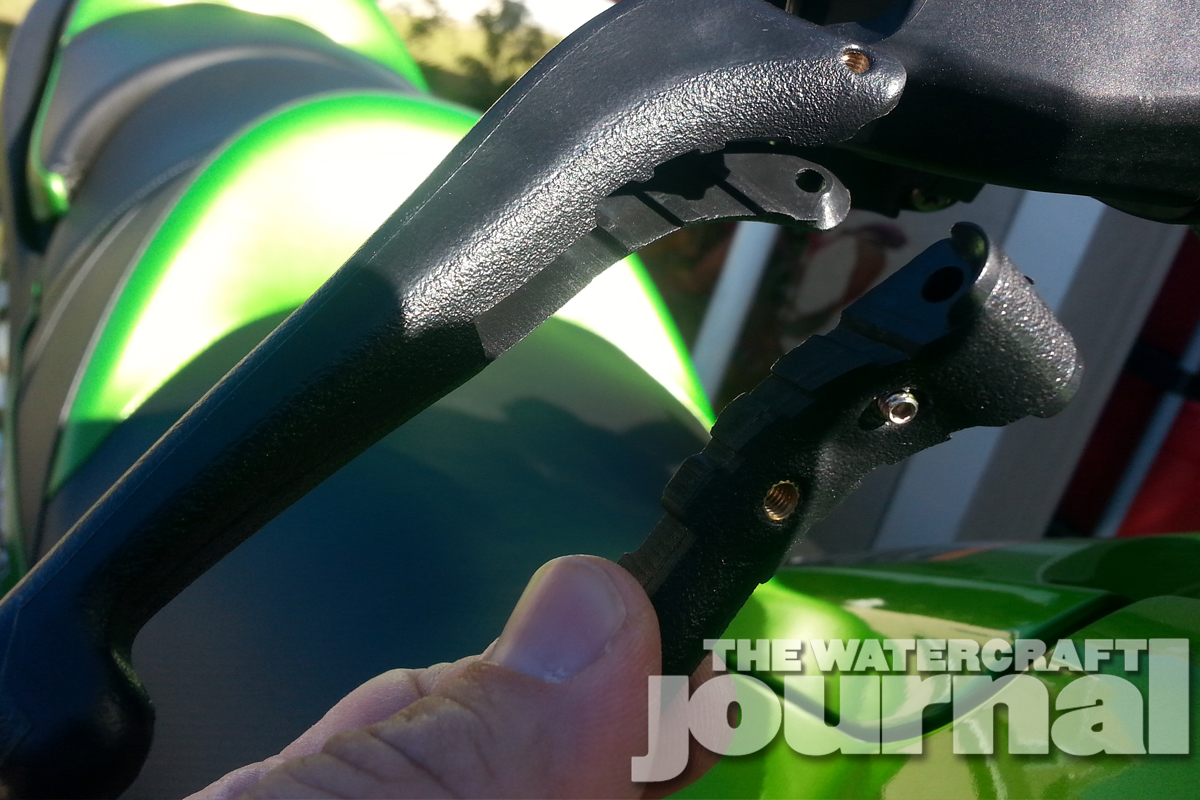
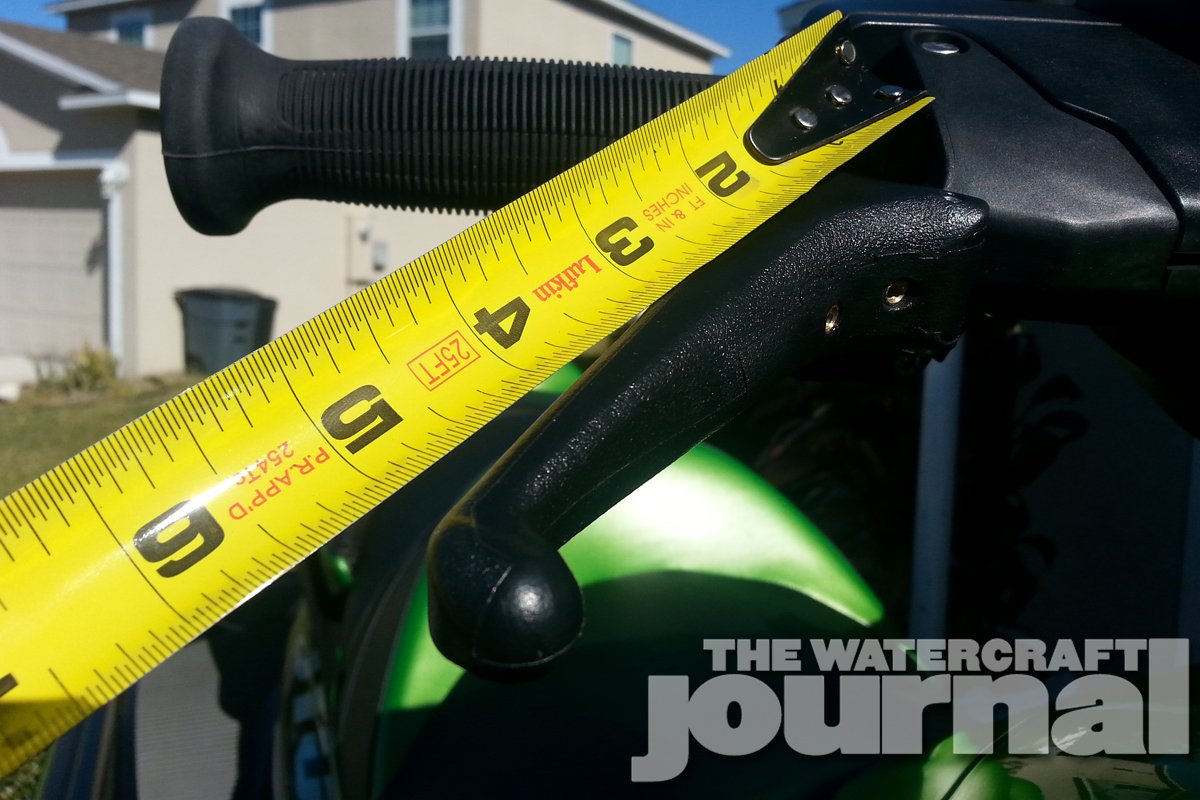
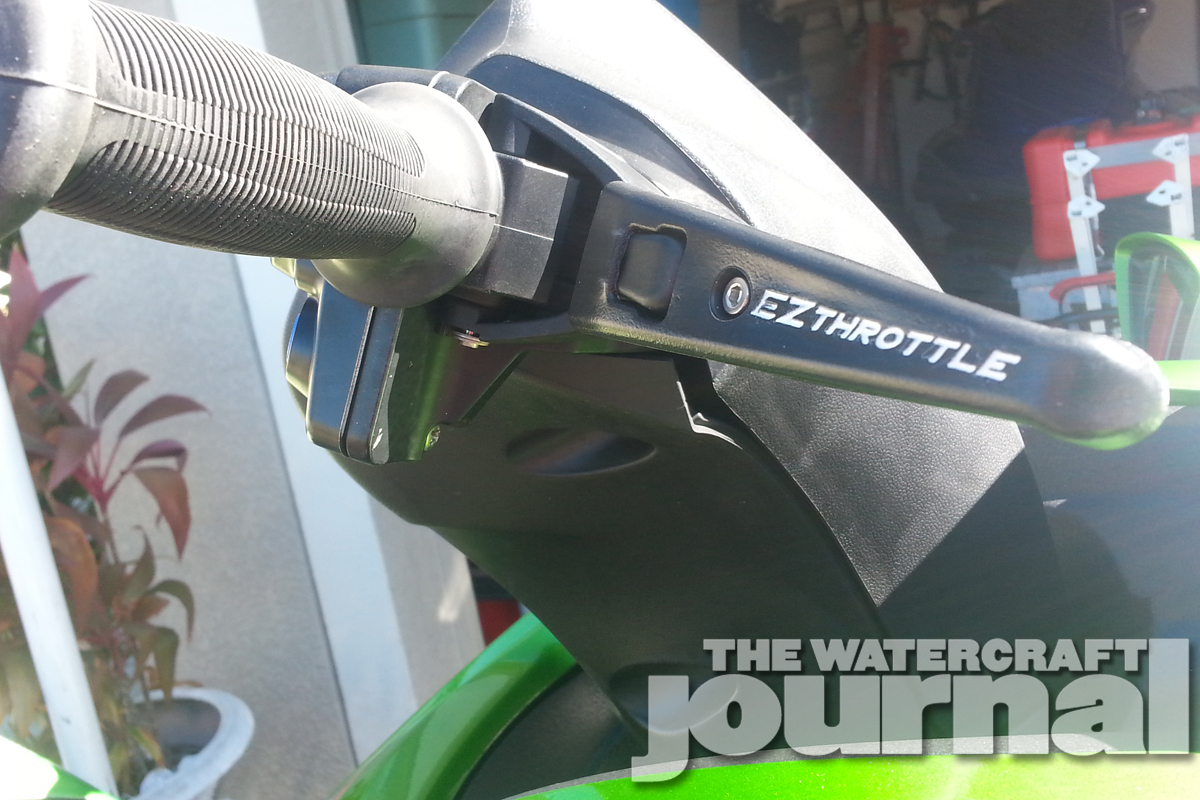
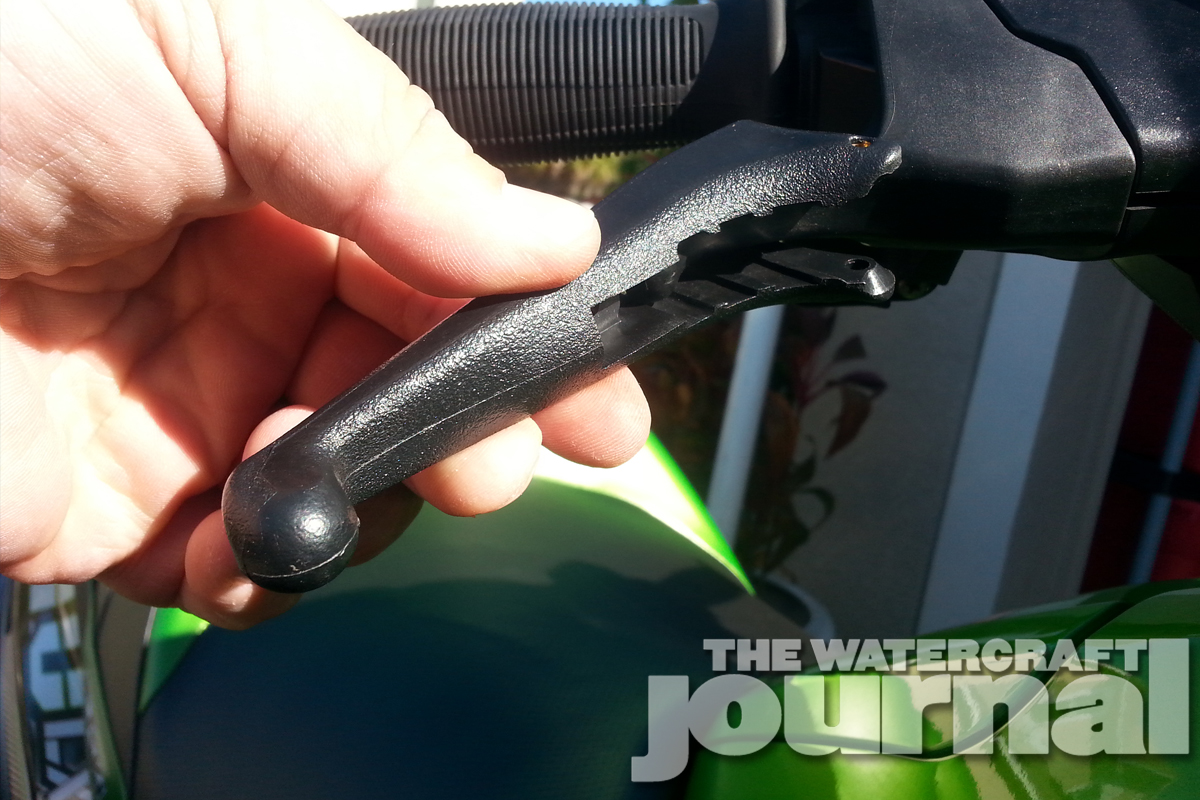
The EZ Throttle basically slips over your existing finger throttle taking it from approximately two inches to about five inches, which just about mirrors the length of your PWC hand grip. After the installation, I already knew it would make a difference even without riding the ski.
There is two distinct differences the EZ Throttle creates, first it now allows the rider to utilize all fingers versus just one or two. Secondly, as we learned about levers and pulleys in science, the longer the lever, the more leverage you have, which translates to less effort to squeeze and hold the original throttle. This just makes me more excited to get on the water!
This past weekend I had the opportunity to ride nearly 180 miles with the Jetski Junkies crew on the Suwannee River in Florida utilizing the new EZ Throttle. The EZ Throttle does take some getting use to, especially if you are a long time rider and extremely use to utilizing your index and middle fingers only. I found myself reverting back to just the two fingers and then when my hand started to hurt, remembering to move all my fingers up on to the EZ Throttle and then the pain subsided.
The only real quirk I encountered was the distance between the new EZ Throttle to the end of hand grip. The distance is quite a lot, so basically you use your original two fingers to squeeze the throttle and then slip your others fingers on the extension making for a much easier throttle squeeze by the outer fingers. I was having a hell of a lot of fun squeezing the EZ Throttle with just my pinky. The quirks are no big deal, and nothing a little self-retraining won’t fix.
The end result is that neither my hand or fingers cramped at all on the 180 miles we rode! I also wish to add that on Saturday the Air Temp averaged about 55 degrees with wind chill. Anyone with arthritic hands knows that cold is the worst, and even in those conditions, I never cramped up. The EZ Throttle has solved a problem for me, one I had been working on personally, and for $20 the value is 100-times over. If you are like me and have cramping and or arthritis in your hands, I highly recommend putting the EZ Throttle on your Christmas list.