
Home Blog Page 399

Farewell to a Friend: The Sport Gathers At Loss of Industry-Leader, Gary Hart

0

HART1

It was famed American novelist John Steinbeck who bereaved, “It’s so much darker when a light goes out than it would have been if it had never shone.” And a brightly burning light that beckoned to all in the sport of jet ski racing as sadly dimmed. Last Thursday, November 13th, Jettrim owner and founder, Gary Hart passed away from complications to cancer. Hart, (56 years old) who is most commonly known for his company’s unique artisan, hand-crafted non-slip jet ski mats, seat covers and iconic “bitchin’ stitchin’,” is remembered not merely for creating a superior product that was often duplicated, but for a spirit that burned brighter than the noonday sun that shone over his Lake Havasu City, Arizona, home.

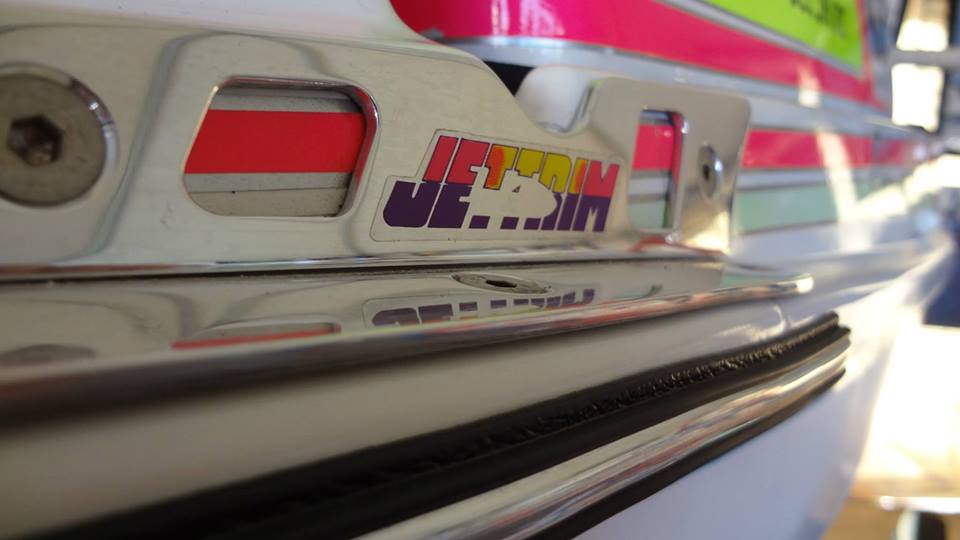
Hart developed a passion for jet ski racing that birthed the creation of his original Jettrim “Nada-Hyde” mat in 1983. Not only did his Jettrim mats improve the riding experience, but added a dash of customization to the early standup skis. Hart’s business swelled as did the sport throughout those early heydays, and Jettrim’s logo became an almost synonymous emblem on every racer and performance enthusiast’s watercraft. Many racers over the company’s 30 years will recall Hart’s wide smile being a central fixture at Jettrim HQ, the race site and in Performance Alley at each of the IJSBA World Finals from 1983 to 2013. In fact, a stop by Jettrim became an annual pilgrimage for many, swinging by to see the mayhem as the crew hurried to finish up racer’s last-minute requests.
1381859_1457953751096794_1040118922_n

Yet, Hart’s passion and kindness overshadowed his product services. Hart regularly opened the doors to not only his shop, but his home to racers. Multi-time IJSBA World Champion Dustin Farthing recalled, “Gary was my first sponsor in 1992. I used to live with him 3-to-4 weeks before the Finals in my early years and he was like my family… I am so thankful for him.” As did Victor Sheldon who added, “Gary was a one of a kind. [He’ll] never be forgotten.”

Hart’s love of the sport spread to the riders and their families. Even when there wasn’t a buoy to be found on the water, the deep-rooted friendships Hart made on the lakeshore carried throughout him. Brian Holland, a former Jettrim employee, remembered,  “I will always remember park trips with Gary. It was Gary’s get away from reality. To just sit back and relax. He was like gravity with all his friends. Riding down the river with 20 or so skis in a row. Gary always being the leader. He rode with such style. I never saw him happier.”

10672_752769944772032_3125235539024415455_n

Those very fortunate to know Hart personally knew of his love for not only jet skis but for the rolling sand dunes of Glamis and for that of vintage American bicycles. In his garage, hanging above possibly the most desirable collection of meticulously-restored vintage race skis were Schwinn Stingrays. In 2010, Hart made his collection of skis public, freely opening up the Vintage Jet Ski Museum at the IJSBA World Finals. With examples from Christie Carlson, Jeff Jacobs, Chris Fischetti and Larry Rippenkroeger (to name a few), the museum was always a major draw to the Performance Alley. Again, that was Hart’s style.

Mrs. Carlson Swaid stated, “the personal watercraft industry lost an icon. God gave Gary the most appropriate last name. He definitely was all ‘Hart'” Gary was famous for trimming out anything and everything that related to jet skis. I had the privilege of speaking with him [the day before he died]… I thanked him for all the ways he made things better for so many racers. …He made the trays of my jet skis more comfortable and reliable, he made my van and trailers safer for travel and he made cabinets to showcase my Jet Gems jewelry. Gary also allowed several racers to camp out at his house during world finals preparation year after year. He was incredibly generous to so many of us racers and he will forever be remembered for his kindness and his passion for the sport.”

60842_619770734734902_844892592_n

In regards to Hart’s presence at Finals and the Vintage Jet Ski Museum, Bob Phares wrote, “When you’ve been involved in an industry for 42 years, you are bound to hear a little bit of negative information about everybody. Not so with Gary Hart. I never heard one word negative about Gary. I met Gary first when I was running Factory Jet Ski in Sacramento. We talked on the phone and designed custom seats for our Race Sponsored ZXI’s and XI’s. He was always thorough and patient. He made everything custom with great expertise.

“The weeks leading up to World finals has always been an extremely busy time at Jettrim, but Gary always seemed casual and professional. I finally met Gary at World Finals in 1997. He was fairly quiet and paid close attention to all comments and suggestions from his customers. He didn’t offer to sell you what he made. He made what you wanted and sold it to you. Gary and I met again at Worlds in 2013 in his Jettrim Museum, a true tribute to a sport that we all loved. Handled and cared for with the loving touch of a parent. This past year at World’s, I was honored to help with the presentation of the Museum in Gary’s absence.”

1069330_10201853208347386_1589724842_n

Hart, whose role in the sport earned him an induction in the IJSBA Hall of Fame, was remembered fondly by the IJSBA who he had a role in forging, “Gary Hart was a true founding father of the personal watercraft sport. Through his company, Jettrim, Gary sponsored nearly every Pro rider that ever competed on a personal watercraft… The absence of Gary Hart will leave a permanent emptiness in the sport. IJSBA encourages everyone to reflect upon Gary’s legacy of his dedication to PWC and the people who raced them.”

Gratefully, Gary Hart’s legacy is one of optimism, charity, kindness and passion. Hart led by example, burned brighter than most and shone a light on a sport and the people who occupied better than most. And its that light that we will miss the most.

971812_637332262990044_551629305_n

All images courtesy of In Memory of Gary Hart – Jettrim Facebook page.

Alex Strachan’s PWC “Ride for Kalydeco” to Fight Cystic Fibrosis

0

r0_0_3600_2400_w1200_h678_fmax

All of us at The Watercraft Journal never hesitate to help promote a worthwhile cause, particularly when it’s to help fight a horrible disease like Cystic fibrosis; the hereditary chronic disease that clogs the lungs and leads to life-threatening lung infections; and obstructs the pancreas and stops natural enzymes from helping the body break down and absorb food. The disease specifically affects about 2,500 Australians and 70,000 people worldwide, and for this reason, Alex Strachan – with the help from a support crew – rode from Australia’s Cronulla to Port Macquarie to help raise awareness of the benefits that Kalydeco can provide to sufferers of CF.

According to the official Kalydeco webpage, the drug is a “prescription medicine used for the treatment of cystic fibrosis (CF) in patients age 6 years and older” previously was exorbitantly expensive – upwards to $300,000 per patient. As part of the effort to help lower costs and make the drug more widely available, Strachan – the son of local radio personality Mark Strachan – embarked on a epic ride to help draw attention to the campaign. Strachan’s partner Bec Roberts, has a cousin who has been diagnosed with the condition, which brought the condition to his attention.

Surprisingly enough, there was a logical connection between Cystic fibrosis and jet skiing. According to the official Ride of Kalydeco page, “In recent years, doctors here in Australia found that cystic fibrosis patients who surfed had healthier lungs than non-surfing CF patients. To find out why, the Cystic Fibrosis Foundation conducted a series of studies.

“They found that the inhalation of a sterile saltwater mist helps clear the thick, sticky mucus from the lungs and therefore a beneficial therapy to CF patient. As a result of this discovery, hypertonic saline was developed to mimic a “surf session” for CF patients. Now CF patients worldwide are benefiting from hypertonic saline, a drug developed in partnership with the University of North Carolina at Chapel Hill.”

Although the ride effort raised over $8,000, it was well short of the original $25,000 goal. Donations are still happily accepted HERE.

Heavy Breathing: Pushing a Naturally-Aspirated Yamaha to Supercharged Speeds

7

YAMA1

To be frank, this project was a very humbling experience. The goal was simple, at least that’s what we thought: to tune a naturally-aspirated 2014 Yamaha FX High Output WaveRunner to run as fast as a stock supercharged FX SHO, and to do for less money than purchasing the SHO outright. Going in, there were a few unavoidable truths we were going to need to accept: 1) that we were going to have to sacrifice the FX HO’s stellar long-distance fuel mileage, and 2) we were going to have to give up using the “cheap stuff” at the gas pump to increase the HO’s horsepower.

Sure, those were two bitter pills we didn’t want to gulp down, but bigger sacrifices have been made at the altar of the horsepower gods. As it stood, the Deep Red Metallic HO had barely cleared it’s mandatory 10-hour break-in before we started wrenching. In stock form, our Yamaha maxed out at 7,400rpm and 63 mph. That kind of performance ain’t too shabby for a 830-pound three-seater equipped with the brand’s big 1,812cc four-cylinder, 4-stroke spitting out just a tad under 180 ponies. But we needed much more to match those supercharged Super High Output FXs.

17
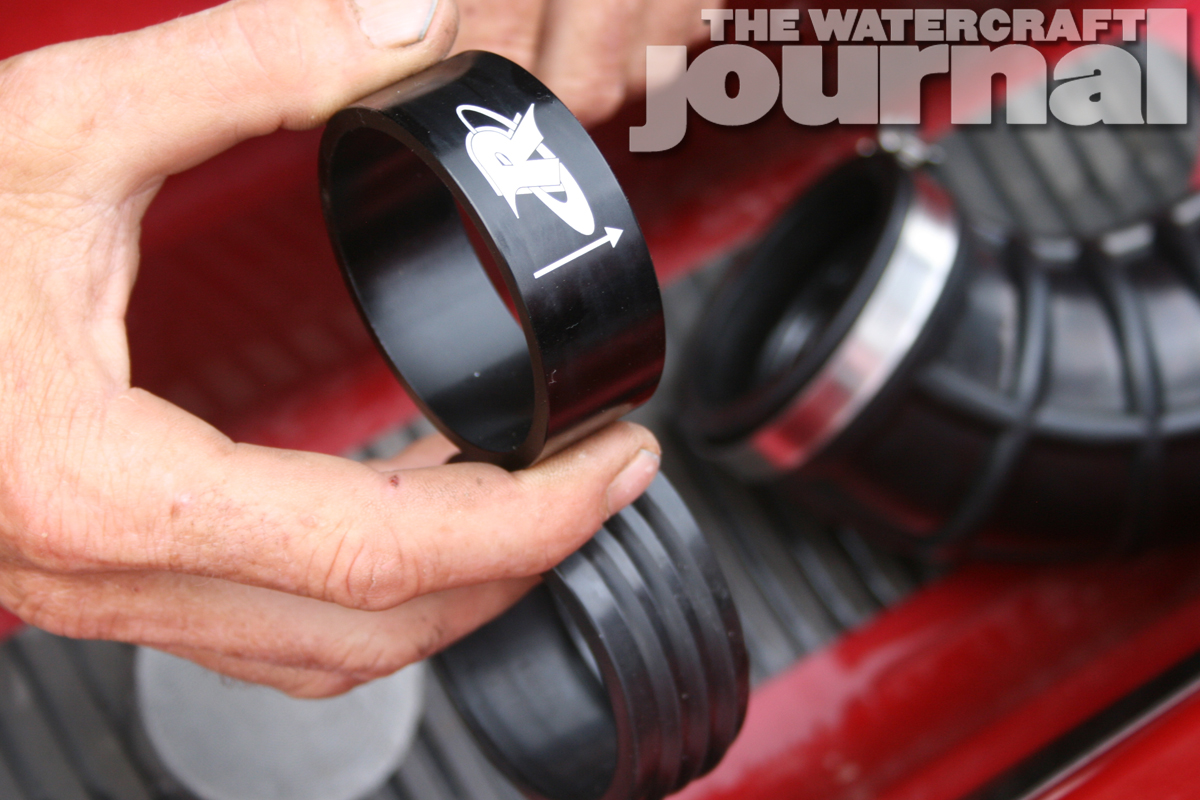
Our first step to better speeds was to replace the factory flame arrestor with RIVA’s Intake Manifold Kit, this tapered billet collar that dramatically increases air flow to the engine.

[Editor’s Note: Yes, we know Yamaha’s Super Vortex High Output’s horsepower usurps the SHO’s 215HP (estimated), but getting a naturally-aspirated engine to twist out 260-horsepower requires a lot of work that we felt was both unachievable and frankly, unlike to be duplicated by the layman and we wanted this article to be actually useful. – Ed]

In pursuing our goal, we equated that 68mph was to be our goal as most Yamaha SHO WaveRunners we’ve tested land squarely in this range when driven by a single rider and a 1/4 tank of fuel in its 18.5 gallon cell. This left us with a 5-miile per hour gap we needed to close up. As our machine could only suck in as much air and fuel as its reciprocating cycle could draw, we needed to open up the Yamaha’s airways. We did this by removing the restrictive mesh element in the intake manifold with RIVA’s Intake Manifold Upgrade Kit.

5
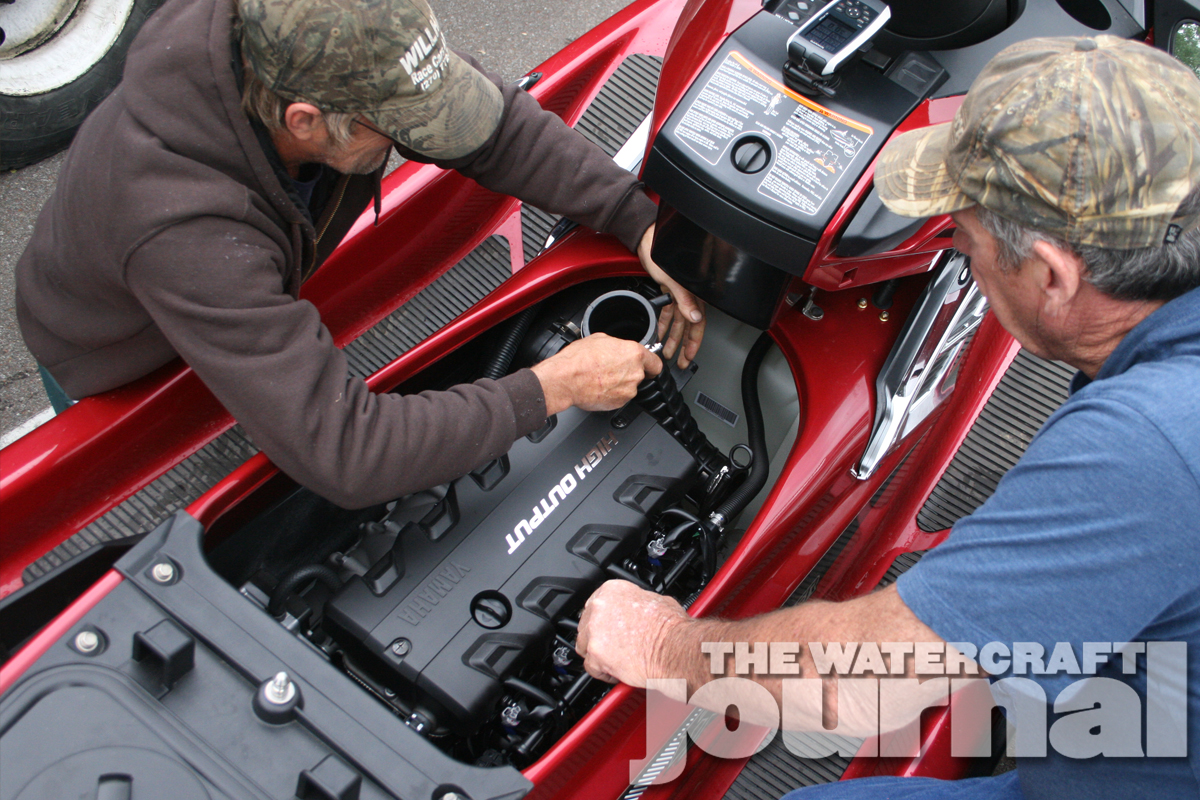
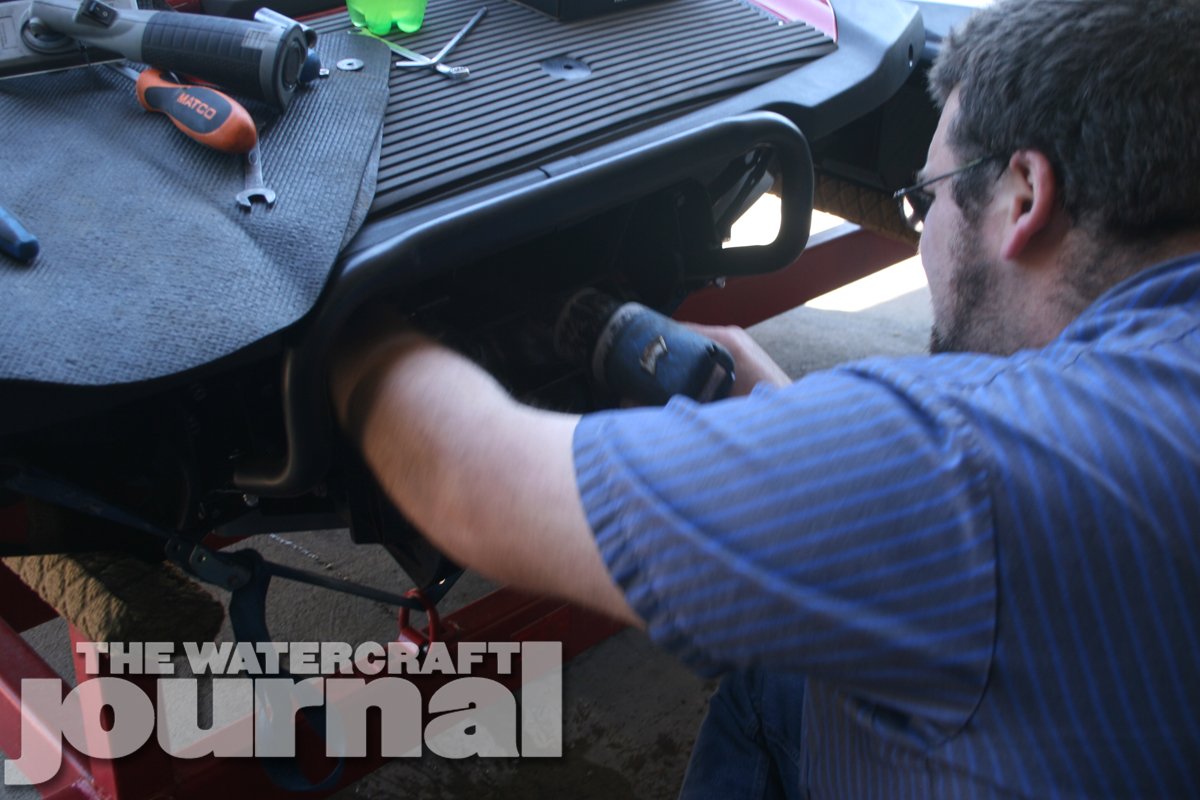
Replacing the RIVA collar proved a little time consuming as the throttle body is buried (inverted) below the intake manifold, but is well worth the time spent.

The $39.95 kit is a tapered billet sleeve that replaces the mesh element (or “flame arrestor”) effectively increasing air flow. The exchange is a little time-consuming as the inverted throttle body is a bit difficult to reach for many. Nevertheless, the time spent was worth while as we immediately picked up over a mile-an-hour, hitting a GPS-confirmed 64.3mph.

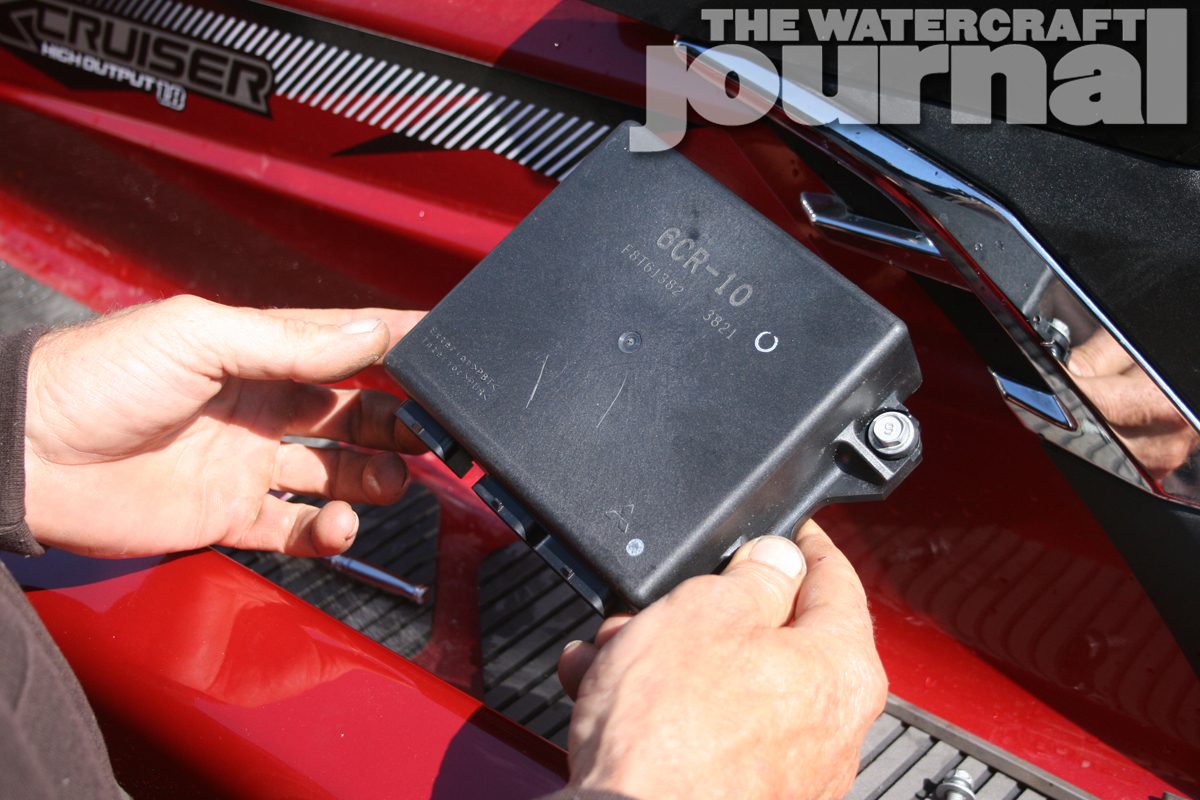
Our second step was our most radical: We turned to Greenhulk.net’s Jerry Gaddis for a custom ECU tune. Jerry happily accepted our FX HO’s ECU and reflashed it with PWCPerformance’s VXR/VXS/FX HO 1800 Stage 1 ECU tune. Priced at $674.96 (using the “greenhulk” 10-percent discount coupon code), it was our most expensive modification. Not only did this tune bump up the stock rev limiter to an excessive 8,350rpm, but gained us an advertised 20 horsepower.

13
Don’t judge an ECU by its cover: this new engine management unit was reflashed by PWCPerformance using a V-Tech Tuned program and is worth 20 extra horsepower and an easy 2mph when paired with other aftermarket parts.

Of course, to fully benefit from the new tune certain modifications are strongly suggested including installing aftermarket air intake and exhaust modifications, as well as depitching the stock impeller 2-degrees to allow the engine to turn more rpms. And alas, we now were regulated to running strictly 91 octane fuel. While Jerry promises a 2-plus-mph gain when these modifications are made, we clocked 65.4mph, a solid mile-per-hour over our previous run.

12
The ECU swap is literally no different from that of a stock ECU, as it is a stock ECU (on the outside), and takes minutes to change out.

With each subsequent modification we knew we’d unlock more performance from the retuned ECU as it was struggling to process air through the restrictive factory air intake and exhaust. But next on our list was to replace the stock 14/22 prop with a beautiful Skat-Trak Swirl 155mm impeller. Like changing the rear gears in your car, a repitched prop can massively effect the performance of any personal watercraft. We need a prop that would spin our engine rpms up and earn us some much needed speed.

11
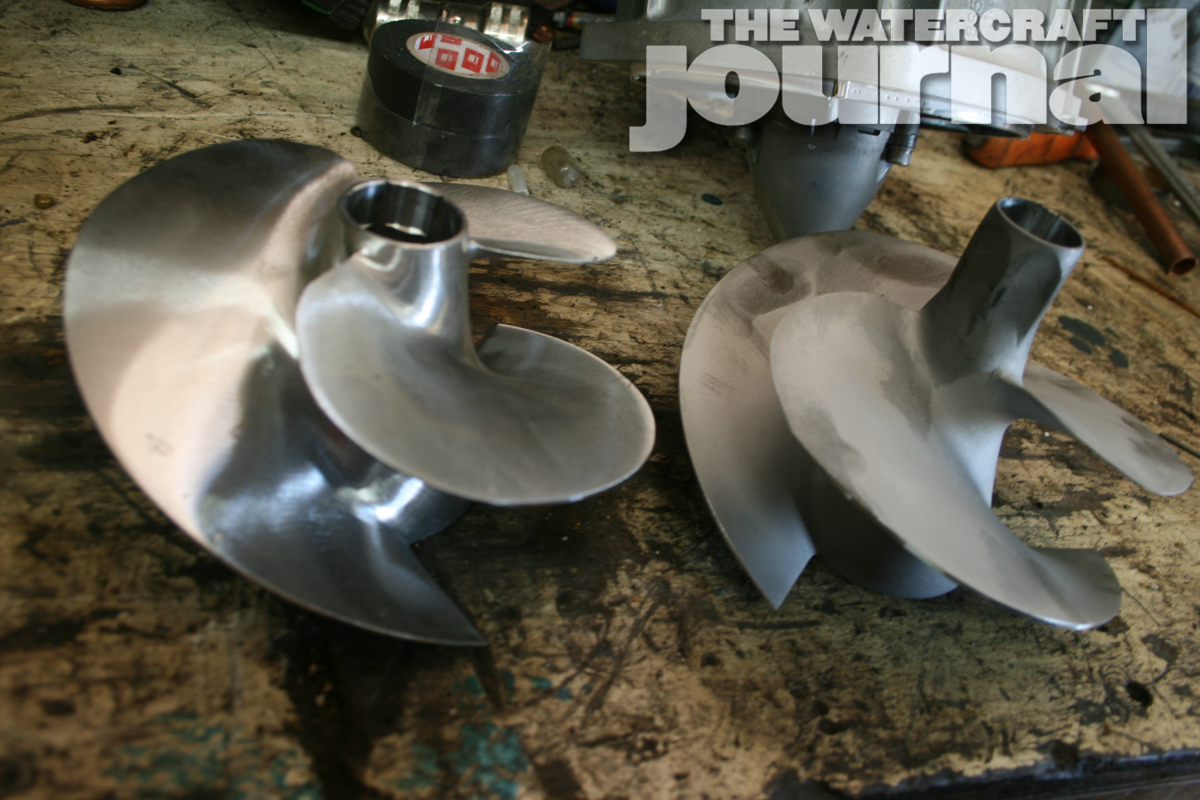
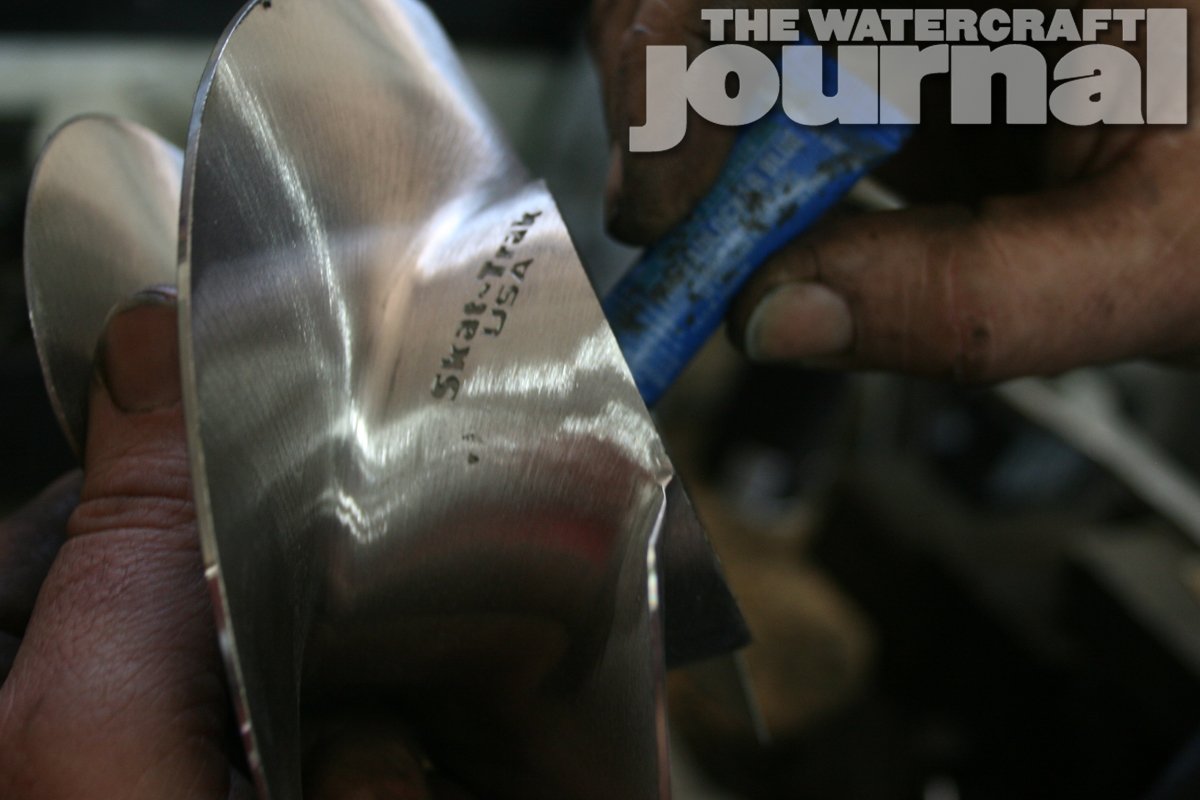
We had our 12/19 Skat-Trak prop repitched to a slightly more aggressive 12/16 which bumped up our rpms to 7,700 and earned us one of our biggest speed gains.

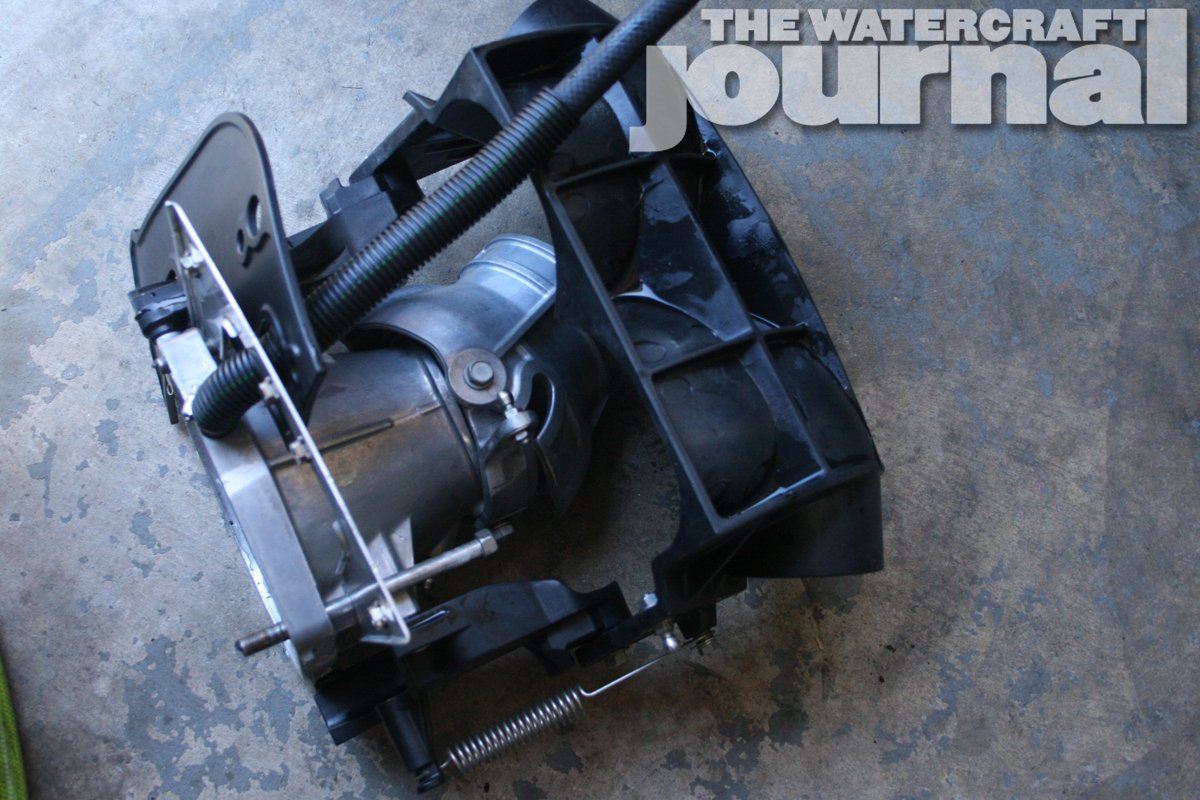
Retaining the stock 155mm pump, we reached out to Skat-Trak to help motivate our 1.8L WaveRunner. At $339.95, the Skat prop was an imperative purchased, and given their absolutely incomparable level of expertise, we saw no other route. With our new 155-75-25 Swirl impeller in hand, we went to Woody’s Raymer Motorsports in Paris, Tennessee to perform the swap. Staffed with certified Yamaha technicians, they quickly pulled the factory reverse bucket and nozzle, and the pump.

7
The new 12/16 Skat-Trak impeller, featuring a splined front snout, is noticeably different from the factory Yamaha prop. For those who know, breaking the factory prop loose of the shaft can be a serious chore. Because of this, the Skat prop requires their Skat-Trak splined impeller tool. Once installed and topped with the billet locking collar, the pump came back together in short order.

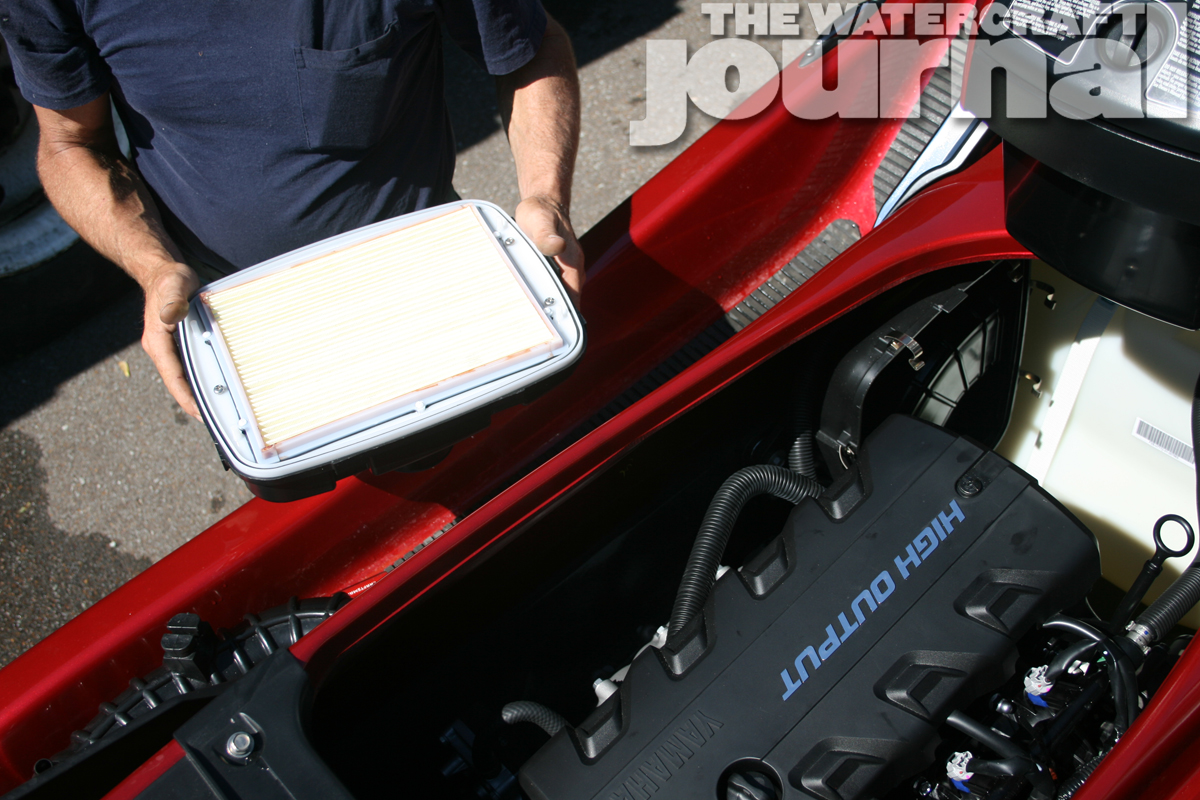
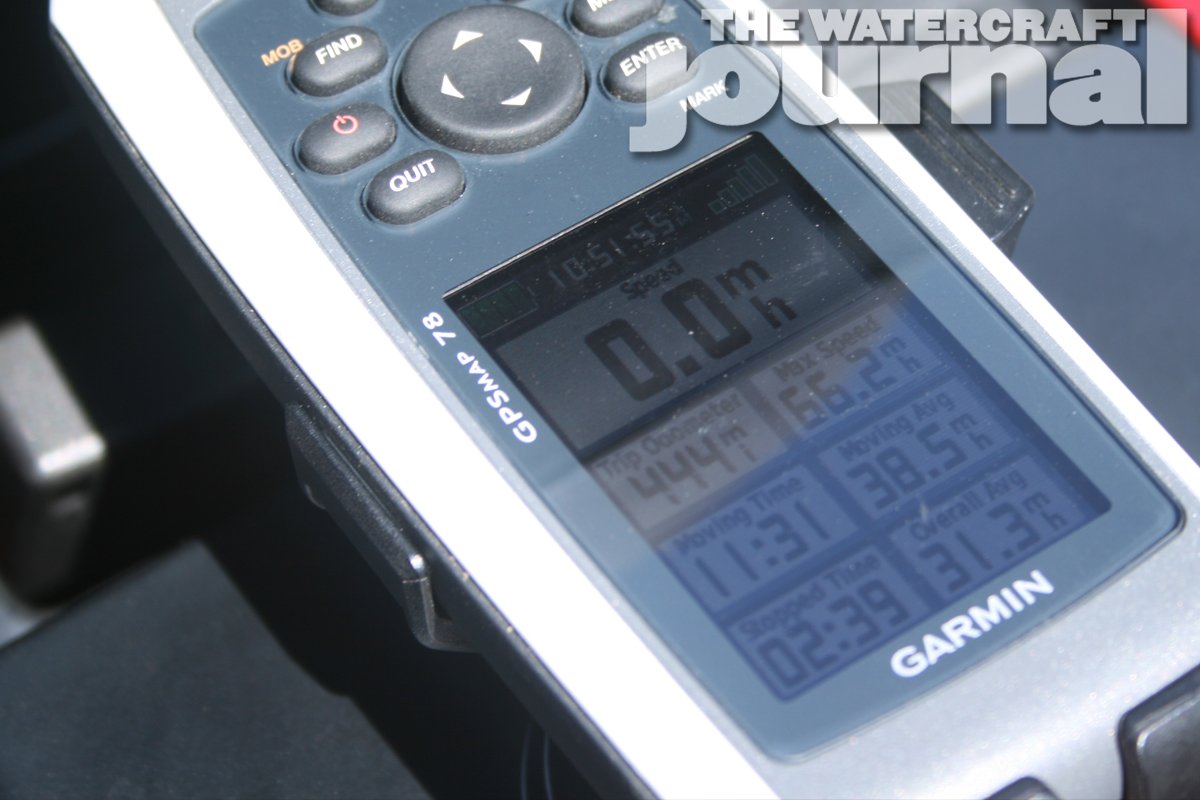
Although we had lost of the morning’s cool, dense air, we were still able to snap off a decent 66.2mph at 7,700rpm. Thinking our day to be over, we had one last hair-brained idea. Pulling the seat one last time, we popped open the factory air box and removed the large paper air filter element. Of course, we knew most of you would dare ride your ski without proper air filtration, but we wanted to see if we could move the needle.

And, surprisingly, it did! With the noonday sun rising into position, we tripped the GPS at 66.5mph. We knew that opening up the exhaust would gain us a few more miles-per-hour but hated the idea of running a noisy waterbox-less exhaust. A true cold air kit too would offer us some more speed, but we couldn’t see it being much better than running without the air filter.

21
Although we never suggest running without an air filter, we yanked the factory paper element and ran with the OE air box open.

Ending our experiment there, we unfortunately fell below our 68mph goal. All in all, we spent a total of $1,200 in aftermarket in parts and labor to get us from 63 to 66.5mph. What stings all that more when we realized that the difference in price between a FX HO and a FX SHO is just $1,300, so for $100 more, we could gain 2.5mph and keep both our factory warranty and use of 87 octane. While we might’ve failed, we did realize what kind of smokin’ deal Yamaha’s pricing is on their stock watercraft.

2
No matter every trick we threw at it, we did our very best to match the stock speed of a supercharged Yamaha SHO-equipped FX, but came up a few mph short.
7 17 21 2 11 16 12 13 5 1 3 4 6 8 9 10 14 15 18 19 20
<
>

Video: Help Support Professional Female Flyboarders to Compete in King’s Cup

0

nellie3

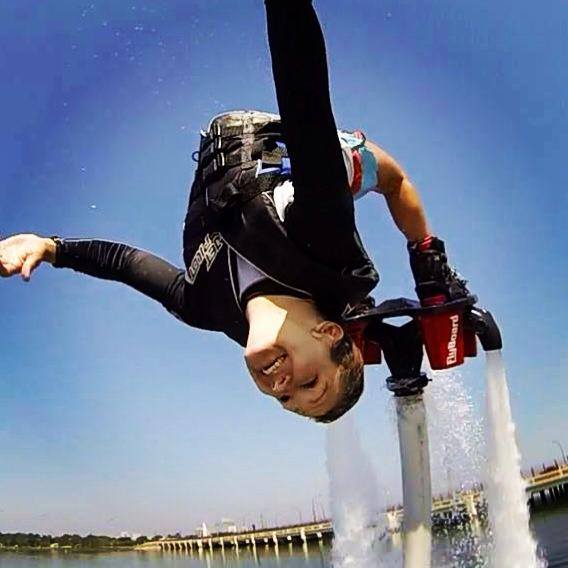
Slated for December 3rd through the 7th, the 2014 Jet Ski World Cup – better known as the King’s Cup – is fast approaching and is promising to be an exciting week of racing and competition. With athletes converging from around the globe, the rosters are filling up fast to quality and enter. That is why the female duo from Team USA from Full Throttle Flyboard Club, Florida need your help. Nellie Kubalek and Kristen Smoyer are vying for fiscal support to compete in the 2014 Flyboard World Cup held December 4-6 as part of the King’s Cup.

Both athletes have qualified for World Cup competition, representing the USA, they just need help getting there. They’ve started a gofundme campaign to help crowd-source the necessary $4,000 to travel to Dubai and participate in the international showdown. Right now, the ladies are quite a ways away from their goal, so any help is appreciated. The official bios on the two are as follows:

“Nellie Kubalek is a female Professional Flyboarder with over 2 years of dedication, hard work, and perseverance taking this sport to a new level. She dedicates her time to training others, advancing their skill set and educating the world on this new gravity-defying new sport. Nellie was the only female in the USA to qualify for the 2013 Flyboard World Cup. She has been featured in the 2014 AquaX and P1 SuperStock series. Follow Nellie and her flyboard adventures at Flyboarder Nellie Facebook

“Kristen Smoyer is an up and coming new flyboarder. She started flyboarding only 5 months ago and has more than proven herself to reach for the gold! Kristen began this sport as a hobby and quickly evolved in the flyboard world under the coaching and guidance of Nellie Kubalek. Kristen’s favorite trick on the flyboard is a backflip. She dedicates her time in the community working with children and strives to be a role model for young female athletes. This is Kristen’s first time qualifying for the World Cup.”

Video: Prepare To Be Stoked For PWC Arena Racing in 2015

0

10395814_560919734038321_8398307360523653396_n

In the wake of a less than chart-topping IJSBA World Finals in Lake Havasu City, Arizona, there’s been a whole lot of chatter that PWC racing is dead or inconsequential. While the latter is the subject of its own year-long series of in-depth reports, the first is definitely untrue. In fact, the statement is so far off base that The Watercraft Journal has made it a point to help announce every new and exciting format for future PWC racing the first moment we learn of it.

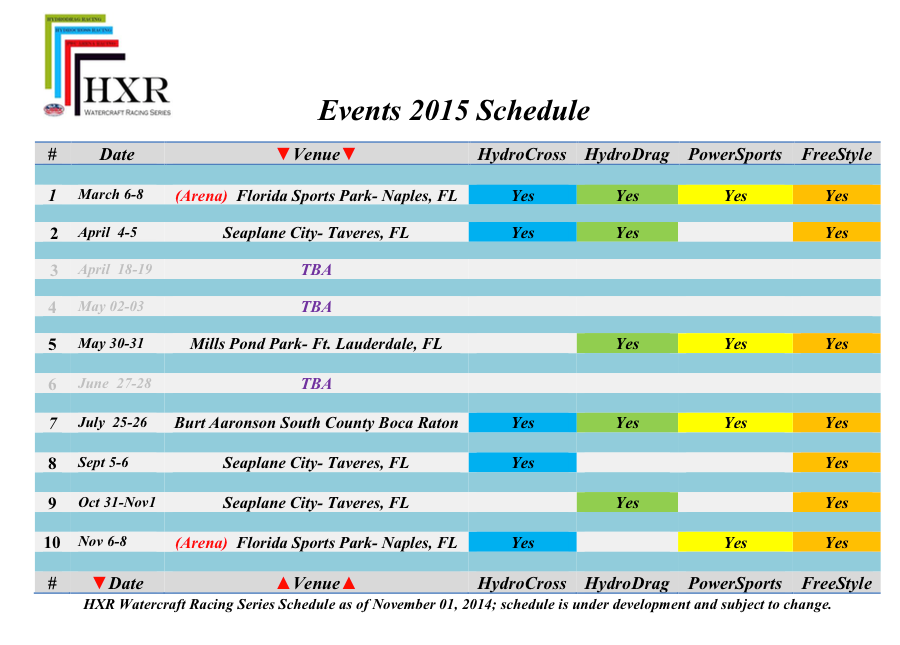
Earlier we told you that it was our honor to participate in the coverage of the soon-to-launch PWC Arena Racing series happening in conjunction with Florida’s HydroCross and HydroDrag series. But many missed the message or even the implications of what Arena Racing means to the world of competitive PWC racing…so let us elaborate:

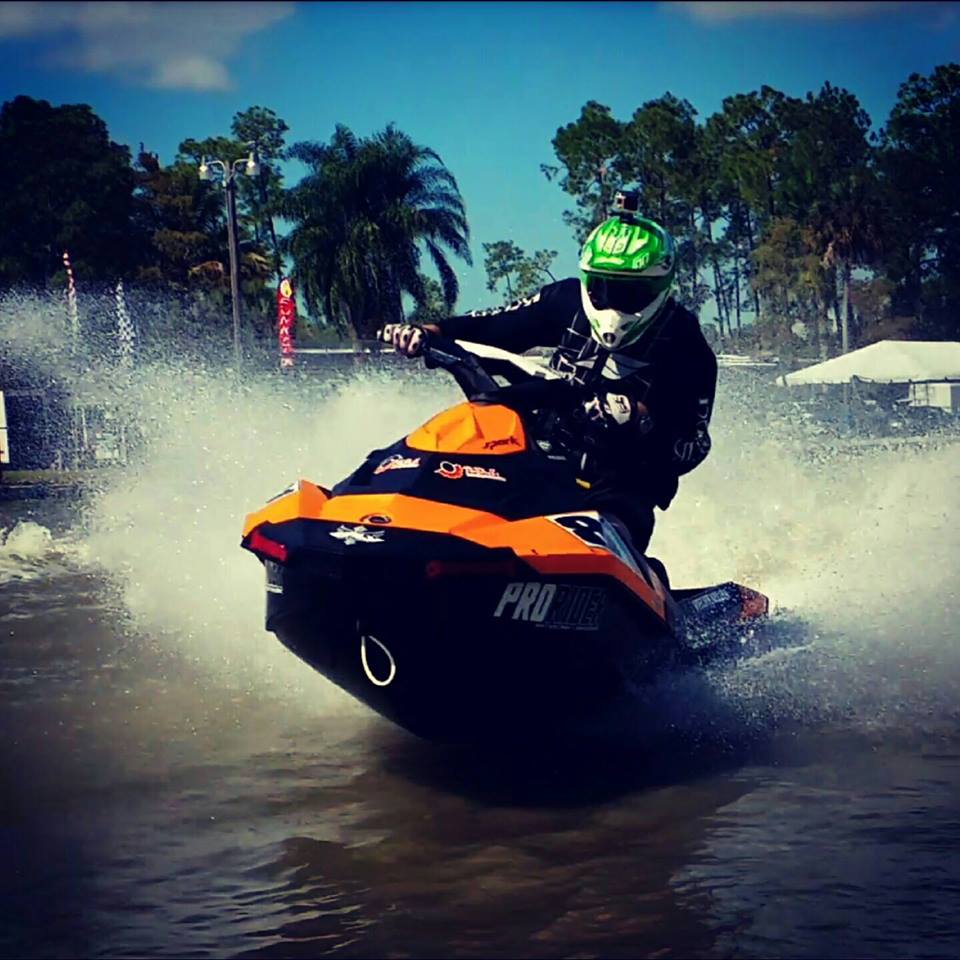
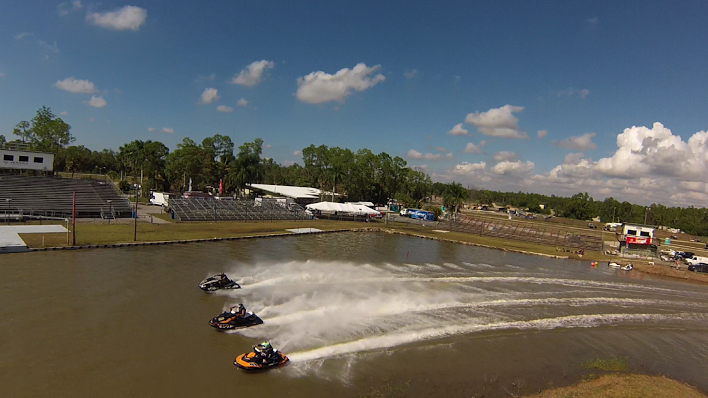
PWC Arena Racing is what it sounds like; personal watercraft racing held on the water of an outdoor arena setting. Arena racetracks are commonly used for high-speed boat races and are primed to be a PWC venue. The arena platform “creates a watercraft-racing format that is visually spectator friendly from the bleachers and easily understood by both the crowd attending the event and the racers competing,” as the official PWC Arena Racing website states. Unlike other shoreline-based events, watercraft racing in a closed arena setting provides an up-close racing experience unlike anywhere else, placing the spectators safely near the action.

Now with an all-new website for both PWC Arena Racing and HydroCross Racing, you can keep up-to-date on all the latest action. But until then, here’s a graph of the proposed 2015 events as well as a quick video on what to expect:

Screen Shot 2014-11-12 at 3.34.04 PM

Watcon Joins The Watercraft Journal For 2014/2015

0

1040873_479820268795648_1347290895_o

We’ve said it before and we’ll say it again, while many are looking at these winter months as the time to hang it up and curl up by the fire, the hardcore personal watercraft enthusiasts are getting their shops and garages ready for several months of good old fashioned wrenchin’ and toolin’. Superchargers are being rebuilt, jet pumps are being modified, and handling parts are being tightened down…all to be the fastest, hardest-hitting, and sharpest handling PWC on their lake.

That is why all of us at The Watercraft Journal are so proud to welcome Watcon to its family of supporting advertisers. Supplying all of North America with the very best in performance parts from the most established and highest-acclaimed aftermarket companies in the sport, Watcon is all about increasing the performance of your runabout or jet ski.

We spotted a fun little note over on Dustin Farthing’s Instagram feed that read, “If you’re not planning for 2015, you’re already behind.” And that goes for just about everything. That is why now is the time to hit up Watcon. The one-stop personal watercraft shop, Watcon is a major vendor for RIVA Racing, Western Powersports, Fly Racing, Hot Products and Parts Unlimited, not to mention Original Equipment suppliers for Yamaha, Kawasaki, Sea-Doo, Polaris and Honda.

Owned by Rock County Jet Ski in Janesville, Wisconsin, the RCJS crew can do anything from minor maintenance to full-on custom builds and race machines. Available online, via email or phone, get your hands on all the goods necessary to pump new life in to your PWC today!


Sea-Doo GTX Melts in Storage Facility Fire

0

10464370_10154831346260512_6492502339720451411_n

First, let it be understood that at temperatures over 414°F, all of the polymer plastics found on today’s modern watercraft would pool in to a puddle of sticky goo, so don’t think that what you’re seeing is strictly a Sea-Doo problem. Be it a Kawasaki, Yamaha or Sea-Doo, blistering temperatures that reduced this GTX 155 into a Salvadore Dali painting, would do the same to any machine.

Unfortunately for the aunt of Greenhulk PWC Performance Group member, Phil Rottschafer, her recently winterized Sea-Doo only one of several victims of a storage facility fire, including a Yamaha FX WaveRunner and some other household items. Thankfully, the facility in question was insured and Phil’s aunt will be enjoying a new Sea-Doo runabout for next year’s riding season.

Yet, many are not as lucky. Tens of thousands of personal watercraft enthusiasts entrust their prized machines to dealerships and jet ski shops to properly winterize and store over the winter months. While there are several benefits to this (recently, The Watercraft Journal wrote a feature article on having your PWC stored by such facilities), it is imperative that you investigate which of these are fully insured for such a disaster.

Of course, and here’s the kicker, the best course of action is to personally insure your personal watercraft. McGraw Insurance‘s Personal Watercraft Package (which includes jet boats under sixteen 16-feet, jet skis, wet bikes, etc.) provides coverage against $15,000 in liability coverage, theft, fire, collision, hull damage, sinking, damage to another watercraft and injury to another person.

Play it safe. Just because your ski isn’t on the water doesn’t mean it can’t get damaged.

Diptech Performance Offers Big Power Kawasaki and Sea-Doo Performance Kits

0

10644938_351801404944742_6759087018422594994_n

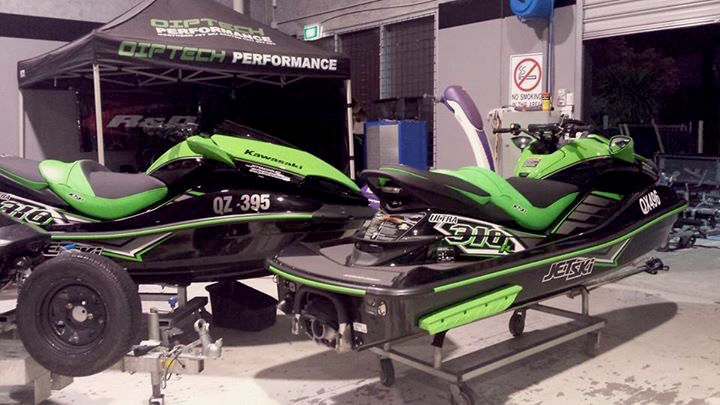
For many north of the equator, these are the months to either mothball your personal watercraft as the winter chill makes riding just too unpleasant, or the right time to start wrenching on next year’s project. Meanwhile, to our Australian friends, this is the beginning of summer – and just as important to get your ski running its very best. That is why our pals at Melbourne, Australia’s Diptech Performance are offering some seriously sweet deals on ready-to-run performance kits for all 310-series Ultra Kawasaki JetSkis and all 260-horsepower supercharged Sea-Doos.

While Diptech’s Kawasaki kits are boasting an impressive 15-horsepower jump (making it an even 330HP), it’s Diptech’s Sea-Doo packages that are really making waves. Consisting of RIVA Racing’s a reflashed ECU, an open-element cold air intake, through-hull exhaust with a high-flow waterbox, valve spring retainers, and supercharger rebuild kit, the Sea-Doo kit promises a true 300-horsepower. Of course, all that new found power doesn’t add up to much if you can’t it hook up, so the package includes a trick Solas prop.

Currently, Diptech is cranking out quite a few of these Sea-Doo installations, and understandably so as they’re giving them away at $4,500, but there’s always room for you! And owner/operator Anthony DiPietro also reminded The Watercraft Journal that Diptech is Australia’s number one supplier for Jet Trim seat covers and a major retailer of Jet Pilot products, from riding apparel, race gear and even tubes and water toys!

10710926_345827798875436_2574794652875953107_n

A Hole In One: 2015 Yamaha VX Cruiser WaveRunner

0

VX1

4Starting with a blank sheet and decades of proven modeling experience and techniques, Yamaha sought to completely redesign its bread-and-butter VX Series. The difficulty in doing so meant jeopardizing its position as the single highest-selling personal watercraft ever. The gamble was hedged on the fact that enthusiasts were gravitating towards other models (either within the Yamaha WaveRunner lineup or to other brands) for a greater variety of riding characteristics, advanced technology options and creature comforts.

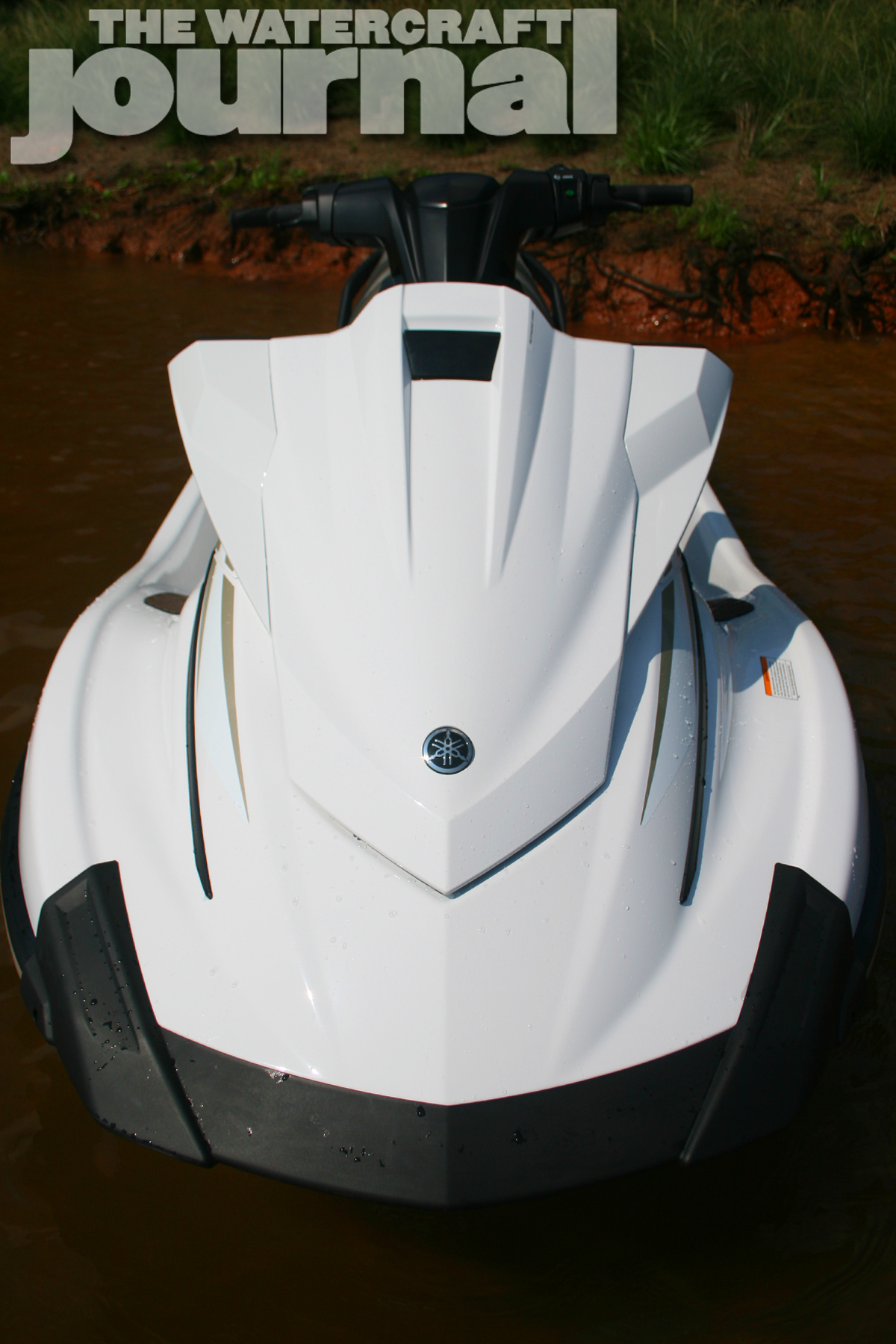
Drawing much from its larger siblings, the redesigned VX lineup features new sharp, masculine lines that compliment the longer (by 131.5-inches) and wider (48-inches) hull. This increased platform only bumps the overall weight to 730 pounds (dry), still well below comparable units thanks to Yamaha’s featherweight NanoXcel material, but radically alters the way the outgoing VX hull handled.

10
Yamaha’s new 2015 VX Cruiser is redesigned from bow to keel, with a larger, wider swim platform covered in two-tone Hydro-Turf matting.

Although still retaining a little bit of its looseness in the tail, the new VX is significantly more responsive to both the new fly-by-wire throttle and steering. A new rounder keel, modified strakes and softer chines, coupled with an all-new intake and rideplate help the revised VX to rise to plane faster and slice through chop far more deftly than ever before. At throttle, long sweeping turns are smooth and solid. For shorter, snappier handling, the VX is still very playful and can whip its tail around with a goose of the throttle and a snap of the bars.

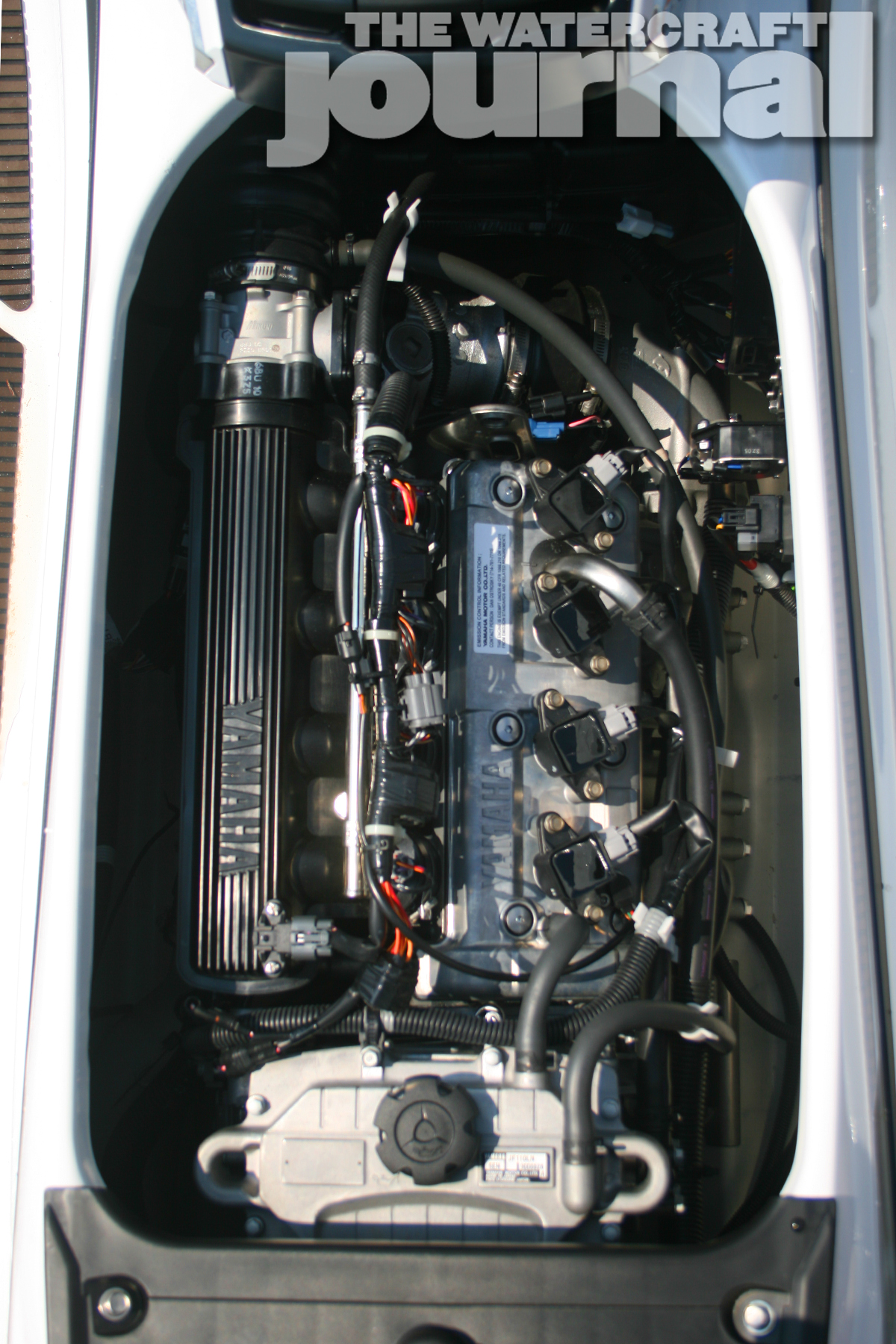
Escalating through the whole VX lineup is Yamaha’s 1,052cc four cylinder, 4-stroke Yamaha Marine engine, that is until reaching the VXS and race-ready VXR (that receives Yamaha’s grunting 1.8L High Output engine). Beneath the widened swim platform is a 155mm pump. Running happily on the “cheap stuff” 87 octane all day, the fully-equipped 2015 Yamaha VX Cruiser WaveRunner we tested hardly dented its 18.5 gallon tank even over the over two days we had to familiarize ourselves with the new machine.

7
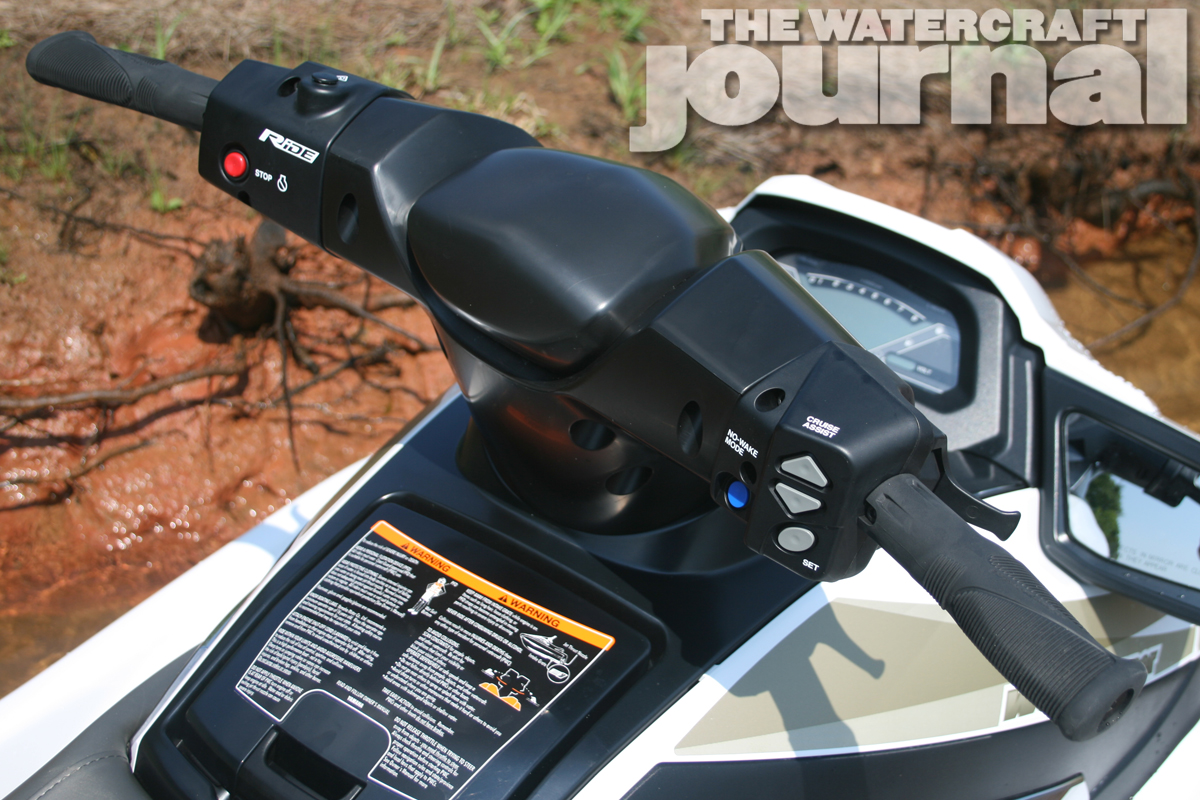
The big addition to the redesigned VX lineup is the inclusion of Yamaha’s RiDE dual-throttle system, allowing for immediate braking and easy docking.

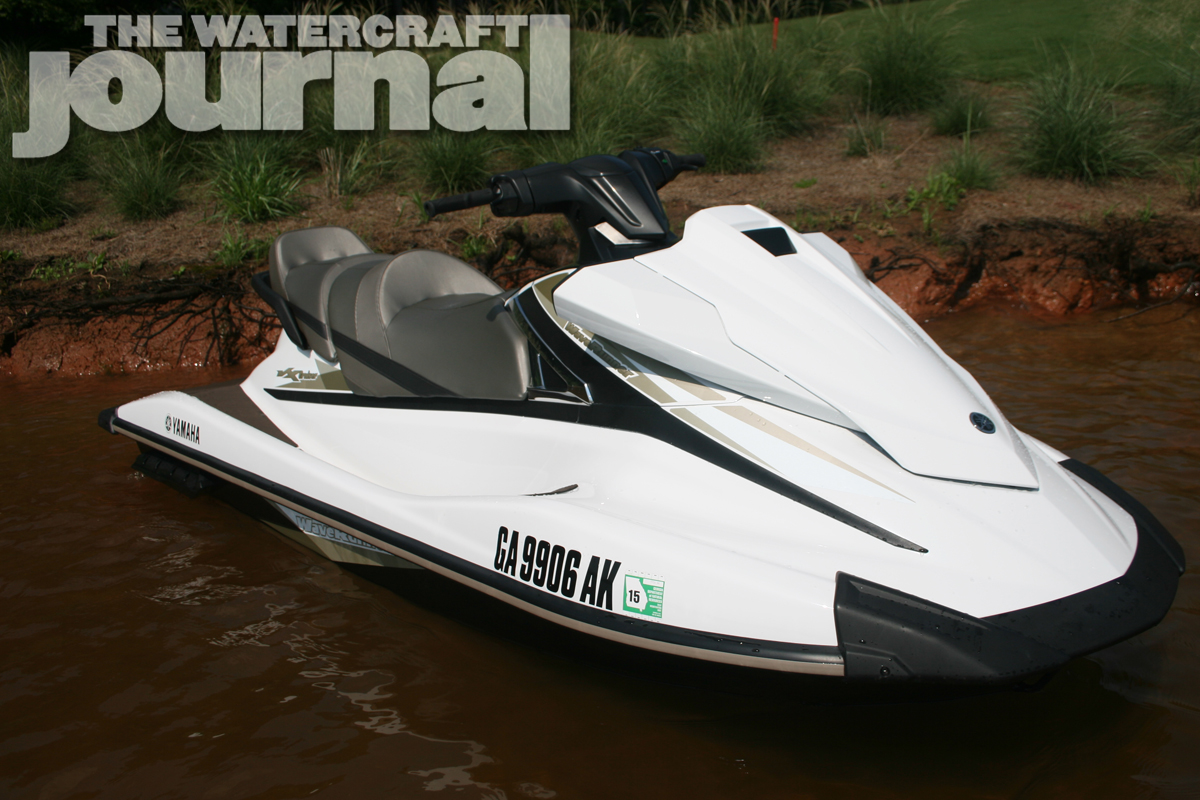
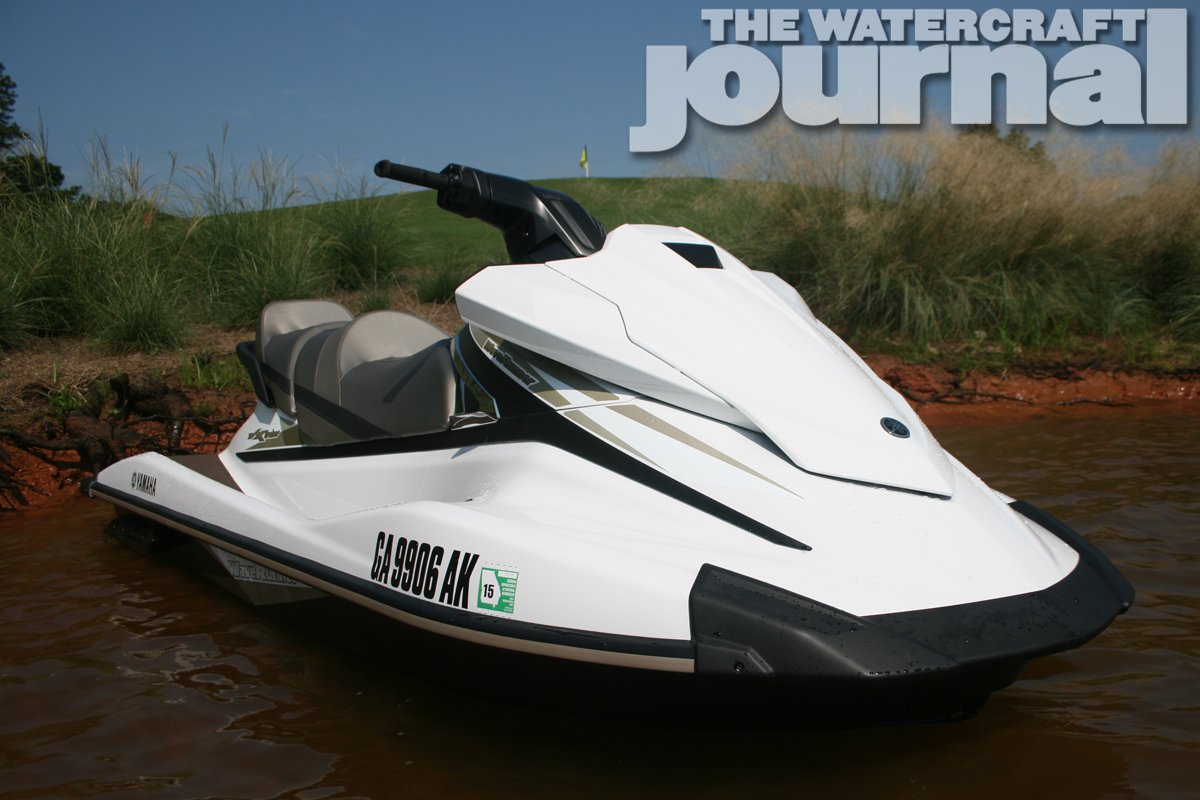
In that time we found the new VX Cruiser pleasantly deceptive; it’s less of a swollen VX but a slightly shrunken FX Cruiser. And its not hard to imagine that was Yamaha’s plan all along. Not only taking from the FX’s aesthetic design, the new VX Cruiser is also lushly equipped for what the company still refers to as their “Versatility” models. Swathed in Yamaha’s popular Pure White hue with gold and chrome accents and two-tone Hydro-Turf coffee-and-black traction mats, the Cruiser also comes in Yacht Blue Metallic if so desired.

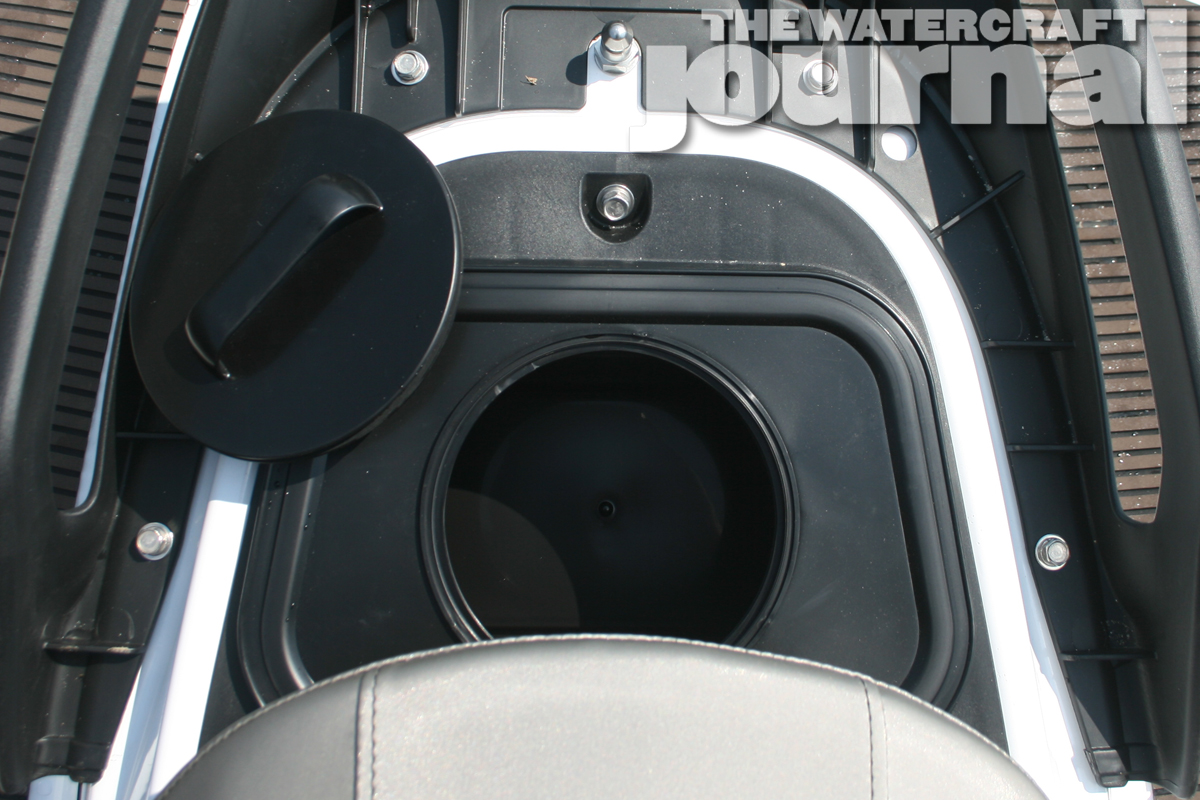
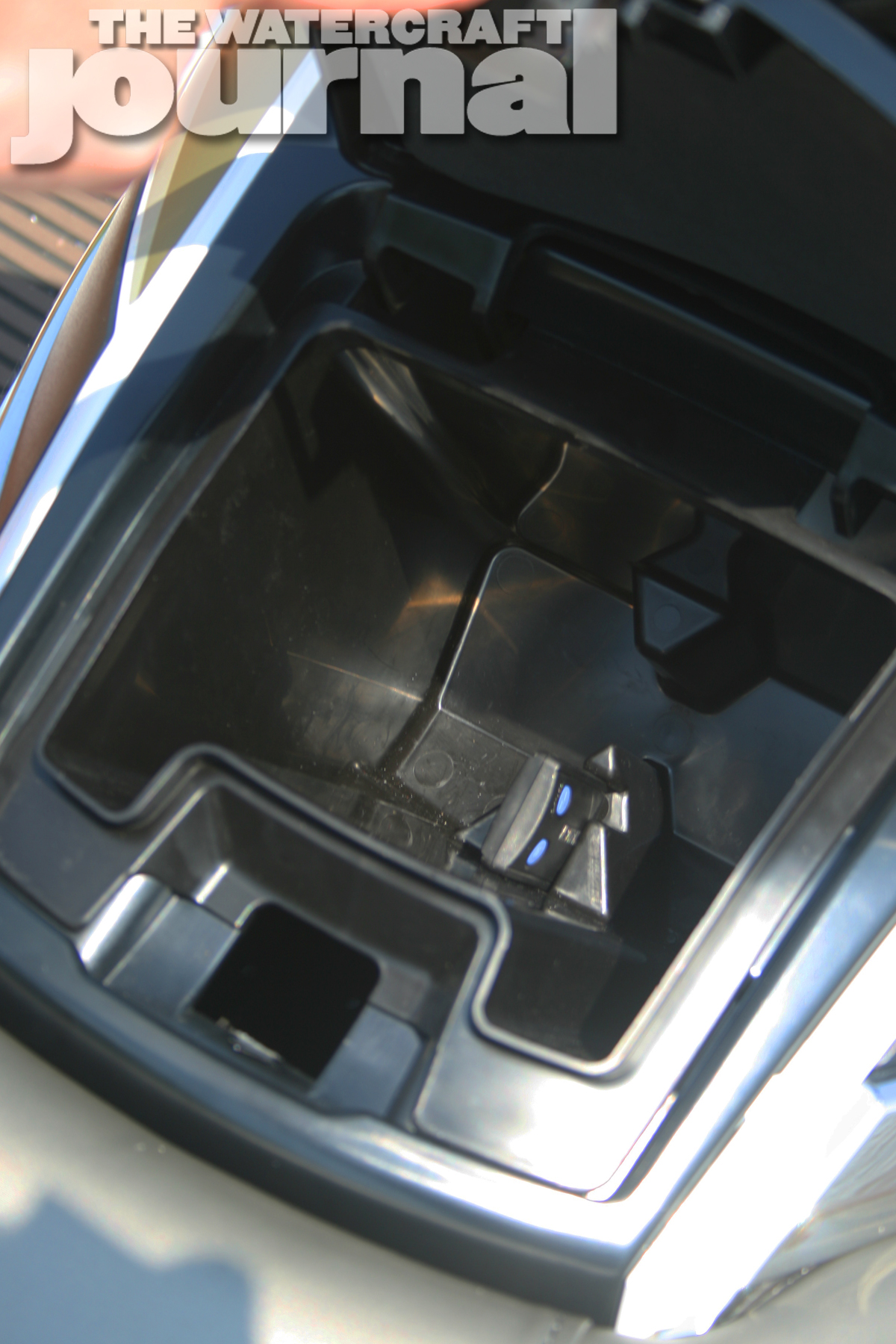
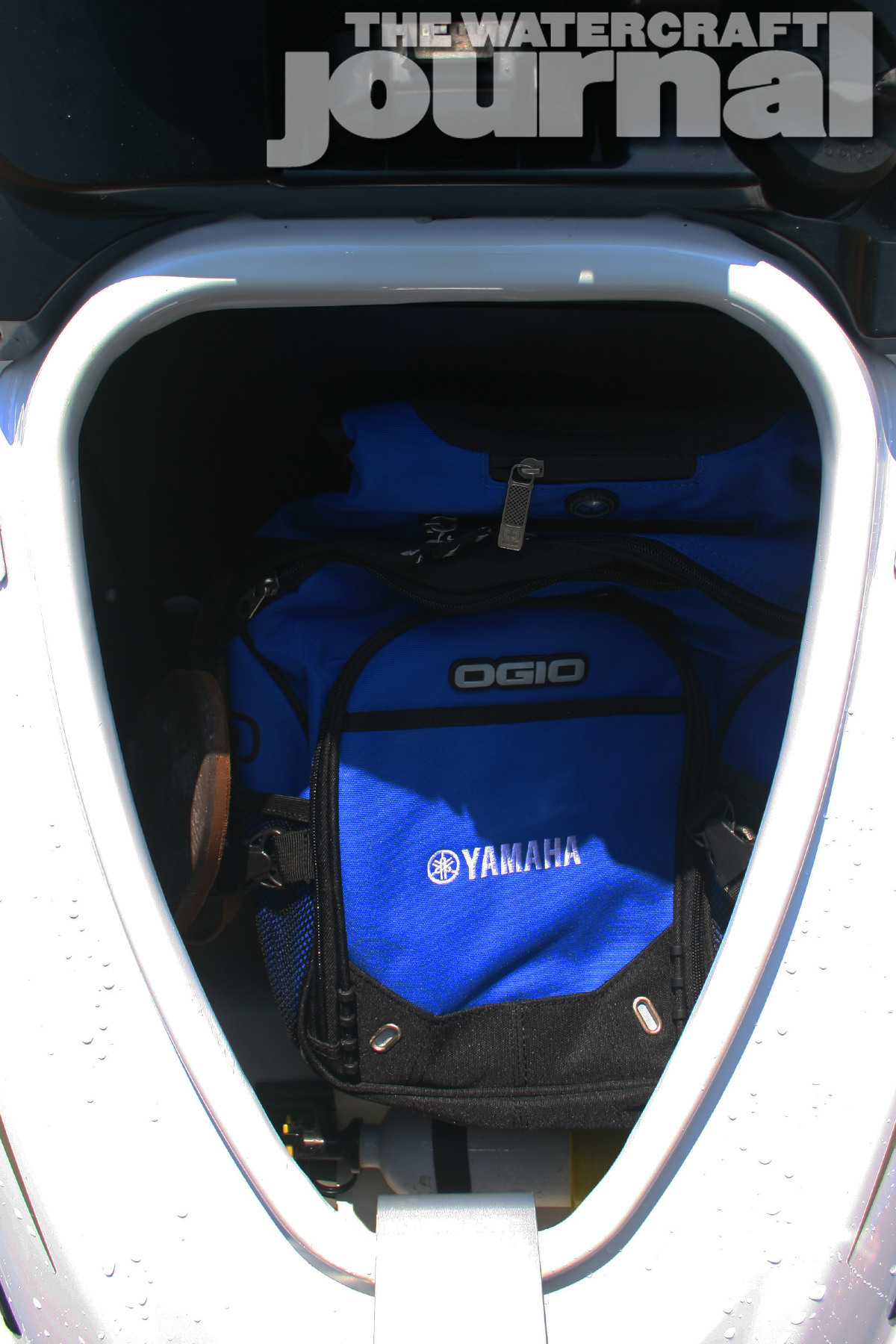
Storage (like everything else) is bigger too, with 24.6 gallons total including a wrist-deep glove box and a screw-top watertight storage bin tucked beneath the rear passenger, yet another feature previously only found on the FX and FZ series. Yamaha also split the previous one-piece seat into two, making accessing the rear cubby all that much easier. The hood opens and snaps into place, revealing a shallow but wide bow stowage. The aforementioned two-piece Cruiser bench is comfortable, broad at the seat and narrow at the knees.
3
Available in either Pure White or Yacht Blue Metallic, the VX Cruiser is the most luxurious, well-equipped 3-seater runabout available on the market for less than $10,500.

Obviously, the biggest addition to the VX and the whole Yamaha lineup is the addition of the brand’s new RiDE dual-throttle control system. Unlike Sea-Doo’s iBR, which employs the left trigger as a sort of gear lever, having the driver toggle through reverse bucket positions, the RiDE system is literally a throttle unto itself. Without ever touching the right-hand throttle, a driver can back off of a trailer, spin around and pull alongside a dock using strictly the left-hand RiDE throttle.
Thankfully, Yamaha engineers have balanced the RiDE’s traction-controlled thrust to respond in respect to each vehicle’s weight and power output, meaning the engine’s ECU and BCU will not respond as abruptly as it might with a SVHO-equipped FX Cruiser on a VX Deluxe, and vice versa. Of course, if initiated simultaneously, the left-hand will bring the WaveRunner to a halt by deploying the dual-exit bucket and eventually engage reverse if held down. But, if only gingerly deployed, the reverse bucket can gradually decline, acting more as a buffer than a brake.

5
Splitting the Cruiser seat into two-parts, Yamaha included a screw-top watertight storage bin in the VX Cruiser that only previously was found with the larger FX and FZ series.

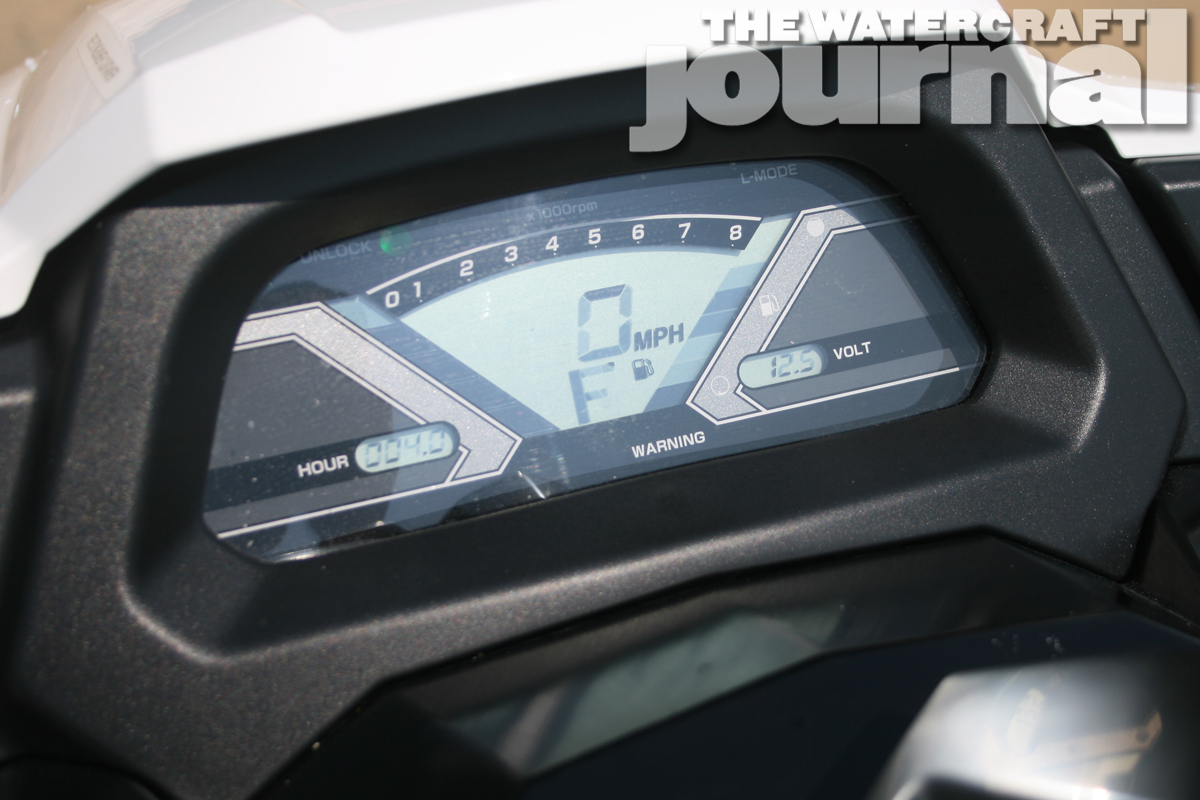
Of course, the other side of the Cruiser coin is the inclusion of Yamaha’s simple-to-navigate Cruiser Assist and No Wake modes. Toggling through speeds is a simple enough task, and although a little slow to respond to initial inputs, setting the cruise control on the fly is easy enough. The new LCD screen is wide and easy to read at speed. And don’t forget the wide and contoured folding swimstep that folds flush to the bond rail.

Par for the course, the VX Cruiser is comfortable, economical and fully-equipped, rightfully earning its place at the top of Yamaha’s Versatility lineup. Priced at $10,299, the VX Cruiser is a marked increase from the outgoing model, but arguably, you’re getting much more machine in exchange for the slight bump in price tag.

2
The new VX features redesigned digital instrumentation found in a wide, easy-to-read info display.
5 10 4 2 3 1 7 12 11 8 9 6
<
>

The Watercraft Journal Partners With Jet Angler For 2014/2015

0

150727_10150816996701558_1218682276_n

Well, if that pesky Polar Vortex everybody is freaking out over actually does what is predicted, we might be repeating last year’s rotten (and stupidly long) wintertime. But, seeing that the chilly temps that shut down so many of us in the northern latitudes scantly touched our PWC-loving brethren down in Florida and along Southern California’s coast, there is still plenty of watercraft racking up riding hours. And, like our warmer climate residing friends, we too at The Watercraft Journal will be not dissuaded from mounting up and bringing you some of the best coverage around the States and beyond.

To whit, we are all very, very excited to announce the official partnership between your favorite personal watercraft enthusiast publication, The Watercraft Journal, and America’s coolest outfitter of jet ski fishing apparel, Jet Angler. Not only will you see monthly updates here about all of the awesome deals to be made on sweet swag and gear, but Jet Angler owner, Marc Samulewics is also a contributor as well! Marc has already provided The Watercraft Journal will some stellar fishing photography, mapping and useful info, but top notch product reviews! Oh, and there’s plenty more to come.

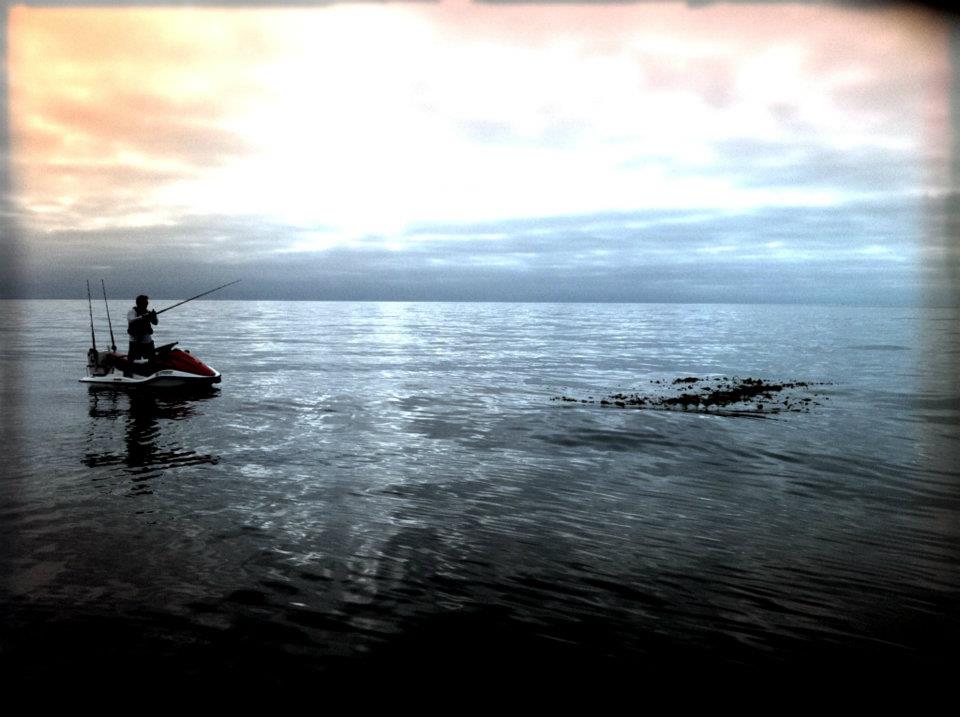
As many might be aware, PWC fishing or what many refer to as “jet ski fishing,” (what we have often called “jet angling”) is a huge sport in its own right outside of the States, primarily in South Africa, Australia and New Zealand, as well as other hot spots throughout the Southern Hemisphere. Only now, particularly through pioneers like Marc and of course, our own “Jet Ski Brian” Lockwood, has jet angling come to America. We know a lot of you are avid fishermen and women and we look forward to bringing you tales of bloody footwells, big catches and bigger “fish tales” in the coming months!