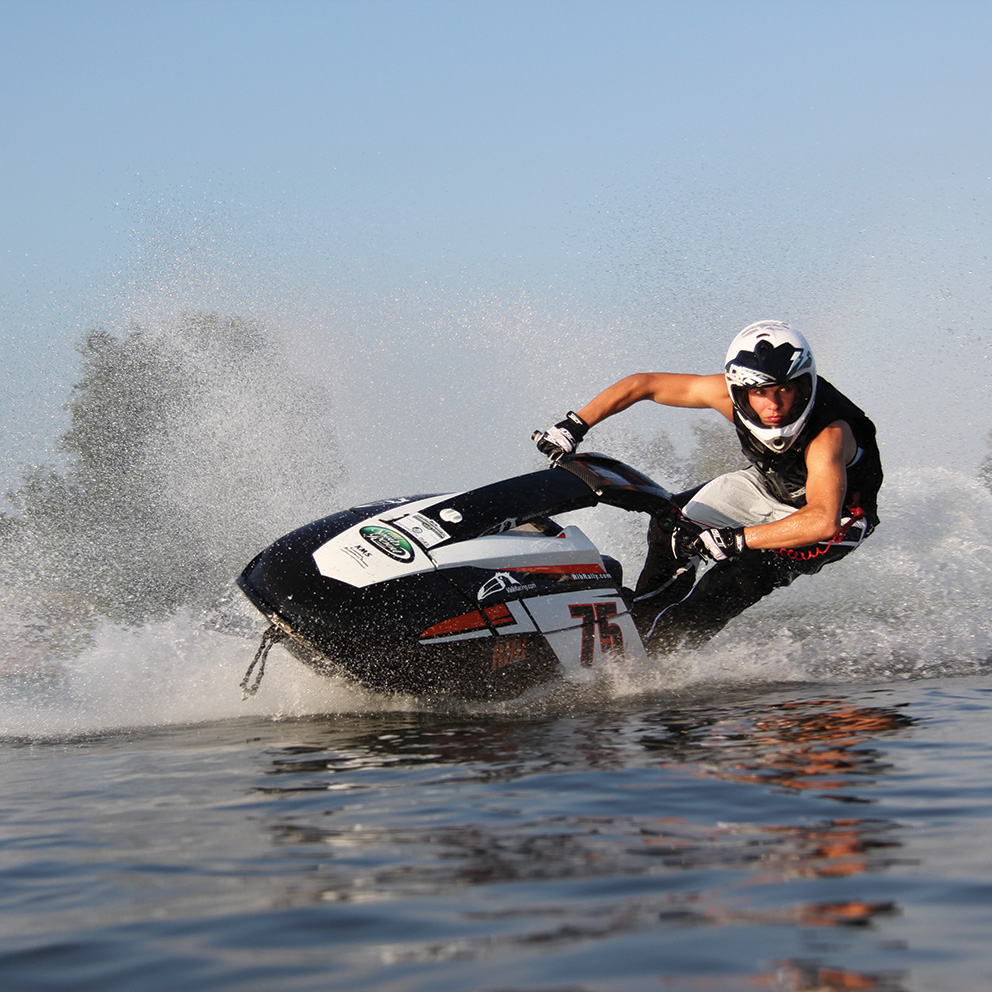
It wasn’t but last week that we helped announce the Miss Ruthless 2015 contest (which, if you’re looking to enter, you’re running out of time), and now we’re happy to share Jobe’s PWC Movie for 2014. Although it’s not much of a movie, but really a fun teaser of their new 2014 “Ruthless” personal watercraft line of swimwear, wetsuits, life vests, helmets and other needful riding gear and apparel.
As it states on the official Jobe website, “One month from now and it’s officially Spring! Temperatures will start to rise and taking your PWC to your local lake will become a common habit again. No better time to take two minutes and check out our all-new PWC range in the Jobe PWC Movie 2014!”
Although not a common choice among us Yanks, Jobe holds a major international presence in both professional racing and recreation markets across Europe, Australia, New Zealand and elsewhere. We’re hoping to see more Jobe products here in the States and on the backs of more professional and amateur riders throughout the 2014 season.
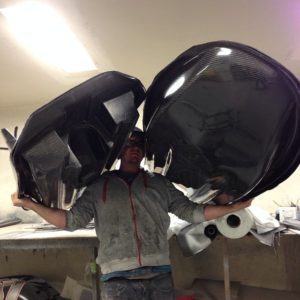
Derrick Kemnitz’s ad starts, “Any Bay Area locals looking for a job, or know of someone who is?” Thankfully, as the winter months have warmed to Spring, so has the demand for state-of-the-art lightweight carbon fiber freestyle and freeride hulls.
“Business is booming and I’m looking to get a fourth person in the production line for Hurricane Industries. Jet ski and composite knowledge not required, as training will be given over time. Just need someone who can use a paint brush to start full time.”
With a invoice roster five deep for new hulls this month alone and plenty of more work to come, now is your chance to learn a fast-growing trade as well as get really involved in the industry. Derrick says he’s looking to hire as soon as humanly possible, so there’s no long interview process.
If you’re seriously considering this position, please reach Hurricane Industries’ owner Derrick Kemnitz Jr. at (925) 706-2858 or via email at [email protected]. Hurricane Industries is one of the industry’s fastest-growing aftermarket PWC hulls as well as PWC composite parts, graphic kits, decals and apparel.
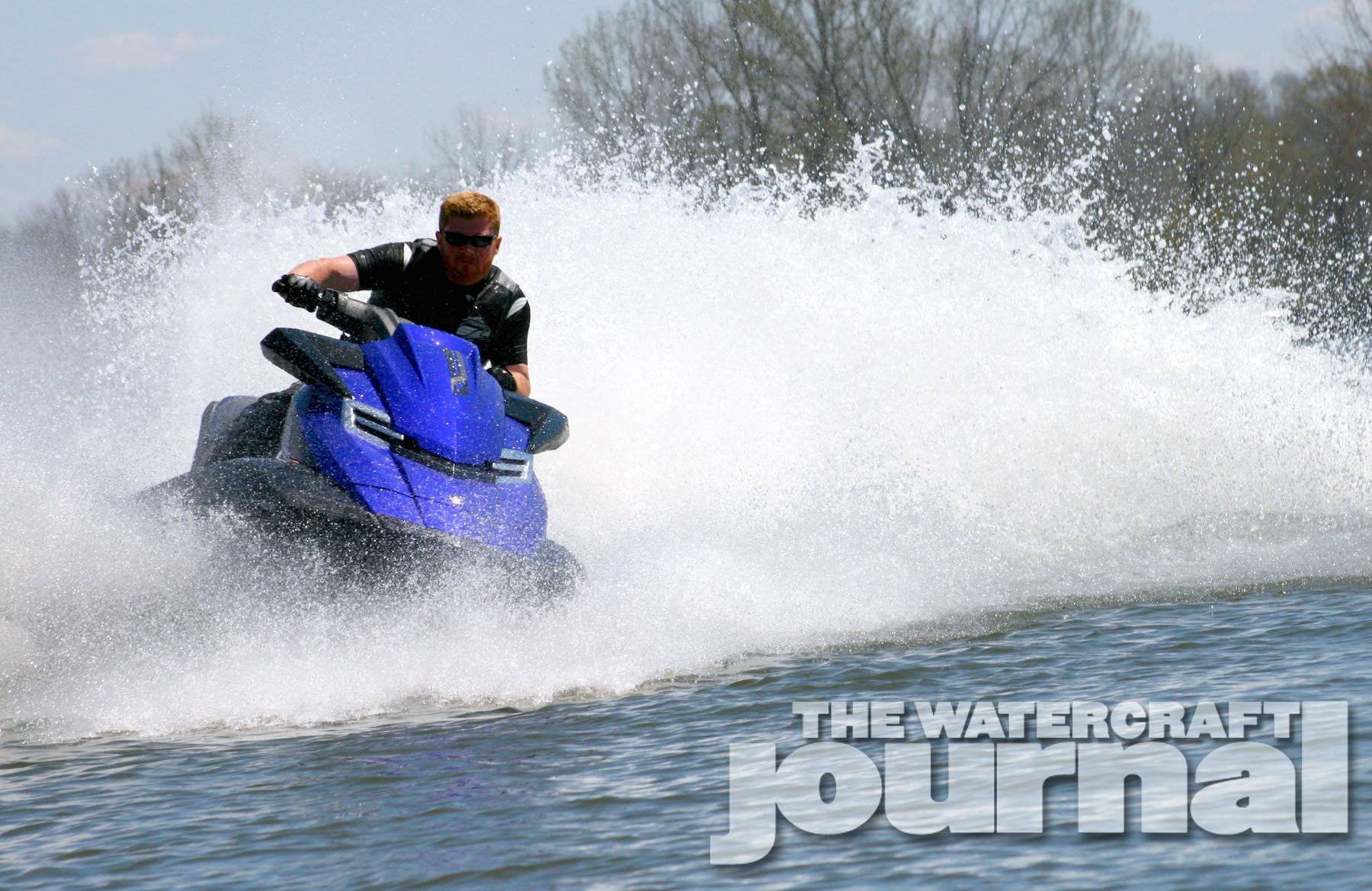
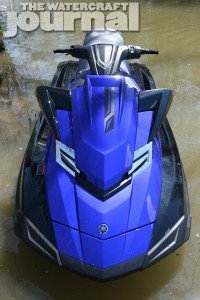
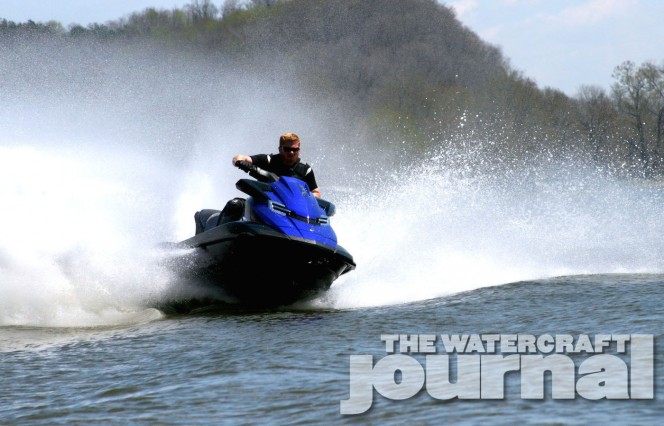
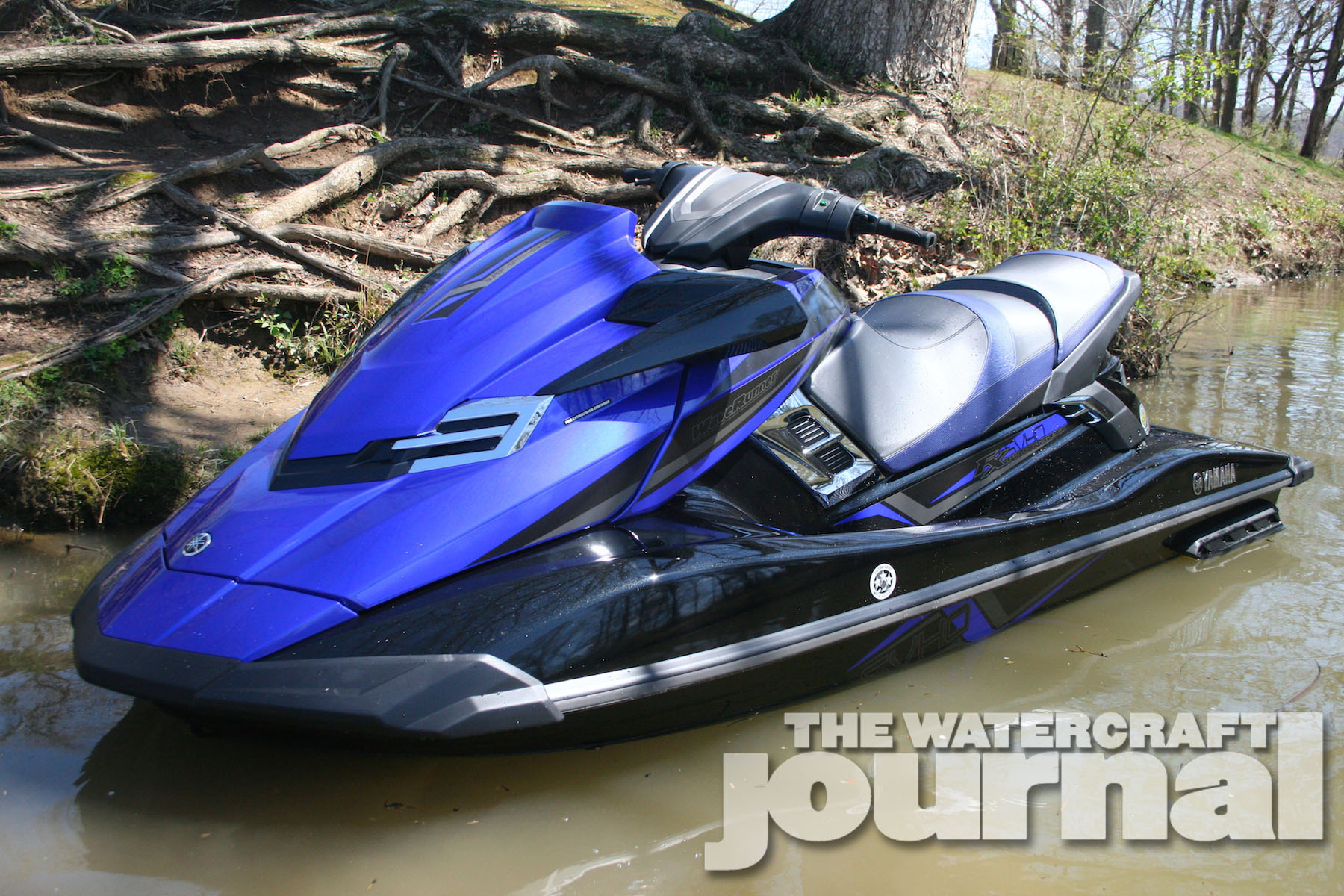
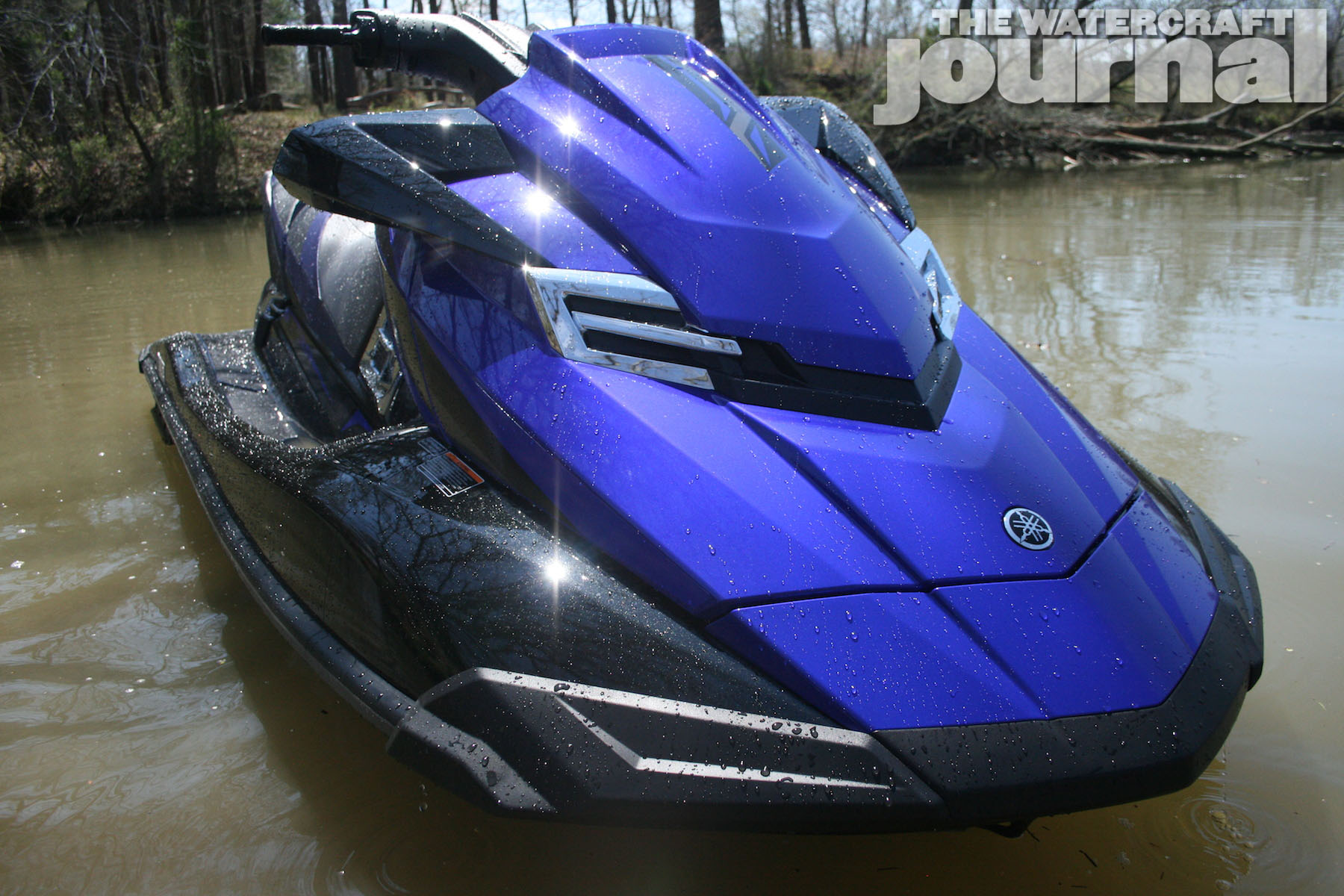
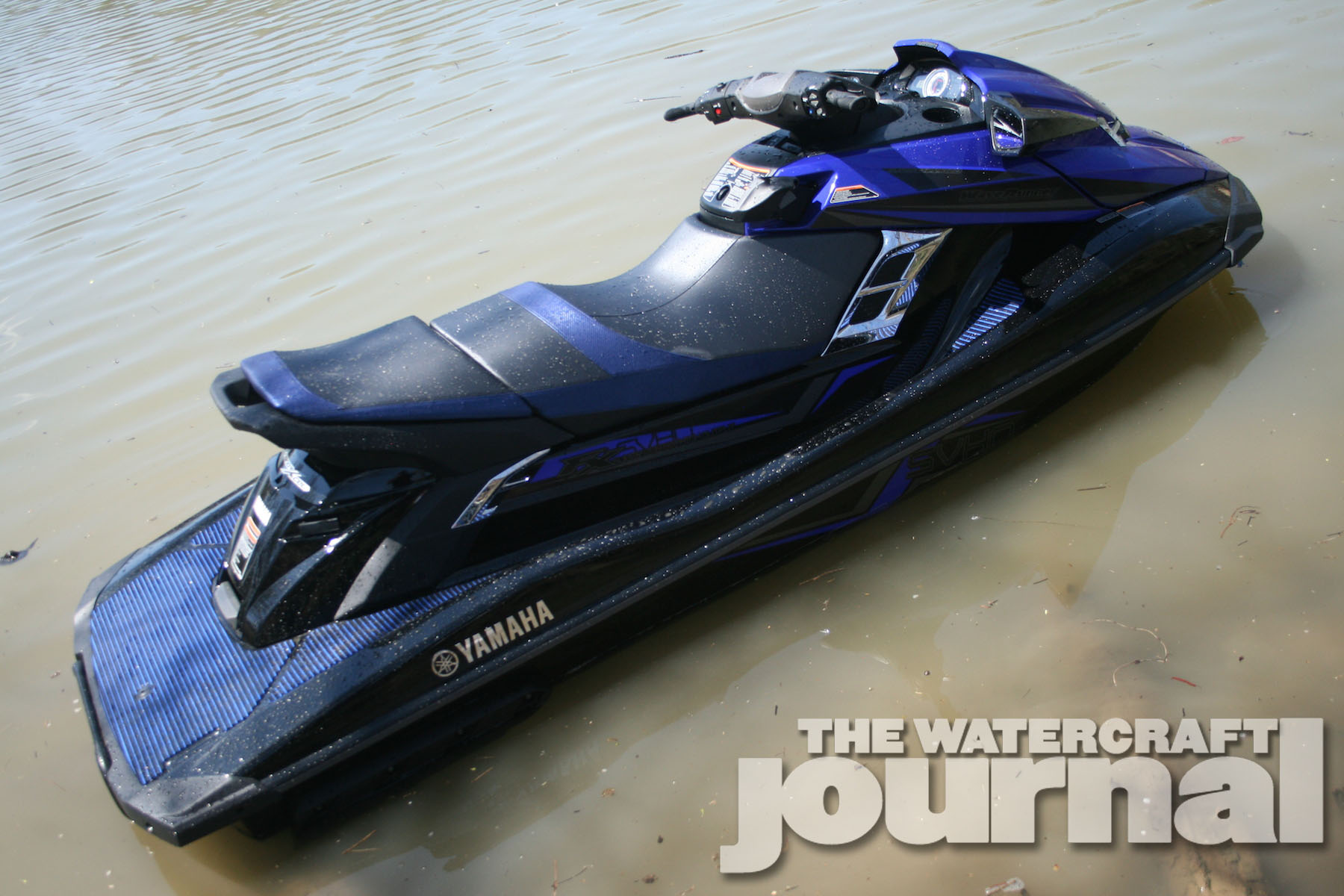
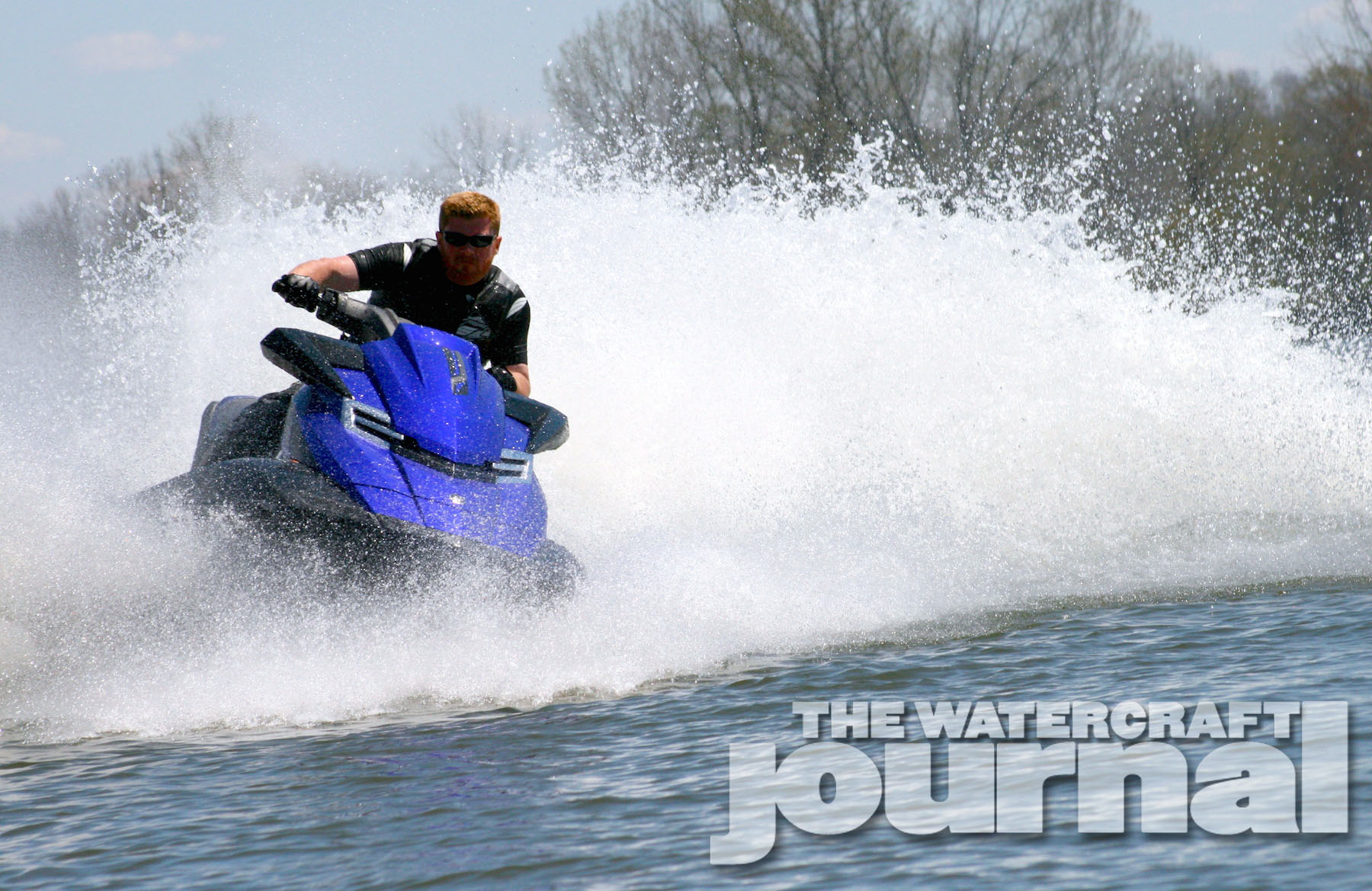
The deep blue and rich black metallic hues of the FX SVHO drew the attention of passersby as we blasted down the muddy waters of Sycamore Creek, TN.
A couple of years back, Yamaha performed a few modifications to the hull of the brand’s existing full-sized three-seater runabout, the FX series. By extending the keel the length of the ski, sharpening the chines and a few other tweaks, Yamaha hoped to infuse a little more excitement into its top-of-the-line segment.
Although fine machines in their own right, the FX’s couldn’t shake the reputation as a somewhat staid craft, particularly when lined up against the very excitable FZ two-seaters (even when equipped with the unofficial 218-horsepower SHO plant). Despite the revisions made to the ski’s belly and sponsons, the FX SHO failed to catch fire with the performance crowd the way it ought to.
If this review serves any purpose at all, we hope it grabs you by the ears and violently shakes you out of it. The newly minted 2014 Yamaha FX Super Vortex High Output (SVHO) WaveRunner is more than a regular ol’ three-seater with a hot supercharged plant. This is a Lamborghini Superleggera with a backseat. Sure, you can toss a friend or two in behind you, but you’re gonna scare the bejeezus out of them…if they can hang on long enough.
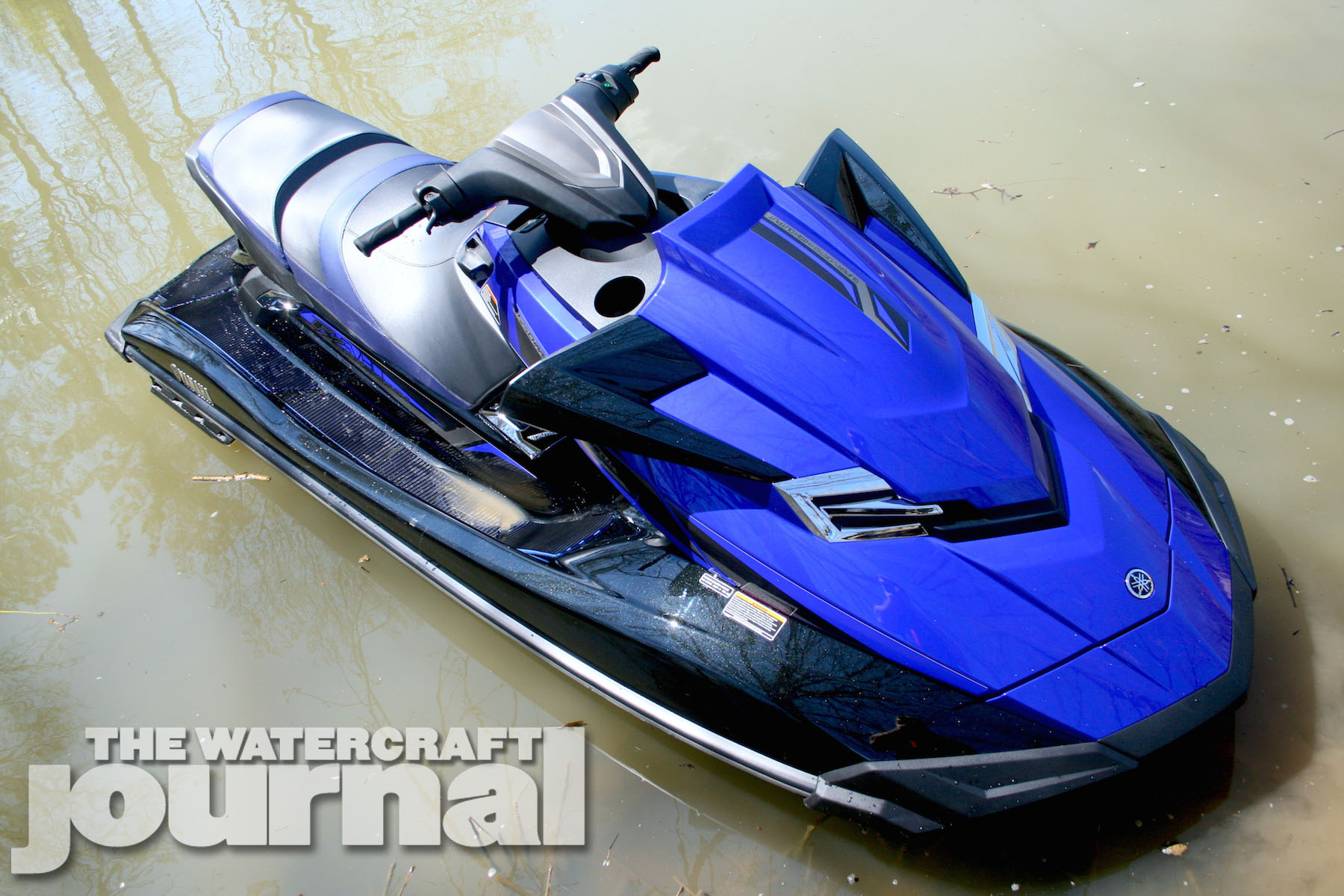
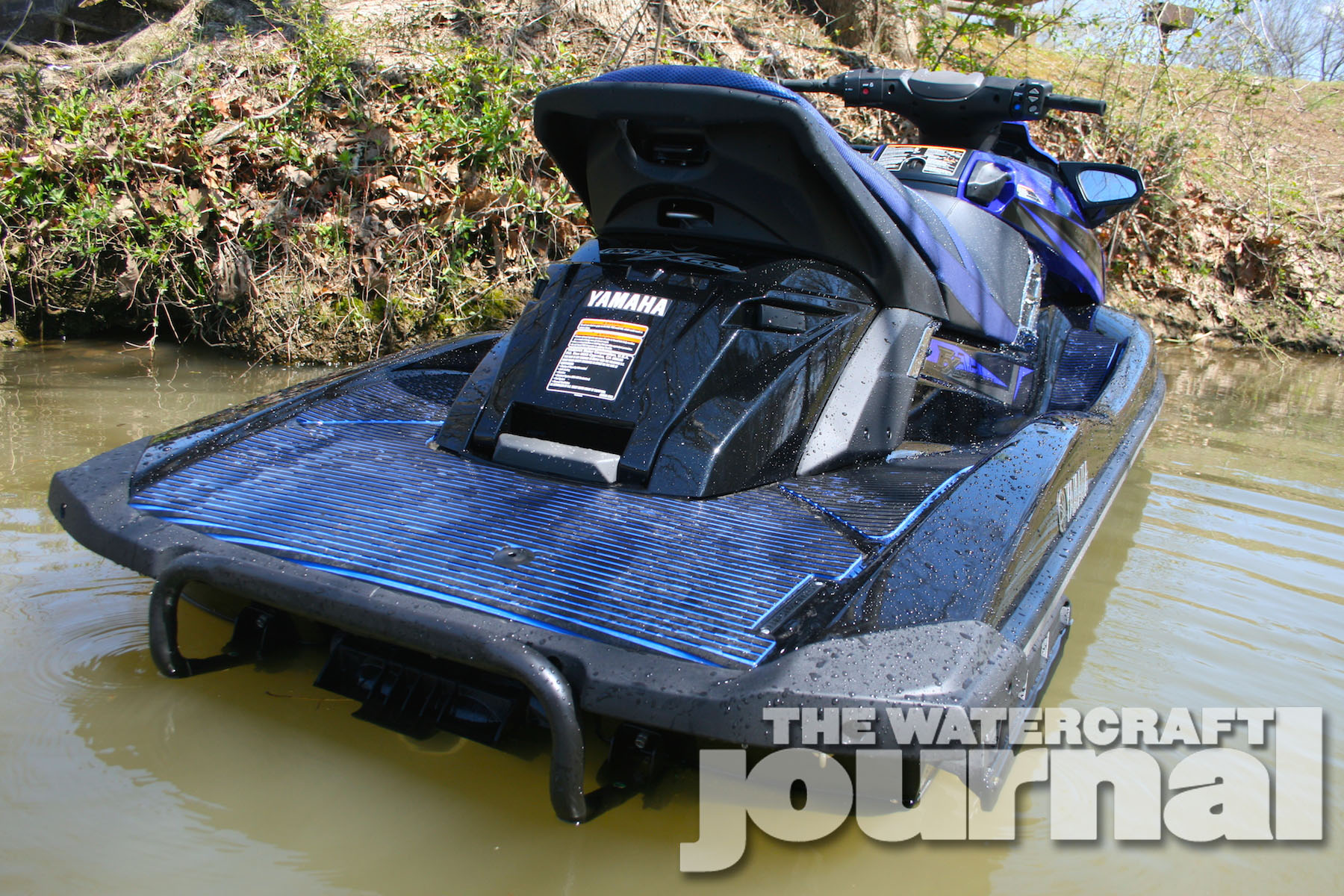
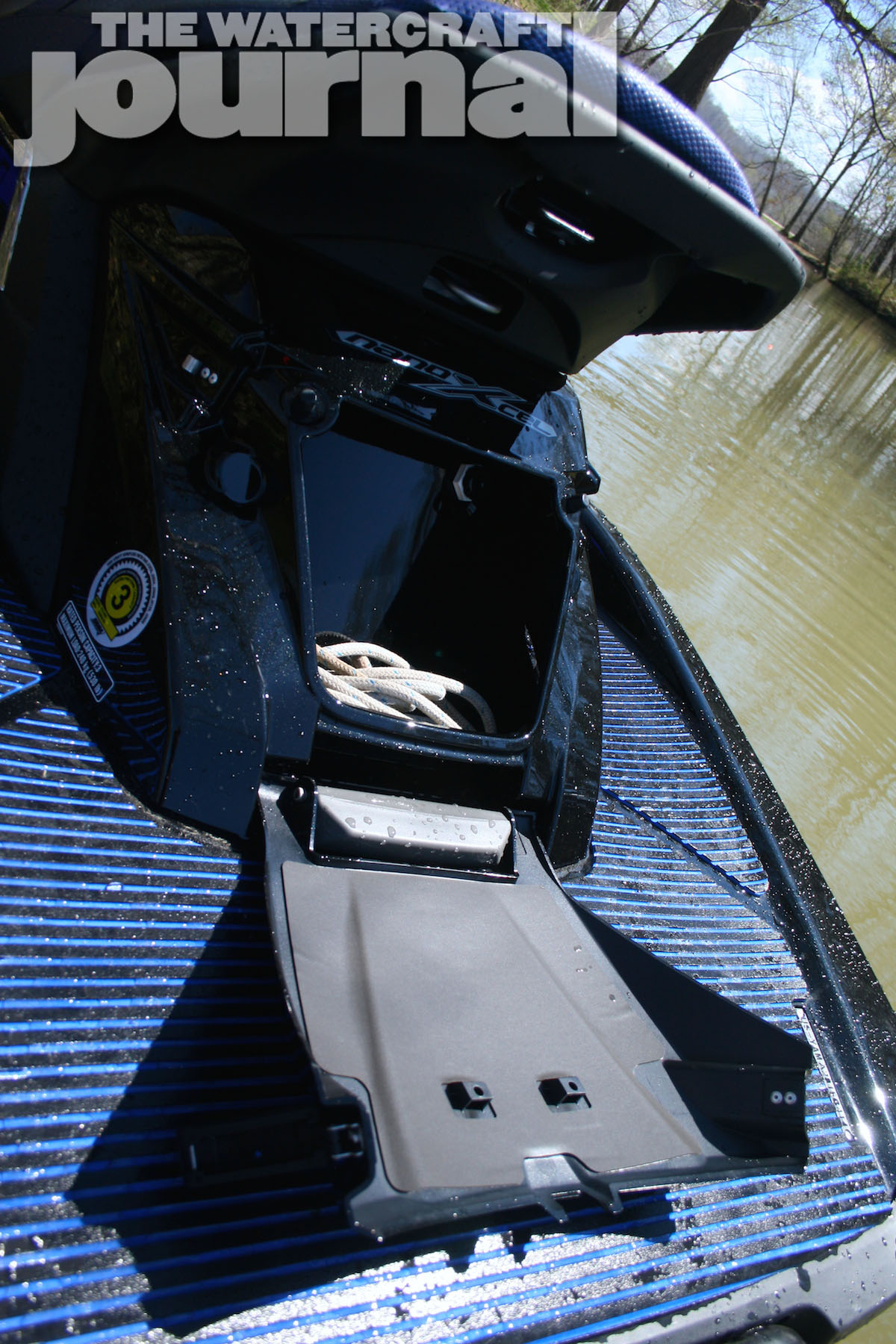
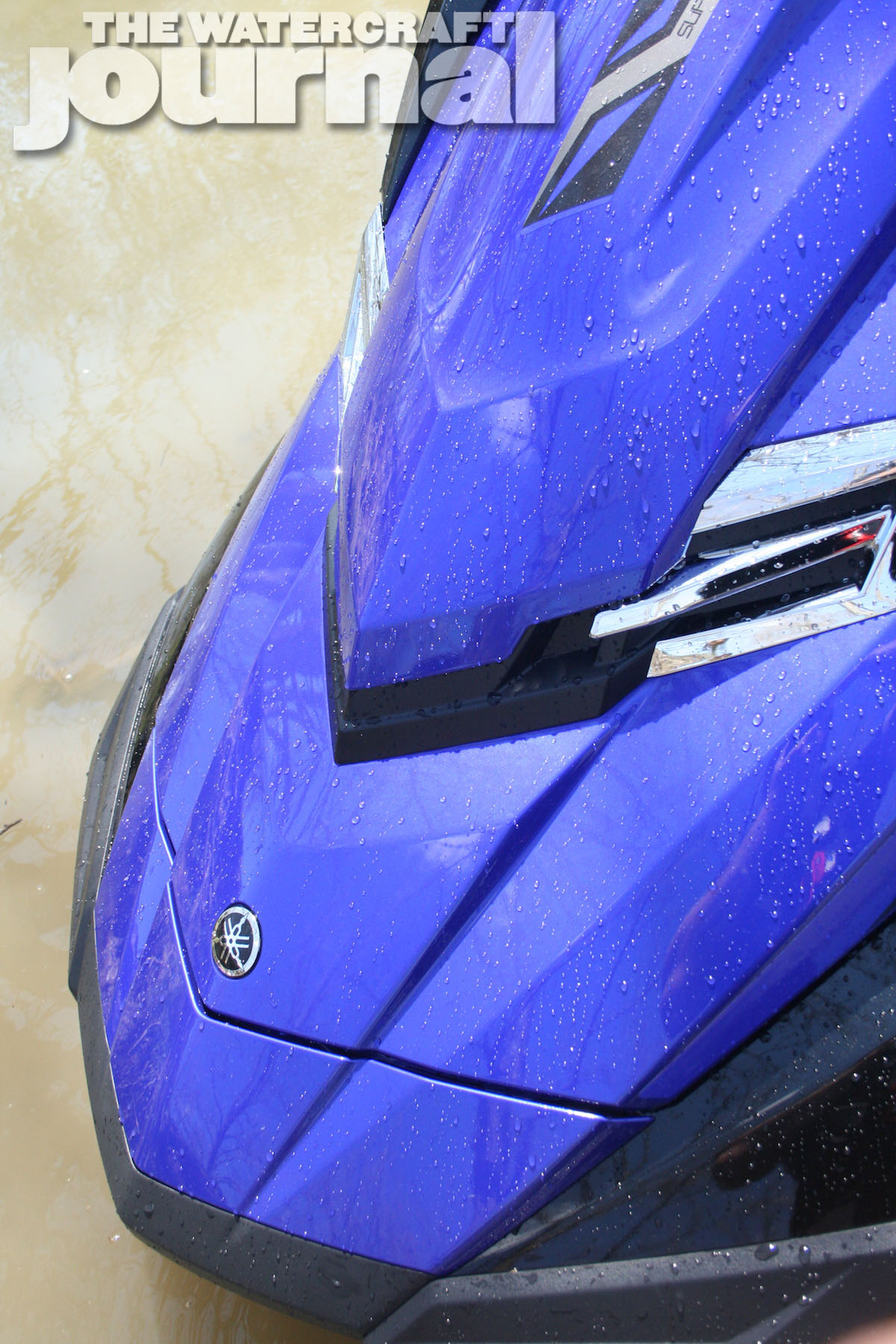
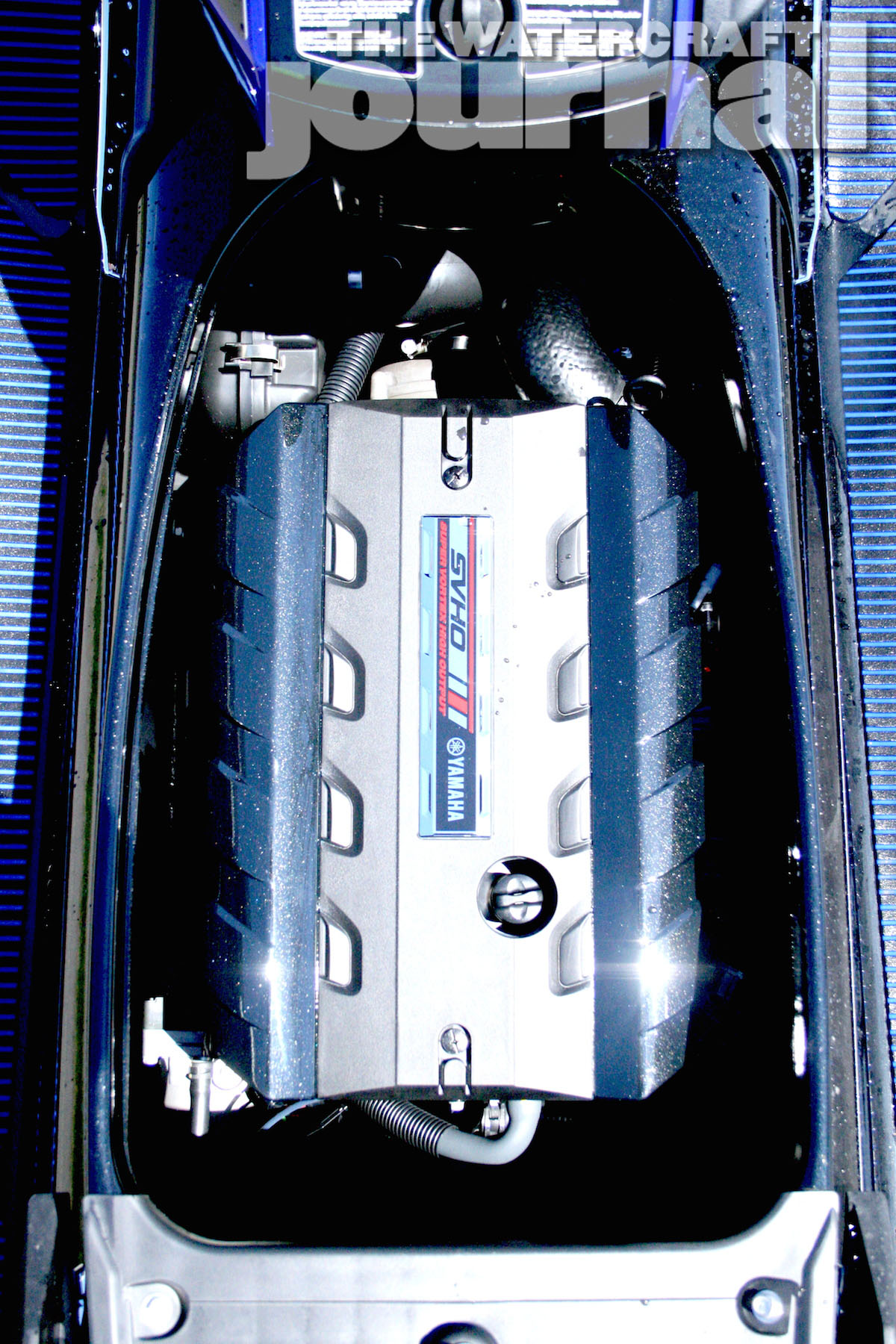
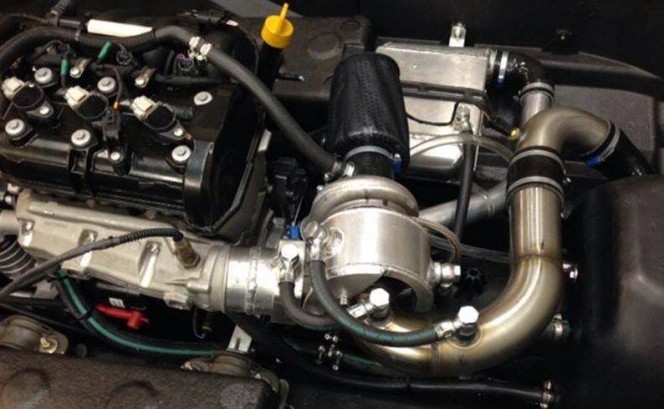
New for 2014, Yamaha amped up their lineups with some very sharp cosmetic touches. Our personal favorite is the electric blue-on-black two-tone Hydro-Turf traction mats. The rear swim platform is wide and deep featuring a broad, flat-edged folding swimstep and deck storage.The 1.8L SVHO benefits from 8.5:1 forged pistons, larger 60lbs. injectors, a larger, more efficient HKS supercharger producing 60-percent more boost, improved oiling and a larger intercooler.
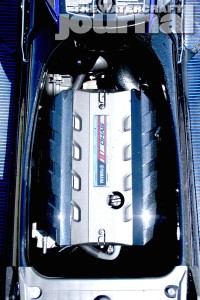
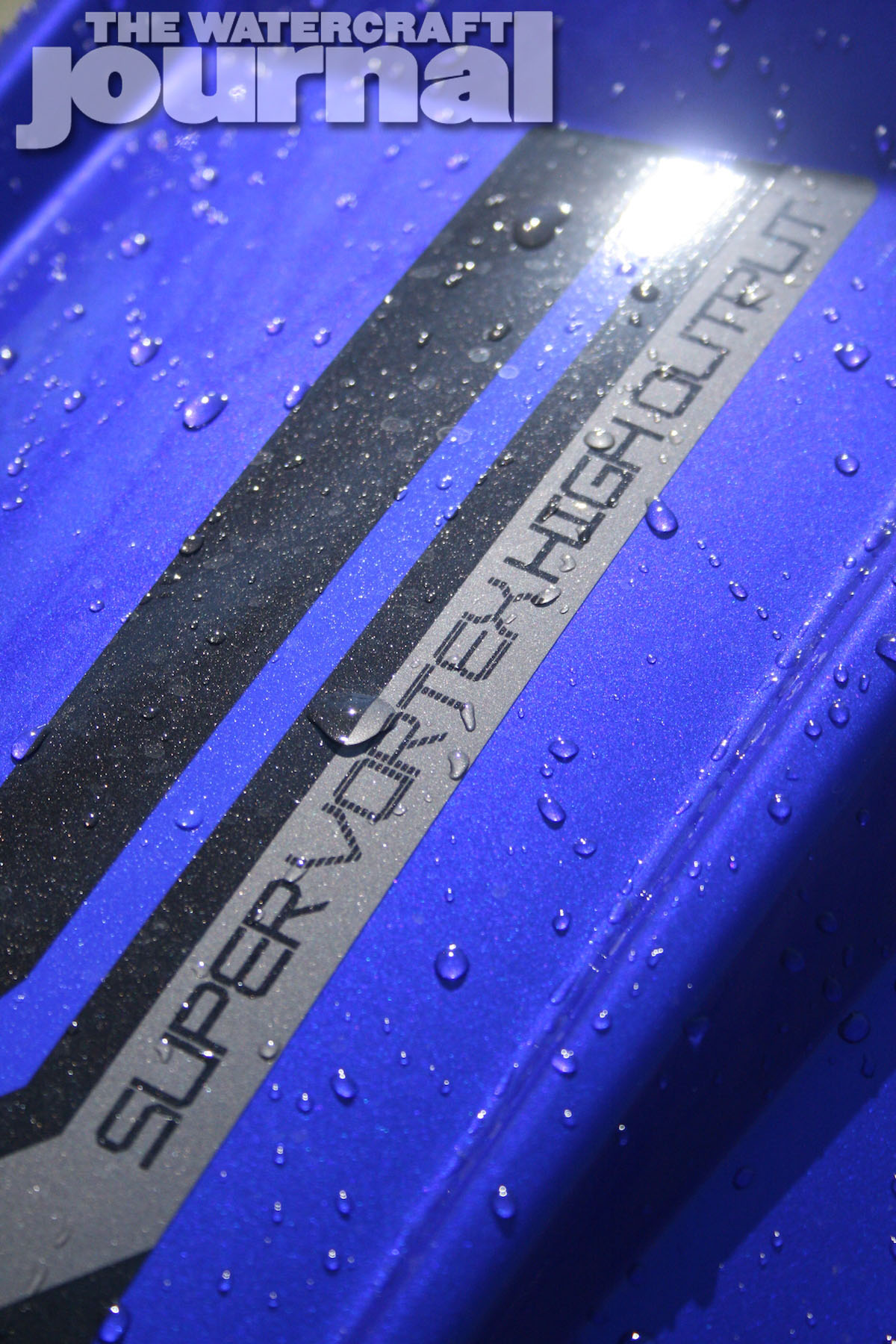
Building upon the aforementioned Super High Output 1,812cc four-cylinder four-stroke, Yamaha’s laboratory of mad scientists threw caution to the wind and built the SVHO (or Super Vortex High Output).
The new engine benefits from stronger 8.5:1 compression forged pistons, larger 60-pound fuel injectors (over the previous 42-pound sprayers), a larger and 22-percent-more efficient intercooler, a redesigned oil cooler providing 110-percent improved efficiency, and a larger (86mm versus 82mm) HKS supercharger pushing 60-percent more boost thanks in no small part to a new 6-vein impeller.
Processing all of that power is a larger performance-bred 8-vein pump spinning a 160mm impeller. Unfortunately, the FX SVHO retains the same 5-degree 87mm nozzle unlike the FZR series’ new 3-degree nozzle with cast-in diffuser veins and tighter 85mm exit diameter. Likewise, the SVHO shares the same knife-edged tiered sponsons, a ride plate, and a steep-angled intake grate as the previous year SHO’s impressive handling package.
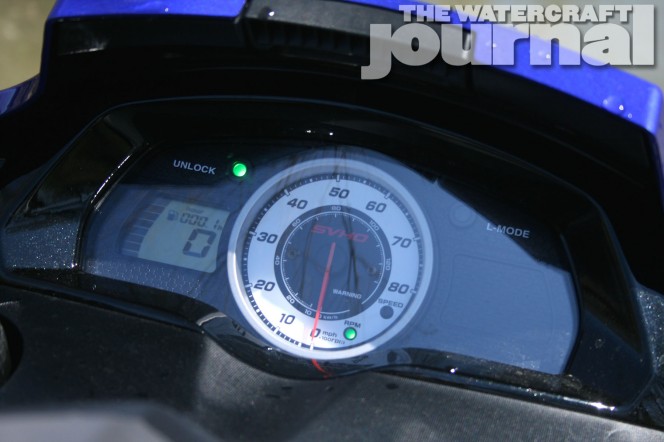
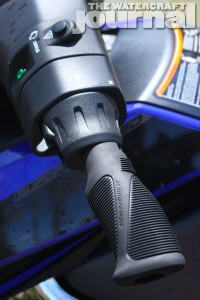
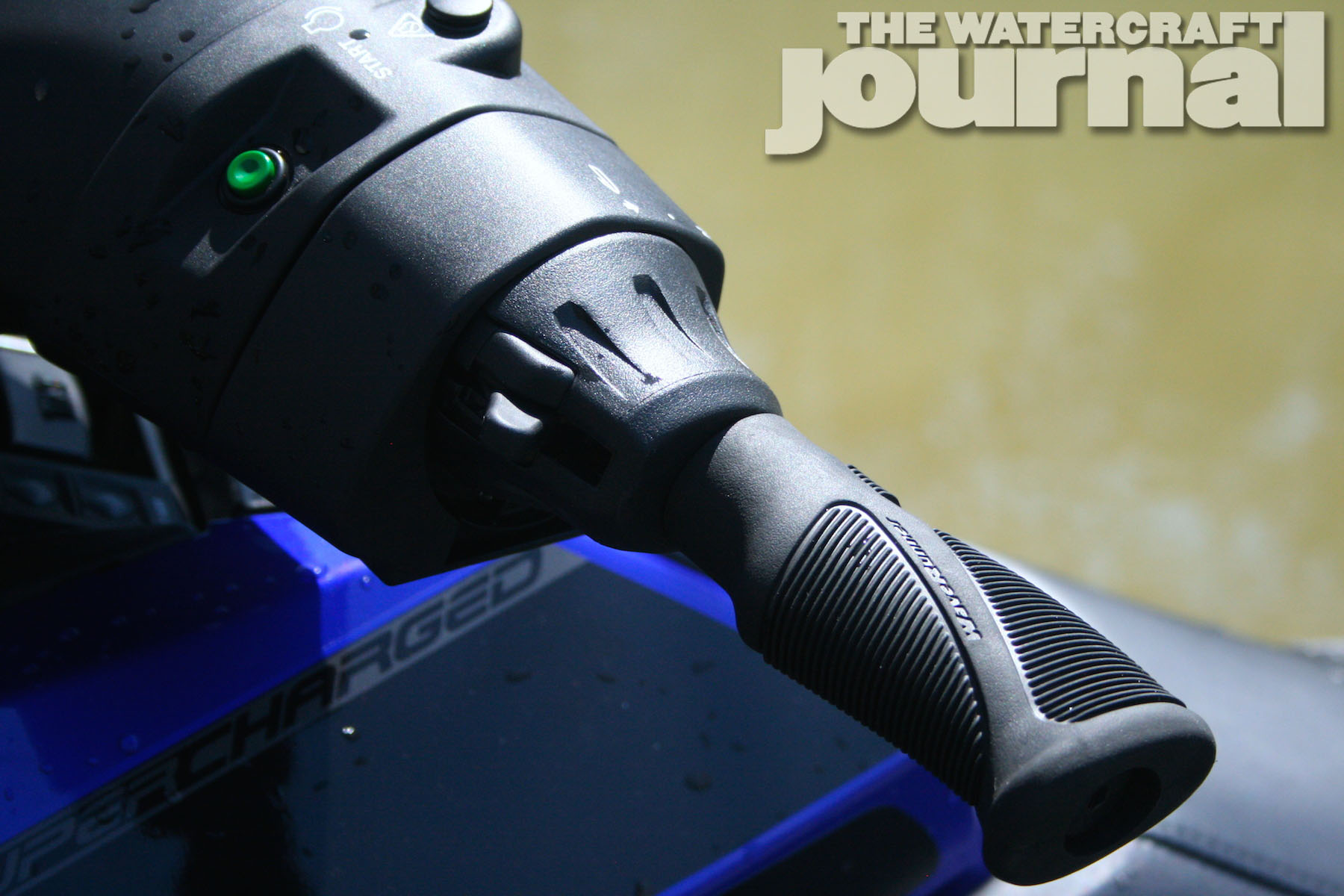
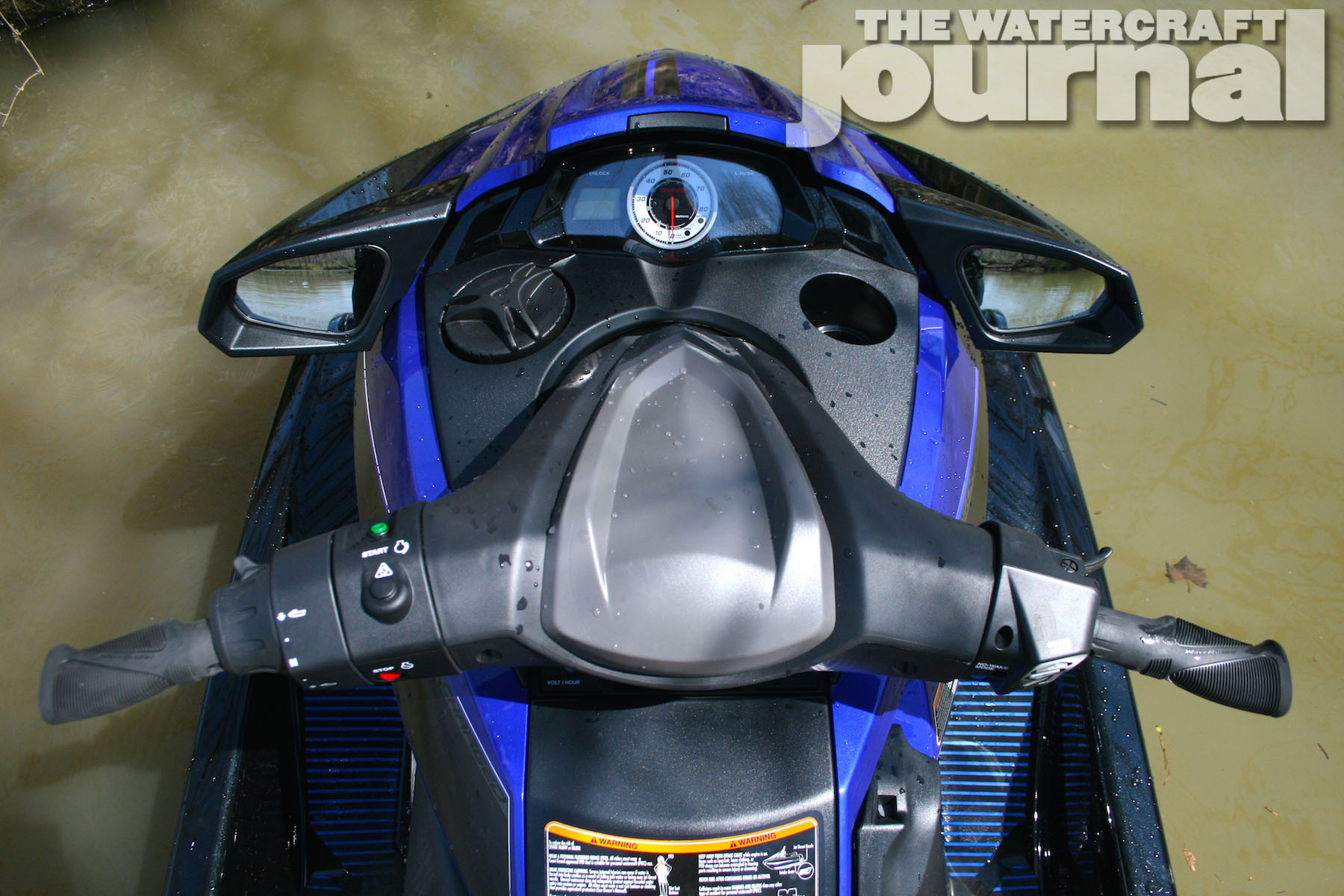
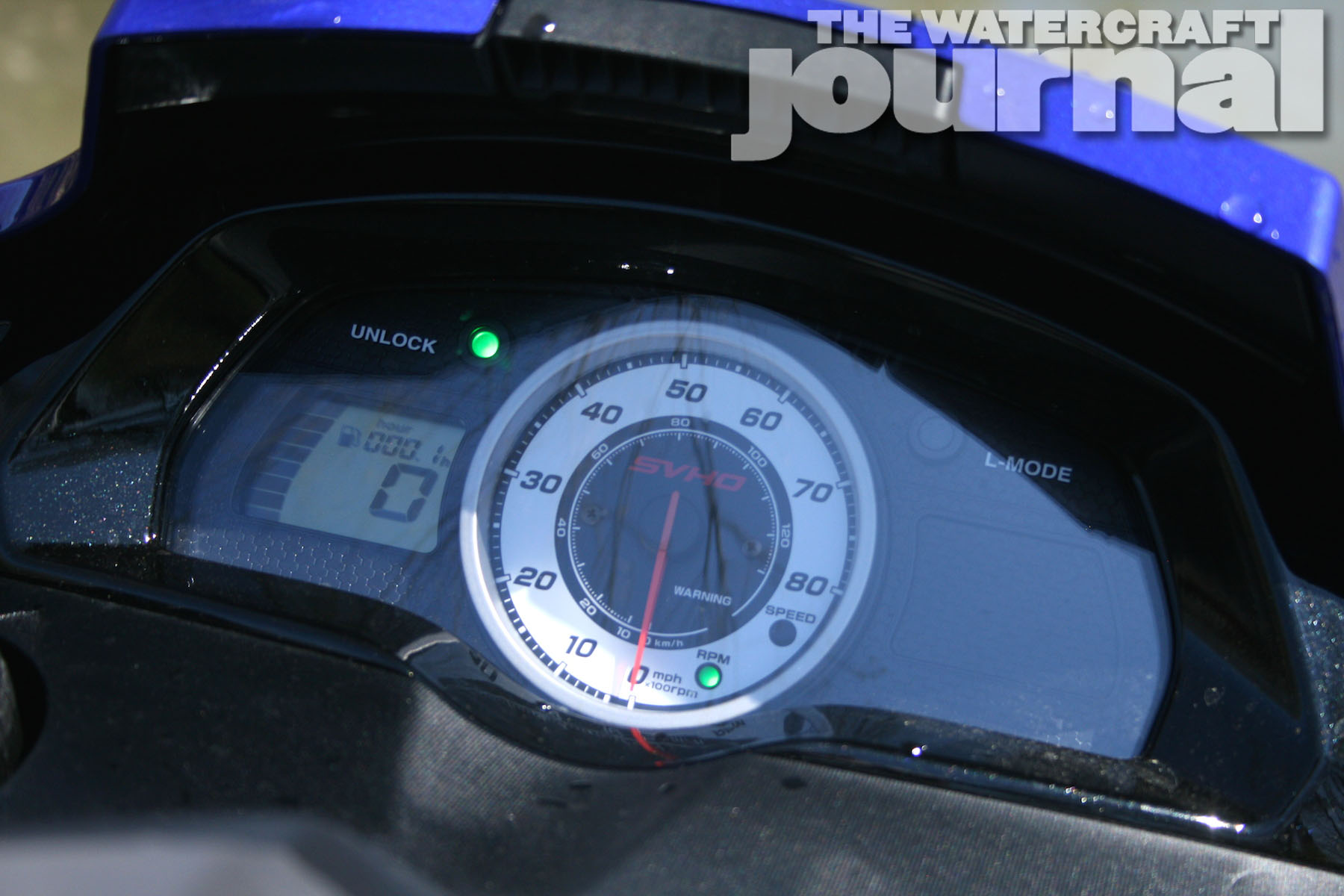
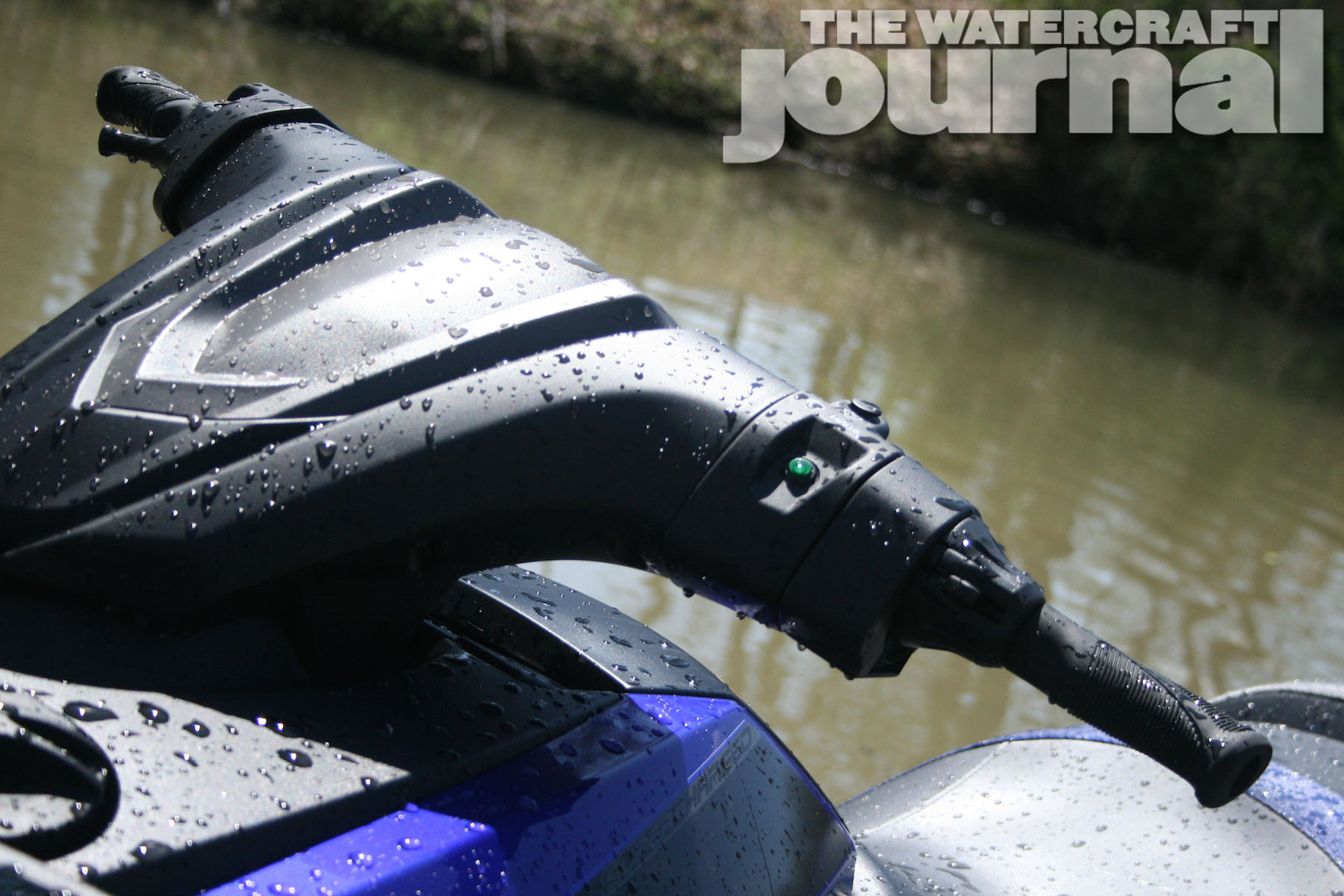
The dashboard of the FX SVHO is delightfully uncomplicated. High visibility lights and an easy-to-read single analogue gauge reads off speed (or RPM) with a very clear hour counter and fuel gauge.The command to “hang on tight” has never been easier thanks to Yamaha’s pistol grip-style handlebars. Oblong, contoured and well-placed, we wouldn’t change a thing even if we could.
To get the most out of this new powertrain, Yamaha not only employed its proprietary NanoXcel material laying process for the hull but the deck as well, plummeting the runabout’s heft down to a featherweight 873-pounds. (All without sacrificing an ample 33.2-gallon total storage capacity.)
Producing more boost, more compression, greater fuel efficiency, lower internal engine temperatures (heat soak), more thrust, better hookup and improving the power-to-weight ratio, the SVHO erupts out of the gate with a neck-snapping 1.5-second 0-to-30, and reportedly, when piloted with a lightweight rider and laden with a gallon or two of fuel, can tickle 71mph (but don’t tell the USCG).
For our test, we scantly reached a top speed of 67 miles per hour, which is understandable given that we had a heavier pilot, a full tank of fuel (18.5-gallons) and less than the required 5-to-10 hours of sufficient break-in time on the hour meter. Nevertheless, throttle response is razor sharp, leaping at the flick of the trigger. In fact, the immediacy in which the SVHO pulls through its sturdy mid-range to top end is enough to quiet naysayers.
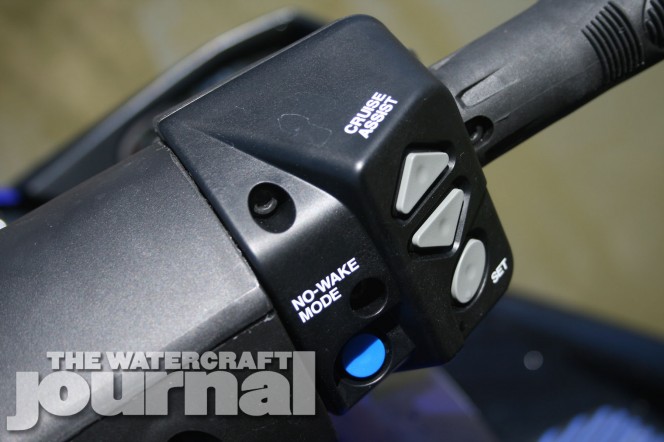
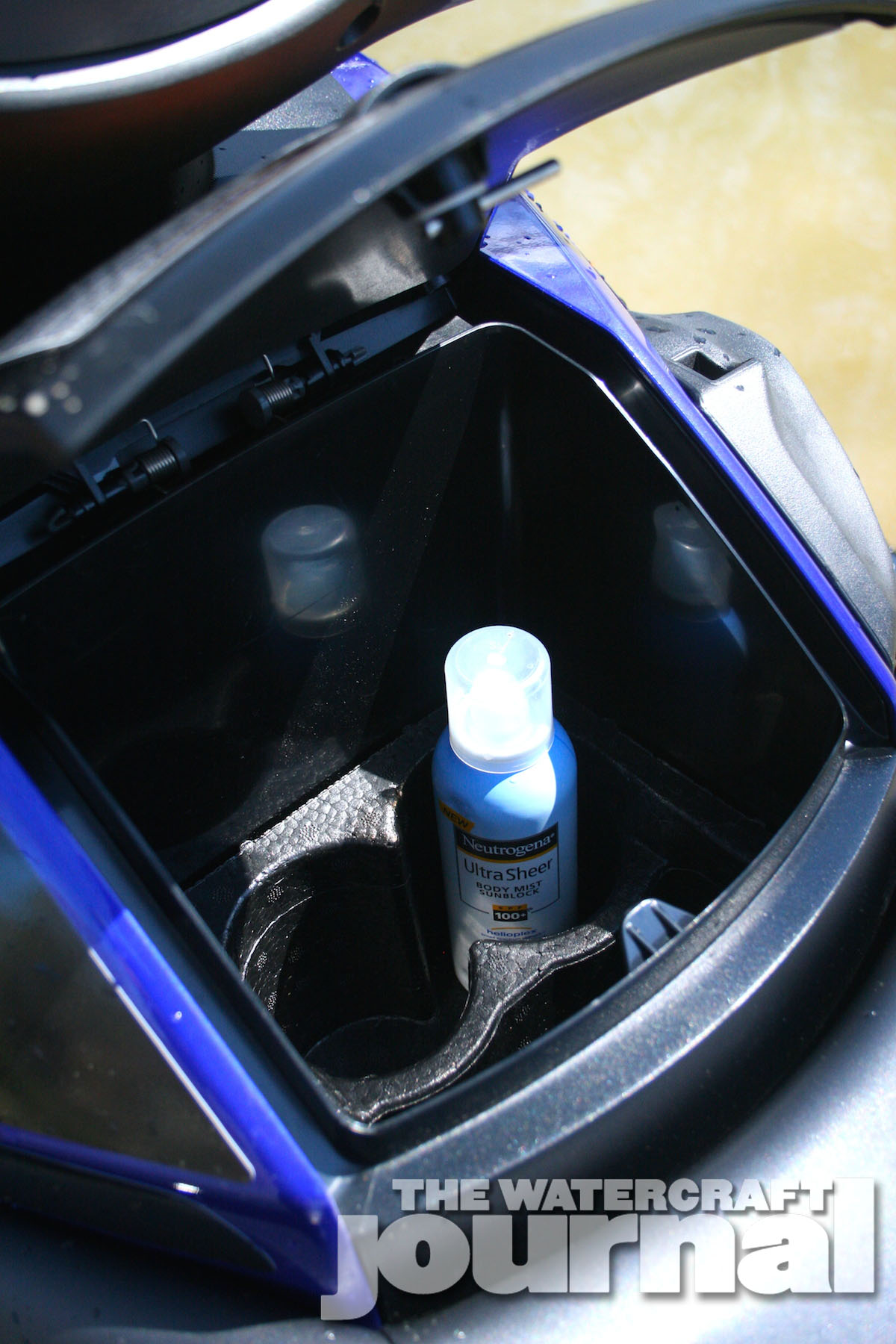
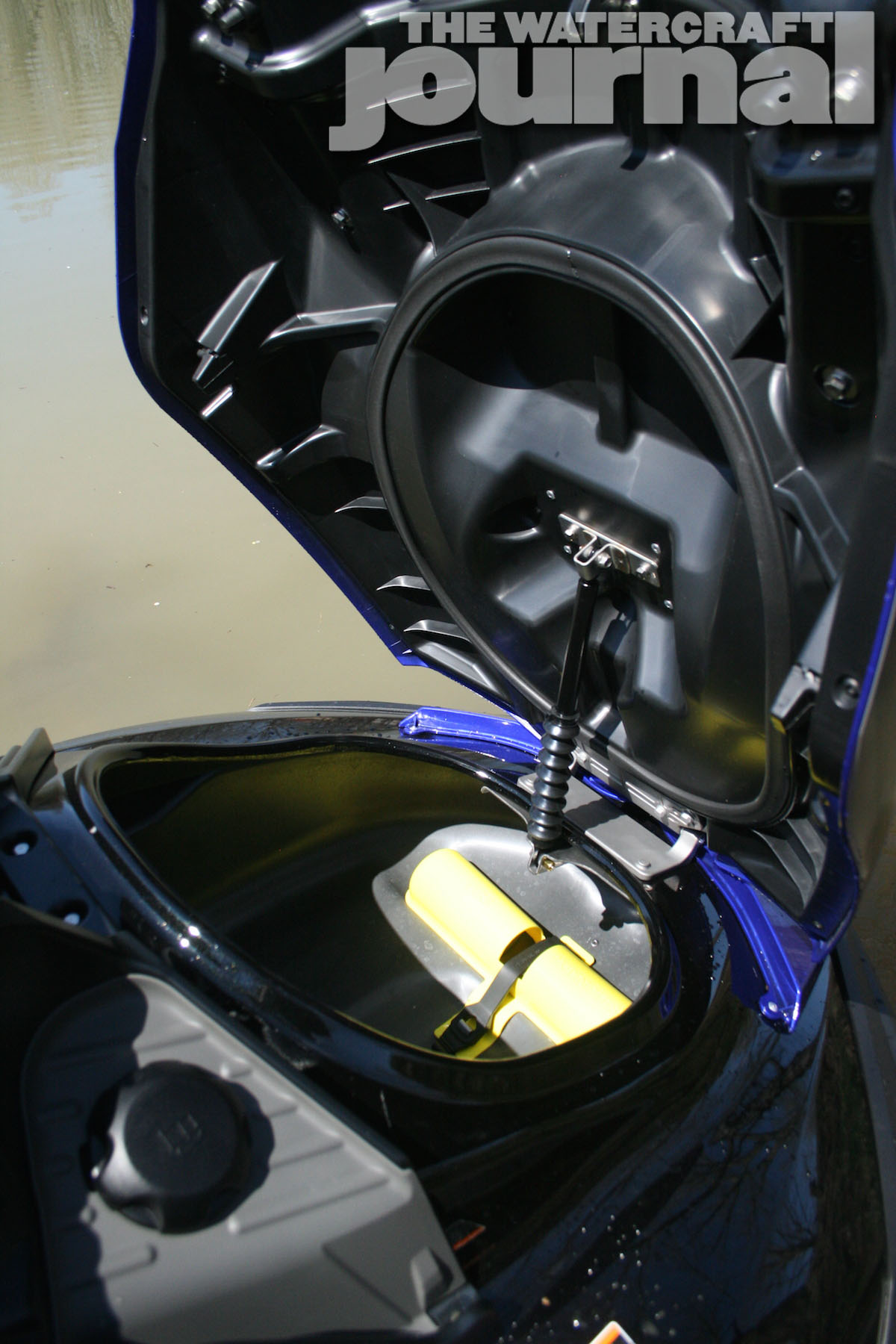
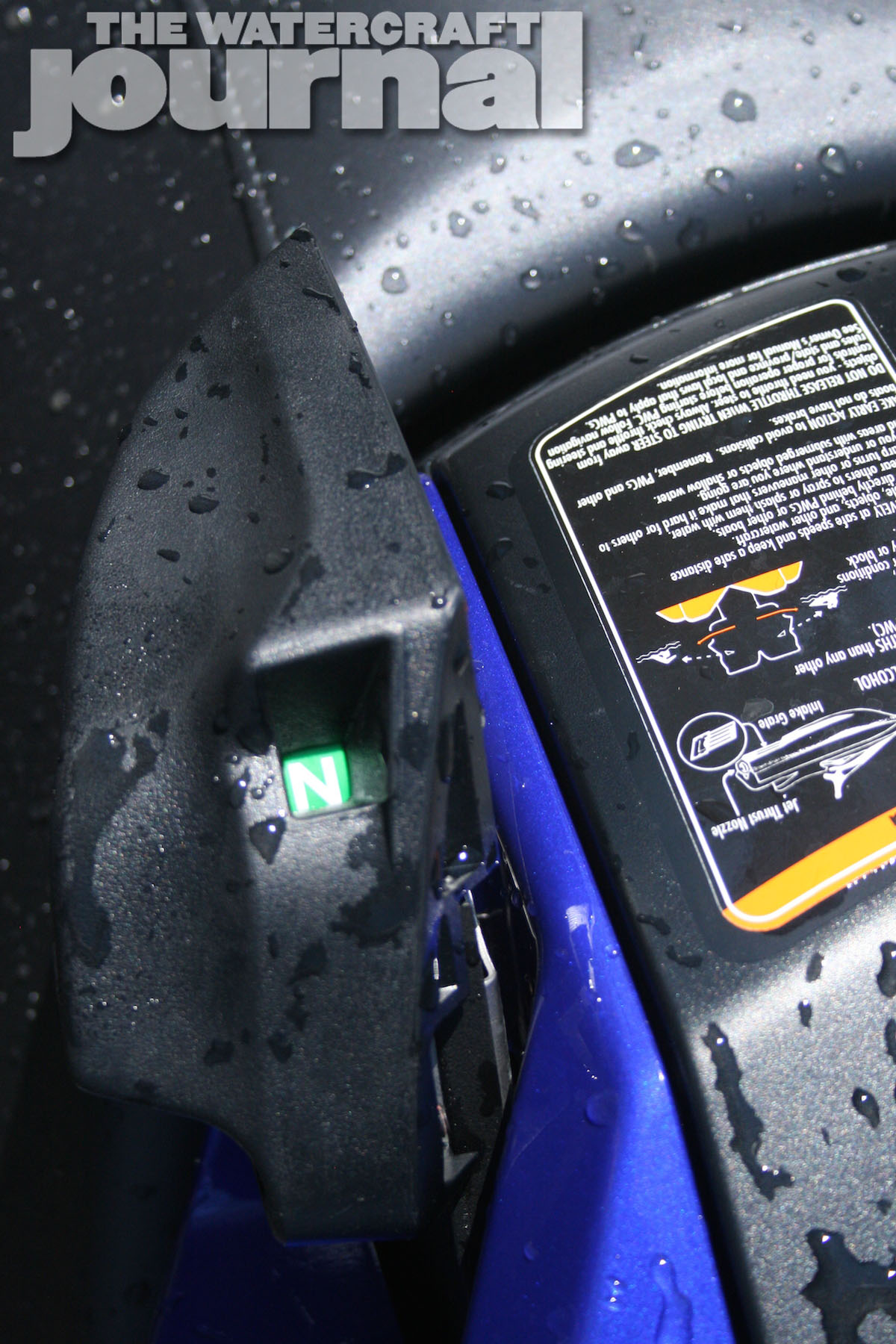
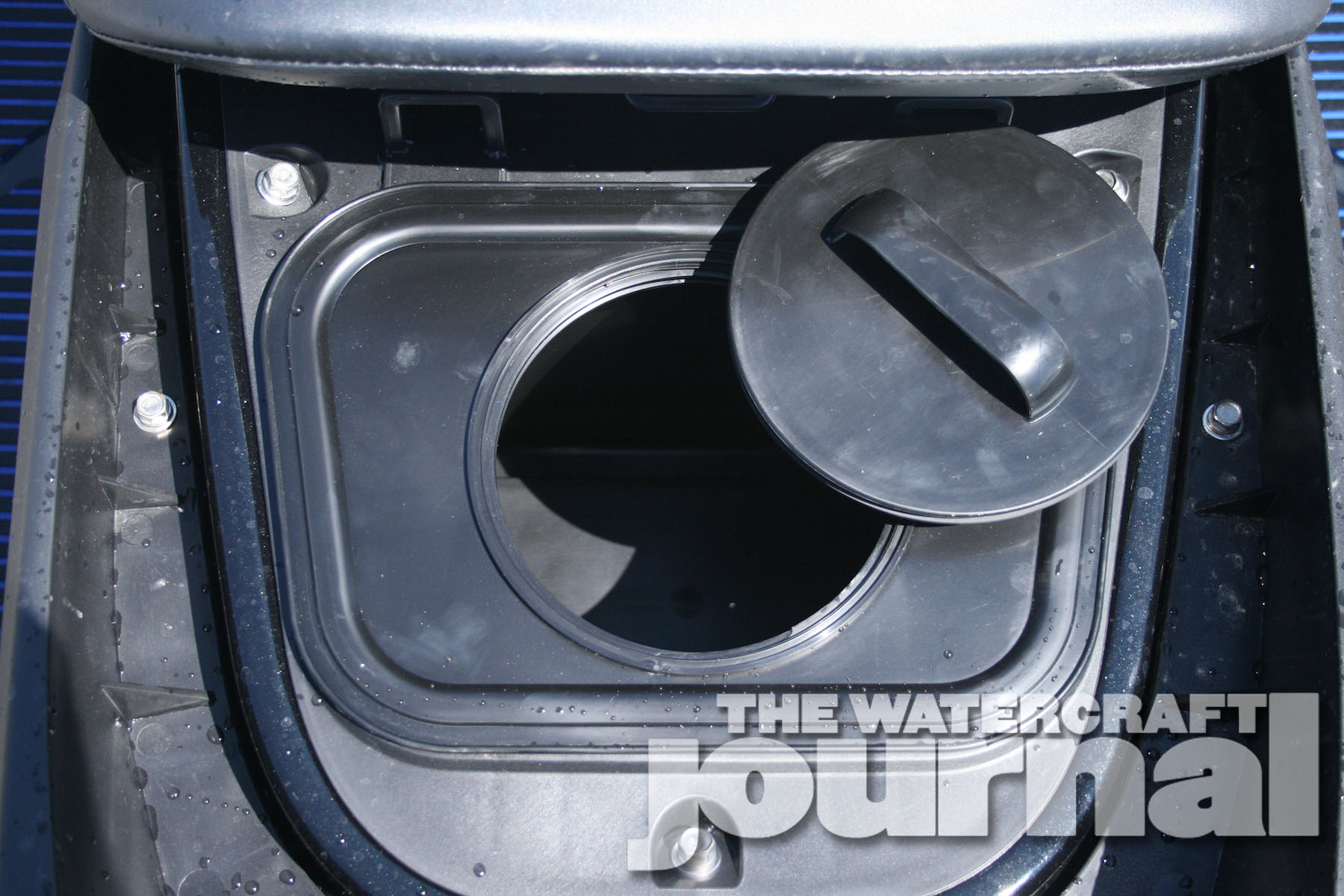
Yamaha’s Cruise Assist controls and No Wake Mode buttons are well within reach, but could benefit from a little quicker response when activated.The glove box features a removable Styrofoam insert with two integrated cup holders (in addition to the in-dash cup holder), ensuring that riders never dehydrate.
Without taking away from the FX SVHO, the bliss provided by the new powertrain can be had in both of Yamaha’s FZ units, the FZR and FZS. What truly makes the FX SVHO is its full exploitation of the previously mentioned redesigned hull. The SVHO package simply produces the power and hookup that reveals the brilliance in the NanoXcel FX hull that the SHO couldn’t.
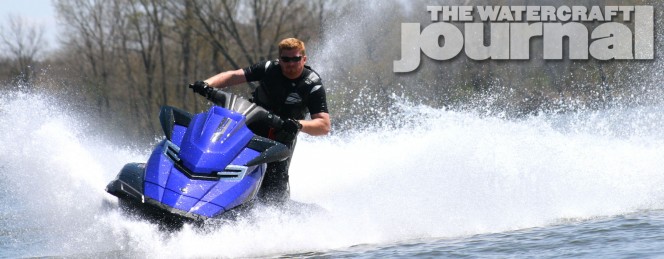
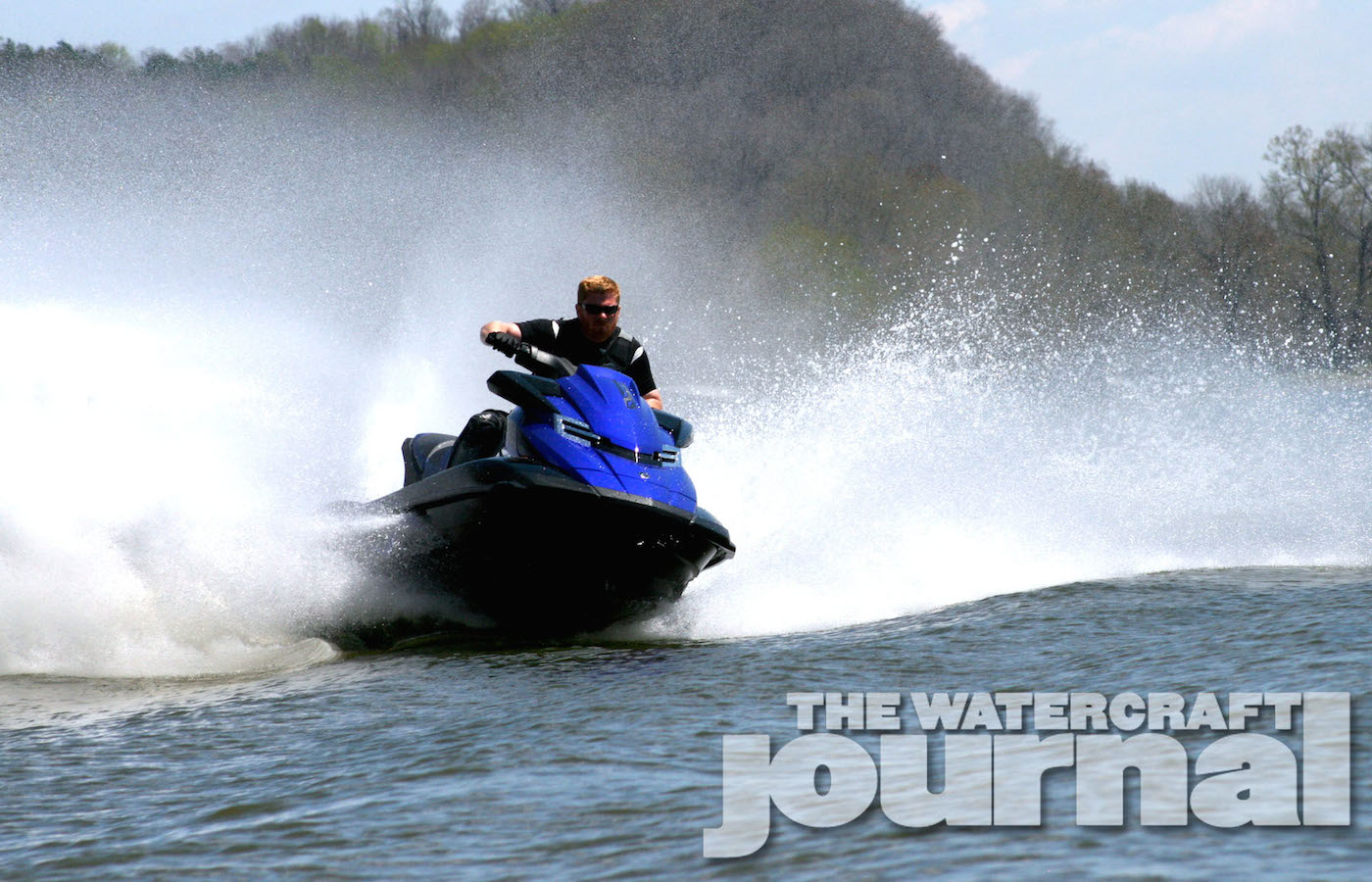
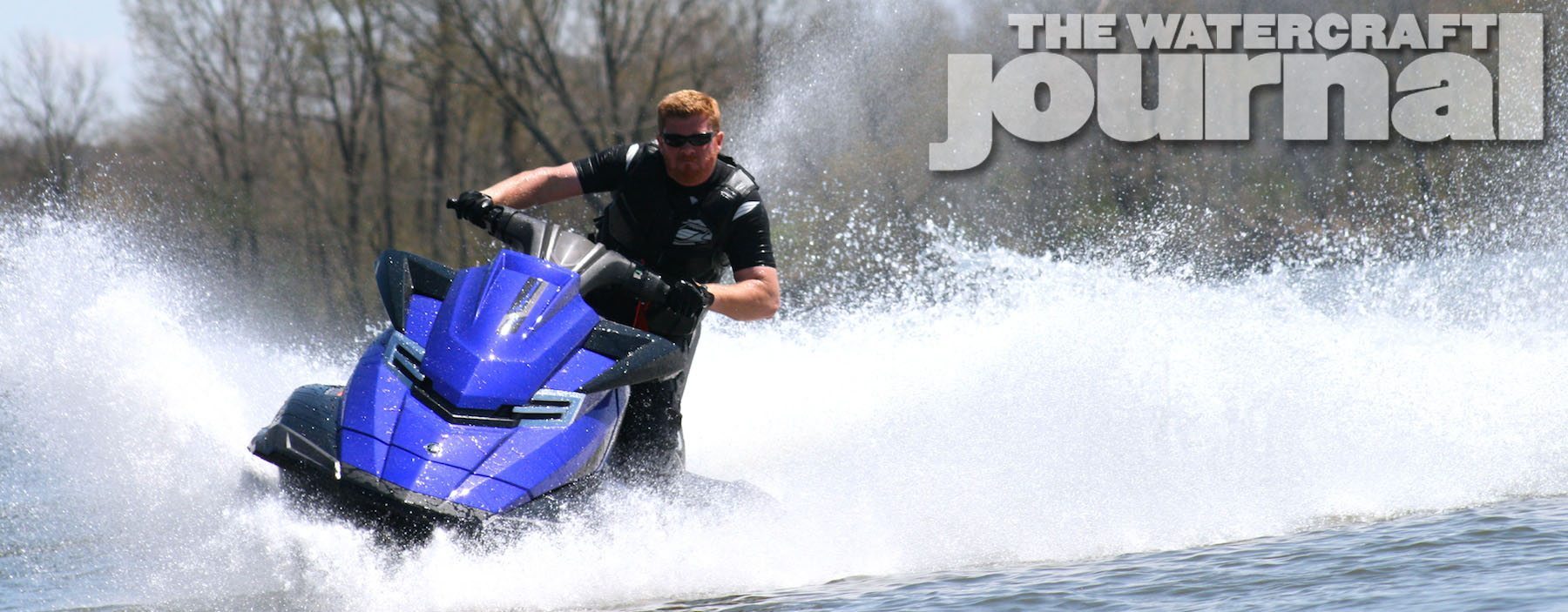
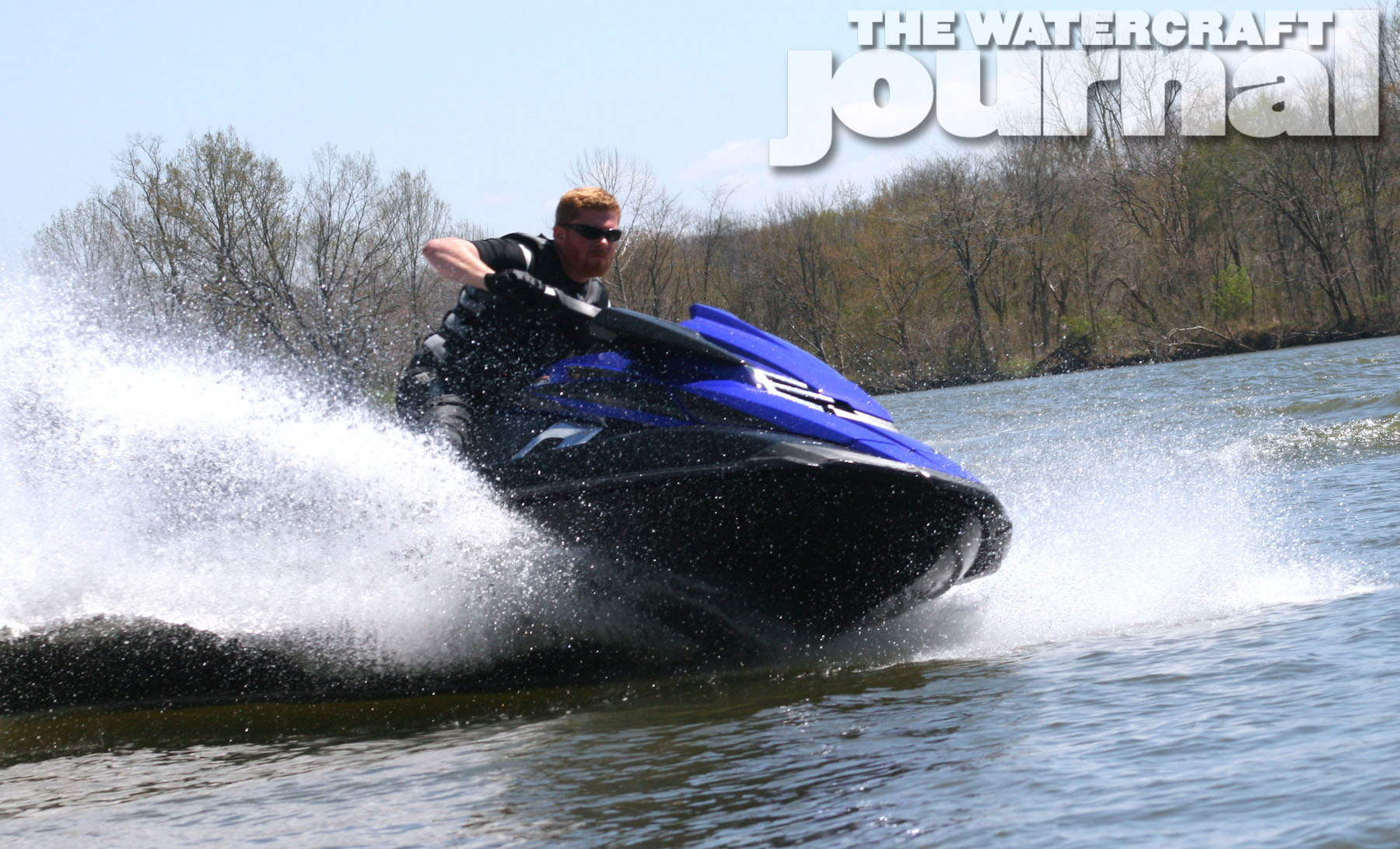
Now, the FX can confidently roll into a turn without backing off the gas. With the trim set down a notch or two, the bow digs in, bites hard and rolls into the turn like a craft two thirds its size. Through chop, the FX behaves like an angrier version of the naturally-aspirated versions we’ve reviewed here before, tracking straight and true.
We managed to snap the tail loose a time or two, but racked that up to setting the trim down to its maximum and refusing to lay off the fun trigger. When careening through the tight serpentine turns of the muddy-brown Sycamore Creek or the open, windblown waters of the Cumberland River, we couldn’t get enough out of the FX SVHO.
Whether sluicing through windblown chop or the still waters of a quiet creek, the FX SVHO can handle it with ease – and speed! We were impressed with the ski’s good nature in the rough and impressed with how greedily it cuts a turn.Bow storage is plentiful, but when combined with the glovebox, rear deck bin and watertight storage under the rear passenger seat, the Yamaha’s 33-plus-gallons is more than enough.
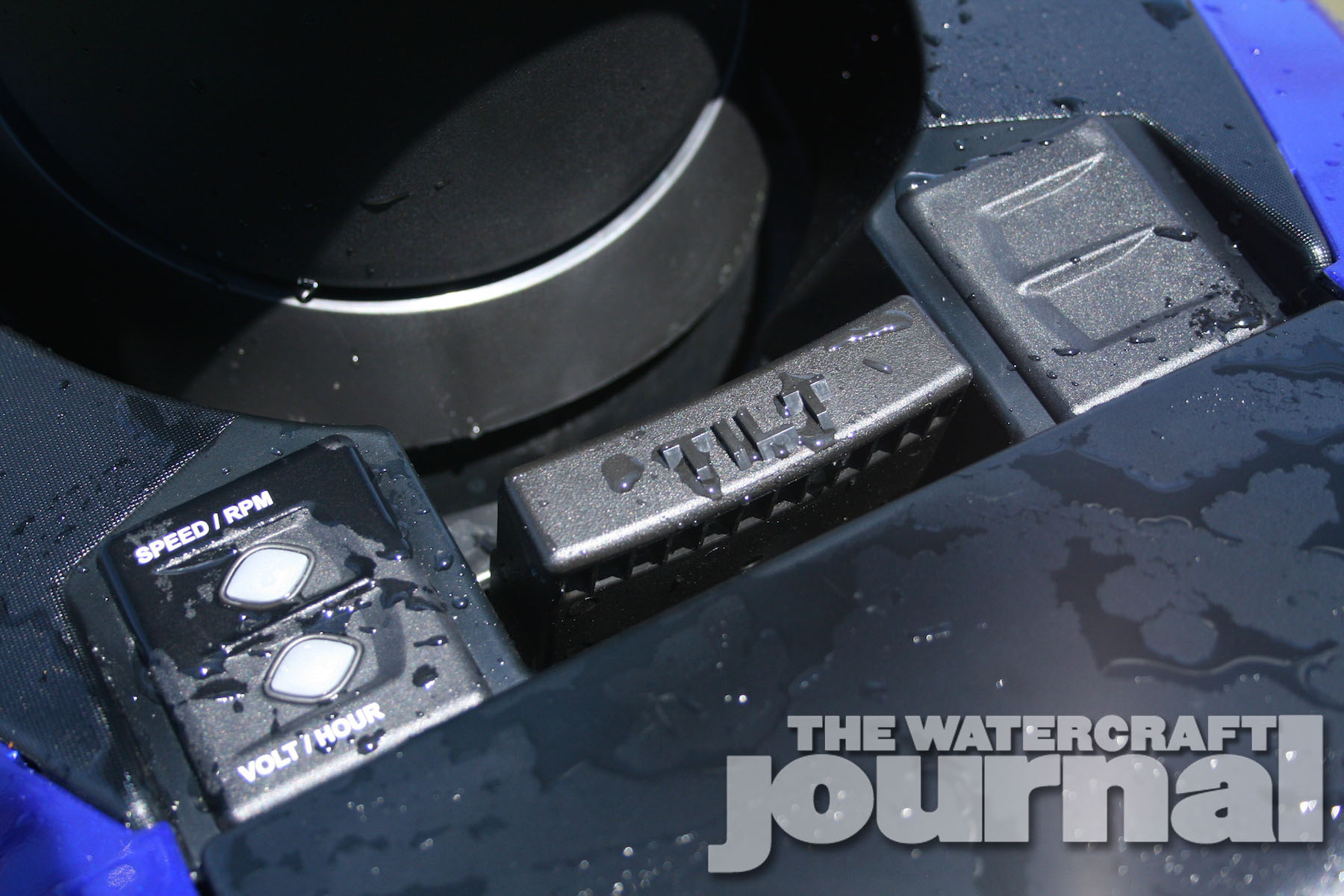
The dashboard is spartan, with a single analog gauge and simple LCD screen to the left reading off RPM, speed, fuel and other necessities. The tilt steering is sturdy with no noticeable play. And as we’ve said before, Yamaha has got the best hand grips on the market today. The pistol grip design allows for comfortable reach of the No Wake mode, Cruise Control toggles and ignition switch.
Being an FX, the three-seater SVHO provides plenty of room for riders and gear, including the “wet storage” bin beneath the third passenger. The craft’s most aesthetically pleasing addition is a large swim step covered in two-toned Hydro-Turf traction matting. The long two-part bench seat is equally hued, but it’s in the paint job where Yamaha shines. Adorned in Yamaha’s Deep Blue and Black Metallic paint, our test subject caught the eyes of passersby even before we reached the launch ramp.
All in all, the 2014 FX SVHO is something to behold. Providing all of the refinement and civility of the FX lineup but the brutish power and catlike reflexes of the FZ runabouts, the FX SVHO is a do-it-all performer that will surprise a lot of disbelievers who think they can’t get the performance they crave from a full-sized three-seater. We know because we were one of them.
And for those of you looking at tweaking and tuning a new Yamaha, will find the FX superior for top speed numbers than the FX and its large, wide-mouth pump intake.
Special thanks to Pat Moeller who let us break in his new toy, and George Rinehart who nearly got me eaten alive by snapping turtles and water moccasins.
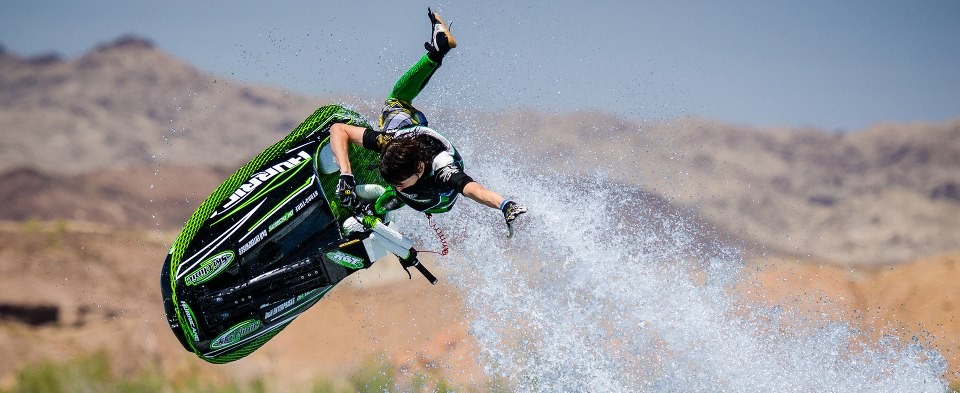
The above resume should attest to our love of freeride, and because of this, we are really excited to share James Visser’s fantastic GoPro edit of his January freeride session aboard his Yamaha WaveBlaster. Titled, “Because Backflipping a Stand-up is Too Easy,” James, the 2003 Freeride Jetski World Champion in both Stand-up and Sit-down categories, “shows what can be done on a sit-down ski. After not getting onto a jet ski for 7 years, this video was filmed on his second ride with a rotator mount from Upclose Productions” according to the video.
We strongly encourage you to watch James masterfully shred the lip off of several waves, perform can-can, kickflips and just a whole lot of stellar freeride tricks that are hard enough on a lightweight aftermarket stand-up, not to mention a heavy sit-down ‘Blaster (although, we know calling a WaveBlaster a “sit-down” will probably get us punched in the mouth in some circles). And once you enjoy the video below, make sure to check out James’ collection of snapshots from the surfride session HERE.
Hey, we all love Sea-Doo’s little “Rec Lite” class runabout, the Spark but its 60-horsepower leaves quite a bit to be desired. In a world of 310-horsepower supercharged machines and sub-2 second 0-to-30 times, it’s hard not to want a little more performance. Word of V-Tech Tuned’s insane turbo package for the Spark broke late last year and the numbers pouring out of the Swedish tuner’s shop continue to impress.
Our friends at WMF Watercraft are equally impressed and have recently announced that they are ready to begin converting your staid and simple Spark into a real screamer. Purchased through Jerry Gaddis’s top tier PWC performance store 4-tec Performance, Millsboro, Delaware’s WMF will quickly convert your entry-level 2- and 3-up Spark into a boosted and bad ass runabout in no time.
V-Tech’s Jonatan Holmelius explained, “Just a reflash will give the 60/90-horsepower Spark approximately 110Hp. With the turbo kit you can get [between] 140-to-180hp depending on the boost level you run. Even if you run the “low” 140-horsepower setting, you still get a lot more mid-range torque! From 6,000 rpm, you get approximately 40 horsepower more then stock…all the way to 8,500 rpm! Its a very nice improvement on both mid-range and top end!”
A major retailer of RIVA Racing parts, WMF Watercraft has proven itself as a go-to source top-tier performance tuning, having completed the gorgeous Miss Geico RXP-X Sea-Doos seen at nearly every boat show in the United States, not to mention their stellar tuning, repair and upkeep services.
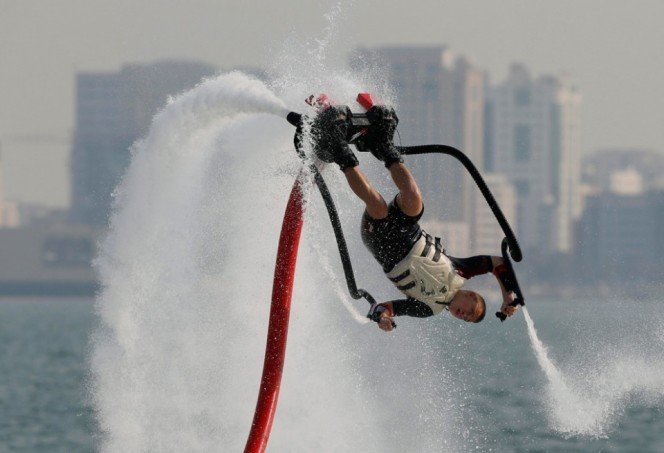
The public interest in growing, but Flyboard(ing?) still has yet to reach the mainstream. To help fix this, Zapata-Racing is helping create the first ever North American Flyboard® Championship 2014. Hosted in collaboration with Flyboard® Canada, Flyboard® Quebec, The Canadian Flyboard® Association, The American Flyboard® Association, The Mexican Flyboard® Association and The RedPath Waterfront Festival (that’s a mouthful!), the North American Championships will be hosted in Toronto, Canada this upcoming June 20-22.
Welcoming the top Pro Flyboarders from Canada, USA and Mexico, the North American Flyboard® Championship is baiting competitors with goodies, swag, fame and $2000 for first place (and $1,500 for second and $500 for third). Additionally, the North American Flyboard® Championship is promising over a million spectators. We have literally no idea how they can promise this unless the championship will be broadcasted internationally, but no such announcement has been confirmed thus far.
Nevertheless, it’s bound to add up to a pretty interesting event. Here’s the original press release:
You have been un-randomly selected to join us at this massive historical event!
This is the world’s first North American Flyboard® Championships held this June in Toronto, Canada. This event is conjunction with Zapata Racing, The Canadian® Flyboard Association, The US Flyboard®Association, and The Mexico Flyboard®Association.
Please read Flyboard magazine’s article for more details: http://www.flyboardmagazine.com/north-american-flyboard-championship-2014/
We want to see your face here, so come on and join us for a guaranteed mind blowing good time! This will be epic experience as we’ve put more than 6 months of work into it. 32 of North America’s top Flyboarder, 200ft Tall ships, helicopters, the Zapata family, the Flyboard family, live bands, Flyboard costume contests, great food and polite Canadians! What else could you ask for?
Attendance will be close to a million people, yup, that’s almost 2 million eyeballs, on YOU! This is your chance, don’t miss it. BOOK IT NOW! JUNE 20th, 21st, 22nd. Huge hotel discounts announced soon. Everyone is welcome so bring family, friends, pets? To our beloved Flyboard family, we can’t wait to see you all.
COMPETITION SCHEDULE DAY 1 (Friday) 9am-12pm QUALIFYING ROUND 1pm-4pm ROUND 1
DAY 2 (Saturday) 9am-12pm ROUND 2 1pm-4pm ROUND 3
DAY 3 (Sunday) 10am to 1pm FINALS 2pm to 4pm GROUP FLIGHT/COSTUME SHOW/PRIZE GIVEAWAY 4pm-5pm CLOSING CEREMONIES
HOTEL Hi all, here is the info for our hotel. PLEASE DO NOT BOOK YET. I WILL SEND YOU A LINK FOR THE DISCOUNT. The BLOCK for Flyboard Family is as follows:
x60 rooms total Dates secured from: June 19 to June 23 Room rate $175.00 The hotel is the Westin Harbour Castle Hotel AAA 4 Diamonds. Located at 1 Harbour Square, Toronto, M5J 1A6. Website is: http://www.westinharbourcastletoronto.com/gallery
VISA Some counties will be asked visa’s to get in as a visitor. USA and France are not required. I just saw that Mexico is required. For Mexico here is the web site to get all the info
English http://www.cic.gc.ca/english/visit/visas.asp?country=Mexico
Français http://www.cic.gc.ca/francais/visiter/visas.asp?country=Mexique
You can easily check in this website bellow if a visa is required for your country.
http://www.cic.gc.ca/english/visit/visas.asp
If you need any help with this please feel free to contact me on my cell: Alex 514-754-2775 our US number in my cell(305) 514 9182.
While we at The Watercraft Journal were patting ourselves on the back for a pretty snappy April Fool’s Joke, it would look like Sea-Doo was the one who pulled a fast one on us, and released a entirely new runabout (nearly mid-season, mind you) for 2014. No, we’re not kidding. And this machine is something that we think everybody can get behind of, although its not being marketed towards the masses. Enter: the 2014 Sea-Doo Search And Rescue (SAR).
The SAR is almost a tailored-fit response to not only the cries of rescue responders on the race course, but also that of local municipalities and lifesaving departments who regularly venture into surf, whitewater rivers, flooded areas and the like. Advertised as being ideal for “evacuation, surveillance and interception,” the SAR is significantly more than just a dolled up GTI either.
The list of features added to this machine make it a virtual commando of life-saving. From the outside, the SAR is available in two liveries, the high-visibility red-and-yellow scheme shown here, and a more staid black-and-white combo. But the SAR is much more than fancy graphics and a color-coordinated seat.
Quite literally, the Sea-Doo Search and Rescue (SAR) is no joke, with enough equipment to make a Coast Guard Zodiac blush.
Most noticeable are the SAR’s long pontoon-like “secondary sponsons.” Made from professional grade CSM (Hypalon®), the sponsons provide significantly more stability and buoyancy. These are capped with new running boards, allowing for more mobility around the deck. The hull has been treated in a shock protective 2.8 mm elastomer coating and features a large front bumper to ward off any hull damage.
Under the hull, a new “Shallow Water Navigation Kit” includes an anti-debris water intake grate, stainless steel wear ring, internal heat exchanger, and shock-protected cooling system (read: no ride plate heat exchanger). Above, the SAR is loaded with front navigation lights and a tall carbon fiber rear mast topped with another navigation light. The front storage bin includes a 12V outlet as well.
Because the SAR is based off of Sea-Doo’s Recreation-line GTI SE, it’s powered by a naturally-aspirated 1,494cc Rotax generating an advertised 155-horsepower. But it’s not the same old, same old, here. The SAR comes default in Sport mode, and includes a “universal key,” unlocking the system for fast deployment by any rescue team member.
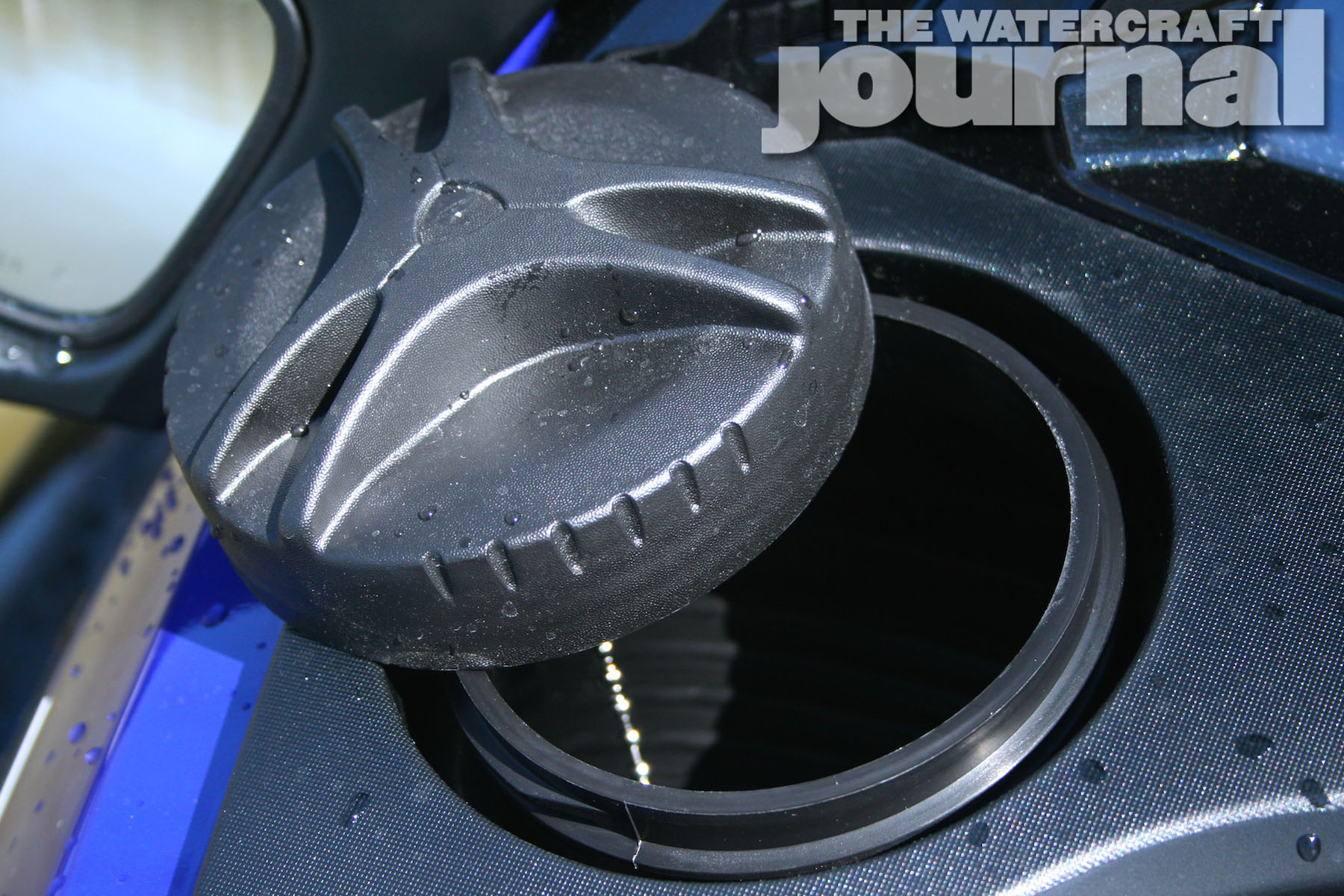
Additionally, the SAR has the brand’s first elevated fuel filler for easier access and refueling, while preventing water intrusion while refueling. The SAR’s list of additions include a tow hook, seat strap, a rear boarding step, an external exhaust cooling flush attachment, and large capacity bilge pump. The first of its kind – especially from a major manufacturer, the SAR benefits from all of the maneuverability of a personal watercraft, the features endemic to Sea-Doo (like iBR and iControl) and years of experienced rescue crews who have already excelled at using PWC to save lives.
Below are a handful of videos outlining the SAR’s capabilities in a variety of circumstances as well as a closer look at its features:
It wouldn’t be “Freeride Friday” without an awesome trick performed by arguably one of the most proficient talents in the sport, Mark Gomez. The little powder keg has risen up the ranks of jet skiing on the world stage, charging the surf on both hemispheres and impressing onlookers and his fellow freeriders alike. Mark is also one of the most affable characters, making it hard to hate him for brandishing Midas’ golden touch.
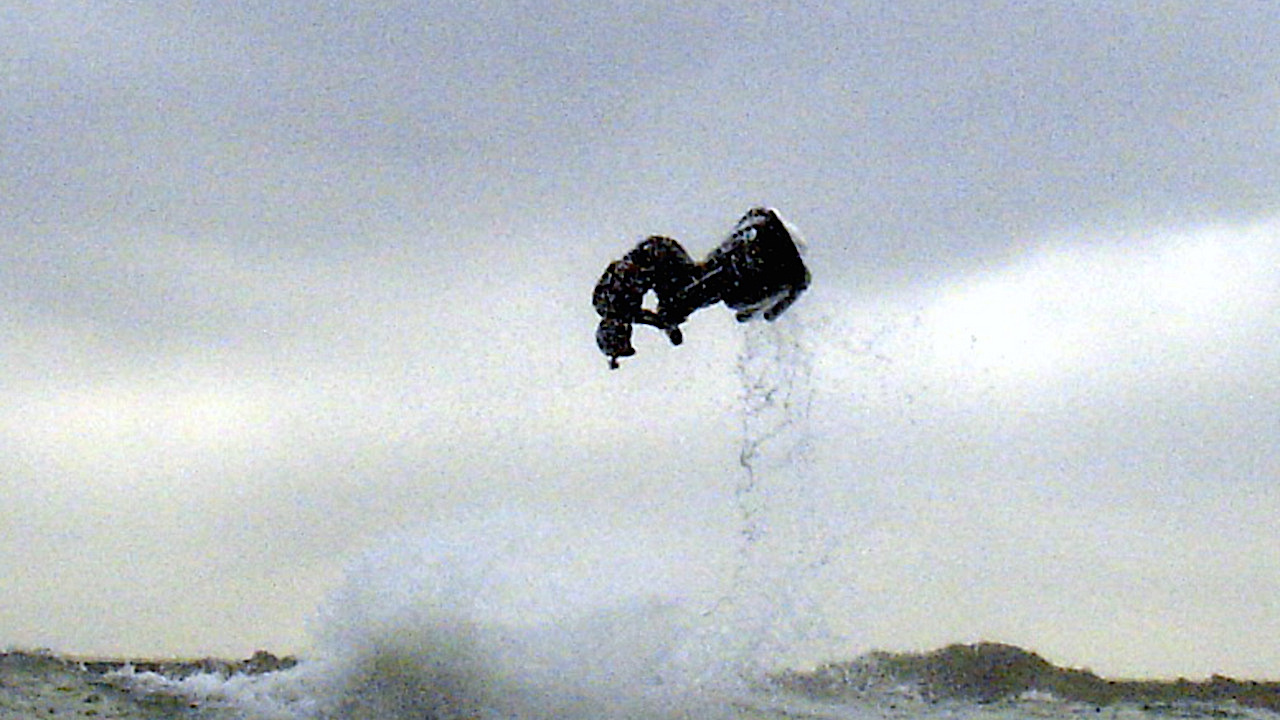
In a recent session in Oceanside, California, Mark executed one of the most difficult tricks possible: the Superflip. Requiring the utmost in athleticism and vehicle performance, the Superflip has become the top ring to reach for in the world of freeriding, and this video shows just how masterfully Mark was able to pull it off.
Mark wrote, “This video and everything I do throughout the year is made possible thanks to WORX Racing Components and Hydro-Turf. Thanks to my friends Zack Bright, Ross Champion and Brock Taylor for the coaching, and Chris Rosner for letting me borrow his Superflip bars. I was able to go out to my surf stomping grounds outside of Oceanside harbor and make it happen.
“The concept of the superflip is extremely gnarly. Go for a backflip, kick your feet out as you leave the lip, when fully extended upside down in the air, leverage yourself back into the tray using the superflip bars on your wrist to attempt to safely land the trick.
“There was not much of a way to ease into it other than to simply commit to the trick and go for it. It for sure helps to know that the 2014 Freeride jet ski I am riding is beyond capable of this and many other gnarly tricks. I am riding a Rickter FR2 EVO-1 hull with a DASA 1000cc engine pushed by a Skat-Trak 155 pump assembled by Impros, all put together by TC Freeride. The Superflip Levers I am using are Ross Champion/Cold Fusion superflip bars which are no longer available.”
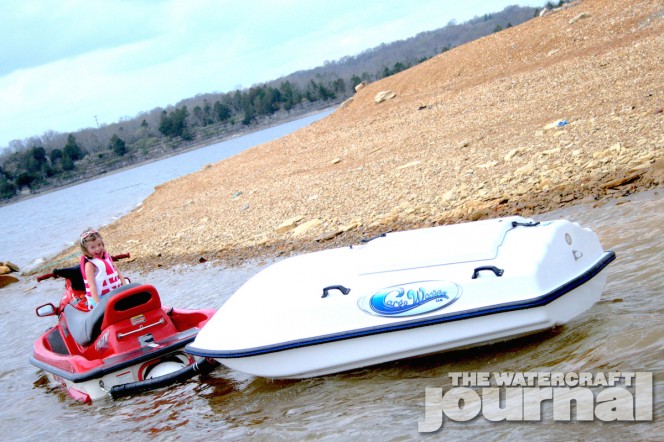
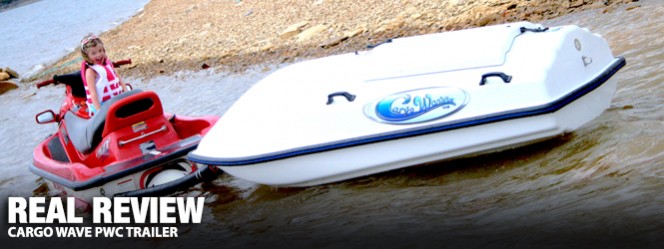
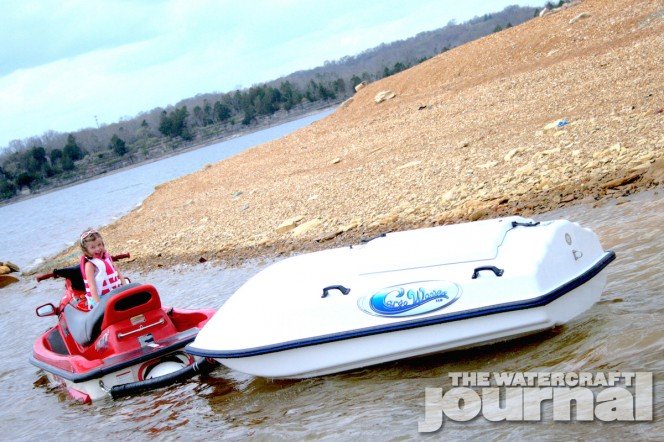
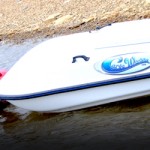
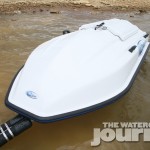
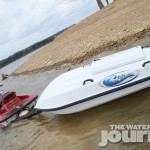
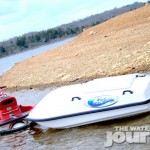
The Cargo Wave is an inclosed trailer with a watertight hatch, easily hauling camping gear or just a cooler and some towels.
I was young, but I can still remember my father attempting to tether a pair of lawn chairs to a boogie board to the back of a first year WaveRunner. He had given up trying to somehow strap a cooler down to the makeshift trailer earlier and resigned to making several trips back and forth to our daytime camping spot on the lake. The ride over was slow going as the ski wanted to swamp with all of the extra weight, and the boogie board regularly wanted to flip over, spilling its cargo into the water.
It was a frustration exercise that would be repeated countless times later in my life. Unpacking the truck only to stand on the dock scratching our heads as to how to get all of our provisions to the other side of the lake.
If I recall correctly, I have memories of my brother idling his SuperJet with a loaded Igloo cooler in the tray. My only solace is that we were not alone in our misery. Most of you reading this have grappled with the same dilemma.
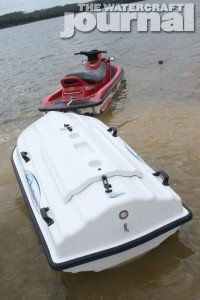
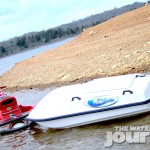
The long, low and sleek design ensures you won’t feel like you’re towing a Uhaul behind your ski, and you’ll be surprised with how smoothly it tracks on the water whether idling or at speed.Its cavernous 28-cubic-feet of storage and 200-plus-pounds of maximum weight storage promises that unless you’re trying to transport bags of cement that you won’t run out of room.
That is why the Cargo Wave PWC trailer is not only a great addition to the personal watercraft enthusiast, but a much needed, and expertly executed solution to a quarter-century’s-old problem. And unlike other PWC trailers that have come and gone before it, the Cargo Wave does not require any drilling or modification to your runabout. It doesn’t require any tricky electronics or tools to attach. It’s beautifully simple in its design, sturdy in its construction and genius in its execution.
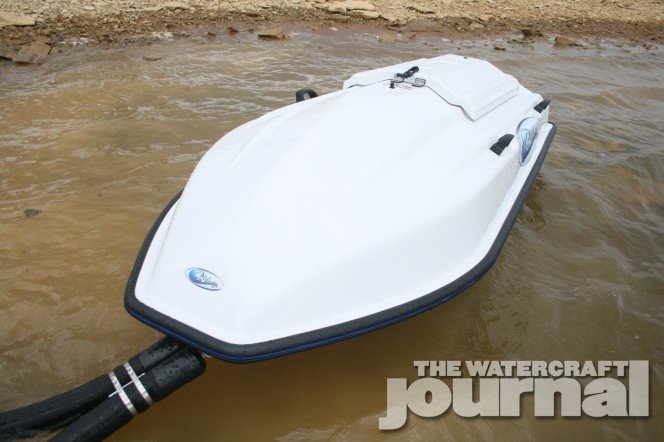
But enough with the pleasantries. What is it? The deceptively simple design is made of two specially molded fiberglass clam shells, and bonded together in a fashion similar to your watercraft, even with a rubberized bondrail.
The top deck incorporates a flip-up hatch with steel-braided tethers, and held down with rubberized latch straps, providing a watertight seal. A one-way vent allows air circulation without letting in water, helping to keep mold from collecting inside.
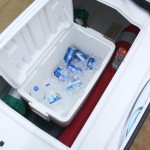
Inside is 28 cubic feet of storage, with a reinforced platform with non-slip matting and railings to strap your cargo down.
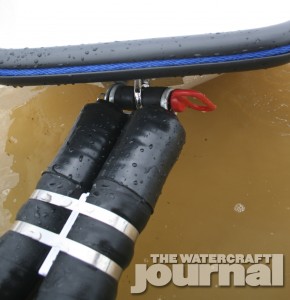
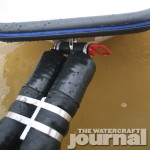
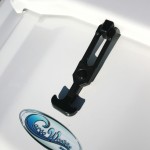
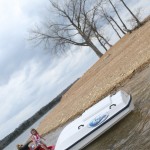
We had fun departing the launch ramp and taking our time to find a beach where we could set up our little camp. This process used to be a stressful one, as ditching all of our goods used to be a lingering threat. No longer with the Cargo Wave.Thick 3-inch steel-belted rubber hoses act as the trailing arms connecting the trailer to the factory D-rings on the back of your runabout. Connected with a central T-handle pin, attaching the Cargo Wave is easy.
Each Cargo Wave comes with its own full sized Igloo cooler as part of purchase, and is easily tied down with a pair of crisscrossing bungee cords. Capable of hauling over 200-pounds, the Cargo Wave suddenly becomes the most useful tool in your daytime or even overnight camping arsenal. Long distance haulers with an auxiliary fuel tank in the bow will love this trailer, as limited storage is no longer a concern.
Towed via a pair of heavy-duty capped and steel-braided, rubberized 3-inch diameter hoses, the trailer mounts with the tightening of two C-rings into the cables’ stout cast O-rings, and to the trailer itself with a T-handle pin (for easy removal at the end of the day). The rubberized hoses allow enough flex to allow the trailer with naturally sway through your ski’s wake without wagging or careening into the back of you as you slow down.
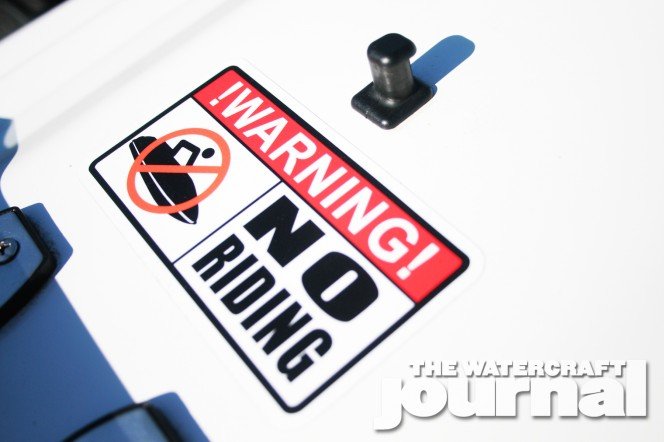
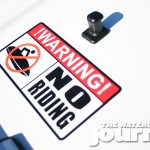
Although it’s sturdy, it’s not a toy. Always practice safe boating practices and please, don’t haul your kids, pets or buddies inside. Seriously, do we even have to ask?The Cargo Wave also lends itself to being a perfect fit for emergency and rescue applications, being able to transport medical equipment, food and water and provisions to flooded or disaster areas. As more an more departments are turning to modern runabouts, it’s not hard to imagine a Cargo Wave in tow.
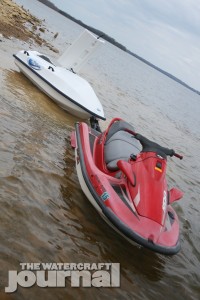
We were surprised with how well the Cargo Wave tracked behind our seemingly ancient ’97 Kawasaki STX 1100. Purposely testing a heavy laden Cargo Wave with a very underpowered two-stroke runabout was intentional.
Again, the Cargo Wave failed to “wag the dog” in long sweeping turns or jostle in rougher water. Obviously, the rules of responsible driving apply when towing anything, so hot dogging around the lake with a fully-loaded trailer of goods isn’t recommended.
Ideally, we would’ve liked to see a pair of anodized spring-loaded lockable carabiners instead of the C-rings for a little more user-friendliness, but that’s a sublimely minor detail. The long, low design of the inclosed trailer is attractive and sleek, the large accessible handles make loading and unloading out of the truck a snap, and its 110-pound overall weight is considerably light given its durability.
But for the weekend warrior or long haul rider, we’re thinking this has been a long-overdue solution to your storage and transportation needs. Priced at $1,599, the Cargo Wave isn’t cheap, but considering how many inner-tubes crammed full of coolers, chairs and kid’s toys that we’ve seen lost to the bottom of too many lakes, we’re thinking it’s the right tool for the job.
As the winter thaws into Spring, and life starts to stir, so do the seasonal companies. Recently, Jobe announced the launch of their 2015 Jobe Ruthless Model Contest. You’re probably thinking, “Wait, 2015? It’s only April of 2014. What gives?” Well, Jobe has already taken care of this year, and now they’re working on next year.
So what does it take become Jobe’s Miss Ruthless 2015, the face of all of Jobe’s marketing campaigns for next year? Not to mention the winner of a professional photoshoot and a cash prize of 500 euros! It’s actually pretty easy: Starting today and running all the way until May 14th, entries must go online and submit four photos (head, upper body, profile and full body images) as well as fill out an entry form as well as why you want to be Miss Ruthless.
Here’s the original press release:
It’s time for the 2014 Jobe Ruthless Model Contest! Jobe is hosting an online model contest on www.jobepwc.com/modelcontest in search of the new face for the 2015 Jobe PWC Ruthless range! Winning the model contest will make you Miss Ruthless 2015, including a professional photoshoot on an exciting location and a cash prize of 500 euros! As Miss Ruthless you will be the face of all Jobe PWC communication in 2015!
The Jobe Ruthless Model Contest launches on the 3rd of April 2014 and will run for one and a half month closing on the 14th of May 2014. After this period a professional jury will pick the three best entries to compete in the Ruthless Model Contest Finale. The Finale will take place from the 30th of June ‘til the 31th of July 2014.
Are you as excited as we are and want to take your shot on becoming the new face of Jobe PWC for a full year? Head over to www.jobepwc.com/modelcontest, follow the instructions and convince Jobe why YOU should become Miss Ruthless 2015!


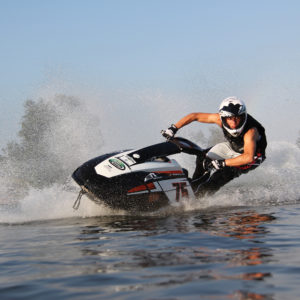 It wasn’t but last week that we helped announce the Miss Ruthless 2015 contest (which, if you’re looking to enter, you’re running out of time), and now we’re happy to share Jobe’s PWC Movie for 2014. Although it’s not much of a movie, but really a fun teaser of their new 2014 “Ruthless” personal watercraft line of swimwear, wetsuits, life vests, helmets and other needful riding gear and apparel.