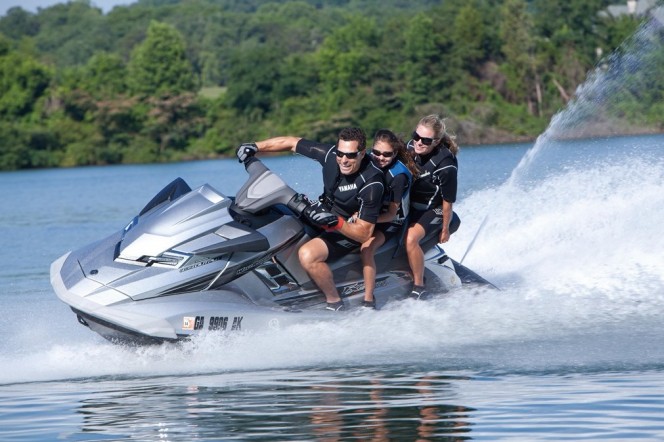
You wouldn’t buy a car without test driving it right? That’s what we thought. And likewise, that’s what Yamaha thinks too. That’s why they’re launching the very cool “On The Water” Demo Days across the nation to better familiarize you and other potential buyers with the all new 2014 lineup. Hosted by select Yamaha WaveRunner dealers from across the country, the “On The Water” Demo Days is the best way to get up close and personal with these awesome machines (that is, besides reading The Watercraft Journal’s PWC reviews of course).
And Yamaha has quite a bit to be proud of this year. Their lineup is one of the brand’s most comprehensive, with craft ranging from family budget-friendly entry level craft, fuel-sipping cruisers and long haulers, to full-blown race-ready supercharged water burners. Participation in the Demo Days is done via signup at www.YamahaOnTheWater.com, so if you want to take a crack at some of the best skis on the water, now’s your chance.
Here’s the original press release:
KENNESAW, GA – April 1, 2014 – Yamaha WaterCraft, a division of Yamaha Motor Corporation, U.S.A., announced today the 2014 Yamaha on the Water Demo Days hosted by Yamaha dealers nationwide. The national program connects interested consumers from around the country with their local Yamaha dealer, providing an opportunity for them to test a wide range of new 2014 Yamaha Watercraft products and experience first hand what a summer on the water is all about.
“We know that once consumers begin to experience the lifestyle related to our on the water products, that it is hard to resist. This year we have new value priced WaveRunners, new race performance models and our widest range of boat models for every buyer and every budget,” said Yamaha WaterCraft general manager Bryan Seti. “This program helps local dealers communicate directly with consumers about which model might be the best fit, and then provides a platform for getting out on the water and experiencing them first hand.”
The dealer search and sign up site is live right now at www.YamahaOnTheWater.com. Demo rides are free to the customer, and it is the responsibility of each participating dealer to facilitate the communication with the customer and schedule the demo ride time and day.
More information on Yamaha’s new 2014 WaveRunners and Boats can be found at www.YamahaWaveRunners.com and www.YamahaBoats.com
The American poet Henry Wadsworth Longfellow once quipped that “It takes less time to do a thing right, than it does to explain why you did it wrong.” In the brief past five months wherein The Watercraft Journal has published the Internet’s only daily personal watercraft magazine, our exponential growth evidences that our commitment to producing superior content, faster and for free is paying off.
The funny thing is that producing compelling, informative and entertaining originally-written content isn’t all that difficult. In fact, once you commit to doing the job right it sort of becomes second nature, like shampooing your hair or brushing your teeth (that is, if you have hair or all of your teeth). Then again, professional journalism is a trade that is not gifted but taught, and some simply refuse to be taught.
We are the only magazine to provide insightful and useful product and personal watercraft reviews, as well as in-depth interviews each and every week. These, in addition to our daily news articles, are mixed in with exclusive shop tours, late-breaking event coverage (regularly with huge photo galleries), videos, and technical how-to features…and we’re only a couple of days into Spring!
And again, the purpose of each month’s The Watercraft Journal By The Numbers is primarily for the benefit of current and would-be advertisers, and is, as we’ve said before, evidence of our commitment to total transparency.
March 2014
The Genuine Article(s)
Unlike other publications that merely “cut, copy and paste” articles pilfered from other sources, The Watercraft Journal prides itself on generating unique and professionally-written content, providing additional detail, quotes and/or insight when addressing a widely covered subject. But it its our full-length feature content where we shine most. We’re not seasonal. We’re not bimonthly. We’re daily, Monday-through-Friday. And that’s why more PWC enthusiasts come to us each day than any other magazine.
News articles published in March: 28
Feature articles published in March: 15
Total word count: 12,787 words*
*When this number is translated to print publication standards equals a 116-page magazine. Please note that this number does not include an average of two uniquely-written news articles published daily.
Real Readers, Real Performance
Here’s a fact: a magazine lives or dies by readership. And if the numbers teach us anything it’s that while a very healthy spike helped push February’s needle a tad higher, March’s steady consistency of increasing readers reading more articles more often means that we’re engaging our readership in new and better ways more regularly (whew! that sentence was a mouthful).
February
Total number unique readers: 7,372*
Total number of articles read: 20,172
Percentage of new readers: 57.8%
March
Total number unique readers: 6,757*
Total number of articles read: 20,220
Percentage of new readers: 54.9%
*This number is considered equal to an individual sale of a single copy of a magazine.
Socially Acceptable
Its funny how “if you can’t beat ’em, join ’em” has never been more true than this past month. Some have decried our social media effort, but in a hilarious turn of events, have about-faced on their position and greedily lapped up the benefits of digital marketing (although doing a lackluster job of mobilizing it into useful readership numbers). Our Facebook, Twitter, Instagram, YouTube, and weekly newsletter are carefully crafted, monitored and modified to derive the most efficacy, translating into engaged readers who will return again and again.
February Facebook readers: 4,476
February Facebook weekly reach: 87,034
Top Five countries: Argentina, United States, Brazil, Greece, Chile
March Facebook readers: 5,871
March Facebook weekly reach: 81,418
Top Five countries: Argentina, United States, Philippines, Brazil, Greece
Giving You One Really Good Reason
For the company looking for the maximum exposure possible for their brand from a personal watercraft magazine, there’s no better resource than The Watercraft Journal. And as this month has already shown, nobody covers all of the sport better, faster or more thoroughly…and again, it’s only the beginning of April! There’s a lot to be seen this month, including more freeride, some amazing technical articles and some really special interviews. If you’re looking at getting your brand in front of more eyes than anywhere else, then The Watercraft Journal is where you belong!
For his public humiliation, Erik is the winner of the grand prize from Jet Renu: an extensive detail kit including Jet Renu’s Pink Quick Shine, a gallon of Pink+ Shine & Waterspot Remover, Clear Glass Cleaner, Blue Plastic Polish and their MX DriWash and RenuShield MX sprays! All of it totaling $100-plus in PWC wash, cleaner and polish!
Huge thanks go to our participants, all of our readers and followers on Facebook and of course, Jet Renu for their support of The Watercraft Journal.
A year ago, word leaked that Sea-Doo was building a new lightweight entry-level runabout: the Spark. Since then and its worldwide public reveal last September, the Spark has breached buying demographics in nearly all categories, most notably age and price. This is only expected to continue as Sea-Doo expands its marketing reach to non-endemic PWC buyers; specifically, persons new to watercraft ownership.
The problem is getting the Spark to appeal to these potential buyers on their level.
“Early testing revealed that appealing to a very environmentally-conscious demographic with a traditional fossil fuel-burning engine wasn’t going to work,” explained BRP’s Drake Mallard to The Watercraft Journal from BRP’s Valcourt, Quebec headquarters. “We knew if we could reach these potential customers while proving that [BRP] can produce a lightweight, hybrid-electric power source for a personal watercraft – and do it in our smallest platform, the innovative Sea-Doo Spark – we could change the game completely.”
Development of the hybrid-electric power source commenced nearly simultaneously as the Spark project (then called CAFE) itself, over 5 years ago. The new hybrids are expected to arrive in showrooms as early as February of 2015.
Powering the project, appropriately titled Étincelle de Vie (or “Spark of Life”), proved to be its own challenge. The nonprofit organization Centre de technologies avancées BRP – Université de Sherbrooke (CTA) was tasked with not only developing the completely unique hybrid technology for the watercraft, but to do so using 50 percent less fuel and cutting CO2 emissions by 50 percent, and to accomplish all of this while maintaining the Spark’s speed, acceleration and agility.
The CTA’s biggest target was a total range of 150 miles, with 90 of those miles in electric mode. Mallard said that to achieve these goals, the team had to design an entirely new propulsion system, as opposed to modifying existing hybrid technology. A significant amount of weight was needed to be removed from current parts to compensate for the addition of the hybrid elements, which features two rows of next-generation NiMH batteries and a functioning transmission that will activate when the hybrid changes from gas to electric power.
“The transition from gas to electric is seamless,” Mallard continued. “A traditional 60-horsepower ACE 900 powers the Spark Hybrid until reaching a preset threshold within the power curve. Only then will an in-dash icon appear with an audible chime, indicating that the Spark has moved to electric power.”
Unfortunately, the added technology comes at a cost: the new Spark Hybrid weighs an extra 64-pounds over the standard Spark and will set the buyer back an additional $2,499.95. Because of the exclusive nature of the Spark Hybrid, dealers will be allowed to accept down payments as early as August 1st, 2014.
Obviously, unveiling a product intended for the next model year is a tremendous gamble on Sea-Doo’s part, but we all know that the industry leader in technology innovation isn’t one to take the road most traveled. There are still a lot of questions left unanswered and await further details on this groundbreaking machine. For the original announcement and some additional information on the all-new Spark Hybrid click HERE.
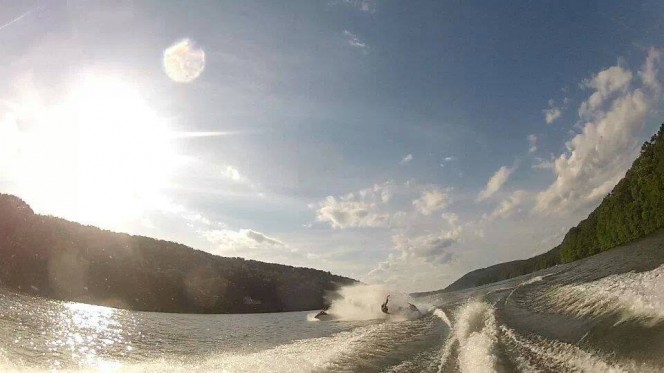
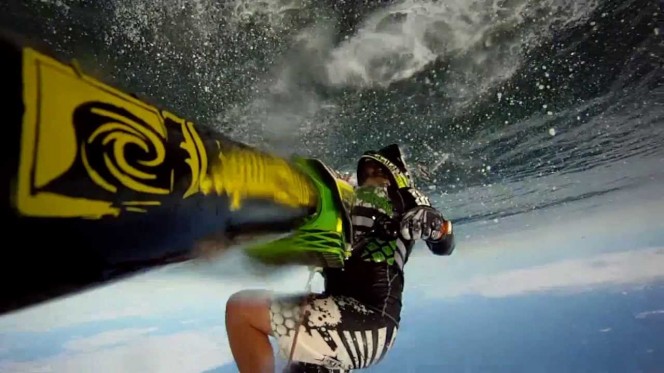
For those paying close attention to The Watercraft Journal these past few weeks, you would’ve noticed that we’ve really ramped up our freeride coverage. Although we were the first to print with coverage of the Thrust Innovations Daytona Beach Freeride, we’ve never missed a beat with covering the other many goings on and freeride events happening nationwide. To some of you, freeride might be a totally new form of jet skiing, one that is both exciting and slightly terrifying at the same time.
Part of understanding freeride is how tight of a community it is. Freeriders are a close-knit group of jet skiers who are usually seen charging the waves in groups. Although a fantastically talented freerider, Zack Bright by no means carries the air of an alpha in this pack. The 24-year-old has been riding for 4 years, a relatively a short time. Yet, within those short years, Zack has climbed the ranks of professional freeriders, earning the attention of several sponsoring companies Burn Industries, Hydro-Turf, Cold-Fusion, Blowsion, Fullgaz, DASA Racing, and Jet Lift.
As part of being a professional freerider, Zack has also traveled across the globe to compete among other international freeriders – from the States to France to Australia and New Zealand. Below, Zack participated in a very personal and insightful one-on-one interview which will give you a closer look at the Oceanside, California native.
It’s the subject of conversations happening all over the planet: Why aren’t more manufacturers producing new standups? Besides Yamaha WaveRunners’ continual production of the same 701cc-powered two-stroke SuperJet that has remained practically untouched for nearly a decade, the only outlet for a new standup has come from the wellspring of new aftermarket hull and engine manufacturers.
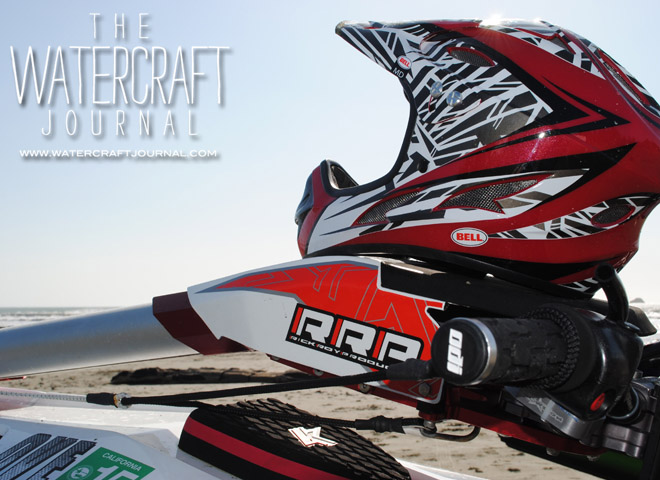
Upstarts like Rick Roy Products, Bullett Racing, Hurricane Industries, Trinity Composites, XScream and Krash Industries have all made names for themselves by cranking out outstanding niche-specific machines, be them for racing, freeride or freestyle. But producing these skis en masse has faced two major challenges: demand and powertrain.
In a conversation with Craig Warner during our tour of the new Mountain Motorsports’ Lithia Springs, GA store, he stated, “I wanted to start producing ‘Craig Warner Edition’ racing skis with a lightweight four-stroke but couldn’t get my hands on a good one. I even looked into buying a couple of those ACE 900 engines [out of the Sea-Doo Spark]. They wouldn’t sell them separately.”
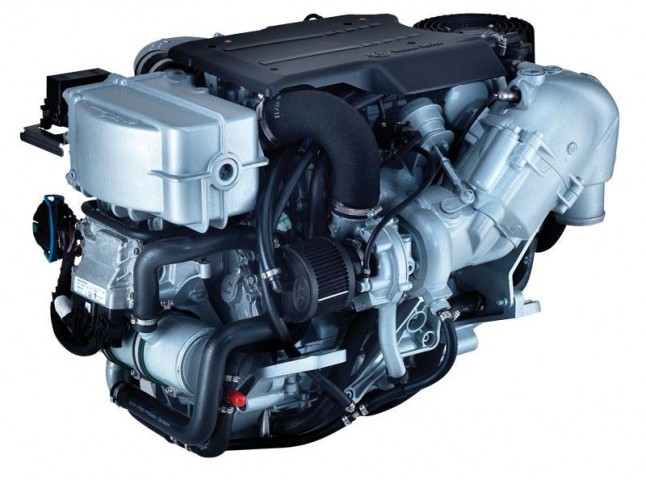
While there’s no shortage of two-stroke engine companies, going four-stroke offers certain key advantages, only as long as you can keep the weight down. That is why so many are looking at Weber’s MPE 850. While jet skiers will recognize the brand for their contribution to the Hydrospace S4, boaters will know it for powering Sea Ray’s Jet 21 and Jet 24, while auto aficionados will know Weber for its roles with “BMW, VW, Audi, Ford and Chrysler since 1969,” according to an article by Boating World Magazine.
Currently used in the new Sea Ray Jet 21, a 21-foot, 6-inch, 2,883-pound bowrider-style boat, the MPE 850 is a small (850cc or .85 liters) and lightweight (198 pounds) engine for producing a big punch. For the MPE 850 is turbocharged, producing an impressive 120-horsepower. Employing a a twin parallel-cylinder design (similar to many high performance motorcycles), a closed-loop cooling system and a dry sump oil setup.
Moreover, the MPE 850 is intercooled and fed by multipoint fuel injection, the Weber “has no discernible lag when you jam the throttle,” according to the original article, making it a prime candidate for future aftermarket skis. Availability as a “crate motor” is still mum, but is expected soon. With output nearing 200-horsepower in the hands of the sport’s best tuners, this could be the engine of the future of GP and Open standup classes.
There’s always something new going on here at The Watercraft Journal. While we’re working on some really cool ways of better connecting our readership to the industry’s best aftermarket products and planning a great refresh of the industry’s fastest growing, most popular and ONLY daily personal watercraft magazine, we also have some fantastic announcements to make regarding some of the sport’s biggest events here in the United States.
But hey, that’s just the tip of the iceberg! Not only will the whole Watercraft Journal staff be present at the Panama City, FL and Lake Hartwell, GA tour stops, the Jettribe IJSBA World Finals in Lake Havasu, AZ, but we’ve bee personally invited to participate in this year’s Long Beach to Catalina Offshore Endurance National Championships happening this July 20th.
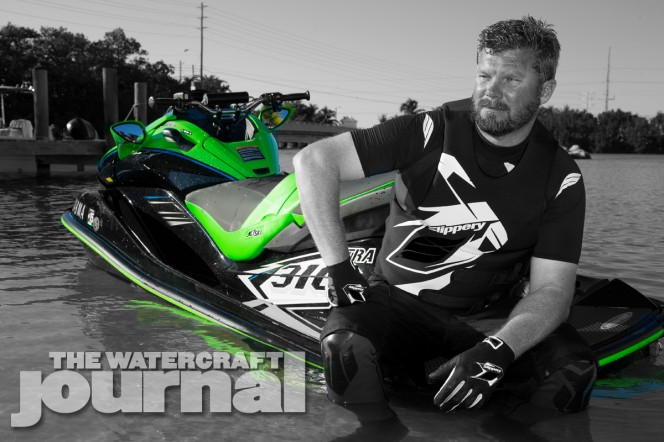
Our own Editor-in-Chief, Kevin Shaw will thrash to shed some extra pounds before boarding a brand-new 2014 Kawasaki Ultra 310R JetSki and battle 56-miles of wide open Pacific Ocean. Kevin will be joining the ranks of multi-time IJSBA world champion Craig Warner, who will be contending for his fourth LB2CAT championship, as well as master offshore athletes Mark Gerner and KC Heidler of PWCOffshore.com, and the possible return of Tera Laho, who blew the doors off of last year’s race aboard a supercharged Yamaha FX.
As you’ve come to expect, The Watercraft Journal will bring you immediate next-day event coverage from the Long Beach to Catalina, as well as live updates on our social media channels. Huge thanks go to Kawasaki USA, JetPilot and our other soon-to-be announced sponsors for making this great opportunity possible.
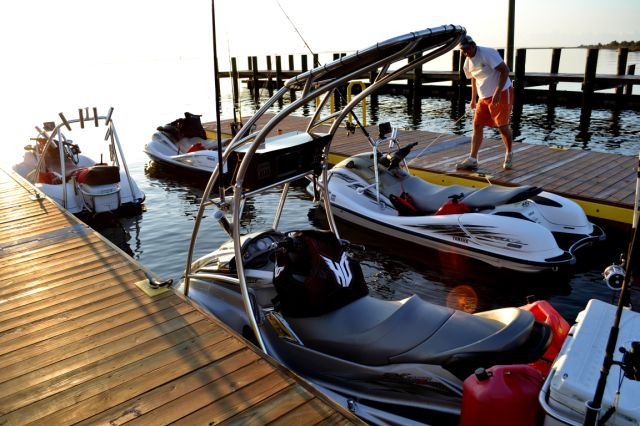
Ugh. Some hump days are tougher than others. So if you find yourself struggling to dig up the strength to really put a full day’s work in, your friends at The Watercraft Journal are here to provide you a little entertainment – if not a complete sap on your daily productivity. As you might already know, our pal “JetSki Brian” Lockwood has become one of the nation’s premier personal watercraft fishermen, having dedicated years to mastering the art of jet angling.
His blog, www.jetskibrian.com is swimming in entries of his exploits including tips on how to equip your runabout for fishing, insight on what equipment he recommends and even recipes for when you bring your catch home! Brian is not only a talented fisherman, photographer, waterman and author, but a cook as well!
But we just glossed over one of Brian’s best attributes: photography. The nature lover has captured some serious terrestrial majesty with his camera lens and you owe yourself a few minutes’ worth of browsing to check out what he’s snapped. From nesting bald eagles to breaching whales, Brian has an eye that not only sucks you into his experiences out on the water, but makes you want to join him for his next trip out.
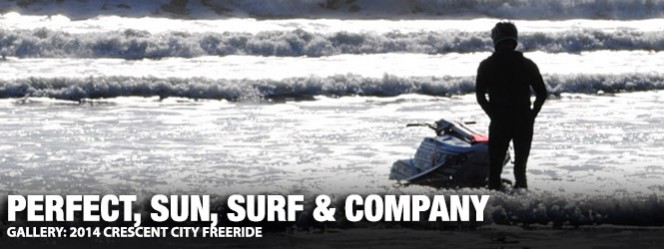
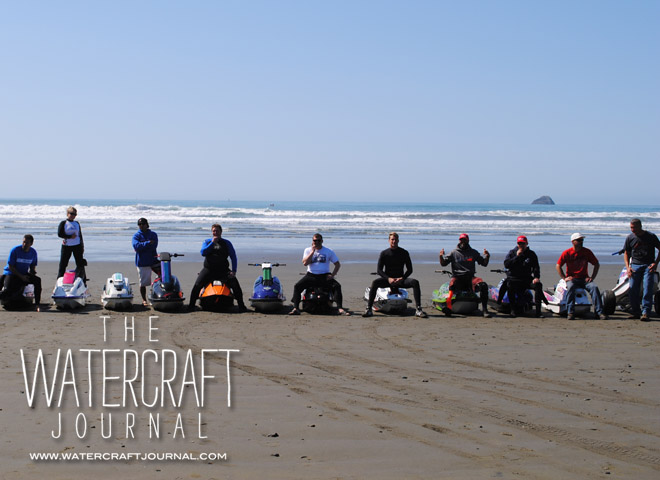
The inaugural freeride weekend took place over the popular spring break vacation, but still brought in 25 riders from across the States.
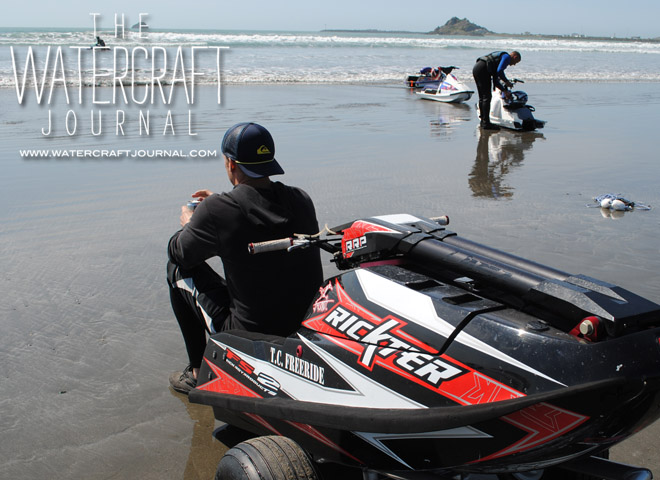
The inaugural Crescent City Freeride was held this past weekend (March 21-23 2014) in quiet little beach town Crescent City at the northern tip of California. This event was put together by local riders Kendri and Roy Rook along with Chris Farrell and frequent Crescent City pro rider, Pete McAfee.
This year was a bit of a test to see if the locals and the surfers could handle a group of jet skis taking a small piece of the South Beach for a weekend. The hope is that the event was well received and that it can possibly become an annual freeride location.
I was fortunate enough to be able to attend the first ever spring break freeride. I was joined by my good friends and riding buddies Chris Farrell, Dave Pennt and Peter Morrill. We all showed up at Chris’ house on Thursday night to load the skis in the trailer and get a couple hours of sleep before hitting the road at 2:30 am. Our plan was to try and make the 9 hour drive to the ride spot by noon.
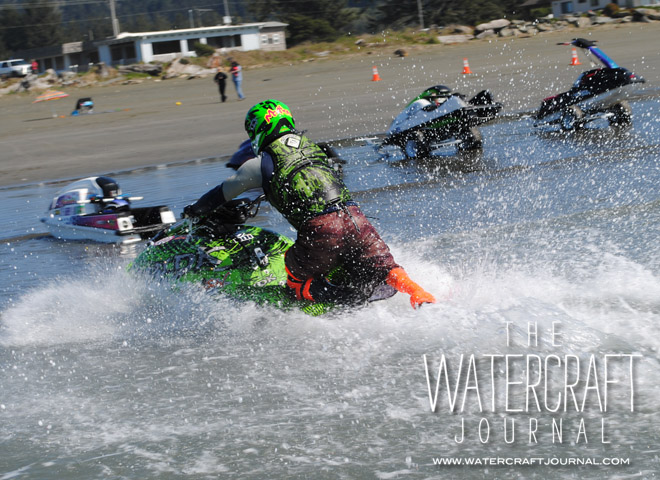
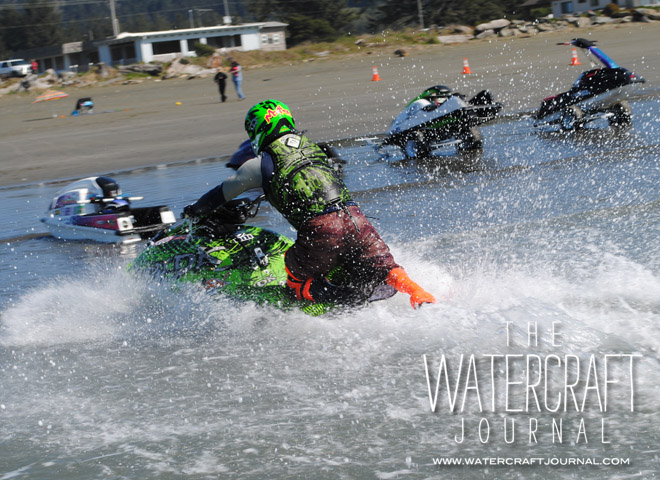
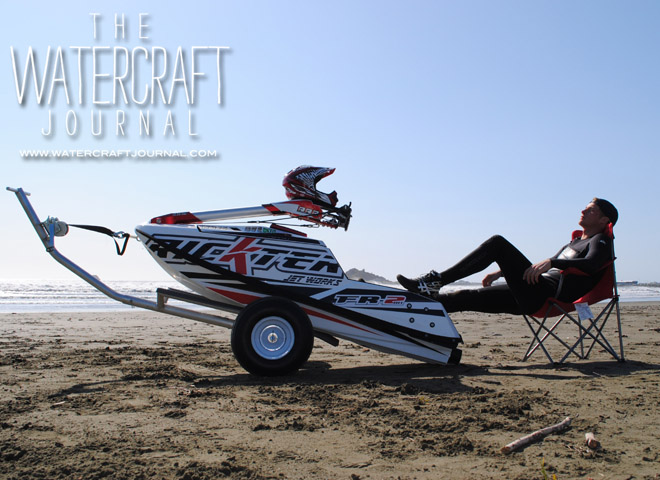
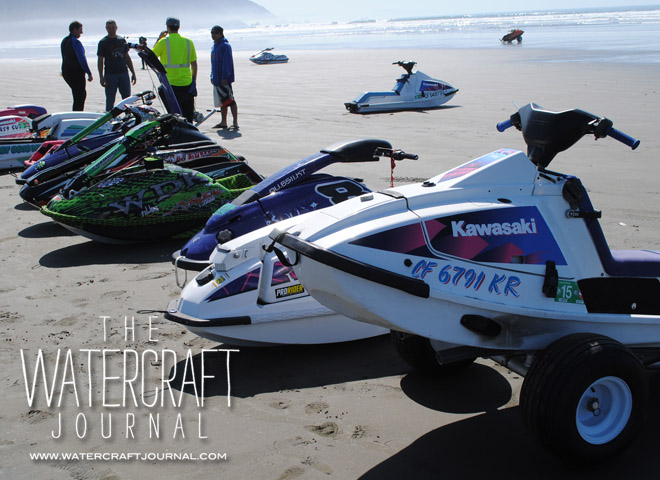
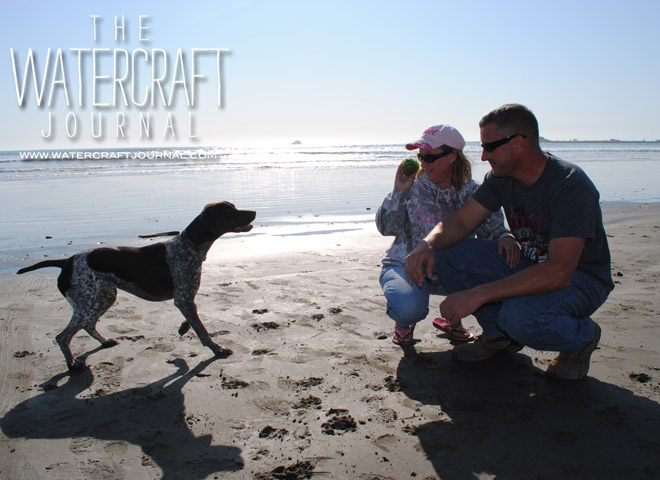
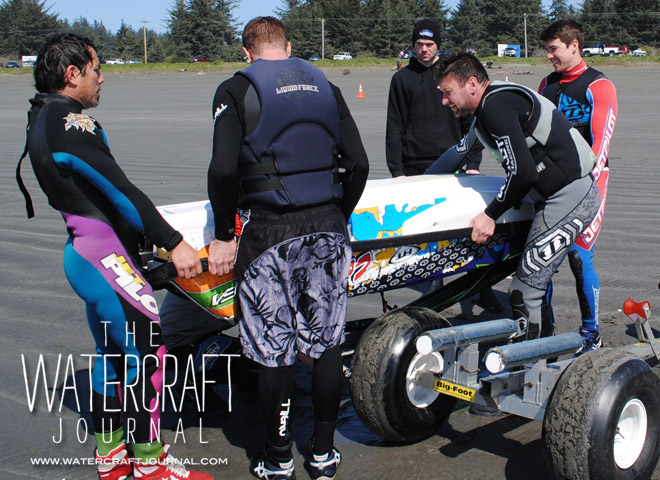
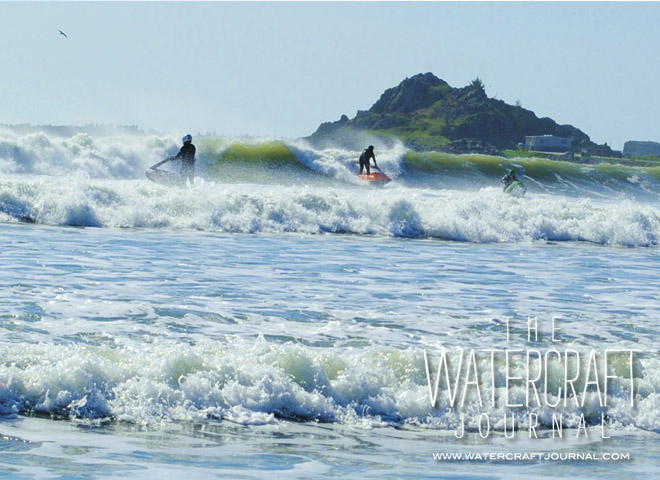
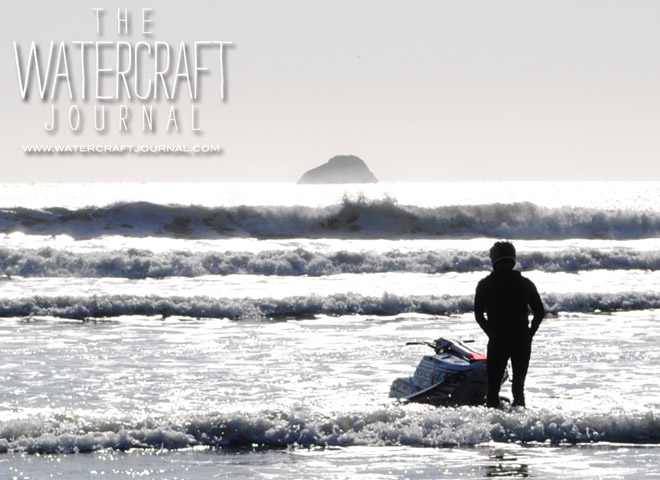
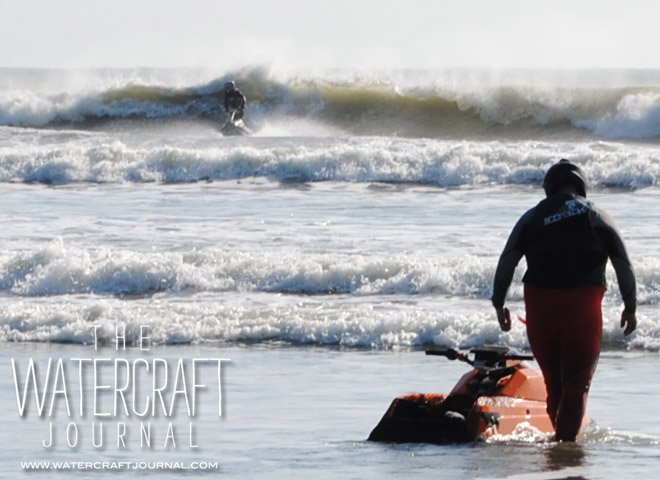
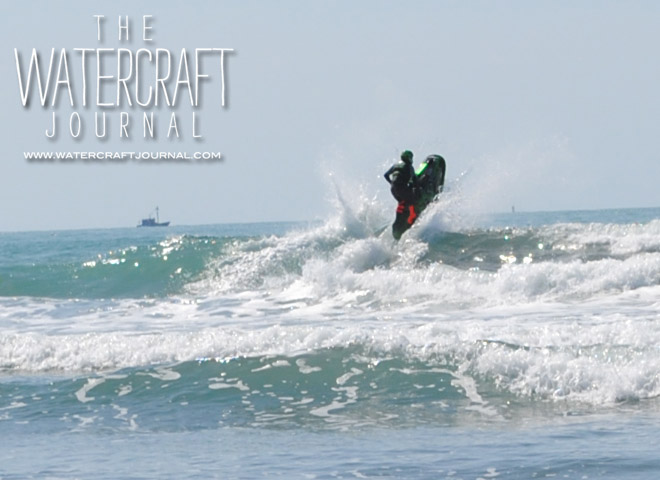
The Crescent City, CA location proved itself fortuitous with nearby parking and great surf, freeriders were able to cart their skis across the flat packed beach into the rolling tide.Two days of full throttle freeriding regularly-breaking 5-to-6 foot waves wore most riders out but in the best possible way.
Chris drove all night like a boss and even let the rest of us sleep (try to anyway). We made minimal stops and arrived on the beach right on schedule to find fellow rider from Idaho, Chris Batton shredding by himself. We quickly unloaded the trailer, stoked to try out the new riding spot that we had heard so many great things about.
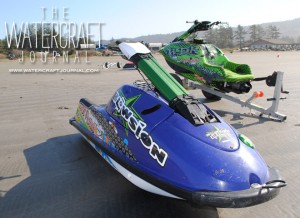
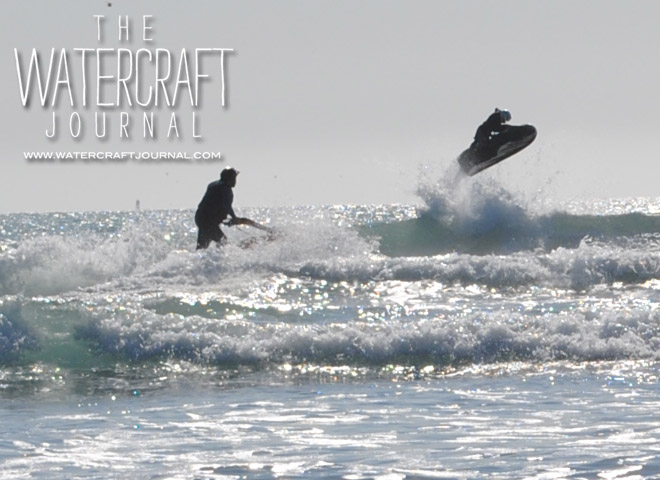
It was a great spot with parking right at the edge of the beach, making it an easy cart-in location. The surf was looking really good. Waves were about 5-6 feet with perfect faces and plenty of separation, and we even had a little off shore breeze. We rode all day while more people trickled in to join us.
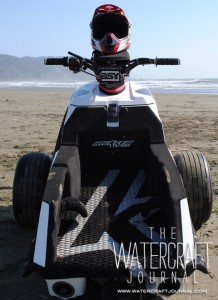
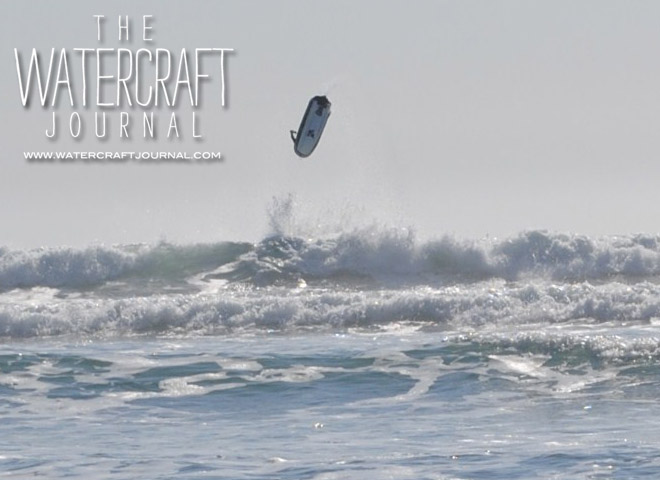
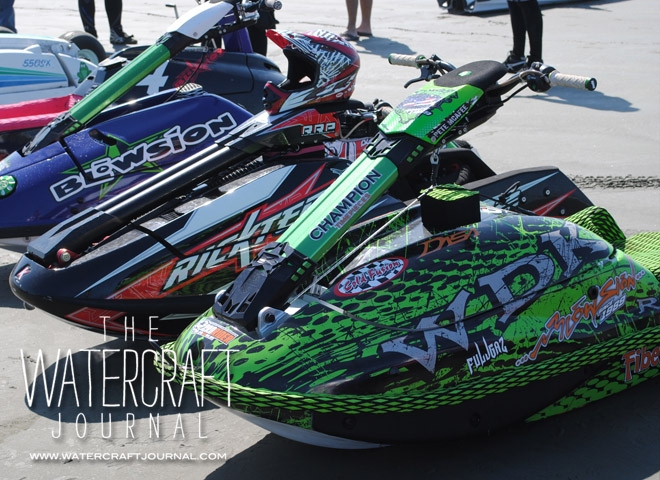
Pro freerider and local charger “Peg-Leg” Pete McAfee Never let off of his Blowsion-sprayed WDK ROK-R ski, even invited newbies to try out their first backflip aboard his ski.Local freerider Robbie Miller impressed all in attendance with how well his throwback Kawasaki 550 could charge the surf. Miller proved that while the equipment helps, there’s no substitute for skill and stoke!
By about 5:30, we all decided to load back up and check into our hotel that was only about 100 yards from our riding spot right on the beach. That night, local riders Roy and Kendri Rook invited everyone out to their home to join them for dinner and hang out for the evening.
They fed the whole Friday night crew (25-plus people) potatoes and tri-tip and we all got a chance to catch up with each other and make introductions to new riders and some locals. Everyone was pumped to get back on the water the next day.
Saturday was to be the main day. The local paper did a little advertising and more riders were on the way.
Some dude flying a motorized parasail came out and buzzed surfers and riders and damn near hit our trailer, but was pretty fun to watch.After the first full day of freeriding, the Rook’s invited all 25 in attendance back to their place for food, fun and repairs. Broken handlepoles, ignition misses and other gremlins were sought out and properly repaired.
The morning started out a bit slow. This being a spring break freeride, many skis had just been taken out of storage or tinkered with and a lot of guys were working out bugs and making adjustments. By midday, most of us were out shredding, and again the surf was killer!
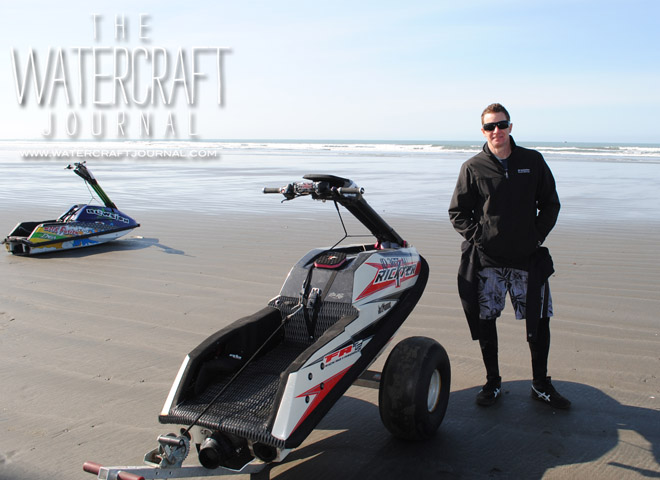
Local rider Robbie Miller brought out his old school 550 and smashed that thing against the face of the waves. I was impressed at what he could pull off on that 550. Peter Morill was getting used to his new Rickter EVO1 and dialing it in.
I surfed a ton of waves with a little air here and there and even went out and burned a tank of gas in the WDK ROK R surf ski, which was the most different surf ski I have ever ridden (but very fun to ride). Future star Stuart Allison was showcasing some impressive surf skills. Chris Batton was throwing big nose stabs and making good use of his DASA powered Rickter FR2.
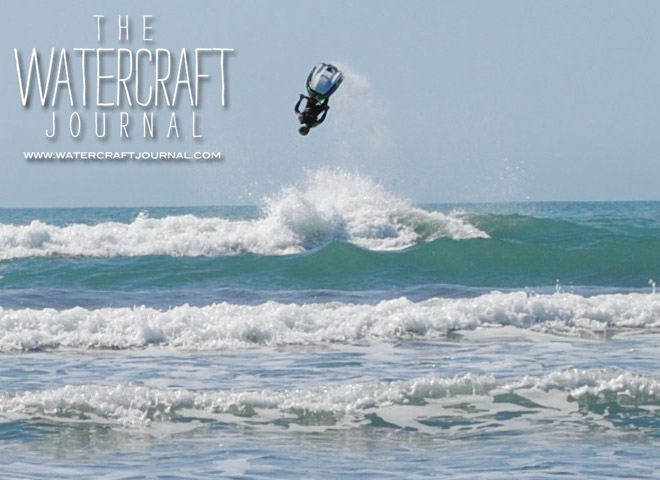
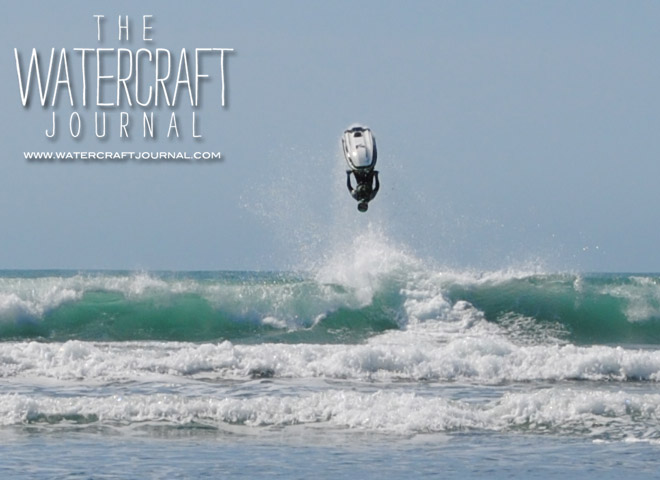
Blowsion and WDK sponsored rider, Pete McAfee (Peg-Leg Pete) was throwing down the biggest airs, flips, rolls and re-entries of the day, putting on a great show for all the spectators and surfers that were hanging out in the water to watch us.
Skis weren’t the only things getting banged up. Your author suffered a pretty nasty gouge in my shin which required some beachside triage from Peg-Leg Pete himself.Pete and Matt from Blowsion offered up some shwag for anyone that wanted to try their first flip.
Another honorable mention goes to local rider Chris Jones (Jonesey), who broke his handle pole off that day. Towards the end of the day everyone was out of the water with the exception of Peg-Leg Pete and Stuart.
They went out for one last session and with Pete’s encouragement, Stuart was able to pull off his first back flip with his father and girlfriend watching from shore. He was stoked to say the least. Big congrats to Stuart for his first flip and winning the cherry popper award for the weekend.
Crescent City, CA proved itself as a great riding spot and we all expect to see next year’s Spring Break ride grow in attendance.Back at the Rook’s for more food and fun the following night, many spent the night socializing and getting to know the new faces.
That night we all went back to the Rook’s house again for the evening to eat and tear into broken jet skis. It was a great night full of good conversations and good people that the sport of freeride is. It’s so crazy how everyone you meet in this particular sport have kindred spirits and everyone that rides is just a friend naturally from day one. Lots of laughs and a few shenanigans of course.
Sunday it was back to the beach for the last day of riding. We were all pretty beat from riding for two days but we still had fuel so back to the water we went. It’s very hard to stay out of the water when the surf looks so good. Sometimes your body says, “Hey buddy, I’m done” but your mind says “Let’s do this, I can go for one more session!” I know that’s where I was.
We all went out to get some GoPro footage and in the first 15 minutes I hit a good set and launched a pretty big nose stab. My right foot came out of the foot hold at about the apex and when I nosed it in I smacked my shin on my nozzle (I think) pretty hard. It hurt but I shook it off thinking I might end up with a lump on that shin.
Because Crescent City is Pete McAfee’s local spot, the professional freerider couldn’t be slowed all weekend.A tremendous weekend had by all in attendance, the first ever Crescent City Freeride weekend went off without a hitch.
We got some good riding in and came back to say our goodbyes and start cleaning up skis. I flushed mine and decided to get out of my wet suit and to my surprise I had a pretty big gash in my leg.
At that point I found Peg-Leg Pete, who works at a hospital and happened to have a sucher kit with him. Long story short, Pete sewed me back together with 13 stitches. If you ever have to get stitches, have a buddy that knows what he is doing do it while you’re watching the sun set over the beach chatting with your riding buddies. I’ll not forget that anytime soon. Doc says he did a great job and he wouldn’t have done it any different.
All in all, it was an amazing weekend with a great turnout. I can’t wait to meet up with my old and new friends again at the next event. I hope we can do Crescent City again next year!
PWCOffshore’s KC Heidler came in fourth behind the Mike Klippenstein in Pro Open (he also double entered in Vet Masters) class.
The inaugural Lake Perris Grand Prix Endurance Race debuted to great reviews, making for a fun day on the water as well as a race well positioned for future growth of the PWC endurance racing niche. The format of the race consisted of two motos, each one an hour-plus-one 5.3 mile lap completed throughout the day with a Le Mans start. Racers could race solo, have a race partner to split the motos and perform pit stops if they chose to do so.
The origin of the race was a result of collaboration between Ross Wallach, the promoter RPM Racing Enterprises and PWCOffshore.com soliciting feedback from local California racers back in 2013 regarding what additional race format they’d like to see in the West.
The Lake Perris recreational area was suggested as it is local to Southern California, is very close to many PWC dealerships and to a very large population of people, making it the ideal location and logistically easy for racers to attend.
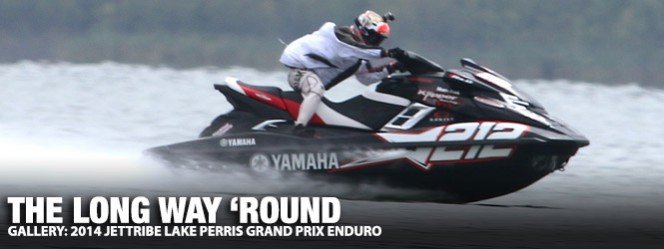
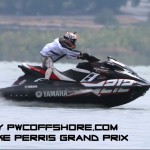
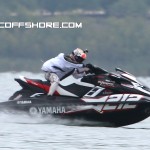
Powered by R&D Racing’s wicked T1 turbo kit, Mike Klippenstein greedily lapped the entire field at least once during each of Saturday’s two motos. Klipper kept the 90-something-mph Yamaha in the mid-80s to save the ski from over-taxing.Pete Yauri grabbed the win in the standup class, with Jettribe’s own Tony Vo taking second.
With very little time between the official announcement and the actual race date (less than one month), attendance was understandably limited as many struggled to negotiate travel and work schedules in such short notice. With less than two dozen entries, the lineup was thin but raring to go.
The very flat water and still winds combined to give Mike Klippenstein all the extra edge that his new rocket ship – a R&D Racing T1 turbocharged Yamaha FX SVHO – needed to lap the entire field at least once during each of Saturday’s motos. Klipper to walk away from the field and take the overall victory on his wicked fast Turbo Yamaha platform.
The last minute timing of the first inaugural Jettribe Lake Perris Grand Prix limited the number of potential participants, but both attendees and event organizer Ross Wallach feel confident that next year will welcome far more racers.Although Kawasaki’s legendary racer and watercraft developer Minoru Kanamori would race a STX-15F to victory in the Manufacturer Stock class this day, he couldn’t help but pose with the brand’s new 310R.
Unofficial reports stated that Klipper’s SVHO was well within the capabilities of 90-plus-miles per hour, but dialed back the throttle to keep the machine together long enough to bring in the win.
Second would go to former TCO Champion Mark Gerner piloting PWCOffshore’s backup Kawasaki Ultra 300 while his primary Ultra 300X craft underwent a rebuild.
Former three time IJSBA Vet Master World Champion and PWCOffshore.com Core Racer KC Heidler would struggle with fuel issues on his 310R but would still pull off 28 laps for a fourth place finish.
Beginning with a slightly modified Le Mans’ style start, rather than sprinting down to waiting skis, racers acted as their own holders and boarded immediately behind their craft after the starter pistol fired.Less than a month after the 10th annual Mark Hahn Memorial 300, the Lake Perris Grand Prix is a more budget-friendly enduro that eliminates pitting and allows for secondary fuel tanks.
Evelyn Mangan would win the 4-stroke Stock Class on her Kawasaki Ultra 300X, as Kawasaki’s own Minoru Kanamori and Takahiro Takahiro Tsujimotu would win the Manufacturer Stock Class on their Kawasaki STX-15F.
The 4-Stroke N/A Open class was won by Shane Newton on his Kawasaki 15F. Pete Yauri would take yet another victory in the Standup class, while Jettribe’s own Tony Vo would come in second.
Overall, the inaugural Jettribe Lake Perris Grand Prix Endurance Race was a success. The venue itself offers a large pitting area, beautiful setting and friendly staff, and the promoter and racers are optimistic that the Lake Perris race has been positioned for great success in the future!
The flat water and still weather made for sublimely glassy conditions. Although not nearly as challenging as open water or rough ocean conditions, it does lend itself towards more participant-friendly racing.
Pro Am Open: 1. Mike Klippenstein 33 laps, 2. Mark Gerner 30 laps, 3. #102 Bill Scott & Kyle Scott 28 laps, 4. #58 K.C. Heidler 28 laps; Vet/Master Open: 1. Mike Klippenstein 33 laps, 2. Tom Cruz 29 laps, 3. Scott McIntosh & Jonathan Mangan 15 laps; 4-Stroke Stock: 1. Evelyn Mangan 30 laps, 2. Josh Glenndenning & Charles Anderson 29 laps, 3. Derek Newton 26 laps; 4-Stroke N/A Open: 1. Shane Newton 26 laps, 2. Louis Nguyen & Tony Hoa 14 laps; MFG Stock: 1. Minoru Kanamori & Takahiro Tsujimotu 27 laps, 2. Eric Graff 26 laps; Stand Up: 1. Pete Yauri 18 laps, 2. Tony Vo 2 laps