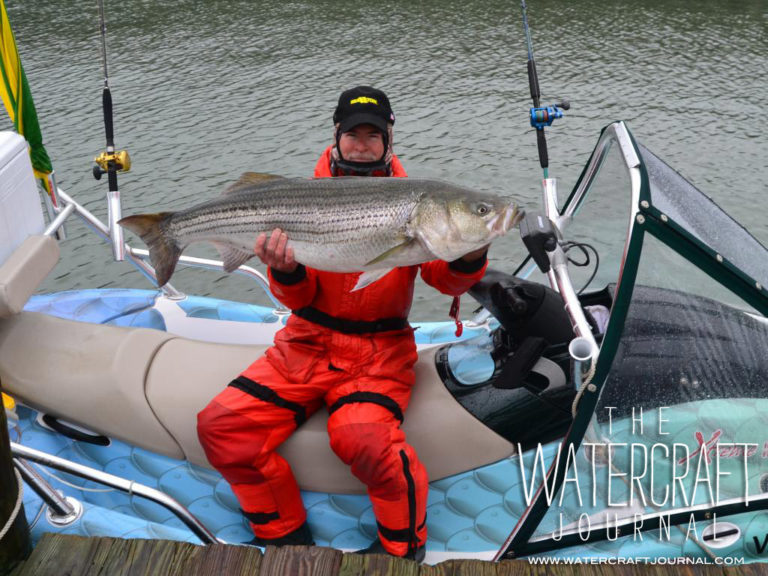
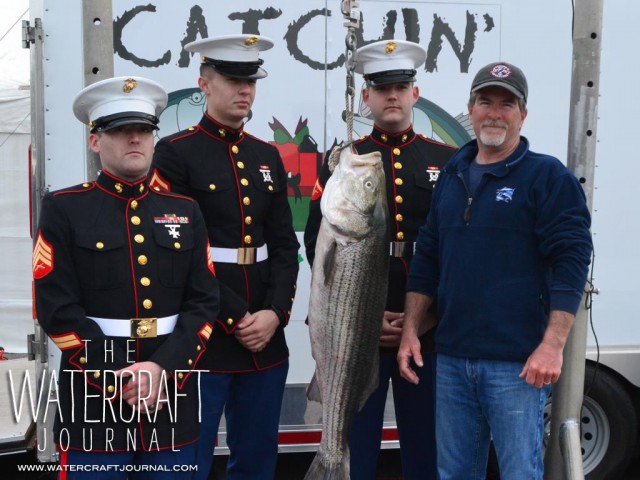
Only being allowed to bring in one fish (according to Virginia law), my 37.6-pound striper was good enough to earn me second place overall and a nice cash prize of $1,500.
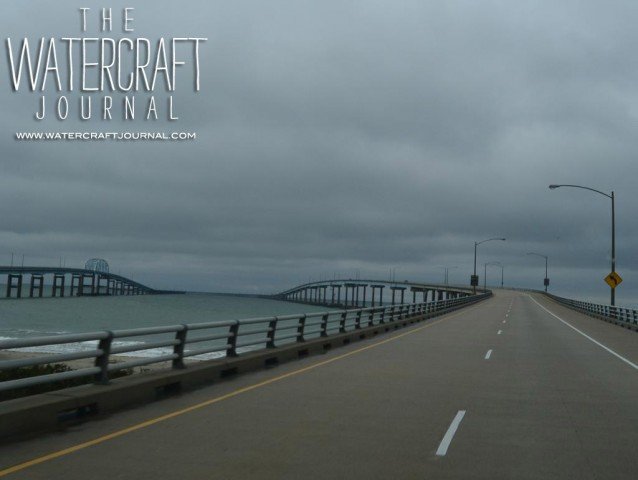
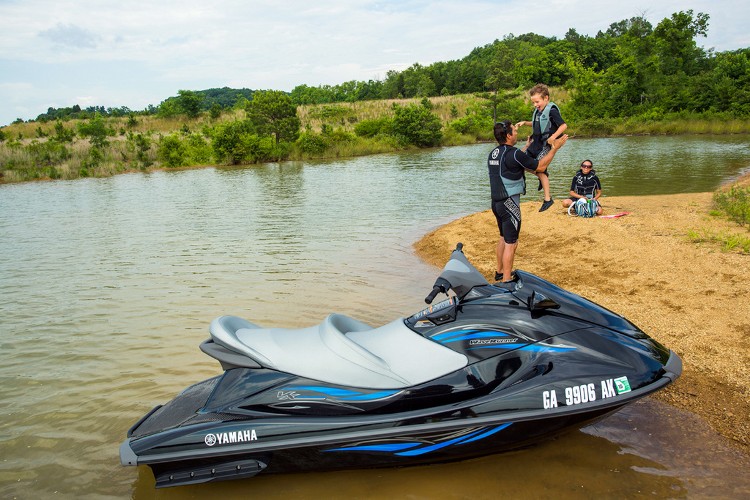
It was cold yesterday morning when I got up at 3am, loaded and towed my ski – an ’01 Yamaha SUV 1200 rigged and wrapped for nearly every imaginable form of fishing – from Poquoson, Virginia across the Chesapeake Bay Bridge Tunnel to the ramp at Kiptopeke/Concrete Ship.
I had entered a Toys for Tots charity fishing contest, the Catchin’ For Kids Tournament. The weather was terrible 25 knot with gusts to thirty winds, steady rain and a small craft advisory. Not exactly the kind of stuff you want to go out in a big boat in. But, it was pretty fun on the jet ski; I felt like I was at Water Country USA or Busch Gardens as I rolled up and over the 4-to-5 foot short duration waves.
I ran about two miles off of the ships and put three lines out with live eels. My first drift I had three knock downs and netted two nice striped bass. I kept one that totaled 47 inches. Pulling that one in was a blast! The next long drift I had no strikes.
According to law, I can only keep one big fish here in Virginia and that is all I needed to hopefully be in contention. Nonetheless, the conditions were getting worse so I decided to go back in. Returning back in, I learned that several other boats either did not go out or had done likewise and came back in early.
The Catchin’ For Kids tournament started at 6am, so I needed to be up by 3am to make there in time. Unfortunately, the weather was pretty uncooperative, which forced many boats in early or kept them from launching at all.It’s not unusual for me to be the only fisherman out on a personal watercraft. But when you’re the only PWC in a tournament and you come in second place to a full-sized vessel, it’s even sweeter.
With time to spare, I went back home, cleaned all my gear, had lunch, watched the bald eagles fly around my backyard and took an hour nap. Life is good! Catching up on some much appreciated sleep, my wife and I then went back to Norfolk and weighed my fish in at Vinings Landing Marina in Little Creek.
My striper ended up weighing 37.6 pounds! This gave me second place and $1,500 in winnings! (My striper came in only .6 pounds under the winner.) Not bad for the only person on a jet ski. Ha!
This was a great tournament put on by Rick and his cadre of volunteers to benefit Toys for Tots, in addition to the entry fees that went to the charity, everyone involved donated new toys for the cause.
As the readership of The Watercraft Journal continues to grow more diverse with each passing day (y’know, because it really does), we get more and more information pouring in from across the globe. Most recently, we received an update on the ongoing UAE Series (that’s the United Arab Emirates).
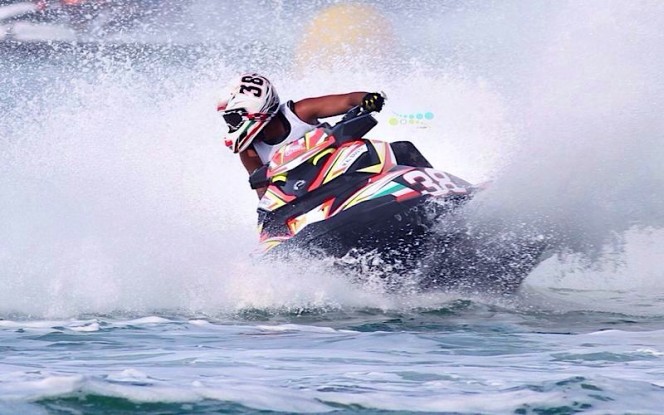
Cozmo’s switch from Sea-Doo to Yamaha made waves in the UAE Series, particularly as he earned the brand’s first win in Stock class in the series.
In the four month series – beginning in January and running through April, with six rounds divided between three rounds in Dubai and the other three in Abu Dhabi – has seen some fantastic sportsmanship and feats of athleticism. Most notably has been by Kuwait’s Mohammed “Cozmo” Al Baaz.
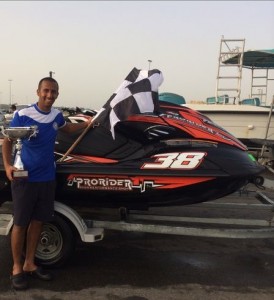
Cozmo has dominated the Pro Stock Runabout class aboard his 2014 Yamaha FZR SVHO, most recently winning his first place title in Round 4’s close course race held in Dubai, United Arab of Emirates. Up until this time, Cozmo had been leading in points throughout the first three rounds on his Stock class 2013 Sea-Doo RXP-X, but only decided to cross over to Yamaha mid-season.
Cozmo’s change to the FZR also earned Yamaha its first win in Stock class for the series. Built by Abdullah Burbayea and Yousef Al Busairy of ProRider Garage located in Kuwait (and of no relation to the bimonthly print publication). Equipped with parts from R&D, RIVA Racing, WORX and a few other tricks by ProRider Garage, Cozmo’s machine made short work of the field.
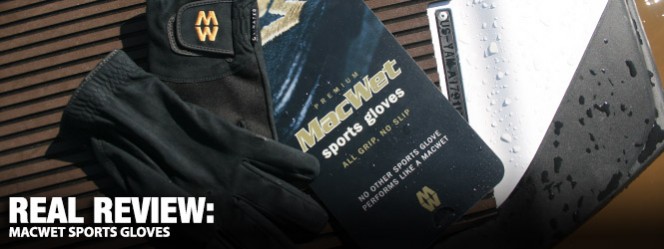
A couple of months ago, we got a very nice email asking us if we’d be willing to do a review on a pair of MacWet Sports Gloves. In full disclosure, we had never heard of them prior to then. With a little due diligence we were impressed with what we saw; an all-weather glove used by many athletes both in and outside of watersports, including equestrians, golfers, biking, professional shooters and hunters, and outdoors men. In fact, MacWet is a popular choice in 35 various sports.
Impressed, we sent our reply back that yes, we’d be interested in giving these a try. Within a couple of hours, an email appeared in our inbox, “Great! Now we need you to measure your hand. Please follow our sizing chart.” Our first thought was that these guys took gloves pretty seriously.
The MacWet Sports Gloves are deceiving in their simple design. Free of bulky faux leather padding or rubberized traction points. Rather, the Aquatec is both impressively grippy and naturally breathable, wicking water than any other glove we’ve tested before.
It didn’t take long before a package arrived with our all-black with gold-embroidered MacWet gloves arrived. Looking like a designer glove, the MacWet gloves are beautifully crafted – like something that you really shouldn’t get wet.
What was conspicuously absent from these gloves were the heavy padding, rubberized ribbing or other gimmicky traction-enhancing doodads found on so many other brands. In fact, these feature zero drain holes either. How exactly would these work, we wondered.
As it would turn out, exceptionally well.
MacWet advertises their Sports Gloves as a “second skin” and they’re not lying. The MacWet gloves fit precisely and comfortably. There’s zero bunching or binding, as well as being deceptively breathable. The unique Aquatec material isn’t thick like neoprene or synthetic leather used by other major manufacturers.
Rather, Aquatec wicks water almost immediately; you can literally watch as moisture travels and evaporates off of the surface. While riding at speed, the gloves remained dry and surprisingly warm given the windchill and their minimal thickness. Although not all MacWet gloves have it, the available Climatec – fleece-lined, water resistant option – was definitely the way to go.
All in all, we were wildly impressed with the MacWet Sports Gloves. No other glove we’ve used while riding has provided a better, more natural feel or grip – be them wet or dry. Again, these aren’t the big, padded gloves you might be used to, so such an uninsulated feel might require some getting used to. But if you’re a recreational rider looking for improved comfort and warmth, or a racer looking for better control and grip, we have to admit, the MacWet Sports Gloves are our current favorite.
Unsurprisingly, the MacWet Sports Gloves (including the Climatec all-weather option) are reasonably priced for such a top-of-the-line product, at $49.95.
Many of us would like to use motocross as the measuring stick to compare professional jet ski racing. Although the “big show” has seemed to have drifted away from our sport, there’s still many of us who still ardently believe that the best days are still ahead of us. That being said, we’ll happily take any opportunity we have to blur the lines between the two sports.
At the beginning of last October, world championship and X Games gold medalist Travis Pastrana took a break from racing his Red Bull Dodge Dart rally car from the Global Rally Cross series (GRC) to indulge in some good ol’ fashioned hooning. In an episode of “On Pace with Pastrana,” Travis and crew departed to Florida for “Two Stroke Week” – a week-long competition between he and pals of golfing, jet skiing and shifter kart racing.
While it’s supremely unlikely for Travis to take another bout at jet skiing but in a professional sphere, at 31-years-old, Travis would actually come in on the young side of our current average age of professional racers. But until “Nitro Circus” takes to covering PWC, don’t expect Travis to trade freestyle, supercross, or NASCAR for a life vest any time soon.
If you want to skip ahead, the water fun begins around 4 minutes into the video.
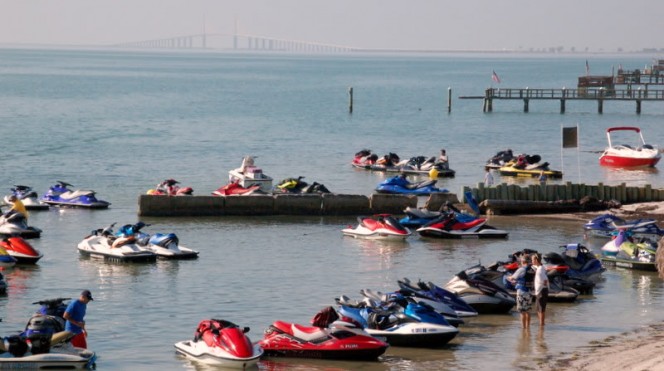
C’mon, how can you say no to a three-day weekend of fun under the Florida sun, riding personal watercraft and raising funds for a children’s charity? Does this sound like something you got to be a part of? Well, the third annual Spring PWC Bash – organized by the Orlando Watercraft Riders and Tampa Bay Jetski Clubs, helps raise money for Give Kids the World Village.
According to Ken MacDonald, “We hold a jet ski Charity Poker Run Fundraiser each year to benefit Give Kids The World – three days of activities including a scavenger hunt, a Poker Run and a timed slalom course race held at the Magnuson Hotel Marina cove in St. Petersburg.
“Last year we had over 100 guests from all around Florida join in the celebration. This year, we are hoping to have the event grow even larger!”
Scheduled for this upcoming April 11th through the 13th, 100-percent of the proceeds raised will be donated to GKTW. “Our goal for the event is to raise more than $4,000,” MacDonald, “All of this to help Give Kids The World fulfill the promise to never turn away a child.”
For more information and to purchase your tickets, simply visit www.jetskibash.com today!
Ladies and gentlemen, Spring is finally upon us. And even if its still a little chilly where you are or even a few piles of icy snowpack are still seen on the side of your streets, the weeks and months are ticking by the calendar meaning that dealers are ramping up the promotions to help connect you with your new personal watercraft.
That is why The Watercraft Journal’s favorite middle Tennessee powersports dealer, America’s Motor Sports is prepping its warehouse and showroom for a stellar year. They know you’re itching to shake off the winter blues and get out on the water, and they’re the dealer to help make that happen.
And if its the inside scoop on late-breaking deals, we are really excited to help direct your attention to America’s Motor Sports’ Facebook page. The dealership is keen on rewarding those who are fat on their feet (and in the seat) so that is why you need to “Like” and follow their Facebook feed, so that you can mobilize on deals when they happen.
OK, so it’s time we started taking the Flyboard a little more seriously. The fanbase for this new sport – because it’s far surpassed that of being a toy or a hobby – has swelled to new proportions. Magazines, international championships and even competitive tours have all joined to make Franky Zapata’s creation a worldwide phenomenon. We should’ve listened when Jerry Gaddis of Greenhulk.net and PWCPerformance.com fame started selling dual props to these guys in bulk…
Now the wakeboard and accessory manufacturers are in on the flyboard as well. Recently Hyperlite System announced their top tier bindings and boots for the Flyboard. A huge name in wakesports, Hyperlite has established themselves as a major player in building strong, durable and comfortable boots, bindings and boards for wakeboarding.
Now, banking off of the similarities between the Flyboard and wakeboards, Hyperlite’s bindings and boots mount directly to the stock Flyboard, allowing the rider to adjust for a personal fit. Equipped with a very handy quick fasten and release system, the Hyperlite upgrades not only add better comfort and use, but safety as well.
The instructional video below overviews how the new bindings and boots work with the stock Flyboard, as well as some great Flyboard action that’ll make you want to give it a try.
Well, the mad scientists at Krash Industries are at it again. With the introduction of their all-new purpose-built Predator hull, the surf-charging design is nimble and agile in the waves (measuring at 200cm in length 72cm wide and 55cm tall).
Unique to the new Krash ski is a tail plate system that allows the rider to change and “tune” the hull for different surf conditions, also permitting for the addition of a second plate for larger conditions, making for slower rotations or faster surf riding.
Additionally, the new Predator includes adjustable lifters, sponsons, dual cooling, scupper, pump shoe, and will accept either a Kawasaki or Yamaha running gear, with a pole bracket for easier assembly. To stir up the hype, the Krash Army of riders stormed the first round of the IFWA at Portsea, Australia.
A small clip of the Predator Photo shoot we did in January and a big congratulations to the Krash Army riders after the 1st round of the IFWA at Portsea Australia. Below is a quick sneak peek at the exclusive Predator photoshoot:
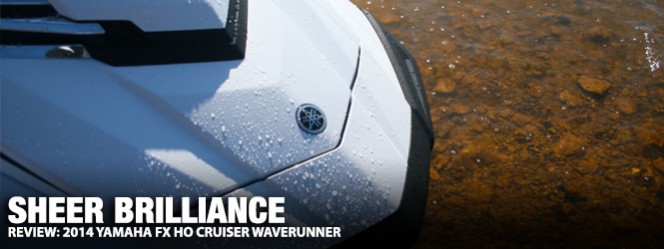
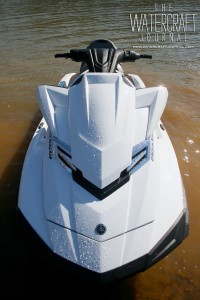
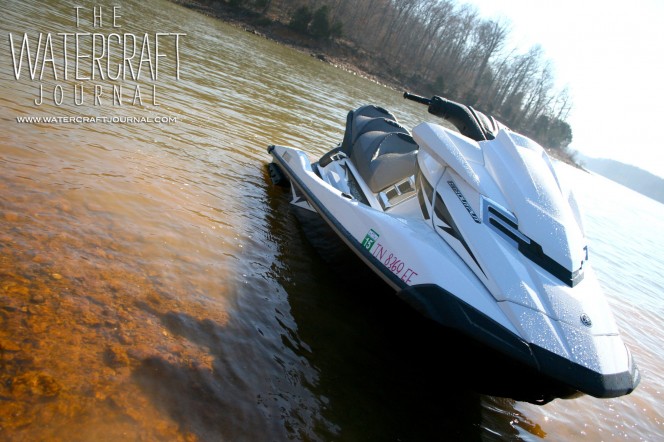
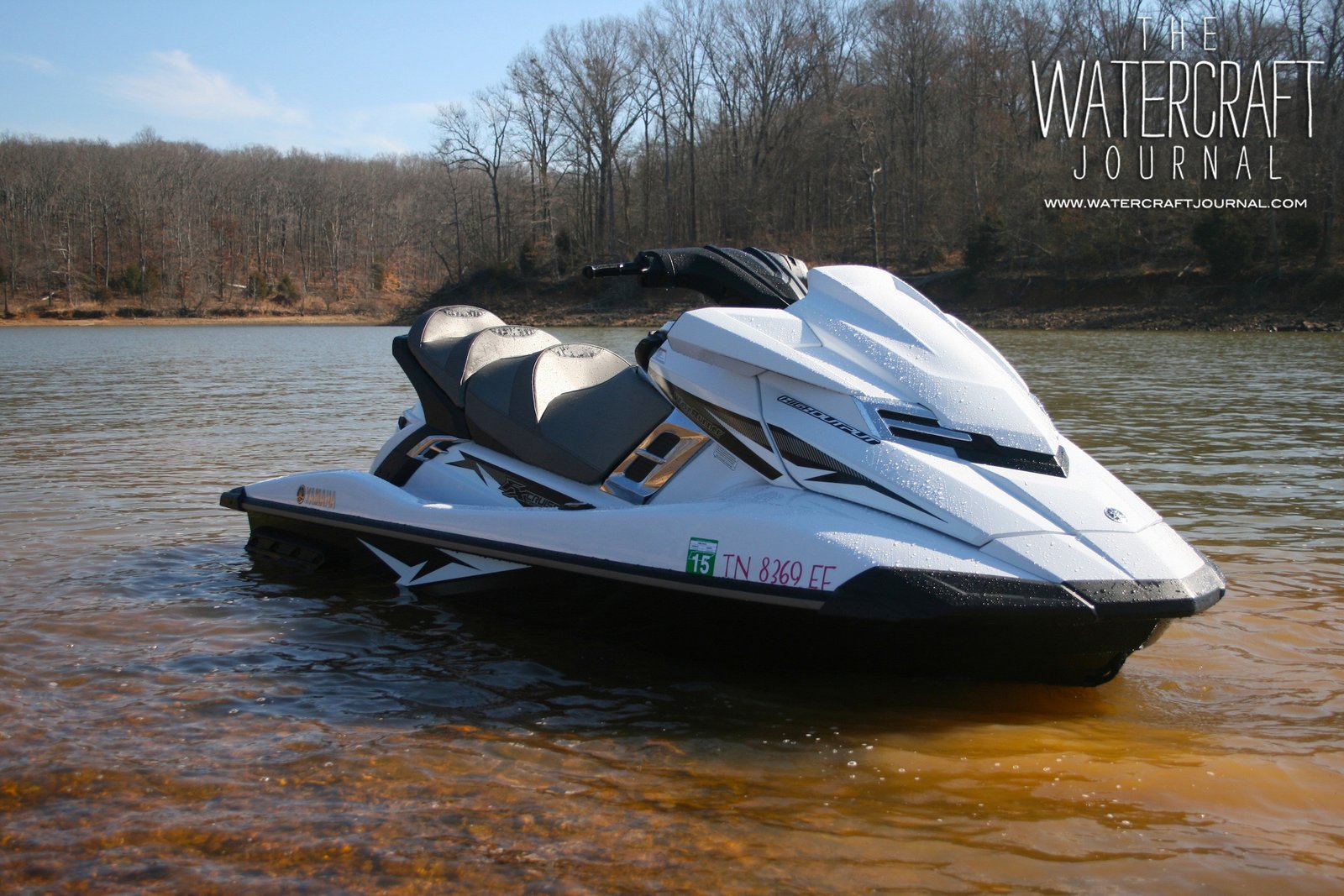
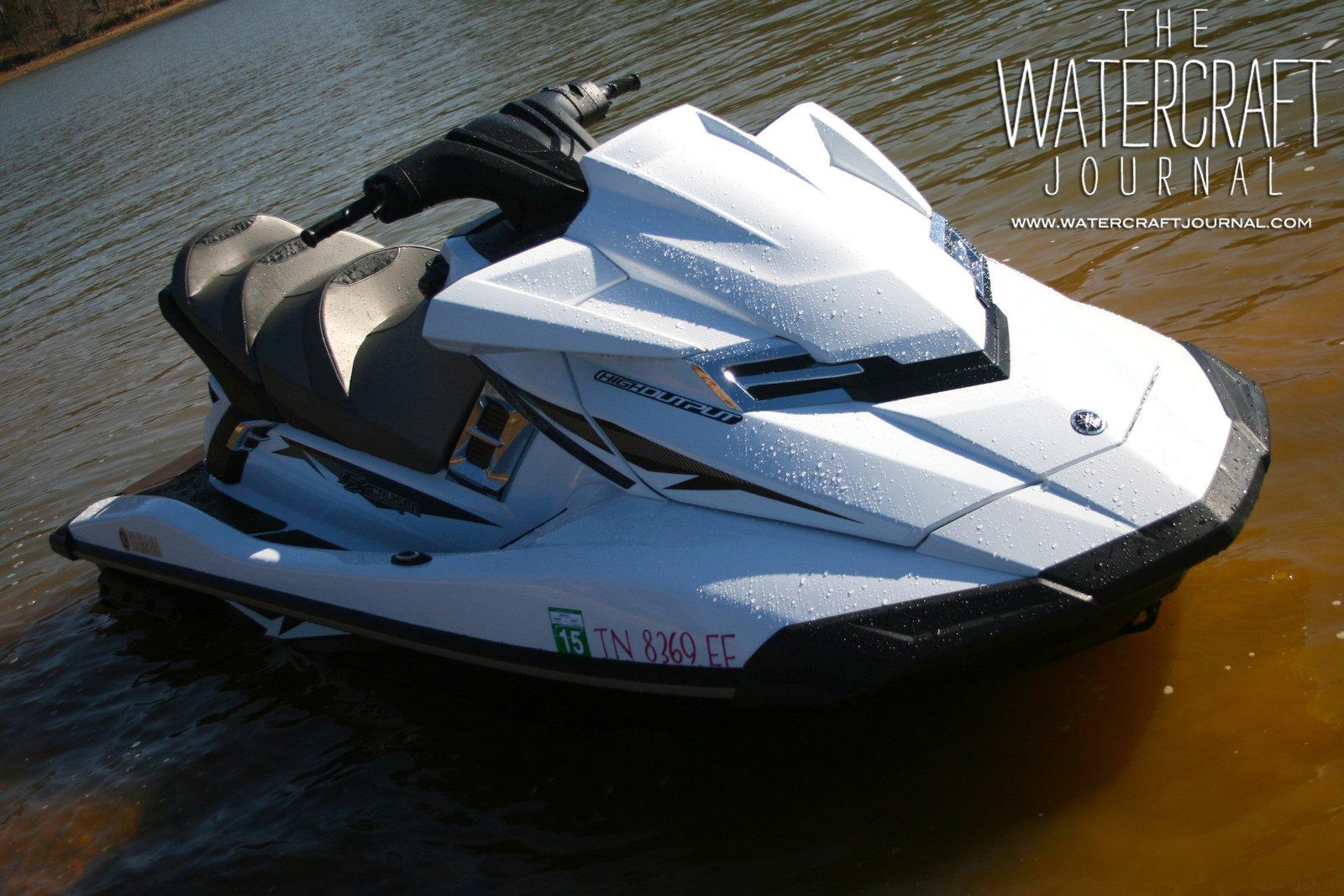
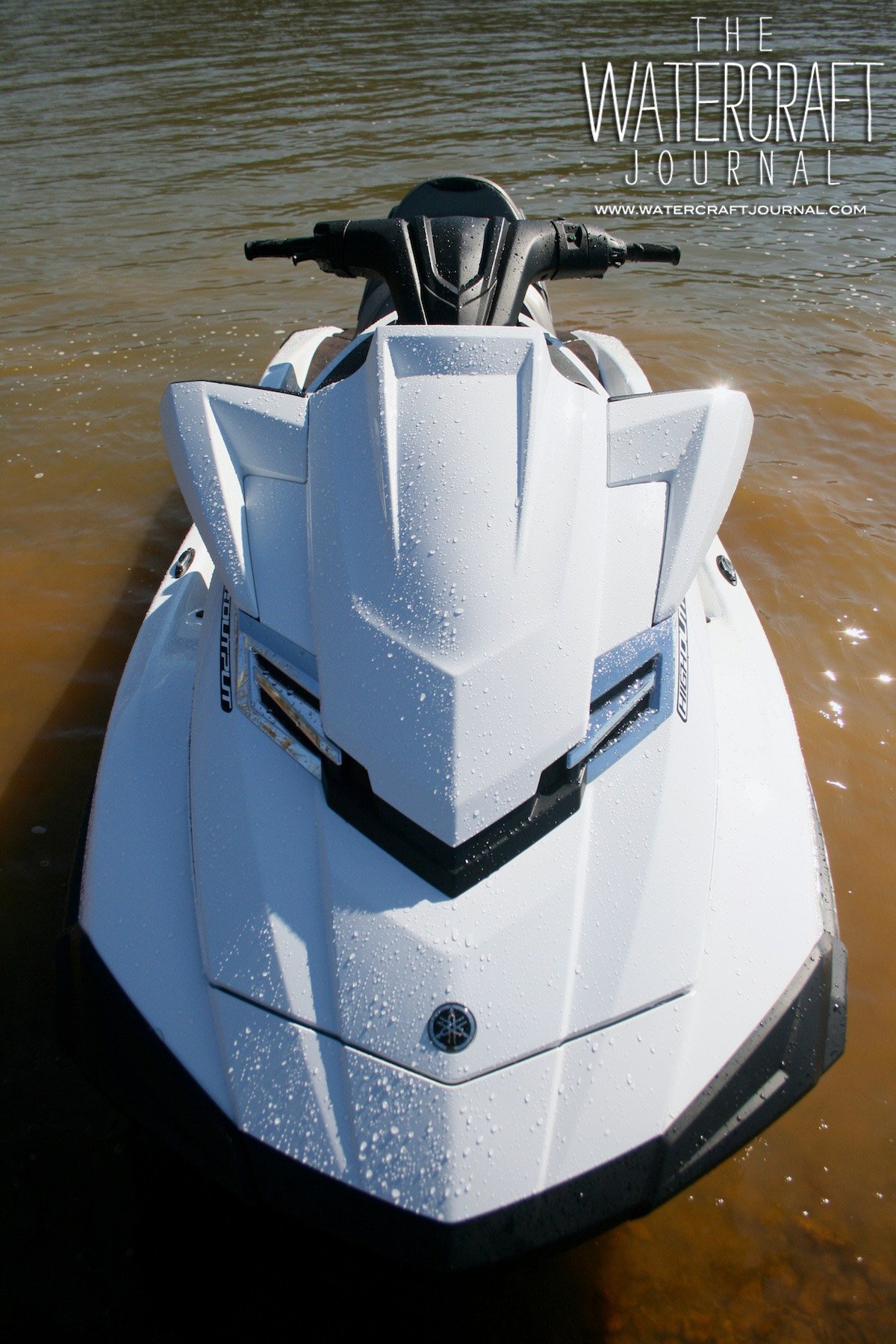
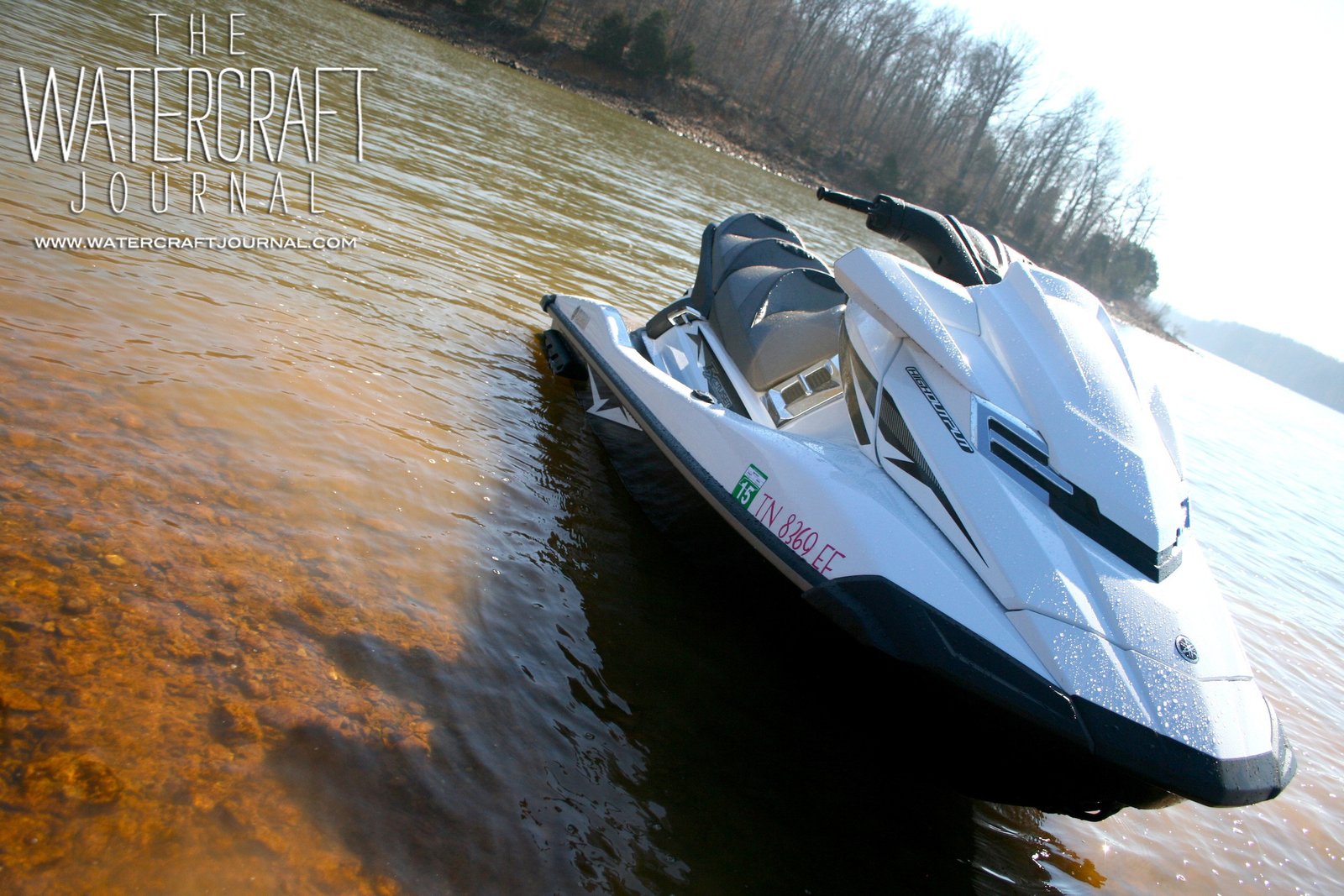
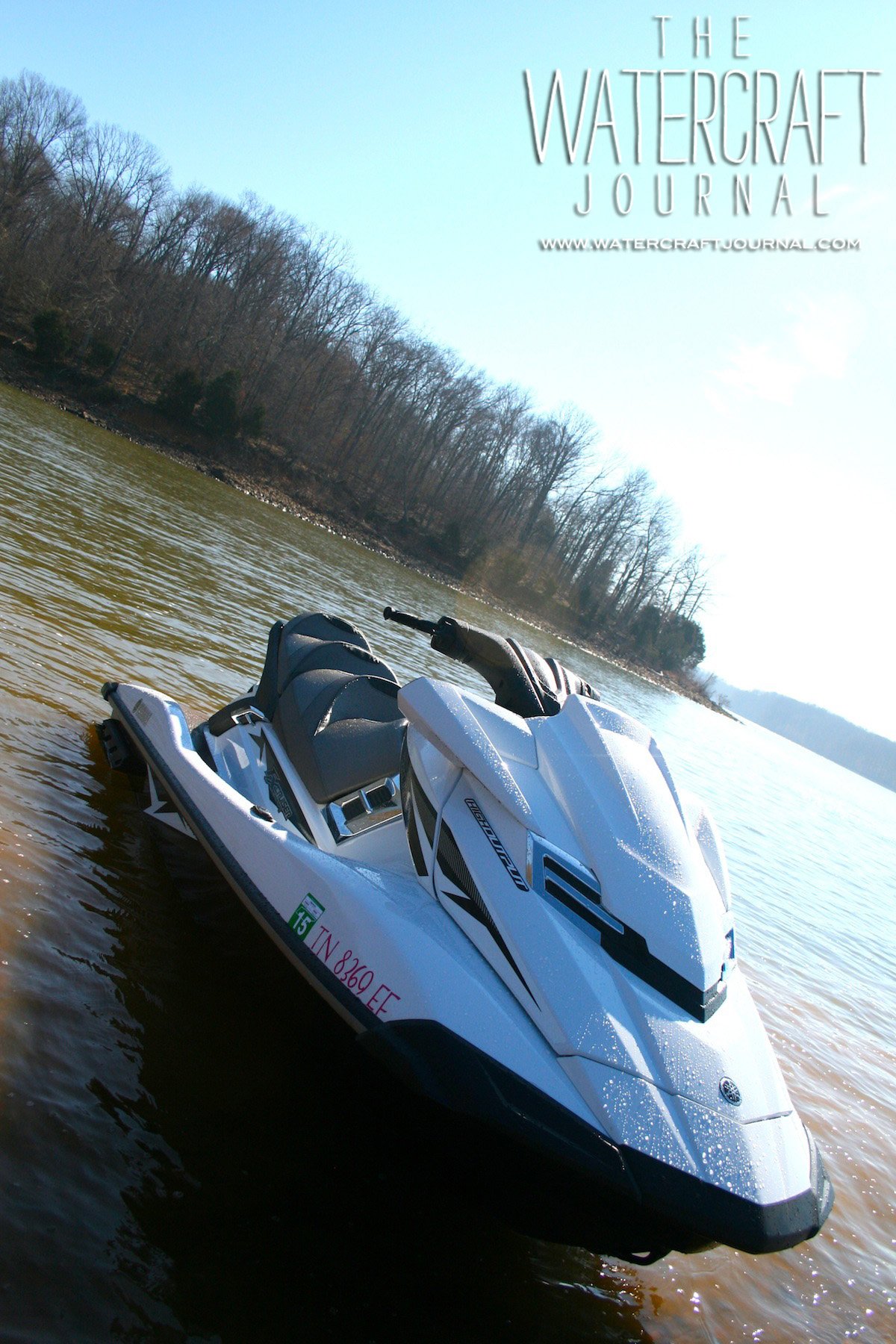
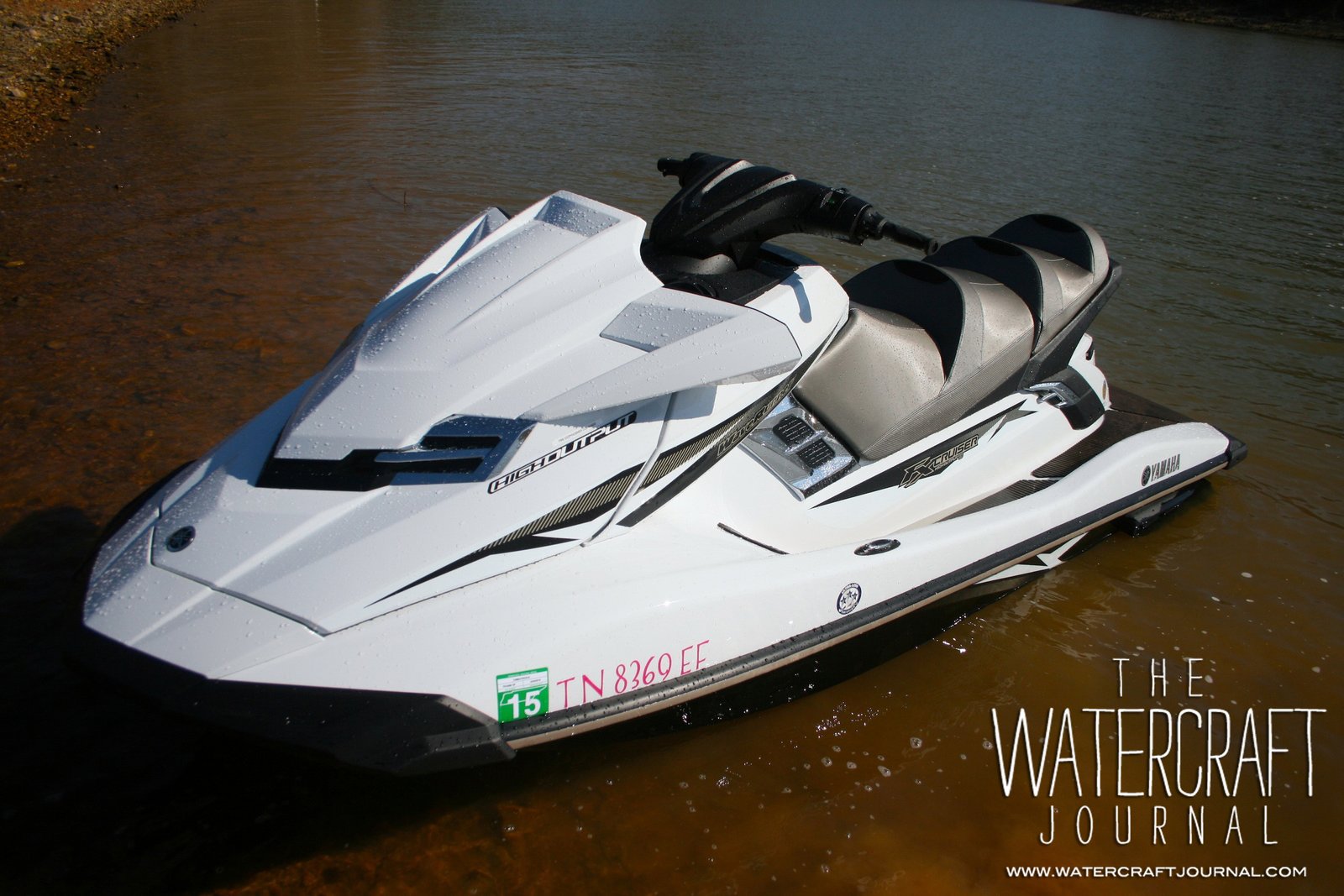
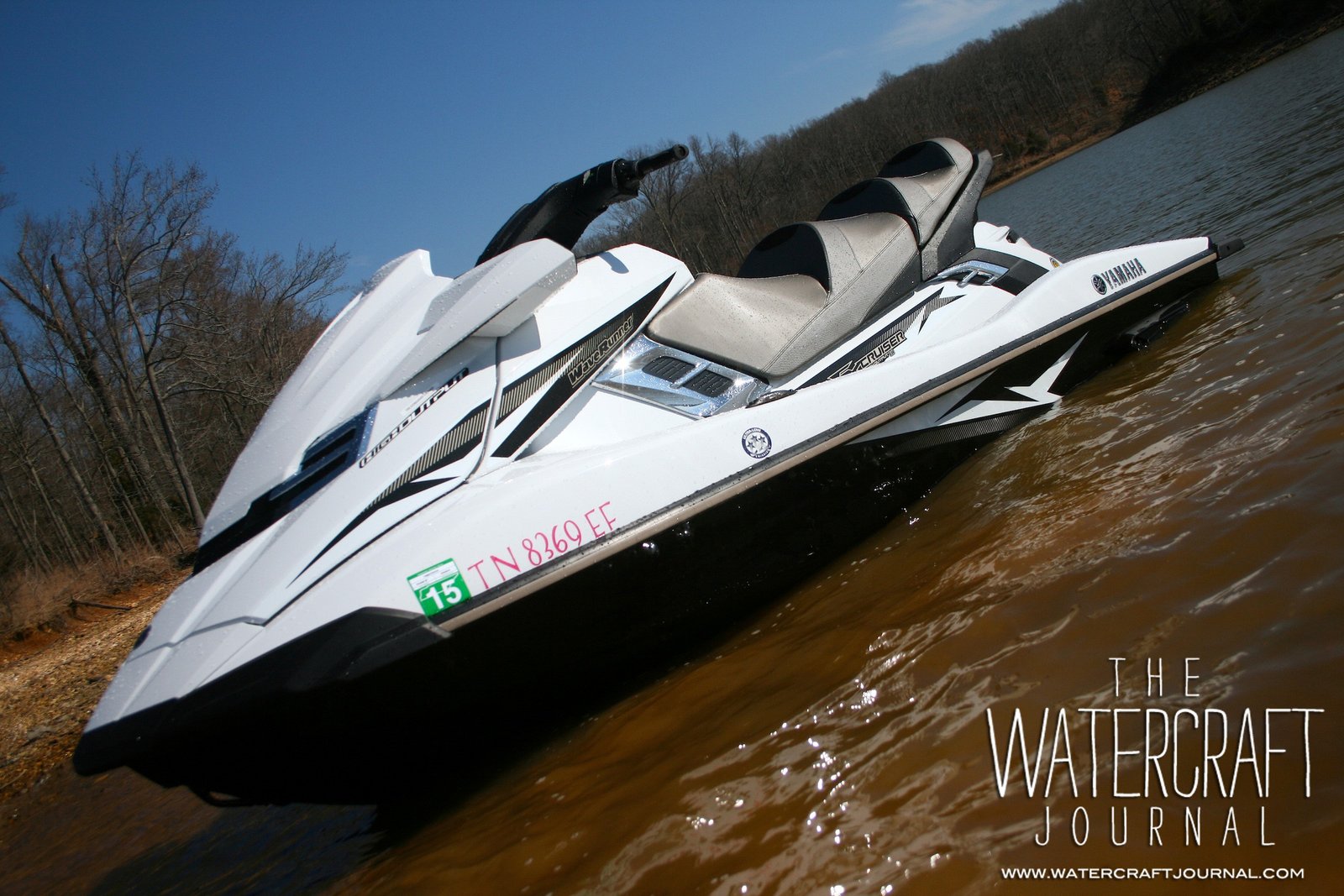
Yamaha’s FX HO Cruiser shines like a beacon in Pure White. The deep creases and sharp lines are handsome and gives a very mature look to the three-seater.
If there is one thing we’ve seen the Yamaha Motor Company excel at over the other OE manufacturers is offering a runabout that is neither bare of amenities or swimming in top-of-the-line features. In recent years, Yamaha’s FX HO and FX HO Cruiser models have struck a chord with older buyers looking for a machine that is both mature in design and execution, all the while delivering big on three key attributes: fuel economy, smart storage and ride comfort.
A couple months ago, we had the opportunity to review Yamaha’s outgoing 2013 Yamaha FX HO and found it to be an apt solution to the consumer looking for a fun, spirited ride that wouldn’t drain the wallet. Yesterday, we boarded Yamaha’s 2014 entry in the next class up, the Cruiser.
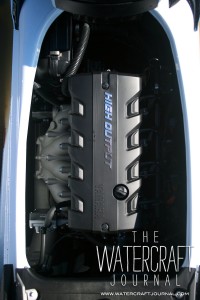
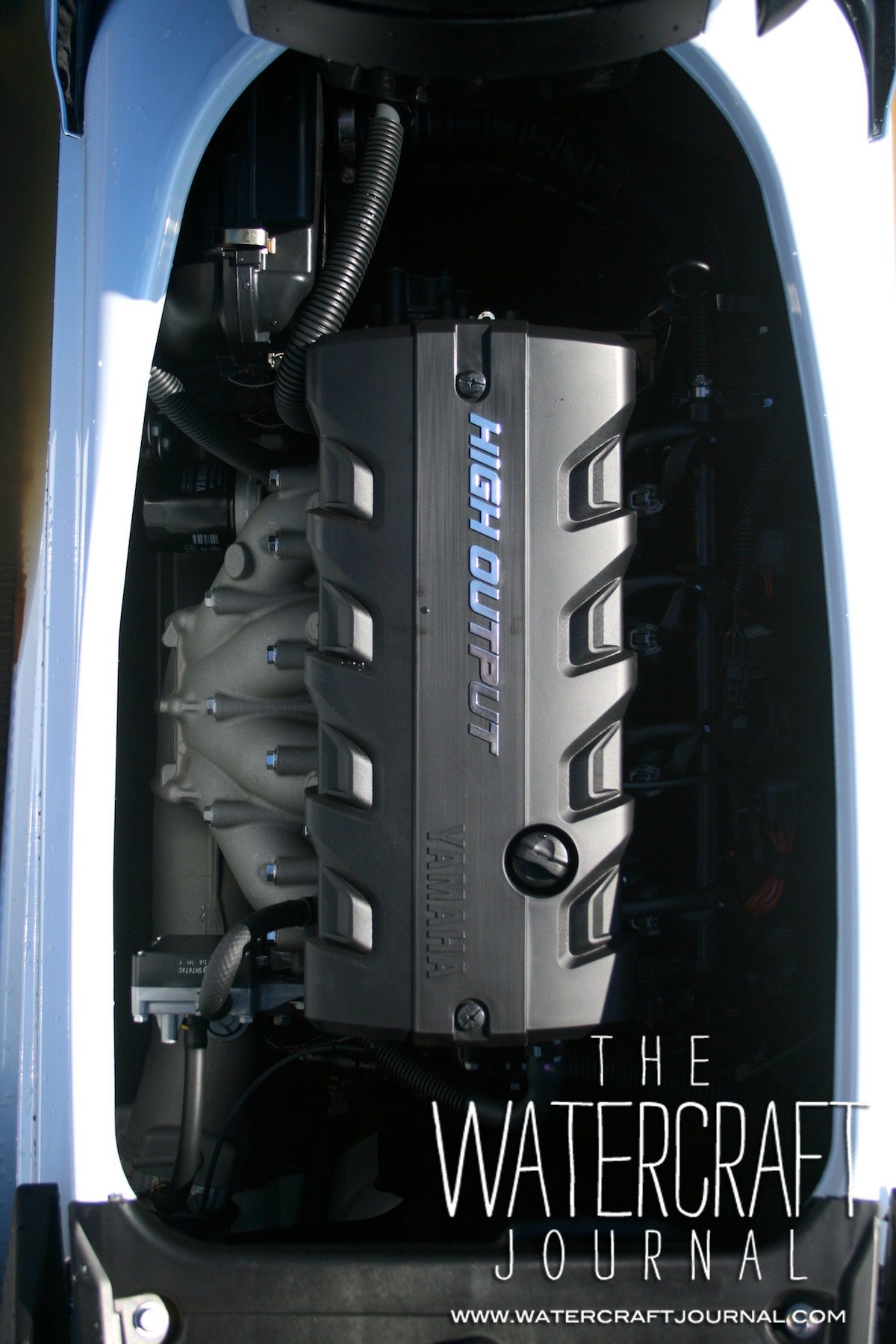
The 2014 FX HO Cruiser retains its fuel-mileage friendly naturally aspirated 1,812cc four-cylinder four-stroke pushing its thrust through a slightly smaller 155mm than the SVHO’s race-ready 160mm pump, producing approximately 180-horsepower.
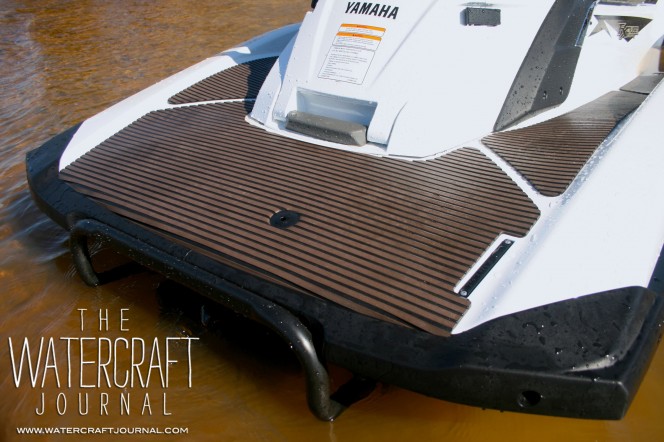
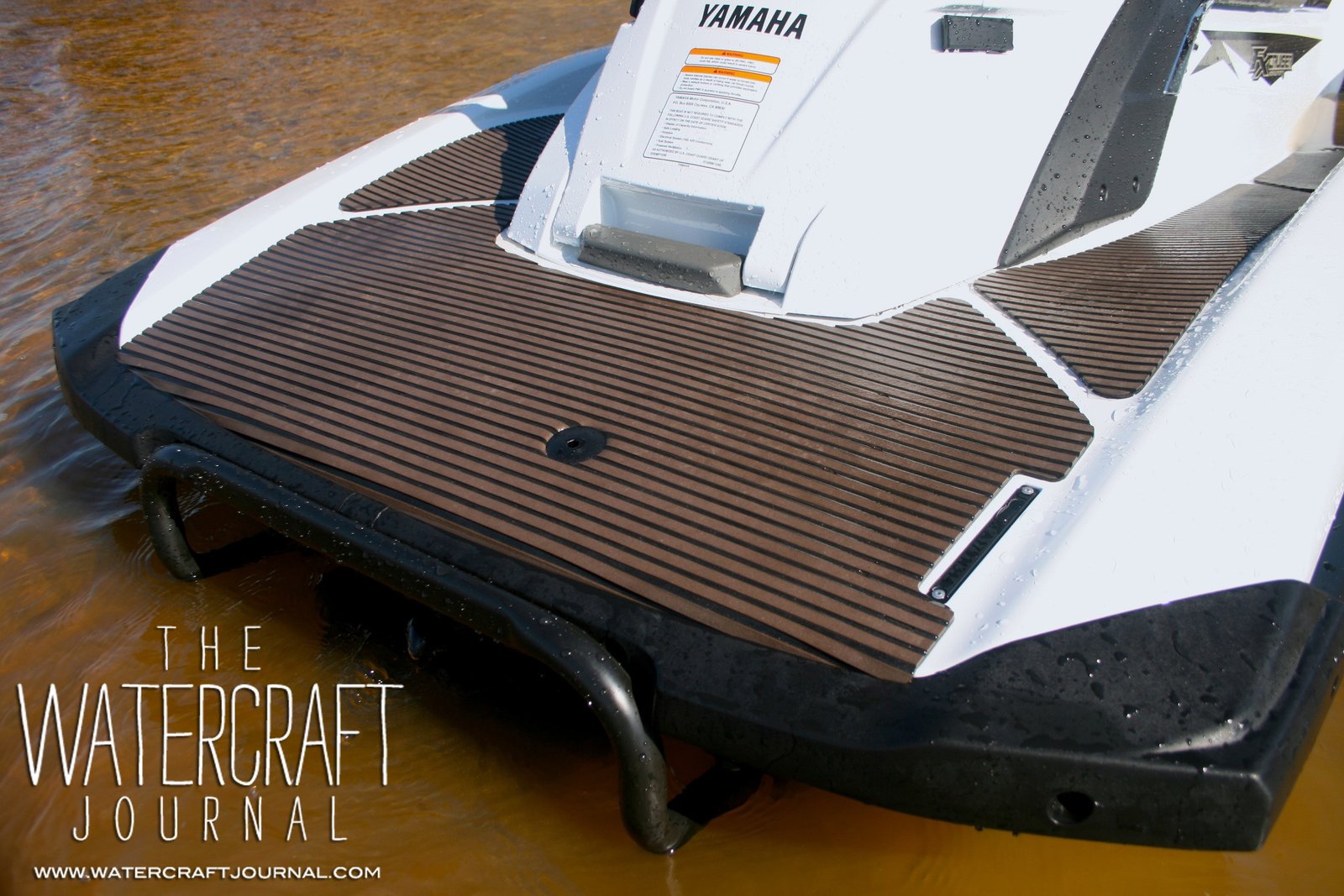
From behind, the FX HO Cruiser’s attributes really become apparent, like the large swimstep, tiered “stadium-style” seating and wide footwells.Without the aid of the higher-octane SVHO model’s centrifugal supercharger, the HO’s oomph is not found off the line, but throughout the mid-range, delivering a smooth but noticeable surge of bottom-end torque.
But do not be dissuaded, the HO Cruiser is no wilting flower. We had plenty of fun careening through the ins and outs of Kentucky Lake, the Cruiser’s big displacement plant sprinting through the serpentines without breathing heavy. Reaching a healthy 62mph top speed bests many naturally-aspirated models, particularly with a full tank (18.5 gallons) and a 220-pound rider.
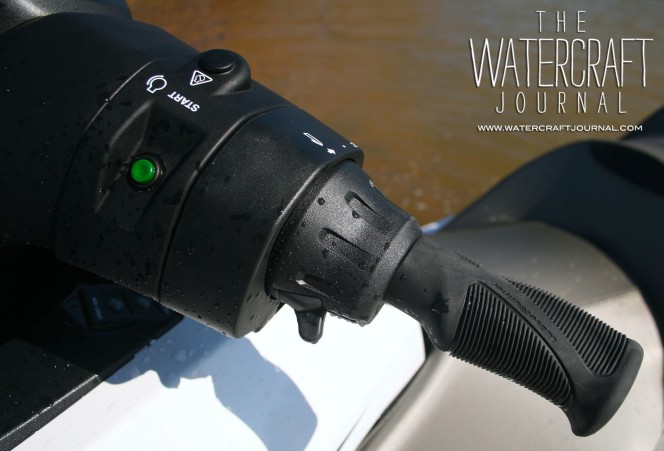
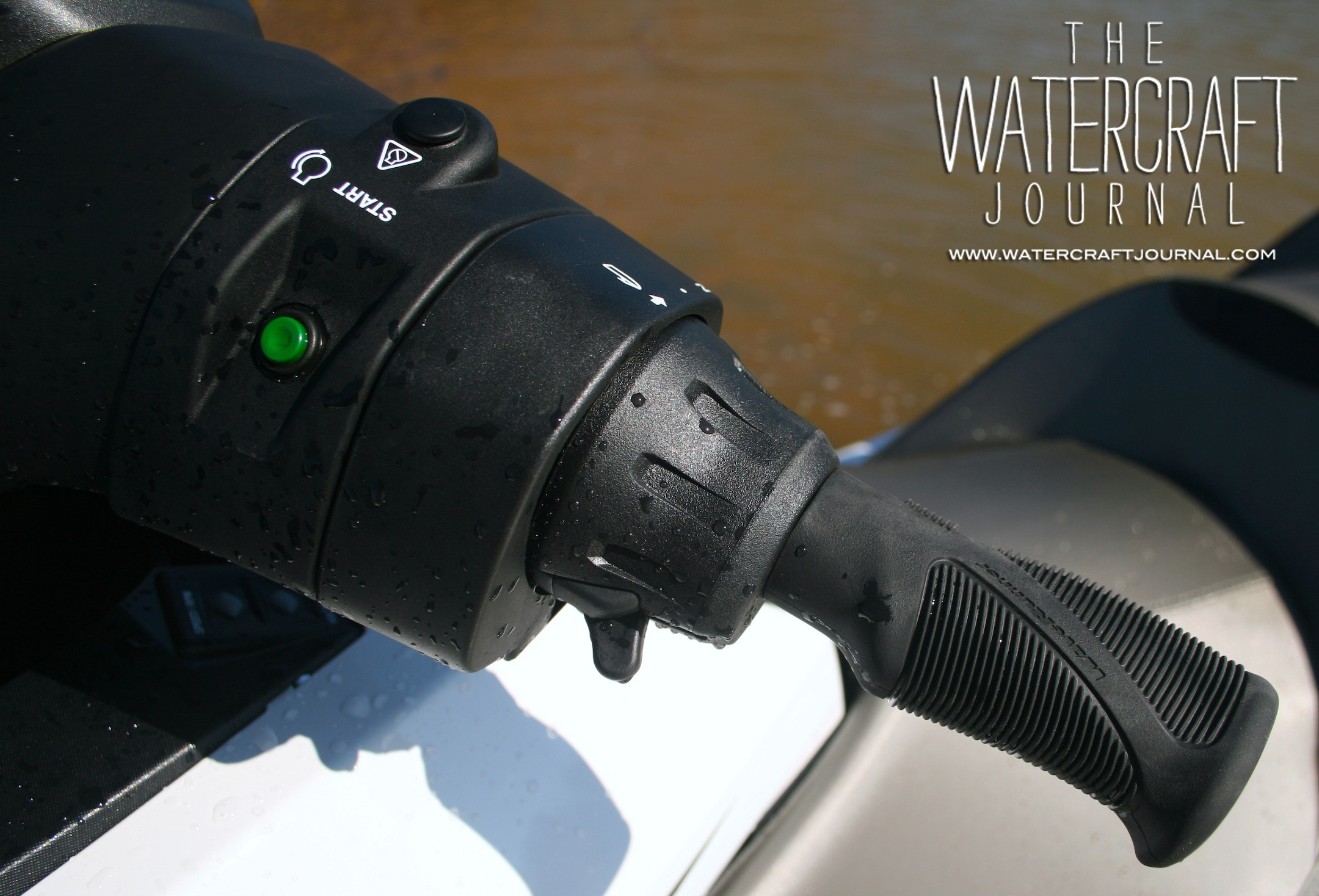
The brand’s handlebar-mounted Cruise Assist and No Wake Mode are marked by large, easily accessed buttons that provide a gratefully audible acknowledgement when activated. Setting your speed is easily done with a second confirming press of the button and readily adjustable via the up/down toggles. We were a little dismayed that the Cruise Assist capped at 45mph, but shrugged it off as more evidence of Yamaha’s commitment to safe, enjoyable riding.
Many features, such as Yamaha’s high visibility rooster tail and right-hand reverse lever are more identifiers of Yamaha’s strides towards increased rider safety. The new reverse lever is a mechanical affair with a scrolling gear indicator in the grip itself announcing when the ski is engaged in “Neutral.” Other touches – such as Yamaha’s retractable Pull Up Cleats and twin watertight storage compartments are as underrated as they are understated.
On the water, the FX HO Cuiser’s hull shows itself as one of the sport’s most diverse designs, as in its present form is smooth, comfortable and responsive, while racers have used the same design to reach tremendous speeds and perform daring acts of athleticism in a variety of water conditions.Although the the FX HO Cruiser is one of the driest rides we’ve enjoyed, its front storage is cavernous but not watertight, so a drybag is recommended for items that you want to keep dry.
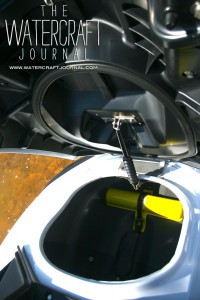
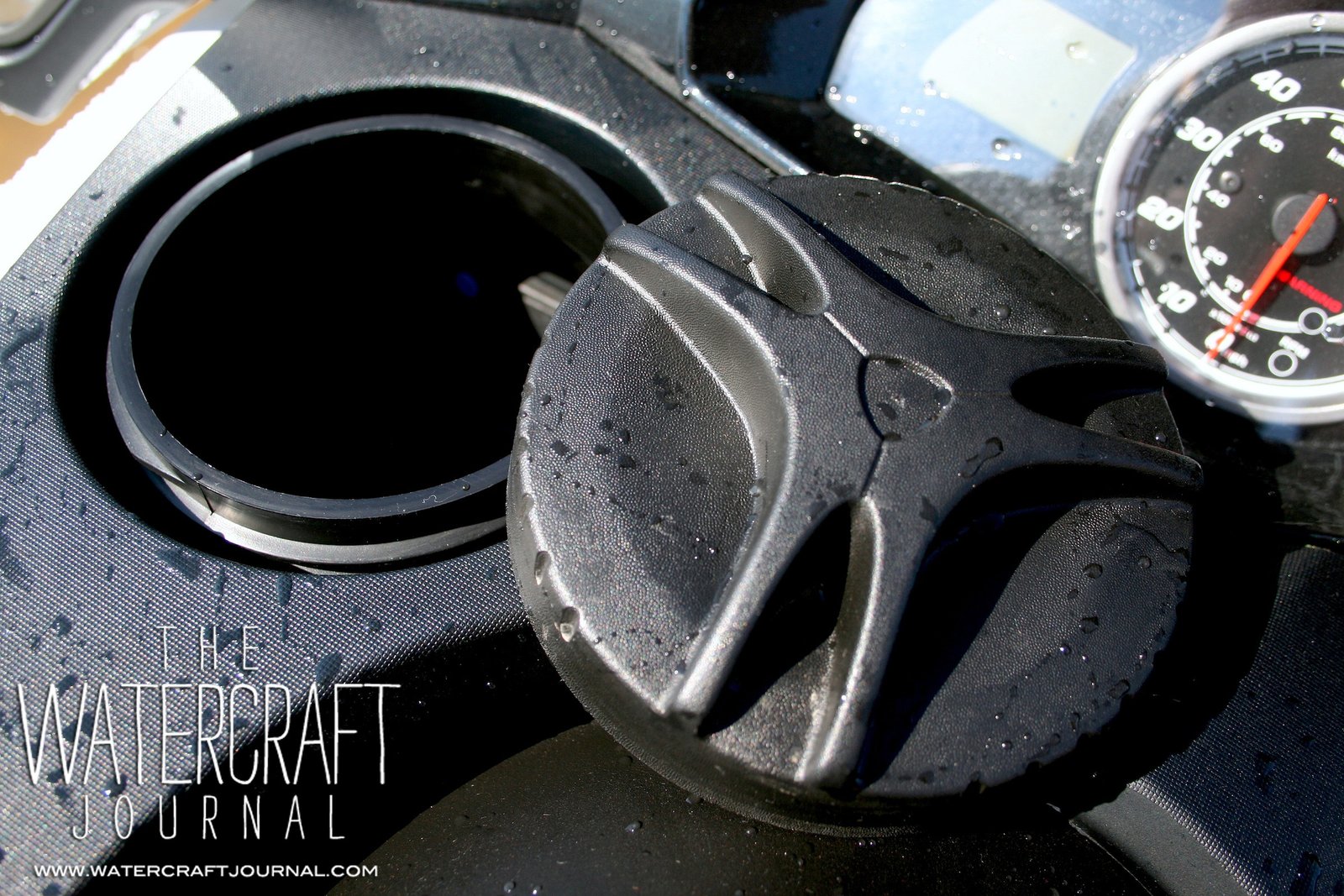
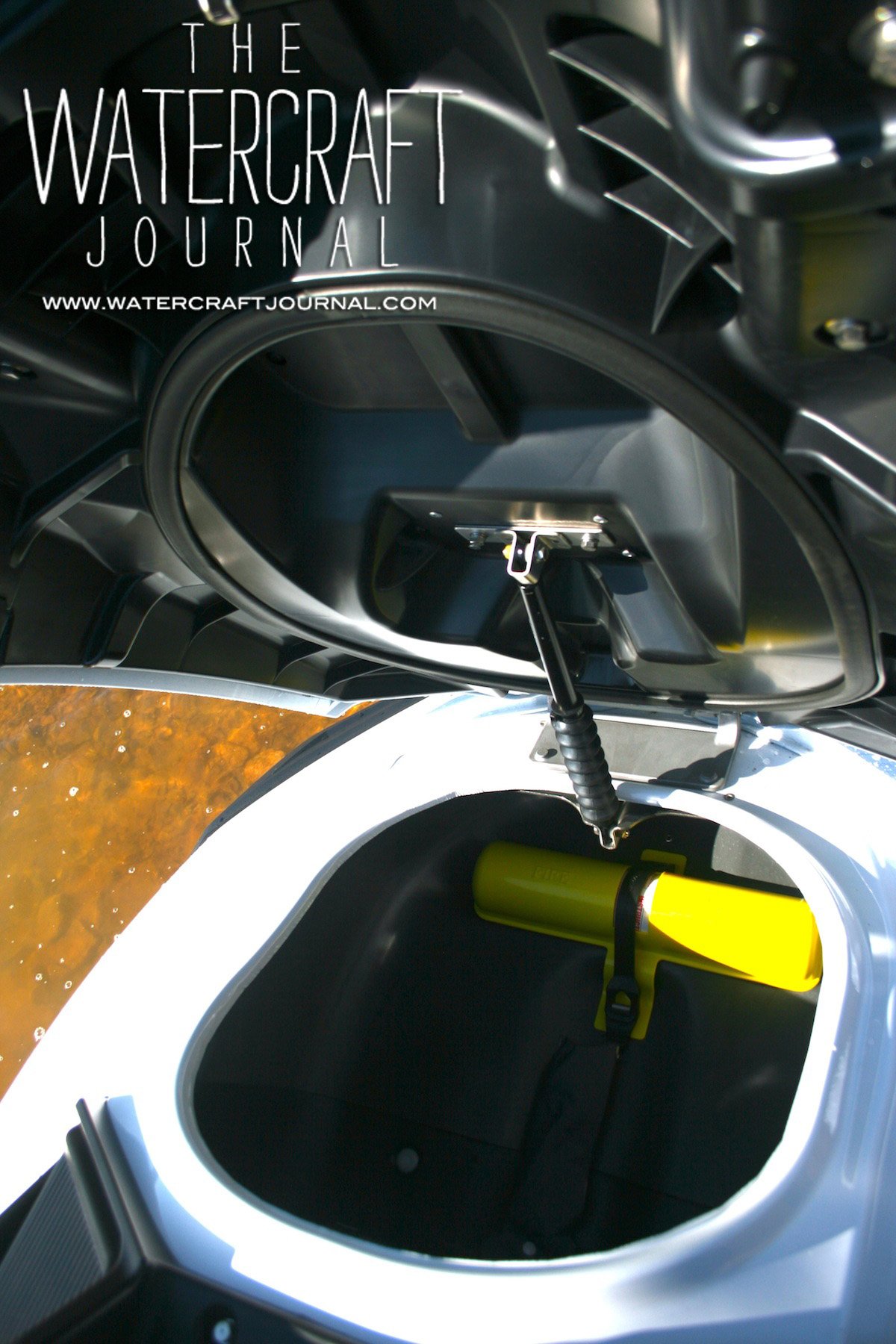
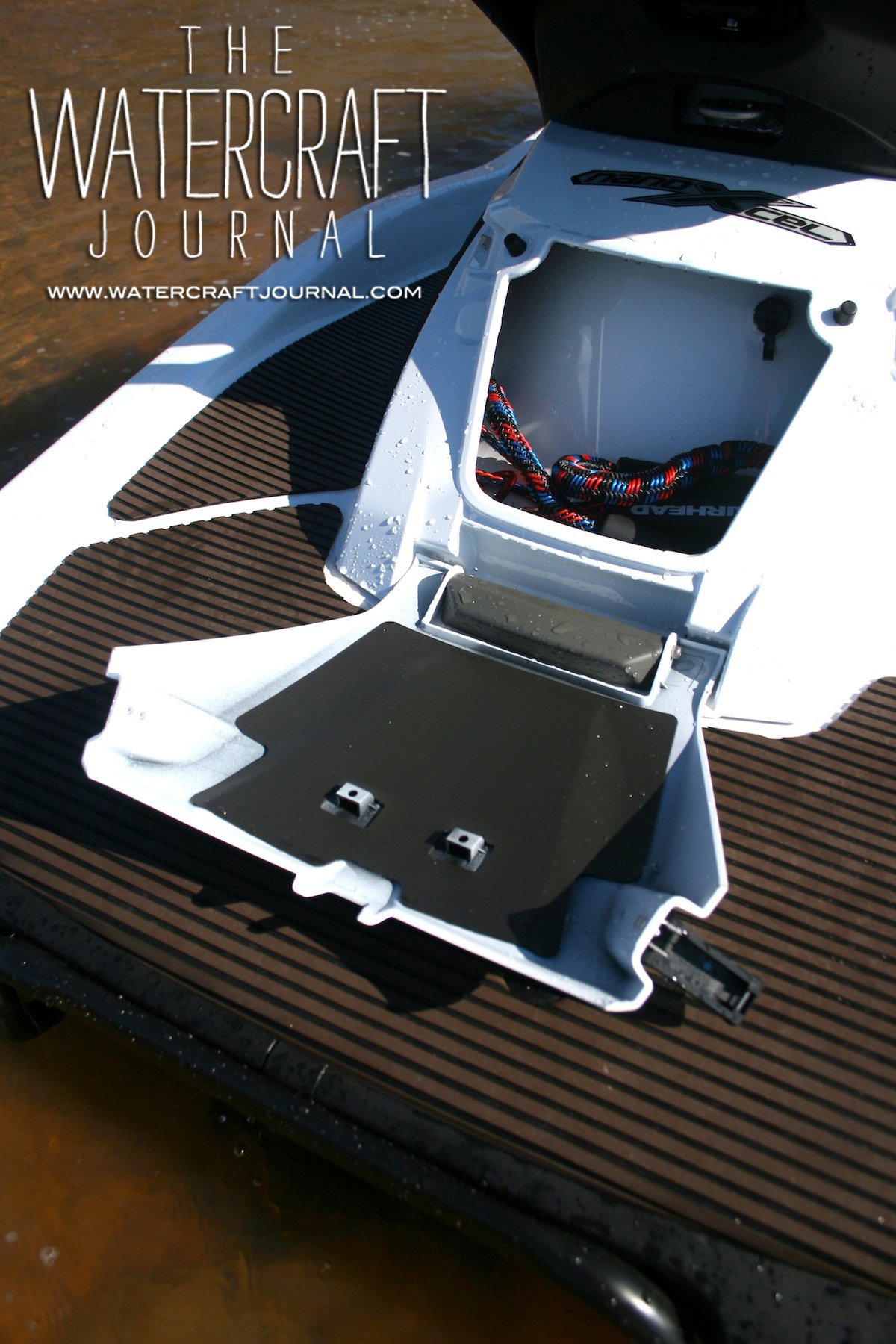
With over 33 gallons of available storage, we discovered the specificity of Yamaha’s design: cell phones, wallets and keys fit snugly in the in-dash screw-top (and padded) bin, while gloves, drinks, sunscreen and GPS would fit in the glove box. Larger items like backpacks, dry bags and flipflops are best suited for the ample bow stowage as towels or a change of clothes belong in the other screw-top underseat container. Lastly, tow ropes, swim fins or goggles slide in place in the rearward deck bin.
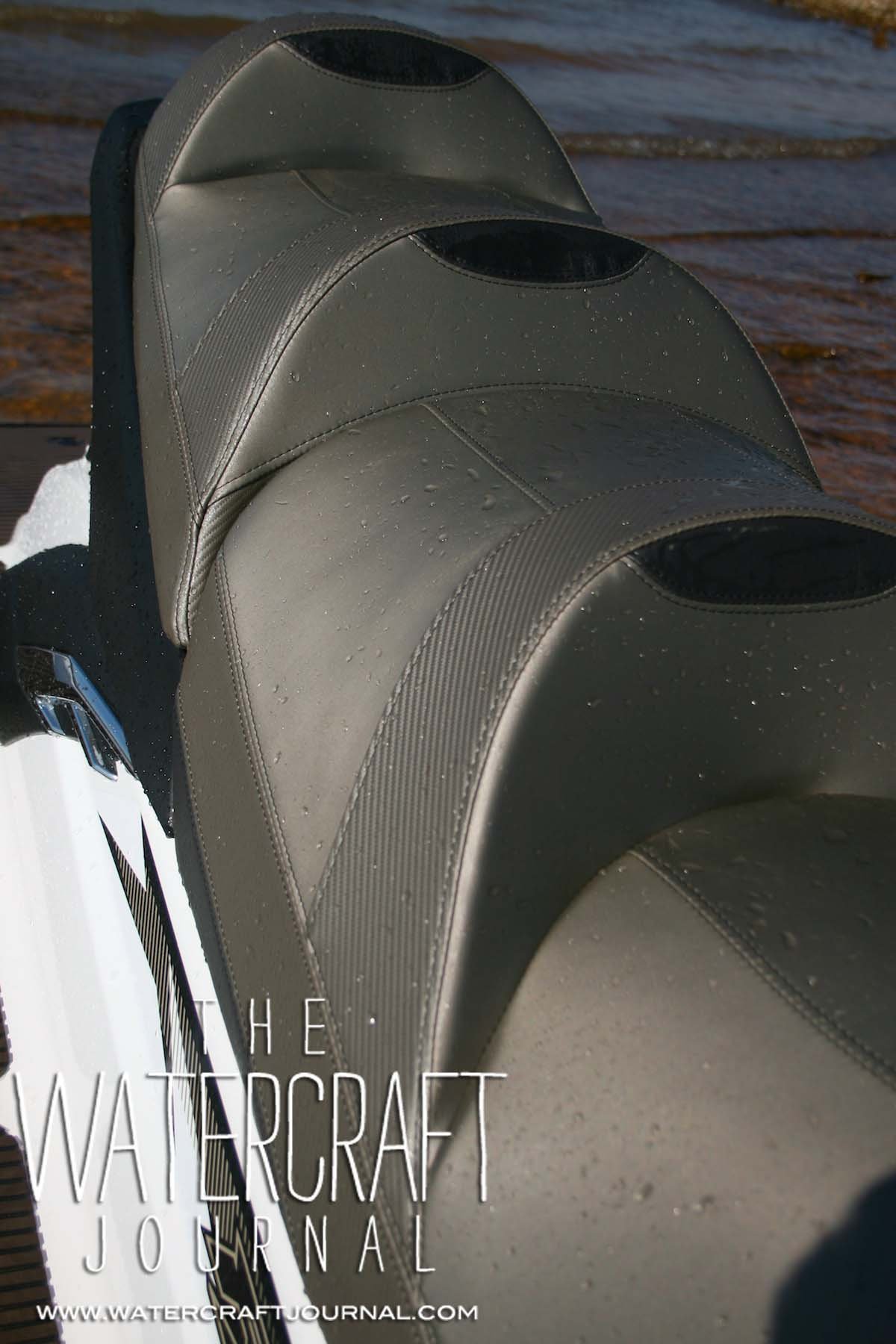
For 2014, Yamaha really stepped up the classiness of the FX line with attractive two-tone traction mats and improving upon their already iconic tiered Cruiser seat. Standing at 6’2″, we found the forward-most seat bolster a little too close to the steering than we’re used to, but thoroughly enjoyed the cushy padding and lower back support.
We have to applaud Yamaha for what we consider possibly the most comfortable handgrip found on a production PWC today. The pistol-grip style contour of the grip and oblong shape fit naturally in the palm of your hand. It, like so many other features, are something you’d normally overlook unless we mentioned it, and we think you’ll agree too.
It’s unusual for us to heap so much praise on such a minor detail, but Yamaha has managed to execute what we feel to be some of the most comfortable hand grips available on a production vehicle.Small touches like the two-toned coffee-and-charcoal traction mats or the supple three-step Cruiser seating provide small touches of luxury.
Aesthetically, the new FX HO Cruiser is strikingly handsome, angular and adult in its overall look. We have an unusual fondness for the Pure White paint but be warned, you’re going to want to wear sunglasses. Even on an overcast day, this ski reflects light with unmatched brilliance – so much so we wondered if was actually a safety feature!
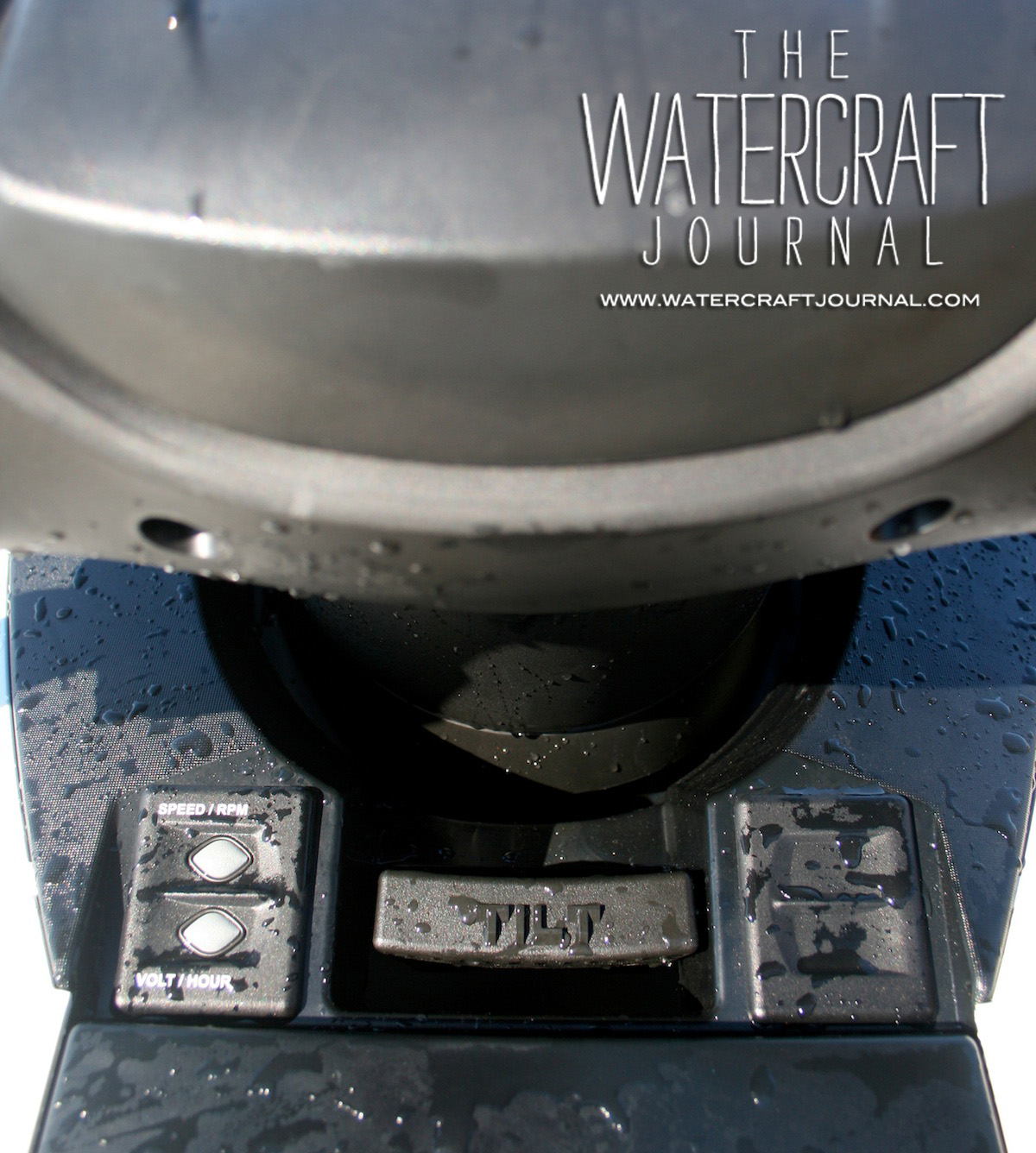
The FX HO dashboard is spartan, with a single analog gauge that trades between RPM and MPH upon demand. Flanked by a single LCD screen, the available information includes fuel levels, speed and little else. If water temps, a depth gauge or compass heading are important to you, you’ll have to go elsewhere.
One major trait that we were very satisfied with was the Yamaha’s solidity. From the sturdy-feeling adjustable steering to the secured locking of each storage compartment, the FX HO feels stout without being cumbersome. At 825-pounds (dry weight), the Yamaha remains lightweight due in large part to its proprietary NanoXcel hull and deck material.
Besides the large boarding platform, Yamaha’s commitment to excellence is found in unnoticeable details like the flattened swimstep that retracts flush with the bond rail or the snap-shut rear deck storage that stows ropes and diving gear.
At speed – be it seated or standing – the Yamaha greedily sluiced through windblown chop with nary a rattle or chatter, it’s big plant thrumming beneath the seat. In fact, we paid close attention to the engine sound while riding. Without the staccato whine of a supercharger, the natural baritone of the 1.8-liter was a refreshing change of tune.
Priced at $13,399, the full-sized three-seater is no entry-level machine. But with gas prices where they are, the 110-plus-miles on a single tank of fuel that the HO Cruiser offers will quickly recoup the initial asking price. All in all, we find the FX HO Cruiser as a great solution for riders who are looking for the ideal balance of limited luxury, comfort, efficiency and fun.
Good news is always welcome, and recently Powersports Business had plenty of good news to report. According to the latest figures released from Info-Link Technologies, personal watercraft have continued their year-over-year sales gains. January’s gain of just over 10 percent bests December’s sales gains, which is a good sign.
According to the report, PWC sales reached peak in September 2013 after a pretty ugly plunge into “negative territory” during the first half of 2013. Since that time, sales have continued on an upward trend since July of 2013.
Undoubtedly, an influx of exciting new products ranging from the budget-friendly, entry-level Sea-Doo Spark which has been the talk of the town, to a virtual tidal wave of top performance machines like Yamaha’s stellar SVHO-powered FZ- and FX-series runabouts and Kawasaki’s Godzilla-horsepower 310-edition Ultras, have lured in new and return buyers to dealerships.
Likewise, Yamaha’s pre-owned certified program – a first of its kind for the personal watercraft industry – has been met with some success, helping equip new buyers with previously owned, studiously-reviewed and certified WaveRunners.
We also accredit a small percentage to “hibernating buyers,” or buyers who have held off purchasing a significant purchase – such as a full-sized personal watercraft – throughout the leaner years during a down economy and have finally decided to make a purchase as consumer confidence has continued to edge upward.
Of course, we’re not out of the down economy woods yet, but enthusiastic buyers have been met with dealers enthusiastic to meet budgetary needs and financing goals to help move new and pre-owned units and that helps.