We’re only days away from the first major freeride event of the year, the 2014 Thrust Innovations Daytona Freeride, held in Daytona Beach, Florida. Although the tentative weather reports call for some speed bump-sized surf, we’re still holding out hope that Mother Nature will throw a curveball and send some waves our way.
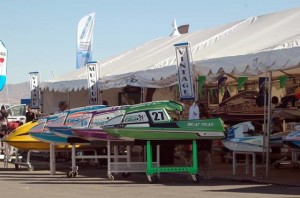
So as we cross our fingers, we’re still seeing the world’s best surf riders swarm on the east Florida location. One those freeriders are Tanner Thomas and Mark Gomez, who leaving from TC Freeride headquarters in Morro Bay, California, have traveled over 2,700 miles with the Rickter team trailer in tow.
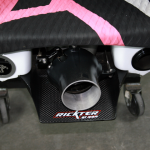
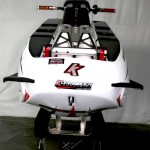
Filled to the gills with eight examples of “the latest and greatest of the 2014 Rickter lineup,” these surf riding skis are powered by DASA Racing high-output engines, “pushed by” Skat-Trak Magnum pumps, and were hand-built by Taylor Curtis, as well as Gomez and Thomas who were present for a “wrench party” days before.
The video is a fun sample of the two’s exploits as they depart for the cross-country trip, but also hint at the great things coming down the pike from Rickter and TC Freeride. We look forward to seeing what comes out of the Rickter West Coast Team, namely Mark Gomez, Tanner Thomas, Taylor Curtis, Randy and Brandon Lawlor, Abraham Ho, Rick Roy, and Jeff Bolte.
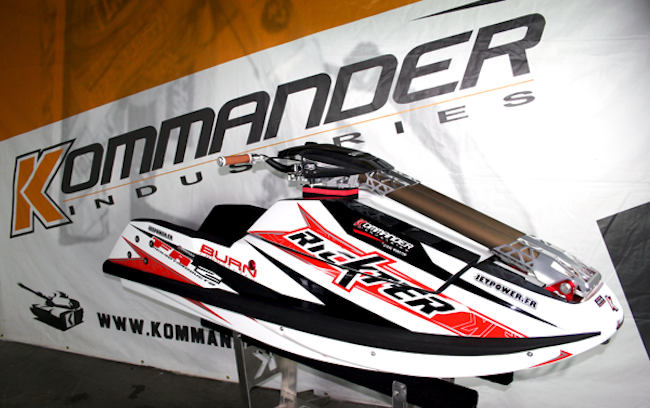
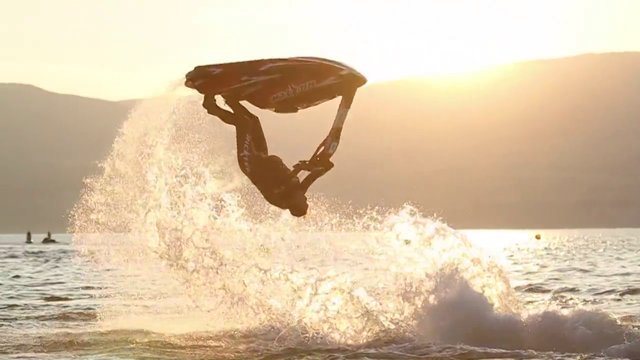
Say, thinking you might be wanting to jump headfirst into throwing some insane backflips or knocking out a couple Can-Cans? Well, if you’re as impatient as we are, we think we’ve found the best plug-and-play freestyle monster available. For the sum of $21,000 (or best offer), you can pick up a wild 2012 Rickter FR-2.
Kommander Industries has mentioned that they’ll sell you the machine as a complete ski or just hull, but seriously people, why would you pass on a venerable who’s who of top level performance parts. The list is extensive, so hold on to yer butts:
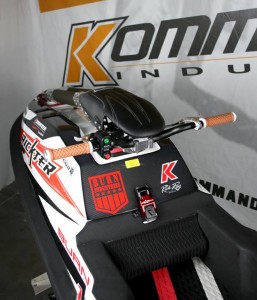
It starts with a RRP billet lightweight handle pole with Cerakote Burnt Bronze tubes, RRP billet steering system, RRP 50mm Fat Bars, Kommander carbon fiber chin pad, Blowsion billet trim lever, SE billet finger throttle, Blowsion handle pole limiting rope and ODI Vans Grips.
The Rickter hull hosts a Cold Fusion Front Foot Hold, Blowsion front sponsons, Fire extinguisher mount with USCG fire extinguisher, Blowsion hood baffle kit, Blowsion red billet hood latch, and Cold Fusion billet hood prongs. Beneath the hood is a monster list of goods:
Power Factor exhaust system, Kawasaki billet Maekawa Engineering 920 Power Valve cylinder 215PSI compression, a trued and welded Kawasaki OEM crank, Free Ride case porting and raised intake path, a Rad Dudes aluminum engine cradle, Cerakote Burnt Bronze coated engine cases, bed plate, motor mount plates, a new Kawasaki OEM Starter, DASA billet front cover, KHI total loss ignition system with 1.5 pound flywheel, two Kommander flame arrestors, twin Novi 48mm carbs, billet throttle wheel, Boyesen Extreme Velocity intake kit and Rad valves, electric bilge, RRP rear fuel tank, Thrust Innovations Ti5 fuel cell with billet flip top 5-gallon cell, Kommander billet drive couplers, Zero Gravity lithium ion battery 24-cell 720 CA 5.5 pounds.
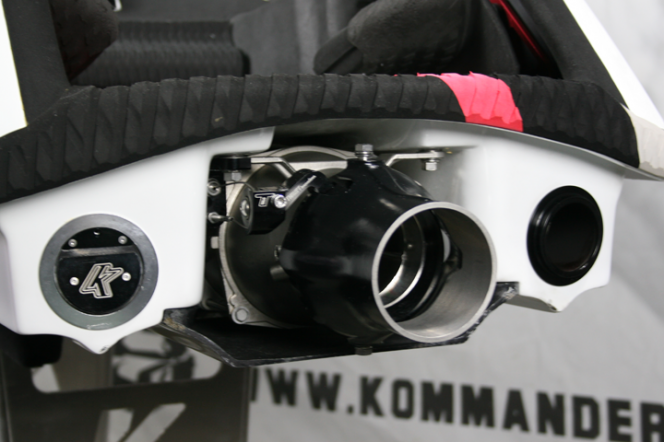
Converting all the power to trust is a 144mm Solas Magnum pump, Impros freestyle tail cone, Hooker impeller, Thrust Innovations flip nozzle, Worx intake grate, and a pair of RRP ride plates, a short and long.
Seriously, this thing is a beast. Check it out here.
There’s a universal truth that has been proven over and over again ad nauseum: competition breeds excellence. At no time has a monopoly provided the end-all of customer service or satisfaction. Had Henry Ford continued to operate unchallenged, Ford dealerships would still be nothing but fleets of all black sedans and trucks.
It only when the stakes are raised that companies and entrepreneurs feel the need to continually improve, add more features, variety and options to their products. It’s only when the threat of losing customers arises that companies truly rise to the occasion. It’s when faced with the threat of extinction that an animal bears its teeth. In the dog-eat-dog world of commerce, this threat is ever present.
In recent weeks, I’ve been really concerned with the health of the personal watercraft industry. Not just the sport, although racing is and ought to continue to be a viable proving ground and apparatus to appeal to a larger demographic of would-be clients, but the mechanics of the actual industry itself. Interestingly, all three actively do all the things that could pump new life into the industry, but for other products (more on that later).
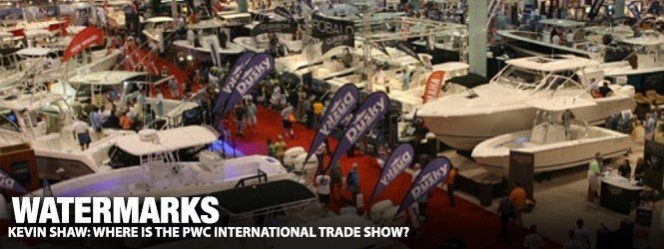
Larger boating shows – like those in Seattle, Atlanta and Miami – bring the larger displays from OE’s like Sea-Doo and BRP, but smaller companies are nowhere to be found.
First consider that for all three manufacturers, their watercraft divisions produce the smallest gains, provide the smallest returns and appeal to the smallest demographics. Motorcycles and side-by-sides continue to be their bread-and-butter lines, with snowmobiles, utility vehicles, generators and boats (respectively) bringing in bigger paychecks.
Simply put, producing PWC doesn’t pay.
In 1995, over 200,000 personal watercraft were sold. In 2013, that number was a paltry 29,500. So what gives? The modern personal watercraft has never been better. They’re smoother, more stable, more reliable, faster, cleaner, offer more storage, ease of use and safety. Of course, they’re double, if not triple the average cost of a runabout in 1996 (even with the price adjusted for inflation), but you’re getting a lot more for your buck too.
So again, what gives? Where is the PWC industry failing where others are succeeding? Frankly put, I think it’s professionalism. The industry built on a sport of “just having a good time” hasn’t – as a whole – taken itself too seriously in a long time. Only when big money was rolling in from ESPN and a couple beer companies did the watercraft industry carry itself like a grownup industry.
While its understood that the PWC industry couldn’t fill a convention center of this degree on its own, smaller venues or venues shared with similar expos could provide the PWC industry the exposure it needs to thrive.
When the low hanging fruit of big sponsor money dried up, event promoters and would-be racers fled elsewhere. So too did the torrent of prize money reduce to a trickle. This in turn ate away at dealer sales, as both numbers of racers and race enthusiasts went elsewhere.
A sad fact is that humans are fickle creatures, and no matter how much of a bleeding heart you might have, the fact remains that money is a big motivator. Most people will follow where the money is. If the Long Beach-to-Catalina Offshore Enduro suddenly announced a purse of $5,000 for July’s event, you’d see a lot more than last year’s 30 participants. That’s a fact.
But as some people follow where the money is, money only goes where the people are. Consider Facebook. It was only until Facebook’s population reached absurd activity levels that advertisements and company pages became commonplace. The money followed the flow of people.
So, what’s the solution, you ask? Easy. Get more people aware of today’s PWC. As stated earlier, all three major manufacturers participate in full scale dealer shows, where manufacturers’ products share booth space with their entire product line. This is fine, and will ensure a large cross section of possible customers, but dealer shows aren’t specific to our industry.
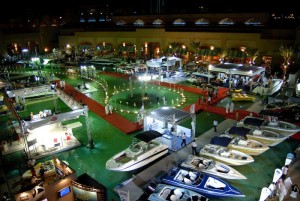
The Miami and Atlanta boat shows are some the Southeast’s largest boating trade shows, but aren’t specific to the PWC industry.
Now, events like the New York and Miami Boat Shows are more focused towards boating and sees extravagant displays from Sea-Doo and Yamaha alike, even RIVA Racing and SBT, Inc. are present. But those are still dealer display events, and absent are the aftermarket manufacturers. Where do they get to showcase their wares? What’s missing from the personal watercraft industry is a trade show.
Many would think that the midway of the annual World Finals would be enough, but frankly, it’s not. It’s a dusty, windblown stretch of asphalt with people yelling over a cacophony of whining engines, loud speakers, announcers and each other. The goings on in each booth are overshadowed by the action on the water.
Albeit great in its own right, the midway at the annual IJSBA World Finals is not enough to qualify it as a PWC Expo.
At a true trade show, manufacturers will have a set date each year to officially unveil their newest innovations, brand new skis, aftermarket hulls, engine components and so much else. With the automotive and motorcycle industries, test rides and demonstrations are often made available. Likewise, this can be done for PWC if the right venue is selected. San Diego, California’s oceanfront convention center is a sweet location, as is Miami, Florida.
But here’s the rub: participating in a trade show is expensive and thereby must be worthwhile. The timing, the public draw and the industry-wide appeal to bring in the most foot traffic is central to making a trade show successful. I’d suggest that Sea-Doo, Yamaha and Kawasaki wait to publicly unveil their latest vehicles for the show, as well as performance packages from RIVA and the like. This way, all eyes would be focused on the annual Personal Watercraft Expo (PWX).
But making this happen is a massive undertaking. What I’m suggesting is a major push by the American Watercraft Association – particularly on behalf of executive director Chris Manthos – to refocus the agency’s efforts to building and revitalizing the industry through organizing major manufacturers to rally together. This is already happening in other industries and now its our time.
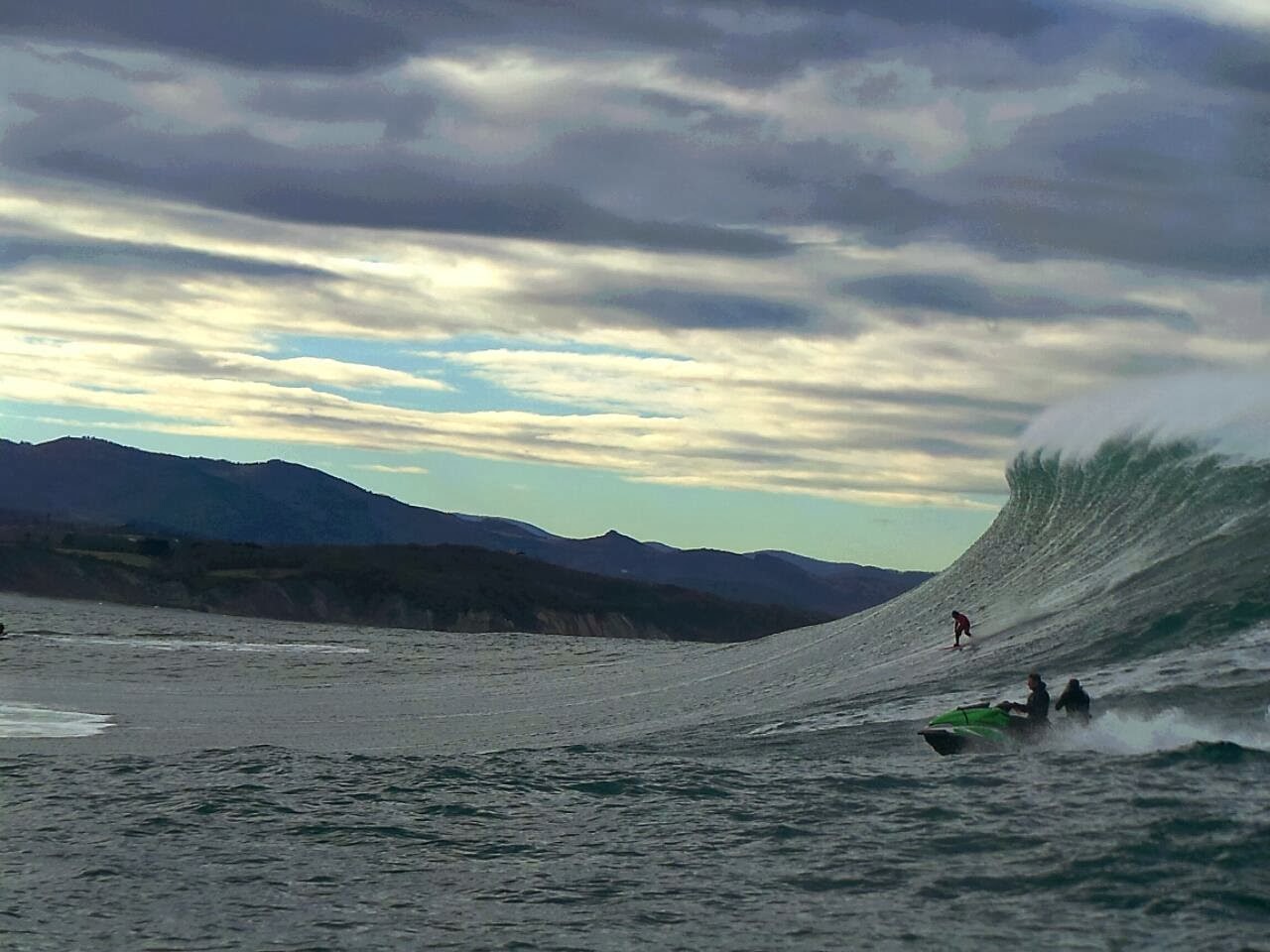
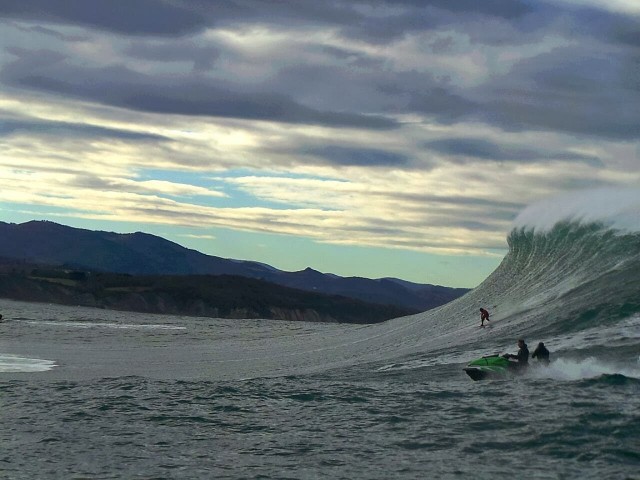
The convergence of specific temperatures and pressures falling upon only certain locations across the globe can result in some of the largest surf conditions on record. Like a clarion call, these monster swells draw in some of the biggest talents in the surfing world. Within a few hours of news of the serge encroaching on Belharra, France, the world’s best surfers made January 7th, 2014 the first epic day of the year.
In a self-proclaimed “quick and dirty edit” by Vincent and Julie Kardasik made less than 12 hours after the paddle session, we get this soulful daylong glimpse at the world of a big wave surfer – but not just anyone, but again, some of the most recognizable names in the sport: Shane Dorian, Benjamin Sanchis, Jamie Mitchell, Grant “Twiggy” Baker, Peyo Lizarazu, Pilou Ducalme, Stephane Iralour, Justine Dupont and Seb Saint-Jean.
Most appropriately, much of this video shows how several Yamaha WaveRunners are put to use as rescue vehicles, helping keep these awesome athletes alive as they charge into these giant waves. Check out this video below:
As you’ve might’ve noticed, we’ve been bouncing back and forth between Jettribe and Slippery reviews lately. Both companies were very giving with supplying The Watercraft Journal with riding gear for this past year and we had a blast trying out all of the goodies we were given.
During the warmer months, we wore the Abram short without the suit and strongly recommend wearing either neoprene bike shorts or a protective undergarment as the material does chafe exposed skin.
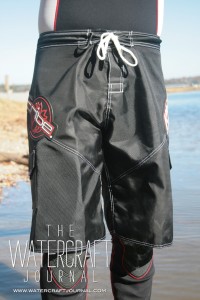
It bears prefacing that we picked up a pair of Jettribe’s RS-16 Abram shorts with the sole intent of wearing them over a wetsuit. We got in the habit of wearing shorts after our first Mark Hahn Memorial 300 in 2008, and have been doing so since then. You might feel the need to do so, and that’s perfectly OK, but we felt it necessary to explain before getting into this review.
The RS-16 Abram shorts are made out of the same heavy duty nylon material Jettribe uses for several products including the brand’s tour coats, riding pants, gear bags and even jet ski covers. The proprietary material is UV resistant meaning it won’t bleach or fade in the sun and is water repellant, which is great as you won’t be weighed down with sopping wet material.
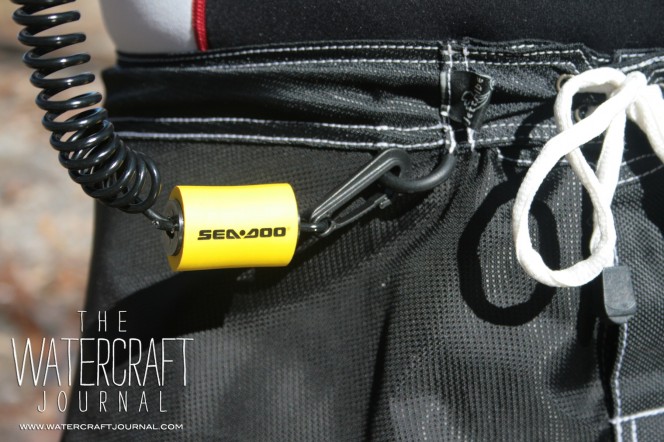
Like the PWC covers and tour coats, the Abram shorts are held together with extremely durable contrasting stitching, and feature a laced-together waistband and Velco fly. And because it’s Jettribe, the shorts include great little convenient features like a rubberized lanyard loop and a pair of large Velco-sealed side pockets.
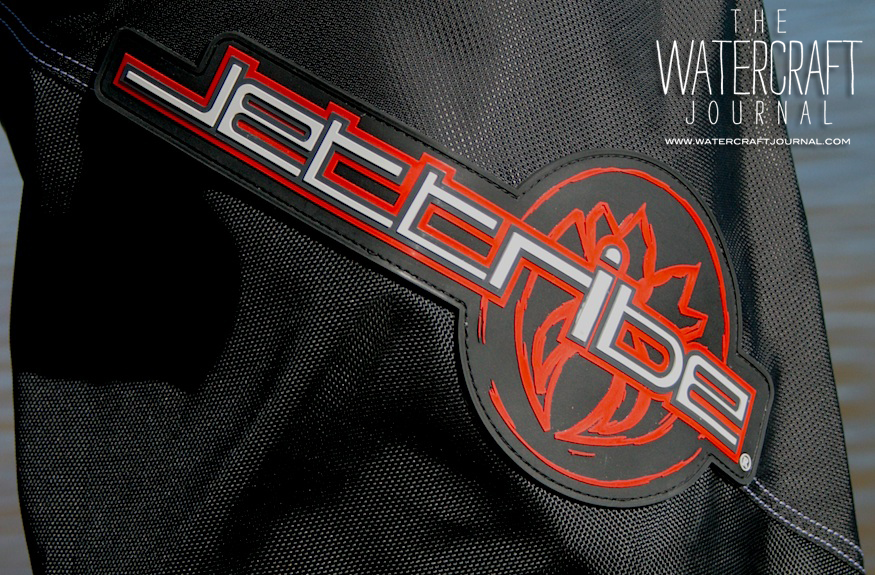
The problem with the heavy duty material is that the shorts just aren’t very giving. Flexibility is almost nil and we found that no matter how tight we cinched the laces, the shorts would slide off when crouching low or riding aggressively. Also, we found ourselves catching ourselves on the large rubber logos stitched onto each leg.
The RS-16 Abram shorts include convenient features like a rubberized lanyard loop and a pair of large Velco-sealed side pockets.
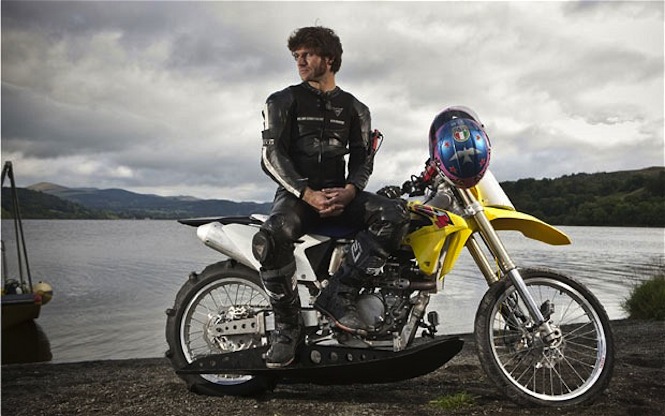
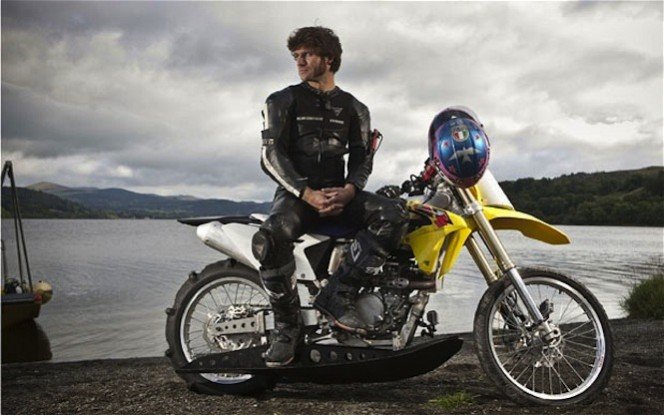
Admittedly, this is a departure from our usual personal watercraft news, but watching a guy go for a world record for distance on a motorcycle hydroplaning over a lake is pretty dang cool no matter how you cut it.
It’s hard not to love Guy Martin. He’s nothing short of enthusiastic, passionate and jumps right out of the screen. The animated TT racer – known for his big personality and big muttonchops, Martin has made a name for himself by pushing the boundaries of what is considered possible.
If you didn’t hear, Martin’s latest stunt – as part of a series called “SPEED with Guy Martin”- trying to set the world record distance for riding a motorcycle across water. If that sounds insane, just know that Martin’s last stunt had him pedaling a bicycle at 112.94 mph behind the slipstream of a truck on a beach.
In fact, that’s Martin’s whole goal as he “undertakes a series of speed-based challenges, exploring the boundaries of physics and learning about the science of speed.” This time around, Martin, with the “help of a Cambridge professor and a team of marine engineers,” will attempt the stunt on a dirt bike.
According to the synopsis, “The final record attempt takes place at Bala Lake in Snowdonia – which is so deep a 10-storey building could be submerged in it – with Guy surrounded by an army of rescue teams and emergency divers.”
You know how this started: Freestylist Daniel Martin went completely insane and performed a staggering 20-something consecutive backflips during a performance during the final rounds of 2013’s UWP-IJSBA Watercross National Tour, and everyone went crazy. But what was more crazy was the chatter than ensued. “Was that a World Record?” “How many backflips is the World Record?” “Who’s recording this?”
Well, UWP Watercross’ AJ Handler has had enough and did the impossible. He booked a Guinness World Records Adjudicator to be present at this year’s Round 4 of the National Tour – namely the Sparks, Nevada stop scheduled for June 29th. So if you’re a freestyler who knows how to defy gravity and do so without losing your lunch, there will be a “flip off” held that you cannot miss.
Here’s the official announcement:
The Pro Watercross Tour is excited to announce that we have secured a Guinness World Records® title attempt for the “Most Consecutive Backflips on a Personal Watercraft” scheduled for Sunday, June 29, 2014 in Sparks, NV (Reno, NV). We are extending an invitation to Freestylist from around the world to join us in setting a New Guinness World Record.
A Guinness World Records Adjudicator will be on site to authenticate the record-setting event to present a certificate that officially proclaims the winner as the world record holder.
More information to follow for all the updates on the Guinness World Record attempt “like” us on Facebook.
As a slight departure from our usual fare of “Vicious Rumors and Vile Gossip” wherein we relay whisperings or try to slap some flesh on otherwise bare bones chatter throughout the personal watercraft industry, today’s edition will focus on some pretty sound and some not-so-sound predictions for the personal watercraft industry for 2014. It won’t be terribly in depth, as our crystal ball didn’t come in high definition. So again, don’t kill the messenger.
That being said, we at The Watercraft Journal are pretty enthusiastic for this new year. With all three manufacturers producing products that are not only unique to the industry but also to themselves, it will be very interesting to see how the new 365 days unfold. A great deal of politics (both within and outside of the industry) play a part as they directly effect both the economy and people’s willingness to make substantial purchases.
Understanding these factors and weighing the impact of the products being offered to an already highly competitive environment, it’s commendable that we participate in an industry that is so vibrant. It’s a testament to the passion of those who occupy our industry that PWC have survived through the fall of monumental highs to abysmal lows (both in sales and public opinion) only to begin to rise yet again.
Sea-Doo
Clearly, the company with the most riding on the line is Sea-Doo. The watercraft division of BRP has undergone some rather drastic changes in recent years. From unveiling innovations like brakes, fly-by-wire throttle control and computer-controlled suspension (iBR, iTC and iS, respectively), to terminating its sport boat line to the recent launch of the Spark, the company has been nothing less than daring – and if history teaches us anything – fortune favors the brave.
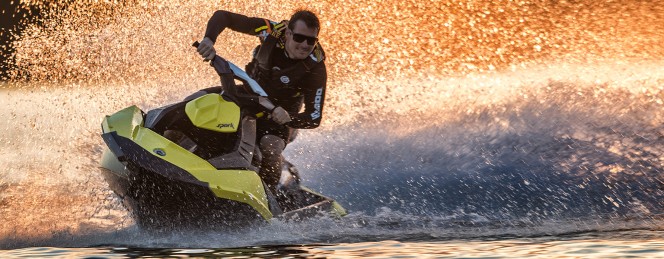
Unfortunately, it’s unlikely that the Spark will revolutionize the industry…at least his year. Despite the advertising imagery of hipsters driving their Toyota Prius to the lake with a Spark in tow, we predict the leading demographic of Spark purchasers to be (and have already shown to be) long-time PWC owners. The Spark’s appeal as a “throwback” to earlier days is core to watercraft enthusiasts and we’ll see more established enthusiasts picking up Sparks more than virgin buyers.
Ironically, we see Spark sales transcending brand loyalty. Yamaha, Kawasaki and even those remaining Honda loyalists will fall for the Spark’s old school appeal. Standup riders too will fall for the newcomer and much of Sea-Doo’s initial advertising will need to course-correct to reflect accordingly. It will be the established PWC owners who will actually assist Sea-Doo most in its drive to welcome in new buyers – as a burgeoning community of Spark owners will create clubs and communities to which new customers will find fellowship.
Yamaha
Although the brand with the tuning forks hadn’t gone anywhere, 2014 will be hailed as “The Year of Yamaha’s Comeback.” The online chatter and media hype over the much-improved SVHO-series watercraft will finally be venerated on the race course. Be it the closed course or on the dragstrip, the Yamahas will walk away with more class wins in 2014 than in recent years.
This will be attributed to an influx of racers defecting from other brands as they gravitate towards Stock and Limited classes mainly for budgetary reasons, also contributing to a decline in racer attendance for this year – with exception of a couple key venues. With less racers on the water and a greater percentage of them aboard Yamahas, it will definitely be a good year for the brand.
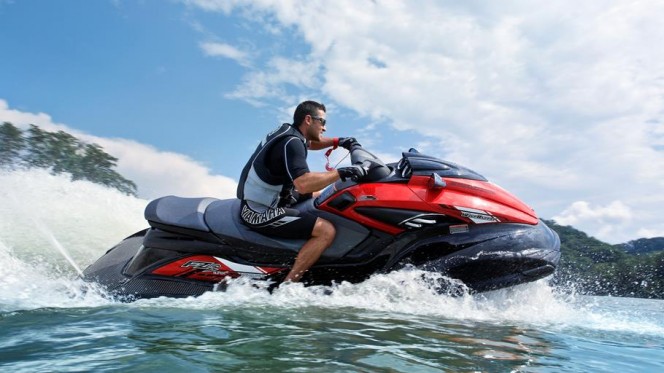
The migration of so many riders can be traced to high performance enthusiasts taking full advantage of Yamaha’s buyback and leasing programs to trade-in their older SHOs (as well as a few Sea-Doos and Kawasakis) for the 260-horsepower SVHO vehicles.
Kawasaki
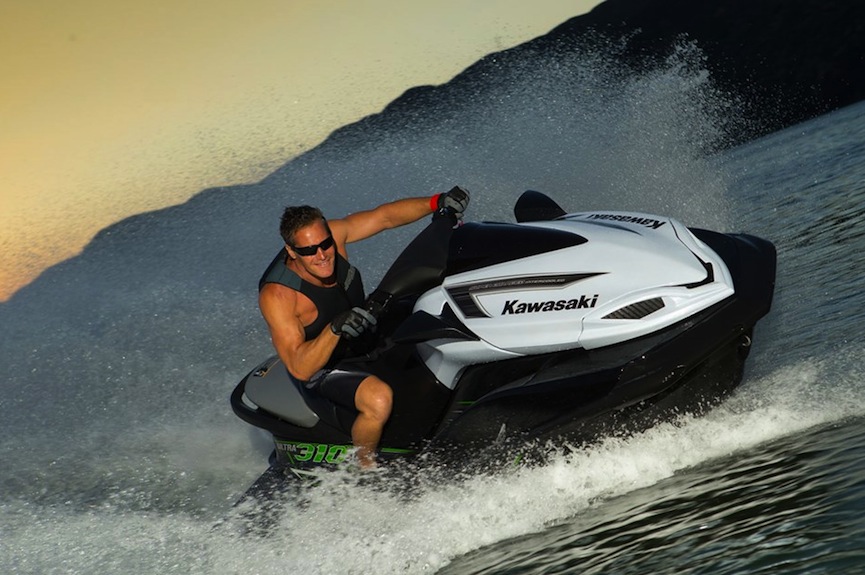
We misspoke when we said that Sea-Doo had “the most riding on the line.” With only a few variations of two platforms, Kawasaki has more riding on less. Thankfully, all questions as to the worthiness of improvements made to the Eaton-blown 1.5-liter four-stroke will will be resolved as the Kawasaki’s 310-horsepower entry will lengthen the distance between it and the competition. The Ultra 310 – in all of its variations – will sweep all offshore/endurance races in 2014. Literally, all of them.
Almost comically, the success of the Ultra in the world’s most extreme conditions will almost become so expected it’ll be taken for granted. With it’s participation with MAV TV’s “Dangerous Waters” series, and its domination in open water combat, Kawasaki will launch a mid-year viral video campaign highlighting the vehicle’s toughness and all-water-terrain mastery, showcasing it as the Land Rover or Jeep of PWC.
The company’s original efforts to present brand as an “exclusive” product will fare no better or worse than other marketing campaigns as Kawasaki buyers are some of the most loyal in the PWC industry. The supercharged Ultra will unfortunately remain too far out of reach of mainstream budget-minded buyer who will find deals elsewhere, encouraging the company to expedite the launch of the completely redesigned STX platform for 2015.
I had Ross Champion explain to me once that, “Freeride is much more than just competition.” Initially, I understood what he was saying as meaning the community of freeriders is thicker than the bonds of typical competitors, and he’d be right. But upon giving it deeper thought I realized something else. Freeride wasn’t so much a sport as it was expression. Freeride is art.
After spending years looking through thousands upon thousands of images of freeriders performing some of the most daring, body contorting, gravity-defying moves, it’s a sport blending both man and machine, harmonizing the artificial and the natural, and in turn, creates some of the most impressive images in all of jet skiing.
These thoughts were never more prevalent than while reviewing this brief video from photographer/videographer Loren Haleston or “Loren in HD.” On hand for this past September’s Blowsion Surf Slam in Pacific Beach, Oregon, Loren wrote, “I’ve been trying to diversify my shooting lately and took a day in September to check out the professional stand up freestylers. Having never seen any of this type of sport before it was pretty mind blowing to watch these athletes pull off such moves in such uncontrollable conditions. I’ll hopefully be covering more of these in the future and adding to the range of possible camera angles.”
Although his technical breakdown of the day makes it sound very mechanical, the images that Loren was able to capture perfectly encapsulate the beauty, the fluidity and spirit of freeride. I might be a little late on the take, but I think I finally get what Ross was trying to explain to me. Please this video as much as I did:
Every New Year’s Day, a few brave souls tempt fate and take to the water to prove they are as mighty as the gods by beating back Mother Nature and rising above the elements. Some might say that is a bunch of B.S. because you live in Florida and Florida is a rider’s paradise. That may be true for eleven months out of the year, excluding of course, tropical storms, hurricanes, sink holes, and other natural disasters that just are a way of life here in the South. [Editor’s Note: Sorry, but Florida – particularly Central Florida down – is not “The South”] Each year on New Year’s Day, it’s a crapshoot but we ride nonetheless, and this year rung in some of the worst New Year’s Day weather we’ve had in years.
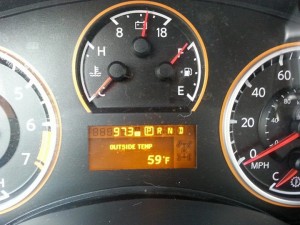
While many in the North might laugh at 59′, that’s pretty cold temperatures for Florida, and made for a daring day on the water.
As morning dawned, 59 degree temps, light rain, cold misty fog and 100-percent overcast skies combined with 15 mph NE winds created a less-than-ideal setting to jump in the water and ride our personal watercraft nearly 70 miles round trip.
Some folks had already thrown in the towel and rightfully so; who in their right mind looks at that recipe and embraces joy? Well, for the eight riders that went out that day, it was all joy and smiles, a bit of shivering but not one complained.
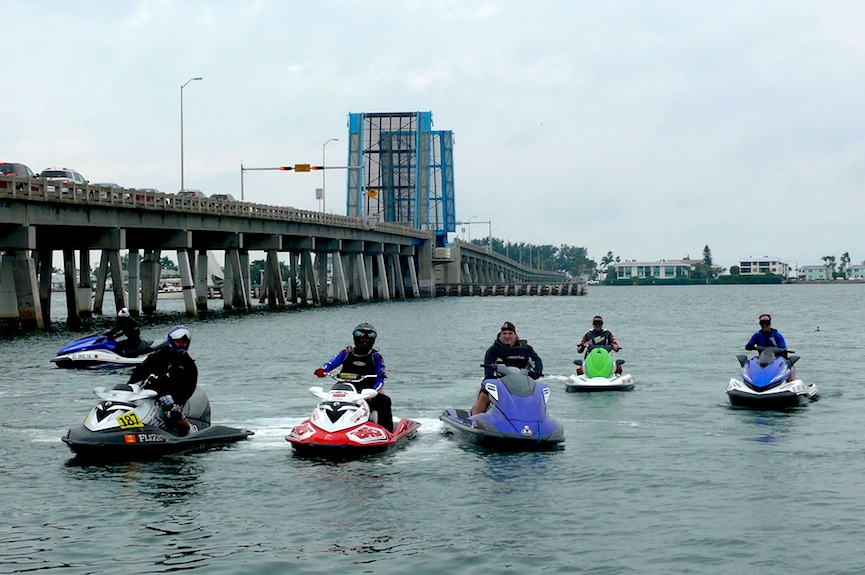
Leaving the ramp, we started with six Jetski Junkies, Michael and Leslee Baute with their newly upgraded Kawasaki Ultra LX 160’s, Mike Gast mounting his Sea-Doo RXP 255 along with Kelly Belval riding his Kawasaki STX-15F and Yasmany Caballero with some old school flavor on his Yamaha GPR1300.
We rode out the Manatee River from Parrish, FL out into Tampa Bay where the shallow of the Bay, combined with low tidal influence and 15 mph NE winds gave us 2–to-3 foot chop with a 2–to-4 foot wave rise. It wasn’t the nicest conditions to ride 10 miles across but everyone did it like a champ.
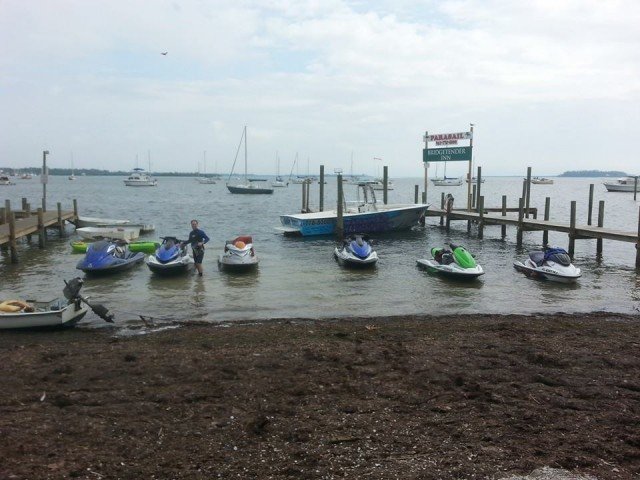
The Bridge Tender Inn proved to be a worthwhile stop on our ride, with a nice private beach, outdoor patio and plenty of good food on the menu.
From the mouth of Tampa Bay we turned into the ICW (Intracoastal Waterway) heading south by Anna Maria Island, Bradenton Beach and Long Boat Key until entering Sarasota Bay at the end of Two Sisters Island. Here we decided to hit a tiki bar and warmup. Mike and Kelly lead us to a spot called The Bridge Tender Inn.
They had a small beach with a cafe outside/inside patio, good eats, nice folks, and we’ll definitely will be back. While at lunch we got word from Mike Williams and Brad Clark that they were just around the corner at Coquina Beach. So after lunch, we rode to Coquina to meet up. Mike and Brad are a bit more on the adventurous side as they were looking for waves to jump. So the whole crew left the ICW and headed out into the Gulf of Mexico.
We headed back towards Tampa Bay to find some rough stuff for the boys to practice their best tricks.
Normally this cut is a wave jumper paradise but today the Gulf was calm with a mild rise and fall so we made the decision to head back north to Tampa Bay to see if the soup was still being stirred out there. Once reaching the Bay, a few of us hit the waves. It wasn’t great for Mike and Brad to do any real tricks but they still pulled of some sweet air.
From there we hit the small island that guards the mouth of the ICW from Tampa Bay; a good spot to stop and camp without any cares of the real world. The tide was up enough to skate around the mouth of Tampa Bay and run the edge of Ft. DeSoto memorial back into the Manatee River. This is a cool short cut Vince Cobelo showed me a year back – only passable with high tide – but saves 7 or 8 miles off the trip and avoids the pounding of the Bay.
It wasn’t the best of days to ride but it was a day on the water with friends, and to me it would seem no better way to ring in the New Year then riding on New Year’s Day.