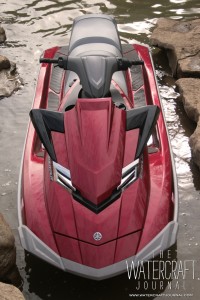
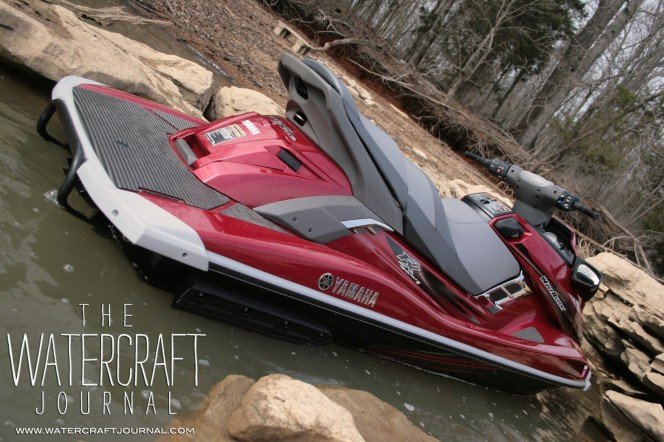
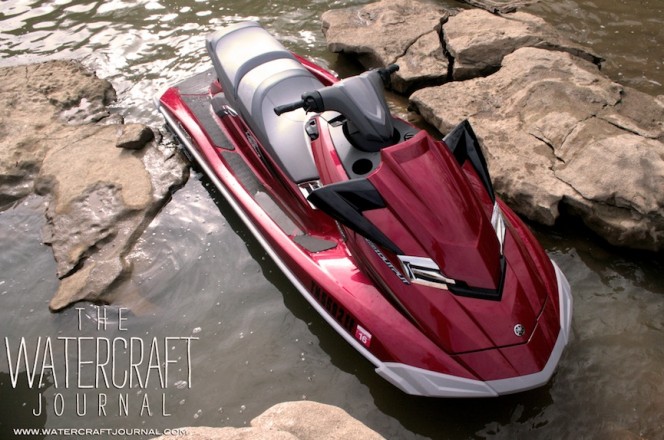
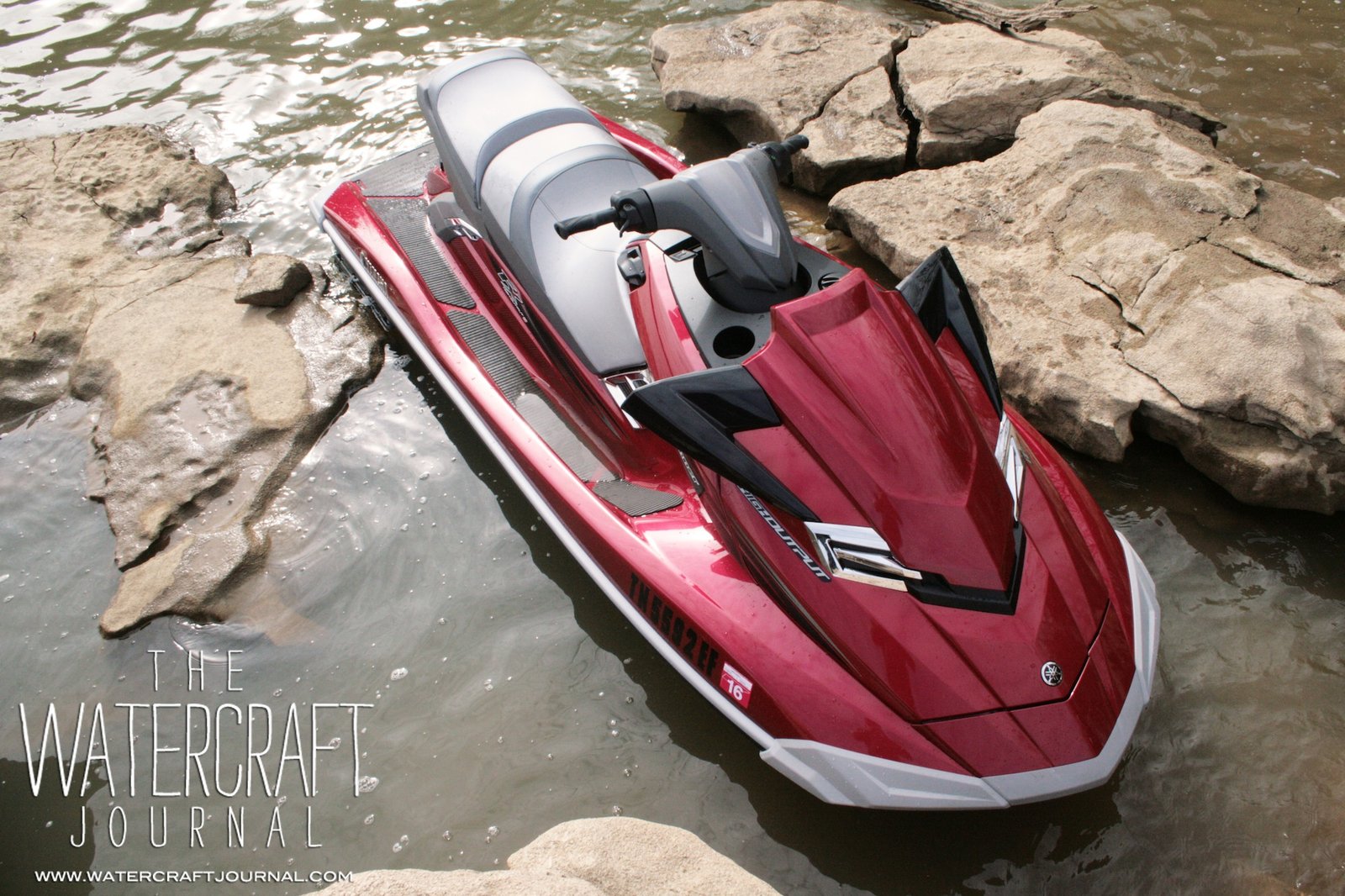
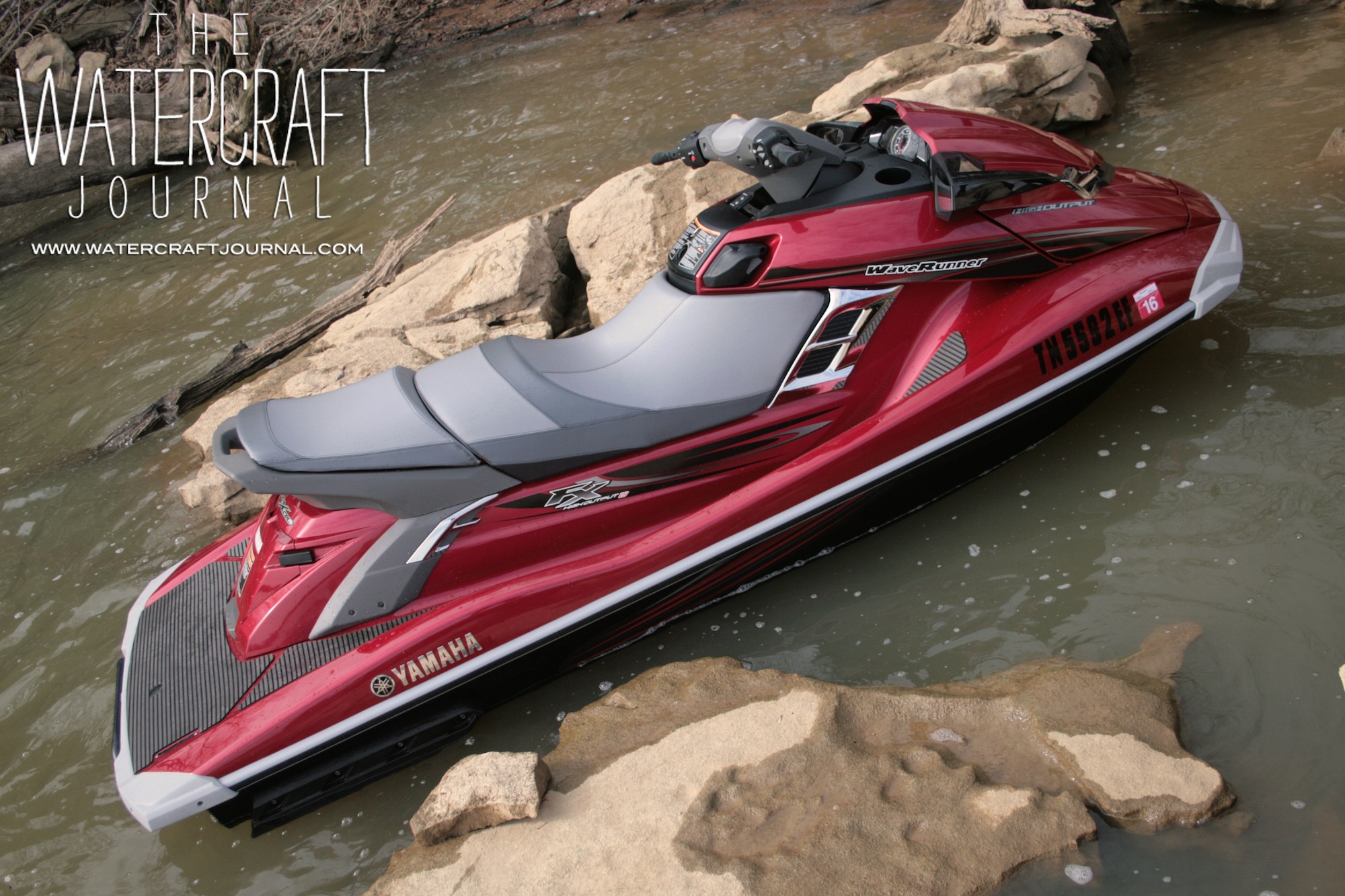
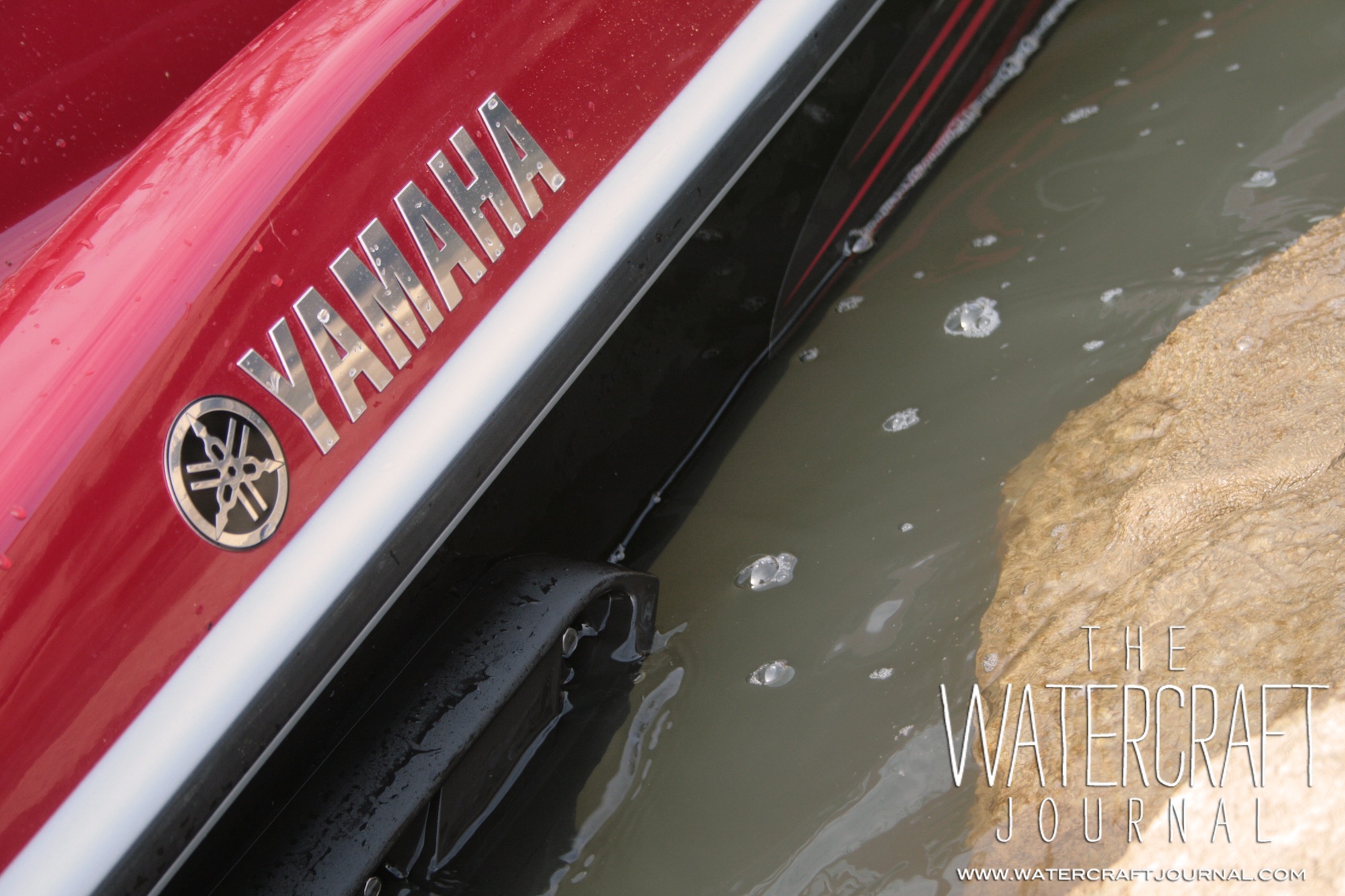
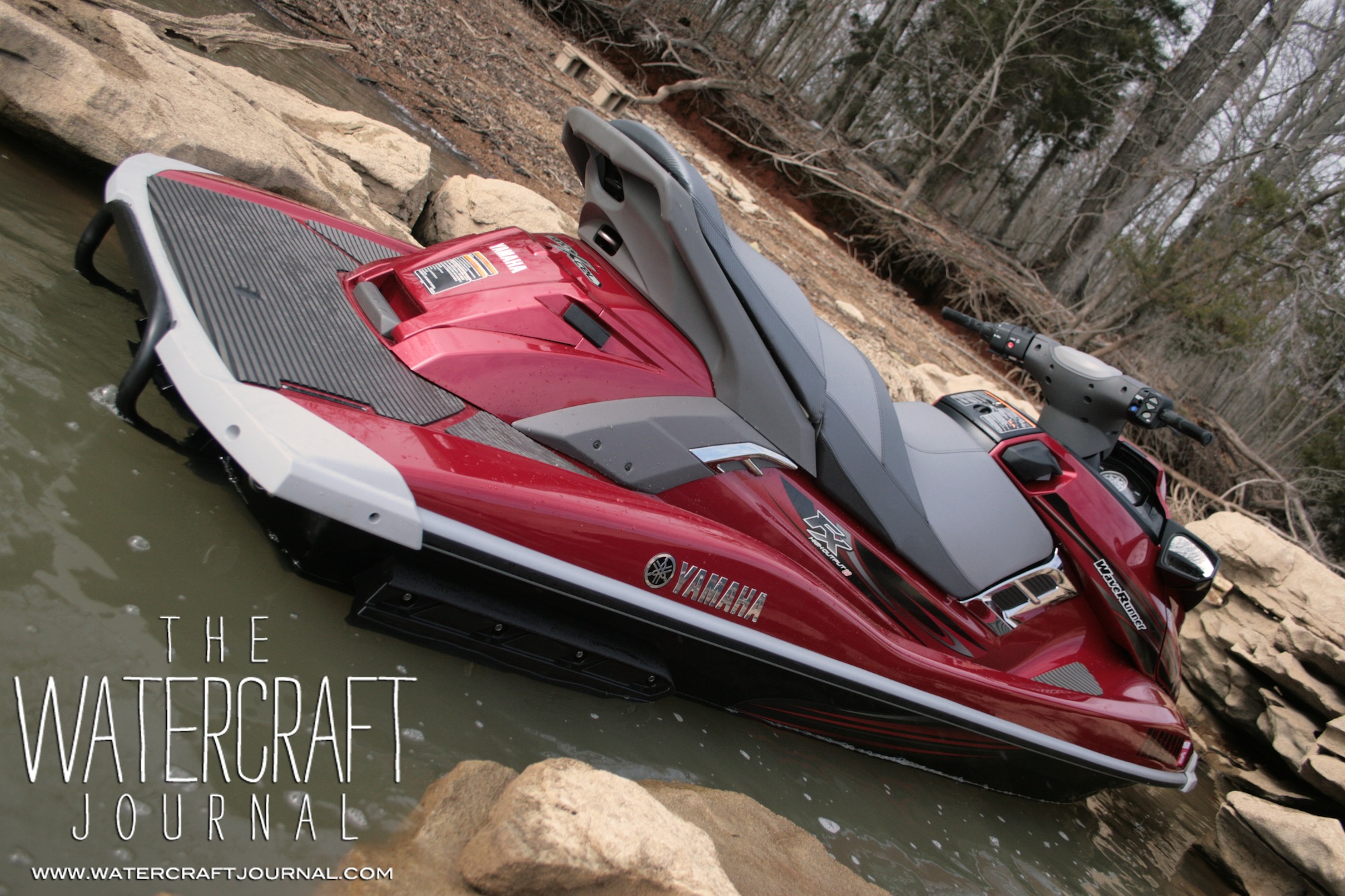
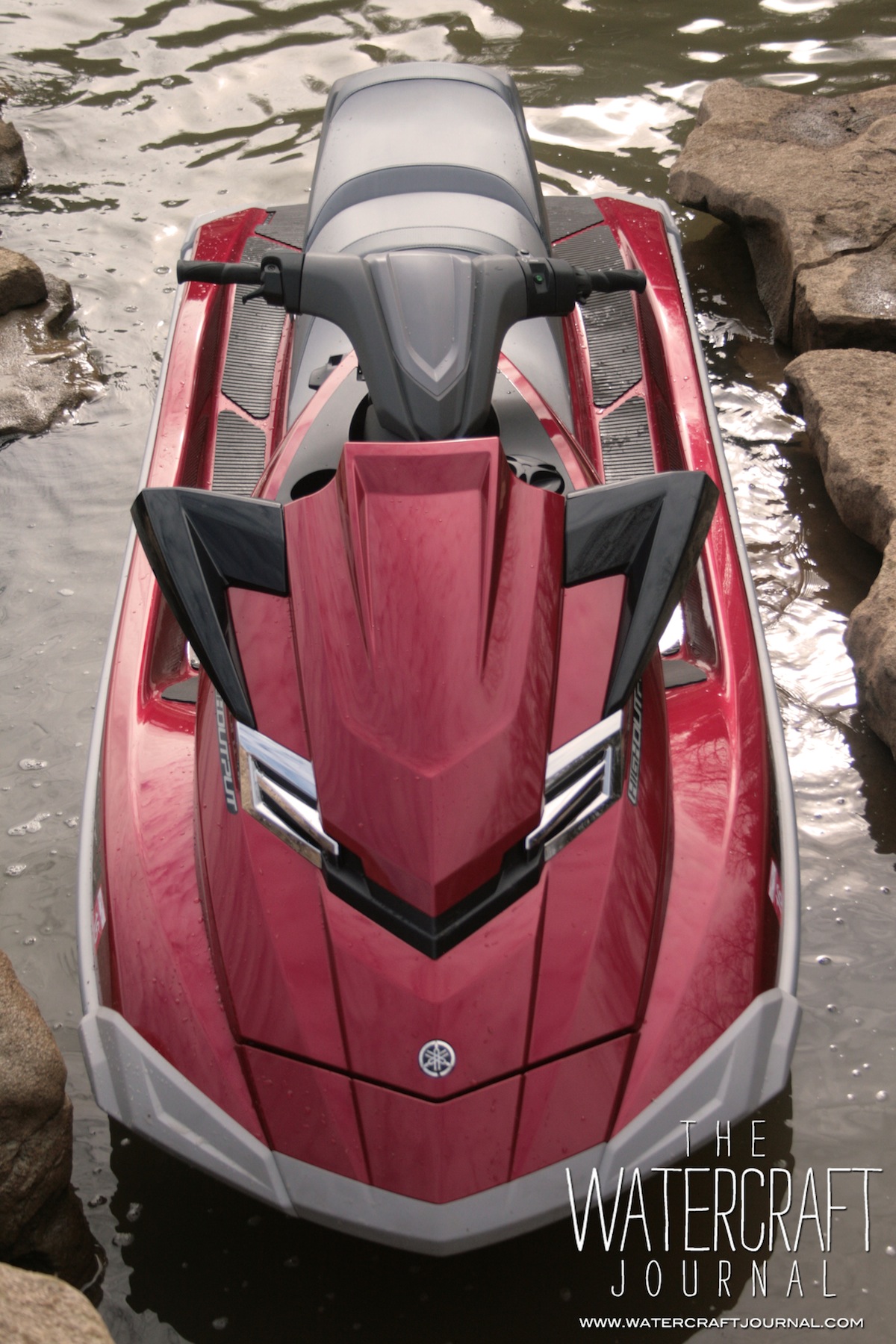
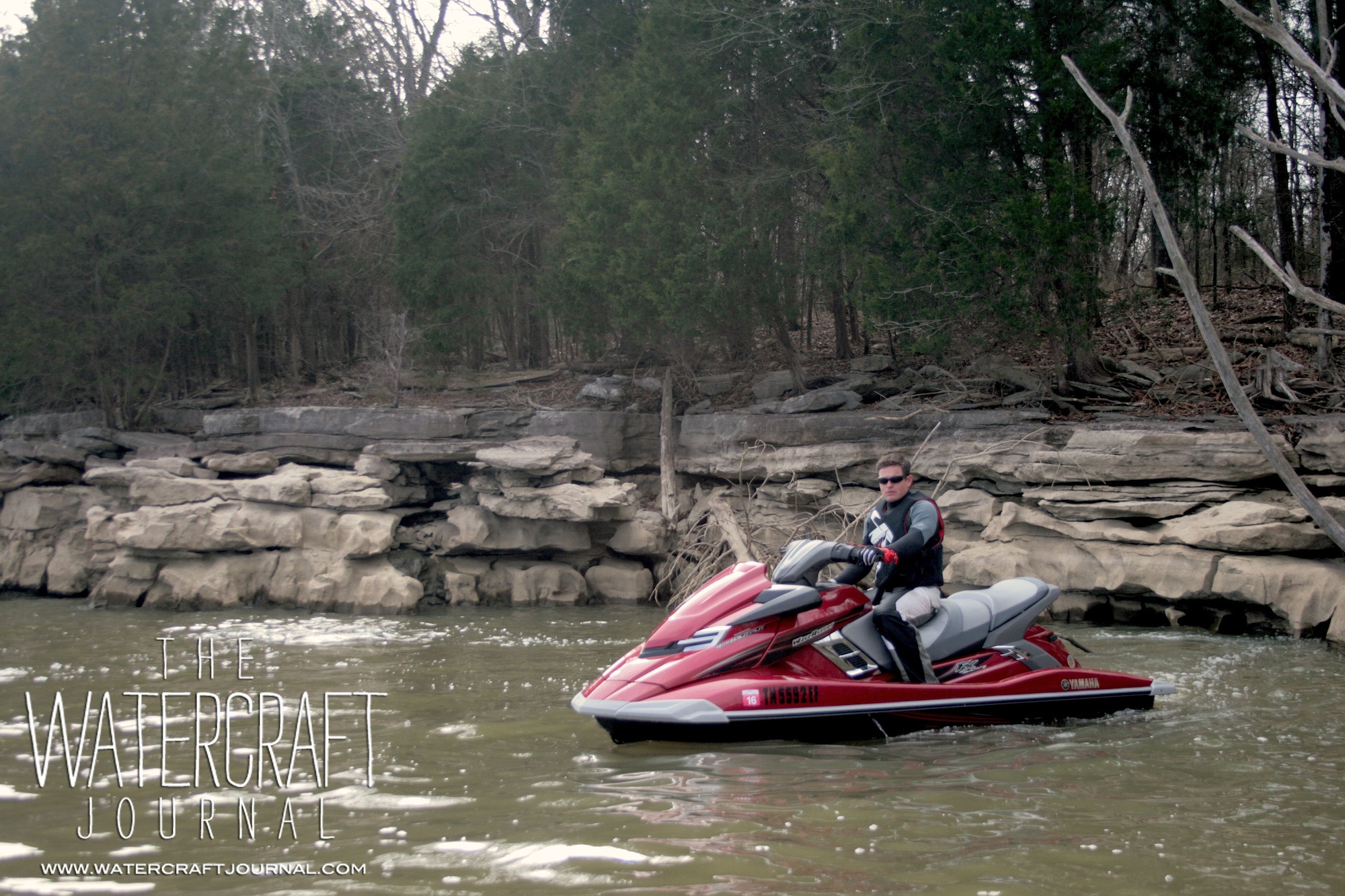
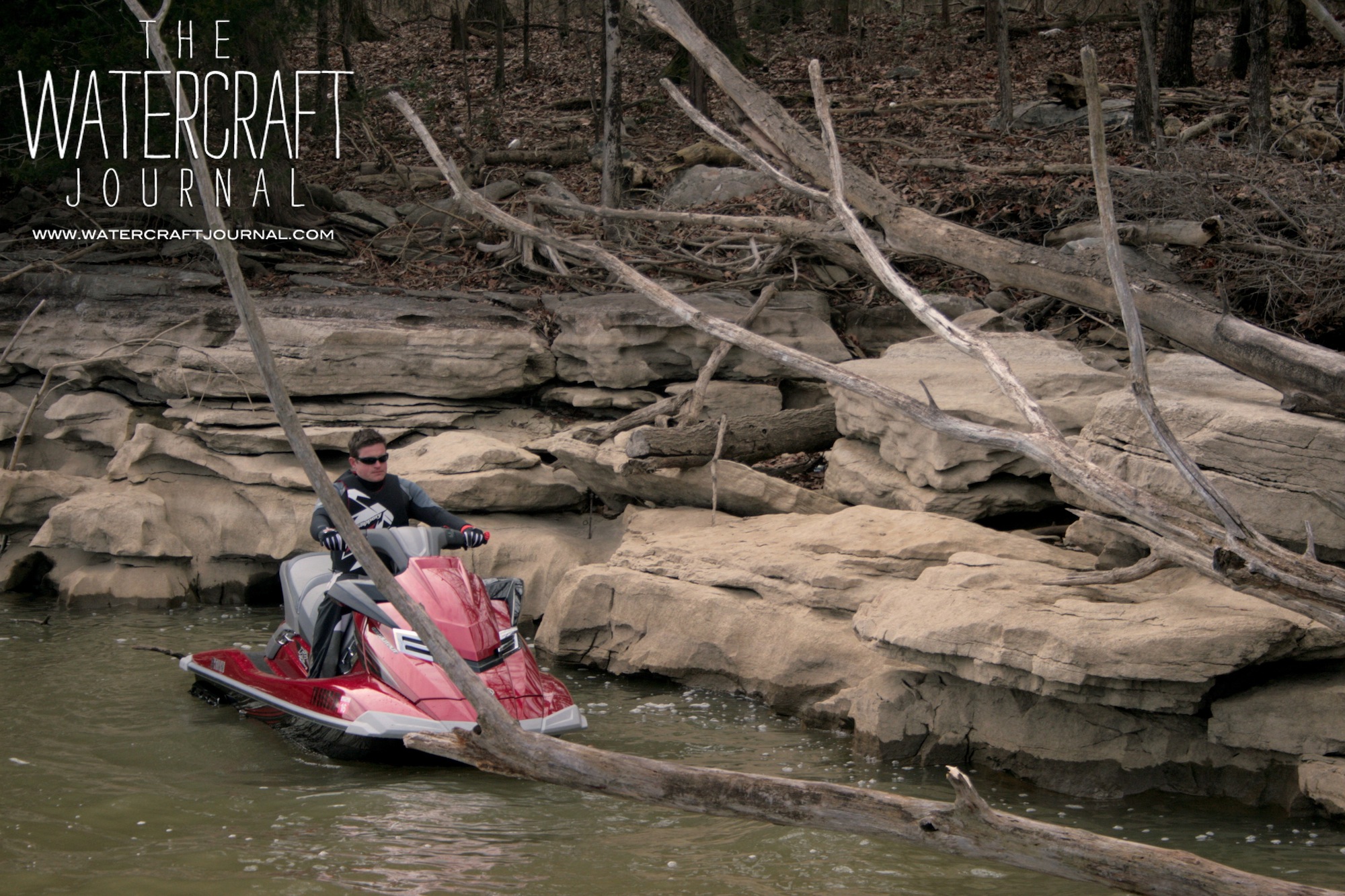
The FX HO’s hard-edged angular design can be polarizing to some. For us, we like it – but we loved the deep Crimson Red Metallic paint.
We live in a wonderful world of abundance. Even as global populations continue to climb, food production is still at an all-time high, and at no time has information been more readily accessible nor education more freely provided. In many cases, even the poorest in developed nations live better than the working class a century earlier. Despite personal political nuances, we live in a world of relative comfort, safety and convenience. While it may come off a little cheesy, it might be worth pausing to take a personal inventory of your blessings.
Go ahead, we’ll wait… There. Don’t you feel a little better?
A sense of understanding how good we really have it swam through my mind while riding Yamaha’s gorgeously refined FX High Output WaveRunner. Generously equipped with a king’s ransom in accessories and easy-to-navigate controls, the three-seater runabout is as close to a heavily-optioned four-door E-class sedan as we could imagine. Resplendent in Crimson Red Metallic, our HO glimmered in the winter sun as we glided on the empty lake leaving me to think how good we really have it.
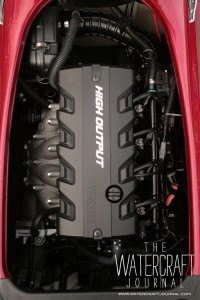
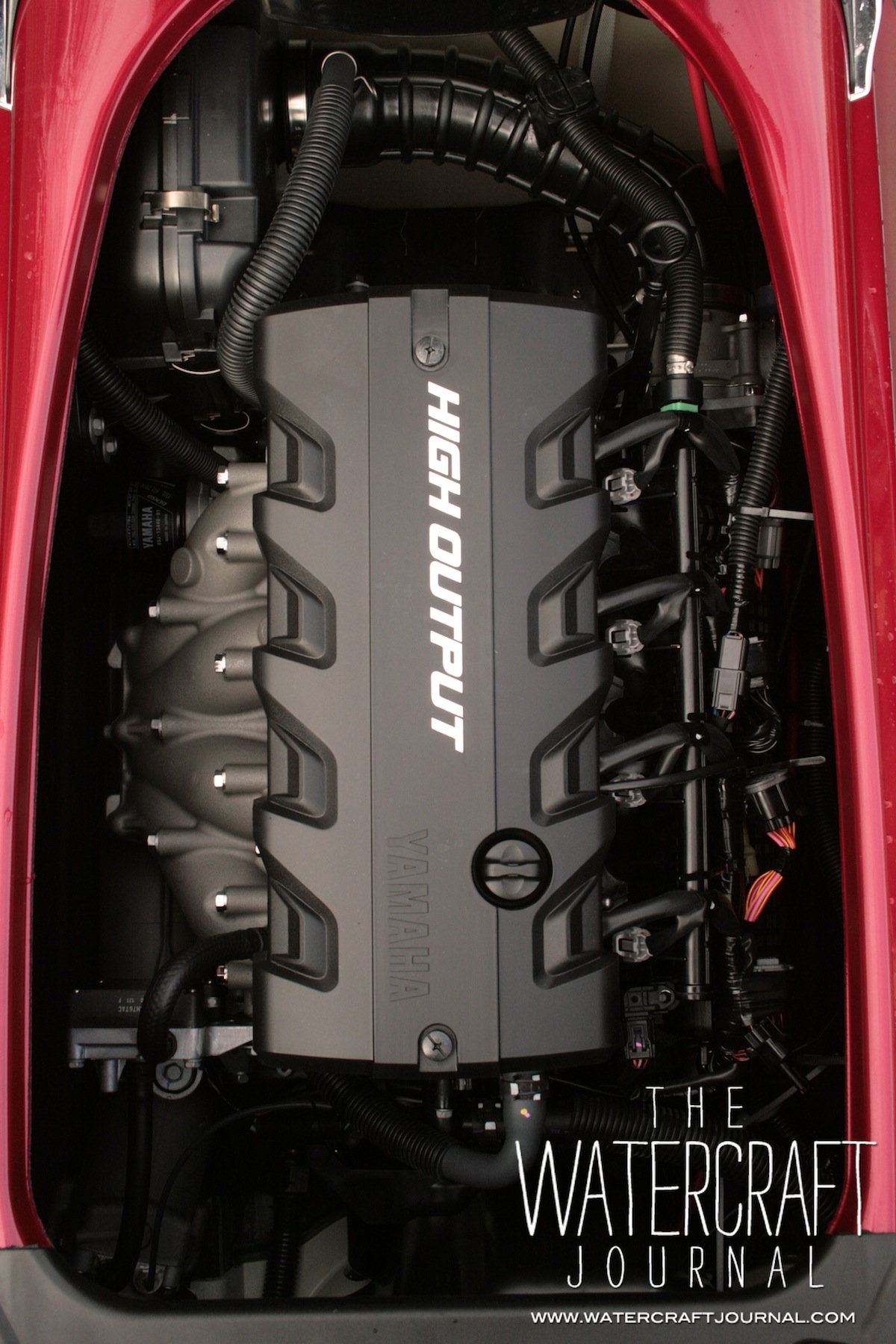
Abounding in storage spaces found throughout the deck – from bow to stern – the FX HO is an ideal candidate for long distance rides.Powered by Yamaha’s naturally-aspirated version of the SHO, the High Output 1,812cc four-stroke is 87-octane friendly and can entertain for hours even on a quarter tank of fuel.
Even as the chilled mid-January breeze whipped up some light chop, the long (140.2-inches) and light hull aptly slipped through the uneven surface. Made from Yamaha’s proprietary NanoXcel material, both the hull and deck benefit from a 25-percent weight reduction over conventional fiberglass composites. The NanoXcel process not only reduces weight but mass too, improving handling response as well as freeing up interior storage and engine compartment space.
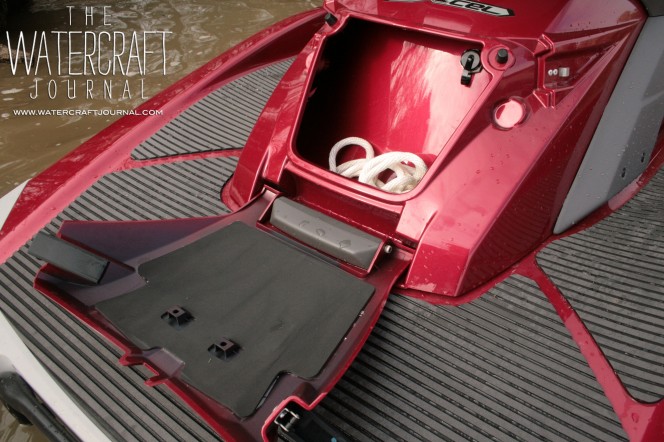
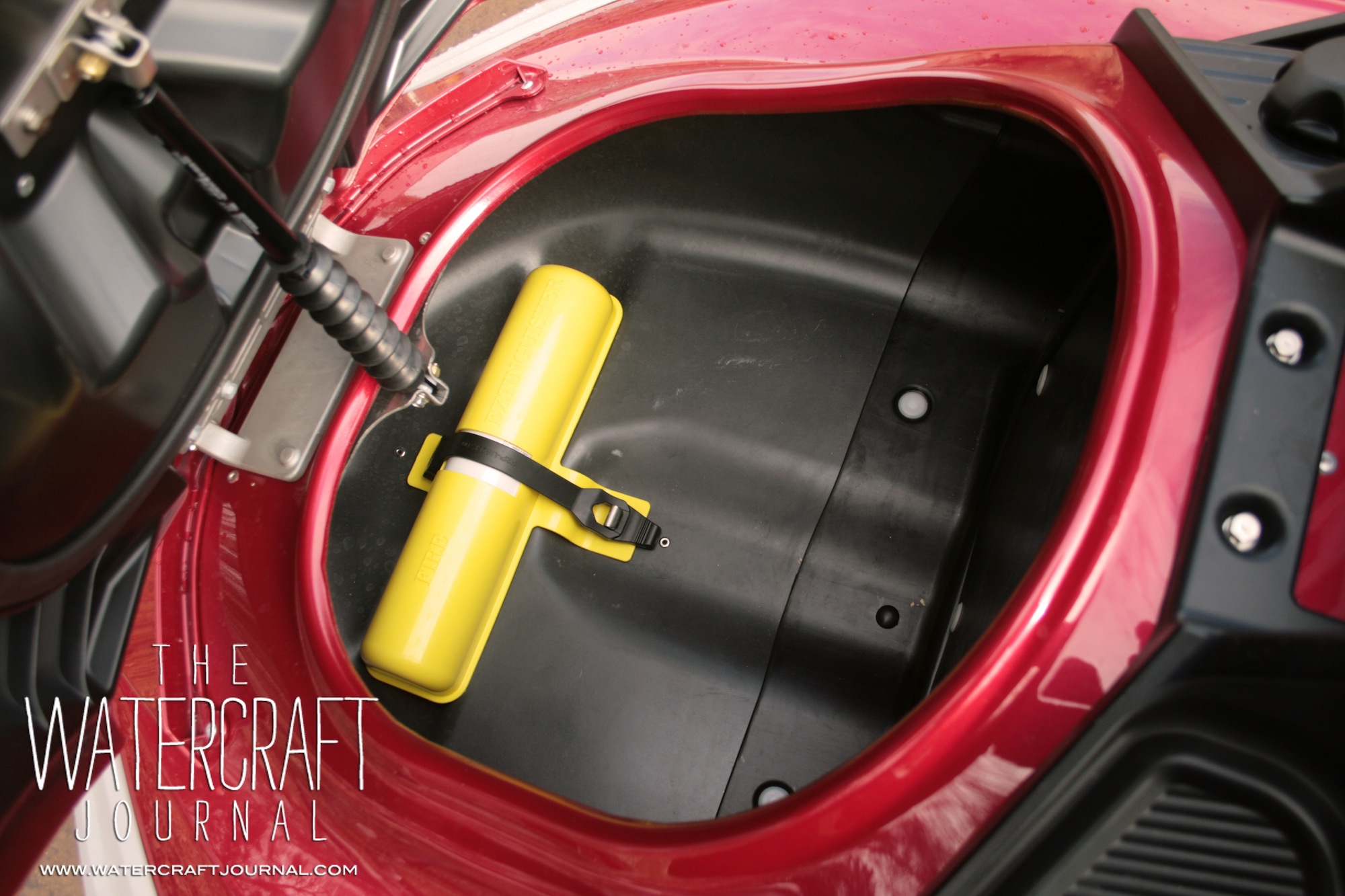
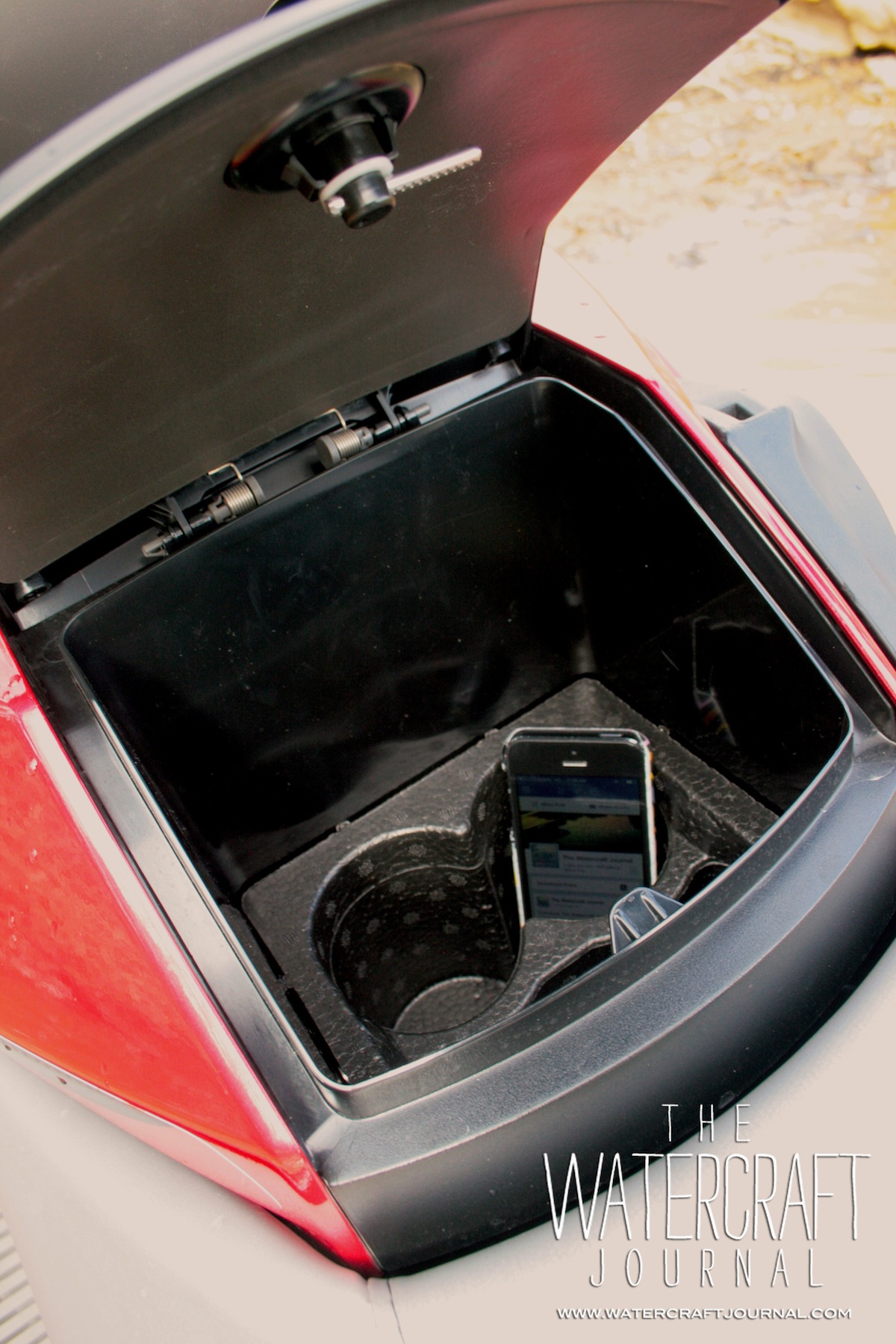
And for 2013, the FX has storage in spades – in fact, 33.2 gallons worth – adding up to over 40-percent more storage over previous FX models. Yamaha has sprinkled storage bins throughout the craft, from the under hood bow storage compartment, to innovative watertight compartments both at the dashboard and beneath the rear seat.
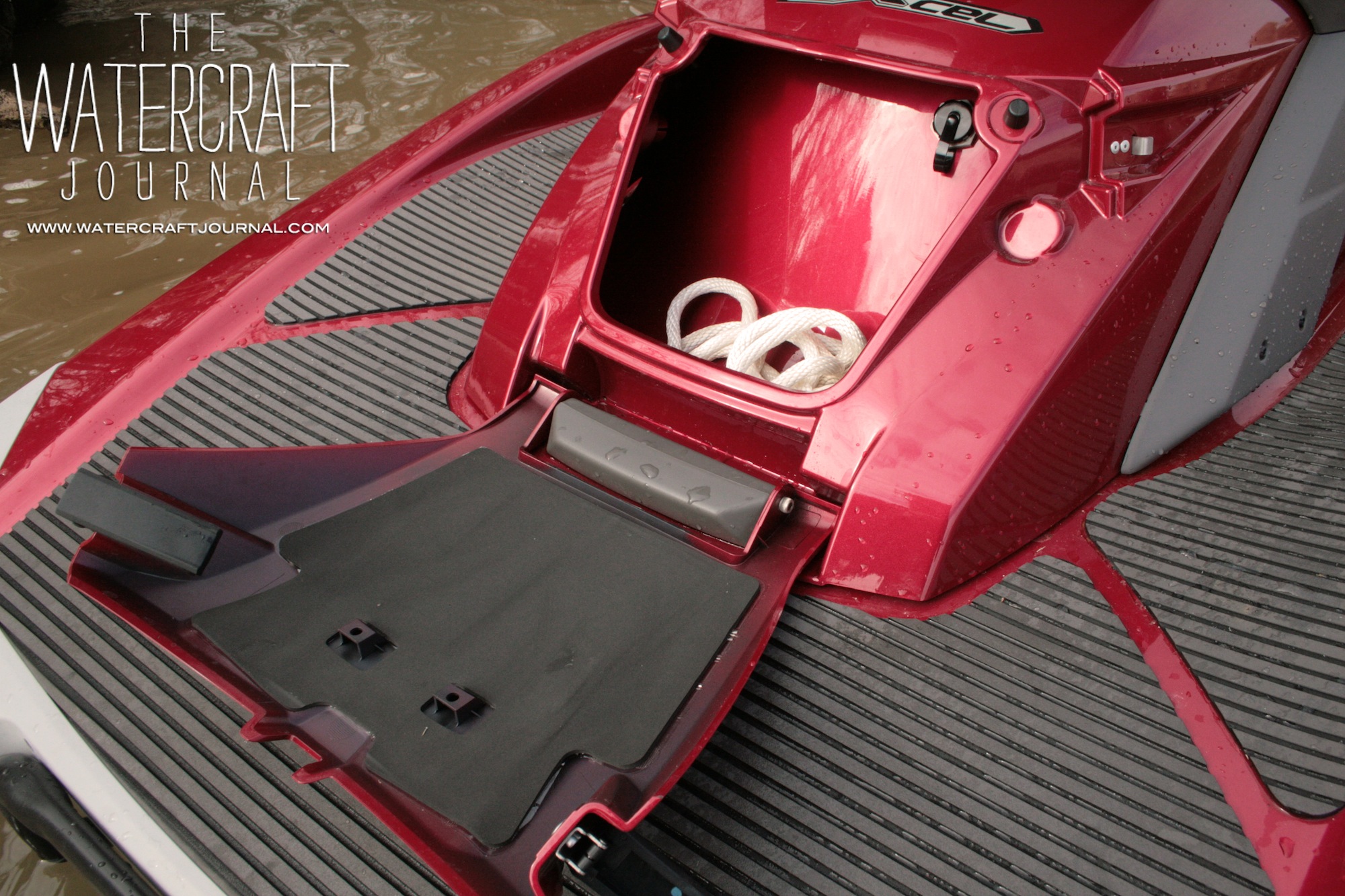
The glove compartment features a removable Styrofoam insert as well as another cup holder on the dash. Finally, a rear compartment at the stern unlatches to hold tow ropes or other water toys secure.
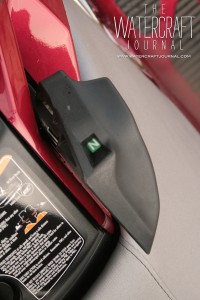
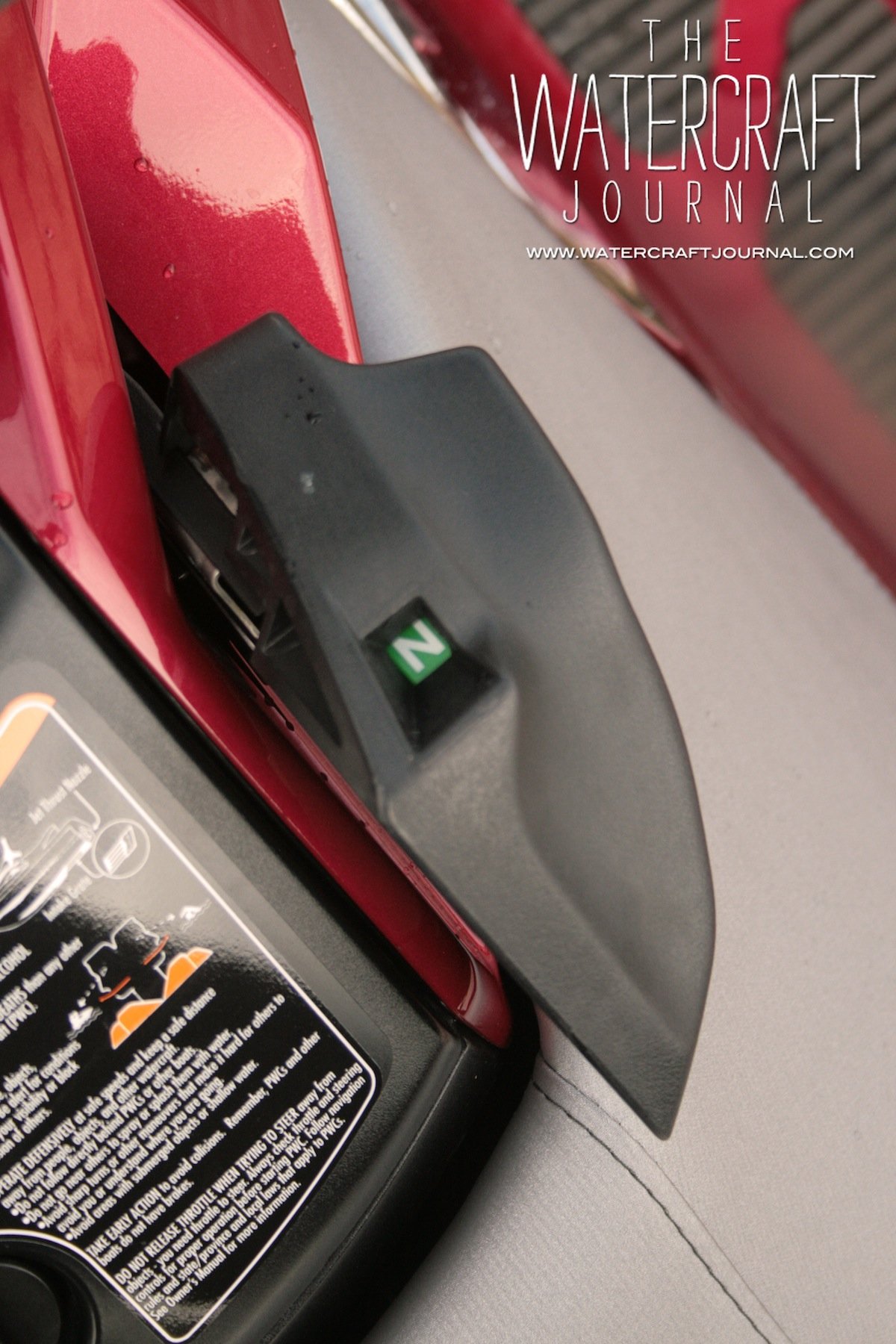
The large rear swim platform and folding swim step make boarding easy, as the wide, tiered stadium-style seats are comfortable and well proportioned.New for the 2013 model lineup is Yamaha’s mechanical neutral, which provides a locked position in the reverse lever.
Under way, the FX HO never fails to impress. The throaty 1,812cc High Output powerplant snorts out plenty of low-end grunt to propel the FX through long sweeping turns or carry you over long distances.
In fact, extended rides is where the FX HO shines best, as the naturally-aspirated sibling to the equally-equipped FX SHO offers the touring enthusiast all the more mileage to traverse as the deceptively efficient 1.8-liter four-stroke, four cylinder plant purrs along the water, sipping fuel along the way.
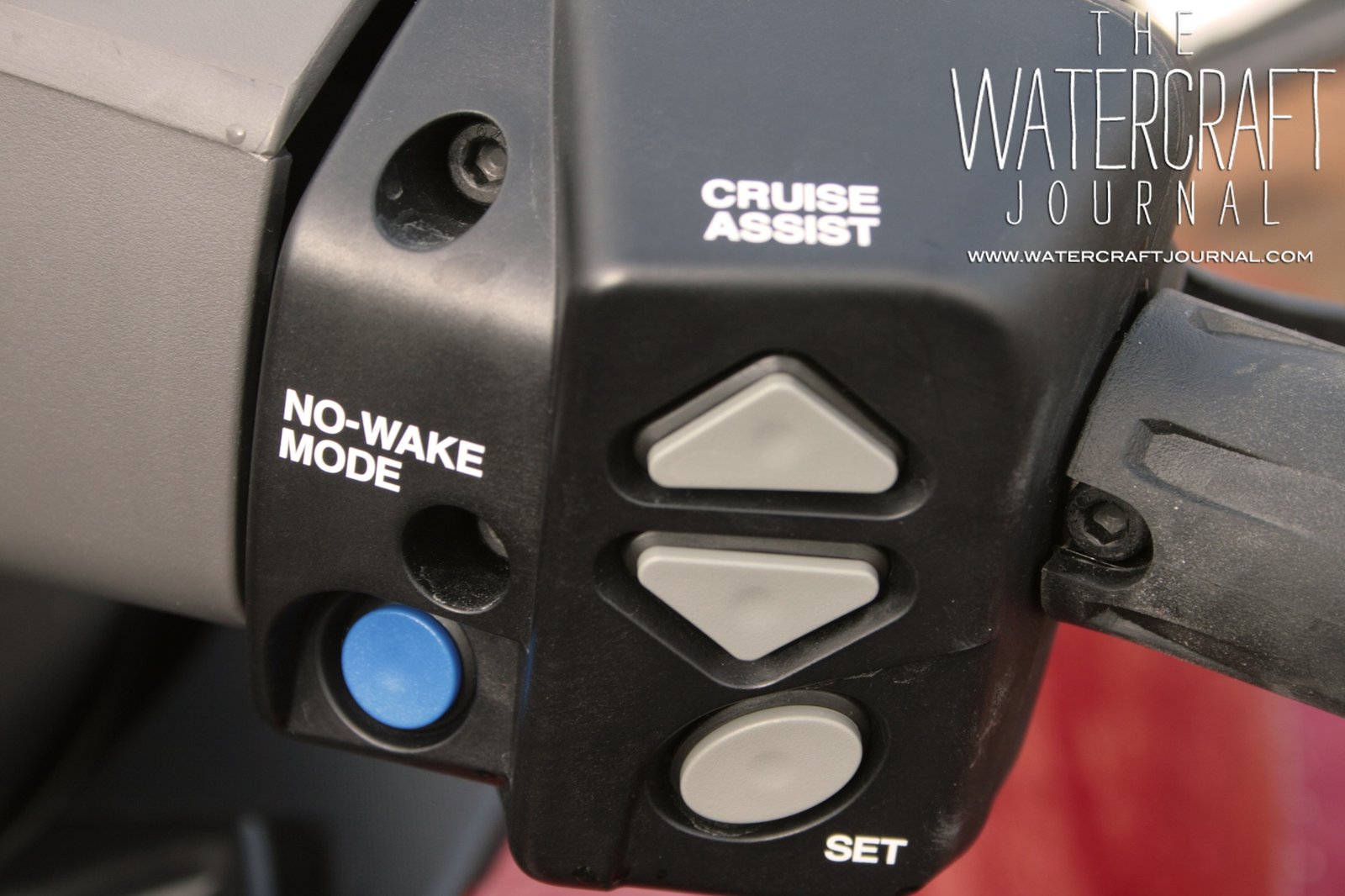
Managed through Yamaha’s Electronic Throttle Control system (read: fly-by-wire), the gas-sipping HO will struggle to drain its 18.5 gallon fuel tank even after continued hours of spirited riding. Features like programmable cruise control, No Wake Mode and Low RPM mode are found on the ergonomically-designed handlebar controls, and are all easily within reach. Oh, and the best part? You can run 87 octane gas.
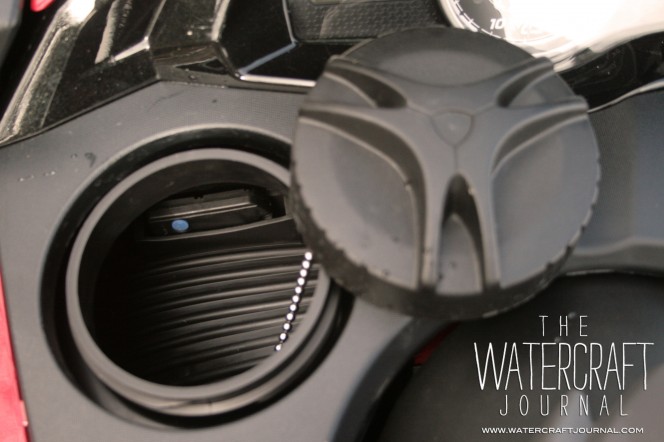
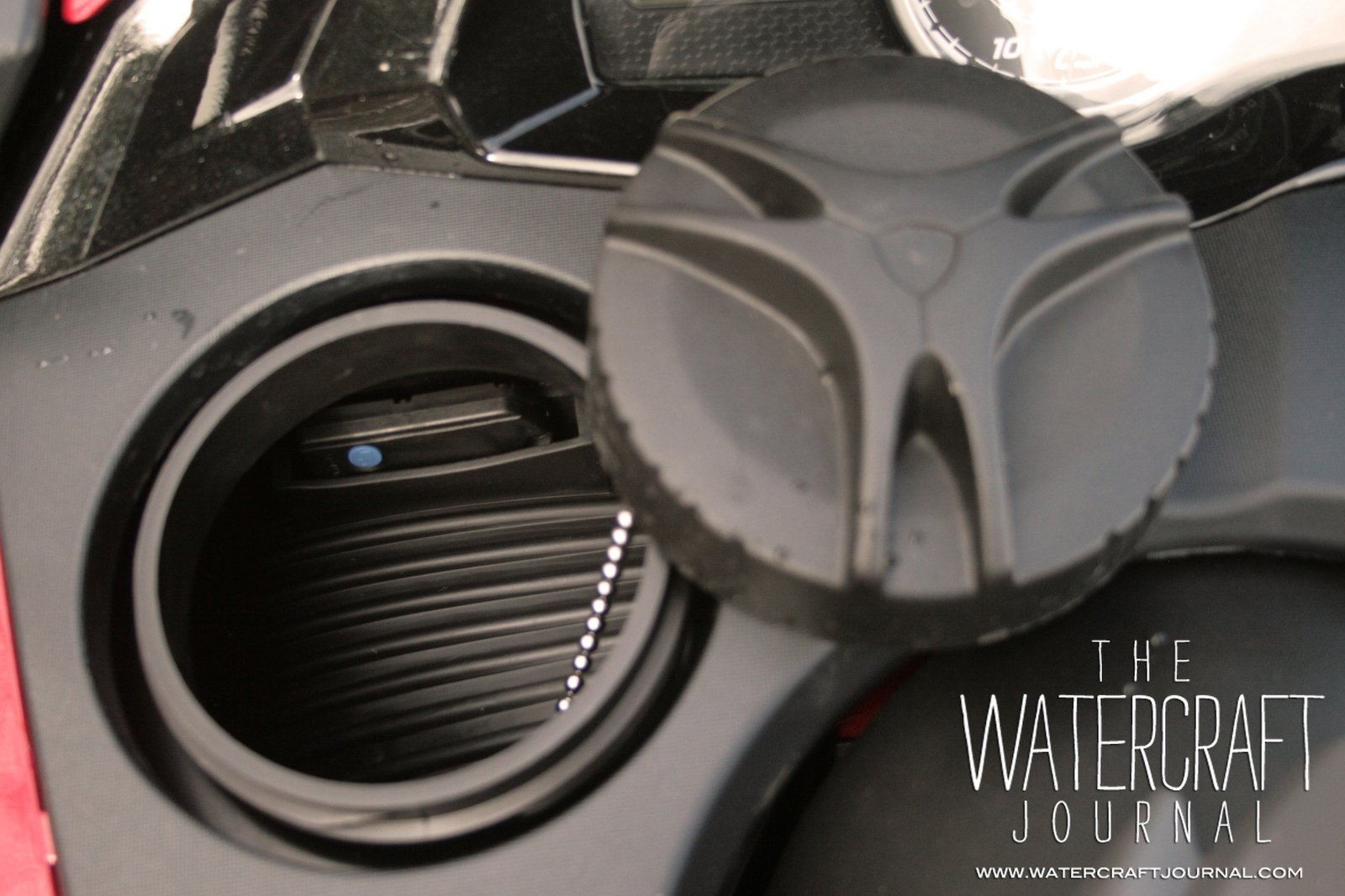
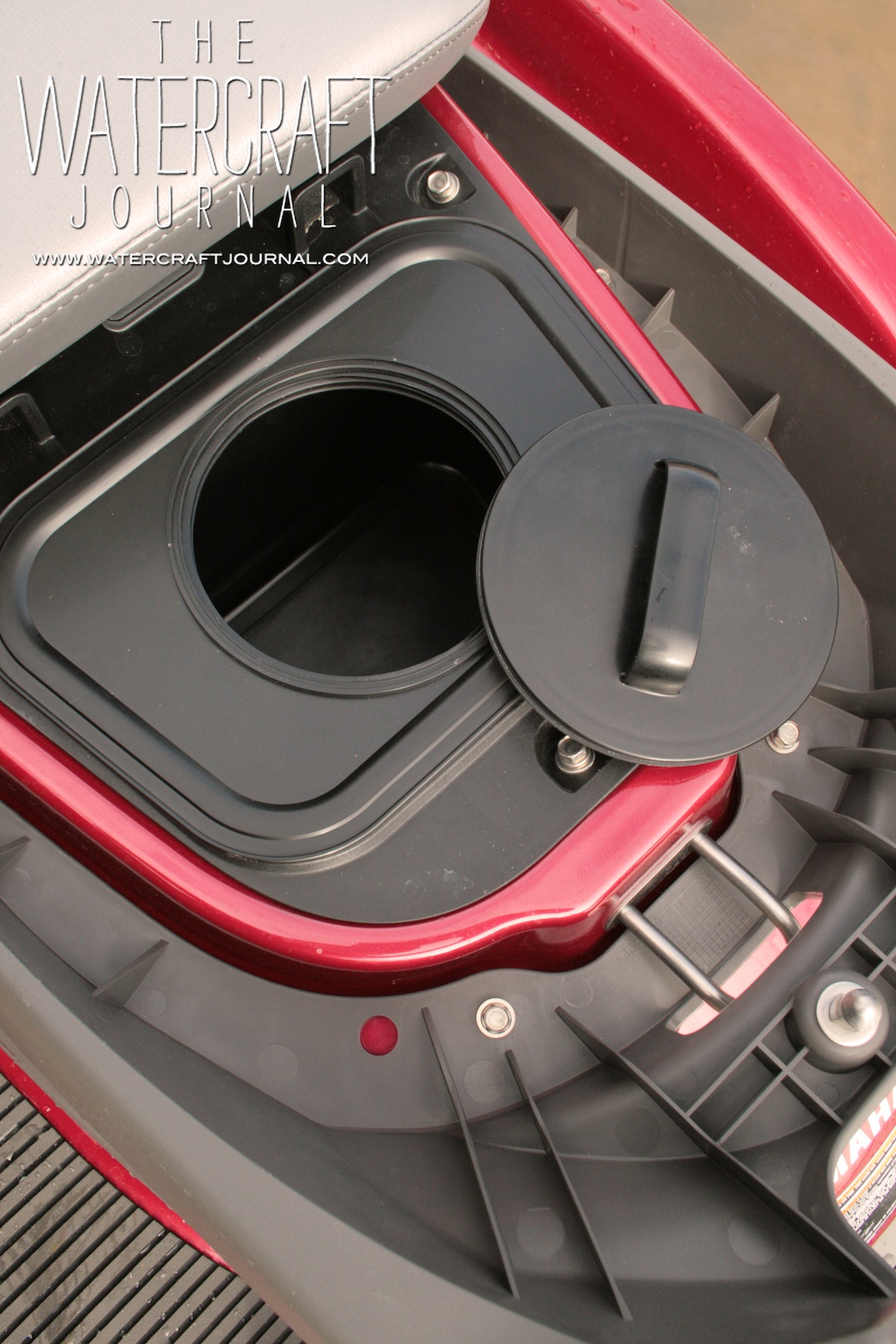
No need for a Ziploc baggie or Pelican Case, Yamaha offers two watertight compartment to store your valuables: a screw-top padded bin for keys, cell phone and wallet.
Boarding is made easy thanks to a broad swim platform and wide folding swimstep. The angular design is futuristic and bold without being overbearing, and the decals and chrome accents are just enough detail to add character without becoming “busy.”
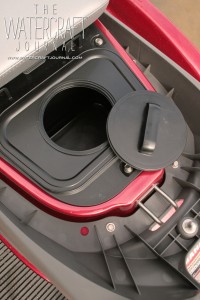
The second watertight compartment is a larger bin found beneath the stern seat for towels and clothes.
The tiered stadium-styling bench seat is well formed, comfortable with enough give to keep you comfortable over long periods of riding. We did note the saddle to feel a little wide, and that the second rider position lacks any sort of handrail or strap, so holding onto the driver is your only option.
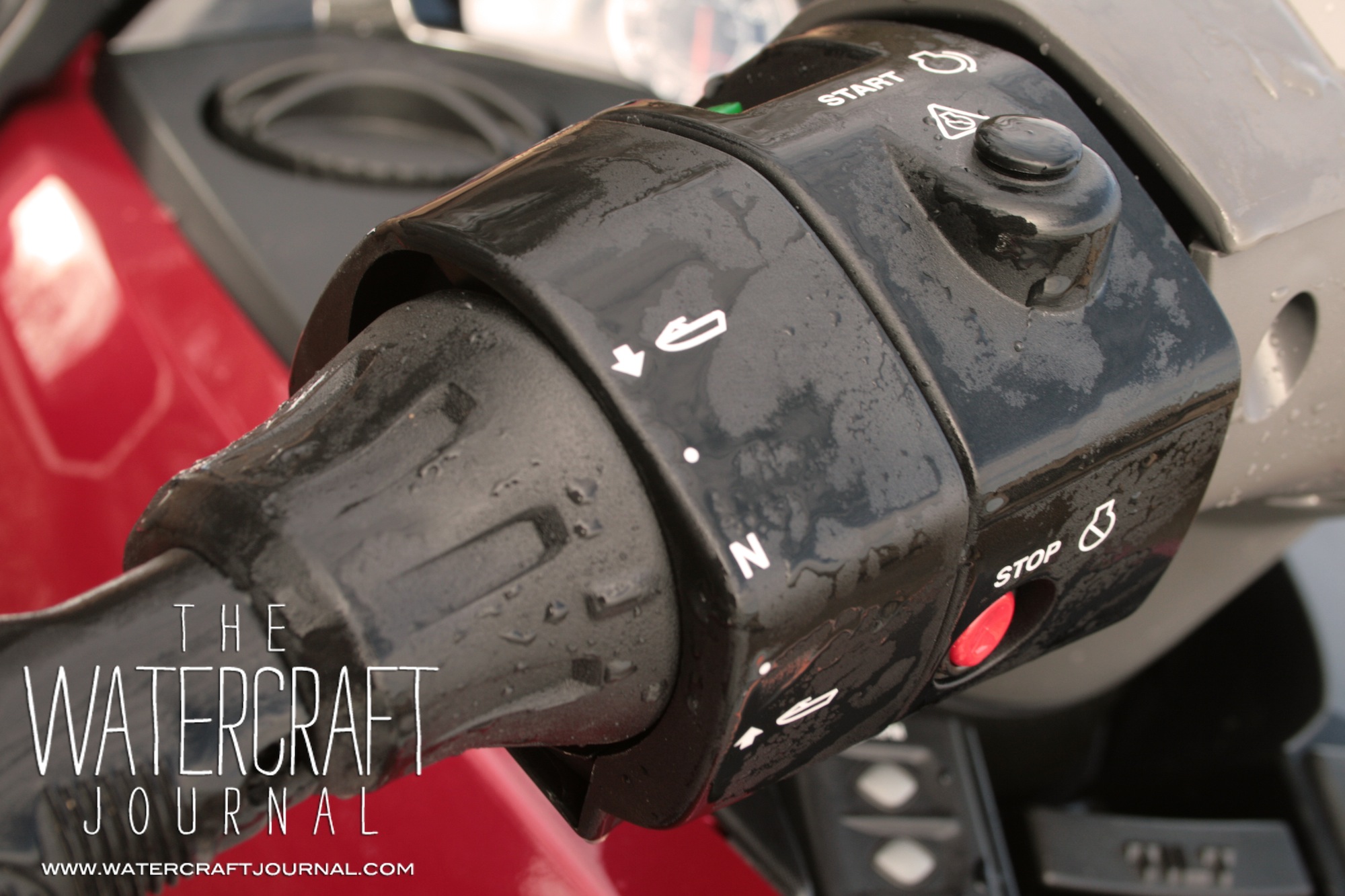
Three more features are unique to Yamaha; the QSTS (Quick-Shift Trim System), four-step, tilt-adjustable steering, and the new mechanical neutral position in the right hand-side reverse lever. The latter ensures that the FX will stay in place even while under power. For the FX, the trim lever is a little different from its FZ brethren, a comfortable twist-grip provides 5-preset positions within a 24-degree range. It’s still a little stiff while under throttle, but manageable.
Overall, the 2013 FX HO is one of the most pleasurable skis we’ve had the opportunity to ride. Clearly designed for touring and leisurely cruising, the HO is an ideal selection for the rider looking for fuel efficiency, comfort and convenience in one great looking package.
We kinda wished Yamaha carried over the beautiful Crimson Red Metallic for 2014, but you can never go wrong with Yamaha Blue (OK, Deep Blue Metallic).
The Watercraft Journal: Mark, as the founder of PWCOffshore, many might not know much about you as you aren’t one to hog the spotlight. Tell us a little bit about your background, and how you came to be leader of an offshore racing movement on the Pacific Coast.
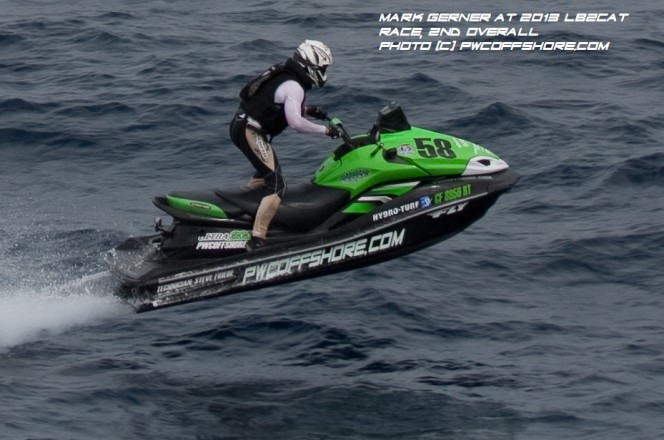
Mark Gerner: I’m originally from the Northern Virginia/Washington DC area, moved out to California in 1994 after getting out of the Marine Corps where spent a few years as an Infantry Officer. I’ve been aggressively riding watercraft offshore since 1997. In the mid 2000’s, I took note of the declining participation in the historic Long Beach to Catalina and Back Offshore National Championship race (aka “LB2CAT”); many were just complaining with only a few coming up with viable solutions to get people interested and back on the water racing.
Gerner repeated, “Many think I am a racer and a promoter. I am not a promoter. I am a racer first and do what I can to assist promoters in getting people interested in taking it offshore. We use PWCOffshore.com as a vehicle in support of this end. Please note that I pay my race entry fees just like everyone else.”
By late 2006, early 2007, I had the idea of creating a team of very capable offshore racers that would also act as advocates for our sport. This included a website that would provide [anyone] with enough information to make [them] comfortable with [riding] offshore and possibly racing.
I bought a domain, spent a few weekends writing and PWCOffshore.com was born. Since then, there have been countless hits on the site and I am pleased that many use it as a resource for offshore riding/racing information. I also own three additional PWC related websites, all are there to assist in getting the word out and promoting offshore racing.
Given the long distances involved in offshore racing, offshore racing [struggles to] engage spectators. Therefore, I created the LB2CAT race coverage video to promote the race. This includes helicopter [footage] from substantial distances offshore; we’ve been producing the LB2CAT race coverage video since 2007 and it’s now being distributed to locations all over the world.
WCJ: Why offshore/endurance/open ocean, when close course is commonly seen as the more popular form of PWC racing?
MG: I think the ocean intimidates most PWC riders/racers. Lets face it, there can be large waves, fog, tankers, wildlife, no shore in sight for miles and a myriad of other potentially daunting elements involved with riding offshore (Just the attraction for me). With education and the use of good judgement, many of theses issues can be managed effectively and risk can be mitigated.
Regarding close course racing, it’s very challenging in other ways. Its like comparing the Baja 1000 to a closed course motocross race at Anaheim Stadium – two different animals. I think part of the attraction of close course racing is that it is a small course close to shore that can be watched up-close; many find that attractive. We are seeing a decline in PWC close course runabout racing and an increase in standup closed course racing. I believe much of this involves the substantially lower operating cost of standup racing versus the cost of contemporary four-stroke PWC racing. Lets face it, new four-stroke PWC’s are very expensive and when they break, it can cost thousands to repair. This is why we created the Manufacturer Stock Class for the LB2CAT. Buy a boat on Saturday, race a 100-percent stock boat on Sunday.
Gerner noted, “Holding watercraft open at 70mph in three foot chop while sixteen miles offshore for over an hour is not easy. It looks much easier than it is, therefore many will go out there and have their backside handed to them, and not be inclined to return. It attracts a special kind of racer.”
WCJ: The PWCOffshore team recently saw Craig Warner move to the East Coast – although he promises to return to topple Billy Womack’s Long Beach-to-Catalina win record. Are there any “rising stars” that you see coming up the ranks to challenge you and Craig’s competitive skills?
MG: Yes, strictly from a skill perspective, Juan Francisco San Martin of Uruguay will be a contender offshore. I see a great deal of talent out there. Most anyone can win offshore. I’ve said multiple times that anyone can win on any given day. Many things are unpredictable out there; the best rider’s boats break, errors in navigation by strong riders, injuries can present themselves, etc.
“It is my intent to continue to produce the LB2CAT video for all future generations to enjoy. It takes sponsors to make it happen, I thank those who have supported the DVD over the years – you know who you are and we thank you again.”
WCJ: Speaking of which, you famously had a tremendous “get off” during one LB2CAT aboard a wicked 80mph Sea-Doo, where you severely injured your knee. What are some of the dangers of racing offshore that people need to be aware of?
MG: That 80mph get off was 16 miles offshore at the ’08 LB2CAT, and I injured my “good” knee. My “bad” knee is the one I twisted that day but stayed together. That one has a five inch titanium rod and multiple screws holding it together. I am very thankful and feel very blessed that I was not more seriously injured that day. I’m also glad I hit the water that hard on that day, it’s provided me with perspective and that much more of an understanding of the need for appropriate safety equipment in our sport.
Safety is always first with me and those I ride with, it is always the priority. Dangers out there? Lack of rider or racer preparedness, fog, wildlife (minimal), sea state, large tankers, kelp beds, dehydration, mechanicals, the foolish who tempt fate and ride offshore alone, communications or lack their off, etc. Again, all of these can be and are able to be managed with education and the use of good judgment. It goes back to specific and proactive measures that are implemented by the rider to mitigate risk.
WCJ: Most professional athletes are retired by the time they reach your age (46). Tell us a little of what goes into your training regiment to keep you competitive with younger racers like Craig?
MG: Are you calling me old? [Smiles] I’ve been an athlete all my life. I trained for the Marine Officer Corps, ran marathons and other shorter races, raced mountain bikes, etc. I hit the gym six days a week, take tons of supplements, watch my diet and do an hour of cardio every day.
Physical fitness is a priority with me. Although, I must acknowledge that I noticed a difference in recovery time when I hit 40. Age is just a number. At the risk of sounding rather arrogant, which is not my intent, let’s just say I give the “younger guys” quite a run for their money when they want to come test their steel in the rough stuff. Ask me the same question when I’m 50, OK?
In regards to PWCOffshore.com, Gerner stated, “I’m pleased with our success and happy to continue to give back to the offshore community, this includes helping offshore racing promoters. We strive to improve every day.”
WCJ: From the outside, it would appear that PWCOffshore is almost single-handedly carrying the torch for the Long Beach-to-Catalina Offshore Championship. What do you think it’ll take to excite more people into joining and fill up the starting line with 100 racers?
MG: We have seen an increased interest in the recent past and with the economy appearing to improve, more can afford contemporary performance watercraft. I’d like to see more promoters getting involved in other parts of the country. I encourage all promoters to consider an offshore segment in their race calendars. I’m happy to help, just contact me and I’ll do all I can.
“Watercraft in stock form are getting more offshore-capable every year and there is an untapped niche ready for the taking in many parts of the United States.”
WCJ: You’ve competed on several different brands of PWC, but have become one of the outward supporters of the Kawasaki Ultra platform. What is it about the Kawasaki that makes it – in your opinion – so superior to other skis in the market today?
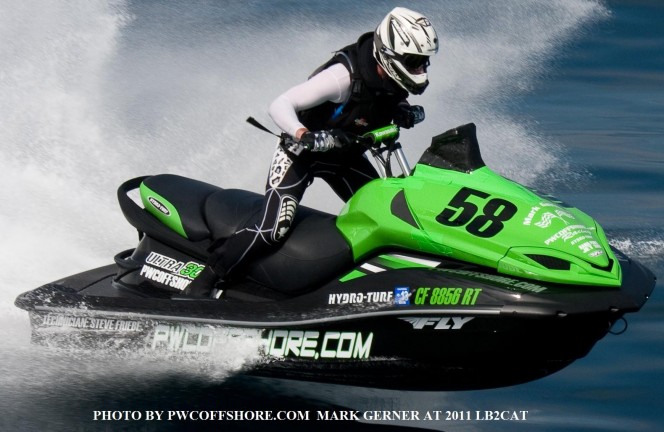
MG: The Ultra hull, power and fairly heavy weight. That deep-V hull is unsurpassed for offshore and has resulted in multiple offshore and endurance championships. The large pump and aggressive top loader intake grate powered by over 300 horsepower, all those elements together have made this craft the dominant force for offshore. For now, nothing even comes close to the Ultra for offshore riding or racing. That’s why I’m on it.
WCJ: Besides the race team, what are some of the other goals that you have in mind for PWCOffshore.com?
MG: PWCOffshore.com CORE Racing is dominating offshore racing in the US. In addition to Uruguay, we are evaluating expansion opportunities for the club in Europe and elsewhere. Again, inclusion in this club is not just about being a stellar offshore racer, its also about being a good ambassador for the sport. This is very hard to find. We intend to continue to make the DVD better. We have a culture of continuous improvement and strive to get better every day in everything we do. Much of that revolves around keeping an open mind and trying learn something new every time we ride. I don’t care who you are or how much experience you have, you are never done learning.
WCJ: OK, here’s your chance for any gratuitous shout outs or people you want to thank:
MG: I thank anyone in the military who has been injured in combat and/or has made the ultimate sacrifice, giving their life for our country to allow us to go out and do the things we all do on a daily basis in relative safety. Thank you. My peers in Club PWCOffshore.com – they have been vetted and are all quality people and racers, Glen and Bill from R&D Racing Products, Hydro-Turf, FLY Racing, the PWCOffshore.com Pit Crew, Ross Wallach for continuing to promote the LB2CAT, Mike Follmer for his leadership of the Mark Hahn 300 Race and everyone else who is an advocate for offshore riding and racing. There are too many to mention – they know who they are.
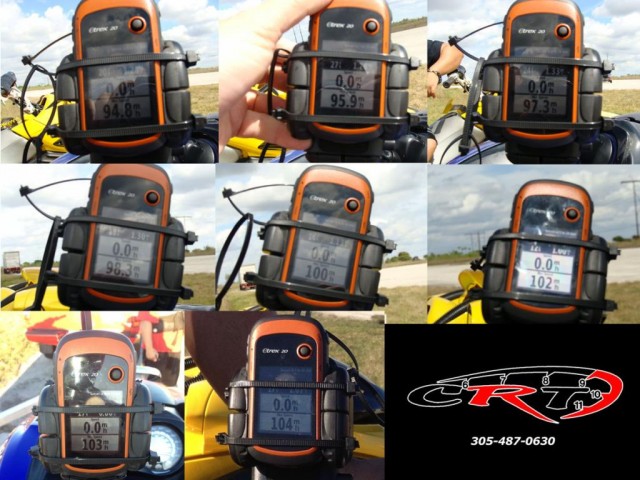
“Bananas,” is all we can say. This ski is bananas. Years ago, 80 miles per hour on a personal watercraft was scorching fast. As is with all things, that limit continued to be pushed further and further along until 90 miles per hour became the benchmark (particularly as the 2014 Yamaha SVHO FZR can hit 80mph with little more than an ECU reflash). Today, a ski that can reach triple digits is doable but is rare. And those that can surpass 100 are really, really rare.
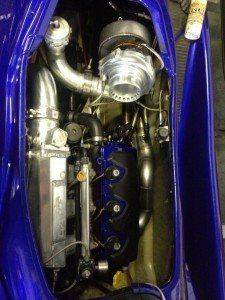
CRT race-spec engine was blueprinted and fitted with a stock head with stock valves and stock cam. Keeping the head down are a set of ARP head studs. Inside the block are Pauter connecting rods spinning forged pistons. A beautiful Gato intake manifold ingests the forced air through an Accufab throttle body. Force-feeding the Rotax is a CRT Turbo kit consisting of a Precision 62mm turbo with a billet wheel and water cooled backhousing, as well as a CRT intercooler, a CRT Fuel System and 220lb injectors pumping E85 fuel.
Providing the spark are a set of AEM coils, a Modular Wiring Solutions waterproof harness for AEM EMS-4, and an absolutely pristine Lacey Powersports turbo headers. Oh yeah, and Modular Wiring Solutions PWC power distribution module with integral nitrous control, which they use pretty liberally. Yup, lots of boost and squeeze. That’s how you run 104-plus.
Dustin Motzouris, fresh off of his domination at this past King’s Cup World Championship will now be riding a Les Cooke-built RXT-X at this year’s Mark Hahn Memorial 300. Image: DaBomb Boonrawd
Last year saw some major occurrences at the annual Mark Hahn Memorial 300 in Lake Havasu City, Arizona; first, Jean-Bruno Pastorello returned for his third championship in the Pro Runabout Open class, and did so with 18-time IJSBA World Champion Chris MacClugage as his partner. And lastly, it carved yet another notch in the headboard for Kawasaki’s Ultra 300 domination in all offshore and endurance races.
This year though, things have the potential to change. We’re still waiting to hear if Macc will be back with Pastorello (or on his own) to repeat his performance, and we’re certain the lineup will only feature more Kawasaki Ultra JetSkis as the factory cranked up the juice from 300 to 310-horsepower. But in a great surprise, recently relocated South African Dustin Motzouris will enter the fray aboard a Sea-Doo.
In an announcement posted on Facebook yesterday, the multi-time world champ will be pairing up with another world champion, Jared Moore aboard a Kommander Industries-built Sea-Doo RXT-X. Using top notch parts from famed Sea-Doo Centre tuner Les Cooke, details pertaining to the level of modification the ski has yet to be released, but knowing Cooke’s leaning towards turbo-charging Rotax powerplants makes us wonder if the Kommander himself, Steve Webster will follow suit…
One major revelation is Motz’s announcement that Kommander Industries is a US distributor for all Sea-Doo Centre performance parts. ‘Cause man, that’s some pretty big news. Nevertheless, we’re excited to see Motz and Moore challenge Pastorello and the Big K’s domination over this stellar event. Make sure to check out The Watercraft Journal for next-day event coverage, but until then, he’s Motz’s announcement:
“I am very happy to announce that current world champion runabout rider Jared Moore and myself will be teaming up on a Kommander Industries Sea-Doo RXT-X for the Mark Hahn 300 in Lake Havasu. We will be running the Sea-Doo RXT-X which has proven itself as a exceptional endurance and offshore race boat. We will be getting support from Sea-Doo Centre in Australia as well as many other sponsors. Thank you to everyone stepping in to support us. We will do a official press release in the next few days as well as video updates on the build and progress of our endurance RXT-X 260 Sea-Doo. Please also know that you can purchase all your Sea-Doo Centre performance runabout parts from Kommander Industries in the USA.”
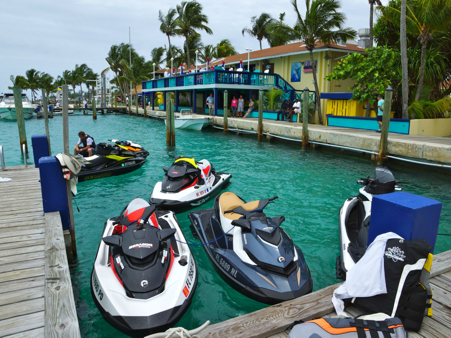
This upcoming July 24th through the 28th, WaterTop Unlimited is hosting its 8th Annual Bimini Road Rally, a one-of-a-kind open ocean watercraft ride from Miami, across the Gulf Stream to the island of Bimini in the Bahamas (y’know, smack dab in the heart of the Bermuda Triangle).
The fifty-one mile ride is no walk in the park, either. The ride will test each rider’s mental and physical stamina but will be well worth it. Of course, the group will be joined by the safety experts PWC Adventure Riders, the support of RIVA Motorsports and Marine escort boats leading the way on this adventure.
Participants in the all inclusive trip will enjoy a one-night stay at the Double Tree Ocean Point Resort and Spa in Sunny Isle, Florida, three nights stay st South Bimini’s finest property, Bimini Sands Resort and Marina, as well as enjoy an authentic Bahamian cookout and other fun activities. As many will attest, WaterTop’s Bimini Rally is one of the most exotic PWC rides around and promises to provide a sense of triumph which very few have experienced.
Again, it’s an all-inclusive event – and it’s a cheap-o weekend. Admission runs $2300 per rider and $1900 for a second person sharing the same room. For more event and registration information, go to watertopevents.com or contact Tim McKercher at WaterTop directly at 321/409-0519 or email at [email protected]
And given the location’s legacy for tumultuous weather, this year hopes to go off without a hitch from Mother Nature. McKercher noted, “We are looking to produce an outstanding event in 2014 after tropical storms changed our plans last year, but that is part of the equation that makes this event special. Every BRR has a story and everybody who participates always leaves with an experience-of-a-lifetime and with RIVA Marine leading the way with their Sailfish boats and detailed safety procedures the group can feel at ease and focus on fun knowing they are being escorted by some of the finest offshore boats.”
Here’s the official announcement:
Melbourne, FL – January 14, 2014 – WaterTop Events continues to produce the most exotic and adventurous personal watercraft rides in the industry and has announced the dates of the exclusive four-day/four-night, all inclusive 2014 Bimini Road Rally scheduled for July 24th-28th.
Part event, all adventure, the 2014 Bimini Road Rally will be the eighth year of the popular personal watercraft ride. This is a one-of-a-kind experience that takes up to 20 special fun-seekers on a four-star trip from North Miami, across open-ocean and the Gulf Stream to the island of Bimini in the Bahamas – smack-dab in the middle of the Bermuda Triangle.
Each participant will test their physical and mental stamina in this demanding, once-in-a-lifetime ride with the safety of expert PWC adventure riders and the support of RIVA Motorsports and Marine escort boats leading the way. Participant’s all-inclusive trip will include a one-night stay at the Double Tree* Ocean Pointe Resort and Spa in Sunny Isle, Florida and three nights at South Bimini’s finest property, Bimini Sands† Resort and Marina.
“The Bimini Road Rally has truly become the personal watercraft industry’s premier, owner’s adventure ride,” says WaterTop General Manager Tim McKercher. “Bimini is truly an island in the stream and is such an interesting and unique destination. The Bimini Road Rally allows PWC owners to get away with no worries about anything, as our veteran event team makes it very easy to relax and have fun.”
Bimini is a truly magical destination, famous for it’s electric blue waters and historic folklore. Adventurists will visit the sunken concrete ship, the Sapona, various aircraft crash sites, highly sought fountain-of-youth, Honeymoon Harbor, Alice Town, and the legendary Bimini Road – thought to be the path to the lost city of Atlantis.
The Bimini Road Rally is not for the faint of heart, as a trip into the Bermuda Triangle always brings uncertainty but the experienced WaterTop staff ensures participants have an incredible experience-of-a-lifetime. This Rally is limited to the first 20 people who own their own, unmodified four-stroke personal watercraft and meet the detailed criteria required for this trip. The WaterTop staff will do EVERYTHING to make the trip as easy and memorable as possible . . . except squeeze the throttle.
“We are looking to produce an outstanding event in 2014 after tropical storms changed our plans last year, but that is part of the equation that makes this event special,” noted McKercher. “Every BRR has a story and everybody who participates always leaves with an experience-of-a-lifetime and with RIVA Marine leading the way with their Sailfish boats and detailed safety procedures the group can feel at ease and focus on fun knowing they are being escorted by some of the finest offshore boats.”
For those who want to enjoy Bimini with their significant other, but would rather not take to the high seas, WaterTop offers a fly over option from Ft. Lauderdale International Airport to Bimini and back with the WaterTop support staff via air charter.
All interested parties must apply and meet WaterTop’s requirements for admission. The participation fee is $2300 per rider and $1900 for a second person sharing the same room. This fee includes everything* during the trip including four nights accommodations, all meals, Bahamian Boating Permit (mandatory $150), 50 gallons of fuel in Bimini, WaterTop Gift Pack, and much more.
WaterTop Unlimited is a multi-facetted event and logistic LLC based in Melbourne, Florida. WaterTop is a Event Marketing agency that also produces a variety of B2B and B2C recreational product events including; the Bimini Road Rally, Can-Am Commander Experience, Sea-Doo Test Ride Tour, Red Bull Flugtag North America and various product sampling and training tours.
While the maxim, “racing breeds excellence,” it also invites new and inventive ways to cheat. Of course, many a builder, racer and tuner will attest that it’s not cheating until 1) they find out about it, and/or 2) they write a rule against it. Many an innovation in racing has been birthed from finding creative ways around class rules. And as this year’s most recent batch of top performance PWC have shown, such innovations often find their way onto production vehicles.
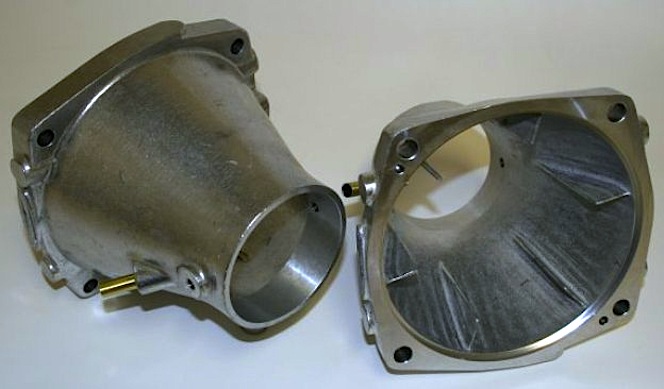
This Yamaha XLT venturi nozzle was the only way to get an 87mm 3-degree nozzle before Yamaha’s jet boats started using similar nozzles. Today, Yamaha’s SVHO features an 85mm exit diameter and 3-degree pitch.
Take for example the storied Yamaha 3-degree venturi nozzle. An unspoken trick of many a racer and tuner, the 3-degree nozzle was used to replace the stock 5-degree venturi nozzle found on Yamaha WaveRunners, thereby freeing up engine RPM and improving acceleration and handling. For years, the 3-degree nozzles were only found on old XLT runabouts and with an 87mm exit diameter. Later, tuners discovered the nozzles were found on full-sized Yamaha jet-drive boats.
GreenHulk.net’s Jerry Gaddis explained, “We have used [jet boat nozzles] in the past because they have thick diffuser vanes which is desirable for performance, however they do not have the proper reverse bucket mounting bosses.”
It didn’t take long for the aftermarket to catch on, providing their versions of the cheap fix. Companies like RIVA Racing and R&D Performance tweaked on the design with great success for a premium.
Many performance enthusiasts and racers employed this trick, and not just on Yamahas. It’s rumored even 3-degree Yamaha nozzles have found their way onto some Sea-Doos and even a couple supercharged Ultra Kawasaki JetSkis. It was only for this model year that Yamaha finally decided to make the 3-degree venturi nozzle with a 85mm exit diameter available on its stock watercraft. Exclusive to the SVHO models, the new venturi also features thicker diffuser vanes.
By incorporating these improvements gives the new SVHO models a significant advantage over the previous SHO WaveRunners – as well as those trying to sneak by with modified 3-degree nozzles. Evidence of the new nozzle’s advantage is already found in the aftermarket, as online retailers like PWCPerformance.com are hot sellers.
Turbo Spark ahoy! It’s possibly the single-most anticipated thing since the launch of the Spark itself – a tested and true intercooled turbo kit. Over the last couple of months, The Watercraft Journal has been watching and regularly updating you on the developmental progress on the kit from famed Swede tuner garage V-Tech Tuned. Now, in a partnership with www.sparkwatercraft.com, the killer kit can be yours.
Priced at $3,500 USD, the turbo kit includes a $240 shipping cost, but that’s the bad news. The good news is that the kit includes everything you need to turbocharge your Spark, and we mean everything – that is except for a CNC adapter that needs to be welded to your Spark’s exhaust manifold; as well as a V-Tech maptuner and tuning credit.
Included in the kit are the aforementioned CNC adapter, Mitsubishi TD04 Turbo, waterjacketed heat shield to prevent heat above turbo, waterjacked exhaust pipes, CNC through-hull adapter using the stock exhaust port, water-cooled intercooler, air filter and filter sock, three upgraded injectors, a map sensor and two adapters for oil connectors to and from the turbo pipes, hoses, silicone adapters.
According to www.sparkwatercraft.com, “Due to the huge increase in power, V-Tech also recommends that you run the Skat-Trak dual impeller and stainless steel wear ring.”
Designed to run on a stock ACE engine, the kit only pushes with a moderate 5 to 6psi but produces 140 horsepower and gobs more torque!
Way back in 1965, 12 motorcycle riders got together and rode 90 miles to Winona, Minnesota to help pack and stack sandbags in the midst of rising flood waters. The following year, the flood didn’t returned, so the mayor invited the riders back for a party. As the years followed, the annual “Flood Run” retraced the original 90 mile route of the original 12 down Highway 61. Soon after, the ride grew so large that a second event was made, The Fall Flood Run, giving riders twice a year to meet and ride.
Over the years, The Flood Run rides have grown into one of the oldest and largest runs in America. From it’s very beginning, The Flood Run has been a charity event – from throwing sandbags in 1965 to buying a Benefit Wristband to support a great cause, namely the kids at Gillette Children’s Specialty Health Care. Participants are encouraged to purchase $10 wristbands to generate proceeds to the children’s special care facility twice a year.
Welcoming riders from across the continent (and further), The Flood Run has also partnered with Cargo Wave to provide one heck of a raffle prize: a brand-new 2013 Yamaha WaveRunner VX and a Cargo Wave tow trailer! (Obviously, the ski above is not the new Yamaha.) Valued at $10,000, The Flood Run not only gives away great prizes for participants but generates thousands of dollars for a worthwhile charity. If you’re a motorcycle lover as much as PWC enthusiast and find yourself with an open weekend for a lot of fun, make sure to join The Flood Run.
It’s never a bad morning when you can announce the addition of one of the leading Sea-Doo dealership networks in the middle South as your newest advertiser! All of us here at The Watercraft Journal are very excited to break the news that America’s Motor Sports has climbed aboard for 2014. The Tennessee powersports dealer was recently honored as one of PowerSports Business’s “Power 15 Dealers,” in addition to being an active member of BRP Dealer Board.
Meeting the needs of powersports enthusiasts in the middle South/Tennessee region with three strategically located stores in Nashville, Madison and Dickson, America’s Motor Sports has been family-owned since its earliest days as a single store in 1982. Owner Chris Watts grew up in his parents’ original store, working summers and weekends before earning a degree from the University of Tennessee in 1994 and eventually taking control of the thriving three store chain.
Since then, America’s Motor Sports has seen double-digit growth over the past two years, citing a personal, tailored sales approach as key to the dealership’s success. Now with three stores servicing the whole Nashville, TN area, the dealer network sells and services Honda, Suzuki, Yamaha, Kawasaki, Polaris, Can-Am, and Sea Doo.
“We have our sales guys get back to basics, so to speak — work the desk, find out what the customer wants,” Watts explained. “We may not have every single unit available, but between the three stores, most likely we’ll have it. And if we don’t have it, we’ll get it from our competitors.”
Together with The Watercraft Journal, America’s Motor Sports will be also be encouraging enthusiasts to explore its online OEM parts locator and store to best keep their PWCs in top running condition. Make sure to keep an eye out for future technical articles coming out of America’s Motor Sport’s service department in the next few months!
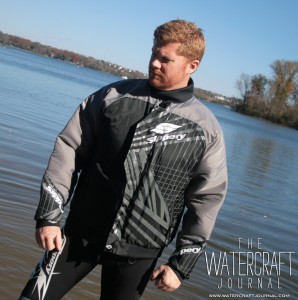
Admittedly, we probably should’ve done this review a couple of months ago. For some the worst of the winter chill has already ebbed, so reviewing Slippery’s Float Coat can be viewed as a little bit on the late side. But, we’d be remiss not to talk about possibly one of the most used items in our off season arsenal. Seriously, it’s that good.
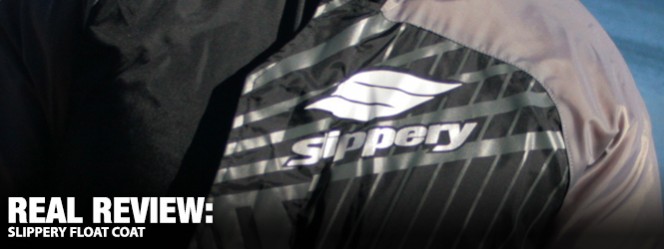
Having used only Slippery’s neoprene Sport Coat prior to the Float Coat, we were very impressed with how warm the coat kept us even as freezing winds blew their fiercest. The Float Coat is a Type 3 USCG approved PFD, eliminating the need for a separate PFD to be worn underneath.
Before that, it bears saying that this was our very first “float coat.” For those unfamiliar, a float coat is a cold weather replacement to wearing both a long sleeve jacket and a PFD. The two-in-one jacket provides all of the life saving floatation of a personal floatation device and the warmth of an insulation nylon jacket. Commonly used by recreational and professional boaters alike as well as Coast Guardsmen and dock workers, float coats aren’t typical to the PWC crowd as most save their riding for warmer months.
Knowing we’d be riding and testing year-round, we opted for the Float Coat over the neoprene Sport Coat on a whim…and we’re glad we did. Unlike the Sport Coat, which only acts as an overcoat, the Float Coat is lined with Type 3-grade floatation foam and covered with heavy duty 200 Denier-coated nylon. Slippery’s float coat is as much a USCG-approved personal floatation device as any of Slippery’s other life vests.
Wearing Slippery’s Fuse john and jacket combo beneath, we were impressed with how warm (and dry) we stayed even while traversing 25mph-winds hacking Percy Priest Lake just east of Nashville on a very bone-chilling 35-degree Saturday. We were immediately grateful for the Velcro-closed fleece-lined collar and heavy-duty front zipper (with Slippery’s “storm flap” cover). Even when the wind blew its hardest, the coat never billowed.
In addition to the heavy duty front zipper, the Float Coat also features a single adjustable waist band to cinch up. When bobbing in the water though, we found ourselves wishing for the two larger straps found on Slippery’s other vests.
The coat also features two zippered-shut “slash” pockets as well as a single adjustable waist belt to cinch the jacket a little tighter. We could imagine some riders wanting two larger buckles typical to other vests for a greater sense of security, but we never found the need. As part of our commitment to testing everything, we did jump into the water to see how it felt while swimming. It was here that the single strap felt inadequate, as the Float Coat tends to buoy without you. And the fleece never really fully dries until a day or two hanging up in the garage.
Mobility is insulated but not restricted although you might feel like the Stay Puffed Marshmallow Man. Yet, when it comes to keeping you warm and keeping you afloat and protected, we couldn’t be happier with our first foray with Slippery’s Float Coat.
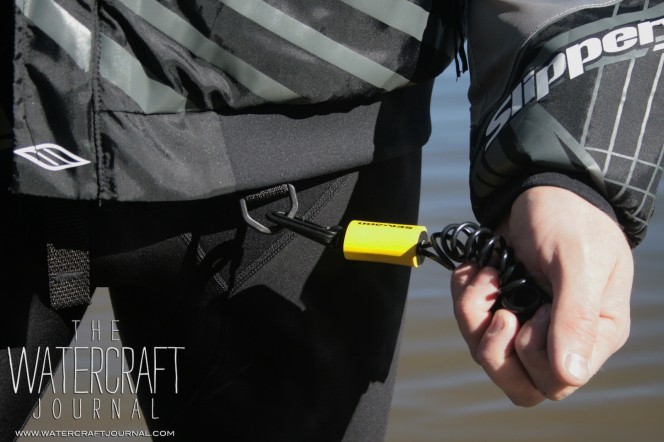
Slippery’s Float Coat features a lanyard loop that their most recent batch of vests oddly is missing.