



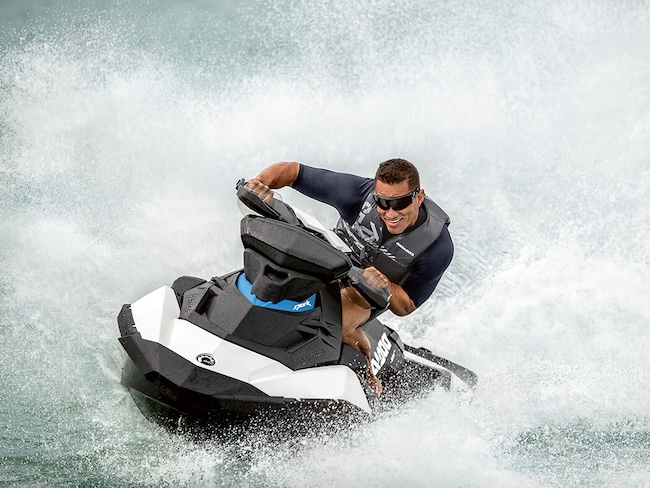
 The lightest ski in Sea-Doo’s lineup just got a serious upgrade option — and it tops out at 63 mph.
The Sea-Doo Spark has always occupied a specific lane in the PWC world: light, nimble, affordable, and genuinely fun — but never fast. At roughly 400 pounds dry, it’s the featherweight of the lineup, and for a lot of riders that’s exactly the point. But modest power has always been the trade-off, and anyone who’s pulled up next to an RXP-X at a sandbar has felt that gap. MAPTUN’s Spark/Trixx Turbo Kit REV3 is a direct answer to that frustration, dropping a complete forced-induction system onto the Spark’s 900 ACE engine and pushing the ski to a claimed 63 mph.
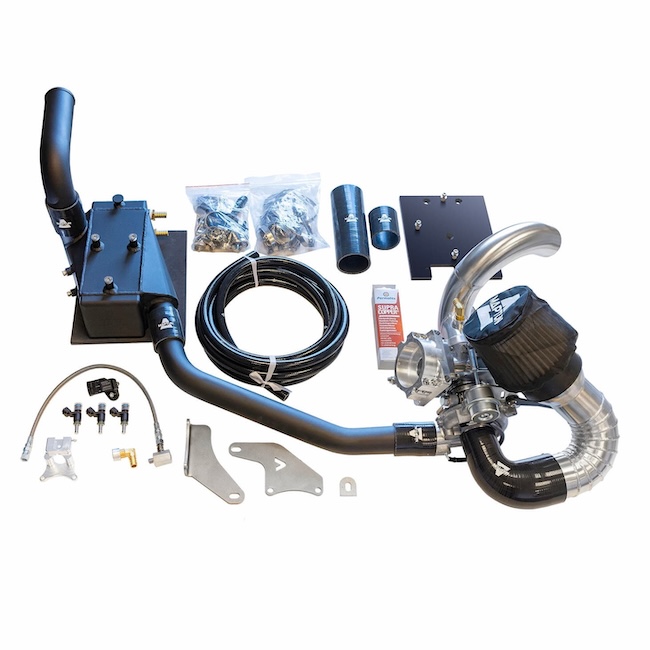 MAPTUN is a Swedish performance tuning company with a long track record in the Sea-Doo space, and the REV3 designation matters — this isn’t a first-generation experiment. Earlier versions of the kit taught them real lessons about heat management, installation complexity, and long-term durability in a saltwater and freshwater environment. The third revision reflects all of that, with redesigned components aimed at a cleaner install and improved longevity. Black powder-coated hardware throughout gives the finished product a look that’s closer to factory performance than anything cobbled together in a garage.
On the performance side, the kit targets 8,800 to 9,000 RPM with boost pressure in the 0.55 to 0.60 bar range — roughly 8 to 9 PSI for those of us who think in imperial. That’s a conservative tune by forced-induction standards, and intentionally so. MAPTUN isn’t trying to destroy your engine; they’re trying to give it a reliable second life with substantially more pull. The IHI turbocharger at the heart of the system is a proven unit, matched with a 7.5 PSI wastegate to keep boost in check and protect bottom-end components. Upgraded injectors handle the additional fuel demand, and an intercooler piping and silicone hose kit manages intake temps under load.
The full kit is genuinely comprehensive. Beyond the turbocharger itself, you’re getting a complete turbo mount and exhaust system, stainless hardware and clamps throughout, and a water-resistant four-inch air filter that won’t panic the first time you take a wave over the bow. Everything is engineered to work as a system rather than a collection of mismatched parts, which matters more than it might sound — intercooler sizing, injector flow rate, and boost pressure all need to be in conversation with each other for a turbo build to run cleanly.
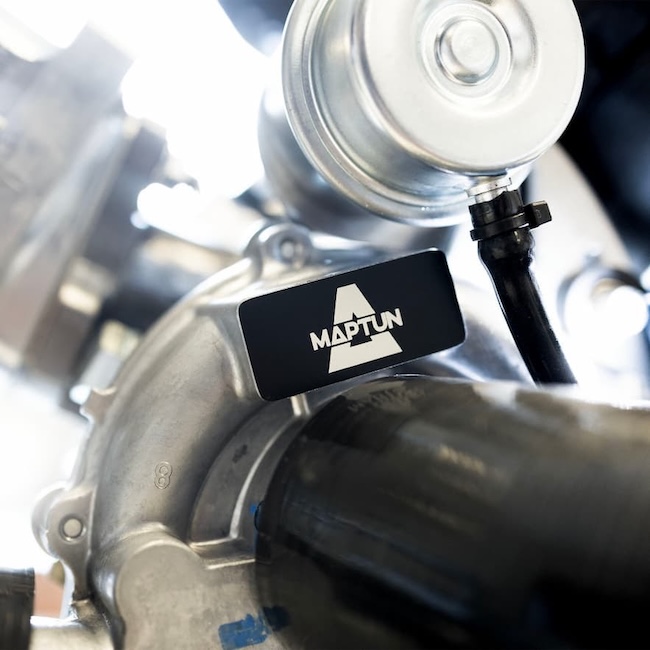 The ECU side of the equation is where this kit separates itself from a basic bolt-on. MAPTUN integrates the REV3 with their Maptuner system, which handles ECU flashing, engine monitoring, data logging, and fault code management. Running a turbo on a stock map isn’t just inefficient — it’s a recipe for detonation and premature wear. Having a purpose-built tune that was developed alongside the hardware, rather than retrofitted after the fact, is a genuine advantage and a sign of a mature product. MAPTUN also recommends pairing the kit with a Solas 13/18 impeller, which properly loads the pump under boost and keeps the engine in its intended power band rather than spinning free.
The broader appeal here is easy to understand. The Spark and Trixx weigh substantially less than Sea-Doo’s RXP or GTX platform machines, and that mass advantage doesn’t disappear when you add a turbo — it multiplies. A lighter hull accelerating harder means the gap off the line versus heavier performance skis closes fast. At 63 mph, a turbocharged Spark would hold its own against machines that cost two or three times as much at the dealer. For riders who have always loved the Spark’s handling and portability but wanted more authority on the throttle, the REV3 is the most refined version of that conversion to date.
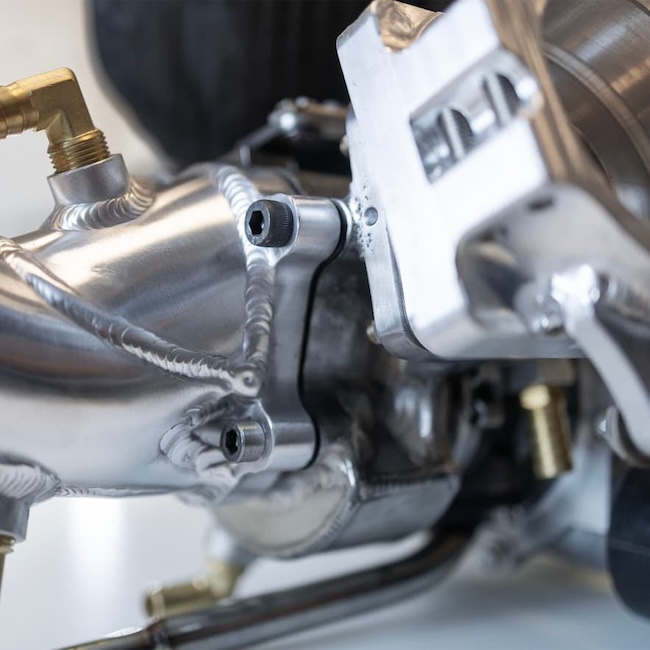 It’s worth noting that a build like this still requires mechanical confidence or a competent shop — turbocharging any engine involves enough variables that cutting corners on installation tends to show up quickly and expensively. But for the right rider, the REV3 kit represents a well-thought-out path from entry-level fun to legitimate performance, without abandoning the qualities that made the Spark worth building on in the first place.