


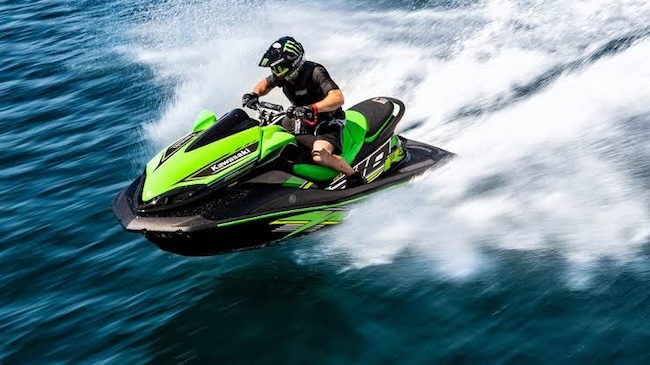
 Five years ago, in an IRL episode, The Watercraft Journal asked what Kawasaki needed to do to win again. With Kawasaki preparing to reveal its 2027 lineup this week, we returned to that 2021 episode to see how Kevin Shaw’s recommendations—and his predictions about the company’s next moves—have held up.
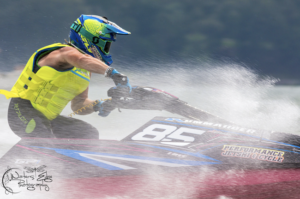
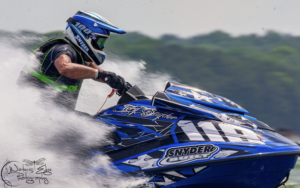
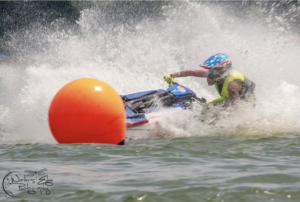
Before turning his attention to Kawasaki’s future, however, Shaw paused to talk about the future of personal watercraft racing.
The previous day, he had watched the fifth round of the 2021 season at Lake Hartwell. The field of young competitors left him more hopeful than he had been in some time.
Shaw singled out Dustin Farthing’s sons, Deven and Talan, for their work across multiple classes and motos. He praised 18-year-old Tory Snyder’s “perfect physical form” and ability to maneuver an FX SVHO almost entirely through body English.
“That kid is going places,” Shaw said. “That kid is on fire.”
He was equally emphatic about Jules Hopkins, describing his stand-up performance as “Jeff Jacobs-level racing”—bond rail to bond rail and buoy to buoy.
“The kid knocked my socks off,” Shaw said. “He was absolutely—I mean, he had everyone cheering. It was amazing.”
Five years later, the names give that opening the quality of a time capsule. Snyder went on to collect world titles and, in 2025, joined the Farthing Racing team, while Hopkins established himself in the Pro Ski ranks. The young riders Shaw saw as evidence of racing’s future were already becoming it.
“I’ve got to give it to the young talent,” Shaw said. “There was some really, really impressive talent this weekend, so I felt really, really encouraged by what I saw.”
That encouragement has aged remarkably well.
With Kawasaki preparing to reveal its latest products during this week’s international dealer meeting in Mexico, the rest of the episode deserves another look, too.
Titled “What Kawasaki Needs To Win Again,” the more than 90-minute IRL livestream began with a Kawasaki Ultra owner named Sergio offering 10 changes he believed customers wanted.
It was an ambitious list: a completely new upper and lower hull, a 1,800cc or 2,000cc engine, electronic braking and reverse, coil-on-plug ignition, a different supercharger, 250 fewer pounds, forged pistons and connecting rods, a redesigned dashboard, a lower bow and a larger-diameter pump.
Rather than simply agree that Kawasaki should build everything enthusiasts wanted, Shaw evaluated the suggestions against the way Kawasaki actually operates.
“Kawasaki is an incredibly conservative company,” he explained earlier in the episode—not politically conservative, but cautious about entering new territory and inclined to keep proven engines and hulls in service for long product cycles.
Some of Sergio’s ideas earned Shaw’s support. Others, he argued, would require Kawasaki to abandon the very qualities Ultra owners valued.
Five years later, Kawasaki’s product line shows that Shaw was right on several counts.
The changes that came
Shaw agreed that electronic braking and reverse were coming, pointing to Kawasaki patents WCJ had previously examined. He predicted the system would appear on a production watercraft for 2023, while making clear that it was an educated forecast rather than leaked information.
Kawasaki beat his prediction by a year.
The redesigned 2022 Ultra 310 introduced Kawasaki Smart Reverse with Deceleration, or KSRD, allowing the rider to control forward thrust, deceleration and reverse from the right handlebar.
Shaw also anticipated that the braking system would lead to dashboard changes. The redesigned Ultra arrived with a 7-inch TFT display, smartphone connectivity and multiple display modes, along with Launch Control Mode, power-mode selection and other electronic features that remain central to the current Ultra 310.
Elsewhere, however, Kawasaki followed the conservative path Shaw expected.
The company did not develop a new 1,800cc or 2,000cc engine exclusively for its watercraft. The current Ultra 310 continues to use Kawasaki’s supercharged 1,498cc inline four-cylinder engine.
Nor did Kawasaki chase a 250-pound weight reduction by abandoning the Ultra’s substantial fiberglass construction and deep-V character.
Shaw had strongly opposed redesigning the lower hull simply for the sake of having something new. He considered the Ultra hull one of the best rough-water designs available and argued that a revised deck, hood, fairings and rider interface could modernize the craft without sacrificing what made it an Ultra.
That basic philosophy—modernize the machine around its proven rough-water foundation—is close to what Kawasaki ultimately did.
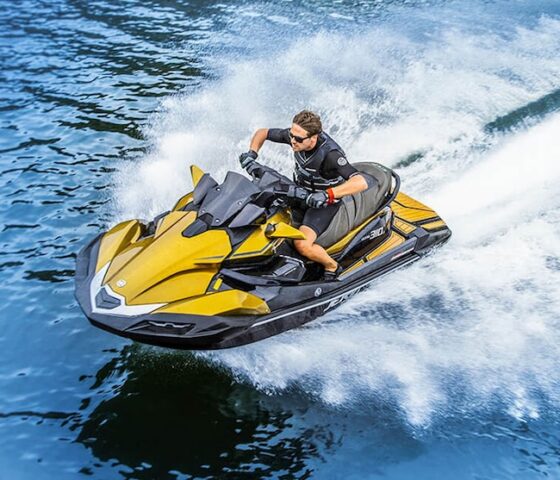 The Ultra Kevin asked Kawasaki to build
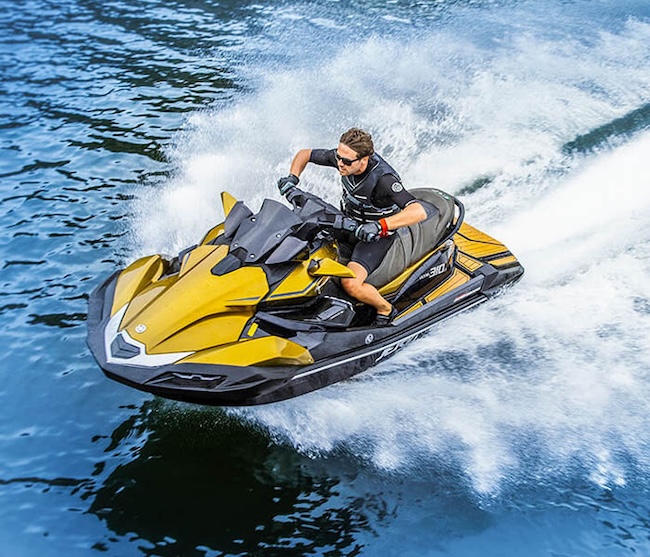
After working through Sergio’s 10 proposals, Shaw offered two ideas of his own. Unlike a clean-sheet engine or radically lighter hull, he said both could be assembled largely from components Kawasaki already had.
The first was not the sexiest suggestion, he admitted, but it may have been his most perceptive: a fully equipped, naturally aspirated Ultra.
At the time, Kawasaki offered naturally aspirated performance in the smaller STX 160 platform and premium equipment aboard the supercharged Ultra 310LX. What it did not offer was an Ultra combining long-range, naturally aspirated power with the comfort and equipment of its top touring model.
Shaw saw Yamaha selling naturally aspirated FX models to riders who wanted comfort, range and fuel economy without the cost, maintenance or power of a supercharger.
“So many people want the naturally aspirated, fuel-efficient cruiser,” he said. “They go on long-distance rides. They cruise with a group. They’re in a club. They don’t need the supercharged ski.”
His proposal was straightforward: build an Ultra 160LX with premium seating and colors, JETSOUND audio, cruise control, trim, no-wake mode and the other touring features already available elsewhere in Kawasaki’s parts catalog.
“There’s literally nothing stopping them,” Shaw said. “All the parts are on the shelf.”
In 2023, Kawasaki introduced the Ultra 160LX and Ultra 160LX-S.
Kawasaki’s own description reads strikingly like Shaw’s proposal: the Ultra 310 series hull, the naturally aspirated 1,498cc engine from the STX 160 series, electronic cruise control, Launch Control Mode, power selection and premium equipment. The Ultra 160LX also brought JETSOUND 4S audio to the package.
Kawasaki did not merely move in the general direction Shaw recommended. It effectively built the machine he described.
The machine Kawasaki did not build
Shaw’s second proposal was considerably less restrained: bring back the STX-R name and put the Ultra 310’s supercharged powertrain into the smaller STX platform.
His argument centered on an STX-based build created by Jamie Eade and the team at K-Speed. According to Shaw, the project used the Ultra’s engine, supercharger, intercooler, pump and other factory equipment, requiring only about $200 in additional brackets, hoses and fittings.
The resulting machine, he said, ran approximately 80 mph.
“There is nothing stopping Kawasaki from building a 310-horsepower STX-R,” Shaw said. “Bring the name back. Paint it white with green and checkered-flag stickers like 2002.”
Then the careful product analysis gave way to something closer to a plea.
“Build that ski,” he repeated. “You’ll sell every one of them.”
Five years later, Kawasaki still has not built it.
The company has continued refining and expanding the naturally aspirated STX line, but its supercharged performance remains attached to the much larger Ultra 310 platform. There is still no production Kawasaki positioned directly against the smaller, race-oriented performance machines offered by Sea-Doo and Yamaha.
But Kawasaki may be preparing to apply the same parts-shelf philosophy somewhere else.
The argument returns for 2027
In a July 27 episode titled “Kawasaki’s Got BIG Plans for 2027 & We Already Know What They Are,” Shaw returned to the economics behind product predictions.
A new hull, deck, fairings and associated components can represent an investment approaching $1 million, he explained. Any credible prediction must therefore consider not only what enthusiasts want, but how many machines a manufacturer must sell to recover that investment.
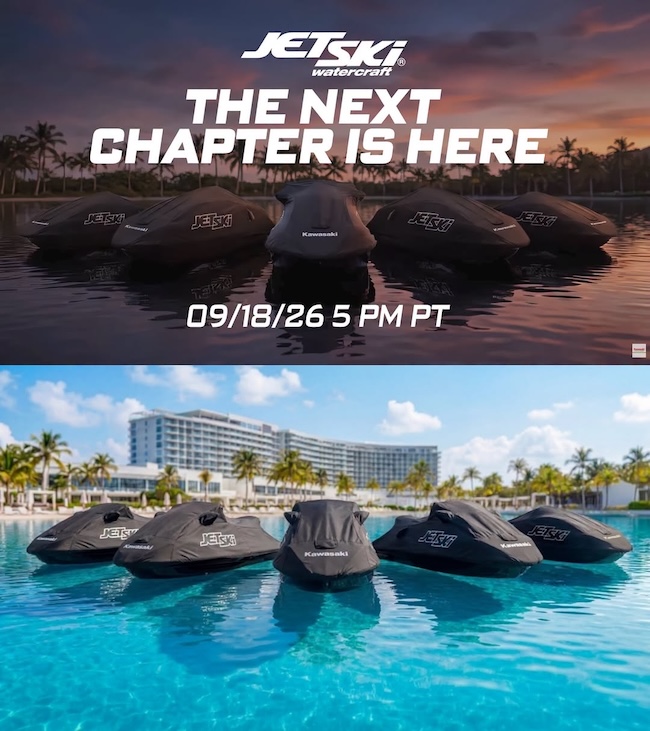
Kawasaki had already provided one clue. Its invitation to the company’s international dealer meeting included artwork showing five covered watercraft.
Studying details visible beneath those covers, Shaw concluded that most appeared to share the SX-R 160’s platform. The original artwork appeared to show front fuel-access flaps, fixed steering, mirrors and seats extending far enough to accommodate more than one rider.
His conclusion was not that Kawasaki had developed another expensive, ground-up platform.
He believed Kawasaki had returned to its existing SX-R foundation and added what its abandoned SX-X 160 concept had lacked: a seat.
“I believe Kawasaki is bringing back the X-2,” Shaw said, although he acknowledged that the eventual machine could carry the SX-X name or something entirely different.
His working prediction was a narrow, lightweight two- or three-seat runabout built around the SX-R 160 hull and naturally aspirated 1,498cc engine—a late but potentially formidable answer to the lightweight recreational machines that have reshaped the market.
“I’m betting cold hard cash that you will see a stand-up-based runabout,” Shaw said. “A mini lightweight runabout, X-2-adjacent runabout, based upon the SX-R 160 hull.”
An Aug. 31 Vicious Rumors & Vile Gossip article carried the speculation further. In addition to the possible X-2 successor, WCJ examined whether Kawasaki could reveal a more aggressive second-generation SX-R—and whether the company might eventually adapt its compact 998cc four-cylinder motorcycle engine for marine use.
The engine remains the least certain element of that theory. A revised SX-R based upon a race-proven hull represents the more attainable possibility.
“The hard part is already done,” Shaw wrote. “The hull has been proven on the race course. The molds have already been made. Even the parts needed to build it are sitting on the shelf.”
Five years after the original “What Kawasaki Needs To Win Again” episode, the language is nearly identical.
 Then Kawasaki changed the picture
Hours before this article was written, Kawasaki added another twist.
The company dramatically changed its promotional artwork. Two covered machines that had appeared to show recognizable runabout features became darker, far less distinct shapes. The visible handlebars, mirrors and rear portions of the seats that fueled much of the earlier speculation were gone—or buried too deeply in shadow to identify.
What does that mean?
Possibly nothing more than Kawasaki realizing that its first image revealed too much and replacing it with artwork less vulnerable to close inspection.
It could also mean a change in the machines Kawasaki plans to display, or that one or more anticipated models will not appear at this meeting.
Until the covers are physically removed, neither interpretation can be established from promotional artwork alone.
What the change does establish is that Kawasaki has succeeded in deepening the mystery immediately before its dealer meeting.
In 2021, Shaw argued that Kawasaki did not need to spend millions developing an entirely new engine and hull to transform its watercraft lineup. It could build compelling machines by combining proven pieces already at its disposal.
Kawasaki subsequently did exactly that with the Ultra 160LX.
Whether the next example is an X-2 reborn, a sharper SX-R, something else built around that platform—or merely a collection of shadows that enthusiasts read too eagerly—should become clearer Friday, when Shaw reports live from Kawasaki’s international dealer meeting in Mexico.
Five years after telling Kawasaki what it needed to win again, he will be there when the covers come off.