



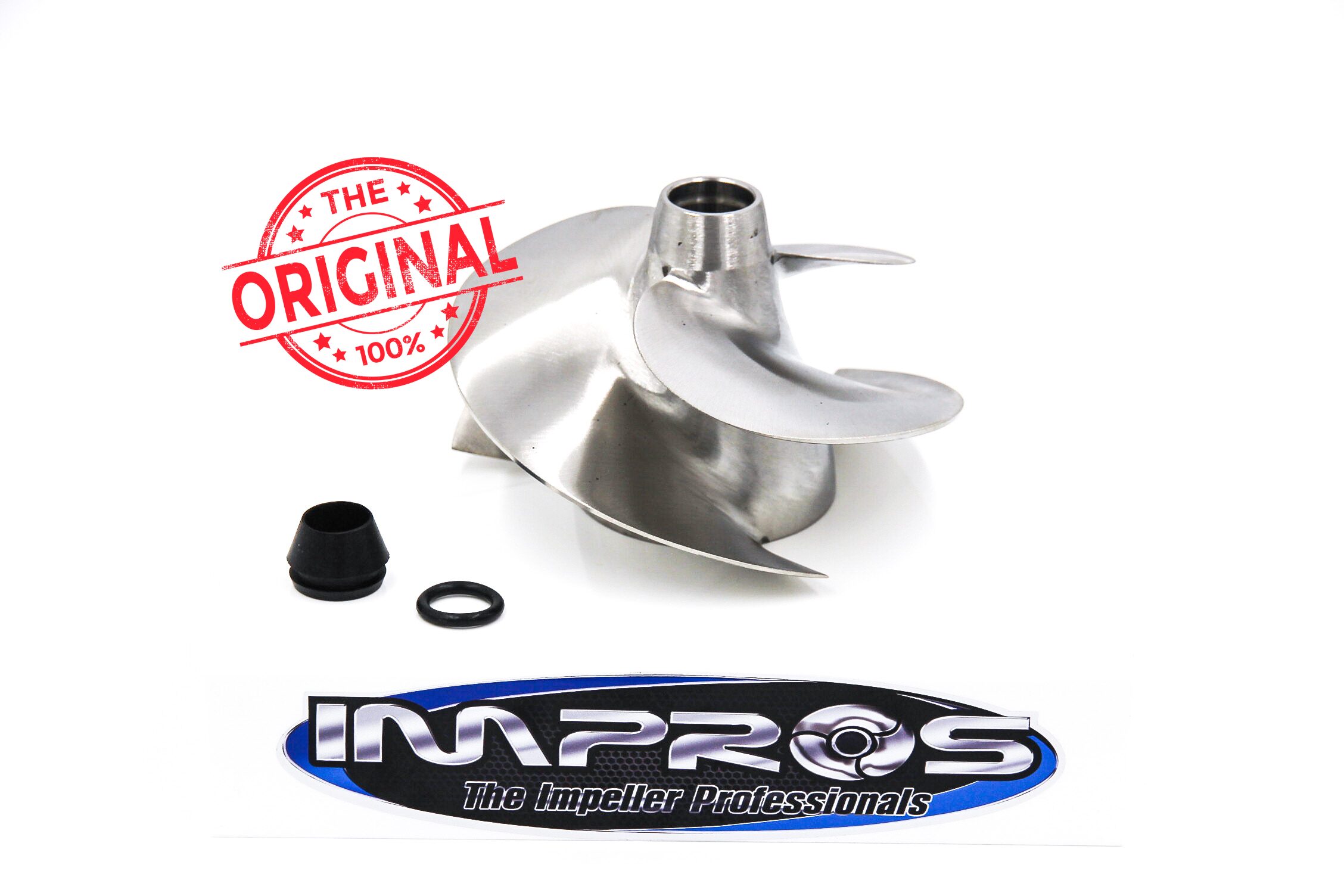
That’s a question that comes up more often than most riders want to admit.
A fresh impeller upgrade is supposed to improve performance—but depending on how it’s selected, it can just as easily move a ski out of its optimal RPM range and quietly reduce real-world performance.
It’s a tuning problem Impros addresses from a position few shops still occupy. Led by Glenn Perry, whose background spans decades at Scat Track, OEM development work, and race support, the company operates less like a simple parts supplier and more like a hands-on impeller service shop. Every job—whether repair, repitch, or balance—is rooted in how a pump actually loads and wears in real water conditions, not just how it looks on a spec sheet.
That perspective comes through clearly in how the business operates day to day—repair-heavy, application-specific, and built around real-world wear patterns like cavitation damage, debris impact, and pitch drift over time rather than theory alone.
And that’s where most assumptions in impeller tuning start to break down.
The assumption that drives most tuning mistakes
At the core of it all is a simple belief: if the engine is making more power, the impeller should automatically “grab harder.”
On paper, that makes sense. In practice, it’s where performance often gets unintentionally lost.
An impeller isn’t just a speed component—it’s a load device. It dictates how quickly the engine accelerates, where it sits in its powerband, and how efficiently that power is converted into thrust through the pump.
When pitch is pushed too far in the aggressive direction for a given setup, the results are usually predictable:
- RPM falls below the engine’s optimal range
- Acceleration feels heavier instead of stronger
- Cavitation increases under load or in chop
- Top speed may plateau—or even decline
What feels like a stronger setup on paper can quietly become a less usable one on the water.
Stock impellers aren’t the weak link anymore
It’s worth putting this into perspective: modern OEM impellers are not the limitation they once were.
Manufacturers design them to perform across a wide operating envelope with a careful balance of efficiency, durability, and broad usability.
For a completely stock ski, that often means the factory impeller is already very close to a well-matched setup.
Which is why aftermarket changes don’t guarantee improvement. If the baseline is already well-optimized, the margin for gain becomes narrow—and highly sensitive to small mismatches in pitch and application.

Where “custom” actually starts to matter
The equation changes once the engine is no longer stock.
Porting, ECU tuning, intake and exhaust modifications—all of them shift how the engine breathes and where it wants to operate in the RPM range.
This is where impeller tuning stops being about peak numbers and starts being about alignment.
Alignment between:
- Engine load
- Peak power RPM band
- Hull behavior under acceleration
- Real-world water conditions and riding style
At that point, the goal is no longer simply “faster.” It’s making sure the engine is operating where it actually produces usable power consistently.
Why Impros sits in the tuning space, not just the parts space
This is where Impros separates itself from a typical aftermarket parts mindset.
Rather than treating impellers as universal upgrades, the focus is application-based tuning—matching pitch and configuration to the full combination in front of them.
That includes repitching existing impellers and building recommendations around how a ski is actually used, not just what parts are installed.
In practical terms, that approach prevents one of the most common mistakes in performance tuning: over-propping a ski in search of aggression, only to lose usable RPM and efficiency in the process.
It’s also a philosophy rooted in experience—Glenn Perry’s background at Scat Track, OEM development work, and decades of repair and race support all feeding into a single point of reference: what actually survives and performs in the water over time.
The part riders often discover the hard way
The most counterintuitive part of impeller tuning is that “more” is not always more.
A ski that is slightly under-pitched but holds clean RPM, recovers instantly after chop or landings, and maintains consistent hook-up often feels faster in real-world riding than a setup that is aggressively pitched but constantly working against its own powerband.
Speed numbers on calm water don’t always reflect how a ski behaves when conditions get messy—or when the rider is actually using it dynamically.
At its core, impeller tuning isn’t about chasing the most aggressive setup possible.
It’s about finding the point where the engine, pump, and water stop fighting each other.
And once that balance is right, performance stops feeling theoretical—and starts feeling immediate, repeatable, and usable in the conditions that actually matter.