

Home Blog Page 102

Engage Your Brain: A 4-Point Refresher in PWC Etiquette

3

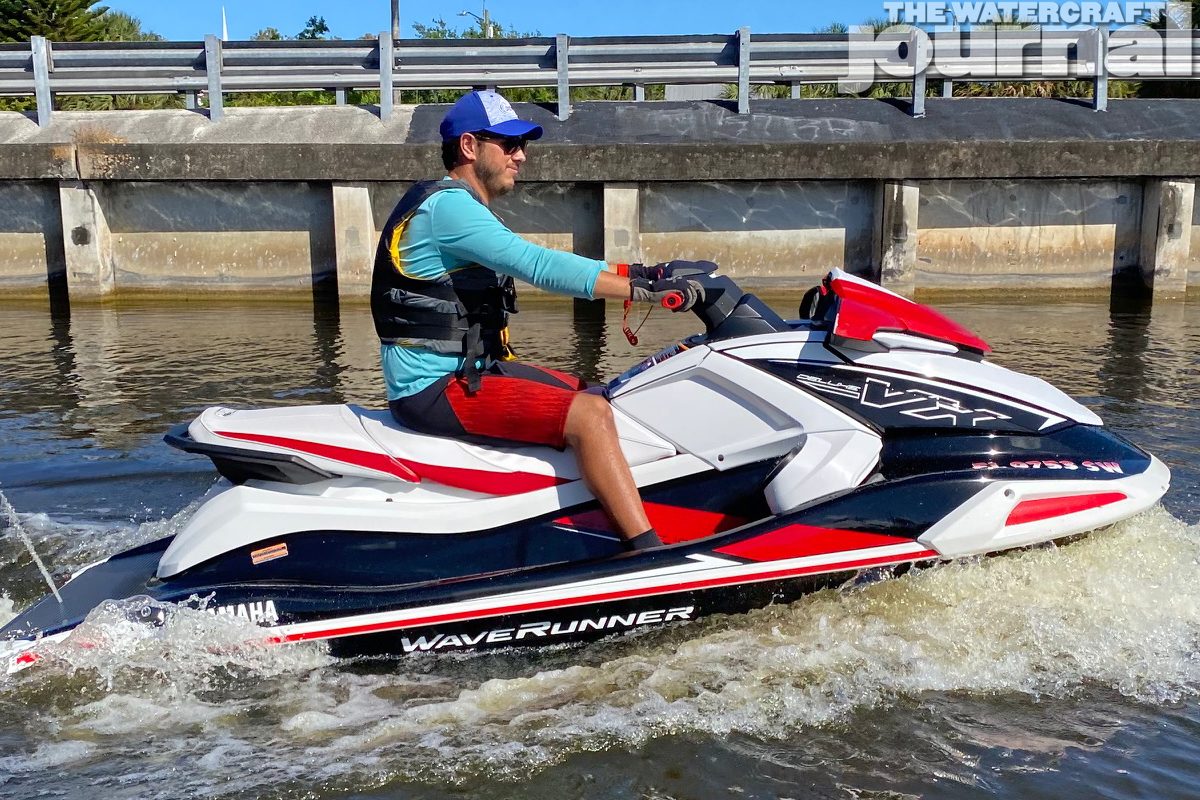
Speeding in the no wake zone, horsing around at the sandbar, doing donuts in the channel, and blasting music from that new 200-watt stereo…every rider has witnessed it! The PWC community is coming under an increasing amount of scrutiny by state and federal regulatory agencies, but the last thing we need is more government regulation! When out on the water, like it or not, you are representing all PWC riders.

Boaters and law enforcement officers alike tend to judge PWC riders based on the irresponsible actions of a few bad apples, so it’s time for riders to step-up their game and set a good example that everyone can follow. Below is a list of tips to not only help you become a better, more responsible personal watercraft owner, but hopefully a better rider and member of the PWC community.

Be Honest with Yourself About Your Experience and Skill Level

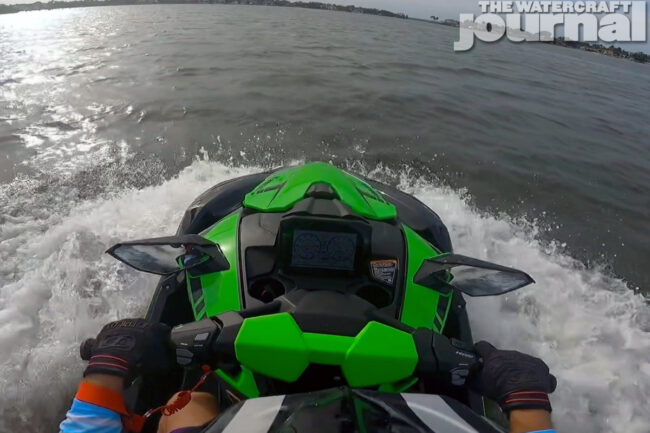
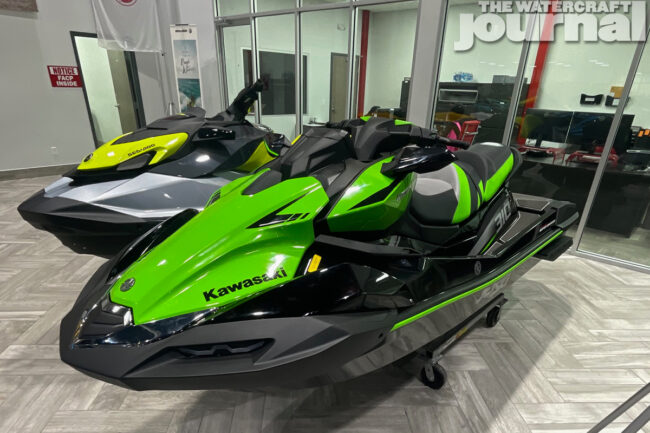
Everyone wants a hot new Ultra 310, RXP-X 300 or FX SVHO, and riders can surely find a dealer that will happily close a sale. While it’s easy to sign on the dotted line, it takes years of riding experience to be a truly qualified PWC rider. Many of today’s PWCs are true high performance racing machines with horsepower to rival boats more than three-times their size.

When purchasing a new PWC, riders should have a candid discussion with their dealer about experience level and the intended use of the ski. Riders should do their research and ask plenty of questions. Other than the basic safety pamphlets provided at time of sale, neither manufacturers nor dealerships have a responsibility to impart the United States Coast Guard’s (USCG) “Rules of the Road,” to new buyers.
 

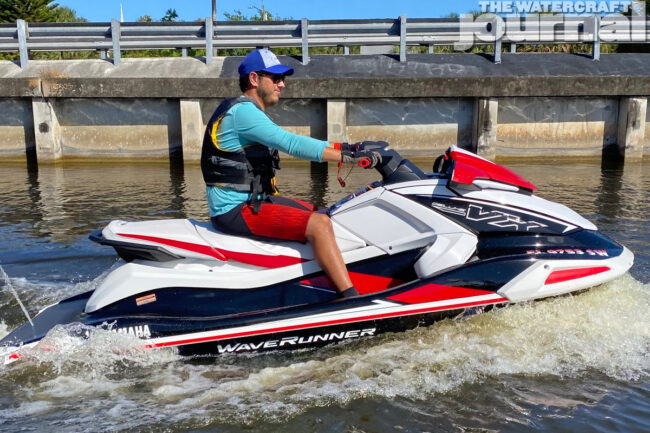
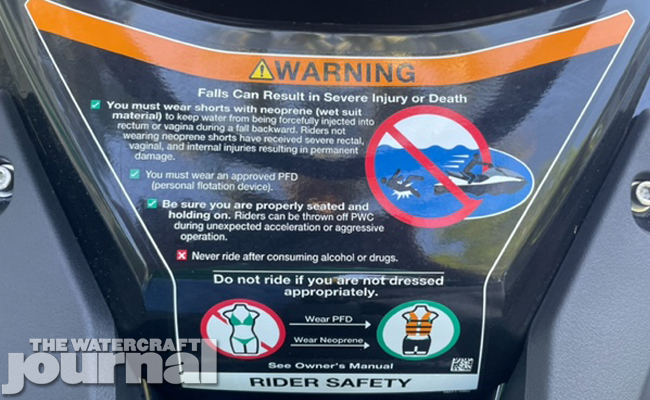
It is a buyer’s responsibility (legal responsibility in some states) to ensure that they are well-versed not only in general boating terms and navigational rules but have completed a USCG certified safety course. Riders and their passengers alike should always wear a USCG certified PFD (personal flotation device), protective eyewear, gloves, proper boots or footwear, and clothing with neoprene fabric.

Buyers should take the time to get to know their PWC (read the entire manual from front to back), its safety functions, and the location of their safety equipment. Every rider should take a moment to review the safety placards and stickers on their ski, especially those related to capacities and proper riding gear. Proper skill level and knowledge can make the difference between life and death, should a crisis arise. Experienced riders never forget to review local tide-tables, charts, and weather conditions before heading out on the water.
Erratic and Irresponsible Behavior
According to the USCG, lack of situational awareness, failure to obey posted signs and warnings, and excessive speed are the top contributors to accidents on the water. Loud music, drugs (legal or not), and alcohol create further dangerous distractions that can make a precarious situation deadly. According to the US Coast Guard, nearly 20% of all boating accidents resulting in death involved alcohol.

Unless the operator of the vessel is a professional stunt driver on a closed course, others should always ensure that they remain in the proper riding position while their watercraft is underway. This means facing forwards, with both hands firmly on the handlebars.
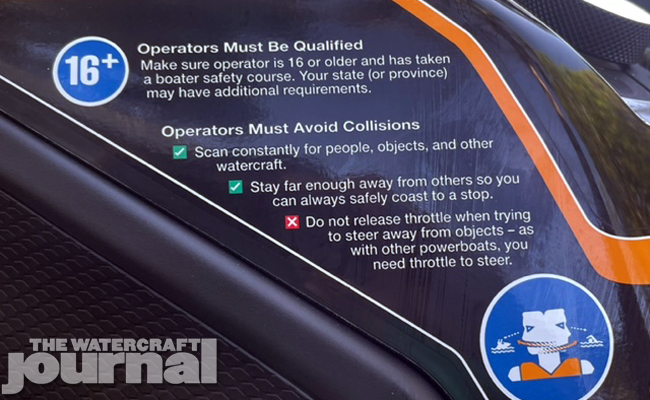
 

Sitting sideways, backwards, or in the wrong position might seem cool, but it shaves critical seconds off response time, should rider input be necessary to avoid a collision. Even the most advanced braking and deceleration systems are no substitute for keen situational awareness.

Riders and their passengers should take a moment to consider the life-changing consequences that their actions may have on themselves and others. Buzzing, splashing, or harassing other vessels or coastal homes can also have legal consequences, especially if property or other physical damage occurs. Many municipalities have enacted local noise ordinances, targeted specially at loud marine traffic adjacent to waterfront properties. It’s always good practice to respect the right of quiet enjoyment afforded to the tax-paying homeowners and businesses on the waterfront.
Son of a Beach: Watch Your Hull
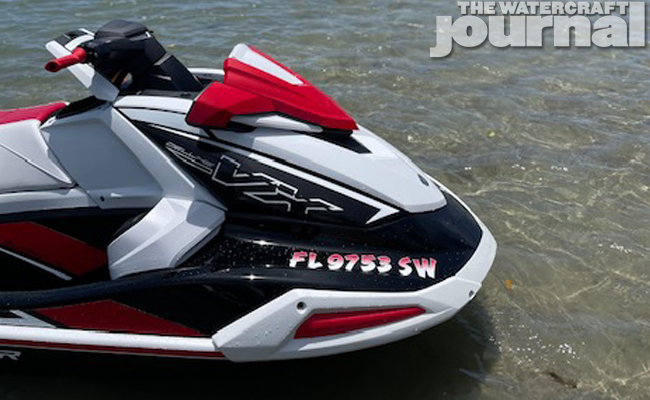
Many of today’s skis are constructed from a variety of new-age composites and plastics that don’t hold-up well to coarse or abrasive surfaces like a sandy beach. Riders that want to maintain the factory finish of their skis should avoid beaching their vessels at all costs.

When hitting the sandbar, experienced riders will anchor just off the shore, keeping the ski floating in shallow water. Its always smart to point to bow of the vessel away from the shoreline (or into the wind), so that incoming wake and chop breaks over the bow (front) rather than the stern (rear) of the watercraft.
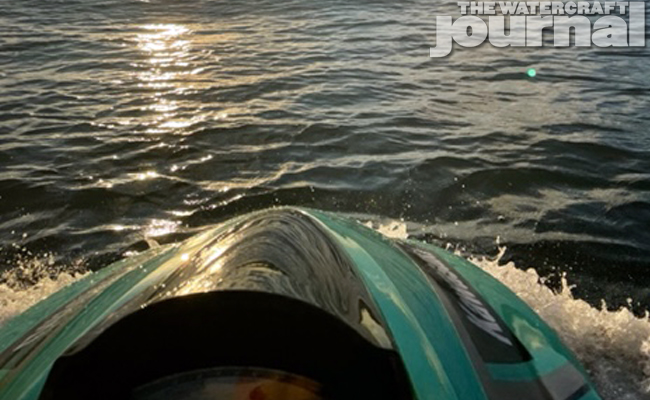
Danforth-style anchors work best for anchoring in the water, and shore or sand anchors work best when tethering directly to land. Dragging that ski onto the sand is akin to taking a piece of sandpaper to the hull! When riders are ready to leave the sandbar, it’s a good practice to walk the ski out from the shoreline until the water depth reaches a minimum of three feet. Starting a ski in shallow water can lead to impeller, engine, and cooling system damage.

These same principles apply to bunking a ski on the trailer; a smart rider will take the time to carefully float or winch the ski onto their bunks. A rider that throttles their ski onto their trailer is likely to see increased wear on the vessel’s hull – this is especially true with skis which have painted hulls.
Have a Heart: The Trash Challenge
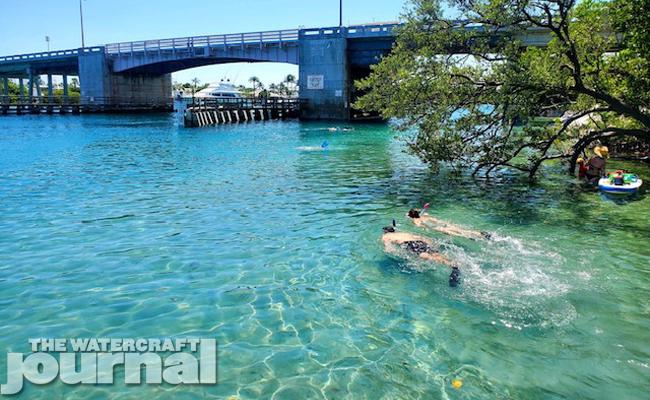
Being on such a small craft gives PWC riders an intimate connection to the water. Nothing ruins a day on the water like sucking up a plastic bag! Environmentally-conscious riders who cruise past a plastic bag, water bottle, or piece of floating garbage, should pick it up!

If the average rider logs 50 hours a year on their ski, and there are about a million skis in use today, if each rider picks up one discarded plastic water bottle each time they hit the water, that would translate to over a million pounds of plastic removed from our waterways each year.
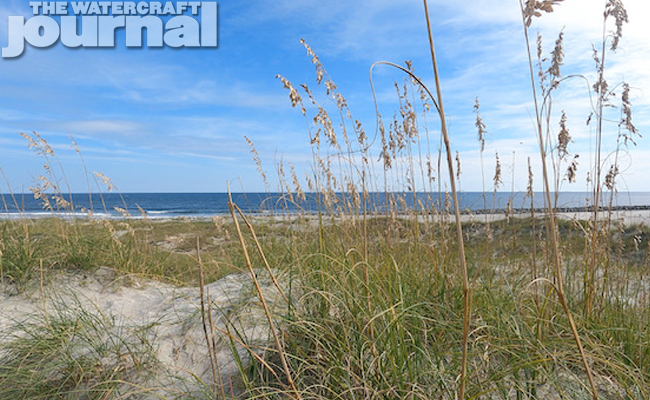
In 2021, Florida recorded a staggering 1,101 manatee deaths, more than double the 5-year average. Boaters and PWC operators alike should remember to slow down for wildlife and stay out of delicate mangrove and sea grass beds. Operators should remember that many skis contain a vacuum-assisted or 12v bilge pump system.

This means that any oil, contaminants, or sludge in a bilge will be pumped right into the water when the bilge system activates. Riders can keep their bilges clean by properly disposing of all petroleum products before heading out on the water.
Lend a Helping Hand
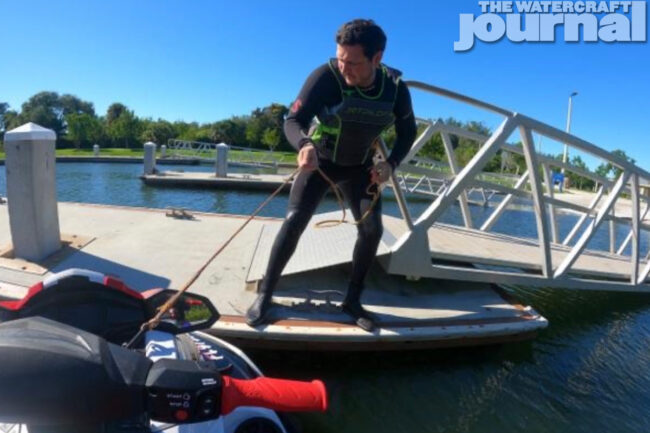
Whether it’s a novice weekend warrior weaving their way down the boat ramp, or a confused kid tinkering with their beat-up ski at the dock, it doesn’t matter – a true PWC veteran will almost always offer a helping hand. Riders never know when they might need help someday, and it’s a great gesture to assist other PWC riders or boaters in need.

It’s never a bad idea to bring a spare set of tools, a quart or two of oil, and various lubricants when heading down to the water; the one time a rider forgets that 10mm wrench is the time they will need it! It’s important that riders ensure their own safety before assisting others, and they should never hesitate to involve local law enforcement if the situation necessitates an emergency response.
If watercraft operators are not comfortable or inexperienced in towing another watercraft, they can always hail TowBoat US or SeaTow via a VHF radio or cellphone (make sure to save the phone number in your phone before heading out on the water).

In the open ocean, away from land and other vessels, there’s little anyone can do to regulate a fun-filled day of wide-open throttles, but inland waterways and coastal sandbars are a different story. Following these time-tested tips will help both veteran and novice riders alike enjoy a safe, fun-filled day out on the water. These tips and practices can also help soften the negative perceptions many boaters, coastal homeowners, and law enforcement professionals hold about PWC riders their beloved skis.
Radinn Teams up With Surfgaarden to Make Waves with Veterans

0

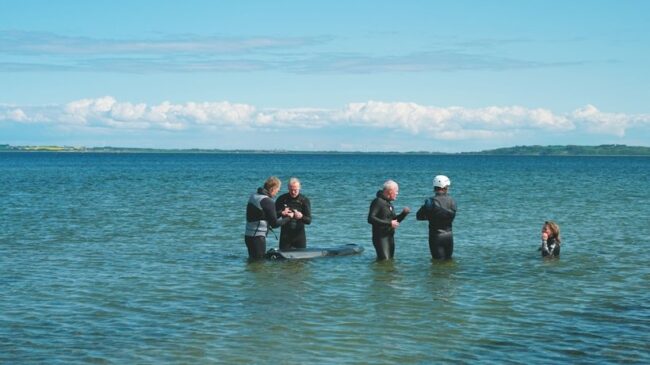
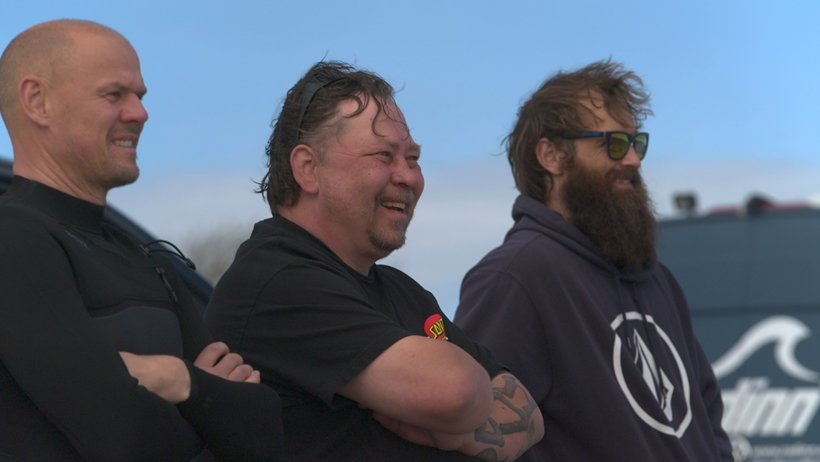
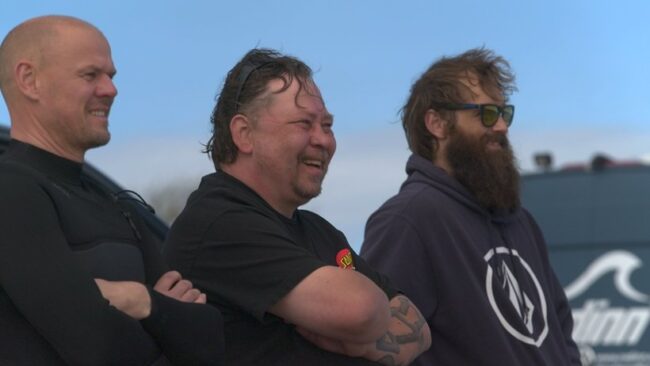
The Radinn crew not only likes to go on adventures, but they also like to take adventures to others, so it was no surprise to learn of their meet up with the Surfgaarden team in Denmark. The Radinn group was there to make waves with veterans struggling with PTSD and to turn them onto the sport of jetboarding.

Surfgaarden is a rehabilitation center for veterans who are struggling with PTSD and Ocean Therapy is a main component in their rehabilitation. The center is in an area known as Cold Hawaii. It’s a great location for surfing because it picks up swells from storms out of the north. The Radinn crew brought boards and positive vibes to aid the veterans in their healing process.

Surfing requires 100% of your attention, which makes it the perfect medicine for veterans who suffer from PTSD. Riding waves is the perfect escape from a racing mind, so after a quick lesson on how to operate the Radinn Jetboards, about 15 veterans went out to ride in the inlet of Thisted. They got to forget about the bad and focus on the good.

The guys had a blast riding the Radinn Jetboards and program Manager Peter Emil said it was a dream come true for a lot of the veterans. They felt like superheroes zipping around on jetboards. He was stoked on the Radinn experience and that they are making these adventures possible for different groups of people. Check out the cool video that highlights the day of happy vets stoked on Radinn Jetboards.


View this post on Instagram


A post shared by Radinn (@radinnofficial)

BRP Expands its Manitou Pontoon Manufacturing Capacity in Michigan

0
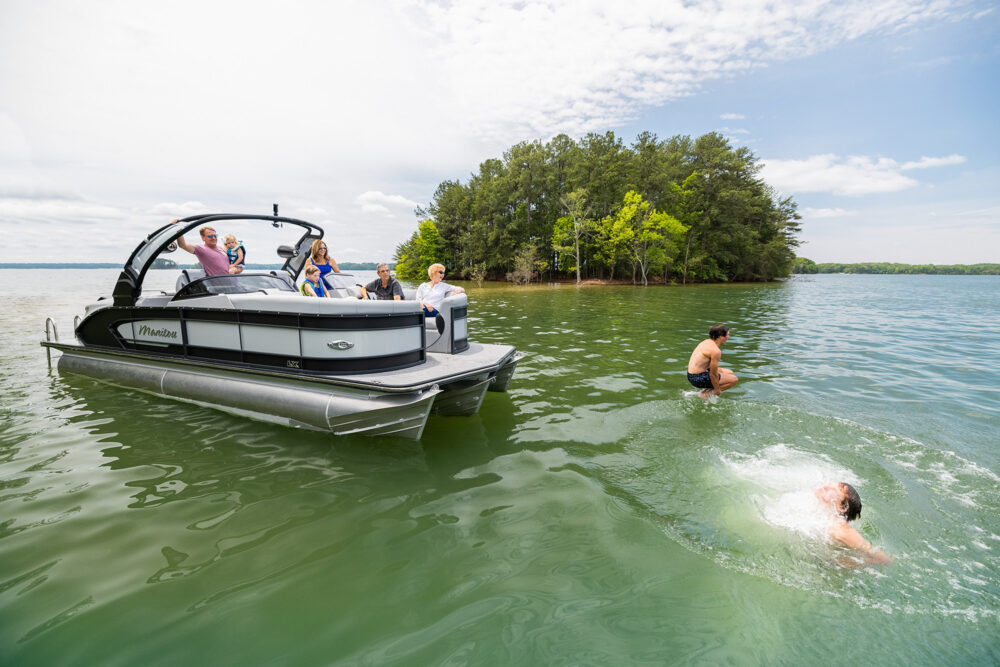
Manitou has been manufacturing leisure, luxury, and performance pontoon boats since 1985. (CNW Group/BRP Inc.)

Big things are happening within BRP. They recently announced the expansion of its Manitou pontoon boat plant in Lansing, Michigan and will add manufacturing and warehouse capacity in St. Johns, Michigan. This will create close to 200 new jobs at its Manitou manufacturing plant in Michigan, nearly doubling its workforce.

Construction begins in April and with the aid of the Lansing Economic Area Partnership (LEAP), BRP received performance-based workforce training credits and grants. The package also includes workforce development support from local colleges and job creation incentives from the Michigan Economic Development Corporation.

BRP acquired Manitou in 2018 as part of its strategy to transform the customer experience and to bring forward thinking innovation to the marine industry. Check out the complete press release below for all the details:

BRP Inc. announces the creation of close to 200 new jobs at its Manitou manufacturing plant in Michigan, nearly doubling its workforce in the state. BRP will begin the construction in April to expand its existing Manitou pontoon boat plant in Lansing while adding manufacturing and warehousing capacity in St. Johns, Michigan.

With the assistance of the Lansing Economic Area Partnership (LEAP), BRP received performance-based workforce training credits and grants. The package includes workforce development support from local colleges, and Capital Area Michigan Works! (CAMW!), as well as job creation incentives from the Michigan Economic Development Corporation (MEDC).

“BRP’s continued investment in Michigan underscores our state’s manufacturing leadership, the strength of our business climate and talented workforce,” said Quentin Messer, Jr., CEO of the MEDC and President and Chair of the Michigan Strategic Fund. “This project is a win for the Lansing region and for the entire state. We are grateful to the Governor and legislative leadership for their continued support of the Michigan Business Development Program that makes these projects possible. We appreciate the efforts of LEAP and our other local partners. We look forward to working with BRP as it grows and provides greater opportunity for our friends and neighbors statewide.”

“When fast-growing, worldwide companies, like BRP, choose to expand in the Lansing region, it speaks volumes about our region’s ability to compete internationally,” said Bob Trezise, president and CEO of the Lansing Economic Area Partnership (LEAP). “Our robust business support system, world-class engineering talent pipeline and culturally rich communities are winning the day once again. Of course, projects like this are possible because of great partners, including the MEDC, LCC, CAMW!, Watertown Township and city of St. Johns. Congratulations to all!”

“The strong, sustained demand we have seen for our products is a testament to their durability and quality. BRP has continued to grow its marine portfolio with strategic acquisitions of world class brands like Manitou, Alumacraft, and Quintrex, and expanding their production capacity,” said Karim Donnez, Senior Vice President, Marine Group, BRP. “As with all our products, we are committed to gaining market share in this sector and we rely on Michigan’s highly skilled and experienced workforce to continue helping us in achieving our goals.”

BRP acquired Manitou in 2018 as part of its strategy to transform the customer experience, and bring game-changing innovation to the marine industry. The company is actively looking for candidates to fill positions in the Lansing region, including welding, assembly and fabrication, engineers and engineering technicians. For more information about open positions, visit Manitou’s website.

BRP Launches New CSR Program; Strengthens Commitment to “Social Responsibility”

0

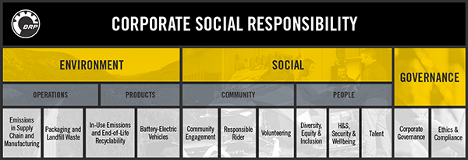
BRP announced its commitment to take corporate social responsibility further with the launch of its new CSR25 program. The company has set its sights on becoming the industry leader in corporate citizenship. The CSR program is made up of three pillars, which are environment, social, and governance.

They want to reduce their carbon footprint by electrifying each of its product lines by the end of 2026. BRP also wants to develop a more inclusive culture where everyone feels like they belong. They have begun a Diversity, Equity, and Inclusion journey. BRP is also launching an enhanced Code of Ethics. BRP reminds us that these are forward-thinking goals and initiatives, and nothing is guaranteed.

Read the complete press release below:
BRP Inc. announced its commitment to take corporate social responsibility (CSR) even further with the launch of its new CSR25 program. It includes more ambitious environmental targets than ever before, concrete initiatives, and sets goals for 2025 and beyond. It also reflects BRP’s intention to be the industry leader in corporate citizenship.

“We are very proud of our CSR25 program, which stretches the boundaries of our commitment to create a stronger future for our employees, our dealers, our customers and all of our stakeholders,” declared José Boisjoli, President and CEO. “Not only does it align with our strategy and industry best practices, it also sets high objectives that reflect the growing environmental and social concerns of our communities. We look forward to the enthusiastic participation of all our employees around the world in ensuring that our efforts are successful. Our board of directors and executive management team are fully dedicated to ensuring we make tangible progress and track our results on a regular basis.”

BRP’s CSR25 program fosters value creation around three main pillars: Environment, Social and Governance. The responsibility of each of them has been assigned to senior executives who leverage their expertise to ensure the program’s objectives are achieved. They specifically focus on

BRP’s employees, communities, operations and products and are broken down as follows:

  • Reduce the carbon footprint relating to products and operations
    In 2021, BRP took an important step towards reducing the carbon footprint of its products with the announcement of a $300 million investment over the next five years to electrify each of its existing product lines by the end of 2026. BRP aims to have 50% of its units sold as electric by 2035. Furthermore, it has set the target of launching new electric products and new models that emit less CO2 than their predecessor. As such, BRP recently confirmed its first EV models with the upcoming launch of an all-electric lineup of Can-Am motorcycles.
    On the operations side, BRP targets making its facilities carbon neutral and reaching zero waste to landfill by 2030. It also aims to reduce CO2 emissions from its supply chain by 25% by 2035.
  • Ensure a positive and sustainable impact in communities and the daily lives of employees
    BRP reiterates its commitment to invest 1% of pre-tax profits in community support by 2025.
    Also, the Company is increasing its efforts to empower all riders in the powersports community to ride responsibly through the new BRP Responsible Rider program. It aims to encourage riders to focus further on safety, riding etiquette and the environment.
    To foster an even more inclusive culture where everyone feels they belong, BRP has embarked on a Diversity, Equity and Inclusion (DE&I) journey. The Company has established a diverse DE&I Council which is comprised of employees from various backgrounds and workplaces and led by two senior executives who will implement a strong action plan. Specific DE&I employee resource groups are also being formed to reach targets.
  • Continue to make sound strategic decisions, maintain high ethical standards and conduct operations in a sustainable manner.
    Under its Governance pillar, BRP is also announcing the upcoming launch of an enhanced version of its Code of Ethics. The intention is to further mobilize and empower its employees and other stakeholders in maintaining and displaying high ethical standards and behaviors across all of BRP’s activities.

Sandy Vassiadis, Vice-President, Global Communications & Corporate Social Responsibility added: “As a global leader in powersports vehicles, propulsion systems and boats, we are dedicated to reinventing how we move people in a more sustainable way and caring for our communities. The program we are launching today reflects our commitment to lead by example and inspire our industry to play an active and engaging role in creating a brighter future for all. We look forward to rallying our complete network around our CSR initiatives and promoting eco-responsible practices.’’

For full details about BRP’s CSR25 program and its initiatives, please visit the Corporate Social Responsibility section of our website.

Yamaha Announces it’s 2022 Factory Riders & Support Teams

0
Image: Yamaha WaveRunners

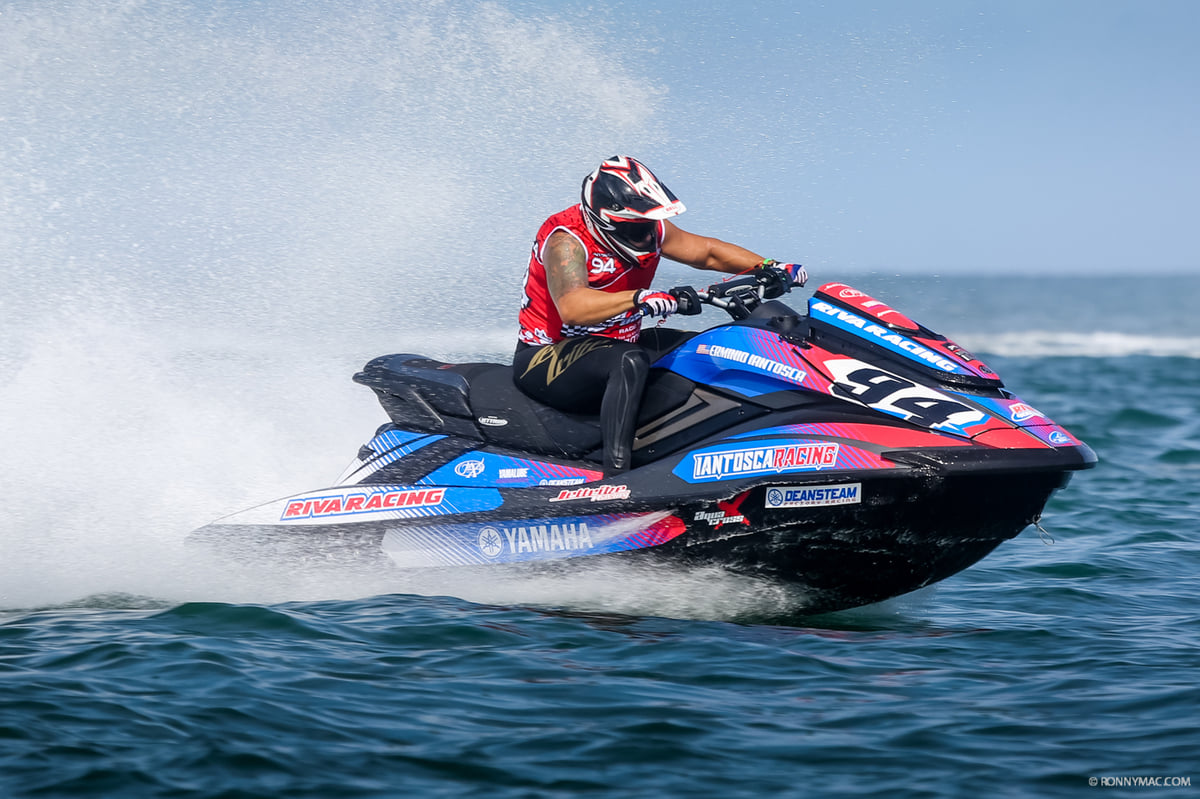
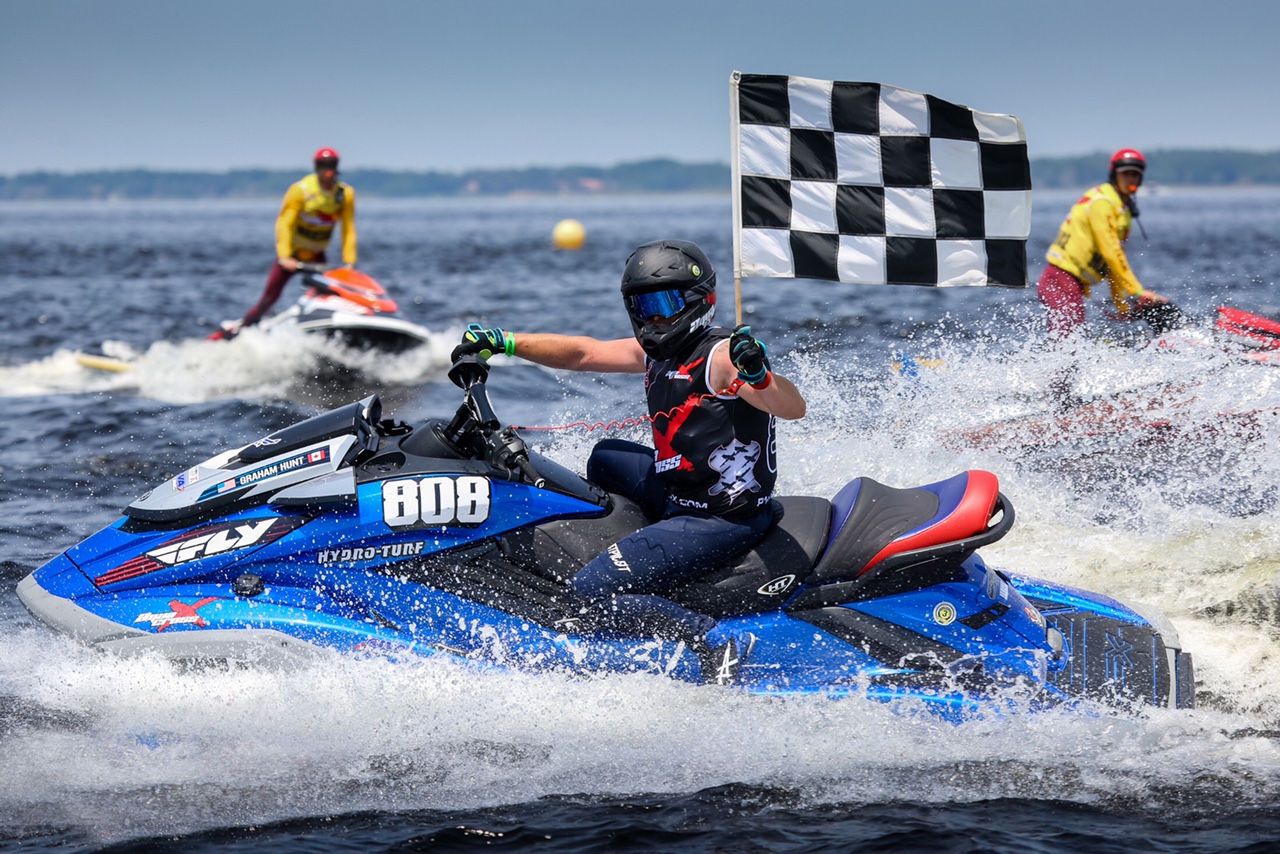
Yamaha Watercraft Racing announces its 2022 factory riders and support teams that will compete on the P1 AquaX national tour and at the IJSBA World Finals. Leading Yamaha back to the P1 AquaX overall champion is Erminio Iantosca racing under master-tuner Dean Charrier’s Dean’s Team banner.

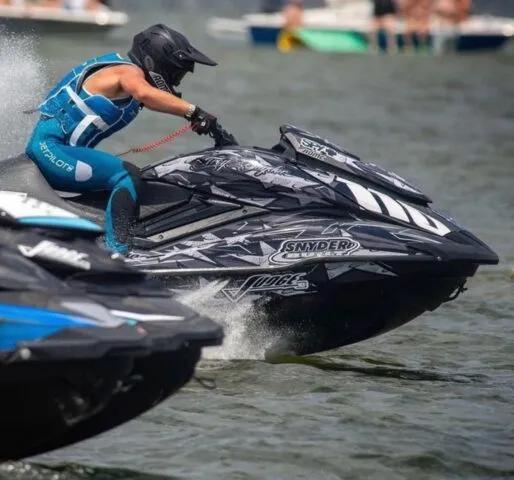
Next up on Iantosca’s tail is IJSBA champion Tory Snyder who will race under the Snyder Built and Dean’s Team flag. Snyder finished 3rd overall on the P1 AquaX tour in 2021 and returns with his eye on the P1 AquaX crown.

Racing under the Broward Motorsports tent is Christian Daly, Jimmy Wilson, and multi-time IJSBA World and National Champion Dustin Farthing. In 2021, Daly and Wilson finished the P1 AquaX tour in 5th and 6th place, respectively, and both return more competitive than ever.

Racing for RIVA Racing is Chris Landis, who finished 4th overall on the P1 AquaX tour in 2021, just two points behind fellow Yamaha racer Tory Snyder.

Completing Yamaha’s watercraft racing program for 2022 are Dmack Racing’s Dennis Mack and Vanjae Ramgeet. Ramgeet finished 8th overall on the P1 AquaX tour in 2021. This rider has the skills and speed to break into the Top 5. Mack, known for grinding down his competition, returns to racing after his season ending injury in 2021.

For 2022, Yamaha factory riders will compete exclusively aboard the supercharged Yamaha FX SVHO, which is a proven winner in the Florida surf and inland lakes. P1 AquaX racing action begins April 30-May 1 in Kissimmee, FL.

Yamaha’s WaterCraft Racing manager Bryce Parker said, “We are excited to continue our partnership with P1 AquaX and support a fantastic group of riders that will provide lots of racing excitement this season and hopefully another P1 AquaX Pro Enduro championship win”.

Video: WatCon’s New Steering System for 2021+ Yamaha SuperJet

0

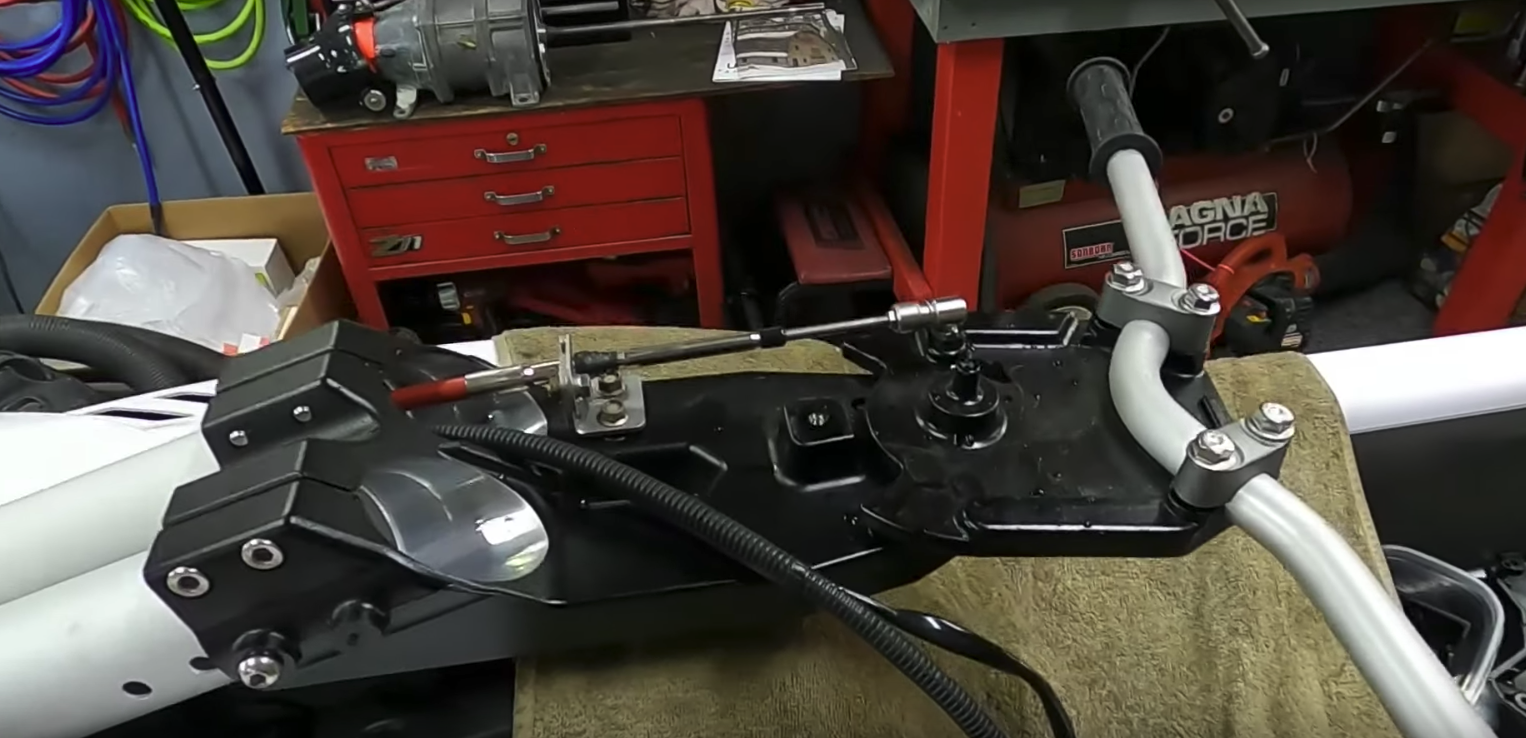
For all you standup enthusiasts that are running the new 4-stroke Yamaha SuperJet there’s now a solution to less than desirable Yamaha steering. The good people over at Watcon.com and Watercraft Talk the YouTube channel have created a steering system for the 2021 and later Yamaha SuperJet.

This system replaces the factory steering components to have a tighter and shorter throw when steering the watercraft. It removes a lot of the slop out of the factory steering components by replacing them with machined aluminum parts. This allows for a more responsive steering system with a quick throw steering feel. It accomplishes this by maximizing the steering ratio which improves handling.

This system fits stock and most aftermarket poles that are available for the 4th generation Yamaha SuperJet. There is a disclaimer that the stock pole must be drilled to mount the steering system. And it is available now on their website for purchase. Along with a YouTube video detailing the improvements that their system makes over factory. Check out the links below for more information about this system. 

Video: 3FT Deep’s Essential Tools for PWC Maintenance & Repair

0

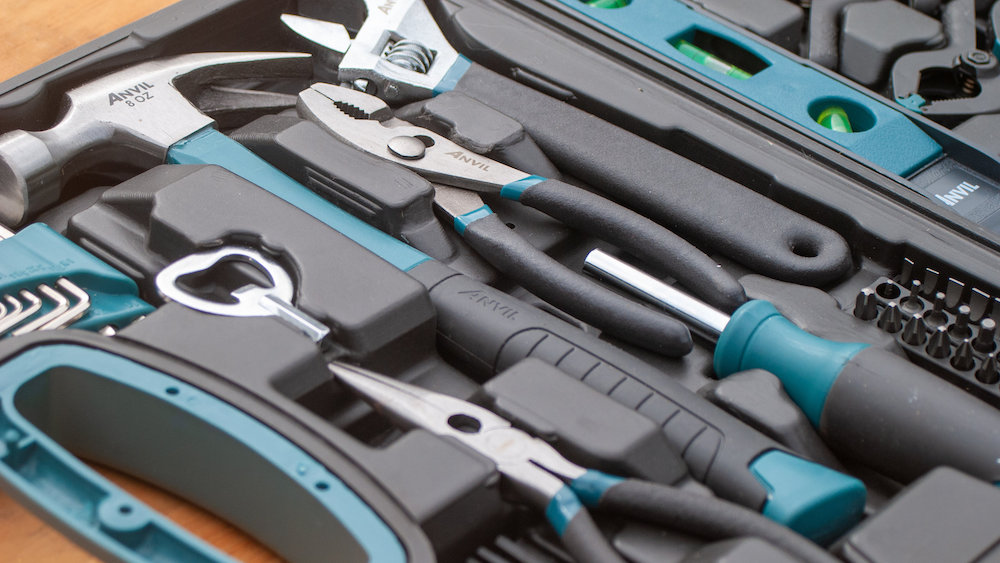
Our friends over at the YouTube channel 3-Feet Deep have put together a fantastic video for those of us that like to wrench on our own ski. They call their video 20 essential tools for PWC maintenance and repair. This is not a video that will tell you exactly everything you’re going to need to work on your skis. However it is a good video that will give you a baseline ideas of some of the things you were going to need, and as you work on your watercraft more, you can customize your tool needs for your skill level of mechanics.
This video is fantastic for the person that has a limited amount of mechanical experience. It outlines what you will need to effectively perform maintenance and general repair items on all major brands of skis. And some of the tools you will need for performance modifications. Chances are most people have majority of these tools already in their house. Small engine and power sports are a great way to expand your mechanical background for wrenching on a variety of machines. And the most important part is to have fun and enjoy the journey of learning and experiencing new things.
Kissimmee/St.Cloud To Host P1 AquaX USA Season Opener

0
Image: P1 AquaX
Image: P1 AquaX

The countdown is underway to the opening event of the P1 AquaX USA season, with more than fifty riders expected to head to Central Florida next weekend (April 30-May 1) for the SBT P1 AquaX Kissimmee/St. Cloud Grand Prix. International personal watercraft promoter P1 AquaX will stage a five-month national championship at a total of five venues in Florida and Indiana together with the return of its World Championship at the Atlantis Resort in The Bahamas in November.

With the 2022 season featuring Pro and Am Enduro action with a Jr Enduro series, East Lake Tohopekaliga will host AquaX racing for the ninth time and P1 USA Championship Manager Michelle Petro said: “We always look forward to returning to Kissimmee/St. Cloud where we receive such a warm welcome from both Experience Kissimmee and the City of St. Cloud. We regard this event as our hometown race with it being close to our Orlando headquarters and the very first venue that we visited in Florida.”

John Poole, Executive Director of Experience Kissimmee, commented: “We are delighted to welcome back P1’s Grand Prix. Our partnership will generate an increased economic impact for the region along with providing a platform to showcase our destination to key markets around the world through P1’s worldwide audience. We are excited to welcome the riders and fans to experience Kissimmee’s plethora of attractions, accommodations, fine dining options, and eco-tourism attractions in the destination during their stay.”

Speaking from P1’s race headquarters in Orlando, Michelle Petro added: “For the first time, we are adding a Jr Enduro class to the championship for riders aged 14-15 who will compete for 20 minutes on a modified AquaX course. Due to unavoidable calendar clashes with another PWC racing promoter, we are introducing a ‘drop round’ format this season by removing the lowest scoring round for each racer when calculating the overall points.”

Racing in Kissimmee/St. Cloud will commence at 10.00 am on both days, with the podium awards presentation taking place in Lake Front Park at 2.00 pm on Sunday. The park will also be the location for the pits.

2022 Race Calendar

  • P1 AquaX National Championship – Race To The Bahamas
  • PRO Enduro, AM Enduro, and Jr Enduro
  • Kissimmee/St Cloud, FL April 30/May 1
  • Sarasota, FL July 2-3
  • Michigan City, IN July 9-10
  • Daytona Beach , FL Aug 12-14
  • St Petersburg, FL Sept 3-4

Bahamas Pro Enduro World Championship – Nov 4-7
Bahamas International AM Championship – Nov 4-7

  • Michigan City/La Porte Indiana Series
  • Michigan City, IN July 9-10
  • La Porte, IN July 30-31

Full Throttle WaterX Cancels Two Upcoming Events

0

Full Throttle WaterX announced the cancellation of two races which were the Slalom & Freestyle competition on April 30th and the second round of closed course racing on May 20th through the 22nd. Deegan Newton, Full Throttle’s promoter, race director, and social media manager was admitted to the hospital and his doctor has permitted him from walking, working, organizing or hosting the events for the next 5-to-6 weeks while he makes a full recovery.

Being the passionate racer that Deegan is, he pushed through and seriously injured himself to insure Round One took place. To prevent further damage to himself, Full Throttle made the decision to cancel these next two races. They are asking the other racers please understand and to bear with them, while they go through these troubling times. Once Deegan is healed, they are going to put all effort into hosting a proper watercraft racing event this July and it will take place in Arizona or Camp Far West in California.

For the full press release please see below:

Due to unfortunate events, we are having to cancel our next two events, the Slalom and Freestyle Competition in April 30th & Rd2 Closed Course Racing on May 20-22nd. As some of you may know, Deegan our promoter, race director, and social media manager has been admitted into the hospital and his doctor is permitting him from walking, working, and therefor organizing and hosting events for the next 5-6 weeks while he makes a full recovery. Deegan had seriously harmed himself to ensure Round 1 took place and we do not want to see him continue to injure himself and cause permanent damage. We really hope that the racers understand what we are going through and to bear with us

On another note, we are looking into hosting a closed course event to make up for this cancelled event in the month of July. With no other closed course races taking place in this region in July and the kids being on summer break, we feel it would make perfect sense to try and host an event in this month once Deegan is fully healed and can ensure 100% effort in hosting a proper watercraft racing event. The July event will either take place in Arizona or Camp Far West, CA.

We are also going to try to host another slalom and freestyle event later in the year after the IJSBA World Finals event in late October. For the people who have already registered for the slalom event, we will be issuing full refunds! We understand that this is a major inconvenience for the racers, we went to deeply apologize but we really want to make it right and ensure a proper championship for both the racers and the sponsors who have supported us this far. We are very sorry this has happened, but health always comes first! Please pray for Deegan as he is currently in the hospital and that he makes a full recovery

Please stay tuned for an updated schedule that will be posted in the next few weeks. Enjoy having a month off from our events, save your money and we hope to see you at the next event at the CFW Reservoir on June 10th-12th

We will STILL be hosting 5 events for you racers, the schedule is just going to be changed due to the circumstances. The future races will be back to the 2 day, 2 moto format as this seems to be the system that works best for everyone.

Thank you again to our sponsors for the support, and we can’t wait to continue working with you guys when we continue the series!

Gallery: Resealing Your Yamaha WaveRunner’s Transom Plate

3

There isn’t a day much more exciting than the day you finally get to pick up your new Yamaha WaveRunner that you’ve been expecting for months. That excitement was joined with almost instant concerns. It seemed every time I took it out, there was always water in the hull. At first I thought it was just the way I was riding, and it was coming in through the front bow locker.

I started doing my own research and came to the conclusion that it had to be coming in through the transom plate. I found many people that had come to this same conclusion, as it appeared I wasn’t the only one with this concern. I decided that while this water – a couple of cups’ worth – was more than likely harmless, it was enough to bug me and justify fixing (my main concern being the electronics exposed to the moisture).

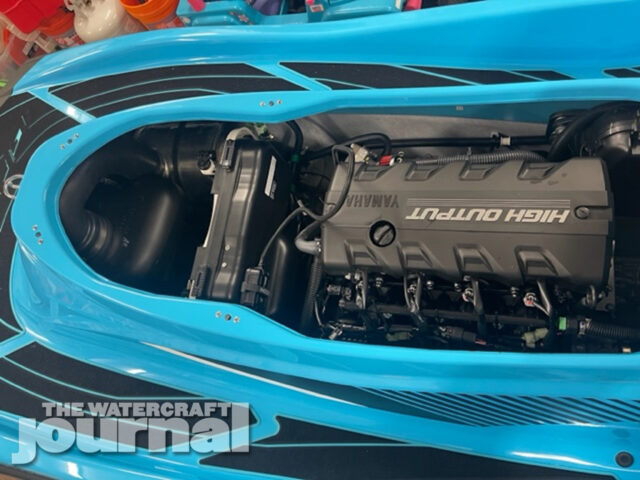
Above: Begin by removing the seats and upper deck/engine cover, exposing the entire engine compartment.

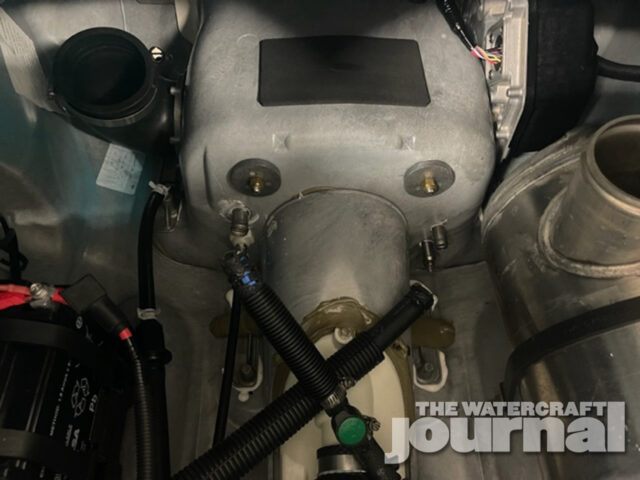
Above: Removing the exhaust pipe and resonator exposes the back side of the transom, allowing you to remove the cooling and siphon hoses.

I started by removing the seats and the upper deck panel. The next items that needed to come out were parts of the exhaust; the pipe from the water box to the resonator and then the resonator itself. Those came out pretty easy with just a few hose clamps. Once out (along with the foam block that the resonator rests on) you have a clear view of the inner parts of the transom.

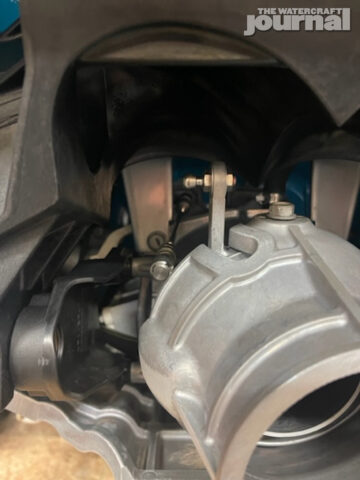
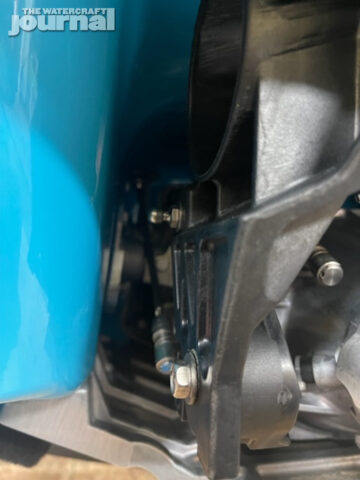
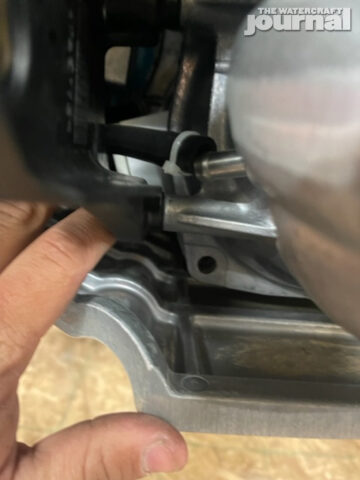
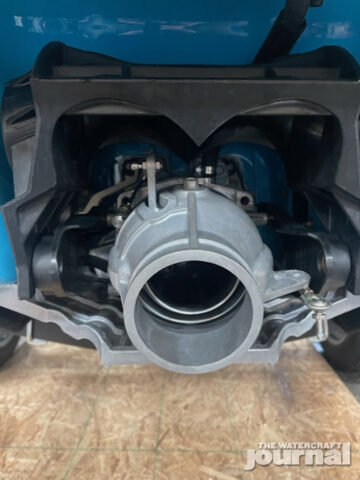
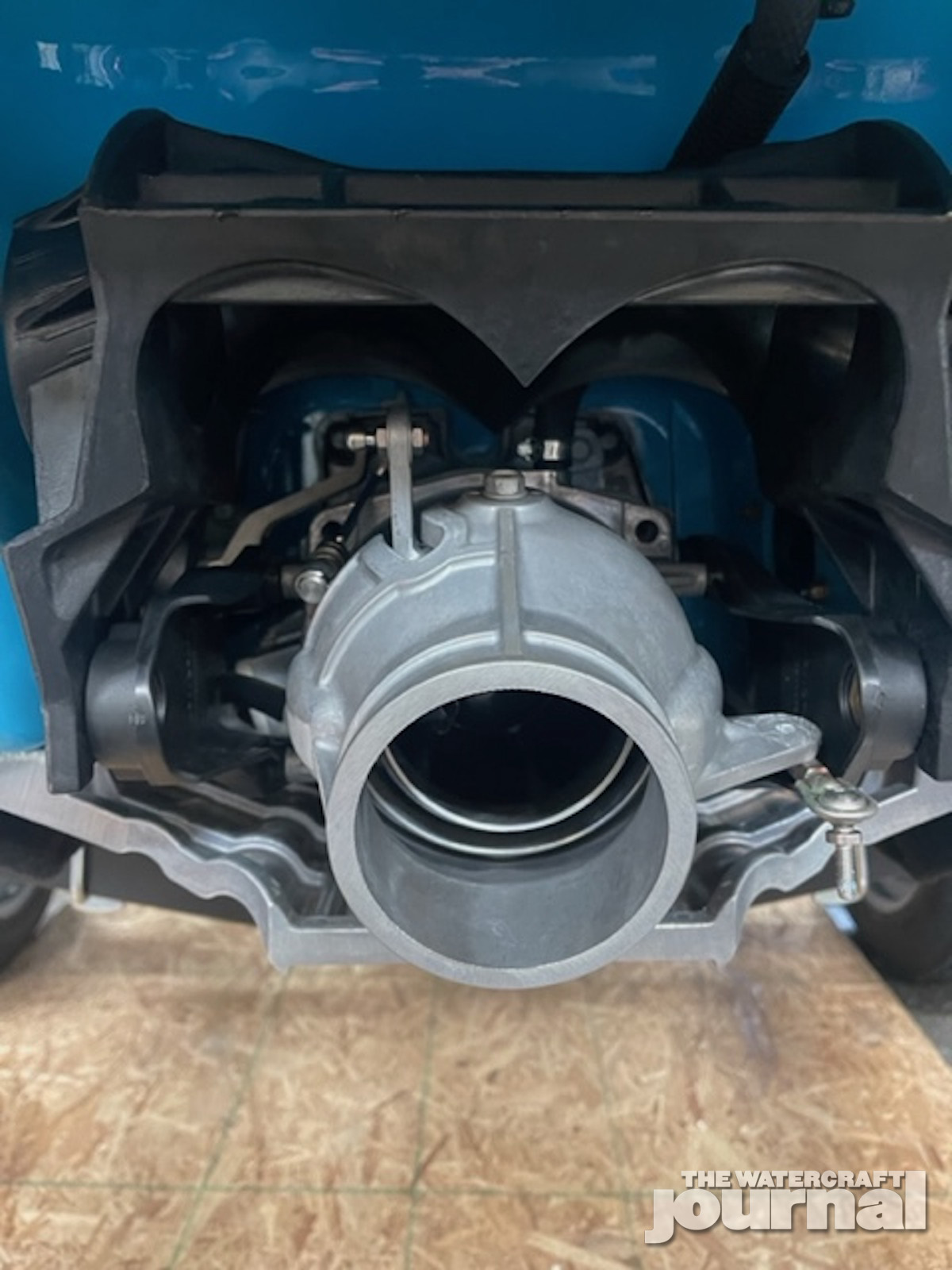
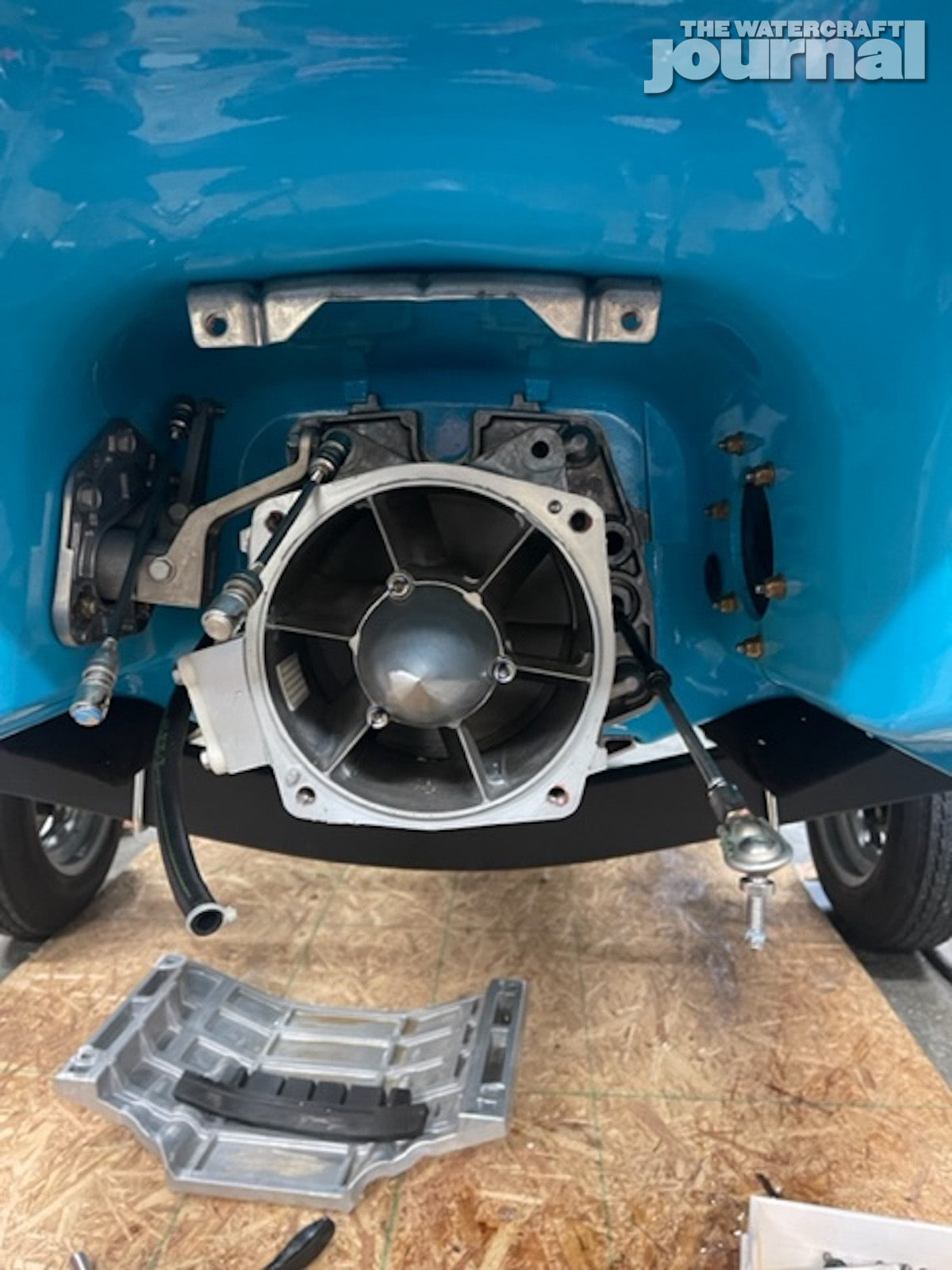
Now you’ve got access to all the cooling hoses that have to be removed from the transom. Once the cooling lines were disconnected, I could move to the pump of the WaveRunner. The first things out back are the linkage for the reverse bucket and the trim. These are extremely easy thanks to the quick disconnects on the end of the linkage. The steering linkage has a nut on the bottom that has to be removed before allowing the heim joint to also be unthreaded from the nozzle.

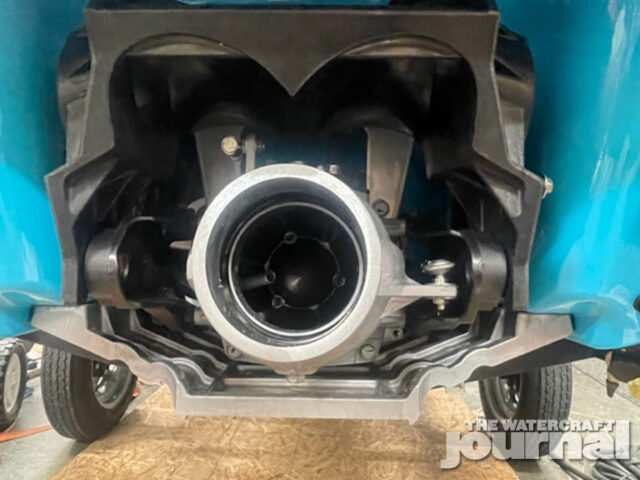
Above: Don’t be too intimidated, removing your pump takes a few minutes with basic hand tools. We’ll show you how.

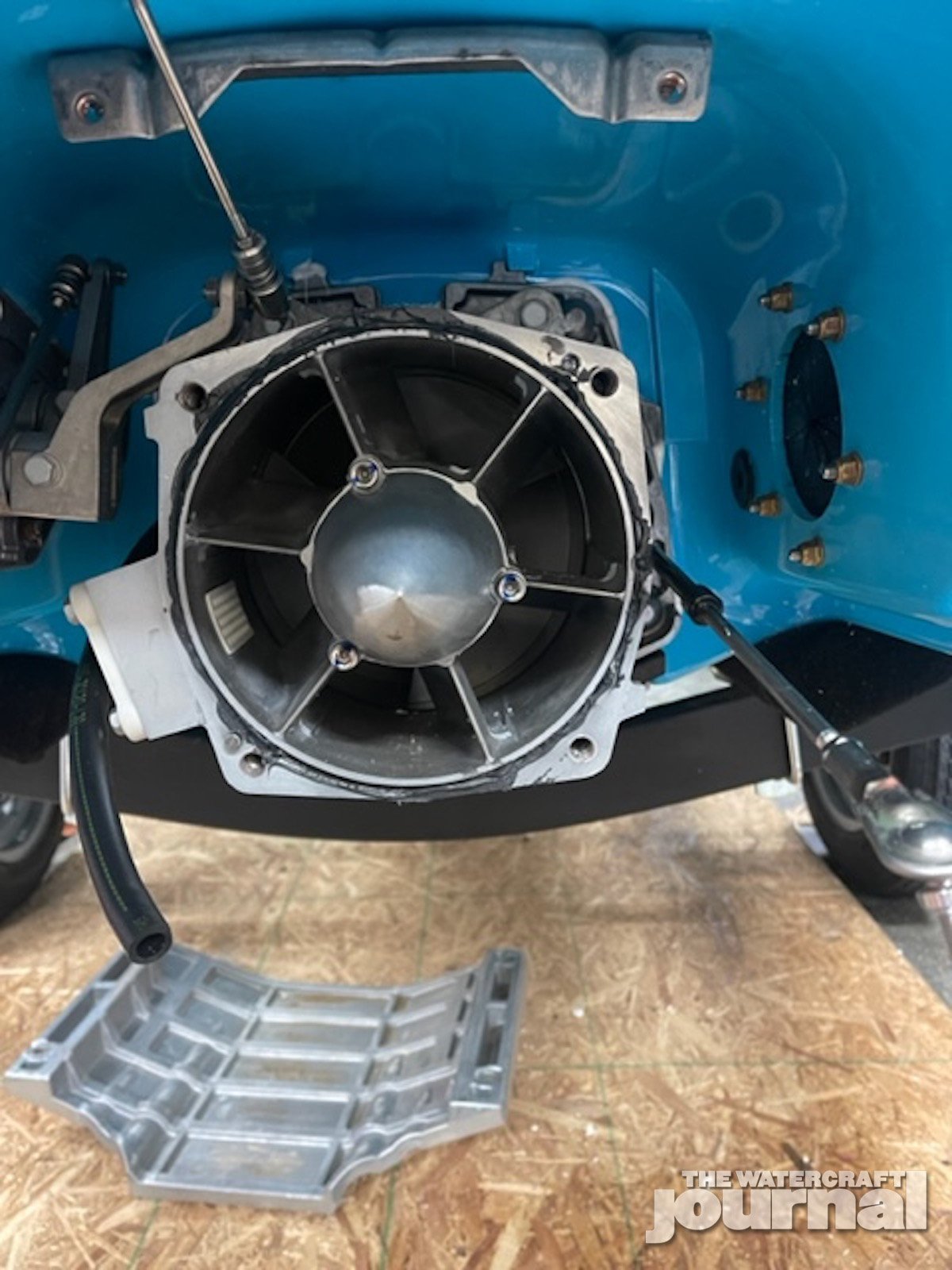
Above: It doesn’t matter in which order you do it, but disconnect the RiDE/reverse bucket and trim (top of nozzle) linkages with the easy sprung connectors. Next, uncork the cooling/siphon hoses from the pump.

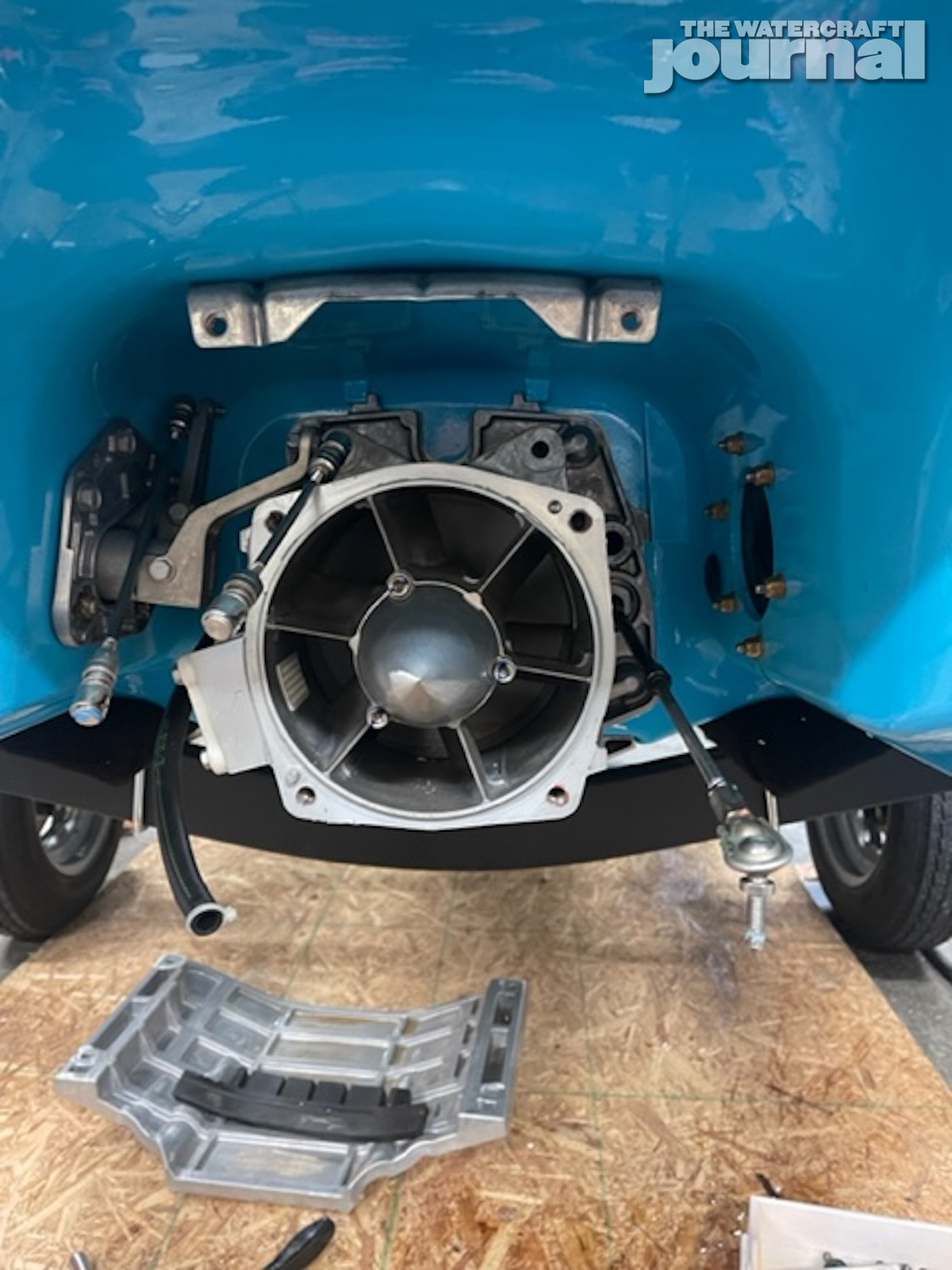
Next up were the four bolts holding down the nozzle assembly. I elected to leave the reverse bucket attached. Once those bolts are removed (along with the hull siphoning line), the nozzle assembly can be removed. After removing the nozzle there are five bolts holding the pump housing on the transom plate. With those bolts removed, I was ready to separate all the different sections as soon as I got the ride plate out of the way.

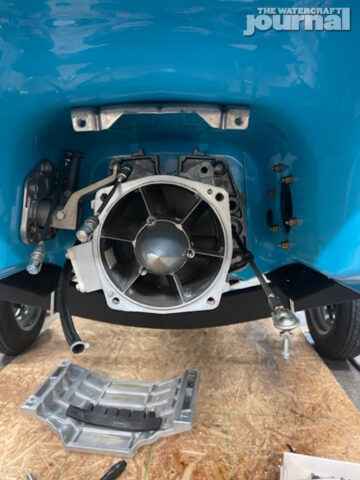
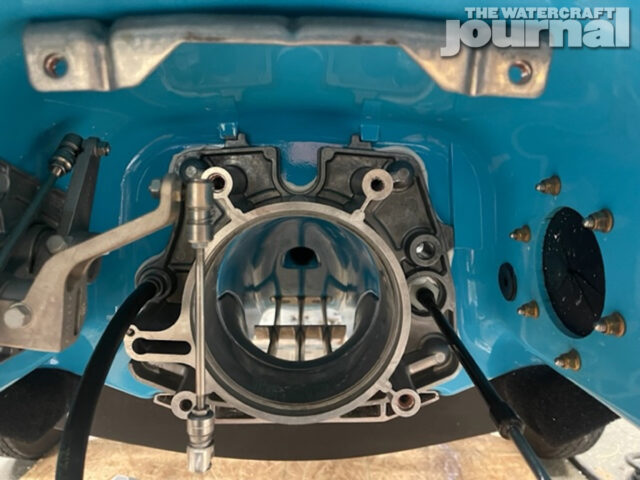
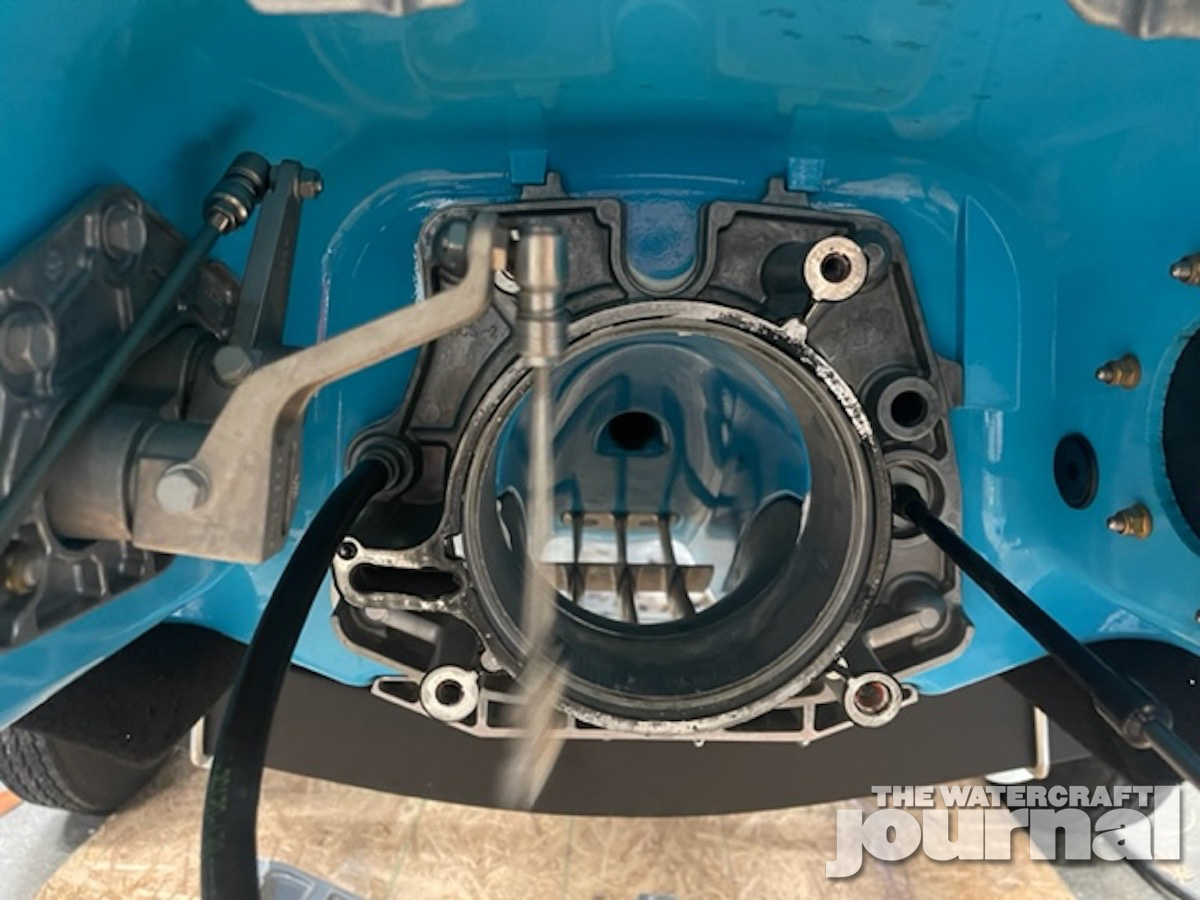
It took very little pressure to get the sections to separate exposing just the transom plate left attached to the hull. I then removed the four bolts and washers inside the hull, taking note where each size washer was located to be sure they went back in the correct place upon reassembly (snapping a couple pictures with your cell phone can help if you don’t want to remember exactly where everything went).

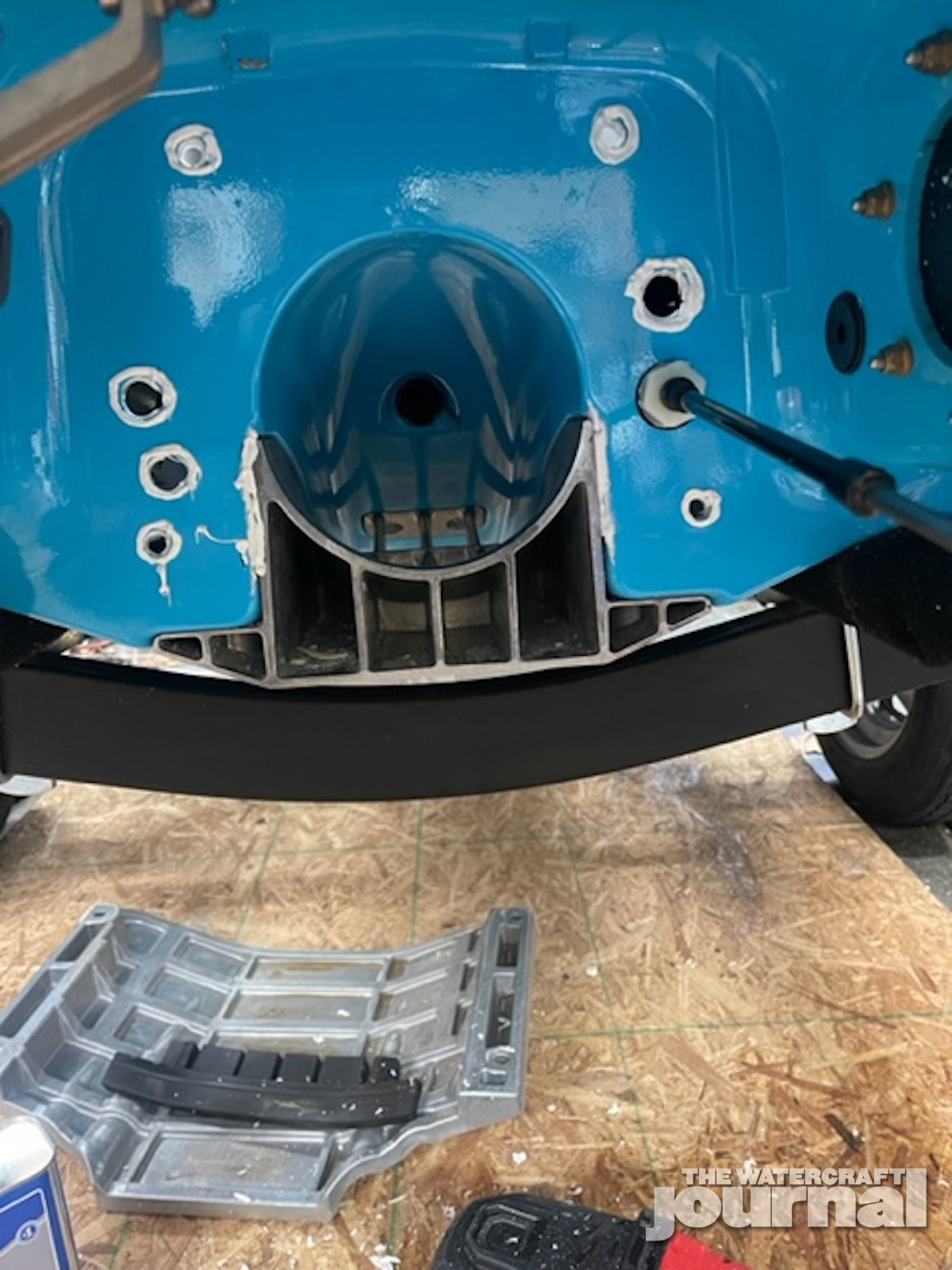
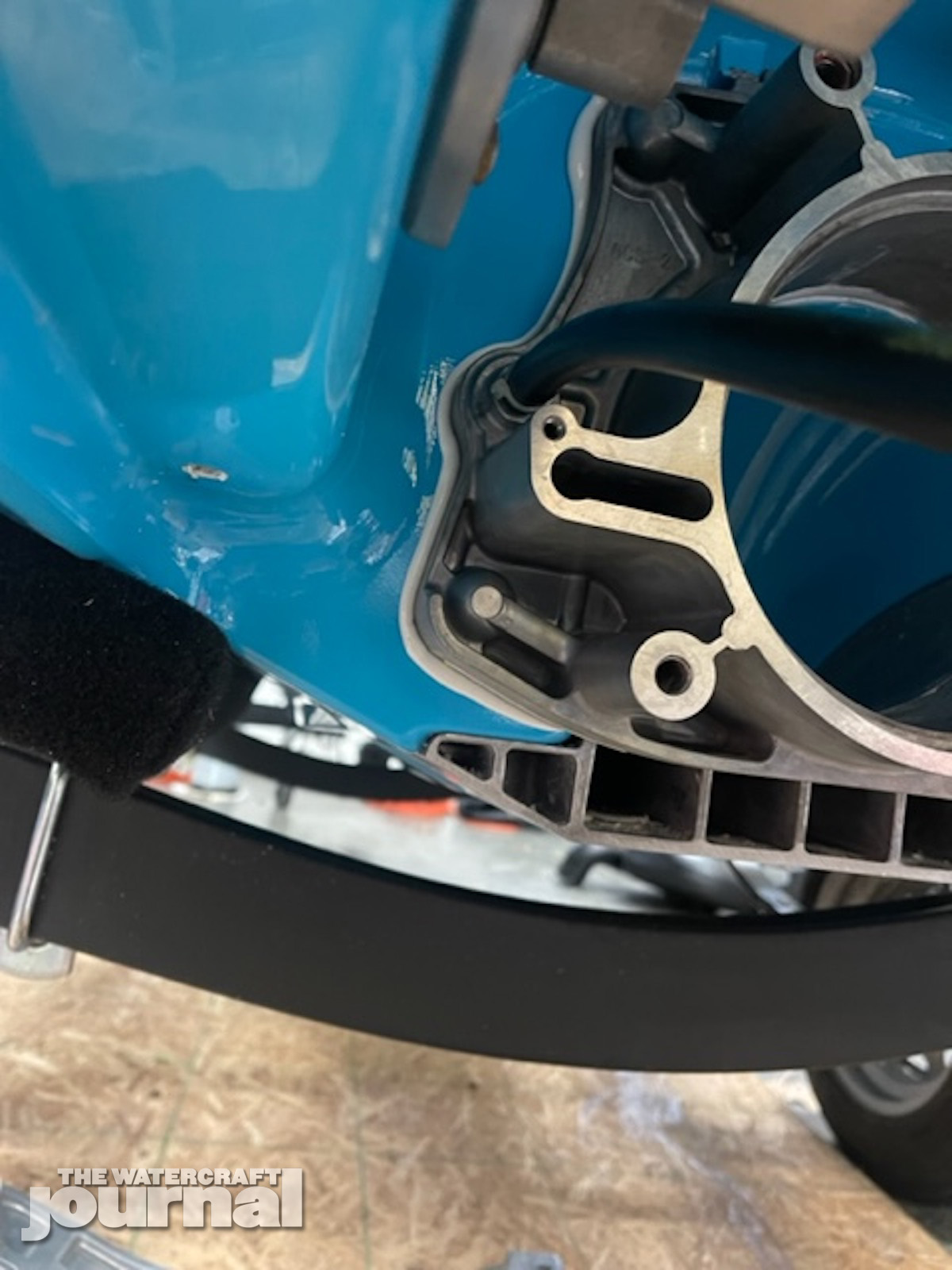
Above left: Prior to removing the pump nozzle (with the RiDE bucket attached – no reason to take it off separately), we disconnecting the steering cable on the right. Above center: With the pump and bucket removed, we removed the ride plate, allowing us full access to the pump tunnel. Above right: With the ride plate removed, we removed the stator and slipped out the impeller and driveshaft, exposing the transom plate.

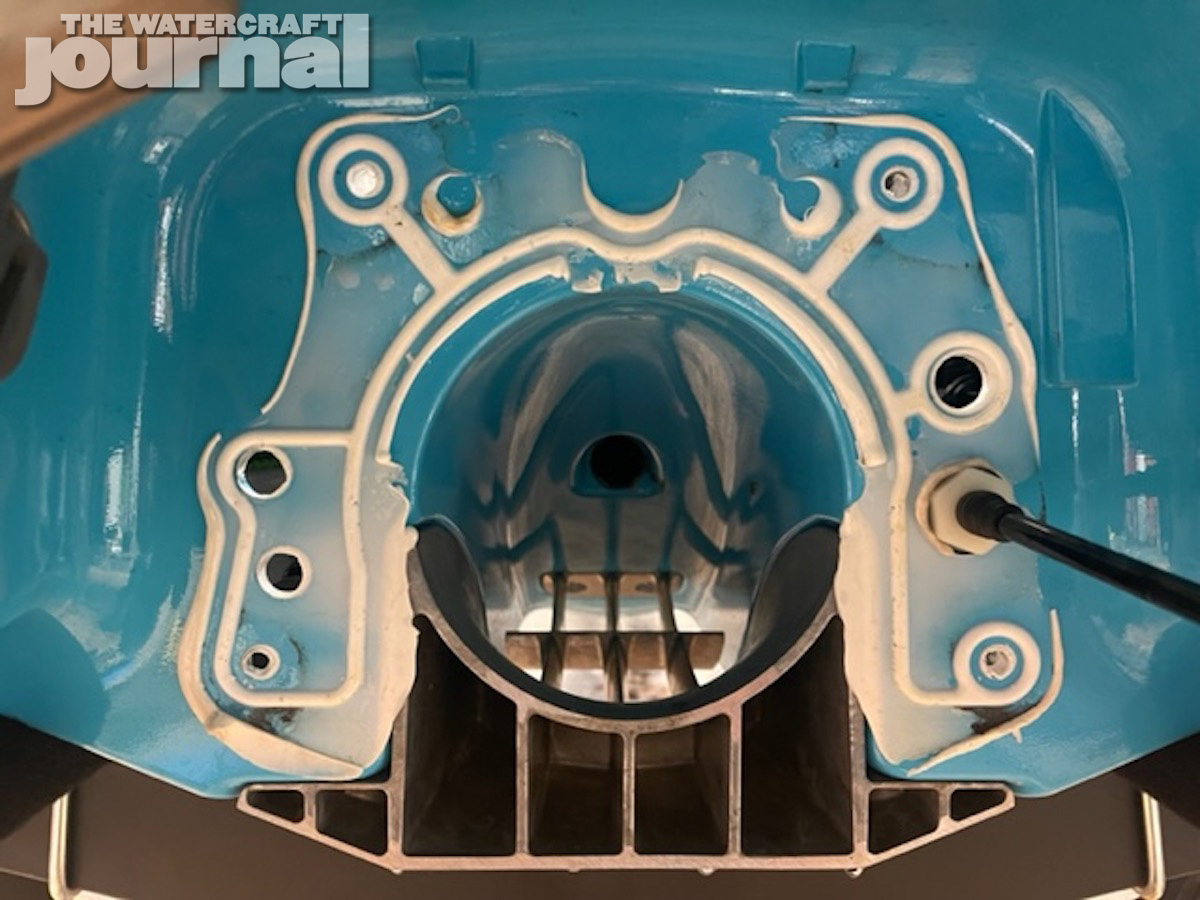
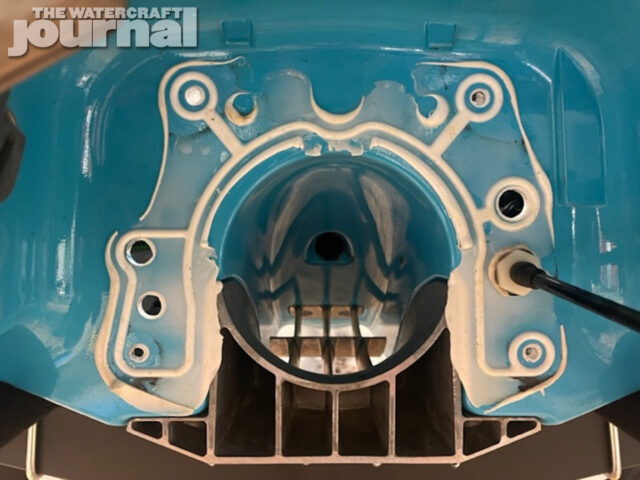
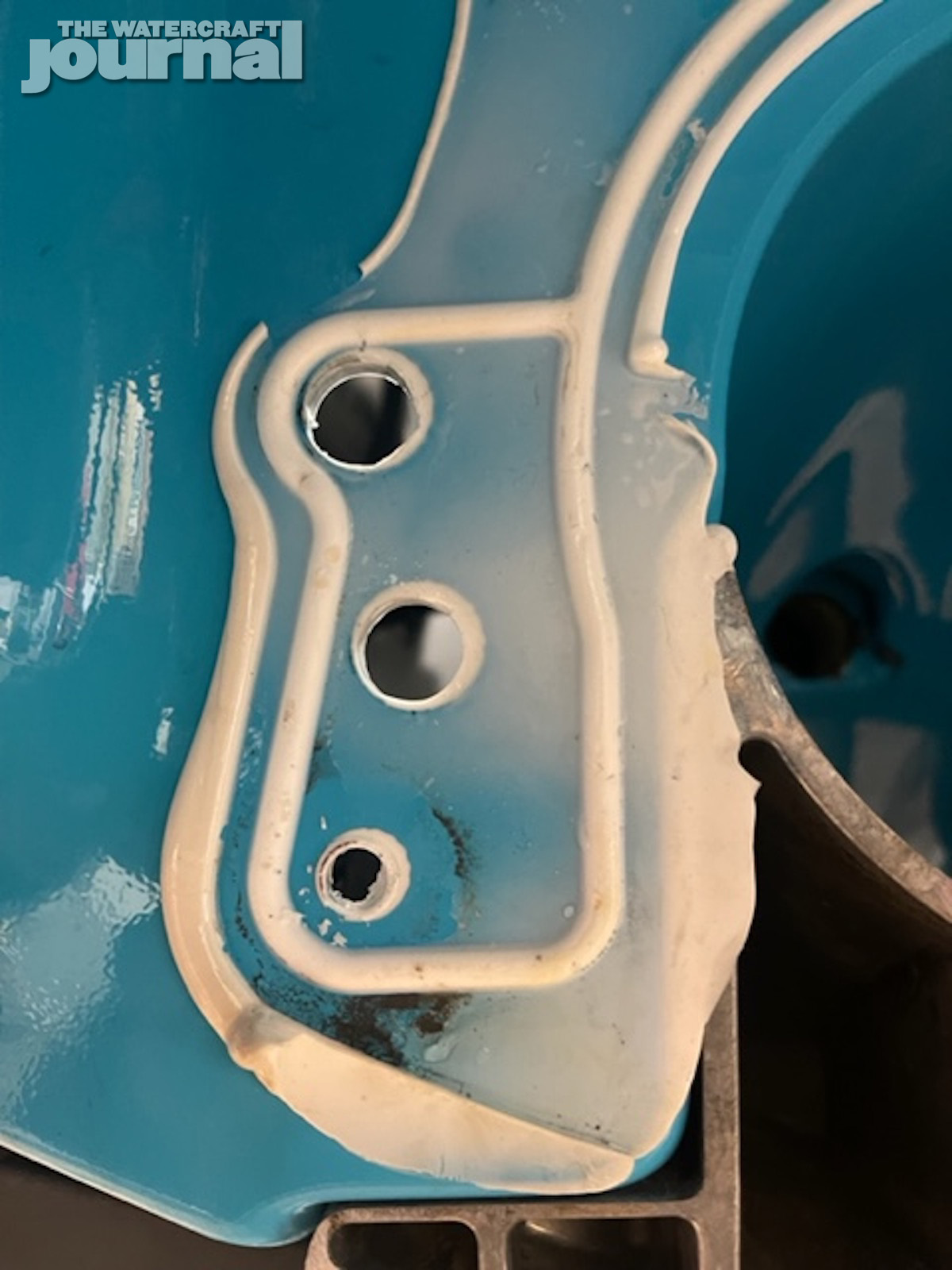
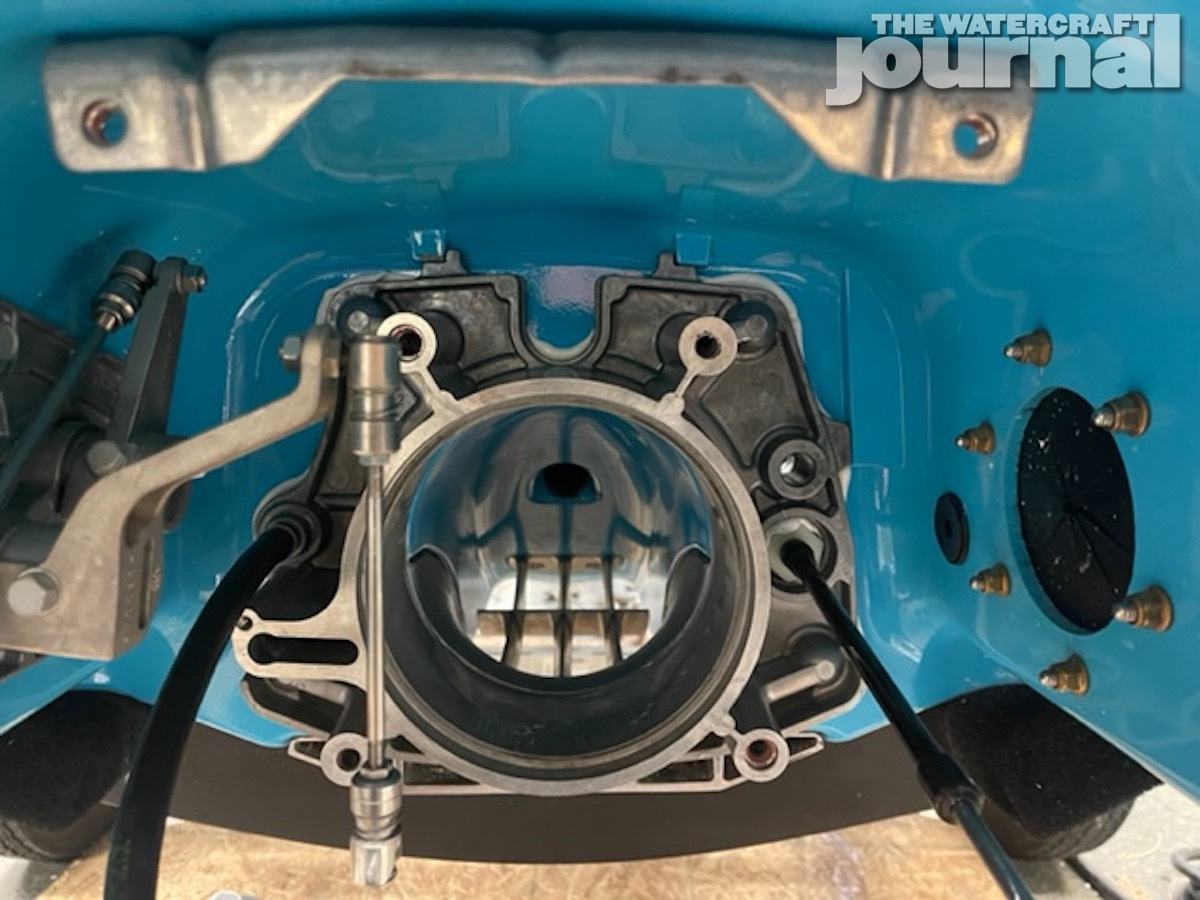
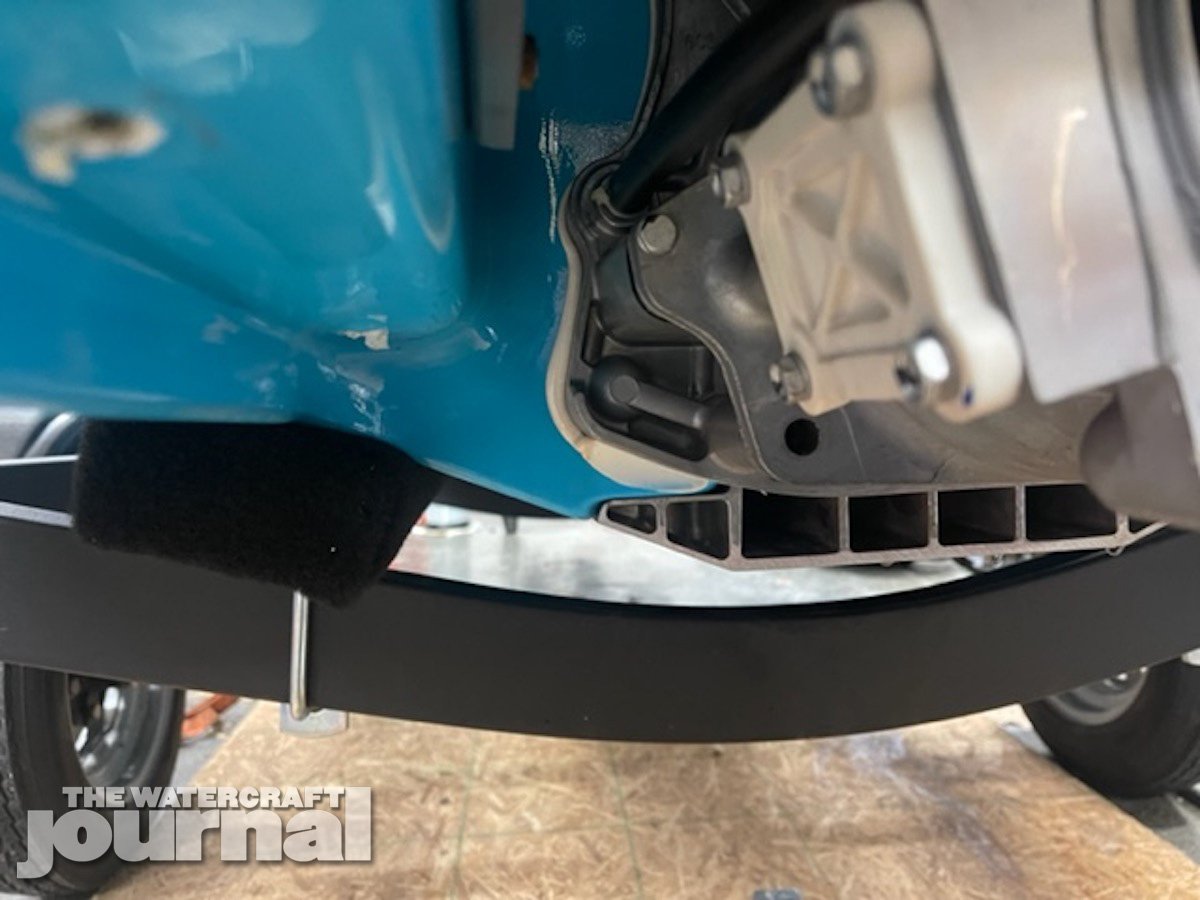
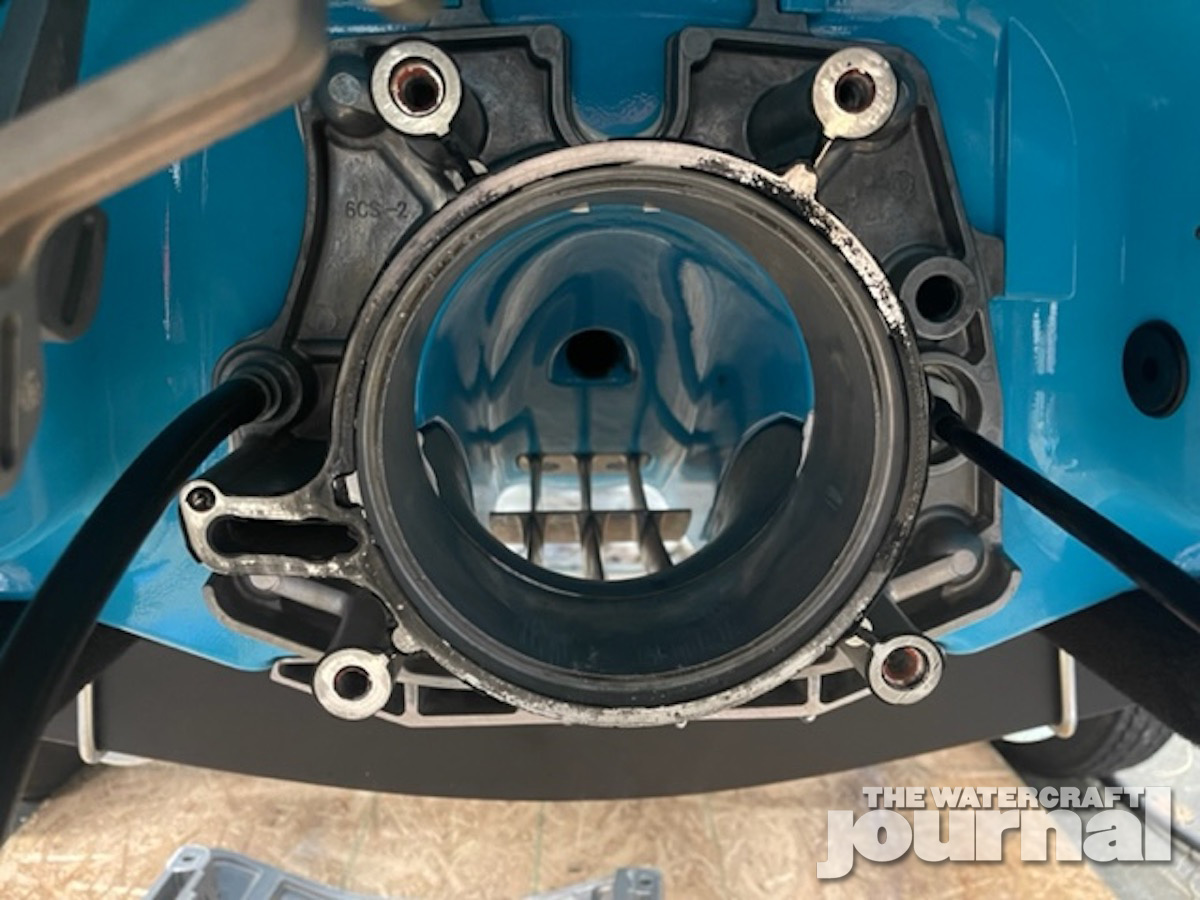
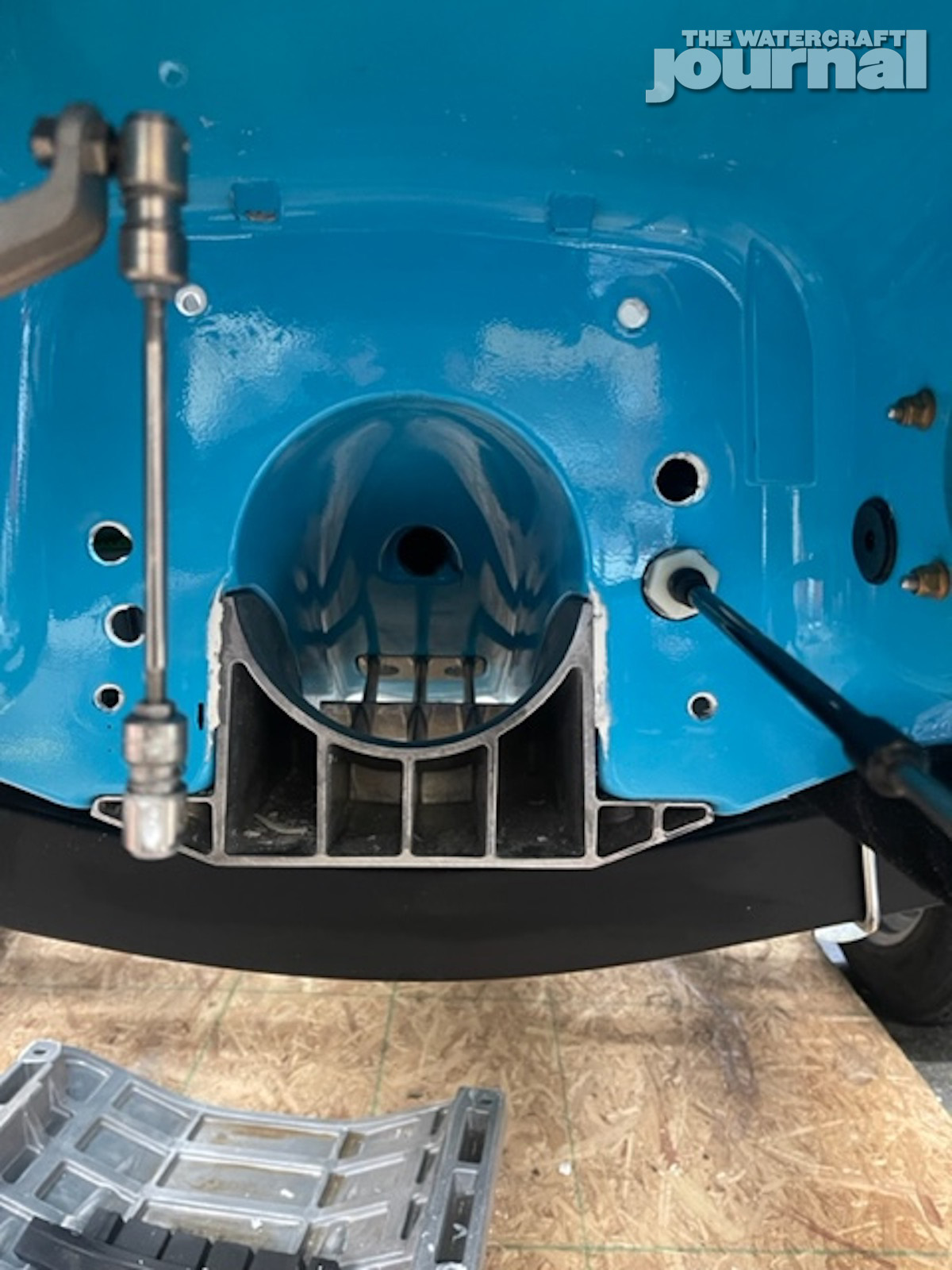
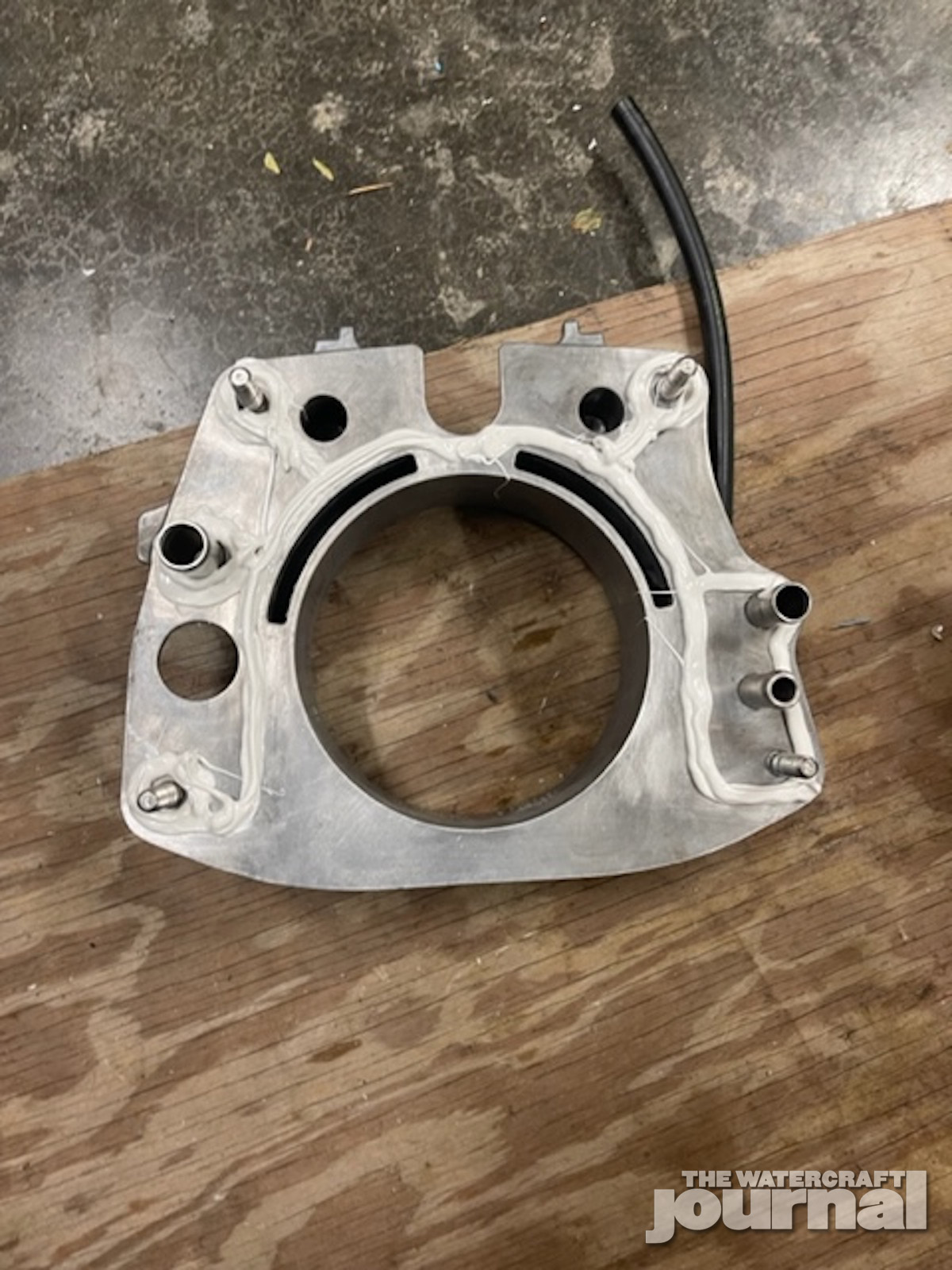
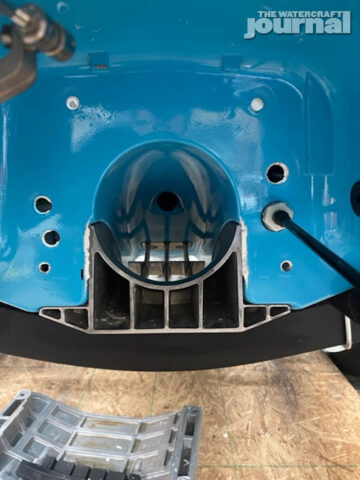
Above: The before-and-after is pretty stark, but removing the transom plate took surprisingly little effort to pull it free from the sealant. Close examination revealed where the water was seeping through the sealant into the hull’s bilge.

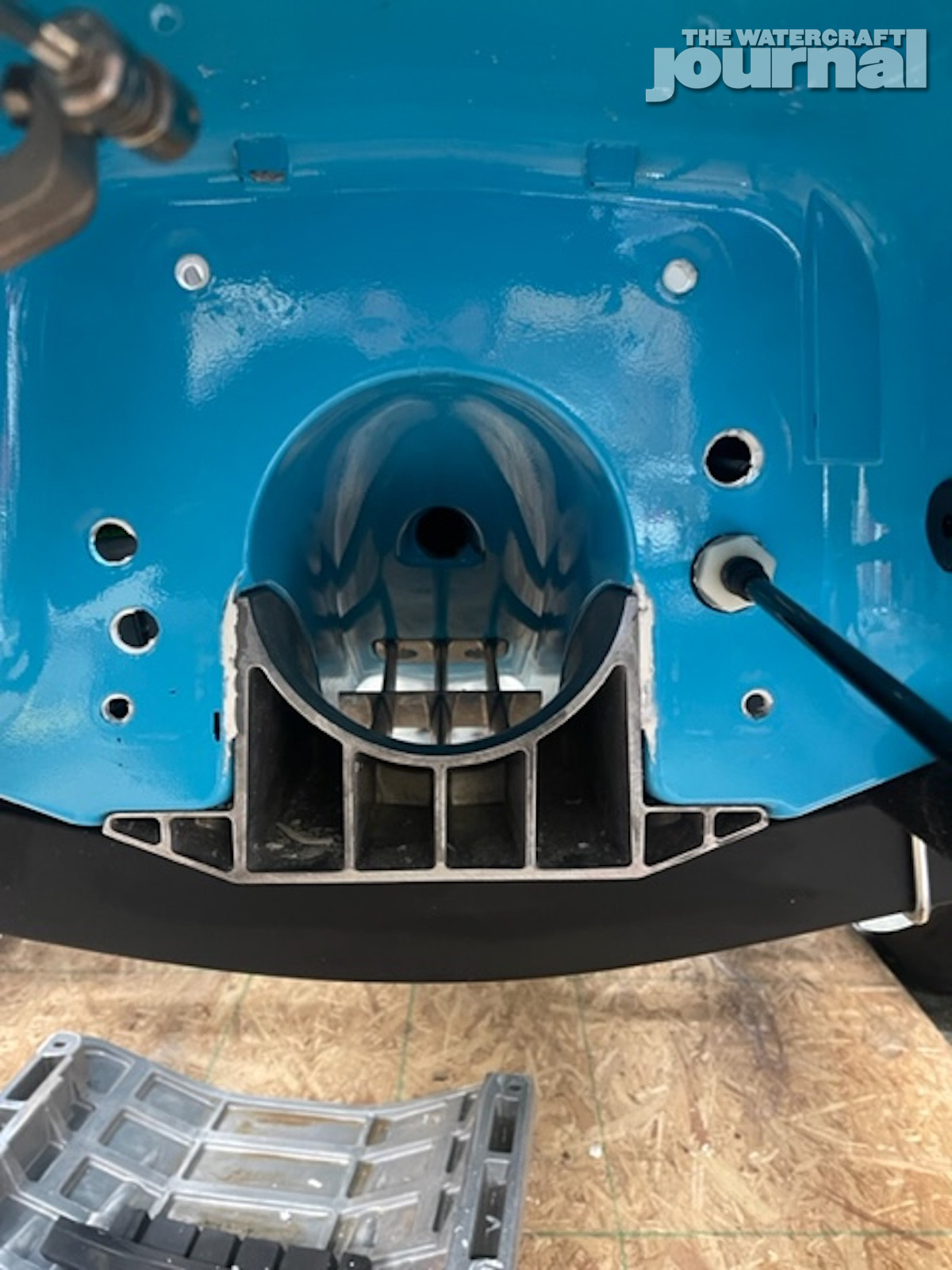
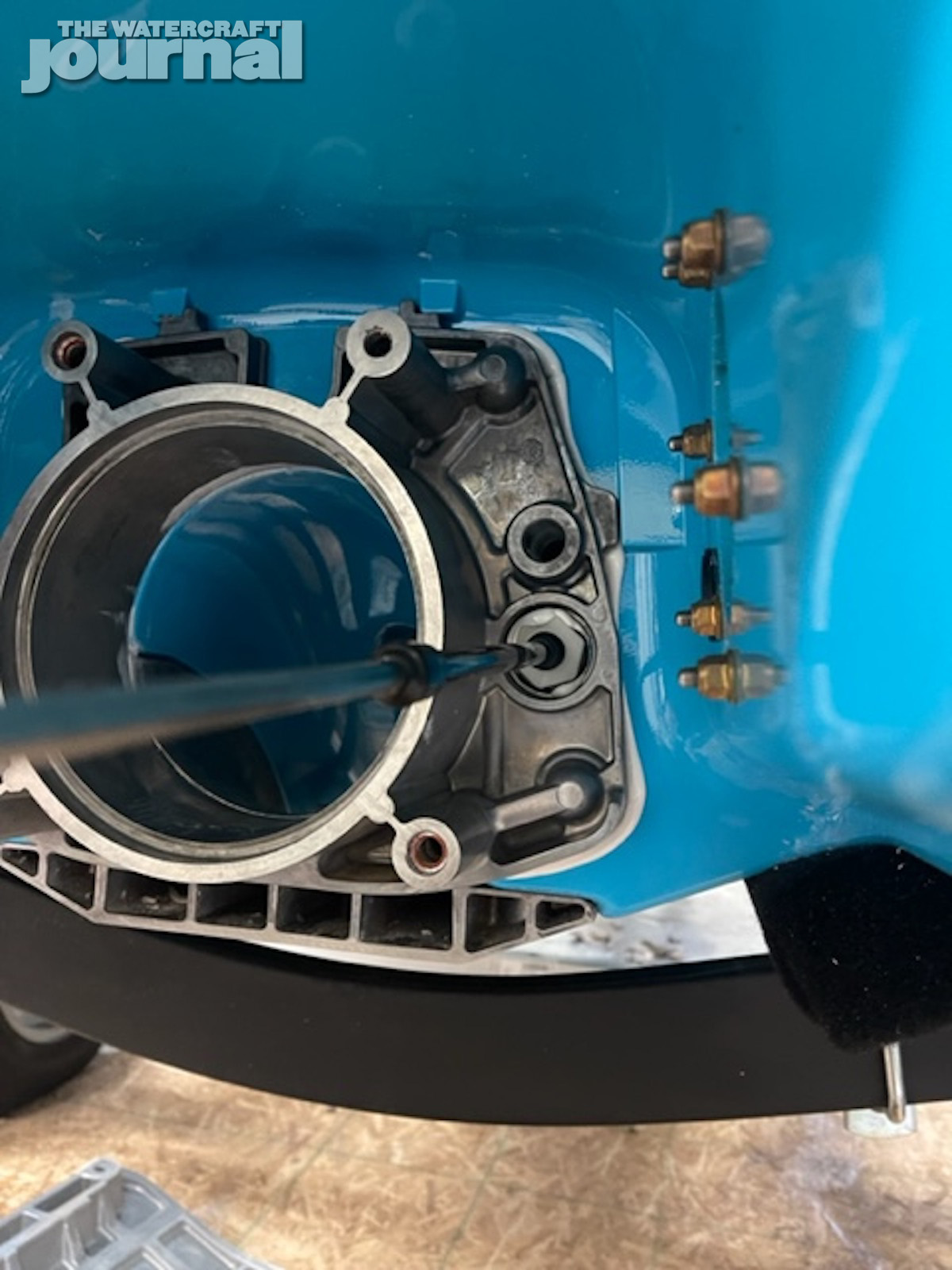
The transom plate came off the hull with amazingly little effort (although I’ve heard that isn’t the same for everyone). Once the plate was removed it was surprising how little of the sealant was still attached to it; virtually all of it stayed attached to the hull. Here I could see clear evidence of where the water leaked into the hull from the outside, primarily in the area around the two holes on the left side of the transom.

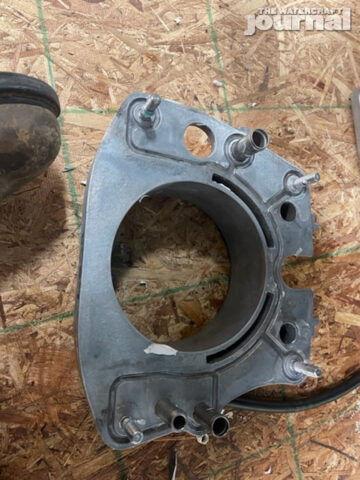
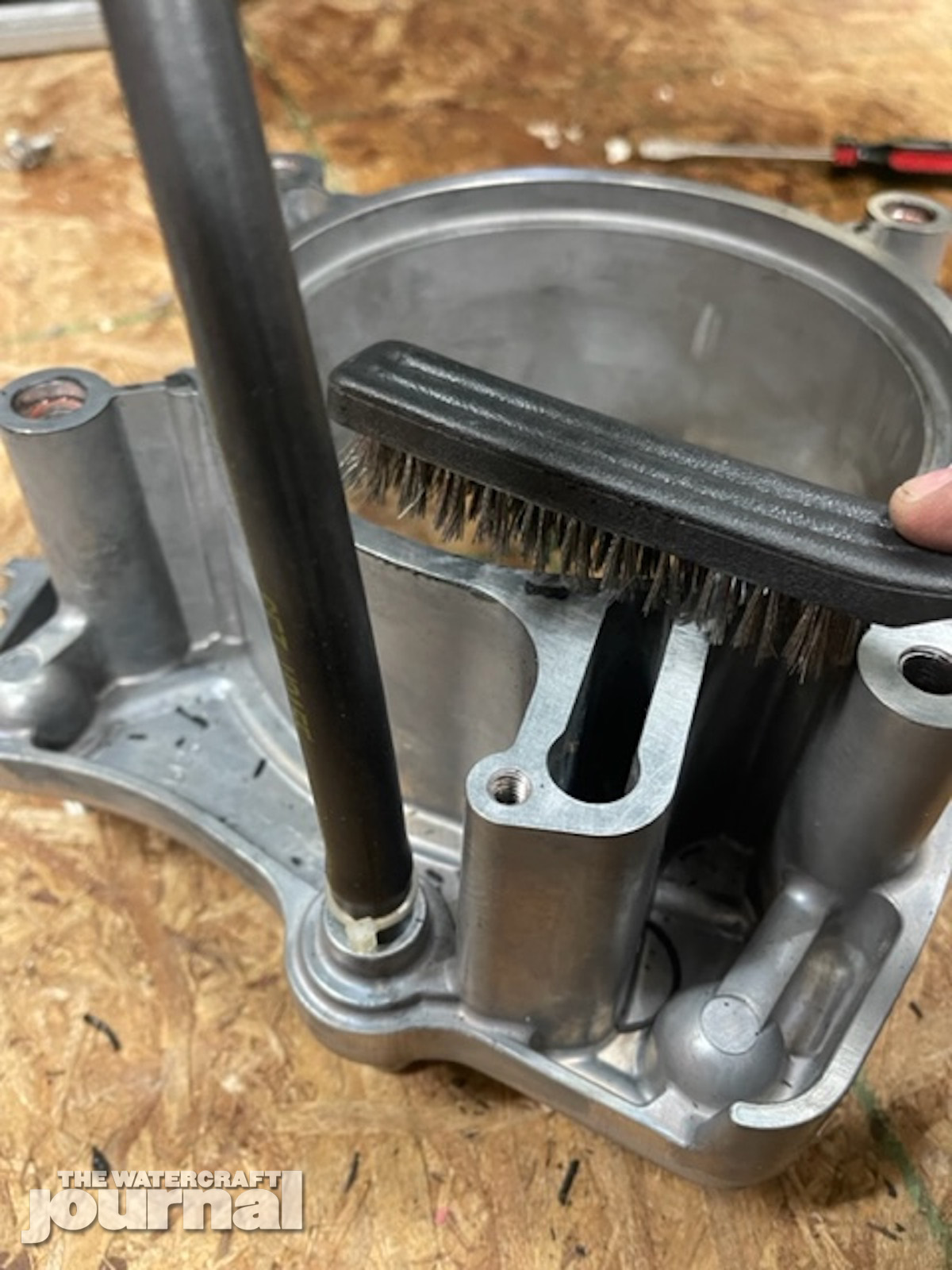
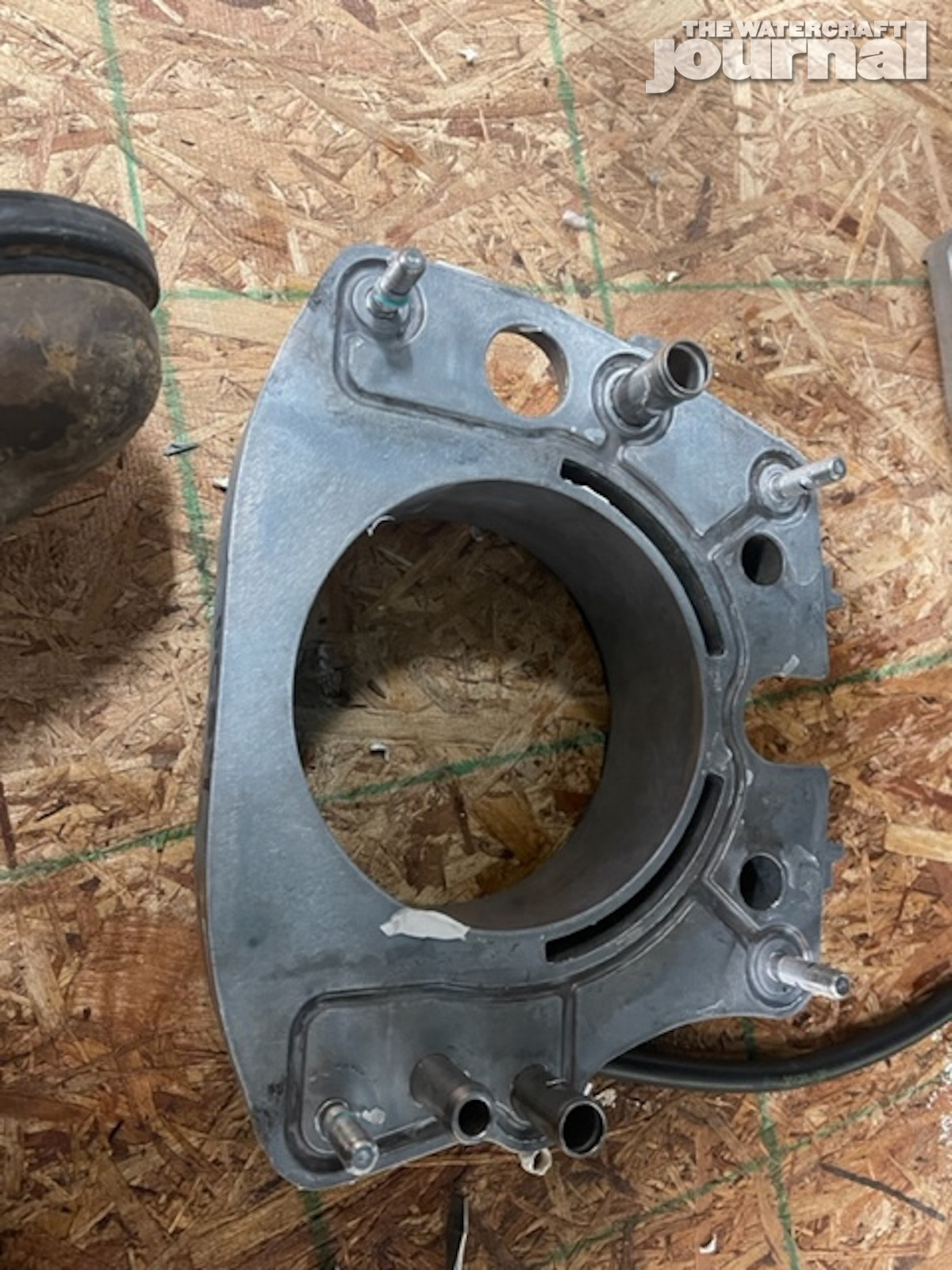
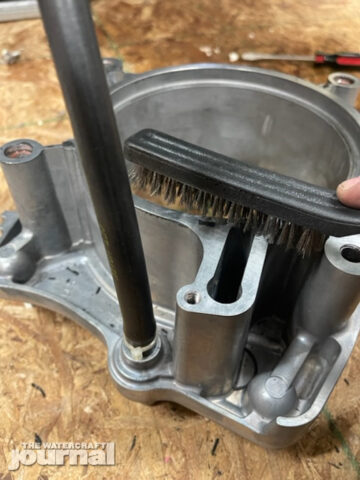
The removal of the sealant was the most time consuming. I used several plastic and metal scrappers, taking care not to scratch the paint. With the sealant off, I used a rotary polisher with a heavy compound and foam pad to get the surface free from any residual residue. I used a stiff wire brush on the transom plate and pump components to be sure they were all nice and clean. I then wiped everything down with acetone as a final prep step.

Above left: It took quite a bit of elbow grease but we scraped and polished the pump tunnel clean of any residual sealant. Above center and right: A stiff-bristled wire brush and some acetone cleaned up our transom back to new, and ready for a fresh coat of sealant.

Above: In our reassembly process, we also cleaned off all of the mating surfaces so our pump would go back together as cleanly as it did from Yamaha’s factory assembly line.

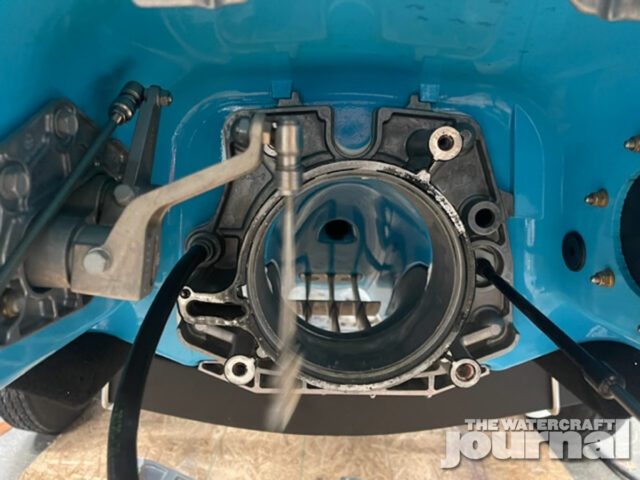
Since the sealant Yamaha uses was the cause of this problem, I applied new sealant around all the holes on the hull, and on the sealing surfaces of the transom plate. (many ski builders such as Greg Gaddis of Greenhulk.net recommends 3M 5200, although 5200 is permanent and won’t come off again without a lot of heat and force. For this reason, others prefer to use 3M 4200. –Ed.)

I then reassembled everything in the reverse order it came apart, using sealant everywhere the factory did. All the bolts but especially the ride plate bolts are blind holes, so take care that they are clean and free of debris to prevent any problems with the bolts bottoming out in the holes. Once everything was back together and the sealant has had the proper time to cure, I was ready to be back out on the water.

Above: Hopefully your Yamaha isn’t see the same kind of water collecting in the bilge like we were, but if so, know that it’s a very simple fix that takes just an hour or two on a Saturday morning.

And eureka! The hull was perfectly dry my next time out (and every ride since then). While this task may seem intimidating, it’s pretty easy and fairly straight forward. It can be done in just a few hours by anyone with just a few basic hand tools and will give you the peace of mind knowing that the water will stay out of your hull where it belongs!